Home Blog Page 541

Lexus PHL breaks ground on sprawling 3S facility in Quezon City

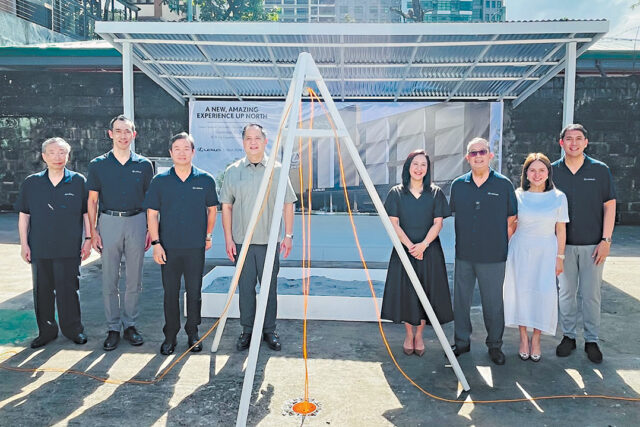
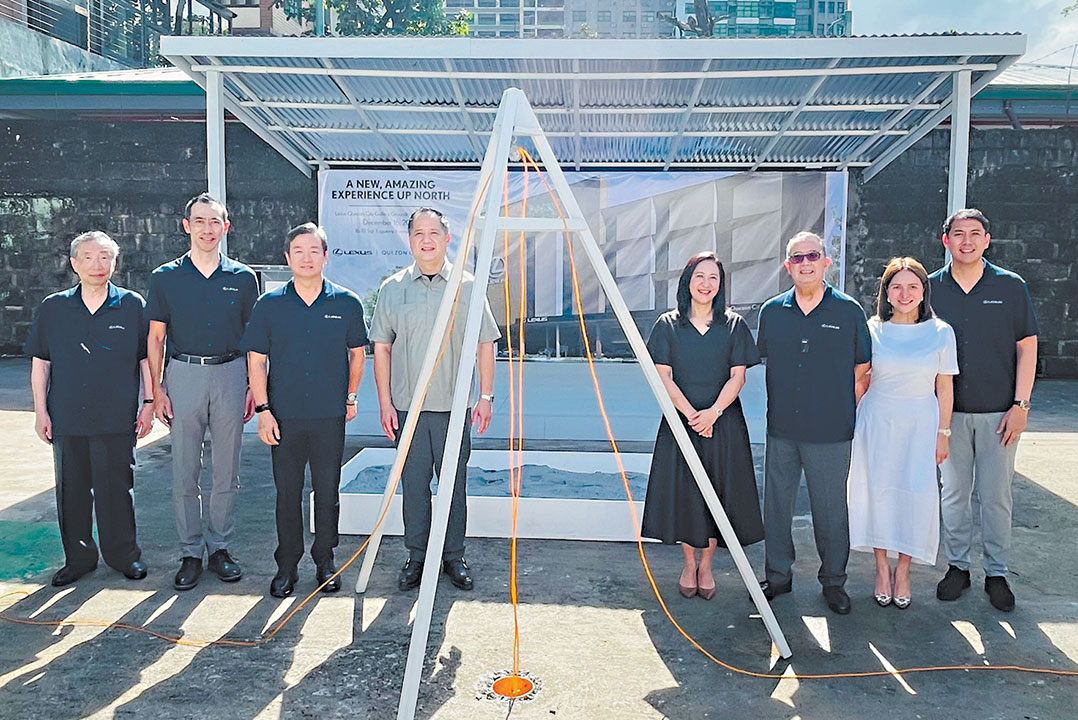
Leading the Lexus Quezon City Gallery groundbreaking ceremonies are (from left) Lexus Philippines Vice-Chairman Dr. David Go, Lexus Philippines President Masando Hashimoto, Lexus Philippines Chairman Alfred Ty, Quezon City Fourth District Rep. Jesus Manuel “Bong” Suntay, Quezon City Mayor Ma. Josefina “Joy” Belmonte, Lexus Quezon City President Atty. Reginaldo Oben, Quezon City Councilor Eden Delilah “Candy” Medina, and Lexus Quezon City Executive Vice-President Don Juan Miguel Oben. — PHOTO FROM LEXUS PHILIPPINES

LEXUS PHILIPPINES is set to expand its footprint with the opening of a new facility — to be called Lexus Quezon City Gallery. Set to rise along Sgt. Esguerra St. in Quezon City, the new location “is envisioned to embody the brand’s core values of craftsmanship, innovation and hospitality, and is designed to deliver truly amazing experiences at every touch point, fully embracing the spirit of omotenashi for its customers,” according to Lexus Philippines in a release.

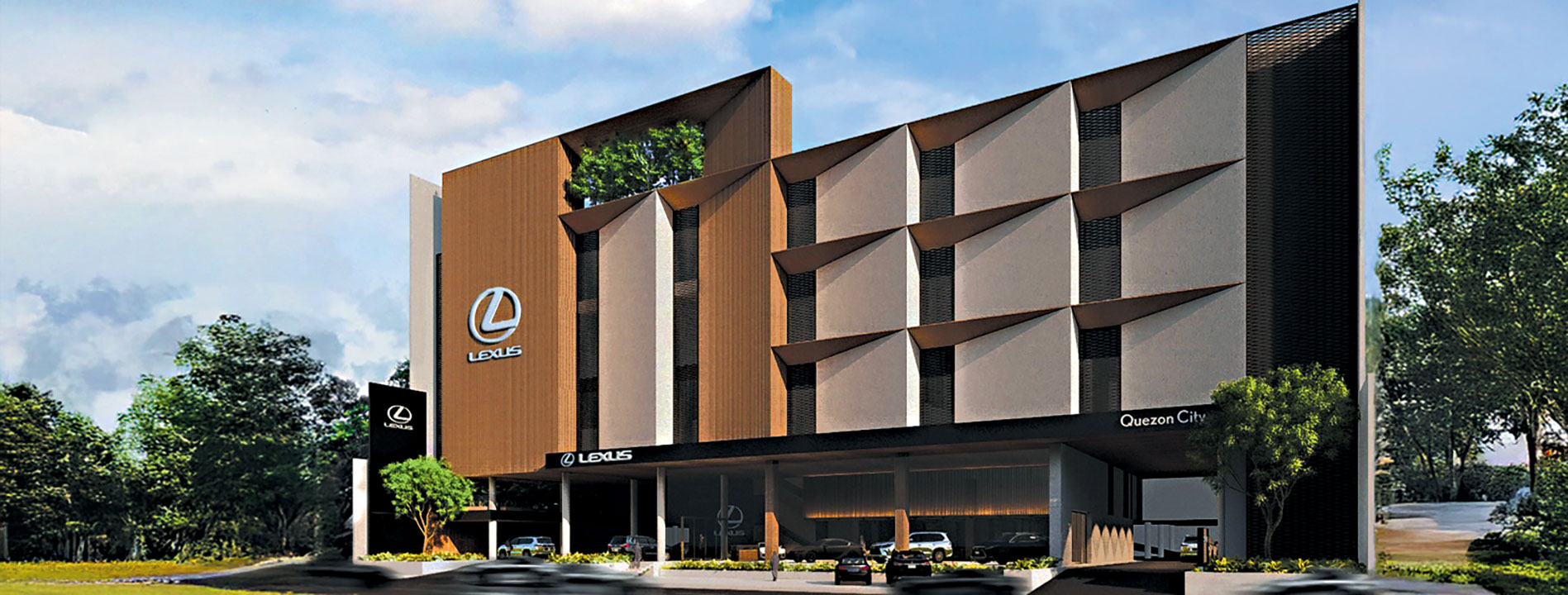
Aimed to open in 2027, the Lexus Quezon City Gallery exterior will feature “sharp, tapered surfaces and clean linear geometries that reflect Lexus’ bold, forward-thinking approach to design.” In addition, meticulously selected materials and textures are set to highlight both local artistry and Japanese craftsmanship.

Said Lexus Philippines Chairman Alfred Ty in his speech at the recent groundbreaking ceremonies for the dealership, “We have grown from selling 172 units in 2009 to over 2,000 units annually today. With more than 12,000 Lexus vehicles now on Philippine roads, the strength of this market makes this the right time to expand.”

He added, “This location allows us to serve our customers with greater convenience and relevance. It also enables us to deliver an even better Lexus experience to a wider community, especially with more than 2,000 of our customers already residing in Quezon City alone.”

Expected to boast a total floor area of 12,700 sq.m. across four levels, with a mezzanine, the Lexus Quezon City Gallery is a 3S (sales, service, and spare parts) facility offering a full suite of after-sales services, including Lexus One, periodic maintenance, general services, and body and paint. This marks “a leap forward” for the Lexus brand in the Philippines as the first dealer network expansion in addition to the Lexus Manila Gallery which opened its doors last Nov. 6.

For more information, visit the Lexus website at lexus.com.ph or social media pages on Facebook and Instagram (@lexusph). The My-Lexus app is also available for both Android and iOS users to receive live updates and to access other premium services.

LANDBANK plans sustainability bond offering

BW FILE PHOTO

LAND BANK of the Philippines (LANDBANK) is set to issue sustainability bonds next quarter as it looks to expand its lending to its priority sectors.

“As part of its broader sustainable finance strategy, LANDBANK plans to offer sustainability bonds by the first quarter of 2026,” it said in a statement on Sunday.

“Proceeds from the bonds will support national development priorities, including agriculture, MSMEs (micro, small and medium enterprises), renewable energy, housing, and infrastructure. The planned issuance aims to mobilize long-term funding to scale up LANDBANK’s existing sustainable lending programs and further strengthen its leadership in sustainable finance.”

The bank has disbursed P176.48 billion in sustainable finance loans as of October, it said.

These loans supported initiatives related to renewable energy transition, clean transport, water access, housing, disaster resilience, and health system improvements.

In September, LANDBANK President and Chief Executive Officer Lynette V. Ortiz said the bank is eyeing to raise over P20 billion from a sustainability bond offering. The papers will be branded as “Asenso bonds” and are expected to have a tenor between one and five years, and could also be issued in multiple tranches.

LANDBANK’s net income climbed by 41.79% to P35.64 billion in the first nine months of 2025 from P25.14 billion in the same period last year. — Aubrey Rose A. Inosante

Tea with Fornasetti

OPULENCE’S latest store combines things they’re already good at (Italian luxury home decor) and a relatively new concept (a café).

At 380 square meters in Greenbelt 5, in the space formerly occupied by True Value, the previous tools and things have been replaced by shelves and shelves of plates, vases, clocks, chairs, and everything except the kitchen sink through brands Fornasetti, Versace Home, Jonathan Adler, and Polspotten. Political spouse and actress Heart Evangelista graced the opening on Dec. 15.

For the opening, owners Gerry and Jinky Tobiano Sy sought the help of interior designers to make a space using the store’s various brands and themes. Cynthia Almario Ivy Almario did the seasonal display, Geewel Fuster did the space for Fornasetti, Anton Mendoza did the space using Jonathan Adler (the vases of breasts were hard to ignore), Myze Bangayan lit up Versace Home, Grace Tan used Polspotten in that space, and Cyndi Fernandez of Moss Design did the interior of the store.

This is their biggest store yet: since 2019, they’ve been building branches across the city — in San Juan, The Podium, and Newport World Resorts.

“I was fortunate that this space was available,” Mr. Sy told BusinessWorld. “We’re expanding our brands, and furniture is bulky,” he said about the store’s size (they’re welcoming the home line of Dolce & Gabbana next year). “We need space to display beautiful things. We don’t want it to look very cluttered.”

Mr. Sy is in the tech business, but partnering with an electronics company allowed him to work on the interiors of some of the country’s most expensive real estate. “It just kept expanding,” he said about the move from tech to luxury. “We love beautiful things.”

Speaking about his preference for Italian brands, considering the number of them in-store, he said, “I think Italians have (some) of the (best) tastes, in fashion, in furniture, in accessories. They always have this exquisite taste in design. And the quality is also very important.”

Aside from expanding into luxury, Mr. Sy is also in the food business through the Supersam chain of casual dining restaurants. He combines both sensibilities in the Opulence Caffé, a relatively new project. “I’m already into food. It’s just expanding; natural,” he said of opening the café.

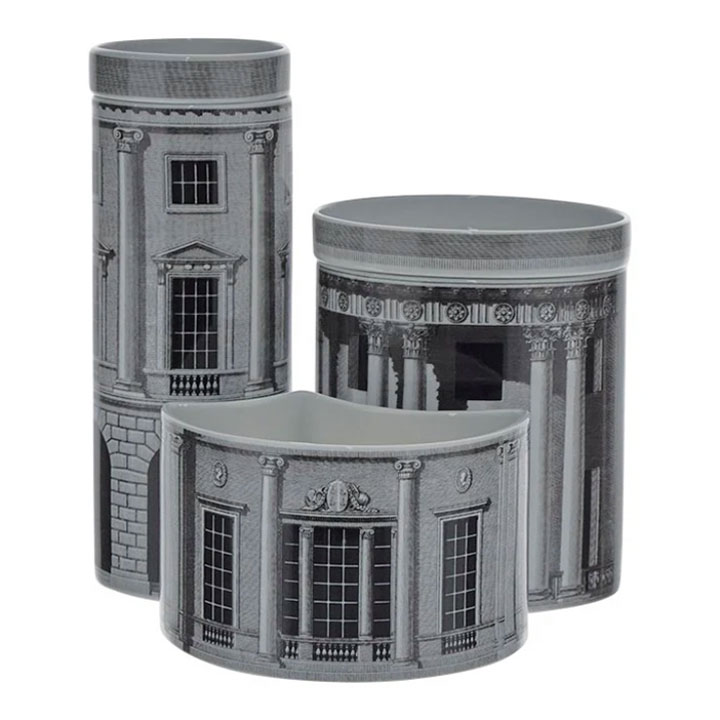
They’ve converted their Podium branch to host a similar concept, while opening a café-only concept in Greenhills. Aside from serving delicate pastries, selling food from, of all brands, Dolce & Gabbana, and using tea and coffee from Milan, the café has the distinction of using china from Versace and Fornasetti (among other brands they have in the store). “We thought of having a café that uses these brands, and for the guests to experience drinking in a Fornasetti cup.”

The newest Opulence Design Concept store is now open on the 3rd floor of Greenbelt 5 in Makati. — Joseph L. Garcia

ALI opens horseback riding facility in Batangas estate

AYALA LAND, INC.

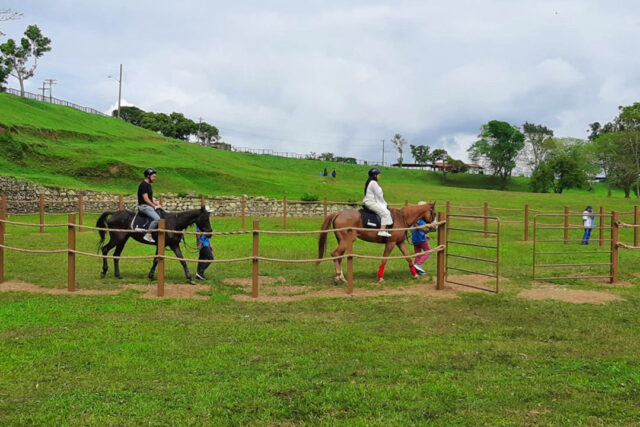
LISTED developer Ayala Land, Inc. (ALI) is targeting families seeking leisure activities with its new horseback riding facility within Arillo Estate in Batangas.

The facility, which opened on Dec. 19, offers scenic rides and well-trained horses for families and travelers alike, ALI said in a statement over the weekend.

It is located within Arillo Estate, a 62-hectare eco-tourism hub that blends sustainable and luxury-inspired living.

Beginners or casual riders can enjoy guided leisure rides assisted by trained staff, while more experienced riders can bring their own horses and explore the property’s trails, the statement said.

“Our goal is to make horseback riding accessible, safe, and enjoyable for everyone, whether they are riding for the first time or returning to a familiar passion,” El Kabayo Nasugbu Owner Gabby La O said.

Pricing for the horseback riding experience starts at P1,000 for a 15-minute guided ride.

The facility is open from Tuesday to Sunday.

Located in Barangay Caylaway in Nasugbu, Arillo boasts proximity to the town’s beaches.

“Long before it became a destination for leisure escapes, the Nasugbu highlands were a place where generations of families would spend time outdoors and enjoy the open landscape. El Kabayo aims to carry this tradition forward,” ALI said.

The estate is accessible via major roads, including the South Luzon Expressway, Cavite-Laguna Expressway, Manila-Cavite Expressway, and the Nasugbu-Tagaytay Highway.

ALI earlier posted a 0.9% annual rise in its nine-month attributable net income to P21.4 billion. At the local bourse, ALI shares last closed at P22 apiece on Dec. 18. — Beatriz Marie D. Cruz

The 2026 health budget: Turning healthcare from an entitlement to an act of mercy

PHILSTAR FILE PHOTO

The 2026 General Appropriations Bill has completed the bicameral conference committee proceedings, and the budget is set to be ratified by both houses of Congress on Dec. 29.

Healthcare workers remain deeply troubled by the 2026 health budget. Seventy-two (72) healthcare professional organizations, led by the Philippine Medical Association (PMA) and the Philippine College of Physicians (PCP), are disheartened that our legislators have once again failed to allocate our national health insurance provider, PhilHealth (the Philippine Health Insurance Corp.), its legally mandated funds under the Universal Healthcare Act.

The bicam allocates a total of P69.78 billion for the Philhealth insurance premiums for the poor. While this represents an increase from the P53.26-billion proposal in the National Expenditure Program, this allocation still falls short of the government’s obligation under the Universal Health Care (UHC).

The UHC Act mandates the National Government to fully subsidize the premiums of 24.5 million indirect contributors. Therefore, the PhilHealth budget for 2026 should be at least P147 billion. The current allocation of P69.78 billion still leaves a significant funding gap. In addition, the budget, as it stands, fails to include the UHC Act-mandated shares of PhilHealth from Philippine Amusement and Gaming Corp. (PAGCOR) and the Philippine Charity Sweepstakes Office (PCSO).

While the government publicly takes pride in the 2026 PhilHealth budget being its “biggest budget ever,” it is a misleading announcement as it conveniently fails to point out that the budget only seems higher because it includes the P60 billion in PhilHealth funds stolen in 2024 and ordered returned to the agency by the Supreme Court in a recent decision.

Healthcare workers were also outraged by the bicam’s bloated P51-billion budget allocation for the Medical Assistance for Indigent and Financially Incapacitated Patients (MAIFIP) program. MAIFIP is just a supplement to PhilHealth funds but strikingly, from 2023 to 2025, its budget was more than twice that of PhilHealth.

The House of Representatives Panel in the bicam defended their proposal to increase the MAIFIP, to which the Senate Panel yielded without resistance. The House justified that if their version of the MAIFIP budget is not adopted, the number of beneficiaries would be reduced by 1.1 million. This is outrageous considering that the P51 billion could pay for the PhilHealth insurance of more than 8 million poor Filipinos.

Although social media attention highlights a single issue related to the MAIFIP — the guarantee letter — this issue is only the tip of a much larger structural problem.

First, MAIFIP operates as a discretionary rather than a rule-based fund, making it susceptible to political influence and interference. This vulnerability is not theoretical; it has already been demonstrated in practice, and can still happen despite the proposed special provisions.

Second, because MAIFIP is not a standard health benefit, patients are required to apply and prove extreme need and inability to pay. This effectively forces sick Filipinos to beg for assistance before legislators, local officials, or hospital personnel. This is a travesty. Healthcare should be an entitlement, not an act of mercy.

Third, MAIFIP adds to an already fragmented and burdensome system of financial assistance. Patients must navigate multiple programs (MAIFIP, AICS or Assistance to Individuals in Crisis Situation, PCSO, PAGCOR, and others), each with different offices, forms, and requirements. These bureaucratic hurdles increase the burden on those already facing illness or caring for family members.

Fourth, MAIFIP is a duplication of the core function of PhilHealth. Its funding diverts resources that should instead be used to strengthen PhilHealth coverage, particularly for the 24.5 million Filipinos who cannot afford to pay for health insurance.

Fifth, as a discretionary health fund, MAIFIP lacks clear rules and accountability. Unlike PhilHealth benefits, there are no transparent standards defining eligibility, benefit levels, or covered services, making oversight difficult and inequities inevitable.

Sixth and last, the proliferation of multiple payors for health care severely weakens the country’s monopsony power, or the ability of a single purchaser to negotiate fair prices for medicines, tests, and services. This structural weakness will inevitably drive up healthcare costs, harming not only indigent patients but all Filipinos.

These concerns go beyond any single budget cycle. They speak to the kind of health system we are choosing to build — one based on rules, equity, and dignity, or one dependent on individual discretion or patronage.


Dr. Antonio L. Dans, MD is a clinical epidemiologist and professor emeritus at the UP College of Medicine. He convenes the Sin Tax Coalition and the Healthcare Professionals Alliance against COVID-19 (HPAAC).

Fed’s Williams tells CNBC there is no urgent need to cut interest rates again

THE EXTERIOR of the Marriner S. Eccles Federal Reserve Board Building is seen in Washington, D.C., US, June 14, 2022. — REUTERS

NEW YORK Federal Reserve President John Williams told CNBC on Friday he does not see an imminent need to follow this month’s interest rate cut with another reduction in borrowing costs, adding that new inflation data is being buffeted by distortions.

Mr. Williams said he doesn’t “have a sense of urgency to need to act further on monetary policy right now, because I think the cuts we’ve made have positioned us really well,” he said in the interview with CNBC. A key goal of Fed policy right now is to buoy the labor market while helping to guide inflation back to the 2% target, and with that balancing act, Mr. Williams said when it comes to interest rate policy, “I feel like we’ve got this in a pretty good place.”

Mr. Williams said the resumption of key data on inflation and hiring in the wake of the resolution of the recent 43-day government shutdown has not proved to be a game changer, while adding there are some technical issues at the moment that complicate interpretation of the new figures.

In the case of the release on Thursday of the Consumer Price Index (CPI) for November, Mr. Williams said the report “represents a continuation of the disinflationary process we’ve seen.” He added, however, special factors and technical issues with the report due to incomplete data collection suggest “the data were distorted in some of the categories, and that pushed down the CPI reading probably by a tenth (of a percentage point) or so” on its reading.

The CPI increased 2.7% on a year-over-year basis in November after advancing 3.0% in the 12 months through September.

On the hiring front, Mr. Williams also saw some complications tied to the data. “We’re seeing steady job gains … especially in the private sector,” he said, adding that “because they weren’t able to collect the data in October, it probably boosted the unemployment rate in November, maybe by a tenth (of a percentage point),” but even then, the findings weren’t much of a surprise.

MARKETS LOOK TO FED’S JANUARY MEETING
The Fed trimmed its benchmark overnight interest rate by a quarter of a percentage point to the 3.50%-3.75% range, as policymakers sought to balance supporting a weakening job market with efforts to bring still-high levels of inflation back to the 2% target.

Markets are debating whether the US central bank will be able to deliver another rate cut at its meeting in late January, but officials have yet to provide much guidance on that front. Mr. Williams’ comments on Friday reiterated his view that he needs to see more data before he is comfortable with the Fed cutting rates again and that another cut in January might be a difficult decision.

Mr. Williams noted that “we’re still mildly restrictive in terms of the stance of monetary policy. We still have some room to go, ultimately, to get back to neutral.” He also said “I do see eventually rates coming down lower, because as inflation comes down all the way to 2%, we’ll need to have an interest rate that’s consistent with that.”

He added that the Fed’s move to restart asset buying to rebuild the size of its balance sheet is not a form of stimulus known as quantitative easing, or QE, and is technical in nature.

“We are … obviously not doing QE, from my point of view, we’re not trying to change the 10-year, you know, term premium or something like that,” Mr. Williams said of the large amount of Treasury bills the Fed has started buying. The purchases are designed “to provide reserves to the banking system to meet the demand that the banks in our country and that operate here need in order to carry out their business.” — Reuters

Shell Rimula ‘Bida Ang Biyahe Ko’ celebrates truck drivers and mechanics

The ‘Bida Ang Biyahe Ko’ Program honors the role of Pinoy truck drivers and mechanics in keeping the transport and logistics sectors moving.

SHELL PILIPINAS CORP., through its lubricant brand Shell Rimula, recently concluded its nationwide “Bida Ang Biyahe Ko” (BABK) program, designed to honor and empower Filipino truck drivers and mechanics for their contribution to the country’s transport and logistics industry. Launched earlier this year and running through October, the program made stops at key transport hubs, including Davao, Cebu, La Union, Caloocan, and Laguna, engaging an estimated 250 truck drivers and mechanics across the country.

As online retail expands, demand for light commercial vehicles (LCVs) and skilled drivers continues to rise. Logistics fleets now face tighter turnaround times and heavier delivery volumes, underscoring the vital role of truck drivers and mechanics in maintaining efficient and safe supply chains.

Recognizing their vital contribution, Shell Rimula designed the program to celebrate these “everyday road heroes” while emphasizing engine oil and road safety education. The multi-stage program featured skills challenges, technical learning sessions, and wellness activities across the provinces. Participants were also educated on physical and mental road readiness, including understanding road signage and proper vehicle maintenance — practices that reduce accidents and keep vehicles reliable. By fostering both awareness and appreciation, the initiative “helps create a safer, more efficient, and professional transport industry.” Those who completed Stages 1 and 2 of the program qualified for a TESDA NC I certification, providing tangible benefits for professional growth.

Supporting drivers in meeting the demands of modern LCV engines, Shell Rimula also highlighted its light-duty oils during the program. These are designed with Dynamic Protection Plus Technology to protect engines against wear, oil oxidation, and deposit build-up — common in urban driving conditions such as stop/start traffic and variable loads. This ensures smoother, more reliable journeys, giving drivers confidence on the road while reinforcing Shell’s commitment to both performance and safety.

“Facilitating PMS seminars with Shell Rimula BABK gives the truck drivers a reminder that proper knowledge and process of periodic maintenance with their vehicles is vital to keep them safe every day of their livelihood,” said TESDA Assessor Bryan M. Landicho in a Shell Rimula release.

Shell also integrated wellness activities into the program, emphasizing driver safety and well-being. Participants received free eye checkups and prescription glasses to address the common risks of visual strain and impaired eyesight during long-haul drives. These measures reflect Shell’s commitment to supporting drivers, not only by enhancing their professional skills but also by ensuring they remain safe and confident on the road.

The initiative is made possible through partnerships with Bike Night Asia, TESDA, and the LTO. Looking ahead, Shell plans to expand BABK to key provinces, including Cagayan de Oro, Bacolod, and Pampanga in 2026.

Explained Shell Rimula Brand Manager Meng Manapul Peret, “Shell takes great pride in supporting the country’s transport community, from drivers and mechanics to the partners who keep our roads moving. Through programs like BABK, we remain committed to promoting driver well-being and empowering Filipino motorists through continuous skills development, recognition, and reliable product solutions.”

For more information, visit the Shell Rimula web page and pilipinas.shell.com.ph, and follow its social media channels on Facebook (shellphofficial), TikTok (shell.philippines), Instagram (shell), YouTube (Shell), and LinkedIn (shell).

Dennis Lustico focuses on Filipiniana for the holiday season

KNOWN FOR flamboyant gowns that mimic nature’s movements, Dennis Lustico’s holiday pop-up in Rockwell will be a little bit different. Firstly, he’s going prêt-á-porter; secondly, he reins it in and uses all that energy to work on heavily detailed but masterfully restrained Filipiniana.

Mr. Lustico opened his pop-up in November, and it will run until Jan. 31 next year. When the store first opened in November, he filled the brass racks with capes, vests, pencil skirts with fringe details, and satin tops with tassels, drawing in his usual customers.

“I was intentional about having a quiet opening,” he said in a statement. “I also knew that midway, I would be introducing a Filipiniana Collection.”

His new collection is anchored on a central garment: the kimona, a lightweight, poncho-like, sometimes more informal variation of the Filipiniana top (the camisa in this case). “It is a garment that I remember vividly from childhood,” he was quoted as saying. “As a young aspiring designer, I would observe women in our province wear this airy, effortless yet elegant set. In a way this collection is a return to basics, and an ode to my roots.”

The collection features five different kimona designs, including a calado* bib. These piña — a very fine fabric made of pineapple fibers — tops are all hand embroidered by artisans in Laguna. Designs are developed in-house, drawing from local flora or patterns found in fans. Sarongs or tapis skirts complete the collection, resulting in a multitude of distinctly Filipino ensembles that are versatile, effortless, and easy to wear.

The garments are done such that one size fits all. They are also intended for playful layering, mixing, and matching. “It’s heritage dressing, but at the same time, the pieces emphasize how Philippine fashion is now essential for everyday dressing — and not just for special occasions. They are special in that everything is handmade, but at the same time they can be worn many times in different ways. They can also be passed on like heirloom pieces,” the designer was quoted as saying in the press release.

Of the differences in creating a Filipiniana collection for prêt-á-porter, rather than his usual custom work, he said: “We worked with a completely new set of patterns and explored new techniques. By introducing this collection, we hope to spark more interest in our handcrafts, especially our embroiderers and weavers.”

He also says that the pop-up space is a prelude of what’s to come, hinting: “This is a transition. A training period — learning about spaces, manning, deliveries, and production — before we establish a store in 2026.”

The pop-up space is located at R2 Powerplant Mall, Rockwell Center and will run until Jan. 31, 2026. For more information, follow @dennis_lustico.

* Calado is a traditional, intricate Philippine hand-embroidery technique where fibers are pulled apart from lightweight fabrics like piña, and the remaining threads are then stitched into delicate, lace-like openwork patterns.

Kaltimex, Tawi-Tawi electric co-op ink debt restructuring deal

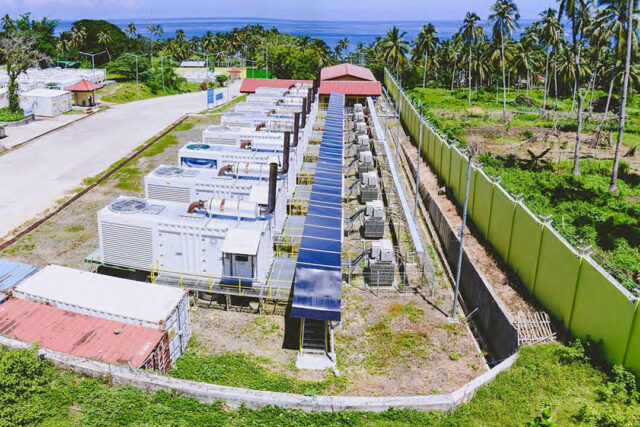
KALTIMEX Rural Energy Corp.’s 8-megawatt diesel power plant in Bongao, Tawi-Tawi. — KALTIMEX-ENERGY.COM

KALTIMEX RURAL ENERGY Corp., a Philippine subsidiary of Indonesian firm PT. Kaltimex Energy, has signed a debt restructuring agreement with the Tawi-Tawi Electric Cooperative (TAWELCO) to ease the cooperative’s financial burden and strengthen electricity service for local communities.

“When obligations are put on a workable path and performance is consistently monitored, the gains can translate into better service for households, stronger support for local enterprise, and a more enabling environment for development,” Energy Undersecretary Rowena Cristina L. Guevara, who witnessed the signing, said in a statement over the weekend.

Kaltimex was represented by Chairman Krishan Kumar Ralhan and President Oscar A. Torralba, while TAWELCO was led by Project Supervisor and Acting General Manager Peraida T. Jalan.

The two parties first entered into a power supply agreement in 2018, under which Kaltimex built a new diesel power plant to meet the electricity demand in Bongao municipality.

However, TAWELCO faced operational and financial challenges that contributed to the accumulation of arrears.

With its poor credit standing preventing bail refinancing, the cooperative proposed a debt restructuring plan supported by recent improvements in payment performance and operations.

To expand service without additional borrowing, Kaltimex will provide a 5-kilometer dedicated feeder line to connect new customers near municipal and provincial offices. Revenues from these new connections will support repayment under the restructuring plan.

The Department of Energy (DoE) has also endorsed Kaltimex’s request for a 10% increase in TAWELCO’s allowable capacity band to the Energy Regulatory Commission. 

“This move will strengthen emergency reserve capacity and reduce reliance on short-term generator leasing, which is expected to lower outage risks during peak demand and emergencies,” the DoE said.

TAWELCO will undergo monthly performance reviews to ensure compliance with agreed targets, including keeping system loss below 10%, completing priority infrastructure projects, and implementing staff training and capability-building programs.

The electric cooperative serves the entire province of Tawi-Tawi, providing electricity to more than 11,000 customers, including 10,225 residential and 557 commercial connections. — Sheldeen Joy Talavera

PHL coffee imports seen rising 9.76% this year

STOCK PHOTO | Image by Kelly Sikkema from Unsplash

PHILIPPINE coffee imports are expected to grow 9.76% to 378,000 metric tons (MT) in marketing year (MY) 2025-2026, according to the US Department of Agriculture (USDA).

In a report, the USDA said coffee imports during the MY, which runs between July 2025 and June 2026, are expected to increase from 344,400 MT in the previous MY. The forecast represents a 1.56% downgrade from the USDA’s June estimate of 384,000 MT.

Philippine domestic production can only service about 40% of market requirements. The Philippines is the fourth-largest coffee importer after the European Union (EU), the US and Japan.

The Philippines is also projected to remain the world’s biggest buyer of soluble (instant) coffee, accounting for 28.85% of total imports.

Imports of soluble coffee are projected to increase 10% from the previous MY to 330,000 MT.

Meanwhile, the USDA projects Philippine coffee production to remain flat at 27,000 MT, matching production levels in the last two MYs.

Global production is expected to rise 2.01% during the MY to 10.73 million MT.

Brazil and Vietnam are projected to remain the top-producing countries, capturing 35.23% and 17.22% of global output, respectively.

Philippine coffee consumption is also expected to rise 9.05% during the MY to 405,000 MT. If the forecast is realized, the Philippines would overtake Japan as the fourth-biggest consumer of coffee after the EU, the US and Brazil. — Vonn Andrei E. Villamiel

BSP bills’ rates go down despite lower demand

BW FILE PHOTO

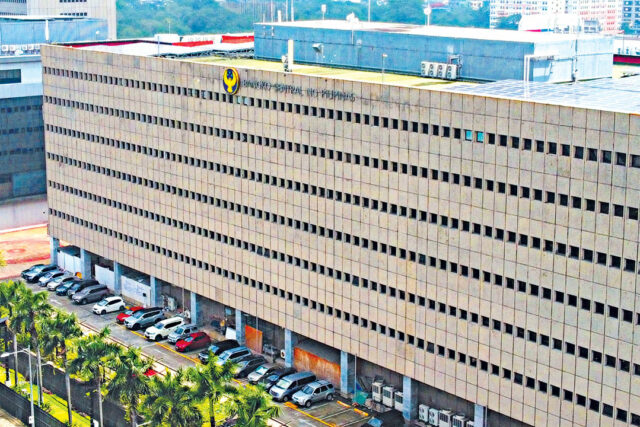
YIELDS on the central bank’s one-month securities dropped on Friday even as the offer was undersubscribed.

The 28-day Bangko Sentral ng Pilipinas (BSP) bills fetched bids amounting to P80.828 billion, below the P90 billion placed on the auction block and the P132.25 billion in tenders for the same offer a week prior. This was equivalent to a bid-to-cover ratio of 0.8981 times, down from the 1.4694 ratio seen the prior week.

The central bank accepted all the tenders submitted for the offering.

Accepted rates ranged from 4.5% to 5%, wider than the 4.7125% to 4.89% margin seen during the previous auction. With this, the weighted average accepted rate of the 28-day bill fell by 7.97 basis points to 4.7501% from 4.8298%.

The BSP has not auctioned off the 56-day bills for over a month or since Nov. 3.

The central bank uses the BSP securities and its term deposit facility to mop up excess liquidity in the financial system and to better guide short-term market rates towards its policy rate.

The BSP bills also contribute to improved price discovery for debt instruments while supporting monetary policy transmission.

In August, BSP Governor Eli M. Remolona, Jr. said they are gradually shifting away from the issuance of short-term papers to manage liquidity as they want to boost activity in the money market.

Data from the central bank showed that around 50% of its market operations are done through its short-term securities. — Katherine K. Chan

Pasko 2025 sa Inang Bayan

PHILIPPINE STAR/MIGUEL DE GUZMAN

Ang ating Pasko (ngayong 2025) ay hindi normal na Pasko. Ito ay kaiba sa 2024. Paano na tayo magpa-Pasko?” (Our Christmas [this 2025] is not a normal Christmas. It is different from that of 2024. How now are we going to celebrate Christmas?)

Those were the words of Lingayen-Dagupan Archbishop Socrates “Soc” Villegas, D.D. at the Advent Recollection, “The Crib and the Cross,” which he conducted at the St. John the Evangelist Cathedral in Lingayen from Dec. 12 to 14.

How now are we going to celebrate Christmas, when our Christmas has a new face, the good Bishop asked most painfully. We have Christmas amidst all this corruption, where there have been no arrests yet — it seems it will take some more time before criminals are put in jail, the stolen wealth is returned, and the country receives restitution. That is the first blight on our Christmas spirit — the overpowering, shameless corruption that pervades and controls our country.

“Corruption is paid for by the poor,” Pope Francis said in his homily during a 2014 Holy Mass. Bishop Soc echoes this, as he weeps for the Filipino poor who have no food, no homes, no health support. The Stratbase-SWS National Survey of April 11-15 found 55% of Filipino families rating themselves as Mahirap or Poor (3 points up from 52% in March); 12% rating themselves as Borderline (by placing themselves on a line dividing Poor and Not Poor), and 32% rating themselves as Hindi Mahirap or Not Poor. Bishop Soc lashed out at the callousness of government shouting out amidst the poverty that P500 is enough for Noche Buena (the Christmas Eve feast) for a family of four. “Salita ng manhid” (words of the unfeeling), he said of our leaders. It cancels out Christmas, that we do not feel for our poor.

Our Christmas is made fearful by the rampant criminality — there is no respect for the law, no accountability, and there is impunity with outright crimes against humanity and against property and rights. In Japan, Korea, the US and other countries, the law chases the criminals. Here, it is easy to escape — just pretend you are sick, sit in a wheelchair, Bishop Soc said. And the people will allow this blatant impunity.

Liars go to hell, Bishop Soc warned. “A false witness shall not be unpunished, and he that speaketh lies shall perish.” (Proverbs 19:9). Fake news, sharing wrong information, and destroying reputations are grievous sins, and cannot be reversed, just like killing cannot be retracted. How can Christmas be holy and joyful amidst all the lying and cheating that erodes faith and trust in society and in people?

All of these — the corruption, the poverty, the criminality, the impunity, the lying and cheating — are not simply a government problem, Bishop Soc regretted. The culture of insensitivity to the poor is not just about economics or labor and wages. We cannot fight corruption and criminality with jails (if the justice system even works). The collective conscience might be righted, he exhorted.

Madali tayong magalit. At matagal na tayong galit (We easily anger. And we have long been angry), Bishop Soc pointed out. But what happened to all our anger? I think we have grown tired of being angry, have lost the energy to be angry, and have moved on to being fatigued and depressed, then we go on to anger deeper than when we started, he said. Angry; tired; depressed; frustrated. This is no way to spend Christmas, he lamented.

But the first Christmas also happened during “difficult times.” The baby Jesus was born in a humble manger in the foothills of Bethlehem. Bishop Soc reminded us that Joseph, Jesus’ foster father, and mother Mary found that there was “no place at the inn” where they could rest. The birth of the baby in a humble stable is a joyous exultation of hope. Symbolic of suffering and death is the cross that foreshadows resurrection brought by the birth of the Savior. The crib and the cross are the cycle of Hope.

Hope will see us through, in this difficult Christmas, Bishop Soc assured us all. We just must do our part. He suggests five “Ps” for this Pasko:

1. Prayer: We ask God to deliver us from these temporary difficulties, knowing in full faith that “Good triumphs over Evil” and “In the end, Truth and Justice will prevail.”

Yes, Bishop Soc, as you suggest, we will pray in the silence of our hearts — more than in the hyped festivity of Christmas’ Simbang Gabi and Misa de Gallo Holy Masses — with a 15-minute silent meditation before devouring the Noche Buena feast at the stroke of midnight on Dec. 25.

2. Protest: We cannot just complain about the “majestic kings of the time” (corrupt government officials) and be silent — we should actively protest to make things right in our country. “Talagang ganyan na ’yan” (That’s the way it is) or “Sapagkat tayo ay tao lamang” (We are only human) cannot be our cowardly excuse for not standing up to defend and uphold integrity, honesty, justice and fairness among us, Bishop Soc stressed.

“Blessed are those who hunger and thirst for righteousness, for they will be filled” (Matthew 5:6). Yes, Bishop Soc, we have to speak up and be heard. As Benjamin Franklin said, “Justice will not be served until those who are unaffected are as outraged as those who are.”

3. Pressure: As we are instruments for social and moral change, we must exert pressure on ourselves to likewise change inside us. Christmas puts pressure on us to make the choice to be better.

Disturb me, Lord, that I may look inward and examine my own sins and omissions, and determine to change myself to align with the societal values and principles that I fight for in our country. Christmas must disturb us, and re-direct us to the Good, the True, and the Beautiful, Bishop Soc reminded us. “The ugliness of sin cannot be exulted.” The ostentatious display of wealth has no part in our pure and simple way of life.

4. Prune: Let it be your New Year’s resolution to change yourself as you change others, Bishop Soc suggested. Stop something bad that you are doing! Cut vices, bad habits, lying and cheating. Practice what you preach. “Let us not love in word or talk but in deed and in truth (1 John 3:18). If you are fighting for integrity and honor in government, be upright and honest yourself.

5. Planting: Hope is what we plant in Christmas, looking to the harvest of peace and salvation of body and spirit promised in Easter. Respect Life, Bishop Soc taught. Love and preserve the natural environment that is the foundation and primary resource for all of God’s creation. Let us plant more trees, as we plant Hope in our hearts.

Seeing corruption, widening poverty, lying, criminality, and treachery in our society erodes faith and hope for change. “(But) we all have contributed to this pandemic of criminality and sin. Let us begin with self-critique and open ourselves to a new kind of patriotism based on faith, not on ideology or partisan politics. The path to heroism begins with contrition,” Bishop Soc declared earlier in March, when interviewed about the arrest of former President Rodrigo Duterte by the International Criminal Court (ICC) for crimes against humanity with the extra-judicial killings of nearly 30,000 people in his “drug war.”

The year 2025 was truly a very political year that affected the Filipino people.

On March 11, Mr. Duterte was arrested at the airport for crimes against humanity due to an arrest warrant by the ICC. He is now detained at the ICC headquarters in the Netherlands awaiting trial.

On May 12, the nationwide general election was held. This changed the political power structure. Administration candidates won the majority of Senate seats. Lakas-CMD remained the majority political party in Congress and the local government. Fifty-three party-list groups were proclaimed by the Commission on Elections.

In July, reports revealed a P142.7-billion ($2.9-billion) insertion in the 2025 national budget, allegedly made during a conference led by former Senate President Francis Escudero. Senator Panfilo Lacson claimed that as much as half of the P2 trillion ($40.61 billion) allocated for flood control over 15 years may have been lost to corruption, with only 40% of project funds translating into actual construction. The Senate Blue Ribbon Committee subsequently launched a motu proprio investigation dubbed “Philippines Under Water” into alleged irregularities in flood control projects.

Also on July 25, the Supreme Court announced the barring of the impeachment proceedings (filed in late 2024) against Vice-President Sara Duterte based on due process grounds, and allowing its refiling in February 2026. On Aug. 6, the Senate voted 19-4 with one abstention, to archive the articles of impeachment against VP Duterte.

On Sept. 21, protests called the Trillion Peso March were held across the Philippines, the biggest in Metro Manila. While most gatherings were peaceful, two people were killed, around 205 were injured, and at least 216 were arrested after a riot broke out. Other smaller rallies have since been held to protest corruption and demand accountability in government.

Investigations into the Department of Public Works and Highways flood control projects changed hands from the Senate Blue Ribbon Committee to the Independent Commission for Infrastructure (ICI) created by President Ferdinand Marcos, Jr. on Sept. 11. The ICI conducted its final hearing for the year on Dec. 15.

All the corruption scandals and the political maneuverings have confused the people and caused divisiveness and the cancelling-out of polarized protests. “It is not God’s will for the country to be divided. The devil wants us disunited and splintered. The mission of Satan is to crush unity and fracture our wholeness. We have lost the ability to love as we argue. We have even given up reason and intelligence as we argue. We have shaken away our responsibility for the truth as we disagree with one another. This is tragic for us. It leads to hell on earth, not redemption,” Bishop Soc said in his March Pastoral Letter.

There is Hope in Christmas.


Amelia H. C. Ylagan is a Doctor of Business Administration from the University of the Philippines.

ahcylagan@yahoo.com

ADVERTISEMENT
ADVERTISEMENT