Home Blog Page 5390

Marcos to witness defense pacts with Indonesia, Singapore 

PHILIPPINE STAR/KRIZ JOHN ROSALES

PHILIPPINE President Ferdinand R. Marcos, Jr. will witness the signing of key defense agreements during his inaugural visits to Indonesia and Singapore this month, according to the Foreign Affairs department.  

Mr. Marcos would meet with Indonesian President Joko Widodo, it said in a statement. 

A comprehensive plan of action that will “chart the two countries’ bilateral priorities over the next five years” would also be signed, it added. 

Mr. Marcos and Mr. Widodo are expected to discuss cooperation on defense, maritime, border, economic and people-to-people cooperation, the agency said.  “They will also exchange views on major issues affecting the region and the world.”  

The President will also meet with business leaders in Indonesia to promote trade and investments and ask them to support the Philippines’ economic agenda.  

Mr. Marcos would also meet with Singaporean President and Prime Minister Lee Hsien Loong to discuss relations between the two countries, as well as regional and global issues. 

The two will witness the signing of key agreements in counter-terrorism and data privacy, it added. 

An economic briefing and business roundtable meetings will be organized in Singapore, “where the president intends to invite investments into the Philippines and create more job opportunities in the country.” — Kyle Aristophere T. Atienza 

Preparations for village elections 80% done 

PHILSTAR FILE PHOTO

PREPARATIONS for village and youth council elections set for December are 80% done, the Commission on Elections (Comelec) said on Thursday, amid talks of postponement. 

All election equipment and materials bought for the Dec. 5 elections could still be used if lawmakers decide to defer the elections, Comelec Chairman George Erwin M. Garcia told a televised news briefing. 

“Even if we print the ballots, this will not affect the decision of Congress to postpone or proceed with the election on Dec. 5,” he said in mixed English and Filipino. “In the next few days, we will be releasing guidelines and updates on our preparations.” 

Mr. Garcia said they would closely monitor early campaigns for the elections. 

The elections for youth leaders and village officials were set for May last year but were postponed amid a coronavirus pandemic. — John Victor D. Ordoñez 

House eyes budget hike for Judiciary

PHOTO BY MIKE GONZALEZ

A HOUSE of Representatives committee on Thursday agreed to give the Judiciary P2.8 billion more on top of its proposed budget for next year to fill the gaps in personnel services and maintenance and other operational expenses.  

The Budget department is proposing a P52.72-billion budget for the Judiciary, 28.9% lower than what it had sought. 

The judicial branch is composed of the Supreme Court, Sandiganbayan, Court of Appeals, Court of Tax Appeals, regional and municipal trial courts. 

Court Administrator Raul V. Villanueva told congressmen at a budget hearing their 2023 budget does not yet cover the Bar exams for next year. 

Cavite Rep. Roy M. Loyola agreed with the additional P2.8 billion, and said he would support restoring the original budget of P74.18 billion. 

Batangas Rep. Gerville R. Luistro also agreed with the additional fund. He also said the Judiciary should review the rules on preliminary investigations to prevent the filing of unfounded complaints. 

Party-list Rep. Marissa P. Magsino, Cagayan De Oro Rep. Rufus B. Rodriguez and Negros Occidental Rep. Juliet Marie D. Ferrer also supported the budget increase. 

Meanwhile, Energy Regulatory Commission head Monalisa C. Dimalanta expressed concern about the lack of funding for capital outlays in the Energy department’s 2023 budget. 

She also cited an alarming 9% attrition rate at the agency, where employees choose other career opportunities with better benefits and higher salaries.  

The Energy department’s budget for 2023 has increased to P2.22 billion from 1.32 billion this year. 

At the hearing, several congressmen cited electric cooperatives’ failure to provide electricity 24/7 and rising electricity prices. 

“Over time, we need to decrease our dependence on imported sources of fuel and develop indigenous resources,” Energy Secretary Raphael P. M. Lotilla told the hearing. — Kyanna Angela Bulan 

Budget cut for local gov’t support sought

A CONGRESSMAN on Thursday sought to cut the P28.9-billion allotment for local government support funds next year. 

Quezon City Rep. Franz S. Pumaren told a budget hearing the budget had increased by 61% from this year. This is unnecessary given that local governments have been getting a bigger share in national taxes. 

The Department of Interior and Local Government will have a budget of P253.049 billion next year, 1.4% more than this year. 

Interior Secretary Benjamin C. Abalos, Jr. cited the need to increase the support funds for poorer municipalities that make up almost half of all local governments. 

President Ferdinand R. Marcos, Jr. in his budget message to Congress said the National Government “will strengthen coordination with local government units, while simultaneously capacitating and empowering them to autonomously deliver essential services to their own constituents.” — Matthew Carl L. Montecillo 

Marcos plans to deploy more nurses overseas

PHILSTAR FILE PHOTO

PRESIDENT Ferdinand R. Marcos, Jr. told a nurses’ organization on Thursday that he plans to allow more nurses to work overseas, marking a further easing on mobility restrictions imposed on the profession during the pandemic. 

The government will also strive “to improve opportunities domestically,” Mr. Marcos said at a gathering organized by the Philippine Nurses Association (PNA).

In December, the Philippines raised its limit for nurse deployments to 7,000 after setting a cap of 5,000 in 2020 to head off a shortage of medical workers during the pandemic.

The President also backed the passage of a law improving the profession’s domestic career prospects and access to “relevant nursing education.”

“I have taken special note of the clamor to address issues in the nursing profession by the passage of the new Philippine Nursing Practice Act,” Mr. Marcos said in his speech.

As the healthcare system came under strain during the pandemic, hospitals faced potential walkouts by overworked personnel.

“Among the commonly cited reasons for the resignation was low wages,” physician and researcher Rowalt Alibudbud said in a study published by the Journal of Global Health in May.

Mr. Marcos promised to address the wage gap between nurses in state hospitals and those in the private sector and distribute healthcare workers more evenly across the country by addressing issues like health facilities, benefits, and security of tenure. 

“Let us join hands to maintain our country’s position as the gold standard when it comes to providing healthcare workers to hospitals and health facilities globally,” he added.

Entry-level nurses working in public hospitals start with a monthly salary of P33, 575, while those in the private sector may receive as little as P8,000, according to Mr. Alibudbud, the health researcher.

“These wages may not be enough to cover the cost of living in the Philippines,” he said. “Some of the nurses even go to work without benefits and hazard pay, despite the heightened health risks and threats during the pandemic.”

The PNA has a membership roll of about 40,000.

Last month, the Philippine leader proposed a “ladderized” program laying out a more attractive career path for nurses.

Fifty-one percent of about 617,000 licensed nurses in the Philippines have migrated while only 28% or about 172,000 were active in both the private and public sectors, the Palace said in a statement last month, citing data from the Department of Health. It added that 21% “are working in areas other than healthcare.”

In July, the Commission on Higher Education lifted a ban on the opening of new nursing undergraduate programs.

The ban was imposed in 2011 due to an “oversupply” that left graduates hard-pressed to find work. — Kyle Aristophere T. Atienza

BPI expects PHL to avoid recession with region-leading growth

PHILSTAR FILE PHOTO

THE PHILIPPINES is likely to be bypassed by the wave of recessions expected to hit developed countries and lead Southeast Asia in terms of growth this year, the Bank of the Philippine Islands (BPI) said in a report.

“We don’t think there will be a recession in the Philippines,” BPI Lead Economist Emilio S. Neri, Jr. said in his presentation, “Recovery Prospects Amid Mounting Headwinds: The Economy in the Next 18 Months,” delivered during BPI’s BizTalk Online.

“There might be a recession in the developed world because of high inflation and aggressive rate hikes but we don’t think there will be a recession in the Philippines unless the COVID-19 pandemic resurges or monkeypox cases rise, or some other unexpected event. But if things move along as is, I think the Philippines will easily be able to avoid a recession,” he explained. 

The Philippines is also expected to post the strongest growth levels within the Association of Southeast Asian Nations, according to Mr. Neri. 

“This year, we will be the valedictorian,” he said, adding that the Philippines will grow faster than other countries in the region.

Preliminary estimates by the Philippine Statistics Authority indicate that gross domestic product (GDP) grew 7.4% year on year in the three months to June, bringing first-half growth to 7.8%, above the government’s 6.5-7.5% target this year.

“We will be strongest in terms of GDP growth. Next year, we will be salutatorian, second to Vietnam, which will be growing by 7.2%.”

Downside risks in the second half include “rapid inflation in the US. The last time this happened was in 1981, and there doesn’t seem to be any clear evidence that this is already the peak.” 

Mr. Neri said supply chains and freight costs will continue to affect businesses in the Philippines and pose a drag on the economic recovery. He added that elevated coal prices may keep electricity costs high.

“With high coal prices, expect your electricity bills to continue going up because our understanding is these (high coal prices) have not been fully factored in with the way our electrical suppliers have been pricing their products,” Mr. Neri said. 

He also cited the worsening threat of food protectionism, with India banning exports of wheat, Malaysia’s partial ban on exports of chicken to Singapore, and Indonesia’s palm oil export ban.

Monetary policy geared towards addressing high inflation could also present a shock to businesses after a long period of low rates.

Central banks “lowered interest rates significantly during the pandemic. Now they are adjusting them,” Mr. Neri said.

The Bangko Sentral ng Pilipinas (BSP) on Aug. 18 raised benchmark interest rates by 50 basis points (bps) and signaled room for more hikes to battle inflation. July inflation accelerated to 6.4%, exceeding the central bank’s 2-4% target band. 

The Monetary Board has increased rates by a total of 175 bps since May. BSP Governor Felipe M. Medalla has cited the need to respond if the Federal Reserve’s tightening moves remain aggressive. 

The Fed has raised rates by 225 bps since March, including back-to-back 75-bp increases in June and July. Fed Chairman Jerome H. Powell said last week that the US could experience a slowdown and higher unemployment as the central bank pushes rates higher.

“Interest rates will probably continue going up to defend the weakening peso, and it’s not just because the US is hiking rates. It’s because our economy is recovering rather fast — local demand is picking up fast, unemployment is low, we are borrowing more, our loan growth is 10% — all of these point to a strong recovery in domestic demand, seen in tourism, restaurants demand but they’re contributing to the weakening of the peso, and therefore higher interest rates,” Mr. Neri said. 

The peso remained at the P56 level against the dollar in August, closing the month at P56.145 on Wednesday, down 10.08% from its P51 finish on Dec. 31, 2021.

The peso closed at P56.42 on Thursday, down 27.5 centavos, according to the Bankers Association of the Philippines. — Keisha B. Ta-asan

Document snags delay P63B in COVID benefits

IMAGE COURTESY OF ST. LUKE’S MEDICAL CENTER.

THE Department of Budget and Management (DBM) said the release of P63 billion worth of allowances for pandemic frontliners is awaiting the fulfilment of documentary requirements by the Department of Health (DoH).

“We cannot release funding if there are no documentary requirements given to us,” Budget Secretary Amenah F. Pangandaman said in a television interview with CNN Philippines on Thursday.

The DBM said that, on June 8, it requested that the DoH address deficiencies in the documentation accompanying its request to release funds for the One COVID-19 Allowance (OCA), for which all pandemic frontliners are eligible.

“Essentially, we requested them to substantiate their request by sending us the budget breakdown, segregation, actual names of claimants, and other relevant documents for us to clearly determine the universe of eligible beneficiaries,” the DBM said in a statement on Thursday.

Despite subsequent meetings between the two departments, the DoH was unable to fully comply as of July 15.

“They were only able to address and substantiate documents that are related to unpaid COVID-19 sickness and death claims for fiscal year 2020 and 2021 worth P570 million, which enabled us to release the same amount in August,” the DBM said.

On Wednesday, Officer-in-Charge Health Secretary Maria Rosario S. Vergeire said talks with the DBM are ongoing, adding that the DoH has received a request from the Philippine General Hospital (PGH) for the release of its OCA.

“For the longest time since these benefits were mandated… we have been able to provide them to the PGH. What happened is that our MOOE (maintenance and other operating expenses) from the National Government through DoH has been used up and we have nothing more to issue,” Ms. Vergeire said.

“We would like to inform the PGH and other hospitals that we are not choosing any hospital to give a certain budget. When we have a budget… we release it to them. It just happened that now we have long been requesting for this budget from the DBM and up until now we had not been approved for release.”

Ms. Pangandaman said that the DBM reminded the DoH last week of the pending items for submission.

In February, the DBM released P7.92 billion to the DoH for the OCA of pandemic frontliners, as authorized by Republic Act No. 11712 or the Public Health Emergency Benefits and Allowances for Health Care Workers Act, signed in April by President Rodrigo R. Duterte.

“As long as the DoH can address the deficiencies in the documentary requirements, DBM will immediately process the request to release funds, based on available budget,” the DBM said. — Diego Gabriel C. Robles

Diokno urges LGUs to embrace greater role post-Mandanas

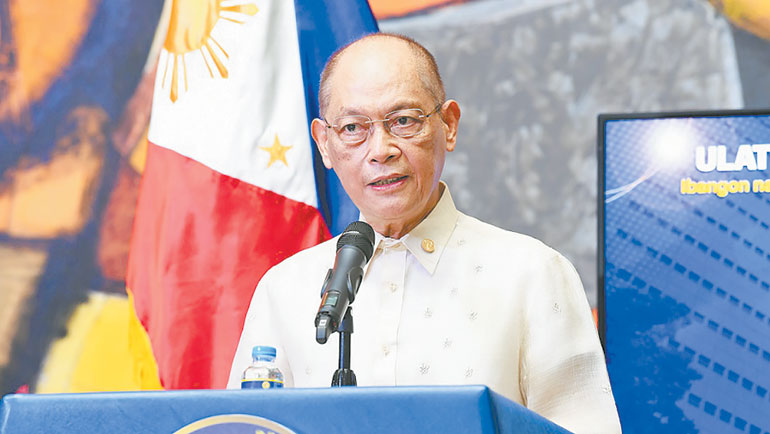
Bangko Sentral ng Pilipinas Governor Benjamin E. Diokno

LOCAL government units (LGUs) will be expected to take on a greater role in guiding the economy to a recovery, after LGUs gained a greater share of funds from the National Government in the wake of the Supreme Court’s Mandanas ruling, Finance Secretary Benjamin E. Diokno said.

“When the pandemic hit, LGUs had to assume new and unfamiliar roles in the delivery of public services to their constituents, especially those in the most vulnerable sectors. As a result, the health crisis had a significant impact on the fiscal resources of many localities,” Mr. Diokno was quoted as saying in a statement issued by the Department of Finance (DoF), detailing his remarks to local officials in Leyte and Samar on Aug. 25.

“Local government finance, in particular, will be even more important now as the revenue share of LGUs has increased with the implementation of the Supreme Court ruling… You are now primarily responsible and accountable for the provision of basic services and facilities fully devolved to LGUs,” he added, calling for improvements in revenue collection and resource mobilization through digitalization, among others.

The Supreme Court granted LGUs a larger share of the national taxes after resolving a long-running dispute over their 40% share of the National Government’s “internal revenue,” as the Local Government Code of 1991 was originally worded. As a result, the National Government used to release to LGUs the Internal Revenue Allotment (IRA), based largely on the collections of the Bureau of Internal Revenue.

The court ruled instead that LGUs were entitled to a 40% share of all national taxes, including those collected by non-BIR agencies. The name of the IRA was duly changed to the National Tax Allotment.

The ruling raised the LGU allocation to P959 billion this year, up 37.89%.

In response, the National Government started devolving some of its functions, which will now be performed at the LGU level.

Mr. Diokno said the issue has become whether LGUs are able to spend their newly expanded take from the national taxes.

“Realistically, because you are giving LGUs more money, the problem pointed out by the World Bank, and I agree, is that many LGUs won’t be able to spend the money. It’s because of the lack of capacity. In fact, even before the crisis, local governments already had a surplus position. They usually have large surpluses because they are not able to spend their money,” Mr. Diokno told the Senate committee on local government last month.

In his message to local leaders, Mr. Diokno called for greater professionalism in the management of LGU finances. He cited the Standardized Examination and Assessment for Local Treasury Service program of the Bureau of Local Government Finance as one such program that will build capacity within the local government treasury service.

He also called on local governments to implement a “just, equitable, and efficient real property valuation system. The measure will assist the LGUs in optimizing revenue collections, which in turn will promote genuine local autonomy.”

Other items in the administration’s legislative agenda for subnational governments include the LGU Income Classification bill and the LGU Property Insurance bill, the DoF said.

The former “seeks to adjust the income thresholds and regularize the review of the income classification of all provinces, cities, and municipalities,” while the latter “proposes to widen the scope of the insurance coverage for local government assets.”

“We are pushing for measures amending certain fiscal provisions of the Local Government Code. These amendments include simplifying the rate structure of local business taxes; assigning more revenue-productive taxes to LGUs; and providing a mechanism for administrative recourse in case of disputes related to LGU taxing powers,” Mr. Diokno said.

Mr. Diokno also asked LGUs to take advantage of recent reforms such as amendments to the Public Service Act, Retail Trade Liberalization Act, and Foreign Investments Act, to achieve self-sufficiency.

“We have brought down the cost of doing business through the Corporate Recovery and Tax Incentives for Enterprises Act or CREATE. The law immediately cuts the corporate income tax rate by 10 percentage points for micro, small, and medium enterprises, and 5 percentage points for all other corporations,” Mr. Diokno said.

“The modernized fiscal incentives system gives superior incentives to investments in the countryside to attract investors to set up their business in areas outside of Metro Manila,” he added. — Diego Gabriel C. Robles

Share of RE in energy mix declines to 28.9% at end of 2021

WEGEN-ENERGY.COM

THE share of renewable energy (RE) in the power generation mix fell to 28.9% at the end of 2021 from 32% in 2016, according to a Department of Energy (DoE) accomplishment report issued by the previous Secretary. 

The report indicated that coal-fired power plants remain the top source of power in terms of installed capacity, with a 57.5% share at 11,684 megawatts (MW) in 2021 from 7,419 MW in 2016.

RE capacity at the end of 2021 was 7,965 MW, up from 6,994 MW in 2016.

According to the DoE’s National Renewable Energy Program, the department is targeting an RE share of capacity of 30% by 2030 and 50% by 2040. 

At the end of 2021, oil-fired power facilities accounted for 16.1% or 4,417 MW of the energy mix in terms of capacity and natural gas with 12.5% or 3,453 MW. In 2016, oil-fired facilities accounted for 18.3% of the power mix by capacity, or 3,986 MW and natural gas 15.7% or 3,431 MW.

The DoE said that at the end of 2021, about 1.1 million households remained unserved, posting an electrification level of 95.41% households, equivalent to 25.02 million households enjoying electricity service.

Luzon posted an electrification level of 98.7% of households, with the Visayas at 96.8%, and Mindanao at 86%. The National Capital Region and Caraga have attained total electrification. 

The DoE said in light of the depletion of the Malampaya gas field, it has approved six proposed Liquefied Natural Gas (LNG) import terminal projects, with operations expected to start in 2022 or 2023.

Currently, the DoE said that about 20% of the country’s total power requirement and 27% of the Luzon Grid serviced by plants drawing gas from Malampaya.

Estimated investment for the terminal projects is P51.2 billion, among the approved projects expected to commence operations by 2022.

These include that of FGEN LNG Corp. and Linseed Field Corp. which is expected to service the natural gas requirements of the facilities depending on the Malampaya gas field.    

Terminals operated by Energy World Gas Operations Philippines, Inc., Excelerate Energy LP, and Shell Energy Philippines, Inc. are expected to commence operation by 2023. That of Vires Energy Corp., is set to commence operations by January 2025. — Ashley Erika O. Jose 

Farm mechanization agency under pressure over disbursement performance

PHILSTAR FILE PHOTO

THE Philippine Center for Postharvest Development and Mechanization (PhilMech) faced questioning from the Senate after disbursing only a fraction of its budget for mechanizing the rice farming industry.

At a hearing of the Senate Agriculture, Food and Agrarian Reform committee Senator Maria Imelda Josefa Remedios R. Marcos said the agency disbursed only P159 million of the funding available to provide tractors and other equipment to rice farmers, for a disbursement rate of 2.1% in the first half.

PhilMech supplies farm machinery to support industry modernization efforts of the Rice Competitiveness Enhancement Fund (RCEF), a component of the Rice Tariffication Law.

“Even looking at the obligation rate, your rate is a mere 5.8% performance, that is so small compared to before where you could deliver 82.75%. What happened?” Ms. Marcos said at the hearing, which was reviewing the agency’s statement of appropriations, obligations, and distributions and balances in the first half.

PhilMech Director Dionisio G. Alvindia, however, contended that “this year, from January to July 2022, we have already disbursed P3.2 billion and by the end of December, we would like to tell this honorable committee that we can obligate all the P5 billion that is allotted for 2022.”

The discrepancy in the estimates of disbursement performance as reported by the agency and by Ms. Marcos was not explained. Mr. Alvindia said, however, that he has dropped other assignments to focus wholly on PhilMech.

“Yesterday, I asked the Department of Agriculture to relieve me from the Philippine Integrated Program just to concentrate on the PhilMech activities, because when I took my leadership position at PhilMech on March 3, we inherited a lot of problems,” Mr. Alvindia said.

Senator Cynthia A. Villar, who chairs the committee, cited two memoranda which called for the creation of an advisory council to implement the mechanization program of the RCEF. She called the advisory council counter to the intent of the Rice Tariffication Law.

She threatened legal action “if you don’t stop this advisory committee because when we passed the Rice Tariffication Law, in creating the Rice Competitiveness Enhancement Fund, I remember we gave the authority to PhilMech.”

The tasks associated with modernizing the rice industry were parceled out to various government agencies to ease implementation, Ms. Villar said. “Because if you give it to the (Department of Agriculture), it will not be implemented because they will point fingers at each other when mistakes are made, which is happening today.”

“If (the task was assigned to) PhilMech, then it should answer for it. If it was not implemented, PhilMech should be held accountable, that is the spirit of the law,” she added.

Ms. Villar said only PhilMech is authorized to implement the RCEF’s mechanization program, and not an advisory council.

The Rice Tariffication Law, or Republic Act 11203, liberalized rice imports, allowing private parties to bring in shipments of the grain. These importers, however, had to pay tariffs of 35% on Southeast Asian rice, thereby helping raise funds for RCEF and other modernization initiatives.

Tariffs provide RCEF P10 billion worth of funding a year for six years to support farm mechanization (50%), seed development (30%), training (10%), and credit assistance (10%).

“Based on studies, the reason our rice farmers are not competitive is that they are not mechanized and they are not using good, productive seed,” Ms. Villar said, “which is why a large budget of the Rice Competitiveness Enhancement Fund was given to PhilMech and 30% to PhilRice (Philippine Rice Research Institute) so that they will provide the farmers the inbred seed that they need.”

She said the cost of producing rice in the Philippines is P12 per kilogram, double the cost of production in Vietnam.

“I only agreed to pass that Rice Tariffication Law because all proceeds will be given to farmers,” Ms. Villar said.

The Senate panel asked the agency to commit to implementing the mandate of the law and send the necessary documents for its implementation to the committee, and Mr. Alvindia offered to resign if disbursements do not pick up. — Alyssa Nicole O. Tan


DoTr to foster competition in automated fare system

PHILSTAR FILE PHOTO

THE Transportation department said on Thursday that the automated fare collection system (AFCS) will be opened up to competition, barring monopolies from seizing control of a key component of the transport modernization program.

“We want an open automated fare collection system to avoid a monopoly and what that achieves is choice — choice for our public transport operators on which equipment to use, AFCS provider, and overall maintenance they have to adopt (to lower) the overall cost of our transportation service,” Transportation Undersecretary for Planning and Project Development Timothy John R. Batan said during the interim launch of the AFCS at the Parañaque Integrated Terminal Exchange.

The department also signed an agreement with Land Bank of the Philippines (LANDBANK) on Thursday for the rollout of the Europay, MasterCard and Visa (EMV)-compliant AFCS.

According to LANDBANK, a total of 150 public utility vehicles (PUVs) in the National Capital Region, Central Luzon, Calabarzon, and Metro Cebu will participate in the AFCS pilot test.

“The AFCS, which allows the convenient use of EMV-compliant contactless credit, debit and prepaid bank cards as cashless payment instruments in public transport modes, will be tested under a real-time operational conditions in preparation for its full and commercial implementation,” the bank said.

It said that only LANDBANK prepaid and credit contactless cards will be accepted and processed in the 150 participating PUVs during the first month of the AFCS pilot period.

“Once the necessary regulations or policies have been issued, the LANDBANK AFCS solution can also accept and process the EMV contactless cards issued by other banks,” it said.

The bank said that it has distributed more than 4.5 million EMV cards that can be used in the AFCS system, with another 1.9 million cards available for account holders to claim.

Transportation Secretary Jaime J. Bautista said: “The institutionalization of the AFCS will bring us closer to the goal of achieving global standards in cashless payments when commuting, following the norm in many other countries that have long been using this system.”

“I would like to believe that the majority of our commuters, not just here in Metro Manila, have overcome the reluctance to embrace technology in our mass transport system because they have seen the significance of technological advancements to ease their commute,” he added.

LANDBANK President and Chief Executive Officer Cecilia C. Borromeo said the bank “fully supports the AFCS project for convenient and safe cashless payments in our PUVs.”

“Through LANDBANK Contactless Cards, we look forward to making the daily journey and payment experience of commuters as seamless as possible.” — Arjay L. Balinbin

Electric vehicle law IRR due on Sept. 8

Image via Ivan Radic/CC BY 2.0

THE Departments of Energy (DoE) and Transportation (DoTR) said they plan to issue the implementing rules and regulations (IRR) of the Electric Vehicle Industry Development Act (EVIDA) on Sept. 8.

EVIDA, also known as Republic Act No. 11697, offers incentives for the adoption of electric vehicles and the building of charging stations. EVIDA also sets a 5% EV minimum share in corporate and government vehicle fleets, the provision of dedicated parking slots, the installation of charging stations in parking lots and gasoline stations, green routes, and support for domestic EV manufacturing.

Section 30 of the EVIDA tasks the DoE, DoTR, and other agencies with developing the IRR. The two departments carried out public consultations on Aug. 19, 23, 25 and 31.

“We are very pleased with the outcome of this public consultation,” Mark Steven C. Pastor, Transport undersecretary, said in a statement. — Ashley Erika O. Jose