Home Blog Page 538

Activa Flex by Filinvest Land: Your landmark investment in the heart of Cubao

A Transit-Oriented Address with Built-In Demand

In real estate, location is everything — and few addresses rival Cubao’s iconic corner of EDSA and Aurora Boulevard. With direct access to LRT-2, MRT-3, and major transport hubs, Activa Flex stands at the nexus of Metro Manila’s commuter flow. For investors, this means consistent rental demand, strong foot traffic, and a built-in market of professionals, students, and entrepreneurs who value accessibility.

A Mixed-Use Ecosystem That Drives Value

Part of the 1.3-hectare Activa mixed-use hub, Activa Flex rises within a complete master plan that integrates residences, offices, retail, and lifestyle spaces. This synergy amplifies property value — your unit isn’t just a standalone purchase, but part of a thriving live-work-play environment.

Residential
Flexible options from Studio, 1-BR, and 2-BR units (20-58 sq.m.) for professionals, couples, families, and students — ideal for end-use or steady rental income.

Activa Flex 2BR unit

Office
20-58 sq.m. Small Office / Home Office (SOHO) units for start-ups, 23-65 sq.m. Regular Offices for professionals, and 150-245 sq.m. Compound Offices for enterprises — all tailored to today’s agile businesses.

Activa Flex compound office

Lifestyle Mall
Filinvest Malls Cubao is a 5-level lifestyle mall right at your doorstep offering shopping, dining, entertainment, and essentials that elevate day-to-day living.

Secure Your Growth in Cubao’s Prime Location

Unlike traditional properties, Activa Flex offers dual value — a lifestyle address and a strategic income-generating asset. With its central location, mixed-use advantage, and diverse unit offerings, Activa Flex gives investors multiple ways to build value. Whether a residential unit through short-term rentals, an office unit for long-term leasing or business expansion, it’s an investment built for income today and growth tomorrow.


Spotlight is BusinessWorld’s sponsored section that allows advertisers to amplify their brand and connect with BusinessWorld’s audience by publishing their stories on the BusinessWorld Web site. For more information, send an email to online@bworldonline.com.

Join us on Viber at https://bit.ly/3hv6bLA to get more updates and subscribe to BusinessWorld’s titles and get exclusive content through www.bworld-x.com.
Speaker may quit amid flood control scandal

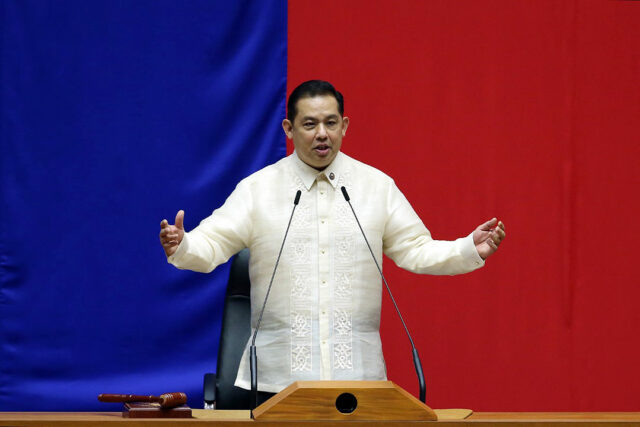
House Speaker Ferdinand Martin G. Romualdez — PHILIPPINE STAR/KRIZ JOHN ROSALES

By Kenneth Christiane L. Basilio

House Speaker Ferdinand Martin G. Romualdez is planning to step down, his deputy said on Wednesday, a move that could cap a leadership shakeup in Congress amid mounting backlash over bogus flood control projects.

Deputy Speaker and Antipolo Rep. Ronaldo V. Puno said Mr. Romualdez had urged party leaders in the House of Representatives to support Isabela Rep. Faustino “Bojie” Dy III as his successor and help him steer the 317-member chamber through mounting scrutiny of anomalous flood control infrastructure.

“Every time we party leaders meet, Speaker Martin often mentions that he’s seriously considering stepping down,” he told DZMM radio in Filipino. “He says the controversy has become too much, and he wants to defend the reputation of our lower chamber.”

The offices of Mr. Romualdez and Mr. Puno did not immediately reply to separate Viber messages seeking comment.

Mr. Romualdez’s resignation is the culmination of a broader congressional leadership shakeup that had been brewing since early September, and has already triggered a change in Senate leadership, with Senator Vicente “Tito” C. Sotto III replacing Francis G. Escudero amid a fallout from the flood control scandal.

Mr. Romualdez on Monday said the House would confront issues, including allegations linking lawmakers to flood control projects, in an open and accountable manner.

The Speaker post carries significant political clout and is traditionally held by an ally of the sitting President. It holds influence over the chamber, where tax measures and the annual national budget originate, and plays a key role in steering administration priorities through the House.

Mr. Dy, 64, is a member of President Ferdinand R. Marcos, Jr.’s Partido Federal ng Pilipinas and returned to Congress after last serving as a lawmaker in the 2000s. He held a single term as vice-governor of Isabela, a northern province where his family maintains political influence.

Mr. Dy’s elevation is seen as a “continuity” move for the Marcos administration and might be aimed at shielding the President’s allies from blowback following backlash over alleged ties to shady infrastructure deals, said Arjan P. Aguirre, who teaches political science at the Ateneo de Manila University.

“The leadership change might be an attempt by the Marcos bloc to preempt any potentially untoward consequences from the ongoing probe into the flood control mess,” he said by telephone.

Reports of anomalies in multibillion-peso infrastructure contracts have ignited public outcry and sparked pockets of protests across the Philippines, a country frequently hit by severe flooding.

TikTok lives: US, China in deal for app to keep operating in US

REUTERS

WASHINGTON – President Donald Trump on Tuesday announced an agreement between the US and China to keep TikTok operating in the United States, with three sources familiar with the matter saying the deal was similar to one discussed earlier this year.

The agreement requires TikTok’s American assets to be transferred to US owners from China’s ByteDance, potentially resolving a saga that has lingered for nearly a year.

A deal for the popular social media app, which counts 170 million US users, would represent a breakthrough in months-long talks between the two biggest economies as they seek to defuse a wide-ranging trade war that has unnerved global markets.

“We have a deal on TikTok … We have a group of very big companies that want to buy it,” Trump said at a White House briefing, without providing further details. The announcement comes a day before a September 17 deadline to sell or shut down the short video app.

Later in the day the White House extended that deadline until December 16. The White House declined to provide any further details on the agreement with China.

The delay will give ByteDance another 90 days to finalize an agreement to transfer TikTok’s American assets to US owners, suggesting much work needs to be done to close the complex transaction.

The US entity will have an American-dominated board, the Wall Street Journal reported, with one member designated by the US government.

The idea takes a page from a recent national security agreement inked by the Trump administration that allowed Nippon Steel to buy US Steel after allowing the US to name a board member, in addition to having a Golden Share.

Any agreement may require approval by the Republican-controlled Congress, which passed a law in 2024 during the Biden Administration that required TikTok’s divestiture due to fears that its US user data could be accessed by the Chinese government, allowing Beijing to spy on Americans or conduct influence operations through the app.

The basics of the new deal, also similar to April, include that ByteDance will keep the single largest ownership stake at 19.9%, just under a 20% threshold, two of the sources said. The consortium that would hold 80% includes ByteDance’s current shareholders Susquehanna International Group (SIG), General Atlantic, and KKR, as well as new investors such as Andreessen Horowitz. Oracle is also likely to take a stake, and the Wall Street Journal reported that Silver Lake would invest as well.

While the broad terms are expected to remain the same, the sources did say they do not know what the final deal would exactly look like, given the potential for last-minute changes.

US Treasury Secretary Scott Bessent told CNBC on Tuesday the commercial terms of the deal had, in essence, been done since around March with just a few details left to be ironed out.

“This deal wouldn’t be done without proper safeguards for US national security,” Bessent said. “It seems as though we were also able to meet the Chinese interest.”

CNBC reported Tuesday that the deal is expected to be closed within the next 30 to 45 days, and that the agreement will include existing investors in TikTok’s China-based parent, ByteDance, and new investors.

The details are in line with Reuters’ reporting in April that the deal would spin off TikTok’s US operations into a new company based in the US and majority-owned and operated by US investors.

The Trump administration has declined to enforce the law due to worries it would anger TikTok’s huge user base and disrupt political communications, instead extending the divestiture deadline on three separate occasions.

Trump, who has credited TikTok with helping him win re-election last year and has 15 million followers on his personal account, was expected to extend the deadline for the fourth time. The White House also launched an official TikTok account last month.

TARIFFS AND TIKTOK

A deal for TikTok, which had been in the works in the spring, was put on hold after China indicated it would not approve it following Trump’s announcements of tariffs on Chinese goods.

Washington has said that TikTok’s ownership by ByteDance makes it beholden to the Chinese government.

But the company has said US officials have misstated its ties to China, arguing its content recommendation engine and user data are stored in the US on cloud servers operated by Oracle, while content moderation decisions that affect American users are also made in the US.

CNBC reported on Tuesday that Oracle will keep its cloud deal with TikTok. Reuters reported earlier this year that the White House was working on a plan to tap Oracle, along with a group of outside investors, to control the app’s operations.

As part of the plan, Oracle would have been responsible for addressing national security issues, Reuters had reported.

Oracle shares rose 1.5%.

A framework agreement was reached by officials from both countries on Monday. A final confirmation on the deal is expected on Friday in a call between Trump and Chinese President Xi Jinping.

Trump said in March that his administration was in touch with four different groups on TikTok’s sale. Microsoft, Amazon, billionaire Frank McCourt and a consortium led by the founder of OnlyFans have been among the bidders, according to reports. — Reuters

PHL car sales down 7.6% in August

Motorists are stuck in traffic along Commonwealth Avenue in Quezon City, July 28, 2022. — PHILIPPINE STAR/MIGUEL DE GUZMAN

By Justine Irish D. Tabile, Reporter

PHILIPPINE VEHICLE sales declined year on year in August to the lowest volume in four months, dragged by weaker demand for both passenger and commercial cars, according to industry data.

A joint report by the Chamber of Automotive Manufacturers of the Philippines, Inc. (CAMPI) and the Truck Manufacturers Association (TMA) showed total vehicle sales fell by 7.6% from a year earlier to 36,174 units last month.

The drop was the slowest since the 10% decline in April, and the lowest volume since the 33,580 units sold that same month. On a monthly basis, vehicle sales slid 5.5% from 38,295 units in July.

Auto Sales (August 2025)

“Despite a modest dip in month-on-month figures, the industry remains optimistic, driven by evolving consumer preferences and a growing shift toward sustainable mobility,” CAMPI said in a statement on Tuesday.

Passenger car sales, which made up over a fifth of industry volume, slumped 20% year on year to 7,591 units in August. Compared with July’s 8,120 units, passenger car sales were down 6.5%.

Commercial vehicle sales, which accounted for almost four-fifths of total sales, fell 3.5% to 28,583 units in August from a year earlier. This was also 5.3% lower month on month.

Within the commercial vehicle segment, light commercial vehicle sales dropped 4.4% year on year to 20,852 in August, while sales of Asian utility vehicles (AUV) inched up 0.2% to 6,840 units.

Month on month, light commercial vehicle sales were down 7.4%, while AUV sales rose 2.6%.

Sales of light- and medium-duty trucks and buses fell 11.6% and 10.6% year on year to 555 and 279 units, respectively, while sales of heavy-duty trucks and buses rose 26.7% to 57 units. Compared with July, sales of light, medium, and heavy trucks fell 8.6%, 7.6% and 27.8%, respectively.

From January to August, new car sales edged up by 0.2% to 305,381 units from a year ago. The growth was supported by commercial vehicles, whose sales rose 8.7% to 244,023 units. Passenger car sales, on the other hand, dropped 23.6% to 61,358 from a year earlier.

CAMPI said commercial vehicles remained the anchor of industry sales, while electrified vehicles (xEVs) gained traction, now accounting for 6% of the car market.

The industry sold 2,244 xEVs in August, or 6.2% of total sales, though this was down 17.1% from the 2,707 sold in July. From January to August, xEV sales reached 18,439 units, representing 6.04% market share.

Broader global and domestic risks are weighing on auto sales, said Michael L. Ricafort, chief economist at Rizal Commercial Banking Corp.

“Protectionist policies, tensions in the Middle East and other geopolitical risks are headwinds that reduce sales, incomes, employment and other business opportunities,” he said in a Viber message. “That could reduce the ability to pay by borrowers, including those with auto loans.”

He also cited the Chinese “ghost month” belief, saying it might have discouraged some buyers in August.

Still, he expects better prospects in the coming months. “Better weather conditions would help improve vehicle sales data, especially towards the Christmas holiday season, amid lower interest rates that help increase demand for vehicles and auto loans,” he added.

The August figures show weaker demand across segments, John Paolo R. Rivera, a senior research fellow at the Philippine Institute for Development Studies, told BusinessWorld.

“Key drivers include higher interest rates, which make financing costlier, inflation edging up again, and consumer caution ahead of the ‘ber’ months,” he said in a Viber message.

He added that while the holiday season could spur some recovery through promotions and increased spending, the rebound might be modest given inflation, peso volatility and trade uncertainties tied to US tariffs.

Toyota Motor Philippines Corp. remained the dominant player with 146,357 units sold from January to August, up 4.1% from 140,654 units last year. It had a 47.93% market share.

Mitsubishi Motors Philippines Corp. ranked second with 57,908 units sold, down 1% from 58,513 units. Its market share was 18.96%.

Nissan Philippines, Inc. placed third with 15,160 units sold, down 17% year on year, accounting for 4.96% of the market.

Ford Motor Co. Philippines, Inc. sold 14,940 units, down 21.2%, while Suzuki Philippines, Inc. sold 14,519 units, up 9.9%.

Philippines may lose P30B from zero-tariff deal on US goods

PHILSTAR FILE PHOTO

By Kenneth Christiane L. Basilio, Reporter

THE PHILIPPINES risks losing as much as P30 billion in revenues if the government implements a zero-tariff scheme on selected American goods, the Bureau of Customs (BoC) told congressmen on Tuesday.

Customs Commissioner Ariel F. Nepomuceno said the agency projects P27 billion to P30 billion in collections from US imports such as vehicles, pharmaceuticals and soybeans this year. That revenue, however, would be foregone should tariffs be scrapped as part of trade talks with Washington.

“The reduction of tariff from our US imports… will impact our collections,” he told a House of Representatives hearing.

The discussions come as the US seeks wider trade concessions from Manila. US President Donald J. Trump earlier announced a 19% tariff on Philippine exports to the US, slightly lower than the 20% floated in August. In turn, the Philippines agreed in principle to exempt US cars, wheat, soybeans and medicines from domestic tariffs.

The Philippines had initially faced a 17% tariff in April.

Trade Undersecretary Allan B. Gepty said last month zero tariffs on American goods had not been formally granted, stressing that negotiations were continuing. Finance Secretary Ralph G. Recto also said in July that foregone revenues could reach about P6 billion should the country agree to a narrower set of exemptions.

However, Mr. Nepomuceno’s estimate suggests a much bigger revenue impact if a broader tariff cut is applied.

The zero-tariff policy could complicate the government’s fiscal consolidation plans, John Paolo R. Rivera, a senior research fellow at the Philippine Institute for Development Studies, told BusinessWorld.

“The potential revenue loss is substantial, especially given the National Government’s ongoing efforts to manage the fiscal deficit and rising debt levels,” he said in a Viber message.

The Philippines’ debt-to-gross domestic product ratio stood at 63.1% as of end-June, the highest since 2005 and above the 60% threshold considered sustainable for developing economies.

Outstanding debt reached a record P17.56 trillion in July, up 11.9% from a year earlier and already surpassing the government’s P17.36-trillion projection for 2025.

Removing tariffs on selected US goods might ease consumer prices, but Mr. Rivera said the government should strengthen tax enforcement to offset revenue losses from the zero-tariff treatment.

“Beyond revenue concerns, the broader market implications could be mixed,” he said, noting that it could lead to cheaper goods but disproportionately affect producers.

“It may expose local producers, especially in agriculture and light manufacturing, to stiffer competition from cheaper US imports, which could affect domestic production and employment in vulnerable sectors,” he said.

Despite the risks, the Customs bureau expressed confidence in meeting its 2025 collection goals.

Customs Assistant Commissioner Vincent Philip C. Maronilla reported that revenues hit P543.95 billion in the first seven months of the year.

“We’re pretty confident that we will reach, if not surpass, our 2025 collection target,” he told lawmakers.

The BoC is tasked with collecting P1.06 trillion this year, 14.28% higher than its actual collection of P931.05 billion last year.

Value-added tax (VAT) on imports has been the “largest and most consistent revenue contributor,” Mr. Maronilla said.

From January to July, VAT collections reached P467 billion, close to the Bureau of Internal Revenue’s P473-billion full-year target.
Economists said the government now faces a difficult balancing act between maintaining fiscal revenues and deepening trade relations with the US.

“While such a policy might bring short-term consumer gains, it must be approached with caution and complemented by safeguards,” Mr. Rivera said.

He added that any decision must weigh the potential benefits of cheaper imports and stronger trade ties against the long-term risks of eroding government revenue and weakening domestic producers.

Federal Reserve move key to BSP rate cut — Finance chief

PHILIPPINE STAR/MIGUEL DE GUZMAN

By Aubrey Rose A. Inosante, Reporter

THE Bangko Sentral ng Pilipinas (BSP) may deliver one more policy rate cut before year-end, but the move could depend on whether the US Federal Reserve lowers borrowing costs in its meeting this week, Finance Secretary Ralph G. Recto said on Tuesday.

Mr. Recto, who sits as a member of the BSP’s Monetary Board, told reporters the central bank is weighing the likelihood of the Fed’s first rate reduction this year and its implications for global capital flows.

“(This) depends on what happens in the US as well with the Fed,” he said. “[It] depends of course on our inflation numbers. But clearly, I think we can reduce the policy rate by another 25 basis points (bps).”

The Finance chief projected that the BSP might still implement two “safe” cuts of 25 bps each at its policy meetings on Oct. 9 and Dec. 11.

The BSP resumed monetary easing after inflation cooled within its 2-4% target, though a recent uptick in August could complicate its policy path.

Inflation averaged 1.7% in the first eight months, matching the BSP’s full-year forecast. The Philippine Statistics Authority will release September inflation data on Oct. 7.

Last month, the Monetary Board cut the benchmark rate by 25 bps to 5%, the lowest since November 2022. Since it started its easing cycle in August 2024, the BSP has slashed policy rates by 150 bps, including two separate 25-bp cuts each in April and June.

BSP Governor Eli M. Remolona, Jr. earlier noted that while the central bank had reached a “sweet spot” in its easing cycle, there is still space for another cut. However, he cautioned that shifts in inflation and external factors could alter the trajectory.

Mr. Recto said the Philippine economy remains on track to achieve its 2025 growth target of 5.5% to 6.5%. He also said the central bank is not yet in the final stretch of its easing cycle.

He added that the Philippines’ possible inclusion in JPMorgan’s Government Bond Index for Emerging Markets could boost investor confidence and help lower borrowing costs.

“What is important is that we may be included in the JP Morgan index,” he said.
“That will reduce rates as well. We’re very excited about that, and we have a good chance of getting 3% [or] 4% now. We’ll be in that basket, [and it will be] good for our credit rating.”

The Department of Finance earlier said the Philippines has been placed on JPMorgan’s positive watchlist, a precursor to inclusion in the index. Such membership could channel billions of dollars of passive investment into peso-denominated government bonds.

In a separate commentary, Nomura Global Markets Research said the BSP still has space to ease policy further while balancing the government’s fiscal consolidation drive with growth support.

“The government remains committed to its fiscal consolidation agenda but is slowing the pace in order to support growth, while BSP still has some scope to ease further,” Nomura economist Euben Paracuelles said.

Meanwhile, Mr. Recto said the Philippines is unlikely to return to the Financial Action Task Force’s (FATF) “gray list” of jurisdictions under increased monitoring for money laundering amid the government’s anti-corruption drive.

“We are already catching them,” he said. “They are being sued. People will be jailed. We will get our money back,” he added, referring to investigations into money laundering involving former Public Works engineers. The officials allegedly funneled flood-control funds through casinos.

The FATF removed the Philippines from its gray list in February after improvements in anti-money laundering and counterterrorism financing frameworks.

Last week, Senator Panfilo M. Lacson revealed that some Public Works officials allegedly laundered billions of pesos siphoned from flood-control projects by gambling in casinos and converting funds into chips.

CA freezes assets linked to flood control scam

Portions of the revetment wall along the Tullahan River collapsed in North Fairview, Quezon City, Aug. 29, 2025. — PHILIPPINE STAR/MIGUEL DE GUZMAN

By Katherine K. Chan

THE Philippines froze bank accounts and insurance policies tied to 20 Public Works officials and six contractors in a widening probe of anomalous flood control projects, a move that could boost President Ferdinand R. Marcos, Jr.’s anti-corruption drive as he faces pressure to rein in ballooning debt.

The Court of Appeals (CA) approved a freeze order on the assets of 20 Public Works officials and six contractors linked to alleged anomalies in flood control projects, the Anti-Money Laundering Council (AMLC) said on Tuesday.

“The freeze order is a critical step toward the filing of appropriate civil and criminal cases, including the retrieval of any funds moved before the freeze, against those found to have laundered illicit proceeds,” AMLC Executive Director Matthew M. David told a news briefing.

He declined to disclose the value of the frozen accounts.

The freeze order followed a request filed by the Department of Public Works and Highways (DPWH) last week and the case marks the first time the Bangko Sentral ng Pilipinas (BSP) is invoking its expanded powers under the Anti-Financial Accounts Scamming Act (AFASA) to pierce bank secrecy rules.

The graft scandal threatens to further undermine confidence in the DPWH, one of the country’s biggest spending agencies and a driver of Mr. Marcos’s infrastructure push.

Public Works Secretary Vivencio “Vince” B. Dizon said banks had been directed to freeze the assets and vowed more cases would follow. “This is just the beginning,” he said in Filipino at the same briefing.

Among those named in the DPWH’s list are four members of the so-called “Bulacan Group of Contractors (BGC) boys”: former District Engineer Henry C. Alcantara, former Assistant District Engineer Brice Ericson D. Hernandez, Construction Division Chief Jaypee D. Mendoza and Project Engineer Arjay S. Domasig.

Six contractors were also identified, including Cezarah Rowena “Sarah” Discaya and Pacifico “Curlee” F. Discaya II of St. Timothy Construction, Sally N. Santos of SYMS Construction Trading and Mark Allan V. Arevalo of Wawao Builders.

“Preliminary findings of the AMLC point to a possible money laundering scheme involving public funds intended to fund flood control initiatives,” Mr. David said, adding that the probe would be expanded to cover all parties involved.

The DPWH has also asked the BSP to conduct its own probe into the bank accounts linked to the scheme.

“This is the first time BSP is using AFASA to join and assist other agencies in investigating and prosecuting the persons alleged to be involved in these crimes,” BSP General Counsel Roberto L. Figueroa said in a statement. “We are also keen to use this authority to uphold the integrity of our financial system against criminal actors.”

Under AFASA, the BSP may access bank records linked to illicit activity, bypassing bank secrecy and data privacy laws.

Mr. Dizon called the appellate court ruling a “major step” in ensuring accountability. “This is a major step in our road to make the people who did this accountable and to make sure that the people get their money back.”

He added that the government expects to file more cases against other personalities and firms as investigations continue, particularly with the creation of the Independent Commission for Infrastructure (ICI).

President Ferdinand R. Marcos, Jr. created the ICI through Executive Order No. 94, granting it authority to recommend civil, criminal and administrative charges in infrastructure-related anomalies.

DigiPlus to launch Brazil operations next week

DIGIPLUS.COM.PH

DIGIPLUS INTEractive Corp. (PLUS) is set to launch operations in Brazil on Sept. 22, its first overseas expansion as part of the company’s global growth strategy.

The company will introduce GamePlus as its initial platform in Brazil, featuring over 150 games in both free-to-play and real-money formats, DigiPlus said in a statement on Tuesday.

“GamePlus will soon add exclusive content inspired by local folklore, casual games, and sports, ensuring a culturally resonant experience,” DigiPlus Brazil Country Manager Graham Tidey said.

The company said it entered Latin America’s fastest-growing iGaming market as part of its global expansion strategy.

In March, DigiPlus appointed Mr. Tidey as country manager for its Brazil operations.

Its platforms include BingoPlus, ArenaPlus, and GameZone, which focus on interactive gaming and sports entertainment.

DigiPlus earlier announced the creation of a local team in Brazil to offer both global titles and content tailored to local players.

DigiPlus Chairman Eusebio H. Tanco said the company aims to provide a safe platform for digital entertainment in Brazil.

“We are committed to fostering a strong local talent base and ensuring our offerings are perfectly tailored for Brazilian players, from our exclusive games to our player protection measures,” he said.

The Brazilian government enacted online betting and gaming regulations in 2024, establishing licensing rules, consumer safeguards, and taxation. DigiPlus said this framework enabled the entry of international operators.

“DigiPlus sees the country’s strict compliance framework as an opportunity to differentiate itself by prioritizing transparency and player welfare,” it said.

The company said it plans to launch BingoPlus as its second platform in Brazil by 2026.

DigiPlus shares jumped by 25.14% or P4.65 to P23.15 each on Tuesday. — Alexandria Grace C. Magno

Missed the show? CCP Channel gives access to films, original productions, rare performances

IF YOU MISSED a play you really wanted to watch or wish you could see a performance from a few years back again, there is a way to do it. The Cultural Center of the Philippines (CCP) has launched the CCP Channel, an online streaming platform that provides easy access to award-winning films, original productions, and rare performances uncovered from the archives, among others.

The platform aims to “showcase the best of Filipino creativity,” drawn from recordings of shows streamed in recent years during the pandemic as well as older footage from decades past.

“There has always been a general feeling or misgiving that not too many people get to watch live shows in general. The number of people who can watch a live show is limited by the seating capacity of the venue and the limited runs, so there’s always been that desire for outstanding shows that more people could watch,” said Dennis Marasigan, artistic director of the CCP, in a Zoom interview with BusinessWorld.

“I think, because of the experience during the pandemic where people were able to watch shows that are videotaped and streamed live, there was a feeling of, ‘why can’t the CCP do that, make performances available to more people?’”

Since its launch last month, the CCP Channel has grown to feature 60 titles across seven categories: Theater, Film, Music, Dance, Education, CCP Specials, and CCP Classics.

The Theater section contains many plays from the Virgin Labfest, such as Ang Goldfish ni Prof. Dimaandal (2014), Birdcage (2017), and Dominador Gonzales: National Artist (2024). The platform also has one Tanghalang Pilipino production: Doc Resureccion: Gagamutin ang Bayan (2022).

The Film section has many titles from Cinemalaya and Gawad Alternatibo, including Gulong (2007), Halaw (2010), Rekorder (2013), Pan De Salawal (2018), and Dominion (2023). Meanwhile, the Dance section has no entries as of now — though in October they will upload performances by the Bayanihan Dance Company.

For the Music section, the CCP Channel offers the first three concerts of the 39th season of the Philippine Philharmonic Orchestra (PPO).

It may be a while before older performances will find their way to the platform, according to Mr. Marasigan.

“Because the CCP is under rehabilitation, many undigitized recordings are in boxes. We’ll have to sort through them and wade through whatever is made available first,” he told BusinessWorld. “We have the latest PPO season simply because it’s the most recent.”

Under the Education section, there are two seasons of the visual arts documentary series Cultural Cache, with the third and fourth arriving to the channel by October.

Under CCP Specials, one can binge watch the entirety of the Noli Me Tangere teleserye from 1993.

CCP Classics is potentially the most exciting section. Though it has no content at the moment, it will be showcasing snippets from archival recordings and footage.

“It’s a separate category because viewers who watch streaming services now are accustomed to a particular technical level for videos, and what we have from the ’70s to early 2000s tend to have a very low quality of videotaping,” Mr. Marasigan said.

Productions from the early years will also just be snippets, because the CCP doesn’t have the rights or clearance to post them in full, he added.

The monthly subscription of P99 and the yearly subscription of P599 will go to maintaining the website and paying for royalties for the materials.

“CCP isn’t really out to earn revenue from it. Our design is to make available as much of these productions as possible,” said Mr. Marasigan.

About 10 to 15 titles will be added each month. By October and November, there will be more Cinemalaya and Gawad Alternatibo films, Virgin Labfest plays, and performances by Ballet Philippines, the Philippine Madrigal Singers, and the Bayanihan Dance Company.

The long-term goal is to reach 300 titles, with a rotation of titles coming in and out per month, as with most streaming platforms.

Subscriptions are available via ccpchannel.culturalcenter.gov.ph.Brontë H. Lacsamana

P20-B wind power project to rise in Northern Samar by 2026

STOCK PHOTO | Image by Waldemar Brandt from Unsplash

SINGAPORE-BASED Vena Energy’s local unit Gemini Wind Energy Corp. (GWEC) said it is investing P20.2 billion in a 304-megawatt (MW) wind farm in Northern Samar, slated to start operations in late 2026, to help expand the country’s renewable energy capacity.

The Gemini Wind Power Project will span 777 hectares across 15 towns in the province, according to the company’s filing with the Department of Environment and Natural Resources.

The project will require 38 wind turbine generators, each with a rated capacity of 9 MW.

GWEC said the proposed wind farm “offers long-term solutions to the perennial shortfall in electric power supply to the Philippine economy and fully supports the objectives of the Renewable Energy Act of 2008.”

Compared with other technologies, the company said a wind farm was the “most commercially feasible” option to optimize the province’s geography and available resources, while leaving a minimal environmental impact compared with conventional coal and diesel facilities.

The project was among the winning bids under the government’s green energy auction in 2023.

It was also certified as an energy project of national significance by the Department of Energy and identified as a strategic investment by the Board of Investments.

Vena Energy is one of Asia’s largest renewable energy independent power producers. In the Philippines, it operates six power plants with a combined capacity of 330.80 MW across Negros Occidental, Rizal, Leyte, Ilocos Norte, and Bukidnon.

In August, Vena Energy said it had secured 1.1 gigawatts (GW) of additional offtake contracts and construction capacity in the Asia-Pacific since January, bringing its total portfolio to 9.7 GW. — Sheldeen Joy Talavera

Sotheby’s commissions slump by nearly 20% as luxury falters

SOTHEBYS.COM

SOTHEBY’S reported a nearly 20% drop in revenue from commissions and fees last year as sales of luxury items and works of fine art at auction dwindled.

Total revenues at the auction house controlled by telecommunications billionaire Patrick Drahi dropped to $1.13 billion in 2024 from $1.36 billion the year before, according to consolidated results filed by its holding company in Luxembourg this month.

Commissions and fees comprise the bulk of Sotheby’s revenues, and include the amount earned in its role as an agent for the sale of artworks, cars, and collectibles, either through auctions or private sales.

In total, the company reported a loss before taxes of $247.9 million in 2024. That compared with $106.3 million in 2023.

Sotheby’s, whose brand dates back to the 18th century, is struggling through a prolonged slump along with the rest of the art market. The group, which also provides loans backed by artwork as well as sales, was taken over by Mr. Drahi in 2019.

The sovereign wealth fund of Abu Dhabi, ADQ, took on a 24.2% stake in Sotheby’s Holdings UK last October, contributing $909.3 million. Sotheby’s used the proceeds of the injection, as well as a contribution from Mr. Drahi’s investment vehicle, in part to pay down debt and purchase a building on New York’s Madison Avenue.

The company reported around $5.54 billion in total liabilities, compared to $6.79 billion at the end of 2023. Bloomberg

Reissued 10-year bonds fetch lower rates before Fed review

BW FILE PHOTO

THE GOVERNMENT made a full award of the reissued Treasury bonds (T-bonds) it offered on Tuesday at a lower average yield on the back of strong investor demand and with the US Federal Reserve set to deliver its first rate cut for this year at this week’s policy meeting.

The Bureau of the Treasury (BTr) borrowed P25 billion as planned via the reissued 10-year bonds it auctioned off, with total bids reaching P77.174 billion or over thrice the amount on offer.

This brought the total outstanding volume for the bond series to P442.6 billion, the Treasury said in a statement.

It made a full award of the T-bond offering as the papers fetched an average rate that was lower than what was quoted at the previous auction and the current secondary market yield, it added.

The reissued bonds, which have a remaining life of nine years and seven months, were awarded at an average rate of 5.907%. Accepted yields were from 5.898% to 5.915%.

The average rate of the reissued papers was nine basis points (bps) lower than the 5.997% fetched for the series’ last award on Aug. 19 and 46.8 bps below the 6.375% coupon for the issue.

This was also 1.4 bps lower than the 5.921% fetched for the same bond series and 4.9 bps below the 5.956% quoted for the 10-year paper at the secondary market before Tuesday’s auction, based on the PHP Bloomberg Valuation Service Reference Rates data provided by the BTr.

“Demand remains strong, if marginally higher, compared to last week, despite the anticipated FOMC (Federal Open Market Committee) meeting,” a trader said in a text message.

The reissued T-bonds fetched lower rates after some P288.659 billion worth of bonds matured last week, which boosted market liquidity and demand as players sought to reinvest their cash for higher yields, Rizal Commercial Banking Corp. Chief Economist Michael L. Ricafort said in a Viber message.

Declining US bond yields amid heightened expectations of further monetary easing by the Fed this year due to weak economic data also drove domestic rates lower, he added.

The US central bank has kept its target rate at the 4.25%-4.5% range since December 2024.

Investors are betting that the Fed would resume its easing cycle this week and potentially leave the door open to further rate cuts, Reuters reported.

Markets see a rate reduction of at least 25 bps on Wednesday as a certainty, with a small chance of a supersized 50-bp cut. A total of 67 bps of reductions are seen over the rest of this year, rising to 81 bps by end-January.

Alongside the rate decision on Wednesday, investors will also focus on policymakers’ updated summary of economic projections and commentary from Fed Chair Jerome H. Powell.

The unprecedented pressure confronting the US central bank’s independence will also be in focus during Mr. Powell’s press conference.

US President Donald J. Trump, in a social media post on Monday, called on Mr. Powell to enact a “bigger” cut to benchmark interest rates in a social media post, pointing to the housing market.

Rapidly softening labor market data has been the key driver of the ramp-up in easing bets in recent weeks, resulting in a lower dollar and bond yields while pushing up equity prices, with Wall Street setting new records on Monday.

The BTr is looking to raise P220 billion from the domestic market this month, or P100 billion via Treasury bills and P120 billion through T-bonds.

The government borrows from local and foreign sources to help fund its budget deficit, which is capped at P1.56 trillion or 5.5% of gross domestic product this year. — Aaron Michael C. Sy with Reuters