Home Blog Page 5328

What makes an effective pitch

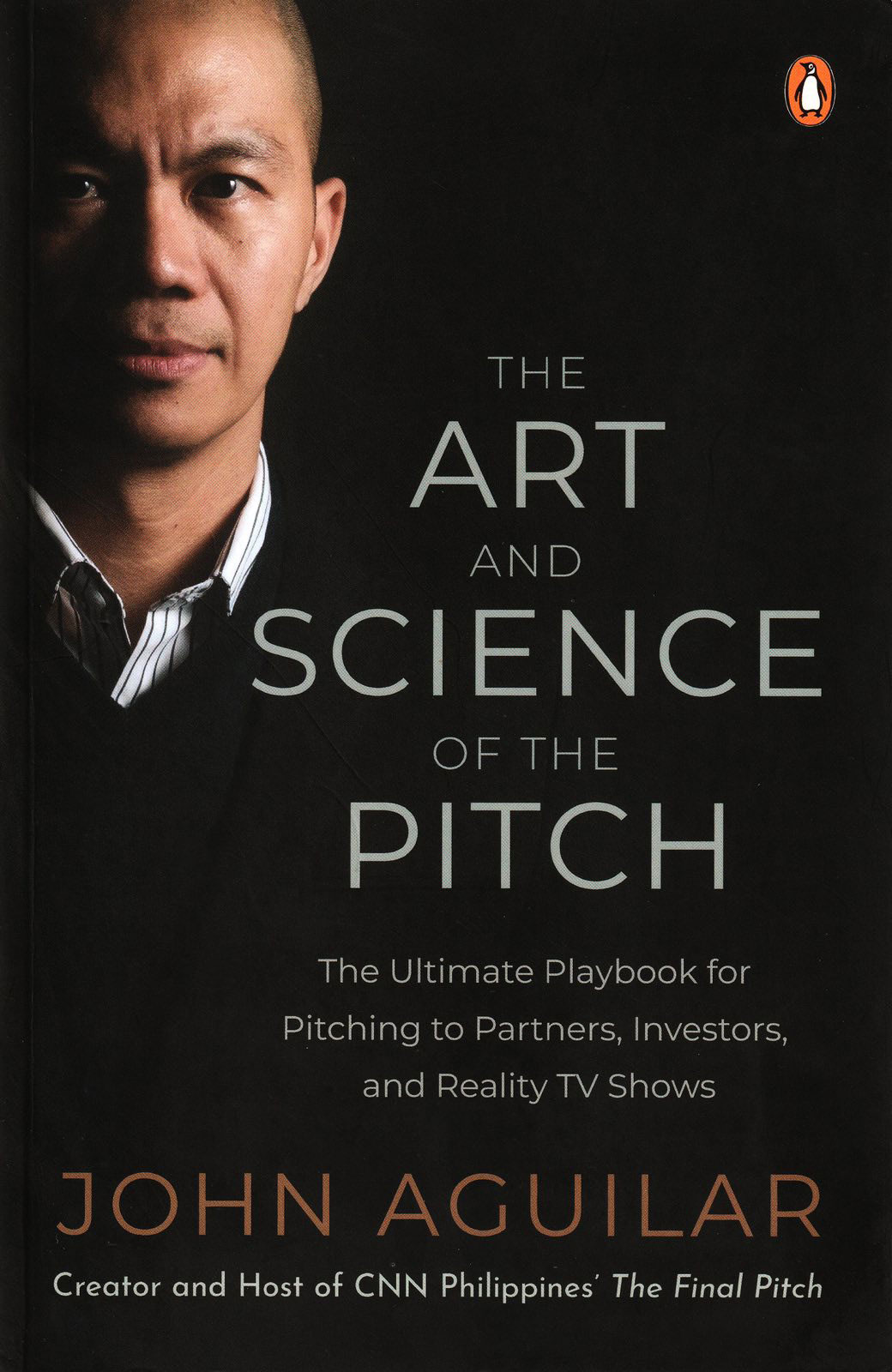
FOR serial entrepreneur and business reality show host John Aguilar, making a compelling business pitch that can win big-ticket investors is something that can be learned with much study and practice.

His latest book, The Art and Science of the Pitch: The Ultimate Playbook for Pitching to Partners, Investors, and Reality TV Shows, distills tips and techniques from founders who have pitched their way to million-dollar valuations.

“I wanted this book to be a way that my readers can pitch effectively — with whoever they are pitching to, for whatever purpose or whatever stage of an idea or business,” said Mr. Aguilar in a speech at the Jan. 25 book launch at Shangri-La Plaza mall in Mandaluyong.

Its goal is to provide insights for Filipino startup entrepreneurs with big ideas who want to make an impact by getting the funding they need, he explained.

The book features interviews with over 40 investors, venture capitalists, and startup founders. These include Mario Berta, founder and CEO of tech start-up FlySpaces, and Steve Sy, founder and CEO of e-commerce firm Great Deals, both of whom said during the launch that they identified the components of a great pitch in each interview.

Mr. Berta advised to match the English-speaking capabilities of the people being pitched to, either relying on immersive storytelling and narrative for proficient speakers or concise bullet points for those with a limited English vocabulary.

Mr. Sy, on the other hand, reminded e-commerce startup leaders that you can negotiate for what you want “if you know your business like the back of your hand, and how exactly it can scale with the right investments.”

Such tips and tricks can go a long way for anyone who is seeking a lifeline for how to pitch, according to Mr. Aguilar. He added that the book is a natural extension of his work as CEO of Manila-based startup venture builder Dragon’s Nest and as host of his CNN Philippines reality TV show, The Final Pitch.

Both projects have funneled millions of dollars to Filipino entrepreneurs and the local startup ecosystem, which he describes as young but rapidly growing.

“I’m also preparing to give an important pitch to strategic investors so that we can expand and grow the TV show’s impact exponentially,” he said.

Monica Hipolito-Aguilar, chief operating officer of Dragon’s Nest and executive producer of The Final Pitch, told BusinessWorld following the launch that he was referring to bringing the show to other Southeast Asian countries through AXN by end of year.

Meanwhile, the bestselling book (at least in Kinokuniya in Singapore and in Fully Booked in the Philippines) is set to be followed by another soon.

“There’s another book coming out, maybe within the quarter — Methods to Greatness with John Aguilar — in which he also interviewed iconic personalities here and around the world. It’s a handbook on how to live your life better,” Ms. Hipolito-Aguilar said.

She added that publishing company Penguin Random House has approved three of Mr. Aguilar’s book ideas, so there will be a third one coming up in the future.

The Art and Science of the Pitch is available globally through Amazon and Kindle, and in the Philippines through Fully Booked, National Book Store, Shopee, and Lazada. — Brontë H. Lacsamana

Holcim turns million-ton waste into alternative fuels, cement materials

HOLCIM PHILIPPINES FACEBOOK PAGE

HOLCIM Philippines, Inc. has converted about a million tons of waste into alternative fuels and cement raw materials through its waste management unit, the listed cement manufacturer and distributor announced on Monday.

“Our success in reusing discarded materials is further reducing our consumption of natural resources and carbon footprints. This also enables us to help industries and communities achieve their zero waste objectives,” Horia-Ciprian Adrian, president and chief executive officer of Holcim Philippines, said in a statement.

Through cement kiln co-processing, a waste management technology, the company said it was able to remove discarded materials away from landfills and helped 35 municipalities and cities across the country.

Its project unit, Geocycle, contributed to conserving virgin natural resources and avoiding high-carbon traditional fuels such as coal.

The company aimed to accelerate “circular construction” and help its industrial partners to reduce carbon emissions and manage wastes including non-recyclable plastics.

“We are excited to continue growing our co-processing operations to further contribute to building progress in the country,” Mr. Adrian added.

Aside from the project, Geocycle also conducted lectures on proper waste management for local governments and schools and participated in public forums to highlight the importance of conservation. — Sheldeen Joy Talavera

DMCI Homes unveils 1st Caloocan project

THE Calinea Tower offers various lifestyle amenities that provide leisure options often lacking in other condo projects around the area. — COMPANY HANDOUT

DMCI HOMES recently unveiled its first condominium project in Caloocan City.

In a statement, the Consunji-led developer said The Calinea Tower will have a single tower with 48 residential floors and offers “resort-inspired condominium-living.”

The Calinea Tower, located along M.H. Del Pilar St. in Grace Park, is scheduled to be completed in May 2028.

“The Calinea Tower will be a perfect symbol of the fast-paced development of this high-growth area with its premium features and innovative building design,” DMCI Homes Vice-President for Project Development Dennis Yap said.

The property will have a lap pool, a basketball court, a fitness gym, kiddie pool, children’s play area, indoor game area, and entertainment room. Other amenities include The Sky Promenade, Sky Deck Pool, Sky Lounge and a co-working space.

All units and common areas will have a dedicated commercial-grade internet connection.

The Calinea Tower features studio, one-, two-, and three-bedroom units, with sizes ranging from 25 square meters (sq.m.) to 88 sq.m. Unit prices start at P5.25 million.

Boyce Avenue returns to Philippines for three concerts

IT is safe to say that the boy band Boyce Avenue really likes performing in the Philippines — it will, after all, be returning for the 11th time in February for concerts in Manila, Cebu, and Davao.

Based in Florida, the US band Boyce Avenue — the band’s name is a combination of two streets the members grew up on in Sarasota — consists of the Manzano brothers, Alejandro Luis (lead vocals, guitar, piano), Fabian Rafael (guitar, vocals), and Daniel Enrique (bass, percussion, vocals). The band was formed in 2004 and began posting song cover videos on YouTube in 2007 which help paved their career as professional musicians. To date, they have over 4.8 billion YouTube views and over 16.2 million subscribers. The band frequently tours North America, South America, Europe, Asia, Australia, the Middle East and visits new countries every year.

Boyce Avenue will be performing in Manila on Feb. 11 at the Araneta Coliseum, in Cebu on Feb. 12 at the Waterfront Hotel Ballroom, and in Davao on Feb. 14 at the SMX Convention Center.  The group first performed in the Philippines in 2009.

“[We] are more excited to play live than we ever have been before just because we’ve taken a little bit of time off because of the pandemic and everything,” guitarist Fabian Manzano said during an online press conference on Jan. 25. “I think there will be genuine excitement that hopefully they’ll feel from us on stage,” he said, speaking about the Philippine audience.

SINGING ALONG
Filipino fans tend to sing along with the band’s love songs during live shows.

“We’ve always loved to do… these acoustic versions that by nature are putting more of the focus on the lyrics, and the melody and the emotion of the song,” said lead singer Alejandro Manzano.

“Whenever we’ve performed live, the crowds sing so passionately in the Philippines, especially to the love songs. So that’s kind of something that’s always struck us,” he said.

Joining the band as front acts for three concerts are singer and model Adie, and pop rock band Nobita. Pop rock band The Juans is joining the front acts for the Manila show only.

Singer-songwriter Adie is best known for his songsParaluman,” “Tahanan,” “Dungaw,” and “Mahika.” He is currently one of the top artists on Spotify Philippines, with over 3.6 million monthly listeners. OPM band Nobita entered the music scene with their song “Ikaw Lang” and the wedding-themed track “Unang Sayaw.” Meanwhile, The Juans are behind the chart-topping hits “Hindi Tayo Pwede” and “Hatid.”

“I think this is the most local acts we’ve ever had open for us. So, I think it’s not only going to be our show, but a whole night filled with a bunch of good music,” Fabian Manzano said.

YOUTUBE PERFORMERS
Over the last two years of the COVID-19 pandemic lockdown, said that they have become better musicians and released more songs on YouTube.

“There’s new songs for us to play in the concert,” he said.

While YouTube continues to be their primary platform for releasing and promoting music, the band has also continued to post music on Instagram (@boyceavenue) and TikTok (@boyceavenutiktok).

“We have continued to… also post our music on a lot of the other platforms. There’s always a different set of eyes and ears on these other platforms, [there] are always our younger people who are looking at something else,” Daniel Manzano, the band’s drummer, said.

“We do a little bit of all of it, but I have to say our heart always comes back to YouTube — that seems to be a platform that really appreciates high quality musical and video content,” he added.

Being siblings who grew up together, sharing everything from one room and toys to interests in a popular song, show, or movie helped them stay together as a band.

“It’s not to say that we don’t have conflicts or that we don’t have disagreements, but we find a way to make it work and to get through it…,” Alejandro Manzano said. “Maybe if we were just friends, there would have been moments that would have pushed us to a certain point. But I think by nature of being family and brothers we’ve always found a way to make it work and stick together.”

As for new music, Boyce Avenue will release a cover of “Beauty and the Beast,” which they recorded with Irish singer Mia Black, at a later date.

Tickets to the three concerts are on sale via TicketNet.com.ph and TicketNet outlets, with tickets for the Cebu and Davao shows also available via SMTickets.com and SM Ticket outlets. — Michelle Anne P. Soliman

Central banks’ inflation target faces post-pandemic reckoning

WASHINGTON/FRANKFURT/LONDON — Top central bankers, who credit the use of a 2% inflation target with anchoring decades of stable prices, are facing the first full-on test of how well that approach to monetary policy works once prices have erupted, and how strictly they’ll enforce it if damage to their economies intensifies.

By announcing an inflation goal, central bankers feel they build credibility for themselves and focus the planning of households and firms in ways that help keep inflation controlled. It’s a concept that seemed supported by the facts as the use of inflation targeting spread across the developed world from New Zealand in 1990 through Europe and to the United States and Japan in 2012 and 2013.

Those decades, up to the end of the first year of the coronavirus pandemic in 2020, saw inflation largely contained.

But they also coincided with trends in globalization, technology and demographics that helped. Since the onset of the pandemic and continuing with Russia’s invasion of Ukraine, those same forces may now be pushing prices in the other direction, challenging that shared monetary policy framework with a sort of adversity it has never confronted and, with ongoing supply shocks, may find hard to accommodate.

“Looking ahead, we may face a period of structurally higher inflation compared to the past two decades. The deflationary impact of localization is dissipating, and there will be inflationary pressures from global trade, climate transition, demographics and politics,” said Claudio Borio, head of the monetary and economic department at the Bank for International Settlements, an umbrella group for central banks.

Yet Mr. Borio said he did not favor increasing central banks’ inflation targets, an opinion that has become widespread among top policy makers — from hawk to dove — despite similarly broad concerns that the recent outbreak of inflation may be even more persistent than expected and the return to 2% all the more difficult to engineer.

At least at this point, the greater worry among central bankers is lost credibility should they not toe the line they drew for themselves.

“Is 2% sort of a magical number?” US Federal Reserve Vice Chair Lael Brainard said at a forum earlier this month. “Probably not. But it’s our number, and we are very committed to bringing inflation back to 2% … Achieving that target is just core to our overall monetary policy,” Ms. Brainard said, a sentiment echoed in central bank headquarters from Frankfurt to London to Tokyo.

“Let me be quite clear, there are no ifs or buts in our commitment to the 2% inflation target,” Bank of England Governor Andrew Bailey said last year. “That’s our job, and that’s what we will do.”

NOT THE ‘MOST SCIENTIFIC PROCESS’
The Fed is expected at its two-day policy meeting this week, as it has each year since 2012, to recommit to 2% inflation as the rate “most consistent over the longer run with the Federal Reserve’s statutory mandate” from the US Congress to promote “stable prices” alongside maximum employment.

Though the US central bank has made major changes along the way to its “Statement on Long-Run Goals and Monetary Policy Strategy,” it has never put the inflation target itself up for grabs on the grounds that a promise is a promise, and only renegotiated at great risk.

Yet the 2% number, as Ms. Brainard suggested, has no particular import in itself. Though now a global norm, it was less a product of deep analysis or statistical estimation than a best guess about an inflation rate that would capture the benefits central banks see in setting some sort of target, while remaining low enough that the public, in effect, wouldn’t notice.

Coming out of the high inflation environment of the 1970s and 1980s, policy makers recognized the need to cement their own inflation-fighting credibility, and saw commitment to an announced inflation target as an easy-to-communicate way to both steer public expectations and, assuming they stuck with it, build trust. 

At the same time, they wanted an inflation level consistent with long-term price stability, what former Fed Chair Alan Greenspan in one mid-1990s debate defined as a “state in which expected changes in the general price level do not effectively alter business or household decisions.”

While some inflation hawks still argue that level would be zero, there’s a broad consensus that modestly rising prices are healthy for an economy. It gives firms a way to adjust “real” labor costs without curbing hiring, and it gives central banks more room, through higher nominal interest rates, to manage economic downturns with interest rate cuts rather than the bond purchases and other less conventional measures used once policy rates hit the zero or near-zero level.

Officials in New Zealand, under political pressure to staunch high inflation in the 1980s, first put the idea into practice with an initial target between 0% and 2%.

“It wasn’t the most scientific process in the entire world,” said Michael Reddell, a former Reserve Bank of New Zealand economist. “Nobody had done this before us.”

‘OUR NORTH STAR’
Still, it stuck. It spread. And it arguably helped.

“I personally think that number made sense based on all the history, experience, and research… It has served us incredibly well,” New York Fed President John Williams said earlier this month. “That has helped transparency. It is helping the markets, and people understand what our North Star is.”

The debate yet to be joined, however, is what happens if the North Star proves less a destination than an untouchable symbol — if the path back to 2%, already expected to be slow, stalls in the post-pandemic economy.

Economists and policy makers don’t expect inflation to fall in a quick and linear fashion. Some even consider the current phase the easy part, with consensus among officials that interest rates needed to rise, and an initial slowing of inflation underway without any serious damage, notably, to job markets.

Policy makers insist they’ll deliver that last mile back to their inflation goal.

But for all the focus on returning to 2% inflation, they’ve also acknowledged the debate could get more complicated as they study how inflation and the economy react to the interest rate increases approved so far, with more in the pipeline.

The rapid rate hikes of last year were “really important to demonstrate that resolve and to make sure people understood that 2% inflation is still the right anchor,” Ms. Brainard said. “We’re in a somewhat different position today… Now we’re in an environment where we’re balancing risks on both sides.”

Fed officials have forecast their tightening efforts could cost 1.5 million American jobs this year. Should inflation prove stickier than expected, achieving the central bank’s 2% inflation goal could mean even more losses.

While recent data suggests “slightly better prospects” for an outcome where inflation slows to target without deep damage to employment or economic growth, Ms. Brainard said, “it is a very uncertain environment and you just can’t rule out worse trade-offs.” — Reuters


The Keepers acquires Island Mixers brand from Diageo

THE Keepers Holdings, Inc. acquired cocktail mixer brand from Diageo Philippines, Inc., as part of its expansion plans.

“The growing alcohol beverage industry and diverse spirits portfolio of The Keepers makes Island Mixers, a fitting addition to its cocktail mixers lineup,” the company said.

In a disclosure to the Philippine Stock Exchange, the company said that it acquired the brand through its wholly owned subsidiary, Montosco, Inc.

“In keeping with its expansion plans, the brand, Island Mixers, is also being considered for expansion from the current Island Mixers Lime variant into other mixing flavors and categories,” the company added.

The Keepers is one of the leading importer and distributor of world-class spirits, wines, and related products in the Philippines.

On the stock market on Monday, shares in the company slipped by a centavo or 0.71% to P1.40 each. — Justine Irish D. Tabile

UnionBank posts P12.67-B net income in 2022

UNIONBANK of the Philippines, Inc. booked a net income of P12.673 billion in 2022 amid improved net revenues and net interest income.

The bank said in a disclosure to the local bourse on Monday that its net earnings inched up from the P12.578 billion posted in 2021 and translated to a return on average equity of 9.7%, “which takes into consideration the impact of the P40-billion additional capital coming from the stock rights offer last May 2022.”

“Revenues mainly came from net interest income and fee-based income, which compensated for the absence of trading gains,” UnionBank said.

Its financial statement for 2022 was unavailable as of press time.

The lender said its net revenues climbed 16% year on year to a record high of P52.2 billion in 2022.

Net interest income rose to P38.9 billion from P29.815 billion amid higher margins and volume.

UnionBank’s net interest margins expanded by 27 basis points to 4.9% on the back of the higher share of consumer loans in its lending portfolio and the 29% growth in its low-cost current account, savings account or CASA deposits.

Deposits with the bank grew by 25% to P711.3 billion amid the expansion of its retail customer base and “the strong take up of cash management products from large corporates.”

Meanwhile, loans rose by 42% to P479.2 billion on the back of growth in consumer loans of both UnionBank and its thrift unit CitySavings Bank, as well its acquisition of Citigroup, Inc.’s consumer business.

“Fees and other income doubled to P13.4 billion largely due to the consolidation of the acquired Citi consumer business, as well as growing digital customer transactions,” it added.

UnionBank’s acquisition of Citi’s Philippine consumer banking business was completed in August 2022.

The transaction, valued at P55 billion, covers Citi’s credit card, unsecured lending, deposit and investment businesses, as well as Citicorp Financial Services and Insurance Brokerage Philippines, Inc., which provides insurance and investment products and services to its retail clients.

On the other hand, the bank’s provisions for credit losses dropped to P4.048 billion from P5.811 billion.

Other income declined to P13.299 billion in 2022 from P15.301 billion.

Meanwhile, its operating expenses climbed to P31.528 billion from P24.32 billion the year prior.

UnionBank’s total assets stood at P1.09 trillion at end-December 2022, up from P831.095 billion in 2021.

“At the start of 2022, we made a commitment to execute on key strategic imperatives. First, the seamless integration of the acquired Citi consumer business, which includes customers and employees. Second, the commercial launch of UnionDigital as one of the six digital banks licensed by the Bangko Sentral ng Pilipinas,” Edwin R. Bautista, UnionBank president and chief executive officer, was quoted as saying in a statement.

UnionDigital Bank, UnionBank’s online lender, began operating in July 2022.

“We delivered on our promise and the market has rewarded us for it. Our recent stock performance, increase in stock trading volumes, and the strong commitment from our major shareholders on our stock rights offering reflect shareholders’ trust in the value that will be created from the execution of our strategies,” Mr. Bautista added.

UnionBank Executive Vice-President and Chief Finance Officer Manuel R. Lozano said the shift in the lender’s business model allowed it to post a strong performance last year.

“We have a solid balance sheet that continues to provide us above industry net interest margins. The shift in digital also allowed us to grow our fees coming from mobile fund transfers and payments. We were able to book the same bottom line as the previous year, but with less reliance on trading,” Mr. Lozano said.

UnionBank shares closed at P97 each on Monday, rising by P3.50 or 3.74%. — BVR

Davao-based banana workers to get bamboo homes

THE interior of the two-storey cement bamboo frame house built by Base Bahay Foundation. — COMPANY HANDOUT

BASE BAHAY Foundation (Base) recently teamed up with the Don Antonio O. Floirendo, Sr. Foundation, Inc. (AOFF), the corporate social responsibility arm of the Anflo Group of Companies, to provide disaster-resilient homes for banana workers and their families in Davao.

In a statement, Base said it is building two-storey duplex houses that are made of high-quality bamboo.

Each house will have one bedroom, a restroom, and a shower on the ground floor, and two rooms on the second floor. The total floor area of each housing unit is 41.7 square meters (sq.m.) and 83.4 sq.m. for the whole duplex housing.

Base will use its Cement Bamboo Frame Technology (CBFT) for the housing units. Certified by the Accreditation of Innovative Technologies for Housing, CBFT can withstand typhoons with wind speeds of up to 250 kph, as well as earthquakes. The bamboo is also treated for termites.

“This project started with a vision — a vision to build sustainable houses for our employees and their families. One of the most unique features of this house is the use of bamboo in the construction of the houses making it environment-friendly,” Maria Cristina Brias, AOFF president, said in a statement.

AOFF’s affiliate company, Tadeco, has a huge bamboo production that is being utilized for a banana plantation and for housing development purposes.

“Our work with AOFF, providing durable and permanent housing, is just the first step toward realizing the community’s goals of providing for education, healthcare, economic upliftment, and preservation of culture. We’re proud to be helping make a significant impact in the lives of banana workers and their families through the AOFF and Tadeco,” Pablo Jorillo, Base Bahay Foundation general manager, said.

Base is a non-profit organization that provides alternative building technologies and the pioneer in bamboo construction in the Philippines.

Elvis Presley’s address book, other items up for auction

PHOTO FROM BID.GWSAUCTIONS.COM

PERSONAL items once owned by Elvis Presley are expected to fetch big bucks when they come up for auction this week.

The nearly 40 lots from Presley include a jacket designed by the man behind his famous jumpsuit and cape, a well-loved briefcase, and an address book filled with his handwriting, expected to bring in over $10,000.

The address book featured “the people that he really was closest with and connected the most with,” said Kruse GWS auctions founder and lead auctioneer Brigitte Kruse. “We actually have some of his personal notes (in the book), which we’re going to leave as a surprise for the winning bidder.”

Interest in the American singer, who died in 1977, is high following the release last year of Oscar-nominated biopic Elvis and the recent death of his daughter, Lisa Marie Presley.

Also included in the Artifacts of Hollywood & Music sale on Jan. 28 are items from Marilyn Monroe and Liza Minnelli — plus Rock Hudson’s dog’s Christmas stocking. — Reuters

IKEA and Mober bring in e-truck, more e-vans

IKEA Philippines’ electric trucks and vans

IKEA Philippines said on Monday that it remains committed to working towards being more “people and planet positive” by 2030.

In a statement, the home furnishings retailer said Mober, its on-demand delivery service partner, added 10 new electric vans and two electric trucks

It described the e-trucks as “the first set of electric delivery trucks in the Philippines,” which it will use to deliver in-store and online purchases to IKEA customers across Metro Manila.

“IKEA is proud to partner with an efficient and reliable service such as Mober who also align with the sustainability practices we observe across IKEA locations all over the world,” said IKEA In-store Logistics Manager Jarek Lesniewski.

PCC commissioner aims for renewed M&A appetite

THE new commissioner of the Philippine Competition Commission (PCC) has committed to “renewed appetite” for mergers, acquisitions and post-pandemic restructuring, the agency said on Monday as it welcomed the official.

In a media release, the PCC said that with the appointment of Lolibeth Ramit-Medrano as one of its commissioners, she would “champion robust merger reviews, competition cases, and market policies to help the recovering economy.”

Her appointment was announced by the Office of the President on Jan. 10. She will serve a seven-year term until 2030.

She will join other PCC commissioners Marah Victoria S. Querol and Michael B. Peloton whose term runs until 2028. As members of the Commission en banc, the commissioners will decide on the different market competition cases.

Ms. Ramit-Medrano previously served as undersecretary of the Office of the President, and director of the Bureau of Patents at the Intellectual Property Office of the Philippines.

The PCC is mandated to promote competition among businesses and enforce the broad powers of the Philippine Competition Act (PCA). It is also mandated through fair competition to ensure business innovation, increase global competitiveness, and expand consumer choice to improve public welfare. — Ashley Erika O. Jose

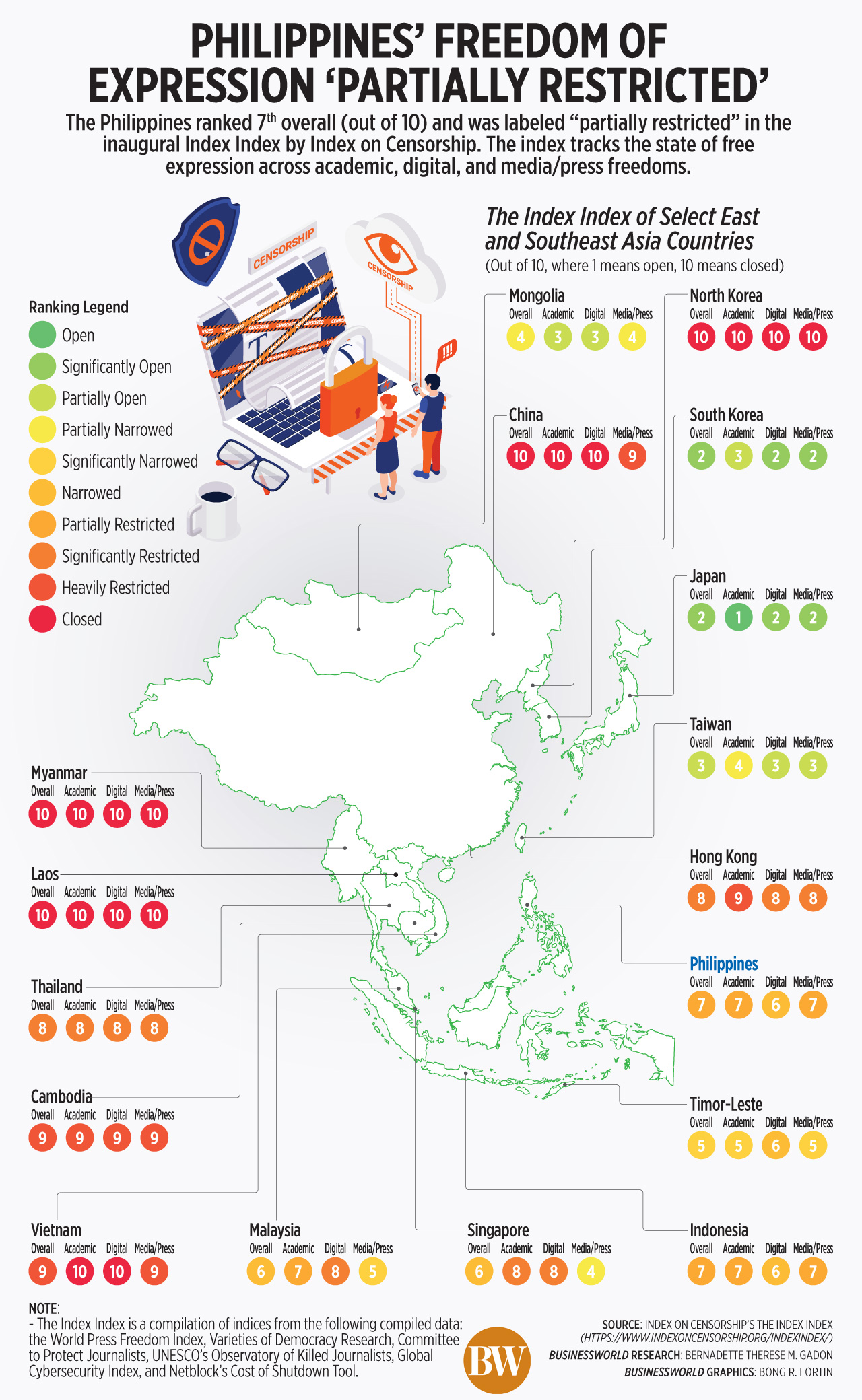
Philippines’ freedom of expression ‘partially restricted’

The Philippines ranked 7th overall (out of 10) and was labeled “partially restricted” in the inaugural Index Index by Index on Censorship. The index tracks the state of free expression across academic, digital, and media/press freedoms.

Philippines’ freedom of expression ‘partially restricted’

ADVERTISEMENT
ADVERTISEMENT