Home Blog Page 5254

IMF official says debt roundtable to focus on broad restructuring hurdles

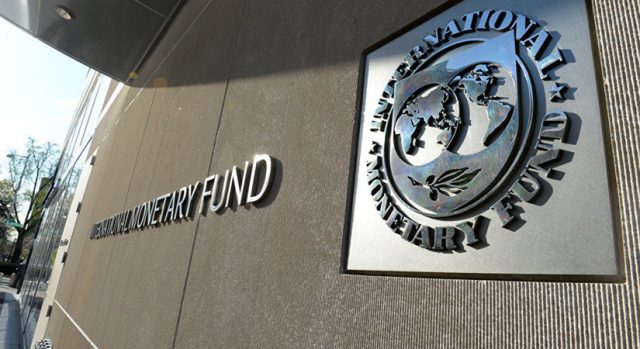
 – The International Monetary Fund’s strategy director on Tuesday said the goal of a new sovereign debt panel of creditors and borrowers due to meet on Friday is to try to reach understandings on common standards, principles and definitions for how to restructure distressed country debts.

Ceyla Pazarbasioglu, director of the IMF‘s Strategy, Policy and Review Department, told reporters that the Global Sovereign Debt Roundtable does not intend to discuss country-specific debt restructuring issues, but to address some of the broader impediments that have been delaying such relief.

The panel, organized by the IMF, the World Bank and India, this year’s leader of the Group of 20 major economies, is due to hold its first virtual meeting on Friday, Feb 17. This will be followed by an in-person meeting on Feb. 25 on the sidelines of a G20 finance leaders meeting in Bengaluru, India.

Participants include officials from creditor countries China, India, Saudi Arabia, the United States and other wealthy Group of Seven democracies.

Ms. Pazarbasioglu said the roundtable also will include the Paris Club of official creditors, the Institute of International Finance, the International Capital Markets Association and other private sector creditors that she declined to identify.

She said six borrowing countries that have recently sought or been through debt restructurings would participate, but declined to name them.

On Monday, three sources had told Reuters that these would include three countries that had requested debt treatments under the G20 common restructuring framework –Ethiopia, Zambia and Ghana — as well as Sri Lanka, Suriname and Ecuador.

“So it’s basically to discuss issues that have been impeding reaching a timely debt restructuring process, and the lessons from the cases that we had in the recent past, and to come up with technical solutions to address these shortcomings,” Ms. Pazarbasioglu said.

Zambia requested a debt restructuring under the G20 process more than a year ago, but has been held up by major creditor China’s insistence that local debt owned by foreign investors be included and that the multilateral development banks agree to reduce debt principal along with Beijing.

US Treasury Secretary Janet Yellen has been urging China to move faster on restructurings and to set aside these demands from country-specific debt talks and address them through the roundtable.


HAIRCUTS VS CONCESSIONAL LOANS

She said the group will try to identify key impediments to restructurings and come up with standards and processes to address them. It will try to reach consensus on the notion that highly concessional loans or grants from multilateral development can achieve the same goals as a debt principal “haircut,” she said.

Other concepts the group hopes to define more precisely include common parameters for analyzing debt sustainability, timing for issuing debt service suspensions and comparable treatment of creditors, Ms. Pazarbasioglu said. – Reuters

Inflation may remain high until Q3

PEOPLE look for affordable flowers for Valentine’s Day at the Dangwa Flower Market, Manila, Feb. 14. — PHILIPPINE STAR/MIGUEL DE GUZMAN

HEADLINE INFLATION is likely to peak in February or March, which may prompt the Bangko Sentral ng Pilipinas (BSP) to continue tightening until May, ANZ Research said.

In a note on Tuesday, ANZ Research Chief Economist for Southeast Asia and India Sanjay Mathur and economist Debalika Sarkar said inflation could “accelerate further” and peak either in February or March.

“Even if inflation starts to descend from its peak, it will remain at elevated levels in the second quarter and third quarter. Any meaningful decline is only possible when domestic demand weakens and favorable base effects kick in,” ANZ said.

Headline inflation is also expected to return to within the BSP’s 2-4% target range only in the fourth quarter, it added.

ANZ revised its Philippine inflation forecast to 5.1% this year, from 4.3% previously. This is higher than the BSP’s 4.5% projection for 2023.

The consumer price index (CPI) quickened to 8.7% in January from the 8.1% in December, marking the highest in 14 years or since the 9.1% in November 2008.   

“Food inflation may continue to rise at least until February 2023, driven by La Niña events. The Philippine government’s official weather forecaster expects the weather conditions to improve from February onwards, but any favorable impact on food prices may only be evident after a few months’ lag,” ANZ said.

Food inflation rose to 11.2% in January from 10.6% a month ago, which was the fastest since the 11.3% in March 2009. This as prices of food items such as vegetables, eggs, and sugar sharply rose due to supply issues and weather disturbances.

ANZ noted food prices in the Philippines continued to climb in January, “in contrast with global and regional trends.”

“The continuous climb in services inflation is another source of concern. Unless pent-up demand for services retreats, it is unlikely that services CPI will stabilize,” it said.

ANZ noted the recent hike in water rates is estimated to contribute an additional 10 basis points (bps) to inflation this year.

Metro Manila’s two main water concessionaires began implementing higher rates in January. Manila Water raised rates by P8.04 per cubic meter, while Maynilad hiked rates by P3.29 per cubic meter.     

“After factoring in the current direction of inflation and all upside risks, we believe that the central bank will need to extend its tightening cycle to May 2023,” ANZ said.   

ANZ expects the BSP to raise borrowing costs by another 50 bps at its Thursday meeting, followed by two 25-bp hikes each at the March 23 and May 18 meetings.

“This takes our overnight reverse repurchase forecast to 6.50% (previously 6.00%) in this cycle. Combined with our inflation forecast, this translates into a real policy rate of 1.4% — signaling further room for monetary policy tightening if inflation remains more stubborn than anticipated,” it added.   

In a BusinessWorld poll conducted last week, the BSP is widely expected to raise borrowing costs on Thursday, with a slim majority of nine analysts forecasting a 50-bp rate increase, while eight analysts anticipate a 25-bp increase.   

The BSP raised interest rates by 350 bps since May 2022 as it sought to curb inflation. This brought the benchmark rate to a 14-year high of 5.5% last year.

BSP Governor Felipe M. Medalla last month said the central bank is ready to adjust policy stance as necessary “to keep further second-round effects at bay and prevent inflation expectations from becoming disanchored.” 

While not ruling out another supply shock, Mr. Medalla said January inflation was most likely the peak.

January inflation was above the BSP’s forecast range of 7.5-8.3%. It also marked the 10th consecutive month inflation was above the BSP’s 2-4% target range. — Keisha B. Ta-asan

CAMPI targets 10-15% sales growth this year

Motorists are stuck in traffic along Commonwealth Avenue in Quezon City, July 28, 2022. — PHILIPPINE STAR/MIGUEL DE GUZMAN

VEHICLE SALES in the Philippines may exceed pre-pandemic levels this year as the economy continues to recover, the Chamber of Automotive Manufacturers of the Philippines, Inc. (CAMPI) said.

CAMPI President Rommel R. Gutierrez said the industry is targeting to grow sales by 10% to 15% this year.

“We have seen the trajectory of sales growing last year. In fact, January (sales) is a really good indicator of what is to come this year. I think we are certain to hit the pre-pandemic level this year,” he told reporters during a media event in Taguig City late on Monday.

In 2022, CAMPI and Truck Manufacturers Association (TMA) members sold a total of 352,596 units, surpassing its sales target of 336,000 units. This is also near the pre-pandemic level of 369,941 units sold in 2019.   

“CAMPI-TMA was (over) 369,000 units (in 2019). We are already at 350,000 last year. It’s really a small gap and we are confident that we will more than hit the 2019 level this year,” Mr. Gutierrez said.

“We are optimistic that the growth will continue this year.”

Vehicle sales were off to a good start this year, as CAMPI-TMA members sold 29,499 units in January. This is 42% higher than the 20,765 units sold in the same month last year.   

Mr. Gutierrez expects auto sales to continue increasing this year due to pent-up demand.

“Yes, there is still pent-up demand. The supply continues to improve and in fact, we have many models coming this year. So, that will really boost the sales. All brands are really preparing for this year’s full recovery,” he said.

However, the industry is facing supply challenges arising from the shortage of microchips used in vehicles, Mr. Gutierrez said.

“For some models yes, (there are supply issues). Especially those Japan sourced models are really still affected by the shortage of microchips,” Mr. Gutierrez said.   

In January, the auto industry’s sales were driven by strong demand for commercial vehicles and passenger cars.

Commercial vehicle sales jumped by 46.8% to 21,993 in January, as sales of light commercial vehicles went up by 40.9% to 16,757 units. Sales of Asian utility vehicles surged by 87.1% to 4,587 units.

Passenger car sales increased by 29.8% to 7,506 units in January. — Revin Mikhael D. Ochave

PERA contributions increase by 30% in 2022

BW FILE PHOTO

CONTRIBUTIONS of voluntary members in the Personal Equity and Retirement Account (PERA) reached P329.55 million in 2022, the central bank said on Tuesday.

Data from the Bangko Sentral ng Pilipinas (BSP) showed PERA contributions climbed by 30% last year, from P253.35 million in 2021.

The number of PERA contributors also jumped by 16% to 5,100 in 2022 from 4,382 in 2021, the BSP said.

About 3,600 employed individuals contributed P223.71 million to the fund last year. This is followed by overseas Filipino workers (721) and self-employed individuals (785) who invested P60.58 million and P45.25 million, respectively.

“The increase in both the size of funds in investment and contributors shows that there is a demand for supplementary outlets for retirement planning purposes,” ING Bank N.V. Manila Senior Economist Nicholas Antonio T. Mapa said in an e-mail.

“The PERA legislation helped address the need for alternative investment outlets and it’s a positive sign to see that contributors are able to take advantage of the PERA law to jumpstart or build their retirement funds further,” he added.

Republic Act 9505 or the PERA law was passed in 2008 with the goal of encouraging Filipinos to save up for their retirement through a voluntary investment product.

Launched in 2016, the PERA is a voluntary fund scheme meant to supplement retirement benefits from the Government Service Insurance System or the Social Security System, as well as private employers.

Under the law, contributors aged 18 or older can make a maximum annual investment of P100,000 in their PERA account, while overseas Filipinos are allowed to invest up to P200,000 a year. The BSP has said there may be a need to adjust these contribution caps to account for inflation.

The PERA law also offers various tax incentives to contributors such as tax exemptions on earnings from PERA investments, a 5% income tax credit on contributions which could be used for paying income tax liabilities, and a tax-free distribution on qualified withdrawal of PERA investments.

When a contributor reaches 55 years old and an investment period of at least five years, he or she can redeem the PERA investment free of taxes.

“Higher returns on contributions likely prompted Filipinos to save more in their PERA accounts. Financial savvy customers would take advantage of better returns on their idle money,” China Banking Corp. Chief Economist Domini S. Velasquez said in a Viber message. 

Ms. Velasquez said job market improvements may have encouraged Filipinos to save more.

“As workers see better employment prospects, they have more opportunity to save more,” she said. 

The Philippines’ unemployment rate eased to a three-year low of 5.4% in 2022, equivalent to 2.67 jobless Filipinos. In 2021, the unemployment rate stood at 7.8%, equivalent to 3.71 million.

Ms. Velasquez said an increase in the deployment of overseas Filipino workers (OFWs) last year may have also lifted contributions to PERA.

In September 2020, the central bank launched the digital platform for PERA to make it more accessible to contributors.

“As an online marketplace, the digital PERA facilitates greater convenience and efficiency by enabling Filipinos to open PERA accounts, choose among different accredited PERA products, and settle PERA transactions electronically using their mobile phones or other digital devices,” the BSP said. — Keisha B. Ta-asan

Jakarta hopes to attract more Filipino tourists

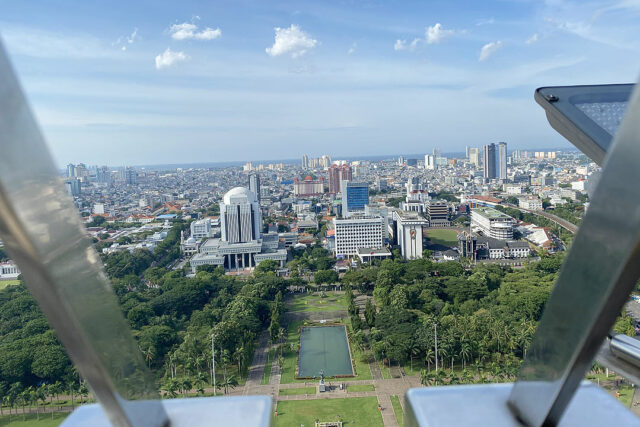
JAKARTA SKYLINE — the view from the top of the National Monument. — JOHN VICTOR D. ORDOÑEZ

By John Victor D. Ordoñez, Reporter

JAKARTA, Indonesia — The provincial government of Jakarta is hoping to attract more Filipino tourists this year, as the tourism sector rebounds from the coronavirus pandemic.

“We are trying to promote Jakarta to more Filipinos because we see potential in the Philippine market,” Hari Wibowo, who heads the Marketing and Attraction Division of the Tourism and Creative Economy Office of the Jakarta provincial government, told BusinessWorld last week.

“The easing of health restrictions and the reopening of our establishments make us hopeful that the tourism sector in Jakarta will improve this year.”

The Indonesian economy grew 5.31% in 2022, its best annual growth rate since 2013. This was driven by strong household consumption after the government lifted most pandemic restrictions. All remaining pandemic curbs were moved in December as coronavirus disease 2019 (COVID-19) infections plunged.

Mr. Wibowo said they plan to invite more travel agencies from the Philippines to tourism events in Jakarta, which is the capital and largest city of Indonesia.

“Jakarta is a destination for both business and leisure and we see it as a prime urban destination,” he said. “This is the place for doing business.”

He described Jakarta as the central business hub in Indonesia, with plans to expand direct flights with various airlines in Southeast Asia.

Jakarta is home to historical landmarks such as Old Batavia, which contains original Dutch buildings dating back to the 17th century, some of which have been converted into museums and cafés.

It also has enormous modern multipurpose structures like the Grand Indonesia and the state-owned department store PT Sarinah, the first high-rise building in the city.

Jakarta also boasts the largest stadium complex with a retractable roof in Asia, with its Jakarta International Stadium having a seating capacity of 82,000 people.

The city is also home to the Kepulauan Seribu, which translates to the Thousand Islands, a chain of about 342 islands and beaches stretching 45 kilometers into the Java Sea.

MORE DIRECT FLIGHTS
Mr. Wibowo said the government is working on more direct flights between the Philippines and Jakarta to boost tourism.  

Philippine Airlines (PAL) currently operates 10 weekly direct flights between Manila and Jakarta, PAL Spokesperson Cielo C. Villaluna said in a Viber message.

Last year, Jakarta reported 14,890 visitor arrivals from the Philippines, significantly higher than the 2,540 in 2021, according to data from the Jakarta provincial government.

However, this is still a far cry from the 57,593 Filipinos who visited Jakarta in 2018 and 45,521 in 2019.

The Philippines ranked third among foreign visitors to Jakarta before the pandemic in 2019, Mr. Wibowo said.

“Hopefully, with more collaborative projects between our two countries this year, we hope to have more Filipino tourists in Jakarta,” he said.

Indonesia is targeting between 3.5 and 7.4 million foreign tourists this year.

Last year, Indonesia attracted 5.47 million foreign visitors, more than three times the number in the previous year. However, this is still well below the 16.1 million visitors it welcomed in 2019.

Megawide unit studies terminal exchange for north

Commuters line up at the Main Avenue station of the EDSA bus carousel in Quezon City, July 18, 2022. — PHILIPPINE STAR/MIGUEL DE GUZMAN

A UNIT of Megawide Construction Corp. is looking at developing an integrated terminal exchange in the north for the EDSA Carousel bus rapid transit system that will serve as a counterpart of the Parañaque Integrated Terminal Exchange (PITX).

“The EDSA Carousel stops at PITX, it doesn’t have a counterpart on the other side. We are trying to look for a space [in the north], we will try to develop something there,” PITX Head of Corporate Affairs and Government Relations Jason T. Salvador told reporters in a recent interview.

According to Mr. Salvador, the idea of having a terminal exchange is to serve the provincial buses to help decongest the traffic in Metro Manila.

“Ideally there should be one in the north and one in the south. Kami na ‘yong sa south (We are the one in the south). So we are trying to look for one to serve that purpose and at the same time make the whole carousel, a real carousel,” he added.

The company is currently assessing the project in the north, with the feasibility studies expected to be done halfway through the year.

Previously, the infrastructure builder announced its plan to expand PITX by developing a smaller second lot.

The project, which will be on a 1.8-hectare lot owned by the Department of Transportation (DoTr), is expected to almost double the capacity of PITX as the company expects bus riders to go back to pre-pandemic levels.

“There are a lot of plans for lot two. This will be another PITX. Now we are using that as a parking lot for our provincial buses. We call that our staging area. But there are already plans, so hopefully within the year magawa na natin (we can finally do it),” Mr. Salvador said.

“As of now, we are averaging around 120,000 passengers per day in PITX. Although the terminal is built to accommodate 200,000 passengers per day, it’s getting crowded already. We want more convenience, more spaces for passengers, more shops and more restaurants,” he added.

According to Mr. Salvador, the company is just waiting for the go-signal from the DoTr and for plans to be laid down.

“The plans are being done. If it gets approved, if everything is laid down, then probably we can start this year but if not, earlier next year,” he said.

Meanwhile, Mr. Salvador said the company is interested to bid to be the operator of the EDSA busway that plies Metro Manila’s main highway if the government decides to privatize it.

“Ideally, it should be ours. The beauty of it is the passengers will have the reliability in the departure of the bus and the availability of the bus,” he said. “The government has been talking about it, that they will privatize the EDSA busway operations. If they are serious [about] that then maybe we can consider.”

Mr. Salvador said if the privatization happens, Megawide will have to put up another company to lead the operations.

The company has an advantage as it has studied the supply and demand of the buses as the operator of an integrated terminal exchange, said Mr. Salvador.

“We know the capacity, we know the demand of the public at what time and what day,” he added. — Justine Irish D. Tabile

PLDT confirms class-action lawsuit filed by US shareholder

PLDT Inc. confirmed on Tuesday that a US shareholder filed a securities class-action lawsuit on Feb. 6 in the federal district court in the Central District of California.

In a disclosure to the Philippine Stock Exchange, the company said the complaint was filed by Sophia Olsson, who is said to be a holder of PLDT securities.

The class-action lawsuit named PLDT as a defendant along with nine of its current or former employees.

A class-action lawsuit allows many people with similar grievances to sue a common defendant as a group, in this case, the US-based shareholders of PLDT.

In a 45-page document posted on CourtListener.com, Ms. Olsson filed a class-action complaint against PLDT and its officers for allegedly violating Federal Securities Laws where a jury trial was demanded.

The individual defendants in the case are PLDT Chairman Manuel V. Pangilinan; President and Chief Executive Officer Alfredo S. Panlilio; Chief Financial Officer and Chief Risk Management Officer Anabelle L. Chua; Chief Legal Counsel, Head of Legal and Regulatory Affairs, and Corporate Secretary Marilyn A. Victorio-Aquino; Vice-President, Head of Corporate Services and Liability Management Insurance, and Assistant Corporate Secretary Abner Tito L. Alberto; and First Vice-President of Financial Reporting and Controllership Gil Samson D. Garcia.

The case also identified three former officers of the company as individual defendants, namely Ma. Lourdes C. Rausa-Chan, Florentino D. Mabasa, Jr., and June Cheryl A. Cabal-Revilla.

The case read that it is “a class action on behalf of persons or entities who purchased or otherwise acquired publicly traded PLDT securities” between Jan. 1, 2019 and Dec. 19, 2022.”

In her allegations, the plaintiff Ms. Olsson said that the company issued “materially false and misleading statements” from 2019 to 2022.

The case cited the disclosures of the company that stated its capital expenditures during the period up to the latest regulatory filing where PLDT disclosed a budget overrun amounting to P48 billion.

After the company disclosed the budget overrun, it saw a 19.35% decline in the price of its shares to P1,192 apiece on Dec. 19, 2022.

“As a result of defendants’ wrongful acts and omissions, and the precipitous decline in the market value of the company’s common shares, plaintiff and other class members have suffered significant losses and damages,” the case read.

PLDT said it “has not been served with a copy of the complaint, as required under US law, and does not have any further information regarding the lawsuit at this time.”

On Tuesday, shares in the company closed unchanged at P1,326 apiece. — Justine Irish D. Tabile

Cemex Holdings’ net loss widens to P195M on forex losses

CEMEX Holdings Philippines, Inc. incurred a net loss of P195 million in the fourth quarter, wider than the P172 million posted a year ago, after booking volume decline and foreign exchange losses.

“2022 was a challenging year, as economic and political uncertainty translated to unprecedented cost increases, while industry demand softened,” Cemex Holdings President and Chief Executive Officer Luis Guillermo Franco Carrillo said in a press release.

Although the cement company’s net sales rose by 4% to P4.76 billion during the quarter from P4.58 billion in 2021, its cost of sales reached P3.82 billion, up by 20% from P3.17 billion previously.

The company also reported a 5% decrease in its domestic cement volume, which it said was mainly due to soft demand.

For the full-year 2022, the company suffered a P1.01 billion net loss, a reversal from the P725.5 million net income recorded in 2021. Its topline last year was slightly lower at P20.57 billion, down by 1.5% from P20.89 billion.

The company’s cost of sales amounted to P13.82 billion in 2022, up by 6.5% from P12.98 billion the year before.

Its domestic cement volume last year likewise decreased by 10%, which the company said reflected low cement demand, challenging industry dynamics, and the effects of its pricing strategy.

In 2022, Cemex Holdings’ domestic cement prices were 9% higher to offset the impact of higher input costs due to the high prices of fuel, electricity and transport.

The company also incurred foreign exchange losses amounting to P934 million in 2022 due to the movement of the peso-dollar exchange rate.

For 2023, the company said it would try to achieve a flat to low-single-digit percentage decrease in its domestic sales volume.

“We expect 2023 to be a year of transition for our company. We anticipate that market conditions and cost inflation will remain challenging through the first half of the year,” said Mr. Franco Carillo.

“Nevertheless, we expect to start to see the benefit of our efforts to reduce cost as the year progresses,” he added.

On Tuesday, shares in the company closed lower by a centavo or 0.85% at P1.17 each. — Justine Irish D. Tabile

Galeria Paloma tackles digital and AI-created art

Don’t You Worry About the Situation by Skye Nicolas

GALERIA PALOMA’s maiden exhibit at Art Fair Philippines, which will run on Feb. 17 to 19, will embrace digital art, and a hot topic in the art world, the capabilities and limitations of AI-created (artificial intelligence) art.

The exhibit, calledParallel,” takes the cue “from the parallelism of emerging realities in web3 and the digital art sphere,” according to a release. The exhibition will feature physical art (paintings and sculpture), “phygital” (physical and digital) art, and digital/new media art. As an offshoot to the parallel theme, the exhibition will be simultaneously displayed at another physical site: NINFA Labs in Milan, Italy, furthering Galeria Paloma’s aim to be an international platform for its artists and an example of technological advances allowing for an original work of art to be exhibited in two (or more) locations.

Collectors of each artwork will be owners of both the digital and physical forms of each piece, including the non-fungible token (NFT). Meanwhile, the digital artworks will be displayed on Samsung’s The Frame television sets (selected for its 4K resolution, smart TV features, matte, non-reflective screen, and art frame-like bezels).

Kimi Delgado, Galeria Paloma director, discussed the gallery’s own interest in digital art during a Makati press conference on Feb. 2. “We realized that digital art has experienced — can I say a ‘renaissance’? Digital art has been around for a long, long time, since the advent of computers. In the past few years, it’s become quite popular in a more mainstream scale because of blockchain technology making it possible for people to trade it easily, to prove authenticity, to prove ownership.

“We’ve always been very, very interested in digital art. We felt we also had a solution on how to convince or to sort of assuage hesitations with collectors about collecting digital art, because they can be minted on the blockchain,” she said.

Ms. Delgado also pointed to technological advances that make it possible to display digital art in public. “We just felt it was the right time.

“Whether or not you buy or trade them in cryptocurrency or not, we feel that they have an inherent value,” she said. “It’s looking pretty bright. As you can see, our artists are very talented, and the Philippines is really full of talented artists, not just in traditional art, but now we’re seeing how digital artists have really come to the fore.”

The featured artists range from senior painters whose works are now imbued with augmented reality, to digital natives who started in grade school.

The artists participating in “Parallels” are Skye Nicolas, Luis Buenaventura, Bjorn Calleja, Jopet Arias, The Alarcon Brothers, Carlos, Wyn-Lyn Tan, Raymond Lauchengco, AJ Dimarucot, Aswang, Sevi Agregado, Isaiah Cacnio, and Sheila Ledesma.

Skye Nicolas is a post-conceptual artist whose works range from large format paintings, and filmmaking and photography, to public space interventions, sculpture, and digital artworks. The artist is exhibiting his very first Walkman readymade paired with an NFT in this exhibit.

Luis Buenaventura’s digitally native works for “Parallel” bring to light the inability of AI to draw/create hands compared to “human” artists, placing on center stage the conversation about whether AI could possibly replace humans as the leading artists in the creation of art. He is most notably known as one of the artists of Curio Cards, recognized as the first work of art ever minted on the Ethereum blockchain and which sold at Christie’s for $1.2 million, the auction house’s first lot ever offered in cryptocurrency. Mr. Buenaventura also holds the record for the highest-selling digitally native NFT made by a Filipino artist.

Bjorn Calleja is a painter and interdisciplinary artist who has received accolades locally and abroad, and more recently for his NFT projects exhibited in Art Basel Hong Kong and SEA Focus in Singapore. For “Parallel,” his largely recognizable, humanoid characters that figure heavily in his paintings and animated GIFs/NFTs are rendered as sculptures in tiny scale, unidentifiable as beings except on the basis of their phenotypic sex, which belies their larger-than-life presence in and impact on his creative oeuvre. The NFTs of these sculptures are GLB files or GL Transmission Format Binary Files which are standard file formats for 3D models, allowing for 3D viewing of the static object.

For Jopet Arias, the founder of CryptoArtPh, the adoption of the metaverse is parallel to our ingrained human longing for something beyond our reality. Mr. Arias infuses his work with spiritual themes, interspersing realist painting with surrealist and fantastical images and layers them with his trademark augmented reality renderings that stand as artworks in themselves.

Artists in their own right, Ejem, Aldrine, and Didier Alarcon are three of the four Alarcon Brothers who have collaborated on artworks and, most recently, digital artworks that have earned them recognition in the cryptoart scene. Their work for the exhibit will be another collaborative digital artwork.

Paintings by Carlos are included in “Parallel,” this time with an augmented reality layer featuring a time lapse — an evolution of the paintings’ skies from night to day with no change to their main subjects, making light of parallel time. Sculptures by the artist delving into his signature theme of the nobility of work will also be exhibited.

Wyn-Lyn Tan is a Singaporean painter and artist whose work has been exhibited widely, including New York, Norway, and Art Basel Hong Kong. Her paintings can be found in the permanent collection of the Singapore Art Museum. Her works are currently on exhibit at the Esplanade Tunnel in Singapore until May, launched at the Singapore Arts Fair last month. Her generative work is the result of using specially programmed artificial intelligence programs to train a curated set of thousands of images of her work.

Raymond Lauchengco, theater and film artist, photographer, and director adds functional art creator and digital artist to his resume. “Parallel” offers Mr. Lauchengco’s select collection of salvaged, found wood pieces turned into works of functional art layered with a digital artwork based on each work’s thematic narrative.

An artist, art designer, illustrator, and graphic designer, AJ Dimarucot has enjoyed a career creating campaigns for international brands like Coca-Cola, Nike, Marvel, Star Wars, adidas, the NFL, MLB, and NBA. As the art director of Ogilvy, he was behind the establishment of its digital department. He also co-founded the Communication Design Association of the Philippines, and started the Facebook community Filipinomads Creative Network to help Filipino creatives work for brands all over the world.

Meanwhile, Aswang is the anonymous illustrator behind the Aswang Collection and Aswang Tribe, whose works have garnered over 600 Ethereum (over P50 million) in trading volume. For Parallel, Aswang will be exhibiting one of his pieces, Nine Mananaggals, which continues to reflect their desire to use NFTs as a medium for sharing Filipino ancient, archetypal, and pre-colonial stories.

Sevi Agregado’s colorful paintings of wildlife will be displayed, employing augmented reality as an added layer to the works on canvas. He is considered the first Filipino child NFT artist, minting his first works while still in the first grade. Digital versions of his paintings have been exhibited in Times Square (for NFT.NYC), Art Basel Miami, various galleries in the United States and Singapore, as well as publications like Vogue Singapore and The Straits times.

Portals is Isaiah Cacnio’s collection forParallel”. Recognizing how the metaverse has opened doorways into different realities, his work is an offshoot of his genesis collection, Fractals, which are his abstracted, colorized, and animated depictions of these never-ending mathematical patterns, scales, and spherical coordinates. A graduate of engineering, Mr. Cacnio also sees Portals as looking into his own creative process and how his creative and mathematical inclinations interact.

Sheila Ledesma’s visual arts career has focused largely on surrealist collages using unusual mediums like old makeup. Surrealist and Dadaist techniques contribute to the composition of her artworks. Her contributions to “Parallel” are a set of works that mark milestones in her journey in the NFT space.

“Parallel” will be on view at Art Fair Philippines 2023 on Feb. 17 to 19 at Booth 27-A at the sixth floor of The Link carpark in Ayala Center, Makati. — J.L. Garcia


SIM registration drives users of mobile number portability, says TCI

TELECOMMUNICATIONS Connectivity, Inc. (TCI) saw a 28% year-on-year increase in the number of consumers who kept their phone numbers when they switched to another network provider in January.

“We can only attribute this spike in MNP (mobile number portability) to the intention of mobile users to keep their number, even as they make the move to the subscription or network they wish to permanently register under their name under the SIM (subscriber identity module) Registration Law,” TCI General Manager Melanie Arsua-Manuel said in a press release.

“This is how the convenience of MNP and the protection provided by SIM registration, complement and reinforce each other,” she added.

MNP is a global telco practice that enables mobile phone subscribers to keep their number even when they switch networks or change their subscription from postpaid to prepaid and vice versa without charge.

The increase started in December when the SIM registration process began, during which TCI saw 26% more porting activity.

Republic Act No. 11934 or the SIM Registration Act regulates the use of SIM cards by mandating all end-users to register these under their name. The government expects registration as curbing the proliferation of mobile phone-aided criminal activities.

As of Feb. 12, the Department of Information and Technology reported that 32.06 million SIM registrations have been completed. The latest count is 18.97% of around 167.98 million total subscribers nationwide.

The deadline for SIM registration is on April 26, 2023. Subscribers who will not meet the deadline risk deactivation of their SIMs.

“We believe that SIM registration will help ensure a more stable and secure information and communications technology environment for Filipinos and provide online safety from scammers, threat and fraudulent elements,” said Ms. Arsua-Manuel.

She added that SIM registration will also help subscribers in choosing the subscription and network provider that will best serve their needs.

TCI was formed as a joint venture among DITO Telecommunity Corp., Globe Telecom, Inc. and Smart Communications, Inc. in 2021 to facilitate mobile number portability. — Justine Irish D. Tabile

LANDBANK sets P35-B profit goal

BW FILE PHOTO

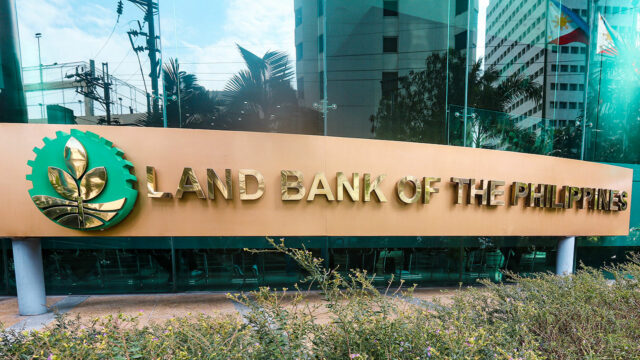
LAND BANK of the Philippines (LANDBANK) is targeting a net income of P35 billion this year, higher than the P30.1-billion profit it recorded in 2022, amid partnerships and increased digitalization to provide better banking services, especially to the agriculture sector.   

“As the biggest lender to the agriculture sector, LANDBANK targets to increase the number of small farmers and fishers it has cumulatively assisted to 3.6 million in 2023, among other key players in the agribusiness value chain,” the lender said in a statement on Tuesday.

“The state-run bank is also determined to increase its net income by at least 16% to P35 billion, by optimizing resources, maximizing yields from earning assets, generating return from non-earning assets, and expanding trust banking and bancassurance business,” it added.

The bank posted a 38.2% year-on-year increase in its net profit in 2022 and surpassed its target of P25.71 billion amid improved interest income from loans and investments and gains from fees, commissions, and foreign exchange.

This translated to a return on equity of 14.37% and return on assets of 1.05%.

During the inauguration of the LANDBANK Leadership and Development Center in Manila on Tuesday, LANDBANK President and Chief Executive Officer Cecilia C. Borromeo said they plan to sustain their various lending programs to the agriculture sector and expand their digital banking services.

“We’re looking to support not only the small farmers but all the players of the agribusiness value chain, even the large agribusiness corporations, with very good business models and have proven themselves to be very profitable. We will continue to support them as well,” she told reporters at the sidelines of the event.

Ms. Borromeo said the bank was able to end 2022 with more than P261 billion in loans to the agriculture sector. She added that the bank’s agriculture loan portfolio continues to expand faster than the sector itself.

LANDBANK mainly provides credit to the agriculture and fisheries sector, micro, small and medium businesses, countryside financial institutions, local government units (LGUs), and government institutions.

Republic Act 10000 or the Agri-Agra Reform Credit Act of 2009 mandates banks to set aside 15% of their loanable funds to the agriculture sector and 10% for agrarian reform-related projects.

“Also, we want to expand our digital banking services because we believe that is a very good way of including many Filipinos into the mainstream banking. We use our digital banking channels to deliver social amelioration programs or assistance not only by the national government, but also the programs that the various local governments are embarking under,” Ms. Borromeo said.

“We already have all the LGUs in our ecosystem. All of them have deposit accounts with us, so that is a good start. So, slowly but surely, we will encourage them to join our digital banking portals as well.”

LANDBANK is looking to onboard more LGUs as merchants in eGov Pay and the Link.BizPortal, among its other digital channels. This includes growing the number of government and private merchants in its Link.BizPortal to over 1,600 merchants by end-2023.

The state-run lender is also targeting to grow its digital transactions by 60% in terms of both volume and value, driven by the expansion of its retail customer base. 

“LANDBANK is also set to establish touchpoints in all 1,634 LGUs nationwide, further solidifying its position as the biggest development partner for local and countryside development,” the bank said.

The bank on Tuesday also launched a new scholarship program for students to support dependents of agrarian reform beneficiaries, small farmers and fisherfolk, allotting P128 million to cover the educational expenses of 360 scholars from 2023 to 2028. The scholarship will support 60 new scholars annually and provide each with P100,000 per year.

“Our primary purpose is really to help the families of the farmers and fishers. Also, to encourage the younger generation to pursue the agriculture field. As you know, the Filipino farmers are aging, so we need younger Filipinos to join that very important sector,” Ms. Borromeo said. — Keisha B. Ta-asan

Ballet Manila dances again with classics for its 25th season

THE MAIN role of Kitri in Don Quixote will be played by Katherine Barkman.

AFTER a fire destroyed it in 2019, followed by the coronavirus pandemic which kept its doors shut for a further two years, the Aliw Theater in Pasay City is finally reopening. Its inaugural performance is also Ballet Manila’s return to the stage with the first of three productions of its 25th performance season, Of Hope and Homecoming.

“Once again Aliw Theater is open, and live performances are back, and there is a rebirth and a renewal of the ability to perform to a live audience,” Ballet Manila CEO and artistic director Lisa Macuja-Elizalde said during a press conference on Feb. 8 at the Aliw Theater.

Due to the uncertainty of mounting a full season, Ms. Macuja-Elizalde waited for the other ballet companies to finish their shows last year before opening a full season for Ballet Manila.

She described it as a “radical” move to open the season in February instead August as the company used to do.

ROMEO AND JULIET
Just as radical is the 25th season’s opening production, British choreographer Martin Lawrence’s reimagining of Romeo and Juliet in a modern Filipino setting with a mix of musical genres.

The ballet is set in a quaint Philippine town with dancers dressed in hip costumes, performing to a mash-up of the original Prokofiev score along with popular OPM songs, and tracks from the musical West Side Story.

“I really wanted it to be a mixture,” Mr. Lawrence said of combining contemporary music and with the original classical score.

“Prokofiev is so heavy all the way through [that] I needed to give it some variety,” he said.

There will be performances on Feb. 18 at 8 p.m. and Feb. 19 at 5 p.m.

DON QUIXOTE
The season will continue with the classical ballet, Don Quixote.

“My ballet teacher in Russia said that company dancers get strong with putting up classical ballet,” Ms. Macuja-Elizalde said. “So, I really wanted there to be a full-length classical. And the easiest classical performance to put on if you don’t have that many dancers is Don Quixote.” Ballet Manila currently has 30 dancers.

The main role of Kitri will be played by Katherine Barkman. Mentored by Macuja-Elizalde from 2015 to 2018, Ms. Barkman was a principal dancer at Ballet Manila before moving back to the US in 2018. She is currently at the San Francisco Ballet.

Ms. Barkman will be in town to dance alongside Esteban Hernandez, a principal danseur at San Francisco Ballet, who will play Basilio.

“Coming back to the full-length Kitri, I had a lot more time dancing excerpts of Kitri over the last few years,” Ms. Barkman, who began dancing the role at 19, said at the press conference via Zoom. “To return to the full-length, the biggest difference that I hope will be evident is a more authentic and natural approach to the character,” she said.

Don Quixote goes onstage on May 27 at 8 p.m. and May 28 at 5 p.m.

IBONG ADARNA
Finally, the performance season will close with an original Filipino work, Ibong Adarna by Gerardo Francisco.

Mr. Francisco’s choreography for the ballet has received multiple accolades including Gawad Buhay awards for Outstanding Male Lead for Modern Dance, Outstanding Modern Dance Production, and Outstanding Choreography for Modern Dance.

Mr. Francisco noted that this version will be shorter, and an LED screen will be maximized for visual effects.

Ibong Adarna goes on stage Aug. 19 at 8 p.m. and Aug. 20 at 5 p.m.

“This is an auspicious beginning. It may be a simple beginning but it’s a beginning, nonetheless. And from here, we are just starting and we are going to soar,” Ms. Macuja-Elizalde said.

All performances will be staged at Aliw Theater, Pasay City. For tickets, visit www.ticketworld.com.ph or call 8891-9999. To know more about Ballet Manila and its shows, visit www.balletmanila.com.ph. — Michelle Anne P. Soliman

ADVERTISEMENT
ADVERTISEMENT