Home Blog Page 5253

CEOs aren’t dealing with the toxic fallout of layoffs

DRAZEN ZIGIC-FREEPIK

LAYOFFS are poisonous to company culture.

At companies that have trimmed staff, remaining employees may be insecure about their career prospects, anxious about further cuts, and overwhelmed by the amount of work they now need to get done. Some damage to the organizational fabric is inevitable. But there is a lot more executives can do to mitigate the post-layoff gloom.

Even a relatively small staff reduction can dent remaining employees’ creativity or make them more risk-averse. Downsizing has been found to reduce commitment and trust among survivors, which makes people less likely to expend discretionary effort, such as by working longer hours or taking on extra projects.

Meanwhile, unhealthy conflict increases. Survivors may react to the layoff by defending their turf or hogging airtime to make themselves seem more knowledgeable.

“Any fissures that were already there are likely to be exacerbated,” says Amy Gallo, who runs workshops in companies on managing conflict and is the author of Getting Along: How to Work With Anyone (Even Difficult People).

At the same time, the layoff might make it seem riskier to bring up concerns, especially if the people who were laid off were seen as outspoken. That can drive honest debate underground. Most companies mistake a lack of open disagreement for a lack of conflict. “Artificial harmony can be incredibly corrosive,” says Gallo.

Bill George, former chairman and chief executive of medical technology company Medtronic, says those are among the reasons he has always been wary of mass layoffs. George, author of True North: Emerging Leader Edition, predicts that if 10% of an engineering group gets laid off, the remaining 90% will be sitting around in the cafeteria worrying and swapping rumors instead of inventing new products.

No surprise, then, that studies have linked layoffs to voluntary turnover. And with many companies still hiring, workers who want to rage-apply to other jobs will have plenty of opportunities.

So how can companies regain their equilibrium after jettisoning thousands of workers?

At the root of the challenge is that employees interpret layoffs to be what scholars call a “psychological contract violation,” which gives rise to resentment and fear. Senior executives need to lead the way in repairing the damage. 

“Leaders need to get their people together and rebuild the trust that was lost,” says George. “A lot of that’s got to be done in person.” Staffers would benefit from spending more time in the office, he says, but so would senior executives. “It’s hard to have empathy for your people if you’re in Hawaii and they’re being laid off in downtown San Francisco.”

People are less likely to quit if they think that HR decisions are fair and not arbitrary — something hard to convey when a CEO has announced a round-number layoff because of “the macro-economic environment.” Senior leaders should give a detailed and thoughtful explanation of why these layoffs were necessary — why these particular people or projects had become unaffordable.

Middle managers also play a key role. “You’ve got to have personal contact with people,” George tells me. “You’ve got to say, ‘Sarah, we value you really highly. I think you’re on a great track. I think there are bigger jobs ahead for you. And we really want to make sure you stay with us.’” (He says this with such conviction, I almost believe it — until I remember I don’t work for him.)

Managers also should emphasize that the team will thrive on open and honest debate to try to counteract a layoff’s tendency to drive conflict underground. Too many cultures rely on unwritten rules, which can contribute to employee paranoia. Don’t make stressed-out employees waste energy reading tea leaves. Want them to do something different? Just tell them.

For employees, Gallo suggests making a list of all the things you still enjoy about the job — not to put a happy gloss on a lousy situation, but to counteract human beings’ inherent negativity bias (a tendency to put undue weight on things we find aggravating or annoying). Do some serious reflection on why you were spared. Are you working on a critical project? Do you have specialized knowledge? Focusing on the value you bring can help defuse feelings of insecurity or anxiety.

If you’re overwhelmed by your new workload, don’t complain — your manager probably already knows they are asking for the moon — but do ask for help prioritizing. For example, she says, you might say something like: “Prior to the layoff, here are the things I was working on. Now, post-layoff, here is the greater basket of things I’m working on. I’m not sure how to fit this all into my limited time. I’d love your help prioritizing.” Your manager should be your partner in deciding where to focus.

And if it’s all too depressing? Remember: Talented people always have options. Your best move may be to start exercising yours.

BLOOMBERG OPINION

Firing away

MASTER1305-FREEPIK

CABINET APPOINTEES, heads of government organizations, and even military chiefs seem to be summarily replaced just months or weeks into their incumbency. The news just pops up that a certain person has left his or her post. Some reason such as medical leave and “spending more time with the family” is seen as a pro forma exit line. And the replacement is just outside the door. (We have some other plans for the dismissed executive — like swimming with sharks.)

Movies make firing look easy. If someone displeases the boss or is discovered to have committed a felony, or just a case of loss of confidence, he is summarily dismissed in a big scene with the simple words — “you’re fired.” There was even a famous TV program (The Apprentice) that launched a president with just these two words. The terminated one stomps out of the room and conversation resumes.

In the movie Robocop, a rogue executive grabs the chairman as hostage right in front of a startled board and the robot hero programmed to defend and protect the management team hesitates in attacking the hostile turncoat. All the chairman does then is shout out — “you’re fired.” This is all the robot needs to hear for his lights to blink and his head to whir towards the attacker. The fired hostage-taker is shot and thrown by Robocop from the 50th floor window, with no parachute.

In the tech world, it seems deep cuts in headcount have been the order of the day. It’s not just “content moderators” that are getting the axe. Artificial intelligence and robots are taking over the other jobs too.

When companies need to reduce the number of employees, they implement an early retirement program. This is an enhanced separation package over the regular retirement package (sometimes with over a 100% premium). It is targeted at certain employees, including senior executives that contribute to higher cost reductions. These “voluntary” programs still provide the option for management to turn down applicants (Sorry, you’re not in the list).

Still, companies have a way of signaling individuals for whom despedida parties have already been budgeted complete with video tributes from colleagues who have opted and been allowed to stay. (He always carries a handkerchief in his back pocket.) Signals, not always subtle, communicate to a target that his continued employment is at risk.

The targeted executive is dropped from the list of attendees at a town hall meeting. Then he is stripped of different functions, sometimes slowly, sometimes fast but nudging the target nearer the cliff. Often, this “stick” method works well enough by itself. But just to speed things up, the carrot is also served. (Do I look like a rabbit?) Maybe in the computation of separation pay, the sweetened pot is further made to bubble by throwing in the purchase of the car at book value. A ritzy club share is thrown in for the soon-to-be retiree’s continued enjoyment. Can he also bring home his desk? (Why not?)

Still, not all terminated employees go quietly into the night. Even after a replacement has been announced, the sadly sacked can pretend to be ambush-interviewed and reveal a dark plot to have her ousted — I’ve been intrigued. This is a rough translation of the vernacular expression of being subjected to back-stabbing and social pressure.

Some targets may consider themselves invulnerable. Maybe, they were hired as a special favor to someone powerful. The protector may not even be informed of the plan until afterwards. When the firing happens, he can feign surprise — I didn’t know.

Firing is always couched as a necessity. Vague reasons are forwarded: he has lost his zest for life; he has become dysfunctional; he is not a team player and in his old age has been picking fights with everyone. These justifications are not in any minutes of any meeting. They just circulate as small talk, or overheard conversations.

Softening the blow is always a generous exit package. A “soft landing” however does not always mean that the passenger is afforded a door leading to the chute where the wheelchair awaits.

Anyway, appeals at the exit interview are expected. Even the parting words of “let’s keep in touch” are not to be taken seriously. Why go through the details of why there was a falling out. It’s best to part ways amicably — can we just do the math? And that is truly… the bottom line.


Tony Samson is chairman and CEO of TOUCH xda

ar.samson@yahoo.com

Sharrows

PHILIPPINE STAR/ MIGUEL DE GUZMAN

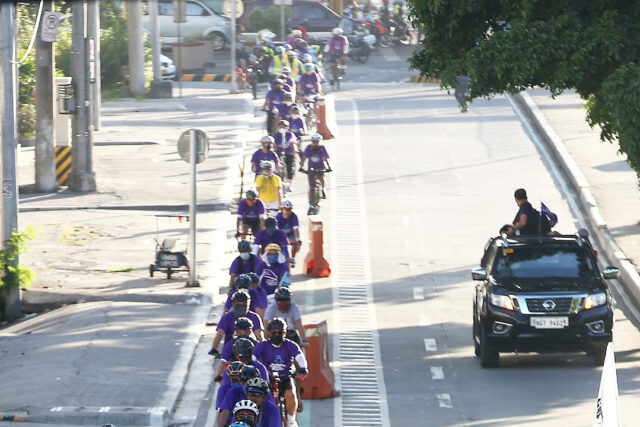
Cyclists and drivers rarely have a cooperative relationship. Usually, one thinks less of the other. For both, “share the road” is far easier said than done. Then, there are also pedestrians who find themselves off the sidewalk; and scooters and other personal mobility devices and electric bikes all using the same public road.

Lane markings are a good way of segregating road users, as long as such markings are strictly enforced. Violations must be penalized. But, for “unlicensed” road users like cyclists and those on electric scooters, how does one penalize their violations? Erring motorists and jaywalkers can be cited for violations. The same does not apply to cyclists.

Before the pandemic hit in early 2020, there had been moves already to make life easier particularly for cyclists. Laws have since been passed promoting cycling safety. In addition, as a consequence of the pandemic and limitations on public transportation, bike lanes were officially established on many roads.

To date, on major thoroughfares, bike lanes are clearly marked and designated. On Ayala Avenue, for instance, the dedicated bike lane is the rightmost lane that runs from EDSA all the way to Gil Puyat Avenue. The lane was first established in 2020 or 2021. By March, however, the same lane is seen to become a “shared” lane or a sharrow.

Sharrow is a portmanteau, combining the words “share” and “arrow.” Sharrows were said to have been first used in Denver, Colorado in the 1990s, and have been included in the US Federal Highway Administration (FHWA) Manual on Uniform Traffic Control Devices since 2009. Simply put, a sharrow is not a dedicated bicycle lane like the one on Ayala Avenue now. Instead, it is just a lane marking that indicates where cyclists and motorists can “share” the road.

It was thus no surprise that local cyclists gathered on Sunday, Feb. 12, to protest the Makati plan to allow motorists to “share” the lane previously dedicated to cyclists and marked by bollards. Cyclists fear for their safety under the new scheme, claiming that allowing particularly public utility vehicles to also use the bike lane was a bad idea.

“Sharrows (shared lanes) will not keep us safer. Paint is not protection. Removing bollards is a death sentence. There are design options to keep all of us safe and keep public transport moving without taking space away from our most vulnerable road users: cyclists, pedestrians, women, children, senior citizens, and persons with disabilities,” the Philippine Star quoted a joint statement released on Sunday by road users at the protest.

There are new laws that require the designation of bicycle lanes. It remains uncertain, however, if the use of sharrows or shared lanes on Ayala is in compliance or breach of law. Moreover, was the establishment of bicycle lanes on Ayala Avenue a government initiative backed by a city ordinance? Or, was it a private initiative of the Makati Central Estate Association, Inc.?

Moreover, what has been the experience of other countries with sharrows, and what stands out today as the global best practice or gold standard in urban planning for the establishment of bicycle and pedestrian lanes? Lastly, what approach will promote the most common good and will be in the best interest of more sectors? Policy and planning cannot be selective and should not benefit one sector at the expense of the other.

A Jan. 10 article by Brian McEntee on Bicycling.com quoted US FHWA official Neil Gaffney as claiming that “multiple studies have found that sharrows ‘increase the distance by which motorists pass bicyclists, reduce wrong-way riding, and reduce the number of bicyclists riding on the sidewalk’.” A 2010 FHWA report also “found that cyclists generally had more space to maneuver after sharrows were installed on roads in Seattle; Cambridge, Massachusetts; and Chapel Hill, North Carolina.”

But the same article also cited a 2016 study that claimed that “sharrows failed to dramatically increase the amount of bicycling on Chicago roads between 2000 and 2010,” and that it was “time that sharrows are exposed for what they really are, a cheap alternative that not only fails to solve a pressing safety issue, but actually makes the issue worse through a sense of false security.”

The article also quoted Darren Buck, a bicycle planner in Washington, DC., who noted, “When sharrows were introduced, many in the bike community hoped that they might result in some driver behavior change around bicyclists, or that they would make many riders feel more comfortable on busier streets… We don’t think there’s a lot of evidence out there to support those hopes. We have moved away from installing sharrows on streets where the separate space of a bike lane would be more appropriate.”

And this, to me, is the crux of the matter. What needs to be discussed thoroughly, going beyond sentiments, is the “appropriateness” of a planned measure and its suitability given the existing environment. Going by this parameter, in the case of Ayala Avenue and its use, should the existing dedicated bike lane be converted into a sharrow or a shared lane particularly with public utility vehicles?

Ayala Avenue caters to cars, buses, jeepneys, motorcycles, bicycles, personal mobility devices, and pedestrians, among others. It cuts through Makati City from east to west, and is the main thoroughfare of the Central Business District. It is safe to assume that majority of office workers in the district take public transportation to and from work. Those who drive or ride cars or motorcycles probably comprise the second biggest group, while a minority either walk or take bicycles and personal mobility devices.

The main question: Is Ayala Avenue, as it is and given it use and purpose, actually suited for a dedicated bike lane? This should be taken into consideration in deciding how Ayala Avenue is shared by all its users. Decision makers should also factor in the number of accidents involving all types of users, the legal implications of using sharrows, global best practices in road use planning, and the common good.

McEntee hit the nail on the head when he wrote, “Sharrows offer a recognition of reality: Not every street has room for bike lanes and, in many cases, cyclists and drivers will be forced to interact. The goal of the sharrow is to make these interactions more predictable and safer, reducing the potential for conflicts that might arise when different road users try to share a common space.”

And quoting Will Handsfield, a Washington, DC-based transportation planner and former policy advisor to the DC city council, McEntee wrote, “the reason why sharrows have such a poor reputation… is their misapplication… Engineers need to take more seriously their responsibility to not put sharrows where they don’t belong… It’s not the tool that’s wrong, but it’s the way the tool has been mismanaged that gives it a bad rap.”


Marvin Tort is a former managing editor of BusinessWorld, and a former chairman of the Philippine Press Council

matort@yahoo.com

Argentines feel pain as inflation sizzles to 99%

A customer buys produce at a greengrocer’s shop in Buenos Aires, Argentina Feb. 14, 2023. — REUTERS

BUENOS AIRES — Argentina’s inflation rate has hit just shy of 100%, the government said on Tuesday, with savers feeling more pain from some of the world’s fastest rising prices and workers’ budgets straining as costs outstrip salaries.

The South American country, which has battled spiraling prices for years, saw monthly inflation speed up to 6% in January, in line with forecasts, while the annual figure hit 98.8%, the highest since hyperinflation in the 1990s.

Gisella Saluzzo, 30, a doctor in Buenos Aires, has had to tighten her belt.

“The truth is that I live day to day, I look for low prices, I go to markets. We look for where the meat is cheaper, the vegetables are cheaper, and hunt for online promotions to get by,” she told Reuters.

Rampant inflation has slammed the economy, forcing the central bank to hike interest rates to an eye-popping 75%. It has taken a big bite from the popularity of the center-left Peronist government of President Alberto Fernandez ahead of general elections in October. The conservative opposition now leads in the polls, as Argentines are fed up with inflation and many blame poor economic management and money printing by the government.

Brian Muliane, a 33-year-old chiropractor, said that between inflation and taxes his business struggled to survive.

“In our work, between paying for one thing and another, along with taxes, they’re drowning us,” he said. “There are many who can’t even work.”

Inflation ended 2022 at 95% and could still accelerate this year despite government measures to fight it. Many have been forced to change their shopping habits and cut back on luxuries.

“There are things that I’ve stopped buying because I say no, it is just impossible for it to increase like this,” said 50-year-old teacher Andrea Mendoza as she was out shopping. “So, I don’t buy some things, I change habits or buy offers.” — Reuters

India, soon world’s most populous nation, doesn’t know how many people it has

REUTERS

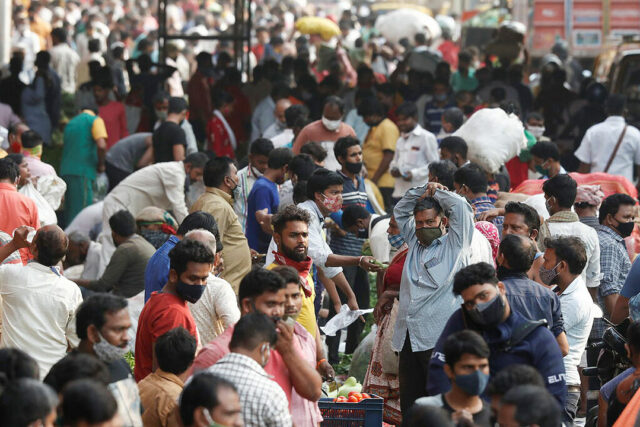
NEW DELHI — In two months, India is projected to become the world’s most populous country with over 1.4 billion people. But for at least a year, and possibly longer, the country won’t know how many people it has because it hasn’t been able to count them.

India’s once in a decade census, due in 2021 and delayed due to the pandemic, has now got bogged down by technical and logistical hurdles and there are no signs the mammoth exercise is likely to begin soon.

Experts say the delay in updating data like employment, housing, literacy levels, migration patterns and infant mortality, which are captured by the census, affects social and economic planning and policy making in the huge Asian economy.

Calling census data “indispensable,” Rachna Sharma, a fellow at the National Institute of Public Finance and Policy, said studies like the consumption expenditure survey and the periodic labor force survey are estimations based on information from the census.

“In the absence of latest census data, the estimations are based on data that is one decade old and is likely to provide estimates that are far from reality,” Sharma said.

A senior official at the Ministry of Statistics and Program Implementation said census data from 2011, when the count was last conducted, was being used for projections and estimates required to assess government spending.

A spokesman for the ministry said its role was limited to providing the best possible projections and could not comment on the census process. The Prime Minister’s Office did not respond to requests for comment.

Two other government officials, one from the federal home (interior) ministry and another from the office of the Registrar General of India, said the delay was largely due to the government’s decision to fine-tune the census process and make it foolproof with the help of technology.

The home ministry official said the software that will be used to gather census data on a mobile phone app has to be synchronized with existing identity databases, including the national identity card, called Aadhaar, which was taking time.

The office of the Registrar General of India, which is responsible for the census, did not respond to a request for comment.

The main opposition Congress party and critics of Prime Minister Narendra Modi have accused the government of delaying the census to hide data on politically sensitive issues, such as unemployment, ahead of national elections due in 2024.

“This government has often displayed its open rivalry with data,” said Congress spokesperson Pawan Khera. “On important matters like employment, Covid deaths etc., we have seen how the Modi government has preferred to cloak critical data.”

The ruling Bharatiya Janata Party’s national spokesperson, Gopal Krishna Agarwal, dismissed the criticism.

“I want to know on what basis they are saying this. Which is the social parameter on which our performance in nine years is worse than their 65 years?” he said, referring to the Congress party’s years in power.

TEACHERS’ TRAVAILS
The United Nations has projected India’s population could touch 1,425,775,850 on April 14, overtaking China on that day.

The 2011 census had put India’s population at 1.21 billion, meaning the country has added 210 million, or almost the number of people in Brazil, to its population in 12 years.

India’s census is conducted by about 330,000 government school teachers who first go door-to-door listing all houses across the country and then return to them with a second list of questions.

They ask more than two dozen questions each time in 16 languages in the two phases that will be spread over 11 months, according to the plan made for 2021.

The numbers will be tabulated and final data made public months later. The entire exercise was estimated to cost 87.5 billion rupees ($1.05 billion) in 2019.

However, teachers have returned to school after the pandemic disruption and have to conduct nine state elections in 2023 and national elections in 2024 besides the census and this would again disrupt teaching. Payments have also become an issue.

Arvind Mishra, a senior official at the All-India Primary Teachers Federation which counts 2.3 million members, said teachers are bound by law to help conduct elections and the census but government must increase the fees they receive.

“They must roll out a systematic payment mechanism for the drill,” said Mishra. “Teachers deserve respect and they can’t be running around demanding reimbursement for conducting the largest counting exercise on earth.”

A former top official of the Unique Identification Authority of India (UIDAI), the government agency that runs the highly successful national identity program Aadhaar, however sought to downplay the significance of the decennial census data saying the identity program is a “de facto, real-time” census.

According to UIDAI, 1.30 billion people were enrolled under Aadhaar on December 31, 2022, against a projected population then of 1.37 billion. The gap would mostly be children who are not enrolled and deaths that are not updated, the former UIDAI official said.

Pronab Sen, a former chief statistician of India, said the sample registration system (SRS) which estimates birth and death rates shows the population growth rate with reasonable accuracy.

Unlike Aadhaar, the SRS survey counts a representative sample of births and deaths and uses it to project the count for a larger region.

“It’s not exact,” Sen said. “The problem is that SRS and projections that we have are reasonably accurate if the country is taken as a whole. What it will not give you is the distribution of people in different geographies within the country.” — Reuters

A year into war, Zelensky defies Putin against odds

UKRAINE’s President Volodymyr Zelensky speaks during a joint news conference with US President Joseph R. Biden (not pictured) in the East Room of the White House in Washington D.C., Dec. 21, 2022. — REUTERS

KYIV — How long can he keep it going?

Night after night, Ukrainian President Volodymyr Zelensky delivers rousing video addresses, rallying his troops in their fight against the Russian invaders and trying to keep the world’s attention focused on his nation’s plight.

He has successfully lobbied the West for arms, lifting taboo after taboo in the process — initially on the West sending lethal aid of any kind and more recently on Western deliveries of battle tanks that may help Ukraine mount a counter-offensive.

Mr. Zelensky, now 45 and in power since 2019, shows no sign of letting up.

Nor does Russian President Vladimir Putin, who launched his “special military operation” in Ukraine on Feb. 24, 2022 and appears to be preparing for a long war.

When Russian troops poured over the border, few predicted the transformation in Mr. Zelensky, a former TV comedian whose trust ratings had been waning as public anger rose over widespread corruption, economic malaise and bad governance.

In the buildup, as Russia massed forces on his borders, he had criticized foreign embassies and companies for leaving Ukraine, saying they were hurting the economy and — in public at least — appeared to play down the threat of a major invasion.

He is now a household name around the world, a symbol of Ukrainian resistance. In Ukraine, his popularity ratings have almost tripled and are unusually stable.

Easy-going and relaxed when meeting newcomers in his heavily fortified headquarters, dressed in military khaki whether meeting royalty or visiting soldiers near the frontline, Mr. Zelensky projects an image of steadiness and steadfastness.

He has huge milestones still to clear. He is yet to secure supplies of the sophisticated Western fighter jets he says are needed to push back Russian troops, or promises of fast-track membership to the European Union. Joining the NATO military alliance still looks out of reach.

But though sometimes puffy-faced, with lines under his eyes, there is no indication he is running out of steam, and last month he launched a government shake-up to quash a public outcry over a corruption scandal.

“Zelensky surprised many people … They underestimated his leadership qualities,” said Volodymyr Fesenko, a Kyiv-based analyst who said Mr. Putin misjudged Mr. Zelensky.

“(Putin) prepared a special operation not a full-fledged war … because he thought Zelensky and the Ukrainian army were weak and that they would not be able to put up lengthy resistance. This proved to be a mistake.”

‘YA TUT’
As Ukraine’s fate hung in the balance at the start of the Russian invasion, Zelensky filmed himself on a mobile phone to declare that he and his country would fight on.

“Ya tut,” he said, meaning: “I am here.”

It was the start of a social media blitz that he has sustained throughout the war, delivering a simple message: “We will win.”

Reuters reporters saw Ukrainian soldiers cry in a dugout near the war front as he delivered a rousing New Year’s address.

“This is the year when Ukraine changed the world. And the world discovered Ukraine. We were told to surrender. We chose a counterattack!” Mr. Zelensky said.

By contrast, Mr. Putin often seems glum and isolated, issuing threats to the West or Ukraine from the Kremlin and rarely seen in public except at choreographed events.

A steady stream of foreign leaders, dignitaries and celebrities have made the long train journey to Kyiv to meet Zelensky in the presidential headquarters overlooking Kyiv. Billions of dollars in foreign aid has poured in.

Aides describe an over-full schedule that since the day of the invasion has included 377 phone calls with other leaders and heads of international organisation, 41 addresses to parliaments and foreign publics, and 152 meetings and scores of other addresses.

‘NOW IS NOT THE TIME’
A Russian-speaking Ukrainian from a Jewish family in the steel-making city of Kryvy Rih, Mr. Zelensky began his career as an actor.

He gained prominence playing the main role in the television series Servant of the People, which struck a chord with Ukrainians fed up with the corruption.

In it, he plays an honest schoolteacher who gains fame after a classroom rant about corruption goes viral online and becomes president, going on to outwit crooked lawmakers and businessmen.

Then in 2019, life imitated art. Mr. Zelenskiy was elected president after pledging to fight corruption during a campaign that relied on quirky social media posts in a foretaste of his powerful online outreach during the war.

In a video recorded soon after Russia’s invasion, he cited intelligence saying Moscow had declared him target number one and that his family — his wife Olena Zelenska and their two children — was target number two.

Anton Grushetsky, deputy director of the Kyiv International Institute of Sociology, put public trust in Mr. Zelensky at 70% to 80%.

“The stability of this trust level is unprecedented in Ukrainian history,” he said.

His main rivals have been largely frozen out of decision-making, and some foreign diplomats say privately that they are uneasy about the concentration of power in his team’s hands.

The political truce has held and Mr. Zelensky has been able to launch a campaign to weed out officials suspected of corruption, including some close to his own power base.

Former President Petro Poroshenko, whom Mr. Zelensky defeated in the 2019 election, said giving an assessment of Mr. Zelensky’s wartime performance would be inappropriate during the conflict.

“Since Feb. 24, 2022, I am not the leader of the opposition, because both Zelensky and Poroshenko are soldiers. And all Ukrainians should unite not around personalities, but around Ukraine,” Mr. Poroshenko told Reuters.

“The people will give any assessment of the work of Zelensky and Poroshenko after our victory.”

For now, he appears to have the people’s support.

“He stayed here, he didn’t panic,” said Anton Fedorenko, a unit commander code named Mazda serving in eastern Ukraine.

“He immediately launched a series of actions and deeds. He drew public attention to Ukraine, which is also very important. He brought this problem to the world.” — Reuters

In the Philippines, animal lovers book Valentine’s dates with shelter dogs

STOCK PHOTO | Image by annca from Pixabay

MANILA — Philippine government worker Mary Grace Burgos, 24, had several cute dates lined up for on Valentine’s Day with one thing in common: they were all dogs up for adoption.

Ms. Burgos was among a dozen of people who chose to spend their Valentine’s Day at an animal shelter in the Philippine capital. The shelter, run by the Philippine Animal Welfare Society (PAWS), charged guests 500 to 1,000 pesos to spend half an hour with a furry date. The entry fee will go toward running the shelter, which cares for over 240 dogs and cats.

“Some of these dogs were rescued from abusive households, or they came from the streets with traumatic experiences,” Ms. Burgos, who herself owns seven dogs at home, said in an interview.

“With these kinds of events they can be immersed with different people, and help them socialize and, hopefully, improve their social skills and get them adopted in the future,” she said while petting a dog.

PAWS campaign officer Sharon Yap hoped the experience would make the guests fall in love with the animals looking for a place to call home.

“The awareness for pet adoption is not that high, and there are still a lot of people buying pets. And it’s a sad fact that a lot of animals in the shelter can give all the love that they can give, but they aren’t given any chance,” Ms. Yap said.

Animal cruelty is a crime in the Philippines but many cases go unreported, PAWS said. — Reuters

India to harvest record wheat, rapeseed crop in 2023

PAZ ARANDO-UNSPLASH

 – India‘s 2023 wheat production is likely to rise 4.1% to a record 112.2 million tons, the government said on Tuesday, as higher prices prompted farmers to expand crop-growing areas with high-yielding varieties and the weather remained favorable.

Higher wheat output could help the world’s second-biggest producer of the grain in replenishing depleted inventories and bringing down prices from record levels.

India, also the world’s second-biggest consumer of wheat, banned exports in May 2022 after a sharp, sudden rise in temperatures clipped output, even as exports picked up to meet the global shortfall triggered by the Russia-Ukraine conflict.

India‘s wheat output fell to 107.74 million tons in 2022 from 109.59 million tons a year earlier, data released by the Ministry of Agriculture & Farmers Welfare showed.

The country grows only one wheat crop in a year, with planting in October and November, and harvesting from March.

Despite the expected rise in output, India is considering extending a ban on wheat exports as it seeks to replenish state reserves and bring down domestic prices, government sources said last week.

India‘s rapeseed production in 2023 could jump 7.1% from a year earlier to a record 12.8 million tons, the government said.

A rise in rapeseed output could help the world’s biggest edible oil importer reduce overseas purchases of palm oil FCPOc3, soy oil BOc1 and sunflower oil.

The country’s rice production from winter-sown crop could rise to 22.76 million tons from 18.47 million tons a year earlier, according to the government.

India is the world’s biggest exporter of rice. – Reuters

Many companies and finance firms yet to set deforestation policy – report

STOCK PHOTO | Image by Picography from Pixabay

 – Almost half of the companies most reliant on the commodities responsible for deforestation, and the financial firms that back them, have no policy to rein it in, a report on Wednesday said.

Analysis by non-profit Global Canopy of 350 companies with the greatest exposure to palm oil, soy, beef, leather, timber and pulp and paper, and 150 banks and asset managers which lend to or invest in them, showed 201, or 40%, had no such policy.

Its annual “Forest 500” report comes just weeks after a global deal was struck by governments to protect biodiversity, and as policymakers in the European Union and Britain plan tougher rules to force companies to do more to stamp deforestation out.

Global Canopy said 100 of the companies had a deforestation commitment in place for all of the commodities to which they were exposed, up from 99 last year, yet only half were checking to ensure the policies were being followed.

A further 109 had no deforestation commitments in place for any of the commodities.

Global Canopy defined such a policy as one where the company states it protects priority forests linked to commodities it uses or finances, or is certified by a credible scheme as being deforestation-free.

While the number of companies pledging to get to net-zero carbon emissions by mid-century had grown five-fold in three years to 145, the lack of action on deforestation was hampering their ability to hit the target, the report said.

“It is now universally accepted that ending tropical deforestation is pivotal to meeting vital global goals on both climate and nature,” said Niki Mardas, executive director of Global Canopy.

“It is remarkable that while a great many of the companies in the Forest 500 have ambitious net zero targets, almost all of those risk missing them because of inaction on deforestation.”

Ninety-two of the financial institutions most exposed to the companies also lacked such a policy, the report said, broadly unchanged from the prior year. – Reuters

Air India seals record order for almost 500 Airbus, Boeing jets

 – Air India unveiled deals on Tuesday for a record 470 jets from Airbus and Boeing, accelerating the rebirth of a national emblem under new owners Tata Group as Europe and the United States hailed deepening economic and political ties with New Delhi.

The provisional deals include 220 planes from Boeing and 250 from Airbus and eclipse previous records for a single airline as Air India vies with domestic giant IndiGo to serve what will soon be the world’s largest population.

US President Joe Biden called the agreement “historic” and discussed it by telephone with Indian Prime Minister Narendra Modi – part of a flurry of high-level reactions as the scale of India‘s needs provided a rare bonanza for both competing plane giants in an industry where the winner usually takes all.

The Airbus order includes 210 A320neo narrowbody planes and 40 A350 widebody aircraft, which Air India will use to fly “ultra-long routes”, Tata Chairman N Chandrasekaran said.

Boeing will supply 190 737 MAX, 20 of its 787 Dreamliners and 10 mini-jumbo 777X.

Together with another 25 Airbus jets to be leased, the overall acquisition reaches 495 jets, an Airbus executive said.

Reuters exclusively reported in December that Air India was nearing record airplane orders approaching 500 jets.

Shares in Boeing rose 1.3% and Airbus rose 0.3%.

The airline’s renaissance under the Tata conglomerate aims to capitalize on India‘s growing base of fliers and large diaspora across the world.

New CEO Campbell Wilson is working to revive its reputation as a world-class airline and shake off its image as a tardy, run-down operation with an ageing fleet and poor service.

Indian and French leaders highlighted the political and economic importance of a deal involving the national airline.

“This important deal shows, along with the deepening of relations between India and France, the successes and aspirations of the civil aviation sector in India,” Modi said during a video ceremony with French President Emmanuel Macron.

“This achievement shows that Airbus and all its French partners are fully dedicated to develop new areas of dedication with India,” Macron said.

The aviation deal is expected to have industrial spin-offs, with Macron pledging co-operation in other sectors.

Chandrasekaran said Airbus and Tata were working on bigger partnerships, including an ambition “to bring in commercial aircraft manufacturing at some point in time in the future”.

Industry sources say India has repeatedly lobbied for Airbus to add a final assembly line in the country, matching a plant in northern China, but that the plane maker has so far rejected the idea on financial and industrial grounds.


INDIA‘S GROWING INFLUENCE

Air India‘s order tops American Airlines’ combined deal for 460 Airbus and Boeing planes more than a decade ago.

The first aircraft to arrive will be 25 brand-new Boeing 737 MAX planes and six Airbus A350s in the second half of 2023, with deliveries really ramping up in 2025 and beyond.

Even after significant expected discounts, the deal is worth tens of billions of dollars at a volatile time for plane giants whose jets are again in demand after the pandemic, but who face mounting industrial and environmental pressures.

“It is important for the industry because given the recent turbulence in the China market, the alternative growth market is India,” said independent aviation adviser Bertrand Grabowski.

India is also sending a strong political signal that it wants to remain attached to the West at a time when it has appeared ambiguous on Russian sanctions,” said Grabowski, a former banker with extensive experience of international deals.

The deal includes a major win for engine maker CFM International, a joint venture between General Electric and France’s Safran. It has been selected to power 210 Airbus narrowbody jets ahead of rival Pratt & Whitney, while bigger jets will be powered by GE or Britain’s Rolls-Royce.

British Prime Minister Rishi Sunak said the deal would create new jobs.

“Besides this deal being of unprecedented size, it was also incredibly complex,” Wilson said in a note to employees.

Air India, with its maharajah mascot, was once known for its lavishly decorated planes and stellar service but its reputation declined in the mid-2000s as financial troubles mounted.

The record order aims to put Air India in the league of large global airlines and make it an influential customer for plane makers and suppliers at a time when its home market is seeing a strong post-COVID-19 travel surge.

It reflects a strategy to recapture a solid share of trips between India‘s diaspora and cities such as New Delhi and Mumbai that are currently dominated by foreign rivals such as Emirates.

It will also put Air India on a stronger footing to compete with domestic rival IndiGo, which has a majority share of the Indian market and a strong position in regional flights. – Reuters

Onions put Philippines in a stew over food price inflation

PHILIPPINE STAR/WALTER BOLLOZOS

MANILA – Putting quality over profit during inflationary times, Manila restaurant manager Ely Cundangan has refused to mess with her signature beef marrow stew – the same amount of onions must go in the pot no matter what.

“Our ingredients have become so expensive that we are almost earning nothing. But we can’t change the recipe,” said the 76-year old Cundangan, taking a break from cooking to man the cash register. “Our customers will surely notice, and we want to keep our customers happy.”

Elected last June, President Ferdinand Marcos Jr has struggled to fulfil campaign promises to bring down inflation, which hit 8.7% in January, driven by an 11.2% jump in food prices, the biggest since 2009.

Like the rest of the world, the Philippines is having to pay a lot more for energy imports, but it is the steepling prices of staple foodstuffs that has become most hard to stomach.

The cost of onions – a mainstay in almost all Philippine dishes – shot up from around P70 ($1.28) a kilo in April to as much as P700 in December, making them more expensive than meat.

Awkwardly for Marcos, who also holds the agriculture portfolio, the onion shortages stemmed largely from import delays. Imported onions, bought mostly from India and China, require sanitary and phytosanitary permits for quarantine and biosecurity purposes.

Acknowledging that part of the fault lay with poor planning, Marcos has acted to speed up imports and prices have tumbled from December’s highs, but rates in a Manila wet market are still around double the year ago levels.

“The price of onion is still like gold,” said Joey Reyes, a 52-year-old grocery store owner, who is waiting for prices to come down a lot further before she starts stocking onions again.

Consumer frustration is limited for now to social media memes, with some finding humour the best way to deal with hardship.

A bride from Iloilo city became the talk of the town after she walked down the aisle with a bouquet of onions, while one enterprising florist in the capital sold bouquets festooned with onions and chillies for Valentines’ Day.

“We wanted to have a different type of flower arrangement (for Valentines), especially since the prices of onions have gone up and we’d like to join the trend,” Nhits Evangelista, the 25-year-old florist, told Reuters.

Earlier this month, a branch of Japan Home Centre, a popular chain of retail stores in Manila, accepted onions as payment for a day, promising to donate the onions to food banks for families unable to afford the staple.

It is not just onions. Steep price rises for eggs and sugar have also whacked up the cost of putting food on the table.

Due to import delays and damage to crops from bad weather, the price of a kilo of sugar has nearly doubled to P100 from a year ago, hitting beverage companies, while eggs, which cost P6 a piece last year, were now selling at P10, as hatcheries are still reeling from outbreaks of avian flu.

Opposition politicians have criticized Marcos for not acting sooner to control spiralling prices, saying he should relinquish the agriculture portfolio and appoint a minister who can dedicate himself to the task.

And farmers are worried that the belated surge in imports will end up weakening prices just as they take their own onions to market during the February to April harvest season.

“We are nervous. We will get nothing from what we have worked hard for,” 41-year-old Jon-Jon Taberna, an onion farmer from the Nueva Ecija province. “No matter how good the crop is, if prices are depressed, you won’t make money.” — Reuters

US, Canada, European powers oppose Israeli settlement authorization

STOCK PHOTO | Image by Christine Schmidt from Pixabay

 – Foreign ministers of four European countries and Canada joined Washington on Tuesday in opposing a decision by Israeli Prime Minister Benjamin Netanyahu’s government to authorize nine Jewish settler outposts in the occupied West Bank.

The foreign ministers of Britain, France, Germany, Italy and the United States issued a joint statement voicing concern over the plans announced by Israel on Sunday.

“We strongly oppose unilateral actions which will only serve to exacerbate tensions between Israelis and Palestinians and undermine efforts to achieve a negotiated two-state solution,” they said.

Later, Canadian Foreign Minister Melanie Joly said Ottawa also strongly opposed the expansion of settlements and added that “such unilateral actions jeopardize efforts to achieve comprehensive, just and lasting peace.”

On Sunday, Israel granted retroactive authorization to nine settler outposts in the West Bank and announced mass construction of new homes in established settlements, prompting U.S. Secretary of State Antony Blinken to say he was “deeply troubled.”

Israel’s foreign ministry had no immediate comment but Security Minister Itamar Ben-Gvir, from the hardline religious nationalist bloc in Netanyahu’s government, said he wanted to go further.

“This is our mission. This is our doctrine,” Ben-Gvir said. “Nine settlements is nice but it’s still not enough. We want much more,” he said in a video message.

Most world powers view as illegal the settlements Israel has built on land it captured in a 1967 war with Arab powers.

Israel disputes that and cites biblical, historical and political links to the West Bank, as well as security interests.

Since the 1967 war, it has established 132 settlements on land Palestinians see as the core of a future state, according to the Peace Now watchdog group

Besides the authorized settlements, groups of settlers have built scores of outposts without government permission. Some have been razed by police, others authorized retroactively. The nine granted approval on Sunday are the first for this Netanyahu government.

Hussein al-Sheikh, a senior Palestinian official, welcomed the joint statement but added: “We demand that words be turned to deeds.”

With tensions in the West Bank already high, the move has alarmed world powers which fear an even greater escalation of violence. Israeli forces have conducted near daily raids in the West Bank, pursuing a crackdown begun last year in the wake of a spate of deadly Palestinian attacks.

This year more than 40 Palestinians, including both militant fighters and civilians, have been killed by Israeli forces. At the same time, 10 people have been killed in Israel in two attacks by Palestinians. – Reuters

ADVERTISEMENT
ADVERTISEMENT