Home Blog Page 5223

DLSU Lady Spikers out to defy odds with mentor Noel Orcullo

DE LA SALLE takes on the University of Santo Tomas on Sunday, fielding an intact core. — THE UAAP

ALL eyes may be on reigning champion National University (NU) but De La Salle University (DLSU) is out to defy the odds and unleash a title run of its own after a runner-up finish last season — with interim coach Noel Orcullo calling the shots this time.

Albeit only serving on an interim basis in lieu of head coach Ramil de Jesus, Mr. Orcullo vows his readiness to steer the ship right for the Lady Spikers in a tough bid to get the job done in UAAP Season 85 women’s volleyball tournament unfurling this weekend at the Mall of Asia Arena.

It’s the first UAAP coaching stint for Mr. Orcullo, who has been the long-time deputy of Mr. De Jesus that authored De La Salle’s 11 titles and seven runner-up finishes in 24 seasons.

Without Mr. De Jesus this time, who is expected to return in the second round, Mr. Orcullo faces a tall order though he already got a glimpse of it when he called the shots for De La Salle in the inaugural Shakey’ Super League (SSL) Collegiate Pre-Season Tournament last year.

The Lady Spikers, once again, settled for second place behind champion NU in SSL — making it an extra motivation to complete an unfinished business at last.

De La Salle takes on Santo Tomas University on Sunday, fielding an intact core led by Jolina Dela Cruz, Thea Gagate, Fifi Sharma, Leila Cruz and Justine Jazareno with rookie Angel Canino. Spiker Alleiah Malaluan is out for now due to a minor knee injury. — John Bryan Ulanday

Cebu CC takes overall Seniors lead; Cangolf two behind

CEBU — Playing under the radar, Cebu Country Club (CCC) on Thursday pooled a second round 140 points built around the four-over-par 76 worth 50 points of Jufil Sato, to take the overall lead in the Philippine Airlines Interclub Seniors championship at the Club Filipino de Cebu layout in Danao.

Former pro Carl Almario marked his seniors debut with 49 points, and Cebu CC, playing in the lower Founders Division, counted the 41 of Kyu Ok On for a 290 total, now two points ahead of Canlubang, which remained on top of the centerpiece Championship division race after amassing 133 despite calling on skipper Tony Olives to play.

Zaldy Villa fired 48 points, Rene Unson accounted for 44 and Abe Avena contributed 41 as the defending champion Sugar Barons played well enough to keep its repeat bid alive even after Tommy Manotoc went home hours before the first round on Wednesday because of a family emergency.

Luisita thus gained ground on Cangolf after shooting a 137 for 283, with Ronnie Littaua shooting 47 and old reliable Rodel Mangulabnan 46 that went with Benjie Sumulong’s 44.

Third round action will still be at Club Filipino, an unpredictable up-and-down course with sleek greens where Cebu CC will now be grouped with players from Canlubang, Luisita and Manila Southwoods—1, 2 and 3 in the premier race.

“We didn’t play really well today,” Luisita non-playing captain Jeric Hechanova said. “With Tommy (Manotoc) out for Canlubang, it’s now a very wide-open race. Four teams now have a chance with Cebu CC joining the fight.”

Southwoods also threw its hat in the ring after a day-best 139 in the Championship flight even with spearhead Jun Jun Plana sitting it out for the second straight day.

“(Mr.) Plana playing the last two rounds certainly gives Southwoods two solid teams,” Mr. Hechanova went on.

Theody Pascual, Joseph Tambunting and Thirdy Escaño are the others suiting up for the Carmona-based squad in the final 36 holes.

Meanwhile, Riviera Golf zoomed to second in the Founders division after a 126 led by the 50 points of Kyung Young-kho for 267, one point ahead of Orchard, which tallied 127 built around the 45 points of Luis Sajorda.

The annual event, considered the country’s unofficial national team championship, was shelved for two years due to the coronavirus pandemic, and the 74th staging of the event is supported by platinum sponsors ABS-CBN Global, Asian Journal, Airbus, and NUSTAR Resort and Casino.

Gold sponsors include Radio Mindanao Network, Mastercard, Primax, University of Mindanao Broadcasting Network, PLDT/Smart, and Konsulta MD.

Joining the event as silver sponsors are Philippine National Bank (PNB), Biocostech, and VISA.

Minor sponsors are Bollore Logistics, Manila Standard, Tanduay Brands International, and Asia Brewery while donors are Department of Tourism, Ogawa, Newport World Resorts, Rolls Royce, and Boeing.

Letran and LPU eye a share of the NCAA lead in meeting Mapua and San Sebastian respectively

COLEGIO San Juan de Letran Lady Knights — NCAA/SYNERGY-GMA

Games Today
(San Andres Complex)
9 a.m. — SSC-R vs LPU (M/W)
2 p.m. — Mapua vs Letran (W/M)

COLEGIO San Juan De Letran and Lyceum of the Philippines University (LPU) eye a piece of the lead as the they face dangerous Mapua University  and San Sebastian College-Recoletos (SSC-R), respectively, today (Feb. 24) in NCAA Season 98 women’s volleyball at the San Andres Complex.

The Lady Knights hurdled the San Beda Red Spikers 25-20, 25-23, 28-26, while the Lady Pirates outlasted the Mapua Lady Cardinals, 25-20, 16-25, 21-25, 25-22, 15-5, both last Sunday to open their Final Four quest on a bright note.

A win for Letran in its 2 p.m. duel with Mapua (0-1) and LPU in its 12 p.m. encounter with SSC-R (0-1) would send either one or both straight to the lead pack comprising of defending champion College of St. Benilde, University of Perpetual Help and Arellano University — all possessing pristine 2-0 cards.

“Our goal is to make the Final Four,” said Letran coach Michael Inoferio, who boasts an almost intact roster.

Daisy Melendres was the Lady Knights’ shinning armor as she unloaded a solid 15-point performance she laced with five kill blocks that anchored their almost impenetrable net defense.

For LPU, Johna Denise Dolorito presided over the onslaught with 16 points while Janeth Tulang waxed poetic with her attacking game and scattered 14 hits.

Also delivering for the Lady Pirates in their opening game were Jewel Therese Maligmat, Zonxi Jane Dahab and Joan Doguna, who chipped in 14, 13 and 11 points, respectively. — Joey Villar

UST Tigers secure commitments from two big men in Amsali, Una

PHILIPPINE STAR FILE PHOTO

UNIVERSITY of Santo Tomas (UST), under returning mentor Pido Jarencio, has secured the commitments of two formidable big men to begin its initial phase to a successful rebuild in the UAAP.

Rhayyan Amsali from San Beda and James Una of San Sebastian yesterday met with UST brass led by Mr. Jarencio, consultant Bonnie Tan and team manager Waiyip Chong.

The 6-foot-4 forward Mr. Amsali and 6-foot-5 bruiser Mr. Una will serve a year of residency before being eligible in Season 87. They will both have three playing years left with the Growling Tigers.

Mr. Amsali, 22, is coming back from a religious hiatus after playing for San Beda in the NCAA.

A former member of the National University dynasty in the UAAP juniors, Mr. Amsali suited up as a rookie with the San Beda Red Lions and averaged solid numbers of 5.1 points and 3.3 rebounds in only 15 minutes of action.

Mr. Una, for his part, also came off a freshman campaign in the Golden Stages with averages of 3.9 points and 3.6 rebounds.

They will join a young UST core led by incoming junior Nic Cabañero, who topped the UAAP Season 85 scoring with average of 17.62 points.

UST then finished at the bottom of the league with a dismal 1-13 card, which Mr. Jarencio is hoping to turn around this Season 86 in a bid to end a 17-year UAAP title drought.

It was Mr. Jarencio who steered UST to its last UAAP title in 2006 that also marked his coaching debut. — John Bryan Ulanday

Gov’t gives green light to independent regulator for English game

LONDON — A seismic shake-up of the governance of English soccer including the creation on an independent regulator for the elite game will move closer with the publication of a wide-ranging Government white paper on Thursday.

The long-awaited paper, which has received cross-party support, comes in response to 10 strategic recommendations from a Fan-Led Review of Football Governance chaired by former sports minister Tracey Crouch in 2021.

Once made law, the Government says the independent regulator would have statutory powers to license and sanction clubs, oversee the financial sustainability of the game and prevent unscrupulous owners buying clubs.

It would also have the power to prevent English clubs joining breakaway competitions such as the European Super League which six Premier League clubs signaled their intent to join in 2021 before abandoning plans after a fans’ backlash.

Prime Minister Rishi Sunak said the proposals would “safeguard the beautiful game for generations to come”.

“Despite the success of the sport both at home and abroad, we know that there are real challenges which threaten the stability of clubs both big and small,” he said in a statement from the Department for Culture Media and Sport on Wednesday.

“These bold new plans will put fans back at the heart of football and protect the rich heritage and traditions of our much-loved clubs.”

The Premier League, which has argued against the need for an independent regulator, said the white paper was a “significant moment” for English football, while the Football Association welcomed the commitment to improve the ‘financial sustainability and governance of professional clubs’.

LICENSING SYSTEM
Among the powers of the independent regulator would be to implement a licensing system from the Premier League down to the National League (fifth tier), requiring clubs to demonstrate sound financial business models before being allowed to compete.

Fans would also have a greater say in the running of clubs, including any sale or relocation of the stadium, changes to club names and badges and even the colors of home kits.

Although the Premier League, launched in 1992, has been an unprecedented financial success, lower down the English pyramid the situation has been grim.

Sixty-four clubs entered administration in that period with Bury and Macclesfield going out of business and former English champions Derby County on the brink of liquidation last year.

Reacting to the publication of the white paper, Derby owner David Clowes said: “Derby County stared extinction in the face for far too long. We believe it is essential our supporters — and every other football fan — are given the strongest possible voice and backing if that helps ensure no other club is threatened in the same way.”

Highlighting the need for action, the Government says combined net debt of Premier League and Championship clubs reached £5.9 billion ($7.1 billion) by the end of the 2020-21 season.

Crouch hailed the launch of the white paper a “big day for football” while Kevin Miles, Chief Executive of the Football Supporters Association, said: “The Football Supporters Association engaged in the fan-led review from day one and we warmly welcome the historic commitment from the Government to introduce an independent regulator of English football.”

The Government will now begin the process of engagement and further consultation with selected stakeholders including the Premier League on the key reforms set out in its white paper.

The Premier League said it recognized the case for change in football governance and would carefully consider the Government’s plan for England to become the “first major nation to make football a government-regulated industry”.

It insists it has taken action to address issues raised in the Fan-Led Review and that £1.6 billion is being reinvested down the pyramid over the next three seasons.

“We will now work constructively with stakeholders to ensure that the proposed Government regulator does not lead to any unintended consequences that could affect the Premier League’s position as the most-watched football league in the world, reduce its competitiveness or put the unrivaled levels of funding we provide at risk,” the Premier League said.

The Government says the independent regulator would have targeted powers as a “last resort” to facilitate agreement on the redistribution of funds. — Reuters

Patrick Beverley

Patrick Beverley has always had a chip on his shoulder. No matter the circumstance, he has always had something to pull out of his bag of slights, perceived or otherwise, to serve as motivation for him to do his best. The mindset was there when he played for two high schools while growing up in Chicago, there when he suited up for the Diamondbacks in college, there when he had to go overseas after being cut by the Heat — which acquired him from the Lakers — prior to the start of the 2009-10 regular campaign, and there again the next season when he had no room in a roster that included new arrival LeBron James.

It was, therefore, no surprise to see Beverley circle the two remaining regular season matches of the Bulls against the Lakers on his calendar. The latter dealt him earlier this month, and after being bought out by the Magic, he set out to ink a contract with his hometown National Basketball Association franchise. And, lo and behold, he took no time underscoring his intent to “knock [the purple and gold] out of the playoffs.”

It’s no secret that Beverley has a predisposition to hold grudges against those he deemed to have done him wrong. For instance, he still gets worked up for games against the Clippers, and there remains no love lost between him and Chris Paul. Of course, he somehow also managed to set aside his enmity against James and Russell Westbrook when the Lakers took him in at the start of the season. Which is to say nothing is etched in stone, even for him.

In any case, Beverley’s change of address has prompted him to add to his list of enemies. He’s not even hiding the fact. If anything, he’s proud of it, using his podcast to declare his target to ensure that the Lakers get another early vacation. Whether he will succeed in doing so is subject to debate. His numbers have been far from glowing of late; his stint in La-La Land coincided with the worst Player Efficiency Rating of his career. On thing’s clear, though: He won’t stop believing in himself.


Anthony L. Cuaycong has been writing Courtside since BusinessWorld introduced a Sports section in 1994. He is a consultant on strategic planning, operations and human resources management, corporate communications, and business development.

US Government has been dancing around UFOs for 75 years

ALBERT ANTONY-UNSPLASH

THE SPECTACLE of the US military shooting down three unidentified objects in the space of a week has opened the door to baseless speculations and conspiracy theories, thanks in part to the government’s contradictory messaging, which has toggled between genuine alarm and casual dismissal.

Sadly, this looks a lot like what happened 75 years ago, when sightings of what became known as unidentified flying objects, or UFOs, led to a media circus that undermined legitimate inquiry into what is now known simply as unidentified aerial phenomena, or UAP.

This legacy of hype and fraud is with us today. That’s unfortunate, given that more recent sightings — many recorded by decorated combat pilots — prompted Congress to pass legislation that seeks to get to the bottom of the mystery. Doing so will require that we avoid the rank silliness and deliberate obfuscation that defined our first major engagement with the issue.

Though sightings of unexplained aerial phenomena date back centuries, our collective obsession with flying saucers, aliens, “little green men,” and other now-familiar tropes arguably began on June 24, 1947, when Kenneth Arnold, a businessman and pilot, spotted nine objects flying at unfathomable speed near Mount Rainier in Washington.

Arnold dutifully reported these to aviation officials. When pressed to describe the movement of the curious craft, he likened it to “a saucer skipping across the water.” This initial report went out across the news wires. Bored reporters eager to make something of the story ran with it, inventing details along the way.

In a few days, journalists had turned Arnold’s movement metaphor into something more material: a “flying saucer.” Arnold complained to veteran journalist Edward Murrow that newspapers had “misunderstood and misquoted me,” but to no avail. The idea of a flying saucer immediately captured the nation’s imagination, sparking a flood of alleged sightings.

Popular culture wasn’t far behind. One month later, country singers Chester and Lester Buchanan issued the first song celebrating the phenomenon: “(When You See) Those Flying Saucers.” Others followed. In “Two Little Men in a Flying Saucer,” Ella Fitzgerald crooned about aliens with “little green antennas” who find Earth decidedly wanting and conclude: “It’s too peculiar here.”

Hollywood did its part, too, with several films about alien visitors , most of which featured flying saucers. Sometimes their occupants came in peace (Klaatu, the noble protagonist of The Day the Earth Stood Still). But for the most part, alien visitors had a bone to pick with humans (for example, The Thing from Another World and the classic Earth vs. The Flying Saucers).

Retailers sold flying saucer wind-up toys, flying saucer kids’ pajamas, and other artifacts testifying to our collective obsession with aliens. All of this went hand-in-hand with thousands of alleged sightings of flying saucers, or what the Air Force increasingly referred to as UFOs.

Government representatives found the collective obsession with UFOs deeply frustrating. In public, they dismissed the reports, arguing that ordinary citizens, their imaginations inflamed, had mistaken weather balloons, jet planes, and meteorites for extraterrestrial craft.

Yet in private, high-ranking officials acknowledged that some sightings, particularly those reported by military pilots and radar, could not be so easily dismissed. In the fall of 1947, General Nathan Twining, then head of the Air Force Materiel Command, authored a memo on the subject. Reviewing classified data, he concluded that “the phenomena is something real and not visionary or fictitious.”

By “phenomena,” Twining was referring to craft that moved at extraordinary speeds and displayed “extreme rates of climb, maneuverability (particularly in roll), and motion…” These aerial vehicles, he reported, generally left no trail and rarely made any noise. They behaved in ways that defied conventional explanations.

Twining, who would go on to become chief of staff for the US Air Force and eventually chairman of the Joint Chiefs of Staff, was extremely circumspect in his assessment. Notably, he did not speculate about extraterrestrials and instead worried that a foreign nation could be responsible.

The Air Force’s “Project Sign,” begun that same year, studied the phenomena more closely. An initial memorandum — known as the “Estimate of the Situation” — seriously entertained the possibility that at least some of the sightings might be interstellar craft. But leaders of the Air Force didn’t take kindly to this unsettling conclusion. They remanded the memo and ultimately shut down Project Sign, replacing it with “Project Grudge.”

The new initiative was not a dispassionate inquiry, but a deliberate attempt to quell public anxiety. One scholarly account has described it as a “a public relations campaign designed to persuade the public that UFOs constituted nothing unusual or extraordinary.”

While it’s easy to interpret these initiatives as government cover-ups, the reality is far more complicated and interesting. Their implementation reflected a genuine concern that the task of investigating the torrent of sightings would divert precious time and money from countering the more immediate threat posed by the Soviet Union.

Some strategists even feared that the Soviets might be sowing hysteria about UFOs in order to overload the nation’s air defenses. One CIA analyst warned in 1952 that the spate of official and unofficial sightings had overwhelmed the military’s ability to recognize Soviet bombers. “As tension mounts,” the analyst warned, “we will run the increasing risk of false alerts and the even greater danger of falsely identifying the real as phantom.”

Still, not everyone got the memo. In 1952, after ground observers and radar picked up fast-moving mysterious objects over the nation’s capital, Major General John Samford, director of intelligence for the Air Force, held a press conference. He bluntly spoke of “credible observers” reporting “relatively incredible things.”

That same year, a scientific advisor within the CIA warned that “something was going on that must have immediate attention.” He concluded that “sightings of unexplained objects at great altitudes and traveling at high speeds in the vicinity of major US defense installations are of such nature that they are not attributable to natural phenomena or known types of aerial vehicles.”

But such incidents, impossible to explain and posing no obvious threat to the US and its allies, increasingly took a back seat to dealing with the Soviet Union. Through the later 1950s and 1960s, “Project Blue Book,” the successor to Project Grudge, successfully quelled the nation’s obsession with flying saucers. Increasingly, UFOs became a risible punchline, akin to Bigfoot and the Loch Ness Monster.

Fast forward to the 21st century. In recent years, a growing number of sightings of aircraft defying the laws of physics has belatedly prompted a federal effort to collect and analyze data. But the damage done by Grudge and Bluebook — what the US director of national intelligence recently described as “sociocultural stigmas” — has made that task difficult.

So does the fact that our newfound interest in the subject is taking place against the backdrop of a growing conflict with another rival superpower: China. The risk that Chinese espionage could become entangled with the UAP question is high.

Witness, for example, the confused and contradictory messaging around the three objects shot down last week in the wake of the downing of a Chinese spy balloon. A day after the US Air Force general overseeing North American airspace said he wasn’t ruling out extraterrestrial origins for the UAPs, a White House spokesperson emphasized “There is no, again, no indication of aliens or extra terrestrial activity with these recent takedowns.”

If we are to avoid a repeat of the mistakes of an earlier era, we must avoid both the popular hysteria and hostile indifference that defined our first engagement with the issue. That means both the government and the media must adopt a far more nuanced, transparent approach.

One step in that direction is to acknowledge that there may be things out there that we can’t yet explain but that should be studied with an open mind. If we can pursue that inquiry without succumbing to either skepticism or credulousness, we may finally get to the bottom of the mystery.

BLOOMBERG OPINION

The revolution that wasn’t

BW FILE PHOTO

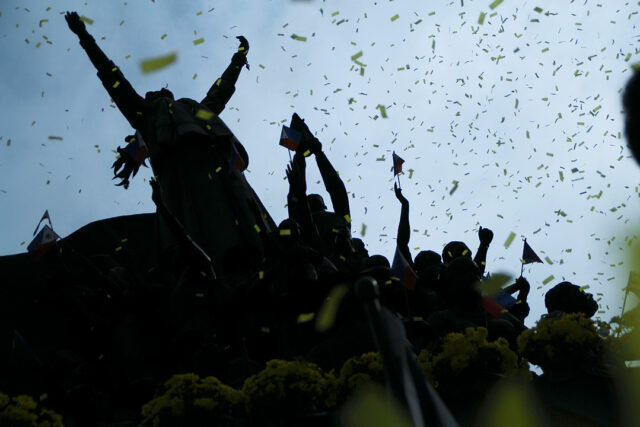
Throughout its six years in office, the Duterte administration paid scant attention, if at all, to the anniversaries of the 1986 “People Power” or EDSA I “Revolution.”

Only platitudes and motherhood statements emanated from Malacañang Palace during those occasions. It was as if the former President and his minions feared that saying something meaningful could enlighten the mass of the citizenry enough for them to harbor such ideas as that they are the true sovereigns of this country and that government officials serve only at their pleasure. That, after all, is the central lesson of EDSA 1986 — and neither the Duterte regime nor its predecessors were comfortable with it.

The Marcos Jr. administration is even less likely to note, least of all celebrate, its 37th anniversary this year, since that Feb. 22-25 civilian-military uprising overthrew the Ferdinand Marcos, Sr. dictatorship and forced him and his family into exile in Hawaii, USA.

Consigning it into the limbo of forgetfulness has never been as likely of success than today — but not just because another Marcos is once again in the country’s highest post. It is also because EDSA 1986 has become, particularly for those Filipinos who trust and approve of him most, just another incident in history whose meaning eludes them.

Their overwhelming satisfaction with Marcos Jr. that a recent survey by Social Weather Stations (SWS) found defies understanding. Exactly why someone in history qualifies as a hero is something they haven’t bothered to find out either. They think of Jose Rizal as no more than a playboy who had a girl in every port, or of Gregorio Del Pilar as just another misguided anti-American. As for EDSA 1986, they think it an incident that ended the “Golden Age” that “the best president the Philippines has ever had” made possible.

But what makes celebrating EDSA 1986 less than attractive even for the better informed is that, while often described as a “revolution,” it was hardly that. It did not dismantle or even truly reform the feudal system. The land tenancy anomaly in fact survived it and even emerged stronger than ever. Inviting foreign investments into the country is still the main development strategy of the successors of Marcos Sr. as it has been since 1946; and industrialization has never been seriously contemplated as economic policy.

That “revolution” was no social upheaval either. It did not end the vast inequality, the social injustice, and the poverty that still afflict millions of Filipinos. And the most that it did politically was to replace one wing of the ruling elite with another. It did not replace the dynasties that have monopolized political power in this country for decades, and in fact eventually allowed the representatives of their most backward, bureaucrat-capitalist faction to eventually regain and keep power indefinitely.

But EDSA 1986 was nevertheless a historic moment, though brief, of mass empowerment. After decades of tolerating corrupt and incompetent misgovernment from 1946 onwards, some two million Filipinos braved the guns, the tanks, the helicopter gunships, and the mercenary soldiery of the dictatorship. They had had enough of the arbitrary arrests, the torture, the enforced disappearances and the extrajudicial killings of the regime, and knew that it was time to end the kleptocracy that had brought only dishonor to their country and suffering to its people. It was revolutionary in that sense — and it is for that reason that, while they have never found the words to say it, the ruling dynasts and power elite fear it.

But Duterte is not alone in wanting it and its lessons away, and neither is his successor. Their predecessors were equally focused on getting the people to forget it — and for entirely the same reasons. He was one of the leading figures of EDSA 1986, but the late former President Fidel Ramos repeatedly muted its significance and warned against its repetition supposedly because the political instability it would generate would discourage foreign investments. Joseph Estrada’s removal from office via EDSA II understandably made him, his family, and his allies leery of anything similar, while Gloria Macapagal-Arroyo allegedly contemplated declaring martial law out of fear that an EDSA III could depose her.

He was accused of fomenting a military putsch during the presidency of the late Corazon Aquino. Former Senator — and now Legal Counsel of the son of the President he helped depose — Juan Ponce Enrile quite logically encouraged the Filipino people to remember EDSA I differently instead of discouraging its celebration. Like Ramos, he was one of the 1986 event’s leading figures, and apparently believed that something similar could propel him to power. Rather than admit that what overthrew Marcos Sr. in 1986 was the people’s direct action, he declared at some point when he was eying the Presidency that it was the military that had done the deed.

That claim denies the crucial role of the millions of civilians who massed at EDSA from Feb. 22 to 25. Elements of the military were indeed involved in the uprising, but without the support of a sizable segment of the Filipino people, those rebel units would have been crushed by the superior numbers and firepower of Marcos’ military loyalists. It was unarmed civilians— nuns and priests, students, professionals and other middle-class folk — who faced Marcos’ tanks and prevented Ramos’, Enrile’s and their military cohorts’ annihilation in 1986.

But it could not have happened without the decade-long efforts of Church people, journalists, writers, teachers, students, artists, and many other sectors to provide the citizenry, from day one of martial rule, the information denied them by the regime-controlled press that finally led even entire families to mass at EDSA from Feb. 22 to 25. The dictatorship would have prevailed without them — and the same dedication to good government of almost the same sectors assured the ouster of Joseph Estrada via EDSA II in the year 2000.

As contrary to the facts as Enrile’s re-invention of EDSA I may be, it seems that Duterte shared his view, although not necessarily because of his say-so, and without publicly admitting it. The same assumption of military primacy as Enrile’s was evident in his courtship of the officer corps — his packing his government with retired generals, and his putting the interests and welfare of the soldiery above those of everyone else’s in terms of perks and salaries. Rather than the people shielding him from the military, it seemed that Duterte anticipated the possibility that the military might have had to shield him from the people.

His successor does not seem to share those fears, perhaps because it was his father who, after all, transformed the military from the fist of civilian authority into a power broker whose support has become vital to every post-martial law regime. As for another People Power uprising, that, too, seems unlikely despite the inflation, the hunger, and the rank injustice that afflict millions of Filipinos.

Mr. Marcos Jr. and his family are now in the same position as that of their late patriarch during his reign as President — that of being protected by the self-serving loyalty of the military — but with a further advantage. Added to that is the cluelessness and apathy of the heirs of a generation that brought down a seemingly invincible tyranny to which government was but a banquet for it to feast on. It is this latter fact that makes it so much the worse for the long-delayed and so problematic democratization of Philippine society and governance.


Luis V. Teodoro is on Facebook and Twitter (@luisteodoro).

www.luisteodoro.com

Philippine fintechs are more than ready to advance the global ESG agenda

JAVIER ESTEBAN-UNSPLASH

FROM contributing to much-discussed financial inclusion to diminishing geographic and social imbalances, financial technologies have created a stellar track record in providing positive impact on the lives of Filipinos.

Today, another burgeoning factor (or set of factors) that will further illustrate how fintech directly contributes to society is its growing role in advancing ESG (environmental, social and governance) principles.

An important element of the global financial and economic system, the ESG agenda of companies are assessed by special independent ratings, which affect the value of its shares. The number of companies implementing ESG-oriented strategies and receiving this rating have been steadily growing (according to Vanguard). The importance of ESG as a factor in investment decisions is also rising. It is significant, for example, that there are hundreds of specialized ESG funds and exchange-traded funds operating in the world (which already have close to $400 billion under management). Twenty-six percent of global investors report that ESG is a focal point of their investment approach (ESG Global Study 2022). In general, Bloomberg’s assessment perfectly characterizes the global ESG market and its prospects. It claims that global ESG assets could exceed $41 trillion in 2022 and $50 trillion by 2025, which is a third of the projected total AUM (assets under management) worldwide.

In Asia, the penetration of ESG investment among wealthy investors this year may more than double, already up to 70% (Accenture). On the other hand, compared to Western countries, Asian businesses are clearly lagging behind in ESG development, even causing concern on the part of some researchers (Morrison Foerster).

Locally, ESG is gaining recognition from both businesses and consumers. A survey from a research and advisory company saw 41% of CEOs reporting a significant impact of the pandemic on appetite/demand for ESG in their business whilst a Statista and PWC study revealed a solid 38% of online shoppers in the Philippines were impacted by companies’ environmental actions.

Aside from ESG principles being an effective way to attract investments, these data sets make it clear that more Filipinos continue to go beyond the simplicity, convenience, and accessibility offered in choosing its roster of day-to-day fintech services such as e-money services, digital lending and basic savings accounts. This is good news for companies that already or are working on a clear plan to pursue a more socially responsible and sustainable way towards profitability.

ESG AND FINTECH: A NATURAL SYNERGY
Foundational steps towards this direction were laid down by international organizations, illustrating the natural synergy between fintech and ESG. At the beginning of 2020, UNICEF launched the Fintech for Impact pilot program in the country, with the goal of studying the social impact of innovative financial technologies. It placed a spotlight on several fintech startups which create solutions that can help vulnerable citizens, and provided them with access to ample investment. The winners included projects that offer agricultural loans to farmers and fishermen, and loans to students, projects that control the use of remittances from migrant workers and overseas foreign workers (OFWs), and those that promote women’s employment.

Coupled with country-wide initiatives aimed to spur the financial sector towards ESG and longstanding efforts to combat natural disasters, the Philippine fintech industry is increasingly producing initiatives of these kinds. Prime examples include bespoke financial instruments dedicated to the MSME sector, green bonds, and creating digital agri-lending platforms for farmers. At this stage, opportunity remains to have activities that address socio-environmental issues such as plastic waste, air and sea water pollution, and access to cleaner energy. These can be partially solved by funding startups that specialize in electric vehicles, sorting and recycling of waste, as well as the operation of alternative electricity such as renewables.

Within organizations, practical starting points could be the integration of environmental concerns and impact into its decisions and activities, promoting the reduction of waste and recycling, purchasing products and services that do the least harm to the environment, training and educating employees on environmental matters, and communicating its environmental commitments to the customers.

Another would be to utilize platforms that reveal the impact companies have in accomplishing the United Nations Sustainable Development Goals (SDGs), as already seen in other countries.

In conclusion, all signs point to the Philippines becoming a leading voice not only in fintech growth but in the wider ESG agenda. A long process, of course, but one that has the potential to further create meaningful social good.


Kirill Kalashnikov is the regional director for APAC at Robocash Group, which operates in the Philippines through Digido Finance Corp.

Russia’s return to prosperity may take much longer

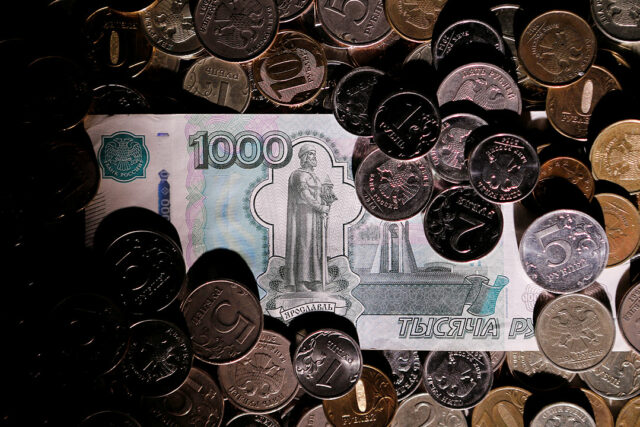
Russian rouble coins and a 1,000-rouble banknote are seen in this picture illustration taken June 7, 2016. — REUTERS/MAXIM ZMEYEV/ILLUSTRATION

MOSCOW — Russia’s economy proved unexpectedly resilient in the face of tough Western sanctions last year, but a return to pre-conflict levels of prosperity may be far off as more government spending is directed towards the military.

Even internal forecasts made soon after Moscow sent troops into Ukraine a year ago had predicted the economy would shrink by more than 10% in 2022, exceeding the slumps seen after the Soviet Union collapsed and during the 1998 financial crisis. But statistics agency Rosstat’s first estimate shows a more modest contraction of 2.1% last year.

“The Russian economy and system of governance proved to be much stronger than the West supposed,” President Vladimir Putin told Russia’s political, military and business elite this week. “Their calculation did not come to pass.”

High prices for its energy exports helped cushion the blow from sanctions aimed at isolating Russia economically, while capital controls saw the rouble strengthen to a seven-year high. A collapse in imports led to a record current account surplus.

The central bank, led by Elvira Nabiullina, kept a steady hand on the tiller despite losing access to around $300 billion worth of international reserves.

But analysts nonetheless see a substantial and long-lasting opportunity cost from what Moscow calls its “special military operation” in Ukraine. Before the conflict began, the government had forecast 3% economic growth last year.

“The fact that the economy surprised everyone last year is certainly a positive factor,” said Grigory Zhirnov, an analyst for the My Investments Telegram channel. “However, it is better to compare the dynamic relative to what it would have been if the previous trend had continued.”

Zhirnov said the economy would not regain its 2021 size until 2025, “and the level of GDP that could have been achieved in the absence of last year’s crisis will hardly be reached in the next 10 years”.

Moscow is finding new markets in Asia for its oil and gas exports, the economy’s lifeblood, and has maintained the supply of consumer goods through a grey imports scheme. It increasingly shuns the Western markets that helped spur its post-Soviet growth, however, and is turning inwards.

A “de-dollarization” drive means the rouble has doubled its share in Russia’s international settlements, Mr. Putin said. Banks, meanwhile, are looking for domestic means of reviving profits.

Mr. Putin told business elites to invest in Russia, saying ordinary Russians felt no sympathy for their lost yachts and mansions.

‘GUNS NOT BUTTER’
He also argued for sustainable domestic development and a self-sufficient economy, recalling a criticism leveled against Soviet leaders so focused on military spending they ignored people’s welfare.

“There is a saying: ‘guns not butter’,” Mr. Putin said. “Defense of the country is, of course, the most important priority, but when solving strategic tasks in this area, we must not repeat the mistakes of the past, we must not destroy our own economy.”

But Russia is ramping up military spending, and diverting funds from hospitals and schools will ultimately hamper the development of civilian economic infrastructure.

Rising expenditure and slumping revenues led to a $25-billion budget deficit in January, while the current account surplus more than halved from a year earlier.

High oil prices would normally be helping top up the rainy-day National Wealth Fund (NWF), but with its hydrocarbon exports now subject to embargos and price caps, Russia is currently selling Chinese yuan from the NWF to cover the deficit.

While the finance ministry has pledged the deficit will not spiral out of control, dipping into the fund risks reducing Moscow’s future spending capacity and feeding inflation risks.

The central bank, whose analysis of Russia’s economic health is consistently more pessimistic than Mr. Putin’s, has warned that the widening budget deficit is inflationary and said it is more likely to hike interest rates from 7.5% this year than cut them.

Reaching this year’s oil and gas revenue target is looking increasingly problematic, Oleg Vyugin, a veteran economic official, wrote in a report this month, especially as prices for Russia’s Urals oil blend have fallen.

In order to meet budget plans, Russia would have to double its planned NWF spending, risking higher inflation that would force the central bank to raise borrowing costs.

“Implementing such a budget is a path to the gradual erosion of financial stability and the further decline of the population’s real wages,” Mr. Vyugin wrote.

Real disposable incomes shrank 1% last year, prompting Russians to save more and spend less. Retail sales fell 6.7%.

Russians’ stronger propensity to save is a sign of the economic uncertainty, said Alexandra Prokopenko, an independent analyst and former advisor to the central bank.

Ms. Prokopenko, who also highlighted the opportunity cost to the economy, said Russia’s financial leadership had become used to navigating crises. Similar officials have been in charge since the global financial crisis in 2008, steering the country through a deteriorating relationship with the West.

“We can say for sure that the picture isn’t black and white. Mr. Putin can be proud of his ‘Fortress Russia’ that his financial leadership built for him,” she said. “But it was built at a high cost.” — Reuters

Taiwan to give tourists perks worth $165 each to boost economy

A man walks out from a train in Taipei, Taiwan March 21, 2016. — REUTERS/TYRONE SIU

TAIWAN will offer 500,000 tourists a cash or discount incentive this year as it tries to shore up its post-pandemic travel industry and boost spending.

The incentives, worth NT$5,000 ($165) each, were announced Thursday as part of a NT$5.3 billion package to attract international tourists.

While some details were not yet available, including whether there were any eligibility requirements or how people would be chosen, officials said in a statement that the money may be handed out electronically or as discounts for accommodation.

“We hope to accelerate and expand efforts for international tourists to come to Taiwan,” Lin Fu-shan, department director of the Ministry of Transportation and Communications, said at a press briefing.

The spending plan also included a proposal to offer travel agencies NT$10,000 each for groups of at least eight tourists, and NT$20,000 each for groups of at least 15 tourists.

Taiwan is looking for ways to boost its economy after removing Covid curbs last year. Growth is expected to slow in 2023 as the trade-dependent island struggles with a dropoff in exports, making it more important to spur activity through domestic demand and tourism.

Before the pandemic, tourism accounted for about 4% of Taiwan’s gross domestic product, according to Taiwan’s Tourism Bureau.

But visits came to a near-standstill as Taiwan closed its borders and implemented quarantine rules to contain the virus. Geopolitical tensions have also chilled the industry, as China banned individual tourists traveling to Taiwan in 2019, and last month left it off a list of 20 permitted destinations for Chinese tour groups.

Taiwan has taken some steps to welcome visitors, including reopening its borders to individual travelers from Hong Kong and Macau this month. The government wants to attract six million tourists this year, Transportation Minister Wang Kwo-tsai said earlier.

After reopening last October, Taiwan attracted nearly 900,000 tourists in 2022, according to a statement from Taiwan’s Transportation Ministry.

The tourism announcement was part of a larger, NT$380-billion stimulus package that was approved via a special act by lawmakers this week. Lawmakers still need to sign off on where all of the funds are used specifically. Other parts of that plan — paid for using surplus tax revenue — include allocating funds for use by the state-owned Taiwan Power Company and health insurance system.

That broader package has been in the works for a while, but Thursday was the first-time officials detailed several of the specifics, including the plan for tourists. Officials are expected to release more details in the afternoon.

Taiwan’s campaign comes as others in the region also roll out initiatives to attract tourists. The “Hello Hong Kong” campaign, for example, involves giving out 500,000 air tickets among other perks. — Reuters

UNDP says upfront debt cuts may save hardest hit countries $148B

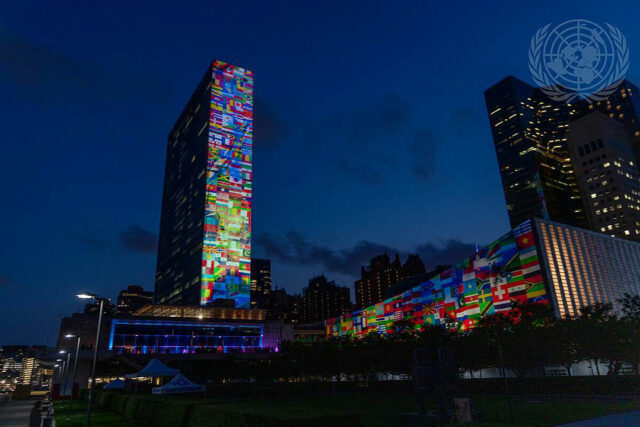
A LANDMARK LAUNCH of Scoring for the Goals event with projection of images of Sustainable Development Goals on the UN Building in New York City, Sept. 17, 2022. — UN PHOTO/CIA PAK

JOHANNESBURG — A 30% upfront cut of debt-stressed countries’ borrowings could save them $148 billion over eight years, the U.N. Development Programme (UNDP) said on Wednesday, proposing a move to address global debt problems stirring growing international concern.

A ‘haircut’ of 30%, or $191 billion, on the 2021 external debt of the 52 most “debt vulnerable” nations could reduce their combined debt service bill by $66.4 billion to private creditors, $44.2 billion to multilateral lenders and $38.9 billion to bilaterals by 2029, the UNDP said in a report.

Improving the loan restructuring process for countries struggling with their debts is expected to be prominent on the agenda of the G20 finance minister and central bank meetings taking place in India in the coming days.

Sri Lanka, Ghana and Ukraine joined the likes of Lebanon and Zambia in default last year, while Tunisia, Pakistan and Egypt are among countries that have sought help from the International Monetary Fund (IMF) amid problems of their own.

“The problem, for many (developing economies), is not an absence of growth but the fact that tepid growth and high interest rates in 2023 and 2024 will not provide enough fiscal or monetary space to mitigate crises,” the UNDP report said.

It said that the average country in the 52 it analyzed owed 82% of its external public debt to bilateral and multilateral creditors, such as other countries and the IMF or World Bank. Meanwhile, 16 owed more than 30% of their foreign debt to private lenders.

Countries whose international bond interest rates are more than 10% higher than those on US Treasuries, a premium or ‘spread’ usually deemed as unaffordable by economists, rose from five at the end of 2019 to 14 currently, the report found.

Money borrowed from the ‘private sector,’ often in the form of bonds that countries usually pay higher interest rates on, accounted for 65% and 45% of external debt in Ghana and Sri Lanka, respectively. — Reuters

ADVERTISEMENT
ADVERTISEMENT