Home Blog Page 5164

Police beefing up security measures ahead of Oct. local elections after political killings 

PNP.GOV.PH

THE PHILIPPINE police force will implement tighter security measures such as setting up checkpoints in areas considered under high risk of violence, especially in the period leading up to the October village and youth council elections, a police officer told a House committee on Wednesday.  

Brigadier General Matthew P. Baccay told the House public order and safety committee that theywill implement checkpoints on points of ingress and egress of possible hotspots in view of the coming elections this coming October 30.”   

He said that checkpoints will specifically be in areas identified as hotspots of which there are threats to elected political leaders, local chief executives.”  

He added that the agency will conduct aggressiveoperations to update its list of guns-for-hire, as well as for illegal firearms.  

President Ferdinand R. Marcos, Jr. on Monday ordered police authorities to identify hotspots of political violence, days after the murder of a local official in broad daylight at his residence where eight civilians were also killed and 16 others wounded.    

Mr. Baccay said the added security measures were discussed during a meeting with governors, mayors, and the Department of Interior and Local Government on Tuesday at the police national headquarters.   

Negros Oriental Governor Roel R. Degamo and eight others died when armed men opened fire at his residential compound Saturday, where cash aid was being distributed under a social service program.   

Government prosecutors have filed murder and frustrated murder charges against four suspects.  

Antipolo Rep. Romeo M. Acop called to relieve local police officers in Negros Oriental for their alleged negligence despite the widely known political tension in the province.   

Definitely, the provincial director, the regional director, and their intelligence officer know this. But my question is what did they do in spite of the fact that they know the heated situation in Negros Oriental?Mr. Acop told the committee.  

This thing should have been prevented if only we did the proper or appropriate things therethey should be relieved, otherwise, your complacency will go on and on,he added. Beatriz Marie D. Cruz 

Senate panel recommends immediate technical capacity, system upgrade for CAAP 

PHILIPPINE STAR/ MIGUEL DE GUZMAN

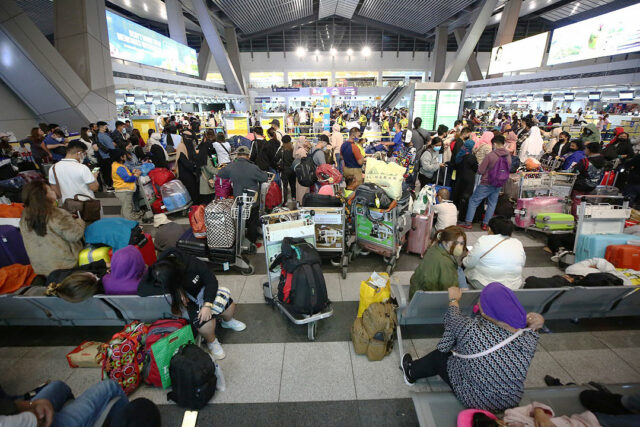
THE SENATE public services committee called for an immediate improvement in the Civil Aviation Authority of the Philippines(CAAP) technical capacity and equipment, citing that the New Years Day power outage that crippled airport operations nationwide was caused by several malfunctions.  

“The January 1 systems failure was indeed a confluence of factors and errors. Experts likened it to the planets aligning albeit with an unfortunate consequence,Senator Mary Grace S. Poe-Llamanzares, chair of the committee, said in a statement on Wednesday. 

It’s rare but we know it can happen, and it will continue to happen if we don’t do anything about the problems of the air traffic system in the country,” she added. 

The panel conducted an investigation on the incident and its report, released on Wednesday, indicated that sabotage and cyberattack did not cause the glitch.  

Although there are many deficiencies in the security of our facilities such as the lack of CCTV, and the system itself such as outdated computer systems and other cybersecurity vulnerabilities, no data compromise occurred due to the incident,” Ms. Poe-Llamanzares said.  

Nonetheless, she said that a conclusive finding on this possibility can only be reached after the uninterruptible power supply data logs sent to Turkey have been fully examined.  

The senator said that upgrading critical equipment will be necessary to avert a repeat of the incident, complemented by the rollout of sufficient engineering guidelines as well as training of accredited engineers who will man the system.  

“There is a lot of work needed for a better system,she said.  

Ms. Poe also called for CAAPs immediate compliance to the International Civil Aviation Organizations recommendations as well as the amendment of the CAAP charter to improve efficiency and transparency.  

The senator said the panel does not intend to recommend penalties against CAAP officials based on their findings, stressing that public safety is their primary goal. 

Accountability will follow after weve laid down safety measures for our air passengers,she said. 

The committee also recommended that another Communications, Navigation, and Surveillance System be set up in an independent location.  

Feasibility studies on the proposed Ninoy Aquino International Airport privatization should also be fast-tracked. 

The panel also sought for the swift passage of relevant bills such as the Philippine Transportation Safety Board, Philippine Airports Authority Act, and Air Passengers Bill of Rights. Alyssa Nicole O. Tan 


Butuan Airport’s bigger passenger building completed 

CAAP

THE EXPANDED terminal building of the Butuan Airport in southern Philippines was formally opened on March 8, increasing its capacity to 616 passengers from only 248. 

This is in line with the goal to provide locals and tourists with safer journeys to the different parts of the country,” Civil Aviation Authority of the Philippines Director General Manuel Antonio L. Tamayo said during the launching ceremony.  

Butuan City is the regional center of Caraga in northeastern Mindanao, which covers the provinces of Agusan del Norte, Agusan del Sur, Surigao del Norte, Surigao del Sur, and Dinagat Island. 

The terminal expansion project cost P24.5 million.   

The airport currently caters to 12 flights daily served by Cebu Pacific and Philippine Airlines.

Test run for Commonwealth Ave. exclusive motorcycle lane starts March 9

MMDA PHOTO

A DRY run for the implementation of an exclusive motorcycle lane along Commonwealth Avenue in Quezon City starts March 9, the Metropolitan Manila Development Authority (MMDA) announced on Wednesday.  

“The dry run is meant to familiarize motorcycle riders traversing Commonwealth Avenue on the said policy. We will have a full deployment of MMDA traffic enforcers and we will be assisted by the local government of Quezon City,” MMDA Acting Chairman Romando S. Artes said in a statement.  

“No motorists will be apprehended during the duration of the dry run which will start tomorrow until next Sunday, March 19,he said.   

The dedicated lane for motorbikes is the third lane from the sidewalk, spanning between the Elliptical Road and Doña Carmen Avenue on both sides of the highway.  

Commonwealth Ave., which has been referred to as the Philippines’ “killer highway,is 12.4 kilometers long, with the number of lanes varying from six to 18.    

Mr. Artes said the motorcycle lane scheme is intended to prevent fatal road crashes and improve traffic flow along the countrys widest thoroughfare.  

There was an average of five motorcycle-related crash incidents along the avenue in 2022, according to MMDA. Of the 1,686 total, 13 were fatal, 930 resulted in non-fatal injuries, and 743 caused damage to property.   

Full implementation of the motorcycle lane policy starts March 20, and violators will have to pay a fine of P500.

Women workers raise gaps on job opportunities, minimum wage 

WOMEN police officers take the frontline as members of women’s groups hold a rally in Manila on March 8, the celebration of International Women’s Day. — PHILIPPINE STAR/EDD GUMBAN

A COALITION of women workersorganizations on Wednesday raised the lack of job opportunities and inadequate minimum wages in the Philippines as the world observed International Womens Day.   

The Women Workers United (WWU), composed of six groups, cited that 7 in 10 Filipinos mostly women are being driven into informal, precarious workwhile prices of basic goods continue to soar.   

Filipino women find themselves in a time of crisis today,WWU said in a statement.   

The group said there is a need to address gender pay gap and institute a national minimum wage commensurate to the real cost of living estimated at P1,100.  

WWU also called attention to the overall plight of women in the country, including an increase in the number of victims of violence as well as suppression of the right to unionize.    

They also pushed for the ratification of International Labour Organization Convention 190, which seeks to eliminate violence and harassment in work.  

This International Working Womens Day, we remember the historic role women have played in advancing the peoples vision for a world free from exploitation,WWU said. Alyssa Nicole O. Tan

BCDA to lease out 37 hectares in Clark for 25-MW solar facility

NEW CLARK CITY

THE Bases Conversion and Development Authority (BCDA) said it will offer 37 hectares in New Clark City for development of a P1-billion solar energy farm.

The BCDA said that it is seeking private companies to bid for the long-term lease on a site in the northern section of New Clark City and to develop a facility with at least 25 megawatts (MW) of capacity.

“In line with the renewable energy thrust of the Marcos administration, the BCDA is pushing for the development of sustainable energy sources in New Clark City. This solar farm is one of the crucial projects in New Clark City as it will supplement energy sources and lower energy costs for our locators, while also ensuring reduced carbon emissions,” BCDA President and Chief Executive Officer Aileen R. Zosa said in a statement on Wednesday.

“The BCDA is calling for private sector partners to support us in this endeavor. Your participation is important as we strive to make New Clark City into a smart, sustainable and green city,” she added.

According to the terms of reference for the auction, the initial lease period is 25 years, renewable for another 25 years.

“In line with the Philippine Development Plan 2023-2028, the Marcos government is implementing policy reforms to promote renewable energy sources, thereby lowering energy costs and supporting the revitalization of industries,” the BCDA said.

“These efforts will help achieve the goal of the Philippine government of increasing the share of renewable energy in the country’s energy mix to 35% by 2030 and 50% by 2040,” it added. 

The terms of reference were put on sale on Wednesday, with a pre-bid conference scheduled for March 24, 10 a.m. at the BCDA’s corporate office in Taguig City.

The deadline to submit bid documents, eligibility requirements, and a financial proposal will be on April 21 at noon. — Revin Mikhael D. Ochave

Agri department withdraws guidelines for conducting trials on new fertilizers

PHILSTAR

THE Department of Agriculture has withdrawn the guidelines for conducting bioefficacy trials on new fertilizer products, an apparent first step in easing the approval process for new types of fertilizer.

In a department circular, Agriculture Senior Undersecretary Domingo F. Panganiban ordered the revocation of guidelines issued by former Agriculture Secretary William D. Dar in February 2022 which required trials for new fertilizer products that have been commercially available for less than 10 years. The guidelines required the fertilizer to be trialed in both wet and dry seasons.

Inorganic fertilizers registered for 10 years or more were exempt from the bioefficacy trials.

The old guidelines also required the publication of an efficacy trial terminal report. The trial was to be run by an accredited researcher in line with the Fertilizer Regulatory Policies and Implementing Guidelines.

According to Mr. Panganiban’s circular, Mr. Dar’s guidelines had yet to be implemented.

“The Fertilizer and Pesticide Authority is hereby instructed to issue the appropriate guidelines (for product trials) after it conducts an assessment,” Mr. Panganiban said.

Last week, the Palace announced that President Ferdinand R. Marcos, Jr., who is also the Agriculture Secretary, wanted to introduce biofertilizer to farmers to reduce dependence on imported products which are petroleum-based. — Sheldeen Joy Talavera

China reopening to boost tourism, but overall impact on PHL economy seen as modest

REUTERS

CHINA’s reopening is expected to boost tourism in the Philippines, though the overall impact on the economy will likely be modest, according to MUFG Global Markets Research.

“The return of Chinese tourists will likely significantly benefit tourism in the Philippines,” it said in a report.

China was the second-largest source of visitors in 2019 with 1.7 million arrivals or 22.2% of the total.

“This greatly outweighed the 6.3% from intra-Association of Southeast Asian Nations (ASEAN) sources. At the same time, returning Filipinos will likely provide another source of travel receipts,” it added.

This year, the Philippine Travel Agencies Association is expecting international visitor arrivals to hit 8.26 million.

The Department of Tourism is targeting at least 4.8 million arrivals this year. In 2022, the Philippines took in 2.7 million tourists.

The report said that the expected boost in tourism is due to the Philippines reducing its coronavirus disease 2019 (COVID-19) restrictions.

“Visitor arrivals were only 3% of pre-pandemic (2019) levels in December 2021. However, this has climbed to 56% by December 2022. This was supported by ASEAN tourists, at 55% of 2019 levels,” it added.

It added that travel from China improved to 7.2% of pre-pandemic levels in December 2022 from 0.9% in December 2021.

MUFG said it also expects gross travel receipts to increase this year.

“Given current trends, we anticipate broader upsides in 2023. Gross travel receipts may hit $6-8 billion in 2023, higher than an expected $4 billion in 2022 and catching up to $9.8 billion in 2019,” it said.

“At the same time, the Philippines may see fairly balanced net travel receipts, after a deficit of around $500 million in 2022. The boost from China will likely be significant and outweigh outbound travel,” it added.

On the other hand, the report said that the impact of the Chinese reopening on the Philippine economy will “likely be modest,” as the Philippines is mainly domestic-demand driven.

“The improvements from tourism, further boosted by travel from China, will likely benefit all tourism related sectors. Pre-pandemic, major inbound tourism expenditure was on transport (36.6%), accommodation (31.9%), as well as food and beverage (22.5%). The accommodation and food services sectors employed 2 million workers in 2019, accounting for almost 5% of total employment,” it added. — Luisa Maria Jacinta C. Jocson

World Bank backs safety nets to build climate resilience

REUTERS

SOCIAL protection measures like cash support programs are needed to build climate resilience, especially in at-risk countries like the Philippines, the World Bank said in a blog post.

“Adapting cash support programs after a disaster requires careful targeting and understanding of disaster-affected population needs. Making social protection programs more flexible while incorporating reliable mechanisms for identifying and targeting vulnerable populations contributes to an inclusive recovery,” it said.

“Natural hazards, health and climate-related shocks, are increasingly and disproportionately affecting the poor and the most vulnerable populations. Interventions are required to strengthen resilience and protect these populations against disaster impacts,” it added.

The World Bank cited the Philippines, one of the countries most affected by natural and climate-related disasters.

“The experiences of ad hoc emergency cash support programs in the Philippines have shown that the needs of disaster-affected families include food and nonfood items, including urgent requirements for medicines and healthcare not delivered as part of government-provided relief,” it added.

The bank noted the “unusual number of natural hazards (earthquakes, typhoons, volcanic eruptions)” in late 2019 and early 2020.

The Global Facility for Disaster Reduction and Recovery provided grants for training and technical assistance to aid the Department of Social Welfare and Development in designing an emergency cash transfer program to deliver the World Bank’s $500-million policy loan to the Philippines.

“The design of the emergency cash transfer program built on these experiences to empower disaster-affected populations to determine how to address their needs using local resources,” it said.

The World Bank said that the program “built household resilience and recovery to quickly resume day-to-day activities after disasters.”

“By reforming the cash support available in case of an emergency, the project ensured that cash assistance reached disaster-affected households immediately after disasters to facilitate their recovery,” it added.

The World Bank said that social protection systems can make vulnerable households more resilient; however, they must be enhanced and adapted to respond to disaster shocks.

“Incorporating risk data into social protection information systems is critical to design programs, inform contingency planning, and scale-up interventions to adapt systems to respond to disasters more efficiently,” the bank added.

It also cited the need to adjust existing social protection programs to support disaster-affected populations and promote financial protection and inclusion for resilience to disaster risks. — Luisa Maria Jacinta C. Jocson

Science advocacy organization rules out need for new nuclear energy regulator

PNRI.DOST.GOV.PH

A SCIENCE advocacy organization has asked legislators to suspend consideration of a bill creating a new agency that will oversee nuclear power, calling instead for the expansion of the Philippine Nuclear Research Institute’s (PNRI) powers.

“It may be more prudent and cost-effective to update those mandates and strengthen said institutions (PNRI) by allocating more funding for research and development, and most importantly providing more permanent employee positions and benefits for scientists and researchers,” Advocates of Science and Technology for the People, also known as AGHAM, said in a position paper.

The House nuclear energy committee is currently discussing House Bill No. 7049, which seeks to create the Philippine Atomic Energy Regulatory Authority or PhilATOM to “exercise regulatory control for the peaceful, safe, and secure uses of nuclear energy and radiation sources in the Philippines.”

The bill also calls for controls on radioactive materials and related equipment, which will be managed under the guidance of the International Commission on Radiological Protection subject to the requirements of the International Atomic Energy Authority.

“This bill and all other related bills are unnecessary and that the regulatory functions of PNRI should suffice for the time being,” AGHAM said.

The PNRI is an arm of the Department of Science and Technology. It has a P461-million share of the P5.268-trillion national budget for 2023.

AGHAM added that “the promise of nuclear energy as a catalyst for sustainable progress and national industrialization is nothing but fool’s gold,” citing the Philippines’ continued dependence on energy imports, in this case uranium.

It also said that the disposal of nuclear waste would result in a high carbon footprint.

“The safety of communities should be paramount, as well as the serious environmental considerations that need to be addressed when indefinitely storing these wastes,” it said.

The group also called on legislators to focus on measures that will facilitate the use and development of renewable energy. — Beatriz Marie D. Cruz

First case of ASF in Cebu confirmed

FREEPIK

THE Bureau of Animal Industry (BAI) said it has confirmed the first case of African Swine Fever (ASF) in Carcar City, Cebu, after 58 out of 149 blood samples taken from pigs there tested positive.

In a statement, the BAI said that the City Veterinary Office of Carcar collected the samples, which were tested for ASF by the Department of Agriculture’s Regional Animal Disease Diagnosis Laboratory in Region VII on March 1.

The samples were taken in a stockyard in Carcar City, where the sampled hogs were kept alongside animals originating from Negros Island.

After the initial positive results, the samples were sent to the BAI for confirmation.

The Carcar and Cebu province veterinary offices are still trying to narrow down the source of the outbreak.

“All swine raisers and stakeholders are encouraged to report any unusual pig mortalities and sickness to their respective agriculture/veterinary offices, intensify the biosecurity measures and stop the use of swill,” the BAI said.

On Monday, Cebu Governor Gwendolyn F. Garcia signed an executive order temporarily banning the entry of pigs, pork products and pork related products from Negros Island until April 5.

Since 2019, Cebu province has been banning the entry of live hogs and pork products from areas hit by the virus.

Cebu has a P11-billion hog industry. — Sheldeen Joy Talavera

MAP to focus on attracting FDI in 2023, minimizing child malnutrition

THE Management Association of the Philippines (MAP) said its areas of focus for 2023 will be attracting foreign direct investment (FDI) and addressing child malnutrition.

Benedicta Du-Baladad, MAP president, said during her speech at the business group’s general membership meeting in Taguig City on Wednesday that the organization hopes to conduct a series of investment promotion briefings and missions. The program will be known as “MAPping the Investment Ecosystem” in partnership with the Department of Trade and Industry. The first activity of the program is scheduled for April 19.

“We aim to enhance the understanding of the growth trajectory of the Philippines and why it is a viable option for investments. We also aim to identify investment priorities, including the value chain that can support or expand the market, domestically, how we can link the micro, small, and medium enterprises (MSMEs) to foreign investors through the development of an ecosystem,” Ms. Du-Baladad said.

“We also seek to learn about the policy landscape and the incentives that are available for investors. Meet with the agencies that can help ease the processes for doing business in the Philippines, and help shape the future of sustainable investment,” she added.

She also pointed to the long-term threat that malnutrition represents in terms of the quality of the future workforce.

“One in three Filipino children aged five years old and below is severely malnourished, manifested in stunting, which is a standard deviation shorter than the median height for their age. 90% of brain development happens by age five. A stunted child will grow up with impaired cognitive and learning ability, memory and intellect, unable to reach full mental and physical potential,” Ms. Du-Baladad said.

“Our current education crisis is not just about classrooms, textbooks and teachers, but also about poorly nourished children unable to learn, due to weakened learning ability as a result of stunting, and the inability to concentrate in class on a hungry stomach,” she said.

“Our much-vaunted demographic sweet spot is negated by the threat posed by stunted children,” she added. — Revin Mikhael D. Ochave

ADVERTISEMENT
ADVERTISEMENT