Home Blog Page 5158

PHL motor vehicle output up 60.3% in January
REUTERS

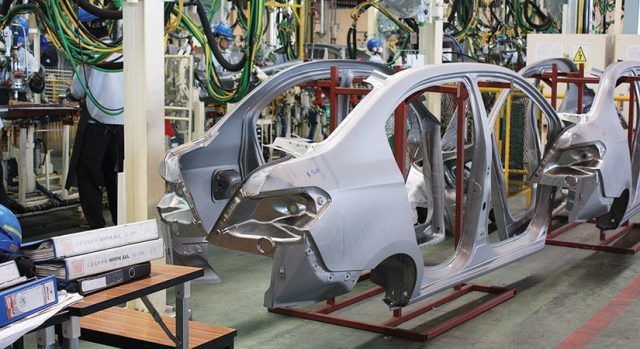
MOTOR VEHICLE production rose 60.3% year on year in January, a growth rate that topped the region, according to the ASEAN Automotive Federation (AAF).

AAF said on its website that Philippine motor vehicle production in January hit 8,886 units, up from 5,543 a year earlier.

The other growth rates reported by AAF were Malaysia’s 36.2%, Indonesia’s 10.7%, Thailand’s 7%, Vietnam’s -53.1%, and Myanmar’s -98.7%.

Total motor vehicle production by the six ASEAN countries in January was 370,899 units, up 9.3% from a year earlier.

The Philippines also posted the highest sales growth in January at 42.1% year on year, after shipping 29,499 units.

The Chamber of Automotive Manufacturers of the Philippines, Inc. (CAMPI) has said that vehicle sales in January represented a good start for the year.

“The double-digit sales growth of 42.1% recorded in January, coming from a year-on-year robust growth performance in 2022 (represents strong) momentum for the auto industry as we start the year,” CAMPI President Rommel R. Gutierrez said.

“The auto industry is optimistic of its continued expansion from the demand-side standpoint driven by the growing domestic consumer market. On the other hand, the supply-side challenges are also an important factor that the industry is mindful of as this may hamper the industry growth,” he added.

Sales growth in January was 19.1% in Malaysia, 11.8% in Indonesia, -5.6% in Thailand, -35.8% in Singapore, -43.7% in Vietnam, and -86.1% in Myanmar.

Motor vehicle sales in the region during the month rose 2.8% to 258,500 units.

Philippine motorcycle and scooter production in January rose 55.4% to 123,786 units, the AAF said.

Other growth rates were 23.8% for Malaysia and 14.6% for Thailand.

For the region, motorcycle and scooter production in January increased 27.1% to 371,907 units.

Philippine motorcycle and scooter sales in January rose 31% to 151,534 units. Sales growth in the other countries was 20% for Malaysia, 9.8% for Thailand, and -23.1% for Singapore.

Regional motorcycle and scooter sales in January hit 361,777 units, up 19.2% from a year earlier. — Revin Mikhael D. Ochave


Removal of charter’s curbs on FDI seen adding upside to PHL growth

JOHANNES PLENIO-UNSPLASH

THE proposed removal of foreign ownership curbs in the Constitution’s economic provisions will provide a measure of upside to the Philippines’ growth outlook, Fitch Solutions said.

“While it is still early days in the process, any pro-business changes to the Philippines’ business environment would pose upside risks to our long-term growth forecast for the Philippines and in particular to investment,” it said in a commentary on Thursday.

On Monday, the House of Representatives approved a resolution seeking to amend economic provisions of the 1987 Constitution.

Fitch Solutions noted in particular the significance of removing restrictions on foreign direct investment (FDI).

“Historically, fixed capital formation accounted for an average of about 23% of gross domestic product (GDP) from 2005 to 2022, and changes to legislation could see this ratio rise by several percentage points over the longer term,” it said.

“As such, it would also pose upside risks to our average real GDP growth of 6.6% over the coming decade,” it added.

The government’s commitment to ramping up investment and implementing economic reforms to ease the entry of FDI will also boost growth, Fitch Solutions said.

“The current Marcos administration has also been proactive in wooing investment to the country and this, alongside the creation of a sovereign wealth fund, will also help to boost domestic investment,” it said.

“We expect the administration to continue to enact pro-investment reforms over the coming quarters, especially as the President has reaffirmed his ambitions plans to make the Philippines a prime destination for foreign investors,” it added.

However, analysts said that the revision of the Constitution is not the main issue hindering FDI.

“New legislation can help attract even more FDI; however, we believe laws and incentives can only do so much to bolster the country’s competitiveness as an investor destination. Improved efficiencies in production and transportation are some that come to mind; an upgrade to skills is another. Cheaper power is another avenue that will figure into any investment decision,” ING Bank N.V. Manila Senior Economist Nicholas Antonio T. Mapa said in a Viber message. 

Terry L. Ridon, a public investment analyst and convenor of think tank InfraWatch PH, said legislation like the Public Service Act has already addressed foreign ownership curbs.

“Our economic maladies had never been because of economic limitations in the 1987 Constitution. It has always been because of continuing governance issues at all levels of government,” he said in an e-mail.

Mr. Ridon said that specific economic policy should “not be enshrined in an amended constitution to allow succeeding governments to craft policies which fit changing economic conditions in the future.”

“Specific economic policy should be left to both the executive and legislature to determine whether as law or regulation, as this provides the government the agility to respond to economic shifts,” he said.

“General economic policy in an amended constitution should only define the state’s strategic economic objectives, such as sustainable development, poverty alleviation, job generation, national wealth creation, and ESG (environmental, social and governance) commitments, among others,” he added.

The central bank estimates that FDI fell 13.4% to $8.43 billion in the 11 months to November. — Luisa Maria Jacinta C. Jocson

JICA to provide P827M for Cebu water district’s septic project

THE Japan International Cooperation Agency (JICA) has approved a grant of up to ¥2.052 billion (P827 million) for a septage treatment project in Cebu.

In a statement, JICA said it signed the grant agreement with the Philippines on Feb. 27 to fund a septage management project of Metro Cebu Water District.

“The objective of the project is to promote septic tank sludge treatment in Metro Cebu through the construction of treatment facilities, the procurement of vacuum trucks, and the establishment of an operating system for sludge treatment,” it added. 

The implementation period is 49 months, including the detailed design work and the bidding period, JICA said.

Specifically, the agency will help improve the septage treatment plant, which has a capacity of 400 cubic meters per day, and provide 35 vacuum trucks as well as four dump trucks for the project.

JICA will also engage consultants to assist with the design work, bidding assistance, construction supervision, and the technical guidance on how to collect and treat septage.

“The project will thereby contribute to the improvement of the sanitation and water environment in the area, as well as to the achievement of SDGs (Sustainable Development Goals) Goal 6 (clean water and sanitation),” JICA said. — Keisha B. Ta-asan

DoE seeks Japanese participation in PHL decarbonization plan

PIXABAY

THE Department of Energy (DoE) said it is in talks with Japanese companies interested in the government’s decarbonization program and renewable energy projects.

“Our government is always keen to work with the private sector on projects which would be mutually beneficial for both parties. With this, our gradual transition to a low-carbon economy entails the diversification of our energy sources, especially cleaner and indigenous sources, such as renewable energy, to intensify decarbonization efforts across all economic sectors as part of our broader national strategy,” Energy Secretary Raphael P.M. Lotilla said in a statement on Thursday.

The Philippines is aiming to become a low-carbon economy through renewable energy and greater use of indigenous energy sources.

Last year, the government opened the renewable energy industry to full foreign ownership after amending the implementing rules and regulations of the Renewable Energy Act of 2008.

Mr. Lotilla pitched Japanese companies at the Asia Zero Emission Community Ministerial meeting in Tokyo on March 3-4.

The Philippine Energy Plan seeks to increase the share of renewables to 35% by 2030 and to 50% by 2040.

The DoE said this translates to greenhouse gas emissions reduction of about 35% or 119 million tons of carbon dioxide by 2040.

“Full foreign ownership also opens rich opportunities to new areas in energy, such as gas pipelines,” Mr. Lotilla said. — Ashley Erika O. Jose

PAGCOR to terminate auditing contract

BW FILE PHOTO

THE Philippine Amusement and Gaming Corp. (PAGCOR) said it plans to issue a notice to terminate its consultancy contract with the third-party auditor of its licensed offshore gaming operations, Global ComRCI.

“Since September 2022, the new PAGCOR management has been conducting extensive reviews of PAGCOR’s existing contracts, among which is Global ComRCI’s. Upon careful evaluation, PAGCOR has determined the third-party auditor to be in default of its obligations and (has) prima facie evidence (that it) committed unlawful acts,” PAGCOR said in a statement.

PAGCOR said that it endorsed the matter to the Office of the Solicitor General for the possible filing of administrative, civil and criminal cases against the auditor.

“PAGCOR will likewise explore all legal remedies available for the restitution of more than P800 million out of the partial amount released to Global ComRCI prior to the assumption of the current administration as well as damages it has caused to the corporation,” it said.

“PAGCOR would like to reiterate that contrary to previous reports, it has not yet paid the contract amount of P6 billion to Global ComRCI. Moreover, no payment has been made by PAGCOR in the past four years due to the shortfall from the minimum revenue stipulated in the contract,” it added.

It also added that it will give the auditor “the opportunity to be heard” in line with due process.

“In the absence of an external auditor, PAGCOR will temporarily undertake auditing functions for its offshore licensees until it is able to contract another third-party auditor through a transparent and strict bidding process,” it added. — Luisa Maria Jacinta C. Jocson

Exporters to be aided in expanding EU footprint

REUTERS

THE Philippine Trade Training Center (PTTC) said its Global MSME Academy (GMEA) will train exporters to expand their footprint in the European Union (EU).

The PTTC said in a statement that the training program will be conducted in collaboration with the International Trade Center (ITC).

The PTTC, an arm of the Department of Trade and Industry, said in a statement on Thursday that it signed a memorandum of understanding with ITC on Feb. 27 to develop training modules for exporters.

“With the modules developed by ITC and GMEA, exporters will have a better understanding of the intricacies of the EU market, reducing cross-border inefficiency, and complying with export regulations,” the PTTC said.  

The modules will cover the rules of international trade, working with freight forwarders, and exporting food from the Philippines to the EU, covering regulations, certification, export strategies, mitigating cross-border inefficiency, rules of origin, and invoicing. 

“The EU is an important market of the Philippines. It is imperative that Filipino sellers know the EU market intricacies, and these modules that ITC and PTTC will co-develop and offer will help put our exporters at an advantage,” GMEA Executive Director Nelly Nita N. Dillera said.

“With this collaboration between GMEA and ITC, exporters will have access to training and guidance that will help them navigate the global market and compete more effectively. This partnership is expected to provide a significant boost to the growth and development of the MSME sector in the Philippines,” the PTTC said. — Revin Mikhael D. Ochave

PHL agri tech deficit found to have widened after modernization law

THE technology deficit widened in agriculture even after the passage of Republic Act 8435 or the Agriculture and Fisheries Modernization Act of 1997, the Philippine Institute for Development Studies (PIDS) said, citing the results of a study.

Citing the International Food Policy Research Institute, PIDS said the Philippines lagged most of Southeast Asia in total factor productivity between 2001-2014.

The study concluded that the Philippines experienced a “slowdown in technological progress” during the period.

“Advances in productivity have been observed in Philippine agriculture, especially in rice and corn. However, progress has fallen behind that of other countries, whether concerning outcomes or inputs,” PIDS researchers said.

The researchers had issued a study, “How Modern is Philippine Agriculture Fisheries?: The Agriculture and Fisheries Modernization Act after a Quarter Century.”

“The Philippines is characterized as having middle-level farm mechanization, with very low mechanization during planting and harvesting,” the study found.

The Department of Agriculture estimates the mechanization level of farms at 1.23 horsepower per hectare (hp/ha), well below the 4 hp/ha elsewhere in Southeast Asia.

According to the study, the Philippines’ “inability to achieve a sustainable economic transformation” was due to the lack of recognition of the role played by technology and innovation.

PIDS said that “regional concentration of industries” created a technological gap between urban and rural areas. — Sheldeen Joy Talavera

Banks stable, but rate hikes pose downside risk — Moody’s

THE prospect of further rate increases is considered a risk to Philippine banks’ asset quality, though the outlook for the next 18 months is stable, Moody’s Investors Service said on Thursday.

At a webinar, Moody’s Vice-President and Senior Credit Officer of the Financial Institutions Group Srikanth Vadlamani said more rate hikes by the Bangko Sentral ng Pilipinas (BSP) beyond the current 6% will bring rates past “already historical levels.”

Rates are “actually quite high. And it’s not clear whether (the BSP is done); maybe there are a few more rate hikes to come because of inflationary pressures,” Mr. Vadlamani said.

Asked for his view on banks’ non-performing loan (NPL) ratios by the end of the year, Mr. Vadlamani said Moody’s has no explicit forecast, but said asset quality will be generally stable in line with the trend seen in 2022.

“But the key risk we are watching out for is, are there going to be more rate hikes? If so, what is the capacity of the borrowers to absorb these rate hikes?” he added.

The BSP raised borrowing costs by a total of 400 basis points (bps) starting May 2022, bringing the key policy rate to 6%, its highest in nearly 16 years.

The central bank said bad loans totaled P405.138 billion in January, up 1.6% from a month earlier. The January total was down 12.2% from a year earlier.

This brought the industry’s NPL ratio to 3.28%, up from the 3.16% posted in December but lower than the 4.14% in January 2022.

Last week, Moody’s Investors Service maintained its “stable” outlook for the banking industry for the next 12 to 18 months, due to Philippines’ robust economic recovery.

“Philippines is actually on the positive. The rebound from COVID (coronavirus disease) has been quite strong — better than expected. And we saw that in the fourth quarter numbers as well. That has been a key factor driving banks’ asset quality performance,” Mr. Vadlamani said.

The economy expanded 7.6% in 2022, surpassing the government’s 6.5-7.5% target for the year.

Mr. Vadlamani also said banks’ profitability and credit costs will remain stable this year, but reiterated that it depends on how asset quality will be affected by additional rate increases.

“Inflationary pressures are looking to be a bit more persistent. Last year, the view was probably a bit more supply-side, but now maybe it is more persistent. Hence more action has to be taken,” he said.

Inflation slowed to 8.6% in February, from the 14-year high of 8.7% in January. For the first two months of the year, inflation averaged 8.6%.

Core inflation, which excludes volatile prices of food and fuel, accelerated to 7.8% in February from 7.4% in January, the highest reading in over 22 years.

“Also, it has to be seen in the context of how the global scenario is evolving. The Fed may deliver more rate hikes than what we previously anticipated,” Mr. Vadlamani said, adding that one of the drivers of BSP’s rate hikes last year was the depreciating peso.

“Hence, the global rate hikes will have an impact as well. So, the BSP rate is at 6%, maybe a few more rate hikes will still be in the offing,” he added.

The Federal Reserve raised the Fed funds rate by 25 bps to 4.5-4.75%. It has hiked rates by a total of 450 bps since March 2022.

This has caused volatility in foreign exchange markets and brought the peso to a record low of P59 against the dollar in October. The peso has since rebounded to the P55-a-dollar level, closing at P55.24 on Thursday.

The Fed’s next policy review will be on March 21 and 22, while the BSP will meet on March 23.

The Philippines holds a “Baa2” sovereign rating — a notch above minimum investment grade — with a “stable” outlook from Moody’s, which was affirmed in September last year. — Keisha B. Ta-asan

PEZA conducts Taiwan, China investment briefings

THE Philippine Economic Zone Authority (PEZA) has just concluded investment briefings for potential investors from Taiwan and China, pitching manufacturers on the advantages of locating in the Philippines.

PEZA Officer-in-Charge Tereso O. Panga said in a Facebook post late Wednesday that PEZA conducted an investment briefing for a Taiwan business delegation on March 6 and a separate investment promotion pitch on March 7 involving potential investors from Yiwu China Commodities City.

According to Mr. Panga, the Taiwan delegation consisted of eight manufacturing and two logistics companies seeking to register their export and domestic market projects with PEZA and the Board of Investments.

“The prospective Taiwanese investors manufacture consumer electronics, car brake pads, screws and other steel products, centrifugal fans, hardware materials, paper and packaging products,” Mr. Panga said.

Mr. Panga added that PEZA is currently working on firming up $65 million worth of Taiwan investment pledges in renewable energy and artificial intelligence, which were made during a trade mission last year.

Mr. Panga said PEZA also delivered an investment promotion pitch to investors from Yiwu China Commodities City, which is located in Zhejiang province.

“The economic cooperation with Yiwu will surely increase investment and trade for the country as we attract Yiwu small commodity manufacturers to set up their production facilities ideally in the ecozones,” Mr. Panga said.

“With more than 75,000 stores and small commodity producers of 2.1 million items in 26 large-scale business categories, the Yiwu market has trade relations with more than 210 countries and regions around the world,” he added.

“Under the Corporate Recovery and Tax Incentives for Enterprises (CREATE) regime, PEZA may now register with incentives the small and medium enterprises (SMEs) and manufacturing companies that will locate in the ecozones to cater to the domestic market. These ecozone manufactured products can be readily made available to the domestic market, which are expected to be cheaper, as compared to imported products, and thus, benefiting the Filipino consumers,” Mr. Panga said. — Revin Mikhael D. Ochave 

BIR to crack down on sellers of illegal receipts

THE Bureau of Internal Revenue (BIR) is planning to file charges next week against sellers of illegal receipts.

“The total amount is still being determined because the corporations involved (are in the) hundreds. But for initial filing, we will concentrate on four corporations. We are targeting to file by next week,” BIR Commissioner Romeo D. Lumagui, Jr. told reporters on Thursday.

Mr. Lumagui said that the BIR hopes to charge more sellers and buyers of illegal receipts within the year.

“For buyers, we need to establish that they used (the receipts), so that can go through an audit. That’s a longer process. Hopefully within the year, we can file those cases,” he added.

In December, the BIR seized thousands of illegal receipts, invoices, and other documents issued to various companies. — Luisa Maria Jacinta C. Jocson

UN body tells Philippines to pay, apologize to ‘comfort women’

BW FILE PHOTO

THE PHILIPPINE government must fully compensate and issue an apology to so-called Filipino comfort women raped by Japanese solders during World War II for failing to redress the continuous discrimination and suffering they have endured, according to the United Nations (UN).

In a landmark decision, the UN Committee on the Elimination of Discrimination against Women said the government had failed “reparation, social support and recognition commensurate with the harm suffered” by these women.

The ruling came after the UN body examined the complaint filed by 24 Filipina members of the Malaya Lolas, a nonprofit group established to support survivors of sexual slavery.

It said the Philippines had “failed to adopt appropriate legislative and other measures to prohibit all discrimination against women and protect women’s rights on an equal basis with men.”

In 2014, the Supreme Court wrote finis to the pleas for diplomatic protection of the World War II–era military sex slaves, as it ruled it could not compel the Philippine government to file a case against Japan for an official apology and reparations.

This is because the Executive department had exclusive prerogative over foreign relation matters, it said.

The victims brought their case to the UN panel to push forward the country’s responsibilities under the Convention on the Elimination of All Forms of Discrimination against Women. The Philippines ratified the convention in August 1981.

“This is a major and serious indictment of the Philippine government for its continued failure to assist Filipino comfort women in their struggle for justice, human dignity, and compensation for the horrible crimes committed by the Japanese Imperial Army,” the Gabriela Women’s Party said in a statement.

“This decision is a ray of hope for our lolas (grandmothers), as this serves as an impetus to push for concrete actions from the government,” it added.

The group said an official apology from the Marcos government was in order.

“Full retroactive compensation and assistance for Filipino comfort women should also be ensured, inasmuch as Filipino male WWII veterans have been receiving indemnity, death pensions and other benefits for years.”

The plaintiffs said that in November 1944, they were forcibly taken to the Japanese headquarters in San Ildefonso, Pampanga in northern Philippines and held for at most three weeks, during which they were repeatedly raped and tortured under inhumane detention conditions.

“They have since then endured long-term physical, psychological, social and economic consequences, including physical injuries, post-traumatic stress, permanent damage to their reproductive capacity and harm to their social relationships in their community, marriage and work,” the UN body said in a statement.

The Philippines has said it had waived its right to compensation when it signed the Treaty of Peace with Japan.

But the UN body said the Philippine Commission on Women had failed to address the institutionalized system of wartime sexual slavery or its consequences. It was also unable to provide the protection needed by survivors.

“In contrast, Philippine war veterans, who are mostly men, are entitled to special and esteemed treatment from the government, such as educational benefits, healthcare benefits, old age, disability and death pensions,” it said.

The commission did not immediately reply to an e-mail seeking comment.

“This case demonstrates that minimizing or ignoring sexual violence against women and girls in war and conflict situations is, indeed, another egregious form of violation of women’s rights,” human rights expert Marion Bethel, who is a member of the UN committee, said in the statement.

“We hope that the committee’s decision serves to restore human dignity for all of the victims, both deceased and living,” she added. — Alyssa Nicole O. Tan

Gov’t should be transparent on oil spill extent, impact says Greenpeace Philippines

PHILIPPINE COAST GUARD

GREENPEACE Philippines on Thursday urged the government of President Ferdinand R. Marcos, Jr. to ensure transparency on the real extent of the oil spill off the province of Oriental Mindoro south of the Philippine capital and its effect on communities.

“We need the utmost transparency from the government on the real extent of the spill and its impact,” Jefferson M. Chua, campaigner at the environmental group, told a virtual news briefing. “We also need transparency in terms of efforts being made, to make these companies involved provide the immediate redress to communities.”

Japan has sent a team of experts who will advise the Philippines on the cleanup of an oil spill off the coast of Oriental Mindoro Province that threatens tens of thousands of hectares of coral reefs, mangroves and seagrass, not to mention residents of the area.

The Japan Disaster Relief Expert Team would be sent “on humanitarian grounds and for marine environment conservation,” the Japanese Embassy in Manila said in a statement on Thursday.

“Japan hopes that this assistance contributes to the prevention of further marine contamination and to the restoration of the marine environment, and intends to continue working closely with the Philippines,” it said.

Mr. Marcos on Wednesday said the government aims to clean up the 800,000-liter oil spill from a tanker that sank in the waters of Naujan in Oriental Mindoro last week in less than four months.

MT Princess Empress was carrying 800,000 liters of industrial fuel oil when it sank off Oriental Mindoro, one of the five provinces surrounding the Verde Island Passage, one of the world’s most diverse marine habitats.

Marine experts estimate that as many as 20,000 hectares of coral reefs, 9,900 hectares of mangroves and 6,000 hectares of seagrass could have been affected by the spill.

Senators and congressmen have called for separate investigations of the incident, which prompted the province to place nearly 80 coastal villages in nine towns under a state of calamity.

Mr. Marcos said the government had tapped local fishermen who were temporarily banned from sailing to help the government in the cleanup drive.

“We are monitoring the situation closely,” he said, adding that the government is working with the private sector and Japan to address the issue.

The Bureau of Fisheries and Aquatic Resources has said about 11,000 fisherfolk families were affected by the oil spill.

“The only way to know the size of this oil spill is through sampling and accurate and timely reporting by government authorities and the vigilance of communities,” Mr. Chua said.

Mary Jean N. Te, mayor of the town of Libertad in the province of Antique, said they were afraid that the oil spill could reach their shores especially as the harvest season for yellowfin tuna starts. “We have the biggest number of mangroves, and we have a well-managed coastal resource,” she told the briefing.

Ram Joseph D. Temeña of the Provincial Disaster Risk Reduction Management Office in Oriental Mindoro said at least 19,556 families from nine of 15 municipalities were affected by the oil slick.

Eighteen residents from the village of Buhay na Tubig in Pola also got sick after inhaling emission from the spill.

Meanwhile, publicly listed Harbor Star Shipping Services, Inc. said it would help in the cleanup drive.

In a stock exchange filing, the company said that it had secured a contract with RDC Reield Marine Services, Inc., which owns the sunken vessel, and would deploy manpower and resources for the operation.

The Philippine Coast Guard, several local governments and other agencies have approved the contract, the company said.

MT Princess Empress has protection and indemnity insurance, which includes coverage for the oil spill, according to the disclosure. — Sheldeen Joy Talavera

ADVERTISEMENT
ADVERTISEMENT