
How PSEi member stocks performed — December 21, 2022

Here’s a quick glance at how PSEi stocks fared on Wednesday, December 21, 2022.


Here’s a quick glance at how PSEi stocks fared on Wednesday, December 21, 2022.

Manila ranked 60th out of 134 real estate markets in the 2022 edition of the Premium Office Rent Tracker report published by real estate consultancy firm Jones Lang LaSalle (JLL). The index measures and compare occupancy costs which include rent, service charges, and taxes of premium office buildings. Manila’s occupancy cost amounted to $41 per square foot per year, making it 26th most expensive premium office space among 36 East and Southeast Asian cities included in the report.


THE PESO further appreciated on Wednesday after the central bank’s hawkish view on future rate hikes, driving the local currency’s strength not seen since its July 4 finish of P55.08 per dollar.
It ended at P55.10 against the greenback, up by 14 centavos from Tuesday’s P55.24 close, data from the Bankers Association of the Philippines showed.
After opening at P55.10 per dollar, the peso reached its weakest showing on Wednesday’s session at P55.29. Its intraday best was at P55.04 versus the greenback. Dollars traded inched down to $833.7 million from $940.55 million on Tuesday.
A trader said in an e-mail that the peso strengthened after the Bangko Sentral ng Pilipinas (BSP) said on Tuesday that it might hike borrowing costs by 25 basis points (bps) in the next two policy meetings.
“The peso strengthened after BSP Governor [Felipe M.] Medalla hinted at more local policy rate hikes in 2023,” the trader said.
The BSP said it aims to bring inflation to nearly 3% by the third quarter.
“Our goal is to have inflation between 2-4%, preferably closer to 3% than to 4% by the third quarter of next year, and then the fourth quarter until 2024 will also be like that. That’s our goal,” Mr. Medalla told reporters on Tuesday.
National inflation accelerated to a 14-year high of 8% in November, bringing the full-year average to 5.6%.
The inflation figure is lower than the BSP’s 5.8% forecast for the whole year but well above its 2-4% target.
The BSP raised borrowing costs by 50 basis points (bps) to 5.5% on Dec. 15, bringing the policy rate to its highest since November 2008 when it was at 6%.
The Monetary Board has hiked rates by a total of 350 bps since May.
Mr. Medalla said that the central bank might consider smaller rate hikes next year, noting a higher chance of 25-bp or 50-bp rate increases at its next two policy meetings.
Meanwhile, a second trader said via Viber that the peso’s strength was more due to “decent” dollar inflows.
In a Viber message, Rizal Commercial Banking Corp. Chief Economist Michael L. Ricafort credited the peso’s further strengthening to the timing of the last two trading days before Christmas, which also caused the continued seasonal increase in foreign exchange inflows.
For Thursday’s movement, Mr. Ricafort expects the local currency to range between P55 and P55.20. The first trader gave a similar forecast of P55 to P55.25 while the second trader sees the peso moving at a range of P55 to P55.35 per dollar. — Aaron Michael C. Sy

LOCAL shares climbed on Wednesday on bargain hunting as the peso strengthened versus the greenback amid higher investment pledges approved by the Philippine Economic Zone Authority (PEZA).
The benchmark Philippine Stock Exchange index (PSEi) climbed by 62.68 points or 0.97% to close at 6,520.80 on Wednesday, while the broader all-shares index rose by 35.43 points or 1.04% to 3,419.83.
“Market cheered BSP (Bangko Sentral ng Pilipinas) messaging that the period of strong dollar is over, spurring emerging market risk appetite,” First Metro Investment Corp. Head of Research Cristina S. Ulang said in a Viber message.
On Wednesday, the local currency ended at P55.10 against the greenback, up by 14 centavos from Tuesday’s P55.24 close.
The peso opened the session at P55.10 per dollar, also its closing value, and reached its weakest showing for the day at P55.29. Its intraday best was at P55.04 versus the dollar.
“The local bourse gained … amid continued bargain hunting. Also, strong investment pledges approved by the PEZA, boosted the sentiment,” Philstocks Financial, Inc. Research Analyst Claire T. Alviar said in a Viber message.
PEZA said it approved 198 projects this year, which are expected to generate P140.7 billion or more than double last year’s P69.3 billion. The rise was due to several big-ticket projects, helping the investment promotion agency surpass its 6.7% growth target for 2022.
On Wednesday, most of the sectoral indices closed higher except services, which inched down by 0.79 points or 0.05% to close at 1,589.68.
Meanwhile, mining and oil surged by 364.01 points or 3.54% to close at 10,639.61; financials added 32.54 points or 2% to 1,659.65; property increased by 35.26 points or 1.24% to 2,877.33; holding firms went up by 52.94 points or 0.83% to 6,405.13; and industrials climbed by 42.95 points or 0.46% to close at 9,270.82.
Value turnover went up to P6 billion on Wednesday with 4.36 million shares changing hands from P5.58 billion or 509 million shares traded on Tuesday.
Advancers outnumbered decliners, 103 versus 68, while 46 names closed unchanged.
Foreigners turned buyers with P158.45 million in net purchases on Wednesday from P427.62 million in net selling seen the previous trading day.
First Metro Investment’s Ms. Ulang placed the PSEi’s support at 6,300 and its resistance at 6,600, while Philstocks’ Ms. Alviar put the index’s support at 6,400 and its resistance at the 6,600 level. — Justine Irish D. Tabile

By Alyssa Nicole O. Tan, Reporter
CHINA on Wednesday denied allegations that it is conducting reclamation activities in unoccupied features of the resource-rich Spratlys Island, parts of which are claimed by the Philippines and calls it the Kalayaan Island Group.
“Fake news,” the Chinese Embassy in the Philippines said in response to an article published by Bloomberg News on Tuesday indicating that Beijing is building in several land features in the disputed areas of the South China Sea.
Bloomberg cited warnings from Western officials on Beijing’s latest construction activity, which they said indicated an attempt to advance a new status quo.
The report included graphics such as a map and images on changes in land features, mentioning Whitsun Reef, locally known as Julian Felipe Reef, and Sandy Cay, locally known as Pag-asa Cay, “where previously submerged features now sit permanently above the high-tide line.”
A 2002 Declaration on the Conduct of Parties in the South China Sea, where both the Philippines and China are signatories, provides that “no new structures shall be constructed in an uninhabited feature of South China Sea.”
China’s Foreign Ministry in Beijing had denied the article, saying “the relevant report is purely made out of thin air.”
Last year, the Philippines sent extra vessels to patrol areas within its exclusive economic zone after over 200 Chinese militia ships were spotted lingering in the disputed waters, while at least six Chinese Navy vessels and poachers were caught collecting giant clams known as Taklobo in the Philippines, a specie classified as vulnerable on the International Union for Conservation of Nature’s Red List.
The Philippine Department of Foreign Affairs said it has directed relevant agencies to verify the report.
“We are seriously concerned as such activities contravene the Declaration of Conduct on the South China Sea’s undertaking on self-restraint and the 2016 Arbitral Award,” Foreign Affairs Spokesperson Maria Theresa C. Daza told reporters via WhatsApp Tuesday evening.
“We have asked relevant Philippine agencies to verify and validate the contents of this report,” she added.
The US Embassy in the Philippines did not respond to a Viber message seeking comment before the print deadline.
PHL-CHINA MEETING
Philippine President Ferdinand R. Marcos, Jr., who took office in July, is set to visit China in early January and hold a bilateral meeting with Chinese President Xi Jinping.
“I expect nothing less than a firm assertion of our sovereign and legal rights in the West Philippine Sea,” Senator Ana Theresia “Risa” N. Hontiveros-Baraquel told reporters in a Viber message on Wednesday.
“Everything that is to be discussed should be in the context of China’s incessant incursions in our territories; therefore, every prospective deal or engagement should be premised upon China’s recognition of the Philippine’s rightful ownership of the West Philippine Sea,” she added.
The South China Sea, a key global shipping route, is subject to overlapping territorial claims involving China, Brunei, Malaysia, the Philippines, Taiwan and Vietnam. Each year, trillions of dollars of trade flow through the sea, which is also rich in fish and gas.
Ms. Hontiveros noted that Mr. Marcos said in his first address to Congress that he will not give up a square inch of Philippine territory.
“I am pleased that finally, under this administration, all senators have recently unanimously supported a resolution expressing the sense of the Senate that condemns the continued intimidation, threats, and harassment of Chinese vessels toward Philippine boats and personnel,” she said.
The Senate recently adopted a still unnumbered resolution expressing “disgust” over China’s maneuvers in the South China Sea, noting risks that may lead to short and long-term implications for the Philippines’ national security.
“President Marcos would be well advised to study and understand this resolution so as to make an unyielding stand, as he should, for the sake of our country and the Filipino people,” Ms. Hontiveros said.
The opposition senator said Manila should repeatedly assert its rights while simultaneously strengthening economic and trade cooperation with Beijing.
“Government must always be reminded, however, that economic gains from our relationship with China should not supersede our duty to protect our sovereignty and uphold our national interest,” she said.
On joint oil and gas exploration in the disputed sea, Ms. Hontiveros said: “China should first recognize and respect the 2016 Arbitral Ruling. Only then could both parties start to truthfully and faithfully discuss a joint exploration.”
The Permanent Court of Arbitration based in the Hague upheld the Philippines’ rights to its exclusive economic zone within the disputed waterway.
China has repeatedly rejected the 2016 arbitral ruling, which voided its claim to more than 80% of the South China Sea based on a 1940s nine-dash line map.

THE COMMISSION on Human Rights (CHR) on Wednesday said it supports a Senate bill seeking to decriminalize libel after a community journalist was convicted of cyber-libel over a Facebook post made five years ago.
In a statement, the CHR urged lawmakers to thoroughly evaluate the measure, citing that imprisonment is too harsh a penalty for libel and the current law has been weaponized against free expression.
“The CHR reminds the Philippine government that as a consignee of the International Covenant on Civil and Political Rights, it has the obligation to protect people’s rights to freedom of opinion and expression,” the human rights body said.
It added that public officials should deal with criticism through open discussions and promote transparency instead of suing people for libel.
Senator Ana Theresia “Risa” N. Hontiveros-Baraquel, who filed the bill, said existing laws “have been weaponized to stifle very basic fundamental rights.”
The measure would amend the Revised Penal Code and the Cybercrime Prevention Act of 2012 if passed.
At the same time, the CHR acknowledged that libel remains an important legal instrument against peddlers of fake news.
“The discourse over this bill should thus encompass not only the mentioned rights; it must remain mindful of facts and truths,” it said.
Ms. Hontiveros had said the media plays an important role in delivering accurate information to the public.
“We need the press to vet information and continue to be the safe keepers of facts,” the senator said.
A Quezon City regional trial court convicted Baguio City-based journalist Franklin Cimatu over a comment he made on ex-agriculture secretary Emmanuel F. Piñol in a social media post.
The court said his statement was defamatory as it made it appear as though the former official illegally amassed money during the bird flu outbreak in 2017, gaining P21 million.
Mr. Cimatu was sentenced to up to five years, five months and 11 days in prison along with a fine of P300,000 for moral damages.
Mr. Piñol, in a public Facebook post on Dec. 14, a day after the court ruling was released, said the decision was a lesson on accountability for journalists.
“As an individual, it is my right to defend my honor because this is my legacy to my children and my grandchildren, a name untarnished by issues of corruption in public service,” he said.
Mr. Cimatu said he would appeal the case before the year ends.
The Philippines slipped two notches in the 2021 World Press Freedom Index released by the Committee to Protect Journalist last month, ranking 138th among 180 countries. — John Victor D. Ordoñez

THE DEVELOPMENT of digital learning platforms to complement traditional teaching methods must continue as part of the education agenda to help young students such as those in the Philippines recover from the impact of the pandemic, according to the United Nations International Children’s Emergency Fund (UNICEF).
A UNICEF global study showed that one in three digital learning platforms developed during the coronavirus crisis was “no longer functional, have entirely shutdown, are outdated.”
“Today, governments are at a pivotal point of either failing to educate an entire generation, or making trend-altering investments in cost-effective initiatives, including digital learning, to transform their education systems,” UNICEF Director of Education Robert Jenkins said in a statement on Tuesday.
The UN agency noted that in the Philippines, the Department of Education includes digital learning in its recovery plan with existing platforms being consolidated into one portal.
However, Leonardo Garnier, UN Special Adviser for the Summit, warned against “simply replicating” in the digital form the bottlenecks made at in-person learning.
“When applied with sound pedagogical approaches, technology can help putting learners at the center, enabling the creation of student communities bonded by common questions and interests,” Mr. Garnier said.
UNICEF said quality and equitable digital learning opportunities — if planned and facilitated effectively — will help not just in terms of pandemic recovery but address the learning crisis that was already prevalent before the health emergency.
The agency’s Pulse Check on Digital Learning report noted that with half of the world’s population not having access to internet, 70% of learning platforms only work with internet access, 67% do not provide interactive and appealing content, and only 22% attend to children with disabilities, 85% are mobile friendly, and 84% featured all of a country’s national languages.
Under the Philippine education department’s Basic Education–Learning Continuity Plan, 75.1% or about 20.69 million kindergarten to Grade 12 pupils in all sectors use modular distance learning (MDL) the most, where students use printed or digital self-learning modules.
According to the Department of Education, MDL is the top preferred learning modality by parents and students, followed by blended learning or a mix of face-to-face and online learning.
Online distance learning, or remote online classes, was the least preferred, it said. — Beatriz Marie D. Cruz

A SENATOR has filed a bill that seeks to establish a national traffic management center that will serve as a training facility for enforcers and motorists as well as evaluate land transport infrastructure.
Senate Bill 1059 or An Act Establishing the National Traffic Enforcement and Management Center aims to enhance the skills of traffic enforcers by providing them training in traffic management, including traffic engineering, road safety, accident investigation, driver training, post-accident management, and violations.
“A properly trained traffic enforcer coupled with the best practices in the enforcement of traffic laws will ensure a safer road for the public, particularly to motorists and pedestrians, and better traffic management system,” Senator Sherwin T. Gatchalian said in a statement on Wednesday.
The proposed law also seeks to undertake audits on existing infrastructure, road transportation projects, and traffic management schemes to identify risks and hazards.
The bill also mandates that the public be educated on road traffic laws, driver education and behavior, status of road environment and enforcement, and hazards that could lead to road accidents.
The traffic center, which will be under the Department of Transportation, will also be given authority to conduct research on the causes and consequences of road collisions and accidents.
The results of the center’s research studies will be used in recommending policies and adjustments in traffic management systems.
“It is important that we have a proper traffic management system in the country for the safety of motorists and passengers, as well as a smooth flow of traffic on the roads especially during the holiday season where there is a rush of people whenever there is a mall sale,” the senator said. — Alyssa Nicole O. Tan

MAJORITY of Filipinos approve of the government’s programs on selling agricultural goods at lower prices, response to national disasters, and providing free rides, according to a survey by PUBLiCUS Asia, Inc.
In a statement on Wednesday, PUBLiCUS Asia said its PAHAYAG End of the Year survey showed 84% of 1,500 respondents said they approve or strongly approve of the government’s roll out of pop-up markets called Kadiwa, where basic goods are sold at lower prices.
Eight in 10 Filipinos also approved state policies on tax exemptions for electricity and water, hybrid work arrangement, disaster response programs, and free bus ride programs along EDSA, a main thoroughfare in Metro Manila.
The non-commissioned survey also showed 77% of the participants supported the government’s cash aid programs for poor Filipinos and those working in marginalized sectors such as fishermen and farmers.
About 78% of respondents also backed various infrastructure projects such as farm-to-market roads, Central Luzon Link Expressway, and the Metro Manila Subway Project.
Participants of the survey, conducted from Nov. 25-30, consisted of 1,500 randomly selected Filipino voters. It had an error margin of ±3 points.
“The results of the latest PUBLiCUS survey suggest that the top most approved national programs are mainly about the help extended by the government to Filipinos,” the registered lobbying and campaigns management firm said. — John Victor D. Ordoñez

THE UNITED States Embassy in Manila allayed concerns raised by opposition lawmakers on US-funded biolaboratories in the Philippines, saying the American government is only providing support to the agricultural department, which operates these facilities.
John Groch, acting spokesperson of the embassy, said the US government, through the United States Defense Threat Reduction Agency (DTRA), extended funding and technical training to the Department of Agriculture (DA).
“DTRA has built, equipped, and trained Philippine government personnel to run laboratories that detect, monitor, and prevent the spread of animal diseases, but the laboratories are run by the Department of Agriculture,” he said in a Viber message late Tuesday.
Mr. Groch added that such partnerships are pursued upon invitation of the host government.
“As with other US partnerships with the Department of Agriculture, United States Defense Threat Reduction Agency provides support at the invitation of the Philippine government.”
The House minority bloc on Tuesday filed House Joint Resolution No. 16 seeking an investigation on the DA’s biolaboratories funded by the US government, including a $ 643,000 animal-disease diagnostic laboratory by the DTRA, an agency under the US Department of National Defense.
Mr. Groch said the resolution is “a matter for the Philippine legislature.”
The DA has yet to respond to a request for comment. — Beatriz Marie D. Cruz
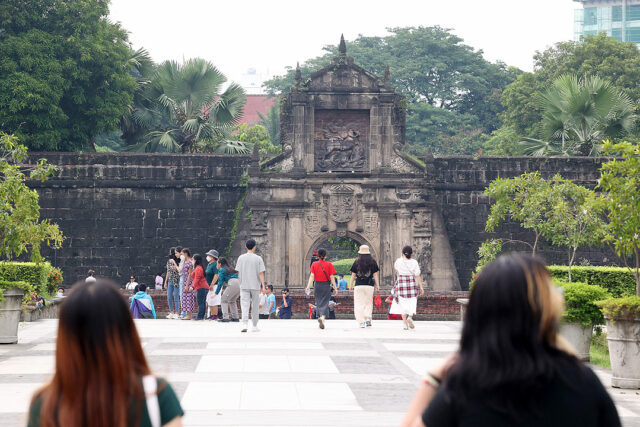
PRESIDENT Ferdinand R. Marcos, Jr. has vetoed three items in the 2023 national budget over issues concerning the use of funds, including a proposal to alter the Philippines’ tourism promotion campaign.
In a statement on Wednesday, the Office of the Press Secretary said Mr. Marcos vetoed provisions on the use of the National Labor Relations Commission’s (NLRC) income, the establishment of a revolving fund for the Department of Education (DepEd) TV, as well as the proposed change to the tourism campaign slogan.
Citing Presidential Decree 1445, or Government Auditing Code of the Philippines, Mr. Marcos said the NLRC is limited in the use of its income to depositing the funds with the National Treasury.
“Further, the funding requirements for the operations of the NLRC are already fully provided under its budget under this Act,” he was quoted saying in his veto message addressed to the House of Representatives.
Mr. Marcos said no law authorizes the DepEd TV revolving fund. DepEd TV is the agency’s platform for multimedia classes and serves as an information source for students on the coronavirus.
Under the 2023 General Appropriations Act, revolving funds may only be established for “business-type-activities,” rendering the DepEd’s fund plan for the platform ineligible.
The President also ruled out the change of tourism slogan, saying in his veto message, “in no case shall the appropriations be utilized to change the tourism campaign slogan.”
The veto on the use of appropriations covers the Department of Tourism’s Branding Campaign Program.
In his veto message, Mr. Marcos said the budget provision limits the exercise of the Executive branch’s functions in implementing the Tourism Act of 2009, or Republic Act No. 9593.
Mr. Marcos on Dec. 16 signed the P5.268-trillion national budget for next year, the biggest budget to date.
Terry L. Ridon, a public investment analyst, said the vetoes showed the government’s intention to streamline spending due to limited fiscal space.
“However, while it has done so in these areas, the expansion of confidential and intelligence funds in other agencies remains as this budget’s original sin,” he said via chat.
“Government cannot streamline budgetary appropriations while maintaining other line items which may be unnecessary at this time.”
In the final version of the 2023 national budget, legislators restored the confidential and intelligence funds of DepEd which were earlier reduced to P30 million from P150 million.
Zyza Nadine M. Suzara, executive director of policy think tank the Institute for Leadership Education and Development, said the vetoes were reasonable.
The Department of Budget and Management normally reviews provisions of the budget bill against what is authorized by law to avoid unnecessary spending, she said in a Viber message.
Senate Minority Leader Aquilino Martin D. Pimentel III said via Viber: “I hope that the prioritization of the education sector as mandated by the constitution is really reflected in the budget law after the veto… Also, we still have to monitor how the budget is actually implemented.” — John Victor D. Ordoñez

THE Department of Agriculture said on Wednesday that it is expediting the import of 64,050 metric tons (MT) of refined sugar to stabilize prices.
In a memorandum order dated Dec. 20 and signed by Agriculture Senior Undersecretary Domingo F. Panganiban, the department will convene the minimum access volume (MAV) advisory council to expedite imports via the MAV mechanism.
“In this regard you are hereby directed to immediately convene the minimum access volume advisory council and expedite the importation of 64,050 metric tons of refined sugar,” according to the order addressed to Jocelyn A. Salvador, officer-in-charge executive director of the MAV Secretariat.
Mr. Panganiban said that President Ferdinand R. Marcos, Jr., who also serves as the Agriculture Secretary, authorized the imports, citing the high price of sugar, confectionery items, and desserts in November.
Last month, price growth in sugar, confectionery items, and desserts was 38%, accelerating from 34.4% in October, according to consumer price index data.
The Philippines Statistics Authority said rising food prices bought inflation to a 14-year high of 8% in November, against 7.7% in October and 3.7% in November 2021.
In September, the Sugar Regulatory Administration (SRA) said that the government does not plan to import any more sugar for the rest of the year as the government is expecting domestic sugar output to boost inventories towards the end of the year.
In a statement on Wednesday, the United Sugar Producers Federation of the Philippines (UNIFED) is appealing the import decision.
“The UNIFED is appealing to the President to stop the move to import sugar while sugar milling is at its peak,” UNIFED President Manuel R. Lamata said in a statement.
Mr. Lamata said the sugar harvest is at its peak, with raw and refined sugar stocks abundant.
“We see no need to importing sugar at this time. We are appealing to the President to halt this… until after an assessment of sugar stocks following the end of the milling season,” he said.
Mr. Lamata noted that in the past three weeks sugar prices have fallen.
According to the SRA, sugar prices in Metro Manila as of Dec. 2 were P84.29 per kilo for raw sugar; P87.57 for washed sugar; and P98.07 for refined sugar.
This is slightly lower than the P90 to over P100 a kilo observed by the Department of Trade and Industry.
Danilo V. Fausto, president of the Philippine Chamber of Agriculture and Food, Inc. said in a statement that imports are necessary to help bring prices down.
“For as long as we only import what is needed. Hopefully it brings down the price. Price is a function of supply and demand,” Mr. Fausto said. — Ashley Erika O. Jose
