Home Blog Page 51

DoE: Oil prices unlikely to drop anytime soon

A map showing the Strait of Hormuz, also known as Madiq Hurmuz, and 3D printed oil barrels are seen in this illustration taken March 26, 2026. — REUTERS/DADO RUVIC/ILLUSTRATION

By Sheldeen Joy Talavera, Reporter

THE COUNTRY’S Energy chief does not expect oil prices to immediately rebound from recent sharp increases, citing extensive damage to energy infrastructure in the Middle East.

“This war has been ongoing for four weeks now. There is a permanent damage in the structure of the international oil community,” Department of Energy (DoE)Secretary Sharon S. Garin told a virtual press briefing on Tuesday.

Even if the Strait of Hormuz, one of the world’s most critical oil chokepoints, is cleared for hundreds of vessels to pass-through, Ms. Garin said energy infrastructure in some Middle East countries has been destroyed and could take about months or even years to rebuild.

“The speed of the increase in pump prices will not be the same as the drop in prices. In fact, it will be way, way slower because the damage caused goes beyond the war,” she said in mixed Filipino and English.

Since the outbreak of the US-Israel attack on Iran on Feb. 28, diesel prices have surged by a cumulative P100.05 per liter, while prices of gasoline and kerosene have gone up by about P52.30 and P82.40 per liter, respectively.

Ms. Garin said these are the “fastest and the highest increase of our oil prices,” which is due to the Middle East war.

Before the Iran war, domestic pump prices ranged from P49-P77.03 per liter for gasoline, P48-P73.61 per liter for diesel, and P77.40-P98.89 per liter.

To cushion the impact of oil prices on motorists, the Philippines has moved to allow the President to suspend or cut fuel excise.

In the Philippines, petroleum products are subject to both fuel excise tax and value-added tax (VAT).

Under Republic Act No. 10963 or the Tax Reform for Acceleration and Inclusion law, excise taxes are imposed at fixed rates per liter — P8 for gasoline, P6 for diesel, and P4 for kerosene.

On top of this, a 12% VAT is also applied to the total selling price, including the excise tax.

According to the Energy chief, the impact of potential reduction in excise taxes on fuel products may not be immediately felt by consumers as excise taxes have already been imposed on the country’s current fuel inventory.

“This is something that they (economic managers) are studying because even if you announce an excise tax suspension today, it will not be felt yet. The excise taxes were paid on purchases that have already been made. We’ve already stocked up. We were making sure that we have enough supply to maintain energy security,” Ms. Garin said.

At present, the Philippines has a supply of petroleum products that is good for 50.42 days.

As of April 3, the country’s inventory of gasoline could last 59.78 days, diesel for 46.93 days, and kerosene for 107.88 days. Meanwhile, jet fuel inventory is equivalent to 62.69 days, while liquefied petroleum gas or LPG is 34.02 days.

To boost the country’s oil buffer, the government has decided to procure two million barrels of diesel via state-run Philippine National Oil Co. (PNOC), with an allotted budget of P20 billion.

The first shipment containing 142,000 barrels of oil from Japan arrived on March 26.

Another shipment with 300,000 barrels from Malaysia will arrive by April 10, according to Energy Undersecretary Alessandro O. Sales. The remaining 600,000 barrels will reach the country’s shores later this month.

“PNOC is still working on it week on week to procure more and more. While we have ordered, we continue to consume. We continue to use our fuel and then so while we consume or we use our fuel, we need to replenish,” Ms. Garin said.

Budget deficit narrows to P171.2 billion in February

Construction of a flood control project is ongoing along the Marikina River, March 4, 2026. — PHILIPPINE STAR/MIGUEL DE GUZMAN

By Justine Irish D. Tabile, Senior Reporter

THE NATIONAL Government’s (NG) budget deficit narrowed to P171.2 billion in February after revenue growth outpaced expenditures, the Bureau of Treasury said.

Data from the Treasury showed the budget deficit dipped by 0.14% to P171.2 billion in February from P171.4 billion in the same month a year ago.

Month on month, the budget balance swung to a deficit from the P165.4-billion surplus in January.

“The NG’s fiscal position improved in February 2026 with the budget deficit slightly down… as early remittance of dividends pushed revenue growth to 43.52% and helped offset expenditure expansion of 25.83%,” the BTr said.

Finance Secretary Frederick D. Go said that the fiscal performance in February “sets us up for a stable first quarter of this year.”

“This acts as our safety net, giving us the resources to support the economy, especially during this time of uncertainty. With tax and nontax revenues growing and expenditures kept targeted, we have successfully reduced our fiscal deficit,” he said in a statement on Tuesday.

“This fiscal buffer allows us space to provide timely, targeted, and managed subsidies to help those most affected in our country by the Middle East event,” he added.

Total revenue collections surged by 43.52% to P361.3 billion in February from P251.8 billion in the same month a year ago.

Tax revenues, which accounted for the bulk of collections, edged up by 6.59% to P249.8 billion in February from P234.3 billion in the same month in 2025.

The Bureau of Internal Revenue’s (BIR) collections rose by 8.51% to P173.2 billion in February from P159.7 billion a year ago. The Bureau of Customs’ (BoC) collections inched up by 2.68% to P73.7 billion in February from P71.8 billion last year.

“Apart from the BoC’s strengthened enforcement and compliance measures, the uptick in the bureau’s collection can also be attributed to the peso’s year-over-year depreciation,” the BTr said.

“As the dollar’s value increased by 0.3%, from P58.1 in February 2025 to P58.3 in February 2026, the cost of imported goods increased, driving up total collections,” it added.

Nontax revenues surged by 540.23% to P111.5 billion in February from P17.4 billion in the same month last year, as BTr revenues jumped by 1,104.24% to P95.4 billion and revenues from other offices increased by 70% to P16.2 billion.

The BTr said the surge in Treasury revenues reflected the earlier-than-usual remittance of 2025-earned dividends.

Meanwhile, NG expenditures jumped by 25.83% to P532.5 billion in February from P423.2 billion a year ago.

The Treasury said the increase was mainly due to the “spillover of the January National Tax Allotment and Bangsamoro Autonomous Region in Muslim Mindanao block grant release to early February,” as well as releases for the share of local government units in proceeds of the tobacco excise tax.

Primary expenditure (net of interest payments) went up by 29.04% to P483.6 billion in February from P374.8 billion in the same month last year.

Interest payments inched up by 1% to P48.9 billion in February from P48.4 billion a year ago.

TWO-MONTH DEFICIT
Data from the Treasury showed the fiscal gap narrowed by 94.35% to P5.8 billion in the January-to-February period from the P103.1-billion deficit last year, amid double-digit growth in overall collections and muted spending.

For the two-month period, total revenue collections rose by 15.48% to P830.2 billion from P718.9 billion recorded in the same period a year ago.

This represented 17.21% of the P4.82-trillion program approved by the Development Budget Coordination Committee (DBCC) at its 192nd meeting in December.

As of end-February, tax revenues jumped by 3.09% to P692.6 billion, as BIR collections went up by 3.33% to P531.9 billion and Customs collections inched up by 2.39% to P154.6 billion.

“The BIR’s steady improvement is a result of ongoing measures to boost taxpayer compliance nationwide,” the Treasury said.

Nontax revenues surged by 192.51% to P137.6 billion as of end-February, as BTr income jumped by 360.85% to P109.1 billion and other offices’ income increased by 22.02% to P28.5 billion.

For the two-month period, expenditures increased by 1.7% to P836 billion from P822 billion a year ago. This was already 12.99% of the P6.43-trillion disbursement program based on the DBCC meeting in December.

“The narrower budget deficit in February mainly reflects tighter spending control early in the year, alongside steady tax collections that helped offset higher interest costs,” Union Bank of the Philippines Chief Economist Ruben Carlo O. Asuncion said in a Viber message.

“Looking ahead, deficit pressures could pick up as the government rolls out additional ayuda (aid) and support measures amid global energy risks, but these are likely to be managed within a broadly sustainable fiscal framework,” he added.

For the coming months, Michael L. Ricafort, chief economist at Rizal Commercial Banking Corp., said that he expects the deficit to widen as the government implements catch-up spending and rolls out subsidies for sectors most affected by soaring oil prices.

“Higher inflation and the US dollar/peso exchange rate could increase national expenditures, which would also widen the budget deficit but would be partly financed by more NG borrowings for the coming months,” he said in a Viber message.

Record-low fertility rate puts Philippines’ growth window at risk

A mother holds her newborn baby at Dr. Jose Fabella Memorial Hospital in Manila on Jan. 1, 2026. — PHILIPPINE STAR/RYAN BALDEMOR

By Justine Irish D. Tabile, Senior Reporter

THE PHILIPPINES must act fast to harness its demographic dividend and reach high-income status, analysts said, as a record-low fertility rate raises the risk of falling into the “aging before becoming rich” trap.

At the same time, the Commission on Population and Development (CPD) has called for investment shifts in the country to maximize the window of opportunity amid a declining fertility rate.

“With the growing working-age population (aged 15-64 years), composing 63.9% of the Philippine population, investments should focus on developing our human capital, especially the education, health, and skills of our people,” it said in a statement on Tuesday.

CPD Undersecretary Lisa Grace S. Bersales said that population and reproductive health policies and strategies must be explicitly integrated with socioeconomic development strategies.

“Education and access to information are still key in ensuring that Filipinos achieve the number of children they desire, when they want it,” she added.

The country’s total fertility rate (TFR) reached a record low of 1.7 children per woman in the 2023-2025 period, according to the Philippine Statistics Authority (PSA).

The PSA defines the TFR as the number of children a woman has by the end of her childbearing years.

Foundation for Economic Freedom President Calixto V. Chikiamco said that the average age in the country remains relatively young at around 25 years old, giving the Philippines a few more years to reap the demographic dividend until it ages.

“The risk is that if the country doesn’t seize the demographic dividend to reach upper-income status, society may grow old before it becomes rich,” he told BusinessWorld via Viber.

“The country won’t be rich enough to pay for the pension and healthcare of its aging citizens,” he added.

The government had earlier envisioned the Philippines becoming a high-income economy under the AmBisyon Nation 2040 plan.

The World Bank currently classifies the Philippines as a lower middle-income country with a gross national income per capita of $4,470, just $26 below the upper middle-income country classification of $4,496-$13,935.

Bernardo M. Villegas, a professor emeritus at the University of Asia and the Pacific, said that the Philippines is now in a demographic transition, “remaining still young (the median age is still the lowest in the Indo-Pacific region at 26) with the population still growing at less than 1% annually.”

In his March 11 BusinessWorld column, Mr. Villegas said that assuming the fertility rate is near 1.9 through the mid-century, the Philippine population is projected to be 139 million by 2055. The population is estimated at 117 million as of December 2025.

“The country is still gifted with a demographic dividend with a large working-age population and slower growth of dependents. This endows it with the potential to benefit from its young population — as long as there are higher investments in education and skills development (4-5% of GDP) and productivity is increased,” he said.

However, he said the Philippines should make sure that the fertility rate does not drop below 1.9 as what has happened to South Korea and Spain.

“The Philippines should do its best to maintain fertility around the replacement level, invest heavily in education and health, strengthen families and the ‘inviolable’ institution of marriage, and use migration strategically,” Mr. Villegas said.

Jose Enrique “Sonny” A. Africa, executive director of the think tank IBON Foundation, said that the Philippines’ TFR of 1.7 cannot be read as “good or bad” in itself, as it will fundamentally depend on how the economy performs and the government responds.

“Clearly, the Philippines has entered a late stage of demographic transition with fertility falling from 2.7 or so in the late 2010s to below 2.0 in recent years. Albeit with a lag, this will eventually mean slower population growth and eventual population aging,” he said in a Viber message.

Despite the decline, he said that the Philippines is still within its so-called demographic dividend window, where the working-age population is still relatively large compared to dependents.

“However, there’s nothing automatic about the dividend, which only materializes with mass employment generation through national industrialization policy and structural transformation,” he said.

“This also has to be accompanied by ample public investments in health, education, and other social support systems. Without these, the demographic dividend risks being wasted with large working-age cohorts stuck in precarious, informal or underpaid work,” he added.

Mr. Africa said the risk of the Philippines aging without becoming a high-income economy is not caused by low fertility in itself but by weak social protection systems, underdeveloped public health and elder care, and constrained fiscal capacity.

“The real issue isn’t in demographics but in lack of industrialization policy, weak social welfare systems, and stubborn fiscal conservatism,” he said.

Mr. Africa said that he expects the labor force to continue growing but at a slower pace.

“But, again, the binding constraint isn’t labor shortage but weak job creation, low productivity sectors and non-industrial sectors, and even over-dependence on migration as a labor outlet,” he added.

Meanwhile, Mr. Villegas said that the Philippines needs to enforce a “proactive demographic and economic strategy” to avoid the “aging before becoming rich” trap seen in Thailand and China.

In particular, he said that married couples in the Philippines should be encouraged to have at least three children through financial support, affordable housing, and promoting family-friendly culture.

“Tax credits or subsidies for each child should be offered, following the examples of France and Singapore,” Mr. Villegas said, adding the government should stop all birth control messaging and instead promote a family-friendly culture.

“In fact, as is already happening in China, artificial contraceptives should be heavily taxed. The goal (which should be part of the AmBisyon 2040 vision) is to make it economically and socially easier (maginhawa) to raise two to three children,” he added.

Office demand rises 77% in Q1; outlook turns cautious

PNA PHOTO BY ROBERT OSWALD P. ALFILER

THE PHILIPPINE office market started 2026 with stronger net demand, as net absorption rose 77% year on year to 133,000 square meters (sq.m.) in the first quarter (Q1), property consultancy firm Leechiu Property Consultants (LPC) said.

Gross demand, however, reached 234,000 sq.m., down 22% from the previous quarter, which LPC said was “consistent with typical first-quarter seasonal patterns.”

LPC Director of Commercial Leasing Mikko Barranda said market conditions remain stable but are becoming more complex.

“At this point, the market remains on track, but the path forward is becoming less straightforward,” he said during a briefing on Tuesday.

He added that “tenants are becoming more discerning and intentional in their real estate decisions, which must be matched by greater flexibility from the market.”

Traditional occupiers drove demand, accounting for 143,000 sq.m., or 61% of total take-up. Information technology and business process management (IT-BPM) firms contributed 79,000 sq.m., or 34%.

Expansion deals dominated both segments, with 112,000 sq.m. recorded for traditional tenants and 51,000 sq.m. for IT-BPM firms.

Demand for managed facilities rose to 31,000 sq.m. as occupiers sought “ready-to-use spaces,” LPC said.

The increase in net demand was partly driven by a 62% year-on-year decline in vacated space to 101,000 sq.m. for the quarter.

LPC attributed the improvement mainly to the “absence of Philippine offshore gaming operator (POGO)-related exits.”

The firm said occupiers have “largely completed right-sizing and are no longer giving up additional space.”

In Metro Manila, Makati City led office transactions with 76,800 sq.m., equivalent to 54% of its total demand in 2025.

LPC said 63% of these transactions were located along Ayala Avenue, with 70% involving semi-fitted or fitted units.

“Makati remains attractive as occupiers take advantage of competitive rents and fitted spaces, while maintaining the prestige of an Ayala Avenue address,” the firm said.

Bonifacio Global City (BGC) maintained the lowest vacancy rate at 8%, compared with the Metro Manila average of 18%.

Outside Metro Manila, demand reached 34,000 sq.m., led by Cebu with 11,700 sq.m., followed by Iloilo with 11,000 sq.m. and Clark with 6,600 sq.m.

LPC said provincial demand remains concentrated in “established IT-BPM hubs and infrastructure-linked corridors.”

Total office stock reached 2.7 million sq.m. in Metro Manila and 723,000 sq.m. in the provinces.

Metro Manila is expected to add 807,000 sq.m. of new office supply through 2028, with Quezon City accounting for 240,000 sq.m.

The active leasing pipeline stood at 227,000 sq.m., split between IT-BPM firms at 114,000 sq.m. and traditional occupiers at 113,000 sq.m.

Mr. Barranda said the main risk lies in whether these requirements will translate into completed deals.

He questioned “whether these requirements can translate into actual transactions amid current uncertainties,” including the energy situation and geopolitical tensions.

Within the IT-BPM pipeline, third-party outsourcers accounted for 61%, while Global Capability Centers (GCCs) made up 39%.

Despite these risks, LPC said “five-year lease terms remain dominant at 71% of the pipeline sample, reflecting continued occupier commitment to physical office space despite evolving workplace strategies.” — Alexandria Grace C. Magno

PAL extends Doha, Dubai flight suspension to May 31

An airplane is seen on the runway at the Ninoy Aquino International Airport (NAIA) in Manila, March 14, 2016. — REUTERS/ROMEO RANOCO/FILE PHOTO

PHILIPPINE AIRLINES (PAL) has extended the suspension of its Manila-Doha and Manila-Dubai flights until May 31 due to the ongoing conflict in the Middle East, citing risks to overall airspace safety and critical infrastructure.

“Due to the developing situation in the region, including potential risks to critical infrastructure and overall airspace safety, flights to Doha and Dubai are canceled,” PAL said in an advisory on Tuesday.

The flag carrier had earlier suspended the two routes from March 20 until April 30, based on a previous advisory.

PAL is also canceling its Riyadh services until Thursday, noting that unpredictable conditions such as restricted airspace, sudden closures, and limited routing options prompted the airline to adopt a more cautious approach to its operations.

All affected passengers will be notified and may avail of free rebooking, travel credit conversion, or refunds, the airline said.

The carrier added that cargo operations on affected routes have also been disrupted, and it is coordinating with logistics partners to arrange alternative routing options.

The suspension and flight frequency reductions reflect the broader impact of the Middle East conflict on fuel costs, PAL said.

Last month, the airline also announced the suspension of several domestic routes, including Clark-Siargao starting May 4, Cebu-Ozamiz starting May 5, and Cebu-Calbayog starting May 6, until further notice.

PAL earlier said it had secured sufficient jet fuel supply to sustain scheduled operations after President Ferdinand R. Marcos, Jr. warned of possible aircraft groundings due to tight supply and rising fuel prices.

Data from the International Air Transport Association showed that jet fuel prices rose to $209 per barrel as of April 3, up 7.1% week on week and 132.1% year on year. — Ashley Erika O. Jose

International Dance Day  returns to celebrate dance in Circuit

OVER 1,200 artists in different styles of dance will command the stage of the Samsung Performing Arts Theater for the 3rd iteration of the International Dance Day (IDD) Festival. The week-long celebration is slated for April 22 to 26 in Circuit, Makati.

The event aims to “celebrate movement, culture, and global talent through dance as a universal language,” bringing together artists doing traditional folkloric dances, urban beats, classical ballet, and contemporary movement.

“Year after year, we’ve been trying to really elevate and make IDD Festival a true flagship and signature event here at Ayala Land, to make sure that dance can inspire and allow a lot of people to realize that it is enduring and relevant to this day,” said Christopher Mohnani, artistic head of Ayala Land’s cultural development for Makati, at pre-Holy Week press conference.

“How often do metropolitan audiences see a folkdance company from Batangas or contemporary dancers from Iloilo? It’s really about bringing a dance platform to showcase to the community and to co-artists,” he added.

IDD has been held annually on April 29 since 1982 as a tribute to French ballet master Jean-George Noverre. Its celebration in the Philippines will span performances, workshops, and gatherings underscoring “the transformative power of dance, which transcends borders, cultures, and language.”

WEEK-LONG PROGRAM
On April 22, the festival will kick off with an opening night gala featuring the American Ballet Theatre Studio Company, joined by special guest principal dancers Thomas Forster and Christine Shevchenko. The company, supported by the Ayala Foundation and Steps Dance Foundation, will present “a powerful showcase of classical excellence.”

On April 23, the spotlight turns to heritage. Various community-based Filipino folk-dance groups from the regions and from various schools will showcase traditional movement and storytelling.

On April 24, street dance will bring energy to the stage. There will be dynamic dance crews and performers representing the local scene.

The ballet gala on April 25 will bring together the four biggest ballet companies in the Philippines, to highlight the precision and grace of classical dance.

Finally, contemporary dance will conclude the festival on April 26, spotlighting the country’s most innovative and expressive works that reflect the evolving language of modern dance.

In addition to the performances, educational and interactive experiences will bring festivalgoers closer to the world of dance.

On April 21, ABT Studio Company artistic director Sascha Radetsky will lead a special lecture demonstration for public school students, offering a behind-the-scenes look at how a performance comes to life. It will be held at 2 p.m. at the Samsung Performing Arts Theater.

The Joffrey Ballet and Gerald Arpino Foundation répétiteur Christine Rocas will also stage and teach excerpts from two of Arpino’s well-known works.

Tickets to the various performances and workshops are available via TicketWorld. — Brontë H. Lacsamana

MacroAsia 2025 income rises 28.6% on aviation gains

MACROASIACORP.COM

MACROASIA CORP. posted a 28.57% increase in attributable net income to P1.44 billion last year, driven by a continued recovery in aviation activity and steady gains across its business units.

“Fiscal year 2025 reflects MacroAsia’s ability to deliver solid earnings growth while continuing to invest in capacity, service quality, and long-term strategic initiatives,” MacroAsia President and Chief Operating Officer Eduardo Luis T. Luy told the stock exchange on Tuesday.

The listed aviation-support provider reported total revenues of P9.96 billion in 2025, up 5.51% from P9.44 billion a year earlier.

In-flight and other catering services accounted for the largest share of revenues at 49.2%, or P4.9 billion.

The company said growth in this segment was driven by an increase in meal count to 26.92 million, reflecting higher total meal volume during the year.

Ground handling and aviation services generated P4.28 billion in revenues, while water distribution services contributed P727 million and other administrative fees added P55.8 million.

The company said sustained revenues from ground handling and aviation services were driven by higher flight volumes, with total flights handled rising to 196,262 in 2025 from 189,318 in 2024.

Revenue contributions also came from First Aviation Academy, although its income declined by 8% to P77.8 million last year due to reduced flying hours.

Costs and expenses rose by 11.53% to P7.93 billion from P7.11 billion a year earlier, mainly due to higher ground handling and aviation-related expenses, according to its annual report.

MacroAsia said its higher operating expenses remained in line with business volume growth and were also driven by lease rate adjustments and updated fees and charges for facilities, services, and properties within project land under the management and control of the Ninoy Aquino International Airport.

The company said net income surged 161% to P446 million in the fourth quarter, while operating income rose 135% to P454.5 million, although it did not disclose comparative figures. It has yet to release its full quarterly financial report.

“This sharp recovery in the final quarter offset softer performance in the second quarter and reinforces the Group’s positive trajectory entering 2026,” MacroAsia said.

Capital expenditures reached P1.42 billion in 2025, mainly allocated for facility expansion and fleet and equipment upgrades, the company said.

MacroAsia said it remains optimistic about the continued recovery of aviation demand, supported by growth in passenger traffic and expansion opportunities in the sector.

It added that it is monitoring geopolitical risks, particularly the ongoing conflict in the Middle East, which could affect the aviation sector through airspace restrictions, route diversions, jet fuel prices, and flight frequency adjustments.

“While we remain mindful of geopolitical uncertainties, including developments in the Middle East, our limited direct exposure, strong balance sheet, and disciplined execution position us well to navigate these risks and capture growth opportunities,” Mr. Luy said.

At the stock exchange on Tuesday, shares in the company rose 11 centavos, or 2.63%, to close at P4.29 each. — Ashley Erika O. Jose

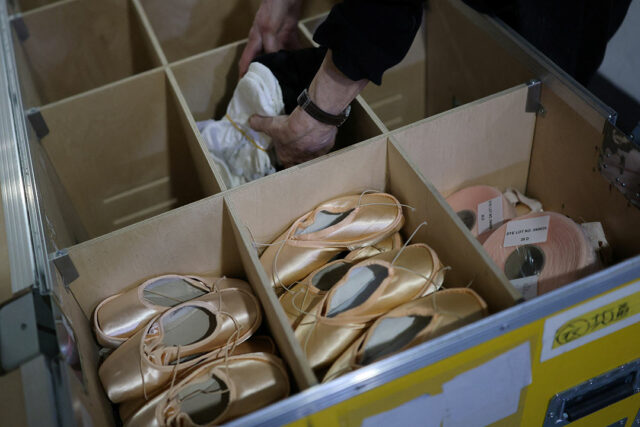
Costumes, shoes and so much more: Britain’s Royal Ballet packs for its Asian tour

BALLET FOOTWEAR MANAGER Jane Latimer prepares ballet slippers for shipment ahead of The Royal Ballet’s upcoming tour to Japan at the Royal Opera House in London, Britain, March 30, 2026. — REUTERS/HANNAH MCKAY

LONDON — Surrounded by rails of costumes and boxes of headpieces at London’s Royal Opera House, Adrian Villasenor inspects some of the items to be worn during the Royal Ballet’s 2026 tour of Singapore and Tokyo.

“Altogether there might be over 2,000 pieces of costumes,” Costume Performance Senior Manager Villasenor said. “It’s all (going on) the road.”

From dancers to physiotherapists and the rest of the backstage team, some 150 people will travel from London to Asia for the June 26 to July 12 tour, which will include performances of the romantic Giselle and the comic La Fille mal gardée.

The Royal Ballet decided in 2023 what to perform. Teams have since been busy with all aspects of the tour, including studying venue space and how that might affect choreography.

WORLD EVENTS ADD COMPLEXITY
Packing and sending off the costumes are among the final stages of preparation and the task has now been made more complex as war in the Middle East has reshaped global shipping routes and detours around Africa extend voyage times.

“We also have to think about the events that’s going on in the world today. So of course, what’s going on in Iran, of course what’s been going on with Russia… and suddenly today we got told we have to get the boxes, which has the dancers’ makeup and some practice clothes, they need to be packed and on a ship this week,” Kevin O’Hare, director of the Royal Ballet, said.

“So suddenly you have to do that… and that’s more for the dancers to have to get everything together.”

While sets and Giselle costumes are being shipped, La Fille mal gardée outfits will be flown to Tokyo after the production’s May 23-June 9 run. Giselle concluded its London performances on March 20.

“We really want people to experience in Tokyo or Singapore what they would experience here in London,” Mr. O’Hare said. — Reuters

RLC to build mixed-use project on 9-hectare Davao site

BW FILE PHOTO

GOKONGWEI-LED Robinsons Land Corp. (RLC) is acquiring the approximately nine-hectare Victoria Plaza complex along JP Laurel Avenue in Davao City as part of its expansion in regional markets.

“The transaction reflects RLC’s disciplined capital allocation strategy and underscores its confidence in Davao’s continued economic expansion and rising investor and tenant demand,” the company said in a statement on Tuesday.

RLC said the acquisition will allow it to pursue phased, large-scale developments across office, retail, residential, hotel, and other commercial segments.

The company added that the move will help it secure scale and strategic locations in a high-growth market, support demand, diversify income streams, and expand its presence outside Metro Manila.

The site is expected to host a multi-storey office development, Cybergate Victoria, which is scheduled for completion in the first half of 2027.

Cybergate Victoria 1 will be the company’s third development in Davao City and will rise on the site of the former Victoria Plaza, the city’s first shopping mall.

The project will include nine premium office floors with retail spaces and recruitment centers, targeting business process outsourcing firms, information technology and business process management companies, corporate offices, and other enterprises.

RLC’s office unit, Robinsons Offices, has been expanding outside Metro Manila, with projects in Dumaguete and Davao following the launch of Cybergate Iloilo.

At the local bourse on Tuesday, shares in RLC rose 1.29% to close at P17.30 each. — Alexandria Grace C. Magno

Semirara Mining and Power Corp. to hold Annual Meeting of Stockholders on May 4 via remote communication

NOTICE OF ANNUAL STOCKHOLDERS’ MEETING

Please be notified that the Annual Meeting of Stockholders of Semirara Mining and Power Corporation (“Corporation”) will be held on May 4, 2026, 1 Monday at 10:00 a.m. and will be conducted by remote communication at https://www.semirarampc.com/asm.

Agenda

  1. Call to Order and Proof of Notice of Meeting 
  2. Certification of Quorum 
  3. Chairman’s Message 
  4. Approval of Minutes of Previous Stockholders’ Meeting held on May 5, 2025 
  5. Presentation and Approval of President’s Report 
  6. Presentation and Approval of Audited Financial Statements for CY 2025
  7. Ratification of the Acts of the Board of Directors and Management from the Date of the Last Annual Stockholders’ Meeting up to the Date of this Meeting 
  8. Election of Directors for 2026-2027 
  9. Approval of Appointment of Independent External Auditor 
  10. Other Matters 
  11. Adjournment 

Record Date

Stockholders of record, as of March 17, 2026 will be entitled to notice of, and vote at the said annual meeting or any adjournment or postponement thereof.

Registration and Voting

Stockholders may attend the meeting remotely by registering here beginning April 20 to April 28, 2026. Only stockholders of record as of March 17, 2026 will be entitled to vote at the said meeting. Stockholders may vote in absentia using the online voting portal at https://www.semirarampc.com/votingor by appointing the Chairman of the meeting as their proxy. The voting portal will be accessible beginning April 20, 2026, until 12:00 noon of May 4, 2026.

The following documents are required to be transmitted by email to corporatesecretary@semirarampc.com upon registration:

CERTIFICATED SHARES:

1. Individual Stockholder
        a. Valid Government-Issued ID or passport
2. Corporate Stockholder
        b. Secretary’s Certificate designating its attorney-in-fact and proxy 

        c. Valid Government-Issued ID or passport of the representative

UNCERTIFICATED OR SCRIPLESS SHARES:

1. Individual Stockholder
         a. Broker’s Certification stating the stockholder’s name and the number of shares held
         b. Valid Government-Issued ID or passport
2. Corporate Stockholder
         a. Broker’s Certification stating the stockholder’s name and the number of shares held
         b. Secretary’s Certificate designating its attorney-in-fact and proxy
         c. Valid Government-Issued ID or passport of the representative

The requirements and procedure for electronic voting in absentia and participation by remote communication is set forth in Schedule 4 of the Definitive Information Statement published on the Company’s Website and on PSE Edge.

Stockholder Question

Questions may be sent prior to the meeting at corporatesecretary@semirarampc.com no later than April 28, 2026, which shall be limited to the items in the agenda. Some questions may be addressed while others will be replied to via email.

Proxy

Duly accomplished proxy forms must be submitted on or before 5:00 p.m. on April 24, 2026 to the Office of the Corporate Secretary at the 2nd Floor DMCI Plaza, 2281 Don Chino Roces Avenue, Makati City 1231, Philippines or by email at corporatesecretary@semirarampc.com. Validation of proxies is set on April 28, 2026, at 10:00 a.m.

Electronic copies of the Definitive Information Statement, Management Report, SEC Form 17A and other pertinent documents are available at the Company’s Website (https://www.semiraramining.com) and on the PSE Edge.

(Sgd.) JOHN R. SADULLO 

Corporate Secretary

For the Board of Directors

—————————————–

1 Should the date of the annual stockholders’ meeting (ASM) be declared a legal holiday, the ASM will be held on the next succeeding business day at 10:00 a.m. pursuant to Section 1, Article I of Corporation’s By-Laws, as amended.

Semirara Mining and Power Corporation has a dividend policy that ensures a minimum of 20% of net profit after taxes starting from the period ending December 31, 2005. However, the Board of Directors has the option to declare more than 20% if there is excess cash, and less than 20% if there is insufficient cash available. The corporation declared a regular cash dividend of P1.25/share and a special cash dividend of P.75/share on March 24, 2025, with a Record Date of April 8, payable on April 23, 2025. It also declared a special cash dividend of P1.25/share on October 20, with a Record Date of November 4 payable on November 20, 2025.


Spotlight is BusinessWorld’s sponsored section that allows advertisers to amplify their brand and connect with BusinessWorld’s audience by publishing their stories on the BusinessWorld Web site. For more information, send an email to online@bworldonline.com.

Join us on Viber at https://bit.ly/3hv6bLA to get more updates and subscribe to BusinessWorld’s titles and get exclusive content through www.bworld-x.com.

Queer poetry as exploration of desire and identity

IT IS vital to explore the queer experience, no matter how intimate, according to filmmaker, film historian, and author Nick Deocampo. In 1983, his pioneering documentary, Oliver, captured the reality of a gay nightclub performer — and now his brand-new poetry books come full circle to expound on the nuances of queer identity.

The four-volume poetry collection, Shards of Desire, gives a rounded view of Mr. Deocampo’s own experiences growing up gay and coming to terms with the complexities of it over the decades. Each volume was written with different themes and poetic styles in mind, every poem paired with a photograph.

At the March 23 launch of the books, Cine Adarna’s outdoor lobby at the University of the Philippines Diliman was filled with students, teachers, lovers of film, and members of the queer community, and it was to them that Mr. Deocampo dedicated his work.

“I was an adolescent growing up in Catholic Iloilo, in what I would like to think was a harsh environment for somebody who was growing up as a homosexual,” he said in his speech. “I had as my companions the likes of Emily Dickinson, Walt Whitman, Gerald Manley Hopkins — many sensibilities that ended up shaping a queer sensibility.

“So much harshness happened in the surroundings, and I only quietly wrote this for 50 years. I hope these volumes can be your companions as well,” he explained.

Out of 150 poems, 80 were chosen to be published in the four-volume collection. Distinct from Mr. Deocampo’s academic writing, its contents reveal his thoughts at their most personal and intimate.

EXPERIMENTATION
Shards of Desire is divided into four, drawing from different influences and styles.

The first, Ariel and the Grand Design of the Universe, is a collection of poems that go all the way back to the author’s young adulthood in 1974 in Iloilo and then in 1977 in his move to Manila. There, he met a man named Ariel, a relationship he writes about in stark detail through the poems.

The second volume, The Night at Rue du Dragon, covers his lifestyle in the 1980s in Paris, where Mr. Deocampo studied film and fell in love with a young Black man whom he met inside a movie house.

The third volume, Phaedrus Poems, is the most experimental, he said. “It’s based on classic Greek literature combined with the Japanese haiku syllabic structure,” he said. “I wrote it to show a love affair between two males.”

The final one is The Icarus Complex, which talks about the relationship between Daedalus and Icarus.

Jose Paolo Sibal, president of the collection’s publisher, CentralBooks, Inc., said in a statement read out at the launch that the poetry is powerful due to its “honesty and courage.”

“In Shards of Desire, Professor Deocampo turns to poetry, to explore deeply personal and resonant truths. This collection becomes a space where fragments of being queer and expressing it with honesty and courage give voice to experiences that are at once intimate and universal,” he said.

Each volume is priced at P580. To place an order, visit CentralBooks’ website and social media pages. — Brontë H. Lacsamana

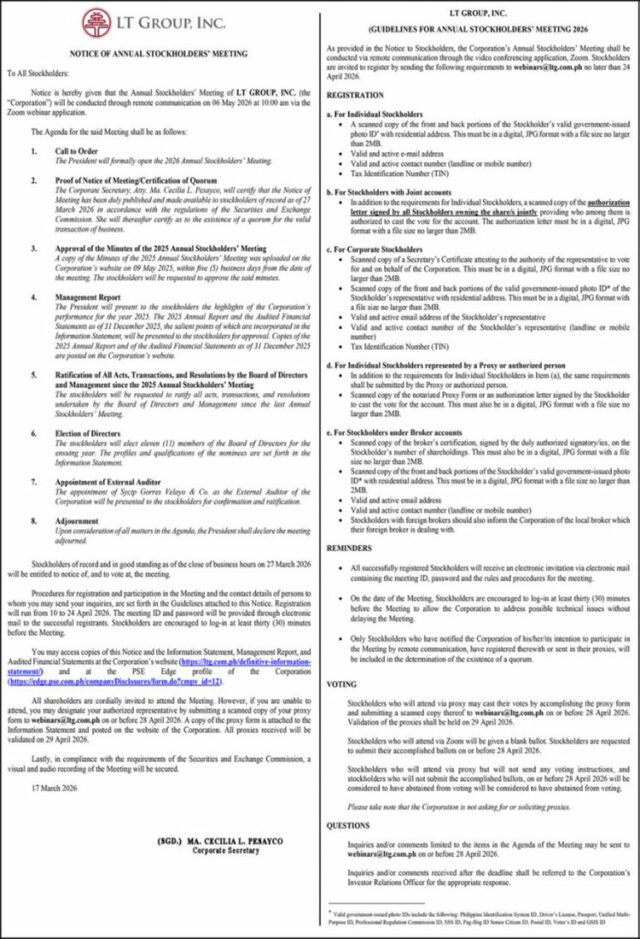
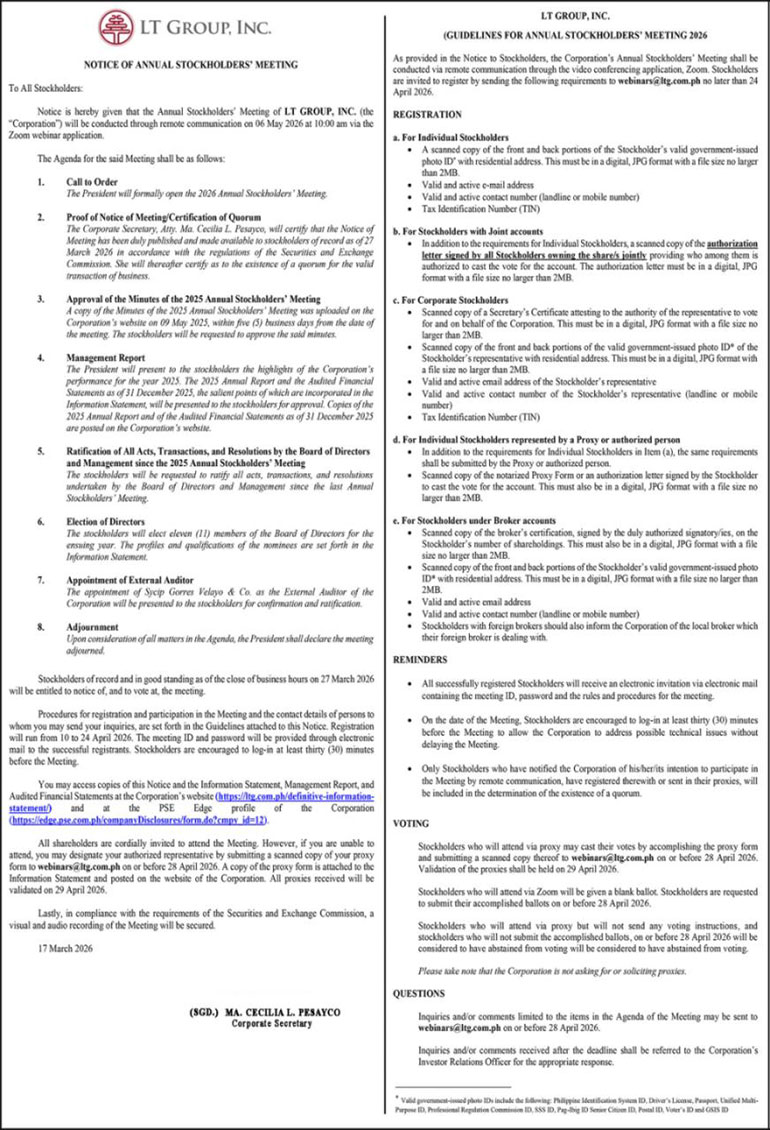
LT Group, Inc. discloses Annual Stockholders’ Meeting on May 6 via Zoom


Spotlight is BusinessWorld’s sponsored section that allows advertisers to amplify their brand and connect with BusinessWorld’s audience by publishing their stories on the BusinessWorld Web site. For more information, send an email to online@bworldonline.com.

Join us on Viber at https://bit.ly/3hv6bLA to get more updates and subscribe to BusinessWorld’s titles and get exclusive content through www.bworld-x.com.

ADVERTISEMENT
ADVERTISEMENT