Home Blog Page 505

Suntrust shares rise amid Megaworld stake sale

SUNTRUSTRESORTHOLDINGS.COM

SHARES of Suntrust Resort Holdings, Inc. (SUN) rose last week, buoyed by heightened investor interest and sentiment-driven buying following Megaworld Corp.’s disposal of its stake.

The integrated resort developer ranked as the third most actively traded stock last week, with 1.56 billion shares worth P945.78 million changing hands from Dec. 22 to 26 on the local bourse.

Suntrust shares closed at P0.76 apiece, up 26.7% from the previous week. The stock outperformed the property sector’s 3.6% gain and the Philippine Stock Exchange index’s (PSEi) 2.4% increase.

Year to date, however, the stock has declined by 15.6%, underperforming the property sector’s 3.2% contraction and the PSEi’s 7.1% drop.

Wendy B. Estacio-Cruz, head of equity research at Unicapital Securities, Inc., said the rally was “largely driven by technical and sentiment factors rather than fundamentals.”

“Megaworld’s disposal of more than 23% of Suntrust’s shares initially posed a potential overhang, but because the sell-down was executed at a clear price level of P0.60 and did not push the stock lower, the market interpreted it as largely priced in,” she said.

Juan Alfonso G. Teodoro, equity trader at Timson Securities, Inc., echoed this view, noting that the ownership shift prompted heightened trading activity and drew significant investor interest as the market adjusted to the change.

In a Dec. 19 disclosure, Megaworld said it disposed of 900 million common shares in Suntrust Resort Holdings, Inc. through the open market. The shares, which accounted for a 12.4% stake in Suntrust, were sold at P0.60 per share for a total of P540 million.

This was followed by a separate disclosure on Dec. 23 stating that Megaworld disposed of 814.67 million common shares in Suntrust through the open market at the same price level. The shares represented an 11.2% interest in the resort developer.

“Megaworld’s large share sales increased the supply of Suntrust shares in the market and led to heavier trading during the week, which usually puts some pressure on the stock in the short term,” said Mr. Teodoro.

Ms. Estacio-Cruz said reduced selling pressure allowed buyers to lift the stock, sparking a modest recovery driven by sentiment rather than fundamentals.

For the coming week, Mr. Teodoro advised that “investors should watch out for any new company announcements or PSE disclosures, keep an eye on any further Megaworld share sales, follow updates on the Westside City resort project, and monitor SUN’s daily stock price and trading activity.”

Meanwhile, Ms. Estacio-Cruz said investors should also watch whether the P0.60 level holds, as a breach below this threshold may indicate renewed selling pressure.

Suntrust posted a P26.28-billion attributable net loss in the third quarter, widening by 7,966.4% year on year and bringing its nine-month attributable loss to P26.59 billion.

For the nine-month period ended September, total revenues fell by 7% to P8.84 million from P9.50 million a year earlier.

Mr. Teodoro expects a fourth-quarter net loss of about P10.30 billion and a full-year net loss of approximately P1.05 billion.

“This reflects the continuing losses seen over the past few years, though the large Q3 loss may possibly make the figure higher than usual,” he said.

He placed next support levels between P0.70 and P0.75, with resistance between P0.85 and P0.90. Ms. Estacio-Cruz pegged key support between P0.58 and P0.60, with resistance at P0.65 and stronger resistance between P0.68 and P0.70. — Heather Caitlin P. Mañago

Honoring unfamiliar people

If only Soliman Santos, Jr. pursued a career path in history — he’s a lawyer and a retired judge (his last stint being the Regional Trial Court Judge of Naga City) — he could have been the most eminent historian chronicling and interpreting the re-established Communist Party of the Philippines (CPP) and its movement.

Sol or Booj (as he is fondly called) has written several books and numerous articles about the different aspects of the revolutionary movement. He has the creds. He was part of the movement and experienced its flow and ebb. He became an activist more than 50 years ago, when he was still a high school student at the Philippine Science High School. He later became a propagandist and a cadre. And his loyalty is to a “militant and groovy” mass organization called Samahang Demokratiko ng Kabataan.

Although Sol can be described as an amateur historian (he has a Bachelor of Arts degree in History, cum laude, from the University of the Philippines), he writes his narratives with objectivity, intellectual honesty and rigor, and a healthy dose of skepticism. What Sol lacks in the inimitable craft of an Agoncillo, De la Costa, or Ileto, he compensates with “labor of love” (his words).

Sol has a huge collection of documents authored by the CPP. These documents, together with other memorabilia, eats up space in the cozy Santos home located in a small, quiet village in Canaman, Camarines Sur. His wife, Doods, has threatened to dump them. But for Sol, this is not stuff that belongs to the garbage heap of history. Good or bad artifacts are kept as a reminder of a “continuing past.”

“Continuing past,” a term borrowed from the title of Renato and Letizia Constantino’s book, can likewise describe Sol’s activism. He left the national-democratic movement long ago in the aftermath of the fall of the Marcos dictatorship and the restoration of democratic space. But Sol’s activism is alive yet done differently. And he continues to follow the CPP with keen interest.

Sol regularly sends his friends links and files about the CPP and the peace negotiations. Recently, he sent an e-mail, asking us to “do another protracted read” of the 57th anniversary statement of the CPP. (The CPP of Jose Maria Sison was founded on Dec. 26, 1968). I had to oblige Sol, and I did some speed reading. What I gather from the anniversary statement is that the CPP is doing “rectification,” and it has embarked on a study movement.

I then thought that it would be good for the CPP to reference other books for its study movement — books that offer historical lessons to guide both old members and young recruits. This thought led me to return to Sol’s latest book, Tigaon 1969 (Ateneo de Manila University, 2023). I see its relevance.

In Tigaon 1969, Sol narrates the “untold stories of the CPP,” but focuses on how the CPP and its armed wing, the New People’s Army (NPA), was formed in Bicol. It was in Tigaon that five activists planted and grew the CPP movement in the Bicol region. Tigaon is a poor agricultural town in Camarines Sur. Big landlords owning large haciendas and exploiting poor peasants dominated Tigaon’s economy. Dynastic politicians controlled the local government structure.

Rereading Tigaon 1969, I observe the similarity of the conditions during the period preceding Ferdinand Marcos, Sr.’s declaration of martial law in 1972 and the current political crisis faced by Ferdinand Jr.

In 1969, the nation was astir. The public denounced the 1969 elections, which Marcos Sr. won, despite a weak rival, through “guns, goons, and gold.” The “gold” or the massive election spending led to a higher government deficit and a spike in the inflation rate. In turn, the deteriorating economic situation fueled protests, which increasingly became political because of fears that Marcos Sr. wanted to extend his power beyond the constitutional limit of two terms.

The movement, with the youth at the forefront, snowballed, culminating in the First Quarter of 1970. The radical youth got the support of the middle forces and anti-Marcos politicians. All these forces relentlessly sustained the protest actions. Politically isolated but with backing from the military, Marcos Sr. declared martial law in September 1972.

Today, the administration of Marcos Jr. is battered by big protests. Gross greed, whopping corruption, and bad governance are driving the protests. Between 2023 and 2025, Congress, with the President signing on, violated budget laws and processes and moved a trillion pesos of the budget to fund unprogrammed projects. This enabled unprecedented massive corruption and brazen political patronage.

The nation is awakened and angry. The whole spectrum of society is involved in the protests. Again, like in the late 1960s and early 1970s, the youth and students constitute the main force of the protest actions.

The protests have been generally peaceful. But the threat of military intervention and the emergence of spontaneous and anarchist acts of violence can turn the country into a tinderbox.

Like the situation that immediately preceded the declaration of martial law in 1972, the political ruling elite today is fractured. The breakup between the Marcoses and the Dutertes is beyond repair. And within the Marcos circle, the antagonism between factions is getting sharper. The House Speaker Martin Romualdez and the Senate President Chiz Escudero were forced to resign. Key members of the body investigating the corruption, (Independent Commission of Infrastructure) have resigned. Their resignations further undermine the credibility of the administration.

It is this comparative political backdrop — the situation prior to the declaration of martial law in 1972 and the present crisis — that influences my rereading of Tigaon 1969.

I appreciate Tigaon 1969 for the salient lessons that can guide the movement (any movement) today. Sol’s principal intention in writing the book is to tell the history of the founding of the Bicol CPP. Sol’s narration, a convincing one based on primary evidence, challenges the official version.

But the key messages for me from reading Sol’s book are the following:

First, the importance of a narrative that can arouse the people. This narrative, in the language of the Left, is the political line.

The “first five” of Tigaon — those who planted the seeds of armed revolution in Bicol — did so with minimal guidance from the national leadership. The names of the “first five” are Marco Baduria, Nonito Zape, David Brucelas, Francisco Portem, and Ibarra Tubaniosa. When they went to Tigaon as their base for expansion, they were inexperienced in armed struggle; they did not possess arms in the beginning; they were not doctrinaires. What they had was sheer commitment, a commitment to return to their local community and arouse and organize the masses. What they fully grasped — their weapon — was a narrative or a political line most convincing to the masses. That narrative — most apt during those times — was the necessity of armed revolution to end the oppression of the masses; improve their well-being; and resist the violence of the State.

Second, the recognition of nameless people. The “first five,” were “molecules” in the movement. Their names are unfamiliar to many. They do not have the cachet of Joma Sison or Ed Jopson or Popoy Lagman. Yet, they made history in Tigaon and the whole of Bicol. The nameless comrades deserve far greater recognition.

To quote Sol, “I have consciously sought to redress the absence of small voices (’molecules’) in the grand narrative of history writing typical of ’The Leader’s View’ (Sison’s words) — lest their stories be forever shut out.”

I hope we will be able to absorb these two lessons — shaping a narrative that captures the people’s present mood and being confident in the capacity of ordinary people to lead change.

Nowadays, the ones with a narrative that capture mass sentiments are the Dutertes and Marcoses. The revolutionaries and liberals on the other hand have been stuck with tired narratives. Further, the different movements for change are fragmented and are bereft of unifying leaders. We are searching for a new Cory, a new Cardinal Sin or a Leni. Yet, as shown in Tigaon 1969, ordinary people, young people, but deeply committed and inspired, can rise to lead.


Filomeno S. Sta. Ana III coordinates the Action for Economic Reforms.

www.aer.ph

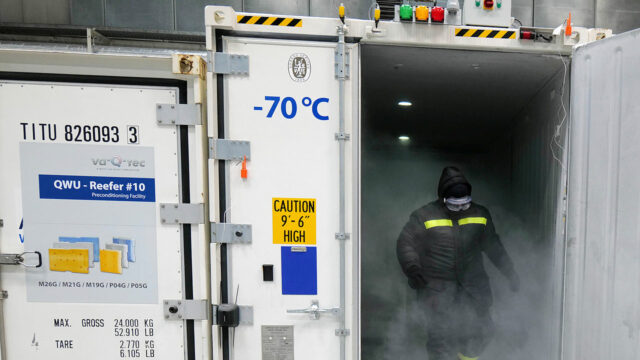
Manila, Subic, Davao cold inspection facilities set for construction in 2026

REUTERS

THE Department of Agriculture (DA) said it is planning to build three cold examination facilities in agriculture (CEFA) next year in Manila, Subic, and Davao.

Agriculture Secretary Francisco P. Tiu Laurel, Jr. said at a briefing last week that operations are expected to commence by 2027.

Mr. Laurel said a budget of P1.2 billion has been approved by the bicameral conference committee.

CEFAs are intended to prevent the entry of plant pests and economically significant animal diseases, with advanced testing laboratories on site.

Earlier plans had included a CEFA in Angat, Bulacan, but the DA is now prioritizing locations near ports to minimize logistics and operational costs.

Mr. Laurel said the current Angat facility, which includes a laboratory, will be used for rendering and destruction of goods.

“If we identify problematic containers, we’ll bring them there for destruction,” he said. — Vonn Andrei E. Villamiel

Gov’t debt yields end higher on hawkish Fed bets

YIELDS on government securities (GS) mostly climbed last week as investors took a defensive stance amid the holidays and amid bets on a hawkish US Federal Reserve following the release of key US economic data.

GS yields, which move opposite to prices, went up by an average of 2.86 basis points (bps) week on week at the secondary market, according to PHP Bloomberg Valuation Service Reference Rates as of Dec. 26 published on the Philippine Dealing System’s website.

Rates at the short end of the curve closed mixed. Yields on the 91- and 364-day Treasury bills (T-bills) slipped 0.62 bp to 4.8434% and 1.3 bps to 5.0317%, respectively. Meanwhile, the rate of the 182-day tenor edged up by 0.48 bp to 4.9725%.

At the belly, rates of the two-, three-, four-, five-, and seven-year Treasury bonds (T-bonds) climbed by 5.31 bps (5.3502%), 5.01 bps (5.4984%), 5.09 bps (5.6393%), 4.84 bps (5.7502%), and 4.26 bps (5.8883%), respectively.

Yields on long-term bonds also went up across the board, with the 10-, 20-, and 25-year debt papers climbing 7.49 bps (6.0539%), 0.54 bp (6.4123%), and 0.34 bp (6.4076%), respectively.

GS volume traded dropped to P25.45 billion last week from P44.87 billion previously. The market was closed on Dec. 24 and 25 for the Christmas holidays.

“Year-end holidays significantly reduced market liquidity, delaying portfolio rebalancing and positioning adjustments,” Lodevico M. Ulpo, Jr., vice-president and head of fixed income strategies at ATRAM Trust Corp., said in a Viber message.

He said benchmark yields climbed by 5-10 bps, led by the belly of the curve, last week as a “supply-driven knee-jerk reaction” the first-quarter domestic borrowing plan released by the Bureau of the Treasury (BTr).

“The market repriced near-term supply risk amid thin liquidity.”

The BTr said on Tuesday that the National Government plans to borrow up to P824 billion from domestic sources in the first quarter of 2026, or P324 billion from the issuance of T-bills and up to P500 billion via T-bonds.

“Hawkish signals from the Fed reinforced a defensive tone in local rates. Combined with illiquid year-end conditions, global yield pressure kept participants sidelined, preventing meaningful demand for duration and contributing to modest upward bias in yields,” Mr. Ulpo added.

“The upside surprise in US growth supported a bear-steepening bias, as expectations for further policy easing were pushed out. This prompted caution on the long end, with investors reassessing reflation risks and the sustainability of an easier policy path.”

Hawkish sentiment from the Fed could also affect the Bangko Sentral ng Pilipinas’ (BSP) policy path, Reinielle Matt M. Erece, an economist at Oikonomia Advisory and Research, Inc., said in an e-mail.

“While monetary policy remains on the easing path, inflation concerns may spike yields given that monetary policy may reverse its direction,” he said.

BSP Governor Eli M. Remolona, Jr. has left the door open to one final cut in 2026 to support the economy if needed, with inflation expected to remain manageable.

The US economy grew at its fastest pace in two years in the third quarter, fueled by robust consumer spending and a sharp rebound in exports, though momentum appears to have faded amid the rising cost of living and recent government shutdown, Reuters reported.

Gross domestic product (GDP) increased at a 4.3% annualized rate last quarter, the fastest pace since the third quarter of 2023, the Commerce department’s Bureau of Economic Analysis said in its initial estimate of third-quarter GDP. Economists polled by Reuters had forecast GDP would rise at a 3.3% pace. The economy grew at a 3.8% pace in the second quarter.

The Fed this month cut its benchmark overnight interest rate by another 25 basis points to the 3.5%-3.75% range, but signaled borrowing costs were unlikely to fall in the near term as policymakers await clarity on the direction of the labor market and inflation.

Investors are preparing for 2026 focused on when the US Federal Reserve might cut rates and by how much. Traders are pricing in at least two cuts over the year, but they do not expect the Fed to move before June.

The central bank has projected one more cut next year but divisions among decision makers has left investors on edge about the policy outlook.

For this week, Mr. Ulpo said the GS market may continue to move sideways as volume remains thin.

“With a shortened trading week, we expect range-bound consolidation and continued defensiveness. Investors should monitor liquidity conditions, offshore rate movements, and any signals on auction demand ahead of normalization in January,” he said.

“Next year, we should closely monitor inflation movements as well as employment. Further rate cuts may cause yields to fall, but inflation concerns may cause investors to anticipate tighter policy,” Mr. Erece added. — Isa Jane D. Acabal with Reuters

Mandatory ESG disclosure seen to raise credibility; foreign investor impact minimal

BW FILE PHOTO

By Alexandria Grace C. Magno

THE SECURITIES and Exchange Commission’s (SEC) push for mandatory environmental, social, and governance (ESG) disclosures aligned with international standards could enhance credibility and modest trading for some companies, while broader governance and external risks may limit changes in foreign investment, analysts said.

“The reporting alignment to international standards could bring select companies an extra layer of credibility that could have been initially overlooked by ESG investors,” AP Securities, Inc. Equity Research Analyst Shawn Ray R. Atienza said in a Viber message.

He noted that companies achieving compliance may experience a modest uptick in trading volume once the changes take effect.

However, the true outcome is unclear, according to Mr. Atienza, since foreign investors could be focused on broader issues fueling recent repatriation of funds.

“At best, we see minimal to no material change on foreign investors’ perception,” he said.

Rizal Commercial Banking Corp. (RCBC) Chief Economist Michael L. Ricafort said the commission’s move would increase transparency for local listed companies and “further uphold the best interest of the investing public.”

He noted that if anti-corruption measures, reforms, and policy priorities for improving governance standards are taken seriously, this could be the missing link to boosting investor confidence in the economy and financial markets and potentially alter foreign investors’ views of Philippine Stock Exchange index (PSEi) companies.

The commission has issued a memorandum adopting the Philippine Financial Reporting Standards (PFRS) on sustainability disclosures, setting clear guidelines to help covered companies prepare and submit sustainability reports in line with international standards.

Memorandum Circular (MC) No. 16, Series of 2025, implements PFRS S1, which sets general requirements for disclosure of sustainability-related financial information, and PFRS S2, which covers climate-related disclosures, repealing the Commission’s MC No. 4, Series of 2019, which had required only publicly listed companies (PLCs) to submit sustainability reports.

“The adoption of the PFRS on sustainability disclosures underscores our commitment to high-quality, comparable, and globally aligned sustainability reporting,” SEC Chairman Francisco Ed. Lim said in a statement on Friday.

“By elevating the standards of sustainability reporting in the Philippines, we hope to enable more companies and stakeholders to better understand the financial impacts of sustainability-related risks and opportunities, supporting long-term value creation and improved capital allocation decisions,” he added.

Under the memorandum circular, PLCs and large non-listed companies (LNLs) under Section 17.2 of Republic Act No. 8799 must attach board-approved sustainability reports to their annual reports, while other LNLs submit them with audited financial statements.

Adoption of PFRS S1 and S2 will be phased in starting fiscal year 2026. Tier 1 PLCs with market capitalization over P50 billion as of Dec. 31, or listing date thereafter, must start PFRS-based sustainability reporting in 2027 for fiscal year 2026.

Tier 2 PLCs with market capitalization from over P3 billion to P50 billion as of Dec. 31, or listing date thereafter, adopt PFRS in 2028 for fiscal years beginning on or after Jan. 1, 2027.

Tier 3 includes PSE-listed PLCs with market capitalization of P3 billion or less, PLCs with debt-only listings on the Philippine Dealing & Exchange Corp., and LNLs with over P15 billion in prior fiscal year revenue from ordinary activities, consolidated for parent companies, which will adopt PFRS in 2028 for fiscal years beginning on or after Jan. 1, 2028.

Covered companies may also use other recognized international frameworks alongside PFRS S1 and S2, provided they do not conflict with these standards, obscure material information, and are properly disclosed.

“They also implement a mandatory limited assurance on Scope 1 and 2 greenhouse gas (GHG) emissions by an independent assurance practitioner two years after the implementation of PFRS S1 and S2 for each tier, in line with the International Standard on Sustainability Assurance (ISSA) 5000, to ensure a consistent and high-quality sustainability assurance engagement,” the commission said.

To ease compliance, the SEC issued transitional reliefs through the memorandum circular.

“MC 4 remains in force until a PLC reaches its adoption year, while companies may continue using any recognized framework for their submission of sustainability reports for fiscal year 2025,” it said.

Tier 1 and 2 companies have one year to disclose climate-related risks and opportunities, while Tier 3 companies have two years.

“All covered corporations will be given one year to submit their sustainability report after the publication of their related financial statements, at the same time as their next second-quarter or half-year interim financial statements, or within nine months from the end of the reporting period, if there are no interim financial statements issued,” the SEC added.

“All tiers will also not be required to disclose comparative information and will be allowed to use methods other than the GHG Protocol: a corporate accounting and reporting standard for one year. Covered corporations will not be required to submit Scope 3 GHG emissions for two years.”

Metro Manila Film Festival 2025: Slick but shallow

Shake, Rattle & Roll: Evil Origins (2025)

By Joseph L. Garcia, Senior Reporter

Movie Review
Shake, Rattle & Roll: Evil Origins
Directed by Shugo Praico, Joey de Guzman, and Ian Loreños
Produced by Regal Entertainment
MTRCB Rating: R-13

This 17th installation of Shake, Rattle, & Roll delivers good ol’ jumpscares (I screamed twice) and passable plots, but sputters towards the end.

The first two stories of the anthology (which have a plot point in common) titled “1775” and “2025,” prove immediately why the horror franchise has become a staple in Philippine cinema’s Christmas diet. As for the third: eh.

The first, “1775,” opens with some very beautiful nuns. We don’t exaggerate: the cast includes the Ortega sisters Ysabel and Ashley. The nuns’ wimples and veils charmingly frame the faces of Carla Abellana, Janice de Belen (she’s a star for a reason; her face can still fight against much younger actresses), and even sexy star Ara Mina (from Mano Po’s butt-crack dress to a complete nun’s habit, she’s still something to watch on the big screen. Kudos!).

A mysterious chest arrives at the convent, which the nuns theorize in Spanish as coming from Mexico (the period film is set during the height of the Galleon Trade). Meanwhile, Ms. Abellana’s character is locked away in the cellar for her nightly fits and visions. The chest tempts the nuns one by one, while Ms. De Belen’s character rules over the nuns with frightening tyranny.

We commend this segment for the wonderful set and production design, not to mention the gorgeous costumes (yes, they are nuns’ habits, but they’re made with such care). The plot leaves so much room to make this segment into its own movie (the chest’s manipulations leave room for so much more), and the actresses play their roles so well. The gothic setting in a convent is a bit too easy, but it works in bringing suspense. We suppose our only gripes about this segment are the cheap jump-scares and one or two too-easy deaths.

The “2025” segment is for a certain generation: younger millennials and Gen Z. It’s an old-fashioned slasher (teens are stalked by masked creeps during a rave) but my, oh my: it looks and sounds VERY good. The fact that it’s set in a rave means they have paid extra care to the music, and we’re already looking forward to the soundtrack to play at our next party. The cinematography is, as the kids once said, “lit,” and it is shot as smoothly as a music video. The experience is hypnotic, and visually delightful: never mind that half the segment is a gore-fest, but so wonderfully choreographed.

The third segment, “2050” follows the same slick production values of the first two, and offers an evocative view of a post-apocalyptic Philippines. We’re not super onboard with the plot though: the entity in the damned chest from the first segment, which made an appearance in the second, has gained strength and has won — taking over the country. Richard Gutierrez and his merry band have to defeat the entity and the thing inside the box. It’s shot more like a first-person video game than a movie, and shares the same fast pace.

(Spoilers!)

The third segment shows the film’s big baddie as a cheap copy of Harry Potter villain, Voldemort. Imagine our distress after the build-up from the first two segments, because in our heads: maybe the enemy is corruption. Think about it: in “1775” it arrives in the Philippines through colonialism, thrives in the church, tempts with comfort. In its death throes, it brings down the church with it (literally). In the second segment, “2025,” it is worshipped and protected and fed blood by a select few, while thriving inside a playground of the rich. In “2050,” it has finally won, leaving the country a desolate place; its people left to pick refuse.

The first two segments are a must-watch for horror fans, and even give a wink by casting Shake, Rattle, & Roll vets Ms. De Belen and Manilyn Reynes. The film taken as a whole is good for a scream or three, and overall a visual feast. Just don’t overthink it like I did.

F-resh Van offers cold-chain solution

PHOTO FROM CENTRO NIPPON FRUEHAUF COOLTECH, INC.

CENTRO NIPPON Fruehauf Cooltech, Inc. (CFCI), in partnership with Sojitz Fuso Philippines Corp., introduced the Fuso F-resh Refrigerated Van, a cold-chain solution born from the fusion of Japanese engineering and Filipino manufacturing expertise. Mounted on the reliable Fuso Canter FE71, the F-resh Ref Van is designed to meet the growing demands of the Philippines’ food, pharmaceutical, and logistics industries with “unmatched efficiency, durability, and sustainability.”

The F-resh Ref Van is a product of the longstanding collaboration between CFCI and Sojitz Fuso, combining Fuso’s trusted chassis platform with the precision-engineered refrigerated body technology of Nippon Fruehauf Japan. Nippon Fruehauf’s design has passed the stringent Japanese Industrial Standard (JIS) tests, ensuring that the F-resh delivers exceptional strength, insulation, and long-term reliability.

The refrigerated body uses eco-friendly, high-quality materials, including Extruded Polystyrene (XPS) known for superior insulation and thermal stability. Lightweight yet durable aluminum sheet panels further enhance cooling efficiency while being fully recyclable — aligning the F-resh with global sustainability practices.

Ensuring steady and efficient cooling performance is the C-Temp refrigeration system, equipped with a Japanese-brand compressor recognized for consistent temperature control and energy efficiency. This guarantees that meats, produce, pharmaceuticals, and other sensitive cargo remain protected even under the Philippines’ harsh tropical climate.

To reinforce customer confidence, the F-resh Ref Van includes a comprehensive two-year/100,000-km warranty, ensuring strong after-sales support and long-term operational value. This warranty, made possible through the CFCI-Fuso partnership, underscores both companies’ commitment to reliability and customer success.

P43 imported rice MSRP to stay even as benchmark price warrants 20% tariff

PHILIPPINE STAR/KRIZ JOHN ROSALES

THE Department of Agriculture (DA) said the P43-per-kilo maximum suggested retail price (MSRP) for imported rice will stay for the moment, even though the designated price benchmark would currently warrant an increase in tariffs to 20%.

The planned increase in rice import duties from 15% to 20% is scheduled to take effect on Jan. 16.

“The January MSRP will stay at P43 because the duty is still 15%,” Agriculture Secretary Francisco P. Tiu Laurel, Jr. was quoted as saying in a statement, adding that the process for tariff adjustment has yet to be finalized.

Executive Order No. 105 calls for rice import tariffs to be adjusted in increments of five percentage points when movements in global rice prices hit certain thresholds.

The benchmark price that will form the basis of tariff adjustments is the monthly average price of Vietnam 5% broken rice, as reported by the Food and Agriculture Organization (FAO).

Vietnam 5% broken rice currently fetches $361.1 per metric ton, according to the FAO, a price level that would cause the Philippines to charge a 20% tariff.

The DA added that it plans to import an initial 500,000 metric tons of rice after the import ban expires on Dec. 31, with some 50,000 metric tons to be allocated to Food Terminals, Inc.

Mr. Laurel said the government will time its announcements on prices to deter speculation.

The DA said keeping the MSRP in place provides consumers with short-term price stability. — Vonn Andrei E. Villamiel

Science still made incredible breakthroughs while under attack

STOCK PHOTO | Image from Freepik

By F.D. Flam

IT WAS a tough year for science in the US. Thousands of research grants, including more than 3,800 from the National Institutes of Health and the National Science Foundation alone, were frozen or canceled. NASA was threatened with sweeping budget cuts. Top scientists are leaving the US in search of better opportunities. And misinformation about vaccines and other important scientific matters continues to spread.

But despite these setbacks, scientists around the world produced amazing discoveries every day — some of which made a big splash while others didn’t get nearly the attention they deserved. Here’s a sample of findings that were perhaps more significant than some of the major headline-makers.

OF DIRE WOLVES AND  BUTTERFLIES
The spring of 2025 brought the attention-grabbing claim from Colossal Biosciences that it had “resurrected” dire wolves — a species that had been extinct for 12,500 years. Around the same time, a group of researchers published a report documenting a rapid decline in global butterfly populations.

The butterfly report matters because it shows that genetic engineering feats such as “de-extinction” are insufficient to stop the rapid decline of wild species of all kinds, because such efforts can’t restore the ecosystems that support them. Butterfly populations have declined by 22% over the past 20 years. Pesticides are wiping out some species, while others are losing habitat and food sources to humanity’s needs for homes and farmland.

This is part of a broader decline in insect populations worldwide, which means plants are losing pollinators and animals are losing an essential source of food.

Meanwhile, biologists continue to debate whether the dire wolves were really just genetically modified gray wolves. Whatever you call the three pups the company produced, they represent an impressive technological achievement and innovative fundraising effort. Imagine what we could accomplish if we put that same effort and brainpower into inventing new, sustainable ways to grow food without crowding out or poisoning the insects we all depend on.

SUPER SMART HUMANS 30,000 YEARS AGO
In 2025, it was hard to avoid gloomy pronouncements about human intelligence — from brain fog to shrinking attention spans to declining IQ scores. But archaeology tells a different story — one of humans possessing similar intellectual abilities for tens of thousands of years.

Here’s an IQ test nature posed to Stone Age humans 30,000 years ago: There’s a vast stretch of rough, cold ocean in front of you with a raging current cutting across it, and a faint outline of land barely visible from your highest peak. You have only stone tools. How do you get to the other side?

Archaeologists know that people must have passed this test to settle the Ryukyu Islands, a chain that stretches from Kyushu, Japan, to what’s now Taiwan. Models published earlier this year indicate that 30,000 years ago, this 137-mile-wide stretch of ocean was driven by the same strong current observed there today. A similar feat of island hopping brought people to Australia around 50,000 years ago, but anthropologist Yousuke Kaifu believes that the Ryukyu Islands trip was the world’s most treacherous Stone Age boating voyage.

The best way to figure out how Stone Age humans might have done it, he reasoned, was to assemble a team of athletic and adventurous modern-day humans to build a boat and attempt the same feat of stellar and solar navigation using nothing but Stone Age technology and local materials.

They built reed and bamboo boats, which either swamped, capsized, or were swept off course by the current. Eventually, they constructed a dugout canoe from a felled cedar tree. After several false starts, a group of paddlers completed the journey in 44 hours and 10 minutes, publishing their findings in Science Advances in June.

Kaifu said he believes people did it for the same reason we build deep-sea submersibles and spacecraft. It’s humbling but also reassuring to realize that humanity has likely always had brainpower and grit — and probably won’t lose these abilities anytime soon.

UNIVERSAL BLOOD AND MORE
If you’re okay with having your organs removed for transplant when you die, how would you feel about doctors implanting organs into your recently deceased body as part of an experiment? That’s what happened earlier this year when doctors in Canada and China collaborated to transplant a kidney into a brain-dead man to test a new way to avoid organ rejection.

For those of us who’ve read Robin Cook’s thriller Coma, this experiment evokes the book’s chilling fictional portrayal of comatose patients being exploited — people who are in no position to advocate for themselves. But in real life, experts say it is relatively easy to distinguish between patients who have been declared brain-dead — and therefore legally considered dead — and those who are comatose or in a persistent vegetative state, said Arthur Caplan, head of the department of bioethics at New York University’s Grossman School of Medicine. Caplan said he was an early advocate of using people who have irreversibly lost all brain function, not just for organ donation, but also as test subjects.

You could think of it as donating your immune system to science. Not everyone who wants to donate their organs will be able to, said Caplan, and the person whose body was used for this kidney transplant experiment probably did more good for humanity than he could have with an organ donation. The technique promises to increase not only the number of available organs but also the blood supply for transfusions.

There are four blood types — A, B, AB, and O — and receiving blood or an organ from a mismatched type can trigger rejection. The one exception is type O, which is universal. However, people with type O blood can only receive type O. So, it was a significant finding when researchers identified an enzyme that can convert type A to O. This enzyme was used on the kidney transplanted into the brain-dead recipient.

Human bodies are likely to be better research models than animals, and using deceased humans makes more ethical sense than killing dogs or monkeys. The finding, published in Nature Biomedical Engineering in October, deserves more attention — both because it’s an impressive achievement and because the ethical questions it raises are worth public discussion.     

DON’T BLAME MOM
It was a rough year for moms. First, President Donald Trump made an unsupported claim that in utero exposure to acetaminophen — the active ingredient in Tylenol — can cause autism. Then, even those debunking the claim pointed out that mothers could harm their kids with other painkillers or just by developing a fever.

However, we paid insufficient attention to several recent findings regarding fathers and sperm. These studies revealed a surprisingly powerful influence a father’s health and environment can have on his offspring. Sperm, despite being tiny, carry more than just a package of genes. They also carry RNA fragments that play a role in fetal development, and these are affected by a wide range of environmental factors, including viral infections and even physical fitness.

In one study, published in October in Nature Communications, scientists infected mice with a virus similar to SARS-CoV-2, then let them mate. They observed that the virus altered RNA in sperm and that the offspring exhibited more anxious behavior.

An even more unusual study in mice — published in November in Cell Metabolism — tested the effects of exercise on their sperm. Researchers put male mice on a regimen of intense treadmill exercise for two weeks before they were allowed to mate.

The result: The offspring of the fit fathers showed better endurance and healthier metabolic markers than the offspring of a control group of sedentary males. The scientists identified a specific RNA molecule, called a microRNA, and found that they could improve the health of mice by injecting it into embryos from sedentary fathers.

While these effects might not translate directly to humans, the findings suggest that a father’s environment, health habits, and drug use can affect his sperm in ways that may affect the health, behavior, and even athletic abilities of his children.

SOME FAT MIGHT BE HEALTHIER
Polls show that more than 13% of Americans are taking Ozempic or other GLP-1 drugs — about twice as many as last year. But doctors still struggle to understand the health implications of fat — especially among people who are overweight by standard BMI charts but not obese.

Some overweight patients are frustrated that they can’t go to a doctor for a rash without being lectured about their weight, even though they show no signs of diabetes or heart disease. Others in the same situation are angry that they can’t get reimbursed for GLP-1 injections.

Americans bring some Puritanical cultural baggage to this topic, making it easy to dismiss findings that seem counterintuitive, such as the striking 2013 study that showed overweight (but not obese) people lived as long as those of normal weight. Americans also tend to be skeptical of the idea that people can be overweight yet metabolically healthy; however, a study published in August, based on more than 21,000 volunteers, found that women with extra weight around the hips and thighs had healthier hearts than slimmer women.

The study, which used multiple types of medical imaging, also reinforced the finding that visceral fat, which surrounds vital organs, is the most dangerous type of fat. From reporting on a column several years ago, I learned that visceral fat is part of the immune system. Those most prone to it are people who had a low birth weight.

Its function is to protect infants’ organs from infection; however, later in life, it can promote chronic inflammation and cause organs to age prematurely.

All this might eventually help explain the many side benefits people are discovering with GLP-1 drugs — protection from cancer, heart disease, and even Alzheimer’s disease — though the latest research says they can’t actually reverse dementia. There’s still much to learn, not just about the drugs but about the human body itself, and why it comes in so many different shapes and sizes.

BLOOMBERG OPINION

Perry Bamonte, keyboardist and guitarist for The Cure, 65

THECURE.COM

LOS ANGELES — Perry Bamonte, keyboardist and guitarist in The Cure, has died at 65, the English indie rock band confirmed through their official website on Friday.

In a statement, the band wrote that Mr. Bamonte died “after a short illness at home” on Christmas Day.

“It is with enormous sadness that we confirm the death of our great friend and bandmate Perry Bamonte who passed away after a short illness at home over Christmas,” the statement said, adding he was a “vital part of The Cure story.”

The statement said Mr. Bamonte was a full-time member of The Cure since 1990, playing guitar, six-string bass, and keyboards, and performed in more than 400 shows.

As per the statement, he rejoined the band in 2022, playing in 90 more shows including The Show of a Lost World concert in 2024 in London.

Mr. Bamonte, born in London, England, in 1960, joined the band’s road crew in 1984, working alongside his younger brother Daryl, who worked as tour manager for The Cure.

Mr. Bamonte first worked as an assistant to co-founder and lead vocalist, Robert Smith, before becoming a full member after keyboardist Roger O’Donnell left the band in 1990.

Mr. Bamonte’s first album with The Cure was Wish in 1992. He continued to work with them on the next three albums.

He also had various acting roles in movies: Judge Dredd, About Time, and The Crow. — Reuters

Security Bank to ramp up digital transformation

PHILIPPINE STAR/DEEJAE DUMLAO

SECURITY BANK Corp. will continue to invest in technology to advance the digital transformation of its services, it said on Sunday.

The bank said that under its multi-year roadmap, it will make more strategic technology investments in artificial intelligence (AI), automation, and cybersecurity, among others.

“Security Bank is building a modern, secure, and customer-centric foundation designed to support sustainable growth while continually improving customer experiences,” Lucose T. Eralil, Security Bank executive vice-president and chief operating officer, said in a statement.

“Our progress reflects disciplined execution and a forward-looking approach, and these recognitions reinforce the strength of the transformation we are delivering,” he added.

The bank has moved to streamline its core systems and processes as part of its digitalization journey as it transitions toward a platform-based, application programming interface (API)-enabled, real-time digital banking environment, it said.

This has been supported by enterprise API deployment at scale, fully digitized branch compliance processing, real-time enterprise data streaming capabilities, and having security and resilience embedded by design.

Under its roadmap, the bank plans to invest more in AI and automation for fraud management, service, and its general operations as it looks to increase digitalization, even at the branch level.

It is also looking to ramp up its cybersecurity measures and real-time threat monitoring.

Security Bank will also continue to modernize its core banking and payments services to enable real-time services.

The bank added that it is working towards increased API monetization and embedded finance partnerships.

“By transforming banking capabilities into secure, reusable API products, the bank now enables faster deployment of new services, more consistent digital experiences, and seamless integrations across channels — supporting growth and market agility while strengthening open banking readiness,” it said.

“Collectively, these deliver BetterBanking experiences for customers, stronger operational performance, and enhanced competitiveness and scalability for future growth… These initiatives strengthen the bank’s operational resilience and scalability delivering faster, safer, and more seamless customer experiences, reinforcing its BetterBanking commitment.”

Security Bank’s net income grew by 6.7% year on year to P3.2 billion in the third quarter, bringing its nine-month profit up by 7% to P9.1 billion.

Its shares climbed by P1.75 or 2.73% to close at P65.95 apiece on Friday. — K.K. Chan

SMC waives expressways toll on New Year’s Eve

PHILSTAR FILE PHOTO

SAN MIGUEL CORP. (SMC) recently waived toll fees on Christmas Eve, and said it will again do so across its expressway network on New Year’s Eve. The annual practice, aimed at easing holiday travel, applies to all SMC-operated tollways including the Skyway System, NAIA Expressway (NAIAX), South Luzon Expressway (SLEX), STAR Tollway, and the Tarlac-Pangasinan-La Union Expressway (TPLEX).

Tolls will be waived from 10 p.m. on Dec. 31 until 6 a.m. on Jan. 1, 2026, the company said. SMC said the toll waiver is intended to benefit motorists traveling late at night to reach their families during the holidays.

SMC Infrastructure said it has placed safety and security personnel on heightened alert and rolled out measures to manage the expected increase in traffic during the holiday period. Additional patrol and security personnel have been deployed in critical areas, while emergency response teams have been placed on standby to quickly clear road obstructions, the company said. Traffic monitoring centers across SMC-operated expressways are staffed around the clock to track traffic conditions and coordinate with emergency responders. Roadworks that may affect traffic flow have been suspended until Jan. 4, 2026 to help ease congestion.

Tow trucks and other emergency vehicles have also been placed at strategic locations to ensure faster response to incidents. SMC Infrastructure advised motorists to plan their trips ahead to allow for extra travel time, and to ensure sufficient balance in their Autosweep accounts to avoid delays at toll plazas. The company added it has coordinated with local government units and national agencies to help manage traffic on public roads connecting to the expressways.

ADVERTISEMENT
ADVERTISEMENT