Home Blog Page 5047

ERC announces caps for grid market share, generating capacity 

THE Energy Regulatory Commission (ERC) said it set the new caps for installed generating capacity (IGC) and market share limits for the main grids in 2023.

“The ERC is mindful of its role in promoting market competition, encouraging market development, and in discouraging/penalizing abuse of market power and any anti-competitive behavior in order to ensure a level playing field particularly in the generation sector. The IGC serves as our baseline in determining the existence of a breach in the market share limit of any market participant,” ERC Chairperson and Chief Executive Officer Monalisa C. Dimalanta said in a statement on Monday.

The ERC set the national upper limit on installed generating capacity at 25.47 million kilowatts (kW), up from 23.42 million kW previously.

For Luzon the allotted installed generating capacity for 2023 is 17.79 million kW; the Visayas 3.46 million kW; and Mindanao 4.22 million kW.

IGC is the maximum capacity of the generation facilities connected to a transmission system or distribution system, which are part of a particular grid.

The ERC sets IGC caps annually.

The market share limits for the Luzon, Visayas and Mindanao grids are 30% each, with the cap for power companies connected to the national grid at 25%.

Republic Act No. 9136 or the Electric Power Industry Reform Act of 2001 requires that no company or related group can own, operate or control more than 30% of the IGC of a grid and 25% of the national IGC. — Ashley Erika O. Jose

Intellectual property filings at record 48,259 in 2022

INTELLECTUAL PROPERTY filings in 2022 hit a record 48,259 in 2022, driven by the economic recovery, the Intellectual Property Office of the Philippines (IPOPHL) said.

IPOPHL Director General Rowel S. Barba said at a briefing in Taguig City on Monday that the previous record was 47,328 set in 2019, before the pandemic. Gross domestic product growth was 7.6% in 2022, accelerating from 5.7% in 2021. 

“The strong uptick in 2022 IP filings shows how aggressive businesses are in seizing opportunities in the more upbeat economy and the digitalization of business interactions as intensified by the pandemic,” Mr. Barba said.

In 2022, Mr. Barba said trademark applications accounted for 41,235 filings, up 4%.

Pharmaceutical, health and cosmetic products led all trademark applications with an 18.4% share, followed by agricultural products and services (16.6%), and scientific research, information and communication technology (14.9%).

Mr. Barba said that patent applications increased 9.3% to 4,403 in 2022.

The leading patent applications were in pharmaceuticals at 28.9%, followed by organic fine chemistry (12.1%), and digital communications (8.3%).

Utility model (UM) filings, which are a patent-like IP right to protect innovations, dropped to 1,615 in 2022 from 1,615 in 2021. The top UM filings were in food chemistry, which accounted for 44.6% of the total, followed by other special machines (8.8%), and basic materials chemistry (4.9%).

He added that applications to protect industrial design (ID) — which seek to register the three-dimensional look of a product — fell to 1,235 in 2022 compared to 1,265 in 2021. The leading industries for ID filings were means of transport or hoisting at 19.7%, packages and containers for the transport or handling of goods (8.7%), and furnishing (8.3%).

Copyright registrations rose 73% to 3,706 in 2022 as more creators sought to protect their copyright in online and physical markets.

The top registrations were generated by books, pamphlets, articles, e-books, audio books, comics, novels and other writings (36%); literary, scholarly, scientific and artistic works (19.7%); and drawings, paintings, architectural works, sculpture, engraving, prints, lithography or other works of art, models or designs for works of art (8.6%). — Revin Mikhael D. Ochave

Gulfood trade show generates over $50M in sales for PHL exhibitors

GULFOOD FACEBOOK PAGE

PHILIPPINE FOOD exporters generated $50.65 million worth of sales as exhibitors at the Gulfood 2023 food and beverage expo in Dubai, the Department of Trade and Industry’s (DTI) export promotion arm said.

The Center for International Trade Expositions and Missions (CITEM) said in a statement on Monday that 18 exporters showcased healthy and halal-certified products at Gulfood 2023 under the FOODPhilippines banner between Feb. 20 and 24, exceeded their target by over 300%.

The products included fresh and processed fruit and vegetables, processed marine products, ethnic and gourmet products, non-alcoholic beverages, confectionery, biscuits, pastries, and other food and beverage categories.

According to CITEM, the exhibitors generated 400 inquiries during the trade show, helping them establish new export leads.

Gulfood is the largest food and beverage sourcing event in the region, with 48% of exhibitors using the food and beverage expo as an entry point into the global market.

CITEM said the value of the global halal food market was estimated at $1.5 billion in 2023 and is projected to hit $2.5 billion by 2027. It was citing projections by research firm Business Research Co.

Philippine participation in Gulfood 2023 was organized by CITEM, in collaboration with the Philippine Trade and Investment Center-Dubai. — Revin Mikhael D. Ochave

CoA flags former UCPB unit’s failure to make progress on liquidation

PHILIPPINE STAR/MICHAEL VARCAS

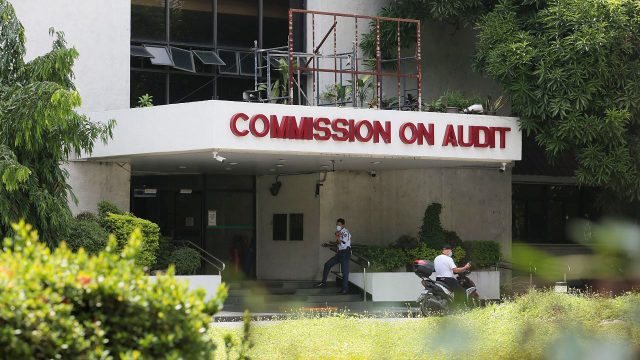
THE Commission on Audit (CoA) said a former unit of the United Coconut Planters Bank (UCPB) has not made progress with its liquidation, with its dissolution deadline of Dec. 31 approaching.

In a 2022 audit report dated March 22, CoA said that the “programmed activities in UFEC’s Plan of Liquidation have not been carried out within the time frames set.”

UFEC (United Foreign Exchange Corp.) is a wholly-owned subsidiary of UCPB, which merged with Land Bank of the Philippines (LANDBANK) in 2022.

CoA said UFEC’s inability to follow the timeline set for its planned liquidation could result in the incurrence of additional fees, penalties, and other expenses.

The state auditors proposed that UFEC expedite its business closure as well as sell its financial assets worth over P7 million in 2022.

It also recommended that UFEC resubmit its amended articles of incorporation, pay the necessary fees, and file the latest audited financial statements to the Securities and Exchange Commission on time.

UFEC suspended commercial operations in 2004 and initially planned its dissolution on Dec. 31, 2016 “due to the liberalization of foreign exchange markets, whereby the former UCPB can freely deal with other banks in foreign exchange currencies and transactions,” the report said.

Its board in 2021 approved the dissolution of UFEC, which is authorized to conclude the company’s winding-up by Dec. 31, 2023.

CoA noted that as of Dec. 31, 2022, UFEC is unstaffed, with LANDBANK employees serving as the company’s management. — Beatriz Marie D. Cruz

SEC grants amnesty for non-filing, late filing, non-compliance

“We are in the end game now.” This is the familiar line from Doctor Strange in the Avengers: Infinity War movie, signifying the approach of the final phase of the battle with Thanos. As it is less than two weeks before the BIR’s deadline to submit Audited Financial Statements (AFS) and Annual Income Tax Returns (AITR), our dear tax consultants, auditors and accountants are also “in the end game.”

I was once an external auditor and I personally know the stress (physically, mentally and emotionally) of “beating” the deadline to submit the AITR and AFS. This year, the AITR deadline for calendar year ended Dec. 31, 2022 is on April 17, while the submission of AFS with the Securities and Exchange Commission (SEC) is between May 29 and June 30, depending on the last digit of the company’s SEC registration or license number. April is always considered “crunch time.” However, the submission does not end with the BIR. After these documents are received by the BIR, companies also have to submit them to the SEC. In addition, the General Information Sheet (GIS) must be filed on or before April 30.

The non-filing of the AFS, AITR and GIS with the SEC has a corresponding fine and penalty. Originally, under SEC Memorandum Circular (MC) No. 6, series of 2005, companies are liable to pay P10,000.00 plus P100 per day of delay for not complying with the submission requirements of the SEC. Companies that were late or not able to file these documents have been provided relief by SEC MC No. 2, s.2023 which grants amnesty for the non-filing and late filing of the GIS and AFS and non-compliance with MC No. 28, s.2020.

MC No. 2, s.2023 grants amnesty to corporations, including branch offices, representative offices, regional headquarters and regional operating headquarters of foreign corporations and foundations, for the following violations:

a. Non-filing and late filing of GIS for the latest and prior years;

b. Non-filing and late filing of AFS, including fines for its attachments, for the latest and prior years; and

c. Failure to comply with MC No. 28, s.2020.

The amnesty rate for the non-filing and late filing of AFS and GIS is P5,000.00. However, for suspended and revoked corporations, including those which have filed for the lifting of suspensions and revocation, the applicable fine will be 50% of the assessed fines. Lastly, for companies that have failed to comply with MC No. 28, s.2020, the P10,000.00 penalty has been waived.

As a refresher, MC No. 28, s.2020 requires corporations, partnerships, associations and individuals to create and/or designate e-mail addresses and cellphone numbers for transactions with the SEC. This is to facilitate and expedite the transmission and receipt of official communications with the SEC. The e-mail addresses and cellular phone numbers must be under the control of the corporate secretary, the person charged with the administration and management of the corporation sole, the resident agent of the corporation, the managing partner, the individual, or the duly authorized representative.

Going back to MC No. 2, s.2023, the amnesty period runs to April 30, 2023. Hence, the duly authorized representative of the company must: (a) file an Online Expression of Interest Form (EoI) via the Electronic Filing and Submission Tool (eFAST) and (b) pay the corresponding fees before the deadline to be eligible for the amnesty. Upon uploading the EoI to eFAST, a Payment Assessment Form (PAF) will be generated which must be settled through the Electronic System for Payment to SEC (eSPAYSEC) only. Once the PAF is paid, the company must again upload the Notarized Application for Amnesty Form and all other requirements in eFAST. Once the submitted documents have been evaluated and deemed compliant, a Confirmation of Payment of Amnesty on Fines and Penalties will be issued to the company’s registered e-mail address.

It is also worth noting that not all corporations are eligible to apply for this amnesty. The following corporations are excluded from the coverage:

a. Corporations whose securities are listed on the Philippine Stock Exchange;

b. Corporations whose securities are registered but not listed on the PSE;

c. Corporations considered as Public Companies;

d. Corporations with intra-corporate disputes;

e. Corporations with disputed GIS; and

f.  Other corporations covered under Sec. 17.2 of RA No. 8799 or the “Securities Regulation Code.

The issuance of the Confirmation of Payment for Amnesty on Fines and Penalties to companies which have fully complied with the requirements under the circular means that the amnesty is final and irrevocable for the covered period/s. However, this does not exempt the companies from filing their subsequent mandatory reportorial requirements in a timely manner. For Revoked or Suspended Corporations, this will not automatically lift its Revoked or Suspended status.

MC No. 2, s.2023 is a very welcome development for non-compliant companies. Considering the recent COVID-19 pandemic, many companies have failed and/or have difficulty in complying with the SEC’s deadline in filing their AFS and GIS. This circular gives companies a sort of a clean slate moving forward. Also, for companies planning to amend their articles of incorporation or update their current capital structure and other applications with the SEC, they need to have Monitoring Clearance from the CRMD. Availing of the amnesty would expedite the clearance process.

Just like when Doctor Strange said that he has seen 14,000,605 potential futures and that there is only one future in which the Avengers defeat Thanos, companies must take this opportunity to settle with the SEC since an amnesty may not be offered again soon.

Let’s Talk Tax is a weekly newspaper column of P&A Grant Thornton that aims to keep the public informed of various developments in taxation. This article is not intended to be a substitute for competent professional advice.


Alexander M. Querido, Jr. is a manager from the Tax Advisory & Compliance division of P&A Grant Thornton, the Philippine member firm of Grant Thornton International Ltd.

pagrantthornton@ph.gt.com

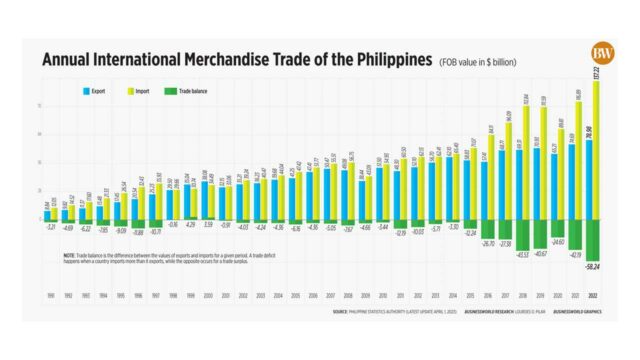
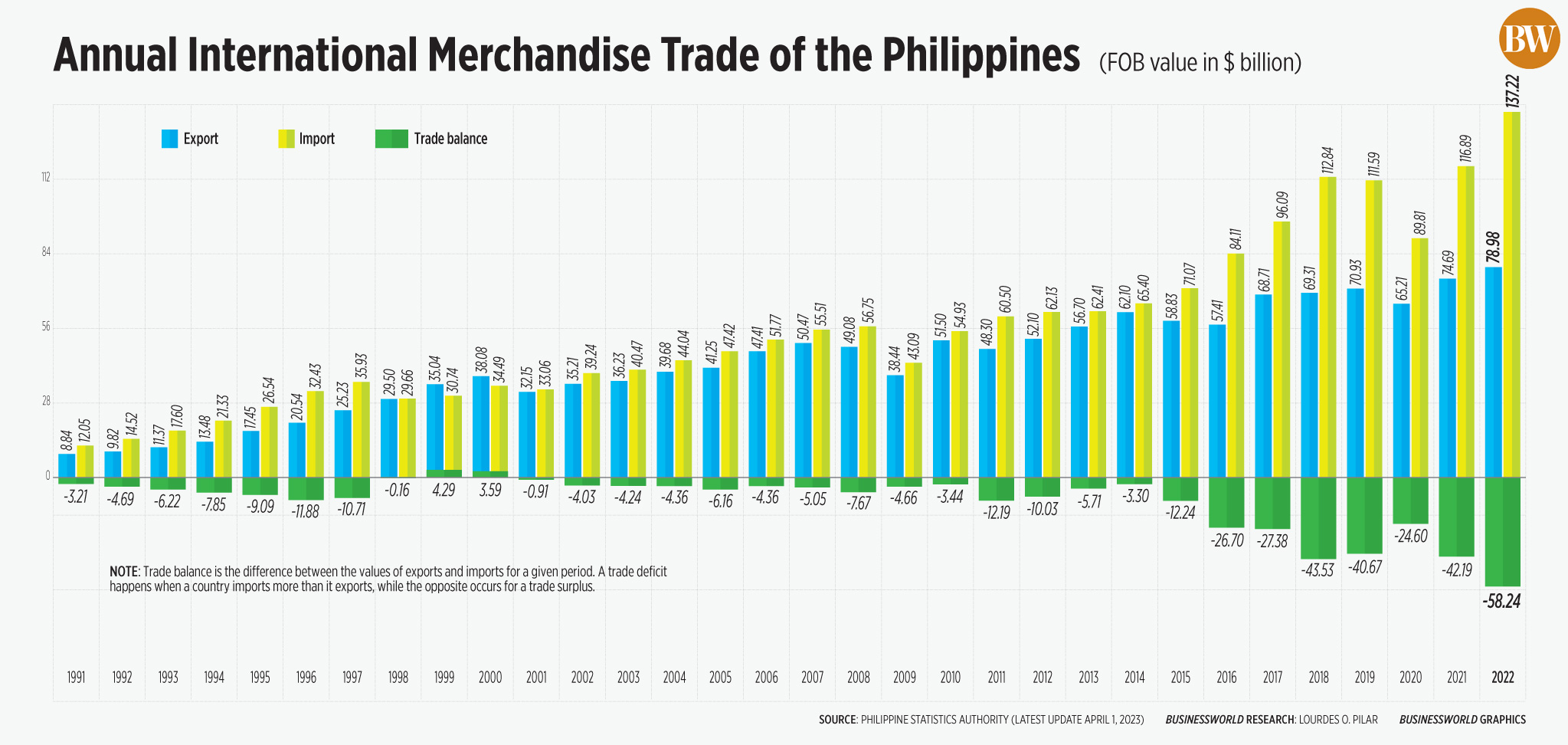
Annual International Merchandise Trade of the Philippines

THE record trade deficit in 2022 has been revised slightly lower to $58.24 billion from the $58.32 billion initially reported, the Philippine Statistics Authority said. Read the full story.

Annual International Merchandise Trade of the Philippines

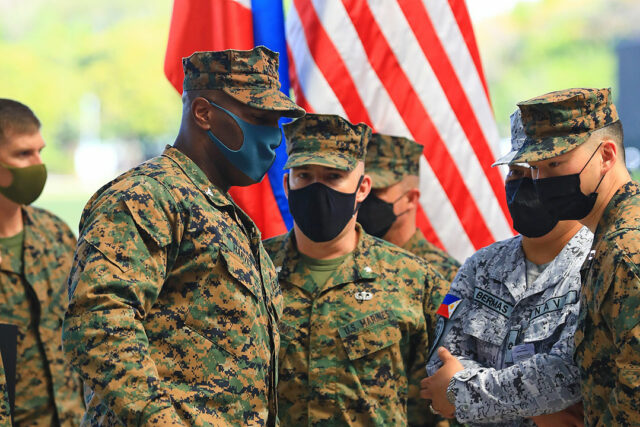
Spur love of country through other means, not ROTC, Marcos told

PHILIPPINE ARMY RESERVE COMMAND FACEBOOK PAGE

By Beatriz Marie D. Cruz

THE GOVERNMENT of President Ferdinand R. Marcos, Jr. can’t justify military training for students except to boost its defense in preparation for war, according to a policy analyst.

Keeping them healthy and fit could be better achieved by strengthening the state’s sports programs, and instilling patriotic values could be attained through the study of history and culture, Michael Henry LI. Yusingco, a lawyer and policy analyst, said in a Facebook Messenger chat.

“There really is just one justification for imposing mandatory reserved officers’ training corps (ROTC) on our youth and that is to prepare them for war,” he said. “Making ROTC mandatory will certainly be a boost to our national defense capability, at least in terms of adding warm bodies.”

But Mr. Yusingco said the other goals that military training for students claim to support are better achieved through other means.

For example, getting them prepared for disasters is being done now through the Youth Council structure, he pointed out. “Improving their mental health is more appropriately handled by medical professionals and social workers than by soldiers. So really, making ROTC mandatory can only be justified by a possible war that we must prepare for.”

Mr. Yusingco said improved military training could send a signal to external threats “that we will be ready to muster a strong defensive effort when the need arises,” he added.

The College Editors Guild of The Philippines has said the ROTC had promoted killing, hazing, harassment, red-tagging and all other violence on young Filipinos in the past, calling mandatory student military training “fake nationalism.”

Senator Sherwin T. Gatchalian in December filed a bill that seeks to revive a compulsory two-year military training program that will cover students in both public and private universities, colleges and vocational schools.

The proposed military training for college students is a priority bill of President Ferdinand R. Marcos, Jr.

The ROTC requirement was abolished in 2002 after the murder of a University of Santo Tomas student who exposed corruption in the program. Students were said to be paying off military training officers so they could skip the training.

The Gatchalian bill includes basic military, leadership and civic training, as well as enhanced preparedness during disaster response operations.

The program seeks to enhance the capacity of the nation and its human resources in times of war, calamities and disasters, as well as national or local emergencies.

The House of Representatives in December passed a similar bill in which students who complete a two-year mandatory national citizens service training will become part of the Armed Forces of the Philippines’ reserve.

Erika Glaine A. Cuevas, University Student Government President at Philippine Christian University (PCU) in Manila, said military training for students should be voluntary.

She cited forced recruitments by the school’s faculty members for the ROTC programs since last year.

On March 18, first year students at the university’s College of Arts and Sciences and Social Work who were enrolled in the community service program were forced to be part of an ROTC class.

“At the start of the second semester, the students were left with no professor, then two weeks ago, they were told to go to school on a Saturday,” she said in a Viber message. “Then they were told that the Civic Welfare Training Service class would be turned into an ROTC class.”

An ROTC officer had told students they would be punished if they refused to cooperate, Ms. Cuevas cited, citing the students. The students ended up walking out of the class, she added.

Mr. Marcos last month asked the Philippine Army to boost relations with its foreign counterparts, highlighting the importance of international ties amid common security challenges.

External security threats to the Philippine have become more complex and unpredictable, the president said at the army’s 126th anniversary celebration.

“Continue to improve your relations with your counterparts overseas,” he told the troops. “Common security challenges necessitate a more concerted approach among like-minded nations.”

“Share information, learn from the best practices in the region to make our military better,” he added.

STUDENT RIGHTS
His remarks came amid increasing Chinese assertiveness in Philippine-claimed areas in the South China Sea.

Local foreign policy think tanks and experts have been urging the Philippine government to partner with as many countries as possible to deter China’s expansive activities at sea.

In February, the Philippines gave the United States access to four more military bases under their 2014 Enhanced Defense Cooperation Agreement (EDCA) — a move that has angered Beijing.

Lawmakers critical of Washington have also questioned the real intent of the EDCA expansion, fearing that the Philippines would be used as a staging ground for US military activities in the region.

Aside from the South China Sea dispute, the Indo-Pacific region has also been beset by tensions between China and the US over self-ruled Taiwan.

College students can choose among civic welfare training service, literary training service and the ROTC under the National Service Training Program Act of 2002.

Ms. Cuevas cited an incident last year when a PCU professor reprimanded a student who demanded why they were being forced to take up military training. In another incident, students were told “getting purposefully drowned” was part of the military training.

In a memo dated March 24, Ramon G. Santos, director of PCU’s national service training program, said students enrolled in PCU’s civic training program would stay there and get “appropriate instructional materials.”

Ms. Cuevas said the student government would keep watch whether the school would stick to its promise.

The PCU administration did not immediately reply to an e-mail seeking comment.

She said that the bill seeking to revive student military training violates their right to choose.

“Lawmakers couldn’t provide any studies or research that would support their claim,” Ms. Cuevas said, adding that Congress should instead focus on policies that will improve the Philippine education system.

“It won’t be long and there will be more rights that will be stripped away from us by the very government that we elected.”


Philippine agencies trying to fix deficiencies in seaman training

EN.WIKIPEDIA.ORG

THE PHILIPPINES’ Department of Migrant Workers (DMW) on Monday said it would work with other agencies to come up with a plan to address deficiencies in the country’s seafarer training programs.

It would meet with the Commission on Higher Education (CHED) and Maritime Industry Authority (Marina) on Tuesday to discuss the issue and recommendations of the European Commission (EC), Migrant Workers Secretary Maria Susana V. Ople told an online news briefing.

This comes after the European Commission decision to continue recognizing certificates issued by the Philippines to Filipino seafarers, citing the country’s efforts to improve the system for training and certifying seafarers. It said there were still problems with the country’s system.

Ms. Ople said her agency expects both chambers of Congress to pass a bill that would improve protection of Filipino seamen.

Last month, the House of Representatives approved on third and final reading a bill that seeks to protect the rights of Filipino seafarers. A counterpart Senate bill is pending at the committee level.

She said her agency plans to organize an international conference with maritime experts in June to discuss plans to bolster support for the industry.

“We need an integrated roadmap to help our Filipino seafarers,” the migrant workers chief said.

Last year, the EC said almost 50,000 Filipino seafarers working in European vessels could lose their jobs if the Philippines does not address its deficiencies.

The European Maritime Safety Agency raised issues about the country’s compliance with European Union standards after an inspection in March 2020.

A year later, the EC warned the Philippine government it would withdraw recognition of Filipino seafarers’ certificates if it did not address deficiencies in training Filipino seafarers.

In a statement on Sunday, the presidential palace said the decision showed the country had complied with international standards of training seafarers.

At the same briefing, Francesco Gargiulo, chief executive officer of the International Maritime Employers Council (IMEC), said it is crucial for the Philippines to help more seafaring graduates get jobs in the maritime industry.

“The Philippines is not uniform when it comes to the provision of education since out of 30,000 yearly graduates, only 3,000 get a job in the industry,” he said, citing government data.

IMEC is an international employers’ organization whose members operate more than 11,200 vessels and employ more than 290,000 seafarers in more than 60 countries, according to its website.

“The industry is hungry for new talent, and I am very confident that we will see a resurgence of Filipino seafarers if reforms such as a Magna Carta law for seafarers are implemented,” he added. — John Victor D. Ordoñez

Marcos to attend King Charles III’s coronation in May 

PHILIPPINE President Ferdinand R. Marcos, Jr. will attend the coronation of King Charles III in London in May, according to the presidential palace. 

He would be accompanied by the First Lady, the Presidential Communications Office said in a statement on Monday night. 

The coronation of the king and his wife, queen consort Camilla will take place at Westminster Abbey on May 6 and will be led by the archbishop of Canterbury Justin Welby, according to the royal family’s website. 

The president had also accepted an invitation to an advanced reception at Buckingham Palace on May 5, the palace said. 

Buckingham Palace has said the coronation service would reflect the monarch’s role in modern times, while observing longstanding traditions. 

World leaders, diplomats, politicians and royals from all over the world are expected to attend the event. — Kyle Aristophere T. Atienza 

New EDCA sites will be in Cagayan, Isabela, Balabac Island

AMERICAN and Filipino troops attend the opening of the annual joint military exercises called Balikatan on March 28, 2022 at the Philippine military’s headquarters in Quezon City. — PHILIPPINE STAR/ WALTER BOLLOZOS

MALACAÑANG on Monday named the locations of the four additional military bases that will be included under the Philippines2014 Enhanced Defense Cooperation Agreement (EDCA) with the United States.   

Three of the four locations that have been inspected and assessedby the Armed Forces of the Philippines are in the northern part of the Philippines.   

These are: Naval Base Camilo Osias in Sta Ana, Cagayan; Lal-lo Airport, also in Cagayan; and Camp Melchor Dela Cruz in Gamu, Isabela. 

Cagayan is just over 1,000 kilometers away from self-ruled Taiwan, which is being claimed by China.  

Balabac Island in Palawan, which is facing the South China Sea, was also on the list, the Presidential Communications Office (PCO) said in a statement.  

In February, President Ferdinand R. Marcos, Jr. gave US troops access to four more EDCA sites on top of the five existing sites.   

Last month, he said the four additional sites would be scattered around the country and would boost the country’s ability to defend the “eastern side” of Luzon, the countrys largest island.   

To overcome opposition from some local government units (LGUs) not keen on hosting US forces and equipment, the President said he [had] talked to the officials of those LGUs and explained the importance of the EDCA sites in their jurisdictions,the PCO said.   

Filipino and American troops are set to hold their largest-ever military exercise this month. Kyle Aristophere T. Atienza

Sales from smuggled sugar to be remitted to state coffers, then eyed for distribution to farmers 

A vendor places sugar in plastic bags for sale. — PHILIPPINE STAR/EDD GUMBAN

THE SALES from smuggled sugar seized by the government and set to be sold in state-supported Kadiwa retail stores will be remitted to the national coffers, an official of the Sugar Regulatory Administration (SRA) said on Monday.  

Pablo Luis S. Azcona, board member and planters representative at the SRA, said they are looking at mechanisms to allocate the money, which will be parked at the Bureau of Treasury, to assist farmers who could be affected by the release of the illegally imported sugar to the market.   

The actual default (of the fund) is to the national treasury. So, as a sugar farmer myself, Ive been requesting (Agriculture Assistant Secretary) Kristine (Y. Evangelista) if we can find a way to get the money to assist the affected farmers,he said.  

Meanwhile, Mr. Azcona said they are still finalizing the logistics for distributing the sugar to Kadiwa stores, and the SRA has already sought assistance from other attached agencies of the Department of Agriculture (DA).  

Among the logistical challenges are repacking the 4,000 metric tons (MT) or 4 million kilograms of sugar into one-kilo packs.  

Authorities are looking at selling the seized white sugar at P70 per kilo, possibly not just in Kadiwa stores but in regular retail outlets.   

Mr. Azcona also said the confiscated sugar will undergo sanitary and phytosanitary test before distribution.   

“Rest assured before (the sugar) goes to Kadiwa, it will be tested by the SRA to make sure it’s safe for human consumption,” he said. 

In an earlier interview with BusinessWorld, Mr, Azcona said that about 89,000 MT of refined sugar has arrived in the country, part of the 440,000 MT authorized to be imported by Sugar Order No. 6 (SO 6).  

To date, the prevailing price of refined sugar in Metro Manila ranges from P86 – P110 per kilo, based on the DAs price monitoring. The government is targeting a retail price of P85 to P90 per kilo. Sheldeen Joy Talavera

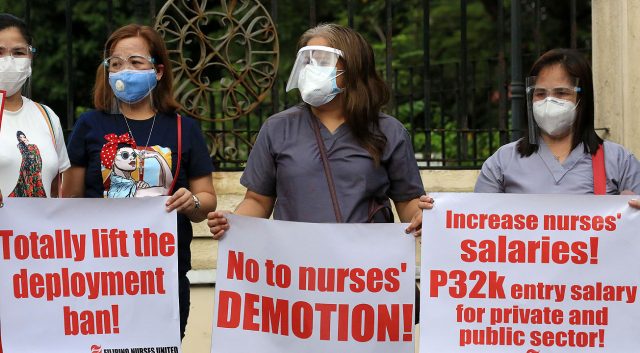
Review of training, licensure systems needed to plug nurse shortage in the PHL

PHILIPPINE STAR/EDD GUMBAN

A REASSESSMENT of the training scheme and licensure exams is needed to plug the Philippinesshortage of nurses, a lawmaker said on Monday. 

House Senior Minority Leader and Northern Samar Rep. Paul R. Daza said addressing these two factors should be part of a system overhaulto encourage nurses, who are in high demand abroad, to stay in the country.  

Its time for comprehensive solutions, including reforms in the licensure system, if we want to solve our shortage of nurses. Of course, its an economic issue salaries abroad are definitely higher but our nurses will stay for the right reasons, he said in a statement.   

Mr. Daza said that according to the Professional Regulation Commission (PRC), the average passing rate for the licensure exam for nurses from 2017 to 2022 was only about half or 54.84%.  

Results of last years Nurse Licensure Examination, however, were higher than the five-year average at 74.40%. 

Nonetheless, the solon said the passing rate shows a glaring disparity in how nursing schools train future nurses and what the health sector requires — or it could be that even the examination system must be revisited.”  

We need to increase [the] passing rate and find alternative ways of licensing,he said.  

The Commission on Higher Education (CHED) last week proposed a one-year certification program in its nursing curriculum to allow nursing students to start working early.  

Mr. Daza called on CHED, the PRC and its Board of Nursing to review the curriculum, including the high cost of completing a degree as well as flaws in the licensure framework with its complicated, almost archaicregulations.”  

The solutions should be all-encompassing. For one, nurses will prefer staying here in the Philippines with the right motivations, outside of higher salaries,Mr. Daza said.  

Data released by the Department of Health in September 2022 show the country has a shortage of about 106,000 nurses for both public and private medical facilities.   

The Philippine government has set a cap of 7,000 annually on the deployment of healthcare workers, which include nurses, nursing aides, and nurse assistants. The limit does not cover deployment to countries given exemption by the government such as Germany and the United Kingdom.  

Before the Houses adjournment on March 24, Mr. Daza suggested alternative licensure routes for various professions, like apprenticeship programs, to give non-passers a chance to work in their respective fields. Beatriz Marie D. Cruz 

ADVERTISEMENT
ADVERTISEMENT