Home Blog Page 5046

Asia better placed than developed economies, Morgan Stanley says

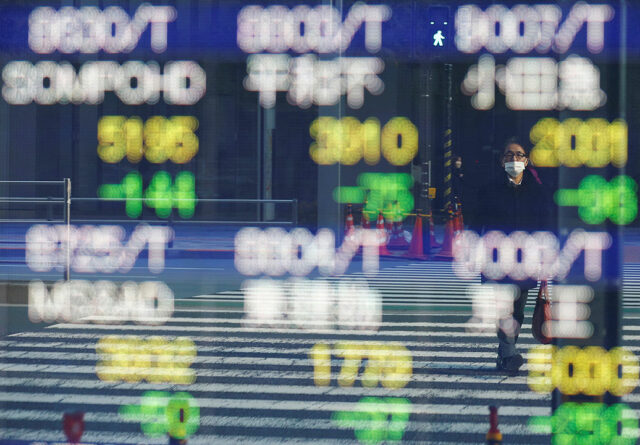
A man wearing a protective mask is reflected on an electronic board displaying various companies’ stock prices outside a brokerage in Tokyo, Japan, Feb. 22, 2022. — REUTERS/KIM KYUNG-HOON

ASIAN economies are in a better position than their developed-world counterparts to absorb shocks from a banking crisis that has roiled global financial markets, according to analysts at Morgan Stanley.

“We saw a number of factors which would keep Asia’s domestic demand robust, hence helping in its growth outperformance,” analysts led by Chetan Ahya wrote in a research note. They highlighted strong liquidity coverage ratios at Asian banks and “relatively stable” debt—to-GDP (gross domestic product) ratios. On top of that, monetary policy is not as restrictive yet as it is in the US, they said. As a result, “the downside risk to Asia’s growth will be more muted.”

Morgan Stanley does expect some tightening in lending standards to occur in Asia in response to US bank stress, though “the magnitude and persistence are likely to be less intense than what is likely to transpire in the US.”

Whether Asia’s growth can outperform the developed world will depend on how the US economy evolves, they said, laying out two potential scenarios:

A deep slowdown or mild recession in the US: Growth impact to Asia will likely be manageable

US hard landing: Asia’s growth will be weighed down but the net impact will be less than in developed markets and the region will recover faster than the US and Europe.

Policymakers are racing to ease growth strains and a loss of confidence in the global financial system after the collapse of Silicon Valley Bank and as UBS Group AG agreed to buy Credit Suisse Group AG in a government-brokered deal.

Over the weekend, the Federal Reserve and five other central banks announced coordinated action to boost liquidity in US dollar swap arrangements. — Bloomberg

N. Korea’s Kim oversees simulated nuclear counterattack vs US

KREMLIN.RU/EVENTS/PRESIDENT/NEWS/60363/PHOTOS-COMMONS.WIKIMEDIA.ORG

SEOUL — North Korean leader Kim Jong Un has overseen drills simulating a nuclear counterattack against the US and South Korea in a warning to the allies who are scaling up their joint military exercises, state media KCNA said on Monday.

The North’s drills involved a short-range missile launch but – unusually — the missile flew from a buried silo, which analysts say would help improve speed and stability in future tests of intercontinental ballistic missiles (ICBM).

KCNA said the exercises on Saturday and Sunday were designed to boost the country’s “war deterrence and nuclear counterattack capability,” accusing Washington and Seoul of making an “explicit attempt to unleash a war” against it.

“The drill also aimed to demonstrate our tougher will to make an actual war response and send a stronger warning to the enemy who expand their war drills for aggression,” KCNA said.

In the exercises, a ballistic missile equipped with a mock nuclear warhead flew 800 km (497 miles) before hitting a target under the scenario of a tactical nuclear attack, KCNA said.

KCNA photos showed Mr. Kim attended the test, again with his young daughter, as flames roared from the soaring missile before it hit the target.

Analysts said the photos suggested the launch involved a KN-23 short-range ballistic missile (SRBM), but unlike past tests, the engine exhaust appeared to be vented either side at the moment of liftoff, which could mean that a silo was used.

“Until now, North Korea has preferred mobile launchers for everything from SRBMs to even huge ICBMs, but given its poor road and system conditions, it was difficult to guarantee the stability of the missile during actual operations,” said Yang Uk, a fellow at the Asan Institute for Policy Studies in Seoul. “The latest launch might possibly serve as a test for future launches of larger missiles like the Hwasong-17 ICBM in a silo.”

South Korea’s defense ministry spokesman said the North is making significant technological advances in its nuclear programme but did not elaborate.

‘NUCLEAR WAR DETERRENCE’
Mr. Kim said the exercises improved the military’s war capability and urged the military to stand ready for any “immediate and overwhelming nuclear counterattack anytime.”

“The present situation, in which the enemies are getting ever more pronounced in their moves for aggression against the DPRK, urgently requires the DPRK to bolster up its nuclear war deterrence exponentially,” KCNA quoted him as saying. Mr. Kim was using the acronym of his country’s official name, the Democratic People’s Republic of Korea (DPRK).

“The nuclear force of the DPRK will strongly deter, control and manage the enemy’s reckless moves and provocations with its high war readiness, and carry out its important mission without hesitation in case of any unwanted situation,” he added.

South Korea and Japan reported a launch of a North Korean short-range ballistic missile off the east coast on Sunday, the latest in a series of missile tests in recent weeks.

North Korea has reacted furiously to South Korea-US combined military drills, calling them a rehearsal for invasion against it.

The allies have been carrying out exercises this month, including air and sea drills on Sunday involving US B-1B bombers.

The US and South Korea navies and marine corps are set to kick off their first large-scale Ssangyong amphibious landing exercises in five years on Monday for a two-week run until April 3.

Last month, the two countries staged tabletop exercises simulating North Korea’s nuclear attack amid South Korean President Yoon Suk Yeol’s push for more confidence in US extended deterrence — its military capability, especially nuclear forces, to deter attacks on its allies.

In another dispatch, KCNA said more than 1.4 million North Koreans have volunteered to join or re-enlist in the military to fight against Seoul and Washington, up from about 800,000 reported by a state newspaper just two days before. — Reuters

Vaccine makers prep bird flu shot for humans ‘just in case’

RAGHAVENDRA V KONKATHI-UNSPLASH

LONDON — Some of the world’s leading makers of flu vaccines say they could make hundreds of millions of bird flu shots for humans within months if a new strain of avian influenza ever jumps across the species divide.

One current outbreak of avian flu known as H5N1 clade 2.3.4.4b has killed record numbers of birds and infected mammals. Human cases, however, remain very rare, and global health officials have said the risk of transmission between humans is still low.

Executives at three vaccine manufacturers — GSK Moderna, Inc. and CSL Seqirus, owned by CSL Ltd. — told Reuters they are already developing or about to test sample human vaccines that better match the circulating subtype, as a precautionary measure against a future pandemic.

Others, like Sanofi, said they “stand ready” to begin production if needed, with existing H5N1 vaccine strains in stock.

There has also been a push among companies to develop a bird flu vaccine for poultry, a market potentially far larger than that for humans.

Less reassuring, however, is that most of the potential human doses are earmarked for wealthy countries in long-standing preparedness contracts, global health experts and the companies said.

Many countries’ pandemic plans say flu shots should go first to the most vulnerable while supply is limited. But during COVID-19, many vaccine-rich countries inoculated large proportions of their populations before considering sharing doses.

“We could potentially have a much worse problem with vaccine hoarding and vaccine nationalism in a flu outbreak than we saw with COVID,” said Dr. Richard Hatchett, chief executive of the Coalition for Epidemic Preparedness Innovations (CEPI), which helps fund vaccine research.

An international framework for pandemic flu allocates 10% of global supply for the World Health Organization (WHO) to share with low- and middle-income countries. By contrast, the WHO is seeking guarantees of 20% global supply for other types of pandemic in the wake of COVID.

The United Nations agency said it has signed legally binding agreements with 14 manufacturers for 10% of their pandemic flu vaccine “as it comes off the production line”, in a mix of donated doses and doses to be bought by the agency at an affordable price. The agreements include six of the largest seasonal flu manufacturers, such as GSK, Sanofi and CSL Seqirus, the WHO said.

WHO did not comment on the potential for vaccine hoarding in a flu pandemic but said mechanisms were being developed “so that countries can work together — not in competition with each other” to respond to such a crisis. It said it was “fully confident” manufacturers and member states would meet their obligations.

NEW APPROACHES
In a pandemic, vaccine manufacturers would shift production of seasonal flu vaccines and instead make shots tailored to the new outbreak when needed. They already have the capacity to make hundreds of millions of doses.

Many of the potential pandemic shots are pre-approved by regulators, based on data from human trials showing the vaccines are safe and prompt an immune response, a process already used with seasonal flu vaccines. This means they might not require further human trials, even if they have to be tweaked to better match whichever strain does jump to humans. Data on how well the vaccines actually protect against infection would be gathered in real-time.

In all, the WHO said there are close to 20 licensed vaccines against the broader H5 strain of flu. Existing antiviral treatments for people already infected will also help mitigate the impact.

At the same time, moving to large-scale production of a more targeted shot could take months, the manufacturers said. Some potential shots use a traditional method, growing the virus used in the vaccines in chicken eggs over four to six months.

“Creating the first dose is the easiest,” said Raja Rajaram, head of global medical strategy at CSL Seqirus. “The hardest is manufacturing in large quantities.”

Experts have long advocated for new approaches in developing vaccines, both for seasonal and pandemic flu. COVID proved the potential of mRNA technology to adapt more quickly to changing viruses because the vaccines use genetic information from the pathogen, rather than having to grow the virus itself.

Moderna’s mRNA vaccine research actually began with pandemic flu, and was modified for COVID, said Raffael Nachbagauer, executive director of infectious diseases at Moderna.

The company plans to launch a small human trial of an mRNA pandemic flu vaccine tailored to the new avian influenza subtype in the first half of 2023, he said, adding Moderna could respond “very quickly” in an outbreak scenario. The results will be closely watched, as the data on Moderna’s seasonal flu candidate was mixed.

Mr. Nachbagauer said the company was mindful of the equity issue needing to be addressed but has no contracts yet.

“It would be premature to sign anything or commit to anything that we can’t actually deliver on as of today,” he said. — Reuters

More PHL companies seeking productivity, customer experience management tools — Zoho

BW FILE PHOTO

Productivity and customer experience management tools are the most sought-after tools among companies in the Philippines, with businesses of all sizes seeking to streamline processes for both employees and customers, according to multinational technology company Zoho Corp.

“We’ve found that digital platforms have increased productivity by 30% when implemented right,” said Gibu Mathew, vice president and general manager of Zoho Corp. Asia Pacific, in a virtual interview with BusinessWorld.

“It’s not about quantifiable revenue numbers. Digitalization allows you to help your employees to be more effective, and improve the experience of customers. That kind of benefit is the biggest benefit,” he added.

Though there’s already been substantial growth of businesses using Zoho’s tools in the Philippines over the years, there are still many that must adapt and future-proof.

Mr. Mathew explained that a major challenge today is the lack of integration between tools, with companies not streamlining and utilizing what they have.

“You need to have an open culture. It’s not just about having these digital tools, but the cultural readjustment within an organization to enable those benefits to fully seep into the organization,” he said.

Most notably, customer experience tools have become all the more important in this day and age, with customers visiting a company’s various channels at different stages — whether they’re learning about the company products, seeking to purchase, or just browsing.

Industries that gain much from productivity and customer experience tools are construction, information technology-business process management, health, e-commerce, manufacturing, and design.

The cost of human error and of slow decision-making can also be reduced with productivity tools, according to Mr. Mathew.

“That in itself is a huge value. How much more effective can your organization become because of less errors and faster decision making? We avoid that loss of opportunity,” he said. — Brontë H. Lacsamana

[B-SIDE Podcast] Making digital platforms accessible for PWDs

Follow us on Spotify BusinessWorld B-Side

Many digital platforms today lack inclusive features, such as live captioning, screen reader access, and contrast themes, which would benefit persons with disabilities (PWDs).

In this B-Side episode, Pauline B. Malabanan and Hazel Joy Borja from the Leonard Cheshire Disability Philippines Foundation, Inc., who respectively serve as an administration and human resources officer and executive director and programs manager, discuss with BusinessWorld reporter Justine Irish D. Tabile the need to ensure that digital platforms are accessible for persons with disabilities.

“The COVID-19 pandemic accelerated the challenges faced by persons with disabilities and the socio-economic impacts are really massive,” Ms. Borja said.

“Most of the digital platforms, especially during the height of COVID-19 pandemic, were used mainly by the mass population, but the accessibility features of these digital platforms make it challenging for persons with disabilities for them to access these online platforms,” Ms. Malabanan said.

Ms. Malabanan also emphasized the importance of providing capacity building within the community of individuals with disabilities, so they can learn how to use these digital platforms and increase their participation.

“If there’s an increased awareness, there will be an increased participation for persons with disabilities, especially right now that most of our processes are being digitalized. it’s very important that no one will be left behind,” she said.

Persons with disabilities continue to advocate for an inclusive world that provides equal opportunities to ensure their meaningful participation.

Produced by Joseph Emmanuel L. Garcia, Earl R. Lagundino, and Patricia B. Mirasol

Follow us on Spotify BusinessWorld B-Side

CHERY showcases the game-changing Tiggo 8 PRO e+ Plug-in Hybrid Electric Vehicle (PHEV) at MIAS 2023

In its bid to redefine high-value mobility in the electrified age, CHERY Auto Philippines/United Asia Automotive Group Inc. (UAAGI) is taking the wraps off its latest flagship model—one that will focus on the fast-growing segment of buyers who appreciate value but desire more luxury and premium features in their vehicles.

This is the new CHERY Tiggo 8 PRO e+ Plug-in Hybrid Electric Vehicle (PHEV), which will be formally unveiled at the Manila International Auto Show (MIAS) running from April 13-16 at the World Trade Center in Pasay City.

“We are proud to announce our latest game-changing flagship in the new CHERY Tiggo 8 PRO e+. Now with Advanced Safety Suites and new creature comfort features, we expect it to raise the bar in what Filipinos can expect to enjoy in a 7-seater PHEV,” says CHERY Auto Philippines/UAAGI President Erroll Dueñas.

“No exaggeration, it has all the features and performance of a German-made luxury SUV—but minus the luxury car price tag—plus it’s a plug-in hybrid!” Dueñas exclaimed.

Phenomenal fuel efficiency and performance are courtesy of a 1.5-liter turbocharged 4-cylinder Euro V-compliant petrol engine working hand in hand with powerful twin electric motors and a state-of-the-art 19.27 kWh hybrid battery, the powertrain coupled to a special hybrid gearbox. The Tiggo 8 PRO e+ sets new benchmarks in world-class fuel-efficient hybrid motoring (as little as 1 liter of fuel consumed in up to 100 kilometers of driving).

The petrol engine and electric motor produce a combined 320 hp and a stunning 545 Nm of torque, allowing the Tiggo 8 PRO e+ to accelerate from 0 to 100 km/h in just under 5 seconds. It can be driven in pure electric vehicle mode with a driving range of up to 95 kilometers, which is ideal for daily city driving, and takes as short as 3 hours charging time. It is also exempted from the number-coding scheme and saves you from having range anxiety when you use the Hybrid Electric Vehicle mode during long out-of-town drives.

The Tiggo 8 PRO e+ takes all the tech goodies from the current Tiggo 8 PRO PHEV model and adds four new key features: Intelligent Voice Command, Smart Power Tailgate, Ventilated Front Seats, and Wireless Mobile Charger.

Moreover, the new Tiggo 8 PRO e+ boasts of cutting-edge Advanced Driver Assistance System (ADAS) with 12 functions for unparalleled safety, namely: Blind Spot Detection, Autonomous Emergency Braking, Door Opening Warning, Forward Collision Warning, Adaptive Cruise Control, Lane Keeping Assist, Rear Cross Traffic Alert, Traffic Jam Assist, Integrated Cruise Assist, Intelligent High-Beam Control, Lane Departure Warning, and Traffic Sign Recognition.

Over and above the 12 ADAS features is the Tiggo 8 PRO e+’s extensive suite of safety features including Anti-lock Braking System, Electronic Brakeforce Distribution, Electronic Stability Program, Traction Control System, Hill Assist Control, Hill Descent Control, Tire Pressure Monitoring System, and ISOFIX child-seat tethers, among many others. The Tiggo 8 PRO PHEV e+ also has a Brake Override System, which automatically overrides the throttle when the gas and brake pedals are accidentally depressed at the same time.

The Tiggo 8 PRO e+’s finely crafted, leather-covered cabin reflects the same upscale style and premium build quality and features expressed by the elegant European-inspired exterior. A luxurious soft-touch dashboard and classy diamond stitching on the seats are reminiscent of those found in British luxury cars, while an expansive Apple CarPlay and Android Auto-enabled 12.3-inch Sony infotainment system (with 8 speakers and 3 USB ports) and a fully digital 7-inch instrument cluster elevate CHERY’s flagship to the top levels of infotainment and connectivity.

Facing the driver is a plush leather steering wheel, which has a flat bottom to maximize legroom as well as multiple buttons and switches to control infotainment functions and cruise control. 6-way power-adjustable front seats (with the aforementioned ventilation) give supreme comfort on long drives. Programmable multi-color ambient lighting enhances the mood in the cabin while the panoramic power sunroof allows a breathtaking view of the sky and the stars. There is a very high-tech-looking (but very easy to use) digital touch panel to control the AC system, further underscoring the luxury car feel. Other premium Tiggo 8 PRO e+ features include a push-button electronic parking brake and a rear camera with front and rear proximity sensors.

The new CHERY Tiggo 8 PRO e+ is even more irresistible with the brand’s industry-leading CHERY Premium Preserv consisting of a 7-year engine warranty, 7-year general bumper-to-bumper warranty, 3-year FREE preventive maintenance service (PMS), and 3-year FREE roadside assistance.

The new Tiggo 8 PRO e+ has a retail price of PHP2,698,000. Visit the CHERY booth at the MIAS to take a closer look at the new CHERY flagship, or even experience it for a test drive.

For more info, follow Chery Auto Philippines on social media: Chery Auto Philippines (Facebook) and @cheryautophilippines (Instagram). You may also call the 24/7 Chery Auto Philippines hotline at (0917) 552 4379 or email chery@uaagi.com for inquiries.


Spotlight is BusinessWorld’s sponsored section that allows advertisers to amplify their brand and connect with BusinessWorld’s audience by enabling them to publish their stories directly on the BusinessWorld Web site. For more information, send an email to online@bworldonline.com.

Join us on Viber at https://bit.ly/3hv6bLA to get more updates and subscribe to BusinessWorld’s titles and get exclusive content through www.bworld-x.com.


Big money captivated by banking drama as investors brace for more turmoil

STOCK PHOTO | Image by ❄️♡💛♡❄️ Julita ❄️♡💛♡❄️ from Pixabay

 – Hedge funds managers and other large investors believe it is far too soon to call an all-clear on turmoil in the global financial sector even after more than a week of financial lifelines, central bank assurances and a massive banking rescue deal.

In the past two weeks, two US banks have collapsed, America’s biggest lenders agreed to deposit $30 billion in another ailing firm, First Republic Bank, Credit Suisse Group needed a lifeline and at the end of a frenetic weekend agreed to be taken over by UBS.

Michael A. Rosen, chief investment officer of Santa Monica-based adviser Angeles Investments, said the UBS-Credit Suisse deal eliminated one potential source of instability, but fundamental problems in the banking system remained, mainly tight monetary policy.

“So maybe one hole in the wall has been plugged, but the water’s rising,” he said.

One hedge fund manager described trades in the financial sector as being “all over the map”, with nobody agreeing on anything.

Some breathed a sigh of relief that a competitor stepped in with a rescue offer for Credit Suisse. Others worried that the $3.2 billion UBS will pay is far less than the $9.5 billion Credit Suisse was valued at on Friday, and one investor said the market may not consider this to be a positive.

Many of the roughly one dozen managers contacted on Sunday asked not to be identified because their firms prohibit them from discussing their trades with the media, or they did not want to make their views and positions public.

Others tweeted throughout the day.

Daniel Loeb, chief investment officer of U.S. hedge fund firm Third Point LLC, wrote on Sunday morning that initial news of the UBS offer for Credit Suisse would be “positive for financial system as it preserves the capital structure.”

Later, short seller Jim Chanos tweeted his shock that $17 billion of Credit Suisse bonds would be wiped out, asking “What are the Swiss doing here…?!”

Chanos and Loeb did not respond to emails seeking further comment.

There was also little agreement on how investors would be positioning themselves in smaller US banks, including First Republic.

First Republic’s stock price tumbled 33% on Friday, one day after a handful of the country’s largest banks, including JPMorgan Chase, organized a $30 billion rescue package that was supported by the Federal Reserve and US Treasury.

On Sunday, credit rating agency S&P Global downgraded First Republic’s ratings for the second time in less than a week, lowering its sovereign credit ratings to “B+” from “BB+”. S&P maintained its outlook at “Creditwatch Negative.”

“The situation is not resolving easily,” said one investor who allocates wealthy clients’ capital with hedge funds.

Several fund managers said it felt dangerous to bet on further declines in light of the rescue package, noting that retail investors could band together and support banks like First Republic that were seen as solid enterprises. “This name could easily go meme stock, so there is a fear of being short here,” one manager said.

Investors‘ short interest in First Republic was at $190 million, or about 3% of its float, according to data tweeted on Friday by research firm S3 Partners, which said short-sellers had made mark-to-market profits of $537 million on the trade this year and $62 million on Friday alone.

Several investors also said they expect federal regulators to impose new rules for regional banks by tightening lending standards or forcing them to raise capital. With more regulatory pressure aheadsome said that buying stock in these banks after steep price declines might be a tougher call, because their lending activity could shrink.

Investor Ricky Sandler, who runs hedge fund Eminence Capital LP, speculated on Twitter on Friday that an investment bank might be interested in First Republic, which caters to wealthy clients.

Sandler did not respond to a request for additional comment on Sunday. A First Republic spokesman said the bank “is well positioned to manage short-term deposit activity,” given last week’s deposit infusion, as well as cash on hand.

The KBW Bank Index, a proxy for banks, tumbled 11.12% last week, signaling that further turmoil could lie ahead.

Some investors, including a large mutual fund group that also runs a hedge fund, said prospects for banks had gotten progressively worse in recent months given the economic outlook.

“As we thought the country would drop into recession last year, we curbed our banking exposure,” said a senior executive at that group. “That feels like a good call right now.” – Reuters


Tips on choosing the right credit card for frequent travelers

The right credit card can spell the difference between a good trip and a great one

Frequent travelers know that every penny counts when it comes to maximizing travel rewards. Choosing the right credit card can make all the difference between a good trip and a great one. With so many credit cards available, it can be overwhelming to decide which one works for you. If you’re a frequent traveler, here are tips on choosing the right credit card.

  1. Look for a credit card with airline partnerships. Using a credit card that is affiliated with an airline is one of the best ways to quickly earn points or miles. Every time you use the card, these airline and credit card partnerships provide more opportunities to earn miles. Some even include lounge access, free comprehensive travel insurance, and other perks that will elevate your travel experience.
  2. Choose a card with the lowest foreign transaction fees. When you make purchases in a foreign country, you may incur an additional fee each time you use your card. Choosing a credit card with the lowest foreign currency conversion fee is one of the best ways to indulge in guilt-free shopping without the high foreign transaction (FX) fees while traveling abroad.
  3. Look for the card packed with rewards. Some credit cards offer reward points for spending in specific categories such as online, dining, entertainment, or travel purchases. Maximize your earnings by using a card that offers great bonus rewards for spending in these categories.
  4. Consider sign-up bonuses. Many credit cards offer sign-up bonuses to new cardholders who meet a minimum spend requirement within a certain time frame upon credit card activation. These bonuses can be a great way to jumpstart your reward earnings, so you can reach your travel goals faster.

EastWest Singapore Airlines KrisFlyer Mastercard is positioned as the best-in-class airline co-brand card in the Philippines. It also offers numerous benefits and perks to cardholders.

The EastWest Singapore Airlines KrisFlyer Mastercard boasts a generous spend-to-miles conversion rate, with cardholders earning three times more miles when they spend on Singapore Airlines Group, e-commerce, and cross-border purchases. In addition, cardholders can earn up to 15,000 anniversary bonus miles each year.

You may also enjoy one of the lowest foreign currency conversion rates at 1.7 percent, up to four complimentary lounge accesses per year, and free comprehensive travel insurance and convenience insurance of up to P20 million for cardholders and their family members.

EastWest and Singapore Airlines KrisFlyer have renewed their partnership, which means more exciting deals and promotions for KrisFlyer members and EastWest customers. Apply for the EastWest Singapore Airlines KrisFlyer Mastercard now and receive up to 6,000 welcome bonus miles upon reaching the minimum accumulative retail spend requirement* within three months from card activation.

Simply apply via ESTA, the EastWest System Tech Assistant chatbot, at www.ewlend.com/cardSQ today or head to the nearest EastWest store.

Choosing the right credit card can make a big difference in the rewards you earn and the benefits you enjoy. By considering factors such as airline partnerships, annual fees, foreign transaction fees, bonus categories, and sign-up bonuses, you can find the perfect card to optimize your travel experience.

*For details on card features and benefits, please visit bit.ly/EWBSQKFPlatinumMC or bit.ly/EWBSQKFWorldMC. Terms and Conditions apply.


Spotlight is BusinessWorld’s sponsored section that allows advertisers to amplify their brand and connect with BusinessWorld’s audience by enabling them to publish their stories directly on the BusinessWorld Web site. For more information, send an email to online@bworldonline.com.

Join us on Viber at https://bit.ly/3hv6bLA to get more updates and subscribe to BusinessWorld’s titles and get exclusive content through www.bworld-x.com.

Diokno says BSP may opt to hike rates by 25 bps or keep unchanged

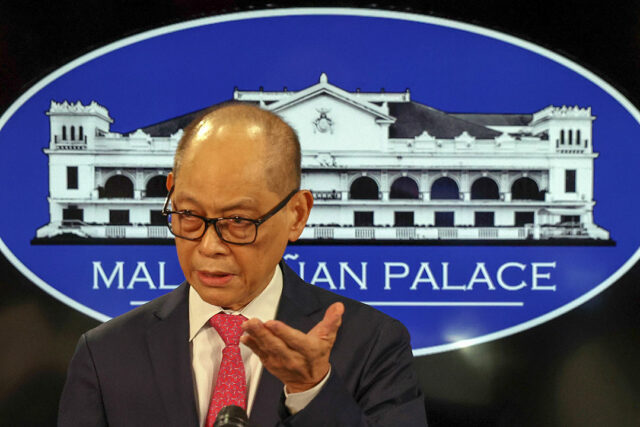
Finance Secretary Benjamin E. Diokno — PHILIPPINE STAR/KRIZ JOHN ROSALES

MANILA – Philippine Finance Secretary Benjamin Diokno said on Monday the central bank could decide to either hike the key interest rate by 25 basis points (bps) or keep policy settings unchanged at its next meeting on Thursday amid uncertainties.

Diokno, who also sits in the central bank’s policy-making monetary board, expressed optimism that inflation will ease to around 4% towards end of the third quarter.

“The option now is not to hike or to hike by 25 bps,” Diokno told a forum organized by foreign correspondents.

Philippine annual inflation eased slightly to 8.6% in February from 8.7% in January, slowing for the first time in six months on lower transport and food prices, but remains well outside the 2%-4% target band for the year.

The Bangko Sentral ng Pilipinas has raised rates eight times for a total of 400 basis points since last year to curb inflation, bringing the overnight reverse repurchase facility rate to 6.0%, the highest since 2007.

Diokno, meanwhile, said he would not be surprised if the central bank cut banks’ reserve requirement ratio to a single-digit level from the current 12% before year end. — Reuters

China Evergrande to unveil debt restructure details on Wednesday

REUTERS/Aly Song/File Photo

 – Embattled developer China Evergrande Group plans to publish an offshore debt restructuring term sheet on Wednesday, aiming to sign an agreement with creditors by month-end, it told a Hong Kong court.

A representative of a key offshore bondholder group said after the court hearing that it had agreed on Evergrande‘s proposed restructuring terms, a vital move paving the way for the developer to restructure offshore debt of $22.7 billion.

With more than $300 billion in liabilities, including the offshore debt, Evergrande began one of China‘s biggest debt restructuring processes early last year.

At Monday’s hearing, the firm said it expected a deal to be signed by the general creditors by the end of March. The restructuring is to take effect from Oct 1.

As Evergrande seeks agreement of general creditors for the restructuring, the court set July 31 for the next hearing of a winding-up petition.

Once China‘s top-selling developer, Evergrande has been at the center of a property debt crisis in which multiple developers defaulted on offshore debt obligations over the past few years, forcing many to enter into debt restructuring talks.

Evergrande has been trying to reach agreement with major offshore bondholders on terms including swapping part of its debt into equity in two listed units in Hong Kong, sources have told Reuters.

The two units are Evergrande Property Services Group and Evergrande New Energy Vehicle Group.

In a court hearing last November, Evergrande said it aimed to win creditors’ approval for its debt restructuring proposals by the end of February. – Reuters

Putin to welcome Xi to Moscow under shadow of Ukraine war

Russian President Vladimir Putin will expect Chinese President Xi Jinping to show solidarity against western hegemony when he arrives in Moscow on Monday, while Xi will present China as a global peacemaker intent on brokering an end to the Ukraine war.

Mr. Xi will be the first world leader to shake Mr. Putin‘s hand since the International Criminal Court (ICC) issued an arrest warrant for the Russian leader on Friday over the deportation of Ukrainian children to Russia since the start of the war. Moscow rejects the charge. Read full story

Russia will present Mr. Xi‘s trip – his first since securing an unprecedented third term this month – as evidence that it has a powerful friend prepared to stand with it against a hostile West that it says is trying in vain to isolate and defeat it.

For Mr. Xi the visit will be a diplomatic tightrope, with China releasing a 12-point proposal to solve the Ukraine crisis, but at the same time strengthening ties with its closest ally. Read full story

In an article published at the start of his visit to Moscow, Mr. Xi said Beijing’s proposal, which was released last month, reflects global views and seeks to neutralize consequences, but acknowledged that the solutions are not easy.

“The document serves as a constructive factor in neutralizing the consequences of the crisis and promoting a political settlement,” Mr. Xi wrote in an article in Rossiiskaya Gazeta, a daily published by the Russian government, according to Reuters’ translation from Russian.

“Complex problems do not have simple solutions,” said Mr. Xi.

Ukraine and its western backers would be likely to dismiss any attempt to secure a ceasefire as little more than a ploy to buy Putin time to reinforce, and delay a widely expected Ukrainian counter-offensive.

And Ukrainian President Volodymyr Zelenskiy has previously made clear he will accept nothing short of Russia’s full withdrawal from Ukrainian territory.

China’s proposal contains only general statements and no concrete proposal on how to end the year-long war which has claimed tens of thousands of lives and forced millions to flee.

In an article for a Chinese newspaper, published on the Kremlin website late on Sunday, Mr. Putin said he had high hopes for the visit by his “good old friend” Mr. Xi, with whom he signed a “no limits” strategic partnership last year. He also welcomed China’s willingness to mediate in the conflict.

“We are grateful for the balanced line of (China) in connection with the events taking place in Ukraine, for understanding their background and true causes. We welcome China’s willingness to play a constructive role in resolving the crisis,” Mr. Putin said.

The United States and its Western allies are deeply skeptical of China’s motives, noting Beijing has refused to condemn Russia and provided it with an economic lifeline as other countries heap sanctions on Moscow.

The United States and NATO have recently accused China of considering supplying arms to Russia and warned Beijing against such a move. China has dismissed the accusations.


WAR CRIMES, ARTILLERY SHELLS

Justice ministers from around the world will meet in London on Monday to discuss scaling up support for the International Criminal Court after it issued an arrest warrant for Putin.

“We are gathering in London today united by one cause: to hold war criminals to account for the atrocities committed in Ukraine during this unjust, unprovoked and unlawful invasion,” British Deputy Prime Minister Dominic Raab said on Sunday.

Several European Union countries will sign an agreement on Monday in Brussels to buy 155 mm artillery shells for Ukraine, with the first orders possibly placed by the end of May.

Ukraine has identified the supply of 155 mm shells as a critical need, with both sides firing thousands of artillery rounds every day.

In Ukraine, fierce fighting continued in the eastern town of Bakhmut with each side launching counter offensives. Ukrainian forces have held out in Bakhmut since last summer in the longest and bloodiest battle of the year-long war.

“There is no way of knowing of the outcome at this time…The front line is dynamic in nature,” Ukrainian military analyst Oleh Zhdanov said in comments on YouTube.

Russia’s Wagner mercenary group, which is spearheading the assault on Bakhmut and has suffered heavy losses, plans to recruit approximately 30,000 new fighters by the middle of May, its founder Yevgeny Prigozhin said on Saturday.

In January, the United States assessed that Wagner had about 50,000 fighters in Ukraine, including 40,000 convicts Prigozhin had recruited from Russian prisons with a promise of a free pardon if they survived six months.

Ukrainian officials have claimed that some 30,000 of Wagner’s fighters have deserted or been killed or wounded, a figure that could not be independently verified. – Reuters

Philippine peso’s rally faces test from widening trade deficit

BW FILE PHOTO

The Philippine peso’s advance fueled by bets on further rate hikes by the nation’s central bank could face headwinds from a widening trade deficit.

The peso, which has risen 1.9% this year to become the top performer in Asia, is forecast to be at 54.80 per dollar by the end of June, near the level where it’s trading at now, according to the median estimate in a Bloomberg survey.

The currency is under pressure from outflows after a drop in exports pushed the Philippine trade shortfall to the widest in five months. That’s even as the peso is supported by expectations Bangko Sentral ng Pilipinas will deliver another rate hike this week as it remains one of the few monetary authorities in Asia to retain a tightening bias.

“The peso will soon lag its regional peers,” said Eugenia Victorino, head of Asia strategy at Skandinaviska Enskilda Banken AB in Singapore. “The trade deficit will remain huge as the global recession cuts into exports. That means there is still more dollar outflow and it will definitely put pressure on the currency.”

Survey forecasts were mixed with Standard Chartered Plc being the most bearish with expectations for the currency to depreciate to 57 per dollar while ING Groep NV predicted the currency will rally to 53.3 to the greenback.

The Philippine central bank forecasts a current-account deficit of $17.1 billion this year, which is 4% of gross domestic product, reflecting an elevated trade shortfall.

HIGHER CARRY

Currency traders will be focused on the BSP as all but one of the 18 analysts surveyed by Bloomberg predict the central bank will lift its key rate by 25 basis points on Thursday after it was tripled in the past year to 6%. Those rate increases are retaining the yield premium of local bonds over US debt, even after the Federal Reserve’s 450 basis points of hikes since March 2022.

“The relatively higher carry allure could be one tailwind to fight any yield-driven dollar strengthening,” said Stephen Chiu, chief Asia FX and rates strategist at Bloomberg Intelligence in Hong Kong. “If the Fed ends up having to hike to a higher terminal rate, the peso may be added to a portfolio to boost carry.”

That’s likely to somewhat neutralize the risk for the peso from the Fed meeting this week as troubles in the US banking sector have muddied the outlook for central bank policy.

“There’s scope for the peso to remain strong, particularly as BSP is keen on maintaining a healthy interest-rate differential with the US to anchor the currency and inflation,” said Michael Ricafort, chief economist at Rizal Commercial Banking Corp. in Manila. “But with the rising uncertainty in the global environment, there will be swings along the way before the peso posts a convincing upward trend.” — Bloomberg