Home Blog Page 5035

Green Jacket

Don’t think for a moment that the appeal of the Masters has diminished because of the current conflict between the United States Professional Golfers Association (PGA) Tour and LIV Golf. In fact, there is every reason to argue that the lure and allure of the sport’s premier event have become even more pronounced. Given the exchange of lawsuits and the frosty sound bites members of either organization have issued, proceedings could — or, rather, are likely to — be laced with spice.

Indeed, there will be plenty of opportunities for protagonists of the PGA and LIV tours to rub elbows. From the Champions dinner to practice rounds to the actual competition, cursory greetings, snide remarks, icy glances, and outright staredowns are all on the table. Don’t believe the bevy of press releases underscoring that practitioners of the gentleman’s game can co-exist peacefully, even harmoniously. Friendships have already ended, insults hurled, and threats issued — with no end in sight.

If anything, the announcement last December by Augusta National Chairman Fred Ridley affirming the ability of LIV Golf stalwarts to tee off in the pride of Georgia highlighted the bad blood. “Regrettably, recent actions have divided men’s professional golf by diminishing the virtues of the game and the meaningful legacies of those who built it,” he said even as he pointed out the rationale behind the Club’s decision to be inclusive in its invitations. “Our focus is to honor the tradition of bringing together a preeminent field of golfers.”

The good news is that the golf itself will be golden, as has traditionally been the case. No matter the names on the marquee and how they feel about each other, the real star has always been the course itself. Regardless of circumstance, it will invariably deliver the goods. It’s why fans on site and on screen can’t seem to get enough of the action, and why they’re transfixed from the get-go, and especially on Sunday afternoon, with the Green Jacket on the line. LIV or no, the show goes on. And thrives.


Anthony L. Cuaycong has been writing Courtside since BusinessWorld introduced a Sports section in 1994. He is a consultant on strategic planning, oprerations and Human Resources management, corporate communications, and business development.

EO12: A game-changer in our drive for green development

ATHER-ENERGY-UNSPLASH

Like other green energy advocates and many in the motoring industry, our consumer advocacy group Bantay Konsyumer, Kalsada, at Kuryente (BK3) was heartened by President Bongbong Marcos’ signing of Executive Order No. 12 (EO 12) in January.

EO 12 mandates that tariffs on imported electric vehicles (e-vehicles) will be temporarily removed (import duties on e-vehicles used to range from 5% to 30%), while rates on parts and components will be reduced. Under the presidential order, e-vehicles such as cars, minibuses, vans, buses, trucks, and even bicycles, are all supposed to enjoy zero tariffs over a five-year period.

We find one problem with it, though: The tariff did not clearly or explicitly apply to hybrid electric vehicles and e-tricycles.

Everything from foreign exchange rates, manufacturing and shipping costs, and parts supplies affect the final pricing of electric vehicles like any other import. With the signing of the EO, a significant drop in the price of e-vehicles and their parts could be expected. This could have a very palpable ripple effect on many other items and services that could ultimately benefit all consumers.

From a broad development-oriented perspective, Malacañang’s order is truly noteworthy. It is premised on a concern for key issues that challenge the whole world today. The order explicitly mentions its concern over air pollution, people’s health, green energy, and even micro-mobility.

We in BK3 have argued that if we want to maximize the positive effects of the policy set under EO 12, its scope should be broadened to cover e-motorcycles and e-tricycles that are fast becoming the lead workhorses in the public transport sector and in the growing delivery services of burgeoning online app-enabled businesses.

TWO WHEELS
The government itself has estimated that as of 2022, there were about 47,866 unregistered motorcycles in the country. This is based on data from 2016 to 2020 as presented by the Land Transportation Office (LTO) at a Senate hearing last January.

In the LTO’s presentation at a hearing of the Senate Blue Ribbon Committee on the implementation of Republic Act No. 11235 or the Motorcycle Crime Prevention Act, the agency said that there was a reported total of 10,223,623 new motorcycle stock from 2016 to 2020. However, there were only 10,175,757 new registrations of motorcycles in the same period.

All things considered, there are about 7,328,116 registered motorcycles as of December 2020, which consist of 1,949,589 new units, and 5,378,527 units for renewal. This includes motorcycles with and without sidecars, and non-conventional units or those so-called three-wheeled vehicles, including electric ones. A majority of registered tricycles are being used as a mode for public transportation.

Given the proliferation of the ubiquitous tricycle, our country’s experience with the pandemic has shown us how indispensable motorcycles are for affordable point-to-point delivery and commuting across our archipelago.

THE GOOD AND THE BAD
On the positive side, these two-wheeled vehicles are work enablers for financially disadvantaged Filipino families, especially as a cheaper alternative to commuting to and from work or school and as a means for deliveries for various businesses.

The downside is that these two-stroke motorcycles are a significant contributor to air pollution. Of the 2.9 million registered vehicles in the National Capital Region, almost half (1.4 million) are motorcycles, contributing significantly to the air pollution in the metropolis.

There clearly is a need to push for the inclusion of two- and three-wheeled vehicles in the tax break for electric vehicles, as this can be an opportunity to shift consumers away from fossil fuels to a green alternative.

As originally framed, those who are given perks by EO 12 are vehicle owners from the AB socio-economic bracket. Perhaps unwittingly, EO12 discriminates against the great majority of working Filipinos who are only able to buy two- or three-wheeled vehicles. Only class A and B can afford four-wheeled vehicles.

Indeed, to borrow the words of another advocate, “why exempt only four-wheeled vehicles from the levying of importation taxes? Don’t we want to encourage more affordable mobility options for Filipinos? Why are electric cars then apparently favored over electric motorcycles or scooters in the EO?”

There is a need to make the order more financially inclusive. If the order’s coverage is expanded and thus boosting the utilization of two-wheeled motorcycles along with the rest of the electric vehicle industry, the policy can even help enhance the country’s employment rate.

Given the soaring price of gasoline, electric vehicles are becoming an even more attractive option for economically disadvantaged Filipinos.

SUCCESS STORIES
At the very least, we have seen some local success or best practice models in this regard in communities of Boracay and Naga.

As early as 2013 in Boracay, and in Naga in 2015, a local producer of e-motorcycles has been able to provide fleets of e-motorcycles that helped create green jobs for members of the pertinent communities, significantly boosting local employment while addressing the concern for the utilization of a green energy alternative that is even less costly compared to gasoline.

There is no reason to doubt that these success stories could be replicated. Coupled with a program to support the local industry and bold entrepreneurs and innovators to create and maintain e-vehicles, EO 12 could help unlock many development bottlenecks even in our most far-flung barangays. The Palace should expand the coverage of the EO now. It is a real game-changer.


Louie C. Montemar is a Professor of Sociology and Political Science and Fellow for Education of the Stratbase ADR Institute.


Nice and steady for OPEC means upheaval for markets

FREEPIK.COM

OPEC+ defends its surprise supply cut as being aimed at oil market “stability.” One can only imagine the glum faces as they realized they had instead teed-up an 8% price spike. Oh well, at least the extra money will offer some small consolation.

This is the second jolt from OPEC+ in the space of six months. Last October’s was done when oil was already above $90 a barrel and drew accusations of implicit meddling in US midterm elections. As it turned out, oil demand was softening and the supply cut merely cushioned a continuing decline in prices rather than ushering in a sustained rally.

The latest one may do the same — but the uncertainties and stakes are much higher.

On the one hand, this looks like short-squeezing 101. Speculative net length in crude oil futures collapsed in the wake of the failure of Silicon Valley Bank; indeed, I have argued that President Joseph R. Biden’s administration should have used the panic to make good on its plans to refill the Strategic Petroleum Reserve. In a way, OPEC+ has done the job instead and to a far greater degree, forcing money managers to cover their short positions.

Yet the big difference between today and last October is that we have had a banking crisis in between; one that seems to have quieted down a bit but remains a live concern. Central banks on a firm path to higher benchmark rates to defeat the post-pandemic inflationary surge were given reason to potentially take a breath, for fear of sparking further crises. Renewed strength in oil prices, one of the most visible setters of inflation expectations in the US via pump prices, complicates that balancing act. Average gasoline prices are 16% below where they were a year ago. But they have risen 9% so far this year and, all else equal, OPEC+ has at the very least weakened a helpful disinflationary force.

It is possible that, once again, OPEC+ sees weakness in demand that has eluded others in the oil market. Yet, if so, adding further price pressure may juice revenue in the near term only for it to weaken as consumers buckle down the line. Each cut also adds to spare capacity in the oil market. Core OPEC’s effective spare capacity had risen already from 2.4 million barrels a day last September to 3.3 million in February, according to figures from the International Energy Agency. If oil markets turn out to be weaker than the bullish expectations currently set for the second half of 2023, then that buffer will tend to reinforce bearish tendencies. And if prices instead surge, then we get back to the dilemma around inflation, financial fragility, and recession-facing central banks.

In short, OPEC+ is potentially playing with fire here. Given the timing of last year’s surprise, and the fact that oil had moved back toward $80 a barrel ahead of the latest one, it is clear that OPEC+ demands a price above that level. In addition, higher prices offer succor to Russia, Saudi Arabia’s OPEC+ partner engaged in a brutal war in Ukraine and an energy war with the West. That ongoing conflict exacerbates the pressures on what is a finely balanced economic outlook. For OPEC+, supply cuts now may add up to stability, just not necessarily of a kind others might recognize.

BLOOMBERG OPINION

Talent and excellence as frat hurdles

MARKUS SPISKE-UNSPLASH

I have no first-hand experience with fraternities and sororities. However, years ago, when I was working as a research fellow in a think tank with many alumni from the state university, I learned that those who did not join a fraternity at that university were called “barbarians.”

I thought this was ironic, since I was told by a friend whose only brother had died during a fraternity initiation that he had suffered too much physical abuse from what seemed to have been barbaric traditions. That case happened in the 1950s! And to this day, frat aspirants still die from these primitive initiation rites.

It is about time for universities to take creative and bold action. If school administrators and faculties use their intelligence and imagination, they should be able to think of ways to prevent these tragedies from happening to their students. There must be more effective ways besides just “banning.” Strict rules tend to be honored by adolescents more in the breach rather than in compliance. Even Congressional legislation has failed to prevent these meaningless deaths and to avoid the tragedy as well of young students going to prison for most of their lives.

The college years are a critical formative period that can determine the course of life and careers of young men and women. It is a great time to inspire the pursuit of excellence. Every human being is blessed with talent in something or other. Someone may be good at sports or martial arts, another in mathematics, another in cooking, and another in music, another in drawing or writing. These gifts are not necessarily made use of in the courses they are enrolled in. An economics major might be a classical guitarist. A medical student could be a martial arts practitioner. An engineering student might be a good singer. These talents can be enriched if the opportunity is provided.

Hobbyists like to hang around those who have similar interests. Fraternities and sororities could be specialists or generalists in areas of special interest. Initiations could be occasions for demonstrating constructive skills in something or other; no longer mere demonstrations of physical survival of barbaric tests. It seems sororities tend to initiate aspirants by ordering them to humiliate themselves rather than to commit violent acts. Hopeful members may be instructed to walk around in dresses turned inside out. Or to publicly propose to kiss a campus celebrity.

Senior frat or sorority members and alumni can continue to be panelists in demonstrations for acceptance of applicants. Outside experts can be invited to help enhance talents and skills. Artist frats could have icons such as National Artist Benedicto “BenCab” Cabrera as advisers. Musician frats could have pop composers like National Artist Ryan Cayabyab or classical violinists like Gilopez Kabayao as guest counselors.

The whole concept of fraternities and sororities should revolve around self-realization and the cultivation of talents amid the challenges of cooperation and competition. A guitarist whose skills are continuously demonstrated and enhanced in a fraternity can absorb a culture of excellence as a medical doctor, economist, lawyer, or whatever his career and profession will be. Our common attitude of low expectations in the pathetic standard of “puwede na” (that is good enough) can gradually fade away.

The university graduate can enter the world of reality equipped with cultivated talents as a person, and not just as a professional. The frat alumnus will be more of an educated person, rather than a gang member who survived barbaric tests of physical survival or humiliation.

Fraternities and sororities can be more than social clubs; they will be clubs for excellence in personal talents and avocations. Frat and sorority members will be more truly educated and fulfilled as human beings. Perhaps our college graduates can be dignified models in constructive competitiveness and cooperation within an ethos of self-fulfillment and excellence, rather than of humiliation and brute force.


Teresa S. Abesamis is a former professor at the Asian Institute of Management and Fellow of the Development Academy of the Philippines.

tsabesamis0114@yahoo.com

DoH says hospitals ready for heat-related emergencies

PHILIPPINE STAR/EDD GUMBAN

The Department of Health (DoH) on Tuesday said government hospitals are well-prepared to handle medical emergencies caused by extreme heat.

Laging handa ang ating mga ospital, whether Holy Week or not, para tugunan ang pangangailangan ng ating mga kababayan” (Whether Holy Week or not, our hospitals are ready to meet the healthcare needs of our countrymen),”  said Ma. Rosario S. Vergeire, officer-in-charge of the Health department, during a forum.

The department anticipates cases of heat exhaustion and heatstroke, she noted.

“Equipped ang ating mga ospital. Hindi kailangan ng specialized services para bigyang lunas ang ganitong mga insidenteng pangkalusugan (Our hospitals are equipped. Incidents such as heat exhaustion and heatstroke do not require specialized services),” she added.  

The Philippine Statistics Authority lumps all types of stroke into one aggregate number, so there is not any disaggregated number for heatstroke, according to Ms. Vergeire.  

The health emergency and management bureau, however, has incident reports of heat exhaustion, she said. These reports include 85 students from the national high school of Cabuyao in Laguna on March 23, and 33 individuals from four high schools in Valenzuela City on March 9.

Knowing the signs of heat exhaustion can prevent the condition from progressing to a heatstroke, according to experts. 

“The heat is really, really oppressive,” Ms. Vergeire said. 

Tag-init na po. Kailangan nating mag-ingat (It’s already summer. We need to be careful),” she noted. “Hindi po pinipili ang edad sa…heat exhaustion at heatstroke (People of all ages can experience heat exhaustion and heatstroke).” 

There are three heat-related syndromes: heat cramps, heat exhaustion, and heatstroke. Heat cramps occur during heavy exercise in hot environments; it can be relieved by cooling down, drinking an electrolyte-containing sports drink, and massaging the affected muscle group.  

Heat exhaustion, on the other hand, is a result of the body overheating because of exposure to high temperatures – usually coupled with high humidity – as well as strenuous physical activity. Its symptoms include heavy sweating, faintness, dizziness, nausea, and headache.  

“Heatstroke warrants immediate ER (emergency room) consult,” said Ramon B. Larrazabal, Jr., an internist. “With heat exhaustion, you can do some home measures like keep the person cool. Let them rest and drink up on fluids.”  

Heat exhaustion is all the symptoms of heatstroke but without the neurologic symptoms and body temperature of 41 degrees Celsius, he added.  

The neurologic symptoms make the condition more urgent.  

“A person with heatstroke will show signs of an altered mental status,” Mr. Larrazabal told BusinessWorld in an April 4 message on Twitter. “[They] will have neurologic symptoms such as agitation, convulsion, slurred speech, and seizures.”  

“If a patient experiences any of the symptoms above, they are advised to go to the ER for proper evaluation and further management,” he said. “This is to prevent a worse and irreversible outcome.” 

Mr. Larrazabal offered the following tips:

Take a break: Limit the amount of time spent outdoors, especially under direct exposure to the sunlight. Take regular breaks by stepping under a tree or a cool, shaded place for a few minutes.   

Bottoms up: Apply water-resistant sunscreen that’s at least SPF 15 and reapply every two hours. Drink plenty of water. Avoid caffeinated or alcoholic beverages.   

Dress to impress: Wear lightweight, light-colored clothes, preferably with breathable fabrics like cotton or synthetic ones that repel sweat. Accessorize with a wide-brimmed hat.   

Plan: Schedule outdoor and intense activities during the beginning or end of the day, when it’s cooler and there’s less sun.   

Put your best feet forward: We sweat it out most in our feet, so wear well-ventilated footwear like slippers or sandals. For more formal occasions, choose well-ventilated shoes with socks that repel perspiration. — Patricia B. Mirasol

Filipino-owned travel booking app aims to help boost local tourism

HAPPY Hotels, the first Filipino-owned travel booking app, was launched Friday with the goal of boosting Philippine tourism by supporting local hotels and travel companies.

Like competitors Agoda, Booking.com, and Airbnb, the Happy Hotels app allows travelers to book hotels, bed and breakfasts (BnBs), and dormitels all over the Philippines, the company said.

“The number one problem with these online travel agencies (OTAs) and hotel aggregators is they charge too much. They’re a foreign company but there’s no other option for local hotel partners,” Happy Hotels Chief Executive Officer Emmanuel Jason Lao said in an interview with BusinessWorld after the launch in Tagaytay.

“These companies charge 15-20% off the bat. Happy Hotels charges only 10% so there’s leeway for hotel partners’ savings,” he added.

The app is designed to cater to the diverse travel needs of both Filipino and foreign tourists, offering features like a “Near Me” section that shows the nearest accommodations available and a “Calendar of Events” section that shows upcoming festivals all over the country.

Mr. Lao said empowering local business owners comes first, especially given the struggles of the Philippine tourism industry coming from the pandemic.

“We don’t want people’s earnings to go abroad. We want to redistribute it here and support and give back to the community with our partner charities and with promos on the app,” he said.

Happy Hotels has already partnered with over 100 properties across a variety of popular destinations like Boracay, Siargao, Tagaytay, Metro Manila, and Cebu. It plans to acquire 500 hotels, dormitels, and BnBs annually to compete with existing aggregators.

For the charity component, the app will be donating 5-10% from each user’s booking fee proceeds to a partner non-profit institution, available in the charity options menu.

On the challenge of taking on the larger competitors, Mr. Lao said: “Our advantage is that we’re here in the Philippines and we’re Filipinos, so we know the heart of the Filipinos. We want this to be a premier app for Philippine tourism and we will compete with global players.”

Happy Hotels app can now be downloaded on the App Store and Google Play Store. Users can enjoy the promos: Vue Tagaytay 50% off, Asiatel Pasay 20% off, and Skytel Puerto Princesa 25% off. — Brontë H. Lacsamana

China’s reopening brightens developing Asia’s 2023 growth outlook 

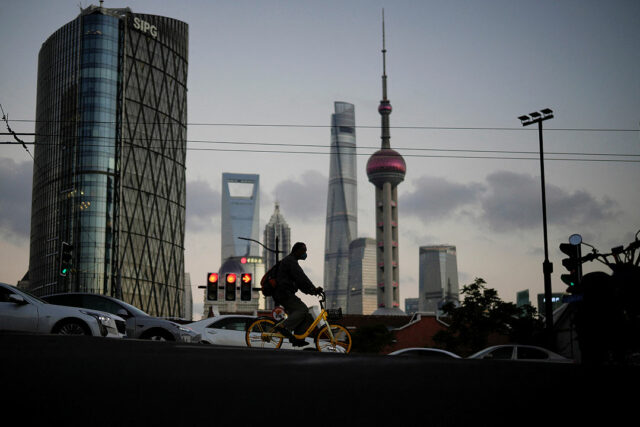
A man rides a bike on a street in Shanghai, China, Oct. 13, 2022. — REUTERS

MANILA — Developing Asia will grow faster than previously thought this year, underpinned by a stronger-than-projected rebound in China, but risks from global banking turmoil could weigh on the outlook, the Asian Development Bank (ADB) said on Tuesday.

Developing Asia, which groups together 46 economies in the Asia-Pacific, is forecast to grow 4.8% in 2023, the ADB said in its Asian Development Outlook report, more than its previous estimate of 4.6% in December, and following 4.2% growth in 2022.

Driving the region’s growth this year is China’s recovery after it ended its zero-COVID policy in December, with the world’s second-biggest economy seen expanding 5.0% this year, the ADB said, above its earlier estimate of 4.3%.

China’s reopening “is really going to create the strongest kind of support for growth in the region this year,” ADB Chief Economist Albert Park told Reuters.

And while China’s embattled property sector “remains a point of concern”, Park said the upside risks to China’s growth outlook outweigh downside risks.

“If life really returns to normal quickly and confidence comes back, growth could even be higher than 5% which would be obviously even better for the region,” Park said. 

Excluding China, the region is expected to grow 4.6% this year, slower than the previous year’s 5.4% pace. 

By subregion, South Asia is expected to record the fastest expansion of 5.5% this year, buoyed by India’s projected growth of 6.4% this year, followed by Southeast Asia, which is forecast to grow 4.7% this year.

Even as growth in developing Asia gathers pace, the ADB warned challenges remain, including turbulence in the global banking sector and an escalation in the Ukraine war, which could cause a surge in commodity prices.

But for now, turmoil in the global banking sector, triggered by the collapse of two mid-sized U.S. lenders, will not turn into “a bigger crisis of the financial system in the U.S.”, Park said even as he urged policymakers to stay vigilant.

Working in the region’s favour is the expected easing in inflation, which would reduce the need for frequent and sizeable interest rate hikes that could dampen consumption. 

From 4.4% in 2022, inflation is forecast to decelerate to 4.2% this year and 3.3% next year, the ADB said, but it warned that core inflation remained high in some economies and required close monitoring.

In a separate media briefing, Park said a surprise announcement by OPEC+ to cut production introduces another challenge for the region as this could drive oil prices higher. Currently, the ADB forecasts oil prices to average $88 a barrel this year and $90 next year. — Reuters 

Philippine finmin: central bank has “probably done enough” to tackle inflation

PHILIPPINE STAR/KRIZ JOHN ROSALES

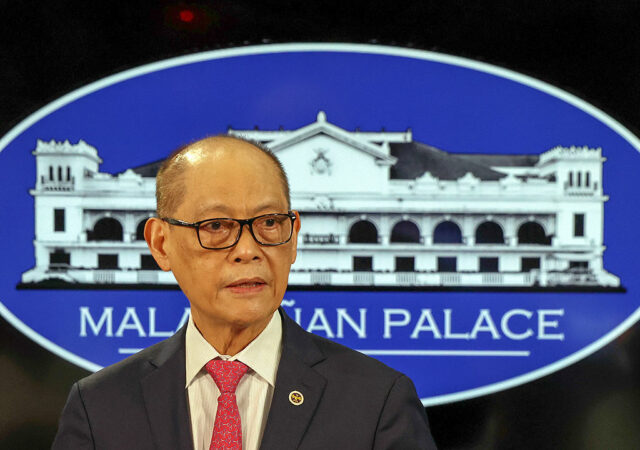
MANILA — The Bangko Sentral ng Pilipinas (BSP) has “probably done enough” to tackle inflation, the country’s finance secretary said on Tuesday, in comments that may add weight to expectations the central bank’s policy tightening cycle is nearing an end.

Finance Secretary Benjamin Diokno, who sits on the seven-man policy-making monetary board, said monetary policy was not the only game in town, and the government has non-monetary tools at its disposal to manage inflation.

Mr. Diokno’s remarks came ahead of Wednesday’s release of March inflation data, which according to the BSP likely eased to between 7.4% and 8.2% from 8.6% in February, but still above the government’s 2%-4% inflation target for the year.

Mr. Diokno said the central bank’s March inflation estimate pointed to the likelihood that inflation in the country has already peaked.

He added, however, it was too early to assess the impact of the surprise output cut by oil producers on Philippine inflation.

The BSP last month hiked its benchmark interest rate further although at a slower pace of 25 basis points to 6.25%, and said its next policy move would depend largely on how consumer prices will behave in the coming months. It next meets on May 18.

The central bank governor did not immediately respond to a request for comment. — Reuters

OPEC+ cuts put $100/bbl oil back in sight

PIXABAY

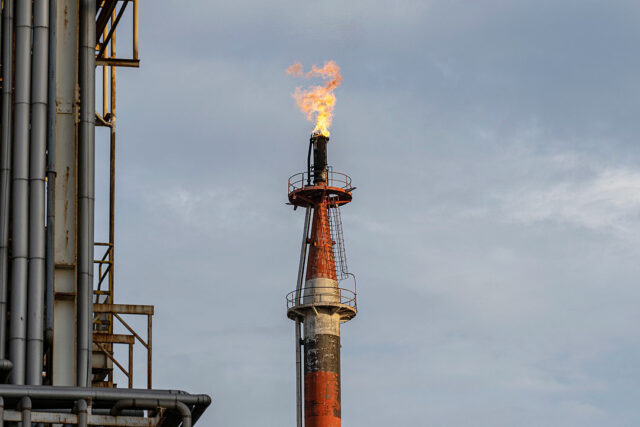
SINGAPORE/SEOUL/LONDON — Surprise new cuts to the OPEC+ group’s output targets could push oil prices towards $100 a barrel, setting the scene for another clash with the West grappling with higher interest rates, analysts and traders said on Monday.

The decision signals unity within OPEC+ despite Washington’s pressure on its Gulf allies to weaken their ties with Moscow, while also undermining the West’s efforts to limit Russia’s oil income.

Oil prices jumped over 6% on Monday after the Organization of the Petroleum Ex porting Countries and their allies including Russia announced on Sunday further production target cuts of about 1.16 million barrels per day (bpd) from May through the rest of the year.

The pledges will bring the total volume of cuts by the group known as OPEC+ since November to 3.66 million bpd according to Reuters calculations, equal to 3.7% of global demand.

OPEC+ had been expected to hold output steady this year, having already cut by 2 million bpd in November 2022.

Saudi Arabia said its voluntary output cut was a precautionary measure aimed at supporting market stability.

Russian Deputy Prime Minister Alexander Novak said interference with market dynamics was one of the reasons behind the cuts.

The International Energy Agency said the cuts risk exacerbating a strained market and pushing up oil prices amid inflationary pressures.

“The new cuts are underpinning that the OPEC+ group is intact and that Russia is still an integral and important part of the group,” SEB analyst Bjarne Schieldrop said.

Rystad Energy said it believed the cuts will add to tightness in the oil market and lift prices above $100 a barrel for the rest of year, possibly taking Brent as high as $110 this summer.

UBS also expects Brent to reach $100 by June, while Goldman Sachs raised its December forecast by $5 to $95.

Goldman said strategic petroleum reserve (SPR) releases in the United States and in France, due to ongoing strikes, as well as Washington’s refusal to refill its SPR in the 2023 fiscal year, may have prompted the OPEC+ action.

Higher prices will likely spell more income for Moscow to fund its expensive war in Ukraine, upsetting Saudi-US relations further, Schieldrop said.

“The US administration may also argue that higher oil prices will counter its efforts to put out the inflation fire,” he added.

While the higher oil prices will spell bad news for the European Central Bank as it tries to bring down inflation, it is unlikely to fundamentally alter the policy outlook for now.

An official at a South Korean refiner said the cut was “bad news” for oil buyers and OPEC was seeking to “protect their profit” against concerns of a global economic slowdown.

The supply cut would drive up prices just as weakening economies depress fuel demand and prices, squeezing refiners’ profits, the South Korean refining official and a Chinese trader said.

Both declined to be identified as they were not authoriZed to speak to media.

Tighter OPEC+ supply will also be negative for Japan as it may further boost inflation and weaken its economy, said Takayuki Honma, chief economist at Sumitomo Corporation Global Research.

“Producing countries apparently want to see oil prices rise to $90-$100/bbl, but higher oil prices also mean higher risk of economic downturn and sluggish demand,” he added.

Purchases by China, the world’s top crude importer, are however expected to hit a record in 2023 as it recovers from the COVID-19 pandemic, while consumption from No.3 importer India remains robust, traders said.

With higher prices and less supply of Middle East sour crude, China and India may be pushed to buy more Russian oil, boosting revenue for Moscow, said the Indian refining official, who declined to be named as he was not authorized to speak to media.

The rise in Brent prices could push Urals and other Russian oil products to levels above the caps set by the Group of Seven Nations (G7) aimed at curbing Moscow’s oil revenue, he said.

ALTERNATIVES
Refiners in Japan and South Korea said they are not considering taking Russian barrels due to geopolitical concerns and may look for alternative supply from Africa and Latin America.

“Japan could seek more supply from the United States, but bringing the US oil through the Panama Canal is expensive,” Sumitomo’s Honma said.

Traders are also watching for a response from the US, which called OPEC+’s move inadvisable.

“In essence, the purpose of this massive surprise production cut is mainly to regain market pricing power,” the Chinese trader said. — Reuters

Australia to ban TikTok on gov’t devices over security concerns

REUTERS

SYDNEY – The Australian government said on Tuesday it will remove TikTok from all federal government-owned devices over security concerns, becoming the latest US allied country to initiate action against the Chinese-owned video app.

The move underscores growing worries that China’s government could use the Beijing-based company, owned by ByteDance Ltd, to harvest users’ data to advance its political agenda, undermining Western security interests.

It risks renewing diplomatic tensions between Canberra and Beijing that have eased somewhat since the Labor government led by Prime Minister Anthony Albanese returned to power in May.

The ban will come into effect “as soon as practicable”, Attorney-General Mark Dreyfus said in a statement, adding that exemptions would only be granted on a case-by-case basis and with appropriate security measures in place.

With Australia’s ban, all members of the so-called Five Eyes intelligence-sharing network – which consists of Australia, Canada, the United States, Britain and New Zealand – have banned the app from government devices. France, Belgium and the European Commission have announced similar bans.

The Australian newspaper late on Monday reported Albanese had agreed to a government-wide ban on the use of TikTok after the completion of a review by the Home Affairs department.

Dreyfus confirmed the federal government had recently received the “Review into Foreign Interference through Social Media Applications” report and that its recommendations remained under consideration.

TikTok said it was “extremely disappointed” by Australia’s decision, calling it “driven by politics, not by fact”.

“There is no evidence to suggest that TikTok is in any way a security risk to Australians and should not be treated differently to other social media platforms,” TikTok’s Australia and New Zealand General Manager Lee Hunter said in a statement.

AUSTRALIA-CHINA TIES

In 2018, Australia banned China’s Huawei from providing equipment during the rollout of 5G network in the country, riling its largest trading partner. Ties soured further after Canberra called for an independent probe into the origins of COVID-19.

China responded by imposing tariffs on Australian commodities.

Lawmakers can still use TikTok on their personal phones but some, including federal Government Services Minister Bill Shorten and Victoria state Premier Daniel Andrews, have decided to delete their TikTok accounts.

Victoria will also ban the app on state government-owned phones, a government spokesperson told Reuters.

TikTok has come under pressure as more countries ban it on government-owned phones. US lawmakers last month grilled TikTok CEO Shou Zi Chew during a testimony before Congress about potential Chinese influence over the platform, and the app’s influence on children.

TikTok has said the administration of President Joe Biden demanded its Chinese owners divest their stakes or face a potential US ban. — Reuters

Malaysia says Beijing concerned about its energy projects in South China Sea

REUTERS

KUALA LUMPUR – Malaysian Prime Minister Anwar Ibrahim on Tuesday said Beijing has expressed concerns about energy activities by Malaysian state firm Petronas in the South China Sea, even though Kuala Lumpur believes the projects are in its territory.

Anwar’s remarks come after he opened the door for negotiations with China earlier this week, in a sign of mounting pressure on Malaysia’s energy operations in waters that Beijing claims as its own.

China claims sovereignty over almost the entire South China Sea, through which about $3 trillion worth of ship-borne trade passes annually. Malaysia, Brunei, the Philippines, Taiwan and Vietnam have some overlapping claims.

Petronas operates oil and gas fields within Malaysia’s 200-mile exclusive economic zone (EEZ) and has in recent years had several encounters with Chinese vessels.

China was worried that “Petronas has carried out a major activity at an area that is also claimed by China,” Anwar said, responding to a parliamentary question about his discussions on the South China Sea during his visit to China last week.

“I stressed… that Malaysia sees the area as Malaysian territory therefore Petronas will continue its exploration activities there,” Anwar said, without specifying an offshore project or a location.

But Malaysia is open for negotiations “if China feels this is their right”, Anwar said, adding the Association of Southeast Asian Nations bloc feels that overlapping claims should be resolved by negotiations.

Petronas declined to comment and the Chinese embassy in Kuala Lumpur was not immediately available for comment.

China claims its territory via a “nine-dash line” on its maps, which cuts into the EEZs of Vietnam, the Philippines, Malaysia, Brunei and Indonesia.

The Permanent Court of Arbitration, however, ruled in 2016 that the nine-dash line, which stretches as far as 1,500 km off its coastline, has no legal basis.

US think tank, the Asia Maritime Transparency Initiative (AMTI), last week said a Chinese coast guard vessel was for the past month operating near Petronas’ Kasawari gas development off Malaysia’s Sarawak state, and came as close as 1.5 miles of the project. A Malaysian navy ship was in the area, AMTI said.

The Kasawari field holds an estimated 3 trillion cubic feet of gas reserves and is expected to start production this year.

China foreign ministry on Monday said they were not aware of the specific incident but said the conduct of the China coast guard is beyond reproach.

Anwar, in his parliamentary comments, said China believes its ships were in international waters.

Malaysia’s foreign ministry will issue a protest note if there were “collisions” between Malaysian and Chinese vessels there, Anwar said. — Reuters

Italy’s ChatGPT ban attracts EU privacy regulators

Tourists walk on a bridge as a gondolier rows his gondola near St. Mark’s Square in Venice, Italy, April 2, 2019. — REUTERS

STOCKHOLM/MILAN/BERLIN – Italy’s move to temporarily ban ChatGPT has inspired other European countries to study if harsher measures are needed to rein in the wildly popular chatbots and whether to coordinate such actions.

While European parliamentarians disagree over the content and reach of the EU AI Act, some regulators are finding that xisting tools, such as the General Data Protection Regulation (GDPR) that gives users control over their personal information, can apply to the rapidly emerging category of generative AI companies.

Generative AI, such as OpenAI’s ChatGPT, relies on algorithms to generate remarkably human responses to text queries based on analyzing large volumes of data, some of which may be owned by internet users.

The Italian agency, also known as Garante, accused Microsoft Corp-backed OpenAI of failing to check the age of ChatGPT users and the “absence of any legal basis that justifies the massive collection and storage of personal data” to “train” the chatbot.

“The points they raise are fundamental and show that GDPR does offer tools for the regulators to be involved and engaged into shaping the future of AI,” said Dessislava Savova, partner at law firm Clifford Chance.

Privacy regulators in France and Ireland have reached out to counterparts in Italy to find out more about the basis of the ban. Germany could follow in Italy’s footsteps by blocking ChatGPT over data security concerns, the German commissioner for data protection told the Handelsblatt newspaper.

“We are following up with the Italian regulator,” said a spokesperson for Ireland’s Data Protection Commissioner. “We will coordinate with all EU data protection authorities in relation to this matter.”

The privacy regulator in Sweden, however, said it had no plan to ban ChatGPT nor was it in contact with the Italian watchdog. Spain’s regulator said it had not received any complaint about ChatGPT but did not rule out a future investigation.

Italy’s Garante, like other privacy regulators, is independent of the government and was also among the first to formally warn Chinese-owned TikTok about breaching of existing European Union privacy rules.

While the privacy commissioners favor more regulation, the governments are more lenient.

Italy’s deputy prime minister has criticized its own regulator’s decision by calling it “excessive” and a German government spokesman said a ban of ChatGPT would not be necessary.

The Italian authority’s move last week was aimed at starting a dialogue with the company to address the issues raised over ChatGPT’s compliance to EU data protection rules and not to ban the tool, a source familiar with the matter said.

OpenAI has not responded to regulators over the weekend the source said. Meanwhile, OpenAI has taken ChatGPT offline in Italy on Friday. It did not respond to questions about other European regulators looking into potential violation in their countries.

It has no offices in the European Union. OpenAI, whose artificial intelligence platform took the world by storm after its launch in November, said on Friday it actively works to reduce personal data in training its AI systems.

The Italian investigation into OpenAI was launched after a nine-hour cyber security breach last month led to people being shown excerpts of other users’ ChatGPT conversations and their financial information.

Italy is the first Western country to take action against a chatbot powered by artificial intelligence.

While the Italian regulator has only singled out ChatGPT so far because of its popularity, other AI platforms such as Google Inc’s Bard might be questioned too, several experts said.

“Unlike ChatGPT, Google is more likely to have taken that into account already because of its history in Europe and because of the size of the organization,” Savova said. — Reuters