Home Blog Page 503

Davao Doctors Hospital (Clinica Hilario), Inc.’s share ‘Buyback Program’ approved by Board of Directors


Spotlight is BusinessWorld’s sponsored section that allows advertisers to amplify their brand and connect with BusinessWorld’s audience by publishing their stories on the BusinessWorld Web site. For more information, send an email to online@bworldonline.com.

Join us on Viber at https://bit.ly/3hv6bLA to get more updates and subscribe to BusinessWorld’s titles and get exclusive content through www.bworld-x.com.

Puregold’s Got My Eyes on You shows how love is a luxury for Filipino breadwinners

Puregold’s hit TikTok series Got My Eyes on You shows how love is a luxury for Filipino breadwinners.

With 14 episodes released so far, Puregold’s hit boys’ love (BL) series Got My Eyes on You has ensnared viewers with its kilig moments, leaving them craving for more after each five-minute drop.

Set in the picturesque S-Cape Villa, the series is a catchy blend of swoon-worthy BL romance and a grounded and earnest look at the sacrifices Filipino breadwinners make for their families.

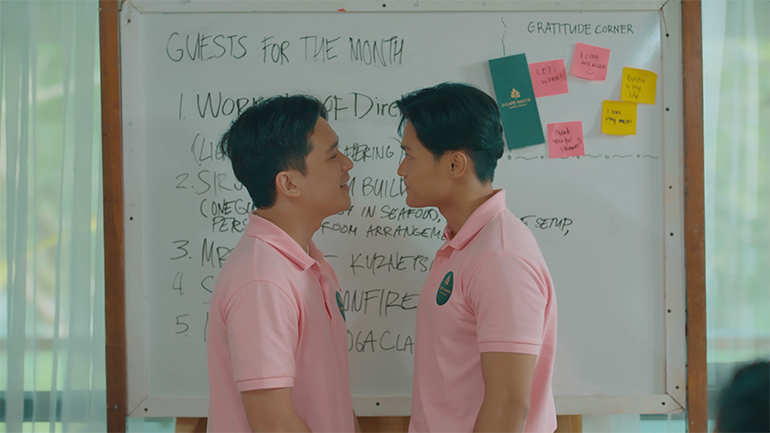
Sparks fly as Drew and Shawn battle it out to become S-Cape’s general manager, while undeniably catching feelings for each other.

At its very core, Got My Eyes on You is a charming enemies-to-lovers tale about Drew (Mikoy Morales), the dedicated villa operations manager; and Shawn (Esteban Mara), the always-calm-and-collected guest relations officer, who are both vying for the post of S-Cape General Manager.

However, the story is not a simple clash between ambition and attraction. Shawn, who comes from a well-off family, wants to prove his independence and capability despite a privileged background, while Drew carries the heavier burden: as a breadwinner, he supports his family and pays for his younger sibling’s education.

Dreams, duty, and love — Puregold’s Got My Eyes on You touches on these important themes.

In Episode 8, he makes this clear. “May pinapatapos pa akong bunso, eh. Kung prangkahan lang din naman, kailangan ko talaga ang posisyon na yon. Kaya ayoko ‘yang lovelife-lovelife na ‘yan. Hindi ko priority ‘yan,” Drew stresses, showing how young Filipino adults are inclined to set aside romance for responsibility.

Still, sparks fly between Drew and Shawn. Viewers have witnessed their playful bickering amid frequent teasing by villa co-workers, accountant Moira (Hannah Lee), and events coordinator Wilfred (Darwin Yu). The undeniable chemistry shines not just in heated exchanges but in softer moments, like when they hang out with their dogs, Matcha and Miller.

With 14 episodes released so far, fans cannot wait for the next GMEOY episode.

Fans could not get over the scene after the office party, where Drew, drunk and vulnerable, accidentally fell asleep beside Shawn and woke up in his arms. More than these moments of kilig, the series remains authentic. Drew’s struggle reflects a reality often underrepresented on screen — for many Filipinos, love feels like a luxury when there are mouths to feed and bills to pay.

Puregold Senior Marketing Manager Ivy Hayagan-Piedad explains, “The series is not just about kilig; it’s about reality. It is hard to think about love when you are thinking about family and survival, and this is the common Filipino experience. Got My Eyes on You, while a love story, also depicts a hard truth for breadwinners, and Filipino norm expectations.”

In the forthcoming episodes, viewers find answers to the question: will Drew’s heart win over his strong sense of responsibility, or will love remain out of reach?

Puregold’s ‘Got My Eyes on You’ is not just a love story, but a telling of the Filipino experience of struggling with love and family responsibilities.

Catch the latest episodes of Got My Eyes on You exclusively on the Puregold TikTok Channel (@puregoldph).

Subscribe to Puregold Channel on YouTube, like @puregold.shopping on Facebook, and follow @puregold_ph on Instagram and X, and @puregoldph on TikTok for more updates and behind-the-scenes content.


Spotlight is BusinessWorld’s sponsored section that allows advertisers to amplify their brand and connect with BusinessWorld’s audience by publishing their stories on the BusinessWorld Web site. For more information, send an email to online@bworldonline.com.

Join us on Viber at https://bit.ly/3hv6bLA to get more updates and subscribe to BusinessWorld’s titles and get exclusive content through www.bworld-x.com.

BDO Capital keen on financing hydropower, waste-to-energy projects

CBKPOWER.COM

BDO CAPITAL and Investment Corp. is expanding its green financing portfolio by backing the country’s first waste-to-energy (WTE) facility and the large-scale hydropower assets set to be turned over by the government, its president said.

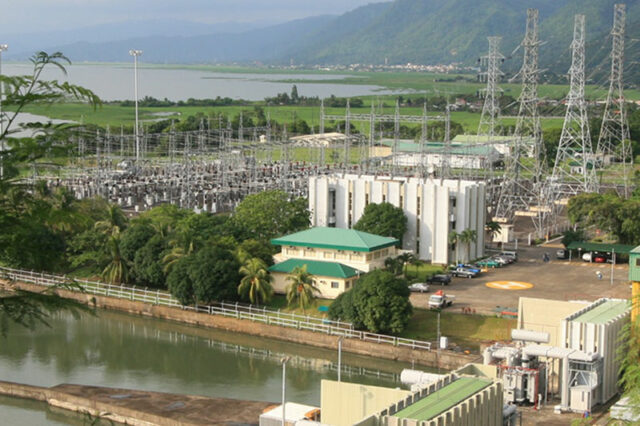
In an interview last week, BDO Capital President Eduardo V. Francisco said the company is working with the Thunder Consortium — the winning bidder for the Caliraya-Botocan-Kalayaan (CBK) hydroelectric power plants (HEPP) — to finance the acquisition of the 796.64-megawatt (MW) complex in Laguna.

Aboitiz-led Thunder Consortium won the PSALM auction for the hydroelectric assets in June with an offer of P36.266 billion.

The consortium is composed of Aboitiz Renewables, Inc. (ARI), Sumitomo Corp., and Electric Power Development Co. (J-Power).

“We’re willing to finance the whole thing,” Mr. Francisco said.

The complex includes the 39.37-MW Caliraya HEPP in Lumban, the 22.91-MW Botocan HEPP in Majayjay, and the 366-MW Kalayaan I and 368.36-MW Kalayaan II pumped-storage power plants, all located in Laguna.

PSALM President and Chief Executive Officer Dennis Edward A. dela Serna earlier told BusinessWorld that the facility’s turnover is targeted for February 2026.

Meanwhile, Mr. Francisco said BDO is extending a $200-million loan to help finance the proposed WTE plant in Smokey Mountain, Tondo, Manila.

“We are looking to finance the first waste-to-energy project in the country,” he said.

Manila Integrated Environment Corp. (MIEC), majority owned by Phil. Ecology Systems Corp. of tycoon Reghis M. Romero II, plans to build and operate a WTE facility with a capacity of 3,000 tons per day of residual municipal solid waste, capable of generating 100 MW of electricity.

The WTE project is targeted to begin commercial operations by the fourth quarter of 2028.

BDO Capital, the investment banking arm of BDO Unibank, Inc., has funded P1.04 trillion worth of sustainable projects across the energy, infrastructure, water, transportation, and community development sectors since launching its Sustainable Finance Program in 2010. — Sheldeen Joy Talavera

Rates of Treasury bills, bonds may be mixed before CPI, BSP

BW FILE PHOTO

RATES of the Treasury bills (T-bills) and Treasury bonds (T-bonds) on offer this week could be mixed, tracking secondary market movements, before the release of September inflation data and the Bangko Sentral ng Pilipinas’ (BSP) policy meeting.

The Bureau of the Treasury (BTr) will auction off P22 billion in T-bills on Monday, or P7.5 billion each in 91-day and 182-day securities and P7 billion in 364-day papers.

On Tuesday, the government will offer P35 billion in a dual-tenor T-bond offering, or P15 billion in reissued seven-year papers with a remaining life of two years and six months, and P20 billion in reissued 10-year debt with a remaining life of nine years and six months.

T-bill and bond yields could track the mixed week-on-week movements seen at the secondary market as the market looks ahead to the release of the September consumer price index (CPI) report on Tuesday (Oct. 7) and the Monetary Board’s policy meeting on Thursday (Oct. 9), Rizal Commercial Banking Corp. Chief Economist Michael L. Ricafort said in a Viber message.

A trader said in an e-mail that the reissued seven-year bonds could be quoted at rates from 5.625% to 5.65% on Tuesday, while the reissued 10-year debt could fetch bids carrying yields from 5.975% to 6%.

The trader added that the bond auction could see “decent demand.”

Yields at the secondary market were mixed last week as the short-term tenors were supported by bets of further BSP easing, while longer tenors were affected by market concerns over uncertainties in the United States due to their government’s closure.

At the secondary market on Friday, yields on the 91-day T-bills went down by 2.01 basis points (bps) week on week to end at 4.9153, based on PHP Bloomberg Valuation Service Reference Rates data as of Oct. published on the Philippine Dealing System’s website. Meanwhile, the 182- and 364-day T-bills rose by 1.3 bps and 6.55 bps to close at 5.1765% and 5.3262%, respectively.

The seven-year tenor rose by 2.05 bps week on week to fetch 5.9533%, while the three-year bond, the closest to the remaining life of the papers on offer this week, went up by 2.51 bps to 5.6936%.

For its part, the 10-year bond inched down by 0.4 bp week on week to yield 6.0223%.

A BusinessWorld poll of 12 analysts yielded a median estimate of 1.9% for September inflation, within the BSP’s 1.5-2.3% forecast for the month. If realized, the CPI would be faster than 1.5% in August but would match the 1.9% clip in September 2024.

On the other hand, 10 of 16 analysts in a separate BusinessWorld poll expect the Monetary Board to pause at this week’s meeting due to emerging inflation risks following three consecutive cuts that brought its policy rate to 5%.

The remaining six said the BSP could deliver a fourth straight 25-bp cut to support the economy amid weaker growth prospects.

Last week, the BTr raised P22 billion as planned from the T-bills it auctioned off as the offering was almost four times oversubscribed, with total bids reaching P80.475 billion.

Broken down, the Treasury borrowed P7.5 billion as planned via the 89-day T-bills as total tenders for the tenor reached P21.93 billion. The three-month paper was quoted at an average rate of 4.828%, down by 5.5 bps from the previous auction. Yields accepted were from 4.71% to 4.9%.

The government also raised P7.5 billion as programmed from the 182-day securities as tenders amounted to P31.2 billion. The average rate of the six-month T-bill was at 5.075%, easing 0.6 bp from the previous week, with accepted rates spanning from 4.94% to 5.117%.

Lastly, the Treasury sold the planned P7 billion in 364-day debt as demand for the tenor totaled P27.345 billion. The average rate of the one-year T-bill dropped by 2.4 bps to 5.171%. Bids awarded carried yields from 5.027% to 5.215%.

Meanwhile, the reissued seven-year bonds to be offered on Tuesday were last auctioned off on Sept. 23, where the government raised P10 billion as planned at an average rate of 5.605%, well above the 3.625% coupon rate.

The 10-year debt papers on offer this week were last sold on Sept. 16, where the Treasury raised P25 billion as planned at an average rate of 5.075%, below the 6.375% coupon rate.

The BTr is looking to raise P180 billion from the domestic market this month, or P110 billion via T-bills and P70 billion through T-bonds.

The government borrows from local and foreign sources to help fund its budget deficit, which is capped at P1.56 trillion or 5.5% of gross domestic product this year. — Aaron Michael C. Sy

US economy is already on the edge — a prolonged government shutdown could send it tumbling over

STOCK PHOTO | Image by Ninjason1 from Freepik

The economic consequences of the current federal government shutdown hinge critically on how long it lasts. If it is resolved quickly, the costs will be small, but if it drags on, it could send the US economy into a tailspin.

That’s because the economy is already in a precarious state, with the labor market struggling, consumers losing confidence, and uncertainty mounting.

As an economist who studies public finance, I closely follow how government policies affect the economy. Let me explain how a prolonged shutdown could affect the economy — and why it could be a tipping point to recession.

DIRECT IMPACTS FROM A GOVERNMENT SHUTDOWN
The partial government shutdown began on Oct. 1, as Democrats and Republicans failed to reach a deal on funding some portion of the federal government. A partial shutdown means that some funding bills have been approved, entitlement spending continues since it does not rely on annual appropriations, and some workers are deemed necessary and stay on the job unpaid.

While most of the 20 shutdowns that occurred from 1976 through 2024 lasted only a few days to a week, there are signs the current one may not be resolved so quickly. The economy would definitely take a direct hit to gross domestic product from a lengthy shutdown, but it’s the indirect impacts that could be more harmful.

The most recent shutdown, which extended over the 2018-2019 winter holidays and lasted 35 days, was the longest in US history. After it ended, the Congressional Budget Office estimated the partial shutdown delayed approximately $18 billion in federal discretionary spending, which translated into an $11 billion reduction in real GDP.

Most of that lost output was made up later once the shutdown ended, the CBO noted. It estimated that the permanent losses were about $3 billion — a drop in the bucket for the $30 trillion US economy.

THE INDIRECT AND MORE LASTING IMPACTS
The full impact may depend to a large extent on the psychology of the average consumer.

Recent data suggests that consumer confidence is falling as the stagnation in the labor market becomes more clear. Business confidence has been mixed as the manufacturing index continues to indicate the sector is in contraction, while other business confidence measures indicate mixed expectations about the future.

If the shutdown drags on, the psychological effects may lead to a larger loss of confidence among consumers and businesses. Given that consumer spending accounts for 70% of economic activity, a fall in consumer confidence could signal a turning point in the economy.

These indirect effects are in addition to the direct impact of lost income for federal workers and those that operate on federal contracts, which leads to reductions in consumption and production.

The risk of significant government layoffs, beyond the usual furloughs, could deepen the economic damage. Extensive layoffs would shift the losses from a temporary delay to a more permanent loss of income and human capital, reducing aggregate demand and potentially increasing unemployment spillovers into the private sector.

In short, while shutdowns that end quickly tend to inflict modest, mostly recoverable losses, a protracted shutdown — especially one involving layoffs of a significant number of government workers — could inflict larger, lasting impacts on the economy.

US ECONOMY IS ALREADY IN DISTRESS
This is all occurring as the US labor market is flashing warnings.

Payrolls grew by only 22,000 in August, with July and June estimates revised down by 21,000. This follows payroll growth of only 73,000 in July, with May and June estimates revised down by 258,000. In addition, preliminary annual revisions to the employment data show the economy gained 911,000 fewer jobs in the previous year than had been reported.

Long-term unemployment is also rising, with 1.8 million people out of work for more than 27 weeks — nearly a quarter of the total number of unemployed individuals.

At the same time, AI adoption and cost-cutting could further reduce labor demand, while an aging workforce and lower immigration shrink labor supply. Fed Chair Jerome Powell refers to this as a “curious kind of balance” in the labor market.

In other words, the job market appears to have come to a screeching halt, making it difficult for recent graduates to find work. Recent graduate unemployment — that is, those who are 22 to 27 years old — is now 5.3% relative to the total unemployment rate of 4.3%.

The latest data from the ADP employment report, which measures only private company data, shows that the economy lost 32,000 jobs in September. That’s the biggest decline in 2-½ years. While that’s worrying, economists like me usually wait for the official Bureau of Labor Statistics (BLS) numbers to come out to confirm the accuracy of the payroll processing firm’s report.

The government data that was supposed to come out on Oct. 3 might have offered a possible counterpoint to the bad ADP news, but due to the shutdown BLS will not be releasing the report.

PROBLEMS FED RATE CUTS CAN’T FIX
This will only increase the uncertainty surrounding the health of the US economy. And it adds to the uncertainty created by on-again, off-again tariffs as well as the newly imposed tariffs on lumber, furniture and other goods.

Against this backdrop, the Fed is expected to lower interest rates at least two more times this year to stimulate consumer and business spending following its September quarter-point cut. This raises the risk of reigniting inflation, but the cooling labor market is a more immediate concern for the Fed.

While lower short-term rates may help at the margin, I believe they cannot resolve the deeper challenges, such as massive government deficits and debt, tight household budgets, a housing affordability crisis and a shrinking labor force.

The question now is not will the Fed cut rates, because it likely will, but whether that cut will help, particularly if the shutdown lasts weeks or more. Monetary policy alone cannot overcome the uncertainty created by tariffs, the lack of fiscal restraint, companies focused on cutting costs by replacing people with technology, the impact of the shutdown and the fears of consumers about the future.

Lower interest rates may buy time, but they won’t solve these structural problems facing the US economy.

THE CONVERSATION VIA REUTERS CONNECT


John W. Diamond is the director of the Center for Public Finance at the Baker Institute, Rice University.


Border crossing

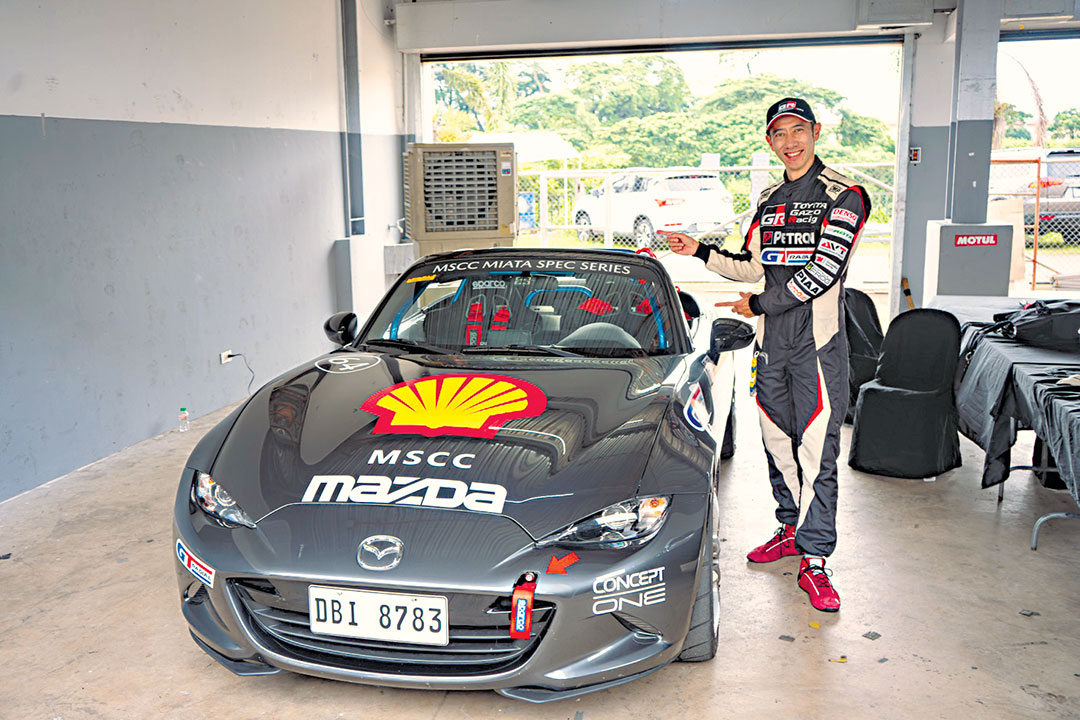
That’s Toyota Motor Philippines President Masando Hashimoto aboard a Mazda MX-5 cup car at the recent staging of the Mazda Fan Festa at the Clark International Speedway in Angeles, Pampanga. — PHOTO BY KAP MACEDA AGUILA

A meeting of two minds and two brands happened at the Mazda Fan Festa

MEDIA AND CONTENT creators did a double take at the racers’ briefing for the third leg of the Mazda Fan Festa recently held at the Clark International Speedway in Angeles, Pampanga. From behind, we spotted a familiar man listening intently to instructions. Amid other racers donning Mazda apparel and logos, he was wearing a Toyota Gazoo Racing (TGR) cap, and a racing suit with GR markings as well.

Lo and behold, it was Toyota Motor Philippines (TMP) President Masando Hashimoto.

Not only was the executive invited to take in the spectacle of the races and goings on, Mazda Philippines President Steven Tan had actually offered Mr. Hashimoto to take one of the Miata (or MX-5) cup cars out for hot laps around the circuit.

We asked Mr. Tan about how the Toyota head’s appearance — a surprise to all but a handful — actually happened.

He narrated TMP had earlier extended an invite to him and his team to attend a staging of the TGP Philippine Cup, but he was out of the country at the time. That gave him an idea: Why not return the gesture and invite the TMP head to the Fan Festa, and offer track time, to boot? This proved to be a good idea, as Mr. Hashimoto is already known for being very active in TMP’s own racing series and is an ardent fan of motorsports as well.

Speaking to “Velocity” after his stint on the circuit, a smiling Mr. Hashimoto revealed that it was his very first time aboard a Miata (or MX-5) — or a Mazda.

“I’ve been talking to Steven on this matter, and I’m sure Mazda Philippines has a passion or enthusiasm to widen their customer and fanbase (with regard to the) Miata and even Mazda,” he began. “They’re proactively doing the Mazda Fan Festa event like how we are doing the TGR Philippine Cup. We are quite aligned with the idea that we need a car fanbase before selling cars. That is a starting point common to our two brands.”

He continued, “I love the Miata. Seriously. It’s my first time to drive a Miata — or even a Mazda car. It’s a very good car, very fun; an exciting car to drive. It’s a very lightweight sports car with rear-wheel drive.” The executive paid further generous compliment to the brand, declaring, “(People) love driving Mazda cars.”

When pressed to further describe his experience, Mr. Hashimoto obliged, saying he enjoyed the “sliding feeling,” the car’s power, front steering, and open-top qualities. “Of course, I’m quite a big lover of karting… Feeling-wise it’s like a fast racing kart. The rear can slide, but I can still control the direction. The car is really good, even if I’m quite a novice driver. The car lets me drive it very properly,” he added.

Aside from both being Japanese marques, Mazda and Toyota are kindred spirits in aspirations to grow the racing scene and culture in the Philippines through their respective events. Mr. Hashimoto commented, “Frankly, the fanbase of Mazda Miata is really bigger — (with a) bigger history and longer history than Toyota’s. So I quite admire their activities or initiatives. What I came to know today is that they are focusing on the club community, (and) members of the club are joining two categories: the Miata spec car series and the Miata Club race, and they even offer a track day experience.

“Those are a grassroots approach, and they give value to the club members. That’s really eye-opening to me. Toyota’s TGR Philippine Cup is focusing more on the works team or professional racers, and we are maybe lacking or missing on this portion: grassroots or club culture.”

So even as TMP is obviously going full throttle with its longstanding and growing TGR Philippine Cup (formerly known as the Vios Cup), Mr. Hashimoto remains open to learning more about how to improve it — particularly with regard to more grassroots inclusion or, as he calls it, “more human connection.”

“That is an area we have to study (from) the Mazda way. Someday, we can collaborate; no boundaries in between brands. We can do some joint project together. That is our dream for next year,” concluded the TMP head.

Going back to the basics

WEAVING with natural dyes. — SCREENSHOT FROM MASDA AW OFFICIAL VIDEO

Rediscovering natural dyes for local weaves

A POP-UP at the National Museum displaying indigenous textiles on Sept. 30 displayed so much more than scores of cloths: it was a showcase for the ASEAN Agriculture Ministers’ reception for Oct. 1, but also a story of hope.

The pop-up, the culminating project of Masda Aw (an Ilocano word for curiosity), displays the outcomes of a two-week engagement between Manila-based and Kalinga creatives. This involved artist and social activist Paul Mondok, journalist and author Yvette Tan, natural dye expert Diana Katigbak, creative strategist Raffy Tesoro, fashion photographer MJ Suayan, model Vanessa Tedesco, documentarian Arnold Amores, and Dr. Analyn Salvador-Amores, and led by Nina Tesoro-Poblador. The Kalinga region was represented by the Kalinga Indigenous Weavers Association (KINWA), Tabuk District Jail community members, Councilor Arnel Banasan of Pasil, Mingor Chi Kultura (MCK), and social entrepreneur and community elder Florence Ao-wat.

This was initially proposed as an entry to the Benilde Open, but the project and its funding were picked up by Australian Aid, with the support of Mercedes Zobel (and a bevy of many other sponsors, from the University of the Philippines to Corditex and the De La Salle-College of St. Benilde).

The aim of the project, as summarized by Ms. Tesoro-Poblador, was to bring natural dyes back to the Kalinga, an initiative started by her mother, fashion designer Beatriz “Patis” Tesoro back in the 1990s. Her brother, Raffy, said in a video, “Mom actually brought back natural dye to the Philippines. I was one of the first to learn it, aside from the traditional cultural bearers.”

Because of industrialization and the relative ease in its procurement, many, if not all, of the indigenous weaves that the Kalinga people produce are currently made from synthetic fiber and dye. This project was able to produce traditional woven fabrics from Philippine-grown cotton, colored with dye plants that can be found in the Philippines.

In the pop-up, which ran from Sept. 30 to Oct. 1, there was a framed display of swatches and threads. Indigo produced a variety of blues depending on how often the fabric had been dipped (thus increasing the dye’s intensity). Achuete (annatto seed) produced a dusty pink, depending on the mordant used (mordant is a substance used to make dyes adhere to yarn; the ones used for the project included alum, copper, and iron). Talisay produced yellow-green to black; coffee, as expected, produced brown. Mahogany bark produced a rusty red, while mango leaves created a creamy yellow.

The project sounds exciting and there is a possibility of scaling up, making the project live on beyond its two-week initial engagement. Mr. Tesoro himself said, “It’s a niche market, but it’s a potentially very lucrative niche market.”

Ms. Katigbak, in an interview during the pop-up, talked about the possibilities. “The supply is already there. We just need more people to adopt it. It’s good that we already have our own yarns, because it starts there.”

“Hopefully, through this project, we’re able to have a chain effect, not only attracting more supply for dyestuff, but also our own fully grown native textiles from the ground up.”

While this promises to be a future premium product, but for indigenous weavers, a large part of their problem is accessibility to their work: the work can be too expensive, or simply too far from centers of commerce. Native textiles should come at a price, considering all the work done to make them; however, since they come at a premium, the challenge is making them within reach of anyone, and still fair to the weaver.

“We could probably be able to adapt this to several different municipalities or locations,” said Ms. Katigbak, offering a solution to this problem of economies of scale. She says that natural dye plants are dependent on the locality: “What’s endemic in the area.”

“If everything goes well, our regions could be interconnected. There’s a presence of dye-yielding plants in Luzon, Visayas, and Mindanao — they could be specialists of that color,” she says. “You could make communities that specialize… it could be a network; an ecosystem.” — Joseph L. Garcia

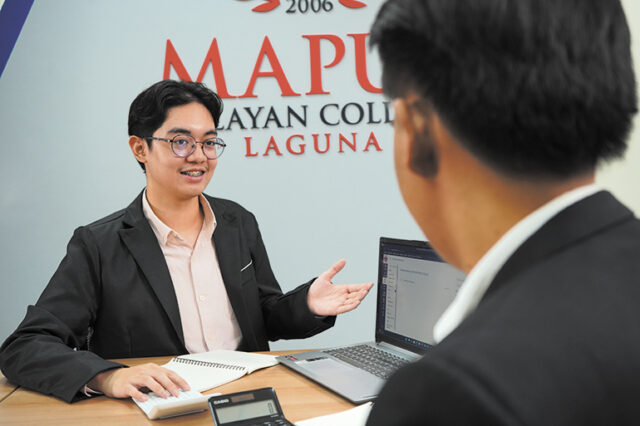
Mapúa MCL champions ethical innovation with UNESCO-aligned AI integration in education

Mapúa Malayan Colleges Laguna (Mapúa MCL) is stepping forward with a clear, strategic response to artificial intelligence (AI) as it continues to transform business, education, and economies worldwide.

Mapúa MCL E.T. Yuchengco College of Business’ (ETYCB) collaboration with Arizona State University (ASU) prepares students to lead in a tech-driven global economy by offering a dynamic curriculum that integrates digital mastery and strategic thinking necessary in an AI-powered world.

The surge of generative AI across campuses worldwide shows no sign of slowing down. The Digital Education Council’s 2024 Global Student Survey revealed that 86% of students now use AI in their studies, with 54% using it weekly. Many were reported to rely on tools like ChatGPT, Grammarly, and Microsoft Copilot to paraphrase texts (28%) or generate first drafts (24%).

“The digital economy shift has evolved, driven by the rapid advancements in AI, which is not just a technological trend, but a fundamental transformation of how businesses and education create, deliver, and capture value,” said Jameson Bagay, MBA, Prince2, ITILv3, ETYCB faculty.

“At Mapúa MCL ETYCB, we believe AI is transforming businesses and education by augmenting, not replacing human intelligence, empowering leaders to make smarter decisions, educators to personalize learning, and students to develop skills that match the demands of the digital economy.”

UNESCO’s AI competency frameworks for students and teachers serve as a global road map for integrating AI in education. The frameworks emphasize a human-centered mindset, ethical AI use, foundational AI literacy, AI pedagogy, and AI for professional development.

Aligning directly with these pillars, Mapúa MCL ETYCB business programs introduce students to real-world AI use cases, applications in data-driven decision-making, and the ethical issues surrounding algorithmic bias, privacy, and accountability. The college promotes AI as a partner in innovation, not a replacement for human insight.

Mapúa MCL ETYCB, through its collaboration with ASU, which was named the most innovative university in the United States, delivers a curriculum specifically designed to prepare students for the future’s AI-driven business landscape.

ETYCB’s approach to technological innovations reflects UNESCO’s call for institutions to take an “agile and iterative” approach to integrating new technologies responsibly, before they become embedded into education in unplanned ways, which ultimately bring uncertain implications.

A key part of its innovation is its support for faculty as the nature of teaching evolves. With the sustained integration of AI into its curriculum, the faculty is no longer just deliverers of knowledge, but facilitators of AI-supported education. As the global academe continues to innovate, it demands new competencies from educators, including the ability to efficiently guide students in evaluating AI-generated content, verifying sources, and overall proper use of AI.

Mapúa MCL ETYCB supports its faculty members in integrating AI tools into their teaching while preserving critical human elements like creativity, collaboration, and ethical reasoning. To make this possible, the college offers continuous faculty development and access to global best practices, ensuring that teaching grows alongside technology.

The pressure is mounting for higher education institutions to catch up with the pace of AI adoption. Unguided integration of AI risks enabling academic practices in fragmented or harmful ways that could significantly impact how students learn. UNESCO warns that unplanned AI integration could lead to unintended consequences, including privacy violations and over-reliance on AI.

By aligning with UNESCO’s global vision and integrating ethics into every layer of its AI-enriched curriculum, Mapúa MCL ETYCB produces graduates who are prepared to lead with integrity, insight, and adaptability.

“Technology is only as good as the humans who shape it,” said Mr. Bagay. “That’s why at Mapúa MCL, we emphasize leadership, ethics, and global citizenship alongside business and tech fluency.”


SparkUp is BusinessWorld’s multimedia brand created to inform, inspire, and empower the Philippine startups; micro, small and medium enterprises (MSMEs); and future business leaders. This section will be published every other Monday. For pitches and releases about startups, e-mail to bmbeltran@bworldonline.com (cc: abconoza@bworldonline.com). Materials sent become BW property.

Razon-led Primelectric names ex-IEMOP chief as new COO

RICHARD J. NETHERCOTT — WESM.PH

RAZON-LED Primelectric Holdings, Inc. has appointed former Independent Electricity Market Operator of the Philippines (IEMOP) President and Chief Executive Officer (CEO) Richard J. Nethercott as its chief operations officer (COO).

“It is an honor to join Primelectric with the hope of being able to positively contribute to the company’s mission of providing the best quality service consumers deserve,” Mr. Nethercott was quoted as saying in a statement on Sunday.

Before joining Primelectric, Mr. Nethercott headed IEMOP, the operator of the Wholesale Electricity Spot Market, and served on the board of the Philippine Electricity Market Corp.

Primelectric said Mr. Nethercott’s appointment reflects the group’s “strong intent to leverage high-level industry and regulatory expertise as it expands its operations and influence within the Philippine power distribution landscape.”

Primelectric, the holding company for the Razon group’s power distribution businesses, has interests in distribution utilities such as MORE Power in Iloilo, Negros Power, and Bohol Light. It also operates MORE Power Barge and the retail aggregation arm PrimeRES.

“With over five years of distinguished experience in overseeing the operations of the trading floor for Philippine electricity, Atty. Nethercott brings valuable expertise and leadership to our team,” Primelectric President and CEO Roel Z. Castro said. — Sheldeen Joy Talavera

Central bank’s short-term securities fetch mixed yields, strong demand

YIELDS on the Bangko Sentral ng Pilipinas’ (BSP) short-term securities ended mixed on Friday, with the offer attracting strong demand even as the auction volume was hiked slightly.

The BSP bills fetched bids amounting to P136.913 billion, well above the P110-billion offer and the P86.339 billion in tenders for the P100 billion auctioned off the prior week. The central bank fully awarded both tenors.

Broken down, tenders for the 28-day securities reached P65.45 billion, higher than the P45 billion placed on the auction block and the P35.042 billion in bids seen for the P40-billion offer a week prior.

Banks asked for rates from 5.259% to 5.374%, narrower than the 5.25% to 5.4% band recorded previously. This caused the weighted average accepted rate of the one-month bills to go down by 2.18 basis points (bps) to 5.3337% from 5.3555%.

Meanwhile, the 56-day securities attracted bids amounting to P71.463 billion, above the P65 billion auctioned off and the P51.297 billion in demand for the P60-billion offer a week earlier.

Accepted yields were from 5.28% to 5.365%, a wider and higher range compared with the 5.265% to 5.34% margin previously. With this, the average rate of the two-month bills inched up by 0.69 bp to 5.3183% from the 5.3114% logged in the previous auction.

“BSP bills (BSPB) saw good demand,” the central bank said in a statement. “The BSP increased the total BSPB offer volume from P100 billion to P110 billion… Both tenors were oversubscribed, with bid-to-cover ratios of 1.45 times for the 28-day tenor, and 1.10 times for the 56-day tenor.”

The central bank uses the BSP securities and its term deposit facility to mop up excess liquidity in the financial system and to better guide short-term market rates towards its policy rate.

The BSP bills also contribute to improved price discovery for debt instruments while supporting monetary policy transmission, the central bank said.

The short-term securities were calibrated to not overlap with the Treasury bill and term deposit tenors also being offered weekly.

The BSP bills are considered high-quality liquid assets for the computation of banks’ liquidity coverage ratio, net stable funding ratio, and minimum liquidity ratio. They can also be traded on the secondary market.

Data from the central bank showed that around 50% of its market operations are done through its short-term securities. — Katherine K. Chan

ADB’s nuclear gamble is a dangerous climate detour

STOCK PHOTO | Image by Vectorjuice from Freepik

The Asian Development Bank (ADB) is preparing to walk back one of its most important energy commitments. In 2021, the Bank pledged not to finance nuclear power, recognizing its steep costs, unresolved waste problems, and catastrophic safety risks. Now, in its 2025 Energy Policy Review, the ADB is considering lifting that ban. This reversal risks locking Asia into decades of debt, danger, and delay at a time when the climate clock is ticking.

Nuclear’s reputation as a “clean” climate solution collapses the moment you look at the facts. It is slow, prohibitively expensive, and inherently unsafe. Globally, nuclear disasters show why these fears are justified. Fukushima in 2011 displaced over 150,000 people and left parts of Japan uninhabitable for generations. Scientists warned that such catastrophic accidents could occur every 10-20 years, given the number of reactors worldwide.

In India’s uranium mining belt of Jaduguda, Indigenous communities have lived for decades with radiation-linked cancers, congenital disorders, and poisoned lands. The uranium extracted there powers reactors hundreds of kilometers away, yet local people pay the true cost in their bodies and livelihoods.

In Tamil Nadu’s Koodankulam, fisherfolk have organized for decades against nuclear reactors that threaten their lives and the seas that sustain them. In Maharashtra’s Jaitapur, farmers and fisher communities have resisted one of the world’s largest proposed nuclear complexes, warning of ecological damage and irreversible threats to livelihoods.

The Philippines knows too well the dangers of nuclear energy. The mothballed Bataan Nuclear Power Plant left behind illegitimate debt, environmental damage, and decades of community resistance in a disaster-prone region. Yet, as the country moves to pass a legal framework for nuclear power, it brings back the fears of the residents and anti-nuclear advocates in the country about how costly it would be for the communities and the environment.

Indonesia’s plan to build out nuclear power plants in West Kalimantan threatens the region’s rich biodiversity and encroachment on Indigenous Peoples’ lands. Often viewed as a “game changer” and a thrust to energy transition, building huge infrastructure projects such as this increases the risks of reprisals, displacement, and serious health hazards to them.

Nuclear’s problems are not limited to accidents. The economics is equally dire. Projects routinely cost billions more than planned and take decades to complete. In Asia, where climate action requires rapid, decisive cuts in emissions, pouring scarce resources into projects that may deliver power only in the 2040s is reckless.

Meanwhile, renewable alternatives are already cheaper, faster, and more flexible. Solar and wind with storage can be deployed in months, not decades. They scale to communities, cut energy poverty, and build resilience against climate disasters. Every dollar directed toward nuclear is a dollar stolen from these proven solutions.

The ADB brands itself as Asia’s “climate bank.” But lifting the nuclear ban would make that claim ring hollow. Nuclear power delays and does not accelerate decarbonization. It diverts public money to a dangerous industry while exposing millions to long-term health and safety risks.

Worse, it undermines the Paris Agreement’s goal of rapid, equitable emissions reductions. Asia does not need another false solution. It needs people-centered, decentralized, and renewable energy systems that serve communities rather than sacrifice them. If ADB is serious about its climate commitments, it must resist nuclear lobbying and reaffirm its 2021 commitment.

As ADB prepares to lift its ban, it could steer financing and policy toward a risky nuclear path under the guise of technical assistance across its Developing Member Countries. Nuclear is expensive. Nuclear is dangerous. The reality of Nuclear Energy means making huge sacrifice zones where communities are left to suffer. And nuclear is a derailment of our climate future. ADB must not waste another decade (or another dollar) on this false solution.


Nazareth Del Pilar is the just transitions advocacy officer of the NGO Forum on ADB. Rayyan Hassan is the executive director of the NGO Forum on ADB.

Drones seen playing key role in rice farming digitalization

STOCK PHOTO | Image by DJI-Agras from Pixabay

THE Philippine Rice Research Institute said it is expanding its Scaling, Modern, and Adaptive Rice Technologies for Better Rice-Farming Communities (SMART Farm) to use drones to seed and fertilize rice fields.

It said the program will also deploy equipment like mechanical transplanters, drum seeders, and precision seeders to help farmers save on labor costs.

SMART Farm program leaders Dindo King M. Donayre and Mark Angelo A. Abando said the rollout will take place in the 2026 dry season.

Agriculture is facing a labor crisis due to ageing farmers, lack of interest in farming among the younger generations, and poor wages.

The Philippine Statistics Authority noted that agriculture lost around 580 thousand workers in June, second only in lost jobs to the construction industry. — Andre Christopher H. Alampay