Home Blog Page 5011

RLC Residences targets millennials with 4th building in Sierra Valley Gardens 

ROBINSONS Land Corp.’s (RLC) residential division, RLC Residences, announced on Wednesday the launch of its fourth condominium building in Sierra Valley Gardens along Ortigas Avenue in Cainta, Rizal.

“[The] fourth building [has the goal of] empowering more young professionals to make their smart move through real estate investment,” RLC Residences said in a statement.

Citing a study conducted by online property portal Lamudi, RLC Residences said that there has been a rise in the number of millennials searching for condominiums online.

“This age group is now entering their prime years for home buying and has an increased desire to manage their finances through investments that can generate income,” it said.

The Sierra Valley Gardens offers city views, access to amenities, and proximity to daily necessities, according to the company.

The high-rise residential condominium project features “well-spaced studio, one-, and two-bedroom units with balcony options.”

The latest building in Sierra Valley Gardens offers millennials the opportunity to invest in one of its units for as low as P4 million, the company said.

The units in the condominium project range from 22 to 66 square meters, offering a range of options based on space requirements.

“These units are equipped with smart home features including Smart Lock, Audio-Video Intercom, Smart Switch, and Infrared Emitter —  all offering a high level of convenience, energy efficiency, security, cost savings, increased home value, and sustainability,” RLC Residences said.

The company noted that the Sierra Valley Gardens previously won the Best Sustainable Residential Development award at the DOT Property Southeast Asia Awards 2022, held in Bangkok, Thailand.

At the same time, the company said its Sierra Valley Gardens offers numerous indoor and outdoor amenities intended to assist residents in achieving their professional, fitness, and wellness objectives. These include a three-level clubhouse, function rooms, game room, fitness center and dance studio, work/study area, lap pool, jogging trail, and landscaped areas, among others.

“In designing Sierra Valley Gardens, we envisioned a property that millennials will be proud to call their smart investment,” RLC Residences Marketing Head and Chief Integration Officer Karen Cesario said.

“That’s why we incorporated all these features, because these are helpful in ensuring that this asset will exponentially grow with them in the coming years, until such time that Sierra Valley Gardens is fully built and ready to live in,” she added. — Adrian H. Halili

An ounce of prevention

Focusing on wellness at The Farm at San Benito

By Victoria M. Fritz

TAKE it from me. Wellness is cheaper than sickness.

A year ago, I was scrimping on healthy food to save money for something. Then I got a serious stomach illness and spent a fortune being hospitalized for a few days.

Wellness programs may seem expensive, but they are still cheaper than a hospital stay and prescription drugs. Need I say they’re a lot more enjoyable and effective in the long term?

A recent stay in The Farm at San Benito getting all my favorite treatments cost less than my hospital “staycation.” And I felt more revitalized afterward.

Days before I got to The Farm, I filled out a detailed questionnaire on my state of health and what I’d like to achieve. Armed with this info, the staff came up with a treatment program and diet.

I got there on a Monday, in time for a vegan lunch. Forget all the bad rap vegan food gets, it was pretty good — a surprising and delightful pureed corn soup and an eggplant lasagna meal capped with the most intense chocolate pecan pie for dessert. I asked for another glass of their welcome drink — a refreshing and invigorating mix of coconut juice with lime and ternate. I would ask for a glass every day that I stayed there.
I consulted briefly with The Farm’s Dr. Mark Tarronas, who reviewed my medical history and tweaked my program accordingly.

Before my next consultation, I snuck out for a swim at the infinity pool in the Healing Sanctuary.

Everything became quiet inside once I was immersed in the natural pool, which had a mesmerizing reflection of the surrounding pine trees.

Then I enjoyed a Monet-like view of trees, this time at the office of Jeanne Bruce, the in-house nutritionist, who tailor-made a blood type diet for me. It’s not a cookie-cutter type O+ (my blood type) diet, but one based on my medical history as well. I was tempted to share it with my family back home (we’re all type O +), but she said, no, that’s only for you.
Now I was ready for my first treatment at The Farm — the Purification treatment at the Healing Sanctuary (a.k.a. the spa).

As Jessa gave me a scrub and light massage using coconut oil and sea salt, this thought really crossed my mind,

“I must have died and gone to heaven.”

After 90 divine minutes, she led me to an outdoor shower completely surrounded by trees and right under the stars. It was an unforgettable experience.

All these took a while so dinner was a bit late. No worries, it was going to be a light one.

PRANA
That’s the name of the vegetarian/Ayurvedic restaurant. They were mindful of my sensitive stomach and served food that was not spicy or acidic. Cauliflower bites, Red lentil soup (which was actually yellow, let supervisor Peng explain why), and vegetable biryani.

In the morning, breakfast had to be extra light as I was undergoing the Colema treatment. This is a more convenient and pleasant form of enema. Due to my sensitive stomach, I was given chamomile instead of the usual coffee enema. Head nurse Cleo chatted with me throughout the process and told me stories about The Farm. It was done in no time.
Lunch was a fern salad and beetroot ravioli, the latter made using cashew cheese. I ate every morsel. How often will I get access to certified organic vegetables? Apropos of a place called The Farm, they grow most of the vegetables they serve right here.

I also got a bite of their vegan Carbonara. I didn’t miss the bacon or egg.

AQUA THERAPY
In the early afternoon, I went through a buffet of water therapies.  The first stop was an onsen. At 39 degrees, it was akin to the real thing. Then one walks to a jacuzzi, and onto rings of water jets that massage your head and upper body. This could be a lot of fun if you like playing in the water.

Below were four tubs that emitted different types and strengths of streaming water, massaging different parts of your body. After the massage, I went into a flotation pod. The water has Epsom salt, which will keep you afloat even if you try to sink yourself. After a few minutes, I fell asleep and felt I was lying on something solid.

The final treatment of the day was another type of detox — the Vital Dome. It’s like a sauna, but is shaped like an MRI machine. I was a bit tired, so I opted for the lowest temperature level, 45C — called Relaxation. I hardly broke a sweat and just meditated. A nice lady who went just before I did had used the next level, 65C, called Detoxification, and she felt so light and revitalized after, she said. The highest level, 80C, is usually chosen by athletes who have a lot of muscle soreness. This machine uses far infrared to regenerate the body from within, so it can heal as well.

Having relaxed to the max, I had a very restful sleep.

The next morning was Step 2 of my stomach detox, the step called Angel of Water. It uses plain water but a higher volume to reach the upper tract. It took just a little bit longer to do than the Colema, but this is when I really felt clean, light, and revitalized afterward.

ALIVE
I finally got to have my leisurely breakfast day. Breakfast is always at Alive, the vegan restaurant. There is a selection of homegrown fruits, a choice of mango or coconut yogurt (I always have both), salads, bread, and cereals. Then I moved on to empanada and sayote soup, a nice combination that was comforting to my stomach.

I had enough time to rest before my next treatment.

MYOTHERAPY
If there are two medical treatments I would recommend to most people, it would be the Colema (the colon cleanse) and the myotherapy. But myotherapy is my favorite. It’s a scientific and deep muscle massage that really loosens long atrophied tissue from years of sitting in one position at work, or watching TV, etc..

I thought I had minimal soreness in the neck and upper back. Jo, the myotherapist, examined me and said some parts were “hard as stone” already. She expertly loosened some deep muscles I wasn’t even aware of. In the end, she taught me some easy stretches to do daily. It’s not a one-time fix. Jo did step one, and I have to stretch regularly to continue loosening the muscles. Regular masseurs like to force loosen our knots in one go which can cause bruises. It’s also not the right way to get the job done. For days after, I felt a pleasant type of soreness as my muscles continued to loosen.

PESCE
My last meal was at the only restaurant at The Farm that serves seafood, the aptly named Pesce. The seafood ginger soup had a strong yet refreshing flavor. I also had tuna adobo, flavored with oyster sauce. The bestseller dessert is the tiramisu. Even without liqueur, it was worth it.

Aside from my stomach issues, my main goal was to destress and address my anxiety. My final activity at The Farm was a consultation with the head of the Holistic Center, Dr. Marian Alonzo, an anthroposophic doctor. We had a short calming session where she taught me tapping and the Sa Ta Na Ma meditation. Days later I am still using tapping to address my anxiety.

I learned my lesson well. No scrimping on wellness.


Five tips towards self-care

MANY people consider self-care as a luxury rather than a priority, which leaves them feeling exhausted, overwhelmed, and unprepared to handle day-to-day challenges.

Wellness coach, workshop leader and health educator Elizabeth Scott, PhD, explained that self-care is about more than finding ways to relax. It focuses more on addressing the basic needs of the body.

“All the stress relief activities in the world won’t help if you aren’t taking care of yourself,” she stated. “Meditation won’t do you any good if you aren’t getting adequate sleep. Hitting the gym once in a while won’t relieve much if you’re not regularly fueling your body with healthy, nutrient-dense food.”

Ms. Scott, author of The 8 Keys to Stress Management, who specializes in positive psychology, healthy relationships, and emotional well-being, likewise elaborated that it is not a “one size fits all strategy.”

“The demands of your daily life can dictate what you need most. Your self-care plan needs to be customized to what is currently going on in your life,” she noted. “You don’t want to wait until you’ve reached your breaking point.”

Echoing the expert, the Benilde Well-Being Center of the De La Salle-College of Saint Benilde shared Scott’s advice and the different types of self-care to guide the general public in restoring their balance and finding relief from stressors.

“Schedule time to focus on yourself,” Ms. Scott concluded. “Even when you feel like you don’t have time to squeeze in one more thing, make self-care a priority. When you’re caring for all aspects of yourself, you’ll find that you are able to operate more effectively and efficiently.”

Here are five reminders on how to best take care of ourselves:

1. Physical. Take care of your body if you want it to run efficiently. You will think and feel better, too. Get adequate sleep. Have enough exercise. Eat a balanced diet. Take charge of your health. Attend appointments. Take medications as prescribed.

2. Social. Put time and energy in cultivating and maintaining close connections. Create an optimal social life. Nurture relationships with peers and family. Get enough face-to-face time with them.

3. Mental. Keep your mind sharp. Engage in activities that mentally stimulate you. Answer some puzzles. Learn about a subject that fascinates you. Read books. Watch movies that inspire you. Maintain a healthier inner dialogue. Practice self-compassion and acceptance.

4. Spiritual. Nurturing your spirit doesn’t have to involve religion. Meditate. Pray. Attend a religious service. Develop a deeper sense of meaning, understanding, or connection with the universe.

5. Emotional. Allot time for tasks that aid you to acknowledge and express your feelings regularly and safely. Immerse yourself in leisure activities that help you process your emotions and recharge. Talk to a partner, a friend, or family about how you feel.

An additional tip: customize your own self-care plan. This can serve as a preventative measure to make sure that you don’t get overwhelmed. Make a list of the different aspects of your life. List down major daily activities. Assess your needs. Think about the possible stressors. Consider the things you can do to address it or help yourself feel better. Prepare for possible challenges. Identify a single small step to start caring for yourself.


 

Fili Hotel’s convention center soft launches this April

Fili Hotel

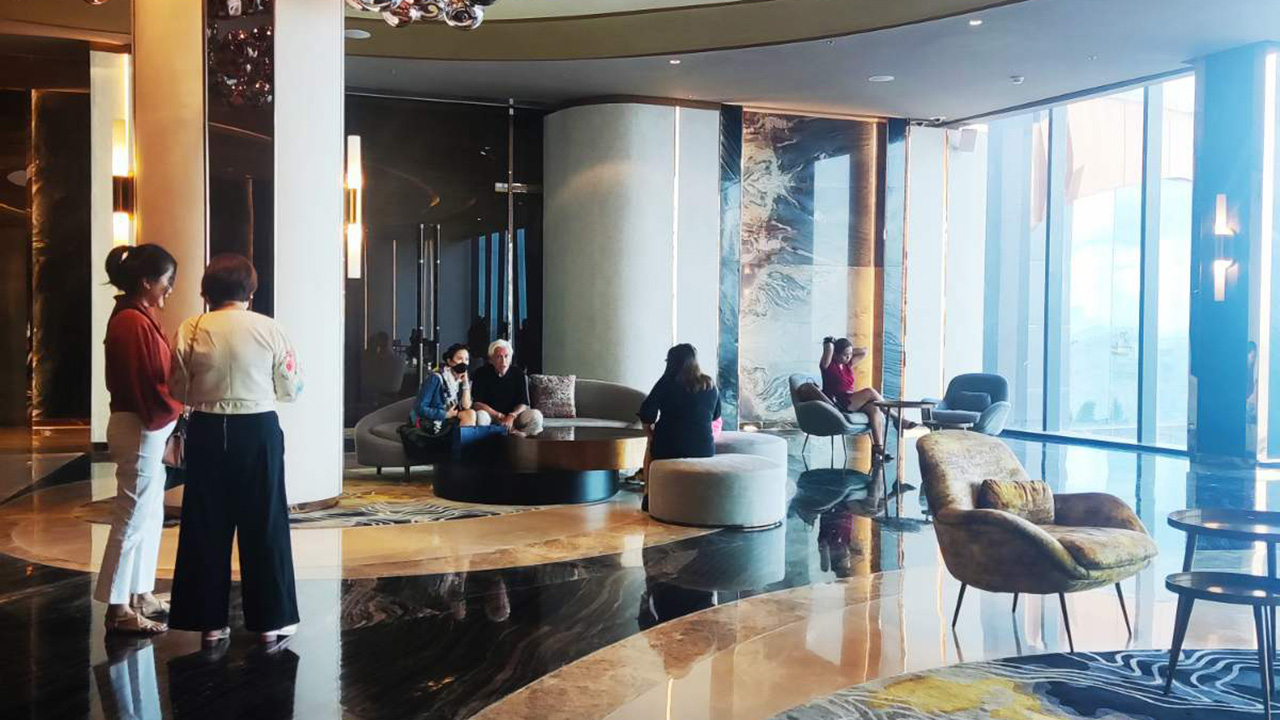
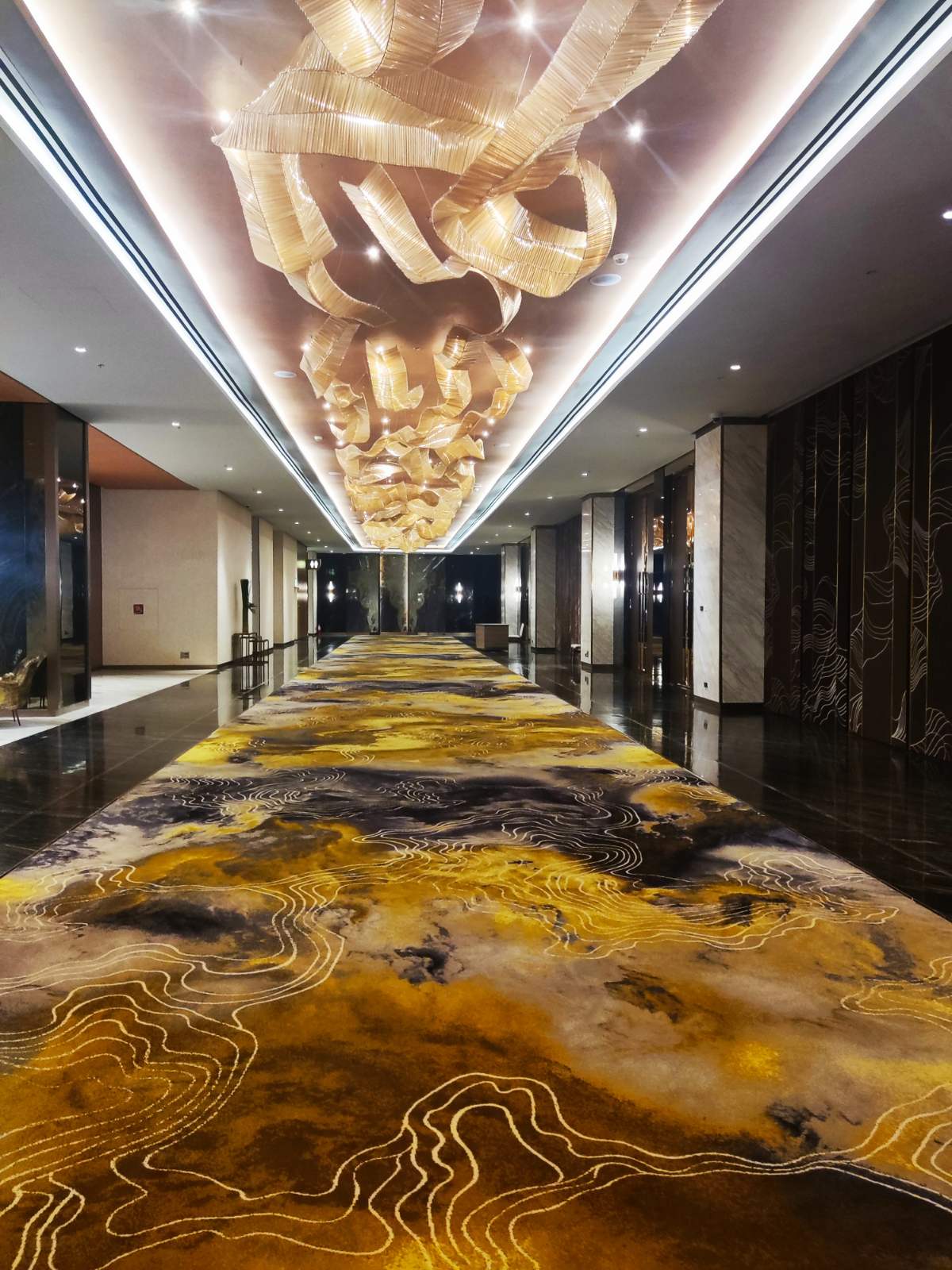
THE FILI Hotel, located within Cebu’s NUSTAR Resort and Casino, held the soft launch of its convention center this April.

“Noon, kung may budget tayo [In the past, for those with a budget], [there was only this one option] and nothing else. Nowadays, if you have the budget, why not also consider NUSTAR?,” said Jun Cordova, Fili Hotel’s director of sales and marketing.

The center has an area of 2,449 square meters with six-meter-high ceilings. It can be divided into three sections, with soundproof partitions in between, per Mr. Cordova during a March 31 media tour. The maximum capacity for a banquet setup using the entire space is 1,700, he added.

For theater seating, the capacity is 2,500.

“With the ongoing trend of wedding planners converting a ballroom into an oasis, ready na iyung ceiling and all [the ceilings and everything else are ready],” Mr. Cordova said.

“We can even have a car show here because we have car lifts,” he said, as he also noted the center’s usefulness for the MICE — or meetings, incentives, conferences, and exhibitions — industry.

(A 2020 forecast on the Philippines’s international and MICE tourism market projected revenues worth $22.5 billion by 2026.)

The Fili Hotel is the first of three hotel towers planned within NUSTAR Resort and Casino, which was developed by Robinson Land Corp.’s hospitality arm, Robinsons Hotels and Resorts.

The plan is for NUSTAR to be an integrated resort, according to its general manager, Paolo L. Campillo.

“It’s planned to be the largest and the best integrated resort outside of Metro Manila,” he told BusinessWorld.

“Coming up is the mall, with several luxury brands moving in there. We also have a water-themed park and theater coming up,” he said. “A lot of the events happening at resorts will soon be happening here.” — Patricia B. Mirasol

Danish company sees opportunities in solar solutions for PHL agri sector

STOCK PHOTO | Image by Pixabay from Pexels

GRUNDFOS Holding A/S, a Danish company, has announced its plans to expand its presence in the Philippines by introducing solar power solutions through local projects to boost the country’s agriculture sector.

“Solar energy presents an opportunity to tackle challenges in agriculture,”  Rick Holland, head of Grundfos Asia Pacific Water Utility Business, said in an e-mail to BusinessWorld on April 4.

“Grundfos continues to see climate smart farming tools and technologies make a difference by encouraging more efficient use of resources,” he added.

Grundfos, through its subsidiaries, provides liquid pumps for industries including agricultural, biofuel, wastewater, and water utilities.

“With agriculture being a highly resource intensive sector, more reliable, affordable and sustainable solutions are needed in the industry to meet these growing demands while boosting climate resilience across the food systems,” Mr. Holland said.

He also noted that as the Philippines transition to more renewables, solar energy presents opportunities to address challenges in the agriculture sector.

“There has been a surge in demand for the use of solar energy across different applications in the agriculture sector, including solar powered pumping systems, greenhouse heating, remote supply of electricity, and solar powered cooling systems,” he said.

Mr. Holland added that introducing such technologies also supports the country’s renewable energy targets.

Under the Philippine Energy Plan, the country is targeting to increase renewable energy in its energy mix to 35% by 2030, and 50% by 2040.

To date, coal-fired power plants still account for the biggest share in the country’s power mix with 57.5%, while renewable energy accounts for 23.4%. — Ashley Erika O. Jose

We will always have Paris

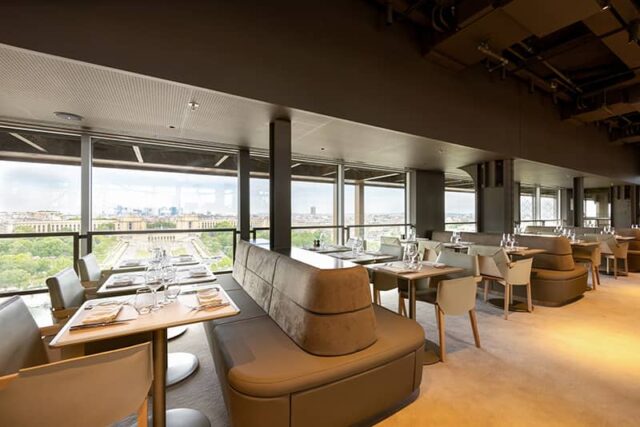
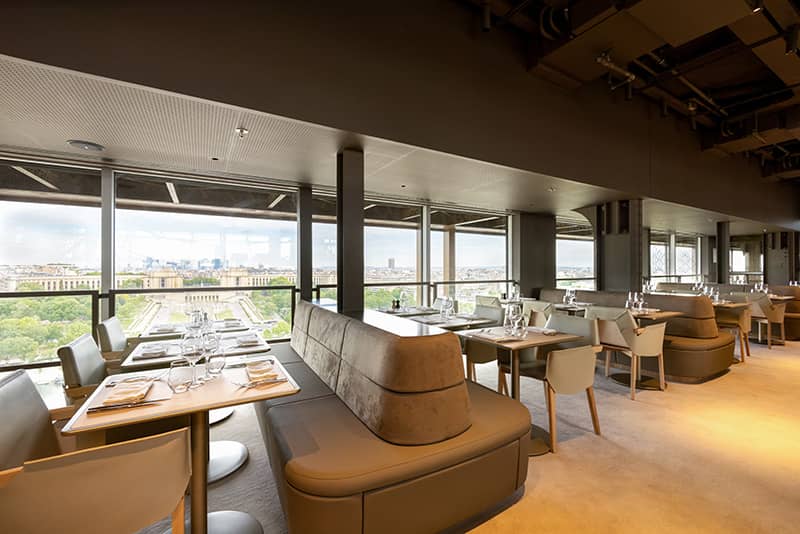
Madame Brasserie interior

Eiffel Tower’s tourist restaurant is still a good intro to the City of Lights

By Joseph L. Garcia Reporter

Restaurant Review
Madame Brasserie
Eiffel Tower, Paris

ACCORDING to legend, French author Guy de Maupassant, like many intellectuals in France near the turn of the century, hated the Eiffel Tower when it first opened in 1889 for the World’s Fair of that year. That didn’t stop him from eating lunch there almost every day — for it was only there where he couldn’t see the tower itself.

During a trip to Paris this reporter took in March, we had the pleasure of dining at the restaurant at the Eiffel Tower’s first level, Madame Brasserie. There is another restaurant on the second floor, the Jules Verne, with one Michelin star (and therefore, more expensive than the one below it).

Think about it: in dining in this restaurant, one gets a taste of French cuisine surrounded by a view of all of Paris. There’s very little gimmick here: it’s just great set design. From the windows, one can see the Seine and the Palais de Chaillot straight ahead, and a panoramic view of the 16th arrondissement.

Thankfully, we made our reservations months beforehand, as the lines to enter the tower were long. Even if our printed reservations managed to slip us through an entrance with a shorter line, we still had to share the lift with everybody else (liberté, égalité, fraternité, and all that). The crowd, as expected, looked touristy (ourselves included; as well as the woman with an upstate New York accent we talked to while we waited in line), save for three or four very well-dressed people who we discerned from their conversation, were there for an anniversary of sorts. The whole journey to the top was a treat, still: the line to the lift and the lift ride just gave one more time to observe the bones of the structure itself, while a glass tile at the viewing deck offered a view of the crowds teeming below.

We arrived for a casual lunch, priced at about 48 euros each, with a starter, a main course, and dessert; as well as two glasses of wine. The hostess could be friendlier, but our server that day (whose name escapes us) was a perfect picture of French hospitality: he had a perfect sense of timing (never too early or too late), always knew what to say, and helped finish our infantile French sentences to aid us in appearing more worldly and mature. The restaurant is helmed by Thierry Marx, a pioneer of molecular gastronomy, with several Michelin-starred restaurants across France (earning his first in 1988), and named Chevalier de la Légion d’Honneur in 2013.

Now, for the food: the family, cold on a windy spring day, unanimously decided on the Velouté de courge butternut, magret de canard fumé et châtaignes (the menu at the door thankfully came with a translation: Butternut squash velouté, smoked duck breast and chestnuts). Since there were three of us, we decided to try each other’s dishes: this reporter went with the Aile de raie à la Grenobloise, chou-fleur et noisettes torréfiées (Skate wing à la Grenobloise, cauliflower and toasted hazelnuts); le Beau-père (to my stepfather’s delight, the word for stepfather in French translated to “handsome father” in English) picked the Filet de volaille jaune fermière, mousseline de céleri trufée, et jus à l’orange (Farm chicken breast, celery mousseline with truffle, orange jus), and Maman (it sounds almost the same in almost any language) chose the Poitrine de cochon fondante de Monts du Cantal, lentiles Beluga, carottes et céleri (Tender pork belly from Monts du Cantal with Beluga lentils, carrots and celery).

The soup was a bit cold, and could have taken the experience to another level with the right temperature. Still, it was blessed with a great texture and an excellent and robust smoky flavor imparted by the duck. The skate — well, it turns out fish in browned butter tastes the same wherever you eat it, though the fish bones were so soft one could chew them — but we were very pleased with the freshness of the vegetables. Every bite had a snap and a little bit of fight in it (in a good way), as if the plant were still very much alive. The pork was very flavorful, with an unmistakable sweetish flavor that suggested a good life for the pig. The chicken was very tender and had a clean, almost creamy taste — and that’s just the flesh alone.

As for dessert, two of us chose the Mousse au chocolat noir intense, biscuit moellux au chocolat et streusel au cacao (Dark chocolate mousse, fondant sponge and cocoa streusel), while Maman chose the Riz de Camargue fondant végétal a la vanilles, poires confites et châtaignes (Creamy vegetal rice from Camargue with vanilla, pears confits and chestnuts). The chocolate mousse had little restraint and was almost as pure an expression of chocolate as can be; strangely enough, despite the intoxicating weight of its taste, it landed light as a feather in the stomach.

On paper, the dishes sound very uncomplicated. The magic (aside from the view, bien sûr) can be found in the local sourcing of the ingredients, their origins so proudly displayed on the menu. “As an artisan, my mission is to make the ephemeral memorable. My challenge is to create simple, healthy, pleasurable cuisine, as sustainable as the monument itself,” said Mr. Marx on the official website of the Eiffel Tower. It’s easy to turn one’s nose up at experiences made exactly for tourists, but why should one shy away from such a grand welcome? The bright and clear flavors of the dishes, paired with a view that showed off the best of Paris are salutes to the greatness of French soil and the people who live on it.

Cyberattacks on PHL gov’t, firms reach over 3,000

A man holds a laptop computer as cyber code is projected on him in this illustration picture taken on May 13, 2017. — REUTERS

SUCCESSFUL cyberattacks on the government and companies in the Philippines reached over 3,000 from 2020 to 2022, an official of the Department of Information and Communications Technology (DICT) said.

“The monitored attacks are approximately 3,000, while the detected threats are around 54,000,” DICT Assistant Secretary for CyberSecurity and Upskilling Jeffrey Ian C. Dy told reporters on the sidelines of the HackforGov event on Wednesday.

Mr. Dy said 60% of the more than 3,000 high-level attacks detected by the Philippine National Computer Emergency Response Team (CERT-PH) are attacks on the government.

“It is tagged as a threat when we find out that you are vulnerable and you need to do something about it —  for example, when your patches are not updated,” CERT-PH Chief George P. Tardio said. 

Data from global cybersecurity company Kaspersky showed the Philippines ranked second among countries most attacked by web threats worldwide in 2022.

This is two notches higher than its ranking in the previous year, when it recorded 50.54 million web attacks.

“Given the increased vulnerability of our nation’s digital landscape, it is crucial to protect the Philippines’ critical infrastructure by continuously improving our cyber preparedness and incident response capabilities,” DICT Undersecretary Paul Joseph V. Mercado said at the event.

Among its programs is the HackforGov event, a cybersecurity competition that aims to build capacity by providing students with hands-on experience in the various techniques used in the virtual world.

The DICT said there is a lack of cybersecurity professionals in the Philippines, as they estimate Certified Information Systems Security Professionals to be at just around 300 nationwide, majority of whom are in the private sector.

“It is a challenge. We are improving but not as quickly as we want, as fast as we want compared to other ASEAN (Association of Southeast Asian Nations) neighbors,” Mr. Dy said.

“The figures vary. Some research says that we should have at least 200,000 cybersecurity professionals within the next month to two years,” he added. — Justine Irish D. Tabile

BTr fully awards reissued bonds

BW FILE PHOTO

THE GOVERNMENT fully awarded the reissued 10-year Treasury bonds (T-bonds) it auctioned off on Wednesday at a lower average rate amid strong demand for higher-yielding longer tenors.

The Bureau of the Treasury (BTr) raised P25 billion as planned from the reissued 10-year bonds it offered on Wednesday as total bids reached P44.492 billion.

The bonds, which have a remaining life of nine years and five months, were awarded at an average rate of 6.142%, with accepted yields ranging from 6.05% to 6.18%.

The average rate of the issue was 23.60 basis points (bps) lower than the 6.378% quoted for the series when it was last offered on March 7 and 60.80 bps below the 6.75% coupon for the issue.

However, this was 1.50 bps higher than the 6.127% quoted for the nine-year bond and 7.50 bps above the 6.067% seen for the same bond series at the secondary market prior to the auction, based on PHP Bloomberg Valuation Service Reference Rates data provided by the Treasury.

“The Auction Committee fully awarded the reissued 10-year Treasury bonds at today’s auction. With 9 years and 5 months to maturity, the T-bonds (FXTN 10-69) fetched an average rate of 6.142%, lower than the previous average of 6.378% when it was last reissued in March 2023. The auction attracted P44.5 billion in total tenders, 1.8 times the P25-billion offer,” the BTr said in a statement on Wednesday.

“With its decision, the committee raised the full program of P25 billion, bringing the total outstanding volume for the series to P165 billion,” it added.

The T-bonds on offer fetched rates slightly above secondary market levels as the market demanded higher yields as the central bank’s key rate is higher than the rest of the curve, a trader said in a Viber message.

Still, expectations of a pause in the Bangko Sentral ng Pilipinas’ (BSP) tightening caused the paper’s average rate to be lower than the previous award, Rizal Commercial Banking Corp. Chief Economist Michael L. Ricafort said in a Viber message.

The BSP last month hiked benchmark interest rates by 25 bps to help bring down elevated inflation.

This brought the yield on its overnight reverse repurchase facility or its key rate to 6.25%.

Since May 2022, the central bank raised borrowing costs by a total of 425 bps.

The Monetary Board’s next meeting is on May 18.

The central bank may consider pausing its monetary tightening next month if April inflation does not accelerate, BSP Governor Felipe M. Medalla said over the weekend.

He said a pause in interest rate increases was possible “if the April CPI (consumer price index) is not higher than the March CPI” or if there is “zero or negative month-on-month inflation.”

Philippine headline inflation eased to 7.6% in March from 8.6% in February.

For the first quarter, inflation averaged 8.3%, higher than the BSP’s 6% forecast and 2-4% target for the year.

“Also, tonight’s US data may have been considered, so some players didn’t want to be aggressive,” the trader added.

March US consumer price index data was scheduled for release overnight.

The BTr wants to raise P160 billion from the domestic market this month, or P60 billion via Treasury bills and P100 billion via T-bonds.

The government borrows from local and external sources to help fund its budget deficit, which is capped at 6.1% of gross domestic product this year. — A.M.C. Sy

DoTr eyes PPP for LRT-2 West Extension project

LRT-2 / TWITTER

THE Department of Transportation (DoTr) is considering implementing the Light Rail Transit Line 2 (LRT-2) West Extension project through a public-private partnership (PPP) arrangement, following the proposal to combine the train system with the Metro Rail Transit Line 3 (MRT-3).

Karamihan kasi ng projects ng LRT-2 is ODA (official development assistance) -funded… pinagaaralan namin ngayon kung pwedeng i-PPP na ang West Extension project (Most of LRT-2’s projects are ODA-funded, and we are studying now if we can implement the West Extension project under PPP,” DoTr Undersecretary for Railways Cesar B. Chavez said in a chance interview on Tuesday.

In a previous interview, Light Rail Transit Authority (LRTA) Administrator Hernando T. Cabrera said the agency has been requesting the issuance of a budget document known as the multiyear obligational authority to signify a commitment to fund the LRT-2 West Extension project.

The P10.12-billion project, which will have three stations, will connect the current LRT-2 line that ends in Recto to Port Area, Manila.

However, Mr. Chavez said that the current plan is to bundle LRT-2 with MRT-3 for the privatization of the two train systems’ operations and maintenance.

Kasi ang direksyon namin ngayon, yung LRT-2 and MRT-3 i-bundle na by 2025 and beyond and the Secretary approved it by principle (Our direction right now is to bundle LRT-2 and MRT-3 by 2025 and beyond which the [Transportation] Secretary approved in principle),” he said.

“So, our job now is to transfer MRT-3 assets to LRTA because remember MRT-3 is just a project under the Office of the Secretary; therefore, there’s no benefit of board review, approval, and checks and balances,” he added.

Mr. Chavez said that it is better to transfer the assets of MRT-3 to LRTA to have the guidance of different sectors.

Sabi namin i-transfer na lang ito sa LRTA kasi nandoon ang NEDA (National Economic and Development Authority), andoon ang finance, ang budget and other members of the board with the private sector representatives (We said that we should transfer [MRT-3] to LRTA because that’s where NEDA, Departments of Finance and Budget and Management, board members with the private sector representatives are),” he added.

Once the assets are transferred, Mr. Chavez said that they can start the bundling of the operations and maintenance of LRT-2 and MRT-3.

DoTr Secretary Jaime J. Bautista said that his office “has already engaged ADB (Asian Development Bank) to help us identify who will be the operator of LRT-2 and MRT-3.”

The build, lease, and transfer agreement of the MRT-3 operator Metro Rail Transit Corp. is set to expire in 2025. — Justine Irish D. Tabile

Dining In/Out (04/13/23)


New restaurant complex opens at Montemaria Shrine

ABACORE Capital Holdings, Inc., a holding company involved in real estate, finance, and mining, has opened a restaurant complex at the Montemaria Shrine, a pilgrimage center in Batangas dedicated to the Blessed Virgin Mary. Featuring a spectacular view of Batangas Bay, this dining spot features a coffee shop called JKh Cafe and an authentic Chinese restaurant currently in soft opening. Over the next few months, various restaurants will be added such as a Chinese hotpot outlet. “With Filipinos visiting the Montemaria Shrine every year during this time, we aim for the restaurant complex to be a destination where they can relax after a busy day,” Antonio VF Gregorio III, Vice Chairman of AbaCore, said during the launch. For more information on JKh Cafe, visit their Facebook page JKh Cafe, Instagram @jkhcafe_, and Tiktok @jkhcafe2022.


Seattle’s Best Coffee’s new Summer Milkshakes

SEATTLE’S Best Coffee now offers its Summer Milkshakes. Available in Seattle’s Best Coffee branches nationwide for a limited time only, the Summer Milkshakes come in four flavors: Choco Nut, Ube Cream Cheese, Sweet Corn, and Avocado. Choco Nut Milkshake combines vanilla ice cream, milk, dark chocolate sauce, and milk chocolate peanut butter. A twist to a Filipino classic, the Ube Cream Cheese Milkshake mixes milk, ube (purple yam) ice cream, cheese froth and grated cheese on top. The Sweet Corn Milkshake is a blend of sweet corn ice cream, milk with grated cheese, and whole corn kernel as garnish on top. Finally, Seattle’s Best Coffee offers its original classic Avocado Milkshake, a crowd favorite that blends milk and avocado ice cream. The Summer Milk Shakes are now available for dine-in, take-out, pick-up, and delivery through Facebook Messenger, Grabfood & foodpanda.


Sheraton Manila Bay considers the children

SHERATON Manila Bay creates magical family activities and moments for kids and families staying at the hotel. For starters, guests coming in with their little ones will enjoy complimentary gelato or chocolate chip cookies for kids at &More by Sheraton. Board games and Uno cards are also available at the Energy Zone for the whole family to play. The hotel is also cooking up an Interactive Kitchen Experience for Junior Chefs and a Towel Art Masterclass for kids aged 11 years and below. For reservations call 5318-0788 or e-mail reservations.manilabay@sheraton.com. Sheraton Manila Bay is located at M. Adriatico cor. Gen. Malvar Streets, Malate, Manila.


Mang Inasal holds National Halo-Halo Blowout on April 16

MANG INASAL will hold the National Halo-Halo Blowout on April 16 at over 500 Mang Inasal stores nationwide. As part of its year-long 20th anniversary celebration, the Mang Inasal National Halo-Halo Blowout will offer a ₱20 discount for the Mang Inasal Extra Creamy Halo-Halo Small, bringing down the price to P49. The one-day promo will be available exclusively for dine-in and takeout. Aside from Extra Creamy Halo-Halo, Mang Inasal also offers Crema de Leche Halo-Halo.


Jollibee offers floats, sundae as Summer Coolers

TO counteract the summer’s energy-draining heat, Jollibee has launched its Summer Coolers — the Choco Float, Coffee Float, and Mango Graham Fudge Sundae. The floats are refreshing drinks topped with Jollibee’s signature vanilla soft-serve ice cream: the Choco Float is a rich chocolate drink topped with ice cream, and the Coffee Float is coffee drink topped with ice cream. The Mango Graham Fudge Sundae is vanilla soft-serve ice cream topped with sweet mango chunks and puree, crunchy graham bits, and chocolate syrup. Jollibee’s Summer Coolers are available nationwide for a limited time only, with the floats available for P55.00 and the sundae for P59.


Holy Month Retreat at The Oriental Hotels

HOLY Week may be over, but one can still have a relaxing, refreshing and reflective retreat with The Oriental Hotels and Resorts, one of the country’s fastest-growing home-grown hospitality chains. Dubbed the Holy Month ReTreat, the offerings run for the month of April to provide a respite from the long, hot summer. The Oriental Leyte, a four-star resort hotel in the Eastern Visayas, is offering a P3,999 promo which includes an overnight stay, breakfast for two, use of the pool and gym, and a 10% discount on ala carte and thematic dinner at Samsara Restaurant, as well as The Spa. Proxy Hotel in Legazpi City has a P3,000 room promo which includes breakfast for two, use of the recreational arcade, board games, and swimming pool. The Oriental Bataan beckons with a P3,900 offering which covers an overnight stay at a deluxe cellar room, breakfast for two, use of the facilities, and 10% off at all food and beverage outlets. Nestled at the foothills of Mt. Mariveles, the hotel is situated near the Death March Km 0 starting point and Mount Samat Dambana ng Kagitingan. The newly opened The Inns in Bacolod City, a boutique business hotel, has a P999 net room offer for two persons, which also goes with a 5% discount on ala carte orders. Lastly, the Thai-themed Oriental Luxury Suites at the Tagaytay Ridge has a 30% discount on all room categories on weekdays (Sundays to Thursdays) except holidays, with breakfast for two at the veranda overlooking the panoramic Taal Volcano and Lake. The hotel is pet friendly. Visit www.theorientalhotels.com for promo details or follow the social media accounts of the hotels on Facebook and Instagram.


A taste of Tropical Paradise at Newport World Resorts

ALL through April, guests at Newport World Resorts get to indulge in dishes that invoke the feel of the tropics and relax with refreshingly cold drinks and cocktails that bring that island vibe. At the Newport Garden Wing, there is Ube Bubble Milk Tea with tapioca pearls at the Victoria Harbour Cafe. Pair this creamy sweet drink with a set of buchi balls that come in mango, chocolate, and custard fillings. Grab a taste of the island’s treasures at Silogue with a plate of Buttered Seafood in Salted Egg. Pair it with Lemonade Cloud, a classic lemonade blended with Yakult. Happy 8 welcomes the summer with lapu-lapu partnered with preserved radish in a soy sauce. As the sun sets, live OPM performances, and La Roja, a fruity blend of vodka, Midori melon liqueur, cranberry juice, and maraschino cherry, can be had at El Calle Food and Music Hall. At the Newport Grand Wing, Casa Buenas offers Azul Tropical, a concoction of blue curaçao, pineapple and orange juice, Malibu rum, and squeezed lemon, topped with an orange slice. Settle down with a hearty pan fried chicken adobo and coconut rice, served in a coconut shell wrapped in pandan leaves. Take a breather at Holiday Inn Express and cap off the night with a Filipino Fun Float topped with vanilla ice cream and chocolate syrup. For more information on dining offers for April, visit www.newportworldresorts.com and follow @newportworldresorts on Facebook and Instagram, and @nwresorts on Twitter.


Honeybon launches brown sugar drinks, promos

HONEYBON has a new perfect match for its sweet cakes and pastries. It is introducing a Brown Sugar Drink series which is now available at its SM Megamall branch. Honeybon’s Brown Sugar Latte is a creamy latte with a special kind of sweetness from brown sugar syrup and a chew of kanten jelly, bits of soft gelatin with slight sweetness from brown sugar. The Brown Sugar Americano is a cool, refreshing drink made of espresso topped with brown sugar syrup and kanten jelly. The Brown Sugar Milk is perfect for those who are avoiding caffeine. It’s made of fresh creamy milk, brown sugar syrup, and kanten jelly. As part of its launch promotions, customers can get any available cake slice for P100 when they purchase a brown sugar drink. Honeybon’s Brown Sugar Series is also available through delivery apps Grab Food and Food Panda.

Humanizing CX: Retaining the human touch in the digital age

TRUSTPAIR.COM

By Irene Xu

DIGITAL has long become the main avenue for meeting customer expectations as it offers a more convenient and holistic way of interacting with the brand. As a result, customer expectations have skyrocketed to new heights. Banks today cannot afford to lag, and maximizing the data at their disposal is critical.

Despite the multitude of options banks have in pursuing digital transformation, many of today’s financial institutions still grapple with reimagining and elevating their customer experience (CX). Ad hoc approaches to tech-investment decisions may work adequately in the short-term, but in the long run, leads to a proliferation of systems that cannot communicate with each other, can be difficult or unable to integrate, scale or modify.

More critically, it is almost impossible for banks to make consistent, coordinated decisions over customer engagement or interaction due to silos and prolonged decision-making lead times that foil efforts to offer personalized customer experiences at scale.

With years of experience working with the banking industry, we believe the first step to creating relevant, moments-based CX is about deeply understanding customer journeys. When banks can understand the emotions and the ever-evolving needs of customers across each touchpoint, they can enhance and tailor their offerings accordingly. Consumers, too, will delight in a frictionless user experience that offers convenience, speed, greater choice and more informed decision-making about the financial decisions that they will make.

Without that key first building block, however, customer experience will be mired in irrelevant marketing campaigns with poorly articulated messages and frustrating customer service interactions. Customers and employees alike demand more transparency, fairness, and value from banks they do business with. It is incumbent on banks to meet these demands by continually refining their CX strategy to forge better connections with customers, especially through strategic partnerships with non-financial players or financial technology (fintech) firms. As CX continues to transform, it is no longer a linear movement. The customer journey is broken into numerous touch points where decisions must be made with high relevance at scale, and in real time.   

Innovation is crucial for any business aiming to drive sustainable growth and ensure future success. But blending innovation with a human-first mentality provides the impetus for lasting impact. The surge of online engagements is not only an illustration of the rising need to humanize CX in the wake of the pandemic, but also provides new opportunities to reimagine the banking experience through insights that boost customer mapping. With customers increasingly dependent on technology, digitization that retains the human touch is essential to differentiation and gaining imperceptible insights that enable the customer journeys to be enriched via discovery of new trends and swifter forecasting. 

This is achieved by powering CX with artificial intelligence (AI). Integrating AI to uphold customer centricity, by way of gathering information about the consumers and their personal feedback, humanizes CX and enables banks to deliver enhanced experiences that are genuinely caring. In addition, adaptive planning, journey activation, and a real-time decision engine enable banks to create customer experiences that increase customer loyalty and engagement, thus bolstering sales and overall profitability.

FEWER HUMAN INTERACTIONS WITHOUT LOSING THE HUMAN TOUCH
Humanizing the customer experience goes beyond just knowing and understanding what the customers need. Understanding the “why” and “what,” will equip banks to better embed their products and services to meet the needs of their customers, to create bespoke experiences throughout their banking engagements.

For many banks, human-to-human interaction has always been the norm. It was a given in the not-too-distant past that, upon entering a bank, a customer may go directly to a bank teller who would either provide assistance or offer opportunities for the customer’s benefit — be it opening a savings account, purchasing insurance, or applying for a loan. This created genuine connections with the customer.

Now that the majority have gone digital, whether they be mobile devices, internet banking, or call centers, human agents are now backed by digital solutions with automation. It is undeniable that the future of CX is digital. While human interactions remain important, incorporating AI into digital CX platforms will empower banks to offer a much more holistic and hyper-personalized experience, thus enhancing the overall experience of each individual customer.

A DATA-DRIVEN APPROACH TO ADDRESSING CONSUMER NEEDS
According to a report by IDC, by 2024, 25% of brands in Asia-Pacific are expected to incentivize consumers to share personal data in exchange for cash rewards, more personalized treatment and exclusive experiences. However, data without context is just data. While many banks have already deployed AI or are working on it, AI isn’t just about crunching data and building models, it’s about enabling more personalized, frictionless and intimate experiences for customers.

For example, with greater knowledge about their customers, bank agents can now manage their customers more effectively, regardless of whether the interaction takes place face-to-face at a branch, or if a customer calls a hotline for assistance. At the same time, banks can also use the insights derived from these engagements to further develop their products and services, enhance their employee training programs and discover untapped opportunities to deliver more innovative offerings to their customers.

As digitalization continues apace, changing the way people interact with banks, customer expectations likewise grow. In tandem with a highly competitive financial services landscape, the urgency of effective digital transformation directly impacts banks’ ability to delight customers and, ultimately, improve the bottom line. With open banking development emerging as a new reality, enhancing business ecosystem strategies and hyper-personalization will be the cornerstone of rewiring customer-facing functions and driving banks to become customer-obsessed and to reignite growth.


Irene Xu is the Principal Industry Consultant, Banking at SAS.

TDF yields drop on bets of pause in rate hikes amid easing inflation

BW FILE PHOTO

YIELDS on the Bangko Sentral ng Pilipinas’ (BSP) term deposits went down on Wednesday, with investors betting on a tightening pause amid easing inflation.

The central bank’s term deposit facility (TDF) attracted bids amounting to P409.621 billion on Wednesday, above the P300 billion on the auction block as well as the P364.717 billion seen a week ago for a P230-billion offer.

Broken down, tenders for the seven-day papers reached P251.915 billion, higher than the P170 billion auctioned off by the central bank and the P213.053 billion in bids for a P130-billion offer seen the previous week.

Banks asked for yields ranging from 6.375% to 6.64%, wider and lower than the 6.5% to 6.6655% band seen a week ago. This caused the average rate of the one-week deposits to decline by 4.20 basis points (bps) to 6.5939% from 6.6359% previously.

Meanwhile, bids for the 14-day term deposits amounted to P157.706 billion, higher than the P130-billion offering and the P151.664 billion in tenders for a P100-billion offer seen on April 5.

Accepted rates were from 6.5995% to 6.6566%, slightly lower and narrower than the 6.5% to 6.6772% margin recorded a week ago. With this, the average rate for the two-week deposits inched down by 1.03 bps to 6.6362% from the 6.6465% logged in the prior auction.

The BSP has not auctioned off 28-day term deposits for more than two years to give way to its weekly offerings of securities with the same tenor.

The term deposits and the 28-day bills are used by the central bank to mop up excess liquidity in the financial system and to better guide market rates.

“The BSP raised the volume offering for the TDF auction to P300 billion from P230 billion. Based on actual bids received last week, the total offer volume was reallocated between the 7-day and 14-day tenors at P170 billion (from P130 billion) and P130 billion (from P100 billion), respectively. Total tenders received reached P409.621 billion, which was well above the BSP’s expected volume range,” BSP Deputy Governor Francisco G. Dakila, Jr. said in a statement.

“The results of the TDF auction continued to reflect market participants’ high demand for both tenors. Moving forward, the BSP’s monetary operations will remain guided by its assessment of the latest liquidity conditions and market developments,” Mr. Dakila added.

TDF yields went down after recent signals of a possible pause in rate hikes after inflation eased to a six-month low in March, Rizal Commercial Banking Corp. Chief Economist Michael L. Ricafort said in a Viber message.

The central bank may consider pausing its monetary tightening next month if April inflation does not accelerate, BSP Governor Felipe M. Medalla said over the weekend.

He said a pause in interest rate increases was possible “if the April CPI (consumer price index) is not higher than the March CPI” or if there is “zero or negative month-on-month inflation.”

Headline inflation eased for a second consecutive month in March to 7.6% from 8.6% in February.

For the first quarter, inflation averaged 8.3%, higher than the BSP’s 6% forecast and 2-4% target for the year.

The Monetary Board last month hiked benchmark interest rates by 25 bps to help bring down elevated inflation.

This brought the yield on its overnight reverse repurchase facility or its key rate to 6.25%.

Since May 2022, the BSP has raised borrowing costs by a total of 425 bps.

Its next meeting will be held on May 18. — Luisa Maria Jacinta C. Jocson

PHL tour operators optimistic on sustaining growth

THE TRAVEL sector is bullish on sustaining its growth and taking environmental responsibility for the rest of 2023, as more tourists were seen going on trips during the Holy Week.

Fe Abling-Yu, president of the Philippine Tour Operators Association (PHILTOA), said that families flocked to various beach destinations like Palawan, Siargao, and Boracay, filling hotels and resorts to the brim over the extended holiday break.

“We’ve observed that tourism is simply back,” she said in a speech at the latest PHILTOA membership meeting on April 12.

She added that this has led to ecotourism and sustainable development being an important theme for many in the sector.

The Department of Tourism (DoT) previously said that 2023 will see the full recovery of domestic tourism. According to DoT Secretary Christina G. Frasco, “revenge travel” will spur enough growth to reach 122 million domestic trips, the industry’s pre-pandemic numbers.

“We realize that tourism can no longer just be about the numbers or quantity but rather quality,” she said at an ecotourism event in March.

The DoT is currently working with the Department of Environment and Natural Resources and the Department of Interior and Local Government to establish a National Sustainable Tourism Council.

Geoff Andres, property president at City of Dreams Manila, said that luxury hotels and resorts must also bear the responsibility of reducing their carbon footprint.

“Luxury and sustainability can go hand-in-hand. We’ve found that eco-luxury resonates with our customers,” he said at the PHILTOA event. “City of Dreams aims to be carbon neutral by 2030.”

He added that they have eliminated 99% of their plastic water bottles and replaced them with glass bottles, effectively diverting 12-million single-use plastics away from landfills in a year

POTENTIAL IN QUIRINO
Quirino Province, located in the Cagayan Valley in Region II, is seen as a viable tourist destination due to its mountain, river, and waterfall spots perfect for adventure lovers like campers, bikers, and motorists. However, only ecotourism can keep this mostly untouched treasure from being destroyed.

The province has 25 waterfalls, 36 cave systems, and thousands of hectares of forest cover, largely undiscovered compared to the Baguios, Tagaytays, and Sagadas of the country, said Dakila Carlo E. Cua, governor of Quirino Province, in an interview with BusinessWorld.

“This will only remain viable if we protect it. That’s why we promote ecotourism as a major pillar in the development of Quirino,” he added.

In a presentation to PHILTOA, he proposed familiarization tours so that the travel sector can better utilize the province’s strengths and draft plans for more tours. He also said a memorandum of agreement involving DoT, PHILTOA, and LGUs can better facilitate ecotourism efforts.

PHILTOA’s Ms. Abling-Yu agreed that partnerships with provinces like Quirino are integral in ensuring the tourism sector is on the same page in developing the Philippines’ high-potential places.

Mr. Cua also said that Quirino aims to be the first province to achieve a net-zero carbon rating, which they began by banning single-use plastics and implementing tree-planting projects.

“We host part of the Sierra Madre mountain range, which represents 40% of the country’s forest cover, and the longest river system in the Philippines, Cagayan River,” he said.

“With this at stake, we believe that investing in planet earth is every citizen’s responsibility.” — Brontë H. Lacsamana

ADVERTISEMENT
ADVERTISEMENT