Home Blog Page 4995

Regulator to act on NGCP’s AS appeal this month

THE Energy Regulatory Commission (ERC) expects to rule on a request by the National Grid Corp. of the Philippines (NGCP) to seek monthly extensions on its ancillary services agreements.

“We are expecting the evaluation memo this week so we can resolve it within the month,” ERC Chairperson and Chief Executive Officer Monalisa C. Dimalanta said in a Viber message to BusinessWorld.

The ERC said that it is reviewing the NGCP’s motion for reconsideration and will rule upon the same “expeditiously.”

The NGCP is required to enter into standby power contracts with power generators in case baseload power levels drop to where the grid operator will need to ration power.

The contracts to tap standby power, known as ancillary services (AS), entail costs which the NGCP has warned will lead to higher power bills for consumers.

The NGCP is required by law to maintain a minimum level of AS power in reserve as a safety buffer in the event baseload plants fail.

On March 28, the ERC said it received a motion for reconsideration from the NGCP after the commission denied NGCP’s request for an extension to its AS procurement exercise.

After the ERC rejection, the NGCP warned of possible power supply interruptions during dry season.

The Department of Energy (DoE) has said that it would not intervene as it is also awaiting the ERC ruling on NGCP’s appeal.

The NGCP had sought permission from the DoE for month-to-month extensions of its ancillary services procurement agreement. — Ashley Erika O. Jose

Philippines to assume rotating presidency of G24

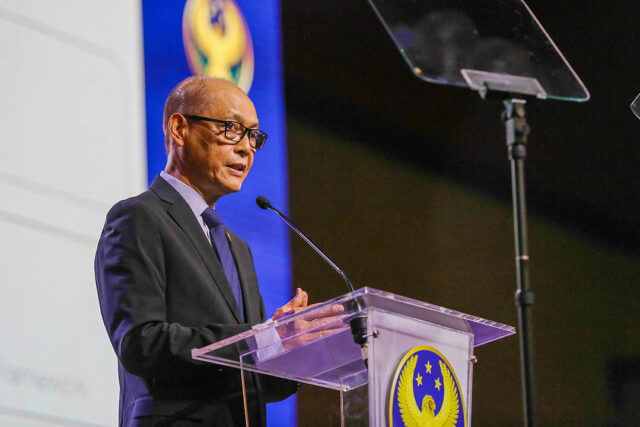
BANGKO SENTRAL NG PILIPINAS GOVERNOR BENJAMIN E. DIOKNO — PHILIPPINE STAR/ GEREMY PINTOLO

FINANCE Secretary Benjamin E. Diokno will be appointed the next chairman of the Intergovernmental Group of Twenty-Four (G24), with his term to start in October.

During the spring meetings of the International Monetary Fund (IMF) and the World Bank (WB), Mr. Diokno told BusinessWorld that he will chair the governing body of the G24 for 12 months.

Mr. Diokno is currently the first vice-chair of the G24 Bureau, the executive arm of the G24. It consists of the chair, the first and second vice-chair, and two previous chairs.

The Intergovernmental Group of Twenty-Four on International Monetary Affairs and Development, or G24, was established in 1971 to help coordinate the positions of developing countries on international monetary and development.

The governing body of the G24 meets twice a year to discuss key global issues, preceding the Spring and Fall meetings of the IMF-WB. The communique emerging from the meetings reflects the consensus views of member countries.

“The Minister of the Chair-country serves for a term of one year, extending from the conclusion of the Annual Meeting of Ministers to the subsequent year’s Annual Meeting,” according to the G24 website.

“The Chair country takes responsibility for preparing for meetings and running the press conference, together with the two Vice-Chairs. National officials from the office-bearer countries are assisted in this task by staff from the G24 Secretariat and the offices of their Executive Directors in the IMF/World Bank,” it said.

Mr. Diokno represented the Philippines at the G24 meeting this month in Washington DC. Member countries discussed how multilateral institutions such as the IMF and the WB can effectively support the policy efforts of emerging markets and developing economies.

The Philippines expects to obtain around $19.1 billion worth of official development assistance this year. Around $9.2 billion worth of loans will come from multilateral development partners and $9.8 billion in loans from bilateral lenders. — Keisha B. Ta-asan

Speaker bats for digital infra partnerships with US, India

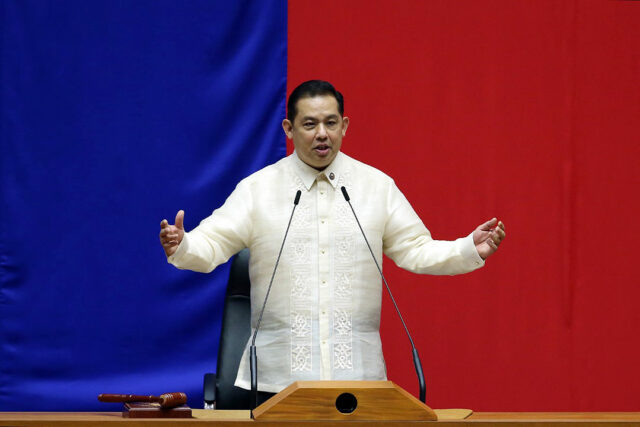
House Speaker Ferdinand Martin G. Romualdez — PHILIPPINE STAR/KRIZ JOHN ROSALES

SPEAKER Ferdinand Martin G. Romualdez has proposed partnerships with the US and India to build digital public infrastructure in the Philippines.

“It is very important for the Philippines, India, and the US to lead in this digital public infrastructure initiative because nations have much to gain from this,” he said following the Digital Public Infrastructure lecture on Saturday at the International Monetary Fund headquarters in Washington, DC.

He said that developing the Philippines’ digital infrastructure “is very much aligned with the campaign promise of President Ferdinand R. Marcos, Jr. to speed up the country’s digital transformation.”

The House of Representatives passed on third reading an e-governance bill on March 6, which “seeks to shift the entire bureaucracy to the digital space for faster and transparent delivery of services, and for better engagement with the public,” according to Mr. Romualdez.

A counterpart bill in the Senate is currently at the committee level.

If passed into law, the digitization of paper documents and processes is expected to encourage cooperation between the government and the private sector in improving the ease of doing business.

The information technology and business process management industries in India account for over 55% of the global outsourcing market.

The Indian government also launched its Digital India Mission in 2015 to focus on using technology and digitalization to enhance governance.

Meanwhile, the United States Agency for International Development in January allotted $18 million to help Philippine small and medium enterprises enhance their digitalization transformation. — Beatriz Marie D. Cruz

Struggle for liveable wage highlights need for more trade unions, labor leader says

PHILSTAR

By John Victor D. Ordoñez, Reporter

THE struggle to make minimum wages liveable points to the need for more trade unions, not just to negotiate for better pay but also to help workers seek better working conditions, the Federation of Free Workers said.

“We need to organize more workers (into) labor unions to negotiate collective bargaining agreements, support worker-friendly policies, and encourage employers to adopt better practices,” Jose G. Matula, federation president, said in a Viber message.

He was responding to a study by the research firm Picodi.com, which indicated that it would take Filipinos about 270 years to earn $1 million.

The Philippines ranked 89th out of 102 countries in the time it would take for an average worker to earn that amount, according to a report dated April 12.

Switzerland had the shortest time at 14 years and three months, based on the country’s minimum wage. Picodi said it summed up all the money an average worker in each country took home and ranked countries accordingly.

“Our workers’ goal of catching up to Switzerland or other countries that are ahead of us in terms of wages may seem like an impossible dream as the gap could be hundreds of years,” Mr. Matula said.

He said there is also a need for more representatives from labor in Congress who can champion worker rights and liveable wages.

Only 4.2% or 1,464 of establishments with 20 or more workers had registered unions in 2020, the Philippine Statistics Authority said in August.

Unemployment rose 4.3% month on month to 2.48 million in February. Job quality, a measure of how many employees are seeking more work, improved to 12.9% from 14.1% in January and 14% a year earlier.

Legislators have sought to pass laws to raise wages for workers in the private sector to help them deal with the rising prices of basic goods.

Last month, the Unity for Wage Increase Now labor coalition sought to raise the P570 daily minimum wage in Metro Manila to P1,100. The region’s wage board approved a P33 hike in the minimum wage last year.

Wage boards can only act on wage increase petitions a year after a region’s last wage order.

The minimum living wage of a family of five in Metro Manila should be at least P1,008, according to the think tank IBON Foundation.

“Workers should be involved in efforts to improve wages and work conditions not only in Metro Manila but all over the country,” Mr. Matula said.

Future-proofing with the Metaverse

The Metaverse has been positioned as the next phase of the internet. It makes use of several innovations in technology, from extended reality (XR) to artificial intelligence (AI), to enable new digital experiences.

With the increasing focus on how to appropriately regulate data and the use of AI, digital governance is becoming even more crucial. Similarly, in the future of the Metaverse, effective board oversight will be just as essential and serve as a significant difference between firms that thrive and those that struggle.

As mentioned in my previous article, “The Metaverse beckons: Is it time to explore?” published in this column in June 2022, the Metaverse can be defined as a virtual world where people can take on digital identities. The key characteristics of the Metaverse include (1) Persistence: where your central digital identity is maintained even as you enter and leave the Metaverse; (2) Ownership: where everything you earn or purchase in the virtual world is certified and attributed to be truly yours; (3) Interoperability: where you can carry what you own and use it in other virtual places, and (4) Decentralization: where there is no central organization that dictates the rules of the space, and is instead defined by the users themselves.

By understanding the opportunities as well as risks the Metaverse presents, boards can provide effective oversight and value creation.

OPPORTUNITIES FROM THE METAVERSE
A wide range of use cases, including entertainment, education, commerce, and even virtual prototyping, can be expected from the Metaverse. More immersive extensions of entertainment are already taking place in virtual worlds on gaming platforms like Fortnite and Roblox, such as a celebrity concert held on Roblox that received almost 37 million visits, according to Wired UK.

The synergy between digital twins — defined as digital versions of their physical counterparts in the real world — and the Metaverse in the working world is exciting. Before making changes in the real world, a digital twin can be used to test new policies or corporate decisions online. Digital twins can assist with tasks that include product creation, urban planning, and even customer experience design when combined with the Metaverse immersion.

Boards may assist their organizations in seeing the value of leveraging these platforms for internal learning requirements, particularly for Gen Z and younger frontline employees, in addition to external customer interaction. New hires can have the opportunity to tour their workplace before starting for a much more immersive virtual onboarding.

POTENTIAL RISKS
As the Metaverse becomes mainstream, it can give rise to new risks. Similar to the risks today arising from the widespread use of the internet, increasing participation and commercialization of the Metaverse is likely to exacerbate existing issues, ranging from online safety to data privacy.

It is imperative for boards to fully understand the risks magnified by the Metaverse and include the related technical and social risk subjects in the company risk management process, given broader ethical concerns regarding the use of technologies to influence human behavior. Privacy issues are the first ones to consider, particularly in how information will be used due to the variety of biometric and emotional data that is likely going to be collected through Metaverse hardware.

Depending on the applications being used in the Metaverse, boards must concentrate on protecting the privacy of consumer and employee data.

Boards must also be aware of security concerns in three key areas: devices, fraud, and identity. Attacks may target Metaverse hardware, such VR headsets, and use them to rob unknowing users of their private information. The Metaverse will also likely give rise to more sophisticated or advanced phishing and counterfeiting attacks, including stealing non-fungible tokens (NFTs) and scamming for wallet credentials. Moreover, there are issues of digital identity to consider, where compromised user identities can lead to digital identity theft.

THREE ACTIONS THAT BOARDS CAN TAKE

1. Determine applicability and long-term value

Boards will have to adopt a critical and measured perspective toward the Metaverse and its applicability to the organization. They need to evaluate whether they are engaging the Metaverse only as a response to a trend or if it truly offers a specific benefit that enables long-term value without compromising the core principles of the business. This will help influence if the enterprise risk management program of their organization will be concentrated on monitoring the achievement of strategic goals from investments in the Metaverse.

As boards determine the Metaverse’s applicability, they must consider if they have the necessary expertise to manage the risks that arise from it to protect its value. They should look into enabling tools to help identify and quantify the resulting risk scenarios accordingly and facilitate management in developing responses to them. To complement this, boards should determine if the business has teams with enough age, identity, experience, and cognitive diversity to comprehend the technological, business, ethical, cultural, and legal aspects of the Metaverse use cases so that they can drive actions in improving the thoughtful adoption of it.

2. Prioritize oversight based on purpose and risk

The board is responsible for applying due diligence and supporting technology investments to boost the organization’s strategy, purpose, and values. In line with this, they must understand the extent and purpose of why the Metaverse is being leveraged by the business. In the gaming industry for example, close oversight is necessary because investments in the Metaverse can be instrumental in delivering differentiated services or goods of a gaming company.

In other cases, the Metaverse may only be used solely for marketing purposes, but there would still be associated risks — particularly if it can jeopardize the company’s reputation or legal standing. Another example would be the buying and selling of digital assets to facilitate Metaverse activity, in which boards need to understand the legal and accounting repercussions of these operations. Depending on the purpose and related risks, the level of oversight will need to be carefully considered. Regardless of this however, Boards have to consider if they will need additional investments in compliance, data privacy, and fraud prevention.

3. Recognize laws and moral standards

 Boards can help management execute a Metaverse plan by making the business aware of any legal and compliance challenges and enabling them to address these. Furthermore, they can explore how businesses can collaborate with policymakers to develop workable laws and regulations that foster innovation while upholding human rights and providing value to relevant stakeholders.

Boards should consider what “code of conduct” or ethics guidelines can be applied to foster the constructive cooperative engagement in the Metaverse world of the company and minimize its risks. In parallel, they must be conscious of any new governance models that may need to emerge from Metaverse activities and pivot on how these can be considered in their enterprise risk management program.

SEIZING OPPORTUNITIES THROUGH THE METAVERSE
With the Metaverse bringing about exciting new ways to live and work through an immersive virtual world, boards must understand the strategic opportunities and risks associated with it to provide effective oversight. Only then can they effectively influence investment decisions, evaluate risks, and seize their future in the Metaverse.

This article is for general information only and is not a substitute for professional advice where the facts and circumstances warrant. The views and opinions expressed above are those of the author and do not necessarily represent the views of SGV & Co.


Lee Carlo B. Abadia is a technology consulting principal of SGV & Co.

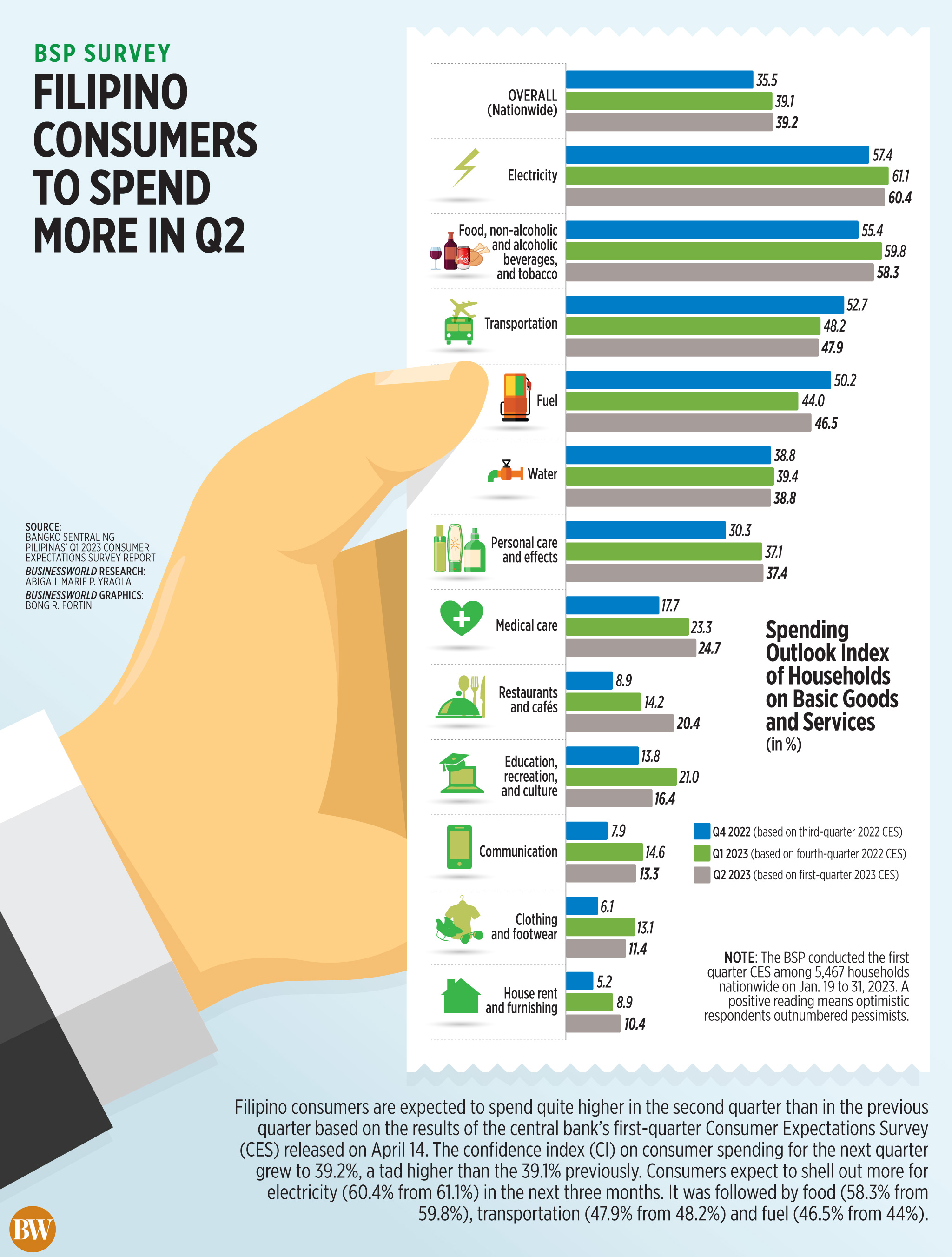
BSP survey: Filipino consumers to spend more in Q2

Consumers were less pessimistic in the first quarter due to their positive outlook on the availability of more jobs and permanent employment, higher income, and continued recovery from the public health crisis, according to the Philippine central bank. Read the full story.

BSP survey: Filipino consumers to spend more in Q2

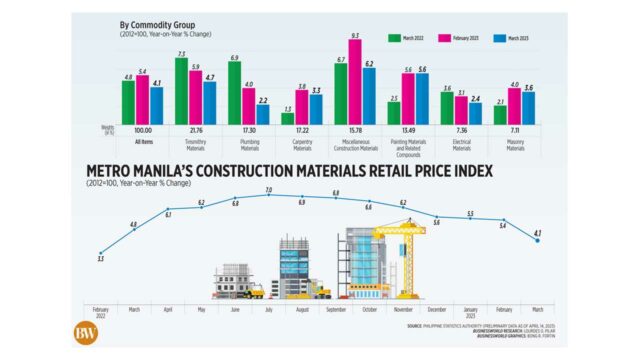
Metro Manila’s construction materials retail price index

THE RETAIL price growth of construction materials in Metro Manila slowed to 4.1% year on year in March, the Philippine Statistics Authority (PSA) reported on Friday. Read the full story.

Metro Manila's construction materials retail price index

Manila won’t meddle in Taiwan question, says security agency

TAIWAN STRAIT — A crew stands lookout on the flight deck as the Arleigh-Burke class guided missile destroyer USS Barry (DDG 52) transits the Taiwan Strait during routine underway operations. — U.S. NAVY PHOTO BY ENSIGN SAMUEL HARDGROVE

By Kyle Aristophere T. Atienza, Reporter

THE GOVERNMENT of Philippine President Ferdinand R. Marcos, Jr. would adhere to the One China Policy as far as Taiwan is concerned, the National Security Council (NSC) said after Beijing challenged Manila to oppose Taipei’s independence push.

In a statement on Saturday night, NSC spokesman Jonathan E. Malaya said the Philippines has “no intention of interfering in the Taiwan issue and will not allow itself to be used by other countries to interfere in the said issue.”

Chinese Ambassador Huang Xilian earlier asked the Philippines to oppose Taiwan’s independence if the country “cares genuinely” about the more than 150,000 overseas Filipino workers (OFW) there.

Mr. Malaya said the Philippines observes the One China Policy, which states that Taiwan is part of China and “subscribes to the Association of Southeast Asian Nations principle of noninterference in approaching regional issues.”

“Our primordial concern in Taiwan is the safety and well-being of the more than 150,000 Filipinos living and working on the island and we take grave exception to any effort by guests in our country to use this to fear-monger and intimidate us,” he said.

Mr. Marcos in February announced the expansion of the Philippines’ 2014 Enhanced Defense Cooperation Agreement with the United States, giving Washington access to four more military bases on top of the five existing sites.

Mr. Huang told a forum in Manila on Friday the US seeks to take advantage of the new EDCA sites to interfere in the Taiwan situation “to serve its geopolitical goals and advance its anti-China agenda at the expense of peace and development of the Philippines and the region at large.”

Mr. Malaya assured China increased security cooperation between the Philippines and US is “meant to develop and strengthen the capabilities of the Armed Forces of the Philippines to enable it to protect and defend the territory of the Philippines.”

“[It is] not meant to contain or counter any nation in the region or to interfere in another nation’s affairs.”

The Philippines is concerned about improving its defense capability, modernizing its equipment and assets and developing its infrastructure, Mr. Malaya said. “These are the primary reasons why we are increasing our security cooperation with the US under the 72-year old Mutual Defense Treaty between our two countries.”

The Taiwan question is “entirely China’s internal affair, as is the Mindanao issue to the Philippines,’” Mr. Huang told the forum. “You will never allow any third party to meddle with resolving rebel issues in Mindanao.”

“The Philippines is advised to unequivocally oppose Taiwan Independence rather than stoking the fire by offering the US access to the military bases near the Taiwan Strait if you care genuinely about the 150,000 OFWs,” he added.

‘DISGRACEFUL’
In a statement on Sunday, opposition Senator Risa Hontiveros-Baraquel urged the presidential palace to recall Mr. Huang “as soon as possible.”

His statements are “disgraceful,” she said. “How dare he threaten us.”

OFWs in Taiwan will continue to work where they work. End of story,” the senator said. “Filipinos will thrive and make a living according to our wishes.”

“We will never let Beijing decide the future of Filipino families. Their destiny is not in China’s hands.”

The Federation of Free Workers (FFW) in a separate statement urged the Chinese envoy to exercise caution in making statements that could negatively affect the safety and well-being of Filipino migrants in Taiwan.

“Disguised as diplomats often are, he was strongly implying that our OFWs will be in big trouble if his condition is not met,” Union President Vilma Garcia of the De La Salle Health Science Institute Employees Union-FFW said.

FFW National Vice-President Jun Ramirez said in the same statement Mr. Huang’s statement is a clear violation of the United Nations Convention on the Protection of Migrant Workers and the International Labour Organization Convention 97, which guarantees protection of migrant workers. 

“Section 9 of the UN convention states that the right to life of migrant workers and their families must be protected by the law of the country where they are working,” Mr. Ramirez said. “It is imperative that we criticize such actions and work towards ensuring the safety and protection of our OFWs and all migrant workers.”

He noted that while an escalation of conflict between China and Taiwan would send “shock waves” not only to OFWs but also throughout the Philippines and other parts of the world, “the ambassador should not threaten our OFWs.”

Earlier this month, military spokesman Medel M. Aguilar said EDCA sites might be used by both countries during “emergency situations” aside from disaster relief.

Three of the four new EDCA locations are in northern Philippines — Naval Base Camilo Osias in Sta Ana, Cagayan; Lal-lo Airport, also in Cagayan; and Camp Melchor dela Cruz in Gamu, Isabela. 

Cagayan is about 1,000 kilometers away from self-ruled Taiwan, which China claims as part of its territory.

Balabac Island in Palawan, which is facing the South China Sea, was also on the list.

China has criticized the EDCA expansion, accusing the US of stepping up “military posture” in the region “out of its self-interests and zero-sum game mentality.”

The US has vowed to defend Taiwan in case of a Chinese invasion.

Ms. Hontiveros said the Philippines would never interfere with the issue of Taiwanese independence because that is “exclusively for the people of Taiwan to tackle.”

“We in the Philippines respect the right of the Taiwanese people to self-determination, and this right must be upheld by all other nations that share this planet, even including the autocratic regime of China.”

If China has issues with the US, it should not drag the Philippines into their fight, the senator said. “It is China that has been stoking tensions in the region, claiming territories that aren’t hers.”

“It is China that continues to bully, harass and intimidate other smaller nations in the region. It is China that is making all this mess.”

Lawmakers told to legislate bill vs turncoats that is fool-proof

PHILIPPINE STAR/WALTER BOLLOZOS

By Beatriz Marie D. Cruz

PROPOSALS to bar party-switching before and after elections should be fool-proof to ensure unscrupulous politicians won’t circumvent the proposed law, according to political analysts.

Measures against political turncoats should have a “a more holistic approach,” said Jean S. Encinas-Franco, a political science professor at the University of the Philippines (UP).

“It’s not just one set of proposals but rather an integrative approach such that the unintended consequence can be studied,” she said by telephone at the weekend.

“If you ban the one politician from being a turncoat, then that politician might actually also just field in a relative who can run for another party.”

Congress has been urged to pass bills that will penalize political butterflies or those who jump from one party to another. 

Two House bills are seeking to bar turncoats from running during the next election or from being appointed to any public office. They also cannot assume a high position in their new party and should give back funds received from their old party.

There is no counterpart measure at the Senate.

Rogelio Alicor L. Panao, who also teaches political science at UP, said the bills should also include provisions that encourage citizen participation.

“There should be a focus on how citizens could be enticed to assemble and articulate their interests,” he said in a video interview, noting political loyalty should not be the only focus of the bill.

Citizen participation in a party can be encouraged by opening up employment opportunities, subsidy or tax exemptions if they’re a member of a political party.

 “Political parties are linkages between politicians and citizens,” he said. “Devising mechanisms will entice other people to join you.”

BANDWAGON

“A weak Legislature produces weak political parties,” Cleve Kevin Robert V. Arguelles, who teaches political science at De La Salle University, said by telephone.

He added that imposing penalties on violators would not by itself strengthen political parties. “If you look at party deflection laws across the world, more established democracies would have very little penalties,” he said.

“If the Philippines has a strong Legislature capable of properly exercising its power of the purse, then they’re not afraid of standing up against the Executive,” Mr. Arguelles said.

He also said many candidates join the ruling and dominant party given the bandwagon effect — a voter is likely to pick a candidate who is likely to win.

“Especially in the lower House, candidates join the president’s party because there are perks and incentives.”

“The Office of the President is quite powerful so you would want be on the good side of the president,” Mr. Arguelles said.

Bills against turncoatism would ensure stronger and more transparent political parties, Deputy Minority Leader and Party-list Rep. France L. Castro said in a Viber message.

She added that Filipinos should be more aware of the importance of political parties. “If the people understand the relevance of having strong political parties, then they will punish politicians.”

 The two House bills seek to allow the government to fund political parties through a “state subsidy fund.”

Mr. Panao said public funding could limit the influence of private interests. “Naturally, there would be economic inequality, because their interest would be magnified, and these get translated into policies,” he said.

“Public funding may also increase transparency of electoral expenditures through government audits.”

But public funding increases the gap between the political elite and citizens, Mr. Panao said. “It preserves the status quo that keeps established parties and candidates in power.”

Ms. Castro said the public would not benefit from government-funded political parties and would only boost the political elite.

“If parties will have their own finances, hopefully not just from the government but from its membership, then it can act as an independent and autonomous political body from this very influential, economic and political groups,” Mr. Arguelles said. “It can focus on building its own party and membership,”

Mr. Panao cited the lack of public interest in the anti-turncoat bills because they don’t touch more urgent concerns like unemployment and food prices. “Once the people are triggered in a way that the measures affect their personal lives, this will create noise.”

“If the people understand the relevance and importance of political parties, of having strong political parties, then they will punish politicians,” Ms. Franco said.

Marcos gov’t eyes renewable sources to address Mindoro power problem 

PRESIDENT Ferdinand R. Marcos Jr. meets with national and local officials for a situational briefing on the oil spill’s impact in Pola, Oriental Mindoro on April 15, 2023. — PHILIPPINE STAR/KRIZ JOHN ROSALES

THE PHILIPPINE government will push for more renewable energy sources in Mindoro island to address the persistent power outages there, President Ferdinand R. Marcos, Jr. said at the weekend.  

We will look for renewables,Mr. Marcos told reporters when asked how he would address the energy crisis on the seventh largest island in the Philippine archipelago.    

Solar energy can be used anywhere in the Philippines. They’re studying wind power, too,he said on the sidelines of his trip to Oriental Mindoro on Saturday.   

The island, the eighth most populous in the country, is divided into the provinces of Oriental Mindoro and Occidental Mindoro, with both having been saddled by power outages for decades, disrupting local business operations and affecting residentsquality of life.   

Perhaps that would work here so Mindoro won’t have to rely on other areas for their power needs.”   

The government is also eyeing submarine cables to ensure a stable power supply, he added.   

In his first address to Congress, Mr. Marcos said the use of renewable energy is at the top of our climate agenda. 

The Philippines had been urging foreign entities to invest in the country’s green energy sector during his foreign trips, including his January visit to China, where he secured $13.76 billion in investment commitments for renewables.  

The Presidential Communications Office, in a statement on Sunday, said that most of the investment leads from foreign entities are in renewable energy and manufacturing sectors.   

Renewable energy is so important in these times because we want to have a green economy,Evariste M. Cagatan, Board of Investments Executive Director for Investments Promotion Services, was quoted as saying in Filipino. 

She said investors are looking for countries whose programs are in line with their ESG (Environmental, Social Governance) goals.  

Thats what the Philippines offers,she said. If they will locate here, we can help them and support their ESG goals because RE is available here.  

Investments registered with the Board of Investments reached P463 in the first quarter of the year. Kyle Aristophere T. Atienza

Senator pushes for VAT refund bill to attract more tourists 

PHILIPPINE STAR/KRIZ JOHN ROSALES

A SENATOR on Sunday pushed for the passage of a measure that will give value-added tax (VAT) refund for foreign tourists to encourage more visitor spending in the Philippines.  

To be truly competitive with its peers in the Asia-Pacific region, the Philippines needs to establish a tourist VAT refund system, one that is unfortunately not provided in our current tax laws,Senator Sherwin T. Gatchalian said in the bill.  

Under the proposed measure, non-resident tourists with a foreign passport not engaged in trade or business in the Philippines who bring out at least P3,000 worth of Philippine goods within 60 days after arrival can avail of VAT refunds.  

The VAT refund should not exceed 85% of the total amount of VAT paid by the tourist, according to the bill.  

The Finance secretary, with recommendations from the Commissioner of Internal Revenue, may adjust the threshold amount based on the changes in the administration cost for the refund, consumer price index, and other market conditions.  

The Finance department may tap a reputable and technologically innovative service providerto handle the VAT refund process.  

Refunds not claimed within 60 days will be automatically remitted to the national treasury.  

The bill is currently pending at the committee level, while a similar measure in the House of Representatives was approved on third reading on March 6.  

The Philippines currently applies a uniform 12% VAT on nearly all sales of services and imports in the country.  

Many Asian countries like Thailand and Indonesia have been allowing foreign visitors to enjoy a VAT refund.  

Any form of tourist entertainment raises national income, be it hotel accommodations, food purchases, transportation, visits to sports venues, theaters, bars, museums, health services, or any other kind of service,Mr. Gatchalian said.  

Department of Tourism (DoT) data show that 2.02 million foreign tourists visited the Philippines last year, with international borders reopened in February, generating approximately $3.68 billion in revenue.  

Before the travel restrictions during the coronavirus pandemic starting in March 2020, the country logged in 8.26 million international tourist arrivals in 2019, based on DoT records.   

Tourism revenue that year stood at P482.16 billion, with inbound tourism expenditure accounting for 3% of Philippine gross domestic product, while domestic tourism expenditure accounted for 16%. Beatriz Marie D. Cruz 

LTO removes periodical medical exam for driver’s license holders 

PHILIPPINE STAR/EDD GUMBAN

THE LAND Transportation Office (LTO) announced on Sunday that holders of five- and 10-year drivers licenses are no longer required to get medical clearances in between the period of issuance and renewal.  

Theres no empirical data saying that the periodic medical examination could prevent road crashes,LTO Chief Jose Arturo M. Tugade said in a statement. 

For licensees who will be issued a five-year validity drivers license and 10-year validity drivers licenses, the medical examination shall only be required 60 days prior to or on the specified renewal date,he added.  

The policy adjustment is contained in a directive amending LTO Memorandum Circular 2021-2285 or the Supplemental Implementing Rules and Regulationsof Republic Act 10930.  

Under the 2021 memo, a medical exam is required on the third year of a five-year license, and on the fourth and seventh years for a 10-year license.   

For Filipino migrants, they will be required to undergo a medical examination upon return before they could drive in the country.  

For Filipino driver’s license holders who are working or are living abroad, they will be required to undergo a medical examination within 30 days upon their arrival in the Philippines before they are allowed to drive in the country,LTO said. Justine Irish D. Tabile 

ADVERTISEMENT
ADVERTISEMENT