GLOBAL DIGITAL creative business school Hyper Island Institute of Higher Education has started offering courses in the Philippines, mainly to address the increasing gap between technology and human development.
Hyper Island, which was established 27 years ago in Karlskrona, Sweden, has launched its Digital Management Accelerator Program, Masters of Arts in Digital Management, and Business Solutions services in the Philippines, a company representative announced on April 20.
Hyper Island has expanded to the United Kingdom, Brazil, North America, and Singapore. It is set to expand to India and Indonesia later this year.
The programs are aimed at challenging individuals and organizations in an increasingly digitized world, according to Peachy Pacquing, managing director at Hyper Island Singapore.
“More than IQ (intelligence quotient) or EQ (emotional quotient), building your adaptability quotient allows you to see the unknown future as not to be feared, but embraced. You are able to prepare yourself for the unknown today,” she told reporters.
She noted that the school’s launch in the Philippines was driven by the perspective that the growing disparity between technology and human development presents an opportunity rather than a threat.
Partners of the Philippine venture included lifestyle consultancy service A3A Agency for the Third Age, business consultancy firm e-Learning EDGE, and education financing company Bukas Finance Corporation for tuition installment plans.
The next run of the 12-week Digital Management Acceleration Program will start in June this year, while the Masters of Arts in Digital Management online program for students in the Asia-Pacific Region will start in the fourth quarter. Applications open on May 15.
Online learning has significant potential in emerging markets, as per the International Finance Corp. (IFC), as it can pave the way for “explosive growth” due to newly established connectivity.
“Nowhere is the potential of online learning higher than in emerging markets, where young populations, fewer existing educational opportunities, and expansions in connectivity set the stage for explosive growth,” the IFC said in a recent report.
The IFC suggested that investing more in technology and innovation for online learning could offer quality education not only to high-income students but also to those who are marginalized.
The report noted that due to limited connectivity, online learning opportunities have become limited to populations with higher income.
“A study of MOOCs (massive online open courses) in Colombia, the Philippines, and South Africa found that 80% of users only have basic or intermediary Information Communication Technology (ICT) skills. Similar studies in Nigeria and Nepal also found connectivity to be a challenge for learners.”
To address the increasing digital gap, the IFC recommended that the government provide upskilling programs and a broad range of online courses to priority segments of society.— Miguel Hanz L. Antivola
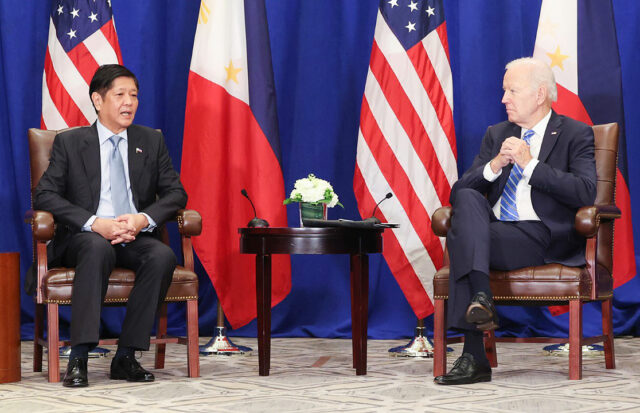
PRESIDENT Ferdinand R. Marcos, Jr. and US President Joseph R. Biden hold a bilateral meeting on September 22, 2022 in New York, USA. — OFFICE OF THE PRESS SECRETARY
US President Joe Biden will meet with his Philippine counterpart Ferdinand R. Marcos, Jr. on May 1 at the White House to discuss deepening economic cooperation and the Indo-Pacific, a White House spokesperson said on Thursday.
The two leaders will also discuss further economic cooperation, White House spokesperson Karine Jean-Pierre said in a statement.
“During the visit, President Biden will reaffirm the United States’ ironclad commitment to the defense of the Philippines, and the leaders will discuss efforts to strengthen the longstanding US-Philippines alliance,” the statement said.
The Philippines this month identified four more military bases that the US may access amid shared concerns about China’s growing might.
China’s ambassador to Manila last week accused the Philippines of “stoking the fire” of regional tensions by offering the expanded base access to the US.—Reuters
LIMA Water General Manager Hazele Manalo (3rd from left), Operations Manager Mark Dave Agojo (2nd from left), and LLI Supervisor-Water Operations Jocelyn Caballero (3rd from right) receive the Water-Wise Award for Estate Water’s initiatives in West Cebu Estate given by the National Water Resources Board during the World Water Day Awards last March.
Aboitiz InfraCapital’s Estate Water has achieved remarkable success in reducing non-revenue water (NRW) in all its economic estates across the country. These include the 800-hectare LIMA Estate in Batangas and the 63-hectare Mactan Economic Zone II (MEZ2) Estate as well as the 540-hectare West Cebu Estate (WCE) in Cebu.
Committed to providing excellent water services, Estate Water implements a comprehensive NRW management program to address the water losses in its service areas. Over the past 5 years, LIMA Water managed to maintain the NRW level at LIMA Estate below 5%. Last year, Estate Water extended this program to other areas, including MEZ2 and WCE, resulting in a significant reduction in NRW. Specifically, MEZ2’s NRW decreased from 13% to 6%, while WCE’s water losses reduced from 10% to 7%. These figures are well below the World Bank’s NRW benchmark rate of 25%, demonstrating Estate Water’s commitment to the sustainable use of water sources.
NRW refers to the water that has been produced but never reaches the intended consumer due to various factors such as pipe leaks, illegal connections, and pilferage. These factors contribute to the wastage of water and have a negative impact on the efficiency and sustainability of water supply systems.
“We continue to tackle the issue of managing the non-revenue water of all our economic estates with utmost priority to meet the needs of the growing number of locators and customers while ensuring the sustainable use of water sources,” said AIC Head of Water Business Anna Victoria Lu.
Estate Water conducts regular water meter accuracy validation, an important aspect of water management that helps prevent water losses.
The successful reduction of water losses in AIC’s economic estates involved network sectorization, regular leak detection and repair, pipe replacement, meter inspection and calibration, and the timely resolution of incidents.
Lu also added that the integration of the SMART Water Network Technology has contributed in lowering the NRW of LIMA Estate. This cutting-edge innovation has connected and transformed all water facilities in LIMA Estate into interconnected and intelligent systems. By using this technology, Estate Water is now able to monitor the pressure, flow, and quality of water in real-time, detect leaks and respond to water concerns quickly. This same technology is also planned to be implemented in AIC’s other economic estates, MEZ2 and WCE, to further enhance their water efficiency.
Recently, Estate Water’s efforts in managing the water losses and advancing proper resource management of WCE earned them one of the three “Water-Wise Award” recognitions by the National Water Resources Board (NRWB), the leading government agency for the water sector in the Philippines. This was conferred by the NWRB at the World Water Day Awards 2023 last March. In the same event, AIC also in turn recognized the exceptional dedication of the San Pablo City Water District towards protecting and preserving water sources and the environment by conferring them the prestigious “Agos ng Kinabukasan” Award.
Aboitiz InfraCapital is committed to developing infrastructure and bringing in world-class technologies to ensure the availability of smart and sustainable water across all generations. Its Apo Agua business unit in Davao is currently developing one of the largest bulk water supply projects in the Philippines, which will provide more than 300 million liters of water daily to more than one million Davaoenos once operational.
Spotlight is BusinessWorld’s sponsored section that allows advertisers to amplify their brand and connect with BusinessWorld’s audience by enabling them to publish their stories directly on the BusinessWorld Web site. For more information, send an email to online@bworldonline.com.
Join us on Viber at https://bit.ly/3hv6bLA to get more updates and subscribe to BusinessWorld’s titles and get exclusive content through www.bworld-x.com.
Since then, the planet has already been in a survival crisis and poses a danger to all human lives. In the 1900’s, environmental issues affected many lives, including oil spills, engine pollution output, smogs, water pollution, and many more.
However, in order to raise environmental awareness and protection, environmental activists joined hands together with the growing public to spread awareness of emerging environmental problems.
Student and citizen groups participated in this initiative by attending local clean-ups and using alternative transportation modes like riding a bike or walking, and attending rallies and protests that were done through speeches, exhibits, and singing.
This environmental movement has spread across different states in America and gained a lot of attention from the local government and the media.
Political leaders have also joined the movement, including then Governor John Love of Colorado, who signed a declaration of supporting a cleaner planet, and then Senator Gaylord Nelson from Wisconsin and then Congressman Pete McCloskey, who organized a national demonstration and incorporating environment and climate literacy in college campuses to gain public awareness of the emerging air and water pollution.
From then on, the environmental movement gained popularity and became Earth Day. Earth Day was first celebrated on April 22, 1970, and became the stepping stone of many environmental movements that came after.
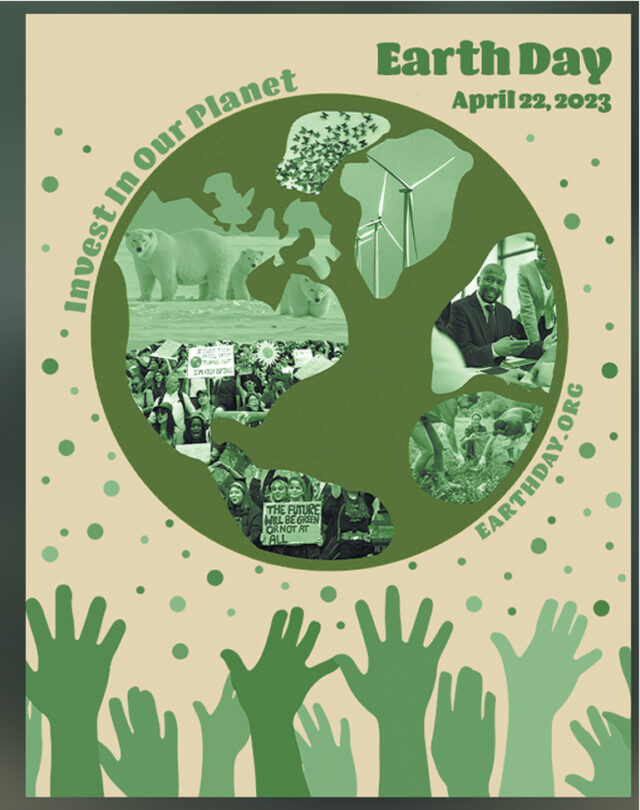
Since then, Earth Day has been celebrated by approximately 190+ countries all over the world; and this year, the observance sets the goal of investing in our planet to create a more sustainable future.
“Earth Day inspired 20 million Americans at the time, 10% of the total population of the United States, to take the streets, parks, and auditoriums to demonstrate against the impact of 150 years of industrial development which has left a growing legacy of serious health impacts,” as said by EARTHDAY.ORG (EDO), an organization that manages the observance of Earth Day around the globe and is also considered “the world’s largest recruiter to the environmental movement.”
Photo from EARTHDAY.ORG
According to EDO, the environment is experiencing total crises because of “oil spills, factories and power plants, raw sewage, toxic dumps, pesticides, freeways, the loss of wilderness, and extinction of species.” This compelled political leaders, business and labor leaders, and the wealthy and ordinary city people to support Earth Day in 1970, achieving a rare political alliance.
The initiatives of Earth Day, EDO continued, have resulted in the implementation of environmental laws including the National Environmental Education Act, Occupational Safety and Health Act, Clean Air Act, Clean Water Act, Endangered Species Act, and the Federal, Insecticide, Fungicide, and Rodenticide Act, which prevented hundreds of species from becoming extinct and have protected millions of human lives from illness and death.
By 1990, groups of environmental leaders organized another significant environmental campaign promoting the movement across different countries which expanded the participants of Earth Day. Afterward, the movement was then changed to Earth Day which gained attention from the media, and environmental protests and rallies have taken on in different communities. By then, Earth Day becomes a global event with 200 million participants across 141 nations, bringing environmental awareness to a worldwide audience.
Moreover, there was a global conference called “The United Nations Earth Summit” which was held in Rio de Janeiro in 1992. The global conference highlighted how achieving sustainable development is the top priority of the global community, increased recycling efforts worldwide, and emphasized how “integrating and balancing economic, social and environmental concerns in meeting our needs is vital for sustaining human life on the planet and that such an integrated approach is possible.”
In the following years, environmental initiatives continue to grow with the goal of focusing on global warming and promoting the use of sustainable energy. Earth Day became a hot topic in local and global conversations, utilizing the power of media and technology to unite environmental activists worldwide.
As EDO explained, when major crises piled up from the “cynicism of climate change deniers, well-funded oil lobbyists, recent politicians, disinterest public, and the divided environmental community,” celebrating Earth Day has become a significant occasion for international environmental action.
Involving millions of people in this environmental movement throughout the years, Earth Day has opened doors for civic opportunities and volunteers across all nations. Thanks to this movement, every year, more people have been participating to do their share in achieving environmental conservation for the planet.
This year, EDO celebrates Earth Day with the theme “Invest in Our Planet,” which makes this year’s observance focus more on building a healthier economy.
Earth Day 2023 seeks to mobilize billions of participants, including organizations, businesses, institutions, and governments to acknowledge the shared responsibility of everyone in achieving a sustainable and green economy.
Earth Day will focus on reorienting environmental awareness, stepping up the pace of action, reuniting everyone around the world, and letting them realize that with everyone’s cooperation, a prosperous and sustainable future is possible.
“The Earth Day 2023 theme is focused on engaging the more than one billion people, governments, institutions, and businesses who participate in Earth Day to recognize our collective responsibility and to help accelerate the transition to an equitable, prosperous green economy for all. We are focused on reframing the conversation, accelerating action, and bringing everyone together to understand that this is within our reach if we work together,” EDO explained.
Celebrating Earth Day can be done physically and virtually. Virtually, EDO will host an online series that takes place from April 14 to 22 in different time zones. This online series for Earth Day tackles topics such as climate literacies and sustainable efforts and initiatives in addressing the climate crises.
Physically, participants can participate in different projects such as tree planting, joining clean-ups, promoting the importance of climate literacy, and supporting sustainable products and services.
In the Philippines, according to the Department of Environment and Natural Resources (DENR), April 22 of every year has been declared as the Philippines’ Earth Day under Presidential Proclamation 1481, signed on April 10, 2008 by then President Gloria Macapagal-Arroyo “to raise the level of awareness on environmental degradation and destruction in the country that threatens the very quality of life of many Filipinos.” Presidential Proclamation 1482 was also signed on the same date, declaring the whole month of April each year as the Month of the Planet Earth.
The DENR also said that celebrating Earth Day and protecting the planet can be done by simply “saving water and energy, cutting down waste, planting trees, using public transportation, consuming locally sourced foods, and following sustainable practices that will help invest on the planet.”
“It further reminds all sectors that all must take action against the climate crisis and invest in a green economy that will leave the world in a better state for future generations,” the DENR added.
As the effects of climate change are becoming more obvious each day, the fight for a clean and sustainable environment continues with increasing urgency. More than a billion people worldwide come together and celebrate Earth Day as a “day of action to change human behavior,” EDO said.
EDO added that the social and cultural environments back then are resurfacing now and the younger generation is taking action and demanding changes for a better future. Thanks to digitalization, the call for action of environmental awareness is reaching globally, which is also bringing generations closer together to tackle the climate issue before it’s too late.
“Earth Day is all about empowering individuals with the information, the tools, the messaging, and the communities needed to make an impact and drive change,” EDO said. — Angela Kiara S. Brillantes
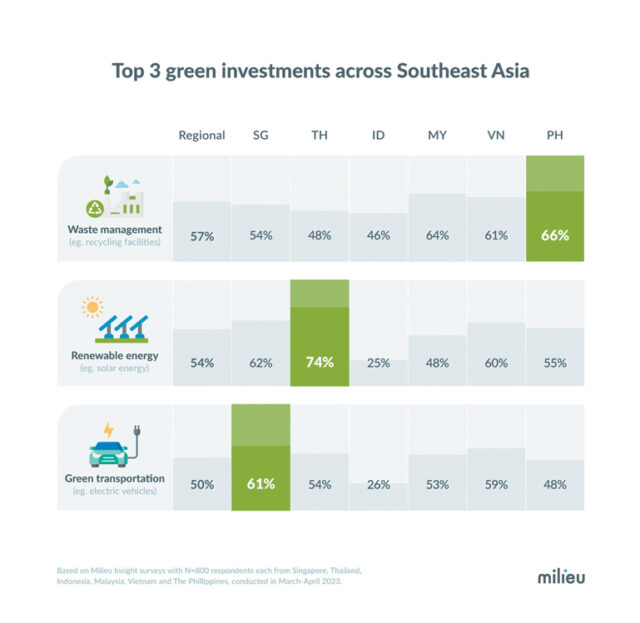
A recent survey by Milieu Insight revealed that most of the green investments across Southeast Asia were in waste management (57%), renewable energy (54%), and green transportation (50%). Waste management is found to be the Philippines’ top green investment, garnering 66% of respondents. — Infographic from Milieu Insight
As the Earth Day theme for this year goes, “Invest in Our Planet;” for investing in a green economy, according to EARTHDAY.ORG, is “the only path to a healthy, prosperous, and equitable future.”
The organization highlighted that in investing in the planet’s future, everyone has a role, from the government, the private sector, to individuals. Businesses, inventors, investors, and financial markets, for their part, have to “drive value for their institutions and society through green innovation and practices.”
A significant investment is needed to build a greener economy, according to the World Economic Forum. And for countries like the Philippines, which is among those most vulnerable to the impact of climate change, investments in the environment are critical. Fortunately, sustainability has been gaining attention at present, including among investors.
In Southeast Asia, there is only one in ten that are actively making green investments, based on a recent survey conducted by consumer research and data analytics firm Milieu Insight, which sought to understand the interests of consumers and investors towards green financing and investments.
Among the six countries studied in the region, Malaysia leads in the green finance movement, having the highest proportion of green investors at 17%. Thailand has the smallest proportion with 6%.
But among the respondents who have supported green investments, 70% have expanded their allocation in the past two years. This suggested “an optimistic outlook towards contributing to a more sustainable future,” Milieu Insight noted. Among the surveyed in the Philippines, 39% said they have significantly grown their allocation to green investments, while 34% said they slightly increased.
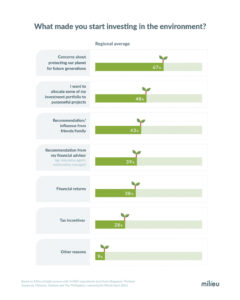
Most of the respondents in Milieu Insight’s survey cited concerns about protecting the Earth for future generations as their motivation to start green investments. — Infographic from Milieu Insight
The top two reasons that pushed respondents from the region to begin in green investing were concerns about protecting the environment for the generations to come (67%) and to allocate some of their investment portfolio to purposeful projects (48%).
While the number of respondents who have been actively investing in the green sector was low, more could invest in the sector in the future. Over half (53%) of those that have not invested yet are willing to do so in the time ahead. However, 41% are still uncertain about green investing.
So for investors interested to go green, where can they put their money into for the better of the planet, or simply put, make green investments?
While usually related to ESG (environmental, social, and governance), socially responsible investing, or impact investing, green investment is particularly focused on the environment, while the former investments also touch on social impact.
Green equities, funds, and bonds are among the ways of making green investments, thus merely means investing in organizations aiming to create a positive impact on the environment, whether through their services or business practices.
Investors could go green by purchasing stocks in businesses with initiatives committed to the environment or investing in mutual funds that uphold good or impactful environmental practices. They could invest in green bonds as well, commonly known also as climate bonds, which are a fixed-income instrument utilized for funding projects that would benefit the environment or the climate.
What makes an investment green might differ among investors. Green investments can be pure-play, which may involve organizations primarily engaged in technological developments of renewable energy, for instance. But other investors also support businesses that are “green” in the sense that they operate with environmental-friendly practices such as recycling, water conservation, or ensuring energy efficiency.
In the aforementioned study by Milieu Insight in Southeast Asia, most of the green investments were in waste management (57%), renewable energy (54%), and green transportation (50%). The Philippines’ top green investment sector is waste management (66%), while renewable energy and green transportation were at 55% and 48%, respectively.
The question now is how investors can make certain that the companies they are investing in do have services and practices that are good for and improve the environment. This could be complex as some companies might be greenwashing, or making misleading or exaggerated claims about the business, their products, or their efforts being environmental-friendly to coax investors (and consumers), especially with the increasing interest towards eco-friendliness and sustainability nowadays. PricewaterhouseCooper’s (PwC) Global Investor Survey 2022, in fact, found that 87% of respondents think that there is at least some greenwashing in corporate reporting.
As such, investors must figure out what they consider as green and research exhaustively into companies they are looking to invest in to assure themselves that the business operations are mindful of or indeed doing good for the environment.
Aside from ensuring that their investments support the environment, green investors, of course, would expect returns.
Looking at ESG, PwC showed in its Asset and Wealth Management Revolution 2022 that 60% of institutional investors reported that, comparing ESG investing and non-ESG equivalents, the former has already brought about higher performance yields. Furthermore, the firm noted that among the surveyed asset managers, nine of ten considered ESG integration into their investment strategy would make overall returns better.
Still, just like other investments, green investors have to assess the possible risks and returns in making green investments. Only they must also ensure that their investments go for the betterment of the planet.
The previous year saw sustainable funds underperform traditional funds a bit amid the challenging market conditions, according to Morgan Stanley Institute for Investing’s report on Sustainable Reality.
Nonetheless, the investment bank also reported that sustainable funds continued to see strong demand, as sustainable funds’ assets under management (AuM) amounted to almost $2.8 trillion by the end of last year, expanding its proportion of overall AuM from its 4% five years ago to 7%.
PwC’s report projected ESG-related AuM to rise from $18.4 trillion in 2021 to $33.9 trillion or 21.5% of total AuM globally by 2026, with a compound annual growth rate expected to be 12.9%. — Chelsey Keith P. Ignacio
Each year, the effects of man-induced climate change grow ever more apparent in the Philippines. Temperatures since the start of summer have reached dangerous levels of over 36 degrees Celsius (°C) in Metro Manila, and places like the provinces are even hotter.
The Philippine Atmospheric, Geophysical and Astronomical Services Administration (PAGASA) has even recorded an almost fatal heat index of 47°C in Butuan City, Agusan del Norte last month, while places like Leyte, Bohol, Capiz, and even Davao are regularly reaching over 40 degrees.
Moreover, in a recent Social Weather Stations (SWS) survey, nine in ten Filipinos have admitted to seeing the impacts of climate change firsthand. 93% of adult Filipinos surveyed in December last year said they have experienced the adverse effects of climate change, such as super-typhoons, heat waves, and other severe weather.
Staying true to Filipinos’ characteristic optimism, however, the same SWS survey found that 88% of the respondents agreed with the statement, “People like me can do something to reduce climate risks.” 76% of Filipinos think that humanity could do something to stop or slow down climate change if everyone really tried.
That same message has been echoed time and again by the world’s leading scientists, and such calls grow louder still.
According to the latest Intergovernmental Panel on Climate Change (IPCC) report released last month, scientists have identified a wide range of practical and effective strategies for mitigating the effects of climate change brought on by human activities.
“Mainstreaming effective and equitable climate action will not only reduce losses and damages for nature and people, it will also provide wider benefits,” said IPCC Chair Hoesung Lee. “This Synthesis Report underscores the urgency of taking more ambitious action and shows that, if we act now, we can still secure a livable sustainable future for all.”
The IPCC has been highlighting the immense scale of the challenge needed to limit warming to 1.5°C since 2018 and even before.
However, the problem has only gotten worse in the succeeding years as greenhouse gas emissions have continued to rise on the back of the growth of developing economies in Asia and their ballooning energy demands.
Dependence on fossil fuels, such as coal and petroleum, is the leading cause of greenhouse gas emissions responsible for accelerating climate change. Global warming of 1.1°C above pre-industrial levels is attributable to more than a century of burning fossil fuels and to inequitable and unsustainable energy and land use.
Extreme weather events have become more common and more severe as a result, posing grave threats to life and property across the globe. Heat waves, heavy rainfall, and other weather extremes are becoming more common and more dangerous, posing a threat to human health and ecosystems.
The IPCC notes that not only are people dying from such effects all over the world, but man-made climate change is exacerbating problems of food and water insecurity. The risks become even more difficult to manage when they are compounded by other recent unfavorable events, such as pandemics or geopolitical conflicts.
“Climate justice is crucial because those who have contributed least to climate change are being disproportionately affected,” said Aditi Mukherji, one of the 93 authors of this Synthesis Report, the closing chapter of the Panel’s sixth assessment.
“Almost half of the world’s population lives in regions that are highly vulnerable to climate change. In the last decade, deaths from floods, droughts and storms were 15 times higher in highly vulnerable regions,” she added.
The IPCC report, which was approved after a weeklong session in Interlaken, Switzerland, puts into sharp focus the losses and damages countries are already experiencing and will continue to experience, especially hitting the most vulnerable people and ecosystems. The world can only become more sustainable and equitable if we take the necessary steps right now.
To reduce the gap between current adaptation and what is needed, the IPCC emphasized that swift action to adapt to climate change is required within this decade. Meanwhile, drastic, rapid, and sustained cuts in greenhouse gas emissions from all sectors are necessary to keep warming below 1.5°C above pre-industrial levels. This means that emissions need to be halved between now and 2030.
Climate-resilient development is the key to solving this problem. To do so, it is necessary to coordinate efforts to adapt to climate change with those to mitigate or prevent the release of greenhouse gases.
Low-carbon electrification, walking, cycling, and public transportation all contribute to better air quality, which in turn benefits health, as well as employment prospects and equity. The costs of reducing or avoiding emissions could be offset by the economic benefits to public health from improved air quality alone.
Enabling sustainable development
With each degree of warming, it becomes that much harder to mitigate the effects of climate change. It is because of this compounding characteristic that makes climate change humanity’s biggest and most important challenge.
The IPCC stressed that decisions made in the coming years will have a profound impact on the future of every country. These decisions must be grounded in our various scientific, indigenous, and local knowledge as well as shared values and worldviews if they are to be effective. This method will help with climate-resilient development and allow for socially-acceptable, locally-based solutions.
“The greatest gains in well-being could come from prioritizing climate risk reduction for low-income and marginalized communities, including people living in informal settlements,” said Christopher Trisos, one of the report’s authors. “Accelerated climate action will only come about if there is a many-fold increase in finance. Insufficient and misaligned finance is holding back progress.”
The IPCC report contains various practical and effective strategies and policy suggestions for leaders seeking climate action.
For one, the report notes that there is enough money in the world to quickly cut emissions of greenhouse gases if only the obstacles standing in the way could be removed. To accomplish global climate goals, it is crucial to increase financing for climate investments.
The governments’ role in lowering these barriers is crucial, both through public funding and clear signals to investors. Financial stakeholders such as investors, central banks, and regulators can all contribute.
There are tried and true policy measures that, if scaled up and applied more broadly, can work to achieve deep emissions reductions and climate resilience. Effective and equitable climate action requires political commitment, coordinated policies, international cooperation, ecosystem stewardship, and inclusive governance.
Reduced or eliminated carbon-intensive consumption is possible for every community if there is the initiative to share technology, know-how, and appropriate policy measures, and if sufficient funding is made available. Conversely, rising risks can be prevented, especially for vulnerable groups and regions, if adaptation is made a priority.
There is also a link between climate, ecosystems, and human civilization. The IPCC report notes that about 30%-50% of land, freshwater, and ocean needs to be effectively and equitably conserved to ensure a healthy planet. In order to advance development on a global scale, cities need to capitalize on the unique opportunity to develop sustainable models of living.
Greenhouse gas emissions can be also lowered by making adjustments in agriculture, power generation, transportation, industry, construction, and use of land. Simultaneously, they can facilitate low-carbon lifestyles that are better for people’s health and happiness. People can make more educated decisions when they have a firmer grasp of the repercussions of their consumption habits.
“Transformational changes are more likely to succeed where there is trust, where everyone works together to prioritize risk reduction, and where benefits and burdens are shared equitably,” IPCC’s Mr. Lee said.
“We live in a diverse world in which everyone has different responsibilities and different opportunities to bring about change. Some can do a lot while others will need support to help them manage the change.” — Bjorn Biel M. Beltran
Singapore Diagnostics thrives as a multi-awarded laboratory attending to industry’s pain points
The local healthcare industry has been facing a major obstacle, the difficulty in accessing healthcare services, which in turn raise the possibility of poor health outcomes for Filipinos. On top of this, the global health crisis caused by the coronavirus pandemic has resulted in immense pressure on the health industry.
Established medical laboratory Singapore Diagnostics (SGD) recognized that the pandemic has impacted the healthcare field and saw that there is a considerable disparity in healthcare services in the Philippines, mainly marked by insufficient facilities, a lack of patient accessibility, and the need for skill improvement of healthcare workers.
While experiencing their own share of challenges at that same period, SGD has sought to respond to these pain points by bringing its world-class services and training closer to Filipinos.
As a subsidiary of Pathology Asia, which is recognized as one of Southeast Asia’s most prominent medical service providers, SGD has become one of the largest laboratories in the Philippines. To date, it provides laboratory tests for over 600 hospitals, clinic labs, and healthcare institutions and serves up to 50,000 patients every month, and conducts over 3.6 million laboratory examinations per year. Alongside these services, SGD is also helping develop the skills and talents of the country’s healthcare workforce by providing professional training.
The company implements the highest quality control in their laboratory work, benchmarking all test results, not just versus local quality standards, but against the best hospitals in the world
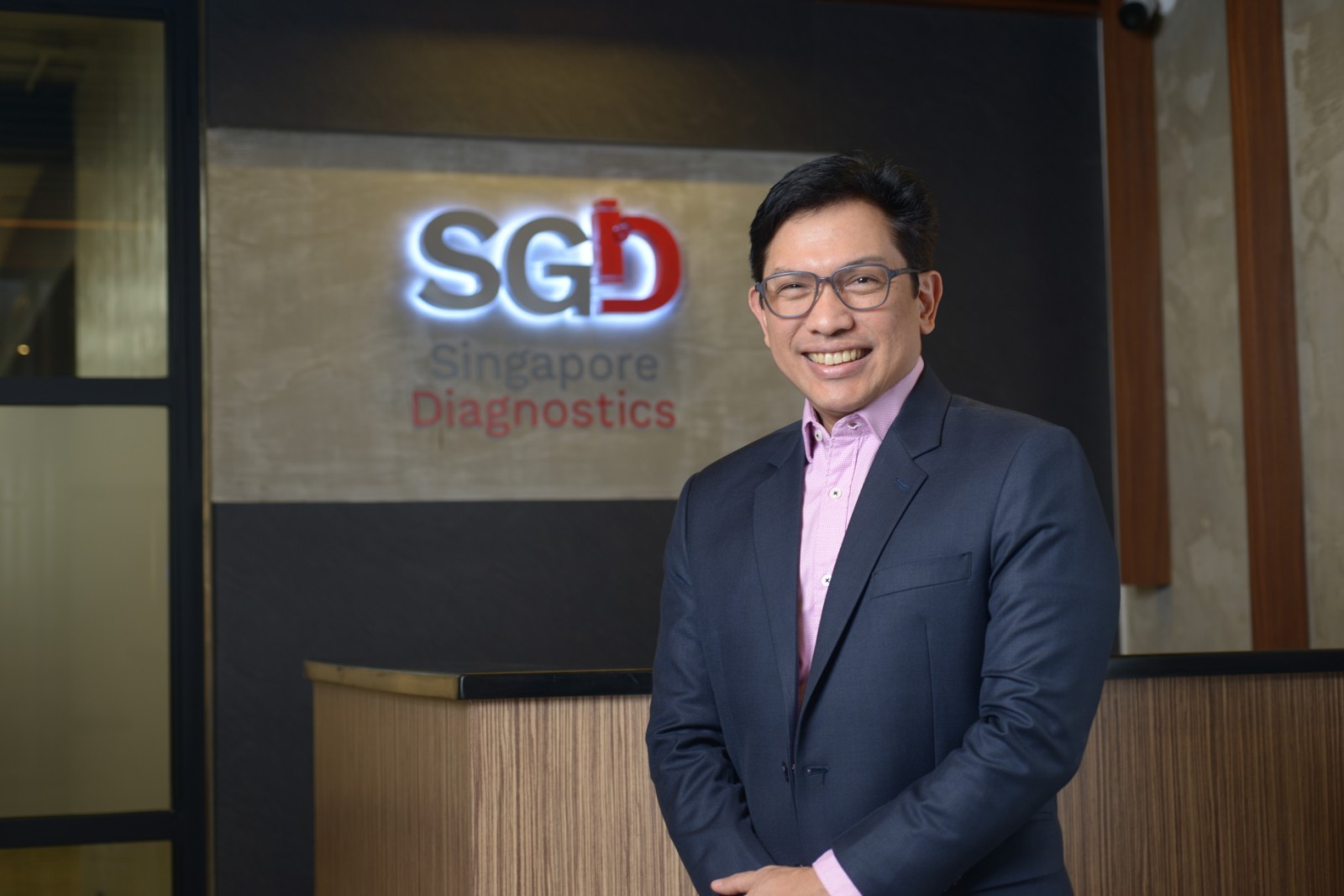
Ritche Evidente, president and CEO of Singapore Diagnostics
“At Singapore Diagnostics, we have stringent and rigorous procedures in place to ensure that we deliver the most accurate laboratory results possible. Our well-trained professionals were trained experts with experience and credentials from all over the world,” Ritche Evidente, president and CEO of Singapore Diagnostics, said.
Evidente relates that SGD has already grown from a single-site operator, to a multi-site laboratory provider with over 40 locations throughout the country. Long before the pandemic struck, SGD has been at the forefront of improving access to healthcare, improving test efficiency, and promoting continuing training for lab scientists. In recognition of this exemplary commitment to service, SGD was awarded Diagnostic Provider of the Year during the recently concluded Healthcare Asia Awards for being a healthcare organization that has “risen above the challenges and made a remarkable impact to their patients, most especially amidst the massive disruption caused by the COVID-19 pandemic.”
SGD is also listed in this year’s Philippine Growth Champions by international market research firm Statista, which comprise top 25 businesses that have significantly contributed to the fast-paced growth and business climate in the Philippines.
Being the only other healthcare company included in this list, SGD has further proven that it has been doing great in the Philippine healthcare industry in the now normal.
On top of these distinctions, SGD takes pride in being the first healthcare facility in the Philippines to be accredited by the prestigious College of American Pathologists, which cited the talented and skillful Filipino clinicians it has produced as well as the top-notch medical diagnostic services it provides.
Supporting the future of Philippine healthcare
Moving forward, SGD intends to focus on delivering better healthcare access to Filipinos. Evidente shares that this year, the company aims to build more facilities in every major city in the Philippines, with the goal of employing more Filipino medical technologists and serving more patients.
Moreover, the diagnostic company wants to make sure the company is future-ready. SGD is partnering with multiple tech-enabled and app-based healthcare companies to strengthen its reputation as a “technology-inclusive laboratory”.
Currently, the company has established six laboratory hubs which are located in Makati, Cebu, Davao, Iloilo, Dagupan, and Angeles City, in addition to almost 40 satellite operations, and employs over 450 employees nationwide. With this, SGD envisions itself to be an established foundation for medical technologists and scientists in the Philippines, serving as a center for technical excellence and providing a positive work environment for its employees throughout the country.
Expanding its network of partner hospitals and clinics across the country is another important goal. “Singapore Diagnostics is here to help other local laboratories, not to compete with them. We want to support the Filipino community and work together to elevate the country’s healthcare situation.”
Spotlight is BusinessWorld’s sponsored section that allows advertisers to amplify their brand and connect with BusinessWorld’s audience by enabling them to publish their stories directly on the BusinessWorld Web site. For more information, send an email to online@bworldonline.com.
Join us on Viber at https://bit.ly/3hv6bLA to get more updates and subscribe to BusinessWorld’s titles and get exclusive content through www.bworld-x.com.
Puregold Price Club, Inc bags the Partner of the Year Award at the recently concluded GCash Digital Excellence Awards for Enterprise 2023 held at the Grand Hyatt Manila Hotel in BGC, Taguig City. (From Left to Right)
G-Xchange, Inc. (GXI) VP for Commercial Operations Luigi Reyes; Puregold Price Club, Inc. (PPCI) IT Manager Gilbert Arciaga; PPCI Senior Manager for Merchandising and Marketing Services Jenny Jacintos; PPCI Finance Manager Maricel Cambe; GXI President and CEO Renren Reyes, GXI Account Manager Shyla Escueta, and GXI Team Lead Wella de Leon.
For uplifting the lives of Filipinos by giving them access to innovative, safe, and convenient digital finance technology, GCash, the country’s leading e-wallet, is recognizing outstanding enterprises and MSMEs through its annual GCash Digital Excellence Awards 2023 held recently at the Grand Hyatt Manila in BGC, Taguig City.
The second GCash Digital Excellence Awards for enterprise honored the hard work and dedication of its partners to help make Filipino lives better every day. Moreover, it also aims to inspire more public, private, and MSME sectors to continue innovating their services for Filipinos and help transform the country into a more financially inclusive society.
The ceremony opened with a video message from the president and CEO of Globe Group Ernest L. Cu and was graced with the presence of G-Xchange Inc President and CEO Ren-Ren Reyes, chief technology and operations officer Pebbles Sy, chief marketing officer Neil Trinidad, head of new businesses Winsley Bangit, chief finance officer Tek Olano, chief people officer Robert Gonzales, Fuse chief finance officer Gabriel Lacuesta, strategy officer Ron Testa, GCash vice president for enterprise Luigi Reyes, vice president and head of wealth management Jong Layug, head of consumer experience Joanne Avendano
“The new normal brings unique challenges to the economy, especially to the fintech industry. Through the GCash Digital Excellence Awards, we pay tribute to private and public entities for their innovative achievements that span digital transformation, customer-centric solutions, business and technology agility, and product and service innovation. We hope that this will serve as an inspiration for our key partners in various sectors to continue to innovate, serve millions and make the lives of Filipinos better every day,” GCash chief commercial officer Ren-Ren Reyes said.
This year’s awardees were recognized in six different categories.
The Excellence in Innovation award was given to partner industry leaders who have implemented a trailblazing project or initiative and has contributed to partners’ digitization efforts leading to better customer experience and has improved overall business efficiency and fasted more convenient transactions to GCash’s 79 million and growing GCash users. These partners are Robinsons Department Store which won 1st place, Villarica Pawnshop Inc., and Max’s Group Inc. which won 2nd and 3rd awards, respectively.
For the Excellence Ecosystem Award, key partners were honored for embracing the digital lifestyle and fully integrating the different solutions of GCash into their ecosystem. The awardees include Puregold Price Club Inc. (1st place), Robinsons Supermarket (2nd place), and Globe Telecom, Inc. (3rd place)
Taking home the Excellence in Growth Potential Award were PMFTC Inc. (1st place), BDO Unibank, Inc. (2nd place), and McDonald’s Philippines (3rd place), for showing promise to grow in terms of transaction volume, door count, or expansion into new lines of businesses with GCash.
Recognizing their efforts to achieve exponential growth in Gross Transaction Value (GTV) and sustained user base, the Excellence in Growth and Usage Award was given to AB Leisure Exponent, Inc. (BingoPlus) Abenson, Appboxo Pte. Ltd. Dragonpay Corporation, Gaisano Mall of Davao, Jollibee Foods Corporation, Lalamove Philippines Inc., Lazada E-Service Philippines, Inc., Mercury Drug Corporation, Metropolitan Bank and Trust Company, P.J. Lhuillier, Inc. (Cebuana Lhuillier), Seaoil Philippines, SM Retail Inc., Landers Superstore, and Unilever Philippines Inc.
Meanwhile, the Pioneer Awards which recognize companies that pioneered the adoption of GCash’s innovative business solutions were divided into four categories: the Pioneer Award for Best GGives Merchant which was awarded to Zalora, the Pioneer Award for Best GCredit Merchant on the other hand was given to MERALCO. Meanwhile the Pioneer Award for Ad Solutions was given to Smart Communications, Inc., and taking home the Pioneer Award for Data Solutions was Trusting Social AI Philippines, Inc.
Lasty, the highlight of the evening and the most prestigious of the awards, the Partner of the Year was granted to Puregold Price Club Inc. by being one of the GCash’s key partners that exhibited excellence in digital finance and aided in promoting financial inclusion in the country. Along with GCash, Puregold Price Club Inc. introduced the first-ever barcode payment solution to Filipinos, effectively providing a safe and convenient digital payment solution to anyone with a smartphone and a GCash account.
By continuously building strategic collaboration with its partners, GCash is on track to make its mission of ‘Finance for All’ a reality and to help millions of Filipinos have a safer, more inclusive, and better financial future.
Spotlight is BusinessWorld’s sponsored section that allows advertisers to amplify their brand and connect with BusinessWorld’s audience by enabling them to publish their stories directly on the BusinessWorld Web site. For more information, send an email to online@bworldonline.com.
Join us on Viber at https://bit.ly/3hv6bLA to get more updates and subscribe to BusinessWorld’s titles and get exclusive content through www.bworld-x.com.
THE BUREAU of Internal Revenue (BIR) is proposing a creditable withholding tax on the income payments made by online platform providers to their partner sellers.
“With the proliferation of online sales transactions through the facilities of online platform providers, there is a need for the BIR to take advantage of this opportunity to identify sellers of goods and services who are therefore obliged to declare their income resulting from these transactions for tax purposes,” the BIR said in an advisory on Thursday.
To get this information, the BIR said a creditable withholding tax should be imposed on the gross remittances of these online platform providers to the sellers.
The BIR proposed to amend Revenue Regulations No. 2-98, which does not cover income payments by online platform providers.
Under the draft rule, the BIR will impose a creditable withholding tax of 1% on one-half of the gross remittances of online platform providers to their partner sellers or merchants.
An online platform provider is an any entity that serves as an intermediary, where sellers and buyers of goods and services transact their business through the use of information technology and other electronic means, and act as the withholding agent of the government.
This includes platforms for marketplaces, food delivery, lodging accommodation, travel or transportation, payment or remittances such as e-wallets, and other services.
Based on this definition, the proposed tax may cover popular platforms like Shopee, Lazada, Airbnb, Grab, Gcash and Maya.
The draft regulation defines gross remittance as the “total amount of the value of the goods or services sold and paid through the online platform facilities.”
“The withholding tax imposed… shall be in addition to the existing withholding tax obligations being imposed on the online platform providers,” the BIR said.
Under the draft rule, online platform providers that do not require the business registration of sellers will only impose the withholding tax if there is a single purchase of goods or services worth P10,000.
The tax will also be imposed if the same buyer and seller have engaged in at least six transactions, regardless of amount per transaction, in the previous or current year.
The BIR is open to comments on the draft rule from stakeholders until May 2.
BIR Commissioner Romeo D. Lumagui, Jr. said last month it is difficult to monitor taxes on individual online sellers on e-commerce platforms.
He has said the BIR is prioritizing ways to better collect taxes from online sellers and other new platforms this year.
The coronavirus pandemic prompted many entrepreneurs to shift to online selling through Shopee and Lazada, as well as social media platforms such as Facebook, Instagram and Tiktok.
There were about two million entities doing business as online sellers as of 2022, according to the Trade department. — Luisa Maria Jacinta C. Jocson
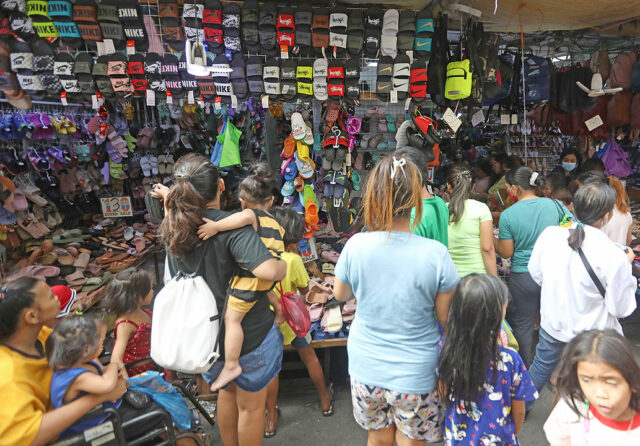
Shoppers look for bargains in Divisoria, Dec. 23, 2022. — PHILIPPINE STAR/EDD GUMBAN
PRIVATE SECTOR economists raised their inflation outlook for the year amid supply constraints and strong consumer demand, although they expect inflation to ease toward the 2-4% target by yearend, the Bangko Sentral ng Pilipinas (BSP) said on Thursday.
At the same time, National Economic and Development Authority (NEDA) Secretary Arsenio M. Balisacan said inflation is on its “downward trajectory” this year.
“We are actively monitoring the situation and implementing the necessary measures to ensure that by the end of the year, we should be in our target of roughly 3.5-4%,” Mr. Balisacan said during a Palace briefing.
In its Highlights of the Monetary Board meeting on March 23, the BSP said inflation expectations remained high for this year due to supply shocks and demand-side pressures.
“Inflation expectations stay elevated for 2023 and remain near the upper end of the inflation target range for 2024 and 2025, which suggests that the public’s expectations continue to be at risk of being disanchored by further shocks,” it said.
The BSP said the mean inflation forecast of analysts for this year inched up to 6.1% in the March survey from 6% in February. This was slightly above the central bank’s 6% forecast for 2023.
On the other hand, economists lowered their average inflation forecast for 2024 and 2025 to 3.7% (from 4%) and 3.6% (from 4.1%).
The economists’ 2024 inflation forecast of 3.7% is still higher than the BSP’s 2.9% projection.
However, analysts expect headline inflation to begin decelerating by March, due to the impact of the central bank’s monetary tightening and higher base effects.
Inflation eased to 7.6% in March from 8.6% in February and a 14-year high of 8.7% in January. This brought the average first-quarter inflation to 8.3%, well above the central bank’s 6% full-year forecast.
Since May 2022, the BSP has increased its benchmark rate by 425 basis points (bps) to 6.25% — the highest in nearly 16 years.
“The Monetary Board deemed it necessary for continued monetary action and increased vigilance until there is firm evidence that inflation is reverting to the target in a sustained manner,” the central bank said.
“Monetary policy continues to be focused on anchoring inflation expectations, which remain near the upper end of the inflation target band. Follow-through monetary tightening will help anchor inflation expectations by underlining the BSP’s commitment to its price stability objective.”
The BSP said headline inflation could be above 4% until the third quarter due to strong domestic demand and supply constraints. This would indicate that inflation would be above target for 19 straight months since March 2022.
But inflation is seen to ease near the lower end of the 2-4% target by the first quarter of next year mainly due to base effects and the likely decline in global oil and nonoil prices.
BSP Governor Felipe M. Medalla earlier said the Monetary Board might revise its inflation forecasts for this year and 2024 after inflation eased in March.
Upside risks to the inflation outlook include the likely impact of rising transport fares, higher electricity rates, elevated food prices due to supply constraints, and above-average wage adjustments this year, according to the report.
“Inflation has proven to be much more persistent than originally expected at the beginning of supply shocks, and both BSP and the market have been consistently surprised on the upside in the past year,” the central bank said.
Meanwhile, the weaker-than-expected global growth this year is the main downside risk to the inflation outlook.
Mr. Medalla earlier noted that if inflation rate eased further in April, the Monetary Board might consider keeping policy rates on hold at its next meeting on May 18.
He also said the Board might start discussing possible rate cuts if inflation slows down in the next six months. — Keisha B. Ta-asan
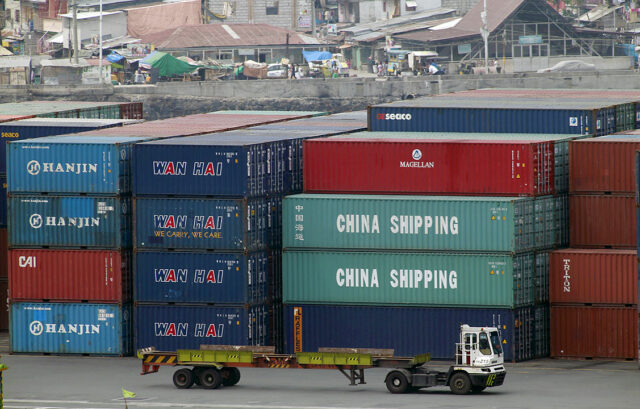
Container vans are seen inside the Manila South Harbor, Metro Manila Feb. 15, 2016. — REUTERS/ROMEO RANOCO
THE REGIONAL Comprehensive Economic Partnership (RCEP) will enter into force for the Philippines in June, Trade Secretary Alfredo E. Pascual said on Thursday.
At a Palace briefing, he said President Ferdinand R. Marcos, Jr. had approved the executive order (EO) operationalizing the Philippines’ tariff commitments under RCEP.
“Anytime now (the EO will be signed), but the effectivity (of RCEP) will be on the second of June 2023… Hopefully (it can be signed) at an earlier time, so that the [Bureau of] Customs (BoC) can also prepare their administrative order,” he said.
The effectivity date of the trade deal is 60 days after the country’s instrument of ratification is deposited to the Association of Southeast Asian Nations (ASEAN) secretary-general on April 3.
The Philippine Senate gave its concurrence to the RCEP on Feb. 21, more than a year after the trade deal entered into force for other members on Jan. 1, 2022.
“Once issued, the EO shall be the basis of the BoC for the issuance of a Customs administrative order which shall be distributed to all ports to allow for the implementation of the preferential tariffs on exports from RCEP member countries,” Mr. Pascual said.
The other RCEP participating countries are the nine member states of ASEAN, Australia, China, Japan, South Korea, and New Zealand.
Based on the draft EO endorsed to the National Economic and Development Authority Board on Thursday, Mr. Pascual said the country’s RCEP commitment will maintain current preferential tariffs on agricultural and industrial tariff lines.
“Essentially, the EO will maintain current preferential tariffs on about 98.1% of the 1,718 agricultural tariff lines and 82.7% of the 8,102 industrial tariff lines,” he said.
“Out of the 1,685 agricultural tariff lines retained at current rates, 1,426 tariff lines are maintained at zero, while 154 tariff lines will remain in their respective most favored nation rates and are excluded from any tariff concession.”
Tariffs on “sensitive” and “highly sensitive” agricultural products will be lower in the country’s RCEP commitments compared with the most favored nation rates, Mr. Pascual said.
“For the remaining 33 lines — these are the important 33 lines — the EO will reduce tariff rates upon entry into force or implement gradual reduction over a period of 15 to 20 years. But if you examine these tariff lines, it will involve agricultural products which are not really being produced very much in the Philippines,” he added.
Michael L. Ricafort, Rizal Commercial Banking Corp. chief economist, told BusinessWorld in a Viber message the RCEP could help boost trade and attract foreign investments.
“This would make multinational companies more decisive to locate and bring in more foreign direct investments to the country as the RCEP allows them to access more export markets at reduced/zero tariffs, as well as source more inputs from more countries around the world at reduced or zero import tariffs,” he added.
Meanwhile, Mr. Pascual said the country’s export development plan for 2023 to 2028 is expected to be launched on June 9.
“This will show our strategy for the next five to six years to increase the exports from our country,” he said.
The plan aims to transform the Philippines into an exporter of high-value products and services from being an exporter of commodities and intermediate goods.
The Philippine export development plan will be approved by the Export Development Council chaired by Mr. Pascual.
The local export sector is expected to generate $240.5 billion worth of export earnings by 2028 if the export development plan is implemented. — Revin Mikhael D. Ochave
US BUSINESSES want predictability and transparency in countries where they are looking to invest, according to the United States Trade Representative (USTR).
“In my conversations with business leaders in our own economy, when we talk about trade and opportunities to invest outside the United States, what I hear consistently is a desire for predictability and transparency in the jurisdictions that they are considering for investment,” USTR Katherine Tai told OneNews.
“So that goes to transparency in regulatory processes, that goes to fundamental aspects of the jurisdiction like rule of law, predictability, knowing that there is recourse when things go wrong.”
Ms. Tai visited Manila on April 16-18, as part of the Biden administration’s efforts to strengthen ties with its partners in the region.
In her meetings with government officials, Ms. Tai discussed the Indo-Pacific Economic Framework (IPEF) negotiations.
“There is a good synergy between what investors are looking for and what we’re trying to do in terms of our trade engagements including in the IPEF,” she said.
The US and 13 Indo-Pacific countries launched negotiations on the economic framework in May. The 13 countries include Australia, Brunei, Fiji, India, Indonesia, Japan, South Korea, Malaysia, New Zealand, the Philippines, Singapore, Thailand, and Vietnam.
“I think the framework is consistent with government and business that we want to see more sustainable economic activity. Not only sustainability with respect to the planet, but also sustainability with respect to the people who are involved in the production and the provision of goods and services,” Ms. Tai said.
She said the Philippines would benefit from the economic inclusiveness being pushed by the framework.
“I’m so delighted that we have the Philippines actively engaging in these negotiations precisely because if you look at the structure of the IPEF, it is about 14 countries coming together, working together to promote more resilience, more sustainability, and more inclusiveness through our economic collaboration,” she said.
A third round of IPEF talks is scheduled in Singapore next month.
“It is our program of engagement for the 21st century to allow us to work with some of our closest partners in this region of the Indo-Pacific to produce economic outcomes that will be resilient, sustainable, and inclusive,” Ms. Tai added.
Meanwhile, Budget Secretary Amenah F. Pangandaman said US investors are concerned about the ease of doing business in the Philippines.
“They actually don’t know where to go if they want to invest, who to talk to. If they know who to talk to, there are so many people they need to meet,” she said during a roundtable with BusinessWorld reporters and editors on Wednesday.
Ms. Pangandaman was one of the economic team who gave a briefing to US investors in Washington, D.C. last week.
She said President Ferdinand R. Marcos, Jr. is aware of these concerns and has directed the economic team to address these issues. — Revin Mikhael D. Ochave with inputs from Keisha B. Ta-asan