Home Blog Page 4938

Low job quality persists despite receding unemployment
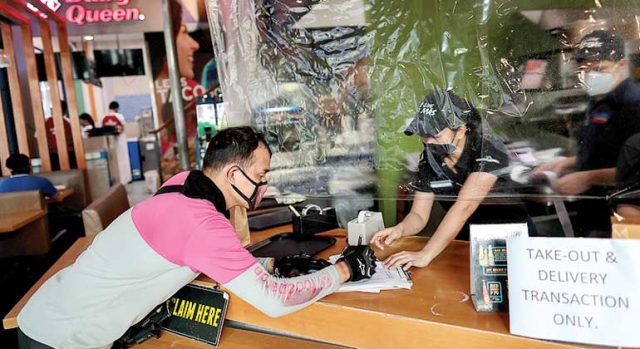
REUTERS

By Brontë H. Lacsamana, Reporter

FALLING unemployment is masking the phenomenon of workers taking on multiple jobs, because the work available is of low quality, labor experts said.

Rene E. Ofreneo, a labor analyst and professor emeritus at the University of the Philippines’ School of Labor and Industrial Studies, said in an interview: “In order to survive, many workers are forced to go into as many jobs as possible even if there’s no protection, even if there’s no security, and that explains this surge, this epidemic or pandemic of informality.”

The ranks of the unemployed fell to 2.47 million in February, the Philippine Statistics Authority (PSA) said, down from 3.13 million the year prior.

Workers are reporting low wages and the lack of benefits and rights commensurate with their tenure and qualifications, while contractual workers both in the formal and informal economies continue to be largely denied security of tenure.

President Ferdinand R. Marcos, Jr. said during his election campaign that he will look into passing a security of tenure law after his predecessor Rodrigo R. Duterte failed to do so.

“Unfortunately, having started off strongly and setting high standards for socioeconomic transformation, in terms of labor conditions, we’re not seeing any movement,” Jose Enrique A. Africa, executive director of Ibon Foundation, said in a video interview.

“It would have been so important for instance for the government to genuinely push for the ‘endo’ bill, to genuinely push for questions of security of tenure,” he said.

“Endo” is a form of contractual employment where workers are not allowed to graduate to permanent status, which under the law must be granted after six months of probation.

In July, a Security of Tenure bill was filed in the House of Representatives, intended to end all forms of contractual employment that violate the right to security of tenure.

Kilusang Mayo Uno (KMU), one of the labor unions preparing to march on the streets of Manila on Labor Day, said the situation remains dire with the passage of such a law remaining elusive.

“We know that if the President doesn’t certify bills as urgent with the House and the Senate that these won’t be prioritized by the leadership, so in terms of contractualization, there’s really no improvement,” Jerome Adonis, KMU secretary general, said in a video interview.

He added that almost 60% to 70% of the workforce are employed in contractual arrangements.

According to the PSA, the size of the workforce rose to 51.27 million Filipinos in February, up 5.5% from a year earlier.

This is a sign that the labor market is recovering due to the lifting of restrictions that previously impeded job prospects, Arsenio M. Balisacan, National Economic and Development Authority secretary, said in a statement.

But purchasing power remains low with inflation chipping away at whatever wage gains have been made, labor leaders said.

“The prices of goods are really going up and, because of that increase, the purchasing power of workers has eroded,” Josua T. Mata, secretary general of the SENTRO labor group, said in a video interview.

He said wage adjustments have long lagged the cost of living, while job generation remains inadequate.

Mark Eugenio, 23, a seller of mobile phone accessories, said this current place of work is his third, having started at 18 as a McDonald’s crew member, and then joining Grab Kitchen. After three years, he switched to selling phone accessories.

Aldo dela Cruz, a 33-year-old seaman who was laid off and became a Lalamove delivery rider, said he must work tirelessly to make a living wage.

“You have to work really hard every day, take trips everywhere. You just have to save up and be stingy with your money, spend only what you can day to day,” he told BusinessWorld on the streets of Metro Manila.

Active wage increase petitions in almost all regions call for hikes of between P150 and P750 in the minimum wage. One is a petition seeking to raise the current P570 daily minimum wage for nonagricultural workers in the National Capital Region to P1,100.

Sergio R. Ortiz-Luis, Jr., president of the Employers Confederation of the Philippines, said wage increases are hard on small businesses, who must either pass price increases on to consumers, greatly reduce their workforce, or close up shop.

He said in a video interview that the government “must create an atmosphere where investors want to invest here, so jobs can be created.”

The Department of Labor and Employment has been focused on improving hireability through upgraded technical skills.

“We are looking into providing responsive technical and vocational training as well as apprenticeship,” Labor Secretary Bienvenido E. Laguesma said in a phone interview.

The objective is to “enhance and increase employability through skills, competency assessment, as well as following international standards,” he added.—with inputs from Patricia B. Mirasol

ADB sees carbon pricing as key to meeting climate goals

PEXELS-PIXABAY

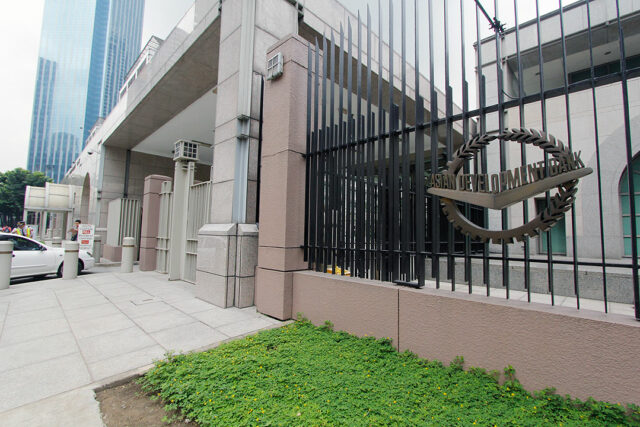
DEVELOPING ASIA needs to consider carbon pricing systems if it hopes to meet its climate goals, the Asian Development Bank (ADB) said.

“Without carbon pricing, we won’t be able to reduce emissions with the speed and skill needed to meet the Paris Agreement goal,” ADB economist Manisha Pradhananga said in a briefing on Thursday.

“What we find is that several countries will benefit from selling their carbon permits. Overall, the region is a small carbon importer,” she added.

Asia is one of the most highly vulnerable regions to climate change.

“Climate change will increase the spread of vector-borne and waterborne diseases, and deaths due to cardiovascular stress. Climate change under a high emissions scenario could impose gross domestic product (GDP) losses of 24% in the whole of developing Asia, 35% in India, 30% in Southeast Asia, and 24% in the rest of South Asia by 2100,” according to the Asian Development Outlook 2023 Thematic report by the ADB.

Developing Asia’s share of global greenhouse gas emissions doubled from 22% in 1990 to 44% in 2019 and is expected to remain at this level until mid-century under current policies, the ADB said.

ADB economist David Raitzer said developing Asia risks large losses if climate change is not addressed.

“Growth in the region has relied heavily on emission-intensive activities, with the emission intensity of GDP currently 41% higher than the rest of the world. Developing Asia is starting its decarbonization at relatively low-income levels and faces large development needs,” according to the report.

He also noted that carbon pricing is the only policy that “ensures that mitigation effort is allocated efficiently.”

“A carbon price measure ensures that abatement occurs where it is least costly, whereas command and control regulations have no mechanism to assure that they target the lowest-cost opportunities to decarbonize. Subsidies similarly have no market to guide their targeting, have some degree of fungibility, and often lead to deadweight welfare losses,” the report said.

“Carbon pricing is critical to achieving a net zero world at attainable cost. The inability of markets to account for the full social, economic, and environmental cost of greenhouse gas emissions remains the fundamental market failure that has led to carbon-intensive growth and climate change,” it added.

The ADB estimates that a carbon price of $70 per ton of carbon dioxide equivalent by 2030 and $153 by 2050 will “trigger a transition to low-carbon growth and achieve global net zero.”

“Ambitious mitigation can be attained without carbon pricing, but the cost would be higher as carbon pricing is more efficient. Although progress is being made in the adoption of carbon prices, barriers often prevent prices from affecting investment and consumption decisions in developing Asia,” the ADB said.

“If the region’s economies do not proactively adopt carbon pricing, they risk being subjected to carbon border adjustment tariffs and other measures that could put trade at a disadvantage,” it added.

The ADB also cited how carbon trade can “help to smooth the distribution of costs among countries.”

“The modeled scenarios find that developing Asia will have both major carbon exporters and carbon importers if the world were to gradually transition to equal per capita emission quotas under the net zero scenarios,” it said.

“At the aggregate level, the modeling finds that developing Asia will be a slight potential importer of carbon offsets from the rest of the world under a contraction and convergence scenario over the entire century, so some policy costs are compensation to other regions. At the same time, revenues from exports of offsets turn aggregate costs negative for South Asia and help reduce costs in Indonesia and the rest of Southeast Asia,” it added.

Mr. Raitzer noted that the Philippines could be a carbon exporter.

“The Philippines is extremely climate vulnerable. It’s coming from a low level of baseline emissions, it would be a potential carbon exporter,” he said.

“The Philippines has expanded the share of coal in electricity generation. We don’t find (coal expansion) preferable because of the declining cost of other energy sources. If there were an agreement, the Philippines would come out as a carbon exporter and that would offset much of the cost,” he added. — Luisa Maria Jacinta C. Jocson

ADB sees firmer developing Asia growth with inflation ‘contained’

BW FILE PHOTO

THE growth of developing Asian economies is expected to firm to 4.8% this year, outperforming many regions with inflation “contained” and “relatively low,” the Asian Development Bank (ADB) said.

“The economic growth of developing Asia in 2022 was 4.2%, down from 7.2% in 2021. This year, the ADB predicts it at around 4.8%. Growth went down from two years ago, but compared to other parts of the world, the growth rate is relatively high and inflation rate is contained and relatively low,” ADB President Masatsugu Asakawa said in a livestreamed briefing on Thursday.

The ADB maintained its 6% growth forecast for the Philippines this year, on the lower end of the government’s 6-7% target.

“I would say that developing Asia has been growing at a very robust and steady pace, although we have to bear in mind a couple of risks involved,” he added.

Mr. Asakawa said that high inflation in advanced economies like the US and Europe have forced institutions there to raise borrowing costs.

“The Federal Reserve has started to slow the pace of interest rate hikes, but it’s not clear yet if those advanced economies will end up with a successful soft-landing scenario or falling into a recession due to inflationary pressures,” he added.

The Fed raised its funds rate by 475 bps since March 2022, bringing the policy rate to 4.75-5%.

This has also caused central banks in Asia to raise rates to keep in step with the Fed, which will threaten growth momentum, Mr. Asakawa said.

The Bangko Sentral ng Pilipinas has raised borrowing costs by 425 basis points (bps) since May, bringing the key policy rate to 6.25%.

On the other hand, Mr. Asakawa said that the reopening of China will also help drive growth in the region.

“This is good news for commodity exporting countries and also countries with close ties with China in terms of the supply chain network and tourism,” he said.

However, he noted that a stronger-than-expected Chinese recovery also poses risks in the form of inflation, via stronger demand for commodities.

Meanwhile, Mr. Asakawa also noted how the climate crisis could impede growth.

“This region is one of the most vulnerable against natural disasters. Our fight against climate change will be won or lost in this region,” he said.

The ADB increased its target for cumulative climate financing to $100 billion from $80 billion from 2019 to 2030.

He said that the bank is working on another climate financing instrument, the Innovative Finance Facility for Climate in Asia and Pacific.

“It’s an instrument to increase ADB’s climate financing by utilizing a guarantee mechanism which means if ever a borrowing country fails to repay its debt to the ADB, donor countries as a guarantor will pay the ADB on its behalf,” he said.

“We also declare to be a climate bank for the Asia and the Pacific,” he added. — Luisa Maria Jacinta C. Jocson

More than 400 Filipinos escape Sudan amid 72-hour ceasefire

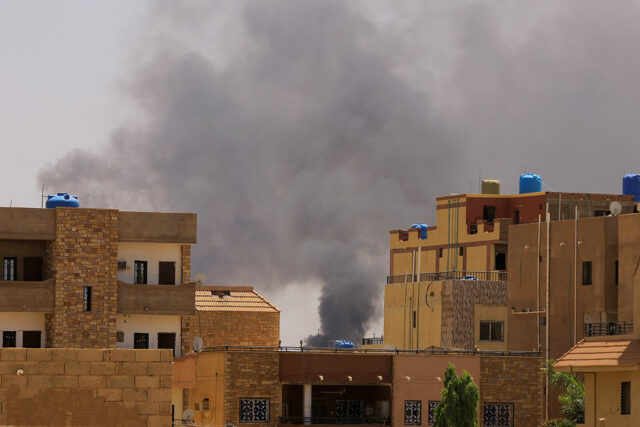
SMOKE is seen rising from buildings during clashes between the paramilitary Rapid Support Forces and the army in Khartoum North, Sudan, April 22, 2023. — REUTERS

MORE than 400 Filipinos have been evacuated from Sudan amid a shaky 72-hour ceasefire between warring military forces, according to the presidential palace.

The Filipinos, most migrant workers and their family members, have reached “safe zones” in the Egyptian border, the Presidential Communications Office said in a statement on Thursday.

Many of those rescued by the Philippine government had traveled to Egypt via the Wadi Halfa Highway, it said.

More than 500 people have died in air raids and artillery attacks since fighting erupted in Sudan on April 15, according to Al Jazeera News. Thousands have been wounded and hospitals destroyed, with many residents — some on foot — trying to flee the war.

The Department of Foreign Affairs (DFA) on Wednesday night raised the alert in Sudan to Level 3, allowing voluntary repatriation or evacuation.

Filipinos fleeing Sudan without their passport or IDs would still get aid from the Philippine government, and their documents will be taken care of when they reach the border, the palace said. 

Defense officer-in-charge Carlito G. Galvez, Jr. is working with DFA so the defense attaché from the United Arab Emirates and Israel could help evacuate Filipinos to Egypt.

The United Nations (UN) International Organization on Migration would send a team of officials to help evacuate overseas Filipino workers caught in the armed conflict in Sudan, the Department of Migrant Workers said on Thursday.

The UN agency would help set up welfare centers in Cairo to help evacuated Filipinos, Migrant Workers Secretary Maria Susana V. Ople told ABS-CBN Teleradyo on Thursday.

Foreign Affairs Undersecretary Eduardo Jose A. De Vega earlier cited the lack of law enforcement personnel from Manila and nearby territories in Sudan who could help evacuate or rescue Filipinos there.

“The Department of National Defense continues to closely coordinate with concerned agencies to address the immediate needs of Filipinos seeking repatriation,” the palace said.

Ms. Ople said there were still about 400 Filipinos seeking assistance and repatriation from war-torn areas in Sudan.

Ms. Ople was in Cairo to lead a team of officials in helping evacuated OFWs and to hand out financial aid. Each Filipino would get $200, she told a news briefing on Tuesday.

Sudan’s army has expressed willingness to extend a ceasefire for a further 72 hours amid continuing battles with the rival paramilitary Rapid Support Forces on the outskirts of the capital Khartoum.

“It’s really bringing them to safety from Khartoum that’s difficult,” Ms. Ople earlier said. “We want to take advantage of the ceasefire to bring them to safety.”

Philippine Ambassador to Egypt Ezzedin Tago and Vice Consul Bojer Capati figured in a car accident while in a rush to get to the Sudan-Egypt border to help Filipino evacuees, the palace said. Both were safe.

More than 60% of healthcare facilities in Khartoum were closed because of the conflict, the World Health Organization said Wednesday. It added that it was assessing the threat posed to public health after fighters in Sudan occupied a national laboratory holding samples of deadly diseases.

Civilians were also suffering from a shortage in basic goods including food, medicines and fuel.

About 50,000 acutely malnourished children have had treatment disrupted due to the conflict and hospitals that were still functioning faced shortages in medical supplies, power and water, the United Nations said on Wednesday.

The ceasefire will expire at 10 p.m. GMT Thursday or 6 a.m. on Friday, Manila time.

US Secretary of State Antony Blinken and African Union Commission Chairperson Moussa Faki Mahamat have discussed ways to work together to end the fighting in Sudan, the US State Department said in a statement on Wednesday.

The African Union leadership remained “essential in pressing the Sudanese Armed Forces and the Rapid Support Forces to immediately cease military operations and allow unhindered humanitarian access,” it added.

Some of the heaviest battles on Wednesday were in Omdurman, a city on the northern edge of Khartoum where the army was fighting Rapid Support Forces reinforcements from other regions of Sudan, according to Reuters.

Warplanes flying over the northern suburbs of Khartoum were drawing heavy anti-aircraft fire from the paramilitaries, AFP reported. — Norman P. Aquino, John Victor D. Ordoñez and Kyle Aristophere T. Atienza

Manila eyes putting sea dispute with China in Grade 10 syllabus

AN AERIAL photo of Philippine-occupied Thitu Island, locally known as Pag-asa, in the contested Spratly Islands. — REUTERS

By Kyle Aristophere T. Atienza, Reporter

THE PHILIPPINE Education department is considering teaching Grade 10 students about a United Nations-backed arbitral ruling that voided China’s sweeping claims over the South China Sea.

A draft guide of the revised K-12 curriculum includes “Islands in the West Philippine Sea” under a lesson on territorial and border conflicts in the social studies subject for Grade 10 students.

Meanwhile, a lecture on the historic 2016 ruling that largely favored the Philippines in its sea dispute with China will be under a lesson on responding to economic challenges.

The Department of Education (DepEd) has called on the public to review the revised curriculum lessons for kindergarten to Grade 10 until May 3.

The Permanent Court of Arbitration in the Hague, Netherlands in July 2016 affirmed the Philippines’ sovereign rights in areas within its exclusive economic zone that are being claimed by China.

It also voided China’s claim to more than 80% of the sea based on a 1940s nine-dash line map.

Earlier this month, Chinese Foreign Minister Wang Wenbin called the arbitral ruling “illegal, null and void.”

“China’s position of not accepting or recognizing it is clear and firm,” he told a news briefing after Manila and Washington issued a joint statement highly critical of China’s aggression at sea.

Mr. Wang said “the so-called arbitral award on the South China Sea gravely violates international laws, including UNCLOS (United Nations Convention on the Law of the Sea).”

The Department of Education’s (DepEd) plan to include lessons on the country’s sea dispute with China and the Hague ruling would help “promote a unified narrative in our maritime and territorial claims in the West Philippine Sea,” said Chester B. Cabalza, founding president of Manila-based International Development and Security Cooperation, referring to parts of the sea within the country’s exclusive economic zone.

‘REFLECTION’
“Early appreciation for the UN arbitral award on Philippine maritime entitlements can teach us a lot ranging from strategic culture, geography, history, politics, economics, law and foreign relations,” he said in a Facebook Messenger chat.

He said the move would help young Filipinos understand the Philippines’ “maritime and geopolitical ordeals” and how Filipinos confronted China using international legal instruments “that made it a landmark case in the world.”

“This legal victory paved the way for the Philippines to rise as a middle power in the region,” he said. “Putting it in the curriculum paves the way for discussions in the classroom and the story being written in our textbooks.”

DepEd should consult members of the Philippine contingent that helped litigate the case and drafted the Philippines’ legal position, Mr. Cabalza said.

Security analysts who did studies and wrote about the matter and journalists who chronicled the events before and after the arbitration award should also be consulted.

It’s important for the Education department to seek the help of experts in crafting the lessons, policy analyst Michael Henry Ll. Yusingco said in a Messenger chat.

“DepEd should not rush this,” he said. “This is a totally welcome decision of the administration, but they have to be utterly deliberate about designing the course.”

“The lessons shouldn’t be too pedantic. The facts should be complete and unadulterated,” Mr. Yusingco said, adding that events that led to the arbitration award should also be discussed.

“The course cannot be just about the case but also the entire story behind it. In this regard, DepEd must seek the help of historians and journalists who covered this issue.”

Mr. Yusingco said DepEd should also train teachers in teaching the lessons. “This matter can’t be subjected to regular classroom discussion. Teachers must be trained to not only present the facts, but they must also be able to facilitate reflection and discussion.”

Jerwin Baure, public information officer at scientist group AGHAM, said lessons should discuss calls for demilitarization of South China Sea areas claimed by the Philippines, and the consequences of military exercises done by both China and the United States in the area.

DepEd should also tackle alternative regional policies including proposals to make the South China Sea a marine peace park, he said in a Messenger chat.

OCTA: Metro Manila COVID infection rate up by 12%

PHILIPPINE STAR/ MICHAEL VARCAS

THE CORONAVIRUS infection rate in Manila, the capital and nearby cities has increased, pandemic monitoring group OCTA Research Group said on Wednesday night, days after the Philippines detected its first case of a new Omicron subvariant that is spreading fast in more than 30 countries.

The seven-day positivity rate in the National Capital Region had increased to 12.3% from 8.1% a week ago, OCTA Research fellow Fredegusto P. David tweeted.

In an interview with ABS-CBN Teleradyo on Thursday, Mr. David said the increase was significant.

He cited the possible spread of Omicron subvariant XBB.1.16, which the Department of Health (DoH) said could evade immunity and is found to be more transmissible. Also called Arcturus, the subvariant comes from XBB, a recombinant of two BA.2 descendent lineages.

“This is a highly contagious subvariant,” Mr. David said.

The World Health Organization has labeled XBB.1. 16 a variant of interest.

The Philippines’ first XBB.1.16 patient — a Filipino from Iloilo province in central Philippines — was asymptomatic and had since recovered, the Health department said on Wednesday.

“Based on the latest risk assessment by the World Health Organization (WHO) last April 17, no changes in severity have been reported in countries where XBB.1.16. are reported to be circulating,” it said.

“There may have been a slight increase in bed occupancy in India and Indonesia, but levels are still much lower compared with the effects of the previous variants,” it added.

“Overall, risk assessment is said to be low.”

The DoH reported the country’s first XBB.116 case in a report on Tuesday. — Kyle Aristophere T. Atienza

AG&P poised to open Batangas terminal as it takes natural gas delivery

The ISH floating storage unit berths at the AG&P’s Philippines LNG terminal in Batangas. — COMPANY HANDOUT

AG&P International Pte. Ltd. (AG&P) announced on Thursday that its liquefied natural gas (LNG) cargo has arrived in the Philippines.   

In a statement, the company said its chartered 137,500 cubic meters ISH floating storage unit (FSU) successfully berthed at its import terminal in Batangas Bay, called AG&Ps Philippines LNG (PHLNG). 

“With the docking of the ISH at PHLNG for the next decade or longer, AG&P is proudly set to open the first LNG terminal in the Philippinesone with both floating and, shortly, almost equal onshore tank storage, providing near 100% availability,” Joseph Sigelman, chairman and chief executive officer of AG&P, said.  

The LNG carrier was leased from ADNOC L&S.   

The natural gas will be used to power the 1,200-megawatt Ilijan plant of San Miguel Global Power Holdings Corp. 

“As the first cargo of fuel originated in Abu Dhabi and with the long-term presence of the ISH, ADNOC L&S is playing a pivotal role alongside AG&P and San Miguel, our anchor customer, in bringing clean energy to the Philippines,” Mr. Sigelmann said.  

We are proud to see the relationship between the two great nations of UAE and the Philippines grow in this profound way, with PHLNG as a prime case study,he said.   

LNG is being put forward as a solution to the Philippines energy needs as the country’s only indigenous commercial source of natural gas, the Malampaya gas field, is expected to start depleting by 2024.  

“AG&Ps PHLNG is a landmark development that will serve to kick-start PhilippinesLNG importation and regasification ability, delivering gas to secure the countrys current and future energy demand,” AG&P said. Ashley Erika O. Jose

Davao Region posts highest agricultural growth in 2022

BW FILE PHOTO

AGRICULTURAL production in Davao Region had the fastest annual growth among all regions in 2022 at 3.4%, according to data released Thursday by the Philippine Statistics Authority (PSA). 

Behind Davao Region was the Bangsamoro Autonomous Region in Muslim Mindanao (BARMM) with 2.5%, Central Luzon with 2%, and Bicol Region with 1.8%.  

Some regions, on the other hand, posted a decline with Eastern Visayas having the biggest at 8%. This was followed by Central Visayas with 5.5%, and MIMAROPA (Occidental and Oriental Mindoro, Romblon, and Palawan) with 3.5%.  

The overall value of production stood at P1.77 trillion last year, with Central Luzon accounting for the highest share outside the National Capital Region at 13.2%.   

This was followed by Northern Mindanao and Western Visayas accounting for 10.3% and 10%, respectively.  

For crop output, total value was P1 trillion with Northern Mindanao having the biggest contribution at 11.7%, followed by Cagayan Valley at 10.4%, and Western Visayas at 9.8%.  

The value of crop production in the Bicol Region increased 2.6%, which was the highest among the regions,the PSA said.  

The overall value of livestock production was P250 billion, with Central Visayas having the biggest share at 12.4%.  

Central Luzon and Zamboanga Peninsula had the fastest annual growth in the livestock sector with 17.7% and 10.5%, respectively.  

Central Luzon led in poultry output with a 28.1% share in the P250 billion total value.   

For the fisheries sector with value of production amounting to P260 billion, Central Luzon registered the highest share with 17%.  

For the annual growth, increases were the highest in Davao Region at 63.2%, and BARMM and Soccsksargen at 10.6% each,PSA said.  

Davaos economy expanded by 8.1% in 2022, the third fastest in the country.  

National Economic and Development Authority-Davao Region Director Maria Lourdes D. Lim, in her economic performance report on Thursday, said the growth rate was mainly driven by the accelerated expansion of the services sector, and agriculture, forestry, and fishing. Sheldeen Joy Talavera 

CoA flags Philippine Sugar Corp. for failing to proceed with abolition 

STATE auditors flagged the Philippine Sugar Corp. (PHILSUCOR) for failing to make progress on its abolition after a directive from the Office of the President four years ago, racking up expenses worth P29.3 million.  

The complete liquidation of the affairs of the PHILSUCOR and the closing of books of accounts have not been carried out yet, despite the lapse of four years from the approval by the Office of the President, the Commission on Audit (CoA) said in its 2022 report dated April 25, 2023. 

PHILSUCOR was created under Presidential Decree No. 1890 in 1983 to finance the acquisition, rehabilitation, and/or expansion of sugar mills, refineries, and other related facilities.  

It was ordered for abolition on Oct. 25, 2018 because its functions overlap with the Sugar Regulatory Administration (SRA).  

Memorandum Order No. 30 of the Office of the President also said that much of the financing needs of sugar mills are already being provided by private banking and financing institutions in addition to the lending facilities offered by the Development Bank of the Philippines and the Land Bank (LANDBANK) of the Philippines.”  

CoA said the delay of the dissolution was because the technical working group (TWG) created under the memorandum order has not approved the fourth proposed plan of liquidation.   

State auditors reiterated last years recommendations of coordinating closely with the Governance Commission for Government-owned and Controlled Corporations, and to submit an updated plan.  

The TWG is composed of representatives from the Agriculture, Finance, and Budget departments, the SRA, and the Privatization and Management Office.  

PHILSUCOR had assets worth P456.64 million in 2022, and unsettled audit disallowances amounting to P1.5 million. Beatriz Marie D. Cruz

Senator seeks probe on responsiveness of agri insurance programs

BINGAWAN LGU

A SENATOR has filed a resolution seeking to conduct an inquiry on the state of the Philippine governments agricultural insurance program to assess its responsiveness to natural calamities and extreme weather changes.   

Crop insurance must be an integral part of the governments preparedness and risk management plans in the event of droughts and floods due to El Niño and La Niña, and other natural extreme events,Senate Majority Leader Joel J. Villanueva said in Senate Resolution No. 549. 

He said two of the major factors contributing to low agricultural productivity are climate change, regular weather disturbances, and disasters.  

Mr. Villanueva cited a 2019 study by the Philippine Institute for Development Studies indicating that farmers lack awareness of the governments crop insurance program, noting low availment for coverage from the Philippine Crop Insurance Corp. (PCIC).  

The House of Representatives approved on March 21 a bill seeking to expand the services of the PCIC by encouraging private sector participation, including cooperatives and farmersorganizations, to invest in agricultural insurance. 

The bill mandates that the PCIC will also cover livestock, fisheries and aquaculture, agroforestry projects, forest plantations and non-crop agricultural assets such as machinery, equipment, transport facilities, and infrastructure.  

A similar measure is pending at a Senate committee.  

National Economic and Development Authority Secretary Arsenio M. Balisacan said an El Niño occurrence, which will most likely hit the Philippines from July to September, is expected to lower agricultural production.  

The government must ensure the accessibility, availment, and sufficiency of safety nets to protect the livelihood of Filipinos employed in the agricultural sector,Mr. Villanueva said.  

The Philippine Statistics Authority said typhoons Karding (international name: Noru) and Paeng (Nalgae) in 2022 caused agricultural damage worth P3.12 billion and P6.4 billion, respectively. Beatriz Marie D. Cruz 

Napocor partners with CCC for rehabilitation of watershed in Laguna  

NAPOCOR.GOV.PH

THE NATIONAL Power Corp. (Napocor) has signed an agreement with the Climate Change Commission (CCC) for an eight-year program to rehabilitate the Caliraya-Lumot Watershed in Laguna.  

This partnership will help us hasten the rehabilitation of the Caliraya-Lumot Watershed, a critical water resource for Caliraya and Kalayaan hydroelectric power plants,Napocor President and Chief Executive Officer Fernando Martin Y. Roxas said in a statement on Thursday.    

Restoring these open areas will also enhance water conservation, erosion control, and biodiversity conservation in the area, he said.   

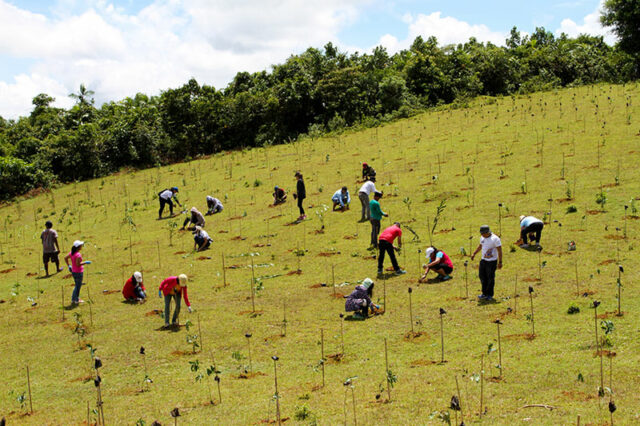
The partnership will cover an eight-year period and will include establishment of new plantations as well as nourishing of reforested areas.   

Napocor said the agreement will utilize a comprehensive and integrated approach in implementing its reforestation activities, which includes the capacity-building of peoples organizations and raising awareness in the communities.  

The rehabilitation of the 25-hectare upland forest within the watershed will help offset carbon footprint, according to CCC Vice Chairperson and Executive Director Robert E.A. Borje.   

Napocor’s partnership with CCC is part of its Energy Sector Carbon Sequestration Initiative (ESCSI), a program it launched together with the Energy department in 2021.   

“The program aims to enjoin the private sector in mitigating the effects of climate change through reforestation,” Napocor said.   

Aside from Napocor’s missionary electrification mandate, it is also tasked to manage 11 watershed areas with a combined land area of 485,199 hectares. These watershed reservations support hydro and geothermal power plants in the Philippines. Ashley Erika O. Jose

Gilas men’s, women’s 3×3 get first crack at Cambodia SEAG

FIBA.BASKETBALL

GILAS Pilipinas men’s and women’s 3×3 get first crack at redemption in the 32nd Southeast Asian Games (SEAG) among the Philippine hoops contingent as they hunt for their lost gold medals on May 6 to 7 in Cambodia.

Gilas men’s 3×3, which settled for a bronze medal in the last edition in Vietnam after ruling the inaugural three-a-side staging in Manila in 2019, hit the half-court of the Morodok Techo National Stadium Elephant Hall 2 a day after the Games’ May 5 opening to play three assignments in Pool A.

The Almond Vosotros-led crew plays Laos in the 10:20 a.m. curtain raiser then returns against 2021 silver medalist Vietnam at 1:40 p.m. before wrapping up its slate against Indonesia at 5 p.m.

The ladies’ climb back to the summit begins on the same day with the squad led by the returning Jack Animam competing in the preliminaries of tough Pool A.

Gilas women’s 3×3, the event’s inaugural champ who finished fourth in the Hanoi edition, battles 2021 runner-up Vietnam right away at 9:20 p.m. then takes on lightweight Laos at 12 noon before going to its grudge match against defending champion Thailand at 3:40 p.m.

Initial target for both squads is to top the group or at least rank second to advance to the medal rounds on May 7.

The Gilas men’s “Redeem Team,” which suffered a painful fall from the top in Hanoi, launches its bring-back-the-gold bid on May 9 in a Pool A opener against Malaysia.

The Pinoy cagers later face host Cambodia (May 11) and Singapore (May 13).

With this new format, the Philippines won’t be facing recent conqueror Indonesia and other big threats until the playoffs.  Indonesia, which topped the single round robin meet in Vietnam with a 6-0 card against Gilas’ 5-1, engages in a battle royale with bronze medalist Thailand, fourth placer Vietnam and Laos for the two semis tickets in Pool B.

Gilas women’s, which averted a shutout in the last SEAG, starts its “three-peat” bid on May 10 against the host Cambodians. It then plays daily matches until May 15 against Singapore, 2021 second-placer Indonesia, Vietnam, Thailand and bronze medalist Malaysia. Like in the Vietnam edition, the No. 1 women’s team in the standings takes home the gold. — Olmin Leyba

ADVERTISEMENT
ADVERTISEMENT