Home Blog Page 4884

Women should get regular mammograms starting at age 40 — US panel

FREEPIK

WOMEN at average risk for breast cancer should get screening mammograms every other year starting at age 40, according to a proposed guideline update from the US Preventive Services Task Force (USPSTF), reflecting improved diagnostic technology and treatment.

The update reverses a controversial recommendation made by the panel in 2009, when it advised against routine mammograms for women in their 40s and said biennial screening should start at age 50, unless women and their doctors decided earlier screening was appropriate.

At that time, the net benefit of mammography screening for women in their 40s, minus the potential harms, was small, said Dr. Carol Mangione, the immediate past chair of the USPSTF.

“A lot of things have changed since then,” she said.

Breast cancer rates in younger women have been rising, digital mammography advances have improved their accuracy, and better treatments are resulting in improved survival, she said.

As a result, new computer models suggest that if biennial screening started at age 40 instead of age 50, and if everyone who is eligible got a mammogram, breast cancer mortality in the United States would be reduced by 20%, said Ms. Mangione, who chairs the department of medicine at the David Geffen School of Medicine at the University of California.

The benefit would be even greater for Black women, who generally have more aggressive breast cancers and poorer survival, the panel said.

The Task Force recommendation applies to cisgender women and people assigned female at birth who are at average risk of breast cancer, including those with a family history of breast cancer and certain other risk factors, such as having dense breasts.

The recommendation does not apply to people with a personal history of breast cancer, a very high risk due to certain genetic predisposition or a history of high-dose radiation therapy to their chest at a young age, or a lesion on previous biopsies. These people should consult their healthcare professional for individualized guidance about screening.

The new recommendation does not change what is covered by insurance, because insurance companies in the US are legally required to fully cover mammograms every year for women over age 40 who want them, the panel said.

The USPSTF also said there is not enough evidence to assess the balance of benefits and harms of mammography in women over age 75 or of using ultrasonography or magnetic resonance imaging in women with dense breasts who have normal mammography results.

The potential harms of screening include false-positive results that lead to unnecessary biopsies and sometimes to mistaken diagnoses of breast cancer, research has shown.

The panel’s 2009 recommendation that women in their 40s decide for themselves whether to get mammograms was controversial.

The American Cancer Society (ACS) applauds the return in USPSTF recommendations to begin screening at age 40, Chief Scientific Officer Dr. William Dahut said in a statement.

However, he added, the ACS recommends annual mammograms because “current evidence indicates that biennial screening in (women under age 55) is associated with a diagnosis of more advanced disease.”

American College of Obstetricians and Gynecologists (ACOG) spokesperson Dr. Christopher M. Zahn said in a statement, “ACOG has long asserted that regular screening via mammography starting at 40 years reduces breast cancer mortality in those without additional risk factors.”

“Recognizing that Black women are more likely to die of breast cancer than white women, (the earlier start to screening) could help make a meaningful difference in ensuring that more Black women are diagnosed earlier,” Mr. Zahn added.

The draft recommendation will be available for public comment until June 5, 2023. — Reuters

Taiwan conflict, maritime code to figure in ASEAN talks, Marcos says

PHILIPPINE STAR/KRIZ JOHN ROSALES

Philippine President Ferdinand Marcos Jr has said the prospect of tensions escalating over Taiwan was a “grave concern” to Southeast Asian leaders and discussions about it were inevitable at this week’s summit in Indonesia.

“Considering that we agree on the concept of ASEAN centrality when it comes to regional concerns, that will be one of the most important subjects that we will bring up,” Mr. Marcos told reporters late on Tuesday.

Mr. Marcos was in Indonesia for the Association of Southeast Asian Nations (ASEAN) summit, where he will seek the completion of a code of conduct for the South China Sea.

“I will bring it up again,” Mr. Marcos said. “The issues … they will not calm down until we have a code of conduct.”

The Philippines, which won an arbitration case in 2016 that clarified its sovereign rights and invalidated China’s claim of historic jurisdiction over the entire South China Sea, has complained of late about Beijing’s “dangerous maneuvers” and “aggressive tactics”.

China says it is operating lawfully in its territory.

Mr. Marcos was in the United States last week and met counterpart Joe Biden, after which he secured a clear-cut treaty commitment from Washington that it would defend the Philippines if attacked in the South China Sea.

ASEAN and China have been working towards a maritime code of conduct following a commitment they made in 2001, a set of rules that many analysts expect will, if they materialise, be non-binding and have no enforcement mechanism.

China’s claims run more than 1,500 km (932 miles) off its coast and into the exclusive economic zones of five ASEAN countries – Brunei, Malaysia, the Philippines, Vietnam and Indonesia – where Beijing’s coast guard and armada of fishing vessels have been accused of using intimidation tactics.

Mr. Marcos said he hoped the code of conduct would be in place “sooner rather than later because the tensions are increasing.” – Reuters

Australia, NZ privacy regulators launch joint probe into Latitude Group

TOWFIQU BARBHUIYA-UNSPLASH

 – The privacy regulators for Australia and New Zealand said on Wednesday they had begun a joint investigation into the personal information handling practices at consumer finance firm Latitude Group, which was hit by a cyber attack.

The Office of the Australian Information Commissioner (OAIC) and the New Zealand Office of the Privacy Commissioner (OPC) said the decision followed preliminary inquiries into the matter by both regulators.

Latitude Groupa provider of credit cards and personal loans for some of Australia‘s biggest retailers, said in March hackers stole nearly 8 million Australian and New Zealand drivers’ license numbers.

Latitude later said it had received a ransom demand but it would not pay as it would be detrimental to customers and cause harm to the broader community by encouraging further attacks.

The breach was New Zealand’s largest and one of the biggest in AustraliaHackers also took about 53,000 passport numbers and more than 6 million customer records, mostly from between 2005 and 2013.

The investigation will check whether Latitude took “reasonable steps” to prevent hackers from getting access and the reasons it had for holding onto the personal information of clients for many years.

If found guilty, Latitude could pay penalties of up to A$50 million ($34 million) for each violation. Latitude shares were down about 1 percent at A$1.29 in early afternoon trade.

Australia is seeing a rise in cyber attacks since late last year with breaches reported by several companies, prompting the federal government to overhaul cyber security rules in February and set up an agency to oversee government investment and help coordinate responses to hacker attacks.

On Wednesday, TechnologyOne Ltd. became the latest target after the enterprise software maker said it had detected an unauthorized third-party access to its back-office systems. – Reuters

Southeast Asian leaders urge end of Myanmar violence, inclusive talks

FLOWERS hang during a nationwide flower campaign against the military coup in Yangon, Myanmar, April 2, 2021. — REUTERS

 – Southeast Asian leaders meeting in Indonesia called on Wednesday for an immediate end to hostilities in military-ruled Myanmar, in an effort to create a window for urgent dialogue and aid delivery as fighting intensifies.

The summit of the Association of Southeast Asian Nations (ASEAN) was expected to see wrangling over the bloody crisis in Myanmar, with patience wearing thin as its junta demonstrates no intent to pursue a peace plan agreed with the 10-member bloc two years ago.

“We were deeply concerned with ongoing violence in Myanmar and urged the immediate cessation of all forms of violence and the use of force,” said a statement from the leaders.

They sought the creation of “a conducive environment for the safe and timely delivery of humanitarian assistance and inclusive national dialogues.”

The meeting takes place as Myanmar‘s military intensifies attacks and air strikes on resistance forces and ethnic minority rebels as it tries to consolidate power ahead of a planned election.

It also comes days after a unknown assailants shot at a convoy of regional diplomats and aid workers in Myanmar bringing supplies to some of the more than 1 million people displaced by conflict since a 2021 coup.


MORE ASSERTIVE

Indonesian President Joko Widodo, the current ASEAN chair, earlier said the bloc should speak up and speak as one on its most challenging issues.

“Will ASEAN only be silent or will ASEAN be able to become the driver or peace or growth?”, he said.

ASEAN, which has a policy of non-interference in its members affairs, has become increasingly assertive with Myanmar‘s junta over its failure to implement a five-point peace “consensus” that its top general agreed to with ASEAN a few month after his coup sparked chaos.

ASEAN has barred the generals from high-level meetings until they execute the peace plan, which includes ceasing hostilities, starting dialogue and allowing full humanitarian access.

Indonesia has also been quietly engaging Myanmar‘s military, its shadow government and armed ethnic groups to try to kick-start peace talks.

“ASEAN is doing as much as it can really because when you are there on the ground it’s not that easy,” Philippine foreign minister Enrique Manalo said.

But some have called on ASEAN to take a harder line with Myanmar‘s junta.

“To leave the seat empty at ASEAN summits is actually their comfort zone, they don’t have to be held accountable,” said former Indonesian foreign minister Marty Natalegawa.

“Excluding the junta is only part of a series of steps that should be taken.”

He said the schism over Myanmar presents an “unprecedented challenge” to the bloc’s unity and it was essentially functioning with only nine of its 10 members.

The leaders meeting was also expected to include talks on a code of conduct for the South China Sea and rising tensions over Taiwan, Philippine President Ferdinand Marcos Jr said late on Tuesday. It was not immediately clear if those were discussed. – Reuters

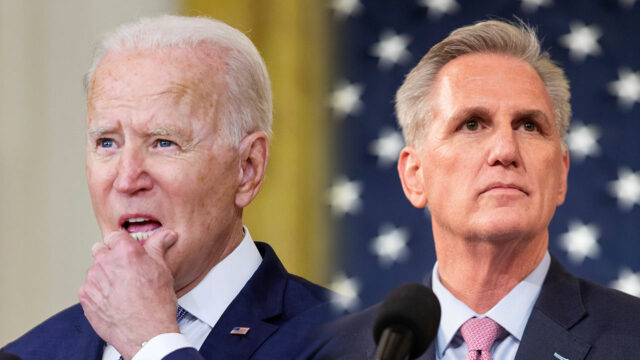
Biden, McCarthy divided over debt ceiling but talks continue

US President Joseph Biden, Jr. (left) and Republican House Speaker Kevin Mccarthy (right)

 – President Joe Biden and top lawmakers agreed on Tuesday to further talks aimed at breaking a deadlock over raising the $31.4 trillion US debt limit, with just three weeks before the country may be forced into an unprecedented default.

After about an hour of talks in the Oval Office, Mr. Biden, a Democrat, and House of Representatives Speaker Kevin McCarthy, a Republican, committed their aides to daily discussions about areas of possible agreement as a default looms as soon as June 1.

Biden, Mr. McCarthy and the three other top congressional leaders were set to meet again on Friday.

Mr. Biden called the talks “productive” and appeared to offer Republicans some possible compromises, including taking a “hard look” for the first time at clawing back unspent coronavirus relief funds to reduce government spending.

But he repeated that Republicans must take the threat of default off the table. And he did not rule out eventually invoking the 14th amendment to the US Constitution, an untested approach that would seek to declare the debt limit unconstitutional. Doing so would require litigation, he said, but is an option he may study in the future.

“There’s a lot of politics and posturing, and that’s going to continue for a while,” Mr. Biden said, but political leaders are “getting to work.”

“Everyone in the meeting understood the risk of default,” Mr. Biden said.

Mr. McCarthy emphasized a lack of progress after the meeting. “I didn’t see any new movement,” Mr. McCarthy told reporters, complaining that Biden didn’t agree to talks until time was running out. “That’s not a way to govern,” he said.

But he did say Mr. Biden indicated that he was open to discussing reforms to the permitting process for new energy projects as part of the talks.

Economists warn that a lengthy default could send the American economy into a deep recession with soaring unemployment while destabilizing a global financial system built on US bonds. Investors are bracing for impact.

Mr. Biden is calling on lawmakers to raise the federal government’s self-imposed borrowing limit without conditions. Mr. McCarthy, whose party has a slim majority in the House, has said his chamber will not approve any deal that doesn’t dramatically cut spending to address a growing budget deficit and signaled that he doesn’t see a short-term fix.

Past debt ceiling fights have typically ended with a hastily arranged agreement in the final hours of negotiations, thus avoiding a default. In 2011, the scramble prompted a historic downgrade of the country’s top-notch credit rating. Veterans of that battle warn the current situation is riskier because political divides have widened.

Tuesday’s meeting was the first between Mr. Biden and Mr. McCarthy since Feb 1. It was closely watched ahead of what is expected to be a fraught period in Washington with the approach of June, when the US Treasury predicts the country could be forced to default on some debts.

Earlier Tuesday, Mr. McCarthy appeared to close the door to a short-term solution that’s been widely discussed on Capitol Hill: lifting the debt ceiling through September to allow more time for agreement. Mr. Biden specifically said after the meeting that he was not ruling out such a short-term arrangement.


INVESTORS WATCH CLOSELY

Neil Bradley, top policy official at the US Chamber of Commerce, the nation’s largest business association, said it was positive that the two sides would continue meeting. “But we cannot stress enough that time is short, with each passing day increasing the risk for a misstep resulting in a default.”

Few countries in the world have debt ceiling laws, and Washington’s periodic lifting of the borrowing limit merely allows it to pay for spending Congress has already authorized.

Mr. Biden would agree to a separate discussion on the budget but not tied to the debt ceiling, the White House said.

The start of active talks could nonetheless soothe the nerves of investors who last week forced the federal government to pay its highest interest ever for a one-month debt issue.

Prices for short-term Treasury bills fell on Tuesday as investors sold off debt that could come due around the time the US debt limit could be hit.

Mr. Biden‘s foreign travel plans and House and Senate recesses mean there are just seven days when all three parties are scheduled to be in town before June 1.

Treasury Secretary Janet Yellen on Monday said a failure to raise the debt limit would hurt the US economy and weaken the dollar as the world’s reserve currency. Treasury cash is dwindling as the extraordinary measures it is taking are exhausted. – Reuters

How El Chapo’s sons built a fentanyl empire poisoning America

 – In January 2017, days after Mexico extradited the notorious drug trafficker Joaquín “El Chapo” Guzmán to the United States, local cops in his home state of Sinaloa fell under attack.

Some were shot dead in broad daylight. Others vanished and were never found. In all, 13 police officers died or disappeared in the months that followed.

That spree was the start of a shift in tactics within Guzmán’s Sinaloa Cartel, according to four intelligence and security officials, one that signaled the arrival of a new force inside one of Mexico’s most powerful drug syndicates: the kingpin’s four sons.

Collectively known as Los Chapitos, or “the little Chapos,” the four siblings were once mocked by adversaries as entitled princelings more concerned with flashing their wealth on Instagram than the grubby work of moving tons of cocaine into the United States. Yet the brothers have resuscitated a drug empire teetering after their father was locked behind US bars and diversified the business by embracing a new line of synthetic drugs.

Their early bet on fentanyl, a synthetic opioid 50 times more powerful than heroin, helped supercharge an opioid epidemic that has placed them squarely in the crosshairs of American anti-narcotics agents.

Last month, US authorities laid out extensive new charges against the brothers in indictments filed in multiple jurisdictions, and upped bounties for two of the siblings to $10 million apiece, cementing their status as some of the world’s most powerful and wanted drug lords. US officials portrayed them as the face of a highly addictive poison that’s killing nearly 200 Americans daily.

“The Chapitos pioneered the manufacture and trafficking of the deadliest drug our country has ever faced,” Anne Milgram, the US Drug Enforcement Administration (DEA) chief, said at an April 14 press conference in Washington. “They inherited a global drug empire and made it more ruthless, more violent and more deadly.”

On Tuesday, the US Treasury Department sanctioned one of the brothers, Joaquín Jr., for his role in the Los Chapitos fentanyl network, alleging that he is involved in the management of “super labs.” His three siblings had been sanctioned previously for purported trafficking.

Los Chapitos, for the first time ever, released a public letter last week denying claims that they traffic fentanyl and rebutting allegations made by US officials in the Washington press conference.

“We have never produced, manufactured or marketed fentanyl or any of its derivatives. We are victims of persecution and they made us a scapegoat,” the brothers said in the letter. Mexico’s Milenio news channel aired its contents on May 3, along with an interview of Guzmán family lawyer José Refugio Rodríguez, who provided the broadcaster with the document.

Denying that they head the Sinaloa Cartel, the brothers said drug traffickers and the media have exploited their father’s fame to implicate them in crimes of which they are innocent.

El Chapo is serving a life sentence in a “Supermax” prison in Colorado. Mariel Colón Miro, Guzmán’s US-based attorney, said her client was unable to comment due to restrictions barring him from speaking to the media.

The four brothers, two born to El Chapo’s first wife, the others to another, range in age from 33 to 40, according to the US Department of Justice. Headed by Iván, El Chapo’s oldest son, the siblings have emerged as key figures in the Sinaloa Cartel, US and Mexican anti-narcotics officials said. While the syndicate is a loose confederation of trafficking factions that cooperate on logistics and security, the Guzmáns’ bloc is a pillar of the organization, the officials said, and Los Chapitos have quickly consolidated power within it.

To chronicle the rise of this new generation of “Narco Juniors,” as children of established traffickers are known in Mexico, Reuters spoke with four Sinaloa Cartel operatives and visited a house where gang members assembled pills stuffed with methamphetamine, another cash cow. The news agency also interviewed dozens of sources, including law enforcement, intelligence and government officials in Mexico and the United States, as well as local residents who’ve witnessed the changing of the guard.

The rapid ascendancy of Los Chapitos, many details of which are told here for the first time, shows how authorities may have underestimated the former party boys.

A 2019 showdown with Mexico’s Army in Culiacán, Sinaloa’s capital, already has cemented their place in narco lore. Soldiers captured Ovidio, the youngest of the four siblings, then quickly released him on the orders of Mexican President Andrés Manuel López Obrador after cartel foot soldiers fought troops in shootouts that killed 14 people, including several bystanders.

“This new generation is more violent,” said one retired Mexican police officer in Sinaloa. “Before, they would interrogate and then kill you. Now they kill and ask questions later.”

Within the cartel, the brothers have battled elders opposed to them assuming their father’s mantle, including El Chapo’s former right-hand man Dámaso López, according to US and Mexican security sources.

But these young guns have also built a reputation as sharp businessmen. They’ve helped transform Mexico from a transit country for Chinese-produced fentanyl into a major production hub, half a dozen US officials and DEA sources said. To do that, they said, Los Chapitos built a network of clandestine laboratories across Sinaloa and ramped up smuggling of precursor chemicals from China

The earnings have been astronomical. The cartel can turn $800 worth of precursor chemicals into fentanyl pills or powder that reap profits as high as $640,000, according to one of the April indictments, which was filed in the Southern District of New York. That cash, US prosecutors say, has bankrolled a war chest used by the brothers to bribe politicians and cops, and finance an ever-growing army of sicarios, or hit men, to protect their interests.

The impact on US streets has been devastating. One American dies from a fentanyl overdose almost every eight minutes, US Deputy Attorney General Lisa O. Monaco said at the Washington press conference. US overdose deaths, the lion’s share due to fentanyl, surged to nearly 107,000 in 2021.

Los Chapitos’ ascent, US and Mexican officials say, has coincided with a decision by López Obrador to turn away from the aggressive anti-narcotics policies of his predecessors.

After assuming office in December 2018, López Obrador restructured Mexico’s security forces, eliminating teams that were once at the forefront of probing cartel activity, US and Mexico security sources said. They say the president also curbed security cooperation with the United States and largely eschewed the so-called kingpin strategy that led previous administrations to arrest El Chapo and other high-profile traffickers.

Instead, the president has vowed to concentrate on social programs to tackle crime and violence at a grassroots level, a policy dubbed “abrazos, no balazos” or “hugs, not bullets.”

Mexico’s presidency did not respond to a request for comment about López Obrador’s crime fighting approach. He has repeatedly touted his strategy on multiple visits to Sinaloa. “Nothing can be solved with the use of force. You can’t put out fire with fire,” Lopez Obrador told residents in 2019. His supporters note that murders nationwide have stabilized since he took power.

The president’s critics say the number of homicides – above 30,000 a year – is still extremely high, and the production and smuggling of drugs into the United States have increased.

Mexico’s Army did ultimately apprehend Ovidio Guzmán earlier this year by sending hundreds of troops to raid one of his homes in rural Sinaloa. He’s now in a maximum-security lockup near Mexico City. But that arrest had more to do with the Army trying to restore its battered prestige rather than a shift in López Obrador’s thinking, four US and Mexican officials said.

Ovidio’s lawyer and López Obrador’s office did not respond to requests for comment. The Army did not comment about its motive for the arrest.

US-Mexico security ties have frayed. López Obrador called the recent US indictments against the four younger Guzmáns an “abusive, arrogant interference that should not be accepted under any circumstances.” The Mexican leader said the case was built by DEA agents operating in Mexico, which he has deemed a violation of sovereignty.

While he has not booted the agency from the country, DEA operations have been hobbled on his watch. Mexico in 2021 disbanded an elite police unit that worked closely with the DEA for a quarter of a century; amended a national security law to make it harder for foreign agents to operate inside Mexico; and slow-walked visa approvals for DEA agents, CNN reported.

Those measures were widely viewed as retaliation for the 2020 arrest of former Mexican Defense Minister Salvador Cienfuegos in Los Angeles on drug trafficking charges, a move that angered López Obrador. US prosecutors later dropped the charges, pointing to sensitive foreign policy considerations.

The Justice Department declined to comment. The DEA did not respond to a request for comment. Rafael Heredia Rubio, a lawyer representing Cienfuegos, said he was not authorized to comment. Cienfuegos’ attorneys previously had denied that he was involved in drug trafficking.


FERRARIS AND PET TIGERS

Born into one of Mexico’s most storied outlaw families, Guzmán’s five sons – Edgar, Iván, Jesús Alfredo, Joaquín Jr. and Ovidio – grew up in luxury once unimaginable to their father, a semi-literate farm worker from Sinaloa’s mountains before becoming the head of a drug empire. (El Chapo fathered more than a dozen children, according to local media, not all of whom are reputed to be involved in drug trafficking.)

Minor social media celebrities, they flaunted their pet tigers, Ferraris and a golden AK-47 on Instagram and Twitter. Those accounts were never verified by those platforms, but a social media analyst familiar with cartel communications and two security sources told Reuters they believed the accounts were authentic.

Early on, “the general perception was that Los Chapitos were spoiled brats,” said Mike Vigil, former head of DEA’s international operations.

After El Chapo’s escape from a maximum-security prison in 2001, reportedly in a laundry trolley, the brothers took a hands-on approach to the family business, security sources said.

Edgar blazed a trail for his brothers by building his own contacts and doing his own deals, the sources said. But he was killed in 2008 in Culiacán in a hail of bullets amid infighting between warring factions of the Sinaloa Cartel.

His four surviving brothers filled the void, US and Mexican security sources said.

Starting in 2009 with Jesús Alfredo, the brothers all have been indicted by US authorities multiple times for alleged offenses including money laundering, possession of machine guns and trafficking of fentanyl, heroin and cocaine. The US State Department in 2021 put $5 million bounties on their heads, a figure recently doubled for Iván and Jesús Alfredo, while the DEA set up ChapitosTips@dea.gov to encourage snitches to rat them out. The agency in April placed Iván on the list of its 10 Most Wanted Fugitives, joining Jesús Alfredo and Ismael El Mayo” Zambada, a Sinaloa Cartel legend and El Chapo’s alleged former business partner.

Washington has taken note of Los Chapitos’ entrepreneurial flair. The State Department in its 2021 bounty notices said Ovidio and Joaquín Jr. began smuggling chemicals from Argentina in 2008 to launch experiments in Mexico on how to produce methamphetamine.

As they built their own crew, the brothers purportedly discarded the shibboleth that Sinaloa kingpins should only sell drugs to foreigners. Los Chapitos placed pushers on street corners in Culiacán, according to cartel members and Mexican media reports.

In what would prove another consequential move, Ovidio in 2014 began to tinker with manufacturing fentanyl in Mexico, according to one of the indictments unsealed last month.

That same year, the brothers faced another major test: Their father was nabbed again, this time by Mexican marines working with the DEA. The sons helped El Chapo stage yet another audacious escape in July 2015 by organizing the construction of a mile-long tunnel to his Mexican prison cell, according to testimony that would emerge later at the elder Guzmán’s 2019 drug trafficking trial in New York.

Following the tunnel caper, Mexican authorities recaptured El Chapo in January 2016. He tapped his sons to head his portion of the trafficking empire, triggering a power struggle with López, who had run the business during the boss’s previous incarceration, according to 2017 Mexican military intelligence documents viewed by Reuters.

Los Chapitos and their posse squeezed López’s crew by crimping his finances. Near a Sinaloan dam where both groups filched water to feed their clandestine drug labs, the brothers cut off López’s access to this critical resource, crippling his manufacturing capability while keeping the taps open for themselves, according to three serving Mexican marines who spoke with Reuters.

“Los Chapitos had an advantage as they kept the production of drugs. They had money to pay sicarios, buy arms,” said one of the men, who had worked with the elite Navy unit that helped capture El Chapo in 2016.

The feud escalated into all-out war following Guzmán’s 2017 extradition to the United States. El Chapo’s sons targeted the 13 Sinaloan police officers for execution because they were on López’s payroll, according to prosecutors and former cops in Sinaloa, as well as military officials and intelligence documents reviewed by Reuters.

Police in Sinaloa did not respond to claims that the targeted officers were in league with López.

One of the US indictments unsealed last month details other grisly violence allegedly meted out by Los Chapitos. Their henchmen allegedly kidnapped two officials from the federal attorney general’s office in early 2017, torturing one by inserting a corkscrew into his muscles, ripping it out, then “placing hot chiles into his open wounds and nose.”

Iván finished off the victims with gunshots, with Jesús Alfredo pitching in to shoot one in the face, according to the indictment, which said the two brothers also killed some enemies by feeding them alive to the pet tigers they kept at their ranches.

The brothers, in their public letter, denied killing or torturing the officials or feeding people to tigers.

“A tiger may kill a person, but eat him? We do not have nor did we have tigers,” the letter stated.

Los Chapitos prevailed in their struggle with López, who was arrested in Mexico City in 2017 by the Mexican military and subsequently extradited to the United States. A star prosecution witness in El Chapo’s 2019 trial, López got his own life sentence for drug trafficking reduced. In 2021, his name disappeared from the Federal Bureau of Prisons’ public registry of inmates, fueling media speculation that he entered witness protection. López, through his lawyer, declined to comment.

On their turf in Culiacán, meanwhile, the brothers quickly solidified their grip on the local drugs market, a local trafficker told Reuters.

Jesús, an independent operator in Culiacán who ships fentanyl and heroin to the United States with the help of the syndicate, said gunmen working for Los Chapitos told street dealers they had to purchase product from their cartel faction exclusively and pay protection money. He said several friends and family members who were slow to comply were kidnapped and beaten.

Los Chapitos made it clear that “now the market belongs to them,” Jesús said.


SHOWING WHO’S BOSS

On Dec. 1, 2018, López Obrador took office after winning Mexico’s presidency in a landslide. Within months, members of UNOPES, the Navy’s elite special forces unit that had pursued El Chapo and other traffickers, were ordered by superiors to leave Sinaloa and shut down their temporary bases there, according to the three marines and three ex-DEA officials.

The president’s office did not respond to a request for comment.

In October 2019 came the Mexican Army’s first capture of Ovidio Guzmán in Culiacán. Recalling that day, two Sinaloa Cartel members told Reuters that, within minutes, encrypted radios carried by fellow gunmen began to buzz with the news: “The boss has fallen! The boss has fallen!”

Hundreds of gang fighters armed with military-grade weapons rushed to the scene, firing on government troops and barricading key city streets to trap them. They also kidnapped eight soldiers and surrounded military housing where wives and children of Mexican soldiers lived, Mexican officials said.

With the pop-pop-pop of gunfire echoing in the background, encircled Mexican troops put Ovidio on the phone with his brother Iván in an attempt to get Los Chapitos to call off their gunmen. “Tell them to stand down…I don’t want chaos,” Ovidio said in video footage released by Mexico’s government.

“Hell no, we are coming to rescue you,” Iván responded, according to Sinaloan newspaper Ríodoce.

Hours later, with Culiacán resembling a war zone and scenes of pandemonium being broadcast across the globe, López Obrador ordered the army to free Ovidio.

The day of terror shocked Sinaloans, whose relationship with the cartel is complex. El Chapo had the reputation of being ruthless to those who crossed him. But locals say he provided jobs, handouts and security by punishing hoodlums preying on poor communities.

“It was the first time we saw the Sinaloa Cartel use their armed power to generate…chaos and fear to try to achieve their goals,” said Adrian López, publisher of the Sinaloan Noroeste newspaper.

For the brothers, it was a turning point. Mexico’s military and its president had bowed to them in front of the entire world. “It showed who has power,” a cartel member said.

Still, they set out to burnish their public image. One such charm offensive took place in December 2020 in San Diego, a village about 60 kilometers south of Culiacán that is home to several high-ranking cartel sicarios, a resident told Reuters. There Los Chapitos staged a music concert and raffle, whose prizes included new cars, washing machines and refrigerators, all bearing stickers emblazoned with El Chapo’s initials – JGL for Joaquín Guzmán Loera – that person and two other locals said.

A fourth declined to answer questions, saying “I don’t want them to disappear me.”

During COVID-19 lockdowns, the brothers doled out food parcels and built an outdoor school in rural Sinaloa, and they have maintained the tradition of punishing common hoodlums, Sinaloa residents and cartel members said.


TAKING CONTROL

But like their father, Los Chapitos are at heart violent businessmen with a drive for manufacturing and moving drugs, security officials and cartel members said.

A gang soldier calling himself Güero, a silver pistol tucked into his waistband, last year gave Reuters a tour of a cartel safe house on the edge of Culiacán. There, two young men in white surgical gloves sat at a brown lacquered table carefully stuffing white powder into transparent capsules – methamphetamine samples for a new client looking to ship in bulk to the United States, Güero said.

As fentanyl and meth production have soared, US seizures have likewise skyrocketed. Interdictions of fentanyl alone on the US-Mexico border hit 14,104 pounds (6,397 kilograms) in the fiscal year ending Sept. 30, 2022, up more than 400% since 2019, according to US Customs and Border Protection data.

Inside Mexico, meanwhile, the Army had a grudge to settle.

In early January of this year, the Army told López Obrador it planned to mount a top-secret operation to recapture Ovidio, according to a then-senior government official with direct knowledge of the events. The president approved the mission but was not informed of the date and time, the source said.

Mexico’s Army and the presidency did not respond to requests for comment about the official’s account.

As hundreds of soldiers encircled Ovidio’s rural Sinaloan compound in the pre-dawn assault, a helicopter strafed targets from the air, video of the incident showed.

Cartel gunmen went on a rampage again, setting cars on fire, blocking roads and forcing Culiacán’s airport to shut by shooting at passenger jets. The violence left 29 people dead, including 10 armed forces personnel. But the sicarios were too late – a military chopper had already whisked Ovidio out of Sinaloa.

Despite that blow to the Sinaloa Cartel, fentanyl keeps flowing north. In February and March, US border agents seized a combined 5,130 pounds (2,326 kilograms) of fentanyl in two of the biggest monthly hauls ever. – Reuters

PANAta Awards 2023 call for entries opens

A celebration of brand excellence and effectiveness is once again in the offing with the call for entries at the PANAta Awards 2023. A symbol of achievement, PANAta Awards is an annual industry event organized by the brand builders themselves in recognition of their peers’ innovative, creative and insightful contributions in marketing and advertising. Prestigious local and international Industry luminaries compose the jury.

This year, the event has been made earlier with the deadline of entries earmarked on May 26. Said timeline adjustment reflects brand builders’ preference and sentiments as they expressed in the last survey that this is the ideal schedule when there are lesser brand activation programs and thus more time to prepare their campaign documents.

With this invitation for entries, PANAta Awards 2023 also revealed more exciting and inclusive categories recognizing the ever-evolving brand initiatives and the new players.

In view of diverse business magnitude and objectives, a separate category has been allocated for SMEs so that they do not have to compete with the multimillion budget of the bigger brands. This is the award for Brand Effectiveness through Business Growth where the entries are asked to show how they have maximized the use of data in propelling the brand’s direction. The brand’s creative use of media is highlighted in the category Brand Effectiveness through the use of Marketing Channels. This is broken down into 2 sub categories to include single-use and integrated campaign. Big budgets are not always required to achieve results as not all channels are always to be utilized. One just has to be creative and focused. Thus, these categories.

Latest addition of awards are in recognition of the brand’s significant partners in accomplishing its communication plans. These include Creative Agency of the Year, Media Agency of the Year and the Media Network of the Year. Only Brands/Clients can nominate for these categories. Here, harmonious and productive relationships of the involved parties and contribution to business growth are analyzed. Quantitative and qualitative tests developed by a professional psychometrician will be the basis for the results.

Having a well-known and respected figure associated with a brand can increase its visibility, credibility, and ultimately drive sales. In the Philippines, endorsements from popular actors, actresses, singers, and athletes make a valuable contribution to the effectiveness of the campaign. As brands take a painstaking effort in its selection, a category on the Most Effective Use of a Brand Ambassador has been included. Both the Ambassador and the Brand get a Trophy.

The role of a newbie in the execution of a successful campaign cannot be overlooked. For this reason, an award for Rookie Brand Builder of the Year was also announced. This award is given to brand managers with 2-3 years’ experience in brand work whose discipline echoes the values of PANAta Awards — excellence in marketing and responsible brand building.

Here is the complete list of categories brand builders are vying for:

BRAND BUILDER CATEGORIES

BRAND EFFECTIVENESS THROUGH BUSINESS GROWTH

  • Large Enterprise
  • SMEs

BRAND EFFECTIVENESS THROUGH EFFECTIVE USE OF MARKETING CHANNELS:

  • Integrated (combination of 2 or more mediums/platforms)
  • Single Medium

BRAND EFFECTIVENESS THROUGH CSBT (Corporate Sustainability and Brand Trust)

BRAND EFFECTIVENESS THROUGH CUSTOMER EXPERIENCE

BRAND EFFECTIVENESS THROUGH INNOVATION:

  • Most Effective Product Innovation
  • Most Effective in Creative Content Innovation
  • Most Effective Disruptive Innovation

MAJOR AWARDS

CREATIVE AGENCY OF THE YEAR

MOST EFFECTIVE USE OF BRAND AMBASSADOR

MEDIA AGENCY OF THE YEAR MEDIA NETWORK OF THE YEAR

SPECIAL AWARDS

PEOPLE’S CHOICE AWARD

    • Favorite Brand
    • Favorite Campaign
    • Favorite Brand Ambassador

BRAND BUILDER OF THE YEAR

ROOKIE BRAND BUILDER OF THE YEAR

BRAND TEAM OF THE YEAR

GRAND PANAta BRAND OF THE YEAR

To submit entries, click https://applications.pana.com.ph/panata-awards/. Early Bird submission gets a discounted rate until May 19, 2023! Announcement of winners and live awarding ceremonies are scheduled in September 2023.

For inquiries email alucero@pana.com.ph or visit PANA Facebook page and www.pana.com.ph.

Special thanks for our partners: Praxis, our media and event agency partner. Vitalstrats Creative Solutions, our creative and communications agency partner. Our Media partners, Adobo Magazine, Meta, Monster Radio RX93.1, 96.3 EasyRock, Wish 107.5, Megamobile, the Philippine Star and BusinessWorld. Our industry partner, Ad Standards Council and World Federation of Advertisers.


Spotlight is BusinessWorld’s sponsored section that allows advertisers to amplify their brand and connect with BusinessWorld’s audience by enabling them to publish their stories directly on the BusinessWorld Web site. For more information, send an email to online@bworldonline.com.

Join us on Viber at https://bit.ly/3hv6bLA to get more updates and subscribe to BusinessWorld’s titles and get exclusive content through www.bworld-x.com.

The fearless Carlo Magno

Forty years as a professional artist has not made Carlo Magno complacent with his craft. Rather, the passing years have made him more experimental if not downright disruptive of his own technique.

Attesting to this incessant experimentation is Percipience, his current exhibition at Galerie Joaquin in One Bonifacio High Street Mall. About two dozen paintings and sculptures are witness to his incredible journey to abstractionism.

“It’s like seeing something from a memory, doing something different, exploring, experimenting on ideas from before, from years ago,” explained Mr. Magno on the theme of the show. “I always experiment. I like developing something every time, so it keeps on changing. It’s an endless quest for me – even the styles and the compositions. But the colors from the past are still there.”

Each piece exhibits layers of techniques – the soft brushstrokes, aggressive textures, bold charcoal, and overlays of acrylic – that invite the viewers to see his life on art but while encouraging them to imagine beyond the confines of the canvas.

“It’s just memories,” he asserted. “Even the flow of the lines, I used to paint old churches like that. The strokes are similar, these are a close-up of the texture of the walls which, I see figures in that also, like seeing figures in clouds. In these walls, you can also see figures like a woman or a running figure. It’s accidental, actually, but of course, it’s open to interpretation because I want the viewer to have another point of view on what I see.”

But Mr. Magno has a past. Once upon a time, he was well-ensconced in the world of hyperrealism. He painted the churches and old houses of Vigan in great detail – belaboring every brick and stressing over the grains of wood. He painted the Love Bus and people going about their everyday lives. For 20 years – half of his career – his artistic output consisted of evocative images of reality that a network of collectors had come to appreciate and expect.

“I got really drained” he admitted. “I felt like I was in a box. I can’t move. I can’t explore. I cannot experiment. I was just there doing these kinds of stuff. It felt like I wanted to explode, to do something I really want.”

He found support where he least expected it. His manager Manuel Duldulao, who was instrumental in building his career as a hyperrealist artist, sent him many books and materials after he confessed a desire to shift to abstraction.

He immersed himself in this new world, armed with a solid foundation in painting techniques. He understood the rules and, drawing from the experience of artists before him, learned how to break free and transform his art.

His wife, Susanne, asked only one question: Are you sure?

“So nung ready na, sabi ko (So when he was ready, I said), let’s launch you now as an abstract artist,” she said. “We formally launched him but he was starting from scratch talaga kasi nga (really because) it’s a 180° turn from hyperrealism to biglang (suddenly) abstract kaya may mga (that’s why there were) negative write-ups.”

Mr. Magno recalled one in particular.

May nag-criticize sa akin after that,” he said. “Isang buong page! Hindi ako makatulog! Parang gusto mong magsalita pero hindi ka makapagsalita. Hindi naman ako marunong magsulat, hindi ako makabawi. Sabi ko, yung time na lang ang magsasabi (Someone criticized me after that. One whole page! I couldn’t sleep! I wanted to speak up but I couldn’t say anything. I didn’t know how to write, I couldn’t respond. I told myself only time will tell).”

Nung inumpisahan ko yun, dapat ipagpatuloy ko na,” he continued. “Na dishearten ako pero sandalling-sandali. Ang sakit! Ganito pa ang sinabi dun: Pag abstractionist ka, hindi ka na pwede mag realist. Pag realist ka, hindi ka pwede mag abstractionist. Sabi ko, eh sorry hindi ko alam yung rule na yun (When I started it, I felt I should continue it. I was disheartened but only for a short while. It was painful! This is what was said: When you’re an abstractionist, you can’t be a realist. When you’re a realist, you can’t be an abstractionist. I said, sorry but I didn’t know that rule)!”

He was grateful that his collectors stayed with him. They didn’t simply buy his art but accompanied him throughout his artistic journey. And it’s been a rollercoaster-ride of a journey.

While painting abstract art, he also explored sculptures.

It was a time when there was no foundry in the Philippines that could cast the pieces that he wanted. There was one but he was not happy with the result. Many tries yielded one bronze piece that was so heavy that it became a family joke. He said that he would give it to anyone who could carry it with one hand. To this day, the piece is still in their possession. Eventually, he discovered cold casting and has since produced pieces worthy of his name.

While he has completely turned his back on hyperrealism, many themes of his past life still find their way to his new one. And after 20 years as an abstract artist, he has learned to embrace the past and use it for his new work.

Indeed, this fearlessness to walk a new path has become a signature of Mr. Magno’s art. But the fearlessness is tempered with a thirst to learn instead of just jumping onto a trend. All of his artworks begin the old-fashioned way. He sketches. He creates studies. He puts everything on paper to develop his ideas before breaking out a canvas. It is a method that suited him as a hyperrealist that he has continued with as an abstractionist.

He has pushed back on the criticism that abstractionists simply slather on paint with reckless abandon. His works show the disciple of a trained painter with the courage of an artist. There is a process but there is freedom as well.

“I have to read books, look at the paintings that I really like,” he reiterated. “I really meditate on it — what’s best for me, what’s suited for me, what feels good, really.”

Carlo Magno’s Percipience is on view from May 4-13 at Galerie Joaquin BGC, Upper Ground Floor of One Bonifacio High Street Mall, Taguig.

I-ACT At Your Service Awards 2.0 honors Globe for COVID-19 response efforts

Globe, the country’s leading digital service platform, was recognized by the Inter-Agency Council for Traffic (I-ACT) and SM Cares for its steadfast support during the height of the COVID-19 pandemic.

In recent awards ceremonies, the company was honored for launching COVID-19 hotlines in collaboration with the Department of Transportation (DOTr) Emergency Operations Center (EOC). The initiative helped motorists, commuters, and the general public with their road, aviation, and maritime concerns while movement restrictions were in place across the country.

The I-ACT At your service Awards 2.0 acknowledged services and deeds of deserving individuals and government and private entities that brought safe, secure, affordable, and comfortable public commuting during the health crisis.

“We are proud and blessed to have partners who are generous and committed to deliver services for our road users despite the challenges of the pandemic,” said I-ACT Chief Charlie Del Rosario.

Globe expressed gratitude to I-ACT and SM Cares for the recognition, emphasizing that the company always prioritizes the welfare of all Filipinos, not just its customers.

“We have always been committed to serving all Filipinos, even in the most challenging times. Our priority has always been to make a positive difference in people’s lives, and this recognition only reinforces our commitment to this goal. We will continue to provide not just fast and reliable connection but also services that improve the quality of life,” said Globe Group Chief Sustainability and Corporate Communications Officer Yoly Crisanto.

The DOTr COVID-19 hotlines were launched in May 2020. All calls to the hotline were provided free of charge for all Globe and TM customers, whether they were using Globe landline or mobile phone service.

To learn more about Globe, visit https://www.globe.com.ph/.


Spotlight is BusinessWorld’s sponsored section that allows advertisers to amplify their brand and connect with BusinessWorld’s audience by enabling them to publish their stories directly on the BusinessWorld Web site. For more information, send an email to online@bworldonline.com.

Join us on Viber at https://bit.ly/3hv6bLA to get more updates and subscribe to BusinessWorld’s titles and get exclusive content through www.bworld-x.com.

Philippine Airlines close to buying 10 Airbus A350-1000 jets – sources

PHILIPPINEAIRLINES.COM

PARIS/MANILA – Philippine Airlines is close to a deal to order 10 Airbus A350-1000 wide-body jets in the latest sign of a recovery in wide-body jet markets, industry sources said on Tuesday.

Both companies declined to comment.

An airline source, speaking on condition of anonymity, said: “We are in talks with aircraft manufacturers to order new long-range aircraft, but not yet in a position to announce any specific type.” — Reuters

LF Lending Services modernizes credit scoring process with FinScore’s alternative telco data

Manila-based LF Lending Services is on the verge of digital transformation, starting with the integration of telco data into existing credit decisioning models. Unique insights from telco data allow LF Lending to predict repayment behaviors with improved speed and accuracy. Telco data, as supplied by alternative data aggregator FinScore, serves as proof of creditworthiness for thin-file borrowers who may not have a bank account or credit history.

FinScore Country Manager Christo Georgiev champions telco data saying, “It acts as a reliable basis for financial institutions to finally serve the underbanked credit market.” He continues: “Most people who seek LF Lending’s help are working parents who need quick cash for tuition, gadgets, and medical emergencies — and a majority of this segment is underbanked. Using a scoring model based on telco data empowers LF Lending to approve more loan applications from the ‘credit-invisible’ with reduced risk on their end.”

Despite the inconveniences of being a one-branch-only lender, LF Lending boasts of high customer retention rates. “They always come back,” confirms Paolo Lagcao, general manager and co-founder of LF Lending Services. “Our interest rates — not usurious, our application process — simple, and our customer service is honed to an art form. But traditional credit scoring disqualifies more than it is inclusive. We partnered with FinScore because its alternative Telco Credit Scoring delivers fair and unbiased insights for safe credit decisioning. We lose less as we help more people.”

LF Lending is a family-owned business, initially operated by Lagcao’s grandparents over 20 years ago. Now at the helm, Mr. Lagcao promises to usher in a new dawn for the company: “There’s always room for improvement. As we boldly take our first steps towards digital transformation, we are glad to be walking down the path with FinScore.”

About LF Lending Services

LF Lending Services Corp. is a privately held company founded for the sole purpose of providing Filipinos with easily accessible loans.

LF Lending strives to extend an alternative credit option outside the traditional banks while breaking the stigma that non-bank lenders only charge usurious rates. All LF Lending services include short-term multi-purpose loans with rates that are reasonably priced, ensuring every client has been properly evaluated and amortizations are proportionate.

With over 20+ years of experience in the industry, LF Lending is seasoned to cater to the growing demand of consumer financing — one Filipino at a time.

For more information, please visit www.lflendingservices.com.

SEC Registration No.CS202001294

Certificate of Authority No. 3225

About FinScore

FinScore is a leading fintech company and credit score provider in the Philippines, providing innovative scoring solutions to the dynamic needs of banks, financial institutions, and credit bureaus. FinScore’s telco data credit scoring in the Philippines allows institutions to offer better services to existing customers, attract new ones, and approach untapped market segments. Through their Telco Scoring model, FinScore provides insights based on 400+ variables, including top-up patterns, voice, and mobile data usage, duration of calls, SIM card age, and many more.

For more information, please visit www.finscore.ph or follow us on LinkedIn.


Spotlight is BusinessWorld’s sponsored section that allows advertisers to amplify their brand and connect with BusinessWorld’s audience by enabling them to publish their stories directly on the BusinessWorld Web site. For more information, send an email to online@bworldonline.com.

Join us on Viber at https://bit.ly/3hv6bLA to get more updates and subscribe to BusinessWorld’s titles and get exclusive content through www.bworld-x.com.

Pag-IBIG Fund finances 2,968 homes for low-wage earners in Q1 2023

Pag-IBIG Fund has financed 2,968 socialized homes for minimum-wage and low-income members in the first three months of 2023, its top executives said on May 9.

Socialized home loans make up 14% of the 21,870 units financed by the agency from January to March this year. Meanwhile, the amount of socialized home loans represents 5%, or P1.26 billion out of the P27.57 billion home loans released by the agency for the period.

“We always emphasize inclusivity as a major pillar in the implementation of the Pambansang Pabahay para sa Pilipino Housing or 4PH Program. With the Pag-IBIG Affordable Housing Program, we provide the unserved and underserved sectors, particularly low-wage earners in our country, the opportunity to own a home. All these are in line with the directive of President Ferdinand R. Marcos, Jr. to provide our fellow Filipinos with better and dignified lives,” said Secretary Jose Rizalino L. Acuzar, who leads the Department of Human Settlements and Urban Development (DHSUD) and the 11-member Pag-IBIG Fund Board of Trustees.

The Pag-IBIG Fund’s Affordable Housing Program (AHP) is for members from the low-income and minimum-wage sectors who earn up to P15,000 a month in the National Capital Region (NCR), and up to P12,000 per month outside the NCR. Under the AHP, borrowers enjoy a subsidized rate of 3% per annum for home loans of up to P580,000 for socialized subdivision projects, and up to P750,000 socialized condominium projects.

Pag-IBIG Fund Chief Executive Officer Marilene C. Acosta said that the AHP’s special rate of 3% per annum – a rate that the agency has provided for low-income members since May 2017 – remains the lowest in the market. The loan program also features a 100% loan-to-value ratio allowing borrowers to enjoy equity-free purchase of housing units.

“Our approach to home financing has always been comprehensive. We exert all efforts to make our programs responsive to the needs of our members. That is why we have a special home financing program for our low-income members. With the AHP, the monthly payment for a socialized housing unit is as low as P2,445.30, which is lower than the cost of rent in most parts of the country. And, qualified borrowers will never have to put out cash for equity, truly making homeownership within their reach. That is the Lingkod Pag-IBIG brand of service,” Acosta said.


Spotlight is BusinessWorld’s sponsored section that allows advertisers to amplify their brand and connect with BusinessWorld’s audience by enabling them to publish their stories directly on the BusinessWorld Web site. For more information, send an email to online@bworldonline.com.

Join us on Viber at https://bit.ly/3hv6bLA to get more updates and subscribe to BusinessWorld’s titles and get exclusive content through www.bworld-x.com.

ADVERTISEMENT
ADVERTISEMENT