Home Blog Page 4870

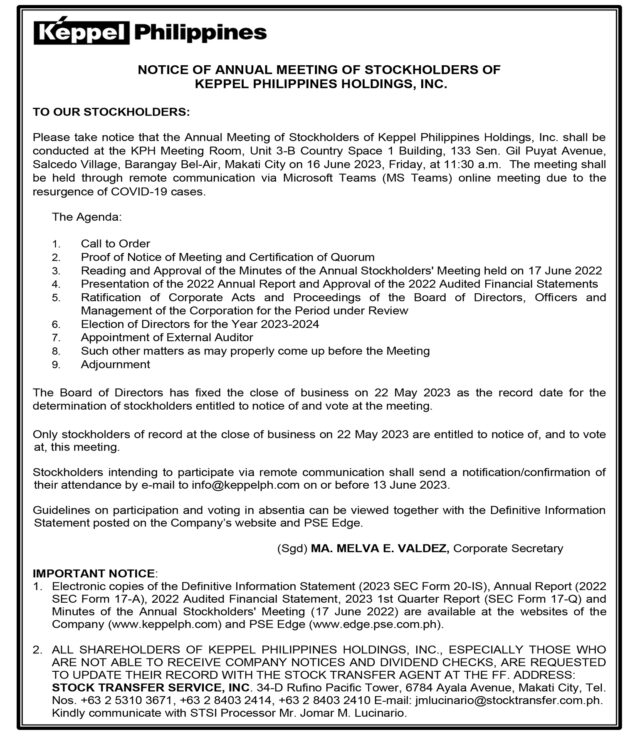
Keppel Philippines Holdings, Inc. to hold annual stockholders’ meeting on June 16


Spotlight is BusinessWorld’s sponsored section that allows advertisers to amplify their brand and connect with BusinessWorld’s audience by enabling them to publish their stories directly on the BusinessWorld Web site. For more information, send an email to online@bworldonline.com.

Join us on Viber at https://bit.ly/3hv6bLA to get more updates and subscribe to BusinessWorld’s titles and get exclusive content through www.bworld-x.com.

Shakey’s to conduct annual stockholders’ meeting on June 20 via remote communication

Notice of Annual Stockholders’ Meeting

Notice is hereby given that the Annual Stockholders Meeting will be held on Tuesday, June 20, 2023 at 8:30 in the morning.

The agenda for the said meeting shall be as follows:

  1. Call to Order
  2. Secretary’s Proof of Due Notice of the Meeting and Determination of Quorum
  3. Approval of the Minutes of the Stockholders’ Meeting held on June 20, 2022
  4. Management’s Report
  5. Ratification of Acts of the Board of Directors and Management During the Previous Year
  6. Election of Directors (including Independent Directors)
  7. Appointment of External Auditor
  8. Other Matters
  9. Adjournment

A brief explanation of the agenda item which requires stockholders’ approval is provided herein. The Information Statement, Management Report, SEC Form 17A will be uploaded to the Corporation’s website https://www.shakeyspizza.ph/ and PSE EDGE.

The record date for the determination of the shareholders entitled to vote at said meeting is on May 2, 2023.

In light of current conditions and in support of the efforts to contain the spread of the COVID-19 virus, stockholders may attend the meeting and vote via remote communication only.

Stockholders should pre-register at this link: https://www.shakeyspizza.ph/investors/register from May 25, 2023 to May 29, 2023.

Upon registration, Stockholders shall be asked to provide the information and upload the documents listed below (the file size should be no larger than 5MB):

A. For individual Stockholders:
1. Email address
2. First and Last Name
3. Address
4. Mobile Number
5. Current photograph of the Stockholder, with the face fully visible
6. Stock Certificate Number and number of shares held by the stockholder
7. Valid government-issued ID
8. For Stockholders with joint accounts: A scanned copy of an authorization letter signed by all Stockholders, identifying who among them is authorized to cast the vote for the account

B. For corporate/organizational Stockholders:
1. Email address
2. Name of stockholder
3. Address
4. Mobile Number
5. Phone Number
6. Stock certificate number and number of shares held by the stockholder
7. Current photograph of the individual authorized to cast the vote for the account (the “Authorized Voter”)
8. Valid government-issued ID of the Authorized Voter
9. A scanned copy of the Secretary’s Certificate or other valid authorization in favor of the Authorized Voter

Stockholders who will join by proxy shall download, fill out and sign the proxy found in https://www.shakeyspizza.ph/investors/register. Deadline to submit proxy forms is on June 7, 2023.

All registrations shall be validated by the Corporate Secretary in coordination with the Stock Agent. Successful registrants will receive an electronic invitation via email with a complete guide on how to join the meeting and how to cast votes.

Only stockholders of record as of the close of business on May 2, 2023 are entitled to notice and to vote at the meeting.

(SGD.)
MARIA ROSARIO L. YBANEZ
Corporate Secretary


Spotlight is BusinessWorld’s sponsored section that allows advertisers to amplify their brand and connect with BusinessWorld’s audience by enabling them to publish their stories directly on the BusinessWorld Web site. For more information, send an email to online@bworldonline.com.

Join us on Viber at https://bit.ly/3hv6bLA to get more updates and subscribe to BusinessWorld’s titles and get exclusive content through www.bworld-x.com.

Meralco: Laguna substation to meet European firm’s rising power demand

MANILA ELECTRIC CO. (Meralco) and STMicroelectronics, Inc. (STMI) have launched a 115-kilovolt (kV) gas-insulated switchgear substation at an industrial park ahead of the manufacturing firm’s projected power demand.

In a media release on Tuesday, Meralco said the substation will facilitate the upgrading of STMI’s electric service to 115 kV from 34.5 kV and will meet its demand, which is expected to increase to 20 megawatts (MW) by 2027 from 14 MW last year.

“Through our dedicated relationship management teams, Meralco works hand-in-hand with its Enterprise customers to identify and tailor-fit solutions that will ensure reliable power for their operational requirements,” said Meralco First Vice-President and Chief Commercial Officer Ferdinand O. Geluz.

The gas-insulated switchgear or GIS substation is located at Light Industry and Science Park 2 (LISP 2) in Calamba City, Laguna. STMI is said to be the largest European semiconductor contract manufacturing and design company operating in the Philippines.

Mr. Geluz called on companies to work closely with the power distributor for their energy requirements.

Meralco said that it had also commissioned the new La Mesa 115-kV switching station, which is also at LISP 2. This project is seen to improve the system reliability and power quality in the area. It consists of a gas circuit breaker, three sets of disconnect switches, and standard connection and metering facilities for STMI.

“These projects are expected to address not only the limited power supply of ST Calamba, which is one of our highest operational risks, but also our future power supply demand, our power quality, our carbon neutrality strategy, and will definitely improve our site power resilience,” STMI Vice- President and General Manager Yong Suk Kwon said.

Meralco Senior Vice-President and Head of Networks Ronnie L. Aperocho said the power utility’s efforts to meet its industrial customers’ requirements form part of its commitment to contribute to improving the country’s infrastructure and ensuring energy security.

What investors look for in AI-powered startups

FREEPIK

By Miguel Hanz L. Antivola

WHILE investors are enthusiastic about capitalizing on opportunities presented by startups leveraging artificial intelligence (AI), they also give high priority to assessing the practical applications and the specific needs being addressed, according to experts.

“We look at the deck: Is it viable? Is it scalable? Does it have economic potential? Does it solve a real problem?” Anna Irmina “Minette” B. Navarrete, co-founder and president of Kickstart Ventures, Inc., said in an interview.

In seeing traction, investors consider factors such as repeat purchases, feedback, and overall commercial output, she said.

“We don’t have a lot of traction data with AI,” Ms. Navarrete noted.

Traction may not weigh as heavy as other criteria for businesses in early stages, but they should find their use-case and appropriate business model to gain such, she added.

Investors, she said, start to look for evidence and substantial data regarding product reach when the company is three to four years old already.

According to Brian Dy, the head of research at Kickstart, ChatGPT, a popular AI chatbot, achieved a remarkable feat by amassing 100 million users within a mere two months after its launch.

A study by global market research firm UBS said that ChatGPT is the fastest-growing consumer application ever recorded. In January, it garnered an average of 13 million unique visitors per day, which is more than twice the number it had in December 2022.

To put this into perspective, Instagram, a widely popular social media platform, took two and a half years to reach the milestone of a hundred million users, while TikTok, another well-known social media app, took nine months.

The global AI market size is expected to reach $407.0 billion by 2027, with a compound annual growth rate of 36.2% during the forecast period of 2022-2027, according to a report by analytics firm MarketsandMarkets.

“This large TAM (total addressable market) leads us to believe that there is significant opportunity for growth and profitability in AI technology,” Mr. Dy said.

However, Ms. Navarrete noted the importance of skepticism when reading through TAM, as there are many data providers available online to source such information. “It is very easy to look and be impressed,” she said.

“We must also look at the direction of growth and the trends surrounding the market,” she added.

She also said that technology tends to go through a “hype cycle” where there is a widespread belief that it has the potential to revolutionize the world and address all its challenges.

While there may be some truth to this, she said, investors should assess factors such as market readiness, costs, and consumer openness, especially for businesses based on AI.

Timing is also a crucial aspect that investors consider when evaluating potential partnerships with AI-driven businesses, Ms. Navarrete said.

“In technology, so much will change, but people will not frequently change,” she added.

Investors look for credible people in a team behind a viable product or solution. They must have mastery in the field and show signs of integrity.

“We look for a management team who can overcome difficulties, make good choices, and go their way around gray areas,” she said.

According to Mr. Dy, investments in technology-driven startups, including those focused on AI, revolve around distinguishing between “must-have” and “nice-to-have” concepts. Investors are advised to prioritize and favor the former.

“Labor is affordable, and companies may find it more cost-effective to hire someone to do the functions that AI is tasked with,” he said.

“If the technology is a ‘must have,’ then that simply makes it stickier and more scalable over the long run,” he added.


Finland’s Kaurismaki back in Cannes competition after over a decade

ALMA PÖYSTI and Jussi Vatanen in a scene from Fallen Leaves.

CANNES — Finnish director Aki Kaurismaki is back in competition for the Cannes Film Festival’s top prize after more than a decade with his 20th film, Fallen Leaves, which premiered on Monday.

Under a sweltering afternoon sun, Mr. Kaurismaki, 66, was joined on the red carpet by his lead actors Alma Poysti and Jussi Vatanen. Festival workers had to persuade Mr. Kaurismaki to pose for photographers as he attempted to power through the red carpet.

Fallen Leaves is a follow-up to Mr. Kaurismaki’s Proletariat Trilogy, coming more than three decades after the 1986 film Shadows in Paradise, 1988’s Ariel, and The Match Factory Girl which was released in 1990. Written and directed by Mr. Kaurismaki, Fallen Leaves is his first feature in six years.

The tragicomedy follows the budding romance between a quiet young woman, Ansa (Poysti) and Vatanen’s heavy-drinking sandblaster, whose first name is never revealed.

As they navigate blue-collar jobs and zero-hour contracts, a chance meeting in a karaoke bar brings the two lonely characters together, only to be pulled apart again.

Set to the soundtrack of news reports about the latest developments in the war in Ukraine and Finnish versions of yesteryear hits such as “Mambo Italiano,” the film follows the twosome’s efforts to forge a better life for themselves.

It features Mr. Kaurismaki’s trademark deadpan dialogue and references to his cinematic influences.

Fallen Leaves is Mr. Kaurismaki’s fifth competition title at Cannes. His last Palme d’Or contender was Le Havre in 2011. — Reuters

MSME loans used as reserve compliance reach P263B in 2022

BANKS lent P263.1 billion to micro, small, and medium enterprises (MSMEs) as alternative compliance with reserve requirements as of December 2022, the Bangko Sentral ng Pilipinas (BSP) said.

This is around 15.9% of the total required reserves and was well above the P8.7 billion in MSME loans reported on April 30, 2020, the BSP said in its Philippine Financial System report for the second semester of 2022.

On the other hand, banks extended P72.9 billion in loans to eligible large enterprises as alternative compliance. This is about 4.4% of the total required reserves for the same reserve week.

First implemented in April 2020 at the height of the pandemic, the BSP allowed MSME loans to be counted as part of banks’ reserve requirements in a bid to boost lending to the sector.

The central bank capped loans to MSME and large enterprises not affiliated with conglomerates that banks could use as alternate reserve compliance at P300 billion and P425 billion, respectively.

These relief measures remain in place to encourage banks to lend or restructure loans to MSME borrowers, the BSP said.

“These include the reduced credit risk weight of loans granted to MSMEs and the utilization of peso-denominated loans to MSMEs and large enterprises as alternative compliance with the reserve requirements against deposit liabilities and deposit substitutes,” it said.

“The extension of these relief measures until end-June 2023 will encourage banks to continue to support the financing requirements of credit-worthy MSMEs,” the BSP added. 

Philippine banks extended P493.5 billion in credit to MSMEs at end-2022, 6.6% higher than the P463.1 billion in the same period a year prior, the report showed.

By banking group, universal and commercial banks lent P390.9 billion to MSMEs. This was followed by rural and cooperative banks, which lent P52.7 billion.

BSP Governor Felipe M. Medalla earlier said the central bank is prepared to cut banks’ reserve requirement ratio (RRR) by end-June to help offset the impact of the relief measures’ end.

“Faced with the expiration of the measure considering loans to MSMEs as alternative RR compliance by June, we may also cut reserve requirements to avoid excessive tightening in monetary conditions,” Mr. Medalla said last week. 

The RRR for universal and commercial banks is currently at 12%, one of the highest in the region. Reserve requirements for thrift and rural lenders are at 3% and 2%, respectively.

The central bank targets to cut big banks’ RRR to single-digit levels by the end of the year.

A cut in reserve ratios is a move intended to be an operational adjustment to facilitate the BSP’s shift to market-based instruments for managing liquidity in the financial system, particularly the term deposit facility and the BSP securities.

Meanwhile, latest BSP data showed banks disbursed P848 billion in loans to the agriculture and agrarian (agri-agra) sectors as of June 2022. This is 7.4% higher from the P789.7 billion in the same month in 2021.

“However, the banking system still fell short of the mandated credit at 9.5% for other agricultural and 0.8% for agrarian reform vis-à-vis the minimum required of 15% and 10%, respectively,” the central bank said.

“With the passage of The Agriculture, Fisheries and Rural Development Financing Enhancement Act of 2022 or Republic Act No. 11901 in July 2022, amending the R.A. No 10000, the BSP expects that the new law will strengthen rural development and improve the well-being of agricultural and rural community beneficiaries,” it said.

Under the amended law, lenders will no longer be required to set aside 10% and 15% of their loanable funds for agrarian reform credit and other agricultural credit, respectively. Instead, banks shall set aside at least 25% of their total loanable funds for agriculture, fisheries, and rural development financing. — K.B. Ta-asan

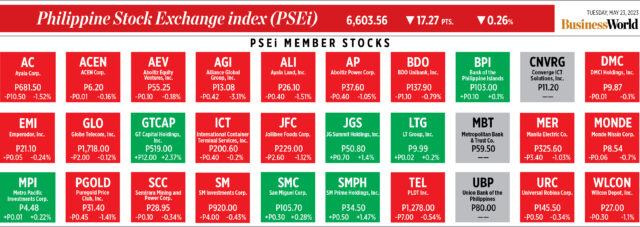
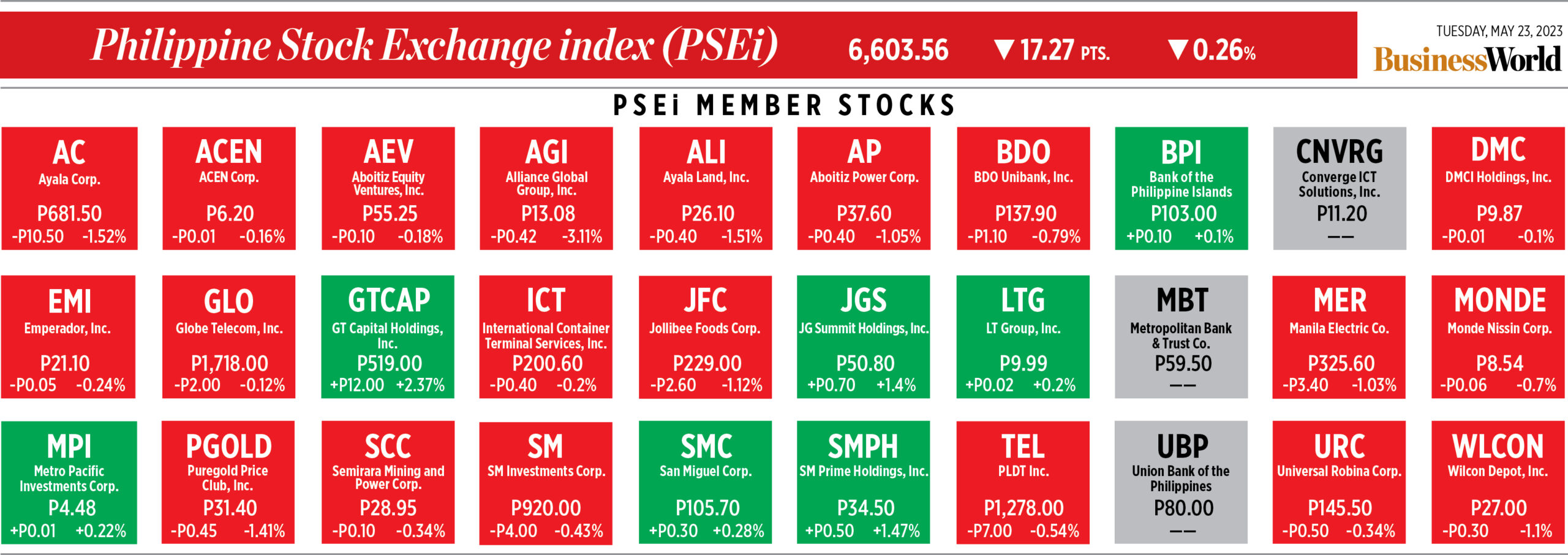
How PSEi member stocks performed — May 23, 2023

Here’s a quick glance at how PSEi stocks fared on Tuesday, May 23, 2023.


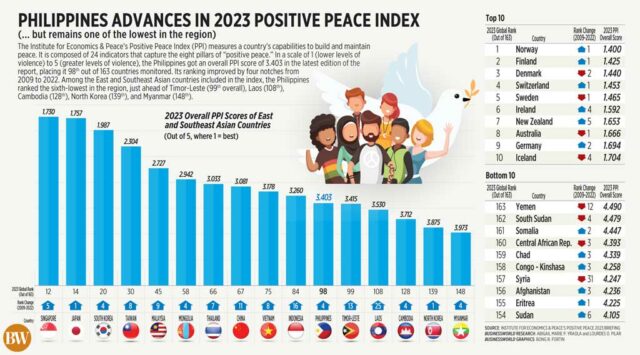
Philippines advances in 2023 Positive Peace Index

(… but remains one of the lowest in the region)

The Institute for Economics & Peace’s Positive Peace Index(PPI) measures a country’s capabilities to build and maintain peace. It is composed of 24 indicators that capture the eight pillars of “positive peace.” In a scale of 1 (lower levels of violence) to 5 (greater levels of violence), the Philippines got an overall PPI score of 3.403 in the latest edition of the report, placing it 98th out of 163 countries monitored. Its ranking improved by four notches from 2009 to 2022. Among the East and Southeast Asian countries included in the index, the Philippines ranked the sixth-lowest in the region, just ahead of Timor-Leste (99th overall), Laos (108th), Cambodia (128th), North Korea (139th), and Myanmar (148th).

Philippines advances in 2023 Positive Peace Index

PSEi drops further as US debt limit talks continue

SHARES dropped further on Tuesday as sentiment turned cautious amid extended discussions on the US debt ceiling.

The benchmark Philippine Stock Exchange index (PSEi) fell by 17.27 points or 0.26% to close at 6,603.56 on Tuesday, while the broader all shares index went down by 6.61 points or 0.18% to end at 3,527.42.

Stocks inched lower amid the “pivotal” debt ceiling talks, Regina Capital Development Corp. Head of Sales Luis A. Limlingan said in a Viber message.

“The index slipped a second day as many investors have become increasingly cautious due to uncertainty about US debt ceiling talks,” China Bank Capital Corp. Managing Director Juan Paolo E. Colet likewise said in a Viber message.

“Any increased brinkmanship in Washington could make investors more risk averse. We don’t expect any bullish action until we see a breakthrough on the debt limit issue,” Mr. Colet added.

US President Joseph Biden and House Speaker Kevin McCarthy could not reach an agreement Monday on how to raise the US government’s $31.4-trillion debt ceiling with just 10 days before a possible default that could sink the US economy, but vowed to keep talking, Reuters reported.

The Democratic president and the top congressional Republican have struggled to make a deal, as Mr. McCarthy pressures the White House to agree to spending cuts in the federal budget that Mr.  Biden considers “extreme,” and the president pushes new taxes that Republicans have rejected.

Both sides stressed the need to avoid default with a bipartisan deal after Monday evening’s meeting, however, and signaled that they’d be talking regularly in coming days.

A source familiar with the situation said that White House negotiators were returning to Capitol Hill on Monday night to resume talks.

Any deal to raise the limit must pass both chambers of Congress, and therefore hinges on bipartisan support. Mr. McCarthy’s Republicans control the House 222-213, while Mr. Biden’s Democrats hold the Senate 51-49.

A failure to lift the debt ceiling would trigger a default that would shake financial markets and drive interest rates higher on everything from car payments to credit cards.

At home, all sectoral indices fell on Tuesday, except for property, which rose by 10.92 points or 0.39% to 2,747.60.

Meanwhile, industrials dropped by 59.98 points or 0.63% to 9,376.46; mining and oil decreased by 58.75 points or 0.57% to 10,246.61; services went down by 5.20 points or 0.33% to 1,566.43; holding firms fell by 18.82 points or 0.28% to 6,564.94; and financials declined by 5.07 points or 0.27% to 1,853.06.

Value turnover declined to P6.04 billion on Tuesday with 1.16 billion shares changing hands from the P7.03 billion with 1.73 billion issues traded on Monday.

Decliners outnumbered advancers, 105 versus 80, while 44 names closed unchanged.

Net foreign selling stood at P250.17 million on Tuesday versus the P2.84 billion in net buying recorded on Monday. — A.H. Halili with Reuters

Peso inches up on Fitch move

BW FILE PHOTO

THE PESO strengthened against the dollar on Tuesday after Fitch Ratings affirmed its “BBB” rating for the Philippines and revised its outlook to stable from negative.

The local currency closed at P55.725 versus the dollar on Tuesday, appreciating by 9.5 centavos from Monday’s P55.82 finish, data from the Bankers Association of the Philippines’ website showed.

The local unit opened Tuesday’s session at P55.70 per dollar. Its worst showing for the day was at P55.75, while its intraday best was at P55.57 versus the greenback.

Dollars traded rose to $1.19 billion on Tuesday from the $981.5 million recorded on Monday.

The peso went up after Fitch raised its outlook for the Philippines, a trader said in an e-mail.

“The continued and consistent affirmation of the country’s credit ratings for the third straight year despite the pandemic by the other major global credit rating agencies… are signs of resilience and improved international investor confidence in the Philippines,” Rizal Commercial Banking Corp. Chief Economist Michael L. Ricafort said in a Viber message.

Fitch on Monday affirmed the country’s rating and raised its outlook amid its confidence in the economy’s continued recovery from the coronavirus pandemic.

The debt watcher had downgraded the Philippines’ rating outlook to negative in July 2021 due to the pandemic’s impact on the economy.

Mr. Ricafort added that easing global crude oil prices also supported the peso.

For Wednesday, the trader said the peso could weaken anew on potentially hawkish remarks from Dallas Federal Reserve President Lorie K. Logan.

The trader expects the peso to move from P55.60 to P55.85 versus the dollar, while Mr. Ricafort sees it trading between P55.60 and P55.80. — AMCS

Next Philippine Energy Plan to propose share of nuclear power

FREEPIK

THE Department of Energy (DoE) said the Philippine Energy Plan due out in September will include the expected share of nuclear power in the energy mix.

“The nuclear studies will be in the Philippine Energy Plan which is scheduled to be completed by September. By law we have to submit it to Congress every September. The review is ongoing, we have a draft and are seeking internal comment,” Energy Assistant Secretary Mylene C. Capongcol told reporters at a forum.

She said the updated energy plan will also discuss the policy direction for renewable energy, downstream oil, natural gas, energy efficiency, electric vehicles, and the clean energy transition.

The current energy plan covers the 2020-2040 period and focuses on increasing the share of renewable energy. The DoE has said that it is also looking at extending the planning horizon to 2050.

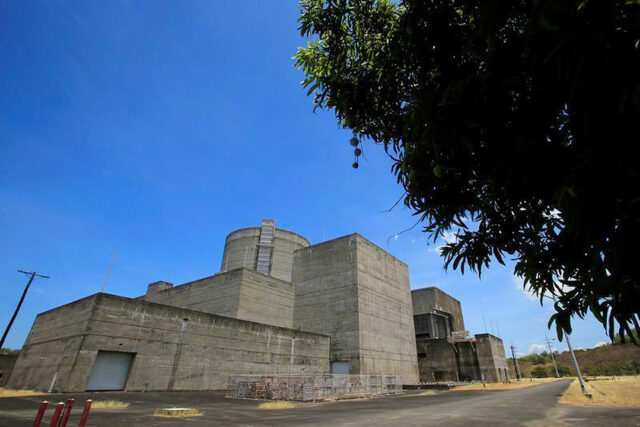
Ms. Capongcol said that the DoE is studying the technologies available such as small modular reactors, the feasibility of rehabilitating the Bataan Nuclear Power Plant, and the 19 milestone requirements set by the International Atomic Energy Agency for introducing nuclear power.

To date, the Philippines has accomplished one of the milestones, which is the development of a national position on nuclear power.

The government will retain its target share for renewable energy at 35% by 2030 and 50% by 2040, Ms. Capongcol said. — Ashley Erika O. Jose

DoE, ERC seek enhanced powers in EPIRA amendments

REUTERS

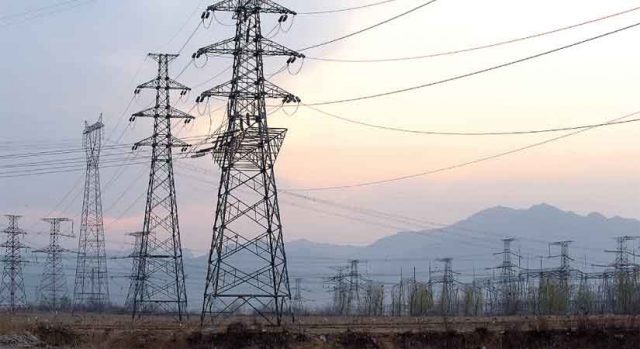
THE Department of Energy (DoE) wants more supervisory and oversight authority for it and the Energy Regulatory Commission (ERC) in amendments it is proposing for the Electric Power Industry Reform Act (EPIRA).

Energy Undersecretary Sharon S. Garin made the remarks at a House energy committee hearing on Tuesday, drawing support from legislators.

“I believe it is high time to strengthen and expand the powers, authority and manpower of the ERC,” said Marinduque Rep. Lord Allan Jay Q. Velasco, who chairs the committee.

Ms. Garin said the DoE in particular needs more oversight powers over transmission.

“If they cannot complete projects on time, then the government (must be able to) come in and maybe enter into a PPP (public–private partnership) agreement, or maybe the government can take in funding from ODA (official development assistance),” Ms. Garin said.

The DoE’s proposals for amending EPIRA include an increase in the ERC’s power to fine regulated entities to P500 million from the current maximum of P50 million for violations of competition rules.

“P50 million is very small compared to the size of the industry,” Ms. Garin said.

Under the EPIRA, the ERC can levy a fine of between P50,000 and P50 million for entities found, after due notice and hearing, to have engaged in “any anti-competitive act including but not limited to cross-ownership, cross-subsidization, price or market manipulation or other unfair trade practices, taking into consideration its effect on the electric industry and its participants.”

ERC Chairperson and Chief Executive Officer Monalisa C. Dimalanta asked to review the regulator’s role and structure in order to make the agency more responsive to the industry’s needs.

Ms. Dimalanta said that ERC should be given authority to decide on the appropriate use of the fines and to reduce rates charged by violators.

“Right now, when we impose fines, they pay the ERC, then we remit it to the Treasury,” Ms. Dimalanta said.

The ERC also said that a clear delineation on the roles of the Philippine Competition Commission (PCC) vis-à-vis the ERC should be established.

Separately, Energy Secretary Raphael P.M. Lotilla said the EPIRA amendment process is continuous.

“We can adjust certain parts that may require some tweaking, whether it is on the ERC powers, the Philippine Competition Commission’s powers relative to the energy sector, or penalties that can be imposed by ERC. These are just some of the things that we need to clarify,” Mr. Lotilla told reporters. — Ashley Erika O. Jose