Home Blog Page 48

Ban on poultry imports from US state of Illinois reimposed

TAWATCHAI07-FREEPIK

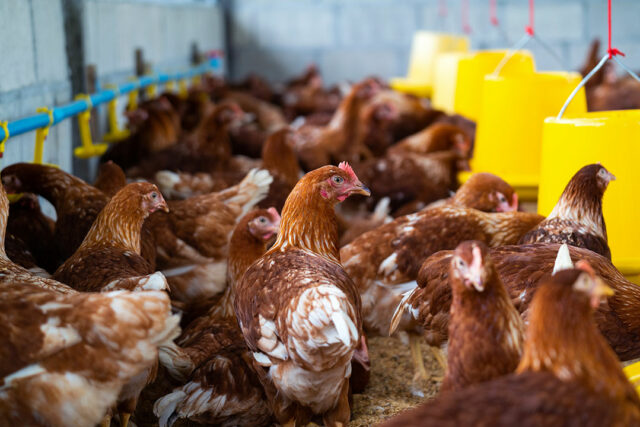
THE Department of Agriculture (DA) said it has reimposed a ban on poultry and poultry-product imports from the US state of Illinois following confirmed outbreaks of avian influenza.

In Department Circular No. 15, the DA said an official report submitted by the Animal and Plant Health Inspection Service on March 9 confirmed multiple outbreaks of H5N1 highly pathogenic avian influenza (HPAI) affecting domestic birds in Illinois.

“The rapid spread of HPAI in the US in a short period of time since its first laboratory detection necessitates a wider coverage of trade restriction to prevent the entry of the HPAI virus and protect the health of the local poultry population,” the DA said.

The ban covers domestic and wild birds and their products, including poultry meat, day-old chicks, eggs, and semen from Illinois.

It also suspended the processing and issuance of sanitary and phytosanitary import clearances for these commodities and revoked previously approved permits for live-bird imports.

The DA said a 2016 agreement between Philippine and US veterinary authorities allows a state-wide ban on poultry imports to be triggered if at least three counties in a state are affected by HPAI.

The DA had lift the temporary ban on Illinois poultry imports in February, after animal health reports at the time indicated that the state no longer met the threshold for state-wide trade restrictions. — Vonn Andrei E. Villamiel

Electronics exports goal of $110B on track, DTI says, but industry more cautious

A worker uses a microscope at an electronics manufacturing assembly plant in Biñan, Laguna, April 20, 2016. — REUTERS

PHILIPPINE electronic exports remain on track to hit $110 billion by 2030 even with trade recently disrupted by the fighting in the Middle East, the Department of Trade and Industry (DTI) said.

“We’re hoping that once the conflict is resolved, this target will carry over,” Trade Secretary Ma. Cristina A. Roque told reporters on the sidelines of the Kapihan sa Manila Bay forum on Wednesday.

The Philippine Semiconductor and Electronics Industry (PSEI) Roadmap set the industry target at $70 billion for semiconductor exports and $40 billion for electronics by 2030.

This will be achieved by a five-year plan to train 128,000 semiconductor professionals to meet industry demand.

The roadmap was formalized during the 4th Meeting of the Semiconductor and Electronics Industry Advisory Council (SEIAC) on March 23 at Malacañang Palace.

“Semiconductors are our number one export, and we want to keep growing that,” Ms. Roque said in a separate statement.

“The PSEI Roadmap gives us the framework to move up the value chain, from packaging into IC (integrated circuit) design and, eventually, wafer fabrication,” she said.

The roadmap details strategic interventions to help the industry move up from the assembly, test, and packaging (ATP) to advanced packaging, integrated circuit design, and front-end manufacturing.

It also proposes the creation of up to three national laboratories, each with an area of specialization, a dedicated fabrication capability, a research and development roadmap, and a talent development framework.

“We are poised to reach $50 billion this year. But given the global challenges, I would hesitate to project $110 billion by 2030,” Semiconductor and Electronics Industries in the Philippines Foundation, Inc. (SEIPI) President Danilo C. Lachica said via Viber.

For 2026, SEIPI projects semiconductor and electronics (S&E) exports to grow 5% this year. According to SEIPI, electronics exports rose 16.11% to $49.64 billion in 2025.

Mr. Lachica cited the war in the Middle East and the US reciprocal tariffs as challenges to export growth.

US President Donald J. Trump in February announced that he will be imposing a new 15% duty on imports, after the US Supreme Court ruled that he had exceeded his authority in imposing reciprocal tariffs.

Finance Secretary Frederick D. Go has said that a majority of the country’s exports — including semiconductors and key agricultural commodities — had been before the US Supreme Court issued its ruling.

John Paolo R. Rivera, senior research fellow at the Philippine Institute for Development Studies, said the ongoing conflict could raise energy and logistics costs for the semiconductor and electronics industry.

“Geopolitical tensions, including the Middle East conflict, pose indirect risks through higher energy and logistics costs, weaker global demand, and investment uncertainty,” he said via Viber.

“Still, the industry can remain resilient if it positions itself as a reliable player in supply chain diversification and upgrades its domestic capabilities,” Mr. Rivera added.

The Philippines’ 2026 ASEAN (Association of Southeast Asian Nations) chairmanship could help leverage the country’s profile as an emerging semiconductor hub, the DTI said.

The Philippine Statistics Authority reported that exports of electronic products grew 17% to $46 billion in 2025, while semiconductor exports rose 18.7% to $34.62 billion. — Beatriz Marie D. Cruz

Meat imports up 23% in first 2 months

REUTERS

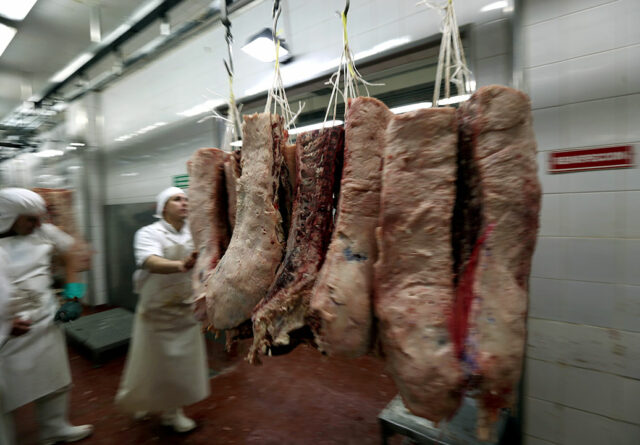
Meat imports in the first two months rose 22.9% to 292,106 metric tons (MT), the Bureau of Animal Industry (BAI) reported.

The BAI said pork imports during the period rose 22.36% to 151,789 MT.

Shipments of pork cuts in the first two months amounted to 63,784 MT, accounting for 42.02% of total pork imports.

Other major pork import categories included offal (45,872 MT), belly (24,016 MT), and fat (10,767 MT).

Brazil was the top source of pork, accounting for 73,197 MT, followed by Spain at 22,064 MT, Denmark 10,513 MT, and the Netherlands 9,363 MT.

Chicken imports grew 27.96% to 98,926 MT in the first two months of the year.

Mechanically deboned meat (MDM), used in processed foods, was the top chicken product, with imports hitting 53,849 MT, or 54.43% of the total.

Other major chicken imports included chicken leg quarters (19,822 MT) and chicken cuts (18,728 MT).

Brazil was the top source of chicken with volume of 55,667 MT or over half of total imports. Other major sources included the US (26,316 MT) and Poland (8,677 MT).

Beef imports inched up to 33,191 MT in the first two months, while inbound shipments of buffalo meat more than doubled to 7,475 MT. — Vonn Andrei E. Villamiel

The reset button for the cross-border services taxation

As we emerge from Holy Week — a period often associated with reflection and renewal — we encounter a parallel in the tax landscape with the recent issuance of Revenue Memorandum Circular (RMC) No. 24‑2026. The RMC, which follows earlier RMC Nos. 5-2024 and 38-2024 on cross-border services, reflects a refinement of the Bureau of Internal Revenue’s (BIR) audit framework for such arrangements.

RMC Nos. 5-2024 and 38-2024 have been controversial, to say the least, as their implementation gave rise to differing views between the BIR and taxpayers, particularly on how the expanded situs rules should be applied. In practice, this resulted in cross‑border service payments being almost automatically treated as subject to final withholding tax and final withholding value-added tax (VAT) during tax assessments, often with limited inquiry into the factual circumstances.

Against this backdrop, RMC No. 24‑2026 may be viewed as the BIR’s effort to clarify how the Aces principles are expected to be applied by providing more specific and fact-based rules. Below are the key points of the RMC.

NOT EVERY CROSS-BORDER SERVICE IS AUTOMATICALLY TAXABLE
A notable clarification under RMC No. 24-2026 is that the cross-border services outlined in RMC No. 5-2024, including consulting, IT outsourcing, telecommunications, financial services, engineering, education, and tourism, are not automatically taxable simply because they are cross-border in nature.

That said, service income remains taxable if the services are performed within the Philippines. The RMC emphasizes that the revenue officers invoking the Aces ruling must establish that the services in question were indeed rendered within Philippine territory.

This clarification offers relief to the taxpayers as it introduces a crucial constraint on tax assessments involving cross-border arrangements, as revenue officers must now factually link the performance of services in the Philippines. The fact that the transactions are cross-border in character is no longer sufficient to trigger FWT and FWVAT.

ESTABLISHING TAXABILITY OF CROSS-BORDER SERVICES
In determining the income source of cross-border services, the RMC reinforces the approach outlined in the Aces ruling, which requires the examination of the agreement in its entirety rather than in parts.

The RMC identifies four essential elements that must be satisfied before a revenue officer can factually assess income tax on cross-border services, enumerated as follows:

• The parties involved must be a Philippine payor and a payee who is a non-resident service provider;

• The specific activity or service must be integral to the completion or delivery of the non-resident’s service and must have resulted in a payment or accrual that created economic benefit for the non-resident.

• The situs of the income-producing activity must be within the Philippines.

• There must be no applicable exemption under domestic laws or treaties.

Notably, the RMC has clarified certain exclusions such as passive income, income from sale of goods, and pass-through payments to another non-resident for services rendered outside the Philippines.

While these elements provide structure to the BIR’s review process, they also underscore the continuing broad application of the Aces case for cross-border arrangements, notwithstanding the factual context of the case.

BURDEN OF PROOF LIES WITH THE TAXPAYERS
Despite the clarification that cross-border services are not automatically taxable, the RMC continues to assert that the burden of proof rests with the taxpayer.

To substantiate their position, taxpayers must provide relevant documentation, such as:

• A sworn statement executed by the payor or its duly authorized representative describing the transaction and services;

• Service contracts, master service agreements, statements of work or similar documents such as purchase orders, billing statements, invoices, or relevant e-mail correspondences;

• A tax residency certificate of the non-resident service provider;

• An SEC certification of non-registration for non-resident foreign corporations;

• Proof of organization or registration in the non-resident provider’s jurisdiction such as Articles of Incorporation/Association and business registration;

• Proof of outward remittance of payment;

• A BIR Ruling, if available; or

• Copies of the certificates of entitlement to treaty benefits, if applicable.

Consistent with the guidance from Revenue Memorandum Order No. 1-2026, the RMC allows photocopies of these documents, provided they are certified as true and faithful reproductions of the original. However, the BIR may still request presentation of originals for verification purposes.

BIR RULING IS NOT MANDATORY
The RMC further reiterates the jurisprudence that obtaining a prior BIR confirmatory ruling is not a prerequisite for applying tax treaty benefits. The absence of such a ruling should not prejudice taxpayers’ entitlement to treaty benefit, provided there is competent evidence presented during the assessment process. Although not mandatory, from a practical standpoint, taxpayers may still opt to request for confirmation of tax treaty relief entitlement to strengthen their position particularly for complex arrangements. A confirmation would still meaningfully manage the audit risk and uncertainty on the part of taxpayers.

It is reassuring that the BIR has emphasized the importance of establishing both the applicable laws and the factual basis for any tax assessment, honoring the longstanding doctrine of due process. At the same time, the RMC should be viewed as a recalibration, instead of a full reversal, of the BIR’s broadened interpretation of the Aces decision.

JUDICIAL DEVELOPMENTS
Notably, at the judicial level, the Court of Tax Appeals (CTA) likewise granted last week a preliminary injunction against the implementation of RMC No. 5-2024. While this development does not fully resolve the current issues arising from the Aces decision, it shows the uncertainty that surrounds the earlier issuances. More broadly, it raises the question of whether tax assessments for cross‑border services will, at least for now, revert to the framework that prevailed prior to RMC 5‑2024. That said, notwithstanding the injunction, the Aces ruling remains as jurisprudence. Hence, from a practical standpoint, the latest RMC may still be viewed as a useful guide, particularly on the types of documents that may support the position that cross‑border services are not taxable.

I am optimistic that RMC No. 24‑2026 will provide guidance on what has felt like a contentious tug-of-war into a collaborative process grounded on facts and proper documentation. I hope that this adjustment will lead to assessment outcomes that are more closely aligned with our Philippine tax laws and help restore investor confidence in our tax system.

The views or opinions expressed in this article are solely those of the author and do not necessarily represent those of Isla Lipana & Co. The content is for general information purposes only, and should not be used as a substitute for specific advice.


Frenz Angelie B. Hechanova is a manager at the Tax Services department of Isla Lipana & Co., the Philippine member firm of PricewaterhouseCoopers global network.

frenz.angelie.hechanova@pwc.com

VP Sara asks Supreme Court to stop impeachment hearings, cites abuse

VICE-PRESIDENT SARA DUTERTE-CARPIO FACEBOOK PAGE PHOTO

By Erika Mae P. Sinaking and Chloe Mari A. Hufana, Reporters

VICE-PRESIDENT (VP) Sara Duterte‑Carpio has asked the Supreme Court (SC) to stop impeachment proceedings against her, escalating a showdown with the House of Representatives as lawmakers move to examine complaints that could remove her from office.

“The initiation process conducted by respondents House of Representatives and the Committee on Justice is marred by grave abuse of discretion amounting to lack or excess of jurisdiction and in contravention of the Constitution,” she said in a 58‑page petition.

Ms. Duterte said the committee exceeded its authority by conducting proceedings its chairperson, Batangas Rep. Gerville R. Luistro, described as a “mini‑trial,” arguing that the Constitution grants the Senate the sole power to try and decide impeachment cases.

Ms. Luistro did not immediately reply to a Viber message seeking comment.

Named respondents aside from Ms. Luistro were Speaker Faustino G. Dy III and the Senate, represented by Senate President Vicente C. Sotto III, among others.

The high court has consolidated challenges to the proceedings against the Vice-President and gave lawmakers a firm deadline to respond.

“The SC consolidated these cases and, without necessarily giving due course to the petitions, directed respondents to comment within a nonextendible period of 10 days from receipt of notice,” it said in a statement.

Supreme Court spokesperson Camille Sue Mae L. Ting said the order did not address the temporary restraining order sought by the petitioners.

The tribunal consolidated Ms. Duterte’s petition with an earlier filing lodged by lawyers allied with her, both questioning the impeachment proceedings initiated in the House of Representatives.

In her pleading, the Vice-President invoked the Constitution’s one‑year bar, which prohibits initiating more than one impeachment proceeding against the same official within a one‑year period.

She said earlier impeachment complaints were set aside or withdrawn in March, making the remaining complaints an impermissible subsequent attempt to remove her from office.

House Justice Committee member Party-list Rep. Terry L. Ridon dismissed the petition as “a distorted interpretation of the Constitution.”

In a statement, the congressman said the House followed constitutional procedure, citing an official video showing the impeachment complaints were referred to the committee during a plenary session.

He said the referral reflected collective action by House members rather than a unilateral decision by the Speaker or the Committee on Rules.

Mr. Ridon said the Justice committee intends to proceed with its inquiry into allegations involving confidential funds and claims of unexplained wealth raised in the complaints.

‘NOT WITHOUT LIMITS’
In a separate statement, her legal team said the lawsuit is an attempt to clarify constitutional limits, not to avoid accountability.

“This is about ensuring that the process itself complies with the Constitution,” her lawyers said. “The House has the power to initiate impeachment, but that power is not without limits.”

Her lawyers said the lawsuit against House leaders seeks guidance on whether lawmakers complied with constitutional and procedural requirements when they initiated the impeachment process.

Ms. Duterte is facing impeachment proceedings in the House over allegations that include misuse of public funds, betrayal of public trust and threats against President Ferdinand R. Marcos, Jr.

Her legal team declined to discuss the merits of the case in deference to the Supreme Court.

The Justice committee has scheduled hearings on the impeachment complaints on April 14, 22 and 29.

The committee has issued separate subpoenas to the Commission on Audit, Bureau of Internal Revenue and Ombudsman, ordering senior officials from the agencies to testify and submit government records tied to the impeachment proceedings against Ms. Duterte.

In orders dated March 31, the body directed the agencies to produce documents and appear before lawmakers, signaling a deeper evidentiary phase in the impeachment inquiry as the committee evaluates whether grounds exist to advance the case.

The subpoena to the audit body was directed at State Auditor V Gloria A. Camora of the Commission on Audit-Intelligence and Confidential Funds Audit Office, the specialized unit that has custody of records covering the use of confidential and intelligence funds by the Office of the Vice-President and the Department of Education for 2022 and 2023.

Lawmakers ordered the audit body to submit original copies of all liquidation documents filed by the Office of the Vice-President for confidential funds covering the fourth quarter of 2022 and the first three quarters of 2023.

The committee also sought related bank records, internal audit reports, communications involving education officials and any final findings issued by the audit body.

Separately, the panel summoned Bureau of Internal Revenue Commissioner Charlito Martin R. Mendoza, seeking almost two decades of tax records linked to Ms. Duterte and her husband, Manases R. Carpio.

The committee is demanding certified copies of the couple’s annual income tax returns from 2007 to 2025, as well as tax compliance and income records tied to business entities in which they are alleged to hold interests.

The House body has also summoned Ombudsman Jesus Crispin C. Remulla to testify and turn over the Vice-President’s wealth declarations.

Mr. Remulla on Monday said he would comply with the order and appear at an April 14 hearing. He has been ordered to submit certified copies of Ms. Duterte’s statements of assets, liabilities and net worth covering 2022 to 2025, as well as earlier periods from 2007 to 2013 and 2016 to 2022.

Philippines slides 11 spots in EIU democracy ranking

VARIOUS religious and civil society groups joined the second Trillion Peso March along Epifanio de los Santos Avenue (EDSA) in Quezon City, Nov. 30, 2025. — PHILIPPINE STAR/MIGUEL DE GUZMAN

By Erika Mae P. Sinaking, Reporter

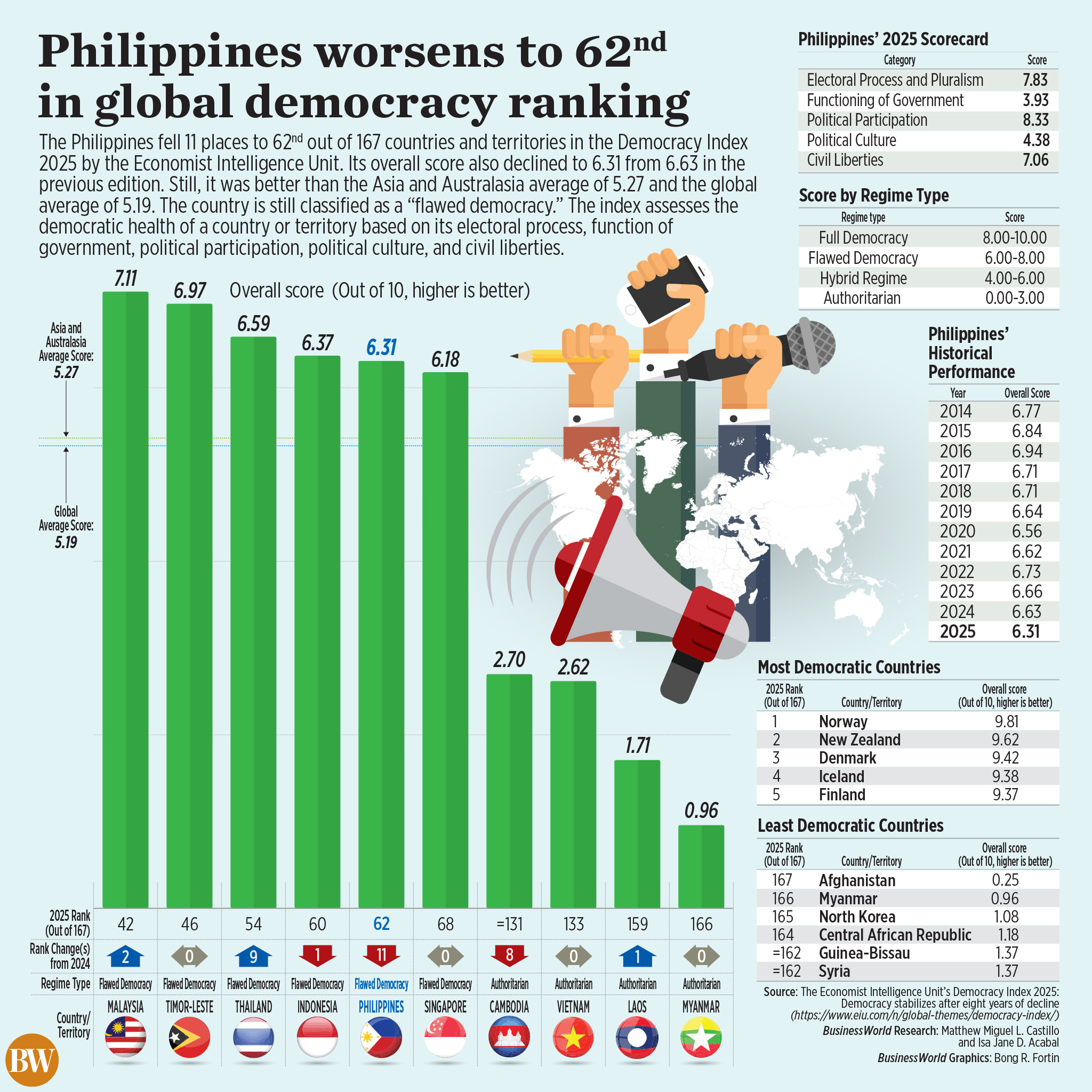
THE PHILIPPINES fell sharply in a global democracy ranking, signaling deeper institutional strain even as democratic conditions elsewhere show signs of leveling off, according to the 2025 Democracy Index by the Economist Intelligence Unit (EIU).

“Across South and Southeast Asia, we will be watching the juxtaposition of rising civic participation with declining government accountability and civil liberties,” the research group said in its latest annual assessment.

“This reflects the democratic stress in political systems that remain open enough to generate protests but too institutionally weak to translate mobilization into reform. How this tension evolves will determine the future democratic outlook for Asia,” it added.

The Philippines fell 11 places to 62nd out of 167 countries in the 2025 index, erasing gains recorded a year earlier. The country ranked among the five worst performers globally in score deterioration, reinforcing concerns over democratic erosion in Southeast Asia.

The country’s overall score dropped to 6.31 in 2025 from 6.63 in 2024, its steepest decline in recent years. The 2024 score had already been the weakest in three years, only slightly above the 6.62 recorded in 2021. The latest result places the Philippines at its lowest democratic standing since at least that year.

The Philippines remained classified as a “flawed democracy,” a category it has occupied for several consecutive years alongside countries such as India and Sri Lanka. The drop followed a brief rebound in 2024, when the country climbed two places to 51st.

Within the region, the Philippines ranked behind Taiwan (15), Malaysia (42), Timor‑Leste (46), Thailand (54), Sri Lanka (56) and Indonesia (60). It placed ahead of Singapore (68), Hong Kong (90), Cambodia (131), Vietnam (133), Laos (159) and Myanmar (166).

Asia and Australasia recorded an average score of 5.27 in 2025, down from 5.31 a year earlier, marking a sixth straight annual decline. The EIU identified South and Southeast Asia as the primary sources of democratic stress in the region.

The firm said rising political participation has coincided with weakening checks on government power and reduced civil liberties, creating a structural imbalance that continues to weigh on democratic development.

The report also pointed to the expanding use of digital repression across Asia, with governments tightening controls over online speech and access to information. Civil society groups in the Philippines have raised similar concerns in recent years, warning about risks to press freedom and the use of digital rules to suppress dissent.

At the global level, democracy indicators showed signs of leveling off. The worldwide average score edged up to 5.19 in 2025 from 5.17 in 2024, suggesting a pause in a multiyear decline. Seven countries shifted regime classifications, with five moving to higher democratic categories.

The US diverged from the broader trend, with its score falling after Donald J. Trump returned to the presidency in January 2025. The EIU cited weakening government functioning and tighter limits on civil liberties.

The Philippines posted a strong score of 8.33 in political participation, but lagged sharply in the functioning of government, which scored 3.93. Other sub‑pillar scores included 7.83 for electoral process and pluralism, 4.38 for political culture and 7.06 for civil liberties.

“This failure undermines President Ferdinand R. Marcos, Jr.’s reformist posturing,” Carl Marc L. Ramota, a professor at the University of the Philippines Manila’s Department of Social Sciences, told BusinessWorld.

“Despite halfway through his administration, significant achievements have been lacking, and the situation seems to be deteriorating,” he added.

He said that the 2025 Democracy Index shows challenges in the Philippines, with persistent red-tagging, intimidation and the failure to hold those in power accountable.

“Given the government’s inability to pursue charges against erring politicians and contractors involved in the flood control controversy and other corruption issues, we can only expect the Philippines to decline further in next year’s democracy index,” he said.

Hansley A. Juliano, a political science lecturer at the Ateneo de Manila University, said the mismatch reflects a gap between formal democratic structures and deeper social conditions.

“Certain urban and rural areas with a young and educated, or at least information‑exposed, population are inclined to demand more programmatic ties from leaders,” he said, citing patterns seen during the 2025 midterm elections.

Mr. Juliano said persistent polarization tied to the collapse of the UniTeam coalition and debate over the International Criminal Court’s actions against former President Rodrigo R. Duterte has left the country politically stalled.

At the top of the index, Nordic countries continued to dominate. Norway ranked first with a score of 9.81, followed by New Zealand at 9.62 and Denmark at 9.42. Iceland, Finland, Sweden, Ireland, Switzerland, Canada and Luxembourg completed the top 10.

Marcos sees fuel supply opening from 2-week Strait of Hormuz ceasefire

Motorists fill up their tanks at a gasoline station in Pasay City, March 9, 2026. — PHILIPPINE STAR/RYAN BALDEMOR

By Chloe Mari A. Hufana, Reporter

PHILIPPINE PRESIDENT Ferdinand R. Marcos, Jr. said a two-week truce reopening the Strait of Hormuz gives the Philippines a brief chance to secure fuel supplies amid surging fuel prices tied to the Middle East war.

“We will take full advantage of the two weeks to increase our supply and continue to make whatever arrangements are possible,” he said in a video interview with Palace Press Officer Clarissa A. Castro shared with reporters.

The President said the truce would allow vessels carrying Philippine cargo to resume passage, enabling delayed shipments to move through one of the world’s key oil routes.

A net oil importer, the Philippines has faced sharp price pressure since fighting erupted on Feb. 28, leaving fuel prices exposed to global supply disruptions.

Diesel prices have risen by P100.05 per liter since the conflict began, while gasoline and kerosene prices increased by about P52.30 and P82.40 per liter, respectively.

Energy Secretary Sharon S. Garin earlier described the surge as the fastest and steepest rise in domestic oil prices, prompting the government to seek authority to suspend or reduce fuel excise taxes to cushion consumers.

US President Donald J. Trump agreed to the two-week ceasefire with Iran, contingent on the reopening of the Strait of Hormuz to commercial traffic.

Meanwhile, Malacañang told business and oil industry leaders it plans to cut logistics costs, ease port congestion, accelerate renewable energy adoption, and push trade facilitation reforms to counter price pressures from the war.

Executive Secretary Ralph G. Recto outlined the measures during meetings on April 6 with 22 business group leaders and, separately, with 25 executives from 14 oil companies.

“Since day one of this conflict, the President’s instruction was to reach out to business, civic leaders, local government executives and get their views, and many, in fact, have been inputted in our response,” Mr. Recto said in a statement on Wednesday.

Fuel prices have risen since war involving Iran broke out on Feb. 28, adding to price pressures across the economy. Inflation accelerated to 4.1% in March, the fastest in almost two years.

Mr. Recto told business leaders that assistance would be extended to vulnerable small companies through targeted measures, adding that the government would keep communication channels open with the private sector.

Malacañang said it expects “oil diplomacy” efforts to help build fuel stockpiles, after the Department of Energy said inventories were sufficient until mid‑year.

Mr. Marcos has said the Philippines is negotiating with nontraditional oil partners to secure more supplies, adding that discussions have been positive.

Proposals raised by business groups were elevated as Office of the President directives and referred to agencies including the Department of the Interior and Local Government and the Philippine Economic Zone Authority for action.

Business leaders also called on the government to clear logistical bottlenecks and speed up trade facilitation, citing rising costs and shipment delays.

On port congestion, Mr. Recto endorsed a proposal to open container yards outside Metro Manila and referred it to the Bureau of Customs for immediate action. He also forwarded a recommendation to review truck ban hours to the Metropolitan Manila Development Authority for urgent consideration.

Participants urged wider use of online document transactions to reduce energy consumption and improve efficiency. Mr. Recto said he would fast‑track the proposal.

“With or without this conflict, we should be removing friction costs across the supply chain,” he said. “This includes unnecessary checkpoints, especially for travelers carrying perishable foods,” he added in Filipino.

He also urged the private sector to support energy‑saving measures, including flexible work arrangements, while warning against unfair pricing practices.

Ms. Garin, Economy Secretary Arsenio M. Balisacan and Press Secretary Dave M. Gomez attended the meetings.

Business groups represented included Semiconductor and Electronics Industries in the Philippines Foundation, Inc.; Philippine Chamber of Commerce and Industry, Inc.; Management Association of the Philippines, Inc.; Federation of Filipino‑Chinese Chambers of Commerce and Industry, Inc.; IT and Business Process Association of the Philippines; Makati Business Club, Inc.; and Ease of Doing Business Foundation, Inc.

The Philippines, a net importer of oil, remains exposed to geopolitical shocks. Despite a two‑week ceasefire involving the US, Israel and Iran, fuel prices are unlikely to ease immediately.

The government has rolled out subsidies and transport discounts to soften the impact of higher fuel costs, even as workers face higher prices for basic goods amid stagnant wages.

DTI: No basic goods price hikes until April 30

A woman shops for groceries at a supermarket in Quezon City. — PHILIPPINE STAR/MIGUEL ANTONIO DE GUZMAN

PRICES OF BASIC necessities and prime commodities will not rise until April 30 after manufacturers agreed to defer adjustments, the Department of Trade and Industry (DTI) said on Wednesday.

“We have enough supply of food,” Trade Secretary Ma. Cristina A. Roque told a news briefing on Wednesday. “[There will be] no price increase for basic necessities and prime commodities [until] April 30.”

Ms. Roque said the assurance followed meetings between the DTI and major food manufacturers, including Universal Robina Corp., San Miguel Food and Beverage, Inc., Nestlé Philippines, Inc. and Century Pacific Food, Inc., among others.

The agency earlier said prices of basic goods would be held steady only until April 16.

“Last Monday, we met with manufacturers and they have assured us that there will be no price increase for basic necessities and prime commodities on the DTI list until end‑April,” Ms. Roque told reporters.

The agency has urged manufacturers and retailers to absorb higher costs as tensions in the Middle East threaten to drive up oil, transport and logistics expenses, placing pressure on production and distribution.

Ms. Roque said consumers do not need to engage in panic-buying, citing adequate supply levels in the short term.

Asked whether prices could rise after April 30, Ms. Roque said discussions with manufacturers would continue. “We’ll have to wait for the manufacturers. We will be meeting again next week,” she said.

The DTI said prices would remain unchanged until April 30 for canned sardines in tomato sauce, luncheon meat, meat loaf, corned beef, beef loaf, vinegar, fish sauce, soy sauce, processed, condensed, evaporated and powdered milk, three‑in‑one coffee, bread, instant noodles and iodized salt.

No price increases are also expected until end‑April for detergent and laundry soap, distilled, purified and mineral water, candles, toilet soap and batteries. — Beatriz Marie D. Cruz

166 OFWs from Kuwait to return

DMW.GOV.PH

THE FIFTH BATCH of Filipinos returning to Manila from Kuwait comprising 166 overseas Filipino workers (OFWs) and dependents has departed from Saudi Arabia early on Wednesday, the Overseas Workers Welfare Administration (OWWA) said.

In a Facebook post, OWWA said the repatriated Filipinos will land before noon on Thursday in Manila, where the agency will assist them for their post-arrival needs such as airport assistance, domestic transport, medical and financial support, meals, temporary accommodation, and reintegration services.

The agency added that the repatriation operations will continue in Kuwait, Bahrain, Saudi Arabia, Qatar, and the United Arab Emirates to ensure the safe return of Filipinos despite the US and Iran’s agreement to a two-week ceasefire.

“We express our gratitude for the announced ceasefire in the region. We hope this leads to sustained de-escalation and, ultimately, lasting peace,” OWWA said in a statement.

OWWA Administrator Patricia Yvonne M. Caunan during the House Committee on Ways and Means hearing on Wednesday said about 48% of the agency’s P1.7-billion emergency repatriation funds (ERF) have already been used for the operations.

Migrant Workers Secretary Hans Leo J. Cacdac reported that 4,611 Filipinos have already been repatriated, as of April 6.

The government has so far chartered 7 flights, with the next two flights set to take off over the weekend, Mr. Cacdac said.

He also reported a total of 21,354 have been rendered for OFWs in the form of food, finances, transport, shelter, and medical assistance in the Middle East.

According to Mr. Cacdac, the Department of Migrant Workers already obligated P1.2 billion out of the agency’s P2 billion ERF. — Kaela Patricia B. Gabriel

DA: Realign budget for farmers

JOLLIBEE GROUP FOUNDATION

THE Department of Agriculture (DA) on Wednesday proposed realigning nearly P70 billion in appropriations for its contingency fund, aiming to support farmers in the next three months.

In a Senate panel hearing, DA Undersecretary for Finance Nora C. Oliveros said its P16-billion budget for fertilizer may be realigned, noting the agency could opt for cheaper alternatives such as biofertilizers, while P8 billion and P2 billion can be sourced from its 2025 continuing appropriations, unreleased funds, and research program, respectively. The agency could add P1 billion more from cutting down on energy consumption, travel and training.

“The next we are looking at is the P168-billion [allocation] under the OSEC [Office of the Secretary]. We can look at the 20% of that which we can earmark,” she said, noting that about P32 billion could be used from the said fund but would require a presidential issuance for the realignment.

Ms. Oliveros also proposed about P10 billion unreleased funds from the Public Works department’s farm-to-market road projects in 2025.

According to Agriculture Undersecretary for Planning, Policy, and Regulations Asis G. Perez, the realignment will allow the agency to provide fuel and fertilizer subsidies to about 90% of the 6 to 7 million farmers, excluding coconut farmers, listed in their database for up to three months.

In the same hearing, Senator Paolo Benigno A. Aquino IV assured the DA that the Senate is willing to convene should President Ferdinand R. Marcos, Jr. call for a special session for budget realignments requiring legislation.

“If the President calls for a special session to realign these budgets, we’re here. We will get the job done at the earliest possible time. It is up to the Executive,” Mr. Aquino said. — Kaela Patricia B. Gabriel

Maharlika Highway bidding set

DPWH.GOV.PH

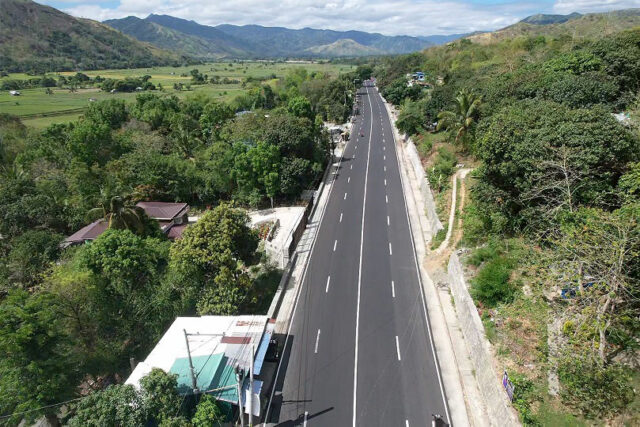
THE Department of Public Works and Highways (DPWH) is targeting to start the bidding of the Maharlika Highway rehabilitation project within this month.

“We have not started the bidding yet, but we are targeting the bidding (for this project) this month as well,” Public Works Secretary Vivencio B. Dizon told reporters on the sidelines of the Management Association of the Philippines General Membership Meeting in Taguig City on Wednesday.

The Maharlika Highway, also known as the Pan-Philippine Highway, connects northern Luzon to the Zamboanga Peninsula with ferries linking Bicol and Samar as well as Leyte and Surigao.

The agency said previously that it is hoping to start the full rehabilitation of the Maharlika Highway by May, with construction to commence by June.

The agency said it has met with major contractors, including EEI Corp. and D.M. Consunji, Inc., for the rehabilitation of Maharlika Highway. However, Mr. Dizon declined to provide an update, noting that the bidding process is still being finalized this month.

The agency has also engaged foreign consultants to support the design of the Maharlika Highway rehabilitation plan, as the DPWH wants to adopt new technologies in line with international highway standards.

The DPWH is also planning to begin the second phase of Epifanio de los Santos Avenue (EDSA) rehabilitation project within the month.

The second phase of the project is expected to cost around P4 billion, Mr. Dizon said, noting that the entire EDSA rehabilitation project is estimated to cost P6 billion.

The agency, together with the Metropolitan Manila Development Authority, and the Department of Transportation, started the EDSA rehabilitation in December 2025.

This forms part of a revised plan, cutting the rehab project to eight months from the original target of two years. — Ashley Erika O. Jose

16 parties brace for BARMM polls

COTABATO CITY — Sixteen regional parties will pit candidates for the first ever parliamentary polls in the Bangsamoro Autonomous Region in Muslim Mindanao (BARMM) on Sept. 14, officials of the Commission on Elections (Comelec) here said on Wednesday.

Among the 16 parties are the newly launched Bangsamoro Federalist Party that has thousands of members and followers, including incumbent local executives across BARMM’s five provinces, the equally large and influential Bangsamoro Party of the Moro National Liberation Front (MNLF) and the Serbisyong Inklusibo, Alyansang Progresibo.

The United Bangsamoro Justice Party of the Moro Islamic Liberation Front also has candidates for seats in the 80-seat BARMM parliament, presently occupied by lawmakers appointed by President Ferdinand R. Marcos, Jr.

Thousands of Muslim and Christian supporters on Tuesday converged along the access routes to the 32-hectare BARMM compound in uptown Cotabato City to show support for the Bangsamoro Federalist Party, after their officials filed before the Comelec their petition to participate in the upcoming elections.

Among the senior officials of the Bangsamoro Federalist Party are the incumbent BARMM parliament members Naguib A. Sinarimbo and Tumanda D. Antok, who, along with another regional lawmaker, Michael E. Midtimbang, submitted then to the lawyer Ray A. Sumalipao, regional director of Comelec, their petition for the poll body’s imprimatur for their bloc to participate in the regional electoral exercise.

In a press briefing, Mr. Sinarimbo said members of the Bangsamoro Federalist Party recognize Bangsamoro Chief Minister Abdulrauf A. Macacua as figurehead of the Bangsamoro parliament and of all the ministries and support agencies of the Bangsamoro government.

“Our favored bet for chief minister of the region, to become figurehead of the parliament, if the elections pushes through as scheduled, is our current most senior official, Chief Minister Macacua, if he would aspire for a seat in the parliament to represent his district to the region’s lawmaking body,” Mr. Sinarimbo, Bangsamoro Federalist Party’s Cotabato City chapter president, said.

The MNLF’s Bangsamoro Party, led by senior members of the front, including BARMM Labor and Employment Minister Muslimin G. Sema, was the first to seek Comelec’s permission to participate in the upcoming BARMM elections.

The Bangsamoro Party is popular for its policy of not allowing members to attack or criticize abusively, via the mainstream media, or through Facebook, the political platforms of other regional parties in the autonomous region.

The MNLF group led by BARMM parliament member Abdulkarim T. Misuari also has its Mahardika Party that now has favored bets for the regional parliament. — John Felix M. Unson

ADVERTISEMENT
ADVERTISEMENT