Home Blog Page 4784

PHL hopes to attract more offshore wind power investments

A wind farm is seen in Pagudpud, Ilocos Norte. — PHILIPPINE STAR/KRIZ JOHN ROSALES

THE government is hoping to attract more offshore wind power projects, after the Board of Investments (BoI) approved three offshore wind projects worth a total of P390 billion in the first quarter.

Trade Secretary Alfredo E. Pascual said the three offshore wind power projects of wpd Philippines  have a total capacity of 1,300 megawatts (MW) and are located in Cavite, Negros Occidental, and Guimaras.

In his speech at the Offshore Wind Conference in Taguig City on Thursday, Mr. Pascual said the Philippines is a suitable place for offshore wind investments due to its geographical position.   

“Renewable energy isn’t merely an option for us but a necessity. Thus, our government is ardently promoting using and developing renewable energy sources,” he said.

Mr. Pascual said the country needs 52,800 MW of renewable energy capacity to achieve its target of having 50% share of renewable energy in the country’s power generation mix by 2040.   

“Energy demand in the Philippines is growing in line with our country’s projected strong economic growth at 6% to 7% in this and the coming years. The demand for energy, especially for green energy, is expected to outpace our current supply level,” Mr. Pascual said.   

“We, therefore, welcome Chinese and other foreign investment in renewable energy projects in the Philippines,” he added.   

Investors in renewable energy such as wind power can avail of tax and other incentives under the 2022 Strategic Investment Priority Plan (SIPP) and the Corporate Recovery and Tax Incentives for Enterprises Act (CREATE). The Renewable Energy Law also offers income tax holidays, duty-free importation, and tax exemption of carbon credit.

In April, President Ferdinand R. Marcos, Jr. issued Executive Order No. 21, which mandated the creation of a policy and administrative framework for the development of local offshore wind resources, as well as the integration of required permits to the Energy Virtual One Stop Shop system.   

As of December 2022, the country awarded 190 onshore and offshore wind energy service contracts. — R.M.D.Ochave

MPIC defers vote on proposed market delisting 

By Adrian H. Halili

THE CONSORTIUM of companies that plan to take Metro Pacific Investments Corp. (MPIC) private has requested to defer the shareholders’ vote on its delisting to a later date or after the release of a report explaining the basis of the bidders’ tender offer price.

In a regulatory filing on Thursday, GT Capital Holdings, Inc. said the bidders sent a notice to MPIC to delay the voting on the proposed voluntary delisting from the main board of the Philippine Stock Exchange.

GT Capital disclosed on April 27 that its consortium with Metro Pacific Holdings, Inc., MIG Holdings Inc., and Mit-Pacific Infrastructure Holdings Corp. was planning to make a tender offer to acquire all outstanding MPIC common shares other than those they already own.

The latest notice to MPIC said that the fairness opinion and valuation reports for the tender offer on the minority shares have not yet been completed in time for the annual stockholders’ meeting on June 6 when the voting was supposed to take place.

MPIC said the consortium had requested a special stockholders’ meeting, which will be held on a later but unspecified date.

“Deferring the shareholder approval will allow the report to be made available prior to the special shareholders’ meeting and thus provide shareholders an opportunity to study the same and better appreciate the basis for the tender offer price and the proposed voluntary delisting,” the company said.

It said that once the report has been finalized, another notice of intent will be submitted to undertake another tender offer, which will replace the previous notice submitted by the consortium.

The consortium previously offered to acquire MPIC’s common shares at P4.63 apiece, which represents a 22% premium over the company’s one-year volume-weighted average price.

Under the tender offer, First Pacific, through Metro Pacific Holdings, will spend around $90 million to increase its stake by as much as 3.8%, while GT Capital will pay $70 million for an additional 2.9% stake. Mit-Pacific Infrastructure Holdings will buy up to 20% and MIG Holdings will acquire up to 10%.

In a separate disclosure, MPIC said that it had accepted the request to defer the vote to a later date.

“We will inform the shareholders of any material developments on this particular agenda item as necessary,” MPIC said.

The company said earlier that its shareholders are not obligated to tender their shares even if they had voted in favor of delisting. It added that the decision to proceed with the delisting is subject to achieving the 95% tender offer acceptance threshold for voluntary delisting.

ANALYSTS WEIGH IN
Regina Capital Development Corp. Head of Sales Luis A. Limlingan said MPIC might be reconsidering delisting from the stock exchange as many shareholders had opposed the low tender offer price offered by the bidders.

“It seems that the company is reconsidering the tender offer and delisting as many minority shareholders have recently been voicing their opinion regarding the price,” Mr. Limlingan said in a Viber message.

China Bank Capital Corp. Managing Director Juan Paolo E. Colet said the delisting vote’s deferral was the right move to give minority shareholders time to review the fairness opinion and valuation report of the bidders.

“It is also an opportunity for the bidders to reconsider their tender offer price,” he added.

However, Mr. Colet said the minority shareholders are not likely to change their minds unless the tender offer price is improved.

“Many shareholders have already formed a strong view as to what they think MPI is worth,” he said, referring to MPIC’s ticker symbol. “They have done their analysis based on publicly available information and brokerage research reports, and the emerging consensus is that the offer of P4.63 per share does not reflect a fair tender offer price.”

Globalinks Securities and Stocks, Inc. Head of Sales Trading Toby Allan C. Arce said shareholders may still vote in favor of the delisting even after seeing the reports.

“Some shareholders may believe that the benefits of delisting, such as increased flexibility and reduced regulatory oversight, outweigh the costs,” he said in a Viber message.

Mr. Arce noted that other shareholders might be “unwilling to take the risk of staying listed, given the current volatility of the stock market.”

Hastings Holdings, Inc., a unit of PLDT Beneficial Trust Fund subsidiary MediaQuest Holdings, Inc., has a majority stake in BusinessWorld through the Philippine Star Group, which it controls.

On Thursday, shares in MPIC rose by 0.46% or two centavos to P4.37 apiece.

The end of an era for Eat Bulaga But who gets the name?

FACEBOOK.COM/EBDABARKADS

AS the mainstays of the 44-year-old noontime show Eat Bulaga — Vicente “Tito” Sotto III, his brother Marvic Valentin “Vic” Sotto, and Jose Maria “Joey” de Leon (collectively known as Tito, Vic, and Joey or TVJ) — bade farewell yesterday after a bitter breakup with production company Television and Production Exponents, Inc. (TAPE), signs point to the very name of the show likely going with them.

The Intellectual Property Office of the Philippines’ (IPOPHL) registration of the Eat Bulaga name reveals that TAPE has control over it for the next 13 days, until June 14, 2023. However, this trademark only covers merchandise like clothing and printed materials.

Meanwhile, there’s a pending application for the Eat Bulaga trademark that covers entertainment services as well as merchandise, filed by TAPE co-founder Antonio Tuviera and TVJ back in Feb. 27 this year, showing there may be plans to bring the Eat Bulaga brand elsewhere.

According to a statement issued a day after TVJ announced their departure, TAPE is “saddened by the turn of events” but respects the decision of the hosts.

Abangan ninyo ang mga bagong magpapasaya at magpapatibok ng ating mga puso. Aasahan ninyo ang mas masaya, mas nakakaaliw at higit pa sa isang libo’t isang tuwa na Eat Bulaga (Stay tuned for more enjoyable and exciting things ahead. Expect a more fun, more entertaining Eat Bulaga, with more than a thousand and one joys),” read the statement signed by Romeo Jalosjos, Sr., and shared on Instagram by Bullet Jalosjos, the company’s chief finance officer.

On May 31st, the program’s iconic triumvirate of hosts said online that they would be parting ways with TAPE, this as the show was halted just as it was about to go on air on its usual timeslot on GMA. The announcement, according to an insider, was supposed to have been made live on air.

Later that day, GMA Network released a statement saying that they still have a block time agreement with TAPE until the end of 2024.

“We are saddened by the unexpected turn of events,” said GMA, which has been the home of Eat Bulaga for the last 28 years. “Together with all the Filipino fans, we pray for a smooth and swift resolution of their issues.”

It is unclear if only TVJ will be leaving the show or if some of the show’s many co-hosts will be joining them. This as rumors swirl online that the trio will be moving to a rival network.

Last month, the trio said that TAPE owed Vic Sotto and Joey De Leon at least P30 million each for 2022. Following the media buzz on the issue, Mr. Vic Sotto informed members of the press after a briefing for his upcoming sitcom Open 24/7 that TAPE had settled the debt.

Salamat at na-media at nabayaran (I’m thankful that it was reported by the media and we were paid),” he said.

Relations between the three hosts and TAPE chairman Romeo Jalosjos, Sr. have reportedly been strained since Mr. Tuviera stepped down from the helm of the production company in early 2023, and the Jalosjos family started to make changes in the show.

BusinessWorld tried to contact TAPE, Inc. for comment but was told by the office secretary that only TAPE, Inc. president Jalosjos is authorized to comment on the issues and that “packed schedule po siya ngayon kasi ang dami niyang meetings.” — Brontë H. Lacsamana

First Pacific: New advisor prompts deferred MPIC vote

First Pacific Co. Ltd. said the consortium that seeks to acquire Metro Pacific Investments Corp. (MPIC) has tapped another independent financial advisor (IFA) for the valuation report.

“There have been some developments in terms of the IFA and the finalization of the report,” said Stanley H. Yang, head of corporate development at First Pacific, in a briefing on Thursday.

In April, a consortium backed by First Pacific, GT Capital Holdings, Inc. and Japan’s Mitsui & Co. Ltd. announced a tender offer to buy minority shareholdings in the infrastructure conglomerate.

As part of the Securities Regulation Code of the Securities and Exchange Commission (SEC) and the voluntary delisting rules of the Philippine Stock Exchange (PSE), the consortium has to appoint an accredited IFA to undertake an evaluation of MPIC and issue a fairness opinion.

Mr. Yang said before the April tender offer notice to PSE, an evaluation was done on the 12 accredited firms, which include auditing and accounting firms, and investment banks.

“In light of the nature and size of the transaction and also considering that MPIC has foreign shareholders and its investor base and substantial public float, the consortium limited its selection to the accredited IFAs that are affiliated with an international firm,” he said.

Based on the said criteria, Mr. Yang said the previous firm tasked to deliver the reports was selected from PSE-accredited firms and chosen on the basis that its engagements were of a limited scope relative to other available accredited IFAs.

“After the evaluation, this firm that was selected was engaged by the consortium to act as IFA,” he said. “I am not at liberty to disclose the name because of the confidentiality of this process.”

The day after the consortium announced its offer, the PSE’s nod was sought to clear the process, which Mr. Yang said typically takes two to three weeks. Unfortunately, the IFA’s confirmation process was delayed, he added.

“Rather than taking two weeks, it took longer and there was a decision made earlier this week, on Tuesday, where we as a consortium along with the valuation provider, were informed that the independence of the provider was not accepted by the PSE after a consultation with SEC,” he said.

“Because the requirement is to have an accredited valuation report fairness opinion provider, then the consortium has to appoint another provider to do the work and this will take longer to complete the process,” he added.

With the new IFA on board, the consortium will continue to work towards finalizing and issuing the third-party independent valuation report.

“I think it’s important for the market to understand that the delay is really stemming from the time to have all of the necessary steps ready,” Mr. Yang said.

“Because the new firm, the valuation provider, is just starting, they will have to do the work in terms of the valuation and the analysis of MPIC. We would want them to finish it completely as quickly as possible, but I think the guidance would be within a month,” he said.

The new advisor will have to complete its report first before it will be applied for PSE clearance.

Mr. Yang said the selected firm has no previous or existing business relationships with MPIC or any of the consortium members.

MPIC is an infrastructure investment company with holdings in Manila Electric Co., Metro Pacific Tollways Corp., Maynilad Water Services, Inc., and Metro Pacific Health Corp., among others. It is one of three key Philippine units of First Pacific, the others being Philex Mining Corp. and PLDT Inc.

Hastings Holdings, Inc., a unit of PLDT Beneficial Trust Fund subsidiary MediaQuest Holdings, Inc., has a majority stake in BusinessWorld through the Philippine Star Group, which it controls. — Justine Irish DP. Tabile

Fruitas Holdings to acquire cloud kitchen company Fly Kitchen

FRUITAS Holdings, Inc. has acquired full ownership of cloud kitchen business Fly Kitchen Inc. in its efforts to increase market share, the company said on Thursday.

“The purchase of Fly Kitchen fits our strategic objective to remain competitive in the digital arena. The startup complements our present activities and will enable us to accelerate the growth of this new source of revenue and profit,” said Fruitas President and Chief Executive Officer Lester C. Yu in a statement.

In a separate disclosure, the company said that under the agreement, it will acquire all 2,000 outstanding shares of Fly Kitchen, which will become one of its subsidiaries.

The transaction was closed on June 1 and comes after Fruitas launched its cloud-based kitchen business Nube Kuxina in the third quarter of 2022.

“Among Fly Kitchen’s key assets are the leasehold interests in its four kitchens, all of its inventory and equipment, recipes, and other technical know-how,” the company said.

It added that the payment would be below 10% of the total assets and book value of Fruitas as of March 31, 2023. It has yet to disclose the price per share of the acquisition.

The company said the acquisition will enable it to significantly expand its cloud kitchen business and “efficiently serve its customers,” as it aims to introduce its food and beverage products such as Fruitas fresh juices, Ling Nam, Soy & Bean, and Sabroso Lechon.

Founded in 2020, Fly Kitchen, was able to expand into four strategic kitchen locations: Makati City, Pasig City, Mandaluyong City, and Quezon City. It has a combined cooking area of 200 square meters and caters to more than 10 brands. It has also developed strong connections with third-party food aggregators like Foodpanda and Grabfood. 

“We are optimistic about the future of Fly Kitchen because many Filipinos have changed their eating habits. This will enable us to continue to reorient our company and strengthen our visibility online,” Mr. Yu added.

During the first quarter of this year, the listed food and beverage retail operator tripled its net income to P19.2 million from P6.4 million in the same period last year.

On Thursday, Fruitas shares fell by 2.44% or P0.03 to P1.20 apiece. — Adrian H. Halili

SMPC set to ship second trial coal exports to Japan

SEMIRARA Mining and Power Corp. (SMPC) is poised to make its second trial shipment of coal to Japan this month, as part of its goal to expand its market while also reducing its dependency on China.

“China is still our main foreign buyer, but with their industrial output growing slower than expected, we want to develop other Asian markets like Japan,” SMPC President and Chief Operating Officer Maria Cristina C. Gotianun told the stock exchange on Thursday.

SMPC said it is set to export about 50,000 metric tons (MT) of coal to Japan for Shikoku Electric Power Corp.’s 700-megawatt (MW) coal-fired ultra-supercritical power station.

Its first trial shipment to Japan was made in January when it sold 78,410 MT of mid-grade coal to J-Power, a utility company that is also an operator of coal, hydroelectric, wind, and geothermal power stations.

Ms. Gotianun said the integrated energy company is targeting to export around 30% of its full-year sales target of between 15 million MT and 16 million MT.

For the January-to-March period, SMPC said its coal shipments to China decreased to 1.1 million MT from 2.2 million MT, though it still accounted for 72% of its exports.

The energy company said it considered South Korea as a steady market at 300,000 MT accounting for about one-fifth of its export sales. The rest of its exports are for Japan at 5% and Brunei at 3%. — Ashley Erika O. Jose

Killing me softly

MOVIE REVIEW
The Whale
Directed by Darren Aronofsky

(Warning: plot details explicitly discussed)

DARREN ARONOFSKY’s The Whale (2022) adapted Samuel D. Hunter’s play to the big screen and we more or less know how the film has fared: made respectable money from a small ($3 million) budget, won Brendan Fraser an Academy Award for playing a morbidly obese man trying to re-connect with his estranged daughter, provoked either ecstatic or angry reactions from a broad range of critics.

Aronofsky was smart enough to consult with the Obesity Action Coalition, and the statement on their website is interesting: they did not have any input on the decision to cast Fraser, nor did they have any input about the design and appearance of the suit meant to make the actor look like he weighed 600 pounds; they did find Fraser “highly receptive” to their suggestions about how to approach his role, and felt he did “a remarkable job.” They admitted to taking part in the production to “help make sure” the character is portrayed in a “realistic” way, but didn’t explicitly say it was realistic; they hedged a little saying “how individuals experience obesity varies,” but admit “SOME people may have had (the same) experiences.” Tactfully worded, and about the best the production could hope for, considering this may have been a late innings consultation. Stayed clear of a full-throated approval, but no violent objections.

I do like what they have to say about the title: “‘Whale’ is often a derogatory term used for people with obesity. However, after reading the play and seeing the movie… it has a much deeper meaning.” These people take context into consideration, how cool is that?

Oh, what did I think of it? Well let me tell you.

If I were asked for the least appropriate filmmaker to direct a film about an obese man, Aronofsky would be near the top of the list. From Requiem for a Dream to The Wrestler to Black Swan to mother! He’s traded in body horror and sadism, and nearly every time you end up wondering if any of that was worth it. An Aronofsky film about an obese man should be more of the same, and there are passages in the film — Charlie (Fraser) stuffing his face full of greasy fried chicken; Charlie masturbating to porn; Charlie trying to clean himself; Charlie throwing up; Charlie simply trying to lift his carcass up out of a sofa — that rate up there, maybe even worse, because the effects and the context in which they take place are so grimly realistic.

Yes, Aronofsky falls into one trap after another, wasting no opportunity to rub your nose in all of it, but — this time at least — you sense something more, a direction — a point even — to all of Charlie’s masochism.

The rest of the film is like a leisurely striptease, pulling away layer after layer till the full motivation for the overeating is revealed. Not especially profound — a combination of guilt and self-hatred — but the process is compelling, and keeps Aronofsky disciplined. He structures the gross-outs to accumulate to a crescendo, and doesn’t for a moment (till the very last moment) sidestep into fantasy, or at least blatant magic realism.

Helps that Aronofsky (like Hitchcock twice before him) leans into the challenge of adapting the story of a man trapped in a confined space — in this case literally can’t even leave his room. His camera swings around, swoops down, pulls away from Charlie as if to fully take in his size; he treats Charlie by turns like a pratfalling Oliver Hardy, a complex medical case study, and a massive monument to his own impending demise.

Also helps that we can identify with much of the horror. Those slices of cold pizza slapped together and drizzled with mayo or ranch — who hasn’t done that, standing in front of an open fridge late at night? That sandwich of cold cuts dipped into the grape jelly? The candy wrappers, an endless row of them, like ants sneaking up to a picnic? I’ve struggled with my weight all my life, I know what it’s like to stare at an unopened Snickers bar with hours left on the clock. Know what it’s like to catch someone staring at me unawares, the look on their face like a mass of writhing grubs exposed when you upturn a rock.

Maybe Hunter’s best gimmick is a mysterious essay of Moby Dick that Charlie keeps reciting over and over again. Clearly written by a grade schooler, Hunter manages the trick of making this piece of writing sound awkward and silly at first, but with each pass growing in significance in your head. Suddenly you see in the essay literary insight; then philosophical weight; then intense self-confession; finally, a moment of naked empathy —

Along with the essay there’s the character of Ellie (Sadie Sink), Charlie’s daughter. At first you wonder what Charlie sees in her (“I just thought that maybe we could spend some time with each other.” “I’m not spending time with you, you’re disgusting.”); on second and third glance she’s even worse — a malevolent sadist on Aronofsky’s level, actively looking through others’ online profiles for a chance to harass, maybe wound. Improbably, Hunter (as interpreted by Sink and helped by Aronofsky) pulls off the stunt of making Ellie’s filterless cruelty seem like a quest for truth and hatred of hypocrisy that actually helps people. You finally see in the way Charlie insists on seeing Ellie what he’s really about: not just an optimist but a desperate romantic whose only arrow in his quiver is optimism. He has to believe Ellie is “an amazing person” because all he has left in this world is his decaying corpulence and his $120,000 in savings — and that he’s keeping for Ellie.

I get it, I really do; The Whale is fake and manipulative and mawkish as hell, and yet Aronofsky and Fraser manage to cut through all the fat with a laser and expose Charlie’s deepest darkest wish — which, coincidentally, is the same wish Jean-Pierre Melville expressed in Godard’s Breathless: to become immortal, then die.

Reading Hunter’s screenplay online one notices Aronofsky made one crucial change: to Hunter’s instruction “fade to black” Aronofsky substitutes a blinding flash of white, and that can mean one of two things: the stereotypical notion of a rapturous ascent (Charlie’s had a heart attack and dropped dead); or, if you’re familiar with Moby Dick you’ll recognize the allusion to the chapter “The Whiteness of the Whale” which discusses all the implications of the color white — its unnatural purity, its terrible absence of color the meaninglessness of which Charlie’s been fighting against all  his life. Almost despite itself (and maybe it’s just me and not anything the film actually has to offer), one of the best of 2022.   

Repower Energy,  Austrian firm Gugler forge deal for seawater pumped storage

REPOWER Energy Development Corp. has signed an agreement with Austria-based Gugler Water Turbines GMBH to develop seawater pumped storage projects in the Philippines.

“We are pleased to enter into a partnership with Gugler — a leading provider of state-of-the-art turbine technology,” Eric Peter Y. Roxas, president and chief executive officer of Repower Energy, said in a media release on Thursday.

Repower Energy, a subsidiary of Pure Energy Holdings Corp., said the memorandum of agreement with Gugler aims to bring seawater pumped storage technology into the country.

“We are looking to replicate Gugler’s success in a similar venture it has in South Korea, to further our ultimate goal of uplifting living standards to communities by providing clean energy,” Mr. Roxas said.

He said the agreement will allow the company to diversify its “capabilities as an emerging player in the hydropower space.”

The energy company said its first project will be a 320-megawatt (MW) seawater pumped storage facility in Luzon.

It added that the elevation of the project will be around 300 meters above sea level, utilizing a lower reservoir for unlimited seawater intake.

Repower Energy said it is now working on securing the necessary endorsement to push through with the project with an initial development of a 50-MW facility.

“The year 2023 promises to be full of potential for [Repower Energy], given our ongoing construction of various run-of-the-river hydropower projects in provinces such as Bukidnon and Quezon,” Mr. Roxas said.

Repower Energy is planning to expand its installed energy capacity by 1 gigawatt in the next five years, with its portfolio mainly focusing on hydropower projects.

The energy company is looking to raise about P1.5 billion through an initial public offering (IPO). It secured clearance from the Philippine Stock Exchange on May 15 for its IPO plan.

Repower Energy is set to offer 200 million primary common shares at a maximum offer price of P5 apiece, with an over-allotment option of up to 30 million shares. — Ashley Erika O. Jose

Beyoncé fans spare no cost for Renaissance Tour

BEYONCÉ —(BEYONCE.COM)

LONDON — Beyoncé’s fans, collectively known as the BeyHive, are going savage to catch a glimpse of her during her Renaissance World Tour.

Money and distance are no object when your idol beckons in 57 concerts across 40 cities in North America and 14 across Europe.

Jimmy Long of San Francisco flew to Stockholm for the May 10 opening show after finding $370 front-section “Club Renaissance” seats — a bargain compared to similar US-based tickets costing $1,200 or more.

“I texted my boyfriend, ‘Do you wanna go to Sweden? Yes, or no? We have nine minutes to decide.’”

England-based Ayo Awokoya was uplifted despite enduring an arduous Manchester-London train ride that lasted six hours instead of 4-1/2 hours.

“When I got there it felt like an incredibly great experience,” she said.

Beyoncé awakened some to life’s priorities.

“Teachers had such a hard time and I lost people in my family” in the pandemic, said Janny Nascimento, a primary school teacher in Rio de Janeiro. “After that I had this will to live, to go out there and do things I have never done before.”

Janny splurged 6,000 reais ($1,199.21) for her first flight, on top of 5,000 reais for Club Renaissance tickets in Frankfurt, Germany. — Reuters

MREIT set to acquire 7 offices

MREIT, Inc. has signed a memorandum of understanding with its sponsor Megaworld Corp. for the possible transfer of seven offices to the portfolio of the real estate investment trust.

“These properties boast high average occupancy rate of 94% and quality tenants, marking a significant step towards our commitment to deliver sustained growth and value to our investors,” said MREIT President and Chief Executive Officer Kevin Andrew L. Tan in a statement on Thursday.

The company said the possible acquisitions are seven grade A office buildings from property developer Megaworld with a gross leasable area of 150,500 square meters (sq.m.), which it said generated rental income of P1.2 billion last year.

Four of the potential office assets are in Metro Manila, namely: Two West Campus (9,500 sq.m.) and Ten West Campus (36,400 sq.m.) in McKinley Hill; and Science Hub Tower 3 (20,500 sq.m.) and Science Hub Tower 4 (20,700 sq.m.) in McKinley West.

The company also plans to acquire One Fintech Place (18,200 sq.m.) and Two Fintech Place (18,100 sq.m.) in Iloilo Business Park, and Davao Finance Center (27,100 sq.m.) in Davao Park District.

In a separate disclosure, the company said that it had signed a memorandum of understanding stating that it would conduct financial, legal, and technical due diligence on certain assets of Megaworld to assess whether they meet MREIT’s investment criteria.

MREIT said that it aims to finalize the list of assets to be included in the acquisition and sign a final agreement by the third quarter.

“Over the coming weeks, our team will work alongside our sponsor Megaworld to conduct comprehensive financial, legal, and technical due diligence to ensure the viability of the assets with a goal to execute definite agreements within the third quarter of the year,” Mr. Tan added.

Once the planned acquisition is completed, the company’s total portfolio will increase by 46% to 475,500 sq.m. from the 325,000 sq.m. The move will bring MREIT closer to its 500,000-sq.m. target of assets under management by the end of next year.

“We look forward to finalizing MREIT’s next set of acquisitions soon,” Mr. Tan said.

During the first quarter, MREIT reported an attributable net income of P730.42 million, up 6.3% from P687.17 million in the same period last year.

Since 2021, the company has transferred eight office buildings into its portfolio, which rose in value by 25% to P62 billion.

To date, MREIT’s portfolio covers 18 office properties in four Megaworld premier townships. 

On Thursday, its shares rose 1.45% or P0.20 to P14 each. — Adrian H. Halili

VistaMalls, Inc. announces schedule of annual stockholders’ meeting on June 26

NOTICE OF ANNUAL MEETING OF STOCKHOLDERS

Notice is hereby given that the annual meeting of stockholders of VISTAMALLS, INC. (the “Company” or “STR”) for the year 2023 will be held online on June 26, 2023, Monday at 10:00 a.m. with the proceedings livestreamed and voting conducted in absentia through the Company’s secure voting online facility which may be accessed through the following URL address: https://vote.vistamalls.com.ph/VSRV/Login.

The following shall be the agenda of the meeting:

  1. Call to order
  2. Certification of service of notice and presence of quorum
  3. Approval of the minutes of the last Annual Meeting of Stockholders held on June 27, 2022
  4. Presentation of the President’s Report, Management Report and Audited Financial Statements for the year 2022
  5. Ratification of all acts and resolutions of the Board of Directors and Management from the date of the last annual stockholders’ meeting until the date of this meeting.
  6. Election of the members of the Board of Directors, including the Independent Directors, for the year 2023
  7. Appointment of External Auditors
  8. Adjournment

Minutes of the 2022 Annual Meeting of Stockholders is available at the website of the Company (https://documents.starmalls.com.ph/minutes-of-meetings.php).

Electronic copies of the Information Statement and Management Report with respect to the 2023 Annual Meeting of Stockholders of the Company, as well as the 2022 Annual Report (SEC Form 17-A) and Quarterly Report for period ended 31 March 2023 (SEC Form 17-Q) of the Company, are available on the Company’s website (https://documents.starmalls.com.ph/sec-annual-reports.php) and PSE Edge (https://edge.pse.com.ph/companyDisclosures/form.do?cmpy_id=147).

The Board of Directors has fixed the close of 16 May 2023 as the record date for the determination of stockholders entitled to notice of, and to vote at, said Annual Stockholders’ Meeting.

In light of the current circumstances, and to ensure the safety and welfare of the Company’s stockholders, the Company will dispense with the physical attendance of stockholders at the meeting and will allow attendance only by remote communication and voting only in absentia or by appointing the Chairman of the meeting as their proxy.

Stockholders who intend to participate in the meeting via remote communication and to exercise their vote in absentia must notify the Corporate Secretary by registering in advance at https://vote.vistamalls.com.ph/VSRV/Login on or before June 16, 2023. All information submitted will be subject to verification and validation by the Corporate Secretary.

Stockholders who intend to appoint the Chairman of the Meeting as their proxy should submit duly accomplished proxy forms on or before June 16, 2023 at the Office of the Corporate Secretary at UGF Worldwide Corporate Center, Shaw Boulevard, Mandaluyong City and/or by email to ir@vistamalls.com.ph.

The procedures for participating in the meeting through remote communication and for casting of votes in absentia are set forth in the Information Statement.


MA. NALEN S.J. ROSERO
Corporate Secretary


Spotlight is BusinessWorld’s sponsored section that allows advertisers to amplify their brand and connect with BusinessWorld’s audience by enabling them to publish their stories directly on the BusinessWorld Web site. For more information, send an email to online@bworldonline.com.

Join us on Viber at https://bit.ly/3hv6bLA to get more updates and subscribe to BusinessWorld’s titles and get exclusive content through www.bworld-x.com.

High capitalization, liquidity to help banks weather crises

BW FILE PHOTO

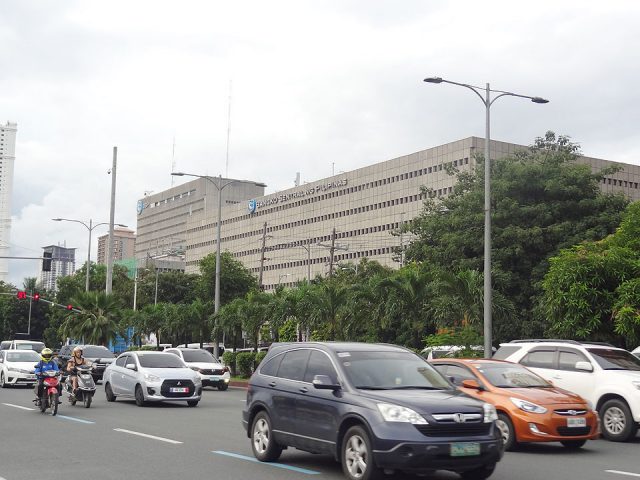
PHILIPPINE BANKS remain well-capitalized and highly liquid, which will help them withstand credit and market shocks during crises, the Bangko Sentral ng Pilipinas (BSP) said. 

The BSP has continued to implement structural reforms to ensure the financial strength and safety of its supervised banks, it said in an e-mail to BusinessWorld.

“The adoption of sound governance and risk management standards, prudential limits and requirements including the Basel III reforms on capital and liquidity standards — with due regard to proportionality — has enabled banks to maintain their resilience and withstand possible credit and market shocks even during crises,” the central bank said. 

The regulator has issued principles-based rules for its BSP-supervised financial institutions. This approach is more flexible and risk-based, focusing on providing guidance rather than being prescriptive as banks have varied business models, it said.

Latest data from the BSP showed banks’ capital adequacy ratios (CARs) were higher than the regulatory minimum and international standards as of end-2022.

The banking system’s solo and consolidated CARs stood at 15.7% and 16.3%, respectively, well above the BSP’s 10% minimum requirement and the 8% set by the Bank for International Settlements.

Meanwhile, universal and commercial banks’ solo and consolidated Basel III leverage ratios stood at 8.8% and 9.3% respectively, also higher than the BSP’s 5% requirement and the 3% international standard.   

“The Basel III LCR requires banks to maintain high-quality liquid assets that can be readily converted to cash at little or no loss of value so that the bank can withstand an assumed 30-day liquidity stress that may arise from run-off of deposits, tightening of funding source, or unscheduled drawdown on the bank’s committed but unused credit and liquidity facilities,” the BSP said.

It added that this would give lenders more time to implement structural measures needed to address any emerging or underlying issues.

Banks were also able to meet the BSP’s liquidity and funding requirements. The liquidity coverage ratio (LCR) and net stable funding ratio (NSFR) of banks were both above the 100% thresholds as of end-2022.

The universal and commercial banking industry’s solo and consolidated LCRs stood at 185.7% and 185.4%, respectively. Meanwhile, the NSFR of the sector stood at 137.4% and 138.1% on solo and consolidated bases, respectively, as of end-December 2022.

“The NSFR complements the LCR by promoting resiliency over a longer-term time horizon through creating additional incentives for banks to fund their activities with more stable sources of funding on an ongoing structural basis,” the BSP said.

The NSFR also encourages funding stability, limits over-reliance on short-term wholesale funding, and boosts better assessment of funding risk across on- and off-balance sheet items, it said.

Standalone thrift banks, rural banks, and cooperative banks likewise maintained adequate proportions of liquid assets against their liabilities, the central bank said.

The minimum liquidity ratios of standalone banks as of end-2022 reached 29.9%, 63.7%, and 44.4%, respectively, on a solo basis, all above the 16% minimum requirement.

Still, even as the Philippine banking system remains stable and healthy, financial institutions are expected to develop the appropriate systems, disclose liquidity risks, and undergo supervisory assessments to manage and address potential challenges, the central bank said.

“To ensure their compliance and effectiveness in managing liquidity risk, banks are expected to establish appropriate systems for measuring and managing liquidity risks, have a robust liquidity risk policy and governance framework, maintain liquidity cushion and contingency plans, report and disclose liquidity risk information, and undergo regular supervisory assessments,” the BSP said.

Stress testing is a crucial aspect of banks’ risk management system and capital planning process as it allows lenders to assess the level of liquidity they should hold and construct scenarios that could pose difficulties for specific business activities, it said.

“By conducting stress tests, banks can effectively manage risk exposures, promote strong risk governance, and ensure their ability to withstand adverse economic conditions or financial shocks,” it said.

Regular meetings with the banks’ management to discuss strategic and recovery plans also allows the BSP to assess the risk appetite and emerging risk exposures of banks.

The BSP also has enforcement tools that it can deploy to ensure the stability of the banking system.

“As the country recovers and transitions to a post-pandemic economy, the BSP remains committed to adopting prudential standards that will strengthen corporate and risk governance, promote digital transformation, and advance sustainable finance,” the BSP said.

“All these are intended to foster a resilient, dynamic, and inclusive financial system that is supportive of sustainable economic growth,” it added. — K.B. Ta-asan


ADVERTISEMENT
ADVERTISEMENT