Home Blog Page 4775

Israel working on Tel Aviv-Manila direct flights

REUTERS

ISRAELI Foreign Minister Eliyahu Cohen said his country’s tourism ministry is seeking to arrange direct air links between Tel Aviv and Manila to boost visitor exchanges and trade.

“Direct flights would be good for business and would be beneficial for both our peoples,” he said at the Israel-Philippine Business Forum held at the New World Hotel in Makati City.

Mr. Cohen’s two-day visit to the Philippines is the first by a foreign minister in 56 years.

“My goal today is to build a bridge for the business community to increase the trade volume between our countries and embrace prosperity for both of us,” Mr. Cohen added.

Ilan Marciano, deputy director-general of the Israel Ministry of Tourism, told reporters during the event that he was set to meet with executives from airlines in the Philippines and with the Department of Tourism to discuss proposals for more airline connectivity between the two countries.

Mr. Cohen said Israel has much to offer in terms of “innovation and finding solutions for complex challenges, often applying out-of-the-box types of ingenuity… Being a small economy, Israeli entrepreneurs are always looking for new partners outside of Israel.”

Mr. Cohen is also due to meet with Foreign Affairs Secretary Enrique A. Manalo.

The Philippine Exporters Confederation, Inc., Israel Export Institute, and the Israel-Asia Chamber of Commerce signed a trade cooperation agreement during the forum, which featured networking opportunities for agricultural technology, water, and cybersecurity companies from both countries.

National Economic and Development Authority Secretary Arsenio M. Balisacan said at the event that the government expects any resulting partnerships to support the growth of key Philippine industries and expand export opportunities.

“I invite (Israeli businesses) to invest in our growth drivers, water, agriculture, transportation, agribusiness, and manufacturing,” he said in a speech.

In February, the head of Israel’s Economic and Trade Mission to the Philippines Tomer Heyvi told BusinessWorld editors and reporters in a roundtable discussion that Israeli firms are interested in investing in Philippine infrastructure, agriculture, water, and business process outsourcing industries.

Israel’s Ambassador to the Philippines Ilan Fluss has called it an Israeli priority to expand relations via economic development and innovation.

Trade between Israel and the Philippines totaled $534 million in 2022, a 70% increase, according to the Israel Economic and Commercial Mission to the Philippines website.

It added that demand is growing for Israeli products in the Philippines in industries like agriculture and water technology, cybersecurity, and healthcare.

In September, Mr. Fluss said Israel is seeking tie-ups with information communications technology firms to bolster cooperation in innovation.

“Together, we can elevate our bilateral trade volume to new heights, strengthening our economies and improving the lives of our citizens,” Mr. Cohen said. — John Victor D. Ordoñez

Low registration rates reported for EPR law

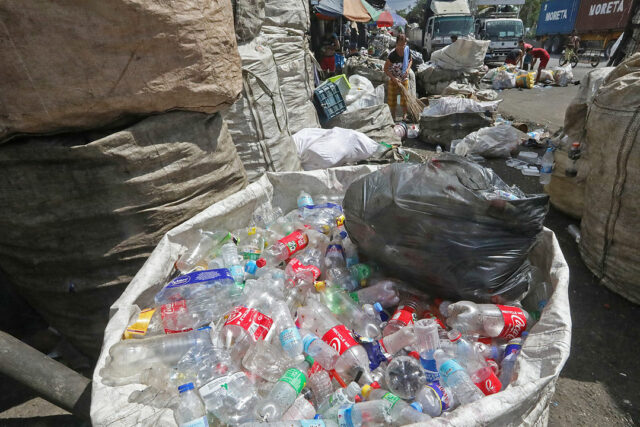
PHILIPPINE STAR/ MICHAEL VARCAS

ONLY 15% or about 600 out of 4,000 obliged companies have registered in compliance with a law holding companies responsible for the proper disposal of their products’ plastic packaging, according to the Department of Environment and Natural Resources.

Registration is required under Republic Act (RA) No. 11898 or the Extended Producer Responsibility (EPR) Act of 2022, which lapsed into law on July 23, 2022. It amends RA 9003 or the Ecological Solid Waste Management Act of 2000.

“So far, we have counted 4,000 obliged enterprises. Unfortunately, we only have had around 600 that have actually registered. Some of those 600 have fully complied with what is required for the registration; the rest are still in the process,” Environment Secretary Maria Antonia Yulo-Loyzaga said at a news conference on Monday.

Ms. Loyzaga signed the law’s implementing rules and regulations (IRR) in January. The IRR makes companies with assets of over P100 million to recover their own plastic packaging waste.

“We will be jumpstarting our communications program and education program for the EPR law this month in order for us to begin meet our targets,” Ms. Loyzaga said. 

She said the goal is to sign up at least 1,000 registrants this year.

The EPR law lays down fines of P5 million to P20 million for failure to comply with the law and meet targeted recovery rates.

The Environmental Management Bureau estimates that solid waste produced daily was 61,000 metric tons per day, with plastic waste accounting for about 12%, Undersecretary Jonas R. Leones said.

“We are not winning the war against single-use plastics,” Ms. Loyzaga said. “There is a huge social dimension that needs to be addressed and there must be replacement for single-use plastics. If we cannot replace single-use plastics, we will not be able to actually address the problem,” she added.

In a statement, environmental group Oceana reiterated its call to ban single use-plastics, citing recent studies confirming the presence of microplastics in the environment.

“Microplastics are in the air we breathe and, in the soil, freshwater, and our seas. Our exposure to the dangers brought about by plastic pollution cannot be overemphasized,” Oceana Acting Vice-President and Legal and Policy Director Rose Liza Eisma-Osorio said. — Sheldeen Joy Talavera

Tax system being outmaneuvered by digital companies

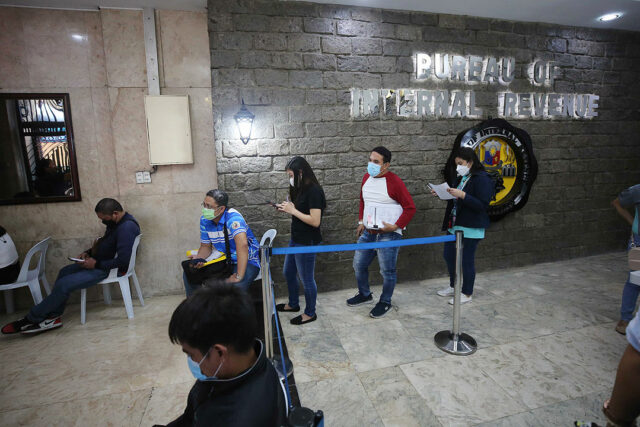
People line up to file their income tax returns at the Bureau of Internal Revenue office in Intramuros, Manila, April 18, 2022. — PHILIPPINE STAR/ RUSSELL A. PALMA

TAX administrators need to adapt to digital platform use by their taxpayers to enhance their ability to capture revenue, the Philippine Institute for Development Studies (PIDS) said.

“In a virtual cross-border world, the effectiveness of existing tax measures is limited. The ease through which online accounts can be set up and deployed as digital storefronts, often anonymously by users operating from homes, which are not tax-mapped, and through platforms that operate abroad, limits the Bureau of Internal Revenue’s (BIR) enforcement powers,” PIDS consultant and assistant professor at the University of the Philippines College of Law Emerson S. Bañez said in a statement.

Mr. Bañez said that the current tax system was “developed for bricks-and-mortar or traditional businesses with a physical location.”

“This is not wholly applicable to e-commerce as not all digital businesses have physical stores or offices where they sell their goods and services and where the same is consumed,” he said.

Tax Management Association of the Philippines President Suzette A. Celicious-Sy noted that no laws currently govern foreign businesses that provide digital goods and services in the Philippines.

A bill that seeks to impose a value-added tax on digital service providers is currently pending in the Senate at committee level.

If signed into law, it is expected to generate up to P18.2 billion in revenue by 2028.

“There are provisions in the bill that might be difficult to enforce, such as requiring nonresident digital service providers to designate a representative office or agent and suspend business operations for failure to register as taxpayers in the Philippines,” Ms. Celicious-Sy said.

“Overall, there needs to be a law to govern the taxation of nonresident foreign corporations and capture allocated taxes for income sourced within the Philippines,” she added.

Mr. Bañez recommended using payment systems and platforms as withholding agents.

The government’s tax administration efforts must also be digital-ready through “procuring the right technology, hiring individuals with the right skills, and reskilling the tax workforce.”

The BIR recently announced that it is looking into a proposed creditable withholding tax on the income payments made by online platform providers to their partner sellers. — Luisa Maria Jacinta C. Jocson

Bill seeks to cap government procurement process at 27 days

BW FILE PHOTO

A BILL has been filed in the House of Representatives limiting all government procurement exercises to 27 days.

“Government agencies with major underspending concerns noted ‘public procurement issues’ as a recurring reason for the low disbursement (utilization),” Senior Deputy Speaker and Pampanga Rep. Aurelio D. Gonzales, Jr. said in House Bill No. 7944.

The measure is expected to help “address delays in the procurement process” and “further improve the timelines of the completion of projects of the entire government and their use and enjoyment by our people,” Mr. Gonzales said.

The measure aims to limit the duration of procurement to 27 days, starting from the day the invitation to prospective bidders is published and ending with the posting of the Notice of Award and Notice to Proceed with an approved contract.

The bill also proposes to eliminate the post-qualification component, a step in the current procurement process where the winning bidder’s bona fides are further evaluated.

Lone bids will be allowed provided that the bidder’s price can be met by the funds allotted for the contract. It also authorizes a waiver of the competitive bidding requirement for defense materials and related purchases.

 The bill proposes the creation of the Ang Bagong Pilipinas Procurement Bureau under the Budget department as well as a full-time Prequalification, Bids and Awards Committee in all agencies, local government units (LGUs), state universities and government-owned and -controlled corporations.

The measure applies to infrastructure, consultancy services, leases of privately-owned buildings or space longer than six months, and goods to be purchased entirely by LGU funds.

Foreign-funded procurement exercises, unless allowed in the loan agreement or the lending institution’s guidelines, are exempt from the 27-day limit.

If signed into law, the measure would repeal Republic Act No. 9814 or the Government Procurement Reform Act, which “is no longer adequate to keep up with the rate of the projects being undertaken by the government,” Mr. Gonzales said.

He added that the current law “needs to be updated and streamlined to put an end to recurring delays in the acquisition of goods and services, and the awarding and implementation of infrastructure projects like roads, expressways and school buildings.”

Measures seeking to amend government procurement laws are currently being evaluated by a House technical working group.

Infrastructure spending was P196.7 billion in the first quarter, while infrastructure and capital outlays in 2022 rose to P1.02 trillion, according to the Department of Budget and Management. — Beatriz Marie D. Cruz

Indonesian EV association joins ASEAN alliance to promote sustainable transport

Image via Ivan Radic/CC BY 2.0

THE Indonesian electric vehicle (EV) association has joined the ASEAN Federation of Vehicle Associations (AFEVA) to promote sustainable transportation in the region, becoming the alliance’s third member.

The AFEVA members include Dennis Chuah, president of the Electric Vehicle Association of Malaysia (EVAM), and Rommel T. Juan, chairman of the Electric Vehicle Association of Philippines (EVAP). The newest member is Moeldoko of the Indonesian Electric Vehicle Industry Association (Periklindo).

“Becoming a member of AFEVA opens up exciting opportunities for Periklindo to collaborate with like-minded associations in the region. Through this partnership, we aim to create a unified voice for electric vehicles in Southeast Asia and work together to overcome challenges and drive sustainable transportation,” Mr. Moeldoko said in a statement.

EVAP and EVAM are the founding members of AFEVA. Periklindo’s entry is expected to  enhance collaboration among Southeast Asian EV associations.

“We look forward to collaborating closely with Periklindo to promote the adoption of electric vehicles across the ASEAN region,” Mr. Chuah said. — Justine Irish D. Tabile

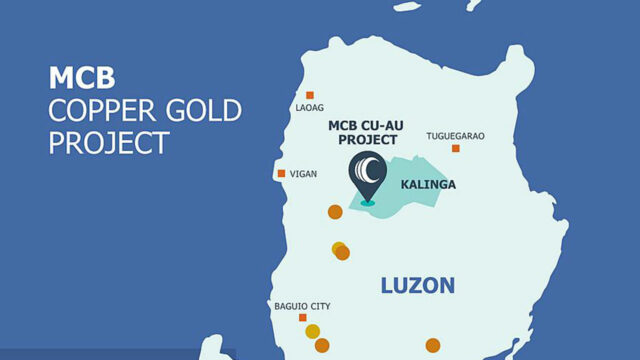
Copper-gold project in Cordillera region expected to operate commercially by 2026

CELSIUSRESOURCES.COM

CELSIUS Resources’ Philippine subsidiary Makilala Mining Co., Inc. (MMCI) said it hopes to launch commercial operations at its Maalinao-Caigutan-Biyog (MCB) copper-gold project by 2026.

“Hopefully by 2024 we can start the project construction and proceed to first commercial production by 2026,” Judy Rola, head of information management at MMCI, said of the project, located in the Cordillera Administrative Region.

Ms. Rola said the project has been issued an environmental compliance certificate by the Department of Environment and Natural Resources and is awaiting the approval of its Declaration of Mining Project Feasibility (DMPF).

The company is currently preparing key requirements for the mineral production sharing agreement, which be lodged once the DMPF is secured.

“What we are doing is that we’re showing the government that we have the plans and programs in place to make sure that the negative impacts of mining are mitigated,” Patrique Jane Duran, head of mining of MMCI, said.

Ms. Duran said that the MCB project is suitable for underground mining with an estimated 25-year mine life.

The company expects production to peak at 4.5 million tons of copper-gold concentrate per annum but will start at 2.25 million tons once allowed to operate.

The mining method the company has selected will do away with the need for a conventional tailing dam, she said.

The project site is within the ancestral domain of the Balatoc Tribe in Pasil, Kalinga province.
“We have undergone the free, prior and informed consent process with the Balatoc community which (resulted in a) memorandum of agreement,” said Ms. Rola.

The Mines and Geosciences Bureau awarded the MCB project priority status for fast-tracking of approvals, according to Ms. Rola. — Sheldeen Joy Talavera

Strengthening tax awareness

Taxes have been around forever, and will remain a feature of our civilization. Taxation is a burden we must learn to live with, as they are collected for the welfare of the people.

In the Philippines, while there are questions and concerns about the collection of taxes, the BIR has been optimistic about the prospects of its tax campaigns year after year.   

The BIR campaigns include visits by BIR to discuss compliance with some taxpayers, and events in the regions encouraging individuals and businesses to fulfill their tax obligations. BIR officers have also engaged in dialogues to discuss tax policies, procedures and changes in tax laws and regulations.

The BIR has also introduced an enhanced chatbot named “Revie,” which is a 24/7 interactive assistant powered by artificial intelligence that directs taxpayers to the BIR’s services and answers tax-related concerns.

The BIR has also turned to social media platforms to disseminate information on new rules and regulations, policies, procedures and updates to various programs and projects. The use of social media as a channel for taxpayer outreach was authorized by RMO No. 7-2022.

The BIR has also conducted seminars and webinars to help taxpayers understand the importance of paying the correct taxes. During the tax filing season for example, a BIR webinar sought to guide corporations and partnerships in filing their income tax returns.

To further promote public awareness, the BIR has also reached out to students. Recently, the BIR issued Revenue Memorandum Circular No. 64 – 2023, announcing a nationwide search for the Philippines’ Brightest Buwis Masters of 2023 to encourage knowledge of tax laws among young people.

The highlight of the program is a Tax Quiz open to all college and university students.

The idea is to help the young gain a grasp of tax matters with the goal of eventually improving compliance among future taxpayers.

The BIR has thus amply demonstrated its efforts in promoting tax education, the idea being to minimize mistakes in compliance. It is, after all, not unusual in BIR audits to turn up errors like applying the wrong withholding tax rate, or whether fringe benefits tax applies to certain forms of compensation.

There are also cases where the dispute lies in documentation and substantiation of expense accounts, be it an issue of deductibility for income tax purposes or an issue of allowable input VAT on certain purchases. There are also instances where taxpayers are not knowledgeable or are confused about some procedures or type of documents for submission to the BIR.

All the above errors or apparent confusion can be avoided with proper knowledge of tax law and procedures. Surely, more challenges will be encountered in administering the tax system. However, with proper tax education, taxpayers will achieve and maintain compliance with less friction. Promoting tax education and strengthening tax awareness may thus be viewed as a means of equipping taxpayers in their journey.

Let’s Talk Tax, a weekly newspaper column of P&A Grant Thornton that aims to keep the public informed of various developments in taxation. This article is not intended to be a substitute for competent professional advice.


Maricel P. Katigbak is a senior manager from the Tax Advisory & Compliance division of P&A Grant Thornton, the Philippine member firm of Grant Thornton International Ltd.

pagrantthornton@ph.gt.com

Lawmaker seeks tighter port watch for total ban on imported waste

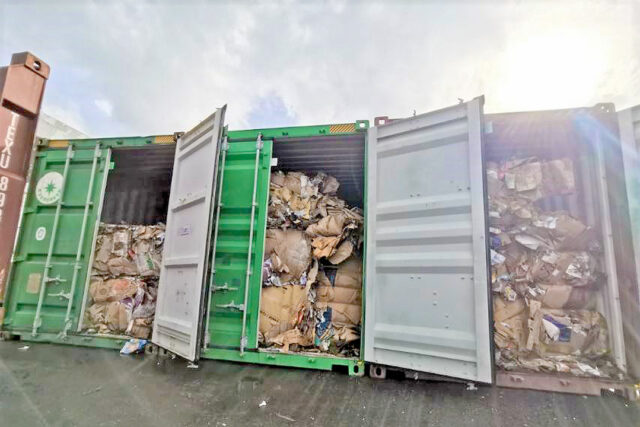
CARGO containers with wastes seized by the Bureau of Customs in 2020. — BUREAU OF CUSTOMS

By Beatriz Marie D. Cruz, Reporter

A LAWMAKER is proposing to totally ban the entry of imported wastes in the Philippines with a tighter monitoring system to be established in all ports.

“Many other cases of illegal entry and importation of wastes happen without the knowledge of authorities,” Camarines Sur Rep. Luis Raymund F. Villafuerte, Jr. said in House Bill No. 8324.

The proposed Total Ban on the Importation of Wastes Act stops any person, group, business, corporate entity, or government office, from importing any form or amount of waste, processed waste materials, and waste by-products, whether organic or inorganic, for any purpose.

Under House Bill No. 8324, an environment protection desk jointly established by the Finance, Transportation, and Environment and Natural Resources departments will be stationed at every port in the country and will be manned 24/7.

Violators will be punished under existing laws, particularly Republic Act (RA) No. 9003 or the Ecological Solid Waste Management Act, RA 8749 or the Philippine Clean Air Act, and RA 9275 or the Philippine Clean Water Act.

Penal provisions under RA 10863 or the Customs Modernization and Tariff Act and the Toxic Substance and Hazardous and Nuclear Wastes Control Act (RA 6969) will also be applied.

The shipper caught importing waste will also be “immediately and permanently banned” from transporting any cargo to the Philippines.

In 2014, a total of 103 container vans or 2,400 tons of hazardous waste declared as plastic for recycling from Canada entered local ports. Toxic waste in 331 container vans mislabeled as plastic synthetic from South Korea were also found in 2018, and 2,561 tons of smashed parts of electronic devices declared as assorted electronic accessories came from Hong Kong in 2019.

“While the Philippines has managed the disposal or return of these illegal wastes to its origin country, our country continues to be exposed to the illegal waste trade,” the Commission on Audit said in its 2023 performance audit report on the country’s Solid Waste Management Program.

Despite the passage of RA 9003, total solid waste creation in the Philippines is expected to balloon to 19.76 million metric tons by 2030 and 24.50 million tons in 2045, state auditors said.

The Philippines has also yet to ratify the Basel Ban Amendment that will disallow importation of hazardous wastes.

HB 8324 is expected to “send a message internationally that the Philippines is not a dumpsite for their wastes,” Mr. Villafuerte said.

ASEAN must jointly tackle plastic pollution — WB

PHILIPPINE STAR/EDD GUMBAN

THE CROSS-BORDER nature of plastic pollution in Southeast Asia will require a regional approach to mitigate its impacts, the World Bank (WB) said.

“Southeast Asia is a hotspot for plastic pollution, largely due to rapid urbanization, a growing middle class, and underdeveloped waste management infrastructure,” the World Bank said in a blog posted on June 4.

“Countries such as Indonesia, the Philippines, Vietnam, and Thailand are some of the major contributors of mismanaged plastic waste, while nations like Cambodia and Lao People’s Democratic Republic or Laos grapple with escalating plastic waste issues that strain existing waste management systems,” it said.

According to the lender, more than half of waste generated by the 10 member states of the Association of Southeast Asian Nations (ASEAN) are uncollected and less than a quarter is recycled.

To address this, the World Bank approved a $20-million grant for the Southeast Asia Regional Program on Combating Marine Plastics (SEA-MaP) last year.

“This innovative regional initiative aims to reduce plastic consumption, enhance recycling, and minimize leakage to prevent land and marine-based plastic pollution in Southeast Asia,” it said.

“With its focus on practical solutions, this regional program is not just a response but a proactive strategy for action. This pioneering initiative is helping Southeast Asia turn the tide on the plastic pollution crisis and provides a promising model for future engagements in other regions,” it added.

The program supports country-level investments and supports capacity-building initiatives to strengthen waste management.

“The private sector also plays an instrumental role in magnifying the project’s impact. The program thus aims to create an enabling policy environment for investment in plastic pollution solutions and mobilize private finance for innovations, such as business models for packaging reuse and refill, and waste segregation technologies,” it said.

It will also implement a regional platform for Extended Producer Responsibility (EPR).

“The EPR platform will build upon early experiences of EPR implementation in the Philippines and knowledge exchange on EPR with Korea, which will provide insights into support needed in the region,” the World Bank said

In 2021, ASEAN launched a regional action plan to combat marine debris.

“This comprehensive strategy outlines fourteen priority actions for regional and national implementation to strengthen policies, build capacity and awareness, and engage the private sector,” the World Bank said. — Luisa Maria Jacinta C. Jocson

Coronavirus cases in PHL drop by 22%

PHILIPPINE STAR/EDD GUMBAN

THE PHILIPPINES posted 9,107 COVID-19 infections in the previous week with a daily average of 1,307, according to health authorities.

The daily average from May 22 to 29 was 22% lower than the average cases per day from a week earlier, the Department of Health (DoH) said in a bulletin.

It said there were 77 severe and critical cases, accounting for 0.85% of the patients during the same period.

Ten new deaths occurred from May 22 to June 4.

DoH said 397 out of 2,099 intensive care unit (ICU) beds had been used as of June 4, while 4,101 out of 17,848 non-ICU had been occupied.

There were 559 severe and critical admissions, it added.

About 78.44 million Filipinos have been fully vaccinated as of March 19, DoH said, including 23.81 million who have received booster shots.

LUZON
The COVID-19 positivity rate has been decreasing in most areas in Luzon, the country’s northern mainland, OCTA Research fellow Fredegusto P. David tweeted.

In Metro Manila, the capital region, the positivity rate decreased to a moderate 16.8% as of June 3, from 21.7% as of May 27, he said.

The lowest positivity rate was seen in Tarlac at 15.6%, down from 21.2%.

The positivity rates in the provinces of Bulacan, La Union, Rizal, and Tarlac also fell to a moderate level at the weekend.

Batangas, Benguet, Cagayan, Camarines Sur, Cavite, Laguna, Oriental Mindoro, Palawan, Quezon, and Zambales also all posted a decline.

GLOBAL CASES
Nearly two million new cases and over 12,000 deaths were reported globally from May 1 to 28,  a decrease of 30% and 39%, respectively, compared to the previous 28 days, the World Health Organization (WHO) said in a weekly report released on June 1.

It said 150 of 243 (62%) countries and territories reported at least one case during this 28-day reporting period.

“The situation is mixed at the regional level, with increases in reported cases seen in the Western Pacific Region and the African Region, and decreases in deaths in all six WHO regions,” the agency said.

Over 767 million confirmed cases and over 6.9 million deaths have been reported globally as of May 28.

The Philippines on Saturday night received more than 390,000 doses of bivalent vaccines donated by the Lithuanian government.

On March 31, the DoH issued a department memorandum (DM) providing guidance on the management and administration of donated bivalent vaccines, prioritizing healthcare workers, senior citizens, individuals with comorbidities, and those who are immunocompromised.

“The DM also states that an individual may be vaccinated with the bivalent vaccines after at least four (4) to six (6) months after their last booster vaccination.”

The delivery of bivalent vaccines to the Philippines has faced several delays after a state of calamity declaration due to COVID-19 — which set  guidelines on indemnification and immunity from liability required by vaccine makers — expired on December 31.

President Ferdinand R. Marcos, Jr., who took office in June last year, just appointed on Monday former COVID-19 task force adviser Teodoro J. Herbosa as Health secretary. — Kyle Aristophere T. Atienza

Gibo Teodoro returns as Defense chief 

GILBERTO GiboC. Teodoro Jr. has returned to the Defense department after being appointed by President Ferdinand R. Marcos, Jr. as its head. 

He and medical doctor Teodoro J. Herbosa were appointed as secretaries of the Department of Defense (DND) and the Department of Health (DoH), respectively, on Monday, the Presidential Communications Office said in a statement. 

Mr. Teodoro, a lawyer and a presidential candidate in the 2010 elections, was DND secretary under former president Gloria Macapagal Arroyo’s administration, the youngest to hold the position at the age of 43.    

He also chaired the National Disaster Coordinating Council during his tenure as Defense chief.  

Mr. Teodoro served as a three-term member of Congress, representing the First District of Tarlac.   

He ran for senator in last year’s elections but lost.   

Mr. Teodoro completed his law degree at the University of the Philippines. He topped the 1989 Bar Exams. He obtained a Master’s Degree in Law from Harvard University. 

Mr. Herbosa, meanwhile, served as DoH undersecretary from 2010 to 2015.  

He served as executive vice president of the University of the Philippines System from October 2017 to April 2021.  

“The appointments of Teodoro and Herbosa were announced after President Marcos met with Teodoro and DND Senior Undersecretary Carlito Galvez, and Herbosa and Health Undersecretary Ma. Rosario Vergeire in separate meetings in Malacañang this afternoon,” the PCO said. Kyle Aristophere T. Atienza

Israel’s top diplomat in PHL to discuss stronger security, economic cooperation

PHILIPPINE President Ferdinand R. Marcos, Jr. shakes hands with Israeli Foreign Minister Eli Cohen during a courtesy call at the Malacañan Palace on June 5. — PPA POOL/JACK BURGOS 

ISRAELI Foreign Minister Eliyahu Cohen paid a courtesy call to Philippine President Ferdinand R. Marcos, Jr. at the presidential palace in Manila on Monday. 

This marked the first time in 56 years that an Israeli foreign minister has visited the Philippines.   

Mr. Cohen arrived in Manila on Sunday evening for a two-day visit that included meetings with senior government officials and business representatives to discuss the expansion of security and economic ties, the Presidential Communications Office said in a statement.   

Earlier in the day, the Israeli official told Philippine Foreign Affairs Secretary Enrique A. Manalo that Israel is committed to assisting and sharing its knowledge in agriculture, water, and innovation and technology. 

Israel, the Start-Up Nation, will continue to create bridges of innovation between businessmen and women of our countries to help boost trade and economic ties, and help improve the lives of the citizens of both our countries,Mr. Cohen said. 

Trade between the countries in 2022 was valued at $534 million, according to data from Israels Economic & Commercial Mission to the Philippines.  

I call [on] the two governments to try to double it by next year to $1 billion,Mr. Cohen said. Kyle Aristophere T. Atienza

ADVERTISEMENT
ADVERTISEMENT