Home Blog Page 4769

World’s spy chiefs meet in secret conclave in Singapore

REUTERS

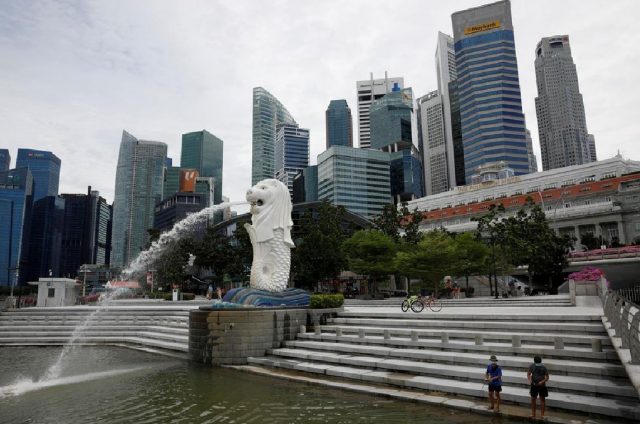
SINGAPORE — Senior officials from about two dozen of the world’s major intelligence agencies held a secret meeting on the fringes of the Shangri-La Dialogue security meeting in Singapore this weekend, five people told Reuters.

Such meetings are organized by the Singapore government and have been discreetly held at a separate venue alongside the security summit for several years, they said. The meetings have not been previously reported.

The US was represented by Director of National Intelligence Avril Haines, the head of her country’s intelligence community, while China was among the other countries present, despite the tensions between the two superpowers.

Samant Goel, the head of India’s overseas intelligence gathering agency, the Research and Analysis Wing, also attended, an Indian source said.

“The meeting is an important fixture on the international shadow agenda,” said one person with knowledge of the discussions. “Given the range of countries involved, it is not a festival of tradecraft, but rather a way of promoting a deeper understanding of intentions and bottom lines.

“There is an unspoken code among intelligence services that they can talk when more formal and open diplomacy is harder — it is a very important factor during times of tension, and the Singapore event helps promote that.”

All five sources who discussed the meetings declined to be identified because of the sensitivity of the matter.

A spokesperson for the Singapore Ministry of Defense said that while attending the Shangri-La Dialogue, “participants including senior officials from intelligence agencies also take the opportunity to meet their counterparts.”

“The Singapore Ministry of Defense may facilitate some of these bilateral or multilateral meetings,” the spokesperson said. “Participants have found such meetings held on the sidelines of the (dialogue) beneficial.”

The US Embassy in Singapore said it had no information on the meeting. The Chinese and Indian governments did not immediately respond to requests for comment.

The United States, Britain, Canada, Australia and New Zealand operate what is called the Five Eyes network to gather and share a broad range of intelligence, and their intelligence officials meet frequently.

Larger meetings of the intelligence community are rarer, and almost never publicized.

Although few details were available on the specific discussions in Singapore, Russia’s war in Ukraine and transnational crime figured in the talks on Friday, the person with knowledge of the discussions added. On Thursday evening, the intelligence chiefs held an informal gathering.

No Russian representative was present, one of the sources said. Ukraine’s deputy defense minister, Volodymr V. Havrylov, was at the Shangri-La Dialogue but said he did not attend the intelligence meeting.

Another of the sources said the tone at the meeting was collaborative and cooperative, and not confrontational.

At the main security dialogue, more than 600 delegates from 49 countries held three days of plenary sessions, as well as closed-door bilateral and multilateral meetings at the sprawling Shangri-La Hotel.

Australian Prime Minister Anthony Albanese gave the keynote address while US Secretary of Defense Lloyd Austin, Chinese Defense Minister Li Shangfu and counterparts from Britain,

Japan, Canada, Indonesia and South Korea also spoke.

Ms. Haines was among the official US delegates to the Shangri-La Dialogue. At a discussion on cybersecurity in the main meeting, she said in response to a question from a Chinese military officer that cooperation between countries was essential.

“It is absolutely critical, even when there is distrust, and even when you are facing in effect adversaries, that you still try to work through and cooperate on issues of mutual interest and also try to manage the potential for escalation,” she said.

US officials said on Friday that CIA Director William Burns visited China last month for talks with Chinese counterparts as the Biden administration seeks to boost communications with Beijing. — Reuters

India train crash survivor recounts: ‘We thought we were dead’

BALASORE, India — Ompal Bhatia, a survivor of the three-train crash in India on Friday, had first thought he was dead. When the train he was traveling in went off-track, Mr. Bhatia was with three friends on his way to Chennai for work.

The 25-year-old had spent most of the four-hour journey on the Coromandel Express standing. Mr. Bhatia, who works in the plywood business, said that just before the trains crashed, leaving nearly 300 dead, some people were getting ready to sleep.

The rail car he was in, S3, was so full that there was only standing space. He had held on to a chain, as did his friends.

The train is often used by daily wage workers, and people who work as cheap labor in industries around Chennai and Bangalore. The coach Mr. Bhatia was traveling in was not air-conditioned.

The train, traveling past hills along India’s eastern coast, takes more than 24 hours to complete the journey of more than 1,600 kilometers. Many, like Mr. Bhatia, travel the distance in overcrowded compartments, with only standing space.

It was dusk. Some who had seats were finishing their dinner, while others were trying to rest.

Another traveler in the same rail car, Moti Sheikh, 30, was also standing and chatting with a group of six other men from his village. They were planning to eat, and then sleep sitting on the floor as they didn’t have seats.

Suddenly there was a loud, violent noise, Mr. Bhatia and Mr. Sheikh said, and they felt the train suddenly start to move backwards. Sheikh first thought it was the sound of brakes, but then the coach tumbled.

“When the accident happened, we thought we were dead. When we realized we were alive, we started making our way towards the emergency window to get out of the train. The rail car had gone off the track and had fallen to one side,” Mr. Bhatia told Reuters over the phone on Saturday.

As he and his friends got out, he said there was chaos all around.

“We saw a lot of dead people. Everybody was either trying to save their lives or looking for loved ones,” he said. Fortunately, he and his friends survived.

Mr. Sheikh said that he and his friends also felt they would not survive. “We were crying when we came out,” he said, adding that help came only after about 20 minutes.

The Coromandel Express had gone off track, hit a goods train that was parked there, and then collided with a second train coming from the opposite direction.

A preliminary report has blamed a signal failure for the accident, which has left over 800 injured. As the rescue operations continue, the number of dead is likely to rise.

Archana Paul, a housewife from West Bengal, was in the other train, the Howrah Yesvantpur Express, when the crash happened.

“There was a massive noise, and everything became dark,” she said.

Traveling with her brother and 10-year-old son, Ms. Paul realized that the train had derailed. “I was OK, so I started searching for my son and brother, but could not see them.”

She said people started to slowly get to their feet. “They asked me to get out, but I said no, I need to search for my son. But they insisted I first get out.”

She was brought out of the rail car and waited for her son to emerge. But he didn’t, and as she was bleeding, she was put in an ambulance and taken to a hospital in Balasore.

Lying in a hospital bed, Ms. Paul started to cry as she spoke to Reuters and asked for help to find her son.

Also traveling in the Howrah Yeshvantpur Express was Kaushida Das, around 55 years old. She survived the crash, but her daughter died.

“Even though I have survived, there is nothing to live for. My daughter was everything to me,” she said. — Reuters

Villar confident PBBM to sign bill freeing 600k farmers from debt

Sen. Cynthia Villar expressed confidence that President Ferdinand Marcos Jr. will prioritize the signing into law of a bill condoning loans of farmers and agrarian reform beneficiaries (ARBs).

Villar, chairperson of the Committee on Agriculture, Food, and Agrarian Reform, said Senate Bill 1850 or the New Agrarian Emancipation Act will benefit 610,054 ARBs who were granted lands under Presidential Decree No. 27, Republic Act 6657, as amended by RA 9700, and who have outstanding loan balance as of the effectivity of the act.

The bill, which was already passed by both houses of Congress, emanated from Villar’s committee in the Senate. It proposes to condone all principal and interests of loans from the award of agricultural lands under the Comprehensive Agrarian Reform Program.

Villar said farmers and farmworkers are waiting for the enactment of this measure, which will make possible their dream of receiving their land titles. “Without land in their name, our farmers cannot access credit as they lack collateral to secure the same,” Villar said.

Once enacted into law, ₱57.5 billion principal debt of 610,054 ARBs, tilling a total of 1,173,101.57 hectares of agrarian reform lands would be written off. The principal loan of ₱14.5 billion, including interests, penalties and surcharges of 263,622 ARBs, tilling 409,206.91 hectares of agrarian reform lands, whose names and other loan details were already submitted by the Land Bank of the Philippines (LBP) to Congress, shall be condoned outright.

The inclusion of the remaining ₱43.057 billion loan would take effect upon submission by the LBP and the Department of Agrarian Reform (DAR) of details of the indebtedness to government of the 346,432 ARBs, tilling 763,894.66 hectares of agrarian reform lands.

Also, under the bill, all cases related to the nonpayment of loans of ARBs with the DAR shall be dismissed motu proprio and that ARBs will be exempted from payment of estate tax. It also mandates the inclusion of ARBs to the Department of Agriculture’s Registry System for Basic Sectors in Agriculture, and will be provided with all support services for farmers.

“This bill seeks to help alleviate the plight of ARBs, who are farmers; for them to recover and overcome the fallout of the COVID-19 crisis, the devastating African swine fever, the ongoing avian influenza, the increasing cost of fertilizer, fuel, and other farm inputs, and climate change,” Villar said.

Villar added that condoning farmers’ amortization “will provide them much-needed financial resources that shall help them develop their farms, increase their productivity, and advance an agriculture-driven economy, improve the lives and that of their families, reduce poverty, accelerate rural development and promote food security.”


Spotlight is BusinessWorld’s sponsored section that allows advertisers to amplify their brand and connect with BusinessWorld’s audience by enabling them to publish their stories directly on the BusinessWorld Web site. For more information, send an email to online@bworldonline.com.

Join us on Viber at https://bit.ly/3hv6bLA to get more updates and subscribe to BusinessWorld’s titles and get exclusive content through www.bworld-x.com.

Nina Aguas talks of good corporate governance as a way of life at InLife

InLife Executive Chairperson Nina D. Aguas

Insular Life (InLife) Executive Chairperson Nina D. Aguas was one of the featured speakers during the recently-held 2023 ACGS (ASEAN Corporate Governance Scorecard) Workshop for Insurance Companies, sponsored by the Institute of Corporate Directors.

Aguas was invited to speak about InLife’s corporate governance journey and best practices where she explained how important it is for InLife, a mutual company, to maintain its stakeholders’ trust.

“As a mutual company, InLife is primarily accountable to our policyholders. As such, good corporate governance is vital to our sustainable and long-term success, and this means being mindful of our reputational and business equities. We take our fiduciary responsibilities to our policyholders very seriously.  We govern ourselves no different from publicly listed companies but perhaps a bit more.”

She shared that it’s essential for the company to maintain stability on all fronts especially during difficult periods because customers value a company that displays integrity and keeps its promises. This is especially true for life insurance companies as they fulfill their contractual obligations when they become due, usually way into the future. “It is paramount that we remain resilient and revenue-generating to stay on course even amidst the turbulent times, and more importantly to do so while adhering to the highest principles of corporate governance: maintaining transparency and accountability to our stakeholders at all times.”

InLife has been a recipient of the ACGS Golden Arrow Award every year since 2018. The award, given by the Institute of Corporate Directors and the Insurance Commission speaks of InLife’s strict adherence to corporate governance principles.

Aguas also shared how the pandemic spurred InLife to more mindful actions to address the needs of its stakeholders. For them, COVID-19 was a health, humanitarian, and economic crisis. “We provided support and assistance where we could, as much as we could for the safety of our employees, agents, customers, and the bigger community. We then adapted quickly to the new normal, using technology and hybrid work arrangements to avoid disruption to our business especially when our policyholders needed our services the most.”

Included in InLife’s corporate governance journey is its response to the most urgent environmental and social sustainability issues the world, and especially, the country, faces. As a company located in the Philippines, it is more than aware of the country’s vulnerability to climate change. InLife invested more than P3 billion in renewable energy and projects that aim to reduce carbon footprint and mitigate the effects of climate change, and made sure these are cascaded to its employees, agency force, and other stakeholders. Meanwhile, the Insular Foundation and the InLife Sheroes Advocacy and Movement continue to help alleviate poverty, health, education, and gender inclusion concerns through their various programs.

InLife’s adherence to corporate governance and the Environmental, Social and Governance principles has helped it achieve good financial results which the company reported during its recently-held Annual Members Meeting. It closed 2022 with a consolidated net income of P5.2 billion, up by 35% vs P3.87 billion in 2021 while consolidated total revenues went up by 12% to P25.9 billion from P23.2 billion in 2021. Consolidated Members’ Equity also went up by 18% to P50.6 billion, compared to the previous year’s P42.8 billion.


Spotlight is BusinessWorld’s sponsored section that allows advertisers to amplify their brand and connect with BusinessWorld’s audience by enabling them to publish their stories directly on the BusinessWorld Web site. For more information, send an email to online@bworldonline.com.

Join us on Viber at https://bit.ly/3hv6bLA to get more updates and subscribe to BusinessWorld’s titles and get exclusive content through www.bworld-x.com.

Nations who pledged to fight climate change are sending money to strange places

LONDON – Italy helped a retailer open chocolate and gelato stores across Asia.

The United States offered a loan for a coastal hotel expansion in Haiti.

Belgium backed the film “La Tierra Roja,” a love story set in the Argentine rainforest.

And Japan is financing a new coal plant in Bangladesh and an airport expansion in Egypt.

Funding for the five projects totaled $2.6 billion, and all four countries counted their backing as so-called “climate finance” – grants, loans, bonds, equity investments and other contributions meant to help developing nations reduce emissions and adapt to a warming world. Developed nations have pledged to funnel a combined total of $100 billion a year toward this goal, which they affirmed during climate talks in Paris in 2015. The funding helped crown Japan and the United States as two of the top five contributors.

Although a coal plant, a hotel, chocolate stores, a movie and an airport expansion don’t seem like efforts to combat global warming, nothing prevented the governments that funded them from reporting them as such to the United Nations and counting them toward their giving total.

In doing so, they broke no rules. That’s because the pledge came with no official guidelines for what activities count as climate finance. Though some organizations have developed their own standards, the lack of a uniform system of accountability has allowed countries to make up their own. The U.N. Climate Change secretariat told Reuters it is up to the countries themselves to decide whether to impose uniform standards. Developed nations have resisted doing so.

“This is the wild, wild west of finance,” said Mark Joven, Philippines Department of Finance undersecretary, who represents the country at U.N. climate talks. “Essentially, whatever they call climate finance is climate finance.”

The four countries defended their programs as sound. Japanese officials consider the power and airport projects green because they include cleaner technology or sustainable features. A U.S. official said the hotel project counts because it includes stormwater controls and hurricane protection measures. A Belgian government spokesman defended counting the grant for the rain-forest movie as climate finance because the film touches on deforestation, a driver of climate change. An Italian government official said Italy aims to consider climate in all of its financing but did not elaborate on how the chocolate stores met that goal.

Developed nations reported more than 40,000 direct contributions toward the finance target, totaling more than $182 billion, from 2015 to 2020, the last year for which data is available. In an effort to understand how that money is being spent, reporters from Reuters and Big Local News, a journalism program at Stanford University, examined thousands of records that countries submitted to the U.N. to document contributions.

The system’s lack of transparency made it impossible to tell how much money is going to efforts that truly help reduce global warming and its impact.

Countries are not required to report project details. The descriptions they disclose are often vague or non-existent – so much so that in thousands of cases, they don’t even identify the country where the money went. Even receiving countries listed in the reports sometimes couldn’t say how the money was spent.

“You cannot really follow the money, track the money, track the impact,” said Romain Weikmans, a senior research fellow specializing in climate finance at the Finnish Institute of International Affairs.

The problem is not universal. Some countries, such as the United Kingdom, Canada and the Netherlands, do submit detailed reports, and Reuters tallied tens of billions of dollars in spending from at least 33 countries that aligned with stated climate goals. That included investments in renewable energy and projects that build resilience to natural disasters.

But billions in spending is scarcely documented, including that from top funder Japan, which accounts for nearly one-third of the funding pledged to date. Officials from Japan’s foreign ministry, which oversees its climate finance contributions, declined to describe any of the country’s funding decisions in detail. The country has drawn criticism from activists and other nations for including in its total projects that rely on fossil fuels or otherwise increase emissions. Japanese officials have argued that developing nations need fossil fuel projects that rely on cleaner technology while the world transitions to alternative power sources.

Aiming to follow the money, Reuters and Big Local News asked 27 nations for details on funding they reported to the U.N, examined public documents and spoke to NGOs and others involved in reported projects. Reporters also cross-checked U.N. reports against information recorded by other agencies, such as the Organisation for Economic Co-operation and Development (OECD), a group representing mostly wealthy nations.

The review covered about 10% of the total reports to the U.N. It turned up at least $3 billion spent not on solar panels or wind farms but on coal-fired power, airports, crime-fighting or other programs that do little or nothing to ease the effects of climate change. Five climate specialists – including university professors, researchers and government officials focused on climate finance – agreed that the projects Reuters identified have little or no direct connection to climate change.

More than $65 billion was reported so vaguely it is impossible to tell what the money paid for. Some of those records don’t even specify a continent where the money was sent.

And more than $500 million was reported for projects that were later canceled with no funds paid out. Countries are still claiming that funding toward their climate finance pledges.

To be sure, decisions to claim borderline projects as climate finance often don’t reflect a deliberate attempt to mislead, said Gaia Larsen, director of climate finance access at the World Resources Institute, a non-profit research organization that tracks climate finance. But when countries inflate their funding numbers with things like coal-fired power, she said, the result can resemble greenwashing – when companies make exaggerated or misleading claims about their environmental stewardship.

“Intended or not, this can have the effect of padding the numbers,” Larsen said.

CALLS FOR CLARITY

The past eight years have been the hottest on record, according to a World Meteorological Organization alert published in January. Historic floods submerged a third of Pakistan and killed at least 1,700 people in 2022. Millions are facing starvation on the Horn of Africa in the worst drought in decades.

Scientists say events like these are more likely and more intense because of Earth’s rapid warming, largely blamed on wealthy countries and the emissions they have released to power their economies. Now, as developing nations seek their own growth, they are under pressure to use more sustainable energy sources. Because many of these nations are in hot, tropical climates, they also bear a disproportionate share of global warming’s effects, such as rising seas, drought and extreme weather.

Wealthy nations have acknowledged their role in the crisis and their responsibility to help other countries with the hefty cost of managing emissions and the effects of climate change. They committed, first in 2009 and again in 2015 under the Paris climate agreement, to a collective goal: $100 billion a year in grants, loans, private sector investments and more by 2020.

More than a decade after the first pledge was made, nations have yet to meet their promise. They fell $16.7 billion short of the $100 billion goal in 2020 and are expected to miss it again when contributions are tallied for 2021 and 2022, according to OECD estimates. There are no penalties for missing the target, aside from criticism from those who say governments are not doing enough to combat global warming.

That failure has helped keep climate finance at the top of the agenda at annual U.N. climate conferences, such as last year’s COP27, held in Sharm el-Sheikh, Egypt.

There, anger and anxiety over the failure of rich nations to meet the funding goal helped developing nations win a key concession: Developed nations agreed to work on setting up a new fund to cover the costs of damage already caused by climate change. Until now, most funding has been focused on reducing emissions or adapting to expected changes.

World leaders acknowledged that damage from climate change is already rapidly outstripping these countries’ abilities to cope and began discussing a new climate finance goal that, all told, could amount to trillions of dollars. At this year’s COP28 in Dubai, they will debate the goal’s size, who should contribute and over what time period, and any rules governing how it is delivered.

Some officials from potential recipient countries say that, before more money starts to flow, clearer definitions of what qualifies as climate finance and more transparency in reporting contributions are needed. More than 100 times since 2012, developing nations or groups acting on their behalf have called for such improvements, according to a Reuters review of U.N. submissions, videos of climate meetings and climate negotiation bulletins.

“If we are telling ourselves we are spending money and investing in our future in a way that we are not, then we are courting disaster,” said Matthew Samuda, a minister in Jamaica’s Ministry of Economic Growth and Job Creation.

‘PEOPLE DESERVE MORE’

Across the globe, donors reported more than $25 billion in funding they claim is linked to renewable energy. At least another $5.6 billion went to projects they claim would help countries prepare for or respond to climate-related disasters. Many of their reports contain too little detail to verify these claims, Reuters found.

Reuters documented billions more that went to projects involving fossil fuels or to other initiatives that have little or nothing to do with reducing emissions or adapting to the impacts of climate change.

When Italian chocolatier Venchi opened dozens of new stores in Japan, China, Indonesia and elsewhere in Asia, it had help from SIMEST, a public-private company that helps Italian companies expand overseas. Italy claimed the $4.7 million equity investment as climate finance.

A SIMEST official said that the agency’s work is not focused on climate change and that it is not involved in Italy’s climate finance reporting. A spokesperson for Italy’s Ministry of Environment and Energy Security, responsible for the country’s U.N. reports, said the project had a climate component but declined to elaborate.

The United States agreed to lend $19.5 million to developers of a Marriott hotel franchise in Cap-Haitien, Haiti. At the time of the agreement in 2019, plans called for improving the Habitation Jouissant with more rooms, an infinity pool, a rooftop restaurant and better gym facilities. The developer, Fatima Group, now says it is redesigning the project, which will become a Courtyard by Marriott property.

The hotel overlooks the sea, but its position on a hillside means it is not threatened by sea level rise or flooding, and it hasn’t suffered any storm damage, said Fatima Group Chairman Fred Béliard. Fatima Group does intend, however, to build “climate-resilient infrastructure,” he said. A U.S. State Department spokesperson said the loan for the hotel counted as climate finance because the project included stormwater control and hurricane protection measures.

A Marriott spokesperson said the company does not get involved in its franchisee’s financing arrangements and had no role in the U.S. decision to count the loan as climate finance.

Belgium backed the film “La Tierra Roja,” about a former rugby player who works for a company clearing forest to make paper in Argentina. He falls in love with an environmental activist who protests the paper-maker’s water-polluting toxic chemicals.

Nicolas Fierens Gevaert, a spokesperson for Belgium’s department of foreign affairs, trade and development said Belgium considered its $8,226 contribution – part of a larger grant for the film – climate finance because the movie touches on deforestation, a driver of climate change.

Some countries count projects that never happened toward climate finance goals. France reported a $118.1 million loan to a Chinese bank for environmental initiatives, as well as loans totaling $267.5 million for upgrades to a metro system in Mexico and $107.6 million for port improvements in Kenya. Each project was subsequently canceled with no funds paid out, according to the French Development Agency. Similarly, the U.S. reported $7 million in insurance coverage for a hydropower project in South Africa that never happened.

French and U.S. officials involved in U.N. reporting told Reuters they document funding in the year it is committed and do not revisit the reports to correct them. No rules require them to do so.

The biggest player of all in climate finance is Japan. It has lent at least $9 billion for projects that will continue reliance on fossil fuels, according to the Reuters review. At least some of those projects increase emissions rather than reduce them, including a new 1,200-megawatt coal-fired power plant that Japanese companies are building on Matarbari, an island on Bangladesh’s southeast coast. Japan has lent Bangladesh at least $2.4 billion in c

When Japan helped Bangladesh plan the Matarbari project more than a decade ago, Bangladesh’s power system had a daily power shortfall of 2,000 megawatts, more than one-third of its demand. That led to long, frequent power failures that spurred protests and hindered economic growth. The new plant will help eliminate ongoing power shortages, which result in planned power cuts, said Mohammad Hossain, head of Power Cell, a division of Bangladesh’s energy ministry.

The plant will add 6.8 million tons of CO2 to the atmosphere every year, according to documents from the Japan International Cooperation Agency (JICA), which helped plan and finance the project. That’s more than the city of San Francisco reported in emissions for all of 2019.

Japan considers Matarbari a climate change project because it uses Japanese technology that generates more energy with less coal, resulting in lower emissions than conventional power, said Sachiko Takeda, a JICA spokesperson. JICA documents describing the project say Matarbari will emit about 400,000 tons per year less in CO2 equivalent emissions than a typical plant of its size.

Japan’s foreign ministry, not JICA, is responsible for reporting climate finance to the U.N., Takeda said.

Japan conducts emission-reduction calculations for projects, and a foreign ministry team assesses projects before deciding to report them to the U.N. as climate finance, said Hiroshi Onuma, principal deputy director of the climate change division at Japan’s Ministry of Foreign Affairs. He declined to explain why Japan would count a coal plant as a climate project.

Funding large projects such as Matarbari helped Japan stake a claim as the top funder of climate finance. It reported $59 billion in grants, loans and equity investments from 2015 through 2020 and an intention to continue similar funding levels through 2025. That is $14 billion more than Germany, the next-highest funder, reported over the same period.

“This commitment stands out as a sizable amount among other developed countries,” Japan’s Ministry of Foreign Affairs said in a June 2021 press release. “Japan will continue to lead the global effort to tackle climate change.”

Iqbal Kabir, a Bangladeshi official working at the intersection of climate change and health issues, questions the wisdom of spending billions of dollars on projects that could worsen global warming while people in Bangladesh are suffering from the effects of sea-level rise.

Sea level rise and storm surges have allowed sea water from the Bay of Bengal to infiltrate drinking water sources. Government officials and scientists have linked consuming salt water to high blood pressure. Women who drink and bathe in it have higher rates of uterine infections, and public health officials suspect it is affecting fertility.

Kabir’s team, the Climate Change and Health Promotion Unit in Bangladesh’s Ministry of Health and Family Welfare, had hoped to partner this year with a gynecological society to study the effects of salt water contamination on women’s fertility. But they couldn’t get the $200,000 to $1 million Kabir said they needed.

“People deserve more,” Kabir said. “They are spending it on other projects, depriving the issues like women’s health, children’s health and salinity intrusion.”

Japanese government officials declined to explain their reasoning for funding specific projects.

In addition to financing the Bangladeshi coal plant, Japan reported loans for coal projects totaling at least another $3.6 billion, one in Vietnam and two in Indonesia, and $3 billion for projects that rely on natural gas, the Reuters review found.

After a chorus of criticism from developed countries, Japan joined G7 pledges in 2021 and 2022 to end international funding for new, unabated fossil fuel projects. Japan’s Ministry of Foreign Affairs and the Ministry of Economy, Trade and Industry reiterated the country’s G7 commitment to stop funding for fossil fuels, without providing further detail.

Despite joining the G7 promise, Japan continues to claim continued financing for Matarbari as part of its climate finance pledge. And debate continues about the need for a clearer definition of what qualifies for climate finance.

LIVES AT RISK

The U.N. Climate Change secretariat, where countries submit their reports, told Reuters its role is to impartially support countries in climate negotiations and implementing climate agreements. It does not have a role in designing or imposing rules, a spokesperson said. That process is driven by countries themselves.

Climate negotiators from wealthy countries that oppose stricter rules told Reuters that more restrictions on how funds are spent could limit developing nations’ autonomy in tackling climate change, restrict the flow of money, and hinder the flexibility needed to keep pace with the fast-evolving crisis and the technologies needed to solve it.

Gabriela Blatter, Switzerland’s principal policy adviser for international environment finance, said developed nations aren’t resisting a definition so they can claim “anything under the sun” as climate finance. Rather, she said, they want to stay true to the Paris Agreement, which aims to respect the right of each country to set its own course in fighting the effects of climate change.

No consensus exists on what a definition should include, she said. Natural gas is a primary topic of disagreement.

Excluding financing for gas would be inconceivable to some developing nations. Those with large gas resources or an existing reliance on gas argue that it has a role in the transition to greener economies because it emits the least carbon of all fossil fuels.

Ghana, for example, would not accept any definition of climate finance that disallowed spending on gas projects, said climate finance negotiator Antwi-Boasiako Amoah, director of climate vulnerability and adaptation at Ghana’s Environmental Protection Agency.

A 2022 national energy plan describes gas as key to powering Ghana’s growing economy and achieving universal access to electricity while transitioning to cleaner sources such as nuclear energy.

“We need a lot of reliable energy to be able to grow our economies,” Amoah said. “If this is what is going to help us develop sustainability, by also offsetting some of the impact, why not?”

Government officials from small island states highly vulnerable to violent storms and rising sea levels argue that fossil fuel initiatives should never count toward climate finance goals. Such projects lock in infrastructure that will pump out emissions for decades, critics say, making temperature goals difficult to reach.

“The very lives of our people are at risk,” said Francine Baron, chief executive of the Climate Resilience Execution Agency for Dominica. Hurricane Maria devastated the Caribbean island state in 2017, killing at least 31 people and damaging 90% of the housing stock.

Developed countries largely agree that gas should not be funded, or only in limited circumstances. Some have explicit rules against reporting fossil fuel projects under climate finance.

Yet Japan has supported allowing gas during a transition period. A 2020 environment ministry document named gas as a transitional fuel “in response to the needs of partner countries.” Japan’s most recent policy statement does not mention gas specifically but says the country will support various energy sources and technologies “in line with the idea that a realistic transition is essential.”

In an interview with Reuters reporters covering G7 meetings in April, Yasutoshi Nishimura, Japanese minister of economy, trade and industry, said that every country has its own economic and energy needs, so there are “diverse paths” to eliminating reliance on carbon while ensuring a stable energy supply. Japan’s ministries declined requests from Reuters to further explain its climate finance policies.

‘THE MOTIVATION IS WRONG’

Some climate finance is going to projects primarily focused on economic expansion, and that is not the intention of the funding agreement, said Wayne King, director of climate change for the Cook Islands. That results in less money going to efforts that truly help the climate.

Take Japan’s lending for a new terminal and related facilities at the Borg El Arab airport in Egypt. The project’s short-term goal of 1.5 million additional passengers would increase outbound flight emissions by about 50% over 2013 levels, according to an analysis conducted for Reuters by the International Council on Clean Transportation, a non-profit research organization.

The project is important to the Egyptian economy, said Mohamed Nasr, director of climate, environment and sustainable development in Egypt’s Ministry of Foreign Affairs. “People have to fly,” he said.

Nasr said he couldn’t comment specifically on the airport expansion or Japan’s decision to count it as climate finance. In general, he said there should be rules to ensure that countries claim only the relevant portion of a project’s funding as climate finance – not the entire budget.

Japanese development documents call Borg El Arab an “Eco Airport” and note the planned terminal building’s energy-saving solar panels, high-efficiency air conditioning and LED light bulbs. At least $28 million was budgeted for construction that incorporated such features. But JICA planned to spend another $40 million on costs unrelated to climate, including a new car park, roads and consulting services. JICA and Japan’s foreign ministry declined to provide detail on how the money ultimately was spent.

The airport project was one of at least three Japanese-financed airport expansions counted as climate finance. The loans totaled more than $776.3 million.

Economic projects such as these – meant to attract more people and investment to a region – historically drew financing from international development funds. Critics say labeling them as climate finance amounts to a shell game.

“Basically, that’s a development project,” King said. “You can’t count it, because the motivation is wrong.”

Some developed nations say new reporting rules due to take effect in 2024 will enhance transparency and make improper reporting more obvious. However, the new rules still will not require developed nations to submit details about the individual projects they back.

In some cases, even recipient governments say they don’t know what has become of climate-finance funds purportedly spent on their turf. Fazle Rabbi Sadeque Ahmed, a climate finance negotiator who has represented Bangladesh at U.N. climate talks, said he has no idea what wealthy nations like Japan and the U.S. are funding in his country.

“Really, I don’t know,” he said. “If it is not disclosed properly, how could we?” – Reuters

Australia hikes minimum wage as living costs surge

STOCK PHOTO | Image by Rebecca Lintz from Pixabay

SYDNEY – Australia will raise the minimum wage by 5.75% from July 1 as families grapple with soaring living costs, a decision that businesses and some economists say risks further stoking inflation and interest rates.

The independent Fair Work Commission (FWC) on Friday decided on a 5.75% pay rise for workers on awards with wages linked to movement in the minimum wage. It also made a technical reclassification for the national minimum wage, which the union says will take the increase to 8.6% for the lowest-paid employees, about 0.7% of the workforce.

In total, the determination from the FWC would affect wages for more than 2 million workers.

Su-Lin Ong, chief economist at RBC Capital Markets, said the hike could push wage growth above the 4% peak forecast by the Reserve Bank of Australia and require higher interest rates to combat inflation.

“Following several recent developments, including the outcome of today’s minimum wage decision, we are adding a 25bp hike to our RBA profile in June and another 25bp in July.”

Aggregate wage growth – which accelerated to a decade-high of 3.7% last quarter – has so far lagged forecasts, with RBA Governor Philip Lowe warning of upside risks to wages from weak productivity growth.

Taylor Nugent, an economist at National Australia Bank, also said the decision skews the risks further in the direction of a higher peak for Australian interest rates.

Futures have already moved to wager the current cash rate of 3.85% is certain to reach 4.1% by August, with the risk of another hike. They also see a 33% chance the RBA could surprise with a quarter-point hike as soon as next week, after a hot inflation report for April.

COST OF LIVING CRISIS

FWC President Adam Hatcher said the commission was confident that the decision would not cause or contribute to any price-wage spiral.

“We are confident that the increase we have determined will make only a modest contribution to total wages growth in 2023-24,” said Hatcher, adding that the move would benefit part-time and predominately female workers.

Andrew McKellar, chief executive of the Australian Chamber of Commerce and Industry, wasn’t so sanguine, saying it would add an estimated A$12.6 billion in costs for businesses already grappling with supply chain issues and high energy prices.

The Australian Council of Trade Unions welcomed the decision.

“People are skipping meals, avoiding the doctor and dreading their next bill. Rents have skyrocketed along with prices of essentials such as bread, milk, petrol and electricity,” said Secretary Sally McManus.

“Today’s increase means these workers can keep their heads above water and not have to cut back even further.” – Reuters

Slower US job, wage gains expected in May

WASHINGTON – US job growth likely slowed in May, with wages coming off the boil, potentially allowing the Federal Reserve to skip an interest rate hike this month for the first time since embarking on its aggressive policy tightening campaign more than a year ago.

Nevertheless, the Labor Department’s closely watched employment report on Friday is expected to still show the labor market remaining tight. The unemployment rate is forecast climbing to 3.5% from 3.4% in April but the report will confirm that the economy remained far away from a dreaded recession, though more pockets of weakness are emerging.

“The jobs report is likely to show another step down in the pace of growth, but still a very strong labor market,” said Bill Adams, chief economist at Comerica Bank in Dallas. “The Fed is under less pressure to raise interest rates at its meeting this month, than at any time over the last year and a half.”

The survey of establishments is likely to show nonfarm payrolls increased by 190,000 jobs last month after rising 253,000 in April, according to a Reuters survey of economists.

It would mark a slowdown from the monthly average of 285,000 in the first four months of this year, but stay well above the 70,000-100,000 needed per month to keep up with growth in the working-age population.

Data for March and April would be closely watched for revisions. The government lowered employment gains in February and March by a combined 149,000 last month.

Despite massive layoffs in the technology sector after companies over-hired during the COVID-19 pandemic and the drag from higher borrowing costs on housing and manufacturing, the services sector, including leisure and hospitality, is still catching up after businesses struggled to find workers over the last two years. Industries like healthcare and education also experienced accelerated retirements.

The backfilling of these retirements and increased demand for services are some of the factors driving job growth. Pent up demand for workers was underscored by Labor Department data this week showing there were 10.1 million job openings at the end of April, with 1.8 vacancies for every unemployed person.

But cracks are emerging. A Conference Board survey on Tuesday showed the share of people viewing jobs as “plentiful” dropped in May to the lowest level since April 2021.

While the Fed’s “Beige Book” report on Wednesday described the labor market as having “continued to be strong” in May, it noted that “many contacts” were “fully staffed,” and some “were pausing hiring or reducing headcounts.”

Temporary help employment, a harbinger for future hiring, is down by 174,000 since its peak in March 2022.

PROGRESS ON INFLATION

But the overall labor market remains upbeat, with first time applications for state unemployment benefits hovering at very low levels. Most economists expect payrolls growth to continue at least through the end of the year.

Average hourly earnings are expected to have risen by 0.3% after jumping 0.5% in April, which was attributed to a calendar quirk. That would keep the year-on-year increase in wages unchanged at 4.4% in May. Annual wage growth averaged about 2.8% prior to the pandemic.

Slowing wage inflation is corroborated by other measures like the Atlanta Fed’s wage tracker, which has come off its peaks. Government data on Thursday showed sharp downward revisions to unit labor costs in the first and fourth quarters.

“We’re making progress on inflation, you can’t expect the inflation problem to go away in a year,” said Brian Bethune, an economics professor at Boston College. “It doesn’t make sense to push the economy into some kind of artificial recession, because you’re going to do more harm than good.”

Financial markets see a nearly 70% chance of the Fed keeping its policy rate unchanged at its June 13-14 meeting, according to CME Group’s FedWatch Tool. The Fed has raised its benchmark overnight interest rate by 500 basis points since March 2022.

The average workweek is forecast unchanged at 34.4 hours. Some companies are probably reducing hours rather that cut jobs.

The household survey from which the unemployment rate is calculated is likely to show solid employment gains, though an ongoing strike by 11,500 members of the Writers Guild of America poses a downward risk. The Labor Department’s Bureau of Labor Statistics, which compiles the employment report, did not record the work stoppage in its May strike report.

“Those striking workers could show up as unemployed in the household survey, however,” said Nancy Vanden Houten, lead U.S. economist at Oxford Economics in New York.

The labor force participation rate, or the proportion of working-age Americans who have a job or are looking for one, was likely unchanged at 62.6% after a recent surge in participation in the prime age group. – Reuters

DFNN Group grows revenue in 2022 by 69% and EBITDA by 190.7% from 2021

DFNN Group Chairman and Founder Ramon Garcia, Jr.

The DFNN Group enjoyed extraordinary development in all facets of its business in 2022. The Group had a successful fiscal year, recording total sales of 905.8 million, an increase of 369.7 million or a growth rate of 69% over the previous year. EBITDA was a healthy 237.5 million, as opposed to the prior year’s loss before interest, taxes, depreciation, and amortization of 252.2 million. The company’s successful equity restructure, along with the continuous increase in sales and the launch of numerous tailored interactive technology platforms, are all responsible for this tremendous turnaround.

EARNINGS REPORT

With revenue targets effectively met, the Group ended the year strong with a total revenue for the year ended Dec. 31, 2022 amounting to 905.8 million compared to 536.1 million in 2021, an increase of 369.7 million or 69% growth rate, year on year. EBITDA amounted to a robust 228.7 million versus a loss before interest, taxes, depreciation and amortization of 252.2 million year on year, resulting to a solid growth rate of 190.7%.

Gross profit stood at 586.6 million versus 135.5 million year on year, posting an impressive 333.1% growth rate. Net income amounted to 73.9 million for the period ended Dec. 31, 2022, sustaining a growth of 117.3%, year on year. This a direct effect of the significant increase in the sales and operations of all the company’s business streams.

Revenue from share-based income generated from interactive operations increased by 69.4%, year on year. Total revenue in this category amounted to 698.6 million compared to 412.4 million year on year. This impressive increase in commission income is attributable to a steady surge in sales and the introduction of various customized  interactive technology platforms.

Revenue generated from the development and maintenance of software solutions also posted steady growth amounting to 188.0 million, an increase of 80.5 million from 107.5 million or 74.9%, year on year.

Sales of software and application licenses amounted to 19.2 million, presenting an increase of 2.9 million or 18.1%, year on year. The increase in revenue is due to the increase in foreign license revenue.

All areas of the DFNN Group’s business continue to exhibit robust growth trends amid the residual effects of COVID as experienced by any other company and compounded by the challenging high inflationary environment.

As efforts to further operational efficiencies to lower costs are implemented, consolidated cost and expenses decreased by 89.8 million or 10.2% year on year, amounting to 792.9 million compared to 882.8 million in 2021.

Despite the lingering effects of COVID and the difficult high inflationary environment, the DFNN Group’s business showed strong growth trends in all areas. The organization’s outstanding performance is evidence of its tenacity and unwavering dedication to excellence. DFNN is prepared to seize the opportunities that lay ahead and is upbeat about the future. The company is well-positioned to pursue its growth plans and achieve even greater success in the years to come with a consolidated cash and cash equivalent of 99.2 million and no significant long-term debt.

As it continues to strive to constantly grow in the highly dynamic digital platforms and artificial intelligence (AI) industry, DFNN will further implement the strengths of its core competencies working with the latest Philippine laws which allow companies seamless implementation of its fintech, blockchain, quantum computing, and AI technologies. The Group and its partners envision to be leading propagators and use its cutting-edge capabilities to assist in laying down the foundation for a robust digital economy.


Spotlight is BusinessWorld’s sponsored section that allows advertisers to amplify their brand and connect with BusinessWorld’s audience by enabling them to publish their stories directly on the BusinessWorld Web site. For more information, send an email to online@bworldonline.com.

Join us on Viber at https://bit.ly/3hv6bLA to get more updates and subscribe to BusinessWorld’s titles and get exclusive content through www.bworld-x.com.

BSP to start offering 56-day bills

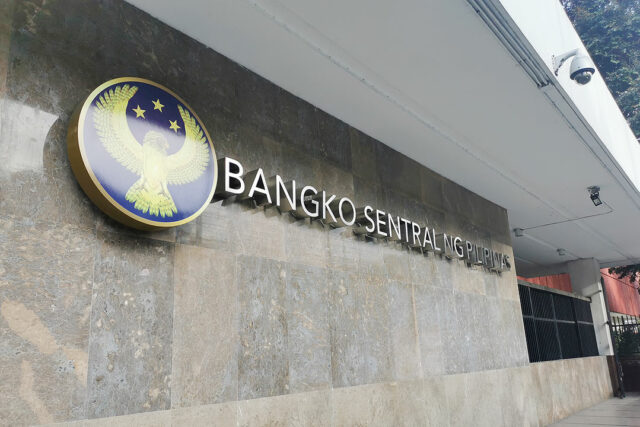
Bangko Sentral ng Pilipinas main office in Manila. — BW FILE PHOTO

MANILA – The Philippines central bank said on Friday it will start offering 56-day bills on June 30 as part of its initiatives to enhance its monetary and market liquidity operations.

It is an additional tenor under the Bangko Sentral ng Pilipinas’ (BSP) Securities Facility and will be offered alongside the 28-day bills, it added. — Reuters

As Asia strives to spur births, Philippines wants fewer babies

The government, led by President Ferdinand Marcos Jr., warns that the country can’t achieve broad economic success without addressing demographic challenges. -- Bloomberg

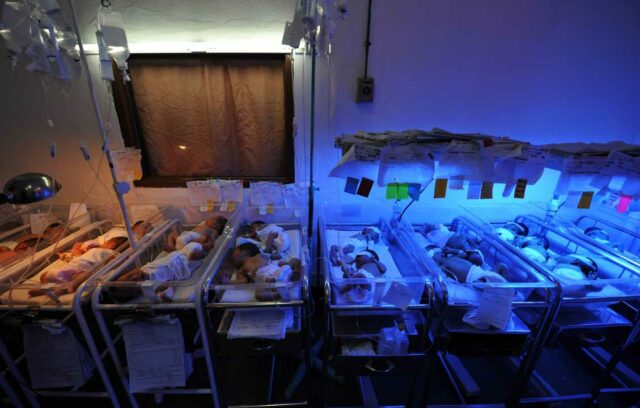
As birth rates plummet across Asia and beyond, the Philippines stands out for having among the highest fertility ratios in the region.

For years, the Southeast Asian nation has wrestled with a dilemma considered enviable in countries like Japan and South Korea, where governments are offering cash incentives for couples who have children. As many countries record more deaths than births, the Philippines is a bright star for those who believe a young labor force portends greater productivity.

But officials in the Philippines, which has 113 million people, see the issue differently. The government, led by President Ferdinand Marcos Jr., warns that the country can’t achieve broad economic success without addressing demographic challenges.

The Philippines, despite sterling growth rates for most of the past decade, still ranks among the poorest in the neighborhood and lowering the birth rate — which is more than twice South Korea’s — is a key strategy for development metrics. Changing attitudes around family planning has proved a tall order in the Catholic-majority country. Elevated fertility rates are intertwined with religious and cultural expectations, and also underscore weak access to contraceptives and health care services.

One-third of the output gap between the Philippines and its well-off Asian peers can be “attributed easily to the fact that we haven’t entered the demographic dividend,” said Arsenio Balisacan, secretary of the National Economic and Development Authority.

Though a smaller labor force might be a problem in wealthy nations, Mr. Balisacan said officials in those places have the money to invest in technology and development. In the Philippines, more people are putting great strain on limited resources. The government has made family planning one of its biggest budget priorities this year.

“The most basic, most fundamental problem is to get our poor out of their situation and improve access to services so that everybody’s lifted up,” he said.

The verdict is mixed on what a declining population means for the world. Fertility rates are easing as incomes rise and access to contraceptives improves, on top of changing attitudes among women about having children later in life, or not at all. The United Nations now expects the number of people to peak at 10.4 billion by 2100, a decline from earlier estimates exceeding 11 billion.

Even if shrinking population is good for things like environmental sustainability, graying demographics present challenges, including rising health care and retirement costs. Nowhere is that thesis more testable than in Asia, where fertility rate declines are among the most extreme.

In Japan, where birth rates have dropped for years, the government announced fresh measures to boost the numbers, paving the way for doubling the budget spent on children. In China, the population shrank last year for the first time since the 1960s, and officials are campaigning to change decades-old attitudes about the size of families.

The numbers are even starker in South Korea, which holds the unfavorable crown of having the world’s lowest fertility rate, at 0.78 children per woman. Officials are turning to robots and drones to fill gaps in military recruitment.

The Philippines is among a handful of places that will account for more than half of the projected increase in global population through 2050, according to the United Nations.

Mr. Balisacan, a prominent Filipino economist, said the Philippines must capitalize on a “demographic sweet spot” in which population growth is less than the rate of growth of the labor force. The country cannot push up gross domestic product unless enough quality jobs are created.

From that vantage point, Mr. Balisacan said it’s relatively easy for policymakers in wealthy nations like Japan to address declining birth rates. “Just relax your immigration policy,” he said. “I’d rather have that problem.”

There are some signs of progress. The Philippines’ fertility rate fell to 1.9 children per woman in 2022, according to preliminary government data, though it’s hard to gauge the impact of pandemic-related restrictions. That’s down from 2.7 five years earlier — and below the 2.1 typically viewed as the level at which a population replaces itself from one generation to the next.

As the Philippines aspires for demographic dividend, it has to pay attention to the quality of the workforce, the participation of women and other minority groups and other factors that tend to breed inequality, said Lisa Grace Bersales, executive director of the country’s Commission on Population and Development.

The population commission is working on a five-year action plan targeted for release this quarter or next, according to Ms. Bersales. Aside from addressing reproductive health needs, the action plan will bring issues like education, employment, migration and climate change in a holistic approach on demographics, she said.

Family planning also saw a boost after the passage of a landmark reproductive health law in 2012. The legislation expanded access to contraceptives, fertility control, sexual education and maternal care in the Philippines.

In Manila, the nation’s capital, Junice Melgar said more women in poorer neighborhoods now seek out her organization for advice.

“We discovered there was a great need,” said Ms. Melgar, executive director at Likhaan Center for Women’s Health Inc., a nonprofit group established in 1995. Since the pandemic, she said, there’s been “an open clamor” for information about contraceptives.

The uptick in public awareness has paid dividends. About half of today’s married Filipino women don’t want additional children, according to the statistics agency. Women in rural areas — where contraception is typically less accessible — had a higher fertility rate of 2.2 children per woman last year, compared to 1.7 in urban areas.

The Marcos government is giving “prime importance” to its youth labor force by allocating funds to hire graduates for internships and helping them look for jobs, according to the Budget Secretary Amenah Pangandaman.

During a speech before investors at the New York Stock Exchange in September, Mr. Marcos underscored that push and touted the youth’s readiness to work.

“We are, I believe, the youngest country in Asia,” he said. “And with the graying of other countries around the region, this gives us an advantage.” — Bloomberg

Manufacturing activity expands in May

A worker uses a microscope at an electronics manufacturing assembly plant in Biñan, Laguna, April 20, 2016. — REUTERS

MANUFACTURING ACTIVITY in the Philippines further expanded in May as new orders and production grew at a faster clip, S&P Global said.

The S&P Global Philippines Manufacturing Purchasing Managers’ Index (PMI) rose to 52.2 in May from an eight-month low of 51.4 in April, signaling “further improvement in operating conditions.”

“The upturn was supported by a solid rise in both output and factory orders, with firms also expanding their workforce numbers for the first time in four months. More encouragingly, vendor performance improved in May for the first time in almost four years. Companies reported that improved logistics routes helped shorten delivery times,” Maryam Baluch, economist at S&P Global Market Intelligence, said in a report released on Thursday.

Manufacturing Purchasing Managers’ Index (PMI) of select ASEAN economies, May 2023May marked the 16th straight month that the PMI reading stood above the 50 mark which denotes improvement in operating conditions. A reading below 50 signals deterioration.

The headline PMI measures manufacturing conditions through the weighted average of five indices: new orders (30%), output (25%), employment (20%), suppliers’ delivery times (15%), and stocks of purchases (10%).

The Philippines had the third-highest PMI reading among five Association of Southeast Asian Nations (ASEAN) member countries, behind Thailand (58.2) and Myanmar (53). On the other hand, factory output activity contracted in Malaysia (47.8) and Vietnam (45.3).

“The improvement in the health of the Filipino manufacturing sector during May was driven by quicker expansions in both factory orders and manufacturing output, which have now risen each month since September 2022,” S&P Global said.

The rise in new orders was driven by “stronger demand conditions and the acquisition of new clients,” it added.

“Demand from foreign markets also fared well in the latest survey period, with export volumes growing solidly, albeit at a slightly softer pace compared to April,” S&P Global said.

After three months of decline, manufacturing firms resumed expanding their workforce in May “at the strongest pace since October last year.”

“Businesses expanded their hiring activity for the first time in four months, and at the strongest pace since October last year,” it added.

Increased demand also prompted firms to boost buying activity in May.

“In anticipation of future demand, manufacturing firms were keen to raise their inventory levels. Stocks of pre-production items rose further, thereby extending the current sequence of growth seen since September 2021, while manufacturers also raised their holdings of finished items following back-to-back months of depletion,” S&P said.

Improvements in the supply chains resulted in shorter delivery times for inputs in May, which “marked the first time in 46 months that the respective seasonally adjusted index posted above the neutral 50 threshold.”

While May data showed a “re-intensification of price pressures,” S&P Global noted the inflation rates for input prices and output charges were softer than historical average.

“Firms noted that high energy, material and supplier costs were passed on to clients in response to sharper cost inflation,” it said.

Despite this, S&P Global said that the outlook for the future output growth remains “broadly optimistic.”

“In terms of future output, firms remain largely upbeat, though confidence did take a slight hit and dipped to an 11-month low,” Ms. Baluch added.

ING Bank N.V. Manila Senior Economist Nicholas Antonio T. Mapa said that the expansion in new orders and output in May signaled “robust demand onshore.”

“Lead times also improved showcasing improved supply chain conditions. One additional positive development was the improvement in employment with the uptick in manufacturing activity translating to more jobs,” he added.

Rizal Commercial Banking Corp. Chief Economist Michael L. Ricafort said that easing inflation led to improved factory output.

Headline inflation slowed to 6.6% in April from 7.6% in March.

The Bangko Sentral ng Pilipinas (BSP) projects inflation to slow to within the 5.8-6.6% range in May.

The Philippine Statistics Authority is set to release May inflation data on June 6.

However, this is still above the central bank’s 2-4% target range and 5.5% full-year forecast.

On the other hand, Mr. Ricafort noted that elevated inflation and rising interest rates could lead to higher borrowing and financing costs, which could impact manufacturing activity.

Since May last year, the BSP has raised key interest rates by 425 basis points to 6.25%. — Luisa Maria Jacinta C. Jocson

Economists still skeptical about Maharlika fund after Congress approval

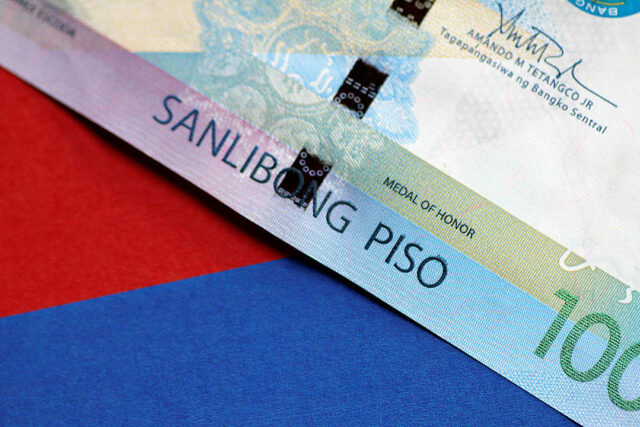
A Philippines peso note is seen in this picture illustration on June 2, 2017. — REUTERS

By Kyle Aristophere T. Atienza, Reporter

ECONOMISTS remain skeptical about the newly passed Maharlika Investment Fund (MIF) bill, saying it still contains provisions that could affect the independence of government financial institutions (GFIs) and the central bank.

Filomeno S. Sta Ana III, coordinator of the Action for Economic Reforms, said it is “redundant” to call the fund an investment mechanism to finance development programs because even without it, “GFIs that are ordered to contribute to Maharlika are using their funds to contribute to Philippine development in different ways.”

“The problem with Maharlika is it doesn’t really know what it wants to do,” he said in a Facebook Messenger chat.

Congress approved on Wednesday the bill creating the country’s first sovereign wealth fund.

Under the bill, the Land Bank of the Philippines and the Development Bank of the Philippines are mandated to contribute P50 billion and P25 billion, respectively, to the Maharlika Investment Corp. (MIC), which has the control over the fund. The National Government is also required to contribute P50 billion to the MIC.

Funds from the Philippine Amusement and Gaming Corp. and proceeds from privatization and transfer of government funds may also be used for the MIF.

“As a consequence of diverting capital from GFIs, Maharlika impinges on integrity and independence of decision making of these GFIs,” Mr. Sta. Ana said.

The Bangko Sentral ng Pilipinas (BSP) is also asked to contribute 100% of its dividends to MIC in its first two years. After the two-year period, the BSP’s contribution drops to 50% of its dividends, with the remaining 50% to be deposited into a special account holding its capital build-up funds.

Former central bank deputy governor Diwa C. Guinigundo warned that using BSP dividends as seed capital for the MIF would further delay the central bank’s capital buildup.

“Now you have the Maharlika Investment Fund. So instead of the initial estimate that it would take eight years to recapitalize the central bank fully, P200 billion out of its own dividends, it will now be extended to about 17 years,” Mr. Guinigundo said in an interview with One News Channel’s The Chiefs. “Now, anything can happen.”

The  former BSP official said that to replenish public money that will be used for the Maharlika fund, the government would be forced to either increase taxes or borrow money domestically or abroad — or do both.

Leonardo A. Lanzona, who teaches economics at the Ateneo de Manila University, said the use of BSP dividends for the MIF “could mean lower revenues for the government and thus can result in higher taxes.”

“Trading off the government’s limited funds from one use to another obviously carries with it significant opportunity costs along with conflicts of interest to its proposed board members,” he said via Messenger chat.

“The speed with which the MIF has been passed is a clear sign that not all concerns have been addressed.”

Mr. Sta. Ana also questioned the MIF bill’s objective, which is to promote socioeconomic development by making “strategic and profitable investments in key sectors to preserve and enhance long-term value of the Fund,” obtaining “the optimal absolute return and achievable financial gains on its investments,” and satisfying “the requirements of liquidity, safety/security, and yield in order to ensure profitability.”

“But this contradicts the objective of growing the funds, because financing development like infrastructure projects is not exactly about growing money or earning high financial return,” Mr. Sta. Ana said.

INVESTMENTS
Under the bill, the MIC board can approve the fund’s investments in commodities, fixed-income instruments, corporate bonds, equities, Islamic investments, joint ventures, mergers and acquisitions, as well as real estate and infrastructure projects.

The fund can also invest in projects that “contribute to sustainable development” and “with sustainable and developmental impact.”

For global investment banker Stephen Cuunjieng, the list of investments that the MIC board can approve is too broad.

“The purpose in the Senate bill seems to imply without stating it that it’s for national development so that would assume it’s to be used domestically only. But if you read (the bill), the fund can invest in foreign bonds. Basically it says I can invest in practically anything,” he told OneNews Channel.

“What I’m allowed to invest in, which is delineated in the law, seems to be much broader and more open, so in other words it’s kind of really up to the fund managers and the board to decide what to do or not.”

Public budget analyst Zyza Nadine M. Suzara said the public needs to “closely monitor” how funds for the MIF will be incorporated in next year’s national budget.

“When budget legislation for the 2024 national budget begins, we need to watch out how much the appropriations for MIF will be and how the limited fiscal space will be reallocated,” she said via Messenger chat. “What programs and projects will be deprioritized and therefore lose appropriations in order to give way for Maharlika?”

The proposed 2024 national budget has been set at P5.75 trillion.

Enrico P. Villanueva, a senior lecturer of money and banking at the University of the Philippines Los Baños, said the public should be vigilant on the MIC, the fund’s holder, which is empowered by the bill to “acquire and hold… assets and incur… liabilities in connection with its operations.”

“It elicits fears of corruption and distrust of government. Hope is better pinned on grassroots development corporations,” he said via Messenger chat.

According to the bill, the MIC board may request Congress for legislation to increase MIC’s capitalization.

“The most effective way of raising funds is by strengthening institutions,” Mr. Lanzona said. “Strengthening institutions that go after corrupt people and appropriating ill-gotten wealth not only raise revenues for the government but also increase the credibility of its institutions.”