Home Blog Page 4748

BDO eyes double-digit growth in assets under management

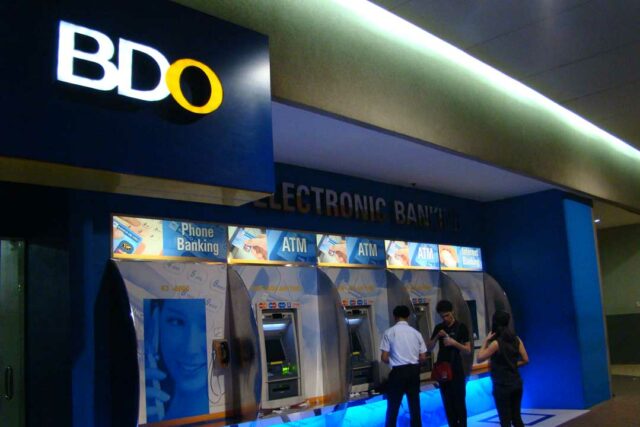
BW FILE PHOTO

BDO UNIBANK, Inc.’s trust unit is targeting double-digit growth in its assets under management (AUM) this year, an official said.

The increase will be driven by “good returns generated by clients from fixed-income instruments and time deposits due to higher inflation print, growing Philippine economy, and banks competing for funds to shore up deposit levels,” BDO Trust and Investments Group Senior Vice-President and Head Rafael G. Ayuste, Jr. said in an e-mail.

“Clients are locking in longer tenor bonds for the annuity income,” Mr. Ayuste added.

Headline inflation eased for a fourth straight month to 6.1% in May from 6.6% in April. Still, this was faster than the 5.4% print in the same month a year ago.

This was the slowest rate seen in a year or since the 5.4% in May 2022. Inflation has been on a downtrend since hitting 8.7% in January.

For the first five months, headline inflation averaged 7.5%, still well above the central bank’s 2-4% target and 5.5% forecast for the year.

Meanwhile, Philippine gross domestic product (GDP) grew by 6.4% in the first quarter, slower than the 7.1% in prior three-month period, and the 8% expansion in the first quarter of 2022.

The government targets 6-7% GDP growth this year. The economy expanded by 7.6% in 2022.

Mr. Ayuste said downside risks include geopolitical issues abroad.

“These events cause heightened volatilities in both equities and fixed-income markets, both locally and globally,” he said.

He said the Sy-led bank’s consolidated AUMs stood at around P1.9 trillion as of May.

BDO’s attributable net income grew by 40.44% year on year to P16.528 billion in the first quarter as it recorded growth across its core businesses.

Its shares rose by P1.15 or 0.84% to end at P137.80 apiece on Thursday. — A.M.C. Sy

A train, a helicopter, fire, and a 300-extra fight scene keep things exciting on Extraction 2

STAR Chris Hemsworth and director Sam Hargraves kicked off the Extraction 2 promotional tour in Manila.

Chris Hemsworth action thriller to premiere on Netflix

DEEP in the dark underbelly of a Georgian prison full of ruthless gang members is a trapped, battered family — and the next deadly mission of Australian mercenary Tyler Rake (played by Chris Hemsworth) is to get them out alive and safe.

This is the premise of the action thriller film Extraction 2, which premieres on Netflix on June 16. It is a sequel to Extraction, where the character of Rake nearly died in a black ops mission in Bangladesh, as per the graphic novel source material Ciudad by Ande Parks.

Co-starring are Golshifteh Farahani, who reprises the role of Nik Khan from the first film, and Adam Bessa, playing her brother Yaz. Georgian actress Tinatin Dalakishvili is Ketevan, the mother of the trapped family, while Idris Elba appears in a surprise minor role.

Mr. Hemsworth and the film’s director Sam Hargraves kicked off the Extraction 2 global promotions tour in the Philippines, speaking to Asia Pacific press on June 6 at the Conrad Manila.

“Probably one of the craziest things we did in Extraction 2 was land a helicopter on a moving train,” Mr. Hemsworth said of the film’s stunts.

Because Mr. Hargraves is a stuntman-turned-director, his approach to keeping the fight choreography and stunts fresh and exciting for audience’s eyes was to simply create scenes he would want to see as an avid action fan himself.

One such scene in Extraction 2 involved about 300 extras, which saw Hemsworth and a few others set on fire in the middle of a large fight amid a crowd of thugs.

The director explained: “We looked at each other and we said, how can we push each other to do something we will be proud of 10 years from now and try to make it something memorable for the fans?”

For Mr. Hemsworth, the experience of shooting that particular scene was terrifying, but necessary.

“I think we all knew the elevated risk was going to give us an elevated performance, and ultimately an elevated effect,” he said.

Mr. Hargraves added that the standout scene — the “oner,” or a long scene edited together to look like one take — was also tedious to shoot. It is akin to the one in the first film which involved shootouts, car chase stunts, and fights through rundown buildings and streets in Bangladesh.

In Extraction 2, the “oner” was bigger, larger, more exciting, and full of many variables.

The average day on set saw Mr. Hemsworth on top of a train moving 40 to 50 miles an hour in the snowy Czech Republic, with a helicopter about 20 feet in front of him flying backwards.

But aside from incredible action sequences, the film also explored the emotional side of the Tyler Rake character.

Mr. Hemsworth said there was no doubt they could “recreate the action in a massive way and step it up a notch,” but the true surprise would be Rake’s emotional journey through the relationships in the film.

“There’s a lot of heart,” he said.

Extraction 2 premieres on Netflix on June 16. — Brontë H. Lacsamana

Why central bank balance sheets matter

RACOOL_STUDIO-FREEPIK

As Jaime Caruana, former governor of the Bank of Spain and general manager of the Bank for International Settlements, admitted 12 years ago before a gathering of Asian central bank governors, the issue of a central bank balance sheet “may sound arcane” but understanding it could be crucial in making appropriate public policy especially during crisis times.

Only central banks issue legal tender notes and they are the lenders of last resort. For us in the Philippines, it is enough that we are told that the bank notes we use in our daily transactions are liabilities of the Bangko Sentral ng Pilipinas (BSP) and are guaranteed by the Government of the Philippines. It is the ability of central banks to create monetary liabilities that support their role in bailing out banks in distress, or even in extending loans to the government as the BSP did during the pandemic.

Caruana cited the deep financial crisis in 1907 as having prompted the US Congress to establish what is now known as the Federal Reserve System. By forming the Fed, Congress expected it “to use its balance sheet to promote a currency that would be ‘elastic’ in meeting the needs of a growing economy.”

A central bank balance sheet simply shows us both its net foreign and domestic assets against its liabilities consisting of one, monetary liabilities or reserve money consisting of currency in circulation — the notes and the coins we use — and reserves of banks; two, non-monetary liabilities such as central bank securities — like the newly launched BSP securities of different maturities; and, three, equity capital — in the case of the BSP, its capital stock of P50 billion and any future topping up to P200 billion as prescribed by its charter.

When central banks issue currencies, conduct reserve management, extend credit to both banks and governments, and conduct monetary policy operations, their balance sheets move. Of course, the migration to inflation targeting from monetary aggregate targeting as monetary policy framework might have reduced the interest of economists and central bank practitioners in the balance sheet of central banks.

Thus, when we talk of expanding the central bank balance sheet, we refer to the so-called various channels of monetary policy transmission that would have some impact on money supply, credit, and inflation.

In the case of our local monetary authorities, they could also extend credit to the banks through the rediscounting facility, overdraft credit line facility, and fully secured emergency loan facility. Finally, the BSP is also authorized to extend provisional advances to the National Government (NG) as short-term financing. Under this authority, the BSP extended loans of P540 billion during the pandemic to help fund the enormous expense involved in cash transfers, fund support to business, vaccination, and other health peripherals.

But during the Global Financial crisis in 2007-2009, many central banks transitioned to unconventional monetary policy measures like quantitative easing that resulted in the huge expansion of their balance sheets. As they faced the global financial meltdown, many commercial banks began to hoard their own reserves instead of extending credit in interbank markets for self-insurance. They knew very little about the financial standing of their potential counterparties. Without a liquid interbank market, there was a clear potential for market jitters and ultimately, financial impasse.

What the central banks did was to inject excessive reserves to ensure that funds were available in the market, and settlement could proceed without snags. Central banks then started to purchase various assets to reduce long-term interest rates and motivate domestic demand and economic growth.

There were mistakes made since the US Fed’s creation in 1907. For instance, during the Great Depression, major central banks failed to use their balance sheets to reduce the long-term interest rates, mitigate the increasing frequency of bankruptcies, and avoid the prolonged depression. Lessons were also learned during the Asian financial crisis of 1997-1998 on the need to accumulate more foreign exchange assets for self-protection against a future crisis. This was to be the first line of defense before accessing regional and international safety nets.

Focus returned to the enlarged central bank balance sheets which have become more subject to market volatilities. Any movement in the value of foreign assets or an increase in interest rates could weaken the asset side without a corresponding adjustment on the liabilities side.

Ultimately, central bank capital could be put at risk because this is the channel for absorbing their potential losses. There is a good likelihood that the market could always question the capability of the monetary authorities in delivering on their mandates of price and financial stability, and, in the case of the BSP, efficiency of payments and settlements. Without doubt, if the central bank enjoys a stronger financial standing, it can truly focus on promoting macroeconomic and financial stability, without having to be constrained by the consequences of profit and losses on its balance sheet.

While central banks are not subject to regulatory capital requirements like their commercial counterparts, their flexibility in managing their capital base could be quite limited. Commercial banks could always retain their earnings or engage in capital-raising exercises in the capital markets. Central banks cannot.

But the BSP is in a dual bind. Authorized by its newly amended charter to raise its capital from P50 billion to P200 billion, this could only be done by using its annual dividends to recapitalize itself. Instead of authorizing outright budgetary allocation for higher capitalization, the amended charter provides for the use of its dividends for recapitalization. This is expected to take between six and years.

The second challenge to a quicker recapitalization of the BSP is the potential impact of the Maharlika Investment Fund (MIF) bill to be signed by the President anytime soon. Under this bill, the BSP dividends would be assigned to the MIF to fund the NG’s P50-billion contribution to its seed fund. By this route, full recapitalization would be prolonged to some 14 years.

What is the ideal level of central bank capital?

Central bank literature does not find a consensus on this issue. Some would argue that poorly capitalized central banks suffer from limited options in their policy choices; others would just simply loosen monetary policy rather than risk large losses due to political economic reasons. Central bank reputation could also hurt the credibility of central banks and impair their effectiveness. But nobody can argue against a central bank that succeeds in keeping inflation stable and promoting growth even at the expense of its financials. The question is whether social and economic goals could only be achieved at the expense of the central bank’s balance sheet.

Theoretically, some would also argue that as the exclusive issuer of domestic currency, the central bank will always succeed in meeting its liabilities in the same currency. They cite some central banks operating with negative capital. The assumption for this position to be viable is that central bank liabilities would remain a liquid and trusted instrument for settling transactions over the long run.

But as Garreth Rule said in a Bank of England publication in 2015 extracted from the literature, there is also some correlation between central bank losses and poor policy outcomes, including high inflation. The constraint is actually on the ability of central banks to expand their liabilities as they might lose their liquidity and public trust. This loss could be reached, according to former Bank of England monetary policy member Willem Buiter in 2008, around the point where accumulated losses exceed the potential future earnings of the central bank.

This must have been the judgment when the old Central Bank of the Philippines was abolished in 1993 in favor of the BSP.

The other equally important point is that central banks should be more conscious of their ability to deliver on their mandates when structuring their balance sheets to meet some desired policy objectives.

In this connection, Caruana raised four key points to his audience, but two are most relevant.

On the risk of inflation from increased balance sheets, he would rather say “not yet.” If some would argue “not necessarily,” Caruana was quick to say that much will depend on whether governments in the advanced economies would be more decisive in curbing fiscal deficits. Fiscal dominance cannot be ignored.

On the impact of large central bank balance sheets on sovereign debt, he mentioned the increasing trajectory of both public debt and bigger central bank balance sheets. They risk affecting money market conditions and monetary policy transmission. It is possible debt managers and central banks might pursue their tasks at cross purposes both during the crisis and the exit phase, as when government securities are to be sold by central banks and debt managers wish to issue new issuances.

In only one thing do we find Caruana more definite in his views. More is known to be unknown when it comes to central bank balance sheets, and this fact should not make us complacent “about possible medium-term risks arising from such a significant shift in the size and composition of central bank balance sheets.”


Diwa C. Guinigundo is the former deputy governor for the Monetary and Economics Sector, the Bangko Sentral ng Pilipinas (BSP). He served the BSP for 41 years. In 2001-2003, he was alternate executive director at the International Monetary Fund in Washington, DC. He is the senior pastor of the Fullness of Christ International Ministries in Mandaluyong.


SEC clears Ayala Land’s P50-B shelf registration of bonds

THE Securities and Exchange Commission (SEC) on Thursday cleared the shelf registration of P50 billion worth of debt securities to be issued by Ayala Land, Inc.

In a media release, the commission said it had approved in an en banc decision the registration statement of Ayala Land covering bonds that may be issued in one or more tranches within three years.

The regulator said the company will offer up to P12.25 billion of five-year and 10-year bonds with an oversubscription option of up to P5 billion for its first tranche.

Additionally, Ayala Land will offer the fourth and final tranche of its shelf-registered debt securities program, which was approved in 2021, with a bond offering of up to P4.75 billion.

“Assuming the oversubscription option is fully exercised, Ayala Land could net up to P21.73 billion from the offering,” the SEC said.

Proceed from the bond offering will be used to refinance the company’s short-term loans and to fund its capital expenditures.

The bonds will be offered from June 14 to 20 at face value and will be listed on the bond exchange on June 27, according to the SEC.

During the first quarter, Ayala Land’s attributable net income rose by 42% to P4.5 billion from P3.17 billion in the same period last year, while revenues jumped by 26% to P30.9 billion due to higher contributions from all its business lines.

Commercial leasing revenues amounted to P10.1 billion, up 57% on improved mall tenant sales, stable demand for new office spaces, and a boost in hotels and resorts.

Ayala Land’s top line for property development increased by 8% to P17.1 billion due to higher residential completions, bookings, and the sale of office units.

Its residential sales reservations rose by 15% to P27.7 billion due to resilient demand despite elevated interest rates. It launched three new projects during the January-to-March period amounting to P8.6 billion.

On Thursday, Ayala Land shares fell by 1.9% or 50 centavos to P25.80 apiece. — AHH

AllDay Marts, Inc. to hold 2023 annual meeting of stockholders on July 3


Spotlight is BusinessWorld’s sponsored section that allows advertisers to amplify their brand and connect with BusinessWorld’s audience by enabling them to publish their stories directly on the BusinessWorld website. For more information, send an email to online@bworldonline.com.

Join us on Viber at https://bit.ly/3hv6bLA to get more updates and subscribe to BusinessWorld’s titles and get exclusive content through www.bworld-x.com.

HMO industry likely to recover this year

INSULAR HEALTH CARE, Inc. (IHC) sees the health maintenance organization (HMO) industry recovering this year as consumer demand normalizes.

“We have overcome the challenge. I think we will start to see normal levels of medical utilization this year,” IHC President and Chief Executive Officer Noemi G. Azura said to BusinessWorld on Wednesday.

IHC is the HMO of Insular Life Assurance Co., Ltd.

Ms. Azura added consumer demand for health coverage will begin to normalize as the coronavirus pandemic highlighted its importance.

HMO members last year deferred their medical consultations and procedures, which Ms. Azura said resulted in consumers saving their healthcare funds.

Despite this, consumer spending on health maintenance was normal over the last three years during the pandemic, she said.

IHC’s growth will likewise be driven by the normalization of health coverage demand, as well as its retail and e-commerce segments, Ms. Azura said.

“I look at the tailwind that we have, which is really the increased awareness by the consumers on the importance of health coverage. We will ride on that tailwind to grow our business,” she said.

Its retail segment, which grew five times over the last five years, will likely see this trend continue this year, Ms. Azura said.

IHC’s compounded annual growth rate (CAGR) over the last five years was at 29% as of September 2022, which was higher than the industry’s 8.5%, she noted.

Meanwhile, its e-commerce channels saw a significant increase after the pandemic, Ms. Azura said.

“People are starting to go digital so they use e-commerce more,” she said.

A significant percentage of IHC’s sales still come from traditional channels, such as through the agency and its employees, she added.

IHC posted a net loss of P7.352 million last year versus the P81.929-million net income it booked in 2021, data from the Insurance Commission showed.

The HMO industry posted a net loss of P1.435 billion in 2022, a reversal of the P5.145-billion net profit it booked in 2021, IC data showed. — A.M.C. Sy

Shopify, Skyrocket Studios tie up for e-commerce growth

GLOBAL commerce firm Shopify has partnered with marketing agency Skyrocket Studios PH Inc. in a bid to boost the growth of the country’s e-commerce sector.

Skyrocket said in a statement on Thursday that the partnership seeks to empower local e-commerce merchants to attract new customers “with best-in-class capabilities and localized support.”

The marketing company added that the collaboration will support high-growth and high-volume businesses to expand their online presence via Shopify’s e-commerce platform products.

“We’re excited about our partnership with Skyrocket. Our expertise in e-commerce paired with their digital marketing and creative solutions make a great match,” Shopify Southeast Asia Senior Strategic Partnerships Manager Felix Chen said.

Skyrocket said the partnership also seeks to “build authority through reputation, establish thought leadership and expertise in the e-commerce, marketing technology space, and drive influence in the e-commerce industry.”

“I couldn’t be more thrilled about this partnership with Shopify. We share a common goal of empowering local businesses to reach their full potential in the digital space. Together, we can make a real impact,” Skyrocket Studios PH Partnerships Lead Khalil Cala said.

Skyrocket, which specializes in omnichannel advertising, offers solutions from brand-building creative to marketing technology. It is eyeing regional expansion by the end of 2023 and has a roster of over 300 clients.

Shopify powers businesses across more than 175 countries via its platform and services that provide speed, customization, reliability, and security for businesses, while also giving an improved shopping experience for consumers. — Revin Mikhael D. Ochave

The promising marriage of blockchain and AI: ChatGPT’s impact

DILOKASTUDIO-FREEPIK

This week we have an exciting new topic. Because in the ever-evolving landscape of technology, two prominent forces, blockchain and artificial intelligence (AI), are paving the way for groundbreaking innovations. While each has made significant strides independently, the integration of these two powerhouses holds immense potential for revolutionizing industries worldwide. One notable development in this intersection is the rise of ChatGPT and its impact on the blockchain industry.

We know that blockchain, with its decentralized and transparent nature, has disrupted traditional systems across various sectors. However, as this transformative technology continues to mature, there is still room for improvement. This is where ChatGPT, an AI chatbot model, steps in to elevate the blockchain industry to new heights.

One of the key benefits of ChatGPT in the blockchain realm is the enhancement of customer service. With blockchain technology still in its early stages, many individuals are yet to fully grasp its complexities. Here, ChatGPT’s personalized and interactive customer support becomes invaluable. Through its conversational capabilities, ChatGPT provides users with swift and efficient answers to their queries, driving a more seamless and user-friendly experience.

Moreover, the integration of ChatGPT brings efficiency gains to the blockchain industry. By leveraging AI’s analytical prowess, ChatGPT can swiftly process vast amounts of data and deliver real-time insights. This empowers blockchain companies to make well-informed decisions promptly, enhancing operational efficiency, and enabling them to stay ahead in this rapidly evolving landscape. As ChatGPT continues to mature, we can only anticipate the novel capabilities it will bring to the table, further propelling the blockchain industry forward.

The integration of blockchain and AI represents a symbiotic relationship between two distinct yet complementary skill sets. Blockchain technology thrives on the expertise of traditional software developers, while AI engineers bring statistical prowess to the table. The coexistence of these skill sets ensures that both technologies continue to evolve, leading to transformative breakthroughs across various sectors. It’s a harmonious fusion of innovation, where the possibilities are limitless.

CHATGPT STUDY
There’s a study called “The ChatGPT Effect on AI-themed cryptocurrencies” that explores how ChatGPT, created by OpenAI, has affected cryptocurrencies related to AI.

When ChatGPT was launched, it became very popular and had millions of users within a week. This suggests that there are great opportunities in the AI industry, and it also makes AI-related cryptocurrencies look more attractive to investors. In other words, the attention and success of ChatGPT have influenced the prices of cryptocurrencies connected to AI.

The study was done by researchers named Lennart Ante and Ender Demir. They used a particular method called event study to examine the market efficiency of 15 AI-related cryptocurrencies. They collected data from CoinGecko, a website that provides information about cryptocurrency markets.

Their findings showed that after ChatGPT was launched, 90% of the AI-related cryptocurrencies experienced higher-than-expected returns. On average, these cryptocurrencies gained around 41% more value over a two-week period. This means that the attention and popularity of ChatGPT had a positive effect on the prices of AI-related cryptocurrencies.

This study is important because it shows how people’s perception and excitement about a new technology, like ChatGPT, can influence the prices of related cryptocurrencies. It also highlights the role of narratives — the stories people tell — in shaping expectations and influencing financial markets. Understanding these factors is crucial for understanding how markets work and how different technologies can affect them.

As we witness the impact of ChatGPT on the blockchain industry, we are reminded of the broader implications of this integration. It signifies the convergence of cutting-edge technologies and opens doors to unprecedented opportunities. The potential for collaboration between blockchain and AI goes beyond customer service and efficiency gains; it promises disruptive advancements across industries, from finance and healthcare to supply chain and beyond.

In the dynamic realm of technology, where change is constant, the marriage of blockchain and AI through ChatGPT represents a powerful force that will reshape industries. As we look to the future, it is clear that this integration will continue to unlock new avenues for growth, innovation, and value creation. The journey has just begun, and the possibilities are endless. Let us embrace this transformation, one step at a time, as we witness the rise of a revolutionary technological era.


Dr. Donald Lim is the founding president of the Blockchain Council of the Philippines and the lead convenor of the Philippine Blockchain Week. He is also the Asian anchor of FintechTV.

Philippine Realty and Holdings Corp. sets 2023 Annual Stockholders’ Meeting on June 30


Spotlight is BusinessWorld’s sponsored section that allows advertisers to amplify their brand and connect with BusinessWorld’s audience by enabling them to publish their stories directly on the BusinessWorld website. For more information, send an email to online@bworldonline.com.

Join us on Viber at https://bit.ly/3hv6bLA to get more updates and subscribe to BusinessWorld’s titles and get exclusive content through www.bworld-x.com.

How Chinese superfans became a force of nationalist activism in the name of their ‘idols’

BTS receiving a Bonsang award at the 31st Golden Disk Awards in Seoul on Jan. 14, 2017. —COMMONS.WIKIMEDIA.ORG /AJEONG_JM

THANKS to the efforts of their fans, artists like South Korean band BTS have their faces everywhere in China (where they are known as “idols”) — from the subway, to media articles and brand collaborations.

In 2016, Chinese fans of Jackson Yee (a.k.a. Yi Yangqianxi), a former member of popular Chinese boy band TFBoys, celebrated their idol’s birthday in style. They partied on a cruise in Shanghai, bought a video advert in Times Square, and flew cake-shaped hot air balloons over London and New York.

As in other east Asian countries, idol fans in China are changing from passive consumers of products to promoters, striving to personally grow their idols’ popularity, reputation, and business value. This development added an estimated ¥100 billion (£613 million) to the Chinese idol market in 2020.

Research in 2015 and 2018 found that Chinese idol fans now also act as one of the main digital forces in cyber nationalist activism, supporting the Chinese state’s core values, such as positive energy and patriotism.

In a paper published earlier this year, my coauthor Ting Luo and I analyzed the ways idol fans co-opted nationalism in their reaction to the COVID pandemic.

We looked at over 6 million posts about the pandemic from December 2019 to December 2020 on Sina Weibo (a Twitter-like social media platform in China) that contained promotional messages about idols. Through in-depth interviews with idol fans, we unpacked the ways they engaged with mainstream discourse to publicize and glorify their idols.

These nationalist expressions are often triggered by political incidents and events. The most notable example is the “Diba Expedition.” Following the Taiwan election in 2016, fans organized and swamped the Facebook pages of Taiwanese politicians with emojis and memes, for example.

Idol fans are both organized and disciplined. Our evidence shows that they also used discussions around the COVID pandemic to promote their idols.

HOW THE PANDEMIC INFLUENCED FAN BEHAVIOR
In Weibo posts, idol fans argued that albums, songs, and films by their idols relate to the pandemic. Many claim they made a contribution to pandemic efforts and engaged in charity work in the name of their idols.

These activities are typical of the chart-beating behaviors of fandoms, carried out to boost the popularity of their idols.

Idol fans in our study and others understand the logic of celebrity ranking lists on Weibo. This is when artists need enough posts, reposts, and likes to be on the trending page, upping their profile among the wider public. Fans commonly post and comment on Weibo to create positive images of their idols.

The public images these fans have built are also nationalist. Idols are seen as role models, who make positive contributions to society, even in difficult times. In idol fans’ social media expressions of national pride and compliance to state rules during the pandemic, they posted their idols as loyal to the nation, the people, and the party state.

As one fan told us: “We want to make our idol appear as a high-class artist. To achieve the goal, we need evidence of our idol being invited for and participating in performances/shows by the official media or the state. [Without recognition from the state] no matter how well an idol’s album sells, people would consider the idol no more than an online influencer.”

Idol fans often interpret “nationalism” as loyalty to national identity and adherence to the state’s policies and rules. Many of them deliberately demonstrate this understanding in their fan posts on social media. For example, idol fans actively joined the state-directed campaign on China’s National Mourning Day and expressed national pride while quoting their idols in the posts.

They also purposefully respond to political and social events as a way to promote their idols’ nationalist ideals.

In addition to commercial strategies such as subway advertisements, music streaming, and crowdfunding, these fans see participation in events organized by the state and official media as recognition by the state.

Such “official stamps” can bring both material benefits and political status and reputation for their idols, ultimately boosting their popularity.

Our research has shown that idol fans engage not only the commercial logic common in Japanese and Korean K-pop/idol culture (more publicity brings more commercial value) but also the political logic propagated by the state in China (more “official stamps” bring more political value and commercial value in return).

The skillful deployment of nationalism strategies in their everyday life prepares idol fans, so that the mantra of “love for idols” can quickly transform into “love for the state.” — The Conversation via Reuters Connect

Yan Wang is a Lecturer in Digital Sociology at the Lancaster University.

Digitizing healthcare to require big IT skills push

REUTERS

By John Victor D. Ordoñez, Reporter

HEALTHCARE workers in the Philippines need to develop information and communications technology (ICT) skills as more healthcare firms shift to digital platforms, according to a healthcare management services and solutions company.

“During the pandemic, we saw an increase in the utilization of digital technology in general,” Carelon Global Solutions President Rajat Puri told BusinessWorld in an e-mail.

“What the industry should do is to invest in training and skill programs to come up with hard skills and refine them to cater to the healthcare industry.”

Philippine healthcare companies should guide healthcare workers on interacting with customers through digital media, he added.

Carelon, which rebranded from Legato Health Technologies in January, has two offices in the Philippine capital region and two more in Iloilo.

The company specializes in using digital tools to streamline operations for healthcare organizations.

Mr. Puri said his company has started implementing artificial intelligence (AI) to boost client efficiency.

“When we talk about digitalization and AI as complementary skills, it cannot be seen as reducing the need for labor, as labor will always be there,” he said.

Nora K. Terrado, head of Carelon Global Solutions Philippines, said in February that the health management information systems market in the Philippines has the potential to expand with the enhancement of talent development, infrastructure, and ease of doing business.

She said the market could be worth P28 billion by 2028 if the industry focuses on these growth enablers.

The Asian Development Bank has said the pandemic increased the need for digital skills with companies continuing to shift towards digitalization.

The Department of Labor and Employment has said it is working on narrowing the gap between worker skills and employee needs this year through upskilling programs.

The Philippines ranked 80th out of 133 countries in the Institut Européen d’Administration des Affaires’ (INSEAD) Global Competitive Index 2022. INSEAD evaluated how countries and cities grow, attract and retain talent.

“As we’re looking at investing in AI and digital technologies which is a must, I also believe that the need for upskilling labor will be more important than ever because the world is moving,” Mr. Puri said.

“It’s very clear that whatever Filipinos are working on, it’s evolving with digitalization.”

EEI to build construction-related training center

EEI CORP. on Thursday said that it plans to train 500 employees for its future projects through a new training center that will offer construction-related courses and skills.

In a regulatory filing, the company said that it seeks to accommodate 500 trainees and offer training for material welding as well as training in skills related to electro-mechanical and light industries.

The company also said that the training center will be designed to provide manpower upskilling for its future domestic and overseas projects. The center will have building- and infrastructure-related courses.

EEI will also offer training sessions for engineers and staff on Supervisory Development Program, Engineering Development Crash Course, and Construction Project Management for Project Managers and Directors to provide or improve their supervisory or managerial skills.

The training center is a two-storey building for classroom sessions and practical application of construction-related activities, which will be located in Tanza, Cavite, and is expected to be completed by December 2024.

The company said that the construction of the new facility is part of its efforts to recover from the effects of the pandemic.

“To deal with the issues and challenges, we evaluated our operations, identified and addressed weak points, restructured and continued upskilling our workforce, and strengthened our stakeholder relations,” said EEI President and Chief Executive Officer Henry D. Antonio in a statement.

The company said an initial 500 people will be trained in the facility or 20% of the manpower required for its projects.

The company also signed an agreement with Dualtech Training Center Foundation, Inc., which will offer and incorporate a Values to Virtues (V2V) Workshop in the EEI Training Modules. It said the first batch of participants in the V2V workshop will be coming from EEI supervisors and managers, and will begin in July.

“EEI is committed to physically and figuratively build foundations for an inclusive and better tomorrow for our stakeholders not just for our clients but also for our very own employees,” Mr. Antonio added.

On Thursday, EEI shares fell by 6.31% or 35 centavos to P5.20 apiece. — AHH

ADVERTISEMENT
ADVERTISEMENT