Home Blog Page 4747

Maharlika fund could eat into budget, analysts say

MARI GIMENEZ-UNSPLASH

By Luisa Maria Jacinta C. Jocson, Reporter

A PROPOSED Philippine sovereign wealth fund could affect essential public services as it eats up public funds, analysts said at the weekend.

“It’s incorrect to say that the Maharlika Investment Fund (MIF) will have no impact on the budget because funds that would otherwise have gone to the National Government (NG) will be diverted to the fund,” Calixto V. Chikiamco, Foundation for Economic Freedom (FEF) president, said in a Viber message.

These include dividends of the Bangko Sentral ng Pilipinas (BSP) and income from Philippine Amusement and Gaming Corp. (PAGCOR).

“Worse, the funding of the MIF overrides the principle that Congress will allocate and have oversight over the spending of public funds,” he added.

Finance Secretary Benjamin E. Diokno on Friday said the fund would have “no negative impact” on the budget.

“The only contribution of the NG is the initial P50 billion that comes from the BSP,” he said. “These are dividends declared by BSP to the NG for the next two years. Once it reaches P50 billion, the BSP will have no contributions.”

The Finance chief said contributions of Land Bank of the Philippines (LANDBANK) and Development Bank of the Philippines (DBP) are “small, relative to their investible funds.”

“Why is it smart for them to invest in the fund?” he asked. “They’re investing in low returns. The 10-year return on investment of LANDBANK is 4.23%. For DBP, it’s less than 4%. There’s a possibility to earn as much as 8.64%.”

The additional P50 billion and P25 billion are only 3% of total investible funds, he added.

On May 31, Congress approved the bill creating the country’s first sovereign wealth fund. The bill is awaiting President Ferdinand R. Marcos, Jr.’s signature.

Under the measure, Maharlika Investment Corp., which will control the fund, will be financed by contributions from LANDBANK (P50 billion) and DBP (P25 billion), as well as the National Government (P50 billion).

The BSP will contribute 100% of its dividends in its first two years. Funds may also be taken from PAGCOR and privatization proceeds.

In a discussion paper released last week, faculty members from the University of the Philippines School of Economics said the fund “threatens to encroach upon the budget process.”

“If the government wishes to set up the MIF primarily to invest in projects that yield economic or social externalities, such goals may be better achieved through the normal budget process, not a specialized investment fund,” according to the paper.

“There is a very good reason for doing so, since it may prove difficult to hold accountable the specialized investment fund on the basis of economic returns, which are more amorphous and difficult to measure than financial returns,” it added.

It cited a study that said sovereign wealth funds should “create a clear separation between the government as promoter of investments and as owner of the fund.”

Domestic investments by the fund should also not be used to finance public expenditure bypassing budgetary controls.

“The Maharlika Investment Fund bill fails to define the relative share or importance of financial and economic investments,” the college said. “In the event it focuses more on domestic investments — and gets to finance sufficiently many development projects like toll roads or dams — will the MIF also risk bypassing the normal budget process, thereby diminishing Congress’ power of the purse?”

‘ULTIMATE OBJECTIVE’
The bill creating the sovereign wealth fund also does not contain bankruptcy provisions, according to the paper.

“This might mean that, implicitly, the Philippine government will still shoulder in the end any liabilities or losses that may arise from the MIF,” it added.

“The current funding sources remain a serious concern, as this subjects LANDBANK and DBP depositor funds to financial risk, endangering government payroll and the banks’ funding of other development initiatives,” Terry L. Ridon, a public investment analyst and convenor of think tank InfraWatch PH, said in an e-mail.

“To be clear, sovereign wealth funds should be funded from surplus government revenue or through revenue from natural resources. None of these exist in the Philippines today,” he added.

Antonio A. Ligon, a law and business professor at De La Salle University, cited the lack of public consultations.

“The question remains whether the public is fully aware of why the bill is being passed and how it will impact the lives of ordinary citizens,” he said in a Viber message.

“Those in Congress are supposed to be the representatives of the people. The issue is whether the people are conscious and gave their knowledgeable consent on the matter. The feedback and insights of citizens on the bill is apparently absent,” he added.

Mr. Ridon said the fund does not seem to have a clear objective.

“The Marcos government remains uncertain on the ultimate objective of the fund, whether it is to generate better returns than current investment instruments, or whether to fund the country’s infrastructure projects,” he pointed out.

While both are legitimate objectives, better returns are not always consistent with funding infrastructure projects because these are not necessarily return-driven endeavors, he said.

Mr. Ridon said the Philippines does not need a sovereign wealth fund to boosting infrastructure.

“Existing funding modes such as official development assistance and public-private partnerships are sufficient to provide the necessary funding for infrastructure programs,” he said.

“The President needs to provide greater clarity on the ultimate objective of the fund in order to guide policy makers and the MIF leadership team on the types of priority investments that the fund should focus on,” he added.


Philippine regulators told to empower users, workers to tackle AI threats

FREEPIK

By Kyle Aristophere T. Atienza, Reporter

MELVIN PANESA, 21, worries about losing his call center job near the Philippine capital to artificial intelligence or AI.

His company has been helping its workers keep up with AI — a software system based on neural networks that “thinks” a lot like a human — by teaching them how to harness the tool.

“They monitor staff improvement and teach them how to use AI tools in a productive and efficient manner,” Mr. Panesa said in a Facebook Messenger chat.

Lawmakers all over the world are starting to consider laws needed to regulate AI, which made headlines earlier this year when ChatGPT, an AI program that can answer questions in written form, became generally available.

AI has allowed effective voice and image recognition, as well as the ability to generate synthetic imagery and speech. Researchers working hard to make it possible for AI to browse the web, book tickets, tweak recipes and more.

AI was pioneered decades ago, but it blossomed only recently thanks to powerful new computers.

The government and stakeholders including the academe and civil society should start formal talks to determine how the country could embrace AI and ensure that its use is ethical, the Analytics & Artificial Intelligence Association of the Philippines (AAP) said in an e-mail.

“With AI having consumers as early adopters, the discussions on regulation to protect people and determine where and when they can be used should involve various sectors including civic society,” it said. “It should not be limited to the private sector representing the commercial use of AI.”

The government should regulate entities that create AI applications and systems “to ensure responsible and ethical AI products,” AAP said.  “These discussions should involve startups and practitioners, aside from technology companies.”

Advocacy groups and tech insiders have warned that AI-powered chatbots could be used in disinformation campaigns and to displace jobs. Geoffrey Hinton, the AI godfather himself, has sounded the same alarms.

After announcing his resignation from Google, Inc. in May, Mr. Hinton told the BBC AI chatbots — a product of his pioneering research on neural networks and deep machine learning —  were “quite scary” because they could become more intelligent than humans.

Neural networks are systems similar to the human brain in processing and learning information, enabling AI to learn from experience.

“Right now, what we’re seeing are things like GPT-4 eclipses a person in the amount of general knowledge it has, and it eclipses them by a long way,” Mr. Hinton told the BBC. “In terms of reasoning, it’s not as good, but it does already do simple reasoning. And given the rate of progress, we expect things to get better quite fast. So we need to worry about that.”

AAP said Philippine lawmakers should take the cue from governments around the world that have taken steps to regulate AI.

The proposed European AI Act, for one, wants to ensure that AI systems are overseen by people, safe, transparent, traceable, nondiscriminatory and environment-friendly, according to the European Parliament website.

“AI systems with an unacceptable level of risk to people’s safety would be strictly prohibited, including systems that deploy subliminal or purposefully manipulative techniques, exploit people’s vulnerabilities or are used for social scoring (classifying people based on their social behavior, socioeconomic status, personal characteristics),” the European Parliament said.

A local congressman has filed a bill that seeks to create an Artificial Intelligence Development Authority, a superbody that will lead the development and implementation of a national AI strategy.

“The Philippine government should consult stakeholders in an organized and strategic manner to achieve concrete results in the shortest possible time, given the pace of how this technology evolves,” AAP said.

For one, the government should do something about the weak digital infrastructure, which prevents the country from fully harnessing the potentials of AI, it added.

The Philippines ranked 54th out of 181 countries in the 2022 Government AI Readiness Index by Oxford Insights, getting a score 55.42 out of 100.

The Southeast Asian nation, which placed ninth among its 17 peers in East Asia, scored 65.9 in terms of the vision, governance, digital capacity and adaptability of the government. It scored 36.33 in terms of the technology sector’s maturity, innovation capacity and human capital and 64.9 in terms of data and infrastructure.

“AI is here to stay, and we can only expect it to evolve quickly,” AAP said. “This will change the future jobs.”

It said the Philippines’ educational system should adapt to “prepare the Philippines’ future workforce accordingly.”

OpenAI’s ChatGPT, launched in November, became an instant hit among students because it can write essays and do other school tasks.

AI AND SCHOOLS
The rise of ChatGPT and similar AI tools has come with social costs. In the Philippines, some students at its premiere state university were investigated earlier this year after they were accused of using AI to cheat their way out of college.

Still, some educators think ChatGPT is more than just a dream machine for cheaters and could actually help make education better.

Crafting AI policies in education should help “ensure inclusive and equitable quality education and promote lifelong learning opportunities for all,” according to the United Nations Educational, Scientific and Cultural Organization.

AII called for the incorporation of AI tools in Philippine learning curricula, adding that teachers should be trained in AI education as early as possible — “learning from the mistakes during the pandemic when we were not prepared to use digital platforms on time to meet the demands for effective learning.”

There are a handful of academic institutions in the Philippines that offer AI courses, including the University of the Philippines, which approved in July the country’s first doctoral program in AI.

“Everyone will be affected by AI, directly or indirectly,” AAP said. “There will be some industries that will be disrupted sooner than others, and not necessarily just the ones that have highly routinary and repetitive tasks.”

Even the creative industry could lose to AI as machines get the advantage in acquiring more related datasets at a much faster pace.

The group said it’s time for Filipino workers to develop new skills that will meet the demands of an AI-powered future.

“Digital skills will be a minimum and mandatory requirement, or else we will constantly fear to be replaced,” it said. “But we should not just aspire to be users of AI. We should be creators of our own AI and innovate for our own future.”

Meralco sees easing power rates as rainy season starts

MERALCO.COM.PH

POWER RATES in areas served by Manila Electric Co. (Meralco) are likely to go down next month as the electricity distributor expects demand to decrease further in the coming months.

Lawrence S. Fernandez, Meralco vice-president and head of utility economics, expects declining rates “if everything else is the same, given that the rainy season has started.”

“We are seeing even in the daily spot market results that the power demand is decreasing in [the] Luzon grid, coming off their highs from May. We may expect that spot market prices will also become more moderate,” he said during a briefing on Friday.

On June 2, the state weather bureau declared the start of the rainy season in the Philippines.

Mr. Fernandez said if the market trend goes on, the power utility expects spot market prices to decline, which will likely translate into lower overall power rates.

“If the lower spot market prices trend continues, this will be reflected in the July generation charge but we’ll have to see other components like PSAs (power supply agreements) and IPPs (independent power producers) behave,” he said, adding that Meralco also needs to see how the foreign exchange moves.

For June, residential customers served by Meralco will see an increase in their monthly power bills after the completion of distribution-related refunds.

Households that consume 200 kilowatt-hours (kWh) of electricity will see an increase of P84 in their June electricity bills. Meanwhile, those consuming 300 kWh, 400 kWh, and 500 kWh will see an increase of P125, P167, and P209, respectively.

“These refunds benefited Meralco’s customers over the past two years as these helped temper increases in electricity bills at a time of financial distress and uncertainty for many,” Meralco Head of Regulatory Management Office Jose Ronald V. Valles said in a media release.

The power utility giant implemented four distribution rate true-up adjustments from March 2021 until May 2023 for a total of P48.3 billion. This translates to P1.80 per kWh refund for residential customers, Meralco said.

Joe R. Zaldarriaga, Meralco spokesperson and vice-president for corporate communications, said lower generation and transmission charges were able to temper this month’s power rates from increasing further.

The generation charge decreased by P0.42 per kWh to P7.25 per kWh this month from P7.67 kWh in May.

Charges from PSAs, which account for 50% of Meralco’s supply, fell by P0.59 per kWh to P6.53 per kWh.

Charges from the IPPs, however, decreased by P0.59 per kWh to P7.04 per kWh. IPPs account for 38% of Meralco’s total requirement.

However, charges from the wholesale electricity spot market (WESM) increased by P2.02 per kWh to P10.94 per kWh due to the tight power supply situation in the Luzon power grid. For the supply month, WESM accounts for 12% of Meralco’s energy share.

Separately, One Meralco Foundation has energized an off-grid public school on an island in Antique province’s Caluya town, allowing students to use digital learning materials.

In a media release on Sunday, Meralco said the foundation’s project involves a 1-kilowatt-peak solar photovoltaic system for the school, which is reachable after a four-hour boat ride from mainland Antique.

The solar facility will power equipment that will provide lighting and ventilation. Also, printers, laptops, and television sets can now be used by both teachers and students. Lim Elementary School’s 100 students are taught by seven teachers.

“Investing on improvements in the learning environment of our students will help further not just their respective individual growth but also contribute towards the development of their community,” said Jeffrey O. Tarayao, the foundation’s president.

“With electricity access, these students can explore a bigger world of knowledge with the help of multimedia equipment that they can now fully use,” he added.

Meralco’s controlling stakeholder, Beacon Electric Asset Holdings, Inc., is partly owned by PLDT Inc.

Hastings Holdings, Inc., a unit of PLDT Beneficial Trust Fund subsidiary MediaQuest Holdings, Inc., has interest in BusinessWorld through the Philippine Star Group, which it controls. — Ashley Erika O. Jose

Shakey’s expects ‘healthier’ profit, revenue growth

RESTAURANT operator Shakey’s Pizza Asia Ventures, Inc. expects a boost in net income and revenues this year as its expanded brand portfolio brings in results, its top official said.

“We definitely see this year to be ending even healthier than last year because of all the initiatives, all of the growth opportunities we have despite the cost headwinds, inflation, and all,” said Vicente L. Gregorio, president and chief executive officer of Shakey’s.

“I think we have many initiatives in place that would give us very healthy growth,” he told BusinessWorld on the sidelines of the Franchise Asia Philippines 2023 International Conference last week.

In the first quarter, Shakey’s saw its net income rise by 2.6 times to P201 million from P76.23 million in the previous year. Revenues during the quarter reached P3.1 billion, a 94% increase from P1.61 billion a year earlier.

Mr. Gregorio has said that the company is expecting its revenues and profits to increase at least 20% in 2023 after its first-quarter financial performance.

“We’re trying to see how to optimize revenue and bottom line all the time so great ideas can come in every time but we’re very pleased that it’s tracking to the numbers that we said. So, I would say it should continue to track even after [the second quarter],” he said.

Meanwhile, Mr. Gregorio said Shakey’s does not have an immediate plan to further expand its portfolio.

“We have our hands full, that’s what we always say now. We just acquired the big one, Potato Corner. Compared to pre-pandemic, we have five branches now,” he said.

In March last year, Shakey’s acquired 100% ownership of PC International Pte. Ltd., a Singaporean corporation that owned and operated the franchise brand Potato Corner.

Shakey’s has been building brands as it acquired Peri-Peri Charcoal Chicken and Sauce Bar in 2019 and forged a master franchise agreement for R&B Milk Tea in 2020.

The company also relaunched in 2021 the artisan chain Project Pie, a do-it-yourself pizza place.

“All of them have very good opportunities to grow so we’re not actively searching but we remain always on the lookout and open for opportunistic moves if meron pero (there are, but) right now, with the current brands, bugbog na (we have enough),” Mr. Gregorio said.

“Each brand plays a different role and scale in the expansion plan so that’s one advantage I think we have. There are opportunities available for us to grow within the five brands,” he said.

As of end-March, the casual dining chain of restaurants and food service groups has reported a total of 1,857 outlets globally.

During the quarter, the group increased its outlet count by 85.

Peri-Peri opened stores in malls and independently while continuing the conversion of smaller format Peri Jrs. into larger store formats. It ended the quarter with a total of 72 stores.

Potato Corner also increased the number of its stores, ending the quarter with a network of 1,506 outlets.

On Friday, Shakey’s shares dropped by 10 centavos or 1.11% to close at P8.90 each. — Sheldeen Joy Talavera

Finding Luna: Hymen, oh Hyménée comes home

JUAN LUNA Y NOVICIO, Hymen, oh Hyménée! (1889) — AYALAMUSEUM.ORG

By Giselle P. Kasilag

IT WAS a homecoming of a historical and cultural significance on a scale that has never been witnessed by the country before. Hymen, oh Hyménée, also known as Boda Romana (Roman Wedding), has never been in the Philippines since it was painted by Juan Luna, and has not been seen in public since it was exhibited at the Exposition Universelle 1889 in Paris, until now.

“Tonight, we commemorate the 125th anniversary of Philippine nationhood with the unveiling of a long-lost masterpiece by Juan Luna, never before seen on Philippine shores,” said Mariles Gustilo, senior director of Ayala Foundation’s Arts and Culture Division. “Titled Hymen, oh Hyménée and widely regarded by art collectors as the holy grail of Philippine art, this masterpiece was last seen in public 132 years ago in Paris after winning bronze in the groundbreaking 1889 Paris World’s Fair of the Eiffel Tower fame, once again confirming Luna’s position among the best painters of the Western world in the late 19th century, earning not only for himself but for many Filipinos a sense of dignity and pride at a turning point in our own country’s history — our quest and struggle for independence.”

The masterpiece is now at the Ayala Museum. The exhibit, “Splendor: Juan Luna, painter and hero,” is open for public viewing until Dec. 31. Admission is free on June 12, from 12 p.m. to 6 p.m.

THE SEARCH
Born in Badoc, Ilocos Norte in 1857, Juan Luna was a painter, sculptor, and a political activist along with his brother General Antonio Luna and their good friend, the national hero Jose Rizal. He is best known for Spoliarium which won him the first prize in the 1884 Exposición Nacional de Bellas Artes.

He married María de la Paz Pardo de Tavera in 1886. Her likeness was painted into Hymen, oh Hyménée — the small figure of a bride located on the left side of the painting. Wrapped in a veil, she appears confused and uncomfortable. According to the museum notes, Luna painted a turtle on the floor to symbolize his “desire for his bride to be submissive and happy in the privacy of her home.” That happiness was short lived. Six years later, in a fit of jealousy, Luna killed her, her mother, and wounded her father as well.

The artwork remained in the possession of Luna until his death in 1899. Its whereabouts became a mystery afterwards. A document mentioned that it was at the Louvre. Some said it was burned by the Pardo de Tavera family, still angry with the murder of Maria dela Paz and her mother. Others thought it was destroyed during the war.

Leon Gallery owner Jaime Ponce De Leon, however, was unconvinced.

“The end of a very long and exciting journey,” was how he described the relentless search for the masterpiece.

“The mystery of its existence only grew with the engravings and mentions of the splendor in 19th century publications. But where was it? Nobody knew. My own story began some 15 years ago when I first heard of the treasure. By then, it was the ultimate grail of Philippine art. Much-talked about by collectors, much-revered, but nowhere to be found. That, of course, made it even more tantalizing!” he explained.

He explained that it was Dr. Eluterio “Teyet” Pascual who first saw the painting about 50 years ago. But because he sang such high praises for it, Mr. Ponce De Leon found himself doubting it.

“It was, I thought, the greatest painting that didn’t exist!” he claimed. He added that apart from Dr. Pascual, he knew of only one other person who was familiar with the piece. But no one would give him a lead.

“The dream of finding it would, thus, become a tireless obsession and I would find myself hunting galleries and dealers — famous and some infamous — all over Europe, courting old maids and befriending aristocrats and everybody and anybody in between with some connection to Juan Luna and to the Philippines. It would always be futile, and my hopes always dashed. And then one day in 2014, I got a call and was told to be at the doorstep of a certain aristocratic home in a European city by 10 a.m. sharp. And there I was, I could not believe what was revealed and finally lay before me. It was the grail,” he recounted.

BRIDAL PARTY
The masterpiece features representations of a bridal party set against an ostentatious hall with marble columns, thick draperies, and lots of fresh flowers. It was unlike its contemporaries that often highlighted the gods and powerful figures. This piece was clearly intimate and extremely personal.

On display at the museum accompanying Hymen, oh Hyménée are studies showing Luna’s process in preparing to paint the large composition. Indeed, the Ayala exhibit is a treasure trove for artists and historians whose future research could lead to a better understanding of Luna’s genius.

“Splendor: Juan Luna, painter and hero” is supplemented by a film documentary and a catalogue. The exhibition analyzes the masterpiece through three things: the world of 1889, Juan Luna the painter as hero, and the imagery of the painting itself.

The finding of “Hymen, oh Hyméné” has immediately changed the landscape of Philippine art and one can only expect that many new theories about Luna will soon come to light.

Re-enter the wagon

The BMW M340i xDrive Touring retails for P5.89 million. — PHOTO BY KAP MACEDA AGUILA

BMW says, ‘Long live the estate’

SOMETHING OLD, something new.

SMC Asia Car Distributors Corp., official local purveyor of BMW in the country, has brought back an iconic (and surely beloved) automobile category through its similarly storied line.

The 3 Series family now grows with the addition of three Touring models. “Touring” is BMW’s parlance for the classic estate or station wagon format, which once represented the summit of practicality and style before sport utility vehicles dominated practically all automotive price points.

“This is for people who want to be different,” said BMW Philippines President Spencer Yu to “Velocity” at the recent launch event. “In a day and age dominated by SUVs, this is something that’s refreshing to see. It’s a car that has the cargo capability, the usability of a touring model while maintaining the driving dynamics of a 3 Series sedan… I guess it’s for somebody who wants to make a statement, be stylish. It’s also basically for people who also know what this is all about.”

To a previous generation of carbuyers, the station wagon is surely remembered as a “daddy car,” the quintessential family car with the ability to ferry both people and a fair amount of cargo.

So that’s where we start with the BMW 3 Series Touring. That cargo hold behind the second-row passengers offers a generous 500 liters of space — fitted with a removable roller tonneau cover promising privacy and more secure stowage. This capacity can be upped to 1,510 liters with the 40:20:40 rear seat backrest folded. For added convenience, a separate luggage compartment window can be used to access or put in smaller objects without having to open the rear hatch.

But this is no ordinary estate, of course. It’s a BMW. The BMW 318i Touring (retailing for P3.89 million) and M340i xDrive Touring (P5.89 million) don the marque’s signature kidney grille — given a “more powerful appearance” through new double bars and slightly altered contours. Full-LED headlights are affixed to the BMW 318i Touring; the BMW M340i xDrive Touring gets adaptive LEDs and boasts additional functionalities such as a cornering light, non-dazzling matrix high beam, dynamic headlight range control, and variable light distribution. Air intakes under the grille of both variants are finished in high-gloss black.

The more premium M340i xDrive Touring receives the M Sport Package Pro; the 318i Touring is given the Exterior Line Satin Aluminum trim. Roof rails are standard on both, albeit with different treatments. The 318i Touring rolls with double-spoke style 18-inchers, while the M340i xDrive Touring has double-spoke M light-alloy bi-color 19-inch wheels with M Sport brakes in red high-gloss hue.

The cabin interior of the 318i is appointed with an aluminum “Mesheffect,” and the M340i xDrive Touring comes with M interior trim finishers in carbon fiber. Both have sport seats wrapped in Sensatec synthetic leather for the driver and front passenger.

A three-zone automatic climate control can be adjusted through voice commands or touch through the control display. Analog gauges give way to digital ones through the free-standing, high-resolution BMW Widescreen Display which combines a 14.9-inch control display and 12.3-inch information cluster, running on the latest BMW Operating System 8. Both its Apple CarPlay and Android Auto connectivity are wireless-capable in all variants. Speaking of, a wireless charging tray is located in the center control island. Audio content is enjoyed on the BMW HiFi Loudspeaker system for the 318i Touring; the M340i xDrive Touring features a Harman Kardon Surround Sound system.

The line’s cache of safety and convenience features include an automated parking system, ultrasonic and radar sensors, Parking Assistant (which helps the driver to select and park in spaces parallel or perpendicular to the road), Reversing Assist Camera, Lateral Parking Aid and Active PDC (which uses brake inputs to reduce the risk of collisions), and Reversing Assistant (which reverses the car for distances of up to 50 meters along the same line it took when moving forward).

Powering the 3 Series Touring, reports BMW, are “highly efficient petrol engines.” In the 3 Series Touring, it’s an inline four-cylinder BMW TwinPower Turbo petrol engine good for 156hp and 250Nm. This is paired to an eight-speed Steptronic transmission with gearshift paddles. Under the hood of the M340i xDrive Touring is an M TwinPower Turbo Petrol mill outputting 374hp and 500Nm of torque. It is mated with an eight-speed Steptronic Sport transmission, which can sprint the vehicle from a standstill to 100kph in 4.6 seconds.

The highlight of the model line’s launch is undoubtedly the M3 Competition xDrive Touring — the first Touring model coming out of BMW’s M division. This melds two seemingly dichotomous tenets (practicality and sportiness) in a compelling package of performance.

At first glance, the vehicle, priced at P10.49 million, is immediately distinguishable through its “flared nostrils” or, more correctly, a vertically oriented kidney grille — along with larger side air intakes, muscular wheel arches, extended side skirts, an M high-gloss Shadowline trim, M roof rails with high-gloss Shadowline finish, and an air-directing flap incorporated into the roof spoiler. These represent the sportier intent.

The not-so-secret sauce that enables performance is what rumbles under the hood — an inline six-cylinder engine with M TwinPower Turbo technology “developed for the Competition models in the BMW M3/M4 lineup.” The mill submits 510hp and 650Nm, and BMW says the cooling and oil supply systems “are designed to handle extremely high longitudinal and lateral dynamic forces on the track. And the M-specific exhaust system with electrically controlled flaps generates an emotionally arresting soundtrack that brings an extra layer to the performance experience.”

The M3 Competition xDrive Touring employs a “finely tuned” chassis to “strike a balance between sporty driving and comfort for everyday and long-distance journeys.”

Among other highlights are an adaptive M suspension, Servotronic steering, and integrated braking system featuring M Compound brakes in high-gloss red. It gets mixed-size (19 and 20 inches) M light-alloy wheels. A Dynamic Stability Control system includes wheel slip limitation, and the car has M Dynamic Mode and M Traction Control. In 2WD mode, the driver can adjust wheel slip limitation for precise handling when cornering on the track.

Inside, the information display flashes driving stats with new graphics and in an M-specific style. The control display accommodates M-specific widgets, and affords setup control for the engine, chassis, steering, braking system, and M xDrive settings, and an M Mode button adjusts driver assistance system responses and display content, with Road, Sport, and Track settings.

The last Touring model of BMW in the Philippines was rolled out in 2006 or 2007, recalled Mr. Yu, and expressed excitement about how the trio will now “provide a stylish alternative in the 3 Series.”

Tougher competition seen among franchisees

THE franchise business is expected to see more competition this year as eased mobility restrictions are prompting those who incurred losses in recent years to try to recover, an industry official said.

Joey R. Garcia, president and chief executive officer of Eight-8-Ate Holdings, Inc., said franchisors can expect franchisees to be more aggressive this year.

“But I think they will struggle this year because more competitors are out. More of those losers last year want to gain back what they have lost over the past three years during the pandemic and they’re more aggressive than before,” he said on the sidelines of Franchise Asia Philippines 2023 International Conference last week.

Eight-8-Ate is Udenna Corp.’s venture into the food and restaurant sector. Established in 2019, it operates restaurant groups Conti’s and Wendy’s.

“If you’re in the restaurant business or dining segments, everyone is back. Everyone is also back in the market, not only you. Everyone who has closed most of their stores is also back now and trying to get what they have lost,” said Mr. Garcia, who chairs this year’s conference.

He said franchisees are now more conscious of who can provide a better experience and better value for money.

“The challenge there is value for money as it also comes with inflationary pressures as well as the cost of doing business, which is now more expensive than a couple of years ago, [which is] even more expensive than during the pandemic,” he said.

The playing field has also changed after the pandemic, bringing greater competition in the franchising industry, he added.

“During the pandemic, most of your transactions do not require a lot of capital expenditures and most of the brick-and-mortar stores saved a lot in terms of real estate savings like in rentals. You don’t get [those perks] anymore. So the game is a bit even now,” Mr. Garcia said.

“So now it will be tougher since the playing field is even now. There is no such thing as ‘I will get an advantage because I have more strength in digital or in e-commerce.’ You can’t say that anymore because basically, everyone has an even playing field now,” he added.

Last year, franchisors still experienced some burden from the pandemic but those who continued their operations benefited by getting better locations. Mr. Garcia said that “Last year it was still partly pandemic. You could say that we still felt a little bit of that during the first quarter, but towards the second half of the year, that was when things were lifted,” Mr. Garcia said.

“Some of those who have folded during the pandemic, somehow didn’t have enough patience to stay and some who managed to basically navigate and pivot are still alive and I think those really benefited,” he said.

“It takes a lot of courage to invest and to stay in the game in the last three years due to the pandemic,” he said.

Businesses that persisted managed better real estate and went beyond the traditional brick-and-mortar stores and “managed to get into the e-commerce side of doing business,” he added.

“Those who benefited are the ones who really had patience and courage to stay in the game,” he said. — Justine Irish D. Tabile

Muji opens SM North branch (and its biggest in the country)

WITH OVER 2,500 sq.m. of space and over 4,000 items in store, the Muji store in SM North EDSA is currently the country’s biggest.

“This store was really built to provide convenience for the community. SM North EDSA is really a family mall,” Muji Philippines Corp. Marketing Manager Cristina Dagdag told BusinessWorld during the soft opening on June 8 (the store formally opened on June 9).

The store’s opening is a response to clamor from customers, also reflected in online shopping data that showed that the majority of their online customers came from Quezon City, she told BusinessWorld previously.

The large size is meant to mimic the Muji stores in Japan. The 2,500 sq.m. is divided into two areas: a retail floor and a coffee counter across it. The coffee counter serves Japanese curry (a new product), coffee, tea, sandwiches, and pastries. Just off the coffee counter is a new product from Muji (locally harvested houseplants), and an expanded service counter for embroidery, repairs, spare parts, and gift-wrapping, among others. Another feature unique of the SM North EDSA store are the wider shopping aisles: just enough room to wheel around new Muji shopping carts. “We believe in making the lives of our customers better,” said Ms. Dagdag.

She says that there are plans in the pipeline for possible store renovations and possible openings for other stores, but, “I can’t disclose anything yet for now.”

Muji, founded in Japan during a consumerist boom in the 80s, shows a sort of Zen-like existence that can be bought. The Muji aesthetic, usually described as “minimalist” (the brand prefers the term “empty”) is easily recognizable by its function-over-form design. Asked what it’s like to live “Muji-ly”, Ms. Dagdag says, “I go back to the concept of emptiness. Muji will not dictate that for you. It’s how you will define it for yourself, using our products…we just want to provide products that make life better.”

The new Muji is located on the second floor of SM North EDSA’s North Towers.

The Public Sector: Debt sustainability handles

BW FILE PHOTO

I am pleased to share with readers, the fiscal sector section of our June 7 Quarterly Economic Outlook Report, “Growing Pains.” Christine Tang, Shane Sia and I wrote this for GlobalSource Partners (globalsourcepartners.com), a New York based network of independent analysts in emerging markets.

The National Government debt was steady at 61% of GDP in Q1, held down by a smaller budget deficit and a high denominator that reflected both real GDP growth and higher inflation. With nominal GDP expected to normalize ahead, the Finance department has come up with proposals to boost revenues and manage expenditures (see the Table) to bring the overall deficit down from the 6.1% of GDP target this year to 3% by the time this administration ends.

Based on the latest fiscal program, revenues, expected to dip to 15.2% of GDP this year from 16.1% last year, are targeted to grow 2 ppt to 17.2% by 2028 while expenditures, also expected to decline to 21.3% of GDP this year from 23.4% last year, are programmed to slide by 1 ppt more and maintained at around 20% of GDP.

OUR VIEW
The previous administration raised the tax effort by 1.4 ppt between 2016 and 2019 through a comprehensive package of tax reforms. Given what this administration has presented so far, it is not clear that it can achieve a 2 ppt increase in the tax effort by 2028 with the package it has drawn up so far. The target requires government to generate incremental annual revenues of 0.3% to 0.5% of GDP but the revenue flows we have seen are not large: a.) PIFITA (Passive Income and Financial Intermediary Taxation Act) is expected to be revenue neutral, b.) the other three measures for near-term implementation are not expected to yield much, about half of 0.1% of GDP per the IMF’s 2022 Article IV report, and, c.) the second set of measures are estimated to yield a flat stream of annual revenues equivalent to 0.3% to 0.4% of GDP starting 2025.

The proposed budget reforms could help improve tax administration (e.g., digitalization) and create fiscal space through efficiency gains but we expect the benefits to be spread out over long time periods. Likewise, the recently approved Maharlika Investment Fund as well as the merger of the two banks, targeted by end-year, will need time to yield the promised benefits. In the limelight now is the politically sensitive military and uniformed personnel (MUP) pension reform which the IMF’s latest end of mission statement cited as “important to create fiscal space for economic and social priorities.” Department of Finance (DoF) officials are now doing the rounds of consultation with MUPs and the likely outcome would be a set of more modest changes that will reduce the annual drain on the budget and slow the growth of pension liabilities. (See the Box.)

Overall, we think that unless other revenue measures are identified, a gentler slope for debt reduction can be expected. Government is currently targeting to bring down the National Government debt ratio from 61% last year to below 51% by 2028.


Romeo L. Bernardo is principal Philippine adviser to GlobalSource Partners (globalsourcepartners.com). He serves as a board director in leading companies in banking and financial services, telecommunication, energy, food and beverage, education, real estate, and others. He has had a 20-year run in the public sector including stints in the Department of Finance (Undersecretary), the IMF, World Bank, and the ADB.

romeo.lopez.bernardo@gmail.com

Easy on the Ice Cream

The author poses with an all-electric Jetour Ice Cream. — PHOTO FROM JETOUR AUTO PHILIPPINES

Jetour, Maybank make this cute EV more accessible

AS A FILIPINO who has spent a lot of time abroad during the pandemic years, I must say, now that I have returned, that I am truly delighted — and admittedly surprised — to see how fast electric vehicles (EVs) have poured into the local market, and how many Filipinos have embraced them!

Take for example, the case of Jetour Philippines’ charming new EV, the Jetour Ice Cream — a lithium-ion-battery-powered electric vehicle with a 170-km range (on a single full charge). The product, albeit being quite new (it was only locally launched at the MIAS last April), has already attracted thousands of customer inquiries, and is so far one of the best-sellers of the brand in the Philippines. Frankly, who would have thought that an EV could actually be a best-seller here so soon? I personally thought that it would take significantly longer for EVs to be a thing in our country. But it appears that I am very wrong. And this time, I am happy to be wrong.

I am also happy to see the interplay of domestic collaborations to further entice progressive Filipino motorists to consider owning EVs. In the case of Jetour, it now has an ongoing partnership with Maybank in an effort to make Ice Cream EVs even more affordable for EV-savvy Filipinos. The pact was announced fittingly on World Environment Day last June 5. Interested buyers, through Maybank’s financing, can now purchase a Jetour Ice Cream EV with a low down payment of 15% of its price, or a monthly amortization of P7,339.

Jetour Auto Philippines Managing Director Miguelito Jose, shared that “by working together on World Environment Day, we move forward to transitioning from internal combustion engine-powered vehicles to hybrids, to a visionary path toward fully electric vehicles.” He added that the company is “grateful to have found a like-minded partner in Maybank, sharing the same purpose and direction as (it embarks) on this remarkable journey together by providing accessible financing options for the Jetour Ice Cream EV.”

Ice Cream EVs are equipped with a 20 kWh e-motor that can deliver a maximum torque of 85Nm — speeding the vehicle to over 100kph. Its price tag starts at P699,000, making it one of the most affordable fully electric vehicles currently available in our market. And as an enticing sales pitch, its battery comes with an eight-year/120,000-km warranty, whichever comes first. Moreover, the vehicle itself is given a three-year/100,000-km warranty.

Perhaps among the most immediately noticeable attributes of the Ice Cream EVs are the cute and playful appearance, and the candy — or should I say, ice cream — colors, namely: vanilla, strawberry, blueberry and matcha. Meanwhile, inside the cabin, they use gaming-chair material for the car seats in order to offer a more comfortable experience to the four occupants who could fit inside.

“We have always looked for partnerships that are aligned with our strategic thrusts and that will be able to support our sustainability commitments to our customers and the community in general,” remarked Maybank Philippines President and CEO Abigail Tina del Rosario. “We found one in Jetour, and in our own way, through this collaboration, we hope to be a significant contributor to efforts on saving the environment, by acting decisively in lessening our carbon footprint and enabling our customers in their decarbonization journey.”

Analysts project conglomerates to keep their growth momentum

LISTED conglomerates are likely to sustain their first-quarter earnings growth for the rest of the year as the economy recovers and as inflation is expected to further ease, analysts say.

Unicapital Securities, Inc. Senior Equity Research Analyst Carlos Angelo O. Temporal said in a Viber message that growth “is likely to be moderate in the coming quarters due to fading base effects and as the economy absorbs much of the impact of recent rate hikes.”

Still, he said growth would remain higher than normal for most conglomerates driven by easing inflation and sustained reopening.

“[It] may outweigh much of the negative factors and bolster the economy’s momentum towards the latter part of the year,” Mr. Temporal added.

Globalinks Securities and Stocks, Inc. Head of Sales Trading Toby Allan C. Arce said the factors that contributed to the conglomerates’ growth during the first quarter might continue.

“However, there are a number of risks that could impact earnings in the future, such as inflation, tight fiscal policy, and slowing global economic growth,” Mr. Arce added.

Inflation further eased to 6.1% in May from 6.6% in April — the slowest rate seen in a year or since 5.4% in May 2022.

For the first five months, headline inflation averaged 7.5%, still well above the Bangko Sentral’s 2-4% target and 5.5% forecast for the year.

“Despite the risks, the Philippine economy growing at a healthy — albeit slowing — pace is likely to continue to support strong domestic demand,” Mr. Arce said.

He added that the continued growth in consumer spending and private investments are likely to prop earnings for the remaining months of 2023.

TOP EARNERS
“Most Philippine conglomerates outperformed in terms of earnings in [the first quarter] of 2023,” Mr. Arce said, adding that the strong performance of the Philippine economy was “driven by strong consumer spending, robust business investment.”

He said companies’ earnings during the first quarter grew by an average of 20% year on year, fueled by strong demand as well as by cost-cutting measures.

China Bank Capital Corp. Managing Director Juan Paolo E. Colet said that top conglomerates generally had a very good first quarter on the back of robust consumer spending in a fully reopened economy.

Both Mr. Colet and Unicapital Securities’ Mr. Temporal said two of the top earners during the three months were JG Summit Holdings, Inc. and GT Capital Holdings, Inc.

During the first quarter, JG Summit reported a net income of about P5 billion, a reversal of the P2.79 billion net loss in the same period last year.

The Gokongwei-led firm reported a top line of P82.26 billion, up 28% from P64.25 billion last year, supported by contributions from its business segments, including the return to profitability of its airline unit Cebu Air, Inc.

Meanwhile, GT Capital posted a 52% jump in net profits to P6.64 billion in the first quarter from P4.36 billion a year ago, propelled by its business units.

Its revenues during the period rose by 26% to P69.8 billion from P55.29 billion amid the growth registered by its automotive operations and equity in the net income of associates and joint ventures.

Mr. Temporal said what the companies have in common is “their significant exposure to either the banking sector, which benefited from rising rates and a significant surge in loan demand, or recovering sectors such as property, automobiles, and tourism — which experienced a significant rise in earnings due to a low base in [the first quarter of 2022] resulting from the imposed lockdown measures.” — Adrian H. Halili

Gov’t urged to expedite creation of bird flu IATF

ARTEM BELIAIKIN-UNSPLASH

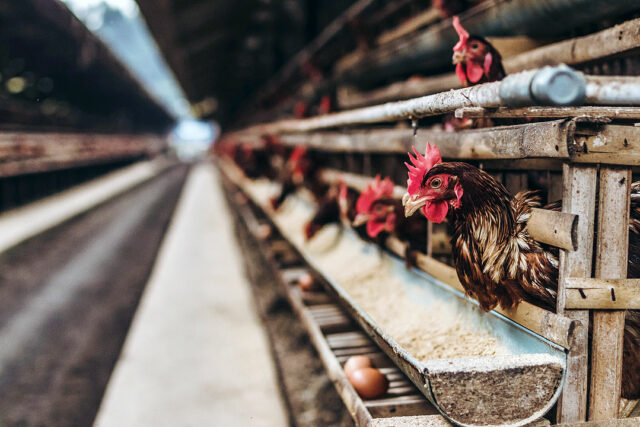
THE GOVERNMENT needs to fast-track the creation of an inter-agency task force (IATF) that will oversee efforts to contain animal diseases and the potential human-to-human transmission of avian influenza (AI), an industry official said.

“You need teamwork for the worst-case scenario. You cannot build teamwork overnight,” United Broiler Raisers Association President Elias Jose M. Inciong told reporters.

He said agencies must be identified immediately to develop a plan to address animal diseases and other issues affecting the livestock and poultry industry.

Mr. Inciong said the industry has had talks with the Department of Agriculture (DA) but would like to meet with the Department of Health to discuss the potential of human-to-human transmission of type H3N8 AI.

“There should be an inter-agency (task force). We’re not saying that this will be an active group. Kailangang magkakilala na muna (They need to designate which agencies will act first) and discuss the plans,” Mr. Inciong said.

A DA special order dated May 25 proposed a task force to address issues affecting the poultry industry.

The functions to be performed by the task force include evaluating prices and poultry supply and demand. However, it does not address action to be taken in the event of a disease outbreak. 

“(The creation of a task force) will bring confidence to the situation… those who want to invest in layers or broilers… will have confidence with a system in place,” said Mr. Inciong.

In February, the Bureau of Animal Industry (BAI) allotted P177.78 million in funding for 2023 to the government’s Avian Influenza Protection Program, which will roll out mitigating measures in the event of an AI outbreak.

As of May 30, two regions, two provinces, four municipalities, and seven barangays had active HPAI cases, the BAI reported. — Sheldeen Joy Talavera

ADVERTISEMENT
ADVERTISEMENT