Home Blog Page 4723

Arts & Culture (06/14/23)


Toym Imao’s jeeps at Lucky Chinatown

Megaworld Lifestyle Malls’ Lucky Chinatown in Binondo, Manila features a giant jeepney installation from artist Toym Imao as part of its tribute to the 125th Independence Day of the Philippines. Originally intended as a heartfelt tribute to the resilient jeepney drivers impacted by the pandemic, the country’s biggest jeepney installation made out of yarn returns as a symbol of Philippine culture and perseverance — the perfect centerpiece for the mall’s grand Independence Day exhibit. The iconic jeepney is joined by more nostalgia-driven art pieces depicting Filipino traditional games from Project Hulmahan at the atrium of Lucky Chinatown. The exhibits will be on view until June 18.


Araneta City opens ‘Tanggulan’ exhibit for Pride Month

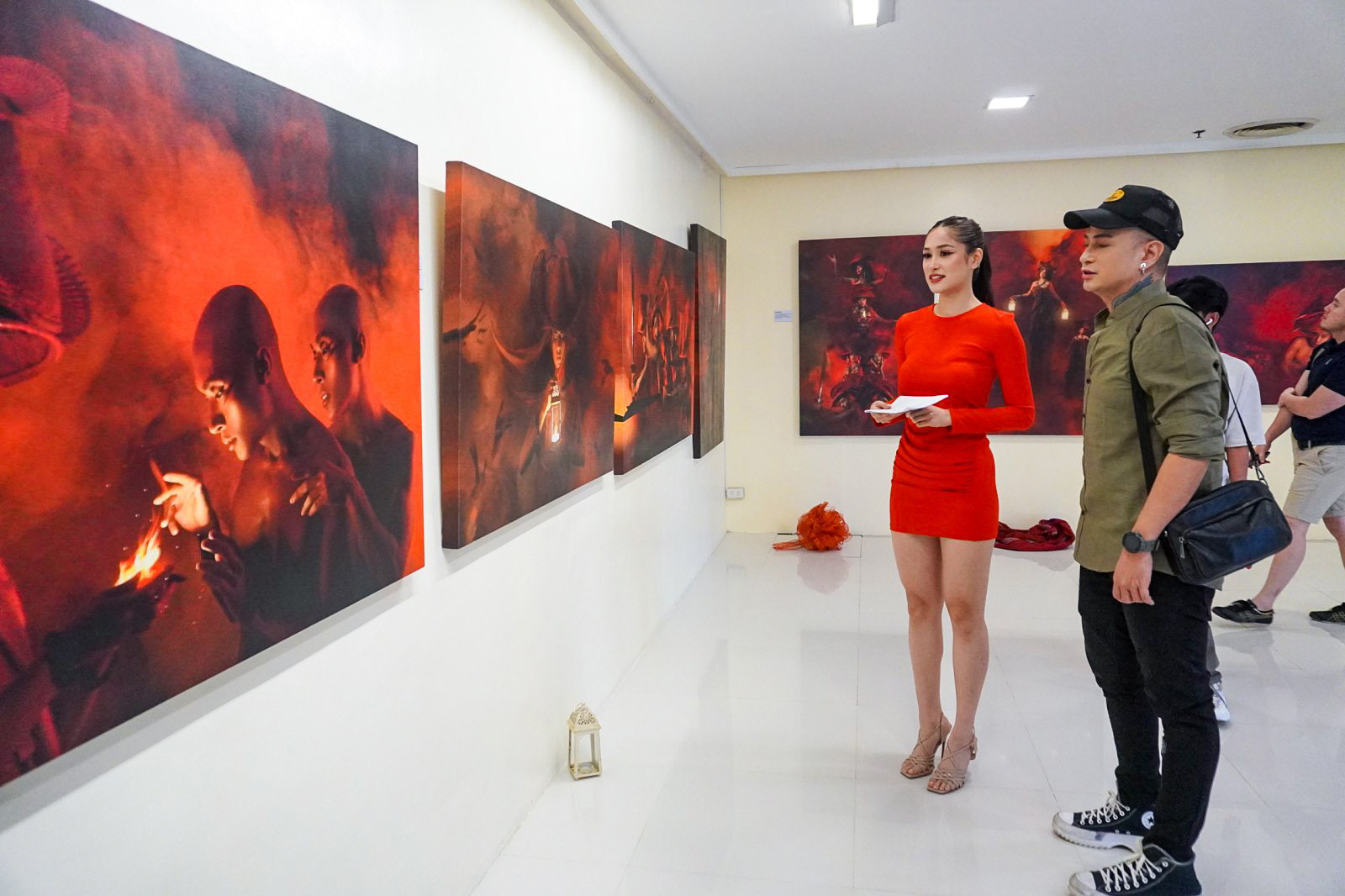
In line with the celebration of Pride Month, Araneta City brings the “Tanggulan” art exhibit to help raise HIV-AIDS awareness. The exhibit features 10 portraits of HIV-AIDS awareness advocates photographed by Niccolò Cosme, all printed on canvas and painted with emulsified HIV+ blood. It is on view at the Gateway Gallery Studio. The portraits depict the fight for the rights of people living with HIV, with the models wearing warrior-like ensembles interpreted by designer Myke Oropesa. They were styled with accessories like sarong fabrics, salakot headgear, and kampilan swords. Among the models are Binibining Pilipinas 2022 Miss International Nicole Borromeo, and Miss Universe 2015 Pia Wurtzbach-Jauncey. Mr. Cosme is a visual artist, conceptual photographer, and the founder of Project Headshot Clinic (HSC) a digital platform that utilizes thematic headshots to further featured advocacies. His art inspiration is rooted in the pain and sorrow in Christian iconography. He uses art to further LGBTQIA+ and HIV causes in the Philippines and abroad. The Gateway Gallery Studio is an antechamber of Gateway Gallery, the art museum of Araneta City that showcases the culture and history of the Philippines. The exhibit is open for public viewing until June 18. It will then be transferred to the Ali Mall Activity Area from June 19 to 22, and the Gateway Mall Activity Area from June 23 to 30.


Free amigurumi workshop opens to the public

Turning Over New Leaves, a free crochet art workshop for ages 16 and up, is slated for Saturday, June 17. The hybrid activity aims to introduce participants to amigurumi, the Japanese art of crocheting small stuffed creatures. A portmanteau of ami, which means knitted or crocheted, and nuigurumi, a tiny plush doll, the craft has become a significant part of the Japanese kawaii movement since the 1980s. It gained popularity in the West in the 2000s. Turning Over New Leaves is a walk-through into the fundamentals of amigurumi. The session will equip the learners with the skills and techniques in creating their very own dolls. They will work with simple patterns, which they can use to kickstart their own plush plant collection or business. The workshop is organized by the Museum of Contemporary Art and Design (MCAD) of the De La Salle-College of Saint Benilde. Turning Over New Leaves will be facilitated by crochet artist Sharon See, a former film and TV production designer, she started crocheting at age 11 and has not stopped since. Turning Over New Leaves is free and open to the public. It will be conducted onsite and online on June 17, 2 p.m. Interested participants may register through bit.ly/TurningOverNewLeaves. MCAD is located at the De La Salle-College of Saint Benilde Design + Arts Campus, Dominga Street, Malate, Manila.


Ballet Philippines presents Coppelia in August

Ballet Philippines will be performing the classic comic ballet Coppelia on Aug. 4 to 6, at The Theatre at Solaire. It tells the story of Professor Coppelius’ daughter, Coppelia, who is a mystery to everyone in their small town as she sits on the balcony all day with her books and never speaks to anyone. The ballet’s heroine, Swanilda, and a group of girls break into  the house to discover the truth about the mysterious Coppelia. As it turns out, Coppelia is a doll created by the mad scientist, Coppelius. Swanilda decides that to win the love of Franz, she would impersonate the beautiful, life-like doll. Chaos ensues, but concludes with joyful dancing. Tickets are available at TicketWorld (8891-9999).


Big names, newbies join cast of Rama, Hari

Some of the hottest names in today’s music and theatre scene are taking on major roles in the hit Filipino rock opera ballet, Rama, Hari, which features direction and choreography by National Artist Alice Reyes and music by National Artist Ryan Cayabyab, with lyrics and libretto by National Artist Bienvenido Lumbera, production design by National Artist Salvador Bernal and translations by National Artist Rolando Tinio. Gian Magdangal, fresh from his awarded run in 2022’s Carousel, and operatic star Arman Ferrer play Rama, with 2020 Gawad Buhay Awardee Vien King alternating. Musical theater stars Karylle Tatlonghari and Shiela Valderrama-Martinez take on the lead role of Sita, with Nica Tupas alternating. Tackling the role of demon king Ravana are Rak of Aegis star Poppert Bernadas and Los Angeles-based musical theater actor Mathew San Jose making his Manila debut. Jonel Mojico alternates. Theater icon Audie Gemora plays King Dasaratha in all shows. Also in the cast areMiah Canton, Raflesia Bravo, Katrine Sunga, Maron Rozelle Mabana, Paw Castillo and Jon Abella. Rama, Hari is based on the ancient Sanskrit epic Ramayana which follows Prince Rama from his marriage to Sita, their 14-year banishment, and their encounters with the evil Ravana and his sister Soorpanakha. Rama, Hari is presented by the Cultural Center of the Philippines (CCP) and features the artists of the Alice Reyes Dance Philippines and the CCP’s Professional Artist Support Program, with guests from Guang Ming College, and other regional schools. There will be performances on Sept. 15 and 16 at the Metropolitan Theater of Manila, and on Sept. 22 and 23 at the Samsung Performing Arts Theater in Circuit, Makati. Select performances will feature live music performed by The Orchestra of the Filipino Youth. For season subscriptions and ticket reservations, e-mail ardancephilippinesinc@gmail.com. For more information, check @ARDancePh on Facebook, Instagram, and TikTok.


Sun Tzu’s Art of War for Pinoys

The first Filipino translation of a world-renown classic The Art of War has been released. Sining ng Pakikidigma / The Art of War (2023) offers the ancient treatise on winning conflicts in Chinese, English, and Filipino. The Chinese original has been translated into more than 200 languages since it was first written 2,500 years ago by military general, strategist and philosopher Sun Tzu. It continues to be relevant as the go-to handbook for winning strategies in confrontation and conflict, real everyday challenges for individuals and nations alike.  It is required reading by students at the Philippine Military Academy. Translation work on Sining ng Pakikidigma begun decades ago, and involved nearly a dozen people — ages 24 to 76 — who worked from different time zones. Cousins Fernando Ang, Sr. and Chua Bun Pin had written an English translation that was serialized in a Manila newspaper in 1982.  Four decades later, Mr. Ang refashioned the manuscript into the present trilingual version — Filipino, English, Chinese — to reach a broader audience. Now retired, Mr. Ang wrote the present manuscript by hand. A team of editors collaborated to choose the best Filipino equivalent for concepts expressed in the original. One of them, Teresita Ang See, says, “For the very first strategy, many used the word ‘politics’ but we chose ‘governance’ to be more accurate.” “We worked so hard on it, reconciling the many interpretations to see to it that the translation hewed to the correct nuance of Sun Tzu’s strategy,” says Ms. Ang See.  She points to the treatise as a guide not just to military strategy but offering essential life lessons. One example she highlights is the admonition: “Choose your battles. The best battle is won without resorting to fighting.” Sining ng Pakikidigma / The Art of War (in Filipino, English and Chinese), is published by Kaisa Para Sa Kaunlaran, Inc. and Kaisa Heritage Foundation, Inc. It is available at Bahay Tsinoy Shopee online store and at Kaisa office. It is available for the promo price of P300 until June 15. Regular price is P350. For more information, e-mail info@kaisa.org.ph or text/Viber 0927-760-9638. The Kaisa-Angelo King Heritage Center is at 32 Anda corner Cabildo Sts., Intramuros, Manila.


Nona Garcia at Silverlens

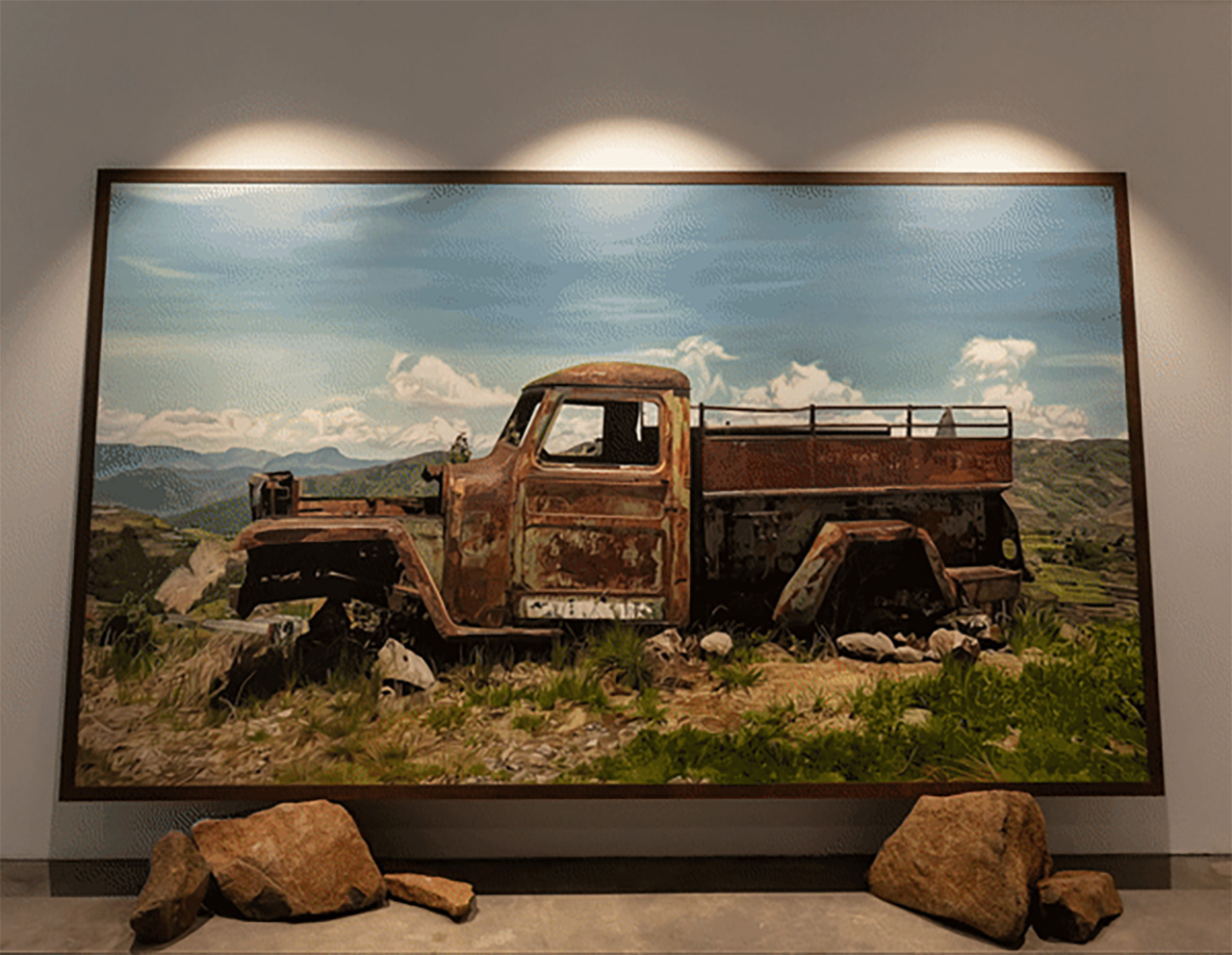
Silverlens Manila has two exhibits by masters of their mediums. First there is “Overland,” paintings by Nona Garcia, which is on view until July 8. With an art practice that spans two decades, Ms. Garcia continues to be recognized as one of the most prolific artists who paints after the photographic image. In Overland, her latest solo exhibition for Silverlens, Baguio City — Garcia’s adopted homeland — receives an incredible tribute in which she demonstrates a deeper bond with the lay of the land: rocks, slopes, trees, and other objects that became one with it. Her attention to detail, her interpretation of actuality, along with a deep connection to subjects that might ordinarily escape the familiar view, attest to the power of deciphering the land for what it is: a memorialization that seeks its own beauty. Also on view is “Steps” by potter Jon Pettyjohn, on view until July 8. His third solo exhibition at Silverlens, the artist advances his pursuit of personal expression within the framework of traditions and techniques to which he has dedicated himself for close to 50 years. “It is a challenge and an honor for a potter like myself to be offered a space in a prime contemporary exhibition space like Silverlens.” says Mr. Pettyjohn. “I have attempted to use my pottery skills to go a little further and say something more.” With a new series of thrown, wall-mounted platters, Mr. Pettyjohn embraces the symmetry of the potter’s wheel without constraining himself to functional works. Within these cohesive, perfectly circular forms, he has populated a diverse array of glazes and textures to create painted and relief effects that embody a spectrum. The resulting contrast between cycles of perfection and imperfection, between symmetry and distortion, also captures the artist’s experience over the last few tumultuous years. Silverlens is at 2263 Don Chino Roces Ave. Ext., Makati.


Group show at Mo_ Space

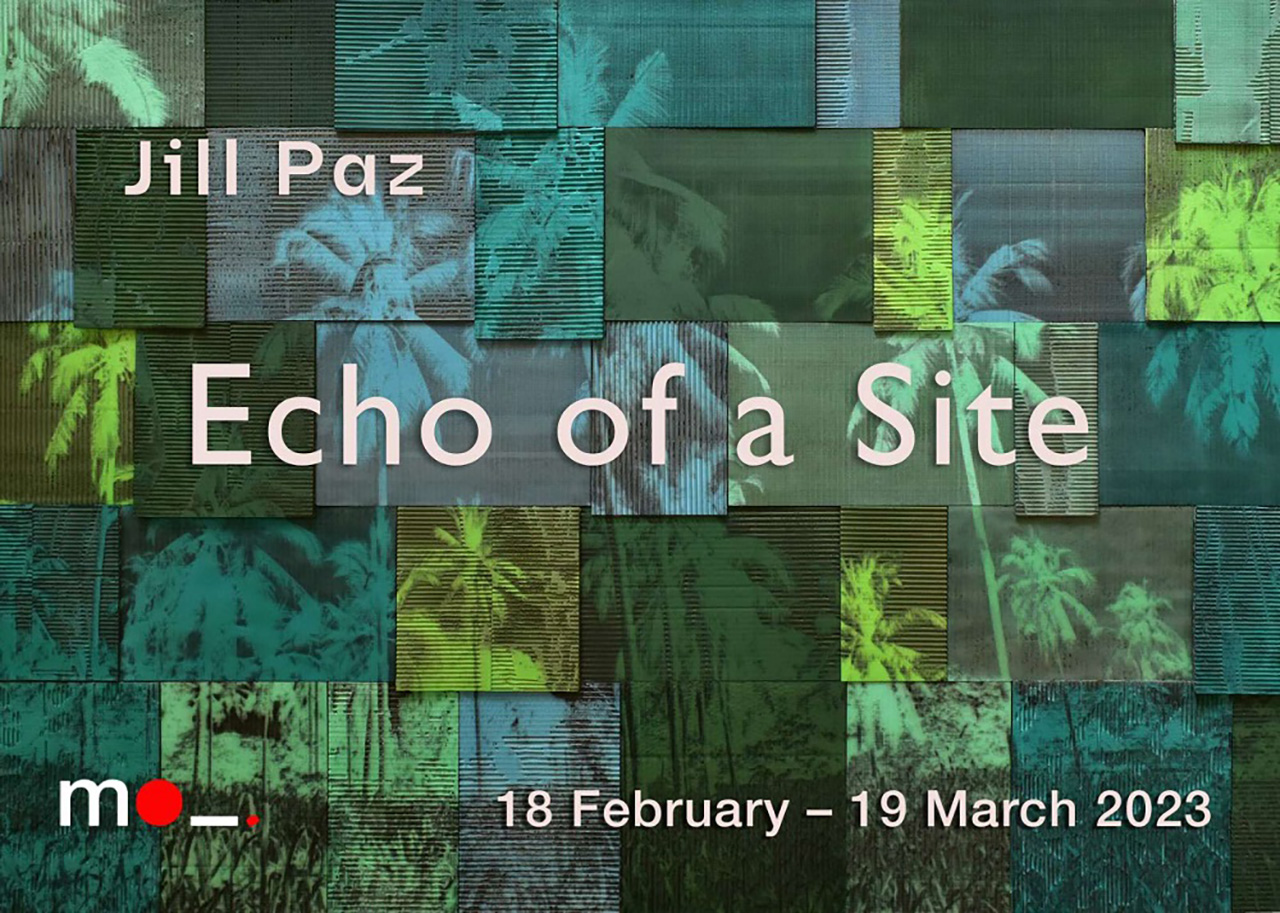
On view at Mo_Space’s Main Gallery and Gallery 2 is the group exhibit, “Live Take Feed Console Play,” curated by Cocoy Lumbao, and featuring the works of Poklong Anading, Vic Balanon, James Clar, Lena Cobangbang, Greys Compuesto, Mirjam Daline, Rico Entico, Miguel Inumerable, Cocoy Lumbao, Neo Maestro, Kaloy Olavides, Gary Ross-Pastrana, Tatong Torres, Derek Tumala, Miguel Lorenzo Uy, and MM Yu. The exhibit runs until June 10. The curator writes: “Since the late 1990s, a number of art spaces, artists, and galleries have started to organize and feature shows that focused on a medium which during that time had slowly gained prominence and interest among artists. When the world of portable video cameras and digital filmmaking found their way into the artist’s studio, it became for some an indispensable tool for exploring visual expressions. In gathering artists whose works span two decades of integrating video, film, and other digital technologies in their studio practice, the group exhibition, “Live Take Feed Console Play,” is an attempt to surveil how works on video and related formats have impacted the landscape of visual art in the Philippines, and how it could have created its own language to add to the whole taxonomy of moving-image practice across different disciplines.” The gallery, located at Bonifacio High Street, BGC, Taguig, is open daily from 10 a.m. to 7 p.m. 

SMC sees challenging year ahead

SAN MIGUEL Corp. (SMC) expects its businesses to face challenges for the rest of the year due to economic pressures and lower demand, its top official said on Tuesday.

SMC President and Chief Operating Officer Ramon S. Ang said that for the year, the company faces high inflation, fluctuating oil prices, as well as lower demand for power and food.

“Despite [these], because the company is doing everything that we can, our first-quarter [results are] still good,” he said. “If we can at least match the previous year’s performance then we would be very thankful,” Mr. Ang said during the company’s stockholders’ meeting.

Additionally, SMC Chief Financial Officer and Treasurer Ferdinand K. Constantino said that the company is optimistic about the operating environment this year.

“The general outlook is that raw material prices will be more stable this year,” Mr. Constantino said.

“With the pandemic winding down, we are also looking to sustain and further build on the gains we have already made,” Mr. Constantino added. 

During the first quarter, SMC reported a consolidated net income of P17.7 billion, up 27% from P13.9 billion in the same period last year, as it saw growth in its business segments. Its top line for the three months hit P346.7 billion, up 9% from P316.77 billion the previous year.

Meanwhile, SMC subsidiary Petron Corp. said in a regulatory filing that it set the dividend rates for its Series 4 follow-on offering at P1,000 per offer share.

Petron is offering up to 12.5-million preferred shares with an oversubscription option of 10 million shares. The company said the dividend rates are set to be issued into three subseries — series A preferred shares at 6.7079%, series B at 6.7972%, and series C at 7.0861%

It expects proceeds of up to P22.34 billion from the offer, assuming the oversubscription option is fully exercised. Proceeds will be used for the partial redemption of certain securities debt refinancing, and the purchase of crude oil.

Petron has also moved its offer period to June 15 to 17 from the initial start on June 14. The company expects to list its preferred shares on the main board of the Philippine Stock Exchange on July 7.

The company tapped China Bank Capital Corp. as the sole issue manager for the offer as well as joint lead underwriter and bookrunner alongside Bank of Commerce, Philippine Commercial Capital, Inc., PNB Capital and Investment Corp., and SB Capital Investment Corp.

On Tuesday, SMC shares declined by 0.57% or 60 centavos to P105 apiece, while Petron shares fell by 5.14% or 18 centavos to P3.32 apiece. — Adrian H. Halili

Rare Chinese Buddha statue up for auction at Bonhams in Paris

BONHAMS CORNETTE DE SAINT CYR

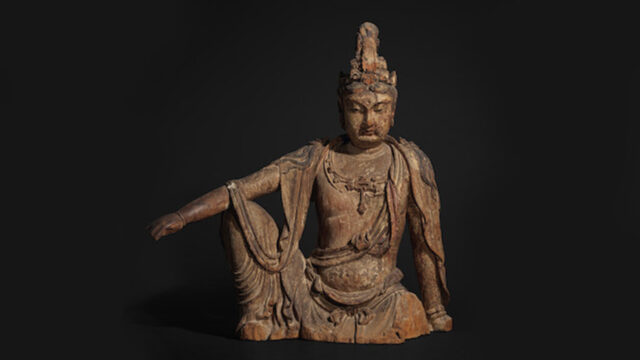
PARIS — A rare Chinese Buddha statue, found in a French family home and part of a set thought to have been lost, is expected to fetch 1 million euros ($1.1 million) when it is auctioned on June 13 in Paris.

According to auction house Bonhams, the piece is a very rare wood figure, a religious work depicting the Buddhist Bodhisattva Guanyin made in the 12th-13th century under the Jin dynasty.

Over a meter high, the piece was last sold in the 1930s to a family in Boulogne, a suburb near Paris. The family wishes to remain anonymous.

Large sculptures such as the one to be sold were originally made for Buddhist temples.

The head of Bonhams Chinese art Caroline Schulten said the family was unaware of its value until they called her up for an estimate.

“It was passed down in the family to the present generation, and it had been sitting in a private home,” she said. “What has happened since then (the last sale) is that it has lost the fingers of the one hand… because they were clearly there when it was sold in 1932. So in between, I was told there were children playing football around it, so things happened, quite clearly,” Ms. Schulten added.

Bonhams auction house says there are likely only a handful of such pieces left in the world, which are mostly in museums.

“This is one of the few that has survived, so it’s quite possible that there are more pieces from this group that are still around in France or maybe in Belgium or Switzerland. And it’s quite exciting to think that maybe the sale of this figure or the publicity around it will generate more people looking at home and realising that ‘We’ve got a figure like that’,” said Ms. Schulten. — Reuters

ICTSI says unit to look into Karachi concession

PHILIPPINE-LISTED International Container Terminal Services, Inc. (ICTSI) said on Tuesday that it would evaluate its right of first refusal when the Karachi terminal is tendered for a new term.

In a regulatory filing, ICTSI said that its container terminal concession in Karachi, Pakistan will revert to the port authority on June 17.

Beyond June 16, the company said its unit Pakistan International Container Terminal (PICT) has operations and management services “when and if required” by the Karachi Port Trust.

“PICT will evaluate its right of first refusal when the terminal is tendered for a new term. All non-concession assets including equipment and IT systems will remain property of PICT,” it said.

In October 2021, ICTSI through its wholly owned subsidiary ICTSI Mauritius Ltd. completed the acquisition of 15.88% of the total shares of stock in PICT for 2.7 billion Pakistani rupees or $15.6 million to increase its ownership to 80.41%.

The concession between PICT and Karachi Port Trust is for a period of 21 years or until 2023.

In the first quarter, ICTSI recorded a 3.4% volume decline from the combined Europe, Middle East, and Africa (EMEA)segment, in which Pakistan is included, to 647,390 twenty-foot equivalent units (TEUs).

From January to March, EMEA operations accounted for 20.9% of ICTSI’s consolidated volume, which was 3.1 million TEUs. Justine Irish D. Tabile

Understanding the US debt crisis: On the CPI and ‘greedflation’

NOHE PEREIRA-UNSPLASH

(Part 3)

As far back as the beginning of this year in January, Dr. Jim Walker was already alerting the US monetary authorities that US inflation and monetary policy had to go beyond analyzing the Consumer Price Index (CPI).

In an article entitled “Bits and Pieces,” he warned that inflation is a many-headed beast. Consumer prices, producer prices, commodity prices, asset prices, and the GDP deflator are all measures of “inflation.” But there are other elements involved in the inflation story, especially debt in the case of the US. Monetary policy in the US over the last decade has encouraged the buildup of debt, especially by the government, on a gigantic scale.

Dr. Walker has been insisting for some time that the Federal Reserve System has been using consumer price inflation as a proxy to its real war. This is a consequence of the dual mandate policy of the Fed: price stability and full employment. The reality, however, is that the Fed opened Pandora’s Box with its ultra-easy monetary policies and now needs to restore discipline in markets on several fronts (including allowing markets to function). While conditions are conducive — CPI above 2%, the labor market supposedly tight, Atlanta Fed GDP Nowcasts above 4% and, most importantly, no signs of financial distress — the Fed will continue to raise interest rates. Indeed, the Fed kept raising interest rates over the following months.

Fast forward to May. Dr. Walker comments that in the debate around rate hikes, the role of inflation seems to be taking a back seat. In many circles, the assumption is that the fight is won, at least in the US. National consumer price inflation has fallen back to 5% year on year and six-month annualized is at just 3.6%. Many are concluding that the Fed has been successful in fighting inflation and that the next move in interest rates will be down. Dr. Walker disagrees and is of the opinion that the Fed Funds rate will hit 6% in the current cycle and that the 10-year US Treasury will be a buy at 4.5%.

In Europe, the fight against inflation is far from being won. In fact, Dr. Walker observes that there are misinformed accusations of “greedflation” against corporations who are being blamed for the lingering European inflation because they have become “greedy” and wish to take advantage of high prices to pad their profits. Dr. Walker thinks this idea is nonsense and, in his words, “economic illiteracy at large.” Is it really possible that rational businesspeople will take advantage of poor, dumb consumers by encouraging inflationary forces? If this is so, it wouldn’t be the consumers who are dumb, it would be the corporates.

Elementary microeconomics teaches that the higher price, the fewer units of the good or service would be demanded. Depending on demand elasticity (some goods and services are certainly less price sensitive than others), the reaction of consumers to rising prices will be one thing and one thing only: a smaller quantity purchase. If companies wish to reduce sales (which is hardly rational), they will certainly push their prices upwards. Unless, of course, that is the only way to cover increased costs — including capital — or maintain margins. There is one other circumstance which can ameliorate higher prices and help maintain sales. If governments and central banks print excessive amounts of money, consumer inflation and sustained quantities of demand can be accommodated. The problem is that the ensuing money inflation is conning businesses into thinking that they are making money when, in fact, profits are shrinking/stable/rising/imaginary. No one can really tell until the money-go-round stops.

Elementary supply and demand economics also tells us that if companies are truly hiking prices to make bigger profits, supply will rise as price (and) profit increases. These allegedly greedy businesspeople are, therefore, playing an unwinnable game. Either their price rises choke off demand or they induce more competition from new suppliers. It is unthinkable that businesspeople are unaware of these consequences. It is more realistic to assume that they are just more aware of the pernicious nature of inflation and the lagged ability of historic cost accounting to properly identify relative price and cost shifts.

The lessons for the Philippines are obvious. Bringing down inflation should be the highest priority of monetary authorities. It is comforting to know that there is a high probability that by the last quarter of this year, inflation will be back to the 2-4% level that was the rule before the pandemic. The Central Bank should think twice before starting to bring down interest rates. It is worthwhile to cite here what Dr. Walker quotes from the famous economist Ludwig von Mises: “It would be a serious blunder to neglect the fact that inflation also generates forces which tend towards capital consumption. One of its consequences is that it falsifies economic calculation and accounting. It produces the phenomenon of imaginary or apparent profits.”

As I have insisted time and time again, the second biggest economic challenge to this present Administration — after improving agricultural productivity — is to increase our investment to GDP ratio to levels commensurate with those of our East Asian neighbors of more than 30% of GDP from present levels of 22% to 23%. Capital consumption induced by the mirage brought about by inflation leads to exactly the opposite direction, to decrease even further our investment-to-GDP ratio.

As a final word on lessons from the US debt crisis, let me hammer what Dr. Walker repeatedly wrote in several of his Peregrinations: Increased government debt and ultra-low interest rates are millstones around the necks of the economic actors throughout the advanced economies. The wrong signals have been sent and the result is weak growth, lower productivity and a massive debt overhang. Especially in the case of Japan, recession lies ahead in 2023 and 2024. In contrast, East Asian countries have generally maintained a degree of sound money discipline and fiscal responsibility. Average real GDP growth rates through the Bernanke Doctrine years have held up well in China, India, Indonesia, Malaysia, the Philippines, and Vietnam. In all countries, government debt levels are well below those reported by the Big 3 advanced economies at the turn of the millennium and even post-pandemic.

I am confident that our own monetary and fiscal managers will continue to follow the prudent measures that have prevailed in the Philippines over the last two decades. That is why I am confident that the 6-7% GDP growth rate in most economic forecasts for the Philippines (both government and private sector) is very attainable.

(To be continued.)


Bernardo M. Villegas has a Ph.D. in Economics from Harvard, is professor emeritus at the University of Asia and the Pacific, and a visiting professor at the IESE Business School in Barcelona, Spain. He was a member of the 1986 Constitutional Commission.

bernardo.villegas@uap.asia

Gov’t partially awards Treasury bills with higher yields at auction

BW FILE PHOTO

By Aaron Michael C. Sy, Reporter

THE GOVERNMENT partially awarded Treasury bills it offered on Tuesday with higher yields, as investors await the US Federal Reserve’s next policy move.

The Treasury bureau raised P13.608 billion of P15 billion worth of T-bills it had offered, with bids reaching P20.049 billion.

It borrowed P3.608 billion from the P5-billion program via the 91-day T-bills as tenders for the tenor reached P4.618 billion.

The average rate of the three-month debt went up by 9.5 basis points (bps) to 5.922% from a week earlier. Accepted rates ranged from 5.75% to 6%.

Meanwhile, the government fully awarded P5 billion in 182-day securities as bids reached P7.72 billion. The six-month T-bill was quoted at an average rate of 5.978%, 8.7 bps higher than last week. Accepted rates were 5.85% to 6.05%.

The Treasury also raised P5 billion from 364-day T-bills as demand reached P7.811 billion. The average rate of the one-year T-bill rose by 8.2 bps to 6.062% from a week earlier. Accepted yields were 5.89% to 6.188%.

At the secondary market before Monday’s auction, the 91-, 182- and 363-day T-bills were quoted at 5.8631%, 5.9009% and 5.9482%, respectively, based on PHP Bloomberg Valuation Reference Rates provided by the Treasury.

“Results were mixed in today’s Treasury bill auction as the auction committee decided to fully award bids for the 182- and 363-day securities while partially awarding the 91-day T-bills,” the Treasury said in a statement.

The 91-day T-bill was capped at 5.922%. The auction was 1.3 times oversubscribed, attracting P20 billion in tenders, it said. “With its decision, the committee raised P13.6 billion of the P15-billion total offering.”

“The higher T-bill rates were influenced by some market uncertainty over chances of a possible US policy rate hike this week,” a trader said in an e-mail.

Investors were expecting the Fed to hold its key rates amid a possible easing in US inflation, Michael L. Ricafort, chief economist at Rizal Commercial Banking Corp., said in a Viber message.

The US central bank raised borrowing costs by 25 bps last month, bringing the Fed fund rate to 5-5.25%. It has increased borrowing costs by 500 bps since March 2022.

The Federal Open Market Committee will review policy on June 13-14.

Mr. Ricafort said the US inflation is expected to have eased to 4.1% in May from 4.9% in April. The Fed’s pause could be matched locally, he added.

The Bangko Sentral ng Pilipinas (BSP) paused its aggressive monetary tightening last month and signaled it would put the key rate on hold at its next two to three meetings.

The BSP raised policy rates by 425 bps from May 2022 to March 2023. The Monetary Board will review policy on June 22.

On Wednesday, the Treasury bureau will auction off P25 billion in reissued 20-year Treasury bonds with a remaining life of 14 years and eight months.

It wants to raise P185 billion from the domestic market this month, or P60 billion via T-bills and P125 billion via T-bonds.

The government borrows from local and foreign sources to help fund its budget deficit, which is capped at 6.1% of economic output this year.

Revered icon just handed to Russian Church by Putin remains state property — minister

TRINITY(Andrei Rublev) — WIKIPEDIA

A REVERED religious painting that has just been transferred on President Vladimir Putin’s orders from a museum to the Russian Orthodox Church needs a year of restoration and remains state property, the culture minister was quoted as saying on Friday. Mr. Putin, who has found a willing ally in the Church for his vision of a conservative national identity, three weeks ago said through his spokesman that the Trinity icon was being transferred because “hiding it in a museum” did not fulfil the desire of believers.

Icons are stylized, often gilded paintings considered sacred in Eastern Orthodox Churches.

Andrei Rublyov’s 15th-century work, perhaps the most famous and artistically significant Russian icon, has been displayed in Moscow’s Cathedral of Christ the Saviour since Sunday, and was due to stay for a year before moving to a monastery.

Cultural experts protested, saying the icon, painted on wood, was so fragile that it needed the temperature and humidity controls of a museum such as Moscow’s Tretyakov Gallery, where it had hung for almost a century.

“The icon will be sent for restoration to the Grabar Center, a unique space where our country’s best resources are gathered,” Culture Minister Olga Lyubimova told the newspaper Izvestia. “This work could take up to a year, experts now say.”

She said a scientific council would monitor the icon, which would then be transferred as planned to the Trinity Lavra of St. Sergius, the Church’s spiritual center outside Moscow, under the care of both the Lavra Museum and her ministry.

“The Trinity remains in the state collection. The church agrees with this,” Ms. Lyubimova said, warning that the restoration work could also take longer. — Reuters

Manila drops in smart centers list

Manila fell by nine spots to 64th place out of 77 ranked centers in the seventh edition of the Smart Centers Index (SCI) by Long Finance Initiative. The index rates the innovation and technology offerings of commercial and financial centers. With a rating of 627, the Philippine capital placed second lowest in the East and Southeast Asia region, just ahead of Kuala Lumpur, Malaysia (71st overall).

Manila drops in smart centers list

Vivant unit buys out partner in Coron power plant

VIVANT Corp. through its subsidiary is set to acquire 50% of the outstanding and issued shares of partner Gigawatt Power Inc. (GPI) in Calamian Island Power Corp. (CIPC).

In a stock exchange disclosure on Tuesday, Vivant said its unit, Vivant Energy Corp., will acquire a total of 1.02 million common and preferred shares of GPI in CIPC, the owner of a 7.35-megawatt (MW) bunker-fired power plant in Coron.

CIPC also owns a 0.91-MW diesel power plant in Busuanga, Palawan province. It supplies the power needs of Busuanga Island Electric Cooperative, Inc.

GPI is Vivant Energy’s co-investor in CIPC.

Vivant said the transaction had been approved by the board of directors of Vivant Energy on May 17. It described the transaction as a “strategic investment” for it to expand its investments in off-grid areas.

Vivant said about 40% of the purchase price was already remitted by Vivant Energy to GPI. 

“Full payment will be due upon issuance of the Certificate Authorizing Registration and fulfillment of all conditions precedent to complete the transaction,” it said.

Vivant Energy holds the energy investment portfolio of Cebu-based listed firm Vivant. — Ashley Erika O. Jose

External defense and collective deterrence

AN AERIAL VIEW of the BRP Sierra Madre at the contested Second Thomas Shoal on March 9, 2023. — REUTERS

This week’s commemoration of the 125th anniversary of the declaration of Philippine Independence presents us with a good opportunity to reflect on what is happening to our nation. As an independent, democratic country working to achieve sustainable economic development for our people, we are also dealing with numerous challenges and threats to our sovereignty and integrity.

Foremost among these are China’s aggressive acts in the West Philippine Sea, where it continues to act like a bully, ignoring the fact that no less than the Permanent Court of Arbitration has recognized and upheld the Philippines’ sovereign rights there.

Toward this end, we receive with hope and optimism the words of newly appointed Department of National Defense (DND) Secretary Gilbert “Gibo” Teodoro.

“Our territory is our territory, and UNCLOS (United Nations Convention on the Law of the Sea) cannot be changed by the passage of time, nor changes in administration,” he said in his first press briefing upon taking office.

He talked about what China should do as a stronger country. “It has the bigger obligation to be magnanimous and show trust and earn the trust of the Filipino people by conforming its activities to recognize norms of international law, which in our case is UNCLOS.”

Teodoro had led the DND during the administration of former President Gloria Macapagal Arroyo and is expected to provide much-needed policy stability and continuity of efforts to maintain our defense posture. Given the current situation in the West Philippine Sea, Teodoro now acknowledges the need for some transition in national defense, “without sacrificing the gains in internal security, to external defense.”

President Ferdinand “Bongbong” Marcos, Jr. has refocused into a more externally oriented defense posture. During his speech at the 125th anniversary celebration of the Philippine Navy, Marcos said: “Considering the changing tides of our national security and the significant gains that we have made in terms of internal security, our armed forces is working to recalibrate its focus more towards external defense of our borders.”

The pronouncement is aligned with Mr. Marcos’ attempt to distance himself from his immediate predecessor’s “independent” foreign policy stance. I use quotation marks to emphasize that Rodrigo Duterte’s position was, in fact, skewed toward the appeasement of China and thus hardly independent.

President Marcos has assured Filipinos that only the national interest will govern his administration’s foreign policy.

So, is the recalibration of our national defense strategy from internal to external aligned with our national interest?

Building up our external posture means fortifying our position before the community of nations instead of simply allowing ourselves to get caught in the middle of the competition between China and the United States. After all, the world has ceased to be bipolar where only two major powers compete for supremacy and dominance. Our world is, instead, multipolar, with numerous independent states coexisting peacefully, affirming their democratic values and committing to uphold a rules-based international order.

These like-minded states are our real friends with whom we should strengthen our strategic partnership in bilateral, minilateral, and multilateral terms. They share our vision of a free and open Indo-Pacific region. During their 49th summit last month in Hiroshima, Japan, the G7 — Canada, France, Germany, Italy, Japan, the United Kingdom, and the US — expressed their strong support for and recognition of our 2016 arbitral victory. A strong message against China’s refusal to recognize an internationally recognized legal process that declared China’s violations of Philippine sovereign rights in its Exclusive Economic Zone and that the “nine-dash” in the South China Sea has no legal basis.

If the court in The Hague decided in our favor, and if the G7 is on our side, then we must be in the right. These should embolden us as our national and defense leaders plan on how to deal with China’s threatening acts. We take heart in the fact that our allies are there to help boost our capability to protect ourselves and assert our sovereignty.

As an example, earlier this month, from June 1 to 7, we had the first trilateral maritime exercises with the US Coast Guard and the Japan Coast Guard in the waters off Mariveles.

And then, despite reports that Chinese vessels had removed our navigational buoys in waters off Balagtas (Irving) Reef and Julian Felipe (Whitsun) Reef, they remain there. The Philippine Coast Guard also placed buoys in Patag (Flat) Island, Kota (Loaita) Island, and Panata Island (Lankiam Cay). Last year, the Philippines also put buoys off Lawak (Nanshan) Island, Likas (West York) Island, Parola Island (Northeast Cay), and Pag-asa (Thitu) Island. These navigational yellow buoys that bear the markings of the Philippine flag do not only serve as an aid to navigation for fishermen and mariners to steer them away from shallow water. They also serve as sovereign markers.

External defense means looking outward, but always mindful of what is in our core — that is, the interest of the Filipino people. It means maintaining a firm, consistent, and uncompromising position that says “It is unacceptable” for other countries to violate our sovereignty and flex their military muscle in our own waters despite being already told they have no right to be there. It means cooperating economically with countries that are actually our most beneficial trading and investment partners. It means fostering a law-abiding environment conducive to investments and public-private partnerships that will foster prosperity in the region.

It means dealing with the outside world confidently, aware of what is good for us, and firm about what we will not tolerate from others. It means cherishing friendships with those who share the democratic values and principles that we hold dear.

We must remember that we fought so hard over many years for the independence we now enjoy. We must fight equally hard so that it is not taken from us by anyone ever again. A belated yet meaningful Happy Independence Day to our country and to all of us who fiercely love it.


Victor Andres “Dindo” C. Manhit is the president of the Stratbase ADR Institute.

Angkas offers to share pioneering standards with new entrants

By Miguel Hanz L. Antivola

ANGKAS, a pioneer in the motorcycle taxi industry, is ready to share the standards it has developed with emerging competitors, recognizing the importance of collaboration for industry growth, according to its chief executive officer.

“I know that from the outside, this is potentially a lucrative business for everyone,” said George I. Royeca, Angkas CEO and co-founder, in an interview with BusinessWorld. “I do invite people to improve on it.”

“But let’s make sure that the intention is there — to improve the industry,” he added.

Angkas, Mr. Royeca also said, has shared all of its proprietary knowledge with competitors, from training modules to insurance products.

“Hopefully we create more standards and share it with everyone else,” he said.

“At the end of the day, the more people who are in the space trying to compete, it will improve the market as long as standards are maintained.”

HOW IT STARTED
Personal recreational activities that unveil opportunities in the market have the potential to ignite a meaningful social cause to champion.

“I was always a [motorcycle] rider for fun and recreation,” Mr. Royeca said. “I don’t think anybody sets out to do an advocacy… I have to admit that was far from mind.”

“The business side of it is what made me take a look and start; the advocacy keeps me moving forward,” he added.

In 2016, when Angkas was founded, 2.5 million vehicles filled the road network of Metro Manila, according to the Inter-Agency Council on Traffic. This increased to 3.2 million in 2021.

In the 2022 report of TomTom’s Global Traffic Index, Manila was ranked second globally with an average travel time of 24 minutes and 30 seconds per 10 kilometers. This represented an increase of one minute and 20 seconds compared to 2021.

There are around 18 million motorcycles being used on the roads, according to the Land Transportation Office. For Mr. Royeca, exploring the potential of these motorcycles and their owners can lead to improved alternatives.

The company aims to address these challenges by professionalizing the informal sector of habal-habal or motorcycles for hire, he said, highlighting that this mode of transportation has been  prevalent not only in his hometown in Mindanao but also in other countries.

A challenge was the establishment of new safety standards and regulations for motorcycle taxis.

“When you’re young and you have a great idea, you don’t really know the implications of that idea,” Mr. Royeca said, reflecting on the solutions brought together by Angkas.

“From both the operational perspective and the public mindset, we ensured that we professionalized the product and made it genuinely safe for everyone,” he added.

ADDRESSING STIGMA
According to the Health department, road crash-related injuries from motorcycles were 28,694 in 2016, which decreased to 6,244 in 2020.

The national police reported 4,029 motorcycle crash incidents from January to April alone, out of the total of 8,342 for 2022.

“It took a lot of tenacity and a lot of convincing. In the beginning, everybody was against it,” Mr. Royeca said.

To substantiate its safety claims and show its 0.003% accident rate, Angkas offers free training for riders before authorizing them to work.

“We fail more than 70% of our applicants because we believe in teaching and training,” Mr. Royeca said.

“If these applicants would fail, they could just try again. Every time they try, that’s [added] cost to us, but we believe in empowering these guys and really equipping them,” he added.

Alongside the creation of safety training modules and the employment of riders, Mr. Royeca started as the company’s chief transport advocate before assuming the role of CEO in late 2021.

“We did it one community, one person at a time — one important regulator, politician, influential person, media, just anybody who would listen to us.”

Mr. Royeca had played a prominent role in public conversations, lobbying efforts, and hearings with the Technical Working Group of the Transportation department, which reviews and revises guidelines concerning motorcycle taxis.

House Bill No. 10571, also known as the Motorcycle Taxi Bill, was approved during its second reading early last year, granting special provisions for three motorcycle taxi companies — Angkas, JoyRide, and Move It — to operate as part of the government’s pilot testing program.

Moreover, Manila 3rd District Rep. Joel R. Chua filed House Bill 7034 in February to legalize and regulate motorcycle taxi operations.

“The regulation of motorcycle taxis as an alternative transport option stands to benefit both the commuting public by addressing mobility issues,” Mr. Chua said in his explanatory note.

“And the Filipino families who now have an opportunity to unlock a new income stream and uplift their lives,” he added.

TECHNOLOGY
A significant factor in Angkas’ mission to democratize transport is its utilization of technology.

“All aspects of monitoring, matchmaking, creating a marketplace, and ensuring the safety of every ride are made possible through technology,” said Mr. Royeca.

“However, it’s crucial to approach technology with the right mindset and effectively leverage its potential,” he added.

Considering the widespread use of technology among the public, Mr. Royeca emphasized the importance of prioritizing service to people.

In addition to its advocacy, Angkas is committed to utilizing its technology as a business to help the public and the government recognize the current opportunities in the transport sector, he said.

“If we genuinely care about Filipinos and provide them with appropriate training and tools, they can become responsible pillars of the community,” he noted.

“I believe we should adopt this approach not only in motorcycle taxis but across all industries.”

MARKETING
Even in terms of marketing its services, Angkas has stuck to its guns in connecting with the public.

Known for its quirky social media presence and gimmicks, Angkas said that it continues to adopt the style of communication that resonates with young audiences.

“I think it’s about the authenticity. For us, that’s always been our goal,” Mr. Royeca said on the company’s marketing strategy.

“A lot of marketers really try to put their best foot forward, and what we really want to do is talk to our audience,” he added.

Mr. Royeca noted the turbulent journey of the company and coupled it with the “genius resilience” of Filipinos to develop such a philosophy for communicating with its users.

“No matter how hard life is, we still find humor in everything, and I think that’s always been not just our strategy but philosophy,” he said.

This was also driven by the excitement of pioneering a new market in the country.

“That was the underlying theme: the excitement to make this work no matter what, despite a lot of the naysayers, a lot of people not believing in this at the beginning,” Mr. Royeca said.

“We’ve always known deep inside that there was something there, and we could really use technology for good,” he added.

A 36-year-old treaty is slowing the Arctic meltdown

WILLIAM BOSSEN-UNSPLASH

BEFORE climate change rose to its current pre-eminence as the world’s most-pressing environmental problem, another looming catastrophe worried scientists and politicians — the loss of the ozone layer.

Chlorofluorocarbons or CFCs — a group of compounds used as refrigerants and aerosol propellants since the 1930s — were breaking up in the upper atmosphere, setting off a chemical chain reaction that was gradually eating away at the ozone layer. That threatened devastating consequences for human life, since high-altitude ozone is crucial in screening out harmful wavelengths of ultraviolet light that can cause skin cancer and cataracts. Governments came together in 1987 to sign the Montreal Protocol to address this problem, kicking off an ongoing process of gradually replacing CFCs and their successors with less and less harmful alternatives.

That agreement has been a resounding success, and a template for subsequent climate accords. Had it not been enacted, the ozone hole that appears each spring over the Antarctic would by now be matched with another spreading down over heavily populated swaths of the northern hemisphere, according to one 2015 study. In the US alone, there would have been 443 million additional cases of skin cancer by 2100 had the protocol not been enacted — 2.3 million of them fatal — as well as 63 million more instances of cataracts, a 2021 analysis found.

Even the climate itself has benefited. Most CFCs and the related fluorine compounds known as F-gases are extremely powerful greenhouse pollutants, meaning that even tiny concentrations are sufficient to warm the atmosphere on a scale comparable to the vast volumes of carbon dioxide emissions. The reduction in CFCs as a result of the Montreal Protocol put a brake on that. The Arctic Ocean’s first ice-free summer will come about 15 years later than it otherwise would have thanks to the Protocol, according to a paper published last month in the Proceedings of the National Academy of Sciences.

In the face of annual UN climate meetings that appear to take two steps backward as often as they move a step forward (this year’s conference, in Abu Dhabi, has named the chief executive officer of the emirate’s national oil company as its president, for instance), it’s tempting to believe that collective political action is helpless in the face of the damage that we’re doing to our planet.

The resounding success of Montreal challenges that narrative. Emissions of the key ozone-depleting gas CFC11 are now running at as little as 10% of their peak levels in 1974. The ozone layer should return to its pre-industrial condition by 2040 in most of the world, a UN study concluded this year, with polar regions following over the next few decades. The global climate will be as much as 1 degree Celsius (1.8 degrees Fahrenheit) lower than it would have been without the Protocol, the study found. Even a substantial and mysterious release of CFC11 traced to eastern China during the 2010s was quickly identified by satellites and stopped.

Hydrocarbon pollutants, to be sure, are more inextricably woven into the global economy than F-gases, which are used in a handful of niche applications in select industries. And F-gases haven’t been eliminated. Indeed, their importance as refrigerants and insulators means that consumption is set to grow rapidly as our planet warms and we shift to less carbon-intensive technologies. Air conditioners and heat pumps consume F-gases voraciously, as do electrical transformers, wind turbines, and semiconductor plants. On current trends, emissions might increase from the equivalent of 700 million metric tons of carbon dioxide in 2005 to 3.7 billion tons in 2050, according to one 2017 study — equivalent to about one-tenth of current CO2 pollution.

The solution to that may be somewhat counterintuitive. While the wide range of F-gases provides plenty of compounds with a vastly smaller warming effect (such as the R1234 that’s rapidly becoming universal in car air conditioners, and heats the atmosphere less than carbon dioxide), many of the most-attractive alternatives are more old-school chemicals. Carbon dioxide itself may be the favored medium in refrigerated trucks and shipping containers, along with propane and butane in home air conditioners, and ammonia in industrial cooling systems, according to the 2017 study.

Electrical switchgear, where the highly potent SF6 is currently in near-universal use as a gaseous insulator, is seeing a shift toward vacuum and air insulators and alternative compounds, again including carbon dioxide. Replacing F-gases is one area where hydrocarbons and their products are likely to see growth, rather than decline, in the years ahead.

That’s a positive story about the ability of human ingenuity and far-sighted policy to identify and solve global problems in advance. No one misses the CFCs that we no longer use, nor the other F-gases that we temporarily used in its stead before moving to better alternatives. We’re not destined to a future where living standards can only rise at the expense of environmental damage. Instead, sound policy and innovation can find cleaner, more efficient ways to deliver the improvements in daily life that we all deserve.

BLOOMBERG OPINION