Home Blog Page 4627

Quezon City government launches second cohort of Startup QC program

Five startups, namely Bamboo Impact Lab, EdukSine, Indigo AI Research, ITOOH Homestyle, and Wika, were chosen to be a part of the StartUp QC’s first cohort last May 11 at the program’s launch.

Recognizing the startup community’s immense potential to stimulate the local economy and bring about positive change, the Quezon City government is ready to accept applications for a new batch of incubatees of the Startup QC Program.

Now looking for its second cohort, the Startup QC program aims to create jobs, cultivate the entrepreneurial spirit, promote innovation, and develop the city’s startup ecosystem by providing qualified entrepreneurs with equity-free financial grants of up to P1,000,000.

This program is in line with Quezon City Mayor Maria Josefina “Joy” G. Belmonte’s vision to make the city the startup and innovation capital of the Philippines.

Backed by the Department of Information and Communications Technology (DICT), the Department of Trade and Industry (DTI), Ateneo de Manila University, Miriam College, Technological Institute of the Philippines, Thames International Business School, University of the Philippines Diliman, and tech innovation hub Launchgarage, the Startup QC Program is gaining considerable traction within the Philippine startup community.

For its initial run, five startups were chosen to be a part of the StartUp QC’s first cohort last May 11 at the program’s launch. The five startups are Bamboo Impact Lab, EdukSine, Indigo AI Research, ITOOH Homestyle, and Wika.

“These startup finalists went through an extensive and rigorous application and screening process following a set of criteria that places high standards on innovativeness, creativity, sustainability and social relevance, among others, which I believe reflect the shared values and ideals of our city,” Ms. Belmonte said.

In addition to being eligible for the P1,000,000 financial grant, these selected startups have participated in numerous tailored Learning, Engagement, and Development (LEAD) Sessions on a variety of topics to support their respective business goals.

For the second cohort, the application period will be until 5 p.m. of July 12.

For more information about the program, applicants can visit the Startup QC webpage at qceservices.quezoncity.gov.ph.

DoST-TAPI opens upgraded investment readiness program for startups, spin-offs

The Department of Science and Technology-Technology Application and Promotion Institute (DoST-TAPI) has upgraded its premier mentoring and capacity-building program called Honing Innovations, Research, Agreements, and Negotiations of the Government-funded Technologies 2.0, or HIRANG 2.0.

The program intends to help startups and DoST-Research and Development Institute (DoST-RDI) spin-offs build their capability in running their business, building their portfolio, and eventually closing investment deals and business partnerships.

HIRANG 2.0 is open particularly to Filipino-owned startup companies where the technology generator or researcher is involved in the business operations or acts as a consultant.

Also eligible to join the program are spin-off companies of DoST-RDIs. These RDIs include the Advanced Science and Technology Institute, Food and Nutrition Research Institute, Forest Products Research and Development Institute, Industrial Technology Development Institute, Metals Industry Research and Development Center, Philippine Nuclear Research Institute, and Philippine Textile Research Institute.

With HIRANG 2.0, the enrolled startups and DoST-RDI spin-offs will undergo three to four months of training, depending on their needs.

Some of the areas covered by the training include investment and business development, and intellectual property business portfolio creation.

The program will shoulder the costs of contracting mentors, experts, and consultants to guide the startups and spin-offs throughout the program. In addition, DoST-RDI spin-offs can also access up to P250,000 to produce product samples.

The program was first launched in 2020 to capacitate technology transfer officers from the DoST-RDIs in securing technology licensing agreements with private sector technology adopters.

With the program’s relaunch into HIRANG 2.0 in 2023, it now focuses on supporting startups and DoST-RDI spin-offs, and helping them thrive in the local innovation ecosystem.

Romeo M. Javate, chief of TAPI’s Investment & Business Operations Division (IBOD), where HIRANG 2.0 is implemented, said that startups and spin-offs miss out on optimum growth opportunities if they are not investment-ready.

“Our main observation when we have launched [the program a year ago] is that most of our MSMEs are not ready to upscale for investment. Reading their investment proposals, we identified this lack of investment readiness, [which] hampers their potential for optimum growth,” Mr. Javate said in a promotional video for HIRANG 2.0 published last year.

Mr. Javate hopes that budding “technopreneurs” will be better equipped to secure funding from investors with the program.

HIRANG 2.0 is open year-round, subject to the availability of program funds.

Interested startups and DoST-RDI spin-offs may review the details of the program, including how to apply, by visiting http://www.tapi.dost.gov.ph/call-for-proposals/hirang.

Enderun celebrates innovation in business, design with The Next Bright Idea 11

Life Academy International bagged the prestigious grand champion title in the Business Pitch Challenge. They were joined by the creator of The Next Bright Idea, Lou Molina (leftmost) and renowned author Dr. Larry Gamboa (second from the right).

This year’s edition of The Next Bright Idea, a business pitch and design competition being held by the Enderun Colleges, recently culminated in an awarding ceremony last June 7, with students from Life Academy International and Colegio San Agustin Makati winning the grand prizes.

The “Skimplast” project from Life Academy International clinched the grand champion title in the Business Pitch Challenge. Their revolutionary idea not only demonstrated impressive entrepreneurial skills but also exhibited a strong commitment to environmental sustainability.

Skimplast’s groundbreaking concept promises to make a significant contribution to reducing plastic waste, and its well-executed presentation left the judges thoroughly impressed.

“Getting exposed to actual professionals from the master class and panel of judges helped in giving perspective on how the real world works and the systems that make a business thrive. I appreciate how they treated us at the same level as young professionals and not like students, telling us the hard truths while also giving us the opportunity to network and learn from them,” says Santiago Carlos Villongco, one of the team members.

Claiming the first runner-up and second runner-up spots were remarkable entries from La Salle Green Hills for the business concepts “CooCoos” and “Learnify,” respectively.

Meanwhile, the grand champion of the Design Competition was Alexandra Ish Deunida from Colegio San Agustin Makati. Her outstanding design exemplified creativity, sophistication, and a keen understanding of user needs. It also showcased exceptional craftsmanship and an ability to push the boundaries of conventional design.

“A Next Bright Idea champion is someone who could take in the criticism even if they did a good output, then they should know that even what they did there, they can do better than that. They can strive way more upwards. I joined the Next Bright Idea because for competitions for designing, it’s barely there. I just want to make some kind of difference, and I want to prove to my parents that I can do it,” she shared.

Claiming the first runner-up spot was Patricia Megan Villa-Real from Life Academy International; while the second runner-up position was awarded to Abigail Ebreo from Lorma Colleges Senior High School.

Reflecting on the journey of the competition, Lou Molina, the creator of The Next Bright Idea, expressed her admiration for the young participants and their ambitious ideas.

The competition has been a springboard for a wide range of memorable projects, such as packaging materials made of water hyacinth, a home treadmill to generate electricity, a car toilet, a mobile restaurant bus, tracking devices to locate missing items, and even whiteboard markers made from car emissions.

“More than a decade ago, we created The Next Bright Idea with a vision — to empower high school students to be interested in business even before they enter college through a platform to showcase their ideas,” Ms. Molina shared.

PHL-based edtech company among World Economic Forum’s Technology Pioneers

Stock Knowledge, an edtech startup company based in the Philippines that provides gamified immersive adaptive learning platform, was selected among hundreds of candidates as one of the World Economic Forum’s (WEF) “Technology Pioneers.”

Stock Knowledge utilizes augmented reality (AR), virtual reality (VR), games and artificial intelligence (AI) to create a fun, engaging, interactive and effective learning experience. The company also helps teachers deliver lessons efficiently, reducing the need for extensive unpaid student private consultations and discussions outside of classroom hours, and streamlining lesson preparation.

The WEF’s Technology Pioneers are early-stage companies that are at the forefront of new technologies and innovation, and are poised to have a significant impact on business and society as they tack such issues as sustainability, climate change and healthcare.

“We are excited to welcome Stock Knowledge to our 2023 cohort of Technology Pioneers,” said WEF Head of Innovator Communities Verena Kuhn. “Stock Knowledge and its fellow pioneers are at the forefront of innovation and disruption needed to help us solve the world’s most pressing issues. We look forward to their contribution to the Forum’s content work that brings together public and private sector to tackle these global issues.”

With Stock Knowledge having been selected as a Technology Pioneer, CEO Anna Marie Benzon will be invited to engage with the WEF, working with global leaders to help address key industry and societal issues. Technology Pioneers will also be invited to join Forum events and discussions throughout the year, bringing together leading stakeholders from the public and private sector.

“This recognition, alongside top pioneering companies worldwide, is a testament to the dedication and excellence of our team. We are grateful for the opportunity to actively contribute to the global education landscape, collaborating with the World Economic Forum to make a positive impact on education worldwide. With unwavering determination, we will work tirelessly, sharing our knowledge and insights, and collaborating with diverse stakeholders to shape the future of learning,” Ms. Benzon said.

“Our mission is to empower students, teachers, and education decision-makers on a global scale, breaking down barriers and ensuring access to high-quality education for all. Together, we can create a brighter future where education knows no boundaries,” she reiterated.

This year’s Technology Pioneer cohort includes startups from 31 economies, with a third led by a woman chief executive.

China has the second highest representation with 12 Technology Pioneers, behind the United States with 29 companies.

Retail dollar bond sale eyed by Sept.

REUTERS

By Luisa Maria Jacinta C. Jocson, Reporter

THE GOVERNMENT is looking to offer retail dollar bonds by September, National Treasurer Rosalia V. de Leon said.

“We are doing all the marketing now. If markets are favorable, maybe in September,” Ms. De Leon said during a press chat at the Department of Finance (DoF) on Friday.

Earlier, the government announced its plan to launch the offering within the third quarter.

Ms. De Leon said the government is targeting an offer size of $2 billion.

The Philippines had its last retail dollar bond sale in 2021, when it raised almost $1.6 billion.

Finance Secretary Benjamin E. Diokno said that the economic team will also discuss the bond offering during the Philippine economic briefing in Toronto, Canada on July 13.

“We are going to float the dollar-denominated bonds, there is interest from Filipinos abroad to invest in retail dollar bonds,” he said.

“We would like to talk with overseas Filipino workers to provide them an outlet for investing. In fact, we even lowered the minimum denomination. It was $300 the last time, it is now just $200 and (it will be) tax exempt,” Ms. De Leon added.

When asked about the possibility of launching euro bonds, Ms. De Leon said “maybe for next time.”

“There were requests for euro bonds when we were in Frankfurt. Maybe next year, when the conditions in the Philippines are more attractive,” Mr. Diokno added.

‘MANAGEABLE DEBT’
Meanwhile, Mr. Diokno said that the National Government’s (NG) outstanding debt, which reached a record P14.1 trillion as of end-May, is still manageable.

The Finance chief said that the debt-to-gross domestic product (GDP) ratio will likely end the year at 60% to 61%.

“Still manageable… our debt is reasonable, by any standard, at 60%. We plan to reduce that to 51% (through) a combination of lower borrowing and higher GDP,” Mr. Diokno said.

As of end-December, the country’s debt-to-GDP ratio stood at 60.9%, improving from the 63.7% ratio as of end-September.

This is slightly lower than the 61.8% target under the medium-term fiscal framework, but still a tad above the 60% threshold considered manageable by multilateral lenders for developing economies.

The government aims to cut the debt-to-GDP ratio to less than 60% by 2025, and further to 51.5% by 2028.

As of end-May, the NG’s outstanding debt rose 1.3% to P14.1 trillion from P13.91 trillion at end-April. Year on year, it jumped 12.8%.

“The debt-to-GDP (ratio) before the pandemic was around 39% and then it went up because we had to borrow money for medicines, plus revenues went down,” Mr. Diokno said.

“As a result of the pandemic, it’s reasonable to assume, and in fact the International Monetary Fund (IMF) has accepted, that 70% is the acceptable level of the debt-to-GDP because of the crisis,” he added.

Ms. De Leon said that the government will still be able to lower its debt-to-GDP ratio even if it exceeds its borrowing program this year.

This year, the government plans to borrow P2.2 trillion, consisting of P1.654 trillion from domestic sources and P553.5 billion from external sources.

“We have borrowed from the domestic market as of May around P880 billion, so we still have P770 billion for the last parts of the year,” she said.

Ms. De Leon said that while the government may exceed its debt program this year, this will be managed through its debt servicing.

“We are repaying the debt, so it will be trimmed. What is important is the debt-to-GDP ratio. Our general government debt is even lower than our NG debt,” she said.

According to Ms. De Leon, the general government debt-to-GDP ratio was at 54.7% as of 2022.

“This is the metric being looked at by credit agencies. In 2023, we’ll be hitting around 54% of general government debt, and by 2028, that will be about 48.5%,” she added.

Ms. De Leon said that credit agencies are also “not concerned” about the country’s debt profile.

“They can see our debt profile continues to be resilient. Why? If you look at the composition, 68% is local currency, in peso. Most importantly, those with return on equity are held by residents, so that will not leave the country,” she said.

“Second, the average maturity of our debt portfolio is about 7.6 years, so it’s very manageable in terms of our repayment capacity. Even in terms of interest rates, only about 88% is fixed, so there is no repricing,” she added.

Mr. Diokno also noted that it is important to consider where the debt is being used.

“It’s not bad to borrow money. We are using the money for infrastructure. We are expanding the capacity of the economy. And also, productivity-enhancing measures, like the improvement of teacher education. That’s important,” he added.


Dollar reserves slip below $100B anew

The Philippines’ foreign exchange buffers slipped by 0.8% to $99.8 billion as of end-June, from $100.6 billion as of end-May, central bank data showed. — REUTERS

By Keisha B. Ta-asan, Reporter

THE PHILIPPINES’ gross international reserves (GIR) slipped below $100 billion for the first time in four months, as the National Government paid its foreign debt obligations and the central bank adjusted the valuation of its gold holdings.

Data from the Bangko Sentral ng Pilipinas (BSP) released late on Friday showed the foreign exchange buffers slipped by 0.8% to $99.8 billion as of end-June from $100.6 billion as of end-May.

Year on year, the dollar reserves dropped by 1% from the $100.85-billion level a year ago.

This was the first time GIR fell below the $100-billion level since end-February when it stood at $98.22 billion.

“The month-on-month decrease in the GIR level reflected mainly the National Government’s net foreign currency withdrawals from its deposits with the BSP to settle its foreign currency debt obligations and pay for its various expenditures,” the BSP said in a statement.   

The BSP also attributed the lower dollar reserves to the drop in the value of its gold holdings as prices fell in the world market.

Ample foreign exchange buffers protect the economy from market volatility and ensure the country can pay its debts in case of an economic downturn.

The end-June dollar reserves were enough to cover about 5.9 times the country’s short-term external debt based on original maturity and 4.2 times based on residual maturity.

It was also equivalent to 7.6 months’ worth of imports of goods and payments of services and primary income, the BSP said.

“The lower level of reserves can be traced to settlement of foreign borrowings plus revaluation of both gold and holdings of foreign investments, most likely US Treasuries,” ING Bank N.V. Manila Senior Economist Nicholas Antonio T. Mapa said in a Viber message.   

Gains from investments abroad, which made up the bulk of the GIR, dipped by 0.8% to $84.05 billion from $84.76 billion a month ago and by 0.7% from $84.7 billion a year earlier.

In a note, Rizal Commercial Banking Corp. Chief Economist Michael L. Ricafort said the drop in foreign investments was due to the slump in the global bond markets in June.

In June, US President Joseph R. Biden, Jr. signed a law lifting the debt ceiling just two days before the deadline, averting what would have been the country’s first-ever default.    

“(This) allowed more US government borrowings that increased the supply of US government bonds/Treasuries that led to higher US Treasury yields (lower prices of US government bonds/Treasuries),” Mr. Ricafort said. 

He also noted gold prices in the world market fell by 2.2% month on month in June.

Gold reserves were valued at $10.01 billion as of end-June, down by 1.9% from the $10.2 billion as of end-May but 12% higher than the $8.94 billion a year earlier.

Meanwhile, foreign currency deposits reached $1.17 billion, jumping by 7.3% from the $1.09 billion as of end-May. However, this was a 56.9% decline from the $2.72-billion level as of end-June 2022.

Net international reserves dipped by 0.8% to $99.8 billion at the end of June from $100.6 billion a month earlier, the BSP said.

Net international reserves are the difference between the central bank’s reserve assets and reserve liabilities such as short-term foreign debt, and credit and loans from the International Monetary Fund (IMF).

Special drawing rights, or the amount the country can tap from the IMF, remained at $3.75 billion for the second straight month. It inched up by 0.2% from $3.74 billion last year.

Meanwhile, buffers kept with the IMF slipped by 0.3% to $794.5 million from $797.2 million as of end-May but rose by 5.1% from $755.8 million a year earlier.

“Despite outsized concerns about the Philippines running out of GIR, reserve cover remains more than adequate at more than seven months while GIR’s ability to cover short-term liabilities remains at more than five times over,” Mr. Mapa said.

He was referring to concerns over the BSP’s use of dollar reserves to temper the volatility in the foreign exchange market.

This, as the US Federal Reserve may still further tighten policy rates before yearend, which may lead to a narrower interest rate differential with the Philippines.

Earlier in June, the US Federal Reserve paused for the first time after hiking policy rates by 500 basis points (bps) since March 2022. The Fed funds rate currently stands at 5-5.25%. However, markets expect the US central bank to hike rates by 50 bps more before the year ends.   

The BSP extended its policy pause for a second straight meeting in June, keeping the key rate at 6.25%. Since May 2022, the BSP has raised borrowing costs by 425 bps.   

“For the coming months, the country’s GIR could still be supported by the continued growth in the country’s structural inflows,” Mr. Ricafort said.   

The BSP expects dollar reserves to hit $100 billion by yearend.

Bad loans continue to pile up

MARI GIMENEZ-UNSPLASH

PHILIPPINE BANKS’ nonperforming loans (NPLs) further increased in May, bringing their NPL ratio to the highest in nine months, central bank data showed.

Data released by the Bangko Sentral ng Pilipinas (BSP) showed the banking industry’s overall NPL ratio rose to 3.46% in May, from 3.41% in April, although lower than the 3.75% a year earlier.

This is the highest NPL ratio since August, when it stood at 3.53%.

Bad loans in May inched up by 1.9% to P436.117 billion from April, and by 1.6% from a year earlier. 

The uptick in the NPL ratio reflects the higher interest rate environment both locally and globally, as central banks hiked aggressively to tame inflation, Rizal Commercial Banking Corp. Chief Economist Michael L. Ricafort said in a Viber message.

Since May 2022, the Monetary Board raised borrowing costs by 425 basis points (bps), bringing the key interest rate to a near 16-year high of 6.25%. The BSP is widely expected to keep the policy rate steady for the rest of the year.

Aside from higher borrowing costs, firms are also dealing with elevated inflation that has cut into their profit margins and reduced their capacity to repay their loans.

“Nevertheless, the reopening of the economy somewhat overshadowed these risk factors,” Mr. Ricafort said, adding that better revenues, earnings, and employment improved the capability of consumers and firms to pay their loans.

He noted the NPL ratio in June is still among the lowest since the pandemic when it peaked at 4.51% in August 2021.

Based on BSP data, the banking industry’s total loan portfolio expanded by 10.1% to P12.6 trillion from P11.44 trillion in June 2022. Month on month, it inched up by 0.3%.

Past due loans in May rose by 3.3% to P525.511 billion from P508.508 billion a year ago. This brought the ratio to 4.17%, slipping from 4.44% last year.

Restructured loans fell by 7.8% to P310.298 billion from P336.723 billion a year ago. These borrowings made up 2.46% of the industry’s total loan portfolio, down from 2.94% in May 2022.

Lenders continued to beef up their loan loss reserves by 9.2% to P444.028 billion from a year earlier. However, its ratio inched down to 3.52% from 3.55%.

In May, lenders’ NPL coverage ratio — which gauges the allowance for potential losses due to bad loans — increased to 101.81% from 94.76% a year earlier.

Easing inflation and eventually lower interest rates will help improve the credit quality of many borrowers, Mr. Ricafort said. 

Headline inflation slowed for a fifth straight month in June to 5.4% from 6.1% a year ago.

For the first six months of the year, inflation averaged 7.2%, still above the BSP’s 5.4% full-year forecast.

BSP Governor Eli M. Remolona earlier said the Monetary Board may consider cutting interest rates if inflation falls below 4% by October.

The BSP’s next policy-setting meetings are set for Aug. 17, Sept. 21, Nov. 16 and Dec. 14. — Keisha B. Ta-asan

Mining industry backs bill imposing margin-based royalty

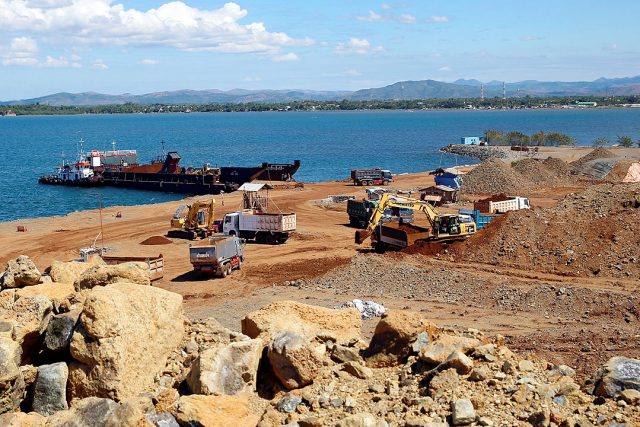
Trucks load rocks and soil containing nickel ore minerals into a barge in the mining town of Sta Cruz in Zambales, Feb. 8, 2017. — REUTERS

THE MINING INDUSTRY would prefer the imposition of a margin-based royalty and windfall profits tax, as it would still generate revenues for the government but less burdensome for miners.

Chamber of Mines of the Philippines  Vice Chairman Gerard H. Brimo said in a Viber message theses taxes would provide the government “with a progressively larger share in mining revenues when commodities prices go up and give a break to the industry when prices are low.”

The Department of Finance (DoF) wants Congress to prioritize a measure rationalizing the fiscal regime for the mining sector, as it seeks to generate additional revenues for the government.

Mr. Brimo said the industry supports House Bill No. 373, which is authored by House Ways and Means Committee Chairman and Albay Rep. Jose Maria Clemente S. Salceda. The bill proposes a margin-based royalty on large-scale miners outside of mineral reservations. It also proposes a windfall profits tax that is likewise based on margins.

Basing the tax on margins means that the rate increases as operating margins increase. 

Mr. Brimo said that margin-based royalty is practiced in many other countries.

“This is the same tax structure that applies in the two largest copper producing countries in the world, Chile and Peru, who have been able to attract substantial foreign investments to grow their industries. Canada also applies an income-based royalty although the royalty rate does not change,” he said.

Currently, the House Committee on Ways and Means is currently discussing the proposed new mining fiscal regime.

Under the latest version of the substitute bill, large-scale miners operating within reservations will be subject to a royalty of 5% of the market value of the gross output of their operations.

Meanwhile, the rates for large-scale miners outside mineral reservations will be subject to a margin-based royalty on income from their operations. For instance, miners earning margins of 1% to 10% will pay a royalty of 1%, while those with margins above 10-20% will pay 1.5%, and so on.

On the other hand, small-scale mines will pay a royalty of 2% of the market value of the gross output of their operations.

Meanwhile, the bill also seeks to impose a windfall profits tax based on their income from operations. For instance, those with margins of more than 35% up to 40% will pay a rate of 0.5%.

During a House Ways and Means Committee meeting in May, the Finance department also proposed to impose a royalty of 3% on the market value of gross output of large-scale mining operations outside mineral reservations. 

Mr. Brimo said the country’s current mining regime is “regressive” due to the taxes being imposed based on gross sales revenue.

Citing a study by Deloitte’s financial advisory group, he noted it recommended that the Philippines adopt an income-based royalty with rates tied to operating margins. “The report also mentioned that for the tax regime to be competitive, the combined tax impositions on the industry should not exceed 5% of gross revenues or output,” he added.

Mr. Brimo said that the excise tax on mineral products is “already substantial.”

Under the Tax Reform for Acceleration and Inclusion Law, the mining excise tax rate was increased to 4% from 2%.

“The Philippine large-scale mining industry is already taxed higher than bigger mining countries such as Indonesia, the world’s top nickel producer, as well as Peru and Chile,” he added. 

Dante R. Bravo, president of Global Ferronickel Holdings, Inc., also said that the current mining fiscal regime is “heavy” on the industry.

“In any event, we believe that the government should always pursue a constitutionally progressive system of taxation based on net income, rather than based on gross revenues,” he said in a text message.

To support the growth of the mining sector, Mr. Brimo said that the government must implement a progressive tax structure that encourages investments.

“While the current tax structure is already more expensive than Indonesia, our closest competitor, as well as the two top copper producers in the world, the introduction of an income-based royalty tied to operating margins for those outside mineral reservations as well as the windfall profits tax at least makes the increase more palatable and the overall mining tax structure not woefully uncompetitive,” he added.

Meanwhile, Eleanor L. Roque, tax principal of P&A Grant Thornton, said that the mining fiscal regime should also require miners to conduct their processing within the country.

“We have a lot of natural resources that are mined and once they are mined, they are lost forever, so we should ensure that our country gets the maximum possible benefits while at the same time making it economically viable to the investors,” she said in a Viber message.

“If we export processed and high-value products, the Philippine companies will also be able to recognize higher income and therefore, pay higher taxes. Processing here will also increase investments here in the Philippines and allow transfer of technology,” she added.

Data from the DoF showed that rationalizing the fiscal regime would generate P12.4 billion in revenues in 2025, P12.9 billion in 2026, P13.4 billion in 2027, and P13.9 billion in 2028. — Luisa Maria Jacinta C. Jocson

The trident Grecale-brates

PHOTO BY KAP MACEDA AGUILA

Maserati expands its lineup with a luxe compact crossover

MODENA MOTORSPORTS, INC., the official Maserati importer and dealer in the Philippines, recently presented the Grecali crossover. This offering from the luxury Italian car maker slots beneath the bigger Levante, and is expected to further grow the universe of clients in the country. Indeed, the crossover model is said to be part of the trident brand’s efforts to broaden its offerings.

The Grecale, named after a northeastern Mediterranean wind, is said to “strike the right balance of versatility, elegance, performance and innovation — guaranteeing performance, comfort, and safety.” The qualities are married with off-road capabilities and “uncompromising driving pleasure.” The vehicle underwent development at the Maserati Innovation Lab in Modena, Italy, and units are produced at the Stellantis-owned Cassino plant.

Maserati Philippines shared that the Grecale comes with either a conventional internal combustion or a mild hybrid system. “In a year’s time, Grecale will also be the first full-electric SUV in Maserati history,” the company continued in a release.

On display at the media launch event was the GT variant, powered by a four-cylinder mild hybrid engine capable of delivering 300hp. The model is priced at around P8.5 million. The more powerful Trofeo is also available, which is fitted with a high-performance 3.0-liter V6 making up to 530hp petrol V6 based on the Nettuno engine fitted to the MC20. Another trim, the Modena, which comes with a four-cylinder 330hp mild hybrid engine, will be available for indent ordering. The Grecale is also available in the PrimaSerie Launch Edition, a limited edition featuring exclusive content.

In a statement, Maserati Asia Pacific Head Takayuki Kimura, who was in town for the launch, said, “Grecale embodies a perfect blend of sportiness and sophistication. As the inaugural offering for a new segment of Maserati, we are very excited to bring Grecale to the Philippines to turn everyday journeys into extraordinary driving experiences.”

The company insists that the Grecale “sports best-in-class levels of interior space; drivability; handling; acceleration (with a standstill-to-100kph time of 3.8 seconds on the Trofeo); top speed (285kph on the Trofeo); sound quality; and extensive use of fine materials such as wood, carbon fiber and leather.”

The Grecale GT stretches 4,846mm, and boasts a wheelbase of 2,901mm, 1,670mm height, 2,163mm width (including wing mirrors), and a rear wheel track of 1,948mm.

The model design, particularly its front grille, calls to mind the MC20 as it “embraces Maserati’s new visual symbol.” The profile is described as being highly fluid, and its technical components are “highlighted with carbon fiber.” Boomerang taillights are inspired by the Giugiaro 3200 GT and fit in with the trapezoidal line.

Inside, the Grecale sports a traditional Maserati clockface, which is made digital for the first time.

“Everything becomes touch-based, with extreme aesthetic cleanliness. The technology is controlled from the displays: the large 12.3-inch central screen, the largest ever seen in a Maserati, another 8.8-inch display for the extra controls and a third for the passengers in the rear seats,” reported Maserati. The in-car sound is courtesy of an “immersive” Sonus faber 3D sound system which employs 14 speakers — upgradeable to 21.

A Vehicle Dynamic Control Module (VDCM) system gives “360-degree control” over the car, and the Grecale offers distinct drive modes: Comfort, GT, Sport, CORSA (in the Trofeo only) and Off-road.

In an interview with “Velocity,” Modena Motorsports President Sam Versoza said that Maserati’s showroom facility on EDSA will be opening in two to three months, ahead of a larger “multi-floor showroom” in the Primex Tower on EDSA corner Connecticut Avenue in San Juan City. “We’re just completing the flooring, finishing, and interiors,” he shared.

Mr. Versoza also revealed that, before the end of the year, Maserati Philippines will bring in the GranTurismo sports car. The executive also expressed confidence in the company’s directional shift to electric. “We’ll start with hybrid then we’ll slowly shift to electric even here,” he said. An all-electric Grecale is expected to be produced by next year.

As for the virtues of Maserati versus its premium market rivals, Mr. Versoza averred, “You really can’t compare. It’s something that not everyone can have — like expensive bags and watches that are exclusive.”

He concluded, “I’m confident that this will be the best year of Maserati.”

TV networks’ ties seen to boost their finances

GLENN CARSTENS PETERS-UNSPLASH

RECENT partnerships among television (TV) networks are expected to improve the media companies’ financial performance and widen their audience reach, but questions remain such as on revenue sharing and content rights.

“For the past few years, the landscape of TV has really changed, and so there are businesses, including us, that have realized that to partner with people who or companies who are very good at their craft will also benefit us,” TV5 Network, Inc. President and Chief Executive Officer Guido Xavier R. Zaballero told BusinessWorld in a recent interview.

“We are all running our businesses. At the end of the day, we are going to perform in terms of our profit-and-loss statements,” he added.

Last month, ABS-CBN Corp. and TV5 forged a content supply agreement that will run for the next five years.

Mr. Zaballero said the longer contract is a way for both networks to show their commitment to each other. The networks’ previous deal needed to be renewed every three or six months.

Toby Allan C. Arce, head of sales trading at Globalinks Securities and Stocks, Inc., said the partnership could boost ABS-CBN’s financial showing after the company lost its franchise.

“Following the loss of its franchise in 2020, ABS-CBN has indeed been adapting its operations to remain viable in the industry. One of the strategies they pursued was forming partnerships with other local networks, including GMA Network and TV5, to supply and share content,” said Mr. Arce.

ABS-CBN has also inked several partnership deals with GMA Network, Inc. such as the one in January when they signed a co-producing deal for television and streaming provider Viu and the one signed in April, which allowed GMA to stream its programs via ABS-CBN International, Inc.’s iWantTFC.

“These partnerships allowed ABS-CBN to continue reaching a wider audience and maintain a presence in the broadcasting landscape,” he added.

For Mr. Arce, the direction and extent of future collaborations will depend on factors such as the evolving media landscape, market conditions, and individual company strategies.

“However, it is not uncommon for media companies to engage in partnerships to leverage their resources and expand their reach,” Mr. Arce said.

“On the positive side, collaborations can potentially lead to cost-sharing and reduced production expenses, as well as increased advertising revenues through broader distribution channels. Additionally, partnerships may allow companies to tap into new markets or audience segments, which could contribute to revenue growth,” he said.

“On the other hand, partnerships can also involve complexities and challenges. Companies need to carefully navigate issues such as revenue sharing, content rights, and brand positioning. Furthermore, depending on the terms of the partnerships, there may be financial implications related to revenue sharing and investment commitments,” he added.

Mr. Arce said the financial impact of these partnerships will vary depending on the specific agreements and will ultimately depend on the success of the joint projects, and the overall market dynamics.

FIRST-HALF SHOWING
Meanwhile, Mr. Zaballero said TV5’s first-half results improved versus the prior year in terms of daily ratings and advertising revenues.

“I think what I can share right now is that our overall day ratings have improved. We are actually making a lot of improvements across most of the days in our ratings,” said Mr. Zaballero.

TV5 is currently showing on its network ABS-CBN’s TV programs such as “Batang Quiapo,” “Iron Heart,” and “Dirty Linen.”

Aside from the five-year content supply agreement, TV5 and ABS-CBN have separate co-production deals, which are seen to help the latter in populating specific time blocks.

Asked how the advertising revenues of the network performed over the past six months, Mr. Zaballero said: “Our advertising revenues improved versus [the] previous year. We have really seen an improvement across most of our day parts in which some showed double-digit improvement.”

However, TV5 is still operating in the red, which Mr. Zaballero said the network is planning to turn around in the next few years.

“We have also seen an improvement in our revenue delivery. What’s critical now for us is that we maintain our cost base because as the chairman has always expressed, the goal really is to bring TV5 to a point, of course, we want to be profitable,” he said.

MediaQuest Holdings, Inc. operates TV5. Hastings Holdings, Inc., a unit of PLDT Beneficial Trust Fund subsidiary MediaQuest Holdings, has a majority stake in BusinessWorld through the Philippine Star Group, which it controls. — Justine Irish D. Tabile

All-new GAC GS3 Emzoom marks global market debut in the Philippines

The GAC GS3 Emzoom comes in three variants with pricing starting at P998,000. — PHOTO FROM GAC MOTOR PHILIPPINES

GAC MOTOR PHILIPPINES recently launched the all-new GS3 Emzoom at The Blue Leaf Cosmopolitan, Quezon City.

“We are proud to host the international debut of the all new GS3 Emzoom after its reveal in China last December. (It) is the newest challenger in the scene, set to drive the GAC brand to new heights and zoom through Philippine roads with its fierce and sporty character,” said GAC Motor Philippines Brand Head Jun Cajayon.

The all-new GS3 Emzoom is the newest version of the brand’s GS3 crossover model, the entry-level vehicle to GAC Motor’s lineup in the market. This latest version is said to be “an evolution of GAC’s crossover line, combining striking aesthetics, large space, intelligent technology, and incredible performance in one package at an accessible price point.”

First revealed in China last December, the GS3 Emzoom is positioned as a trendy and intelligent SUV — “a perfect travel companion for today’s generation who are always on the go. It carries GAC’s bold and futuristic design language, pioneering unique style, advanced technology, and an efficient drivetrain.”

It bears a “futuristic industrial aesthetic defined by angular edges, geometric textures, and a dynamic stance,” completed by 19-inch alloy wheels and a sporty body kit, exclusive to the range-topping GL variant. The GS3 Emzoom’s front fascia is marked by a so-called Flying Wing Front Grille flanked by laser-eye LED headlights. On its sides are arc shadow blades that lead to its light dart tail lamps.

The futuristic design extends inside to features such as dual screens, a multi-function steering wheel, leather seats, wireless charging, and futuristic-design AC vents. A sunroof with electric shades provides additional daylight and an airy cabin experience. Its wide cabin also offers more legroom and shoulder space for a comfortable ride. GAC said that the GS3 Emzoom’s cabin “offers larger space in comparison to its competitors in the subcompact crossover segment.” Storage spaces and compartments can fit up to 21 items across the entire vehicle, while its luggage compartment provides generous cargo space when rear seats are folded flat. It comes equipped with a power tailgate for added convenience when loading items.

The vehicle supports wireless Apple CarPlay and Android phone mirroring, and sports a 10.25-inch infotainment screen and a seven-inch LCD instrument cluster. Standard safety features include dual front side and curtain air bags, seatbelts with pretensioner and force limiters, hill-start hold control, hill descent control, electronic parking brake with autohold, electronic stability program (ESP), tire pressure monitoring system, Isofix child safety seat anchors, engine immobilizer, and more. Advanced driver assistance system features include cruise control, parking sensors, a reverse camera, and other intelligent systems such as high beam assist, traffic jam assist, lane keep assist and lane departure warning.

Powering the GS3 Emzoom is a third-generation 1.5-liter turbocharged gasoline direct injection engine paired with a seven-speed wet dual clutch transmission. The mill delivers 174hp and 270Nm.

The all-new GS3 Emzoom is offered in three variants at the following special introductory prices: 1.5L GS DCT (P998,000), 1.5L GB DCT (P1.098 million), and 1.5L GL DCT (P1.198 million). It comes in the following exterior colors: Salt Lake Blue, Graphene Grey, Moonlight Grey, Ivory White, and Superstar Silver.

Booking for reservations for the all-new GS3 Emzoom is ongoing at all GAC Motor dealerships and through https://gacmotorph.com/all-new-gs3-sign-up/. All units come with a five-year warranty, and customer deliveries will begin next month.

GAC Motor dealerships are located in 16 locations, namely Alabang, Bacoor, Batangas City, Butuan, Cainta, Cebu, Davao, E. Rodriguez Ave. (New Manila), Iloilo, Lipa City, Makati, Manila Bay, Pampanga, Pasig, Quezon Avenue and Tarlac. A new facility in Bacolod will open in the third quarter of this year, bringing the brand closer to its target of opening 20 locations by yearend.

For more information, visit www.gacmotorph.com.

Delayed approvals blamed for transmission project delays

BW FILE PHOTO

PRIVATELY owned National Grid Corp. of the Philippines (NGCP) has cited late issuance of regulatory approvals as one of the reasons for delayed transmission projects ahead of the power grid operator’s commitment to complete two vital projects this year.

Aside from right-of-way issues, prolonged permitting procedures are also causing delays in the completion of NGCP’s projects, which the company said is already beyond its control.

“Late issuance of regulatory approvals may also be a reason for implementation schedules outside of those proposed in the TDP (transmission development plan),” said Cynthia P. Alabanza, NGCP spokesperson, in a Viber message last week.

On Thursday, the Energy Regulatory Commission (ERC) issued a show-cause order against the company over delays in 37 transmission projects.

In an order promulgated on June 14 and issued July 4, the ERC said NGCP failed to meet its proposed timelines to complete the projects and directed the system operator to explain within 15 days from receipt why no administrative penalty should be imposed on it.

The ERC also cited the TDP submitted by NGCP to the Department of Energy that indicated only an 8% increase in the transmission network since it took over the system from the government in 2009.

Ms. Alabanza said the TDP only provides a roadmap of transmission projects and that the company has fully committed to prioritizing operationally critical projects that have a real impact on the energy system.

She said currently, only two projects may be considered as having an urgent operational impact, “both of which are at varying levels of energization and are expected to be completed within the year.”

“The goal of NGCP, as a transmission service operator, is to provide stable bulk power delivery services with minimal impact to the consumer. The measure for the transmission grid operator’s ability to manage the power system is the ERC’s transmission performance indicators, implementation schedules notwithstanding. NGCP’s past performance shows that it has by far, successfully managed the transmission grid,” she said.

Ms. Alabanza said the NGCP will continue to pursue all of its projects while also expecting the government’s full support. — Ashley Erika O. Jose

ADVERTISEMENT
ADVERTISEMENT