Home Blog Page 4513

San Miguel unit posts flat first-half net income

SAN MIGUEL Food and Beverage, Inc. (SMFB) reported a consolidated net income of P18.8 billion in the first semester, which the listed manufacturer described as “steady” amid a challenging market environment.

No comparative figure was given by the company but it previously reported the same profit figure a year ago.

In a media release on Thursday, it said revenues in the first half were hit by the rising cost of raw materials, an increase in excise taxes, and elevated logistics costs.

“As uncertainties and risks to the economic environment remain, we will continue to take the necessary actions to mitigate the impacts on each of our businesses, including leveraging on each of our strengths to improve overall performance,” Ramon S. Ang, president and chief executive officer of SMFB said.

“We will continue to invest in building our brands and strengthening our portfolio in order to position SMFB for long-term sustainable growth,” Mr. Ang added.

Its consolidated revenues during the first semester rose by 7% to P184.6 billion due to the combination of volume growth and an efficient pricing strategy.

The company’s beer business, San Miguel Brewery, Inc. recorded a 26% increase in its consolidated net income in the first half to P13.5 billion on the back of strong sales.

Its consolidated sales during the period rose by 14% to P74.1 billion because of improving demand from domestic and international markets.

Revenues from domestic operations went up by 13% to P66 billion, driven by a 9% increase in volumes.

The company said that volume growth was due to the recovery of on-premise channels, resumption of tourism activities, relevant brand campaigns, intensified off-take generating programs, and other initiatives.

In international markets, its revenues increased by 16% after a strong export demand, as well as its Hong Kong, and Thailand markets.

Additionally, spirits unit Ginebra San Miguel, Inc. (GSMI) booked a net income of P4.1 billion, 64% higher than the prior year boosted by volume growth resulting from “strategic marketing campaigns.”

Volumes during the first half inched up by 1% year on year to 22.2 million cases.

“Through well thought-out strategies and campaigns, GSMI has continued to stay on top of its market, and has become a reliable performer and contributor to total San Miguel Group performance. With the initiatives it has launched, we’re looking to further build on its momentum and continue performing well for the rest of the year,” Mr. Ang said in a separate statement.

During the six-month period, the unit’s revenues climbed by 10% to P25.4 billion due to better selling prices.

The company said that its campaign, “Iba and Ngiti Ngayon sa One Ginebra Nation” and a consumer promo in March, sustained brand equity and spurred consumption, “cushioning the effects of a price increase implemented for all GSMI products.”

It added that on-the-ground events also boosted awareness and brought its brands to consumers, coupled with penetration drives and sampling activities in resorts and popular on-premise outlets.

“This was further supported by four pocket launches and 50 bar activations in major cities,” the company said.

Meanwhile, San Miguel Foods, Inc. saw revenues at P85.1 billion as “it continuously provided cost-conscious consumers what they want amid headwinds from higher raw material costs.”

On Thursday, SMFB shares went up by 0.1% or five centavos to close at P50.05 apiece while those of GSMI shares slipped by 0.25% or P0.40 to P158.60 each. — Adrian H. Halili

Local artists and artisans the focus of this weekend’s MaArte Fair

GET your wallets ready for this weekend: the MaArte Fair is back at the Peninsula Manila.

The Museum Foundation of the Philippines, Inc. (MFPI) is holding MaArte at the Pen from Aug. 4 to 6. During the fair, one can have a pick of local and sustainable goods and a host of new items, from gourmet chocolates, home and personal care products, handmade clothes, handcrafted jewelry, and everything else in between.

The Peninsula Manila’s Rigodon Ballroom and 5th and 7th floors will be the setting for this year’s fair. Brands to look out for include Godel chocolate, La Herminia pina weaving, Riotaso clothing, Oscar Mejia fragrances, Prizmic and Brill furniture, life goods brand Shepard, and model Tweetie de Leon-Gonzales’ jewelry brand — but then there will be around 120 exhibitors to choose from.

“We are so blessed to receive such a huge support from local artists and artisans,” said Danny Jacinto, Museum Foundation of the Philippines, Inc.’s President in a statement. “Over the years, MaArte Fair has made a name for itself as a destination where collectors, connoisseurs, and fans of local culture can get their hands on rare and beautiful pieces of jewelry, apparel, accessories, and scents. Thankful as we are for this, we want everyone to know that MaArte Fair has so much more to offer. From exquisite delicacies to pottery, leather and — very skillfully made — furniture, this year’s three-day event will give attendees a better idea of just how big and great the local artist and artisan community is, and how their love for their craft translates to the quality of their work.”

One can have a drink at The Mantuary, located at the hotel’s Balagtas Function Room. The courtyard will also serve as host to a mini exhibition of plants and flowers as well as Philippine-made motorcycles.

Those looking forward to this year’s MaArTea Talks can head over to the Salon de Ning — check out MaArte Fair’s Instagram account for schedules.

“At the end of the day, we would like to remind everyone that MaArte Fair is a fundraiser, and every purchase you make not only helps the artist you’re buying from, but the community as a whole — because a portion of the profit goes into helping us fund our initiatives that are geared towards preservation of our identity as a nation,” said Mr. Jacinto. 

Through funds raised from the MaArte Fair, the Museum Foundation has helped provide study grants to deserving individuals, fund shows and workshops that promote the Philippines’ native art and culture, and support projects of the National Museum and museums across the country. Most notably, the organization funded the restoration of Juan Luna’s painting La Bulaqueña, as well as major renovations done at the National Museum of Fine Arts and the National Museum of Natural History.

The MaArte Fair at The Pen will be held from Aug. 4 to 6. Admission is free. For more information, follow @maartefair on Instagram.

AboitizPower’s renewable energy unit joins Singapore firm’s wind project 

BRADY BELLINI-UNSPLASH

ABOITIZ POWER Corp. (AboitizPower) said its renewable energy arm Aboitiz Renewables, Inc. (ARI) had entered a partnership with Vena Energy to invest in the latter’s 102-megawatt (MW) wind power project in Rizal and Laguna.

“We are thrilled to partner with Vena Energy, given our shared ambition of growing the Philippine renewable energy generation portfolio in the coming years,” James Arnold D. Villaroman, ARI president and chief executive officer, said in a media release on Thursday.

The wind power project is likely to get financial close by 2024 and commence operations by 2025, AboitizPower said.

Emmanuel V. Rubio, president and chief executive officer of AboitizPower, said the joint venture agreement between the company’s unit and Singapore-based Vena Energy will accelerate its wind energy assets.

“This underscores our aspiration to be a significant contributor to a well-managed and just energy transition that will fuel the economic progress of the country. We continue to serve the critical needs of the Philippine energy system. We are confident we are able to deliver this project for our country’s renewable energy requirements,” Mr. Rubio said.

“Through ARI, AboitizPower is taking decisive steps towards our long-term objective of growing our renewable energy capacity and striking a 50:50 balance between our renewable and thermal portfolios by 2030,” Mr. Villaroman said.

Vena Energy is a renewable energy company that owns, develops, constructs, operates, manages, and commercializes a renewable energy portfolio.

“We are confident that by combining our experience and on-the-ground capabilities, this project will make a significant impact in accelerating the energy transition in the Philippines,” said Samrinder Nehria, head of Vena Energy Philippines.

Earlier this year, Vena Energy expressed its plans to grow its renewable energy projects in the Philippines with a combined capacity of 500 MW in the next three years.

Currently, Vena Energy has around 330 MW of operating renewable energy projects in the Philippines.

AboitizPower aims to have a portfolio mix with 50:50 renewable energy and thermal capacities by 2030. Based on its website, AboitizPower has around 3,962.25 MW of attributable net sellable capacity. The company placed its renewable attributable net sellable capacity at 928.42 MW. It is targeting to build 3,700 MW of renewable energy capacity by 2030. — Ashley Erika O. Jose

Nominations for 71st FAMAS awards announced

THE FILIPINO Academy of Movie Arts and Sciences (FAMAS) announced the nominees for the 71st FAMAS Awards on Aug. 2 through its official Facebook page.

Family Matters will enter awards night with 12 nominations including Best Actor (for Noel Trinidad) and Actress (Liza Lorena), plus Best Director (Nuel Naval) and Best Picture. Also in the running for Best Picture are Blue Room (which got 10 nominations), Leonor Will Never Die (nine nominations), and Deleter (eight nominations).

FAMAS is known as the oldest existing award-giving body in the Philippines and one of the oldest in Asia. The organization, which is composed of writers and movie columnists, started in 1953.

This year, the winners of the 13 categories will be declared at the Manila Hotel on Aug. 13.

Below is the complete list of nominees:

Best Picture: Cineko Productions’ Family Matters; Heaven’s Best’s Blue Room; Music Box Films’ Leonor Will Never Die; AQ Prime’s La Traidora; and Viva Films’ Deleter

Best Director: Nuel Naval for Family Matters; Mikhail Red for Deleter; Ma-an Asuncion-Dagñalan for Blue Room; Alejandro Ramos for La Traidora; and Martika Escobar for Leonor Will Never Die

Best Actor: Paulo Avelino for Ngayon Kaya; John Arcilla for Reroute; Diego Loyzaga for Greed; Ian Veneracion for Nanahimik ang Gabi; and Noel Trinidad for Family Matters

Best Actress: Liza Lorena for Family Matters; Nadine Lustre for Greed; Heaven Peralejo for Nanahimik ang Gabi; Janine Gutierrez for Ngayon Kaya; and Sheila Francisco for Leonor Will Never Die

Best Supporting Actor: Soliman Cruz for Blue Room; Nonie Buencamino for Family Matters; Mon Confiado for Nanahimik ang Gabi; Sid Lucero for Reroute; and Rocky Salumbides for Leonor Will Never Die

Best Supporting Actress: OJ Arci for La Traidora; Nikki Valdez for Family Matters; Louise delos Reyes for Deleter; Mylene Dizon for Family Matters; and Nour Hooshmand for Blue Room

Best Screenplay: Mel Mendoza del Rosario for Family Matters; Martika Escobar for Leonor Will Never Die; Abet Raz and Alejandro Ramos for La Traidora; Ma-an Asuncion-Dagñalan for Blue Room; and Nikolas Red and Mikhail Red for Deleter

Best Production Design: Eero Yves Francisco for Leonor Will Never Die; Maolen Fadul for Blue Room; James Rosendal for Greed; Elfren Vibar for Family Matters; and Law Fajardo for Reroute

Best Cinematography: Carlos Mauricio for Leonor Will Never Die; Ian Alexander Guevara for Deleter; Joshua Reyes for Reroute; Noel Teehankee for Family Matters; and Neil Daza for Blue Room

Best Editing: Lawrence Ang for Leonor Will Never Die; Nikolas Red for Deleter; Beng Bandong for Family Matters; Vanessa de Leon for Blue Room; and Law Fajardo for Reroute

Best Musical Score: Len Calvo for Ngayon Kaya; Alyanna Cabral and Pan de Coco for Leonor Will Never Die; Cesar Francis Concio for Family Matters; Myka Magsaysay-Sigua and Paul Sigua for Deleter; and Jazz Nicolas and Mikey Amistroso for Blue Room

Best Sound: Armand de Guzman and Aian Caro for Deleter; Andrea Teresa Idioma and Emilio Bien Sparks for Nanahimik ang Gabi; Corinne de San Jose for Reroute; and Jannina Mikaela Minglanilla and Michael Keanu Cruz for Blue Room

Best Short Film: Ang Mga Abo by Gabby Ramos; Golden Bells by Kurt Soberano; Dosena by Kyla Romero; Pasan by Marvin Cabas and John Paul Dabuet; and Isa sa Isang Dosena by Leia Reyna Pasumbal — Brontë H. Lacsamana

SEC proposes revised fee plan for registrants

THE Securities and Exchange Commission (SEC) is planning on implementing a revised structure for its regulatory fees and charges for registered firms and entities.

“There is a need to restructure the SEC fees and charges at a level commensurate with the cost of regulating the corporate sector and capital market for continuous improvement of the Commission’s performance, sustainability of operations,” the regulator said in a draft circular.

The SEC added that the move is in line with the fulfillment of its legal mandate pursuant to the passage of the Revised Corporation Code of the Philippines (RCC). The RCC provides the authority of the regulator to collect, retain, and use fees, fines, and other charges.

It said under Section 179 of the RCC, the commission has the power and authority to formulate and enforce standards, guidelines, policies, rules, and regulations to carry out the provisions of the code.

The commission also has the authority to exercise such other “powers provided by law or those which may be necessary or incidental to carry out the powers expressly granted to it.”

It added that the draft is pursuant to the guiding principles set in a joint circular by the Department of Finance, Department of Budget and Management, and National Economic and Development Authority.

“The commission, imposes fees and charges constituting delivery of services to its stakeholders which entails costs, and equity requires that persons, natural or juridical, receiving or benefiting from rendered services share the cost of providing such services,” the SEC added.

Under the proposal, registration, licensing, accreditation, and other related transactions are imposed a new schedule of fees for registered entities.

In a separate release, the SEC said that it had secured the conviction of eight officers of Phil86 Gurunanak Lending and Trading Corp. for the falsification of its registration documents.

The SEC said that the Pasay City Regional Trial Court Branch 112 fined each involved individual P10,000 for the violation of Section 12, Paragraph 3(a) of Republic Act No. 9474, or the Lending Company Regulation Act.

The regulation states that any officer, employee or agent of a lending company who knowingly and willingly makes any false or misleading statement with respect to any material fact in any application, report, or document required under the law, will be penalized.

The regulator found that Phil86 submitted a certificate of bank deposit amounting to P1 million, but upon verification, no certificate was issued.

“This marks the 10th conviction scored by the SEC for violation of the LCRA, with a total of 86 individuals already convicted,” the commission said. — Adrian H. Halili

Striking Hollywood writers to hold first talks with studios in three months

AHMET YALÇINKAYA-UNSPLASH

Hollywood’s striking writers and major studios have agreed to hold talks on Friday for the first time since their strike began over higher pay demands in May, the Writers Guild of America (WGA) said on Tuesday.

The Alliance of Motion Picture and Television Producers (AMPTP), reached out to the WGA and requested a meeting, the WGA negotiating committee told its members in a statement that was shared with Reuters.

“We’ll be back in communication with you sometime after the meeting with further information,” the committee told its members in its note.

The AMPTP negotiates on behalf of Walt Disney, Netflix, Warner Bros. Discovery and other studios.

An AMPTP spokesperson told Reuters that the alliance was committed to finding a mutually beneficial deal, without giving further details.

The strike by about 11,500 writers has led to late-night shows cancelling new episodes, disrupted most production for the fall TV season, and halted work on big-budget movies.

Hollywood actors joined the writers on picket lines in July as they also demanded higher streaming-era pay and curbs on the use of artificial intelligence.

The entertainment website Deadline reported on Tuesday that the WGA and the studios were on the verge of making a breakthrough in talks. — Reuters

When even Swiss banks fail

CREDIT SUISSE

(Part 2)

If there’s any takeaway from the series of financial crises in the last 25 years, it is not that strong regulation produces strong banks. Strong regulation by itself will be useless unless we have straight banking regulators who will enforce the Basel accords among the banks following their own strong corporate governance. Market discipline also remains a necessary pillar for overall financial stability.

Credit Suisse is not exactly an innocent bystander who happened to be in the wrong place at the wrong time. True, the collapse of Silicon Valley Bank and Signature Bank in close succession sent jitters through the financial markets, regulators and investors alike. It’s not puzzling but Credit Suisse was a natural market concern because, one, it experienced an earlier funding problem that required it to solicit investment from the Middle East and Scandinavia; and, two, it had a series of serious mismanagement problems under its belt. Credit Suisse became synonymous with “risky.”

Thus, in October 2022, when a journalist tweeted that a major investment bank was “on the brink,” there was no other bank that fit the bill except Credit Suisse. Immediately, the investment bank bled from deposit withdrawal of as much as SFr 100 billion, pushing share prices down. In need of quick liquidity, Credit Suisse tried but failed to convince its biggest shareholder, Saudi Arabia’s Saudi National Bank (SNB), to top up its initial $1.5-billion investment made in 2022 for a 10% stake. Instead of helping calm the markets, its chairman, Ammar Al Khudairi, issued a pointed denial of SNB’s potential support: “absolutely not, for many reasons outside the simplest reason, which is regulatory and statutory.”

This quip spread rapidly through social media and the capital markets, and it was enough to cause an exodus of deposits and a collapse in its share prices. Investors began to panic. Credit Suisse’s credit default swap (CDS) spread literally spiked, so Switzerland’s central bank, the Swiss National Bank, had to come in and infuse it with additional liquidity.

Although SNB had already clarified last year that it had no plans of increasing its exposure to Credit Suisse, CNBC later reported that the Chairman’s remark literally amounted to shooting itself in the foot because as the biggest shareholder, it was also the biggest loser when Credit Suisse’s share prices suddenly plummeted. Other shareholders include the Qatar Investment Authority and Norway’s sovereign wealth fund, Norges Bank Investment Management.

The Swiss National Bank at first thought that SFr 50 billion in financial assistance as a “liquidity backstop” could do the trick. Against collateral, Credit Suisse could draw from the facility any time as necessary. The central bank hoped against hope that such a demonstration of liquidity could reassure investors that their money was safe, and that speculation was not warranted.

Through these episodes, some quarters were in a quandary as to why the Swiss National Bank, the Swiss Financial Market Supervisory Authority (FINMA), and the Swiss Federal Department of Finance opted to merge Credit Suisse with UBS, the largest bank in Switzerland. The UK Economic and Social Research Council’s Economic Observatory argued in April 2023 that four options were actually available for Credit Suisse.

First is to declare insolvency and permit Credit Suisse to close through the operation of banking law. But this is a long and winding process which is not appropriate for big, interconnected banks like Credit Suisse. There could be more negative consequences of global proportion.

Second is through bank resolution. This would involve the regulators’ direct intervention by bailing in creditors, restructuring the bank over the weekend in a bid to minimize disruption in retail banking and other financial services. This could have been speedier, and less disruptive. Whether this could have preserved the bank’s 167-year legacy is an open question given its basic weaknesses. In the first place, it should have in place a restructuring program in case it needed resolution but it was reported that the program was half complete when the shock hit Zurich.

Third is to nationalize Credit Suisse. This was ruled out because a similar rescue program was done in favor of UBS itself. More and bigger use of public money was less acceptable to Switzerland’s civil society.

Finally, merge Credit Suisse with UBS. What is strange is that as early as March 15 before the bank was formally folded in with UBS with the liquidity backstop, the merger was already mandated, allowing Credit Suisse to continue its regular operation with restructuring. Its Additional Tier 1 (AT1) Capital, that which is derived from the issuance of Tier 1 Capital Notes, aggregating SFr 16 billion will be written down to zero. In effect, the capital position of UBS will not weaken from the merger, but instead will be strengthened.

It took over Credit Suisse for $3.2 billion even as last year’s valuation put it at around $22.8 billion or at the time of the takeover, about $8.4 billion. Shareholders of Credit Suisse were paid only one single UBS share for every 22.48 shares they held. UBS was the clear winner.

In addition, UBS was also granted access to additional SFr 100 billion from the central bank. With government guarantee for losses of up to SFr 9 billion after UBS’s guarantee of the first SFr 5 billion, the solution is not quite a commercial solution. Public money was still involved and possibly, at risk.

Hindsight makes the case against Credit Suisse an obvious one.

London’s The Guardian in February last year ran an interesting article about what it called “Credit Suisse scandals.” There was a string of controversies involving the second largest Swiss bank.

This is bad corporate governance, plain and simple: from as early as 1986, the bank was already involved with some dictatorships’ deposit of ill-gotten wealth and on to destroying evidence of some companies in Japan trying to conceal their losses from their shareholders and the public.

In the subsequent years, Credit Suisse was involved in accepting deposits linked to government corruption, helping money launderers, inflating the price of sub-prime bonds during the Global Financial Crisis, and helping some parties evade taxes. More cases were filed against the bank for fraud, offering jobs to families of its potential clients, corporate espionage and drug trafficking.

And of course, Credit Suisse’s biggest scandal was its loss of $5.5 billion due to its risky exposure to the US hedge fund Archegos Capital Management as well as UK’s finance firm Greensill Capital. They collapsed in 2021 as an obvious testament to the bank’s failure in basic risk management. After the fact, Credit Suisse promised to put risk management “at the heart” of its decision-making.

Thus, there is a deeper, more fundamental problem in Credit Suisse. No less than FINMA chair Marlene Amstad could have summed it up better. The bank suffers from a “cultural problem that translated into a lack of accountability.” Cultural it is, because the slide into ignominy did not start with the banking stress in the US this year, it actually started long before, gaining momentum in the aftermath of the Global Financial Crisis. Credit Suisse was actively involved in the proliferation of the sub-prime business.

Credit Suisse is no less than a cautionary tale when strong regulations are treated shabbily. The GFC made it imperative to toughen the regulation of large, interconnected banks like Credit Suisse. But the bank was rather half-hearted in its compliance. Higher capital buffers bought some time for Credit Suisse in October 2022 but not enough to permit the Swiss regulators to package a less disorderly outcome.

Funding costs for the banks may have to increase due to the bail-in of Credit Suisse’s AT1 bonds. This instrument is meant to enhance the bank’s loss-absorbing capacity when written down to zero, as the regulators permitted it. This was not expected by investors who thought a write down would not occur “before shareholders were completely wiped out.” This means AT1 bond holders may suffer losses before equity holders even as the coupons paid on the bonds exceeded the bank’s representation to their clients. With the decision of the regulators to merge, rather than resolve the Credit Suisse problems, it now becomes necessary for other regulators to reflect on the role and use of AT1 instruments in establishing the capital position of the banks.

This could have long-term impact on fund-raising cost by the banks.

There is no dispute that Basel III accords on capital, leverage and liquidity are financial-crisis preventing measures. But it is incumbent upon the regulators to choose the best option on how to mitigate brewing challenges to bank’s financial condition, and enforce the strategy right away to its logical end. But the story of Credit Suisse also compels us to think about further exploring resolution strategies that are better able to help stabilize a bank’s liquidity position.

Credit Suisse failed in many respects in regulatory compliance and upholding good corporate governance as shown by the string of scandals it was involved in. As risks continue to increase banks’ vulnerabilities, it’s not smart to be less diligent in assessing risks related to funding costs, interest rate sensitivity and credit risks. Even in the Philippines, the slow but definitive uptrend in indebtedness, hidden leverage and liquidity mismatches in the non-bank sector should always raise some red flags from both the Bangko Sentral ng Pilipinas and the market players themselves.

Lack of vigilance especially on the banks’ capital positions, risk management and governance demystified the much-vaunted Swiss banking reputation. When even Swiss banks fail, nothing else should surprise us anymore in the emerging markets.


Diwa C. Guinigundo is the former deputy governor for the Monetary and Economics Sector, the Bangko Sentral ng Pilipinas (BSP). He served the BSP for 41 years. In 2001-2003, he was alternate executive director at the International Monetary Fund in Washington, DC. He is the senior pastor of the Fullness of Christ International Ministries in Mandaluyong.


Now Corp., Cagayan Economic Zone Authority enter into telco partnership

LISTED COMPANY Now Corp. has signed a memorandum of understanding with Cagayan Economic Zone Authority (CEZA) to boost the telecommunications infrastructure in the province.

In a regulatory filing on Thursday, the company said the tie-up “aims to advance the Philippines’ telecommunications and digital world-class communications critical infrastructure which includes the provisioning of unified connectivity, software systems and services that would operate in the province of Cagayan.”

The partnership involves the deployment of fixed wired, fixed wireless, terrestrial, satellite, and other delivery systems to CEZA.

Now said the tie-up would help in ensuring reliable and quality broadband and other information and communications technology services to CEZA locators.

It said CEZA’s “strategic positioning and critical infrastructure underscore its profound significance.”

“CEZA’s vicinity to two Philippine-American military bases, integral to the Enhanced Defense Cooperation Agreement (EDCA) between the United States and the Philippines, amplifies its global security influence,” Now said.

“Furthermore, its proximity to Taiwan, positions [it] as a potential extension for Taiwan’s industrial zones, underscoring its commercial and strategic reach,” it added.

On Thursday, shares in Now climbed three centavos or 2.46% to P1.25 apiece. — Justine Irish D. Tabile

Philippine drag illuminates on Drag Race PHL season two

A DRAG artist will once again be given the chance to sashay to the top as the second champion of Drag Race Philippines, the successful reality competition show that premiered in the country last year on discovery+, HBO Go, and WOW Presents Plus.

Based on the original American series RuPaul’s Drag Race, the Filipino version aims to find the Philippines’ next “Drag Superstar.”

“Last year was fantastic and this year is going to be bigger and better. We’re very proud to bring back Drag Race Philippines for season two,” Warner Brothers’ discovery+ Vice-President for Asia Pacific Daniel Tan said at the launch on Aug. 1 at Xylo at the Palace, Bonifacio Global City.

Award-winning actor and “transformation” queen Paolo Ballesteros, or Mamwa Pao, will return as host. RuPaul’s Drag Race alumna Jiggly Caliente and presenter and Karen Davila impersonator KaladKaren will also return as resident judges.

Almira and Mylene Cercado of the P-pop girl group 4th Impact, actresses Maricel Soriano, Gloria Diaz, and Anne Curtis, social media creator Bretman Rock, and Thai drag queen Pangina Heals are among the guest judges in season two.

Precious Paula Nicole, a drag artist from Camarines Norte who has been performing for 12 years, won the title of first Filipino drag superstar in the first season.

She shared that, on the way to the viewing party venue, she was reminded of coming to the O Bar to start being a drag queen many years ago.

“I was told by my boss that if I didn’t improve within three months, I wouldn’t make the cut,” she told the audience. “Fast forward to today. I’m very grateful to Drag Race for opening the doors for me and my sisters.”

For Precious Paula Nicole, season two will prove that there are still many doors to open and many beautiful, talented, fierce Filipino queens who have yet to show the world what they can offer.

THE NEW QUEENS
In the second season of Drag Race Philippines, 12 drag performers will be racing to the finish line. But first, they will do so by completing challenges in two groups of six — a controversial move that marks a big departure from season one.

The queens in the first group are:

Arizona Brandy, a performer at the Cubao drag bar Rapture, has a persona that focuses on her fondness for drinking and philosophy of not taking life too seriously.

Captivating Katkat, a prominent transgender woman and drag queen who performs at The One 690 Entertainment Bar, garnered viral attention for her rendition of “Let It Go.”

M1ss Jade So, another transgender woman, considers herself a “power top bratz doll” and is known for her impeccable sense of fashion and fantasy.

Matilduh calls herself a “multimedia drag superstar,” using her skills as an events designer and florist in her drag appearances and performances.

Nicole Pardaux is the face of Cebu drag and aims to show through her artistry and flair what the Queen City of the South has to offer.

Tiny Deluxe, a newcomer to the industry, started off as a singer and hopes to eclipse the shadow of her drag mother, season one alumna Viñas Deluxe.

The queens in the second group are:

Astrid Mercury, who performs at Nectar, Club Level, and Chelu, is renowned for mesmerizing looks, supplemented by her background as a former cheerleader and stunt queen.

Bernie, the third transgender woman competing this season, has over 16 years of experience in the Manila drag scene and is a regular performer at O-Bar.

DeeDee Marié Holliday, whose fiery talents have been known globally for over a decade, advocates for AIDS awareness while showing love and passion for drag.

Hana Beshie from Cagayan de Oro City blends camp and creativity in her art, including her name which is a pun on the appliance brand Hanabishi.

ØV CÜNT is the provocateur of the season, known for showcasing the darker and edgier side of drag and shattering creative boundaries.

Veruschka Levels is a Hong-Kong based Filipino drag artist whose skills as a photographer and makeup artist help her show off her beauty and artistry.

The competition will follow the 12 drag queens as they battle it out in obstacles that require creativity and confidence, from photoshoots and talent shows to the dreaded elimination lip-sync showdowns.

New episodes of Drag Race Philippines will be released every Wednesday, and the spin-off and after-show, Drag Race Philippines: Untucked, releases new episodes every Friday. The shows stream on discovery+, HBO GO, and WOW Presents Plus. — Brontë H. Lacsamana

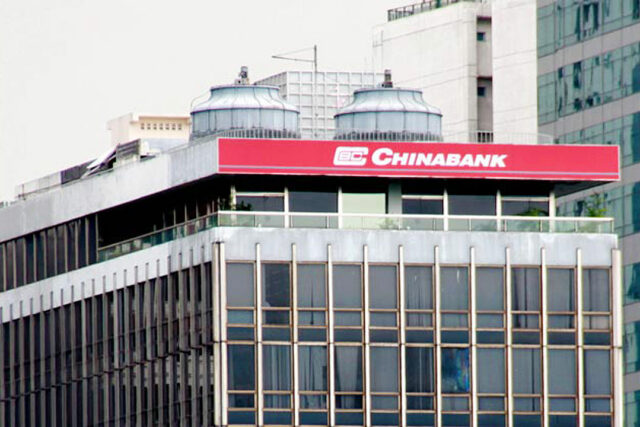
China Bank net income up 7%

BW FILE PHOTO

CHINA BANKING Corp. (China Bank) saw its net income rise by 7% in the first half amid higher revenues and as it set aside lower loan loss provisions, it said on Thursday.

The bank’s net profit climbed to P10.8 billion in the first semester from P10.1 billion in the same period last year, it said in a disclosure to the local bourse.

Its first-half performance translated to a return on equity of 15.9% and a return on assets of 1.6%, down from 16.4% and 1.7%, respectively.

For the second quarter alone, its net profit stood at P5.8 billion.

The bank’s financial statement was not available as of press time.

“Our customer focus and disciplined operational execution enabled us to continue to deliver strong results to all our stakeholders,” China Bank President and Chief Executive Officer Romeo D. Uyan, Jr. said.

In the first half, the bank’s net interest income stood at P25.5 billion, up by 16% from P22 billion in the same period last year. This came on the back of a 46% increase in interest earnings to P37.9 billion, which offset a 218% rise in interest expenses to P12.3 billion.

Its net interest margin was at 4.2% in the first half, down from 4.3% a year ago.

Meanwhile, China Bank’s fee income dropped by 48% year on year to P1.7 billion in the period.

The bank’s total revenues stood at P27.2 billion in the first semester, up by 8% year on year.

On the other hand, operating expenses rose by 22% to P13.6 billion amid “continued heavy investments on human resource development and digital innovation, along with higher volume and revenue-related taxes.”

The bank’s cost-to-income ratio was at 50%, higher than the 44% seen a year prior.

China Bank’s net loans rose by 11% year on year to P726 billion in the first half as consumer loans went up by 20% and business loans climbed by 8%.

Despite the growth of its loan portfolio, the bank’s nonperforming loan (NPL) ratio went down to 2.2% from 2.3% a year prior.

NPL cover was at 122%, down from 128% a year ago, as the bank set aside loan loss provisions worth P900 million in the first half, down by 47% from P1.7 billion in the same period last year.

On the funding side, total deposits grew by 19% to P1.12 trillion from P945 billion in the first half of last year.

“CASA (current account and savings account) ratio dropped to 49% due to the growth in term deposits year on year,” China Bank said.

Total assets stood at P1.39 trillion at end-June, up by 15% year on year.

The bank’s equity likewise grew by 9% to P139 billion.

Its capital adequacy ratio stood at 16.1% as of June, up from 15.7% a year prior, while its common equity Tier 1 ratio was at 15.2%, also higher than the 14.8% seen last year.

China Bank has 643 branches and 1,062 automated teller machines to date, including those of its thrift arm China Bank Savings, Inc. (CBS).

The bank’s board of directors on Wednesday approved a P2-billion capital infusion into CBS, it said in a separate disclosure on Thursday.

The funds will be used to “support CBS’s sustained loan expansion and enhance its ability to cover and serve more segments of the banking and unbanked population.”

China Bank’s shares closed unchanged at P31 each on Thursday. — A.M.C. Sy

SC rejects illegal dismissal claim versus Steam System Philippines

BW FILE PHOTO

THE Supreme Court (SC) has upheld the dismissal of a former general manager of a steam engineering company, rejecting claims of illegal dismissal put forward by a former general manager.

In a resolution dated Feb. 1 and made public on Aug. 2, the tribunal ruled that the dismissal of Ronaldo S. Mina was valid, after he established a new company and operated it within Steam System Philippines, Inc., (SSPI) without permission from the company’s board of directors.

“We have repeatedly recognized that employers cannot be compelled to retain employees who are guilty of acts inimical to its interests,” according to this ruling.

“It bears stressing that Mina was not sufficiently authorized to establish Ainam Philippines, Inc. (API).”

The High Court upheld a Court of Appeals finding that Mr. Mina’s dismissal was legal and valid.

Under the Labor Code, employee dismissals are valid in the event of fraud or deliberate breach of the employer’s trust.

Employees in managerial roles are considered to be in positions of trust and confidence.

The company imports, markets, and distributes steam engineering products. It was also the exclusive distributor of Spirax Sarco Private Limited (Spirax) products in the Philippines.

Mr. Mina assumed the role of GM after Charles Moody, one of the company’s founders, had to leave for the UK in 2002 to receive treatment for bone cancer.

Two years later, he formed API with the goal of developing and exploring a market for alternative stream products outside of Spirax.

In 2005, Mr. Moody died and left instructions that Mr. Mina was to be his successor, and left his shares to him and other employees.

Mr. Mina claimed that Mr. Moody’s ex-wife and SSPI co-founder, Lilibeth Moody, had been trying to oust him from the company ever since he took over.

That same year, the company suspended Mr. Mina over the risk posed by API to the exclusive distributorship deal with Spirax.

The labor arbiter sided with Mr. Mina in his illegal dismissal claim and ordered Steam System to pay him back wages and interest.

The National Labor Relations Commission (NLRC) overturned the ruling saying Mr. Mina’s creation of a new company was an “act of disloyalty and serious misconduct befitting loss of trust and confidence.”

The CA affirmed the NLRC’s findings since Mr. Mina failed to show the tribunal that his actions had been approved by the board or Mr. Moody, the late company founder.

“Mina failed to appreciate the significant consequences that could have arisen from SSPI’s violation of its exclusive distributorship agreement with Spirax,” the High Court said. — John Victor D. Ordoñez

Feminizing the boardroom

STOCK PHOTO | Image from Freepik

Over the past few decades, women’s participation and leadership in corporate boardrooms have been steadily gaining momentum across the globe. Gender equality and women empowerment remain central in the agenda of many organizations around the world.

These issues also remain central to the 2030 Agenda for Sustainable Development and the Community Vision 2025 of the Association for Southeast Asian Nations (ASEAN).

Many programs and initiatives have been implemented and continue to be advanced to provide women with equal access to decision-making power as women are widely recognized for their valuable contribution towards economic development, and business growth.

Current data, however, shows that there remains a need to push for more participation of women. Based on data from UN Women, women leaders in Southeast Asia, while occupying important roles in organizations, continue to struggle to break the glass ceiling.

Latest figures show that the share of women managers rose only two percentage points in 20 years (from 39% in 2000 to 41% in 2020), while the share in middle and senior management stands at a much lower 26%. In political governance, women hold 22% of parliament seats, but women ministers are often relegated to leading committees on gender equality and women’s affairs.

The report of UN Women also shows that even though women make up 67% of healthcare workers, the frontline responders to the pandemic, only 11% of chief executive officers in the region’s biggest hospitals are women, and ASEAN’s ministers of health are mostly men. The report further noted that women led only 6% of environment and related ministries in 2020.

The story of Filipina leaders are not far apart their counterparts in Southeast Asia. Historically, the Philippines has been a country with deeply ingrained patriarchal norms and gender biases. Women were often confined to traditional gender roles, limiting their access to education, employment, and leadership positions. However, with changing societal dynamics and a greater focus on gender equality, women are continuously and steadily shattering the entry barriers and emerging as influential leaders in the corporate and political world.

Despite progress, women in the Philippines continue to face several challenges and barriers in reaching leadership positions. The prevalent societal expectations of women as primary caregivers, along with cultural stereotypes, can hinder their career advancement. Additionally, gender bias, unconscious biases, and the lack of networking opportunities often impede women’s access to corporate boardrooms.

Recognizing the need for a more diverse and inclusive leadership, the Philippine government, alongside various organizations and advocacy groups, has taken significant steps to promote women’s participation in corporate boardrooms. The passage of the Magna Carta of Women in 2009 provided a legal framework for gender equality and empowered women to pursue leadership roles. The creation of organizations such as the Philippine Women’s Economic Network and the Women’s Business Council Philippines has further facilitated networking, mentorship, and leadership development opportunities for women.

Many forward-thinking companies in the Philippines have embraced diversity and inclusion as key pillars of their corporate strategies. These organizations understand that diverse leadership teams bring unique perspectives, enhance decision-making processes, and drive innovation. By implementing gender diversity policies, setting targets, and fostering inclusive work cultures, these companies are actively working towards breaking gender barriers in the boardroom.

As a result of forward-thinking inclusive initiatives, there is a steady rise of women leaders in the Philippines’ corporate boardrooms. Women such as Tessie Sy-Coson of the SM Group have broken through traditional gender roles and emerged as influential figures in the business world. Sy-Coson is head of one of the country’s largest conglomerates and has been instrumental in the growth of SM Investments Corp., which now has interests in a wide range of industries, including retail, property, and banking.

Robina Gokongwei-Pe is another top Filipina executive who is at the helm of one of the biggest conglomerates in the Philippines. She is the president and chief executive officer (CEO) of Robinsons Retail Holdings, Inc. (RRHI) which values, recognizes, and celebrates the contributions made by women in the entire Gokongwei Group.

The former President and CEO of Sunlife Financial Philippines, Riza Mantaring, is yet another example of an excellent Filipina executive. Mantaring’s dynamic leadership style and commitment to customer-centricity have propelled the company to become one of the leading insurance providers in the country. Her strategic decisions and focus on innovation have contributed significantly to Sun Life’s growth and success.

Cosette Canilao, Aboitiz InfraCapital president and CEO, also exemplifies the Filipina leader making a mark in the business world. With over 20 years of experience in commercial and investment banking, transaction advisory and infrastructure, Canilao was the former head of Standard Bank’s distressed debt business in the Philippines, a former partner of PwC, and was previously the head of the PPP Center in the Philippines where she played a key role in the country’s infrastructure development and delivery.

Another woman leader that cannot be easily ignored in shattering the glass ceiling is the current Shell Philippines President and CEO Lorelie Quiambao-Osial — the first woman CEO of Shell in the Philippines. Osial has brought a keen focus on value and has established high performing, diverse teams who have built a strong sense of community and motivation even in times of transition and change.

THE DISTINCT ROLE OF WOMEN IN MANAGEMENT
Women leaders in top Philippine companies bring a distinct set of skills and qualities to the table, contributing to the overall success of their organizations. Some key aspects that set them apart include:

• Empathy and Collaboration: Women leaders often exhibit strong empathetic skills, enabling them to understand and connect with diverse stakeholders. This empathy fosters collaboration, teamwork, and inclusive decision-making, creating a harmonious work environment where all voices are heard.

• Relationship Building: Women leaders excel in building strong relationships, both within and outside their organizations. Their ability to establish trust and rapport is crucial for nurturing a positive workplace culture and fostering fruitful partnerships.

• Transformational Leadership: Women leaders often adopt a transformational leadership style, inspiring and motivating their teams to achieve excellence. They empower their employees, encourage creativity, and promote personal and professional growth.

• Diversity and Inclusion Advocacy: Women leaders serve as role models, advocating for diversity and inclusion in the workplace. They recognize the value of diverse perspectives and actively promote equal opportunities for all, driving positive change within their organizations and society.

The presence of women leaders in top Philippine companies has proven to be instrumental in driving business performance. Research consistently indicates that companies with diverse leadership teams outperform those with less diversity. Women leaders bring fresh insights, alternative problem-solving approaches, and a focus on long-term sustainability. Their inclusive leadership styles foster employee engagement, innovation, and customer satisfaction, ultimately leading to enhanced business outcomes.

The rise of women leaders in top Philippine companies is a testament to the progress being made towards achieving gender equality and empowering women in the workplace. These trailblazers are breaking barriers, challenging traditional norms, and paving the way for future generations of women leaders. Their distinct roles in management, characterized by empathy, collaboration, and transformational leadership, have positively impacted business performance and workplace culture.

As more companies embrace the value of gender diversity, the contributions of women leaders will continue to shape a more inclusive and prosperous corporate landscape in the Philippines.


Ron F. Jabal, APR, is the chairman and CEO of PAGEONE Group (www.pageonegroup.ph) and founder of Advocacy Partners Asia (www.advocacy.ph).

ron.jabal@pageone.ph

rfjabal@gmail.com

ADVERTISEMENT
ADVERTISEMENT