Home Blog Page 45

The future is electric: Radar EV Pickup debuts at MIAS 2026

Driving a bold shift towards electric power, comfortable drive and real-world wavings

Radar EV Pickup makes its highly anticipated debut at the Manila International Auto Show (MIAS) 2026, marking its inaugural appearance at a Philippine motorshow. Officially launched in October 2025, RADAR is poised to redefine the pickup truck segment with its compelling blend of electric power, unibody comfort, and versatile utility.

UAAGI Auto Group, the official distributor of RADAR EV Pickup in the Philippines, spearheads this landmark public exhibition at MIAS 2026, from April 9-12, 2026 at the World Trade Center in Pasay City, offering Filipino consumers an immersive experience with the future of electric pickup mobility.

Redefining the Modern Pickup: The Radar RD6

The Radar RD6 stands out as a trailblazer in the Philippine market, featuring  a groundbreaking unibody construction which is a first for the local pickup segment. This architectural shift provides significantly enhanced ride comfort, offering a more refined driving experience than traditional body-on-frame pickups. To cater to diverse consumer needs, the RD6 is available in two distinct powertrains: the pure electric (BEV) RD6 ECON and the plug-in hybrid (PHEV) RD6 EM-P 4WD.

The RD6 ECON is engineered for efficient everyday utility, delivering 245 PS and up to 485Nm Torque and a pure electric driving range of up to 443 km through its 63kWh and 73kWh battery options. For those requiring peak capability, the RD6 EM-P 4WD produces an impressive 463 PS and 659 Nm of torque. This PHEV variant offers a pure EV range of up to 82 km for short commutes and an expansive combined hybrid range exceeding 1,000+ km, ensuring long-distance reliability without range anxiety.

Built to handle the demands of both work and adventure, the RD6 is engineered for uncompromising real-world performance. It supports a substantial 1-ton payload capacity and features a 225mm ground clearance paired with an 815mm wading depth, ensuring confidence across varied terrains. Furthermore, its class-leading 1,765mm bed length of the ECON 73kWh 2WD provides unmatched cargo versatility for SMEs and outdoor enthusiasts alike.

Beyond its mechanical prowess, the RD6 integrates future-ready features designed for the modern driver, such as Vehicle-to-Load (V2L) capability which allows the vehicle to serve as a mobile power source. Using its GB/T fast-charging system, the battery can be replenished in as little as 30 minutes. Inside, the cabin is anchored by a 14.6-inch touchscreen with wireless Apple CarPlay for EM-P variants, while thoughtful additions like ventilated rear seats elevate the comfort of every journey. Designed for fleet businesses and modern adventurers, the RD6 redefines the pickup as a powerful, practical, and fully electrified mobility solution.

A New Era of Sustainable and Versatile Pickups

“The Radar EV Pickup’s first motorshow appearance at MIAS 2026 marks a meaningful step forward for pickup truck customers. The cost efficiencies of the PHEVs and BEVs matters now more than ever,” said Franz Decloedt.

“We’re proud to present a vehicle designed around what drivers truly need — strong performance, dependable utility, and everyday comfort — while using less fuel, for as low as Php 2.64/km/day with the RD6 ECON (BEV). With advanced technology and the capability to go further, it’s built to help Filipino motorists do more while spending less,” Decloedt added.

Strategically positioned within the UAAGI Auto Group’s expansive “UAAGI West Wing” display, the Radar EV Pickup transforms the booth into a dynamic automotive showcase. Visitors are invited to experience the RD6 firsthand, engage with product specialists, and discover how this innovative vehicle will revolutionize their driving and lifestyle needs.

Exclusive MIAS 2026 Opportunities for EV Pickup Enthusiasts

UAAGI Auto Group has curated a comprehensive and value-laden experience for MIAS attendees. At the UAAGI West Wing, prospective buyers can take advantage of:

  • Test drive Offers at the UAAGI Performance Center
  • On-site Trade-ins: Professional appraisals with immediate trade-in value application towards a new RADAR EV Pickup
  • Same-day Bank Approvals: Partner bank BPI offers easy financing deals and quick credit approvals
  • Exclusive Lucky Draw: Reserve a vehicle with RADAR for a chance to win cash discounts of up to Php 100,000.

These exclusive offerings underscore UAAGI Auto Group’s commitment to streamlining ownership and providing an unparalleled visitor experience at MIAS 2026.

Standard Retail Price (SRP) for the RD6 ECON base model starts at Php 1,398,000 and for the RD6 EM-P 4WD at Php 1,698,000.

For those who wish to explore the Radar RD6 beyond MIAS, customers may also visit authorized Radar dealerships nationwide to see the models up close and schedule a test drive. Showrooms are currently located in Alabang, Cagayan de Oro, Cebu, Quezon Avenue, Las Piñas, Marilao, Marikina, North EDSA, and coming soon in Bacolod, San Fernando Pampanga, Butuan and General Santos, making it easier for more Filipino drivers to experience Radar’s electrified pickup lineup firsthand.

Connect Online:
Follow Radar EV Pickup on Facebook (@RADARPhils), Instagram (@radarphils), TikTok (@radarautoph), and visit radarauto.ph for more on RD6 models.


Spotlight is BusinessWorld’s sponsored section that allows advertisers to amplify their brand and connect with BusinessWorld’s audience by publishing their stories on the BusinessWorld Web site. For more information, send an email to online@bworldonline.com.

Join us on Viber at https://bit.ly/3hv6bLA to get more updates and subscribe to BusinessWorld’s titles and get exclusive content through www.bworld-x.com.
How a star chef drinks beer

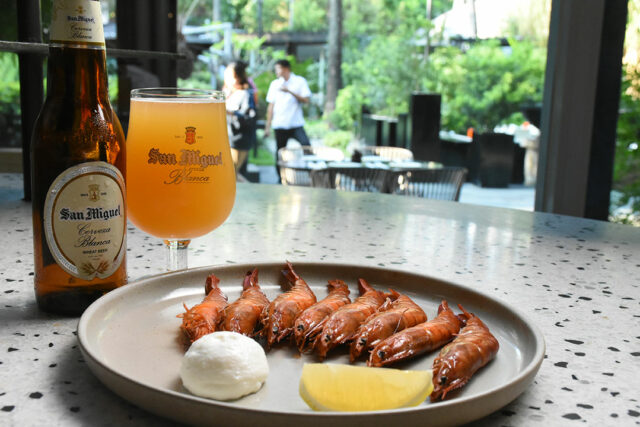
SMOKED SHRIMPS with a side of Garlic Aioli and Lemon, paired with San Miguel Cerveza Blanca.

Guests can now try a San Miguel Premium Beers pairing dinner at Boutwood’s Ember

BACK in the days when ad agencies were laser-focused on coming up with just the right tag line for their customers, they would have stumbled over themselves to hire chef Josh Boutwood if they had heard the one-liners he spouted about San Miguel over a special beer pairing dinner on March 25.

San Miguel Premium Beers held a pairing at the chef’s Michelin-selected restaurant Ember on March 25. Ember is one of the outlets under Mr. Boutwood, whose restaurants were very well-represented at the Michelin Guide for Manila, Cebu, and its environs launch last year: his restaurant Helm was the country’s first two-starred restaurant under the guide. Calling him a star chef, then, was no stretch.

BEER PAIRINGS
The meal started with Smoked Shrimps with a side of Garlic Aioli and Lemon, paired with San Miguel Cerveza Blanca. Smoked over applewood, one could smell the shrimps from a foot away. By themselves, they were robust and bold, with a hint of natural sweetness in their flesh. Cerveza Blanca served to emphasize this sweetness, providing a contrast to the otherwise smoke-forward flavors while the beer’s own wheaty notes were expressed further.

The next dish, a Baked Chicken Thigh Fillet with Sage Butter with Cauliflower Puree, was served with San Miguel Premium All-Malt. The beer’s maltiness added the suggestion of crispness in the chicken’s skin, bringing out a cleanliness in both the chicken and its pairing. Next came Marinated Grilled Pork Skewers with Jaew Sauce, Cilantro Mint Salad, and Lime Wedge, matched with San Miguel Super Dry. The strong flavors of spices and herbs brought out the beer’s complexity and fragrance.

The meal ended with a Walnut Date Cake, served with San Miguel Cerveza Negra. The cake was creamy and rich, and the cocoa notes in Cerveza Negra complement the burnt sugar notes in the cake. All the other elements in the cake and beer combined, and somehow, the beer began to taste like a glass of milk served before bed (albeit with a little snap).

FAVORITE BEER
One got an idea that Mr. Boutwood liked beer from his reaction last year after his restaurants were honored at the Michelin awards. He said then: “I can’t wait to leave, go to my restaurant, celebrate, open a bottle of champagne, and drink a shitload of beer, and just really have a nice night with my team.”

During the San Miguel pairing dinner, we asked how he liked his beer: “I’m a true purist,” he said.

“My favorite San Miguel beer is the original San Miguel Pale Pilsen,” he said, though after the release of San Miguel’s Cerveza Blanca wheat beer in 2024 in the Philippines, he has had a hankering for it. “That’s really become my go-to beer. It’s a lot more mature; it’s a lot more rounded. It has a lot more nuances,” he said.

“It’s less of the beer (for) ‘I’m going on a night out.’ It’s more of a beer to enjoy the night out,” he said, then joked about San Miguel paying him royalties for the great tagline.

What food does beer best go with? “Anything. Beer goes with everything. There’s not a thing in the world that beer doesn’t go with. It sounds like I’m endorsing them. But the selection of beers that San Miguel has can go with practically anything that’s going to be on the table.

“There’s a beer for every time and every moment,” he said. “There’s another slogan,” he joked.

These pairings of San Miguel Premium Beers with the intimate dishes at Ember by Josh Boutwood are available starting March 27. — Joseph L. Garcia

The entrepreneurial playbook as a guide for times of crisis

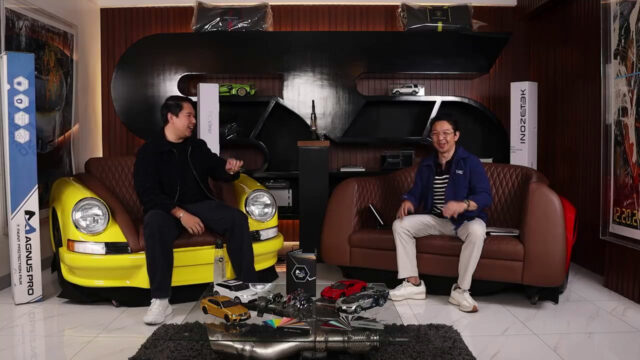
RJ LEDESMA PODCAST sits down with Archie Chiang (left), founder of Second Skin Industries. — THE RJ LEDESMA PODCAST

How do we survive the oil crisis? How can businesses continue to thrive when confronted with the unprecedented challenges we face today? These questions have been weighing on my mind lately, as they have likewise been with many Filipino entrepreneurs.

For business owners, it can be easy to lose hope, scale down on projections, or even call it quits as the peso plummets and inflation soars. And yet, as I regularly speak to entrepreneurs in the RJ Ledesma Podcast, I remain bullish about our prospects for the future. The reason is the entrepreneurial skillset — sometimes called the entrepreneurial playbook.

With this skillset, successful entrepreneurs are uniquely equipped to build something from nothing, rally people to a common purpose, and together, achieve the impossible. And I believe it is this entrepreneurial skillset that can help guide us through the rough seas of economic upheaval to emerge stronger with blue skies ahead.

Recently, I spoke to Archie Chiang, founder and CEO of Second Skin Industries, who reminded me that every successful entrepreneur is armed with this exceptional skillset. I chose Archie Chiang as the subject of this week’s column not because he is resilient or crisis-proof, but because he is an entrepreneurial every-man. He started business with a small cellphone and laptop vinyl wrapping service and grew it to become a wildly successful car wrapping service with two premium showrooms in Alabang and Katipunan, a supercar clientele, and more than a hundred employees. But in many ways, he could be you or me.

I’ve summarized our conversation from the podcast here with three important points that can help entrepreneurs through today’s crisis:

1. Stay agile. Almost every entrepreneurial story begins with a great opportunity. Successful founders are able to spot this opportunity and just run with it. Sometimes, they start small and gradually expand the business until they reach scale. Other times, they may start with another business completely and pivot their business model towards the opportunity they discovered. It’s called entrepreneurial agility.

For Mr. Chiang, Second Skin Industries began when he was still in college. A hobby, which began when he wanted to change the color of his MacBook laptop, turned into a small business.

“I came across this material,” he recounts. “It’s called vinyl, which you can use to wrap the laptop. So being a DIY guy, I borrowed my mom’s hair dryer. I borrowed the laptop. And then, [an] X-Acto knife. And then the laptop became black.”

Later this would lead him to automotive wrapping until, after working with a partner for nine years, Mr. Chiang decided to put up his own shop in a 25-square-meter space in a carwash along White Plains.

He said, “Initially, I started with just three people. So, it was two staff and me. And then, of course, through the demand, it had to grow, grow, grow. And now we’re over 100 employees already. So, it’s no joke. My operational expense is in the millions already.”

His plans don’t stop there. He sees the business expanding significantly, saying “Now my vision is: let’s grow that 100 to 1,000. And maybe more eventually after that.”

Today, prices may balloon beyond our control, but at the same time, new opportunities will be revealed. Clearly, electric vehicles are one area that is ready to boom, as is solar energy. And we need entrepreneurs like Archie Chiang to find these opportunities and have the courage and passion to doggedly pursue them.

2. Stay positive. We’ve been through crises before. Almost every entrepreneur has a pandemic story. Depending on when you founded your business, by now, you’ve probably survived the COVID-19 pandemic, the subprime mortgage financial crisis, the Asian financial crisis, or all of the above.

Mr. Chiang decided to grow Second Skin at the worst possible time: during the pandemic.

“In my 25-square-meter space,” he tells us, “I can only fit two cars, right? But at that time, in the area, I already had 10 [cars to service]. So, that’s when I saw that it’s time to grow.”

Placing a hefty deposit on a space that was over 40 times larger, he prepared to move the business. And then the lockdown happened. Travel was restricted, retail plummeted, and no one could predict what the future of Second Skin would be.

As luck would have it, the pandemic turned out to be an advantage for Second Skin as they served a premium market.

“Everyone started buying cars,” he remembers. “Everyone started taking care of their houses and their cars, right? So, my 1,000-square-meter warehouse, at that time, only had four or five cars. We filled it up. There were already 30 cars coming in every time.”

He had the good fortune of serving a market that was happy to spend money during the crisis. But the lesson for entrepreneurs is that sometimes we just have to continue moving forward when the future is uncertain.

He took a big risk by expanding during the pandemic, and it paid off. But it’s hard to overstate how he had to keep going out of necessity. For him, as it is with many entrepreneurs, failure is not an option. We need to survive crises for our shareholders, our business partners, our employees, and our families.

He explains, “I have to start professionalizing the business. Because if I don’t grow this well, I’ll feel sorry for the people I feed. Because 100 families is no joke.”

3. Never lose focus on your customer. The oil crisis has many deep-reaching effects on prices of goods, consumer behavior, and more. Some businesses will be affected more than others, but, regardless, focusing on your customers’ needs and solving their problems is always the answer.

Mr. Chiang shares advice from his first mentor, the owner of the wrap shop he worked with before striking out on his own. He says, “The way he did business is, he always tries to make the client happy. My greatest lesson from him was that. Because I used to think, why do we always have to please the client even though it’s already outside of our boundary? Outside of our scope. Why are you going that extra step? And then he said, that’s how you get them to keep coming back.”

Archie Chiang gives this advice to other entrepreneurs who may just be starting out.

“Always take care of your client,” he tells them. “Even if you’re losing money because of this certain client, take care of him because it will come back 10 times, all the time… If you make that client happy, it’s going to turn into two. That two will turn into two, four, six, eight. And that’s how it will spread naturally.”


RJ Ledesma (www.rjledesma.com) is a Hall of Fame Awardee for Best Male Host at the Aliw Awards, a multi-awarded serial entrepreneur, motivational speaker, and business mentor, podcaster, an Honorary Consul, and editor-in-chief of The Business Manual. Mr. Ledesma can be found on LinkedIn, Facebook and Instagram. The RJ Ledesma Podcast is available on Facebook, Spotify, Google and Apple Podcasts. Are there entrepreneurs you want Mr. Ledesma to interview? Let him know at ledesma.rj@gmail.com.

TDF yields move sideways on robust demand

BW FILE PHOTO

YIELDS on the Bangko Sentral ng Pilipinas’ (BSP) term deposits moved sideways on Wednesday as a recent bond maturity boosted market demand, with sentiment also improving amid hopes for a resolution to the Middle East conflict.

The seven-day term deposit facility (TDF) attracted P121.664 billion in tenders, more than double the P60-billion offer and above the P102.793 billion in bids for the same volume auctioned off last week.

This translated to a higher bid-to-cover ratio of 2.0277 times from the 1.7132 ratio recorded a week ago.

As a result, the BSP made a full P60-billion award of its offering as the TDF rate remained “broadly stable,” it said in a statement.

Accepted yields for the one-week papers narrowed to 4% to 4.2238% on Wednesday from the 4% to 4.2395% margin in the previous auction. This resulted in a weighted average accepted rate of 4.2082%, 0.04 basis point higher than the 4.2078% a week prior.

The average yield was marginally higher but still below the BSP’s policy rate of 4.25% amid strong appetite for the offering, which reflects ample liquidity in the financial system, Rizal Commercial Banking Corp. Chief Economist Michael L. Ricafort said in a Viber message.

He said this was partly due to a P282-billion five-year bond maturity on Wednesday that freed up some cash, which players are likely to reinvest in instruments like the TDF for returns.

Demand was also supported by improved sentiment as global oil prices fell below $100 a barrel after US President Donald J. Trump agreed to hold fire for two weeks, provided Iran would reopen the Strait of Hormuz for oil trade.

Oil prices slid as a two-week Middle East ceasefire brought some relief to markets on hopes for a resumption of oil and gas flows through the Strait of Hormuz, Reuters reported.

The news capped weeks of market volatility and geopolitical upheaval after US and Israeli strikes on Iran at the end of February pushed tensions to the brink, with Tehran effectively choking off the strategic waterway that typically carries about 20% of the world’s energy supplies.

Mr. Trump on Tuesday agreed to the ceasefire less than two hours before his deadline for Iran to reopen the strait or face devastating attacks on its civilian infrastructure.

Market reaction was swift and dramatic, with US crude futures down around 15% to $96.31 a barrel, while Brent futures also slid 13% to $94.71 per barrel.

The six-week conflict had sent oil prices soaring, reignited inflation fears and thrown the global rates outlook into disarray, forcing governments and companies to scramble for cover against a sudden energy shock.

Mr. Trump’s social media announcement on the ceasefire marked an abrupt reversal from hours earlier, when he issued an extraordinary warning that “a whole civilization will die tonight” unless his demands were met.

Beyond the immediate relief, investors remain keen to see whether the ceasefire leads to a broader resolution before placing major bets.

Some analysts are also skeptical that the ceasefire will translate into lasting peace, warning of likely twists and turns ahead.

The central bank uses the TDF and BSP bills to mop up excess liquidity in the financial system and better guide market rates towards the policy rate.

The BSP last auctioned off both the seven-day and 14-day deposits on Oct. 29. It has not offered 28-day term deposits for over five years to give way to its weekly offerings of securities with the same tenor.

In its latest Monetary Policy Report, the central bank said it limited its TDF offerings to a single tenor to rationalize liquidity operations and focus on tenors that would boost monetary policy transmission.

As of mid-February, the BSP’s market operations have absorbed P1.2 trillion in excess liquidity from the market, with 9% of this being siphoned off via the TDF. — Katherine K. Chan

The growing cybercrime economy: Why business defenses must evolve

STOCK PHOTO | Image by Hack Capital from Unsplash

By Subhalakshmi Ganapathy

CYBERCRIME now operates like a legitimate, profit-driven economy. Organized groups mirror corporate structures and have specialized roles such as research and development, marketing, and customer support. As a result, cyberattacks are more scalable, efficient, and accessible than ever, transforming the threat landscape for businesses.

An example of this transformation is the rise of subscription-style cybercrime offerings such as ransomware-as-a-service (RaaS). The ready-made attack tools sold on underground marketplaces offer structured pricing tiers, user dashboards, and technical support that have effectively lowered the traditional entry barriers confronting budding cybercriminals.

While individuals with limited technical expertise can purchase exploit kits, stolen data, or phishing services to immediately launch attacks, the developers of these tools relentlessly refine their products, similar to legitimate technology companies.

This growing industrialization is expected to drive global cybercrime losses to around $10.5 trillion annually, according to Cybersecurity Ventures. Meanwhile, Deloitte’s Center for Financial Services estimates that synthetic identity fraud alone could generate global losses of at least $23 billion by 2030.

Countries like the Philippines are already seeing the impact. In the third quarter of 2025, over 52 million personal credentials were exposed in data breaches, representing a 49% increase compared with earlier in the year. At the same time, about 52% of Filipinos report having been scammed at least once in their lifetime, compared to the ASEAN regional average of 45%.

The financial implications are not to be taken lightly. In 2024, cyberattacks cost financial institutions some P5.82 billion, a 2.6% year-on-year increase according to the Bangko Sentral ng Pilipinas (BSP).

MODERNIZATION RISKS
The growing precarity comes as digital transformation continues in the Philippines. Growing cloud adoption, rapid expansion of financial technology platforms, and more public services moving online come as the country jumps to 137 million active mobile cellular connections, or about 117% of the population.

While this connectivity fuels innovation and is an economic growth driver, it also expands the attack surface for cybercriminals; digitizing more operations inevitably increases the number of potential entry points into corporate networks.

The government, to its credit, has recognized the need for a nationwide approach by introducing the National Cybersecurity Plan 2023-2028, but that will require enterprises to take these risks seriously and not treat them as a mere box to check.

RESILIENCE REQUIRES MORE THAN JUST BUDGETS
While the national cybersecurity market is expected to reach $282.68 million this year and expand further to $417.12 million by 2031, cyber resilience requires more than just spending on advanced security tools.

This is due to the borderless nature of cybercrime today. Cyber attackers operate across jurisdictions by sharing intelligence, tools, and techniques in online communities that allow them to collaborate globally and innovate faster than many traditional corporate security teams.

The writing is on the wall: Reactive cybersecurity strategies are no longer sufficient. Organizations must move toward proactive and layered defenses designed to anticipate and mitigate threats before they escalate.

BUILDING PROACTIVE CYBERSECURITY
A key tenet of proactive cybersecurity is the adoption of Zero Trust. Under this cybersecurity model, network location and assumed trust are earned and not given automatically. Instead, every user, device, and request is authenticated and verified continuously before access is granted.

Automation is another critical capability. With the sheer volume and speed of cyberthreats today, manual monitoring alone is insufficient. Automated threat detection and response systems improve agility, curbing incidents before they spread across the network. This also allows IT teams to focus on higher-level analysis and strategic decision-making rather than routine monitoring.

SECURITY: THE NEW LEADERSHIP MANDATE
Identity and access management must be tightly integrated into the broader security framework. As distributed environments render perimeter-based defenses less effective, controlling who can access systems under what conditions becomes increasingly important.

Central to the fight today is visibility. Continuous monitoring across endpoints, networks, and identities enables organizations to detect subtle warning signs that an attack may already be underway. With better visibility, security teams can identify unusual behavior patterns early and respond before significant damage occurs.

Ultimately, the expanding cybercrime economy is transforming cybersecurity from a purely technical concern into a strategic leadership issue. Protecting digital assets is now directly tied to revenue protection, regulatory compliance, business continuity, and long-term customer trust.

As cybercriminals continue to evolve and operate with increasing sophistication, businesses must respond with equally advanced defenses. Proactive, automated, and identity-driven security strategies are essential for Philippine financial players seeking to compete and grow safely in today’s increasingly digital economy.


Subhalakshmi Ganapathy is the chief IT security evangelist at ManageEngine.

Megaworld expands LEED portfolio to 32 with Iloilo office tower

ENTERPRISE TWO in Iloilo Business Park — MEGAWORLD CORP.

TAN-LED Megaworld Corp. has expanded its portfolio of Leadership in Energy and Environmental Design (LEED)-certified and registered office properties to 32 after its new office tower in Iloilo City secured LEED Gold certification.

In a disclosure on Wednesday, the company said its 12-storey office tower, Enterprise Two, located within the 72-hectare Iloilo Business Park, received LEED Gold certification from the US Green Building Council (USGBC).

Enterprise Two offers 39,000 square meters (sq.m.) of gross leasable space, making it one of Megaworld’s larger office developments in Western Visayas. The building has floor plates of up to 4,000 sq.m., which can accommodate information technology and business process management (IT-BPM) firms and other companies expanding in the region.

The tower is the second LEED Gold-certified office building in Western Visayas, following Enterprise One, which was the first in the region to receive the certification.

Megaworld now has 24 LEED-certified office buildings, including 12 with Gold certification and 12 with Silver. Other developments remain registered for LEED certification, with additional approvals expected this year.

“Designed with sustainability at its core, the building [Enterprise Two] incorporates a range of green features, including a rainwater harvesting system, double-glazed windows for improved energy efficiency, a highly reflective roof coating to reduce heat island effect, and low-flow water fixtures in restrooms,” Megaworld said.

“It also promotes eco-friendly mobility through electric vehicle charging stations, bicycle racks, and convenient access to public transportation,” it added.

LEED, developed by the USGBC, is a global building rating system used to assess the environmental performance and efficiency of buildings.

Megaworld’s LEED Gold-certified office buildings include 8 Campus Building A, B, and C and Southeast Asian Campus in Taguig; 10 West Campus and One Le Grand Tower in McKinley West; Worldwide Plaza (JPMorgan Chase Tower) and Uptown Eastgate in Uptown Bonifacio; One Paseo in Pasig; No. 1 Upper East Avenue in Bacolod; and Enterprise One in Iloilo City.

LEED Silver-certified buildings include Uptown Place Towers 1, 2, and 3; Alliance Global Tower; International Finance Center (JPMorgan Chase Center) in Uptown Bonifacio; Le Grand Avenue Towers 5, 9, 11, 15, 19, and 21 in McKinley West; and Pasudeco Tower in San Fernando, Pampanga. — Alexandria Grace C. Magno

Dining In/Out (04/09/26)


Michelin-starred six-hands collab at Crystal Dragon

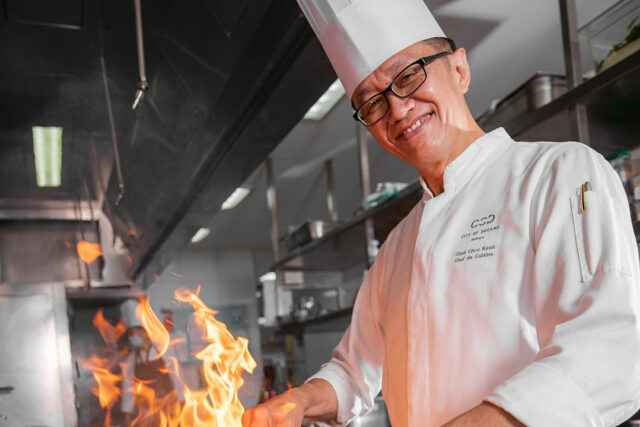
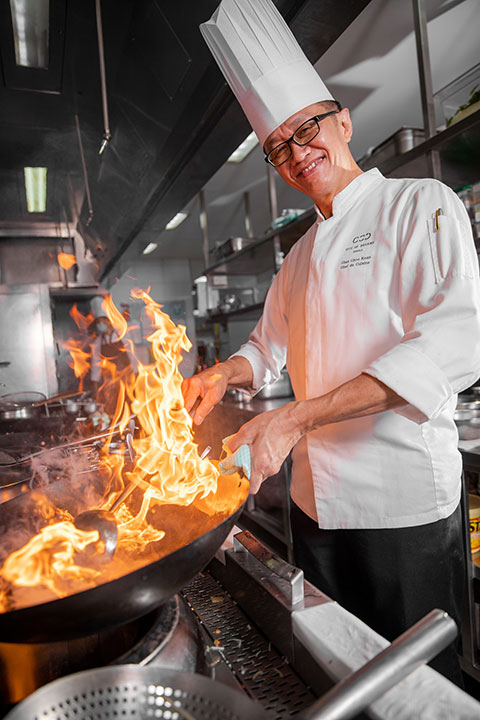
AN EXTRAORDINARY culinary collaboration unfolds at City of Dreams Manila as Crystal Dragon hosts “The Dragons’ Ascent.” This is a one-night-only Michelin-starred six-hands dinner on April 11 at 6 p.m. The 72-seat event brings together the culinary masters behind Melco Resorts & Entertainment’s acclaimed Dragon restaurants: Macau’s three-Michelin-starred Jade Dragon, and one-Michelin-starred Pearl Dragon, and the multi-awarded Crystal Dragon in Manila, for a first-ever collective gastronomic showcase. The evening features a six-course tasting menu presenting the signature modern Cantonese dishes of each restaurant, along with a special co-creation dish exclusively for this event: The Collaboration Appetizer is a fried Iberico pork and spring onion roll, chilled Mantis prawn with yellow bean sauce and Oscietra caviar, and crispy goose liver and tangerine-peel bean curd. The Three-Star Exports include Jade Dragon’s hot and sour soup with fish maw and leopard coral grouper, and baked stuffed crab shell with mushroom and black truffle. The Manila Showcase is Crystal Dragon’s steamed Australian lobster with egg white and aged Hua Diao wine, while Pearl Dragon presents a South African dried abalone and Wagyu beef cheek puff, ending with a Sweet Finale of Chocolate Kalamansi Cremeux with Moringa Sherbet. Leading the culinary symphony is Jade Dragon Executive Chef Kelvin Au Yeung at City of Dreams Macau, and Pearl Dragon Executive Chef Otto Wong at Studio City Macau. The special dinner is at P11,888 net per person inclusive of pre-dinner cocktails and canapés, from 6 to 7 p.m., with the option for dinner wine-pairing at P2,500 net per person. For reservations, call 8800-8080, call/message Viber 0917-550-2587, e-mail crystaldragon@cod-manila.com, or visit https://www.cityofdreamsmanila.com/en.


DTI’s National Food Fair ongoing at Megamall

THE Department of Trade and Industry (DTI) mounts the 2026 DTI-Bagong Pilipinas National Food Fair (NFF) from April 8 to 12 at the Megatrade Halls of SM Megamall. The event features over 320 micro, small, and medium enterprises from across the country which are engaged in food manufacturing, processing, and related enterprises. The NFF will showcase a wide range of regional flavors and culinary innovations from Luzon, Visayas, and Mindanao. These include food concepts developed by former overseas Filipino workers who have transitioned into entrepreneurship. This year’s Fair will highlight the coconut industry, one of the country’s priority agricultural sectors. A dedicated Halal segment features certified and Halal-ready products. The fair is open to the public, with free admission.


Hanabishi holds major clearance sale

CURRENTLY ongoing at the brand’s official website (https://myhanabishi.com/collections/on-sale) while stocks last, the Hanabishi Summer Clearance Sale offers up to 43% discount on kitchen essentials, cooling solutions, home products, and more. Those who are planning summer barbecues can consider adding the Hanabishi Smokeless Infrared Griller, a no-smoke and no-grease indoor barbecue; Hanabishi Electric Grill, which has a non-stick marble ceramic coating cooking plate; and the Hanabishi Smokeless Indoor Grill, which has a non-stick ceramic grill plate with a built-in exhaust fan to their cart now, as they are available at big discounts. Other additions to the kitchen would be the Hanabishi Inverter Chest Freezer 3.6 Cuft and the Hanabishi Hand Mixer, which are available at much lower prices. The clearance sale also includes the Hanabishi 1.5L Pink Rice Cooker – Glass Lid, Hanabishi Oven Toaster in red and white, and the Hanabishi Water Kettle. Those who are looking to replace or add a new fan or air conditioner for their home can check out the Hanabishi Industrial Wall Fan and the Hanabishi Split Type Airconditioner (Zen Series and Standard models) that are now available at significant price drops. Other home essentials included in the sale are the Hanabishi Twin Tub Washing Machine 8.5Kg Capacity, now available at 43% off, and cleaning and sterilizing products such as the Hanabishi Air Purifier, Hanabishi Dish Washer, Hanabishi Dish Washer With UV Sterilizer, Hanabishi Portable UVC Sterilization Bag, and Hanabishi Portable UVC Sterilization Wand. Also on sale are anti-mosquito products like the Hanabishi Indoor Mosquito Trap, Hanabishi Indoor Mosquito Trap, and Hanabishi Outdoor Mosquito Trap.


DQ releases Belgian Chocolate Cake collection

THIS SEASON, DQ’s latest Blizzard of the Month offer is the new Belgian Chocolate Cake Delights collection, available for a limited time only. These include the Belgian Chocolate Black Forest Blizzard (starts at P129), made with Belgian chocolate soft serve mixed with real cherries and chocolate chunks, and then topped with whipped cream and more cherries; Belgian Chocolate Black Forest Tin Cake (P499), a 100% ice cream cake made with Belgian chocolate soft serve, real cherries, and chocolate chunks, all contained in a reusable tin. There’s also the new Belgian Chocolate Black Forest Blizzard Cake (starts at P949), a 100% ice cream cake made with Belgian chocolate soft serve, signature cake crunch, and chocolate fudge, real cherries and chocolate chunks, all wrapped in frosting sprinkled with chocolate shavings and topped with more cherries and a DQ sandwich wafer. The new Belgian Chocolate Cake Delights collection also comes with other treats: Belgian Chocolate Campfire Blizzard (starts at P129), Belgian chocolate soft serve mixed with caramel fudge, marshmallows, graham crackers, and chocolate chunks, topped with whipped cream and caramel fudge drizzle; Belgian Chocolate Mudpie Blizzard (starts at P129) is made with Belgian chocolate soft serve infused with coffee concentrate, chocolate fudge, and brownies, and topped with whipped cream and a drizzle of chocolate fudge; and Belgian Chocolate & Vanilla Parfait (P209), made with chocolate fudge and cake crunch in between layers of vanilla soft serve and Belgian chocolate soft serve, topped with whipped cream and a DQ sandwich wafer.


Jollibee launches budget-friendly summer treats

JOLLIBEE has introduced its “Summer Delights,” headlined by the Strawberry Burst Choco Sundae (P65), combining chocolate and strawberry with popping boba. Customers can also opt for familiar coolers such as Iced Mocha and Soda Float. Complementing these are the Fries Snack Combos which pair fries with a choice of Choco Sundae, Mini Choco Sundae, or a Soda Float. The combinations are available in different sizes to suit both individuals and groups. The Summer Delights products are now available nationwide in all Jollibee stores for dine-in, takeout, and drive-through.

Ushering the EV era

STOCK PHOTO | Image from Freepik

For ordinary Filipinos who take public transportation, drive to work, haul goods, or run a business, the arithmetic has changed. And when the arithmetic changes at the fuel pump, people begin to look for alternatives. In the last several weeks, electric and hybrid transportation have become very attractive.

In a column in December 2024, I noted four future trends: Chinese EV brands would dominate; charging infrastructure would be the main bottleneck in EV adoption; hybrids would outsell full battery electric vehicles in the short term; and rising fuel prices could accelerate the entire process.

True enough, the unexpected oil shock that resulted from the ongoing Middle East conflict has just pushed all four trends into sharper view. What looked then to me like an emerging pattern is now marking the beginning of a market shift. And the shift, in my opinion, will continue even as oil prices eventually stabilize.

Official industry data showed electric vehicle sales rose by 18% month on month in February, and by 70% from a year earlier. Hybrids accounted for most of the volume, with battery EVs and plug-in hybrids also posting strong gains. Full March industry figures are not yet out.

But the number of EV dealerships opening up is an early sign of a mainstream shift, driven not by environmental idealism but by the urgent desire to mitigate surging fuel prices. BusinessWorld and Reuters have both reported that the fuel crisis is driving EV demand, especially in oil import-dependent markets.

And what is leading the surge are hybrids, not pure EVs. A hybrid keeps a gasoline engine as backup and does not depend entirely on a charging network that remains thin outside major urban centers. It addresses range anxiety without requiring a quick solution to the charging infrastructure problem.

A hybrid is a transition technology, a bridge between the world we have and the one we are trying to build. And for the practical Filipino buyer looking for quick relief from surging fuel prices, that bridge is the most sensible choice right now. That practicality is shown in the present sales mix.

Reuters reported that BYD is targeting 1.5 million overseas sales in 2026, and that overseas markets accounted for about 45.8% of its first-quarter sales. Chinese EV makers are pushing into import-dependent Asian markets when high fuel prices are making their value proposition easier to explain.

Locally, BYD Cars Philippines reported over 26,000 sales in 2025, up over 440% from the previous year. VinFast has been expanding its Philippine footprint as well, pairing dealership growth with pricing and financing structures aimed at lowering the upfront cost of ownership. Locally, affordability always comes first. And the company that can offer a credible vehicle at a lower monthly cost has the advantage.

Japanese carmakers are not absent from this transition. But they are arriving through a different door. Toyota has entered the battery EV conversation from the higher end of the market. Its Urban Cruiser BEV starts at over P2 million, which makes it credible but still beyond the reach of many Filipino buyers.

Mitsubishi Motors, meantime, said that subject to approval under the government’s Electric Vehicle Incentive Strategy program, Mitsubishi Motors Philippines would produce a new hybrid electric vehicle model at its Santa Rosa, Laguna plant around the middle of 2028.

That move will involve investment in facilities and equipment, expansion of the local supply chain, and additional jobs, which is more important than a showroom launch. It also suggests that at least one major Japanese manufacturer now sees where Philippine sales data already points: hybrids, not pure EVs.

However, I believe that trust remains a real issue for newer EV brands. Many Filipino buyers are still building familiarity with BYD, VinFast, and their peers. Concerns about battery life, long-term durability, resale value, and after-sales support remain, especially outside Metro Manila where service networks are still thinner. This is not a fatal problem, but it is a real one. Low sticker prices can open the door. But they do not, by themselves, close the trust gap.

The harder constraint is infrastructure. The Department of Energy said in 2025 that the country had nearly 1,100 charging stations, mostly in urban areas, while the target is around 7,300 nationwide by 2028. That gap is enormous. Until that network exists, hybrids will continue to hold the stronger hand.

It is also not just a question of quantity. It is a question of geography. Chargers in malls and premium urban districts are useful, but they do not solve the problem for the truck driver on a Luzon highway, the transport operator in Iloilo, or the family in Cagayan de Oro weighing whether to go electric. The charging network the country needs runs along national roads and into secondary cities, not only into parking basements.

The Philippines also lags its neighbors in attracting EV manufacturing investment, and that has a direct cost to consumers. Thailand and Indonesia have used industrial policy, incentives, and scale to position themselves as regional EV production hubs.

The Philippines has relied more on import liberalization, including zero tariffs on certain EVs and components through 2028. Only one carmaker, Mitsubishi, is making the leap so far.

This proves that the country can still build a domestic foothold in the transition, if appropriate policies are put in place.

Also a consideration is how much the EV transition will cost the government in foregone fuel tax revenue, and is that a problem worth worrying about. The longer structural question is what replaces fuel tax revenue (excise and value-added taxes) as transport operators and motorists shift to EVs.

That fuel tax base will shrink for sure, and the present oil shock may simply speed up the process, especially with the President having the authority to temporarily suspend or reduce fuel excise taxes if the world crude price exceeds a certain threshold.

Reports cited by BusinessWorld said a tax suspension from May to December could cost the government about P136 billion in foregone excise taxes, excluding additional VAT effects, for that period. And if tax erosion is made permanent by the EV transition, what happens to government spending?

Long-term thinking tells me that pouring more political capital into defending a revenue line that is bound to erode is the wrong fight. The better approach is to design the replacement now. While fuel taxes raise significant revenues today, the decline is coming. Meantime, many EV incentives end in 2028.

In the transition, perhaps Congress should consider a road-use charge for EVs that reflects their actual use of infrastructure; rational taxation of commercial charging; and, a public policy framework that extends charging beyond the profitable urban core. These can start as soon as EV incentives end.

The EV transition in the Philippines is no longer just a policy ambition or an environmental slogan. It is becoming an economic response to a crisis. The current oil shock may prove to be more than a temporary disruption. It may become the event that changed consumer behavior for good.

The driver watching the meter spin at the pump, the family postponing a gasoline car purchase, the logistics company recalculating its fuel bill for the next quarter, all of them are doing the same math now. The market is moving. The infrastructure and the fiscal framework need to move with it.


Marvin Tort is a former managing editor of BusinessWorld, and a former chairman of the Philippine Press Council.

matort@yahoo.com

Peso surges on US-Iran ceasefire deal

BW FILE PHOTO

THE PESO jumped to the P59-a-dollar level on Wednesday, logging a near one-month high after Iran agreed to a two-week ceasefire with the United States and reopened the Strait of Hormuz.

The local unit surged by 90 centavos to end at P59.43 against the greenback from its P60.33 finish on Tuesday, data from the Bankers Association of the Philippines showed.

This was its largest one-day gain since it advanced by 96 centavos on Nov. 11, 2022 to close at P57.23.

This was also the peso’s strongest close in almost a month or since it ended at P59.385 on March 12.

The currency opened Wednesday’s session sharply stronger at P59.661 per dollar. It traded at the P59 level the entire day, with its intraday best at P59.291 and its weakest showing at P59.70 against the greenback.

Dollars traded surged to $2.479 billion from $1.68 billion on Tuesday.

The peso strengthened as Iran’s deal with the US and the reopening of the Strait of Hormuz caused the greenback and global oil prices to retreat, the first trader said in a phone interview.

“The peso rebounded significantly back to the P59 level from market optimism following the two-week military ceasefire, which was mutually agreed on by the US and Iran,” a second trader said in an e-mail.

The US dollar index, which measures the greenback’s strength against a basket of six currencies, weakened for a third consecutive day to lows of 98.838, its weakest since March 11, Reuters reported.

Brent crude slid 13.4% to $94.68 a barrel but was still well above prewar levels.

Philippine financial markets are closed on Thursday (April 9) for the Day of Valor holiday.

For Friday, the first trader said players could remain cautious as they watch developments between the US and Iran. The first trader sees the peso moving between P59.20 and P59.70 per dollar, while the second trader expects it to range from P59.30 to P59.55. — Aaron Michael C. Sy

TikTok to build a second billion-euro data center in Finland

REUTERS

HELSINKI/STOCKHOLM — TikTok plans to invest €1 billion ($1.16 billion) to build a second data center in Finland in less than a year as it moves data storage for European users to the continent, company officials said on Wednesday.

The announcement comes as TikTok’s Chinese parent ByteDance in January avoided a US ban over data protection concerns and as European nations ratchet up pressure on social media companies to protect children from their addictive algorithms.

TikTok said it was making a new €1-billion investment in a data center with an initial capacity of 50 megawatts (MW) and a total potential capacity of 128 MW in Lahti, located in southern Finland.

The investment is part of the company’s “12 billion (euro) European data sovereignty initiative delivering industry-leading protections for the data of over 200 million European users,” it told Reuters.

CONCERNS OVER DATA PROTECTION
Finland has become a magnet for data centers as companies including Microsoft and Google look to curb energy costs and meet climate goals, drawn by the country’s cold climate, low-cost and low-carbon electricity, and a stable, business-friendly regulatory environment within the European Union.

But Finnish politicians were alarmed by TikTok’s plan for its first data center in Finland after Reuters revealed it in April last year.

While Finland’s defense ministry had approved the investment in 2024, politicians had not been informed. Finland’s then-minister of economic affairs Wille Rydman last year called for the project to be “reconsidered” due to security concerns and lack of openness around the company’s plans.

“At the very least, I would hope that this property development company would reconsider once more whether it really wants TikTok as its tenant,” Mr. Rydman told Finland’s public broadcaster Yle, referring to TikTok’s local partner.

TikTok said its European user data is currently stored with enhanced safeguards across three data centers in Norway, Ireland, and the US. Its first Finnish data center in Kouvola is to be operational by the end of this year, with the second one up by 2027.

The mayor in Lahti celebrated the fresh investment decision.

“In the context of Lahti, the investment is substantial. We are pleased that a main tenant agreement has been signed and that the project is progressing as planned,” Lahti Mayor Niko Kyynarainen said in a statement. — Reuters

SEC orders catering firm to stop alleged investment solicitation

BW FILE PHOTO

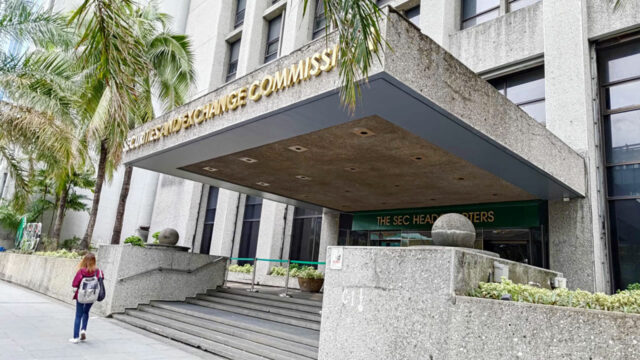
THE SECURITIES and Exchange Commission (SEC) has issued a cease-and-desist order (CDO) against Melot’s Catering Services, its point person, and its agents for the alleged unauthorized solicitation of investments from the public.

In an order dated March 14, the SEC’s Enforcement and Investor Protection Department (EIPD) directed Melot’s Catering Services, its point person, and its agents to immediately stop selling or offering unregistered securities until they secure the required Commission approvals.

The order also directed them to take down their online presence related to the investment scheme.

“They were also prohibited from transacting any business involving funds in its depository banks and from transferring, disposing and conveying real and personal assets, including bank deposits, to preserve the assets for the benefit of investors,” the Commission said in a statement on Wednesday.

The SEC issued the CDO after reports that Melot’s Catering Services, through its point person, had been soliciting investments from the public to fund kitchen expansion and renovations.

An EIPD probe found that the firm is not registered with the SEC as a corporation or partnership and does not have a license to offer securities.

The Commission said Melot’s Catering Services promoted the investment scheme on social media, requiring a minimum placement of P50,000 and promising a 10% monthly return over six to 12 months.

“[T]he act of Melot’s Catering Services through a point person and its agents in selling/offering unregistered securities operates as a fraud to the public which, if unrestrained, will likely cause grave injury or prejudice to the investing public,” the order read.

“Unless restrained, the act of Melot’s Catering Services through its point person and its agents in selling/offering unregistered securities constitutes a continuing violation of the provision of the SRC and the FCPA,” it added.

Section 8 of Republic Act No. 8799, or the Securities Regulation Code (SRC), prohibits the sale, offer, or distribution of securities unless a registration statement has been filed with and approved by the Commission. Section 28 requires that persons engaged in the buying or selling of securities be registered with the SEC as a broker, dealer, or salesperson.

The SEC said the alleged unauthorized investment scheme may constitute financial fraud under Republic Act No. 11765, or the Financial Products and Services Consumer Protection Act (FCPA).

In October 2025, the Commission issued an advisory warning the public against investing in schemes linked to Melot’s Catering Services.

BusinessWorld was unable to reach Melot’s Catering Services. Its website and Facebook page were not accessible as of writing. — Alexandria Grace C. Magno

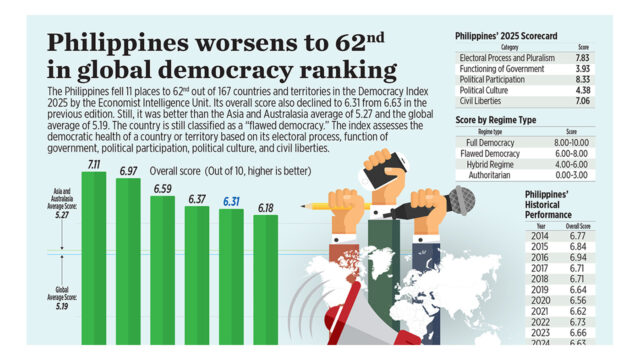
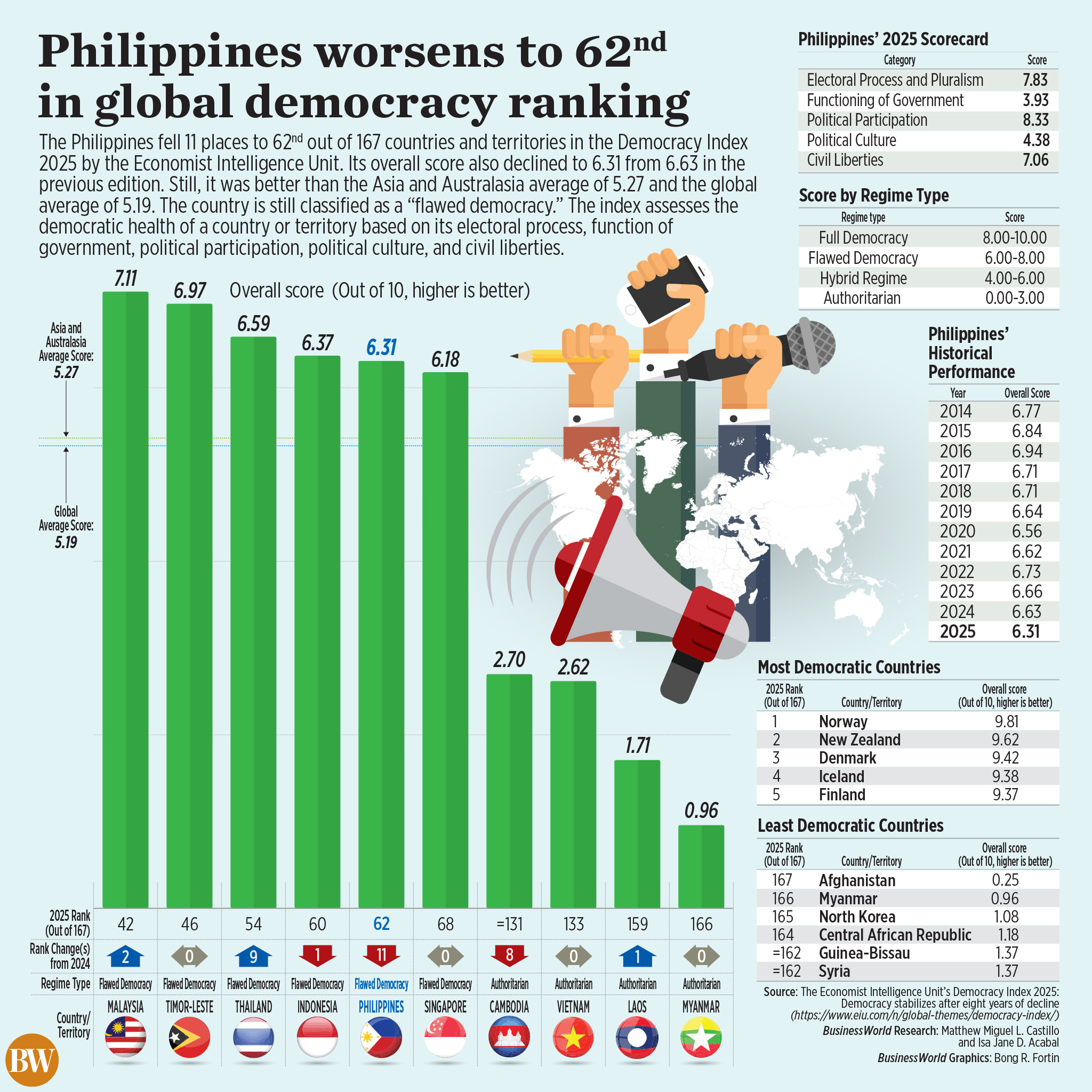
Philippines worsens to 62nd in global democracy ranking

THE PHILIPPINES fell sharply in a global democracy ranking, signaling deeper institutional strain even as democratic conditions elsewhere show signs of leveling off, according to the 2025 Democracy Index by the Economist Intelligence Unit (EIU). Read the full story.

ADVERTISEMENT
ADVERTISEMENT