Home Blog Page 4462

As Women’s World Cup breaks records, marketers Adidas, Nike navigate bumps in retail demand

LONDON/AUCKLAND — The unpredictability of the Women’s World Cup, with the US knocked out early and a first-time champion assured, is forcing major global marketers such as Adidas and Nike to move fast to adapt to shoppers’ quick shifts in preferences and demand.

The tournament in Australia and New Zealand promises to be among the most popular standalone women’s sporting events ever held, with FIFA expecting viewing figures of some two billion, despite time zone differences that make it difficult for many Europeans and Americans to tune in.

Adidas and Nike and retailers like DICK’S Sporting Goods and Fanatics have made significant investments in merchandise. Total sponsorship value grew to at least $349 million, from $342 million in 2019, according to GlobalData, with many brands aligning themselves with themes of women’s empowerment.

At DICK’s, where 76 clothing and products tied to the 2023 US Women’s National Team were available online on Monday, more than two-thirds are discounted by 25% to 35%, including jerseys, tee-shirts and hoodies, according to a check of its website.

Nike’s marketing ahead of the Women’s World Cup featured a football fan telling her father that “the competition is better than ever,” with cameos from a roster of past and current stars, including US players Megan Rapinoe and Alex Morgan, French player Grace Geyoro, and Barcelona forward Asisat Oshoala.

The retailer also released a collaboration with designer Martine Rose worn by the United States Women’s National Team ahead of their first match. The collection included tailored pieces such as trousers, a suit jacket and a trench coat featuring the Nike swoosh, along with a slip-on mule resembling a football cleat.

A release from Nike stated that the collection “dissolves the boundaries of men and women’s football styling,” and most pieces are sold out on the designer’s website.

Overall for Nike, which sponsors the US, England, and others, only 8% of women’s team products have sold out thus far during the tournament, according data collected by Centric Pricing and Refinitiv. That’s down from 13% of Nike’s women’s team products which sold out during the same tournament in 2019, the data shows.

At rival Adidas, which sponsors Sweden and Spain — the teams that go head to head in Tuesday’s semifinal — 21% of women’s team products have sold out so far over this year’s tournament, up from 8% in 2019.

Adidas doubled its production of Germany women’s team jerseys for this World Cup, compared to the 2019 tournament, and was still on the verge of selling out when the team fell out of the running early. “That tells you something about the exponential growth of the sport,” said Adidas spokesman Jan Runau.

One in three fans of women’s soccer are new to soccer full stop, according to Yvonne Henderson, Chief Executive Officer of UK-based industry association Women In Football. “The fanbase is unique, it’s diverse, it’s quite youthful and it has strong progressive values,” she said.

For that reason, marketers must bear in mind the risk that the growing fanbase could see their support for women’s soccer as disingenuous.  

“Their message has to come off as sincere, and must be backed by action and long-term commitment as opposed to just 30 seconds of bluster that ends when the event is over,” said Bob Dorfman, creative director at Pinnacle Advertising.

Nike, for example, sponsor of England’s Lionesses, faced criticism from goalkeeper Mary Earps for not producing a replica goalkeeper jersey. Adidas, which does not produce women’s goalkeeper jerseys for the teams it sponsors either, said that was a mistake, with CEO Bjorn Gulden adding that the whole industry is on a “learning curve”.

French telecom company Orange’s World Cup advertisement seeks to directly challenge the notion that women’s soccer is less skilful or exciting than the men’s game, while Adobe’s ad with Germany’s Bayern Munich women’s team includes a voiceover saying: “Our game is proudly different.”

To recognize the impact grassroots teams have in creating excitement about women’s soccer, Adobe’s ad also featured London-based community women’s soccer clubs Peaches FC and Baesianz FC, said Sabina Strasser, Senior Director, Brand Experience EMEA at Adobe.

Sporting goods retailer Fanatics has more than 475 US women’s team products for sale this year, up from about 175 in 2019, the company told Reuters. Overall, in the month leading up to the start of this year’s tournament, sales of women’s soccer products on Fanatics were up more than 80% compared to the last Women’s World Cup in 2019.

But since the surprise early exit of the two-time champions, it had to change tack by promoting merchandise that isn’t specifically tied to the US team. As of Monday, the generic Adidas Women’s World Cup soccer ball was among its top sellers in FIFA World Cup Gear. — Reuters

GCash partnership with law enforcement agencies to curb crime yields results

GCash lauds the successful operations of the Department of Justice (DOJ), the National Bureau of Investigation (NBI), and the Philippine National Police Anti-Cybercrime Group (PNP-ACG) against cybercriminals.

The DOJ, NBI, and PNP-ACG conducted a series of raids and arrests of alleged cybercriminals in the past months. They have successfully arrested suspected perpetrators of various crimes like love scams and task scams, as well as seized SIM Cards purportedly used for dubious purposes.

The authorities are working on the arrest of the suspects linked to the illegal operations – a big win in the shared fight against scammers, fraudsters, and other cybercriminals.

“GCash is supportive of the operations of the DOJ, NBI, and PNP-ACG in going after perpetrators. We are an active partner of our law enforcement agencies as we exchange technical knowledge and expertise on the latest cybersecurity measures” said Atty. Maria Corazon PMR Alvarez-Adriano, chief legal officer of GCash.

In addition to its partnership with law enforcement agencies, GCash is driving the passage of a bill that, among others, will criminalize the buying and selling of so-called mule accounts which are used by criminals to hide their identities when transferring illicit money.

The leading e-wallet continues to invest in best-in-class security technologies and innovations. GCash recently reached 100% rollout for its industry-first security feature, DoubleSafe, to ensure that the person accessing an account is the same as the one who registered in GCash by using face ID technology.

“With the DoubleSafe Face ID feature, even if the users inadvertently give out their MPIN or OTP, their account cannot be accessed from a new device without scanning the owner’s face,” said Miguel Geronilla, GCash’s chief information security officer.

GCash remains steadfast in educating its customers and the general public on how they can better protect themselves from scammers. Through educational materials under the #GSafeTayo campaign, GCash encourages users to be wary of Phishing sites and links that spoof official portals of financial institutions and online shopping websites.

Customers are also advised to transact only through GCash’s official channels and remember that it will NEVER send personal messages to address concerns or ask for users’ MPIN, OTP, or other personal information.

Report scams and other suspicious activities in the official Help Center inside the app or at help.gcash.com.


Spotlight is BusinessWorld’s sponsored section that allows advertisers to amplify their brand and connect with BusinessWorld’s audience by enabling them to publish their stories directly on the BusinessWorld website. For more information, send an email to online@bworldonline.com.

Join us on Viber at https://bit.ly/3hv6bLA to get more updates and subscribe to BusinessWorld’s titles and get exclusive content through www.bworld-x.com.

China central bank unexpectedly cuts rates to support sputtering economy

REUTERS

SHANGHAI/SINGAPORE – China’s central bank unexpectedly cut key policy rates for the second time in three months on Tuesday, in a fresh sign that the authorities are ramping up monetary easing efforts to boost a sputtering economic recovery.

Analysts said the move opened the door to a potential cut in China’s lending benchmark loan prime rate (LPR) next week.

Tumbling credit growth and rising deflation risks in July necessitated more monetary easing measures to arrest the slowdown, market watchers said, while default risks at some housing developers and missed payments by a private wealth manager also affected financial market confidence.

“All of these add to the urgency that policymakers need to act fast before consumer and business confidence deteriorate sharply,” said Tommy Wu, senior China economist at Commerzbank.

The People’s Bank of China (PBOC) said it lowered the rate on 401 billion yuan ($55.25 billion) worth of one-year medium-term lending facility (MLF) loans to some financial institutions by 15 basis points to 2.50% from 2.65% previously.

The cash injection was to counteract factors including tax payments in order to “keep banking system liquidity reasonably ample”, the PBOC said in an online statement.

In a Reuters poll of 26 market watchers conducted this week, 20 participants, or 77%, predicted that the central bank would leave the MLF rate unchanged. Only six respondents forecast a marginal rate reduction.

“The surprising rate cut was a prompt response to support subdued credit data and China recovery (that) may unleash yuan depreciation pressure towards 7.3,” said Ken Cheung, chief Asian FX strategist at Mizuho Bank.

“In particularly, the PBOC may intend to support the medium-term credit conditions via the asymmetric cut, and opened the way for a cut to LPR, especially the 5-year LPR, to support the struggling property sector.”

The MLF rate serves as a guide to the LPR and markets mostly use the medium-term policy rate as a precursor to any changes to the lending benchmarks. The monthly fixing of the LPR is due next Monday.

The central bank also injected 204 billion yuan through seven-day reverse repos while cutting borrowing costs by 10 basis points to 1.80% from 1.90% previously, it said in an online statement.

China remains an outlier among global central banks as it has loosened monetary policy to shore up a stalling recovery whereas others have been in tightening cycles as they battle high inflation.

Tuesday’s rate move has widened the yield gap with other major economies, particularly the United States, putting more pressure on the yuan and risking outflows.

China’s yuan has lost about 5% against the dollar so far this year to become one of the worst performing Asian currencies. The yuan traded at 7.2842 per dollar as of 0145 GMT, compared with the previous close of 7.2580.

Yields on China’s 10-year government bonds eased to 2.56%, the lowest level since May 2020.

The PBOC lowered key policy rates in June to prop up the broad economy, but data has been increasingly weak since. — Reuters

US, S. Korea, Japan to launch new defense steps at Camp David -officials

ADAM SZUSCIK-UNSPLASH

WASHINGTON – The United States, Japan and South Korea will launch a series of joint initiatives on technology and defense when the countries’ leaders gather at Camp David this Friday, according to senior U.S. administration officials, amid mounting shared concerns about China.

While the summit is unlikely to produce a formal security arrangement that commits the nations to each others’ defense, they will agree to mutual understanding about regional responsibilities and set up a three-way hot line to communicate in times of crisis, the officials said, speaking on condition of anonymity.

U.S. President Joe Biden invited Japanese Prime Minister Fumio Kishida and South Korean President Yoon Suk Yeol, to the storied presidential retreat in Maryland’s Catoctin Mountains as the Asian nations work to mend their tattered diplomatic relations in the face of greater regional threats posed both by China’s rise and North Korea.

It will mark the first in what U.S. officials hope will be an annual gathering between the three country’s leaders, formalizing their ties and cooperation.

South Korea and Japan held their first joint summit in 12 years this March, and have made steps to ease tensions after years of disputes including some related to Japan’s 1910-1945 occupation of Korea.

Washington has formal collective defense arrangements in place with both Tokyo and Seoul separately, but it wants those two countries to work closer together given growing concerns about China’s mounting power and worries about its intentions.

“We are anticipating some steps that will bring us closer together in the security realm,” said one of the U.S. officials, and that doing so would “add to our collective security.”

But the U.S. official added that, “it’s too much to ask – it’s a bridge too far – to fully expect a three-way security framework among each of us. However, we are taking steps whereby each of the countries understand responsibilities with respect to regional security, and we are advancing new areas of coordination and ballistic missile defense, again technology, that will be perceived as very substantial.”

The summit is also expected to lead to a joint statement between the countries that includes some language speaking to concerns about China’s desire to change the status of self-governed Taiwan, which it claims as its own territory.

The U.S., Japanese and South Korean joint statement is set to include language on maintaining peace and stability in the Taiwan Strait, one of the officials said. The exact language on that and other provisions is expected to be negotiated up to the last minute.

But the language currently under consideration would be consistent with prior U.S. positions on the subject, avoiding a sharp escalation in rhetoric with Beijing as Washington has been seeking to ease tensions ahead of possible talks between Biden and Chinese President Xi Jinping later this year.

Christopher Johnstone, a former Biden White House official now with Washington’s Center for Strategic and International Studies think tank, said the U.S. administration was seeking to take advantage of the Tokyo-Seoul rapprochement to “institutionalize” some of the progress and make it more difficult for future leaders to reverse.

However, Johnstone told a briefing previewing the summit that progress remained fragile.

“In South Korea, President Yoon’s efforts are still not widely popular. And in Japan there’s this constant refrain of skepticism that the improvement will be durable and that … a future (South Korean) president could flip the table over again,” he said.

Johnstone said he expected a summit statement recognizing that the security of the three countries is linked, “and that some measure of threat to one is a threat to all,” even if this would fall short of NATO’s Article 5 language, that sees an attack on one as an attack on all.

He expected this to complemented with new defense initiatives, including a deepening of join military exercises and missile defense cooperation. — Reuters

Lebanon freezes bank accounts of former central bank governor and associates

BEIRUT – Lebanon has frozen the bank accounts of former central bank governor Riad Salameh and four of his associates, a statement by the Special Investigation Commission said on Monday.

Lebanon has also lifted banking secrecy on the accounts of all five individuals, which include Salameh, his brother Raja, his son Nady, his former assistant Marianne Hoayek and Anna Kosakova, with whom Riad has a daughter, the statement said.

Salameh served as central bank governor in Lebanon from 1993 until July 31. He faces arrest warrants in France and Germany following investigations into whether he and his brother took $330 million in public funds from the Lebanese central bank while he was governor.

The brothers and Hoayek have all been charged in Lebanon over embezzlement and other financial crimes.

The Salameh brothers deny the charges. Nady Salameh has not responded to Reuters requests for comment. Lawyers for Hoayek and Kosakova have also not responded to Reuters requests for comment.

Salameh, in messages to Reuters, denied the allegations made by the three sanctioning countries and said he would challenge them. Some of his assets had already been frozen in previous investigations, he said.

In March 2022, the European Union’s criminal justice cooperation organization announced the freezing of some 120 million euros($130 million) of Lebanese assets in France, Germany, Luxembourg, Monaco and Belgium, in a case in which Munich prosecutors said Salameh was a suspect.

In July, the French judiciary transferred seized assets belonging to Salameh and his associates to the Lebanese state.

According to Lebanese law, the Special Investigation Commission is headed by the central bank governor. In the absence of an appointed successor for Salameh, first vice governor Wassim Mansouri heads the institution as acting governor. Monday’s statement was signed by Mansouri. — Reuters

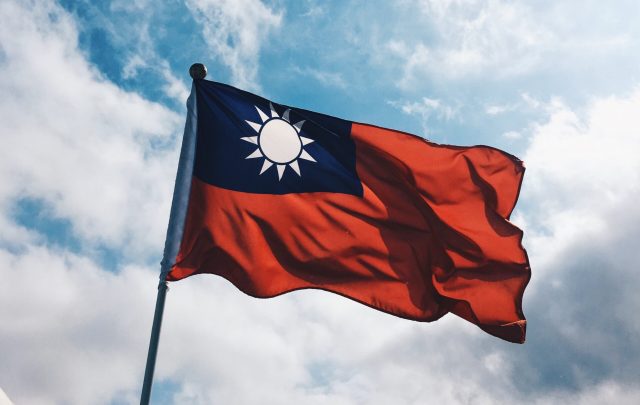
Taiwan presidential frontrunner says no plans to change island’s formal name

XANDREASWORK-UNSPLASH

TAIPEI – The leading candidate to be Taiwan’s new president, Vice President William Lai, said in an interview on Tuesday that he has no plans to change the island’s formal name, but reiterated that Taiwan is “not subordinate” to China.

Beijing dislikes of Lai for previous comments saying he is a “practical worker for Taiwan independence” – a red line for China, which views the democratically governed island as part of its territory.

Lai has repeatedly said that he is not seeking to change the status quo and that he is simply stating a fact: that Taiwan is already an independent country called the Republic of China, its formal name, and that only Taiwan’s people can decide their future.

“We must abide by the truth – which is what I mean by pragmatism – which is Taiwan is already a sovereign, independent country called the Republic of China. It is not part of the People’s Republic of China,” he said in an interview with the Bloomberg news agency.

“The ROC and PRC are not subordinate to one another. It is not necessary to declare independence. The ROC (Taiwan) is not subordinate to the PRC.”

The defeated Republic of China government fled to Taiwan in 1949 after losing a civil war with Mao Zedong’s communists, who established the People’s Republic of China.

“The current name, according to our constitution, is the Republic of China,” Lai said, according to a transcript published by his campaign team.

“And in respect to unifying Taiwanese society, President Tsai has used the term Republic of China (Taiwan) to describe our country. I will continue to do so in the future,” he added. “There are no plans to change the name of our country.”

Taiwan goes votes on its new president in January. President Tsai Ing-wen cannot run again after serving two terms in office.

Tsai has repeatedly offered talks with China, which Beijing has rebuffed, and Lai said the door to dialogue is always open as long as there is “parity and dignity”.

“We don’t want to be enemies; we can be friends. And we would love to see China enjoy democracy and freedom – just like us,” he said. “However, until China renounces the use of force against Taiwan, we must strengthen our military capacity.”

Lai is in Paraguay for the inauguration of that country’s new president. Paraguay is one of only 13 nations to maintain formal ties with Taipei.

He transited through New York on his way there, drawing anger from China, which said he was both a separatist and “trouble maker”, and is due back in Taipei on Friday after stopping over in San Francisco. — Reuters

North Korea’s Kim, Russia’s Putin exchange letters, vow stronger ties

SEOUL – North Korea leader Kim Jong Un and Russian President Vladimir Putin exchanged letters on Tuesday pledging to develop their ties into what Kim called a “long-standing strategic relationship,” Pyongyang’s state media KCNA said.

The letters mark the 78th anniversary of Korea’s liberation from Japan’s 1910-45 colonial rule, which is also celebrated as a national holiday in South Korea.

In his letter to Putin, Kim said the two countries’ friendship was forged in World War II with victory over Japan and is now “fully demonstrating their invincibility and might in the struggle to smash the imperialists’ arbitrary practices and hegemony,” KCNA said.

“I am firmly convinced that the friendship and solidarity … will be further developed into a long-standing strategic relationship in conformity with the demand of the new era,” Kim was quoted as saying in the letter.

“The two countries will always emerge victorious, strongly supporting and cooperating with each other in the course of achieving their common goal and cause.”

The United States has accused North Korea of providing weapons to Russia for its war in Ukraine, including artillery shells, shoulder-fired rockets and missiles. Pyongyang and Moscow have denied any arms transactions.

Last month, Russia’s defense minister stood shoulder to shoulder with Kim as they reviewed his newest nuclear-capable missiles and attack drones at a military parade in Pyongyang.

Putin, in his message to Kim, also vowed to bolster bilateral ties.

“I am sure that we will strengthen the bilateral cooperation in all fields for the two peoples’ well-being and the firm stability and security of the Korean peninsula and the whole of Northeast Asia,” Putin said, according to KCNA.

The leaders of South Korea, the United States and Japan are set to discuss security cooperation over North Korea, Ukraine and other issues at a trilateral summit on Aug. 18 at Camp David. — Reuters

Multisys retains ISO 27001:2013, earns NPC certification

Leading software solutions delivery center Multisys Technologies Corporation (Multisys) continues to demonstrate its commitment in cybersecurity and data protection as it earns back-to-back acclaimed certifications.

Multisys has retained its status as a certified compliant in Information Security Management System (ISO 27001:2013), reinforcing its position as one of the pioneering homegrown software companies in the Philippines to have achieved such feat in the renowned international standard.

The recent audit conducted by international certification body TÜV Rheinland in March formalized Multisys’ certification of global standards for its management system of information security.

The audit included reviews to determine whether Multisys’ ISMS policies and procedures are able to establish and maintain an effective system that meets the globally recognized framework in the security management of data assets, such as financial information, intellectual property, employee details, or information entrusted by third parties.

In addition to the ISO 27001:2013, Multisys has also secured its certificate of registration from the National Privacy Commission (NPC), emphasizing its compliance with the Data Privacy Act of 2012, its implementing rules and regulations, and all related issuances.

The NPC Certificate of Registration is awarded to companies in recognition of their excellence in achieving a higher level of accountability in data protection.

“We are immensely proud of our back-to-back ISO 27001:2013 and NPC certifications, which reflect the hard work that we’ve put into becoming a trusted partner in the software industry. These certifications not only exemplify our commitment to protecting our clients’ and partners’ valuable assets but also reiterate our dedication to upholding the highest international standards in our industry,” Multisys CEO Victor Aliwalas said.


Spotlight is BusinessWorld’s sponsored section that allows advertisers to amplify their brand and connect with BusinessWorld’s audience by enabling them to publish their stories directly on the BusinessWorld website. For more information, send an email to online@bworldonline.com.

Join us on Viber at https://bit.ly/3hv6bLA to get more updates and subscribe to BusinessWorld’s titles and get exclusive content through www.bworld-x.com.

[B-SIDE Podcast] Central bank digital currency deployment: Insights from IMF

Follow us on Spotify BusinessWorld B-Side

The Bangko Sentral ng Pilipinas (BSP) needs to be properly prepared to deploy central bank digital currencies (CBDCs), as these virtual currencies might pose risks to banks, according to the International Monetary Fund (IMF).

Tommaso Mancini-Griffoli, deputy division chief in the Monetary and Capital Markets Department at the IMF, said in an interview during the IMF Spring Meetings in April that if consumers find a more convenient payment method, such as using CBDCs, they might opt not to deposit money in banks.

“If there is an alternative that allows us to make payments perhaps even more easily, and that is perhaps even safer as a store of value, we might switch to that. CBDC might well be that form of money that is just as liquid and convenient for me to make payments, perhaps more so,” Mr. Mancini-Griffoli told BusinessWorld reporter Keisha B. Ta-asan.

“So, if that’s the case, people may move their money out of the banks into CBDC. That would cut back on bank funding, and will cut back on the bank’s ability to provide credit to the economy and that is a problem.”

“It’s important that central banks are attentive to this and manage these risks carefully. [They] can set limits on how much people can hold in their CBDC wallets or [they] can have fees on wallet transactions if [a person] holds above a certain level,” he added.

The Philippine central bank has been testing the use of wholesale CBDCs among selected financial institutions through its CBDCPh project.

The pilot project was initiated in 2022 and is set to continue until 2024. The BSP employs a test-and-learn approach within a sandbox environment to gain a deeper understanding of the possibilities and risks associated with wholesale CBDC. This effort also aims to bridge gaps within the national payment system.

The project encompasses various aspects, including policy and regulatory considerations, technological infrastructure, governance and organizational requirements, legal matters, payment and settlement models, reconciliation procedures, and risk management.

“A CBDC is new and involves new technologies. It also involves a type of work that central banks are not necessarily used to, which is building products that will eventually be used directly by households and firms,” Mr. Mancini-Griffoli said.

“Central banks that are serious about doing deploying and testing CBDCs need to understand these challenges and need to tool up in order to deliver. That’s a little complicated to do, but certainly not beyond the reach of central banks,” he added.

Related story: https://www.bworldonline.com/top-stories/2022/04/28/445079/bsp-to-launch-digital-currency-pilot-project/

Follow us on Spotify BusinessWorld B-Side

Households to still feel inflation pain

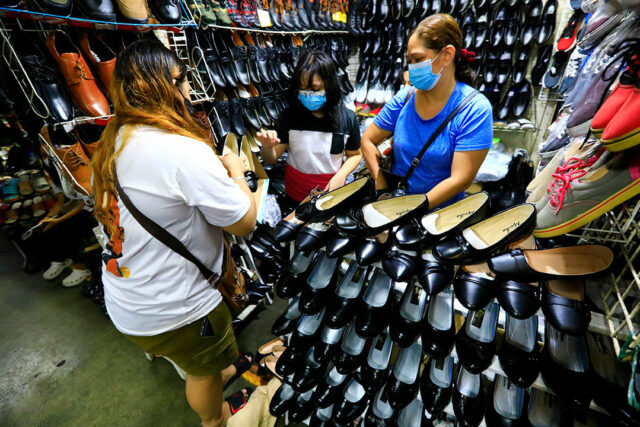
A woman buys shoes at a market in Marikina City. — PHILIPPINE STAR/ WALTER BOLLOZOS

FILIPINO HOUSEHOLDS will still feel the pain from elevated inflation even as price increases continue to moderate in the next few months.

BMI Country Risk and Industry Research projects that consumer spending in the Philippines will expand by 5.5% this year, but noted that elevated inflation, high borrowing costs and an uptick in unemployment rates pose risks to the outlook in the near term.

“While the rate of price changes is slowing, (inflation) remains higher than central banks’ targets and higher than what consumers have grown accustomed to, especially over the past decade. The impact will not be spread evenly across the different consumer spending segments, with the prices of some components, such as rent; services and some food items (e.g., meat and poultry), continuing to remain stickier and more elevated over (the second half),” BMI said in an Aug. 11 report.

The research firm said inflation will likely remain above the 2-4% target range of the Bangko Sentral ng Pilipinas (BSP) and average 5.7% this year.

“If nominal wages cannot keep up with these high rates of inflation, consumers will continue to see erosion in their purchasing power,” BMI said. “The uneven nature of price increases will mean that consumers will have to increasingly allocate more of their disposable income towards meeting basic necessities.”

Headline inflation slowed for a sixth straight month to 4.7% in July from 5.4% in June. It marked the 16th straight month of inflation exceeding the BSP’s 2-4% target band.

From January to July, inflation averaged 6.8%. The BSP projects inflation to average 5.4% this year and 2.9% in 2024.

BMI said that Philippine inflation remains one of the highest since the global financial crisis in 2008, noting that prices for household goods, clothing and non-essentials are unchanged or have quickened.

“The risk now is that inflation remains elevated at these levels for longer than anticipated, which will accelerate the erosion of household purchasing power,” the research firm said.

BMI said its Philippine consumer spending growth projection of 5.5% for this year does not consider the latest gross domestic product (GDP) data.

Philippine GDP expanded by 4.3% in the second quarter, much slower than the 6.4% growth in the first quarter and 7.5% a year ago. For the first semester, GDP growth averaged 5.3%. To achieve the 6-7% target growth, GDP needs to expand by at least 6.6% in the second half.

Private consumption, which accounts for three-fourths of the Philippine economy, rose by 5.5%. This was weaker than the 6.4% growth in the first quarter and 8.5% a year earlier.

Following the release of the second-quarter GDP data, BMI slashed its full-year forecast to 5.3% from 5.9% previously.

OTHER RISKS
As the BSP keeps interest rates at near 16-year highs through the second half, BMI said households are facing higher debt servicing costs for longer.

“Additionally, many households took on significant levels of debt in the previous low-interest rate environment. While there are few indications that this is bad debt, the risk to consumer spending is that the cost of servicing this debt at higher interest rates becomes a larger than anticipated draw on disposable incomes, to a point where consumers have to cut back spending, especially in more non-essential segments,” it said.

Slower economic growth may also push unemployment rates slightly higher. BMI said unemployment, which is expected to average 6.3% this year, is a key risk to its consumer outlook in the short term.

“Lower levels of personal savings… will see households have to reorient the purchasing patterns and cut back on their spending (moving down price points or buying fewer goods, but at similar spending levels),” it added.

In June, the unemployment rate fell to 4.5%, from 6% a year ago. This brought the average jobless rate to 4.6% in the first half.

BMI also flagged risks to remittances, which is an important source of income for many households, arising from the negative impact from the rising inflation in major economies.

“In addition, the possible weakening of the peso will reduce the amounts sent back by overseas workers in local currency. This could put pressure on households with fixed expenditures,” BMI added.

The research firm said that the Philippine peso may depreciate against the dollar over the near term, with the local currency likely reaching P55.3 per dollar in 2023 and P55.8 per dollar in 2024.

“For the Philippines, which remains heavily reliant on imports to meet local demand, this will provide further headwinds as imports will become costlier,” it said.

Filipino households are also exposed to other global risks, such as a global slowdown and the Russia-Ukraine conflict.

“The effect is being felt in higher food, fuel and utility costs… The initial impact of the conflict has fed through to prices, and we highlight the ongoing risks of future spikes from this conflict zone,” BMI said. — KBT

Gov’t urged to consider uniform tariff structure

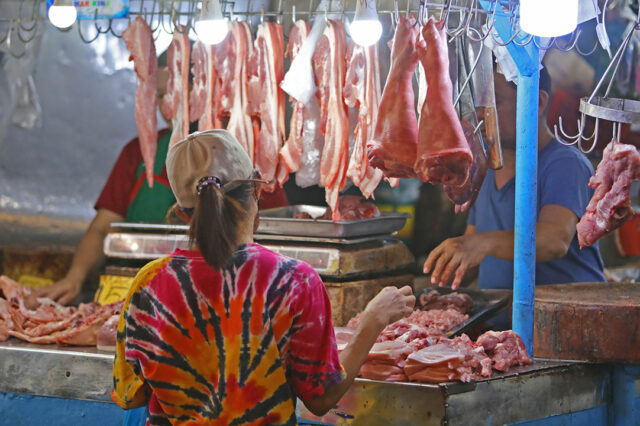
The government is looking to extend anew the validity period of an executive order that kept the lower tariffs on certain agricultural commodities such as pork, rice and corn. — PHILIPPINE STAR/ WALTER BOLLOZOS

By Revin Mikhael D. Ochave, Reporter

THE MANAGEMENT Association of the Philippines (MAP) urged the government to keep tariffs low and uniform for agricultural and food products to keep food prices affordable for more Filipinos.

The MAP said in a position statement that the government should consider a tariff structure that “reduces incentives and opportunities for corruption and smuggling by unifying the minimum access volume (MAV) and non-MAV tariff rates.”

It said that tariffs should be kept “relatively low and uniform across all goods with a maximum 10-15%” to ensure the affordability of food prices.

The MAP issued the position paper as the National Economic and Development Authority (NEDA) and Tariff Commission (TC) are moving to review and reform the tariff structure of the Philippines.   

“The removal of existing peaks and achieving low uniform rates in a tariff structure that provides equal incentives across domestic industries will encourage more and wider agricultural processing and value-adding, help control inflation, and enhance the country’s food security. We urge the TC and NEDA to move the Philippine economy in this direction,” the MAP said in the paper signed by MAP President Benedicta Du-Baladad and MAP Governor-in-Charge for Resilience and Recovery Cluster and former NEDA Secretary Cielito F. Habito.

The MAP noted that agricultural tariffs have remained high as these are generally excluded from tariff adjustments “with agricultural products deemed ‘sensitive’ levied the highest statutory rates of up to 65%.”

“This exceptional level of protection has dampened the impetus for government and agricultural producers to achieve higher levels of productivity, hence, lower costs and prices, to be comparable to and competitive with that of our neighbors,” it said.

The MAP recommended that agricultural commodities with high tariff rates should be reviewed for reduction.

“Most of the agriculture commodities with very high tariffs are food products (sugar, meat, fish, rice) or inputs to local manufacturing and value addition (corn, meat, fish, sugar, etc.). These commodities are prominent and crucial in family food consumption, food security, and general inflation,” it said.

The MAP said the Philippines should have a “rational tariff structure” in which tariff rates on inputs do not go beyond the tariffs imposed on finished products.

“High tariffs have long been shown to be counter-produc-tive, and lead to reduced investment, low or stagnant wages, and higher rates of malnutrition. Using protective trade policy to help farmers causes unwanted collateral damage to the much wider mass of consumers, especially the poor who suffer the long-term consequences of high-priced food,” it said.

Sought for comment, Foundation for Economic Freedom President Calixto V. Chikiamco said he agreed with the MAP’s proposal but suggested that variable tariffs be allowed. 

“If I may tweak it a little bit to allow for variable tariffs, a bit higher during the harvest season and a bit lower, during the lean season,” Mr. Chikiamco said via mobile phone. “The variable tariffs help to mitigate the downward pressure on domestic prices during harvest season. Also, this is politically more acceptable to the farmers.”

Rizal Commercial Banking Corp. Chief Economist Michael L. Ricafort said in a Viber message that the MAP’s proposal could address surging food prices and curb inflation.

“This is one effective way to further bring down food prices and overall inflation, as one intervention measure that the government can implement by reducing and unifying import tariff rates on imported food products, while also reducing the opportunity for smuggling brought about by the relatively higher tariffs,” Mr. Ricafort said.

“One benefit is the lower retail food prices for consumers, in terms of reduced import tariffs passed on to them as savings,” he added.

In March, the TC started the comprehensive tariff review program of the Most Favored Nation Tariff Schedule from 2024 to 2028. The tariff review is done every five years as provided under Republic Act No. 10863 or the Customs Modernization and Tariff Act.

The review covers tariffs for various items including agriculture and food products; chemicals and chemical products; textiles, paper and leather products; metal and non-metal products; and machinery and transport equipment.

Peso depreciation minimal, says Remolona

BW FILE PHOTO

By Keisha B. Ta-asan, Reporter

THE DEPRECIATION of the peso against the dollar has only been minimal compared with other currencies in the region so far this year, Bangko Sentral ng Pilipinas (BSP) Governor Eli M. Remolona, Jr. said on Monday morning.

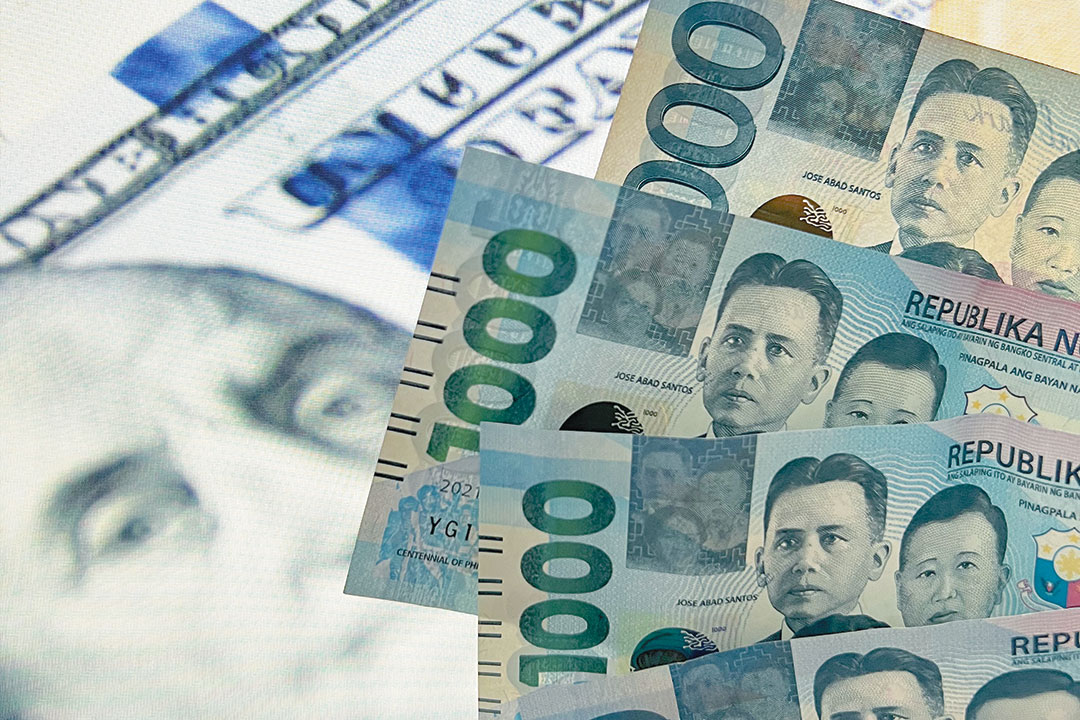
The peso slumped to an eight-month low against the greenback on Monday, as market players expect the BSP to keep rates on hold at its Thursday meeting.

The local currency closed at P56.78 versus the dollar, weakening by 46.50 centavos from Friday’s P56.315 finish, data from the Bankers Association of the Philippines’ website showed.

This was the peso’s weakest close in over eight months or since its P56.94-a-dollar finish on Nov. 23, 2022 (See related story: Peso sinks to over eight-month low as dollar hits one-month high).

Mr. Remolona said the central bank is keeping a close eye on the exchange rate.

“Compared to our neighbors, the peso has weakened only slightly,” he said during the Philippine economic briefing in Laoag City. “Since the beginning of the year, the peso has depreciated by less than 1%. This depreciation is smaller than those of our neighbors.” 

He said that as of its P56.24 close on Aug. 8, the peso has depreciated by 0.86% from its P55.755 close on Dec. 29. This is smaller compared with the Thai baht (-1.09%), the Malaysian ringgit (-3.77%), the South Korean won (-4.24%) and the Japanese yen (-8.35%).

Mr. Remolona said the peso has weakened against the greenback due to the US Federal Reserve’s move to hike rates anew.

He said the local currency has since appreciated from its record low of P59 against the dollar in October last year, thanks to the tools the BSP used to mitigate the volatility in the foreign exchange market.

“We have raised [policy rates] by 425 basis points (bps) and that has helped strengthen, stabilize the peso. We have occasionally intervened in the foreign exchange market. This is to avoid destabilizing swings in the exchange rate, which tend to upset the markets,” he said.

PRESSURE
The dollar’s strength was seen on Monday as Fed officials remain hawkish, China Banking Corp. Chief Economist Domini S. Velasquez said in a Viber message.

“The peso is also being pressured further due to expectations that the BSP will stand pat on its meeting on Thursday,” she added.

A BusinessWorld poll showed 13 of 15 analysts predict the Monetary Board will extend its pause at its Aug. 17 meeting. If realized, this will mark the third straight meeting that the BSP has kept policy rates unchanged.

The Monetary Board raised borrowing costs by 425 bps from May 2022 to March 2023, bringing the key policy rate to 6.25%.

Rizal Commercial Banking Corp. Chief Economist Michael L. Ricafort said the depreciation of the peso “increases the odds of a 25-bp local policy rate hike on Aug. 17, to match the latest +0.25 Fed rate hike on July 26.”

The hike would maintain a comfortable interest rate differential between the Philippines and the US. This in turn will help stabilize the peso, import prices, and overall inflation, he added.

“Peso coming under pressure just like all other emerging market currencies with US Treasury yields shooting up over the weekend,” Nicholas Antonio T. Mapa, senior economist at ING Bank N.V. Manila, said.

The 10-year US yield climbed about 8 bps on Friday and was marginally higher in Asia, Reuters reported. At 4.18%, the 10-year US yield is about 16 bps from October 2022 highs.

“As BSP governor indicated, it’s good that they have a formidable stash of GIR (gross international reserves) ready to deploy against this short-term volatility,” Mr. Mapa said.

Latest central bank data showed gross international reserves inched up by 0.3% to $99.7 billion in July, from $99.4 billion as of end-June. This is the highest level of dollar reserves in two months or since $100.6 billion posted in May.

“The BSP will take into consideration this development on top of fast fading growth and inflation back within target as early as the fourth quarter into their data-driven decision on Thursday,” Mr. Mapa said.

He noted that rate hikes have slowed the economy’s growth momentum, and the Philippines will still feel the impact of previous tightening in the coming months.

“We still expect a pause from BSP although given the recent pressure on the peso, they may need to retain a hawkish stance by vowing to act with rate hikes should inflation risks materialize,” Mr. Mapa added.

University of Asia and the Pacific Ronilo M. Balbieran in an interview with One News said the BSP may extend its policy pause on Thursday due to the disappointing gross domestic product (GDP) growth in the second quarter.

However, the Monetary Board “should already start imagining a possible rate cut starting next month, to accommodate to expect a slowdown of our economy just in case there’s a huge impact of El Niño on our agriculture,” he said.

The Philippine economy grew by 4.3% in the second quarter, much slower than the 6.4% growth in the first quarter and 7.5% a year ago.

Mr. Balbieran also said it is still possible for the government to achieve its 6-7% growth target for this year.

“I think it’s just a procurement delay problem. The money is there, but we just need to spend it. [Finance] Secretary [Benjamin E.] Diokno promised that the National Government will accelerate spending on infrastructure and that should provide a massive push for our economic growth for the third quarter and the fourth quarter,” he said.

Mr. Diokno earlier said the economy must grow by at least 6.6% in the second half to achieve the lower end of the 6-7% government target. He emphasized that an “aggressive” catch-up plan for government infrastructure projects as well as “deliberate spending” by government agencies are “essential” in meeting this goal.

ADVERTISEMENT
ADVERTISEMENT