Home Blog Page 4427

Gov’t makes full award of Treasury bill offering

BW FILE PHOTO

THE GOVERNMENT made a full award of the Treasury bills (T-bills) it offered on Tuesday at mostly slightly higher rates, following the surge in US Treasury yields ahead of US Federal Reserve Chair Jerome H. Powell’s speech on Friday.

The Bureau of the Treasury (BTr) raised P15 billion as planned via the T-bills it auctioned off on Tuesday as total bids reached P42.991 billion or more than twice the amount on offer.

Broken down, the Treasury made a full P5-billion award of the 91-day T-bills as tenders for the tenor reached P18.164 billion. The three-month paper was quoted at an average rate of 5.671%, 3.3 basis points (bps) below the 5.704% seen last week, with accepted rates ranging from 5.643% to 5.690%.

The government also raised P5 billion as planned from the 182-day securities as bids for the tenor reached P10.495 billion. The average rate for the six-month T-bill was at 5.986%, rising by 4.1 bps from the 5.945% seen last week, with accepted rates at 5.9% to 6.1%.

Lastly, the BTr borrowed the programmed P5 billion via the 364-day debt papers as demand stood at P13.882 billion. The average rate of the one-year T-bill likewise inched up by 0.9 bp to 6.334% from the 6.325% quoted last week. Accepted yields were from 6.25% to 6.35%.

At the secondary market before Tuesday’s auction, the 91-, 182- and 364-day T-bills were quoted at 5.7649%, 5.9996%, and 6.3285%, respectively, based on PHP Bloomberg Valuation Reference Rates data provided by the Treasury.

T-bill rates were mostly higher following the surge in US Treasury yields ahead of the Fed’s Jackson Hole conference, Rizal Commercial Banking Corp. Chief Economist Michael L. Ricafort said in a Viber message.

“T-bill rates fetched today were somehow sideways from the previous week as local market participants remained cautious on the possible policy remarks from Fed Chair Powell this week in the Jackson Hole Symposium of Central Bankers,” a trader likewise said in an e-mail on Tuesday.

US Treasury yields rose to decade highs as investors awaited a Federal Reserve meeting on Friday at Jackson Hole, Wyoming, Reuters reported.

Longer-dated US Treasury yields were up, with the 30-year yield hitting 4.474%, its highest since April 2011. Bond yields move inversely with prices.

The 10-year Treasury hit 4.354%, the highest since November 2007 — before the collapse of Lehman Brothers almost a year later fully ushered in the Great Financial Crisis.

Mr. Powell is scheduled to deliver a speech on the economic outlook at the Kansas City Jackson Hole Economic Policy Symposium on Aug. 25, where markets assume he will note the jump in yields and the recent run of strong economic data.

The Fed raised borrowing costs by 25 bps last month, bringing its target interest rate to a range between 5.25% and 5.5%.

The US central bank has hiked rates by a cumulative 525 bps since it began its tightening cycle in March last year.

The Federal Open Market Committee will next meet on Sept. 19-20 to review policy.

On Wednesday, the BTr will offer P30 billion in reissued 20-year Treasury bonds (T-bonds) with a remaining life of 15 years and five months.

The Treasury wants to raise P225 billion from the domestic market this month, or P75 billion via T-bills and P150 billion via T-bonds.

The government borrows from local and foreign sources to help fund its budget deficit, which is capped at 6.1% of gross domestic product this year. — A.M.C. Sy with Reuters

DoubleDragon’s luxury serviced residences Ascott-DD Meridian Park to be operational by 2024

REAL ESTATE developer DoubleDragon Corp. (DD) said its Ascott-DD Meridian Park is set to be operational by 2024 as the company had the topping-off ceremony on Tuesday. 

In a stock exchange disclosure, DoubleDragon said the project will feature more than 300 luxury serviced residences and is located within the DoubleDragon Meridian Park complex.

The Ascott-DD Meridian Park development is expected to generate recurring revenues by next year, the company said. 

It said the premium luxury development “will complete and further enhance the mix of the whole complex as it is positioned to be the Mini-CBD (central business district) in the Bay Area of Pasay City, Metro Manila.”

“Today Aug. 22, 2023, [DoubleDragon’s] subsidiary (DDMP REIT, Inc.) conducts topping off of Ascott at DD Meridian Park as the building structure and topmost floor of the project has been completed,” it added.

DDMP REIT is the real estate investment trust of DoubleDragon. Its property portfolio consists of three commercial properties in DD Meridian Park, namely: DoubleDragon Plaza, DoubleDragon Center East, and DoubleDragon Center West.

DoubleDragon said that Ascott Ltd., which is a subsidiary of Singapore-based property company Capital Land, will operate and manage Ascott-DD Meridian Park.

In 2017, DoubleDragon announced its partnership with Ascott Ltd. for the establishment of the 5,567-square-meter Ascott-DD Meridian Park. Aside from the luxury serviced residences development, the company said the five-hectare DoubleDragon Meridian Park complex is expected to be fully developed by 2024. 

It said the complex is set “to become a fully mature prime hard asset portfolio, generating optimum level of recurring revenues by 2025.” 

Meanwhile, the company said DoubleDragon Plaza is expecting to welcome soon a third government agency to relocate its head office in the property, in addition to the Philippine Economic Zone Authority and the Tourism Infrastructure Economic Zone Authority. 

Shares of DD at the local bourse slipped five centavos or 0.64% to end at P7.75 each on Tuesday. — Revin Mikhael D. Ochave

Art&Culture (08/23/23)


CCP presents Tagalized abridged operas

BACK-TO-BACK abridged versions of Gioachino Rossini’s The Barber of Seville and Wolfgang Amadeus Mozart’s The Marriage of Figaro take the centerstage in the second installment of the “CCP Out-Of-The-Box Series,” the newest program of the Cultural Center of the Philippines (CCP) featuring unconventional programming for adventurous artists and audiences. The CCP Out-Of-The-Box Series returns with Figaro! Figaro!! on Aug. 25, 7:30 p.m., and Aug. 26, 3 p.m., at the Tanghalang Ignacio B. Gimenez (CCP Black Box Theater). “In olden times, the composers wanted their operas to be in the language of their audiences. So, we decided to translate the two operas into Filipino. We want opera to be more accessible to Filipino audiences,” said CCP Vice-President and Artistic Director Dennis N. Marasigan who did the translation for this production, in a statement. Directed by Jaime del Mundo, the back-to-back opera production follows the adventures of Figaro, the main character of the two operas, which is based on The Figaro Trilogy by French playwright Pierre Beaumarchais. The trilogy (the third is La Mère coupable or The Guilty Mother) revolves around the adventures of a resourceful servant named Figaro, as well as the fascinating recurring characters. The abridged operas will feature performances by Filipino singers Bianca Camille Aguila, Roxy Aldiosa, Diego Aranda, Angeli Benipayo, Ruzzel Clemeno, Nerissa de Juan, Roby Malubay, Nomher Nival, Noel Rayos, Jonathan Tadioan, and Floyd Tena. Tickets can be purchased for P1,500 via TicketWorld.


MSO presents Hina Maeda in concert

THE MANILA Symphony Orchestra (MSO) will feature violinist Hina Maeda at its 3rd concert of the season, Wieniawski and Rimsky-Korsakov, on Aug. 26, 7:30 p.m., at the Ayala Museum in Makati. Ms. Maeda will perform Henryk Wieniawski’s Violin Concerto No. 2 in D minor, Op. 22 with the Manila Symphony Orchestra, under the baton of Maestro Marlon Chen. Tickets to the concert are available via TicketWorld.


ARTablado focuses on Arsega’s lines

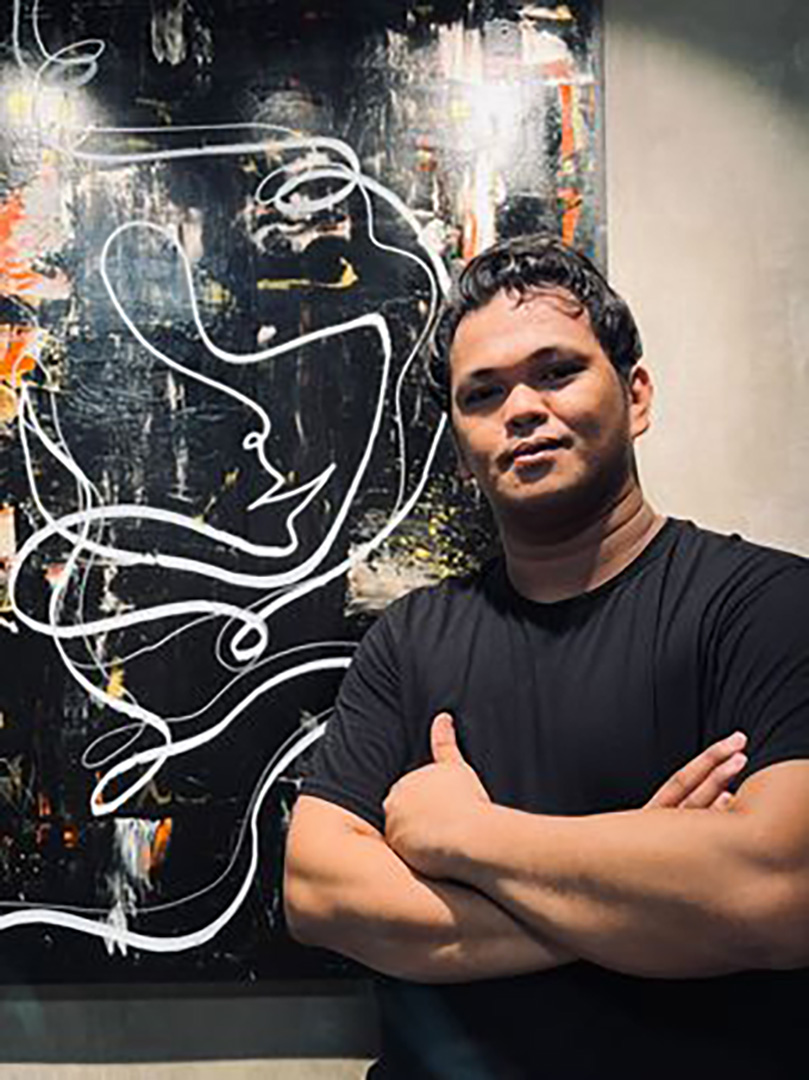
THE LINE drawings of artist Arturo Arsega, Jr. call to mind art class projects where one had to draw faces and figures without lifting the pen or brush from the paper. The end result may look deceptively simple but getting there takes practice and a lot of trial and error. Mr. Arsega Jr. makes it look easy even if the journey he took to get to where he is now was not exactly a walk in the park. By his own admission, he wandered into the art scene just three years ago after working for close to a decade in the Middle East. He quickly fell sick after returning to the Philippines, and it was during this low point that he turned his attention to the arts. Mr. Arsega had long been interested in drawing having drawn comics as a child. Decades later, after experimenting with landscapes and abstract art, Mr. Arsega returned to drawing. His line drawings may not be detailed or belabored, but with the addition of a few strokes of paint or a background in a watercolor-like wash, he has come up with his own distinct style. In 2020, with the help of an online gallery, he was able to sell his first artwork. Since then, Mr. Arsega has gone on to hold a solo exhibit, with his second solo show, “Dream Line,” ongoing at ARTablado, Robinsons Galleria until Aug. 31.


Big Bad Wolf going to Cebu

THE BIG Bad Wolf Book Sale returns to Cebu for the first time since 2019. The three-week sale will run from Sept. 15 to Oct. 1, where it will offer new and exclusive titles discounted at up to 95% off. With over two million books up for grabs, the fair will feature new and exclusive releases only available in Cebu. Aside from free admission, the Big Bad Wolf Book Sale will also have exclusive deals, promos, and discounts. It will be held daily from 10 a.m. to 10 p.m. at SM Seaside City Cebu, LG level, Cube Wing.


Newbie friendly platform for writers, readers opens

TYPEKITA is a newly launched app that aims to empower young Filipino storytellers by rewarding their creativity with accessible and self-determined monetization, while gifting readers with an interactive and visually stimulating reading experience. The app is a localized version of the Thai original Joylada, and is powered by homegrown social entertainment platform Kumu. At TypeKita’s official launch on Aug. 16, Head of Growth Ysabel Yuzon, Vice-President of Strategic Management Dana de la Vega, and Creator Manager Erich Valdevioso discussed its growing potential to “open doors even for those who may not have considered writing before.” Live readings of current TypeKita favorites Babalik Sa’yo (Rej Martinez), The Day I Said Goodbye (Miyuki Jeishi), and Hush Lucas (Arki Aaron) were then performed by Nour Hooshmand, Ian Pangilinan, and Benedix Ramos. TypeKita uses the chat-fiction format that makes both creation and consumption more accessible, providing a gateway to long-form in the future if creators are so inclined. The app offers a wide range of genres — currently popular are romance with LGBTQ+ themes; young adult, coming-of-age stories; and fantasy and mystery. While many of its features are free, the app also has a monetization feature for creators. TypeKita is available for download via the App Store and Google Play.

Pushing back China’s grey zone operations in the South China Sea: The need to foster closer security ties with like-minded Indo-Pacific states

SCREENGRAB FROM THE PHILIPPINE COAST GUARD VIDEO

On Aug. 5, several Chinese Coast Guard (CCG) vessels blocked and used water cannons against Armed Forces of the Philippines (AFP)-chartered wooden boats delivering supplies to a small Philippine Marine (PM) contingent on board the BRP Sierra Madre on Ayungin Shoal. According to Philippine Coast Guard (PCG) spokesperson Commodore Jay Tarriela, the two wooden boats were part of a convoy escorting PCG patrol ships that were on a resupply mission to deliver food, water, fuel, and other items. In its statement, the AFP branded the CCG’s action as “excessive and offensive” and that the Chinese conducted “dangerous maneuvers”…“in wanton disregard of the safety of the people on board and in violation of international law.”

On Aug. 8, the Department of Foreign Affairs (DFA), through Undersecretary Theresa Lazaro, summoned Chinese Ambassador to Manila Huang Xilian and handed him a diplomatic protest. The letter condemned the CCG vessels’ actions against the AFP supply boats, told China to stop interfering in legitimate Philippine activities, and urged China to comply with its various obligations under international law, including the 1982 United Nations Convention on the Law of the Sea (UNCLOS).

The DFA also expressed its disappointment that it was not able to reach China’s foreign ministry through a hotline established between Manila and Beijing during President Ferdinand Marcos, Jr.’s state visit. The Philippines and China agreed to establish the hotline to foster communication to manage maritime incidents generated by the South China Sea dispute.

CHINA’S LONG LIST OF GREY ZONE OPERATIONS
The Aug. 5 Ayungin Shoal water cannon incident, which lasted more than an hour, is the latest in a growing number of alleged grey zone operations conducted by China against other claimant states in the South China Sea. American, Western, and Japanese defense analysts use the term “grey zone operations” to describe a strategy employed by a state actor to change or alter a status quo by undermining the power, legitimacy, and will of the adversary without triggering an armed conflict. China has finetuned its grey zone operations in the South China Sea given that the disputed area is wide, and it has overwhelming naval and civilian capabilities over the navies and coast guards of the littoral Southeast Asian states.

There is a widespread perception among the Chinese population that their rights and interests in the South China Sea are being unjustly challenged and undermined by smaller Southeast Asian states that have taken control of the several uninhabited land features in the disputed waters. Thus, there is strong public clamor for the People’s Liberation Army Navy (PLAN), the CCG, and the Chinese Maritime Militia to intensify patrols to maintain Chinese rights and interests in the South China Sea and enhance their collective ability to respond to unexpected maritime incidents involving China and the littoral Southeast Asians states such as Vietnam and the Philippines.

China has conducted several grey zone operations against the newly elected Philippines president’s administration as CCG patrols in the South China Sea became more frequent in 2022. This resulted in two maritime incidents in the South China Sea at the onset of the Marcos Jr. Administration, namely: a.) a big CCG ship blocking and harassing a small PN supply ship on its way to resupply a small AFP garrison on Ayungin Shoal; and, 2.) fishing boats manned by suspected Chinese Maritime Militia swarming to establish control over disputed South China Sea features.

And then, in February 2023, a CCG vessel directed “a military-grade laser” at a PCG ship escorting a resupply mission to the small Philippine garrison on board the BRP Sierra Madre on Ayungin Shoal.

China’s zero-sum game against the Philippines has pushed the latter to file several notes verbales against what it perceives as provocation. This has also led President Marcos Jr. to call on the AFP to shift its mission from internal security to external defense in the face of China’s coercive behavior against the PN and ordinary Filipino fishing folk.

THE BACKLASH AGAINST CHINESE GREY ZONE OPERATIONS
The Aug. 5 Ayungin Shoal incident is the latest in a series of Chinese grey zone operations aimed at isolating the small marine garrison on board the BRP Sierra Madre. China’s eventual goal is to force the Philippines to withdraw its forces from the land features it currently occupies, and relinquish its territorial claims over these land features, along with its maritime entitlements in its Exclusive Economic Zone (EEZ) in the West Philippine Sea/South China Sea.

China’s gambit against the Philippines, however, is triggering a major backlash in the country. The Marcos Jr. Administration found it imperative to enhance its security relations with the US, Japan, Australia, and South Korea. The Philippines is leveraging its geostrategic value to gain practical strategic and economic benefits from the United States and its other treaty allies such as Japan, Australia, and South Korea. At the core of this strategy is the reinvigoration of the Philippine-US alliance. This strategy is based on a key calculation that the Philippines and the US share a pressing strategic objective: the maintenance of the status quo in the South China Sea. The Philippines is also exploring the prospect of closer bilateral and multilateral ties with other US allies. For their part, Japan, Australia, and South Korea recognize how a military-capable Philippines could support their respective Indo-Pacific strategies in the face of an expansionist China in the South China Sea.

China must realize that its actions invite consequences not only in the Philippines but in the community of nations. Indeed, it is through alliances with like-minded states in the Indo-Pacific that the Philippines can defend itself against China’s gray zone operations in an area that has been established as unequivocably ours.


Dr. Renato Cruz De Castro is a trustee and convenor of the National Security and East Asian Affairs Program of the Stratbase ADR Institute.

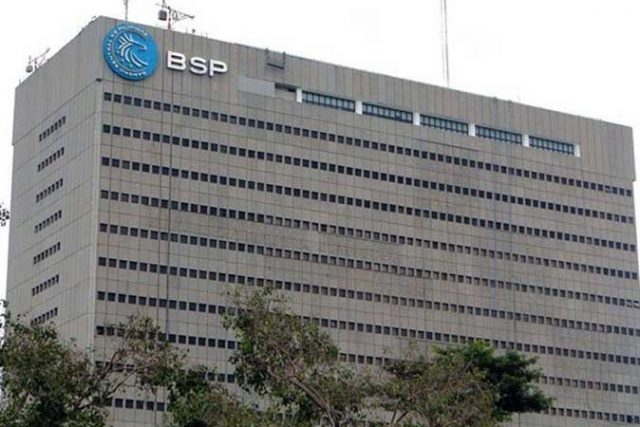
BSP siphons off P1.5 trillion in excess liquidity

THE BANGKO SENTRAL ng Pilipinas (BSP) has siphoned off P1.522 trillion in excess money supply this year, according to its latest monetary policy report.

“As of Aug. 2, the total outstanding amount absorbed in the BSP liquidity facilities stood at about P1.522 trillion,” the central bank said.

Broken down, about 38.5% or P585.4 billion were absorbed through the BSP Securities Facility via BSP Bills (BSPB). The maiden issuance of the 56-day BSPB was on June 30.

The central bank absorbs liquidity from banks through the BSP’s monetary operations, such as the term deposit facility (TDF).

About a quarter or around P376.2 billion of total placements were from the TDF.

Meanwhile, placements in the BSP’s overnight reverse repurchase (RRP) facility stood at P340.3 billion (22.4%) and the overnight deposit facility amounted to P220.1 billion (14.5%).

“The auction results for the TDF and BSPB during the review period reflected the pass-through of the BSP’s monetary tightening, with liquidity in the financial system remaining adequate,” the central bank said.

“Moreover, eligible counterparties have been shifting their assets towards the BSP Securities amid the need to service client requirements,” it added.

The weighted average interest rate (WAIR) for the seven-day term deposits rose to 6.5888% on Aug. 2 from 6.5806% previously. The WAIR for the 14-day papers went up to 6.5903% from 6.5864% in the previous auction.

As for the BSP bills, the WAIR for the 28-day BSPB increased to 6.7108% on Aug. 4 from 6.7048% a week ago. The WAIR for the 56-day BSPB was at 6.7356%, above the previous auction’s 6.6999%.

Meanwhile, the BSP on July 14 shifted to the fixed-rate, full-allotment auction format for its daily RRP auctions. It has awarded an average of P376.149 billion since then.

On a monthly basis, the awarded amount for August stood at P402.847 billion, higher than the P366.441 billion in July.

The BSP said it has continued to refine its monetary policy instruments as part of its initiatives to enhance monetary operations under the interest rate corridor framework.

In June, the BSP introduced a longer tenor under the BSP Securities Facility to complement the 28-day BSP Bill. The BSP also implemented two of the three phased refinements under the series of reforms to the overnight (O/N) RRP facility.

“Market reception to the 56-day BSPB has been favorable, with frequent oversubscriptions observed since the maiden issuance in June. For the first seven auctions, the bid-to-cover ratio (BCR) ranged from 0.762 to 2.082 times the total offered volume, with an average BCR of 1.103 times the offered amount,” the BSP said.

The main objective of the BSP’s monetary operations is to control and manage inflation, which the central bank expects to average at 5.6% this year, 3.3% in 2024, and 3.4% in 2025.

Headline inflation slowed to 4.7% in July, its sixth straight month of decline. Year to date, inflation averaged 6.8%, still well above the BSP’s 2-4% target.

Last week, the Monetary Board extended its hawkish pause for a third straight meeting, keeping the key rate at a near 16-year high of 6.25%. — K.B. Ta-asan

Metro Retail opens store in General Trias

METRO RETAIL Stores Group, Inc. opened a new neighborhood mini-mart in General Trias, Cavite on Tuesday, as the listed retailer expands its store network.

In a stock exchange disclosure on Tuesday, Metro Retail said the newly branded Metro Value Mart is located in Pearl Plaza, Lancaster New City.

The 1,000-square-meter store carries international and local goods, general merchandise, home care, health and beauty, and fresh and frozen products.

“The Metro Value Mart Lancaster is well positioned to give General Trias communities convenient access to complete basic and affordable goods and groceries. This mini-mart format was developed in response to consumers’ evolving preference to shop closer to home for their basic daily needs,” Metro Retail said. 

“The Metro value mart is ready to serve with ample parking and easy public transport access for the residents in the 15 barangays near Lancaster New City,” the company added. 

According to Metro Retail, the new store marks its third store in Cavite and is its 62nd across the country.

“We are very pleased to have a new Metro store at this location which will provide quick and convenient shopping to the residents and visitors of General Trias, and to the rest of Cavite province,” Metro Retail President and Chief Operating Officer Manuel C. Alberto said.

“As a highly industrialized and growing province, we are excited to be a part of the Cavite businesses and retail options, and we hope that the addition of the Metro Valuemart will contribute to a more vibrant and thriving local economy,” he added.

The new store is open from 8:00 a.m. to 8:00 p.m. on weekdays and 7:00 a.m. to 8:00 p.m. on weekends.

Metro Retail’s first-half net income fell 37.5% to P136.8 million from P218.9 million a year ago on the back of weaker net sales.

On Tuesday, shares of Metro Retail dropped two centavos or 1.49% to close at P1.32 apiece. — Revin Mikhael D. Ochave

New find throws light on life of slaves in Ancient Rome’s Pompeii

HTTP://POMPEIISITES.ORG/

ROME — Archaeologists have discovered a small bedroom in a Roman villa near Pompeii that was almost certainly used by slaves, throwing light on their lowly status in the ancient world, the culture ministry said on Sunday.

The room was found at the Civita Giuliana villa, some 600 meters north of the walls of Pompeii, which was wiped out by a volcanic eruption of Mount Vesuvius nearly 2,000 years ago.

It contained two beds, only one of which had a mattress, two small cabinets, and a series of urns and ceramic containers, in which the remains of two mice and a rat were found.

“These details once again underline the conditions of precarity and poor hygiene in which the lower echelons of society lived during that time,” the culture ministry said in its statement.

Materials such as furniture and fabric, covered by the devastating blast of rock fragments, gas, and ash from Vesuvius, decomposed over the years, leaving a void in the debris.

When filled with plaster, this void reveals the original shape and contours of the long-gone material, including the outline of a crumpled blanket left on the bed netting.

“It looks like a photograph … However, this is an image from almost 2,000 years ago,” the ministry said.

No traces were found of grates, locks, or chains to restrain the room’s inhabitants.

“It seems that control was primarily exerted through the internal organization of servitude, rather than physical barriers and restraints,” said Gabriel Zuchtriegel, the director of the Archaeological Park of Pompeii.

Excavations at the Civita Giuliana villa were carried out in 1907-1908, and then again from 2017, when police realized the site was being plundered by illegal diggers.

Archaeologists said part of one of the beds had been destroyed by a tunnel used by robbers to access another part of the villa.

Pompeii and the surrounding countryside were submerged by volcanic ash when Mount Vesuvius exploded in AD 79, killing thousands of Romans who had no idea they were living beneath one of Europe’s biggest volcanoes.

The eruption buried the city in a thick layer of ash, preserving many of its residents and buildings.

The site has seen a burst of recent archaeological activity aimed at halting years of decay and neglect, largely thanks to a recently concluded €105-million ($115.58 million) European Union-funded project.

Culture Minister Gennaro Sangiuliano said on Sunday that conservation and research efforts would continue.

“What we are learning about the material conditions and social organization of that era opens up new horizons for historical and archaeological studies,” he said. — Reuters

Customer behavior data fuels innovation in lending — Home Credit

By Patricia B. Mirasol, Reporter

IN A strategic move to meet the evolving financial needs of their customers, lending companies are increasingly turning to customer behavior analysis for developing innovative loan products, according to an industry player.

This approach has proven to be a game-changer, enabling lending companies to create loan solutions that resonate with their target markets, Sheila A. Paul, chief marketing officer at Home Credit Philippines, said in an interview with BusinessWorld.

“We pride ourselves on developing products that are not just financial tools, but actual solutions that align with our customers’ preferences and habits,” she noted.

She said that Home Credit’s virtual credit line called Qwarta “didn’t exist pre-pandemic, but was developed because it caters to people who prefer making digital payments without the need to visit any physical outlets.”

Qwarta can be used for purchasing groceries, settling bills, and online shopping, including on the e-commerce platform Lazada.

“Let’s say you… bought something worth P2,000-3,000, you can use Home Credit to be able to pay for that 30 days later from when you purchased it,” Ms. Paul said.

Home Credit, which has been present in the country for a decade, has served 9.3 million Filipinos nationwide as of 2022. Nearly half (48%) of its customers earn less than P20,000 per month; three-tenths are under 30 years old, according to the company.

The country’s growing population, along with the millions of new graduates that enter the workforce annually and consequently require access to financial services, contributes to what Ms. Paul described as “a lot of uphill growth for us.”

According to the Bangko Sentral ng Pilipinas’ Financial Inclusion Report for 2021, ownership of a formal account in the Philippines increased to 56% in 2021 from 29% in 2019. Meanwhile, the adoption of formal credit increased to 25% from 19% within the same period.

The company uses big data collected from credit bureaus, telco usage, and other sources to assess an individual’s creditworthiness. An identification card and a mobile number are prerequisites for a loan application.

For those who prefer in-store shopping and have never engaged in installment or credit transactions, Home Credit’s sales force of 8,000 professionals across 15,000 stores throughout the country guides them through the process, Ms. Paul said.

The majority of Home Credit’s user base consists of government employees, those in the private sector, and individuals who receive remittances from overseas Filipino workers.

The gig economy, which includes freelancers, also presents opportunities for loan companies. According to Payoneer’s 2022 report on the Philippines’ freelance market, as many as 1.5 million Filipinos participate in freelancing platforms, undertaking tasks such as content creation and customer service for both local and foreign clients.

“Some of these people have buying power,” Ms. Paul said. “Since they don’t have tax returns and all that, they would not be accommodated by formal banks, but for sure we can give them a shot.”

BEHAVIORAL TRENDS
Another innovation of Home Credit is shoppingmall.ph, a website that consolidates product listings from 14,000 stores where it maintains a presence.

The idea for the site stemmed from the realization that people visit malls to window-shop for specific items — products that often have varying prices and discounts depending on the store, Ms. Paul said.

“What we try to do is aggregate these discounts and promos, present them to the public, and say ‘You don’t have to go and hop malls anymore.’ It’s hard to do it anyway these days,” she said.

“Depending on where we see the customer behavior going, that’s where we want to be able to innovate,” she added.

Home Credit, which used to mostly provide loans for electronics, now caters to loans that have also begun to resonate with its Filipino clients. These include installment plans for airplane tickets, optical products, wedding venues, and birthday parties.

“One thing that really took off for us was our sporting goods and e-bikes and bikes categories,” Ms. Paul said, noting how the trend was non-existent pre-pandemic. “Obviously, now everyone likes to bike and be healthy.”

With a non-paying loans rate of about 6-7%, Ms. Paul credits the company’s ability to be sustainable to its ability to predict and manage a person’s paying behavior.

Individuals tend to be more responsible when paying for loans on items they aspire to acquire, she said.

“You would be surprised that people are still aiming to buy their first refrigerator or washing machine. People value their first loan if it’s tied to something they’ve aspired to or dreamed of,” she added.

A BRICS common currency is still a pipe dream

PIXABAY

PAUL O’NEILL, a former US Treasury secretary, said that if America ever dropped the strong-dollar policy, he would hire a brass band at Yankee Stadium to mark the proclamation. O’Neill had reservations about the mantra, but ultimately fell into line. The musicians didn’t make it to rehearsal on his watch and Washington’s support for greenback primacy lived on, with the odd tweak every now and then.

Challenges to the dollar’s vital role in the world economic and financial system are often said to be, if not imminent, then over the horizon. But somehow they never quite materialize. Don’t expect any of the current noise about movement toward a currency shared by the BRICS nations — Brazil, Russia, India, China, and South Africa — to amount to much. If any of these were to be the foundation of a single unit of exchange, it would likely be China. Precedent isn’t encouraging: Seven years after the International Monetary Fund added the yuan to its basket of reserve currencies, it accounts for a very minute share of the global cache.

Nor should we be too impressed by the New Development Bank, a lender created by the quintet to become a counterweight to the IMF or World Bank, part of a journey by the Global South to some wonderland with minimal Western influence. Emerging markets chafe that an American gets to lead the World Bank and a European helms the IMF. The US is, after all, the biggest stakeholder in both.

Clickbait headlines aside, such initiatives say more about who is advancing them than the shortcomings of the greenback. Potshots that appeal to domestic audiences are no substitute for economic leadership. None of the pretenders appears remotely ready.

South Africa, the host of this week’s summit for BRICS leaders, has done its best in recent days to hose down some of the speculation about FX singularity. That’s a long way off, officials say. The talks will focus on issues including the establishment of a common payments system, South Africa’s envoy to the group said last week. What is likely is the formation of a technical committee to start considering a potential joint currency. This takes some of the heat out of the notion of a plot to dethrone the dollar.

Why did the idea get so far? It’s a distraction from difficulties faced by some of the five. Russia is isolated from respectable salons, and is raising interest rates to stem the ruble’s collapse while simultaneously financing its war against Ukraine. China’s economy is slackening after decades of meteoric growth. South African leaders are contending with their failure to live up to the early promise of the post-Apartheid years.

Among the ballyhooed threats to the dollar that petered out: the collapse of the gold standard, the advent of floating exchange rates, the US current account deficit, budget shortfalls, the global financial crisis, China’s dizzying rise after Deng Xiaoping’s reforms. The euro held some promise, but a sovereign debt crisis in the early 2010s stalled that ascent.

The metrics are familiar, yet compelling enough to repeat. The greenback comprises just under 60% of global currency reserves, according to the IMF. That’s down from around 70% in 2000, but still well above any competitor. The euro is next, with about 20%, followed by the yen and the British pound. The yuan has 2.6% of the total. In terms of trading, the dollar appears almost untouchable, accounting for one side of 88% of all transactions in the $7.5 trillion-a-day foreign-exchange market.

Emerging-market central bankers tend to get defensive on this subject. They are often asked about their intentions in the context of what the Federal Reserve is doing. They rightly insist that they don’t have to simply follow the Fed’s lead. But don’t miss the essential point: Their actions do reflect the broad trajectory of US rates, if not the precise timing. Moreover, these bankers are often drawn into a perspective on the Fed at their monthly press conferences and seem very well informed. I’m waiting for a similar dissertation on the People’s Bank of China.

Lesetja Kganyago, governor of the South African Reserve Bank, has correctly identified management of any currency as a definitive issue. Some monetary authority, somewhere, would have to call the shots. There was much horse trading about where the European Central Bank (ECB) would be headquartered, who would lead it and how would it be run. At the time, many leaders feared German dominance. The bank is headquartered in Frankfurt, but a German has yet to run the ECB. Two of its four presidents have been French.

For the BRICS, which don’t share the European Union’s sense of purpose in pursuing integration, the hurdles are legion. But will it be a no-show forever? As natural as the ECB and euro now look, the path was far from smooth and only really got a head of steam once the Berlin Wall came down and Germany reunited. Nor was the Fed always a sure thing. A central bank that resembled those in Europe was long anathema to large sections of the American political class. The idea of an institution dominated by Wall Street and East Coast business elites met fierce resistance from heartland populists, as Roger Lowenstein wrote in his 2015 book America’s Bank, which chronicled the creation of the Fed. Yet America needed a currency, and an institution backing it, that reflected the country’s growing commercial heft. Ultimately, it came together in 1913 as a messy compromise. Even today, differences arise between the district Fed banks and the Washington-based Board of Governors.

BRIC, the acronym devised in 2001 by Jim O’Neill, the former chief economist at Goldman Sachs, captured the mood of the time. China was going great guns after entry to the World Trade Organization. India’s ascent was underway after a financial crisis a decade earlier led to an opening up. Russian President Vladimir Putin was putting the economic collapse of the late 1990s behind him. The US slipped into recession, followed by a sluggish recovery, with confidence fragile after the Sept. 11 terrorist attacks. (South Africa was added to the group later.)   

Too bad the countries themselves let it go to their heads.

BLOOMBERG OPINION

Goldman Sachs weighs selling part of wealth business in strategy revamp

REUTERS

NEW YORK — Goldman Sachs is weighing the sale of a part of its wealth business, it said on Monday, as it shifts its focus back to serving the ultra-rich and away from high-net-worth clients in mass markets.

The Wall Street bank is evaluating alternatives for its registered investment adviser (RIA) unit, called Personal Financial Management (PFM), which manages about $29 billion, it said in a statement.

The shift in strategy comes after Chief Executive Officer (CEO) David Solomon reorganized the firm into three units last year and scaled back ambitions for its consumer business, which lost $3 billion in the last three years.

Goldman is also pushing ahead with a sale of its fintech business, GreenSky and has also offloaded the bulk of its unsecured consumer loans after it halted this kind of lending last year.

“This is part of the overall restructuring of the firm, back toward its roots,” said Stephen Biggar, an analyst at Argus Research.

“They’ve been unable to carve a path of profitability and scale” for the RIA, which catered to high-net-worth individuals in mass markets outside of Goldman’s core, ultra-wealthy clientele, Mr. Biggar said.

Goldman declined to comment on PFM’s earnings.

The company’s shares slipped by 0.6% in afternoon trading, compared with the S&P index of bank stocks, which rose 0.2%.

Goldman bought RIA, formerly known as United Capital Financial Partners, for $750 million in 2019 when it managed about $25 billion in funds. The purchase was aimed at broadening Goldman’s client list beyond the ultra-rich, but the unit has remained a small part of the bank’s wealth business.

Goldman’s private wealth arm oversees $1 trillion in assets for ultra-high-net-worth clients, who have $60 million or more in investable assets. High-net-worth individuals — who would fall within the business Goldman is considering selling — typically have about $1 million to $10 million to invest.

Citywire RIA first reported on the possible sale.

Goldman’s wealth business has lagged behind rivals, including Morgan Stanley, where CEO James Gorman built the wealth management arm through a series of acquisitions that generate steady income from fees.

Mr. Solomon has been under pressure to turn around Goldman’s fortunes after its profit sank 60% in the second quarter as writedowns on its consumer businesses and real estate investments weighed on earnings.

The bank plans to grow its core wealth business serving ultra-high-net-worth clients, reiterating aspirations from its investor day in late February. Other core wealth businesses include workplace financial planning through Ayco and Marcus savings, Goldman said.

US banks compete to serve ultra-wealthy clients by providing brokerage, mortgage and other services, as well as estate and tax planning. Those activities tend to generate more stable revenues than volatile Wall Street operations, such as investment banking and trading, which are strongly linked to economic activity. — Reuters

Taiwan firm offers spam-blocking platform

TAIWAN-BASED system software company Gogolook Co. Ltd. has expanded its reach after launching its call identification and spam-blocking application Whoscall in the Philippines.

“As fraud became more apparent during and after the pandemic, we saw how Filipinos have suffered losses from scams, much like in other countries where we have launched Whoscall, such as Thailand, Malaysia, and Japan,” Manwoo Joo, Chief Operating Officer of Gogolook, said in a media release on Tuesday.

“This reality ignited our drive to create a comprehensive life protection platform accessible to every Filipino across the nation,” the official added.

According to its website, the application uses a call identifier by helping identify unknown calls using its database. It can also block spam calls, and scan malicious and suspicious uniform resource locators or URLs.

The company claims to have the largest database in East and Southeast Asia, further boosting its capacity to detect potential spam and scams, it said.

“Whoscall has been available and is the leading caller ID and scam detection app in other Asian countries like Thailand and Taiwan, accumulating 100 million downloads worldwide,” Country Marketing Head for the Philippines Gabriel Barrios said.

Headquartered in Taiwan, Gogolook utilizes its database and advanced artificial intelligence technology to provide services in communication fraud prevention and financial technology.  Ashley Erika O. Jose

AI-generated art cannot receive copyrights, US court says

A WORK of art created by artificial intelligence (AI) without any human input cannot be copyrighted under US law, a US court in Washington, DC, has ruled.

Only works with human authors can receive copyrights, US District Judge Beryl Howell said on Friday, affirming the Copyright Office’s rejection of an application filed by computer scientist Stephen Thaler on behalf of his DABUS system.

The Friday decision follows losses for Mr. Thaler on bids for US patents covering inventions he said were created by DABUS, short for Device for the Autonomous Bootstrapping of Unified Sentience.

Mr. Thaler has also applied for DABUS-generated patents in other countries including the United Kingdom, South Africa, Australia and Saudi Arabia with limited success.

Mr. Thaler’s attorney, Ryan Abbott, on Monday said that he and his client strongly disagree with the decision and will appeal. The Copyright Office in a statement on Monday said it “believes the court reached the correct result.”

The fast-growing field of generative AI has raised novel intellectual property issues. The Copyright Office has also rejected an artist’s bid for copyrights on images generated through the AI system Midjourney despite the artist’s argument that the system was part of their creative process.

Several pending lawsuits have also been filed over the use of copyrighted works to train generative AI without permission.

“We are approaching new frontiers in copyright as artists put AI in their toolbox,” which will raise “challenging questions” for copyright law, Judge Howell wrote on Friday.

“This case, however, is not nearly so complex,” Judge Howell said.

Mr. Thaler applied in 2018 for a copyright covering A Recent Entrance to Paradise, a piece of visual art he said was created by his AI system without any human input. The office rejected the application last year and said creative works must have human authors to be copyrightable.

Mr. Thaler challenged the decision in federal court, arguing that human authorship is not a concrete legal requirement and allowing AI copyrights would be in line with copyright’s purpose as outlined in the US constitution to “promote the progress of science and useful arts.”

Judge Beryl Howell agreed with the Copyright Office and said human authorship is a “bedrock requirement of copyright” based on “centuries of settled understanding.” — Reuters

ADVERTISEMENT
ADVERTISEMENT