Home Blog Page 4381

[B-SIDE Podcast] Love unbounded: ‘Ethical non-monogamy’ explored in PHL setting

Follow us on Spotify BusinessWorld B-Side

Parallel, garden party, and kitchen table — these are just some of the many ways to practice ethical non-monogamy (ENM).

In this B-Side episode, Drew O’Bannon, founder of sex education platform Now Open PH, talks to BusinessWorld reporter Luisa Maria Jacinta C. Jocson about ENM in the Philippines.

“There’s really not that big of a difference between what makes a monogamous relationship ethical versus what makes a non-monogamous relationship ethical,” said O’Bannon.

“You have to communicate with everyone involved, you need to be honest, you need to be transparent, you need to have integrity. But again, these are the same things that make monogamous relationships work. It’s just that with ENM, it has to be put on the table.”

O’Bannon said there are many “unspoken rules” in monogamy. “With ENM, there’s really no rules. It’s sort of a free-for-all, that you get to decide what that looks like.”

“There’s a variety of ways to practice this, but the main point is that everyone is informed, everyone consents, and hopefully, everyone is satisfied.”

O’Bannon also highlighted the struggles that the non-monogamous community faces, especially in a predominantly Catholic country like the Philippines.

Catholic beliefs are also notably ingrained in the widely accepted standards for relationships, O’Bannon said.

“Even with people who aren’t religious, our idea of romance as a one-to-one correspondence, a marriage between a man and a woman, is very religious in nature.”

State laws and policies are also designed to cater to monogamous people. O’Bannon said that legalizing divorce will be crucial to making society more inclusive and progressive.

“The first step is we need divorce. One of the main values in non-monogamy is autonomy and choice. We don’t like trapping people in relationships. If you want to stop a relationship, you have the right to leave.”

“You can’t say that we have the choice to have the relationship we want if we only have the choice to start them but not end them.”

Marriage laws in general are also designed to favor monogamous relationships.

“Marriage gives a lot of privileges and rights to people. The right to make medical decisions, the right to inheritance. Insurance companies often won’t let you (list down) a partner unless you’re married,” O’Bannon said.

“Why are there rights for getting married? If you give special rights to a certain kind of relationship, it’s more ‘valid’ in the state’s eyes and society’s eyes because culture revolves around the policies we have. Why do we give special rights to people who are married? Why can’t we allow people to choose who gets to make their legal decisions?”

When it comes down to it, O’Bannon said that relationships, whether monogamous or not, should not be bound by a set of rules or preconceived notions.

“Whatever you identify as, you get to choose what your relationships look like. You get to decide what you do. There is a particular script that you can follow if you want, but that’s just one script of billions.”

“If there’s one thing people can learn from non-monogamy, it’s that you have the agency and the power to decide how to conduct your relationships.”

Recorded remotely on Aug. 30, 2023.

Follow us on Spotify BusinessWorld B-Side

Department of Information and Communications Technology opens call for applications for 8th Philippine Startup Challenge

With its steadfast commitment in championing and igniting the Filipino youth technopreneurial mindset, the Department of Information and Communications Technology (DICT), through the ICT Industry Development Bureau (IIDB), released its call for applications for the 8th iteration of the Philippine Startup Challenge (PSC).

The PSC is open to Filipino Senior High School (SHS) and Collegiate-level student startup founders whose startups are within the ideation to minimum viable product stages. For this year’s iteration, startup entries should fall under the software or Internet of Things (IoT) category.

The competition aims to provide an avenue where the entrepreneurial spirit of such founders could be inspired and honed along with enhancing startup ideas through a series of feedback gathering from ICT professionals and other key industry partners.

Teams who would want to join the competition should be composed of a maximum of three student team members with one mentor. Each team member including the mentor should hail from one school or university only.

Interested applicants should send the following requirements: an accomplished application form; a video pitch three to five minutes in length; a pitch deck about their startup; and a clearance secured by their respective school or university.

The application form can be accessed by scanning the QR codes of the designated application links of the DICT Regional Offices that may be found in IIDB’s official Facebook page (https://www.facebook.com/media/set/?set=a.621670793340664&type=3).

The deadline of applications is on Sept. 15.

The PSC shall have three main phases, namely the Regional Pitching Competition, which will be spearheaded by the DICT Regional Offices; the PSC Semifinals; and the PSC Finals, which will be both hosted by the Central Office.

The PSC 8 Finals will be held face-to-face as one of the major parts of the “Geeks on A Beach” (GOAB) event in Panglao, Bohol, slated to happen on its second day on Nov. 24.

GOAB is a globally-recognized international startup event that is organized on scenic Philippine beaches which aims to inspire relevant discussions on innovation and network-building.

For more information, applicants can view PSC 8’s mechanics and frequently asked questions at https://bit.ly/PSC82023. For queries and concerns about PSC 8, email at psc_inquiries@dict.gov.ph.

Participants and alumni from both present and previous editions are invited to join the official PSC Facebook group, DICT Philippine Startup Challenge (PSC) — Official. The group has been set up by IIDB as the main channel for latest updates and announcements on the PSC, as well as a space for conversations and continued collaborations on innovation between and among PSC participants.

In accordance with Republic Act 11337 or the Innovative Startup Act of 2019, the PSC is being implemented under the Digital Startup Development and Acceleration Program (DSDAP), the DICT’s main program offering for the Philippine Startup Development Program.

Easy Franchise Incubation Program picks four budding enterprises

Franchising platform Easy Franchise announced four starting businesses that are the awardees of its Franchise Incubation Program, each granted P1 million worth of franchise incubation tools.

During its annual “Franchise Day” online franchise sale last Aug. 28, Easy Franchise announced the winners of its Franchise Incubation Program, namely vegan restaurant Green Earth Café, social enterprise Cacao Culture, tech-enabled laundromat DirtBag, and food technology company AllFood.

Based in Naga City, Camarines Sur, Green Earth Café offers a menu composed of what it calls Complete Health Improvement Meals (CHIME) that are plant-based and made with home-made sauces, dips, and dressings, coupled with a fruit and veggie smoothie. Customers can pre-order customized meals by contacting the restaurant.

“We’re excited about partnering with Easy Franchise in making Green Earth Café more accessible to all of you!” Green Earth Café said in a post published on its Facebook page.

Based in Davao City, Cacao Culture is focused on developing and promoting Philippine cacao and chocolate products. From starting out as a cacao seedling nursery, Cacao Culture has ventured to post-harvest processing and cacao product manufacturing and has developed a three-hectare farm. It produces and sells artisanal chocolate bars ethically sourced by cacao products, alongside other chocolate products.

In a post in its official Facebook page, Cacao Culture considers its win in the incubation program as a “sweet victory” that rewards its commitment to crafting exceptional chocolate experiences.

“Cacao Culture’s victory isn’t just a celebration for their team, but also a win for the entire Philippine chocolate industry. By shining a spotlight on local flavors and craftsmanship, they’re contributing to the rich tapestry of the nation’s culinary heritage,” the enterprise added.

Coming from Cagayan de Oro, DirtBag aims to revolutionize the laundry industry by enabling users to book their laundry, have them picked up and delivered after laundry via an app.

AllFood, meanwhile, is developing and implementing technologies such as vertical farming, hydroponics, and precision agriculture to cultivate nutritious food while minimizing resource consumption. In partnership with technology company AF Ventures, AllFood envisions to introduce vending machines that dispense fresh, nutritious meals and beverages.

“The reason why it is AllFood is it literally serves different types of food. It may be snacks, delicacies, ready-to-eat meals, ready-to-heat meals, or even your local cuisine in your different provinces,” AllFood Founder and CEO Felix Asuncion shared in an episode of the Hustleshare podcast.

Helping to start business owners expand and become the next big franchise, Easy Franchise’s Franchise Incubation Program offers end-to-end solutions and comprehensive support, which includes the development of their franchise package, gaining insights into their operations, as well as rebranding and marketing their brand. The grant given to awardees intends to provide them with essential resources to embark on a successful franchising venture.

Franchise Brand Awards

Easy Franchise also launched the Easy Franchise Brand Awards during this year’s Franchise Day. These awards aim to recognize collaborative and fast-growing franchisor brands that are making notable contributions to the franchising industry.

The recipients of this year’s Easy Franchise Brand Awards were distinguished in various categories, reflecting their exceptional contributions to the franchising landscape.

Among the awardees is Mister Donut who was recognized as the Franchisee Favorite for having the most franchisee inquiries and awareness.

Razon’s by Glenn secured the title of “Fastest Growth,” demonstrating the highest number of location and branch closures.

Meanwhile, H20MineralPlus earned the spotlight for “Franchise Management,” being the most active and sales-driving Franchise Management partner account.

In the “Up and Coming Franchisor” category, Churreros emerged as the winner, displaying the potential to become one of the franchise titans of tomorrow. This recognition was followed by The Paw Pad as the 1st Runner Up and Chicken Chingu as the 2nd Runner Up.

SariSuki claimed the “Digital Franchise Innovator Award,” which celebrates a franchise brand that has utilized and will continue to utilize digital innovation to develop their franchise.

As the first and only online franchise sale in the country, Franchise Day aims to make franchising more accessible to Filipino business owners and investors. Since its inception in February 2019, Easy Franchise has been helping interested franchisees to choose the right franchise or package that fits their needs.

Franchise Day

Running until Sept. 28, interested franchisees can apply for franchises online and take advantage of deals and discounts, with savings of up to P100,000 on select franchises such as Mister Donut, Ate Rica’s Bacsilog, Razon’s by Glenn, Aquaskin, H2O Mineral Plus, Cha Tuk Chak milk tea, and many more.

“Whether you’re a seasoned investor or a first-time business owner, the month-long online franchise sale presents a unique chance to access the best deals in the franchise market,” Easy Franchise General Manager Bubbles Lim said.

“What sets Easy Franchise and the Franchise Day sale apart from traditional franchise expositions and exhibitions is the ability to inquire and invest at the click of a button. Interested investors will have the convenience of exploring a wide range of exclusively discounted franchise opportunities from the comfort of their own homes,” Ms. Lim added.

NATCCO inks contract with Twala to digitalize cooperative sector

The National Confederation of Cooperatives (NATCCO), an organization advancing cooperative movement in the Philippines, has concluded its inaugural Billionaire Co-ops’ Summit 2023 by signing a landmark two-year contract worth P2 million with blockchain-powered digital identity and digital signature platform Twala.

NATCCO signed a two-year subscription with Twala to utilize its document automation solutions, further enhancing its stakeholder services. This makes NATCCO the exclusive distributor of Twala’s advanced products and services to its member cooperatives nationwide.

Moreover, this collaboration enables cooperatives to modernize their operations and improve member services using innovative digital solutions.

“This alliance brings together the expertise of NATCCO and the innovation of Twala to empower cooperatives with the tools they need to excel in today’s digital age,” NATCCO Chief Executive Officer Engr. Sylvia Paraguya said.

This agreement also pursues Twala’s mission to help unlock billions of pesos tied to inefficient paper-based processes.

During NATCCO’s summit, themed “Builders of Sustainable Sector and Country,” Twala Co-Founder and General Counsel Atty. Herminio “Third” Bagro shared the legal framework surrounding electronic and digital signatures in the country and how these can reshape cooperative operations and promote their growth.

“The Philippines has sufficient legal and administrative rules and issuances that recognize electronic and digital signatures as equivalent to wet signatures,” Atty. Bagro said.

The summit was held at the Eastwood Richmonde Hotel, and hosted more than 40 cooperatives, particularly those with assets totaling at least P1 billion each.

Last April 12, Twala collaborated with the Supreme Court to provide inputs in their ongoing work to draft rules to allow electronic notarization in the country.

AIM students win Schneider Electric’s Go Green Philippines competition

Student innovators from the Asian Institute of Management (AIM) were hailed as this year’s country champion in the recently concluded Philippine finals of Go Green, an annual global competition organized by Schneider Electric to empower students to come up with solutions that will shape the future of the energy industry.

Team Yumari is comprised of graduate students Angelica Limpe Candano, Rochelle Dichaves, and Frances Camille Parado, all taking their Masters in Innovation and Business. The team bested five other finalists from Ateneo de Manila University, Polytechnic University of the Philippines, and University of the Philippines-Diliman.

This year’s challenge was to introduce a solution to encourage the building sector to reduce their carbon footprint through technology. Team Yumari’s winning project, titled MoveMent, is an ecosystem designed to create awareness among hotel guests and patrons of their personal impact on climate action by utilizing art installations to subconsciously nudge hotel occupants into taking more active steps to reduce their own carbon footprint.

“MoveMent is designed as a general public-facing complementary product for hotels to Schneider Electric’s own EcoStruxure Building Management System (BMS),” shared Ms. Dichaves. “While EcoStruxure’s powerful data BMS allows building managers to monitor, control, and maximize a building’s sustainability features, MoveMent harnesses the same data through interactive and immersive art installations for the general public to create tangible, accessible, and inspiring nudges to move people to step towards sustainability.” 

Now on its 13th year, Go Green is Schneider Electric’s global student competition that aims to encourage students to innovate bold and disruptive energy solutions for a sustainable future. Winning teams are given an opportunity to receive professional mentorships from Schneider Electric Experts, an international trip to visit a Schneider Electric HQ including job opportunities in the organization.

Team Yumari will be representing the Philippines in the regional finals, where they will be up against student delegates across Asia-Pacific in September 2023.

Inflation uptick seen in Aug. — poll

Inflation likely accelerated in August due to rising prices of fuel and key food items. — PHILIPPINE STAR/MIGUEL DE GUZMAN

By Keisha B. Ta-asan, Reporter

HEADLINE INFLATION may have seen an uptick in August, ending six months of steady decline due to rising prices of fuel and key food items.

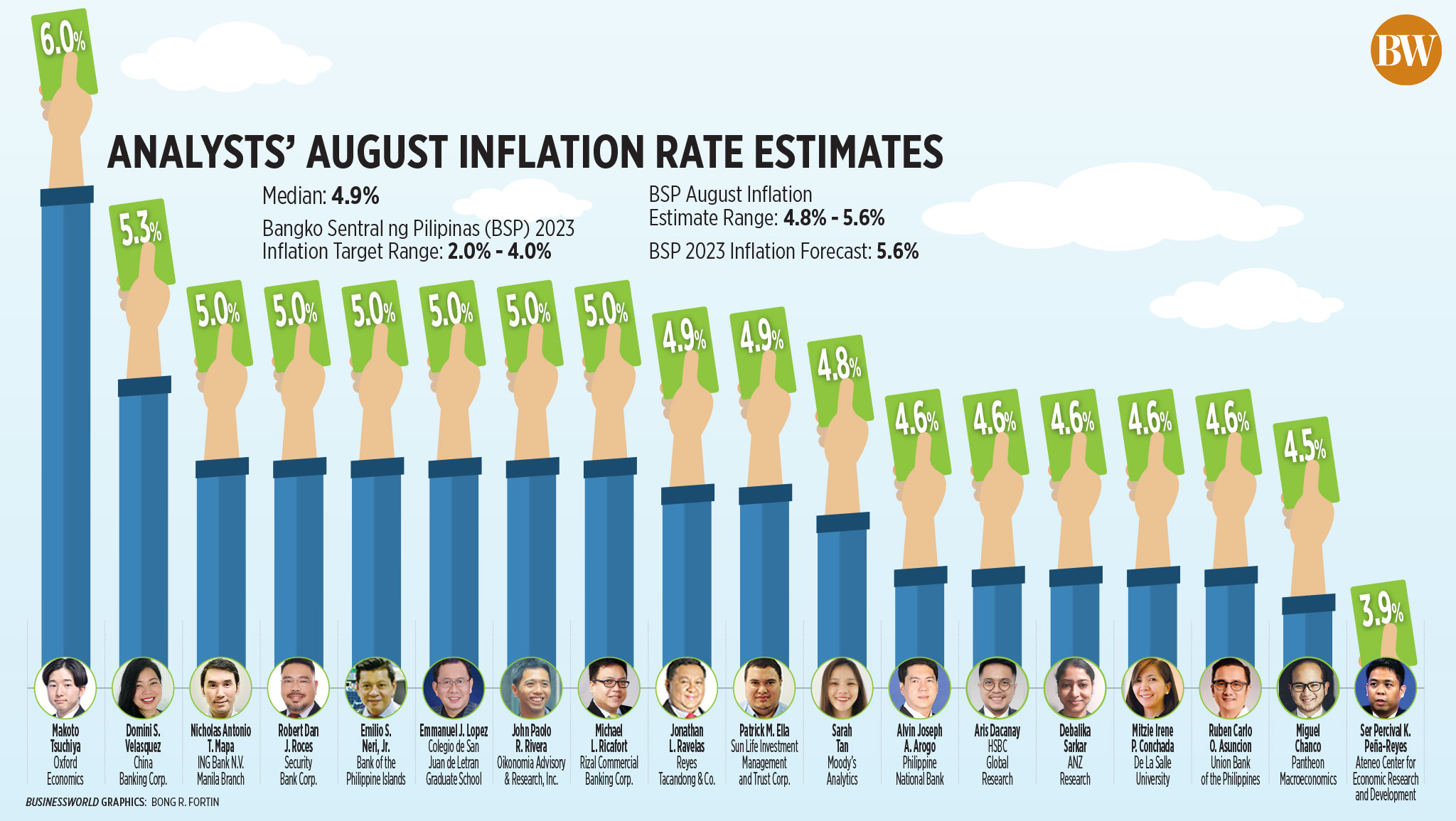
A BusinessWorld poll of 18 analysts yielded a median estimate of 4.9% for August inflation, settling within the 4.8% to 5.6% forecast by the Bangko Sentral ng Pilipinas (BSP).

If realized, this would be faster than the 4.7% in July, but slower than the 6.3% print in August 2022. It would also mark the 17th straight month of inflation exceeding the BSP’s 2-4% target.

August inflation data will be released on Sept. 5 (Tuesday).

Moody’s Analytics economist Sarah Tan said inflation likely inched up from July, reversing the downtrend seen in the last six months.

“For starters, prices of palay and rice have risen as local and global farmgate prices soared due to lower domestic harvests and rising import costs,” Ms. Tan said in an e-mail.

Rice is a staple food in the Philippines, accounting for a significant component in the country’s food inflation. Rice accounts for about 8.9% of the country’s consumer price index (CPI) basket.

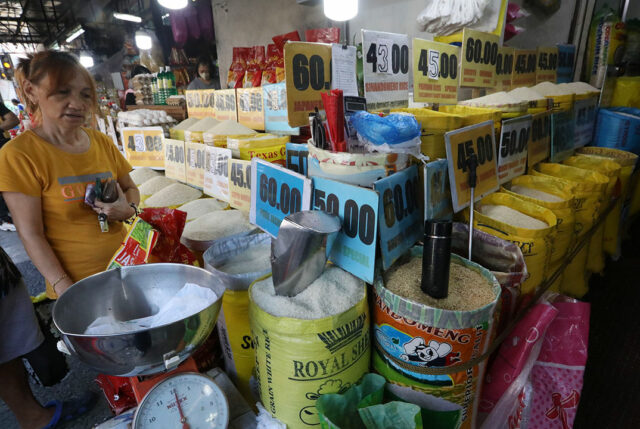
Based on data from the Department of Agriculture (DA), the average price of a kilogram of local well-milled rice ranged from P47 to P56 as of Aug. 30, higher than the P41-P49 range as of Aug. 1.

“Adding to the pain, Super Typhoon Saola (local name: Goring) swept through much of the Northern provinces in late August and damaged agricultural produce such as rice and corn,” Ms. Tan said.

According to the DA, agricultural damage caused by Super Typhoon Goring was estimated at P898.4 million as of Sept. 2, with rice losses amounting to P751.5 million, while corn damage stood at P139.2 million.   

“Sequential typhoons since the end of July pushed up food prices. Imported rice was also significantly higher due to India’s exports curbs and reported hoarding in Thailand,” China Banking Corp. Chief Economist Domini S. Velasquez said in an e-mail. 

Global rice prices have jumped since India on July 20 banned the export of non-basmati white rice to curb the spike in local prices. The Philippines is one of the world’s biggest rice importers, with nearly 90% coming from Vietnam.

Ms. Velasquez said the peso depreciation could have also made rice imports more expensive.

Jonathan L. Ravelas, senior adviser at Reyes Tacandong & Co., likewise said August inflation could “surprise to the upside” due to higher prices of rice and oil, as well as a weaker peso.

The peso closed at P56.595 on Aug. 31, depreciating by 3% or P1.715 from the P54.88 finish on July 31. Year to date, the peso depreciated by 1.5% or P0.84 from its P55.755 close on Dec. 29.

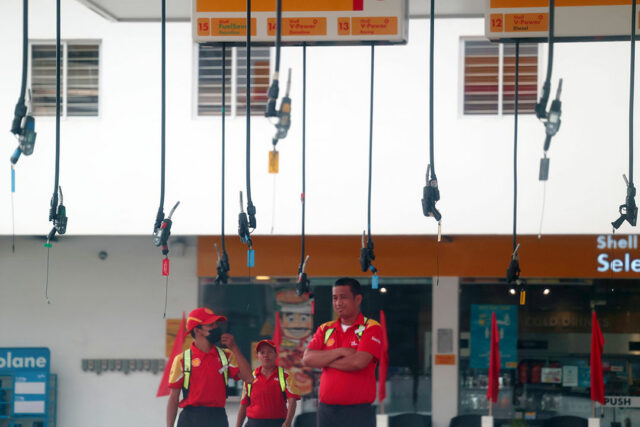
Makoto Tsuchiya, assistant economist from Oxford Economics Japan, noted that domestic pump prices have been rising since mid-July, and this will be reflected in the August inflation data.

In August alone, oil companies raised pump prices by P5.90 per liter for gasoline, P9.90 per liter for diesel and P10 per liter for kerosene.

“Although the current diesel pump price is significantly lower than the P75 per liter average recorded in June of the previous year, food and fuel prices continue to be the main drivers of inflation,” Security Bank Corp. Chief Economist Robert Dan J. Roces said in an e-mail. 

HSBC economist for ASEAN (Association of Southeast Asian Nations) Aris Dacanay attributed the sharp increase in local pump prices to the supply output cuts done by the Organization of the Petroleum Exporting Countries (OPEC). 

OPEC and its allies (OPEC+) earlier said it plans to extend its oil production cuts, with top exporter Saudi Arabia expected to extend its one-million-barrel-per-day voluntary supply cut for another month.

“Additionally, the price of LPG (liquefied petroleum gas) also ticked up in August,” Ms. Velasquez said.

Cooking gas prices rose by P4.55 per kilogram in August, while prices of AutoLPG were up by P2.54 per liter.

The implementation of higher toll fees in key expressways may have contributed to food inflation as these added to transport costs of agricultural commodities.

“Offsetting these increases was a sizeable 2.5% downward adjustment in electricity rates and a continued normalization of vegetable prices such as that of onions,” Mr. Dacanay said.

Manila Electric Co. lowered rates by P0.29 per kilowatt-hour (kWh) to P10.90 per kWh in August from P11.19 per kWh in July.

“Despite the projected higher headline rate in August, core inflation is expected to continue its downtrend to around 6% in August,” Ms. Velasquez said.

Core inflation, which excludes volatile items of food and fuel prices, slowed to 6.7% in July from 7.4% in June. For the first half, core inflation averaged 7.6%. 

Mr. Roces also noted that the increase in August inflation is more moderate compared with the inflation spike from December 2022 to February 2023.

“While there is a noticeable increase in the price of rice, the overall inflation rate for August 2023 remains within a reasonable area and is significantly lower than the surge experienced earlier this year,” Mr. Roces said. 

DISINFLATION TO RESUME
Despite the uptick in August, analysts expect consumer prices to continue easing for the rest of the year due to base effects.

“Beyond August, we expect disinflation to resume, reaching the BSP’s 2%-4% target by the end of the year. However, supply-side developments are highly uncertain, and so this outlook comes with risks,” Mr. Tsuchiya said.

According to Ms. Tan, El Niño is one of the key risks that could keep inflation higher for longer.

“Top of the list is the potential El Niño weather pattern which brings about a dry spell to the country and damage local agricultural produce. This will add stress to the already tight supply,” she said. 

Pantheon Chief Emerging Asia Economist Miguel Chanco said inflation may return to the central bank’s 2-4% target in October, but downside risks are increasing due to the El Niño.

“The direct impact of this year’s hotter-than-expected temperatures is still unclear, but governments around the region are already taking preemptive measures to secure food supplies — largely by restricting exports of key foods — posing an indirect inflation risk to net food importers like the Philippines,” he said.

If inflation rose in August from its 4.7% clip in July, the Monetary Board may not immediately react with higher policy rates, Ms. Velasquez said.

“Shocks for the month of August were largely supply side but has not, so far, detailed the inflation path towards the target range in the fourth quarter. We still expect inflation to fall within the BSP’s target by November,” she said.

The BSP currently sees inflation returning to the 2-4% target band by the fourth quarter. It sees inflation averaging 5.6% in 2023 before easing to 3.2% in 2024.

“Looking ahead, we still see that inflation will fall into the BSP’s target range of 2-4% by the fourth quarter of this year, barring sustained spikes in rice and fuel in the remaining months of 2023; these remain considerable upside risks to the inflation projections,” Mr. Roces said.

ING Bank N.V. Manila Senior Economist Nicholas Antonio T. Mapa said any sharp upticks in rice, electricity, and transport could “spell a renewed flareup for Philippine inflation.”

“We had originally penciled in a BSP rate cut by the first quarter of next year given the disappointing second-quarter GDP (gross domestic product) report,” Mr. Mapa said. 

The Philippine economy grew by 4.3% in the second quarter, weaker than the 6.4% growth in the first quarter and 7.5% a year ago.

“However, if we continue to see rice and energy prices tick higher in the coming months, we could see BSP delaying its planned easing to mid-2024,” Mr. Mapa said.

To tame inflation, the BSP hiked benchmark interest rates by 425 basis points from May 2022 to March 2023. This brought the key policy rate to 6.25%, its highest level in nearly 16 years. 

The Monetary Board will have its next policy review on Sept. 21.

NEDA says rice price ceiling is only a ‘temporary measure’

THE Philippine government is imposing price ceilings for regular and well-milled rice starting Sept. 5. — PHILIPPINE STAR/EDD GUMBAN

By Luisa Maria Jacinta C. Jocson and Kyle Aristophere T. Atienza, Reporters

THE PRICE CEILINGS for rice will only be temporary, the National Economic and Development Authority (NEDA) said on Sunday.

“We are confident that the imposition of a price ceiling is only a temporary measure. We expect the rice harvest to commence soon and anticipate that other initiatives will produce the desired result,” the NEDA said in a statement on Sunday.

President Ferdinand R. Marcos, Jr. on Friday issued Executive Order (EO) No. 39, which imposes a price ceiling of P41 per kilogram for regular milled rice and P45 per kilogram for well-milled rice.

His office has said illegal price manipulation practices, such as hoarding by “opportunistic traders” and collusion among cartels amid the lean season as well as external factors have caused the “alarming” spike in retail prices of rice.

The NEDA defended the EO, saying it will immediately reduce rice prices and penalize hoarding.

“The imposition of a price ceiling on rice is not a standalone initiative. Law enforcement authorities continue their valiant efforts to crack down on individuals who hoard, excessively profit from, smuggle, or participate in rice cartels,” the NEDA said.

The price ceilings will take effect on Sept. 5 and remain in place until these are lifted by the President.

Latest data from the Department of Agriculture (DA) showed that as of Aug. 30, the retail price of a kilogram of local well-milled rice rose to P47-P56 from P42 a year ago. Regular milled rice ranged from P42-P55, higher than the P38 average a year ago.

“With the upcoming harvest season starting in September and additional import orders already secured, there will also be enough rice for the rest of the year,” the NEDA said.

It noted that rice prices have sharply increased in the last few weeks, which it said is inconsistent with the supply and demand situation.

This implies that some are manipulating the expected impact of El Niño Southern Oscillation (ENSO) to depict a shortage at this time,” the NEDA said.

The state weather agency said a moderate El Niño is present in the tropical Pacific, and this may strengthen into moderate to strong towards the latter part of the year. It will also likely persist until the first quarter of 2024.

El Niño increases the likelihood of below-normal rainfall conditions, which could bring dry spells and droughts that could adversely impact climate-sensitive sectors such as water resources, agriculture, energy, health, and public safety.

IMPACT ON FARMERS
Meanwhile, economists have warned that imposing price caps on rice could limit the supply of the food staple and force traders to go underground.

The move would also significantly affect rice farmers, who are expected to lower farmgate prices, they said.

While the order may cool prices temporarily, it “may result in the emergence of inefficiencies with regard to supply and demand, which may result in shadow or black-market trading,” ING Bank N.V. Manila Senior Economist Nicholas Antonio T. Mapa said in a Viber message.

Leonardo A. Lanzona, who teaches economics at the Ateneo de Manila University, said the price ceilings on rice can prove disastrous for both farmers and traders.

Traders might hesitate to buy rice from farmers, who will be left with no choice but to cut farmgate prices, he said via Facebook Messenger chat.

“Its immediate effect is to pull down production and reduce supplies in the market,” Mr. Lanzona said.

Raul Q. Montemayor, national manager of the Federation of Free Farmers, said palay prices immediately went down by P3 per kilo in some areas after the order was announced on Friday.

“If the price ceilings are too low, retailers will just stop selling rice instead of losing money or being fined for overpricing,” he said in a Viber message. “Both farmers and consumers could end up losing.”

An artificial control like price capping normally creates a gap between consumer demand and actual supply, said Enrico P. Villanueva, a senior lecturer of money and banking at the University of the Philippines Los Baños, noting that the move will only favor a lucky group of consumers who are able to buy rice at the capped price “while leaving other consumers disgruntled as there is no supply left for them.”

Mr. Villanueva said raw grain buyers may use the retail price for milled rice as leverage to push down farmgate prices.

“Big traders may hoard in response to a price cap,” he added. “The unscrupulous ones may pass off regular rice as premium rice to evade the cap.”

Mr. Lanzona said the price ceiling can only be implemented in the long run if the “government would increase government subsidies and thus reinstate the National Food Authority, which had virtually been defunct in the last few years.”

“The only way to justify these price regulations is to establish that a monopoly exists. While various market failures exist in the rice market, the market is not a monopoly,” he said, noting that the problem seems to be the “huge transaction that allows middlemen and scrupulous traders to jack up the retail prices above the farm gate prices.”

The solution then, Mr. Lanzona said, is to enable more players to engage in the rice market, such as micro, small and medium enterprises and farmers, who can transact directly with the consumers.

Mr. Villanueva, meanwhile, said the government should fulfill its promise of boosting local production and make importation more competitive over the medium term.

“It’s unfortunate that despite the law shifting importation policy from quotas to tariffs, the DA still effectively imposes a quota by setting import volume limits,” he said. “Importation should be free and competing, with market players competitively assessing demand and supply factors.”

The Foundation for Economic Freedom (FEF) called on the government to cut import tariffs on rice from Association of Southeast Asian Nations (ASEAN) countries to 10% from the current 35%.

“This will have an immediate effect on lowering rice prices. The government can afford to lower rice tariffs because the mandatory P10-billion allocations for the Rice Competitiveness Enhancement Fund (RCEF) as stipulated by the Rice Tariffication Law (RTL), has already been achieved,” it said.

Citing data from the Bureau of Customs, collections from rice tariffs have reached P16.8 billion as of Aug. 26.

“The government may restore the tariff rates back to 35% when the demand and supply situation stabilizes and if the onset of the harvest season results in falling rice prices,” the FEF said.

The FEF also called on the government to amend the Comprehensive Agrarian Reform Law (CARL) to increase the farmland retention limit to “an economically viable” 24 hectares.

“Because of CARL, average farm sizes have fallen to one hectare or less. The country needs bigger and better-managed farms to increase agricultural productivity thereby increasing supply and reducing food prices,” it said.

Meanwhile, Rizal Commercial Banking Corp. Chief Economist Michael L. Ricafort said that the price cap could help ease inflationary pressures.

“The latest rice price ceiling will help curb inflation, if implemented well in terms of compliance by market players,” he said in a Viber message.

Headline inflation eased to 4.7% in July, bringing the seven-month average to 6.8%. The Bangko Sentral ng Pilipinas said inflation likely settled within the range of 4.8% to 5.6% in August, due to the sharp increase in rice and fuel prices.

The Philippine Statistics Authority is set to release August inflation data on Tuesday.

OECD trims PHL growth forecast for this year

The government is targeting 6-7% gross domestic product growth this year. — PHILIPPINE STAR/EDD GUMBAN

THE Organisation for Economic Co-operation and Development (OECD) trimmed its gross domestic product (GDP) growth forecast for the Philippines for this year.

In its latest Economic Outlook for Southeast Asia, China, and India update, the OECD said it now expects Philippine GDP to expand by 5.6% this year, slightly lower than the 5.7% projection in March. This is below the government’s 6-7% GDP growth target for this year.

The OECD kept its 2024 growth projection at 6.1%, which is still below the government’s 6.5-8% target.

“A key growth driver in the second half of 2023 will be a strong rebound in government spending, from its 7.1% contraction in the recent quarter, executed through catch-up plans and frontloading of programs and projects,” the OECD said.

“Fiscal stimulus activities are also being implemented which should fuel activities of both the public and private sectors,” it added.

The Philippine economy grew by 4.3% in the second quarter, slower than the 6.4% growth in the first quarter and 7.5% in the second quarter of 2022. In the first half, GDP growth averaged 5.3%.

The OECD said elevated inflation and higher borrowing costs dragged private consumption and investments in the second quarter. The slowdown was also amplified by the contraction in government spending, it added.

For the rest of the year, the OECD said that domestic demand is expected to drive growth, “supported by labor market expansion, personal income tax cuts, stable inflows of remittances and the steady recovery of tourism.”

“On the supply side, the services sector will continue its steady upward trajectory and will remain a reliable source of economic activity, boosting GDP growth, due to the improved outlook of tourism as well as rapid growth of the business process outsourcing industry,” it added.

With fiscal consolidation “underway,” the OECD expects the Philippines’ budget deficit to narrow from this year to 2025.

On the other hand, the OECD said that trade prospects in the next few months may be bleak.

“Prolonged weak external demand from the United States and China, the country’s top trading partners, will continue to drag down exports in the coming months,” it said.

The Philippines’ lack of diversification of exports leaves it vulnerable to sector-specific risks.

“For example, the Philippines recorded a decline in exports in the first and second quarter of this year owing to its heavy reliance on electronics products and dependence on the United States and China as major trading partners,” the OECD said.

The Semiconductor and Electronics Industries in the Philippines Foundation, Inc. (SEIPI) expects electronics exports growth to be flat this year. Data from SEIPI showed total electronics exports declined by 7% to $21.19 billion in the six-month period.

The OECD noted that private investment is also expected to slow due to high interest rates and a weaker global economy. On the other hand, landmark reforms and improving investor sentiment could help the country attract more foreign direct investments.

Meanwhile, the OECD said high borrowing costs will continue to weigh on growth.

“The Philippine central bank is likely to maintain a high interest rate regime, which will dampen GDP growth should pent-up demand ease,” it said.

To curb inflation, the BSP raised borrowing costs by 425 basis points (bps) from May 2022 to March 2023, bringing its key rate to a near 16-year high of 6.25%.

Another downside risk to the Philippine growth outlook is the still elevated global inflation, which could prompt further tightening from central banks in advanced economies and may trigger capital outflows, the OECD said.

“This could push down the value of the Philippine peso, which is forecast to recover mildly from a sharp depreciation episode in 2022. The persistent global financial turmoil could translate into higher borrowing costs for the government, adding pressure to its public debt,” it said. — Luisa Maria Jacinta C. Jocson

New Monetary Board appointments welcomed

Rosalia de Leon and Romeo Bernardo — PHILSTAR FILE PHOTO

THE NEW Monetary Board members are expected to uphold the Philippine central bank’s priorities in keeping price and financial stability, market players said.

The Presidential Communications Office on Saturday announced National Treasurer Rosalia V. de Leon and former Finance undersecretary Romeo L. Bernardo as the new members of the policy-making body of the Bangko Sentral ng Pilipinas (BSP).

“They are both qualified given their extensive background in the industry and are highly regarded by their peers,” Regina Capital Development Corp. Head of Sales Luis A. Limlingan said in a Viber message.   

“The Monetary Board should maintain its priorities by combatting inflation, keeping the peso competitive, strengthening the banking system among others as it makes sure the interests of all Filipinos are kept in mind,” he added.   

The appointment of Ms. De Leon and Mr. Bernardo will bring the current number of Monetary Board members to six. President Ferdinand R. Marcos, Jr. has yet to announce the seventh member of the Monetary Board.

The board is chaired by BSP Governor Eli M. Remolona, Jr., and members include Finance Secretary Benjamin E. Diokno, Bruce J. Tolentino and Anita Linda R. Aquino.

Three seats were vacated by former BSP governor Felipe M. Medalla, Antonio S. Abacan, Jr. and Peter B. Favila whose terms expired in July.

China Bank Capital Corp. Managing Director Juan Paolo E. Colet said Ms. De Leon and Mr. Bernardo are widely respected in the banking industry and will bring in a lot of value to monetary policy.

“Ms. De Leon and Mr. Bernardo are impressive additions to the Monetary Board given their extensive financial sector expertise, market knowledge, and policy experience,” Mr. Colet said in a Viber message.

In July last year, Ms. De Leon was reappointed as the Treasurer of the Philippines for the third time.

Ms. De Leon told reporters in a Viber message late on Saturday that she is not yet “signing off” as the country’s national treasurer and will still lead the coming auctions.   

She also assumed key positions in the Department of Finance (DoF), such as undersecretary for the International Finance Group (IFG) from July 2007 to November 2012, chief of staff from July 2005 to June 2010, as well as director for the IFG from September 1995 to August 1998.

She also served as the alternate executive director at the World Bank Group in Washington, D.C., and held the position of advisor to the executive director of the Asian Development Bank (ADB) from August 1998 to August 2004.

Ms. De Leon obtained her Master of Arts in Development Economics from Williams College in Massachusetts.

Meanwhile, Mr. Bernardo served as an undersecretary of the DoF and alternate executive director of ADB. He was also an advisor of the World Bank and the International Monetary Fund (IMF).

He is a member of the Philippine World Bank Advisory Group and the Panel of Conciliators of the International Centre for Settlement of Investment Disputes.

Mr. Bernardo is also the managing director of Lazaro Bernardo Tiu and Associates and an analyst for the Philippines at GlobalSource Partners.

“The immediate and primary priorities are reducing inflation and maintaining foreign exchange stability,” Mr. Colet said.   

“Eventually, the Monetary Board would have to make a timely call on when to start recalibrating interest rates and cutting bank reserve requirements to ensure that, at the very least, the economy has a soft landing,” he added.

Mr. Remolona earlier said that policy easing is not on the radar this year as inflation remains above the 2-4% target.   

The Monetary Board will next meet on Sept. 21 to discuss policy. — Keisha B. Ta-asan

Foreword: Time to grow up

By Wilfredo G. Reyes, Editor-in-Chief

“We should grow up. First of all, it’s time to realize and accept the fact that heightened uncertainty and instability are here to stay.”

This, the global boss of a consultancy giant said over lunch earlier this year, has been the gist of his message to clients as economies reopen, especially to those who dream of restoring pre-pandemic systems and practices lock, stock, and barrel.

The once-in-a-century pandemic has spawned a host of challenges in the past three years, including mounting debt as countries and companies struggle to weather its impact, prolonged tight credit conditions and deep socioeconomic scars.

Add to this changing consumption patterns and other structural shifts, not to mention problems such as supply chain disruptions and repercussions of the raging Ukraine-Russia war, China’s slowing growth, a potential US and euro zone recession and economic and business risks from climate change.

The picture varies across economies, with the Philippines now expected to outpace most in Asia and the Pacific region this year and next in terms of gross domestic product growth. At the same time, the country is expected to reel from the fastest inflation in the region amid income inequality that is the worst among its peers (and which apparently crimped consumption and weighed considerably on second-quarter growth).

The central bank’s surveys have shown that businesses have understandably remained cautious — despite improvement in overall confidence since much of last year — about prospects in succeeding quarters and the next 12 months. Consumers remained pessimistic in the second quarter and confident — though less than they were in previous surveys — for the next quarter and the succeeding 12 months since the middle of 2022.

BusinessWorld’s economic fora since the pandemic struck at the start of 2020 have been providing insights on trends to watch, among them artificial intelligence (AI), automation and information technology and how they provide opportunities in areas like content generation, improving customer experience, financial inclusion and raising productivity even as companies and workers struggle with upskilling and even reskilling.

Meanwhile, social media has become a primary field of business competition, while increasingly perceptible climate change has made consumers more discerning in their choices, in turn making businesses more mindful of environmental, social and governance (ESG) imperatives, even as the impact of sustainable practices on bottom lines has not yet been that apparent. Of course, there is no turning back from hybrid and other alternative work arrangements despite productivity concerns among many employers.

This anniversary report themed “Risks and rebounds: Reframing business realities” aims to provide an updated glimpse of how sectors have been factoring in the fast-changing environment into their plans. How has recovery unfolded in specific industries so far? What have companies learned and what have they changed to become more competitive? What technologies have they adopted to spur their rebound? What emerging risks and opportunities have they seen? We hope the reader will find answers to these and other important questions in the following pages.

Take note that this report just forms part of a bigger effort to track economic recovery, which has also been the main focus of our annual BusinessWorld Top 1000 Corporations in the Philippines, biannual fora, monthly “Insights” webinars, quarterly banking reports, etc. We encourage the reader to check out these other contents that are rolled out throughout the year to get the bigger picture.

Pandemic, geopolitical risks force agro-food companies to innovate

FREEPIK

By Kyle Aristophere T. Atienza, Reporter

THE coronavirus pandemic exposed the world to unprecedented risks, affecting the agricultural sector and food security and prompting governments to impose protectionist policies.

But the global health crisis, which also showed the weakness of other industries in the face of supply chain disruptions, spurred companies in the agro-food sector to innovate.

“The supply chain disruptions caused by the COVID-19 (coronavirus disease 2019) pandemic created a number of responses by both companies and countries,” Christopher Ilagan, who heads the American Chamber of Commerce of the Philippines (AmCham) Agribusiness Committee, said in an e-mail.

“From a deep reliance on global trade flows, the shifts have come in various forms. There are those who have diversified supplier bases across borders and there are others who have sought to ‘near-shore’ or ‘friend-shore’ their supply chains.”

“The most extreme has been the reshoring or onshoring of supply chains, driven further by growing nationalism, protectionism and geopolitical tensions,” he added.

Cargill Philippines, Inc. was among the companies in the Philippines that adapted to the “changing marketplace conditions and operational and logistical challenges.”

“Our interconnectedness and experience from 75 years in the Philippines allowed us to deal with the challenges that arose as a result of the pandemic — we could tap local sourcing options to reduce dependency on international supply routes and satisfy demand in vulnerable communities,” it said in an e-mail.

During the pandemic, Cargill redirected poultry from restaurants in Asian countries like the Philippines to consumers, selling the equivalent of about 200,000 budget meals locally.

Cargill provides food and agricultural services and products such as grain, oilseed, commercial feeds and sweeteners.

“In response to the shifting demands, it was important to take an agile approach and adjust swiftly,” it said.

Cargill said it has been using digital solutions to efficiently analyze data, improve decision-making and optimize farm operations, “providing our partners a competitive advantage in the market.”

“With our expertise in precision nutrition, we can drive efficiencies and enable livestock farmers to do more with less,” it said. “We provide customized formulations that minimize waste while maximizing nutrient absorption and raw material utilization.”

The company has adopted new methods and technologies to become more competitive, including a cloud-based farm management platform called Agriness, which provides real-time data and insights to improve productivity, enhance animal well-being and increase profitability.

The company has also been using a poultry microbiome assessment tool called Galleon, which uses artificial intelligence (AI) and statistical analysis to help farmers assess the gut microbiome of their flock.

It has also adopted Panorama, a flexible scenario planning system that helps broiler producers make confident decisions about their operations for the best economic results; Neopigg, a young animal nutrition solution that gives piglets a good start to boost their performance throughout their life cycle; and Truvisor, a broiler breeder offering that helps improve laying performance, hatchability and chick quality.

“The global health crisis taught us the value of agility and we continue to maintain a contingency plan to address potential issues promptly,” Cargill said. “We continuously review and refine our business continuity strategies to better respond to future crises effectively.”

The same is true for Axelum Resources Corp., a Philippine manufacturer, exporter and retailer of globally in-demand consumer food essentials, including coconut products.

“The COVID-19 pandemic compelled us to innovate our ways without compromising productivity by embracing digitalization, streamlining our value chain and reinforcing contingency planning, in order to thrive in a renewed business landscape,” it said in an e-mail.

The company has capitalized on unprecedented opportunities to future-proof key areas of the business, “which will serve as our growth anchor in the long term.”

Axelum said it has continuously invested in cutting-edge technology to maximize scale and retain its competitive edge, citing its main production facility in Misamis Oriental in southern Philippines that features state-of-the–art equipment “attuned to world-class manufacturing and export standards.”

‘TECH ADOPTION’
At the peak of community lockdowns, the company managed to fast-track its expansion programs, resulting in increased production capacity of up to 50%.

Mr. Ilagan of AmCham noted that in the food and agriculture space, there has been a growing focus on enhancing domestic food security with the help of emerging technologies, including precision agriculture, robotics and automation in the food manufacturing sector, artificial intelligence in digital applications and biotechnology to maximize yields/productivity for various crops and livestock species.

“This tech adoption trend is driven not only by the pressures of having to feed a growing and more prosperous nation, but also to react against those counter-productivity trends which have reduction impacts on productivity, such as climate change and human-induced air, water, soil and solid waste pollution,” he said.

Aside from the pandemic, geopolitical tensions and the ever-changing climate have also pushed food prices up, worsening food insecurity, according to McKinsey & Company.

It noted that Russia’s invasion of Ukraine, which is among the world’s six breadbasket regions, was “tilting global food security into a state of high risk.”

Recently, Russia withdrew from a deal that allowed Ukraine to export grain through the Black Sea, raising fears over global food supplies.

Cargill said it’s working to mitigate external risks by helping boost the local food system “to avoid disruptions.”

“We firmly believe that by addressing global challenges head on and adopting forward-thinking strategies, we can turn these challenges into opportunities for a sustainable, resilient and thriving future,” it said. “After all, our mission is fueled by our drive to keep innovating and fostering collaboration with our partners and stakeholders.”

The company said it has been rehabilitating 700 hectares of coconut farms damaged by Super Typhoon Odette, helping 1,000 coconut farmers. “This is being done through farmer-led propagation of seed nuts in community-based seedbeds and nurseries, farmer training in sustainable agriculture, provision of alternative livelihoods while waiting for the coconut trees to bear fruit, and establishment of farmer cooperatives for improved access to markets and corporate buyers.”

It has also been helping corn farmers and cooperatives to boost agricultural yields, improve farmer livelihood and contribute to the country’s food security.

“By integrating an inclusive business model and training on environmentally sound agricultural practices into the program, we aim to strengthen our commitment to support the local corn industry through full utilization of corn yields while creating an alternative corn supply for Cargill feed mills in the Philippines.”

The company said it’s also committed to implementing sustainable practices, noting that it plans to reduce global greenhouse gas emissions from its global supply chain by 30% by 2030.

Axelum, meanwhile, said it has instituted an evolving sustainability agenda to address or mitigate various climate and environmental risks.

“Our manufacturing operations make full use of the coconut, resulting in zero waste generated from raw materials,” it said. “We constantly modernize our equipment and infrastructure, while optimizing logistical activities to further reduce our direct carbon footprint.”

The companies hope the government will boost the country’s access to international markets through trade agreements and export incentives.

By doing so, “the government can reduce trade barriers and create more opportunities for Filipino agri-food products in the global marketplace,” Cargill said.

Export incentives would also harness the potential of the Philippine coconut industry on the global stage, Axelum said.

Mr. Ilagan said the government needs to simplify and harmonize regulations across the agro-food sector, strengthen the push toward consolidation of operations in the agriculture sector and broad adoption of new technologies, and popularize sustainable or regenerative agriculture.

“All these are important areas of reform that must be pursued to set the country up to weather these longer-term challenges around food security.”

More support needed for infrastructure’s post-pandemic recovery

FREEPK

By Luisa Maria Jacinta C. Jocson, Reporter

THE government will need to create a more enabling environment for investments to support the infrastructure sector’s post-pandemic recovery, analysts said.

“On the national front, hard-earned gains might still be lost and global opportunities missed. For instance, our failure to build the manufacturing sector, made worse by the government’s inability to lower energy costs and cut the bureaucratic red tape, has made a lot of investors look elsewhere for opportunities,” Megaworld Corp. First Vice-President for Marketing and Sales Noli D. Hernandez said in a Viber message.

Infrastructure development is one of the Marcos administration’s priority areas. The government is targeting to spend 5-6% of gross domestic product (GDP) on infrastructure annually.
This year, the government plans to spend 5.3% of GDP on infrastructure, equivalent to about P1.29 trillion.

From 2010 to 2018, developing countries used only about 70% of infrastructure investment budgets, according to the World Bank.
A recent note by Nomura Global Markets Research said Philippine infrastructure development is seen to accelerate in the medium term.

“We remain optimistic that infrastructure development in these countries will accelerate in the next few years. Despite the recent improvement, there remains substantial scope for more progress, and governments are setting more ambitious targets to narrow this gap, building on earlier successes,” Nomura said.

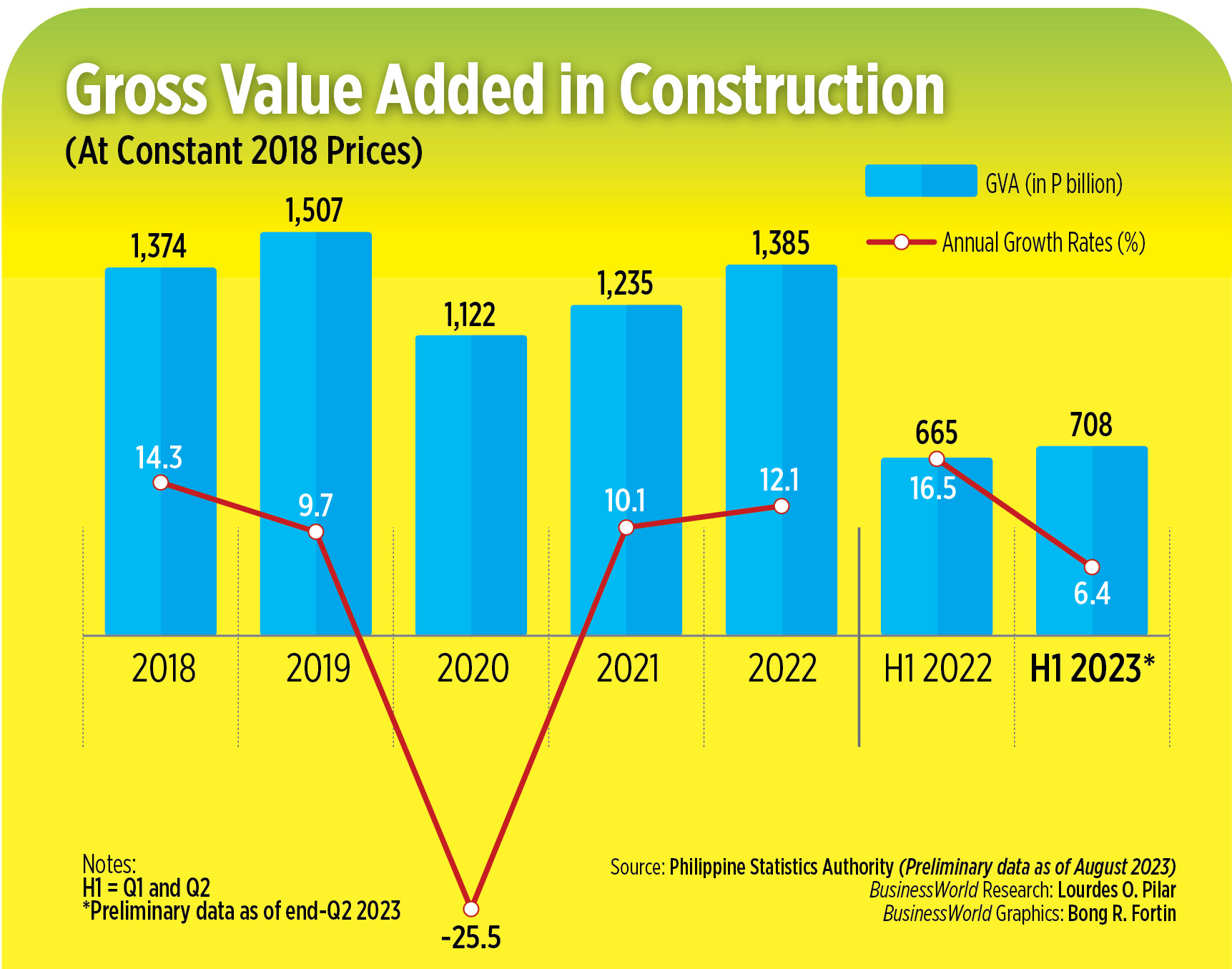
Colliers Philippines Research Director Joey Roi H. Bondoc said the construction sector has yet to return completely to pre-pandemic levels.

“Construction activities have yet to revert to pre-pandemic levels but we are definitely seeing glimmers of hope. In our view, return to pre-pandemic construction levels will likely hinge on interest rate movements, prices of construction materials,” he said in an e-mail.

Mr. Bondoc said that external headwinds will also continue to have an impact on the recovery of construction activities.

“Colliers also believes that overall recovery in demand will also partly rely on sustained business and consumer confidence across the Philippines. The country’s growth trajectory presents enormous opportunities for developers with office, residential, retail, and leisure footprint,” he added.

SUPPORT NEEDED
Sustained growth in government spending will be crucial for the rebound for the sector.

“The most important underlying reason for the recovery of the infrastructure sector has been the sustained and broadening government spending on public infrastructure in the last few years,” Terry L. Ridon, a public investment analyst and convenor of think tank InfraWatch PH, said in an e-mail.

Infrastructure spending rose by an annual 7.8% to P507.2 billion in the first half. Overall infrastructure disbursements in the first six months were equivalent to 5.3% of GDP.

“Despite the coronavirus pandemic and economic headwinds, the government has continued to spend on new roads, bridges and flood control projects in various parts of the country,” he added.

Under the proposed 2024 National Expenditure Plan, the “Build, Better, More” program has been allocated P1.418 trillion. The bulk will go to physical connectivity infrastructure such as seaports, airports, and mass transport.

The National Economic and Development Authority (NEDA) Board has approved 197 flagship infrastructure projects worth P8.71 trillion.

“The government’s massive infrastructure program should benefit the Philippine property market and developers should seize opportunities by strategically launching more office projects, residential enclaves, and hotels in major growth areas,” Mr. Bondoc said.

However, the government’s massive infrastructure commitments are not enough to support the rest of the construction sector.

There is still a need to expedite permitting processes, cut red tape, and create a more enabling environment for investments.

“The challenge of the government is not about allocating the budget, but I think it’s implementation of projects. Some of the projects we are doing today were approved even during Marcos Sr.’s time, and we’re only doing it now,” Phinma Corp. Executive Vice-President Eduardo A. Sahagun said in a Zoom call interview.

“If it takes the same amount of time to do it, we will lag behind. I hope that’s where the bottlenecks must be addressed, how to speed up implementation of projects,” he added.

MORE PPP PROJECTS
The government should pursue more public-private partnerships (PPPs) and joint ventures (JVs) to accelerate the implementation of projects.

“The openness towards public-private partnerships has been an important reform in the infrastructure sector. It is bearing fruit today with the decision to implement a P170-billion solicited bidding for the rehabilitation of the Ninoy Aquino International Airport (NAIA),” Mr. Ridon said.

The government recently invited local and foreign investors to bid for the PPP project to upgrade and operate the NAIA. This will be under a rehabilitate-operate-expand-transfer arrangement, as provided for under the Build-Operate-Transfer Law.

“Local developers should explore firming up JVs with other homegrown players or even foreign property firms. In our view foreign players benefit from their partnership with local players given the latter’s experience in tapping and catering to the preferences of the domestic market,” Mr. Bondoc said.

“What’s notable is that these JVs are likely to result in a more competitive Philippine property landscape, eventually benefiting Filipino investors and end-users,” he added.

The government is hoping to attract more foreign investments after recent economic reforms allowed full foreign ownership in telecommunications, airlines, railways and renewable energy projects.

POST-PANDEMIC STRATEGIES
Meanwhile, companies involved in infrastructure are looking to revamp their internal processes to integrate post-pandemic strategies.

“One of the lessons we’ve learned coming out of the recent downturn, indeed coming out of all the previous downturns, is the primacy of a resilient, innovative, customer-centric and forward-thinking company culture, which fosters not just the aggressive seeking of opportunities but the creation of those opportunities where they seem nonexistent,” Megaworld’s Mr. Hernandez said.

Phinma’s Mr. Sahagun said firms should decentralize their decisions.

“We have to develop internal capabilities. As a company, we have to be agile in adapting to change. The first thing we did was to delegate authorities in different areas so they could make decisions on their own. If you’re just centralized in (one) office, you have no people on the ground, it will be difficult for you to continue doing business,” he added.

The shift to digitalization is also key in the post-pandemic recovery.

“Like most companies, we believe that the only way forward is to leverage our strengths with more human innovation and technological adoption and advances, either by leaps or small increments,” Mr. Hernandez said.

“The advent of artificial intelligence (AI) will definitely and definitively revolutionize and transform not just the way we do things, but ultimately determine exactly what things we are able to do and to what degree of sophistication. In the end however, AI or any other systems or technologies will only always be a tool. The key will always be the company’s culture,” he added.

CLIMATE RESILIENCE
The impact of climate change should also be considered in infrastructure planning, according to Institute for Climate and Sustainable Cities Director for Urban Development Maria Golda P. Hilario.

“The Philippine infrastructure industry must proactively address the risks and projected impact of climate change in its entire supply and value chain. It is important to not only acknowledge the threats posed by extreme weather events — such as typhoons — but also to factor in the creeping impacts of slow onset events — such as sea level rise and increasing temperature,” she said in an e-mail.

The Philippines is among the most disaster-prone countries in the world, experiencing typhoons, flash floods, earthquakes and volcanic eruptions. The Philippines ranked first globally in terms of disaster risk, based on the World Risk Index 2022.

A study by the Asian Development Bank (ADB) showed that developing Asia will need to invest $26 trillion from 2016 to 2030, or $1.7 trillion annually in infrastructure to maintain its growth momentum, eradicate poverty, and adapt to climate change.

“Infrastructure designs especially in urban areas must also be responsive to the risks and projected creeping impacts of slow onset events. Infrastructure development must already look at innovative and sustainable solutions such as green and energy efficient buildings and build around nature-based solutions, such as trees as temperature regulators to trap urban heat, and sinks to arrest flooding,” Ms. Hilario added.

The public, particularly the most at-risk and vulnerable to climate change, should also be included in the process of designing resilient infrastructure.

“The industry must also welcome the voice and participation of the public, especially the most vulnerable and most affected sector in the design, as well as be more responsive in ensuring that infrastructure projects contribute to the broader goal of connecting more people, rather than creating barriers,” she said.

“Sustainability can only be fostered through partnerships not just between the industry, private sector, and the government, but with the buy-in of the Filipino public, who are the main users of infrastructure projects in the long-run,” she added.


ADVERTISEMENT
ADVERTISEMENT