Home Blog Page 43

Disney plans to cut 1,000 jobs

WOMEN wearing Mickey Mouse ears watch the opening ceremony at Shanghai Disney Resort in Shanghai, China, June 16, 2016. — REUTERS

WALT DISNEY is planning to cut as many as 1,000 positions in the coming weeks, many of which will be made in the company’s marketing department, the Wall Street Journal reported on Wednesday, citing sources.

The Journal said that plans for the coming job cuts began before Josh D’Amaro assumed his new role as Disney’s chief executive officer in March.

The planned layoffs could affect less than 1% of its total employees. Disney employed about 231,000 people as of the end of fiscal year 2025.

Disney’s newly appointed chief marketing officer, Asad Ayaz, also plans to unite the company’s marketing group and reduce expenses under code-named Project Imagine, the report added. Mr. Ayaz began to oversee a newly created company-wide marketing organization in January.

Reuters could not immediately verify the report. Disney did not immediately respond to a Reuters request for comment outside regular business hours. — Reuters

German industrial output fall points to weak quarter, economists say

FREEPIK

BERLIN — German industrial production fell unexpectedly in February, with economists saying the weakness pointed to disappointing first quarter for Europe’s biggest economy, despite exports rising by more than expected on stronger European demand.

Industrial production decreased by 0.3% compared with the previous month, Germany’s federal statistics office said on Thursday. Analysts polled by Reuters had predicted a 0.7% rise.

“Data released today underline that Germany’s manufacturing sector was subdued even before the Iran conflict,” said Andrew Kennigham, chief Europe economist at Capital Economics.

Mr. Kennigham expects the sector to remain weak this year, although it is not likely to suffer anything like the big declines seen during the last energy crisis that began in 2022.

The less volatile three-month on three-month comparison showed that production was 0.4% lower in the period from December to February than in the previous three months.

ON TRACK FOR CONTRACTION EVEN WITHOUT WAR

February’s data shows that even without the Iran war, the German economy was on track for yet another quarter of contraction, said Carsten Brzeski, global head of macro at ING.

“As much as we were hoping to finally comment on some good economic news from Germany, it is a bit like waiting for a German train these days: definitely delayed and uncertain whether it will ever arrive,” Mr. Brzeski said.

Orders rose 0.9% on a seasonally and calendar-adjusted basis, official data showed on Wednesday.

Recent trends in new factory orders offer little hope that the economy will soon receive significant additional momentum from the industrial sector, said Ralph Solveen, senior economist at Commerzbank, forecasting the overall economy is likely to have grown only marginally in the first quarter.

EXPORTS ON THE RISE
German exports rose by 3.6% compared with the previous month, data from the federal statistics office showed, posting the biggest increase since May 2022. This compared with a forecast for a 1% increase in a Reuters poll.

Imports rose by 4.7% on the month on a calendar and seasonally adjusted basis.

As a result, Germany’s foreign trade balance narrowed to a surplus of 19.8 billion euros ($23.09 billion) in February, from a surplus of 20.3 billion euros in January.

Exports to European Union countries rose by 5.8% on the month and exports to countries outside the EU increased by 0.8%.

With the tariffs imposed by the US, exports to Germany’s main export destination fell by 7.5% on the month. ($1 = 0.8576 euros) — Reuters

Italy says EU should consider pausing budget rules if Iran crisis persists

LEADER of Brothers of Italy Giorgia Meloni is seen at the party’s headquarters, in Rome, Italy, Sept. 26, 2022. — REUTERS

ROME — European Union authorities should consider a temporary suspension of budget deficit rules if the US-Israeli war against Iran flares up again, Prime Minister Giorgia Meloni told parliament on Thursday.

Ms. Meloni also said her government was ready to take every possible measure to prevent potential speculative behavior on energy prices, including introducing windfall taxes on energy companies.

“We believe that discussing a possible temporary suspension of the Stability and Growth Pact should not be taboo. Not a waiver for individual Member States, but a general measure,” Ms. Meloni said.

Her remarks come as the government is preparing to cut its GDP growth estimates for 2026 and following years later this month, making it more difficult for Italy to bring its deficit below the EU’s 3% of GDP ceiling this year, as planned.

The EU activated between 2020 and 2023 a so-called ‘general escape clause’ to suspend budget rules and allow member states to respond to the COVID-19 pandemic, which had triggered lockdowns and economic downturns in EU countries and the closure of Europe’s borders.

That clause, however, can be tapped in the event of a severe economic downturn in the euro area or the EU as a whole, something which is not currently expected by leading forecasters.

Italy could also activate a national escape clause allowing member states to deviate from budget goals agreed with the EU in response to exceptional circumstances outside their control. The government has so far ruled out doing so as long as Rome is under excessive deficit procedure.

“Italy remains ready to take every possible measure to prevent potential speculative behavior (on energy prices), including, if necessary, further action regarding the profits of energy companies,” Ms. Meloni added.

Ms. Meloni and her predecessor Mario Draghi adopted in recent years windfall taxes on the energy sector, triggering legal disputes with affected companies. — Reuters

Israel’s pounding of Lebanon is ‘deeply damaging’, UK foreign minister says

Smokes rise, amid ongoing cross-border hostilities between Hezbollah and Israeli forces, in Tyre, southern Lebanon Sept. 23, 2024. — REUTERS

LONDON — British Foreign Secretary Yvette Cooper said on Thursday that Israel’s pounding of Lebanon was “deeply damaging” and risked destabilizing the ceasefire between the United States and Iran.

“We want to see Lebanon included in the ceasefire,” she told Times Radio. “We want it extended to cover Lebanon, because otherwise that will destabilize the whole region.”

“That escalation that we saw from Israel yesterday was deeply damaging, and we want to see an end to hostilities.”

Britain, which has faced heavy criticism from US President Donald Trump for failing to provide more support for Washington’s war on Iran, has sought to help defend its allies in the Gulf and is now working with other countries on ways to reopen the key Strait of Hormuz.

Asked about the strains with its key US ally, Ms. Cooper said it was possible for London to remain close to Washington while also taking a different approach in the region. But she said some of Mr. Trump’s rhetoric, including when he threatened to destroy Iran’s civilization, had been dangerous.

“I think that the rhetoric that we’ve seen used has been completely wrong,” she told Sky News. “That sort of escalatory rhetoric can have escalatory consequences.” — Reuters

Unilever Philippines, General Trias ink livelihood partnership to train over 400 residents

UNILEVER.COM.PH

Unilever Philippines and the city government of General Trias in Cavite have launched a livelihood partnership aimed at providing additional income opportunities for local residents.

Called GentriAsenso, the community-based skills and livelihood program will benefit a total of 450 individuals, who will receive hands-on skills training, financial literacy workshops, and livelihood starter kits throughout the course of the program.

The initiative was formalized through a signed memorandum of agreement (MOA) between Unilever Philippines and the General Trias City Social Welfare and Development Office (CSWD) in March.

“GentriAsenso shows how the private and public sectors can work together to provide better livelihood opportunities for our residents,” Luis “Jon-Jon” A. Ferrer IV, mayor of General Trias City, said in a statement in Filipino.

For Unilever Philippines head of communications, corporate affairs, and sustainability Joseph R. Fabul, the program further strengthens the company’s partnership with the city government.

“Ang goal natin mas maraming skills, mas maraming hanapbuhay, at mas maraming pag-angat [Our goal is to create more skills, more job opportunities, and greater upliftment],” Mr. Fabul said in a statement.

Under the GentriAsenso program, the initiative is anchored on three components — Kaalaman (Educate), Kasanayan (Skills), and Kabuhayan (Livelihood) — and will be rolled out through monthly barangay caravans across the city.

Each cycle will accommodate 75 enrollees, with a target of 450 beneficiaries.

Participants will undergo orientation and hands-on training in hair care, beauty care, and cookery, alongside financial literacy sessions, livelihood starter kits, and post-training support.

The city mayor also committed to provide a P2,000 grant to all graduates as supplementary start-up capital.

Top trainees in each batch will receive cash rewards and have their National Certificate Level II (NCII) assessment fees waived.

General Trias City is home to Unilever’s manufacturing facility, which produces the majority, or 90%, of the company’s locally manufacturing products sold in the country.

The facility, which opened in 2023, also produces select products for export to Southeast Asia, Australia, and North America. — Edg Adrian A. Eva

War-fueled diesel crunch hits Bangladesh farmers in key planting season

SANDY RAVALONIAINA-UNSPLASH

MANIKGANJ, Bangladesh — The fuel crunch from the Iran war is rippling through Bangladesh’s countryside, leaving tens of thousands of farmers struggling to secure diesel for irrigation at a critical stage of the paddy season.

Rice is a staple food in the South Asian nation of 175 million people and late March is a crucial window for sowing the main summer crop. But diesel shortages, rationed sales and long queues at fuel stations are disrupting irrigation, heightening concerns about plant growth, lower yields and increased losses for farmers.

Bangladesh relies on imports for 80% of its refined fuel needs with much of that coming from the Middle East. Price volatility and supply disruptions as a result of the war have squeezed supplies, but while the government has introduced measures to conserve energy and find new sources of fuel, farmers say they are struggling.

In Manikganj, near the capital Dhaka, Mohammad Yusuf walks across his land, pointing to newly sown seedlings struggling to survive in the dry soil.

“What will we eat if we cannot grow rice?” the 35-year-old said. “Paddy is our only currency. It runs our family. This fuel crisis is putting us in deep trouble.”

By day, Yusuf queues for diesel. By night, he works his land.

Service stations frequently hang banners at the pumps reading ‘No Fuel’.

“We stand in line at the pumps all day, then come to the fields in the dark to irrigate, plough, fertilize and sow,” he said. “No one has been able to work in the daytime in recent weeks — everyone is stuck in queues. Sometimes we wait for hours, sometimes whole days, and still return empty-handed.”

Even when fuel is available, it is tightly restricted.

“They give no more than 5 liters (1.32 gallons) per person,” Yusuf said. “If two or three of us go, we might manage 10 or 15 liters on a lucky day. That’s only enough for two or three days of irrigation.”

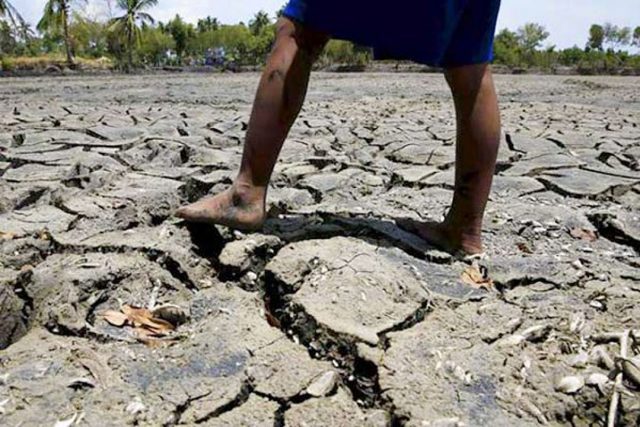
Around him, farmland is parched, and the seedlings turning yellow. Irrigation pumps sputter on their last drops of diesel.

“Look at the land — it’s drying up,” he said. “We cannot provide water properly.”

‘WE JUST WANT IT TO END’
Though the crisis originates far beyond Bangladesh’s borders, its impact is immediate.

“This war involving Iran has hit us as well,” Yusuf said. “Poor people like us suffer the most. We just want it to end so we can farm and live in peace.”

A father of two, he said uncertainty now defines daily life. “All we pray for is to work our land and feed our children.”

Pump operators say they are struggling to meet demand.

“Farmers need a lot of fuel in this season,” said Abdul Salam, a local pump manager. “We are following government guidelines, but the supply we receive is not enough.”

Not all farmers are equally exposed — for now. Osman Ali, 75, said he stocked up before the crisis intensified.

But he warned the situation could worsen. “If this continues, those reserves will run out. Then everyone will suffer.”

Across rural Bangladesh, diesel-powered irrigation remains essential. With supplies strained at the start of the planting cycle, farmers fear the disruption could further push up already high food prices.

“We don’t control what happens in the world,” Yusuf said. “But we are the ones paying the price.” — Reuters


Onset of El Niño may be as early as June says PAGASA

PHILSTAR FILE PHOTO

El Niño, a climate phenomenon that causes drier conditions and below-normal rainfall in the country, is expected to emerge as early as June, according to the Philippine Atmospheric, Geophysical, and Astronomical Services Administration (PAGASA) on Thursday.

“According to the climate models we are monitoring, the El Niño event may start as early as the June–July–August season, with a 62% chance,” Kristel Anne Valerie V. Padilla, PAGASA’s Weather Specialist I, said during a climate outlook video on Thursday.

“It may last until the end of 2026, with an 83% chance,” she added.

PAGASA has raised the El Niño watch since March 25, indicating that the phenonomen’s forecast probability to develop within six months has reached 55% or more.

It is worth noting that during the last El Niño episode, which lasted from July 2023 to June 2024, the phenomenon caused massive devastation to the country’s agriculture.

Farm damage due to El Niño was estimated at P15.3 billion, with crop losses amounting to 784,344 metric tons, according to the Department of Agriculture (DA).

Meanwhile, PAGASA also reported its rainfall projections from April to September this year.

This month, below-normal rainfall is expected across the country, with the exception of some areas in Luzon and Visayas, where near-normal rainfall is forecasted.

Specifically, in Bataan and Cavite, much below-normal rainfall is expected, PAGASA said.

From May to September, near-normal rainfall is generally expected throughout the country, with some exceptions in certain areas where below- or above-normal rainfall may occur.

“As for the projected number of tropical cyclones, from eight to 16 are expected to form and enter the Philippine Area of Responsibility (PAR) from April to September, PAGASA said.

Currently, PAGASA is monitoring a tropical depression outside PAR, which is likely to enter the area next week and will be named Caloy, the agency said in an earlier press briefing on Thursday.

The third tropical cyclone this year, has a low chance of making landfall in the country but may intensify up to super typhoon category. — Edg Adrian A. Eva

Asian stocks exodus fuels largest emerging market outflows since 2020, IIF data shows

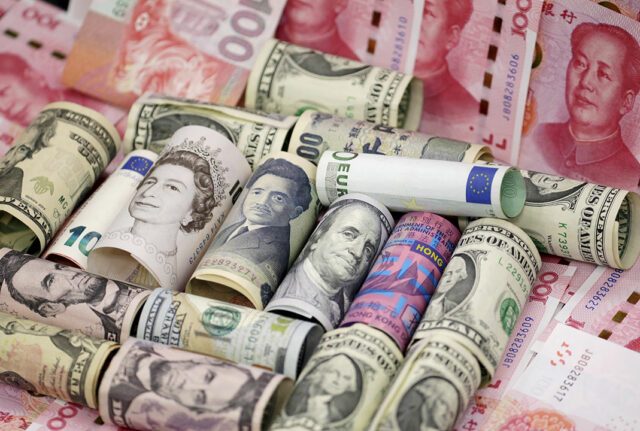
Euro, Hong Kong dollar, US dollar, Japanese yen, pound and Chinese yuan banknotes are seen in this picture illustration in Beijing, China. — REUTERS

LONDON — Foreign investors pulled $70.3 billion from emerging market (EM) assets in March, the biggest outflow since the pandemic rout in March 2020, data from a global banking trade group showed on Wednesday.

Outflows from emerging equities, especially in Asia, drove much of the losses, though investors also withdrew from fixed income, the report from Institute of International Finance (IIF) showed.

The data shows a striking reversal from “exceptionally large” January inflows, and still-positive February flows, which IIF described as a “sharp regime break following a major geopolitical shock.”

The $56-billion worth of outflows from emerging stocks was the largest such loss in at least 20 years, data showed.

ASIA EXODUS
The report, comprising the first full month of flow data after the outbreak of the Iran war, showed emerging Asia absorbed almost the entire equity side of the broader reversal after healthy inflows earlier in the year.

The data highlighted the region’s vulnerability to high oil prices and “technology-linked equity repositioning”, IIF senior economist Jonathan Fortun wrote in the report.

The Iran war, which began in late February and quickly spread across the region, spiked oil prices by 50% to above $100 per barrel and sapped investors’ risk appetite.

EM assets, which had boomed over the preceding year and a half, wilted, draining cash from EM portfolios and choking a surge of debt issuance to a trickle. South Korean stocks, for instance, gained close to 50% in the first two months of this year, only to shed just over a third of the gains after the war began.

The International Monetary Fund warned on Tuesday that many EM nations now get the bulk of foreign financing from the likes of hedge funds, pension funds and insurers, leaving them vulnerable to rapid outflows during crises.

‘PAIN COULD DEEPEN’, FORTUN SAYS
However, “March did not resemble a uniform, system-wide stop across all EM assets,” Fortun wrote, describing it instead as a “concentrated risk-off episode.”

“March data do not yet point to a fully generalized EM funding event,” Fortun wrote.

Overall debt outflows, at $14.2 billion, were more limited, and even showed some bright spots, such as China where inflows of $2.5 billion came in slightly above the prior month.

Latin America equities also remained in positive territory, raking in $1.4 billion.

If the Iran war would be short lived, Fortun wrote, “March may end up looking like the peak month of liquidation.”

If not, the pain could deepen.

“Higher inflation, delayed easing in global financial conditions, a firmer dollar, and reduced policy flexibility across vulnerable EMs would all make it harder for flows to stabilize quickly,” he wrote. — Reuters

Fed minutes show growing openness to rate hikes at March meeting

THE EXTERIOR of the Marriner S. Eccles Federal Reserve Board Building is seen in Washington, D.C., US, June 14, 2022. — REUTERS

WASHINGTON — A growing group of Federal Reserve policymakers felt last month that interest rate hikes might be needed to counter inflation that continued to exceed the central bank’s 2% target, particularly given the inflationary impact of the US-Israeli war with Iran, according to the minutes of their March 17-18 meeting.

“Some participants judged that there was a strong case for a two-sided description of the (Federal Open Market) Committee’s future interest rate decisions in the post-meeting statement, reflecting the possibility that upwards adjustments to the target range for the federal funds rate could be appropriate if inflation were to remain at above-target levels,” the minutes said, referring to support for language in the Fed’s policy statement that would suggest the Fed might either cut or raise rates in the future.

The Fed has been cutting rates since 2024, and its statement designed to lean towards more reductions in the future, language that was ultimately maintained at the March meeting.

Still, the March minutes reflect a larger group open to potential hikes than at the January meeting, when only “several” officials were willing to open the door to tighter monetary policy.

Following the Feb. 28 outbreak of war, “many participants pointed to the risk of inflation remaining elevated for longer than expected amid a persistent increase in oil prices,” while others cited concerns about rising inflation expectations and risks that higher headline inflation would raise underlying inflation trends as well.

Should the higher energy prices persist, “higher input costs would be more likely to pass through to core inflation,” the minutes said. “Some participants highlighted the possibility that after several years of above-target inflation, longer-term inflation expectations could become more sensitive to energy price increases….Participants noted that progress toward the Committee’s 2% objective could be slower than previously expected and judged that the risk of inflation running persistently above the Committee’s objective had increased.”

Stocks were unfazed by the minutes’ hawkish tone, with major indexes higher on hopes of a lasting settlement of the Iran war. Interest rate futures traders slightly pared earlier bets on the Fed easing later this year, though bets on any Fed rate hike remained negligible.

The Fed in March held its benchmark overnight interest rate steady in the 3.50%-3.75% range while nodding to the fresh uncertainty the war had introduced to the economic outlook.

Despite the inflation risks, however, “many participants” still saw rate cuts as part of their baseline outlook, with “most participants” judging that an extended conflict in the Middle East would do enough damage to economic growth that even more cuts would be warranted.

“Most participants raised the concern that a protracted conflict in the Middle East could lead to a further softening in labor market conditions, which could warrant additional rate cuts, as substantially higher oil prices could reduce households’ purchasing power, tighten financial conditions, and reduce growth abroad,” the minutes said.

WAR DISRUPTED OUTLOOK
The minutes were released on Wednesday, a day after the US and Iran agreed to a two-week ceasefire. The news caused oil prices to drop more than 15% to around $92 a barrel.

The back-and-forth among policymakers at the meeting last month highlighted how the conflict in the Middle East, which disrupted global shipping and caused the price of oil to jump more than 50%, was pulling the Fed in conflicting directions, threatening both its inflation goal and full employment mandate.

At the meeting, the Fed signaled it was unlikely to change its policy rate until it was clearer whether the impact on inflation or the job market seemed to be the greater risk. In new economic projections issued alongside its policy statement, officials penciled in higher inflation for the year, but little change in the unemployment rate.

In presentations at the meeting, Fed staff saw risks that economic and job growth would be weaker and inflation higher than expected in their January outlook, given “the potential economic effects of developments in the Middle East, government policy changes, and the adoption of AI.”

Given inflation above target since 2021, “a salient risk was that inflation could prove to be more persistent than the staff anticipated.” — Reuters

Consumers urged to avoid purchasing popular weight-loss drug from illegal sources 

STOCK PHOTO | Image by Michal Jarmoluk from Pixabay

Amid the rising popularity of the weight-loss drug tirzepatide, consumers are being urged to avoid purchasing it through unauthorized channels, where the medicine may be illegally compounded and pose various health risks, according to pharmaceutical company Zuellig Pharma on Wednesday.

“Zuellig Pharma strongly urges consumers not to purchase tirzepatide or similar prescription medicines from social media platforms, unauthorized online sellers, or other unregulated sources,” the company said in a statement.

“Patients who are unsure about the authenticity or source of their medication should consult their doctor or pharmacist immediately,” it added.

The company warns that the use of illegally compounded tirzepatide poses significant health risks, including improper dosing that may lead to severe adverse effects, as well as possible impurities and contamination due to the lack of regulatory oversight.

It said that these unapproved products lack clinical safety and efficacy data and may expose patients to unforeseen health risks, as they have not undergone evaluation by authorities such as the Food and Drug Administration (FDA) Philippines.

Healthcare professionals are urged to prescribe only FDA-approved treatments and to educate patients on the risks associated with unregulated medications, Zuellig Pharma said.

Other health organizations, such as the Philippine College of Physicians (PCP), also released a statement earlier warning the public against the use of compounded tirzepatide that is not registered with FDA.

Tirzepatide has recently gained popularity due to its dual-action mechanism, which helps regulate both blood sugar and body weight.

It is a prescription medication that acts as a dual receptor agonist of GIP (glucose-dependent insulinotropic polypeptide) and GLP-1 (glucagon-like peptide-1), used to treat obesity and type 2 diabetes.

Locally, Mounjaro KwikPen is the only tirzepatide product approved by the FDA Philippines as of this writing, and is exclusively distributed by Zuellig Pharma. — Edg Adrian A. Eva

Thai PM delivers policy address to parliament

PIXABAY

BANGKOK — Thai Prime Minister Anutin Charnvirakul outlined his government’s policy agenda to parliament on Thursday, focusing on growth, debt relief and measures to reduce business costs.

In his policy statement, Mr. Anutin promised broad economic reforms, including an omnibus bill to be introduced within the year that will scrap outdated laws, as well as a “super license” expected within 180 days that will streamline approvals and reduce business costs, as Reuters reported on Monday.

“The government will solve the problems we face, especially by restructuring the economy and society so they can adapt to shifting global dynamics and ensure resilience,” Mr. Anutin said.

Mr. Anutin also said his government would respond to the Middle East conflict by managing fuel and energy prices, boosting biofuel use to curb oil imports, enforcing energy-saving measures and accelerating aid for vulnerable groups hit by higher oil costs.

Under Thai law, lawmakers will debate the policy agenda for two days before the cabinet can formally begin carrying out its duties.

The government also pledged to continue a consumer subsidy program and said it would open up the electricity market, establish a carbon credit exchange, provide green financing, and encourage consumers to generate clean energy. It will also target investments in artificial intelligence and semiconductors.

Mr. Anutin led his Bhumjaithai Party to victory in the February election and formed a coalition with the former ruling Pheu Thai Party and smaller allies, giving the bloc 292 seats in the 500-member lower house. — Reuters

Potential storm “Caloy” may develop into a super typhoon, says PAGASA

DOST-PAGASA FB

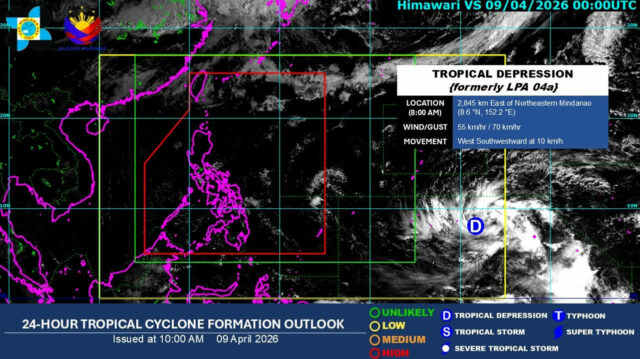
A tropical depression, which will be named Caloy once it enters the Philippine Area of Responsibility (PAR), may develop into a super typhoon, according to the Philippine Atmospheric, Geophysical and Astronomical Services Administration (PAGASA) on Thursday.

The potential tropical cyclone was last located 2,845 kilometers east of northeastern Mindanao, PAGASA said in its 10:00 am monitoring.

It is likely to enter the PAR next week, with a “low chance” of making landfall over the country due to its projected northward trajectory, PAGASA said in a 5:00 am press briefing.

The tropical depression has maximum sustained winds of 55 kilometers per hour (kph) and gusts of up to 70 kph as of the 10:00 am monitoring.

“It is possible for it to reach typhoon category, and we are not ruling out the possibility of intensification into a super typhoon category,” Chenel Dominguez, PAGASA’s weather specialist, said during the press briefing in mixed English and Filipino.

If it enters PAR, Caloy will be the country’s third storm this year. The Philippines averages about 20 storms annually.

Meanwhile, for the country’s 24-hour weather outlook, PAGASA said a ridge of a high-pressure area is affecting Northern and Southern Luzon, bringing hot and humid conditions with a low chance of rainfall.

Partly cloudy to cloudy skies with isolated rain showers or thunderstorms due to localized thunderstorms are expected over Metro Manila and the rest of the country.

As for the heat index, all regions are expected to experience over 30 degrees Celsius, except the Cordillera Administrative Region (CAR).

The highest heat index, at 42 degrees Celsius, is expected to be felt in Dumangas, Iloilo; Catbalogan, Western Samar; and Cotabato City, Maguindanao del Norte.

Amid high heat index levels caused by the dry season, PAGASA advised the public to wear light-colored clothing, bring umbrellas for sun protection, and stay hydrated. — Edg Adrian A. Eva

ADVERTISEMENT
ADVERTISEMENT