Home Blog Page 4228

Taiwan says China has ‘very diverse’ ways of interfering in election

XANDREASWORK-UNSPLASH

TAIPEI — China has “very diverse” ways of interfering in Taiwan’s elections in January, from military pressure to spreading fake news, including manipulating opinion polls, a senior Taiwanese security official said on Wednesday.

Ahead of elections, Taiwan routinely flags the risk of interference from Beijing, which claims the democratically governed island as its own, saying China seeks to sway the outcome to candidates who may be more favorable toward the country.

“The way the Chinese Communists interfere in elections is very diversified,” Taiwan National Security Bureau Director-General Tsai Ming-yen told lawmakers during a parliamentary committee session.

China can use military pressure, economic coercion or fake news to create a false choice between “war or peace” in the election, seeking to frighten voters, Mr. Tsai said.

“We are paying special attention to the Chinese Communists cooperating with opinion poll and public relations companies for the possibility of manipulating opinion polls and issuing them to interfere in the elections,” he added, without naming any companies.

China’s Taiwan Affairs Office did not answer calls seeking comment. China is in the middle of its weeklong national day holiday.

Taiwan Vice President William Lai of the ruling Democratic Progressive Party, which champions the island’s separate identity from China, is the favorite to be the next president, according to opinion polls.

China considers Mr. Lai and his party to be separatists and has repeatedly rejected their offers of talks. Mr. Lai says that he does not seek to change the status quo across the Taiwan Strait, but that only Taiwan’s people can decide their future.

China has increased military activities around Taiwan since the last election in 2020, and regularly sends warships and fighters into the seas and skies near the island.

Mr. Tsai said China’s most recent drills close to Taiwan, which started last month and have been described by Taiwan’s defense minister as “abnormal,” were virtually the same as those in previous years in terms of their focus, such as landing exercises.

But more aircraft and ships were involved this time and there were more practice firings by the People’s Liberation Army Rocket Force (PLARF), which oversees China’s conventional and nuclear missiles, he added.

That might be related to Chinese President Xi Jinping seeking to exert his control over the PLARF, Mr. Tsai said, a branch of China’s military that has come under focus after its two most senior leaders were suddenly replaced at the end of July with outside commanders.

China’s defense ministry also did not respond to requests for comment. — Reuters
Australia to crack down on ‘significant abuse’ of immigration system

REUTERS

SYDNEY — Australia will address significant abuses of its visa system, the government said on Thursday, in a bid to crack down on human trafficking and other forms of organized crime.

The government will establish a division in the Department of Home Affairs to tackle abuses of the visa and migration system, funded with A$50 million ($31.48 million).

Former police commissioner Christine Nixon highlighted in a January report “abuses of sexual exploitation, human trafficking and other organized crime” in the immigration system.

“The Nixon Review has identified significant abuse and misuse of Australia’s visa system,” immigration minister Andrew Giles said.

“By once again prioritizing integrity in immigration, we’re able to help protect vulnerable communities from exploitation, and make our visa system fairer for everyone.”

Long reliant on immigration to supply what is now one of the tightest labor markets in the world, Australia has proposed overhauling its system to speed up the entry of highly skilled workers and smoothening the path to permanent residency.

The government said in April the visa process for skilled professionals would be made quicker and easier, while steps would be taken to retain international students. — Reuters

Federal Land wins multiple awards, recognized for its excellence in real estate development

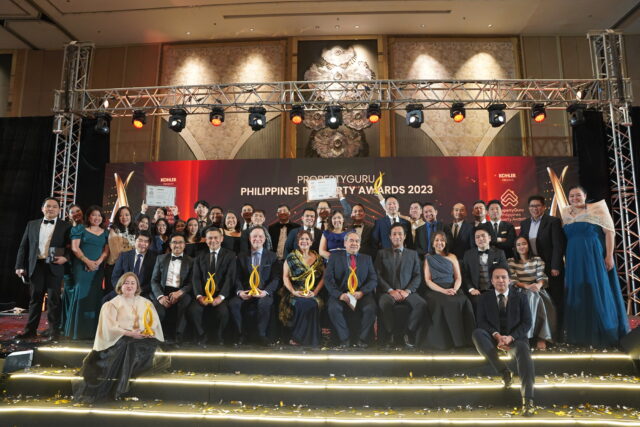
Federal Land executives and partners received a total of 9 awards and recognitions at the 11th PropertyGuru Philippines Property Awards

Premier real estate developer Federal Land secured a total of 9 awards and recognitions at the recently concluded 11TH PropertyGuru Philippines Property Awards.

“We are honored to be recognized for these awards by our esteemed peers in the industry. These awards inspire us to continue creating innovative and well-built property developments across the country,” said Federal Land President and COO Thomas F. Mirasol.

Federal Land executives received Best Developer in Luzon award at PropertyGuru Philippines Property Awards. In photo are (left to right): Mr. Jose Eliseo Bringas, Brand Marketing Head; Mr. Kerwin Reganit, Customer Service Group Head; Mr. John Frederick Cabato, Horizon Land General Manager; Ms. Maria Margarita Saenz-Resurreccion, Sales Group Head; Mr. Thomas F. Mirasol, President and COO; Ms. Cyndy Tan Jarabata, PropertyGuru Judging Panel Chairperson; Ar. Gilbert Berba, Urban Planning and Design Group Head; Atty. Edgar Ryan San Juan, Head of the Office of the General Counsel; and Mr. Stephen Comia, Project Development Group Head.

The developer won two of the most coveted developer awards, “Best Developer – Luzon” and “Best Mixed-use Developer” – a testament to Federal Land’s promise of excellence.

The company’s push for mixed-use development has never been more significant than when it launched the Federal Land Communities brand and product line earlier this year. Federal Land Communities is Federal Land’s own take on the township concept. The brand is poised to introduce several master planned, multi-use developments thoughtfully-designed for the new era, including the 600-hectare Riverpark community in Cavite.

Grand Hyatt Manila Residences South Tower in BGC, Winner for the “Best Branded Residences” category (Artist’s Perspective)

The developer awards on the other hand were highlighted by multiple wins for Federal Land’s prestige projects. Its landmark high-end condominium in BGC, Grand Hyatt Manila Residences South Tower was hailed “Best Branded Residential Development.” The first Grand Hyatt branded residence in Southeast Asia, this luxury condominium which is on-schedule for handover by the end of the year, offers the finest hotel-like living experiences in the country via its world-class hotel à la carte services, exclusive hotel access, and premium turnkey offerings.

MITSUKOSHI BGC, the first-of-its-kind in the country, earned the winning titles for the “Best Retail Development” and “Best Retail Interior Design” categories. Inside the Japanese-themed mall are distinct elements of traditional Japanese design, with structures such as sandō or “a road approaching a shrine or a temple”, tori-niwa or “a street garden”, and the iconic monument “Joining Hands,” which symbolizes the camaraderie between the Philippines and Japan. Launched in July 2023, the mall has since been a popular upscale destination for many Filipinos. It features a curated selection of unique retail offerings like Key Coffee Kissaten, The Matcha Tokyo, Snidel, Fray I.D., MITSUKOSHI Beauty, and MITSUKOSHI Fresh.

MITSUKOSHI BGC, Winner for the “Best Retail Development” and “Best Retail Interior Design” categories (Actual Photograph)

The previous year, The Seasons Residences, the Japanese-inspired condominium atop MITSUKOSHI BGC, won the Best Condominium Development in the Philippines award.  Altogether, the mixed-use development features Japanese innovations that elevate the standards of comfort, convenience, and functionality for its discerning residents.

Several Federal Land projects were also included in the roster of distinguished awardees, including two signature developments which launched earlier this year. Zen-inspired residences The Grand Midori Ortigas was chosen as the “Best Condo Architectural Design” and was Highly Commended for the “Best High-End Condo Development (Metro Manila)” categories. Designed by renowned Tange Associates, The Grand Midori Ortigas offers a distinctive living experience that is both elegant and purposeful at the heart of a dynamic CBD. Meanwhile, Quantum Residences, a smart-value property strategically located along Taft Avenue in Pasay, received Highly Commended for “Best Mid-End Condo Development (Metro Manila).” Developed by Horizon Land, a wholly-owned subsidiary of Federal Land, the well-received Quantum Residences launched the Amber Tower last May 2023. The tower will be the final piece that shall complete this highly-networked high-rise development built for modern Filipinos.

The Grand Midori Ortigas, Winner for “Best Condo Architectural Design” and Highly Commended for “Best High-End Condo Development (Metro Manila)” categories (Artist’s Perspective)

“For over 51 years, Federal Land continues its commitment to deliver extraordinary experiences by providing our clients with homes, commercial spaces, and integrated communities that are not only thoughtfully designed but also safe, reliable, and accessible to make everyday life more enjoyable,” Mirasol added.

Quantum Residences in Pasay City, Highly Commended for “Best Mid-End Condo Development (Metro Manila)” category (Artist’s Perspective)

Organized by PropertyGuru Group (NYSE: PGRU), the 11th PropertyGuru Philippines Property Awards is the largest, most prestigious, and considered the gold standard in real estate.  It recognizes the country’s finest, most innovative real estate developers and projects, as selected by an independent judging panel of industry experts focusing on design, innovation, and quality.


Spotlight is BusinessWorld’s sponsored section that allows advertisers to amplify their brand and connect with BusinessWorld’s audience by enabling them to publish their stories directly on the BusinessWorld website. For more information, send an email to online@bworldonline.com.

Join us on Viber at https://bit.ly/3hv6bLA to get more updates and subscribe to BusinessWorld’s titles and get exclusive content through www.bworld-x.com.

US senators examine TikTok hiring of ByteDance executives

WASHINGTON – Two US senators said on Tuesday they were investigating short video sharing app TikTok’s reported decision recently to hire several high-level executives from its Chinese parent company, ByteDance.

Senators Richard Blumenthal, a Democrat, and Republican Marsha Blackburn said in a letter to TikTok CEO Shou Zi Chew that the hirings further call “into question the independence of TikTok’s operations and the security of its US users’ information.”

“The personnel changes give the impression that TikTok is attempting to preserve ByteDance’s influence over TikTok while avoiding suspicion,” the senators wrote, asking for a detailed account of security protocols being imposed on ByteDance employees who transfer to the US from China.

TikTok said it welcomed the chance to provide senators facts about its hiring practices. “In a large, global organization, it is not uncommon for employees to work on different products or geographies over the course of their career,” a spokesperson said.

TikTok is used by more than 150 million Americans and has faced calls from US lawmakers for a nationwide ban over concerns about possible Chinese government influence.

Efforts to give the Biden administration new powers to ban TikTok have stalled in Congress.

Senator Maria Cantwell has been working with the White House and other lawmakers on a revised bill to address concerns about TikTok and other foreign-owned apps.

Republican Senator Josh Hawley, who sought unanimously consent to win approval for legislation to ban TikTok in May, plans to force a vote on the issue later this year.

“We need to come back to it and we need to ban it,” he told Reuters last month. “(TikTok) has hired lobbyists by the bazillion, they are in the halls constantly and they have been able to stop progress.”

Then-President Donald Trump in 2020 sought to bar new downloads of TikTok and another Chinese-owned app, WeChat, a unit of Tencent 0700.HK, but a series of court decisions blocked bans from taking effect.

TikTok is fighting a ban by the state of Montana set to take effect on Jan. 1. A judge has scheduled an Oct. 12 hearing on TikTok’s lawsuit. — Reuters

Meta’s Instagram, Facebook to charge EU users for ad-free service – sources

META Platforms is looking to introduce ad-free subscription plans for Instagram and Facebook users in Europe, two people familiar with the matter said on Tuesday.

Several pricing plans were discussed, but the 10 euro ($10.49) per month plan is the most feasible, one of them said, while the other source said it will be implemented in the coming months.

The proposal is an attempt by Meta to comply with European Union regulations that threaten to curb its ability to personalize ads for users without their consent and hurt its major revenue source.

Offering a choice between a free, ad-supported plan and a paid subscription might lead to users opting for the former, helping Meta comply with regulations without affecting its ad business.

On mobile devices, the price for a single account would jump to roughly 13 euros because Meta would factor in commissions charged by Apple’s and Google’s app stores, the second source said.

In comparison, Netflix charges 7.99 euros for a basic subscription plan, while Alphabet’s YouTube Premium costs about 12 euros and Spotify’s Premium service is priced at about 11 euros.

Meta was fined 390 million euros earlier this year by Ireland’s Data Privacy Commissioner, and told it cannot use the so-called “contract” as a legal basis to send users ads based on their online activity.

The social media company subsequently said it intended to ask users in the EU for their consent before allowing businesses to target ads in order to address evolving regulatory requirements in the region.

A Meta spokesperson said the company believes in “free services which are supported by personalized ads,” but is exploring “options to ensure we comply with evolving regulatory requirements.”

Meta, Ireland’s Data Protection Commission, and the European Commission declined to comment. — Reuters

Mexican border state: costs of ‘migrant crisis’ reach nearly $1 bln

STOCK PHOTO | Image by WikiImages from Pixabay

MEXICO CITY – The costs of spiking migration for a key Mexican border state due to a sharp downturn in US-bound cargo trucks total nearly $1 billion over about two weeks, state officials said Tuesday, as authorities in both countries struggle with the latest surge.

The state government of Chihuahua announced in a statement that its trade-dependent economy lost more than $947 million between Sept. 18 and Oct. 2, blaming a “migrant crisis” for preventing the usual flow of goods from crossing into the United States.

Chihuahua borders the US states of Texas and New Mexico, both of which host major points of entry crucial for trade between the two neighbors.

Just on Monday, the Chihuahua government said related losses totaled about $77 million.

“These impacts stem from the migrant crisis caused by the arrival of thousands of people (crossing through the state),” according to the statement, which also criticized Mexico’s federal government for not taking “any action” to mitigate the losses.

Chihuahua’s government is led by a governor who represents a center-right opposition political party.

The losses follow a decision by US authorities to increase border security checks that have also caused trade delays.

Like many US officials, Mexico’s top diplomat has also described surging migration as a “crisis” situation.

Earlier this month, some US-bound cargo trains were also disrupted when a major Mexican freight rail operator temporarily suspended operations after migrants died or got hurt by jumping on the trains.

In a separate estimate of border disruptions, about 8,000 trailers carrying an estimated $1 billion worth of goods have been stranded on the Mexican side over the past few weeks, a transport association representative in Ciudad Juarez, a Mexican border city in Chihuahua, said at the time. — Reuters

PHL says vessel that collided with fishing boat registered in Marshall Islands

AN AERIAL VIEW of what Philippine Coast Guard alleges were Chinese vessels, manned by Chinese maritime militia, loitering within the vicinity of Thitu Island, one of nine features occupied by the Philippines in Spratly Islands, in the disputed South China Sea, March 9, 2023. — REUTERS

THE PHILIPPINE coastguard on Wednesday said a vessel that collided with a Philippine fishing boat in the South China Sea was an oil tanker registered under the flag of the Marshall Islands.

It described Monday’s incident that killed three fishermen as an “accidental collision” and said it would be reaching out to the vessel.—Reuters

Digital PR Philippines: BrightPR.io — Steering the Public Relations Revolution in the AI Era

Jedemae Lazo, co-founder and CMO, BrightPR.io

The emergence of AI has ushered in groundbreaking advancements across various sectors. In the realm of public relations, BrightPR.io stands out as a pioneering force. Based out of Singapore and making significant inroads in the Philippines, this innovative digital PR startup offers an on-demand, global media outreach and news article publishing service, challenging traditional norms.

Historical PR practices often chained businesses to long-term contracts and lacked flexibility. BrightPR.io has disrupted this mold. Their on-demand, pay-as-you-go model provides the agility crucial in today’s ever-evolving digital world. This fresh approach not only accommodates the digital age but anticipates the deeper integration of AI in business operations.

Jedemae Lazo, co-founder and CMO of the company, shares her insights: “Our dynamic model transcends traditional PR boundaries, ensuring our clients remain ahead in the constantly shifting digital landscape.”

BrightPR.io’s global media outreach and news article platform is more than just a service; it’s an empowerment tool. Businesses can pen their stories, choose from a vast network of over 1,600 leading national and regional news outlets, and engage audiences in over 60 countries. This autonomy and reach make global  public relations campaigns accessible to all, showcasing the company as a leader in digital PR solutions.

A standout feature is the platform’s navigational freedom. Users can tailor their digital PR journey, select precise, geo-targeted news outlets, and make decisions based on real-time analytics. Such autonomy in the PR sector is unprecedented.

Furthermore, their transparent pricing strategy, underscored by a robust performance guarantee, fortifies client trust. Businesses can embark on their PR ventures with newfound confidence, backed by the company’s performance guarantee.

As AI continues to redefine business landscapes, the Singaporean startup is poised at the forefront. “We’re equipping businesses with transformative communication tools,” remarks Ms. Lazo. This innovation-centric approach aligns perfectly with the digital era’s demands, emphasizing adaptability’s importance.

In essence, BrightPR.io democratizes corporate communication. They ensure that businesses, irrespective of size, can effectively wield their narratives. By doing so, they cultivate an inclusive, dynamic environment in corporate communication.

The future of PR is not just about adaptation; it’s about leadership. BrightPR.io isn’t merely adjusting to the AI era — they’re trailblazing the path. As the future unfolds, they are set to be at the vanguard, shaping a more flexible and accessible PR world.


Spotlight is BusinessWorld’s sponsored section that allows advertisers to amplify their brand and connect with BusinessWorld’s audience by enabling them to publish their stories directly on the BusinessWorld website. For more information, send an email to online@bworldonline.com.

Join us on Viber at https://bit.ly/3hv6bLA to get more updates and subscribe to BusinessWorld’s titles and get exclusive content through www.bworld-x.com.

Philippines looking into ramming incident in South China Sea — Marcos

AN AERIAL VIEW of the BRP Sierra Madre at the contested Second Thomas Shoal on March 9, 2023. — REUTERS

The Philippines is investigating a maritime incident to find out what killed three Filipino fishermen in a ramming incident that sank their boat in the South China Sea, its president said on Wednesday.

“We assure the victims, their families, and everyone that we will exert every effort to hold accountable those who are responsible for this unfortunate maritime incident,” Ferdinand R. Marcos, Jr. said on the X social media platform.

Three Filipino fishermen died after their fishing boat was rammed by an unidentified foreign commercial vessel while crossing the South China Sea, the Philippine Coast Guard (PCG) said on Wednesday.

The incident occurred on Monday while the boat was transiting 85 nautical miles (157 km) northwest of the disputed Scarborough Shoal, it said in a statement. Eleven crew members survived when the boat sank.

“The incident is still under investigation to ascertain the details and circumstances surrounding the collision between the fishing boat and a still unidentified commercial vessel,” Mr. Marcos said.

“Let us allow the PCG to do its job and investigate, and let us refrain from engaging in speculation in the meantime,” he added, referring to the coast guard.

Tensions around those waters have recently flared up after the Philippines said it removed a 300-meter ball-buoy barrier installed by China’s coastguard near the Scarborough Shoal, a prime fishing spot and one of Asia’s most contested maritime features.

The strategic shoal, named after a British cargo vessel that ran aground there in the 18th century, is in the Philippines’ exclusive economic zone but was seized in 2012 by China, which has maintained a constant presence of coast guard ships and fishing trawlers there ever since.

China has rejected the Philippines’ version of events over the barrier, while the United States has weighed in with support behind Manila and vowed to honor its treaty commitments to defend its treaty ally if attacked.

The Philippine coastguard did not elaborate on the incident or provide details of the vessel it said had rammed the Filipino crew.—Reuters

Three Philippine fishermen dead after South China Sea ramming by ‘unidentified’ boat – coastguard

REUTERS

MANILA – Three Filipino fishermen died after their fishing boat was rammed by a still unidentified foreign commercial vessel while crossing the South China Sea, the Philippine coastguard said on Wednesday.

The incident occurred on Monday while the boat was transiting waters 85 nautical miles (157 km) northwest of the disputed Scarborough Shoal, it said in a statement. Eleven crew members survived after the boat sank.

Tensions around those waters have recently flared up after the Philippines said it removed a 300-meter-long ball-buoy barrier installed by China’s coastguard near the Scarborough Shoal, a prime fishing spot and one of Asia’s most contested maritime features.

The strategic shoal, named after a British cargo vessel that ran aground on the atoll in the 18th century, was seized in 2012 by China, which has maintained a constant presence of coastguard and fishing trawlers there ever since.

China has rejected the Philippine version of events over the barrier, while the United States has weighed in with support behind Manila and vowed to honour its treaty commitments to defend its treaty ally if attacked.

The Philippine coastguard did not elaborate on the incident or provide details of the vessel it said had rammed the Filipino crew. — Reuters

IMF cuts Philippine growth outlook

People admire the Christmas decorations at a mall in Mandaluyong City, Oct. 1. The International Monetary Fund sees the Philippine economy growing by 5.3% this year. — PHILIPPINE STAR/MIGUEL DE GUZMAN

THE INTERNATIONAL Monetary Fund (IMF) slashed its growth forecast for the Philippines this year, saying a “higher for longer policy rate” might be needed to address persistent inflation.

The multilateral lender lowered its Philippine gross domestic product (GDP) growth projection to 5.3% from its 6.2% estimate in July.

This is well below the government’s 6-7% goal, and significantly slower than the 7.6% expansion in 2022.

“The Philippine economy has emerged strongly from the pandemic but has since confronted a confluence of global shocks,” IMF Mission Chief to the Philippines Shanaka Jayanath Peiris said at a press briefing on Tuesday after ending the Article IV consultation mission.

He said the Philippine GDP outlook for this year was lowered after second-quarter growth slowed to 4.3% “due to a weak global economy and tightened policy settings.”

The second-quarter GDP expansion was the slowest in over two years. In the first half, GDP growth averaged 5.3%.

The IMF said it raised its 2024 growth projection for the Philippines to 6% from 5.5%, due to the anticipated “acceleration in public spending and improved external demand for Philippine exports.”

Still, this is well below the government’s 6.5-8% GDP growth target for next year.

“The main downside risks to the outlook include persistently high global and domestic inflation that could necessitate a further tightening of monetary policy, an abrupt global slowdown putting downward pressure on goods and service exports, an intensification in geopolitical tensions, and depreciation pressures stemming from capital outflows under volatile market conditions,” Mr. Peiris said.

He noted that upside risks include a “more resilient US economy and a rebound in domestic demand supported by an easing of financial conditions.”

‘HIGHER FOR LONGER’
The IMF expects inflation to rise to about 6% this year before declining to 3.5% in 2024, Mr. Peiris said.

The 2023 inflation forecast is higher than the 5.8% full-year estimate of the Bangko Sentral ng Pilipinas (BSP). The BSP also sees inflation to hit 3.5% next year.

The IMF projects inflation to return to the 2-4% target by the first quarter of next year.

“However, core inflation remains elevated and inflation risks are tilted to the upside, including higher commodity prices that could lead to second-round effects,” Mr. Peiris said.

“Thus, a higher-for-longer policy rate path is warranted until inflation firmly falls within the target range alongside a tightening bias to anchor inflation expectations.”

The BSP raised borrowing costs by 425 basis points from May 2022 to March 2023, bringing the benchmark interest rate to 6.25%, the highest in nearly 16 years. The Monetary Board has since paused its tightening.

Meanwhile, the IMF sees the current account deficit narrowing to -3% of GDP in 2023 and -2.6% in 2024 from -4.5% in 2022.

The BSP projects the current account deficit to reach $11.1 billion (-2.5% of GDP) this year.

The current account deficit will be “supported by lower commodity prices, a pickup of electronic exports, and an acceleration in service exports,” Mr. Peiris said.

The Philippine banking sector remains well-capitalized and liquid, but higher interest rates remain a risk, he said.

“The higher interest rate environment underscores the importance of strengthening systemic risk monitoring and financial supervision, expanding the macroprudential toolkit, as well as calibrating it to counter vulnerabilities stemming from sectoral exposures and linkages between financial conglomerates and nonfinancial corporates,” Mr. Peiris said.

The IMF also told the Philippines to step up efforts against money laundering and terrorist financing so it can be removed from the Financial Action Task Force’s “gray list.”

The Philippines has been included in the global “dirty money” watchdog’s gray list of countries subjected to increased monitoring since June 2021.

FISCAL POLICY
Meanwhile, Mr. Peiris said the government’s fiscal consolidation plan is on track, reflecting strong revenue performance and lower current spending.

He also noted that the government’s pace of consolidation is “appropriate” enough to bring the debt-to-GDP ratio to below 60% by 2025.

As of end June, the government debt as a share of GDP stood at 61%, slightly above the 60% threshold considered by multilateral lenders to be manageable for developing economies.

However, the government can still ramp up revenue-generating measures, Mr. Peiris said.

“An even more ambitious revenue mobilization strategy could finance more social spending to achieve poverty reduction goals and to respond to natural disasters while keeping the deficit path unchanged,” he added.

Mr. Peiris noted that key reforms such as the military and uniformed personnel (MUP) pension system reform and the budget modernization bill are “critical and should be complemented by ongoing efforts to strengthen the oversight of government-owned and -controlled corporations.”

“The renewed emphasis on financing the country’s infrastructure gaps through public-private partnerships (PPPs) is well placed and the new PPP Code is welcome in this regard. The reform of the mining fiscal regime and Mining Act provides an opportunity to enact a progressive and unified tax system, and a competitive investment regime,” he added. — Keisha B. Ta-asan

Cabinet advises Marcos to lift price cap on rice

A price ceiling on rice, which took effect on Sept. 5, limits the price to P41 a kilo for regular milled rice and P45 for well-milled rice. — PHILIPPINE STAR/WALTER BOLLOZOS

By Kyle Aristophere T. Atienza, Reporter

AGRICULTURE and Trade officials have recommended the lifting of the price cap on rice as prices have dropped and local supply has improved, according to Bureau of Plant Industry (BPI) Director Gerald Glenn F. Panganiban.

“Indicators point that there are decreasing prices of rice observed in the market since our implementation [of the price cap order] last month,” Mr. Panganiban said after the Trade and Agriculture departments’ meeting with President Ferdinand R. Marcos, Jr. on Tuesday.

The price ceiling, which took effect on Sept. 5, limits the price to P41 a kilo for regular milled rice and P45 for well-milled rice.

“From our parameters, it looks ready (to be lifted),” he said in mixed English and Filipino, citing the drop in global rice prices and improving supply. “But of course, it’s all upon the President to decide on it.”

Mr. Panganiban noted there would be stable rice supply in the fourth quarter, as the country harvests 1.9 million metric tons of rice within the month. He estimated that rice supply by end-October would be equivalent to 74 days from 52 days as of end-September.

“We are expecting more bumper harvest for the coming October and November. The public can expect that we will have a stable supply of our main staple,” he said.

When asked what was preventing the administration from immediately lifting the price cap on rice, Mr. Panganiban said: “All of the decisions that should be made should be with the complete staff work. We are just verifying so that we can make sure that when a decision arrives, everyone will benefit from it.”

Economists have been urging the President to lower rice tariffs or consider other strategies instead of imposing price controls, which they said would limit the supply of the food staple and lead to black market trading.

Price caps may also discourage traders from buying rice from local farmers, who will be forced to lower farmgate prices.

Mr. Marcos has been saying that the country has enough rice supply, blaming economic saboteurs — hoarders and smugglers alike — for the commodity’s spiraling prices.

Late last month, he rejected his economic managers’ proposal to lower tariffs for rice to as low as 0% from 35%.

“Hoarders and smugglers will not be able to manipulate the prices if the supply is adequate,” said Leonardo A. Lanzona, who teaches economics at the Ateneo de Manila University.

“Once farmers are able to deliver their goods directly to the market without going through these hoarders and smugglers, then the latter would have lost their market power,” he said in a Facebook Messenger chat.

During the 2022 presidential campaign, Mr. Marcos vowed to bring the price of rice to P20 a kilo.

But more than a year later, prices of the national staple have surged due to various factors, including India’s ban on exports of non-basmati white rice. In August alone, rice inflation quickened to 8.7% from 4.2% a month earlier.

“The timing of today’s conference is a knee-jerk reaction in response to the low survey received by President Marcos,” Gary Ador Dionisio, dean of the De La Salle – College of Saint Benilde School of Diplomacy and Governance, said via Messenger chat. 

Mr. Marcos’ approval ratings fell by double digits across all areas and socioeconomic classes, according to a Pulse Asia Research, Inc. survey conducted from Sept. 10 to 14, with economists attributing the decline to the rising prices of basic commodities like rice.

The remarks of BPI’s Mr. Panganiban caused more confusion than clarification, Mr. Dionisio said, noting that there is “no harmony of interest and message” between the Agriculture department and the Palace.

“This is not a clear policy but a political firefighting.”

The price cap order has prompted the departure of a Finance official who has warned that the move would only empower hoarders.

“It’s about time [to lift the price cap],” former Finance Undersecretary Cielo D. Magno said via Messenger chat, reacting to Mr. Panganiban’s remarks. “The price cap does not address hoarding and smuggling. It actually encourages hoarding and smuggling. The price cap makes matters worse.”

The President and his economic managers have said the price cap order is just temporary.

ADVERTISEMENT
ADVERTISEMENT