
How PSEi member stocks performed — October 11, 2023

Here’s a quick glance at how PSEi stocks fared on Wednesday, October 11, 2023.
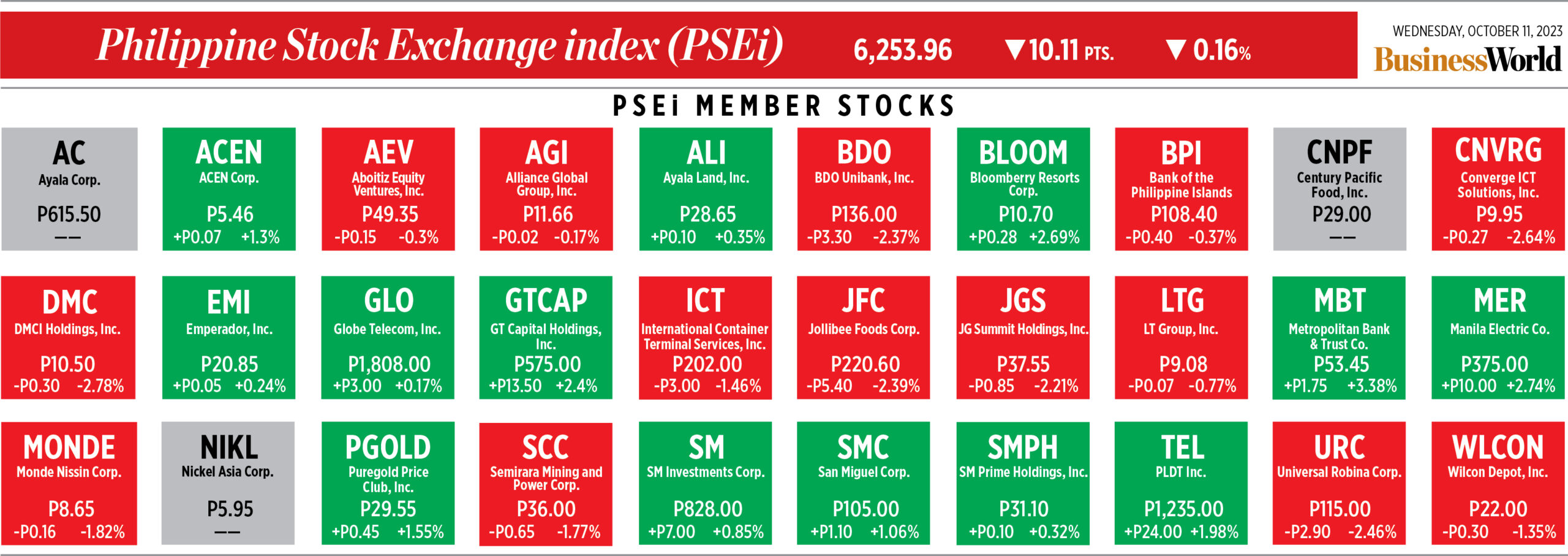

Here’s a quick glance at how PSEi stocks fared on Wednesday, October 11, 2023.

Social media companies are turning to paid subscription models for revenue amid regulatory headwinds and artificial intelligence (AI) advancements, according to analysts.
“The financial market very generously rewards recurring revenues from subscriptions,” Anthony Oundjian, managing director and senior partner at the Boston Consulting Group in the Philippines, told BusinessWorld on Wednesday. “While ad revenues are seen as more volatile and have proven more challenging to sustain during an economic slowdown,” he added.
“The effort by social media companies is understandable, but the value they provide to consumers needs to be in line with the fees commitment they ask,” he also said in an e-mailed reply to questions.
Ronald Gustilo, national campaigner for Digital Pinoys, noted that premium subscribers, mostly monetized content creators, should have “better benefits” aligned with the amount they pay.
These include ad-free services, platform customization, longer content allocation, or higher resolution for photos and videos, Mr. Gustilo noted.
However, security features still need to be applied to all users and should not be exclusive to premium users, he added.
Meta is planning to charge European Union users for ad-free services on Facebook and Instagram to supposedly comply with regulations that impact their revenues and perceived future of free services supported by personalized ads, Reuters reported last week.
Social media platforms such as X, YouTube, Snapchat, and LinkedIn offer paid subscription models for their users.
Mr. Oundjian noted the uptick in personalized ads due to the use of advanced algorithm and AI. “Generative AI will help further increase the personalization of engagement through ads and other means, and we see social media companies actively embracing these evolutions.”
He said that consumers are largely willing to share data for an enhanced social media experience. “Think location for Grab, music preferences for Spotify, etc.”
“When it comes to ads, while consumers would rather see less — and there are premium models allowing that — most would still prefer to see ads that at least have some relevance to them,” he added.
In a market like the Philippines, Mr. Oundjian said, people have historically been unwilling to spend on subscriptions, but willingness should increase over time.
“Pricing has been aggressive to entice people, but we see price increases efforts already. Non-paying users should expect to still see a fair bit of sponsored content, while more tiers of services for paid users could appear,” he noted. — Miguel Hanz L. Antivola

THE PESO appreciated against the dollar on Wednesday after Bangko Sentral ng Pilipinas (BSP) Governor Eli M. Remolona, Jr. said they could hike benchmark rates next month.
The local currency closed at P56.755 versus the dollar on Wednesday, strengthening by 6.50 centavos from Tuesday’s P56.82 finish, data from the Bankers Association of the Philippines’ website showed.
The local unit opened Wednesday’s session at P56.75 per dollar. Its intraday best was at P56.705, while its weakest showing was at P56.777 against the greenback.
Dollars traded went up to $1.19 billion on Wednesday from the $1.05 billion on Tuesday.
The peso strengthened against the dollar on Wednesday after the central bank chief signaled that a 25-basis-point (bp) rate hike could be on the table at their Nov. 16 meeting, Rizal Commercial Banking Corp. Chief Economist Michael L. Ricafort said in a Viber message.
“The peso strengthened after BSP Governor Remolona hinted at a further policy rate hike before yearend,” a trader likewise said in an e-mail.
Mr. Remonola on Wednesday said the Monetary Board is open to hiking borrowing costs by 25 bps in their Nov. 16 review following the release of data showing faster-than-expected September inflation.
The Monetary Board has kept the benchmark interest rate at 6.25% for four straight meetings after it hiked borrowing costs by 425 bps from May 2022 to March 2023 to help tame inflation.
The peso was also supported by the recent downward correction in the dollar due to dovish signals from US Federal Reserve officials, Mr. Ricafort added.
The dollar was largely rangebound on Wednesday, though remained weighed down by dovish US Federal Reserve comments, as traders awaited the central bank’s policy meeting minutes due later in the day for more clues on its interest rate outlook, Reuters reported.
A slew of Fed officials have signaled in recent days that the US central bank may not need to tighten monetary policy much further than initially thought.
Atlanta Fed Bank President Raphael Bostic said on Tuesday the central bank did not need to raise borrowing costs any further, and Minneapolis Fed President Neel Kashkari followed with similar remarks later in the day.
The greenback sat near a two-week low against a basket of currencies on Wednesday and last stood at 105.80.
For Thursday, the trader said peso could depreciate due to expectations of an uptick in US consumer inflation.
The trader sees the peso moving between P56.65 and P56.90 per dollar on Thursday, while Mr. Ricafort expects it to range from P56.65 to P56.85. — AMCS with Reuters

PHILIPPINE SHARES dropped on Wednesday due to last-minute selling as investors await the release of US consumer inflation data.
The Philippine Stock Exchange index (PSEi) went down by 10.11 points or 0.16% to end at 6,253.96 on Wednesday, while the broader all shares index rose by 1.82 points or 0.05% to 3,384.45.
“After spending much of the day in positive territory, the index closed lower again today due to a surge of market-on-close selling. Today’s initial strength could be tied to market optimism given overnight pronouncements from some US Fed officials indicating that US policy rates may have already peaked,” China Bank Securities Corp. Research Director Rastine Mackie D. Mercado said in an e-mail on Wednesday.
Several Fed official have noted that recent rises in longer-term yields may help do their inflation-fighting work, Reuters reported.
Atlanta Fed President Raphael Bostic was applauded when he told a room full of bankers in Nashville on Tuesday: “I actually don’t think we need to increase rates anymore.”
“We think that selling pressure at the close was likely driven by continued risk aversion amongst investors as they chose to take profit and limit exposures ahead of key US data releases,” Mr. Mercado added.
September US consumer price index (CPI) data will be released on Oct. 12, Thursday.
In August, US CPI stood at 0.6% month on month and at 3.7% annually.
Seedbox Securities, Inc. Equity Trader Jayniel Carl S. Manuel said in an e-mail that a potential pause in US interest rate hikes “has introduced an element of unpredictability, influencing international capital flows and risk perception.”
The geopolitical conflict in the Middle East also affected market sentiment, Mr. Manuel added.
“The ongoing conflict in the Middle East between Israel and Hamas has injected geopolitical uncertainty into the equation, impacting investor sentiment and contributing to the market’s downward trajectory,” he added.
The majority of sectoral indices declined on Wednesday. Mining and oil fell by 90.25 points or 0.81% to 10,983.83; financials dropped by 10.88 points or 0.59% to 1,808.11; industrials went down by 37.93 points or 0.42% to 8,869.95; and services decreased by 1.47 points or 0.09% to 1,518.64.
Meanwhile, property rose by 5.83 points or 0.22% to 2,621.94 and holding firms climbed by 8.63 points or 0.14% to 5,942.97.
Value turnover went up to P10.70 billion on Wednesday with 2.02 billion shares changing hands from the P4.54 billion with 688.96 million shares seen on Tuesday.
Advancers outnumbered decliners, 100 versus 93, while 46 shares closed unchanged.
Net foreign selling went down to P160.31 million on Wednesday from P275.32 million on Tuesday. — SJT with Reuters
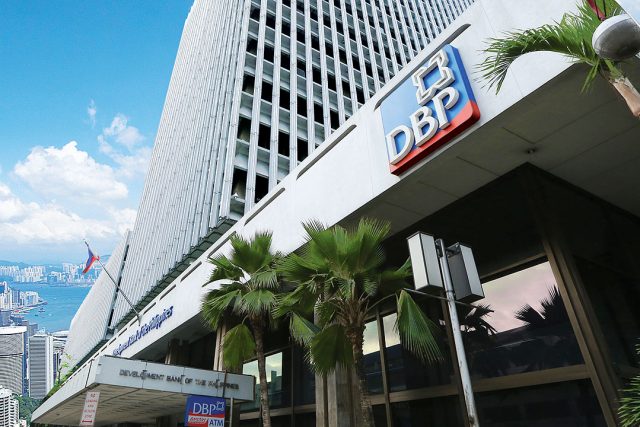
THE Development Bank of the Philippines (DBP) said government banks’ contributions to the Maharlika Investment Fund (MIF) must be included in determining the institutions’ compliance with capitalization requirements.
“I understand both LANDBANK (Land Bank of the Philippines) and DBP requested for regulatory relief from the BSP (Bangko Sentral ng Pilipinas),” DBP President and Chief Executive Officer Michael O. de Jesus said in a Viber message.
“We seek relief that our contribution not be deducted from capital,” he added.
LANDBANK and DBP remitted their P50-billion and P25-billion contributions, respectively, to the Maharlika Investment Corp. (MIC) last month, in compliance with Republic Act No. 11954, which established the MIF.
The legislation was signed into law by President Marcos Jr. on July 18, with the Implementing Rules and Regulations taking effect on Aug. 28.
BSP Governor Eli M. Remolona, Jr. in a news conference on Wednesday acknowledged that both banks’ contributions put them at risk of not meeting the regulatory requirements for capital held.
“It may make (the state banks) non-compliant with our capital requirements,” Mr. Remolona said.
However, the banks may be allowed a degree of “forbearance” after providing capital to Maharlika, he said.
“In principle, we can provide forbearance, which allows them not to comply for a period of time. But they will be expected to comply at some point. Forbearance is always temporary,” he added.
BSP Supervisory Policy and Research Department Director Maria Cynthia M. Sison said if the central bank provides relief to the banks, it will be disclosed to the public.
“It will have to be disclosed that they are under forbearance so that other investors would know they’re in that situation,” she said.
She added that LANDBANK and the DBP do not want their capital positions to decline substantially due to their contributions to the MIC.
Finance Secretary Benjamin E. Diokno has said the completion of the remittance of the two largest state-owned financial institutions will pave the way for the full operationalization of the MIC.
The Maharlika fund is expected to be operational by the end of the year, and will begin market activities early next year.
Meanwhile, Mr. Remolona said the BSP has not received any application for the merger of LANDBANK and DBP.
“It’s not up to us. Once they decide to merge, then we will go in and look at the books of the merged entity,” he said.
LANDBANK was asked to comment on the impact of the contributions to its capital position, but it had not replied at the deadline. — Keisha B. Ta-asan

ECONOMISTS said government intervention in the pork industry must focus on lowering input costs for hog raisers, mainly by making animal feed cheaper, rather than imposing retail price ceilings on pork.
Calixto V. Chikiamco, Foundation for Economic Freedom president, said that the Department of Agriculture (DA) should work to liberalize corn imports in order to reduce farmers’ feed bills.
“The right measure to decrease pork prices without hurting hog farmers is to abolish the quantitative restrictions on corn and reduce tariffs,” Mr. Chikiamco said in a Viber message.
He added that the Philippines has an annual deficit of about 3 to 5 million tons of corn. “Corn is the single biggest cost ingredient for hog and poultry production,” he added.
DA Spokesperson and Assistant Secretary Arnel V. de Mesa said on Tuesday that the department is seeking to determine whether market “manipulation” warrants the imposition of price controls on pork.
Mr. De Mesa also said that the DA is studying a suggested retail price (SRP) scheme for pork if the gap between farmgate and market prices continues to widen.
“There could be several reasons why there’s a gap between farmgate price and retail price — logistics costs among them,” Mr. Chikiamco said.
Ateneo de Manila economics professor Leonardo A. Lanzona said a price ceiling would “cause more problems.”
“(The) solution is to encourage more imports and local production,” Mr. Lanzona said via chat.
The DA projects a deficit in the pork supply equivalent to 10 days’ demand towards the end of the fourth quarter.
Philippine Institute for Development Studies Senior Research Fellow Roehl M. Briones said in a Viber message that the farmgate price for hogs “may just be taking time to increase.”
“Prolonged controls may prevent this…(and) will discourage supply,” Mr. Briones added.
Rosendo O. So, chairman of Samahang Industriya ng Agrikultura said he sees the need for price caps on domestically grown and imported pork.
The controls are needed “para hindi sumipa ang retail price (so retail prices do not rise),” Mr. So told BusinessWorld by phone.
He added that a price cap on pork is “better” than an SRP “because nothing will really happen when you implement SRPs.”
In Metro Manila markets, kasim (pork shoulder) retailed for between P260 and P330 per kilogram on Oct. 11, while liempo or belly sold for between P290 and P400, according to DA price monitors. — Adrian H. Halili

THE National Grid Corp. of the Philippines (NGCP) said it needs government assistance to meet the timeline set for the P14.03-billion Batangas-Mindoro Interconnection Project (BMIP).
“In our 2023 application filed with the ERC (Energy Regulatory Commission), the timeline we indicated is 2027, already tight with respect to a project of this magnitude,” the NGCP said in a statement on Wednesday.
The Department of Energy (DoE) announced last month the NGCP’s commitment to complete the BMIP in 2025.
NGCP Spokesperson Cynthia P. Alabanza said the global average for completing transmission projects is between 7 and 10 years.
“There was already pressure on us to do an expedited timeline for this and (we considered 2027 to be) reasonably doable assuming nothing extraordinary happens, because we did some pre-work already. The 2027 timeline already considers the pre-work we did,” Ms. Alabanza said in a briefing.
“The 2025 timeline (really has zero) elbow room” that does not allow deviations of even one day. “I mean that’s an exaggeration but it’s that tight,” she added.
The NGCP first filed the project application with the ERC in 2011, followed by re-submissions to reflect the adjusted cost of the project and developments in the area.
The grid operator started to pursue the project in February following the approval of the ERC with a set target of completion by 2027.
“We understand and support the direction of the DoE in these and other critical projects. There is zero room for any delay with the usual chokepoints — right-of-way and the issuance of permits from local governments and other government agencies,” the NGCP said.
“It’s an almost impossible deadline, but NGCP, as always, will do its best,” it added.
Under the proposal, Mindoro will be connected to the Luzon grid through the proposed Pinamucan 230-kilovolt (kV) substation in Batangas City.
“This project is conceptualized for the purpose of bringing power from Luzon to Mindoro… to give electricity to Mindoro from Luzon,” Ms. Alabanza said, adding that the link has a capacity of 600 megawatts both ways.
According to the NGCP, it had completed the topographic survey for the submarine cable and cable terminal station sites, the marine and hydrographic survey, and the route survey for the 230 kV and 69 kV overhead transmission line sections even before it received approval from the ERC.
“Mindoro has been suffering from power interruptions due to intermittent power supply and expensive cost of power. With its fast-growing economic development, Mindoro requires a long-term solution. The connection to the main grid will open the island to other sources of energy, enabling the stable delivery of power,” the company said. — Sheldeen Joy Talavera
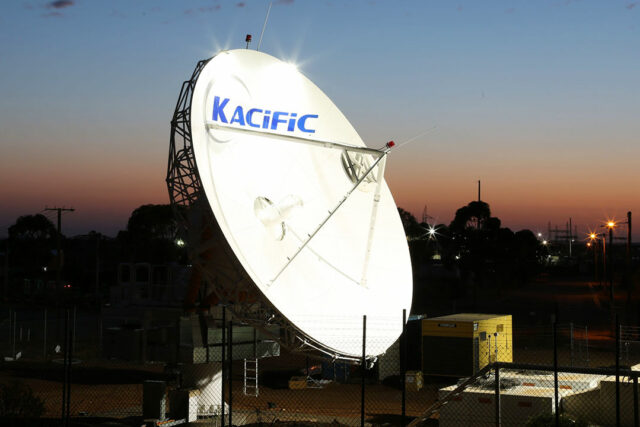
THE Department of Information and Communications Technology (DICT) has partnered with Stellarsat Solutions, Inc. and Kacific Broadband Satellites to expand broadband connectivity nationwide.
“One big challenge in connecting the Philippines is our (archipelagic) geography…. Connecting all the scattered islands remains a challenge, and the digital divide is still pronounced, especially in GIDA (geographically isolated and disadvantaged areas),” Information and Communications Technology Secretary Ivan John E. Uy said in a statement on Wednesday.
The tie-up aims to bring equitable broadband connectivity in the Philippines, as provided for under the National Broadband Plan.
Under the broadband plan, the DICT has connected about 438 sites in Benguet, Kalinga, Ifugao, Ilocos Norte, Quezon, and Pangasinan via a very-small-aperture terminal system.
“Northern Luzon locals can now enjoy a wide range of essential digital services,” Kacific Broadband said.
The DICT’s National Broadband Plan is the department’s framework for accelerating the deployment of fiber optic cable and wireless technology to improve internet speed.
“The digital divide in the Philippines gets smaller with each connection made. It has been an honor for us to collaborate with the DICT on this mission to shape a future where connectivity knows no bounds and all Filipinos can utilize the internet to its full potential,” Christian Patouraux, chief executive officer of Kacific Broadband, said.
Stellarsat Solutions is the internet service provider tied to Kacific Broadband, which provides satellite services. — Ashley Erika O. Jose
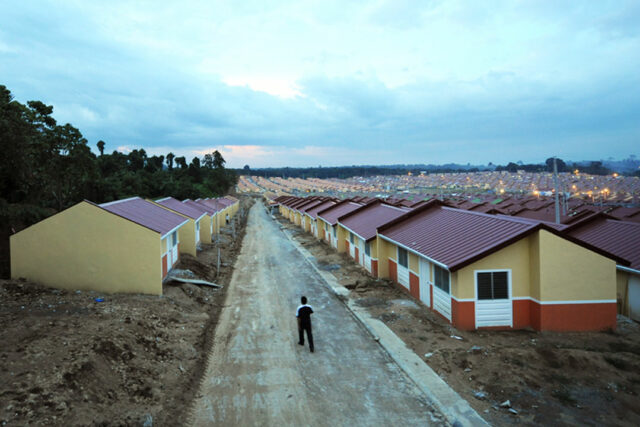
THE Board of Investments (BoI) said it amended the 2022 Strategic Investment Priority Plan (SIPP) to raise the price of low-cost housing units eligible for incentives to P3 million each.
The BoI said the ceiling had to be adjusted to conform to recent changes made by the Department of Human Settlements and Urban Development (DHSUD) and the National Economic and Development Authority (NEDA) to the pricing of units falling under the category of economic housing.
According to the DHSUD’s Department Order No. 2022-003, the price ceiling for economic housing was raised from P1.7 million to P2.5 million.
“With the recent adjustments in the price ceiling of economic housing approved by DHSUD and NEDA and the existing price ceiling for low-cost housing, the policy for mass housing should consider the said developments in the economic landscape of the country,” according to BoI Memorandum Circular 2023-005.
The SIPP now allows low-cost housing projects to have a selling price in excess of P2.5 million but not beyond P3 million. Within each SIPP-eligible housing development, socialized housing units must account for 20% of the registered project area and 20% of the floor area of all qualified saleable housing units, in the case of condominiums.
The economic housing category is capped at P2.5 million and the socialized housing component of each project must account for 15% of the registered project area and 15% of the floor area of qualified saleable housing units, in the case of condominiums.
The BoI also modified the provisions for income tax housing holidays (ITH) and duty exemption on capital equipment, raw materials, spare parts, or accessories.
The amendment also incentivizes tree-planting within or around each development. A project will be eligible to five years of ITH if the developer submits proof of planting 300 trees; projects with 500 trees planted will be eligible for six years’ ITH.
The trees must be planted within the project location or within the community where the project is located one year prior to the availment of ITH, the circular read.
Housing developers must also use 25% domestically sourced construction materials. — Justine Irish D. Tabile

THE Department of Trade and Industry (DTI) said it witnessed the signing of memoranda of understanding (MoUs) as well as letters of intent signaling Australia companies’ investment plans for the Philippines.
In a statement on Wednesday, the DTI said the signings took place at a business roundtable in Adelaide.
State-owned National Development Co. and Australian green energy company Cyclion Pty. Ltd. signed an MoU on a potential municipal solid waste treatment facility which will convert the feedstock to fuel or electricity, the DTI said.
Meanwhile, a letter of intent was signed between Murdoch University’s Algae Harvest Pty. Ltd. and Cyclion for a research collaboration.
The collaboration aims to study new ways of using algae to turn waste into “high-value” products which will be applied to Cyclion’s projects in the Philippines.
On Monday, the DTI announced that Australia’s Southern Infrastructure Pty. Ltd. expressed interest in entering into a public-private partnership for an initial 40-megawatt thorium-fueled gas-cooled reactor.
The DTI also announced the signing of a letter of intent by Southern Infrastructure to develop a thorium-fueled reactor in the Philippines.
“(It is) to deliver safe, sustainable and green or zero-carbon base load energy to contribute to the country’s renewable energy targets,” the DTI added.
Trade Secretary Alfredo E. Pascual pitched the Philippines’ growing economy and conducive business environment suitable for strategic Australian investments.
“Australia’s focus on Southeast Asia aligns with the Philippines’ robust macroeconomic fundamentals, improved governance, political stability, and commitment to a competitive, transparent, and enabling business environment,” Mr. Pascual said.
“Australia and the Philippines naturally complement each other, and I encourage the private sector to seize on these synergies,” he added.
He also pitched more collaboration across areas of mutual interest such as agriculture, education, critical minerals, and clean energy.
On Tuesday, the 6th Philippines-Australia Ministerial Meeting kicked off in Australia. Donald Edward Farrel, Australia’s Minister for Trade and Tourism, announced a business mission Australia plans to send next year to the Philippines and the establishment of an Australian investment deal team in Manila.
Australian Foreign Minister Penny Wong also said that the Philippines and Australia will pursue further collaboration in maritime cooperation, including technical training, monitoring and protection of waters, and new equipment for the Philippine Coast Guard. — Justine Irish D. Tabile
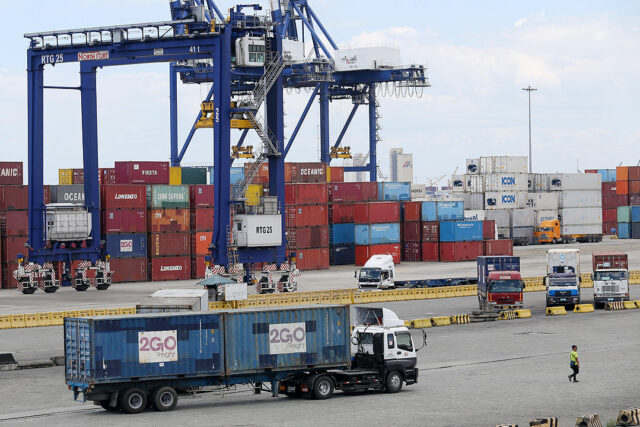
PHILIPPINE EXPORTS are showing signs of recovery, though downside risks remain because of the Chinese economy’s weak performance, Pantheon Macroeconomics said.
“The recovery in Philippine exports is consolidating, but risks remain to the downside in the short run,” it said in its Emerging Asia Monitor on Wednesday.
The Philippine Statistics Authority (PSA) reported that the trade deficit narrowed to $4.13 billion in August, the smallest trade gap in two months.
In the first eight months, the trade deficit narrowed to $36.31 billion from $41.86 billion a year earlier.
Exports rose 4.2% year on year to $6.7 billion in August, a turnaround from the revised 1.7% contraction a year earlier. The August reading was the strongest in nine months.
Pantheon Macroeconomics said that the “nascent recovery in Philippine exports is consolidating.”
“Admittedly, the risks are tilted to the downside in the short run, partly due to China exerting a persistent and material drag in recent months,” it said.
“Moreover, the Philippines’ new export orders sub-index in the manufacturing PMI fell below the 50-mark in September after a strong eight-month spell of growth,” it added.
The research house noted that exports to South Korea are also still “in the red,” which could mean that the signs of recovery could be “short-lived.”
Merchandise imports contracted 13.1% year on year to $10.83 billion in August. This was the highest level since the $10.92 billion total in May.
In the eight months to August, imports declined 9.6% to $84.12 billion.
“Import growth, meanwhile, also beat the consensus in August, as the downturn eased to minus 13.1% year over year, from minus 15.2% in July. But the details show that this improvement says little about a potential turnaround in weak domestic demand; commodity price effects were on full show, driving a near-40% seasonally adjusted monthly leap in imports of commodities and minerals,” Pantheon Macroeconomics said.
“This masked a third straight — and sizeable — drop in capital goods imports and fading upward momentum in consumer goods,” it added.
The government is projecting growth of 1% for exports and 2% for imports this year. — Luisa Maria Jacinta C. Jocson

MULTILATERAL development banks (MDBs) must expand their financing capacity for emerging and developing economies, which are facing challenges from the inflationary environment, Finance Secretary Benjamin E. Diokno said.
“Now, as rising interest rates and increasing costs of international borrowing are likely to further restrict government budgets and curtail priority investments, MDBs must make available better financing terms,” he said in a speech during the Annual Meetings of the World Bank (WB) and International Monetary Fund (IMF).
“The rapid increase in the level of the Secured Overnight Financing Rate (SOFR) poses significant risk burdens to the International Bank for Reconstruction and Development (IBRD) countries such as the Philippines,” he added.
Mr. Diokno also called development banks to ramp up support for climate change adaptation and mitigation. “Better concessionality in climate finance is a necessary step towards climate justice.”
“The response of multilateral development banks to the COVID-19 pandemic and post-pandemic recovery has stretched their lending capacity. This threatens their ability to respond to ongoing crises, including climate-related hazards, food insecurity, public health risks, and learning poverty,” he said.
Mr. Diokno called on the World Bank to “provide below-market rates” to middle income countries due to the lack of resources.
“In this regard, we look forward to further discussions with the Bank on the measures being taken under the Evolution Roadmap to improve Concessional Finance, including the Draft Principles for the Allocation of Concessionality,” he said.
“We appreciate innovative solutions such as the guarantee facilities being considered by MDBs including the World Bank, which will enhance their lending capacities. However, we remain cautious of the potential repercussions of the use of hybrid capital on the borrowing cost of member countries,” he added. — Luisa Maria Jacinta C. Jocson
