Home Blog Page 4191

Tarlac sugar mill to sell 200 hectares to Lima Land

LISTED sugar milling firm Central Azucarera de Tarlac, Inc. said on Wednesday that it had approved the sale of a 200-hectare property in Tarlac City owned by its subsidiary.

In a regulatory filing, the company said that its board of directors approved the sale by Luisita Land Corp. to Aboitiz-led Lima Land, Inc., without disclosing the price.

“The transaction requires the consent/approval of Central Azucarera de Tarlac which owns a controlling interest and more than two-thirds of the outstanding capital stock of Luisita Land,” the company said.

“[The company] is also the largest creditor of Luisita Land,” it added.

It said that the sale is still subject to certain closing conditions, which have yet to be fulfilled or satisfied.

Both parties are still discussing and finalizing some proposed transaction terms, the company added.

“A timely and appropriate disclosure will be made in the event that the closing conditions are satisfactorily fulfilled/satisfied, and definitive agreement/s are concluded,” the company said.

Central Azucarera de Tarlac’s main products are raw and refined sugar, with the mill and refinery process also producing molasses as a by-product.

It also has a 100% stake in Luisita Land, a domestic corporation engaged in developing, leasing, and selling real properties and other ancillary services.

Through Luisita Land, the company provides property management, water distribution, and wastewater treatment to locators of Luisita Industrial Park and residents of Las Haciendas de Luisita.

On Wednesday, shares in Central Azucarera de Tarlac rose by 2.42% or 22 centavos to close at P9.32 apiece. — Adrian H. Halili

Gateway gets meatier

GRILLED Barbecue Baby Back Ribs

Gateway Mall 2 in Araneta City is just about to get meatier

EARLIER this week, Wolfgang’s opened its second Wolfgang’s Steakhouse Grill concept in the country, after a first outing at City of Dreams. This new grill in Quezon City is geared towards the concert and sporting crowd at the Araneta Coliseum, so the bar and the menu will be a bit modified to accommodate that group.

Leina Bolinas, one of the managing partners of Wolfgang’s Steakhouse in the Philippines, said that in the grill concept, they’re serving more fish, poultry, and pork, as well as other steak cuts. That explains the presence of the skirt steak tacos at the tasting this week, as well as the Reuben Sandwich (corned beef and sauerkraut). Of course, Wolfgang’s isn’t Wolfgang’s without the steak, so aside from the Baby Back Ribs, we were treated to the USDA Prime Dry-Aged Porterhouse Steak, showing that unmistakable strong, beefy flavor achieved by aging.

Ms. Bolinas said that while there are Wolfgang’s Steakhouse Grills around the world, the one in the Philippines is unique as it has more items not related to steak. Ms. Bolinas said that they’re definitely opening Wolfgang’s in Boracay, and construction is about to begin. While these plans are not final yet, they’re planning to also build in Cebu and Davao.

Wolfgang’s Steakhouse was founded in 2004 by father and son duo Wolfgang and Peter ZwiAener. The senior Mr. Zwiener and Wolfgang’s namesake was the former head waiter at another famous New York steakhouse, Peter Luger. Wolfgang’s has over 30 locations worldwide, from the United States to Japan.

Asked why they chose to open in Quezon City, Ms. Bolinas said, “We’re going closer to where deals are made. Steak diplomacy.”

“Steak diplomacy” for her means that every time one closes a deal, or celebrates something, Filipinos tend to favor steak to mark the occasion. “We’re going closer to our customers,” she said, adding that the Wolfgang’s customers in the North might not be comfortable driving all the way to their branch in BGC or City of Dreams. One of those customers might include the chair of the Araneta Group (which owns the Gateway malls, along with other interests in the food industry), Jorge Araneta.

“We have full support from the Araneta team. Mr. Araneta, with the new, beautiful development of Gateway Mall 2, they were the ones who really pushed for it to be higher end,” said Ms. Bolinas. “I think it’s the wish of Mr. Araneta to have his own steakhouse here in the mall.”

Wolfgang’s Steakhouse Araneta City is open daily from 10 a.m. to 10 p.m. on non-show days and 10 a.m. to 11 p.m. on days when the coliseum has a show. — Joseph L. Garcia

SEC warns against three more unauthorized entities

THE Securities and Exchange Commission (SEC) warned the public against three entities, which it found to be soliciting investments without the proper registration.

In three separate advisories posted on its website, the SEC flagged Innov8wealth Global, Double R Aggregates, and Ayala Corp. Group, Inc. as they do not have the necessary licenses to solicit investments.

The corporate regulator said Innov8wealth Global is an entity supposedly engaged in the trading of cryptocurrency, color games, betting, and artificial intelligence-prediction bots. Investors are enticed to invest P100 to P500,000 with a promise to earn interest ranging from 10.88% to 28.56% per week depending on the investment.

Interested investors are told to register via the entity’s website while investments are to be deposited through electronic payment platforms.

In a separate advisory, the SEC said Double R Aggregates/Double R Trucking and Aggregates OPC are soliciting investments from the public via social media. The entity is allegedly involved in the quarrying business.

It reportedly promises a monthly profit ranging from 7.5% to 15% depending on the investment made by an individual.

“The investment opportunity being offered by Double R Aggregates/Double R Trucking and Aggregates OPC is a form of securities as the elements of investment contract are present in its investment offering,” the SEC said.

Meanwhile, the SEC said in a separate advisory that Ayala Corp. Group, Inc./Ayala Corp. Budgetarian Online Shop/Global Online Ayala Corp./Bellavita Ayala Corp./Ayala Corp. e-commerce are offering investments with a promise of high return.

The entities are offering part-time jobs for those placing orders online for a promise of receiving a commission, which could only be withdrawn upon payment of a supposed tax charge under a tasking and recharging scheme.

According to the SEC, the entities are not related to the publicly listed holding firm Ayala Corp.

The regulator said the tasking and recharging scheme shows an indication of a possible Ponzi scheme where money from new investors is used in paying fake profits to prior investors.

It said the scheme is designed to favor top recruiters and prior risk-takers, but detrimental to subsequent members in case of scarcity of new investors. — Revin Mikhael D. Ochave

Jollibee’s Tanmantiong is MAP Management Person of 2023

ERNESTO TANMANTIONG, the top official of Jollibee Foods Corp., has been named “Management Person of the Year 2023” by the Management Association of the Philippines (MAP).

He was chosen for “being able to accelerate Jollibee’s globalization and transform it into one of the world’s largest, fastest-growing restaurants,” according to Lilia B. de Lima, the award’s judging committee vice-chairperson.

The selection of Mr. Tanmantiong, who is the president and chief executive officer of Jollibee, was announced during MAP’s general membership meeting on Wednesday.

The businessman was commended for being able to lead Jollibee to book record-breaking system-wide sales and revenues despite just coming out of the pandemic.

He was also commended for his role in job creation and for hiring seniors and persons with disabilities in Jollibee establishments.

This year, MAP renamed the award to Management Person of the Year from Management Man of the Year.

Ms. De Lima said the award is given by MAP to individuals in business or government who have attained distinction in management and have made valuable contributions to the country.

During its almost six-decade history, the award was given only 47 times as the search for the MAP Management Person of the Year involves “a tedious process.”

According to Ms. de Lima, the award’s criteria include integrity, prestige and distinction in the business community; exceptional ability in performing management functions; and tangible contributions nationwide, among others.

She said MAP “has been at the forefront of promoting management excellence.”

“MAP has presented [this award] for almost six decades to recognize outstanding achievements of any individual in the private sector or in the government whether a MAP member or not who has exceptionally distinguished himself or herself in the practice of management,” she said. 

This year’s judging committee is composed of awardees in previous years, namely: Edgar O. Chua in 2013, Jose L. Cuisia, Jr. in 2007, Jesus P. Tambunting in 2003, Ramon R. del Rosario, Jr. in 2010, Cesar E.A. Virata in 1981, and Jesus P. Estanislao in 2009. — Justine Irish D. Tabile

Dining In/Out (10/12/23)


Coca-Cola PHL hosts their biggest salu-salo

COCA-COLA Philippines gathered over 3,000 Filipinos for a salu-salo or party, the #CokeKAINation, which transformed the Mall of Asia open grounds into a huge picnic area. Coca-Cola Philippines placed hundreds of picnic tables filled with classic and new Pinoy favorite meals and of course, glasses and glasses of the ice-cold Coca-Cola for people to enjoy. The partygoers were entertained by singers Darren Espanto, Sam Concepcion, and P-Pop girl group BINI. The event is also both a milestone and celebration of 111 years of Coca-Cola. The #CokeKAINation is part of the “Coke is Cooking” meals experience platform being rolled out globally by the beverage brand. Aiming to celebrate the rich food culture in every market and enhance people’s dining experience in different parts of the world, the global meals platform — called in the Philippines as #CokeKAINation — leverages the different passion points of consumers which includes food, music, and entertainment.


Brownies Unlimited offers anniversary promo

Brownies Unlimited marks its 35th anniversary this month by offering a box of 10 or 12 brownies for P35 off from Oct. 16 to 22.


Taco Tuesday every day in October at Taco Bell

THIS MONTH, it’s “Taco Tuesday, Every Day” at Taco Bell. Until the end of the month, Taco Bell is giving a free taco with every order of its Tex-Mex-inspired dishes. Order a single-receipt purchase worth at least P399 and get one Crunchy Taco for free. This applies to both a la carte and combo orders. This offer is available for dine-in, take-out, and delivery until Oct. 31.


Estancia opens new restaurants

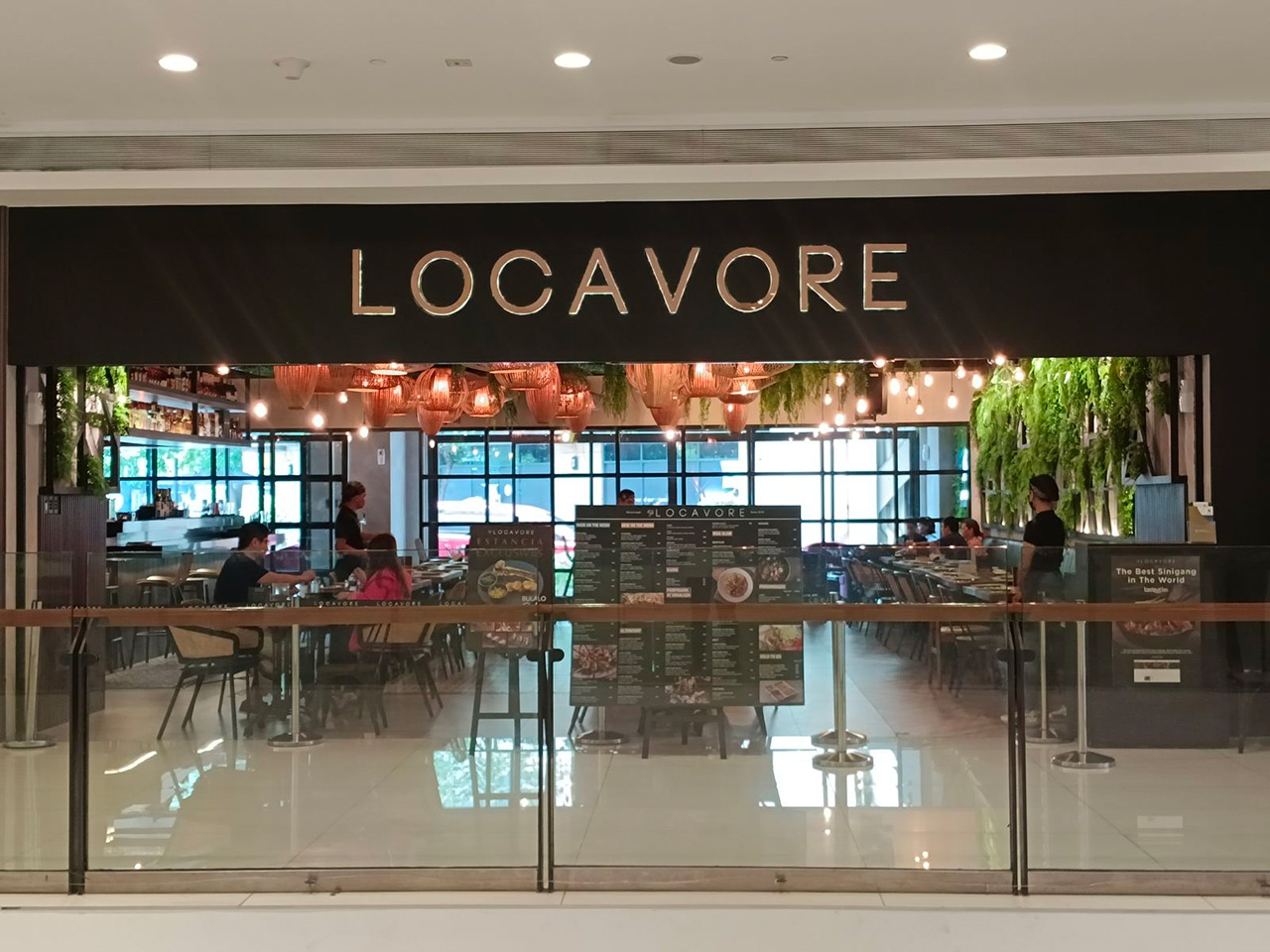
ESTANCIA opened a slew of new dining outlets in May and June of this year including Locavore, ALC Bistro Paper Moon, Modern Shang, and Yalo.  Locavore Kitchen & Drinks has made a name for itself for locally grown, locally crafted, and locally produced food. Locavore serves elevated Pinoy comfort food, like their Sizzling Sinigang and Kimchinigang. The restaurant also serves dishes exclusive to Estancia, such as savory Inasalitos, a Yakitori Platter, and Bulalo Pintxos that are great for sharing over drinks, and crunchy Bagnet Chips. Locavore is located at GF East Wing. Meanwhile, ALC Bistro offers home-style meals such as its Signature Lasagna and Garden Fresh Pizza, with a side of coffee and dessert plates, like its Blueberry Cheesecake and sugar-free Frozen Brazo de Mercedes. It also hosts live music performances and open mic nights. Located at GF East Wing. Paper Moon Café is known for its mille crêpe, a French cake made of many crêpe layers. Cake flavors include salted caramel, ube, mango, mango chocolate, tiramisu, blueberry, strawberry pistachio, chocolate, matcha, red velvet and rainbow. Paper Moon also offers assorted tarts packaged in a box of three. Complementing the mille crêpes are a selection of coffee and pasta, salad, and rice bowls topped with caramelized miso salmon and chicken teriyaki among others. Paper Moon Café is located at GL East Wing. Modern Shanghai is founded on Shanghai’s most original, traditional home-cooked recipes, serving heritage cuisine in authentic but modern fashion. The restaurant’s signature bundles include the six-course Emperor’s Feast that comes with egg rice, string beans, sweet and sour fish fillet, xiao long bao, and water spinach with minced pork. One can also order the seafood hotpot, Shanghai chicken and mushroom, sweet and sour fish, beef sirloin, kung pao or orange chicken, and braised fish in black sauce. Located at GL East Wing. From the same company that brought you Razon’s of Guagua, Yalo serves a new set of cold comfort with its icy treats. They have soft serve ice cream with toppings, Rush On Halo-Halo that can be sipped through a straw, and Screamers or slushies in flavors like Benguet, Luzon, and Palawan. Yalo is located at LG East Wing.


The Bistro Group expands further

THE BISTRO Group pursues its expansion program with the opening of new stores in various locations in the metropolis. Opening this October are Texas Roadhouse branches at Venice Grand Canal, Mckinley Hill, Taguig; Glorietta in Makati; Circuit Mall, Makati; and SM BF. Meanwhile, Italianni’s will launch branches at Circuit Mall and SM BF this October. Its Chinese restaurant concept, Modern Shang, just opened a branch at Eastwood Mall. More branches will be introduced this year at SM BF, Ayala North Exchange, Vista Mall Dasmariñas, and Malolos. Meanwhile El Pollo Loco branches will open soon at Trinoma Mall this October and another at The Shops Ayala Triangle Gardens in December while The Bistro Group’s Spanish restaurant, Tomatito, will open at Estancia Mall side by side with Buffalo Wild Wings this November. Randy’s donuts will roll out in more locations. One recently opened at UP Town Center bringing the total number of branches in the country to 12. It has also secured two new locations at NAIA Terminal 2 and Arcovia in Pasig City that are set to open soon. The Bistro Group’s Japanese concept, Watami, will launch new stores at Vista Mall Dasmarinas and Malolos. For more information, follow @thebistrogroup.


M Bakery focuses on New York cheesecakes, classic pies

M BAKERY, best known for its banana pudding and cupcakes, turns the spotlight on their cheesecakes and hand-baked pies. It adds a Filipino twist to its popular Key Lime Cheesecake by using calamansi instead of the traditional key lime. Then there is the Caramel Pecan Cheesecake, a vanilla bean cheesecake atop a graham cracker crust, draped with homemade caramel sauce and toasted pecans. M Bakery takes Red Velvet Cake but makes it cheesecake. It is a rich, chocolatey, and subtly tart cheesecake resting on a chocolate cookie crumb crust, topped with a dollop of whipped cream and chocolate shavings. The three cheesecakes are available in three sizes: Individual for ₱295, six-inches for ₱1,350, and nine-inches for ₱2,800. Its traditional Blueberry Cheesecake sees its vanilla bean-infused cheesecake topped with fresh (not canned) blueberries, finished with a graham cracker crust. It’s available in three sizes: Individual (₱345), six-inches (₱1,350), and nine-inches (₱3,250). Then there is the Lotus Biscoff Cheesecake, made with Lotus Speculoos spread on a Lotus Biscoff cookie crumb crust, then finished off with yet another layer of Lotus spread and sprinkles of Lotus Biscoff crumbs. Available in three sizes: Individual (₱295), six-inches (₱1,775), and nine-inches (₱3,725). Then there are the pies. M Bakery’s Apple Crumb Pie is a single-crust pie filled with golden apples and topped with a crumbly, butter topping. It also has its iconic banana pudding remixed into Banana Cream Pie: filled with fresh bananas and vanilla pudding atop a vanilla wafer crust and piled with whipped cream. Both are available in two sizes: Mini Pie (₱450) and nine-inch pie (₱1,350). M Bakery’s Pecan Pie is loaded with pecans and enveloped in a brown sugar syrup mixture. Available in two sizes: Mini Pie (₱450) and nine-inch pie (₱1,950). The Blueberry Jamboree features a pecan shortbread crust layered with whipped cream and cream cheese filling and finished with a crown of juicy fresh blueberries (not canned blueberries). It is available in two sizes: Mini Pie (₱595) and nine-inch pie (₱2,300). These desserts are available all year long at the flagship store at Lower Ground of One Bonifacio High Street Mall, Bonifacio Global City, or call 847-9829 or 0917-633-1718 to place advance orders. M Bakery’s other stores are in Power Plant Mall in Rockwell, Makati City; SM Megamall; and Mitsukoshi BGC.


Kaminung Bakery giving away 100,000 free pan de sal

QUEZON CITY’s Kamuning Bakery marks the annual World Pandesal Day celebration on Oct. 16, starting at 10 a.m., by giving away for free 100,000 pan de sal rolls, along with cheese, sardines, hams, juices and other food. The 84-year-old Kamuning Bakery Cafe is located at Judge Jimenez St. corner K-1st St., Barangay Kamuning, Quezon City. Oct. 16 is also the United Nations’ “World Food Day” to highlight global problems of hunger and food security. The public is also invited on the eve of World Pandesal Day, Oct. 15, when a free medical and dental mission will be held at the Kamuning Bakery Cafe from 8 a.m. to noon. This free medical and dental mission is undertaken with volunteer doctors, dentists, nurses and staff of the Federation of Filipino Chinese Chambers of Commerce and Industry, Inc. and the Chinese General Hospital. The goals of World Pandesal Day are to honor the humble pan de sal as the national bread of the Philippines and to highlight the need to solve the age-old problems of hunger and poverty.


Iconic food stores at Palenque at New Gateway Mall 2

THE ARANETA GROUP signed a contract with some of the Philippines’ most sought-after chefs and restaurateurs who will showcase their local specialties at Palenque, a new food destination that will celebrate the diversity of Pinoy cuisine at the New Gateway Mall 2. Present during the contract signing on Oct. 4 were chef Nico Bailon of Bale Datung, Miguel Moreno of Palm Grill, Albert Uy of Chicken Fandian, chef Myke “Tatung” Sarthou of Tindeli, and Araneta City VP for Leasing Lorna Fabian. Palenque is a Filipino theme-food arena with stalls that will feature iconic regional dishes courtesy of well-known restaurants across the country. Seasonal food festivities from different parts of the country will be promoted in Palenque through bazaars and fairs. Several stores will also be dedicated to regional specialties, produce, and handicrafts. Palenque will be opening soon at the Upper Ground B level of the New Gateway Mall 2 in Cubao, Quezon City.

Waterfront Manila’s initial reconstruction set for 2024

THE first phase reconstruction of the Waterfront Manila Hotel and Casino complex is projected to be done by the middle of next year, according to the property’s listed operator Acesite (Phils.) Hotel Corp. 

In a regulatory filing on Wednesday, Acesite said the tentative completion date for the initial rebuilding process is by May 2024, about six years after the complex was damaged by fire.

Acesite also disclosed that the second and third phases of the reconstruction plan are expected to be done by January 2025 and May 2025, respectively. 

Waterfront Manila, previously known as Manila Pavilion, is in UN Ave., Manila City.

In March 2018, a fire broke out at the hotel-casino complex, leaving five people dead and 20 others injured. 

Acesite is engaged in the hotel operations business. In 2004, Waterfront Philippines Inc. established its ownership and majority control over Acesite.

Waterfront Manila is part of the Waterfront chain of hotel facilities, which has a presence in Cebu City, Mactan Island, and Davao City. 

On Wednesday, Acesite shares at the local bourse increased by five centavos or 2.78% to P1.85 each. — Revin Mikhael D. Ochave

Teaching more people to fish

MAX LAROCHELLE-UNSPLASH

Not everybody can afford to go to college or university. Many cannot even go to high school. At the very least, the government should help equip people with skills good enough to land them a job even if they lack any formal education. There should be more programs for giving people employable skills to help them become productive.

I went to a technical high school. During our time, we finished high school with two diplomas: one for academic, and another for technical. The technical “diploma” was the equivalent of a TESDA (Technical Education and Skills Development Authority) certificate now, and would have allowed me or any of my fellow graduates to seek employment as a “technician” or a tradesman right after high school.

For those who cannot afford school, some form of sanctioned apprenticeship program should be made available, like those in the UK. Those aged 16 and above can get paid jobs while learning a trade or skill. They get on-the-job training and experience while learning. Meantime, they dedicate at least 20% of their working hours completing classroom-based learning with a college, university, or training provider to earn a nationally recognized qualification.

In short, rather than having to first complete a TESDA certification prior to working, they can complete training and gain experience while on the job, then secure certification when they reach a certain level of competence. This will allow particularly disadvantaged youth to start working earlier, and start contributing to the family income even while attending trade school or completing a certificate program.

More people need a variety of employable skills, rather than a university degree, to get ahead in life. There are many “unschooled” entrepreneurs particularly in the service industry — providing services such as welding and machining, air-conditioning, automotive repair, computer repair, electronics repair, electrical rewinding, etc.

On the other hand, there are many university or college graduates without jobs because they lack “skills” for jobs that are available. They are unable to find “office” work, getting left behind by their peers now working abroad as “skilled workers” and getting paid handsomely for their training, competence, and experience. IT is another industry that requires more skills and experience rather than formal education.

At the same time, a skilled worker specializing in a particular trade should not be restricted to just manual work. They can also develop design and art skills, and become artisans or craftspersons that “create” rather than just “build.” An example is sculpting, which in a sense, is mostly “manual” work. But design and artistic sense turn the “work” into a “work of art.”

However, it appears that to date, many skills training programs are still catering mainly to menfolk, as they emphasize more the “manual labor” aspect of work rather than competency in a particular skill. For instance, there seems to be a bias in favor of training and employing a male welder or a male operator of heavy equipment, when such work can be just as competently handled by women — or members of the LGBTQ community, for that matter.

Anyone can be a carpenter, mason, plumber, electrician, welder, or machine operator. Young, old, men, women, or any of the LGBTQ. And forget white collar vs blue collar. One is not better than the other. It is just a difference in skills sets. What matters is that people work, get paid fairly, and become productive members of their community.

Also, skills, more than formal education or a degree, allow the marginalized and disadvantaged sectors to access more opportunities. Older women, for instance, can still be equipped with skills that will allow them to do output-based work or offer services, or even run small businesses. It is a matter of encouraging more programs that do precisely that: identify the poor, marginalized, and most disadvantaged sectors and equipping them with “productive” skills.

Not too long, such a program just ended, but not without first benefitting over 58,000 Filipinos — including youth, women, indigenous peoples, and persons with disabilities. The program was the Skills for Prosperity Programme in the Philippines run by the International Labour Organization (ILO) and funded by the United Kingdom government from 2019 to 2023.

The program was said to have helped improve equity, quality, and relevance in the Philippines’ technical and vocational education and training (TVET) and skills systems. In its four-year run, the program was estimated to have directly benefited over 7,000 people and indirectly supported over 51,000 individuals, majority of them women.

A statement from ILO said that by collaborating with government agencies, industries, social partners, TVET institutions, and workers, the Skills for Prosperity Programme “successfully elevated their caliber, rendering the country’s TVET and skills systems more inclusive, relevant, and future-ready.”

The skills program also conducted pilot initiatives aimed at enhancing the skills of trainers, students, and workers in provinces of the Visayas. “If adopted on a larger scale, this could lead to a trickle-down effect, positively impacting the lives of more Filipinos, particularly those from vulnerable demographics,” ILO said.

Khalid Hassan, Director of the ILO Country Office for the Philippines, added, “We need to ensure that national TVET and skills systems are inclusive and responsive to industry needs. We need to equip workers with the right skills set so they can enjoy better job prospects.”

Beneficiaries of the program include abaca farmers and processors from Aklan, and root crop farmers from Iloilo. In Samar, women tikog and buri weavers and dyers were trained, while in Cebu, Lapu-Lapu, and Mandaue, construction workers were mentored by the Cebu Contractors’ Association. The skills program was made possible by funding from the UK government, which went a step further by also supporting a new ASEAN program for women and girls’ education.

Given the UK-ILO skills development program’s success, perhaps it can be studied and replicated to also benefit regions outside the Visayas. And, other than the UK, maybe other governments from Europe, the Americas, and Asia can perhaps be called on to lend a helping hand in funding more skills-training programs. After all, many skilled Filipinos workers end up doing work in their countries as well.

Local government also have a role to play in this, by identifying areas and people in need of skills training opportunities, and by offering to make maybe small but meaningful investments in improving the lot of these people. LGUs can then work with NGOs and groups like the ILO in identifying suitable development partners.

Having witnessed how the UK-ILO program benefitted over 58,000 people, perhaps the government can reach out to more foreign development partners to support a wider and far-reaching effort to upgrade the skills of Filipinos. As they say, if you give people fish, then you feed them for the day. But if you teach them how to fish, then you feed them for a lifetime.


Marvin Tort is a former managing editor of BusinessWorld, and a former chairman of the Philippine Press Council

matort@yahoo.com

What is the OMAD diet? Is one meal a day actually good for weight loss? And is it safe?

PIXABAY

WHAT do British Prime Minister Rishi Sunak and singer Bruce Springsteen have in common?

They’re among an ever-growing group of public figures touting the benefits of eating just one meal a day.

As a result, the one meal a day (OMAD) diet is the latest attention-grabbing weight loss trend. Advocates claim it leads to fast, long-term weight loss success and better health, including delaying the ageing process.

Like most weight-loss programs, the OMAD diet makes big and bold promises. Here’s what you need to know about eating one meal a day and what it means for weight loss.

THE OMAD DIET EXPLAINED
Essentially, the OMAD diet is a type of intermittent fasting, where you fast for 23 hours and consume all your daily calories in one meal eaten within one hour.

The OMAD diet rules are presented as simple and easy to follow:

You can eat whatever you want, provided it fits on a standard dinner plate, with no calorie restrictions or nutritional guidelines to follow.

You can drink calorie-free drinks throughout the day (water, black tea, and coffee).

You must follow a consistent meal schedule, eating your one meal around the same time each day.

Along with creating a calorie deficit, resulting in weight loss, advocates believe the OMAD diet’s extended fasting period leads to physiological changes in the body that promote better health, including boosting your metabolism by triggering a process called ketosis, where your body burns stored fat for energy instead of glucose.

WHAT DOES THE EVIDENCE SAY?
Unfortunately, research into the OMAD diet is limited. Most studies have examined its impact on animals, and the primary study with humans involved 11 lean, young people following the OMAD diet for a mere 11 days.

Claims about the OMAD diet typically rely on research into intermittent fasting, rather than on the OMAD diet itself. There is evidence backing the efficacy of intermittent fasting to achieve weight loss. However, most studies have focused on short-term results only, typically considering the results achieved across 12 weeks or less.

One longer-term study from 2022 randomly assigned 139 patients with obesity to either a calorie-restricted diet with time-restricted eating between 8 a.m. and 4 p.m. daily, or to a diet with daily calorie restriction alone for 12 months.

After 12 months, both groups had lost around the same weight and experienced similar changes in body fat, blood sugar, cholesterol, and blood pressure. This indicates long-term weight loss achieved with intermittent fasting is not superior and on a par with that achieved by traditional dieting approaches (daily calorie restriction).

SO WHAT ARE THE PROBLEMS WITH THE OMAD DIET?
1. It can cause nutritional deficiencies and health issues.

The OMAD diet’s lack of nutritional guidance on what to eat for that one meal a day raises many red flags.

The meals we eat every day should include a source of protein balanced with wholegrain carbs, vegetables, fruits, protein and good fats to support optimum health, disease prevention and weight management.

Not eating a balanced diet will result in nutritional deficiencies that can result in poor immune function, fatigue, and a decrease in bone density, leading to osteoporosis.

Fasting for 23 hours a day is also likely to lead to extreme feelings of hunger and uncontrollable cravings, which may mean you consistently eat foods that are not good for you when it’s time to eat.

2. It’s unlikely to be sustainable.

You might be able to stick with the OMAD diet initially, but it will wear thin over time.

Extreme diets — especially ones prescribing extended periods of fasting — aren’t enjoyable, leading to feelings of deprivation and social isolation during mealtimes. It’s hard enough to refuse a piece of office birthday cake at the best of times, imagine how this would feel when you haven’t eaten for 23 hours!

Restrictive eating can also lead to an unhealthy relationship with food, making it even harder to achieve and maintain a healthy weight.

3. Quick fixes don’t work.

Like other popular intermittent fasting methods, the OMAD diet appeals because it’s easy to digest, and the results appear fast.

But the OMAD diet is just another fancy way of cutting calories to achieve a quick drop on the scales.

As your weight falls, things will quickly go downhill when your body activates its defense mechanisms to defend your weight loss. In fact, it will regain weight — a response that stems from our hunter-gatherer ancestors’ need to survive periods of deprivation when food was scarce.

THE BOTTOM LINE
Despite the hype, the OMAD diet is unsustainable, and it doesn’t result in better weight-loss outcomes than its predecessors. Our old habits creep back in and we find ourselves fighting a cascade of physiological changes to ensure we regain the weight we lost.

Successfully losing weight long-term comes down to:

losing weight in small manageable chunks you can sustain, specifically periods of weight loss, followed by periods of weight maintenance, and so on, until you achieve your goal weight making gradual changes to your lifestyle to ensure you form habits that last a lifetime.

Dr. Nick Fuller is the Charles Perkins Centre Research Program Leader at the University of Sydney. He has received external funding for projects relating to the treatment of overweight and obesity. He is the author and founder of the Interval Weight Loss program.

Alternergy shareholders approve preferred shares to raise capital

ALTERNERGY HOLDINGS Corp. has obtained shareholder approval for the reclassification of its preferred shares in a move aimed at raising capital for various projects.

In a stock market disclosure on Wednesday, the listed energy company said the reclassification of about 1.48 billion preferred shares with a par value of P0.10 had been approved during a special stockholders’ meeting on Tuesday.

The shares will be subdivided into two classifications, namely: “Perpetual Preferred Shares 1” amounting to about 1.18 billion; and nonvoting “Perpetual Preferred Shares 2” for the remaining 300 million.

The 300 million shares are broken down into Series A, B, and C of 100 million perpetual preferred shares per series.

“The reclassification of [Alternergy’s] perpetual preferred shares is in anticipation of our next capital raising exercise to fund our renewable projects,” Alternergy President Gerry P. Magbanua said.

“Our Green Perpetual Preferred Shares Program will allow Alternergy to access a wider base of institutional investors to broaden our sources of capital,” he added.

At the same meeting, an increase in the number of board seats — to nine directors from seven previously — was also approved

“The increase in the number of independent directors will broaden the diversity and breadth of expertise of our Board,” Alternergy Chairman Vicente S. Pérez, Jr. said.

“Alternergy espouses a culture of diversity in terms of experience, expertise, culture, age, gender and orientation. We believe diversity creates greater value to our company’s growth,” he added.

Last week, the company announced that it had tapped three investment banks to lead in raising the P12-billion project financing for its two wind power projects.

The two projects for debt financing are Alternergy’s 55-megawatt (MW) Alabat Island wind power project in Quezon province and its 86-MW Tanay wind power project in Rizal province, which are expected to be completed by 2025.

At the local bourse on Monday, shares of the company went up by one centavo or 1.2% to P0.84 apiece. — Sheldeen Joy Talavera

Artificial intelligence, data analytics to boost financial firms’ cybersecurity

STOCK PHOTO | Image by Gerd Altmann from Pixabay

INTEGRATING artificial intelligence (AI) and data analytics in banks’ cybersecurity measures could help them better detect and combat potential threats.

“These technologies power vital cybersecurity capabilities, such as attack surface risk management (ASRM) and extended detection and response (XDR),” Trend Micro Philippines Country Manager Ian Felipe said in an e-mail to BusinessWorld.

“Real-time threat intelligence would make fraudulent and suspicious activities easier to detect while allowing organizations to respond to threats immediately, all from one consolidated platform. This would empower BFSI organizations to proactively combat cybercrime and contribute towards enhancing the overall safety of the sector,” Mr. Felipe said.

ASRM provides continuous attack surface discovery and real-time risk assessment, while XDR enables endpoint controls and organization-wide data collection and correlation across the whole information technology infrastructure, he added.   

“By combining ASRM and XDR in a unified cybersecurity platform like Trend Vision One, BFSI (banking, financial services and insurance) organizations can gain increased visibility and detailed insights into potential threats,” Mr. Felipe said.

Trend Vision One is Trend Micro Philippines’ real-time threat intelligence platform that BFSI organizations can use to mitigate risks, protect assets, and enhance security to help address some of the top risks these firms face.

These risks include negligent insiders, shortage of qualified personnel and organizational misalignment and complexity according to Trend Micro’s Cyber Risk Index study for the second half of 2022.

The study showed that 80% of respondents said they are “somewhat to very likely”to experience a breach in customer data (82%), intellectual property (82%), or a successful cyberattack (87%) in the next 12 months.

Among the cyber threats expected by the respondents are ransomware, business e-mail compromise, botnets, watering hole attacks, and denial of service.

Addressing the Philippines’ ongoing cybersecurity talent shortage could also help improve cybersecurity in the country, he added.

“Currently, the Philippines only has around 200 cybersecurity experts in the country and this number is insufficient to address even just the needs of the BFSI sector alone. Therefore, more needs to be done to upskill talent — both fresh graduates and mid-career professionals. Encourage them to take on the mantle of cybersecurity personnel,” Mr. Felipe said. — A.M.C. Sy

Yields on central bank’s term deposits inch lower

BW FILE PHOTO

YIELDS on the Bangko Sentral ng Pilipinas’ (BSP) term deposits dropped on Wednesday following less hawkish signals from central banks.

Demand for the BSP’s term deposit facility (TDF) amounted to P375.538 billion on Wednesday, below the P400-billion offer as well as the P443.4 billion in tenders seen a week earlier for a P380-billion offering.

Broken down, the seven-day term deposits fetched bids amounting to P218.879 billion, short of the P220 billion auctioned off by the BSP. It was also lower than the P241.415 billion in tenders logged the previous week for a P210-billion offer.

Accepted rates for the tenor ranged from 6.4% to 6.465%, a tad narrower than the 6.4% to 6.469% band logged a week ago. This caused the average rate of the one-week deposits to slip by 0.7 basis point (bp) to 6.4312% from 6.4382% previously.

Meanwhile, demand for the two-week deposits amounted to P156.659 billion, below the P180-billion offer and the P201.985 billion seen in the previous auction.

Banks asked for yields from 6.4% to 6.478%, a tad higher than the 6.4% to 6.475% range seen last week. This caused the average rate of the paper to dip by 0.85 bp to 6.4458% from the 6.4543% quoted on Oct. 4.

The BSP has not auctioned off 28-day term deposits for three years to give way to its weekly offerings of securities with the same tenor.

The term deposits and the 28-day bills are used by the central bank to mop up excess liquidity in the financial system and to better guide market rates.

“The TDF auction yields were marginally lower week on week, partly due to reduced hawkish signals from the BSP and monetary officials recently,” Rizal Commercial Banking Corp. Chief Economist Michael L. Ricafort said in a Viber message.

Mr. Ricafort said some officials from the US Federal Reserve have signaled a possible pause in monetary tightening, while the BSP chief said the Monetary Board may fire off a 25-bp rate hike in their November meeting, a tad less hawkish than his earlier hints about an off-cycle increase being on the table.

BSP Governor Eli M. Remolona, Jr. on Wednesday said the Monetary Board is open to hike borrowing costs by 25 bps on their Nov. 16 review following the release of data showing faster-than-expected September inflation.

Headline inflation accelerated for a second straight month to 6.1% in September from 5.3% in August. This brought the nine-month inflation average to 6.6%, still higher than the BSP’s 5.8% forecast and 2-4% target.

The Monetary Board has kept the benchmark interest rate at 6.25% for four straight meetings after it hiked borrowing costs by 425 bps from May 2022 to March 2023 to help tame inflation.

“The Israel-Hamas war led to some fund shifts to the safest assets such as US or local government bonds, as is the tendency whenever there are geopolitical uncertainties or risks,” Mr. Ricafort said. — K.B. Ta-asan

More bloodshed will never resolve the Israel-Palestine conflict

THERE is no justification for violence against civilians — not by militants and not by governments. The surprise attack by Hamas, as its fighters surged across the border with Gaza and into Israelis’ homes and neighborhoods, taking hostages and leaving more than 1,000 dead, has shaken the nation to its core, and shocked the world.

On the other side of that border fence? That’s where families are trapped in a tiny coastal enclave by a land, sea, and air blockade enforced by Israel and Egypt since 2007. They are now experiencing the terrifying but familiar thunder of thousands of airstrikes from the powerful Israeli military. At least 750 Palestinians have also died since Tel Aviv began its retaliation. So why is the world not as shocked by their plight?

There are at least two million people in Gaza — most of them civilians — yet the West risks seeing only Hamas. Israel must of course defend its citizens and borders. But as depraved and savage as Hamas’ attacks have been, the response must not be to further devastate innocent Palestinians. One set of war crimes does not justify committing another against an already long-suffering people.

In Gaza’s thin strip of land you will find doctors and nurses, physiotherapists and cancer specialists. Academics and their students. Artists, archaeologists, poets and journalists, with no end of material to fuel them, and schoolteachers whose classrooms have been struck multiple times with missiles launched from Israeli warplanes and drones, their young pupils living with unimaginable intergenerational trauma. Those born since 2008 are now living through their fourth all-out war.

Israeli Defense Minister Yoav Gallant ordered a “complete siege” on Gaza, saying authorities would cut electricity and prevent the entry of food and fuel. “We are fighting human animals and we are acting accordingly,” Gallant said. When you block these essentials, hospitals cannot operate, an already poorly nourished population is weakened, and many people die. What Gallant is ordering amounts to the war crime of collective punishment.

For their part, Hamas militants have followed suit — threatening to kill non-combatant hostages if Israel keeps bombing civilian areas in Gaza without warning. Prime Minister Benjamin Netanyahu’s response: “What we will do to our enemies in the coming days will reverberate with them for generations.” I have covered two wars in Gaza — 2012 and 2014 — and Netanyahu’s words can mean only one thing: The use of extreme military force in densely populated areas to target militants, as if the inevitable deaths of thousands of civilians is acceptable collateral damage. It is not. There is no safe place to evacuate to, despite what the Israeli military tells Gazans. The bombs are falling everywhere.

Even before this latest outbreak of violence more than 200 Palestinians and nearly 30 Israelis have been killed so far this year. As the UN Middle East envoy Tor Wennesland told the Security Council on Aug. 21, that makes 2023 the deadliest year since 2005. “The lack of progress towards a political horizon that addresses the core issues driving the conflict has left a dangerous and volatile vacuum, filled by extremists on both sides.” Given what unfolded over the last few days, Israel and its allies would have done well to heed his warning.

It is not just Gaza. Israel has maintained a military occupation of the West Bank, where some three million Palestinians live, since 1967 — an act that is viewed as illegal under international law. In July alone, the Israeli Defense Forces launched a sustained attack on the Jenin refugee camp, killing at least 12 Palestinians and wounding 100 more. That assault may constitute a war crime, according to UN experts, including Francesca Albanese, special rapporteur on human rights in the Palestinian Territory.

So often, these outbreaks of violence between Israel and militants in the West Bank and Gaza are written about as if they came out of nowhere. All evidence points to the contrary. Since 2021, three respected human rights groups — Human Rights Watch, the Israeli-run B’Tselem, and Amnesty International — have described Israel’s actions as meeting the legal test of apartheid: the widely recognized system of institutionalized racial segregation enforced in South Africa from 1948 to the early 1990s. Each of their reports lays out in deeply researched detail Israel’s system of oppression and domination over Palestinians, including territorial fragmentation, segregation and control, dispossession of land and property and denial of economic and social rights.

Israel has rejected all these claims. Its foreign ministry released a response on Jan. 31 last year to the Amnesty report, calling it antisemitic and saying it “denies the state of Israel’s right to exist.”

Yet anyone who has traveled on “sterile roads” in the West Bank, walked down Al-Shudada Street in Hebron where Israeli settlers can drive without restrictions and Palestinian residents can only enter on foot to access their homes, or watched Palestinians forced to line up for hours in narrow walkways to pass through Israel’s military checkpoints, knows what racial segregation looks like.

As do the Palestinians of Gaza, hemmed into what has been called the world’s largest open-air prison — 41 kilometers long and between six to 12 kilometers wide — and able to access medical care or travel for work or academic opportunities only through a cruel and arbitrary permit system.

There is only one way to end this violence, and it is not with more bloodshed. Indeed, the more severe Israel’s military response, the more it will stoke the fires of vengeance, retard hopes of a rapprochement between Israel and its neighbors, and turn global public opinion against it — all goals that Hamas would applaud. Instead, Israel’s allies and enablers — starting with the US — need to convince Netanyahu to end the military occupation and enter negotiations for a lasting peace that gives Palestinians a real homeland and Israel a secure future. Anything else is just history repeating. And failing.


BLOOMBERG OPINION

ADVERTISEMENT
ADVERTISEMENT