Home Blog Page 4186

DoE urges gas users to plan long-term for other fuels amid supply uncertainty

The ISH floating storage unit berths at the AG&P’s Philippines LNG terminal in Batangas. — COMPANY HANDOUT

THE Department of Energy (DoE) said gas users need to be more efficient and ready to shift to other types of fuel amid possible disruptions to the natural gas supply.

“If there is an issue with LNG (liquefied natural gas), there should be other fuels that will enter so that we can continue. But those are in the long term,” Energy Undersecretary Felix William B. Fuentebella told reporters on the sidelines of an energy workshop on Thursday.

Mr. Fuentebella was responding to a question on the delays to completing a regasification facility. Manila Electric Co. (Meralco) also said on Wednesday the restricted gas supply from Malampaya is forcing the industry to seek alternatives.

The Malampaya gas field is the country’s only indigenous commercial source of natural gas and is a critical source of gas for the power industry. However, it is expected to be commercially depleted by 2027.

“We have to be more efficient and dapat nakatutok talaga tayo (and keep an eye on things)” with regard to the flow of gas, Mr. Fuentebella said. — Sheldeen Joy Talavera

High tobacco taxes encourage smuggling, economist says

PHILIPPINE STAR/ MIGUEL DE GUZMAN

THE GOVERNMENT should not impose further taxes on the tobacco industry focusing on cracking down on smuggling, an economist said.

“Our main enemy is the smugglers. Higher taxes contribute to higher prices; that’s why illicit traders are encouraged to sell more cigarettes to those in the lower socioeconomic classes. We cannot impose new taxes on the cigarette industry because it only hurts the industry itself as well as consumers,” Alyssamae A. Nuñez, University of Asia and the Pacific economics instructor, said during a forum in Makati City on Thursday.

“High cigarette prices encourage illicit trade. The main enemy we have to combat are the smugglers,” she added.

Foregone revenue due to the illicit trade in tobacco was estimated at P26 billion in 2022.

“There should be more action from the authorities. The government cannot afford to impose new taxes on an industry facing illicit trade,” she said.

Ms. Nuñez said that while these taxes help decrease smoking and increase revenue, the government should ensure an even playing field for the tobacco industry.

“Without effective enforcement in eliminating illicit cigarettes, all efforts in ensuring a level playing field, lowering smoking prevalence and raising revenue all go down the drain,” she said.

Between 2018 and 2022, the illicit cigarette trade is estimated to have reduced gross domestic product (GDP) by an average of 0.39%; lowered average household income by 0.63%; and slashed employment by 4.9%.

“(This) affected employment more than GDP and income. This suggests that illicit trade severely affects the cigarette industry and interrelated industries (from) creating more productive jobs,” Ms. Nuñez added. — Luisa Maria Jacinta C. Jocson

Corn, sugar could be better investment after rice gets most funding — think tank

REUTERS

CONGRESS should allocate more funding to crops like corn and sugar, a policy think tank attached to the House of Representatives said.

“Since rice is the main staple in the Philippines, the resource allocation to the National Rice Program theoretically aligns with the objective of preserving food security. However, the rice-centric budget could be detrimental to the other programs — it represents an opportunity cost,” the Congressional Policy and Budget Research Department (CPBRD) said in a budget brief.

It noted higher productivity in crops like corn, onion and sugarcane in 2022 despite the outsized budget for rice.

“Corn and some high-value crops seem to be more efficient than rice — the value of production grows, despite being given a fraction of the resources allocated to rice,” it said.

The gross value added from palay was only 3.60% in 2022, compared to the 21.6% gross value added for corn, 23% for onion, and 39% for sugarcane.

The government’s National Rice Program has a budget of P30.9 billion for next year, with its Rice Competitiveness Enhancement Fund receiving a separate allocation of P10 billion.

On the other hand, only P5.28 billion is earmarked for the National Corn Program. The National High Value Crops Development Program will receive P1.94 billion from the Agriculture department.

The think tank also called for an increase in funding for agricultural machinery and infrastructure, which would increase productivity from planting and preserve agricultural products after the harvest.

“Despite the urgency, no specific amount has been allocated to the additional provision of cold-storage facilities and postharvest facilities,” according to the CPBRD.

The agricultural machinery, equipment, facilities and infrastructures program suffered a 27.17% decline in funding to P8.3 billion in 2024.

“It is still worth noting that a substantial reduction in budget would limit the capital outlays to support the agricultural sector — possibly forcing a trade-off between the machinery, equipment, and facilities provided,” the CPBRD said.

The House of Representatives passed the Marcos administration’s spending plan on Sept. 27 with a P181.4-billion total budget for agriculture.

A small committee provided an additional P20 billion to subsidize low-cost rice, P40 billion to install solar-powered and subsidized irrigation pumps, P1.5 billion to procure vaccines against African Swine Fever, and another P2 billion for the planting and replanting of coconut seedlings.

The Senate is still conducting its own budget deliberations and is set to approve its version of the spending plan by November. — Beatriz Marie D. Cruz

Philippines places Gaza under Alert Level 3, asks Filipinos to return home

SMOKE and flames billow after Israeli forces struck a high-rise tower in Gaza City, Oct. 7, 2023. — REUTERS

THE DEPARTMENT of Foreign Affairs (DFA) on Wednesday placed Gaza under Alert Level 3, as it asked Filipinos there to consider coming home amid the worsening war between Israeli forces and Hamas militants.

“Gaza Alert Level 3, which was declared yesterday, means the government is calling on Filipinos to consider repatriation on a voluntary basis,” Foreign Affairs Undersecretary Eduardo Jose A. de Vega said in a WhatsApp message.

«We are using diplomacy to find a way to get them to exit Gaza,» he added, citing a blockade in Gaza that is impeding their exit.

There is no repatriation call yet for Filipinos in Israel, which was still under Alert Level 2, he added.

Hamas militants backed by a barrage of rockets stormed from the blockaded Gaza Strip into nearby Israeli towns, killing dozens in a surprise attack on Saturday.

A stunned Israel launched airstrikes in Gaza, with its prime minister vowing to inflict an “unprecedented price.”

Mr. De Vega on Tuesday said there were more than 30,000 Filipinos in Israel and 137 Filipinos in the Gaza Strip.

He noted that Filipinos in Gaza are not overseas Filipino Workers (OFWs) but are married to Palestinians.

On Wednesday, Philippine Ambassador to Israel Pedro R. Laylo, Jr. said at least two Filipinos died when Hamas attacked at the weekend. Both were caregivers.

He earlier said the Philippine Embassy in Israel would not recommend raising the highest alert level that would pave the way for mandatory repatriation, noting that Israeli troops have retaken some areas attacked by the Palestinian Islamist group.

In a virtual briefing on Thursday, Deputy Chief of Mission of the Israeli Embassy to the Philippines Esty Buzgan said there is no plan to lift the blockade in Gaza yet, citing concerns about more Hamas militants entering Israel.

“We need the Philippines’ support and so far, Filipinos in Israel are safe since our army and law enforcement are monitoring terrorists hiding in Israel,” she said.

Meanwhile, the Department of Migrant Workers (DMW) on Thursday said it has provided psychosocial and other forms of assistance to at least 120 OFWs caught in the crossfire.

At a virtual press briefing, Migrant Workers officer-in-charge Hans Leo J. Cacdac said the agency is also working on bringing back the remains of the two Filipinos who died.

He said 22 OFWs in Israel were still awaiting approval for their repatriation. Nineteen of them are caregivers and three are hotel workers.

Filipino hotel workers would still be deployed to Israel in the absence of a deployment ban, he said on Tuesday.

The DMW earlier said 313 Filipinos said they were safe. “We will even take the extra step of also making sure that relations between Filipino employees and their employers in Israel are harmonious, bearing in mind their safety.”

Armed Forces of the Philippines spokesman Medel M. Aguilar earlier said the military was ready to deploy air assets to rescue Filipinos if the conflict worsens.

About a third of the more than 30,000 Filipinos in Israel live in Tel Aviv, according to Overseas Workers Welfare Administration (OWWA) chief Arnell A. Ignacio.

A fifth live in the central district, 12% live in Israel’s third-largest city Haifa and 6.4% are from the northern district.

A tenth of the Filipinos live in the capital Jerusalem, while 5.3% live in the southern district, which is near Gaza.

Mr. Ignacio also said 90% of Filipinos in Israel work as caregivers, 8% are permanent residents, 497 are student-interns and 19 are tourists. — John Victor D. Ordoñez

Philippines wants to help in probe of crude tanker in boat-ramming incident

A HANDOUT from the Philippine Coast Guard shows survivors of the Oct. 2 boat mishap carrying the bodies of crew members to Infanta, Pangasinan. — PHILIPPINE COAST GUARD

PHILIPPINE senators on Thursday said Marshall Islands should allow Philippine authorities to participate in its probe of the collision between an oil tanker and a fishing boat that killed three Filipino fishermen, citing the need for a swift resolution of the case and compensation for the victims’ families.

“It is possible that this incident was a pure accident,” Senator Aquilino Martin “Koko” D. Pimentel III told a hearing. “If it’s pure accident, does anyone have to go to jail? Not necessarily, but we have to compensate those damaged, and let’s not dribble or prolong this.”

The Philippine fishing boat Dearyn sank after it was rammed by the bigger vessel registered under the flag of the Marshall Islands while it was moored to a raft 85 nautical miles (157.4 kilometers) from Scarborough Shoal in the South China Sea, the Philippine Coast Guard said in an Oct. 4 report.

Leo M. Bolivar, a Filipino who is the deputy commissioner for maritime affairs of the Marshall Islands, told senators the Marshall Islands government is almost done with its probe of Pacific Anna, the crude oil tanker suspected of ramming the Philippine fishing boat.

“Two of our investigators have already boarded the MT Pacific Anna and if the vessel is found liable, the owners will provide compensation to the victims,” he said.

Mr. Bolivar said he would discuss Mr. Pimentel’s recommendation with other Marshall Island officials.

Pacific Anna was sailing to Singapore from Incheon in South Korea, according to ship tracking websites MarineTraffic and VesselFinder.

The Filipino crew did not see the approaching vessel because it was dark and the weather was bad, the coast guard said, citing survivors’ accounts.

President Ferdinand R. Marcos, Jr. earlier said the government would hold those responsible for the incident accountable.

“Fishermen are not technologically advanced, they don’t even have radio, they don’t even have radar… If we will wait for the court to decide, this will take years,” Senator Robin Ferdinand C. Padilla told the hearing. “The collision is about a big ship and a very obsolete fishing vessel.” — John Victor D. Ordoñez

Banks told to monitor digital vote buying, selling during village polls

PHILIPPINE STAR/MIGUEL DE GUZMAN

By Keisha B. Ta-asan, Reporter

BANKS and financial institutions should monitor large transactions that could point to vote-buying and vote-selling activities during the village election period, the Bangko Sentral ng Pilipinas (BSP) said. 

In a memo to central bank-supervised financial institutions signed by BSP Deputy Governor Chuchi G. Fonacier on Oct. 10, BSP called for vigilance.

“In line with the National Government and Commission on Elections’ efforts to curb vote-buying and vote-selling… the BSP strongly calls for the adoption of enhanced surveillance and monitoring measures to prevent the misuse of financial institutions as conduits for this illegal activity,” it said. 

Banks should tighten controls in detecting or preventing fraudulent accounts and transactions as the election date nears, it added. 

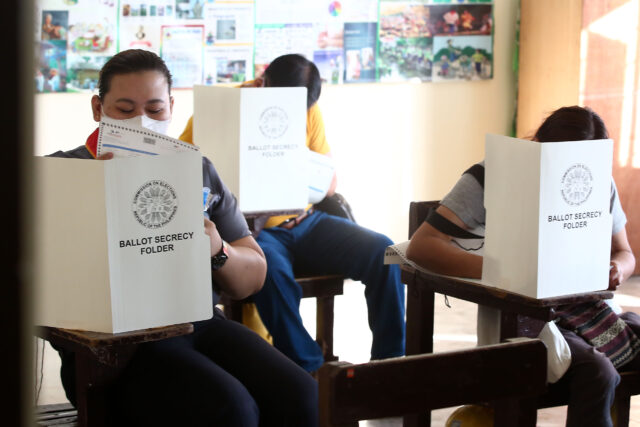
Filipinos will vote for the village and youth council officials on Oct. 30. The campaign period started on Oct. 19.

BSP also warned financial institutions about the possibility of online banking and mobile wallet applications being used for vote-buying activities.

They were told to reinforce their customer onboarding processes, fraud management systems and transaction-monitoring capabilities. 

Banks should consider any significant number of account registrations in areas where vote-buying or-selling is known to be rampant, and unusually large cash transactions during the election period as scenarios in calibrating their fraud management systems. 

Under the BSP’s Manual of Regulation for Banks and Nonbank Financial Institutions, lenders must submit suspicious transaction reports to the Anti-Money Laundering Council when needed. 

Under the Omnibus Election Code, persons found guilty of vote-buying or -selling face imprisonment of as long as six years, disqualification from public office and being barred from voting.

The Philippines has been included among jurisdictions under increased monitoring by the Financial Action Task Force (FATF) in June 2021. It needs to prove it has implemented tighter measures against dirty money and terrorism-financing to exit the FATF’s “gray list.”

Meanwhile, in a separate memo signed by Ms. Fonacier on Oct. 10, the central bank reminded lenders to apply appropriate customer due diligence measures on so-called politically exposed persons — those who are politically prominent here or overseas, as well as officials of international organizations.

The central bank noted that if these people are related to suspicious transactions, financial institutions should obtain senior management approval before continuing any business relationships. 

Financial institutions should also take reasonable measures to establish the source of wealth of customers and prominent beneficial owners.

Lenders should use risk-based assessment to determine whether there are any residual risks or a significant influence posed by the customer, it added.

DICT says local hacker behind PSA data breach

DICT FACEBOOK PAGE

By Jomel R. Paguian

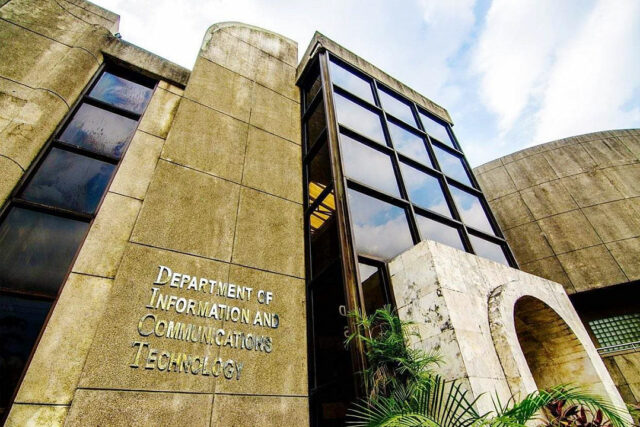
THE DEPARTMENT of Information and Communication Technology (DICT) confirmed on Thursday that a local hacker is behind the recent data breach of the Philippine Statistics Authority (PSA) systems.

DICT Undersecretary Jeffrey Ian Dy made the revelation in the wake of the cyberattack on the state-run Philippine Health Insurance Corporation (PhilHealth), attributed to the Medusa group which is a “very professional international cybercriminal syndicate.”

During an interview with One News PH, Mr. Dy explained that while the PhilHealth breach was executed by the highly sophisticated Medusa group, the PSA data breach was the handiwork of an individual hacker.

“A lot of enterprising individuals wanted to replicate the damage done in PhilHealth. Some of these are local researchers, some are security researchers, and some are just enthusiasts,” he said, describing them as copycat attempts “inspired” by the PhilHealth incident.

Mr. Dy revealed that the DICT already has leads on the identity of the PSA data breach perpetrator due to the less sophisticated methods employed.

“We are more than willing to provide this information after our initial investigation with the Cybercrime Investigation and Coordinating Center, so they can follow up by coordinating the manhunt and the arrest of the individual,” he added.

Interviewed by One Balita Pilipinas, PSA Legal Service Director Eliezer P. Ambatali said the local hacker did not demand a ransom and seemed more interested in attention.

“We have not received any communication from the hacker asking for money in exchange for the downloaded files. But based on his posts, it seems that he just wants attention,” Mr. Ambatali, speaking in Filipino, said.

The hacker managed to infiltrate the PSA system due to weak website configurations, as noted by Mr. Dy, who pointed out that the DICT detected the breach ahead of the PSA.

“We also told them (PSA) about certain weaknesses in their systems; unfortunately, they still got hacked. But we did send them information about certain things they need to do to reinforce their cybersecurity,” the DICT official said.

The cyberattack targeted the Community-Based Monitoring System (CBMS), which hosts demographic data collected through the agency’s survey forms.

“So, what the hacker got were files submitted to PSA about surveys,” said Mr. Ambatali. “It includes data about the surveyor, about who was being interviewed, unfortunately, it also includes data about household classification, how many children are in that household.”

However, he clarified that the breach did not extend to the National ID system managed by the PSA, which comprises the Civil Registration System and the Philippine Identification System (PhilSys) and is distinct from the affected CBMS.

Upon his assessment, DICT Secretary Ivan John Uy said in Filipino: “The damage is still substantial because the breach is significant.”

However, he said that while other government agencies also experience data breaches, creating a centralized agency for government cybersecurity is unnecessary.

Instead, Mr. Dy recommended that each agency establish its cybersecurity organization and an organizational-level computer emergency response team, properly equipped and trained to tackle threats.

At present, the DICT provides technical support for government agencies’ systems but is not directly responsible for safeguarding them from cyberattacks. This decentralization of cybersecurity efforts is seen as a necessary approach.

Notably, the DICT recently lost P300 million in confidential funds from the 2024 national budget.

Mr. Renato A. Paraiso, DICT Assistant Secretary for Legal Affairs, highlighted the potential utility of these funds for enhancing cybersecurity efforts and expressed disappointment over the lack of funding.

On Wednesday, Mr. Uy who heads the department announced that an appeal would be submitted to Congress to reinstate the department’s confidential funds.

These developments at the PSA and PhilHealth, he said, underscore the urgency of bolstering cybersecurity measures in the Philippines amid an escalating wave of cyber threats.


Politicized encounters called out

PHILIPPINE government officials should be cautious of visits and appearances with public figures as these encounters may be politicized and associated with personal interests, a lawyer and policy analyst said on Thursday.

“Public officials should always be wary of encounters that will compromise their integrity in the eyes of the public,” Michael Henry LI. Yusingco said in a Facebook Messenger chat, following the separate visits made by Vice President Sara Duterte-Carpio and House Deputy Speaker Gloria Macapagal-Arroyo to Iglesia Ni Cristo (INC) executive minister Eduardo V. Manalo on Oct. 2 and Oct. 6, respectively.

“These types of meetings will always make the public suspect that favors and patronage are being arranged,” Mr. Yusingco said.

For Jean S. Encinas-Franco, who teaches political science at the University of the Philippines, the visits “provide good optics [for the two government officials] since we know that the Iglesia has a strong influence on its flock.”

The vice president’s visit happened following weeks of receiving flak over the P125 million in confidential funds spent by her offices in less than two weeks last year. The House of Representatives had stripped the Office of the Vice President (OVP) and the Department of Education (DepEd), both led by Ms. Duterte-Carpio, of P650 million in confidential funds for next year.

Meanwhile, Ms. Arroyo faced controversies over her removal as senior deputy speaker in May and the filing of graft and malversation charges against her over the Malampaya deal early this month.

Mr. Yusingco said their meetings high-profile individuals like Mr. Manalo “will never be perceived as a ‘harmless visits’” and called their timing “suspicious.” “This harms governance more than it helps it,” he added. Beatriz Marie D. Cruz

ASEAN tackles transnational crime

PHILIPPINE officials and members of the judiciary on Thursday met with their regional counterparts in Bangkok, Thailand to exchange expertise on combatting transnational organized crime, the Department of Justice (DoJ) said.

In a statement, DoJ Spokesman Jose Dominic F. Clavano IV said officials from the Department of the Interior and Local Government, the Supreme Court and the DoJ highlighted efforts of the Justice Sector Coordinating Council (JSCC), an inter-agency body identifying crime hotspots in the Philippines, at the meeting of member-states of the Association of Southeast Asian Nations (ASEAN).

“We are committed to continued collaboration with our international partners to address the shared challenge of transnational organized crime,” Mr. Clavano IV said at the United Nations regional conference in Bangkok.

“We are proud of the innovative work being accomplished by the JSCC in the Philippines, and we are thrilled to have this platform to share our strategies with other nations.” — John Victor D. Ordoñez

Peacebuilding key to investments

COTABATO CITY — The implementation of peacebuilding programs for the 63 Bangsamoro villages located within Cotabato province will be intensified to create a more business-friendly atmosphere for capital-intensive agricultural ventures, officials said on Thursday.

“Strong governance in these barangays is so essential in generating confidence of investors in the local business climate,” Cotabato Gov. Emmylou Taliño Mendoza said, following her meeting with the Army’s 602nd Infantry Brigade about helping decentralize basic services and see through the secure completion of on-going infrastructure projects in these Bangsamoro areas located in Region 12.

“Our business communities in the province (Cotabato), which are not under the Bangsamoro government, stand to benefit from that too,” she stressed.

Brig. Gen. Donald M. Gumiran, who heads the 602nd Infantry Brigade, said the governor’s thrust is in support of the efforts of the Bangsamoro Business Council and the Regional Board of Investments to entice foreign capitalists to invest in rich agricultural areas.

Mr. Gumiran said Thursday that the construction of more than a dozen barangay halls in Bangsamoro villages in Region 12 this past year is a testament to the Ministry of the Interior and Local Government-Bangsamoro Autonomous Region in Muslim Mindanao’s cooperation with state agencies and neighboring local government units to look after the welfare of Moro rebels residing in beneficiary-areas outside of BARMM.

“They now feel the presence of government and investors from outside, in effect, also feel now that coming in to propagate short-term crops, or plant Cavendish bananas, or oil palm trees is viable,” Mr. Gumiran said.

Mayor Rolly C. Sacdalan of Midsayap, where there are Bangsamoro barangays, cited that the MILG-BARMM granted P83 million worth of farming equipment, including tractors, mechanized harvesters, rice and corn planters, to his Moro constituents last July to boost their rice and corn harvests that they sell to Christian traders in the town center.

“We support peace programs needed to sustain the cordiality among Muslim farming communities and the Christian merchants in town centers in Cotabato province,” Mr. Sacdalan said. — John Felix M. Unson

Milk for plastics in Manila

ALASKA Milk Corp. has partnered with the Manila City government for an incentive program that allowed city residents to get milk products in exchange for single-use plastic waste. 

The milk product manufacturer said it signed a memorandum of agreement with Manila City for the company’s wrapper redemption program, which enables Manila residents to trade post-consumer single-use plastics for Alaska powdered milk drink.

Alaska Milk Managing Director Tarang Gupta said their goal is to “promote proper waste management and encourage recycling within the city while introducing proper nutrition through milk consumption to the community.”

The wrapper redemption program is one of the key components of Alaska Milk’s AlasKalikasan corporate social responsibility initiatives. Manila City Mayor Maria Sheilah “Honey” Lacuna-Pangan praised the success of the program in promoting sustainable practices and raising awareness about waste management.

The program has diverted 1,250 metric tons of single-use plastics from leaking to the environment since it was launched in 2020. — Revin Mikhael Ochave

Chiba Jets beat undermanned TNT in East Asia Super League

EAST ASIA SUPER LEAGUE/PBA

DESPITE the presence of the prolific Rondae Hollis-Jefferson and Quincy Miller, the manpower shortage and overall lack of match fitness proved too much for TNT.

The Tropang Giga, playing without key players Calvin Oftana (on a break after the Asian Games campaign), Roger Pogoy (health), Poy Erram (injury) and Mikey Williams (vacation), tumbled to a 75-93 defeat to the Chiba Jets at the start of the East Asia Super League Season 2 Wednesday night in Japan.

The Jets, runners-up in the Japan B. League, dropped a 26-12 bomb in the third quarter to break away from the reigning PBA Governors’ Cup titlist coming off a slim one-point edge.

The home squad banked on a sizzling 10-of-21 shooting from beyond the arc in the second half to take the fight out of TNT in the Group A opener.

Overall, Chiba knocked down 16 triples out of 39 attempts for a 41 percent clip from deep — a far cry from TNT’s 6-of-27 and 22 percent long-distance touch.

Mr. Hollis-Jefferson, suiting up just five days after Jordan took placed second to Gilas Pilipinas in the Asian Games in Hangzhou, China, finished with 15 points, nine rebounds, and five assists to back up Mr. Miller’s 22.

Mr. Hollis-Jefferson struggled with a 6-of-28 field goal and missed all nine of his three-point attempts.

TNT coach Jojo Lastimosa said game shape level, more than the missing players, did the Tropang Giga in.

“When I was asked at half time what my concerns were in the second half, I said stamina was going to be a big question for us. Obviously, we played really well in the first half. We stayed with them, both on offense and defense. But, in the second half, we lost our stamina,” he said.

“We’re only two weeks into our practice and our season in the Philippines won’t start until November 5. So we are two weeks in, and Rondae just came in yesterday without any practice. So there are a lot of things going on also. But we will be really good down the stretch if we get in shape.”

Ira Brown, a former San Miguel Beer import, led Chiba with 19 points and 12 rebounds, providing the muscle inside.

TNT will try to get back at the Jets when they meet again in Manila on Nov. 1. — Olmin Leyba

The Scores:

Chiba 93 – Brown 19, Stephens 19, Kanechica 18, Okura 12, Mutts 9, Nishimura 6, Ogawa 6, Togashi 2, Arao 2, Kaishu 0, Sekiya 0.

TNT 75 – Miller 22, Hollis-Jefferson 15, Khobuntin 15, Castro 12, Montalbo 4, Heruela 4, Reyes 3, K. Williams 0, Flores 0, Ganuelas-Rosser 0.

Quarterscores: 21-22; 45-44; 71-56; 93-75.