PLDT INC. and its wireless unit Smart Communications, Inc. have deployed new technologies to enhance internet connectivity in remote and geographically isolated and disadvantaged areas (GIDAs).
“By working hand-in-hand with our partners in government, we believe we can roll out a stronger, more resilient network faster and more efficiently,” PLDT Chief Operating Officer Menardo G. Jimenez, Jr. said in a media release on Thursday.
The Pangilinan-led telecommunications company said connecting underserved communities requires multiple solutions to ensure faster and more reliable internet services.
To reach GIDAs, PLDT said it will continue investing in network infrastructure and innovative technologies, while also strengthening partnerships with government agencies and industry stakeholders.
“PLDT’s investments in innovating to enhance its network are aligned with the Group’s broader thrust to deliver improved services to customers nationwide. It also supports PLDT and Smart’s commitment to national development through strategic partnerships that expand digital access and enhance the delivery of essential services,” the company added.
On Thursday, PLDT shares rose P26, or 1.95%, to close at P1,360 apiece.
Hastings Holdings, Inc., a unit of PLDT Beneficial Trust Fund subsidiary MediaQuest Holdings, Inc., has a majority stake in BusinessWorld through the Philippine Star Group, which it controls. — Ashley Erika O. Jose
The leadership of the DoTr was turned over to Acting Secretary Giovanni Lopez (left) from Vivencio “Vince” Dizon (right) last year. — Photo from facebook.com/DOTrPH
Transportation may very well be the very engine that keeps any economy running. The sector, after all, is responsible for connecting producers to resources and consumers, creating jobs in the making of roads and in the driving of vehicles, boosting productivity by lowering costs, and fostering overall growth by moving goods, services, and people efficiently.
Dealing with the difficult task of making lives easier for millions of Filipino motorists and commuters, the Department of Transportation (DoTr) is the government entity in charge of promoting, developing, and regulating a dependable and coordinated network of transportation systems, as well as providing fast, safe, efficient, and reliable transportation services.
Established under the Malolos Constitution on Jan. 21, 1899, the agency, then called the Communicaciones y Obras Publicas, was given the role of accelerating the country’s economic development through the creation of effective and efficient transportation infrastructure systems.
After 80 years of regulating transportation activities in the country, the Ministry of Transportation and Communication (MoTC) was created pursuant to Executive Order No. 546 with the task of regulating a dependable and coordinated network of transportation and communication systems in the country. Eight years later, the MoTC converted to the Department of Transportation and Communications (DoTC) through Executive Order No. 125.
With the signing of Republic Act No. 10844 in 2016, the communications portfolio from the DoTC was removed following the creation of the Department of Information and Communications Technology (DICT). Hence, the department’s current name.
Expanded capacity
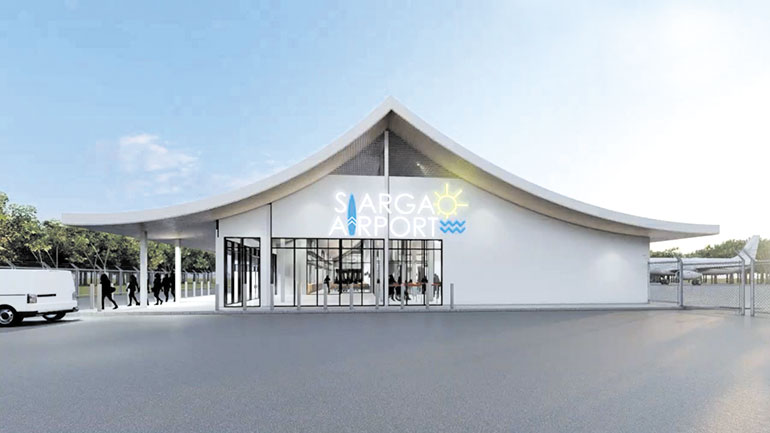
Artist’s render of Siargao Airport, one of the Philippine airports currently undergoing improvements — Photo from facebook.com/DOTrPH
This year, the agency is marking its 127th year in service of Filipinos, remaining committed to providing comfortable, accessible, safe, sustainable, and affordable transportation for Filipinos.
As the department reflects on more than a century of service and modernizing Philippine transport, it is equally important to highlight the agency’s recent achievements that show its lasting impact on the lives of Filipinos.
For rail transport, the DoTr has consistently maintained its standard in what may be the country’s busiest transport systems: the Metro Rail Transit Line 3 (MRT-3), the Light Rail Transit Line 1 (LRT-1), and Light Rail Transit Line 2 (LRT-2). Last year, both the MRT-3 and LRT-2 lines observed an increase in ridership, with the former recording a total of 141,626,536 passengers in 2025, higher than the 135,885,336 commuters served in 2024, and the latter tallying a total of 58,754,981 passengers served in last year compared to around 50.7 million total passengers the year before.
Over the past few years, the country’s rail system has seen improvements led by the DoTr. The most important of which is the completion of Phase 1 of the LRT-1 Cavite extension project, which opened up five new stations spanning from Pasay City to Sucat, Parañaque City. Additionally, the agency partnered up with the finance superapp GCash last year to enable commuters to pay for their fares in the MRT-3 railway line through cashless methods.
The department has also carried out road decongestion works to remedy the capital region’s notorious traffic problem. One of the most visible successes in this area is the EDSA Busway, which has drastically reduced travel times along the capital’s busiest road by dedicating a lane exclusively for buses. This system has not only made commuting more predictable for thousands but has also served as a model for “people-centric” infrastructure that prioritizes high-capacity public transport over private vehicles.
Simultaneously, the Public Transport Modernization Program (PTMP) continues its phased implementation across the country. The project aims to replace aging, high-emission jeepneys and buses with safer, Euro-4-compliant modern public utility vehicles. In recent budget hearings, the increase in subsidy for cooperatives by the said program has been discussed to rise from P260,000 in 2025 to P400,000 in 2026.
In aviation, the agency has worked tirelessly to shed what is globally perceived as a legacy of congestion and inefficiency. The most significant move in this direction is the landmark privatization and rehabilitation of the Ninoy Aquino International Airport (NAIA) via a public-private partnership. Since the turnover to the San Miguel-led New NAIA Infra Corp. (NNIC), the gateway has seen improvement in terminal efficiency, upgraded baggage handling systems, and improved facilities, all aimed at restoring the airport’s reputation and elevating the passenger experience.
Similar to the rehabilitation efforts at NAIA, modernization efforts of the Tuguegarao, Bacon, Loakan, Daet, Cauayan, Vigan, and Candon airports are taking place, according to the DoTr. Catbalogan, Dumaguete, Kabankalan, Calbayog, Zamboanga, Mati, M’lang, Jolo, Siargao, and Tandag airports in Visayas and Mindanao will also undergo improvements.
Maritime travel improvements have also been made in various ports in the country. An example of this is the Amandayehan Port in Basey, Samar. Improvements made on the port include increasing its service capacity, with six landing craft tank (LCT) vessels, as well as addressing the alleged “palakasan” (patronage) system and illegal collection of fees raised by port users.
Last year, the Philippine Ports Authority, under the DoTr, said that it allocated as much as P1.42 billion for the expansion and improvement of three ports in the country, including the third phase of the Malalag Port expansion project in Davao del Sur; Lipata Port improvement project in Surigao del Norte; and Buenavista Port expansion project in Guimaras.
Sustainable transport
Aside from these achievements in different areas of transportation, the DoTr has also begun on projects that seek to make Philippine transport more convenient, inclusive, and sustainable.
Part of this is the transportation department’s recently launched Active Transport Project, aimed at promoting healthier and more sustainable modes of transport. Under the program, pedestrians and non-motorized vehicles are prioritized in the hierarchy of road users, with the DoTr mandated to focus on the development of active transport infrastructure. The project is pegged to establish 2,400 kilometers of protected and dedicated lanes for cyclists by 2028.
Topping off the agency’s lengthy list of accomplishments, the Transportation department, together with the DICT, launched the DICT Free WiFi for All program along EDSA Busway Stations, which will provide internet connection to over 183,000 passengers daily. Based on data from the department, the EDSA busway ridership jumped by 6% from 63.02 million in 2024 to 66.67 million last year.
Projects in the pipeline for the agency include the highly anticipated Metro Manila Subway Project (MMSP), often referred to as the “Project of the Century.” Complementing this is the North-South Commuter Railway (NSCR) system, a massive 147-kilometer rail network that will link Clark in Pampanga to Calamba in Laguna. The agency is also making significant strides in regional rail development through the PNR South Long Haul project, popularly known as the “Bicol Express.”
The department is also looking into the development of more Intermodal Terminal Exchanges (ITX) to provide commuters with seamless transfers between different modes of transport, similar to the operations of the Parañaque Integrated Terminal Exchange (PITX).
As the DoTr enters its 127th year, these ambitious projects signify its vision of a Philippines that is fully connected and economically vibrant. By blending the preservation of its historical mandate with the adoption of world-class technology and sustainable practices, the DoTr continues to drive the nation forward and ensure that the “engine” of the Philippine economy remains fueled for the generations of commuters yet to come. — Jomarc Angelo M. Corpuz
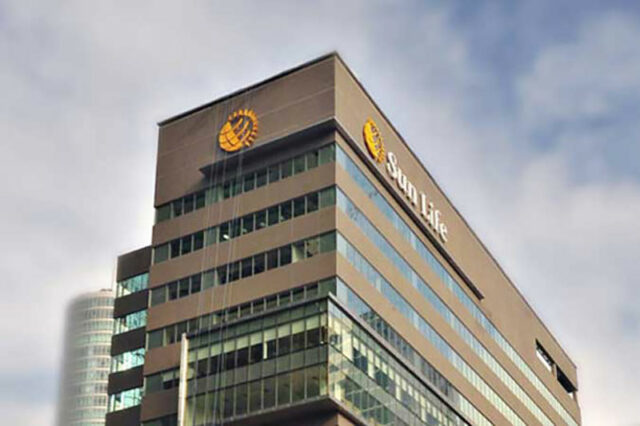
SUN LIFE of Canada (Philippines), Inc. (Sun Life Philippines) will ramp up its technology investments to further expand its reach via online distribution platforms and create specialized products to cater to Filipinos’ varying insurance needs.
“Tech is going to be one of my focus areas… I would like to leverage the digital savviness of Filipinos. The use of technology to make higher value transactions, it’s still not yet there, especially as insurance would be a higher value transaction. But I want to already be in that space where they think of Sun Life once they are ready to make a high-value transaction,” Sun Life Philippines President and incoming Chief Executive Officer (CEO) and Country Manager Jonathan Juan “JJ” D. Moreno told BusinessWorld on the sidelines of an event this month.
“I want to be able to catch that wave because it’s going to be very difficult if that’s the only time I will build a platform once the market is ready for those kinds of things.”
He said younger Filipinos who are digital natives are becoming increasingly aware of the importance of financial protection.
“We’re seeing a trend. We’re seeing that more and more, there are younger cohorts, young professionals actually buying insurance, realizing that it’s an essential expense,” Mr. Moreno said.
While these individuals usually do their research on insurance via digital platforms, they still prefer to consult with human financial advisors and transact in person when they want to avail of policies, he said.
“Some do not want to be approached by an agent immediately. They’ll do their own research, they’ll do everything, they’ll use AI (artificial intelligence) to compare the products, and then when they’re ready, they call an agent.”
They’ve seen the same trend among high-net-worth individuals, he said.
Recognizing this consumer behavior, Mr. Moreno said insurers can boost their digital distribution by first offering simple, straightforward, and lower value products that are tailored for specific needs that clients would be confident to buy via online channels.
For their part, Sun Life Philippines plans to launch products targeting employees and professionals, the high-net-worth segment, and business owners this year.
“So, it would be correct to say that we will launch low-value products… The products we will be launching will be specifically tailored to address a particular segment.”
He said there has been strong demand for traditional life insurance and variable unit-linked products among Filipinos.
“After the previous year, there was a shift towards more traditional products in terms of product creation. That’s due to global headwinds, but it’s still just going down,” Mr. Moreno added.
At end-September, Sun Life Philippines topped the life insurance sector with a premium income of P44.73 billion. — A.M.C. Sy
LOS ANGELES — With Oscar nominations a day away, Hollywood’s annual reckoning with its film failures took shape on Wednesday as Disney’s live‑action Snow White and the remake War of the Worlds tied for six nods for the Golden Raspberry Awards.
Popularly known as the Razzies, the awards are an annual Oscar spoof that spotlights what voters deem Hollywood’s worst performances. The 46th Golden Raspberry Awards are set for March 14, the day before the Oscar awards.
Disney’s Snow White, a 2025 remake of the 1937 animated classic, scored a worst picture nod along with nominations for worst remake, director, and screenplay. The fantasy film stars Rachel Zegler as Snow White and Gal Gadot as the Evil Queen, and its seven computer-generated dwarf characters were also cited for both worst supporting actors and screen combo.
Tying with Snow White, the 2025 science fiction film War of the Worlds, starring rapper Ice Cube and actor Eva Longoria, based on H.G. Wells’ 1898 novel, also scored six nominations, including worst picture, actors, remake, director, screenplay, and screen combo.
Other nominees include the psychological thriller Hurry Up Tomorrow, science fiction film Star Trek: Section 31, and the action-adventure Netflix film The Electric State, starring Stranger Things lead Millie Bobby Brown.
More than 1,100 Razzie members from across the United States and about two dozen other countries vote on the awards, according to the Razzie website. Voters are members of the Golden Raspberry Foundation that consists of film critics and movie experts. — Reuters
PREMIUM ELECTRIC VEHICLE (EV) brand DENZA, under the BYD Group, is set to launch its first model, the multi-purpose vehicle D9, in the Philippines on Feb. 27.
“Many people have been asking me why we (BYD) have grown so fast here in the Philippines. Indeed, it is very fast,” BYD Asia Pacific Auto Sales Division General Manager Xueliang Liu said in Chinese at an event on Thursday.
Asked about the brand’s local market presence, he said: “[If] you are asking about the Philippine figures, it would be over 26,000.”
BYD Singapore, Philippines, and Brunei Managing Director James Ng said the company’s earlier success in introducing BYD vehicles locally helped motivate the DENZA launch.
“In collaboration with ACMobility, we have successfully introduced BYD into the Philippine market and got reception from the public,” Mr. Ng said.
“So, with that, this gives us a very strong motivation to introduce DENZA … it gives us very good strength to further push our DENZA brand.”
Mr. Liu added that the company plans to introduce the other two models, the sports utility vehicles B8 and B5, later in 2026.
On Thursday, DENZA also awarded its initial dealer partners, which will form the foundation of its retail network in the country.
The brand partnered with ACMobility Premium Dealership, Inc. for DENZA Alabang and DENZA Cebu; with Harmony New Energy Auto Service (Philippines) Ltd. Corp. for DENZA Makati; and with E-Vantage Motors, Inc. for DENZA Greenhills.
At the event, DENZA showcased all three models, though only the D9 will be available for launch next month. — Justine Irish D. Tabile
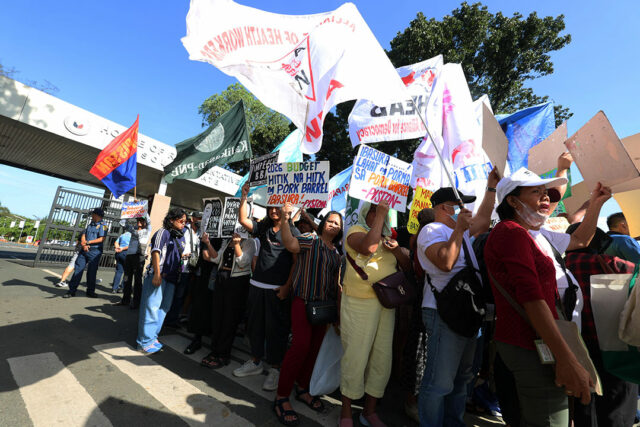
VARIOUS organizations led by the Bagong Alyansang Makabayan troop to the House of Representatives in Quezon City on Jan. 22. — PHILIPPINE STAR/MIGUEL DE GUZMAN
In our “In Brief” for New York-based GlobalSource Partners last Monday, and in my interview with Cathy Yang on Money Talks that same day, we addressed a simple but consequential question: Are the Marcos Jr. administration’s responses to deteriorating business sentiment truly game-changing, or do they merely move the needle?
The decline in sentiment among business and civil society is not cyclical noise. It reflects a hard judgment: the state has failed to curb corruption and enforce good governance. Without restoring integrity in public institutions, public resources will continue to be siphoned away from infrastructure, innovation, sound economic planning, public health, and education. Without good governance, there can be no durable growth.
Against this backdrop, government officials announced a slate of “big, bold reforms.” The issue is not whether these reforms are well intentioned. The issue is whether they represent a break from the past — or simply another iteration of familiar promises.
Several agencies outlined commitments. Tourism, Agriculture, and Agrarian Reform pledged modernization initiatives. The Department of Trade and Industry, Board of Investments, and Department of Information and Communications Technology committed to attracting high-impact investments and accelerating digital transformation. Regulatory agencies — the Securities and Exchange Commission, Food and Drug Administration, the Philippine Competition Commission, and the Department of Environment and Natural Resources — promised to streamline procedures and reduce bottlenecks.
We readily acknowledge that engagement with the private sector is necessary. Signaling reform intent and addressing the high cost of doing business, much of it driven by regulatory inefficiency, are overdue. Streamlining processes and cutting red tape are welcome steps. They should, however, have been done on day one of every administration over the past two decades. We are now into the last two and a half years of President Ferdinand Marcos, Jr.’s term.
Yet these initiatives are not sufficient. They miss the core of the problem.
As one broadsheet captured succinctly: “Corruption puts investors on edge.” The deeper issue can be summarized as TEA: weak transparency, selective enforcement and execution, and uncertain accountability. These deficits corrode trust far more severely than administrative delays. When corruption is systemic, public funds are diverted away from research and development, innovation, and productivity-enhancing infrastructure. The consequence is slower growth, weaker efficiency, and fading regional relevance.
Specific examples underscore the point. How does restoring P4.32 billion to the CARS (Comprehensive Automotive Resurgence Strategy) Program reverse decades of manufacturing hollowing? How does visa-free entry for Chinese nationals boost tourism and investment when signage is inadequate, connectivity is weak, and destinations are poorly maintained? How does IMF-compliant debt reporting restrain a growing bias toward borrowing rather than fiscal consolidation? How does digitizing Bureau of Internal Revenue audits prevent abuse of Letters of Authority when discretion remains entrenched in enforcement? In each case, the reform is procedural; the problem is institutional.
A wry comparison in social media illustrates the gap between reform as rhetoric and reform as rupture:
• Vietnam: “We will reduce provinces from 63 to 34 and cut 30% of party commissions and ministries — making the state leaner and easier to coordinate.”
• Philippines: “We will eliminate visas for Chinese tourists and create a National Single Window for Imports.”
Both are reforms. Only one fundamentally alters how power, accountability, and coordination operate.
This distinction helps explain why, despite respectable GDP growth, often ranking second only to Vietnam for 2025 and perhaps for 2026 as well, many Filipinos feel no corresponding improvement in their lives. Inflation may be contained, but absolute prices remain beyond household capacity. Jobs exist, but many are insecure and poorly paid. The economy appears stable, but it lacks the resilience to absorb future shocks.
The proposed reforms will not overturn a consumption-led growth model fueled by remittances and Business Process Outsourcing receipts. The Philippines has a weak industrial base, a fragmented, if not absent, industrial policy, limited processing of raw materials, feeble exports, Asia’s highest power costs, chronic port congestion, and unpredictable investment rules — problems flagged repeatedly by multilateral institutions, with little sustained follow-through.
Indonesia and Vietnam stand in sharp contrast. Private consumption accounts for less than 60% of GDP in both countries, compared with over 70% in the Philippines. Gross investment consistently exceeds 30% of GDP in Indonesia and Vietnam, versus roughly 23% in the Philippines. Indonesia anchors growth on resource-based manufacturing; Vietnam on export manufacturing. Investor trust reflects this reality: Tesla suppliers and Hyundai invest in Indonesia; Samsung, Apple, Intel, and Lego operate at scale in Vietnam. Their industrial zones, logistics, and incentives are coherent, predictable, and credible.
In short, the Philippines grows by spending more; Indonesia and Vietnam grow by making more.
This brings us to what game-changing reform actually looks like. For that, Canadian Prime Minister Mark Carney’s Davos speech is instructive.
Carney offered an unvarnished diagnosis: we are witnessing “the rupture of the world order” — the end of comforting narratives and the emergence of a brutal reality in which great-power geopolitics is no longer constrained. Territorial pressure over Greenland, regime-change intervention in Venezuela without a clear multilateral mandate, and the weaponization of tariffs against allies, including Canada, all signal that the old rules no longer hold.
The appropriate response, Carney argued, cannot be superficial. Middle powers must decide whether to retreat behind walls or act with ambition. His prescription was both principled and pragmatic: anchored on sovereignty, territorial integrity, the prohibition of force, and respect for human rights — while recognizing that interests diverge and progress is often incremental.
Crucially, Canada acted. It dismantled federal barriers to interprovincial trade. It fast-tracked nearly a trillion dollars in investment in energy, AI, critical minerals, and new trade corridors. It committed to doubling defense spending with domestic industrial linkages. It rapidly diversified trade partnerships and asserted sovereignty in Ukraine, the Arctic, and NATO — marking a decisive departure from automatic reliance on the United States. These were not slogans; they were structural breaks.
By contrast, the Philippine response remains tangential. The crisis is a collapse of public trust in the state’s capacity to enforce rules and punish wrongdoing. Yet the policy response centers on process streamlining and visa facilitation. What about the rule of law, or justice, or overhauling the election law, or banning political dynasties?
President Marcos’ “Mahiya naman kayo!”* moment in last year’s State of the Nation Address nearly crossed into game-changing territory. It named corruption at an unprecedented scale. But without sustained enforcement, institutional backing, and visible consequences, it remained rhetorical.
Which brings us back to “big, bold reforms.” Too many echo recommendations repeated for more than a decade by international financial institutions: better planning, improved budgeting, technical assistance, revenue mobilization. Necessary, yes — but not transformative.
Carney’s invocation of Václav Havel’s greengrocer is apt. Everyone displays the slogan — “Workers of the world, unite!” — even though no one believes it. The system endures not through coercion, but through participation in rituals known to be untrue. Havel called this living within a lie.
For policymakers, the implication is stark. Game-changing reform is not about announcing familiar fixes with louder adjectives. It is about visibly breaking with practices that hollow out the state: enforcing accountability without exception, dismantling rent-seeking structures, committing to an industrial strategy that survives political cycles, and building institutions that work even when personalities change.
Until reform shifts from ritual to rupture, from intent to enforcement, the Philippines will continue to grow on paper while falling behind in reality. And if we continue to post slogans we no longer believe, we should not be surprised when Indonesia and Vietnam pull decisively — and permanently — ahead.
*“For shame.”
Diwa C. Guinigundo is the former deputy governor for the Monetary and Economics Sector, the Bangko Sentral ng Pilipinas (BSP). He served the BSP for 41 years. In 2001-2003, he was alternate executive director at the International Monetary Fund in Washington, DC. He is the senior pastor of the Fullness of Christ International Ministries in Mandaluyong.
NICK LAFLEUR is one of many Americans who think a Netflix-Warner Bros. tie-up might provide some relief from “subscription fatigue.”
The New York City resident has held on to a full poker hand of streaming services — Netflix, Disney+, Apple TV, HBO Max and Paramount+ — even as prices have risen steadily.
Netflix on Tuesday switched its nearly $83-billion offer for most of Warner Bros. to all-cash to keep Paramount at bay as the two compete for the company’s coveted studio and content library. If successful, a Netflix-Warner Bros. tie-up could bring the HBO Max streaming service under the same umbrella as Netflix.
LaFleur and others hope that might translate to smaller bills.
“The trajectory of streaming prices, whether there is a merger or not, seems to be going up and up,” said LaFleur, who works in tech communications. “I would imagine they would not just add the price of HBO Max to Netflix… my expectation is that I could get a discount.”
Americans now pay for an average of 2.9 streaming subscriptions despite the rising costs, which now come to $552 a year, according to a Forbes Home survey of 1,000 people published in November.
As of June, most HBO Max subscribers had a Netflix subscription — 94%, in fact, according to Bernstein analysts, while 38% of Netflix users had HBO Max. A tie-up could revive streaming’s early promise of “everything under one roof” before studios yanked their content to launch rival services.
The downside? The deal could stifle competition and erode HBO’s reputation for prestige programming that currently exceeds Netflix’s, experts say.
‘IT’S A PAIN TO MANAGE SUBSCRIPTIONS’ The proliferation of streamers has swamped consumers with content, similar to hundreds of unwatched channels offered by cable TV when the industry was at its peak. About 72% of US consumers said streaming bundles offer better value, while 63% say they feel overwhelmed by the options, according to a Mintel survey of nearly 2,000 people last August.
“It’s a pain to manage subscriptions,” said Orlando-based Frank Weaver, who resorted to buying an app to track them and has canceled some services because of the cost.
A report last year from industry tracker Antenna showed the recently introduced discounted bundle of Disney+, Hulu, and HBO Max retained 80% of its subscribers after three months, stickier than any of the standalone services.
NETFLIX FORMS THE BASIS OF VIEWING PACKAGES For many viewers, Netflix, the global streaming leader with 325 million subscribers, forms the basis of any viewing package.
About 78% of customers chose the service when building a hypothetical custom bundle, placing it ahead of Disney+, Paramount+, and HBO Max, according to a Forrester Research survey of more than 400 adults in the US, the UK, and Canada published last year.
Part of Netflix’s argument in its bid for Warner Bros. was that the combination may lower costs for consumers and ease regulatory fears, Reuters reported last year.
Netflix’s standard plan is priced at $17.99 a month, while HBO Max’s equivalent tier costs $18.49 and Paramount+’s ad-free Premium plan costs $13.99, according to the companies’ websites.
DOING THE OPPOSITE? Netflix scrapped its cheapest ad-free plan, called basic, in 2023, leaving consumers with its more expensive premium and standard plans, as well as the standard plan with ads.
The premium plan now costs $24.99 a month, up from $19.99 in 2022, while the standard ad-free plan’s price has gone up by more than $2 to $17.99 in the period.
Lawmakers have warned that the Netflix-Warner Bros. combo could give the combined firm outsized bargaining power. Experts say this could lead to fewer choices, giving Netflix more power to raise its rates, spend less on the kind of quality shows offered by HBO, or both.
“Whether the winning bidder is Netflix or Paramount, the worry is whether they will be positioned to pay less for content,” said Bill Baer, a visiting fellow at the Brookings Institution and former US assistant attorney general for antitrust under President Barack H. Obama.
“That likely would diminish both the number and the quality of programming and the number of people willing to invest in the creative process.” — Reuters
The DoTr joined the celebration of the National Bike Day last year, underscoring that cyclists and walkers should not be marginalized on roads. — Photo from facebook.com/DOTrPH
The Philippines has consistently ranked among the countries with the world’s most congested urban corridors. In 2023, Metro Manila recorded some of the highest travel times globally: motorists averaged 25 minutes to cover just 10 kilometers, with over 117 hours lost annually stuck in slow-moving traffic.
Recognizing the scale of the problem, the Department of Transportation (DoTr) has been repositioning mobility as a strategic economic enabler rather than a purely operational concern.
In 2025, the DoTr undertook a series of interconnected initiatives to improve commuter experiences and strengthen active transport infrastructure nationwide. These efforts reflect evolving policies: sustainable urban mobility, inclusive infrastructure, digital transformation, and integrated land use that incorporates green spaces into transport corridors.
The department’s recent initiatives signal a shift away from fragmented interventions toward an integrated transport strategy that addresses infrastructure gaps, operational inefficiencies, and commuter experience simultaneously.
Institutionalizing accessibility and inclusion
One of the most notable shifts in the DoTr’s strategy has been its move toward participatory planning. At the Philippine Mobility Summit 2025, the department unveiled plans to institutionalize an Accessibility and Inclusion Reference Group (AIRG) — a consultative body comprising of commuters from underrepresented communities, including persons with disabilities (PWDs), senior citizens, women, caregivers, and others with lived experience of mobility challenges.
The AIRG is intended to assist technical teams and policy makers in co-designing transport frameworks, feasibility studies, and infrastructure designs that better reflect everyday commuter requirements.
This marks a departure from traditional top-down infrastructure planning toward a model that incorporates user insight at every stage, a step toward both accessibility and inclusion in public transport system development.
Cycling and pedestrian infrastructure
Active transport, consisting of cycling and walking, continued to be a central theme of the DoTr’s strategy. Under the national Active Transport and Safe Pathways Program, more kilometers of bike lanes are being added, linking residential areas with employment centers, transport terminals, schools, and green spaces.
The agency plans to build at least 260 kilometers of new bike lanes, advancing toward a long-term target of 2,400 kilometers by 2028.
Pedestrian infrastructure remains a priority in parallel with cycling enhancements. Walkways are being constructed and upgraded nationwide to ensure safer and more accessible pedestrian routes, in alignment with the National Transport Policy (NTP) and the Philippine Development Plan (PDP) 2023-2028, which place non-motorized transport at the top of road-user hierarchy.
Institutional strengthening
To ensure that large-scale transportation projects deliver tangible improvements for commuters, the DoTr established a Flagship Project Management Office (FPMO).
Designed to accelerate implementation of high-impact infrastructure programs, the FPMO centralizes oversight of major initiatives such as the Metro Manila Subway Project, North-South Commuter Railway, the EDSA Busway, the EDSA Greenways Project, as well as modernized address programs such as the Cebu Bus Rapid Transit and the Davao Public Transport Modernization Project. These flagship projects aim to ease congestion, cut travel times, and expand intermodal connectivity across the Greater Manila area and key regional hubs.
By having senior officials directly monitoring milestones, budget execution, and right-of-way acquisition, the FPMO aims to reduce bureaucratic delays and thus improve service delivery for daily commuters.
Green spaces and integrated mobility corridors
Operationalizing the synergy between transport and urban green spaces is emerging as a complementary priority.
The DoTr’s transport vision also recognizes the role of green infrastructure in shaping healthier cities. By integrating green spaces into active transport corridors, the agency aims to enhance street-level environments for pedestrians and cyclists while supporting environmental goals such as heat mitigation and urban biodiversity.
Former Transport Secretary Vivencio “Vince” B. Dizon emphasized that mobility projects should not only move people efficiently but also improve the quality of urban environments by incorporating landscaped corridors, shading vegetation, and pedestrian-oriented green areas.
These integrative approaches align with broader goals to make transport corridors more resilient and environmentally friendly, anchoring mobility improvements within healthier, more livable city frameworks where active commuters can enjoy greener surroundings as they travel.
During the National Bike Day last year, officials of the department reiterated commitments to expanding bicycle and pedestrian lanes while underscoring that cyclists and walkers should not be marginalized on roads.
This safety emphasis complements the broader active transport agenda by ensuring non-motorized users are recognized as legitimate road participants deserving dedicated space and protective infrastructure.
As the DoTr’s recent initiatives unfold, the integration of inclusive planning, active transport expansion, flagship project management, and green space integration represents a multi-pronged approach to modernizing mobility in the Philippines.
Digitalizing fare payments
A digital payment system on MRT-3 allows commuters to pay using mobile wallets, QR codes, or contactless bank cards. — Photo from facebook.com/DOTrPH
Beyond physical infrastructure, the DoTr is also focusing on digital innovation and service quality improvements designed to make public transport more convenient and user-friendly.
One initiative is the digital transformation of fare payment systems across rail and bus networks. In mid-2025, the DoTr partnered with the Bangko Sentral ng Pilipinas (BSP), Department of Information and Communications (DICT), and GCash to pilot an open-loop, digital payment system on MRT-3. This allows commuters to pay using mobile wallets, QR codes, or contactless bank cards, eliminating queues at ticket booths. The pilot is intended to be expanded to other rail and bus systems.
Busway upgrades and commuter amenities
The DoTr continues to improve EDSA Busway with targeted station upgrades and rehabilitation projects. In 2025, the department pursued renovations of key busway stations such as Monumento, Bagong Barrio, North Avenue, and Guadalupe.
The DoTr is also developing plans to turn over the busway’s operations and management to the private sector through a public-private partnership (PPP), intended to harness private expertise and capital to sustain and modernize the service while preserving dedicated lanes for high-capacity buses.
In response to ongoing infrastructure works, the DoTr has also deployed additional buses to bolster capacity and reduce congestion for commuters during rehabilitation periods.
Commuter-centric governance
To ensure that decision-makers remain grounded in commuter realities, the DoTr issued a directive requiring agency officials to commute weekly using public transport.
This policy, championed by Acting Secretary Giovanni Z. Lopez, aims to expose senior staff to firsthand commuter experiences so that policies and projects are informed by actual system conditions and pain points.
Officials are expected to document their journeys and identify operational issues, creating a feedback loop between experience and institutional planning.
These developments signal a shift toward transport systems that are more accessible, safer, environmentally sound, and attuned to the needs of everyday commuters.
The challenge ahead will be scaling these initiatives across urban and regional contexts, monitoring impact on commuter behavior, and ensuring that infrastructure investments tangibly improve daily travel experiences.
With coordinated execution and sustained public engagement, these initiatives offer a promising blueprint for a more mobile, connected, and inclusive Philippines. — Krystal Anjela H. Gamboa
GLOBAL PAYMENTS group Zepz, which owns WorldRemit and Sendwave, has acquired a US-based financial technology (fintech) company providing credit-based remittance services as it looks to strengthen its presence in the Philippines.
Zepz said in a statement on Jan. 20 that it has acquired Pomelo International, Inc., whose product mainly caters to migrants in the US sending money to the Philippines and Mexico. The latter’s team will join Zepz to continue developing their product.
Pomelo’s operations have been paused temporarily as Zepz integrates the product into its roadmap.
“Pomelo is a San Francisco-based fintech company focused on cards, lending and credit-building, with a strong presence in the Philippines,” it said. “The acquisition represents a key step in Zepz’s evolution beyond remittances, enabling the company to support more of the financial lives of cross-border communities and underserved customers across the Global South.”
“The acquisition further strengthens Zepz’s position in the Philippines, one of its core markets, where it has deep local knowledge and a long-standing customer base. Combining Pomelo’s product and expertise with Zepz’s global platform creates meaningful synergies for customers and supports Zepz’s long-term growth strategy by deepening engagement, improving retention and broadening its revenue mix beyond money movement.”
The company said the move will complement their existing products and businesses and allow them to expand into cards, lending, and credit, as Pomelo’s platform integrates consumer credit and remittances with a credit card designed for money transfers.
Using the Pomelo Mastercard or any debit card via its app, customers in the US can transfer money real-time to Philippine-based bank accounts or e-wallets as low costs while earning rewards points.
“Acquiring Pomelo is a natural next step in our evolution beyond remittances,” said Zepz Chief Executive Officer Mark Lenhard. “It will allow us to offer customers access to cards and credit services, and supports our broader ambition of financial empowerment for cross-border communities.”
“This is an exciting next chapter for Pomelo, and our mission to help people build their financial future doing what matters most — helping families. Zepz shares our focus on serving cross-border communities and has tremendous potential to accelerate access to credit and everyday financial tools for people who have historically been underserved,” Pomelo CEO Eric Velasquez Frenkiel said.
More Filipinos abroad have been using digital channels to remit money to save on transaction costs.
Cash remittances coursed through banks rose by 3.6% to $2.91 billion in November from $2.808 billion in the same month in 2024, the latest Bangko Sentral ng Pilipinas data showed.
For the first 11 months of 2025, money sent home by migrant Filipinos reached $32.111 billion, climbing by 3.2% from $31.113 billion during the same period in 2024.
The US was the top source of remittances in the period, accounting for 40% of inflows. — BVR
THE SECURITIES and Exchange Commission (SEC) on Thursday launched the Hierarchical and Applicable Relations and Beneficial Ownership Registry (HARBOR), a web-based platform aimed at making disclosures of corporate ownership faster and more transparent.
“Beneficial ownership disclosures are a key transparency reform that supports good governance and helps prevent the misuse of corporate structures for illicit activities,” SEC Chairperson Francisco Ed. Lim said.
“Through HARBOR, the SEC streamlines the filing process while strengthening BO data management, enabling the Commission to provide timely and meaningful support to partner agencies in lawful enforcement actions,” he added.
Starting Jan. 30, corporations required to submit beneficial ownership information must use HARBOR, accessible at https://harbor.sec.gov.ph or via the Electronic Filing and Submission Tool (eFAST).
The system allows secure submission and updates of beneficial ownership data, reducing manual processing and helping the SEC verify information more efficiently.
With HARBOR’s launch, the SEC also released the 2026 General Information Sheet (GIS) without the beneficial ownership page. Companies will now submit or update ownership information directly through HARBOR and revalidate it only if changes occur, such as new owners being added.
Beneficial owners are individuals who ultimately own or control a corporation, either directly or indirectly. Filers need an active Electronic SEC Universal Registration Environment (eSECURE) account to access the system. Only authorized eFAST filers may submit declarations.
HARBOR was created under Memorandum Circular No. 15, Series of 2025, which updates Beneficial Ownership Disclosure Rules. The registry also supports the Philippines’ commitments under the Financial Action Task Force (FATF) to maintain transparency and prevent money laundering.
“These reforms build on earlier beneficial ownership and transparency measures that supported the Philippines’ exit from the FATF grey list in February 2025 and demonstrate the Commission’s continuing commitment to sustain AML/CFT improvements and keep the country off the grey list,” the SEC said. — Alexandria Grace C. Magno
THE Philippine government has been laying the legal, institutional, safety, and diplomatic groundwork for nuclear energy. This matters because the heavy reliance on imported fuels leaves electricity prices exposed to global commodity shocks. Coal accounts for around 60% of electricity generation, natural gas roughly 15-20%, and renewables — including hydro, geothermal, wind, and solar — about 20%. Demand continues to rise and large-scale renewables face intermittency, grid land constraints, and recently contract cancellations. Energy security is a precarious problem for the Philippines despite the recent Malampaya discovery.
In 2020, the president Rodrigo Duterte signed Executive Order (EO) No. 116, directing the development of a national position on nuclear energy, and EO No. 164 instructing the Department of Energy (DoE) to integrate nuclear power into the Philippine Energy Plan. Recently, President Ferdinand Marcos, Jr., signed the Philippine National Nuclear Energy Safety Act (PNNESA), creating an independent nuclear safety regulator. The Philippines has also secured US approval for the export of nuclear technology, including small modular reactors (SMRs), following the entry into force of a civil nuclear cooperation agreement.
These are all good. The next question now is whether nuclear energy can be deployed safely, affordably, and within the country’s fiscal constraints. This is where nuclear economics becomes decisive.
SMALLER REACTORS, NOT SMALLER RISKS SMRs are typically defined as nuclear units below 300 megawatts. Their appeal is clear for an archipelagic country with uneven grid capacity: smaller units, potential modular construction, and the promise of faster builds.
The cost numbers are sobering. Current global estimates place SMR capital costs at roughly $4,000 to over $8,000 per kilowatt, depending on design, location, and financing terms. A single 300-MW SMR can therefore cost $1.2 billion to $2.4 billion before financing. These are first-of-a-kind costs. The price reductions often cited by proponents depend on serial production and repeat builds; they do not appear on the first unit.
Financing magnifies the challenge. Nuclear projects have long construction periods, and interest during construction can add hundreds of millions of dollars if schedules slip. Delays matter far more for nuclear than for gas or renewables because the capital base is large and revenues arrive late.
SMRs may be smaller than traditional reactors, but their economic risks are not proportionally smaller — especially for a first-time nuclear country.
Comparisons with other generation options make this clear. New coal plants typically produce electricity in the range of $70 to $200 per megawatt-hour, depending on fuel prices and environmental controls. Gas combined-cycle plants often fall in the $45 to $75 per megawatt-hour range but are highly exposed to fuel and foreign-exchange volatility. Utility-scale solar and wind are cheaper on paper, often below $70 per megawatt-hour, but require storage, backup, and grid upgrades to deliver reliable power. By contrast, SMRs span a wide range: optimistic projections for mature designs suggest costs competitive with gas and coal, while conservative assessments of first-of-a-kind projects place SMR costs well above those benchmarks once financing and delay risks are included. How nuclear is financed matters as much as the technology itself.
TECHNOLOGY RISK MEETS FISCAL REALITY Most SMR designs remain early in commercial deployment. Some have cleared regulatory milestones in advanced economies; many have not. None has a long operating record without substantial public support. Investors therefore price multiple uncertainties at once: construction timelines, licensing outcomes, supply chains, fuel services, waste management, and decommissioning.
For government, these risks collide with fiscal reality. The Philippines operates with limited fiscal space. Debt servicing already absorbs a significant share of the national budget, while competing priorities — transport, health, education, disaster resilience, and climate adaptation — remain pressing. Any nuclear program that relies on poorly structured guarantees or implicit bailouts risks becoming a long-term fiscal burden.
This is why nuclear economics must drive design choices. If risks are misallocated at the outset, they do not disappear; they reappear later as tariff shocks, contract renegotiations, or quiet fiscal transfers.
WHY PPPS ARE TEMPTING — AND DANGEROUS IF MISUSED Given these constraints, it is natural to look to Public-Private Partnerships (PPPs). The Philippines has used PPPs successfully for airports, expressways, and conventional power generation. The instinct is understandable: mobilize private capital, reduce fiscal pressure, and shift risk away from the state.
Nuclear breaks this logic.
Some nuclear risks cannot be transferred at any price voters will accept. Licensing risk is binary. Catastrophic tail risk is politically non-diversifiable. Long construction timelines make financing extremely sensitive to delay. When governments try to push these risks fully onto private investors, lenders demand high returns. Those returns surface as higher electricity prices, larger guarantees, or both.
International experience is consistent: fully private nuclear projects either do not get built, or they are built at prices that become politically untenable.
This does not mean PPPs are inappropriate. It means they must be designed around a basic truth: in nuclear energy, the state is the risk bearer of last resort, whether explicitly or implicitly.
LESSONS FROM ABROAD International experience reinforces this point.
The United Arab Emirates (UAE) delivered its Barakah nuclear plant through a sovereign-anchored model, combining public finance with an experienced foreign vendor. Financing costs were kept low, and execution was relatively disciplined. The lesson is not to copy the UAE, but to recognize that first nuclear projects succeed when the state anchors risk and imports capability.
The United Kingdom illustrates the opposite hazard. Its private-led nuclear project, supported by long-term price guarantees, reached financial close but at high cost to consumers. Delays and overruns reinforced a basic lesson: shifting risk to private capital does not eliminate risk; it prices it into electricity bills.
France shows the advantages and limits of a state-led approach. Financing costs were low and standardization delivered efficiencies, but contingent liabilities ultimately rested with the state and consumers. China’s rapid nuclear expansion further underscores the same point: relatively low costs were achieved through state-owned enterprises, state banks, and serial construction — a model not transferable to the Philippine political economy.
The United States shows both sides of the ledger. Federal loan guarantees and regulated utility models enabled projects to proceed, yet major overruns demonstrate that finance cannot compensate for weak execution and governance.
Across these cases, one pattern stands out. Countries that treated early nuclear projects as publicly anchored learning investments managed risk better than those that tried to offload uncertainty onto private balance sheets from the start.
WHAT THIS MEANS FOR THE PHILIPPINES For an initial SMR deployment, the government will inevitably bear a large share of risk — explicitly or implicitly. The honest approach is to recognize this upfront.
PPP structures where private partners are paid for delivering and operating a licensed, available plant — rather than betting on volatile power prices — are more realistic for a first project. They lower financing costs, protect consumers from excessive risk premiums, and give government tighter control over siting, safety, and emergency preparedness.
This does not exclude the private sector. Private firms still design, build, finance, and operate the plant. They are paid for performance. What changes is that non-diversifiable risks — first-of-a-kind uncertainty, regulatory tail risk, catastrophic risk — are not quietly pushed into tariffs or hidden guarantees.
As experience accumulates, uncertainty falls. Regulators gain hands-on capability. Construction benchmarks become clearer. Supply chains stabilize. At that point, more risk can be shifted to private investors through long-term contracts or hybrid arrangements without pushing prices to unsustainable levels.
Only after domestic capability is proven should more private, industrial, or merchant-style models even be considered. Industrial SMRs require creditworthy anchor customers willing to commit for decades. They do not eliminate first-of-a-kind risk; they merely repackage it.
In short, nuclear SMRs in the Philippines should be treated as strategic infrastructure, not merchant power.
Dianne Araral is a green finance and energy policy researcher based in Singapore.
LONDON — Thriller Mercy imagines a near future where the justice system is powered by artificial intelligence (AI) and suspects are presumed guilty unless they can prove their innocence.
In a violence-ridden Los Angeles in 2029, police detective Chris Raven (Chris Pratt) wakes up in a stupor, shackled to a chair, facing the AI judge Maddox (Rebecca Ferguson) that he helped create. Raven is accused of murdering his wife and has 90 minutes to prove his innocence or he will be executed on the spot.
The Timur Bekmambetov-directed movie felt like a theater play said Mr. Pratt and Ms. Ferguson, who were split up on separate stages, communicating via earpieces and acting out 40-50-minute long scenes.
“I’ve never played a robot or AI, tapping into human emotions,” said Ms. Ferguson. “The conversations that came with that, it was really fun.”
“For me, being confined to a chair was something that was different. I’m a pretty physical person,” said Mr. Pratt, who asked to get strapped in for takes.
“I found it helpful because I truly felt I could fight against it, and felt even more claustrophobic.”
To portray the motionless Maddox, who mimics humans, Mr. Bekmambetov gave Ms. Ferguson a chart of emotions.
“He would say, ‘I want you to smile at the oddest moment,’” she said. “There wasn’t that much for me to work with, other than behind the eyes.”
Maddox has access to the city’s cloud, to which all citizens are legally obligated to connect their devices, and which Raven can use to try to exonerate himself.
Shot in Mr. Bekmambetov’s “screenlife” style, much of the film’s action takes place on displays. As Maddox and Raven scour social media accounts, surveillance feeds, police body cameras, doorbell recorders, and databases, the images are blasted on the futuristic courtroom’s walls.
Mr. Pratt believes the film’s immersive nature will make audiences question their own behavior.
“They’re going to probably be thinking, ‘I’ve etched each of my actions in digital stone over the past 12-15 years. If I’m ever put in a position where this could be used against me, there’s a lot of stuff out there,” he said.
“You’re kind of on the same journey with my character. As I’m defending myself, you’re sort of defending your own actions,” said Mr. Pratt. “It’s like your life is being thrown at you. It’s a little bit jarring.”
Mercy opens in Philippine theaters on Jan. 28. — Reuters




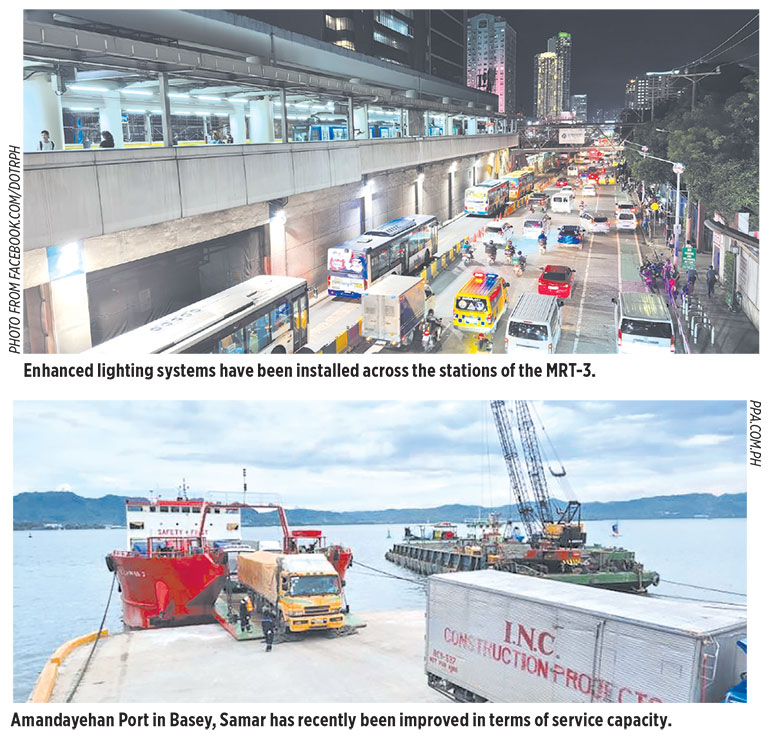 The department has also carried out road decongestion works to remedy the capital region’s notorious traffic problem. One of the most visible successes in this area is the EDSA Busway, which has drastically reduced travel times along the capital’s busiest road by dedicating a lane exclusively for buses. This system has not only made commuting more predictable for thousands but has also served as a model for “people-centric” infrastructure that prioritizes high-capacity public transport over private vehicles.
 Aside from these achievements in different areas of transportation, the DoTr has also begun on projects that seek to make Philippine transport more convenient, inclusive, and sustainable.