Home Blog Page 398

CoA files 4 fraud audit reports worth over P325 million for Bulacan flood control projects; flags ghost projects, unauthorized relocations, and questionable accomplishments

The Commission on Audit (CoA) has filed four fraud audit reports involving more than P325 million worth of flood control projects in Bulacan, citing ghost projects, unauthorized relocation of project sites, and questionable claims of completion.

In reports submitted to the Independent Commission for Infrastructure (ICI), the CoA said the projects were implemented by the Department of Public Works and Highways (DPWH)-Bulacan 1st District Engineering Office and awarded to contractors Wawao Builders and Darcy and Anna Builders & Trading. The audit found recurring indicators of systemic misuse of public funds in projects intended to mitigate flooding in vulnerable communities.

The CoA said its findings underscore the agency’s commitment to transparency and accountability, stressing that funds earmarked for public safety must not be diverted through corruption.

Ghost projects and dubious accomplishments

Based on physical inspections, drone surveillance, geotagged photographs, and historical satellite imagery, auditors uncovered several irregularities. In some cases, no flood control or riverbank protection structures were found at the approved project sites despite documents declaring the projects completed or substantially accomplished.

The CoA also reported instances where DPWH representatives directed inspectors to locations different from those specified in approved bid documents and contracts, without any authorized revised plans — violations of procurement and contract rules. In other locations, satellite images showed that riverbank protection structures already existed before the contracts took effect, raising the possibility that public funds were used to pay for works that were not newly constructed.

The audit further flagged severe documentation deficiencies, including missing as-built plans, detailed cost estimates, geotechnical investigation reports, complete statements of work accomplished, and approved master plans, which auditors said undermined the credibility of reported accomplishments and payments.

Projects under scrutiny

Among the projects cited was the P96.49-million construction of a riverbank protection structure in Barangay Santa Cruz, Guiguinto, Bulacan, awarded to Wawao Builders. The CoA found that the structure was not built at the approved site and appeared to have been relocated without authority, with discrepancies in project length and design.

Another Wawao Builders project worth P77.19 million in Barangay Iba-Ibayo, Hagonoy, Bulacan, was declared 100% complete, but auditors found no structure at the designated site. The structure pointed out by DPWH officials was located about 694 meters away and had no approved authority for relocation.

In Calumpit, Bulacan, a P77.19-million riverbank protection project also awarded to Wawao Builders showed inconsistencies in location and measurements, with a structure bearing a different contract identification and located outside the approved site.

The CoA also flagged a P74.12-million project in Barangay Babatnin, Malolos City, awarded to Darcy and Anna Builders & Trading. Auditors confirmed that no structure was built at the approved site, while the structure identified by DPWH officials predated the contract by nearly a year based on satellite imagery. Progress photos submitted by the contractor also contained embedded coordinates inconsistent with the approved project location.

The fraud audit reports named several DPWH engineers and officials, as well as representatives of the contractors, as persons potentially liable.

Possible charges, more reports expected

The CoA said the individuals involved may face charges for graft and corruption under the Anti-Graft and Corrupt Practices Act, as well as malversation and falsification of public documents under the Revised Penal Code. Possible violations of CoA Circular No. 2009-001 were also noted.

The fraud audit forms part of a broader investigation ordered by CoA Chairperson Gamaliel A. Cordoba in August 2025, directing an immediate review of DPWH flood control projects in Bulacan from July 2022 to May 2025 amid public concerns over alleged ghost projects.

The CoA said it will continue to submit additional reports to the ICI as the investigation progresses, in line with President Ferdinand Marcos, Jr.’s call for greater transparency and accountability in government spending.


Spotlight is BusinessWorld’s sponsored section that allows advertisers to amplify their brand and connect with BusinessWorld’s audience by publishing their stories on the BusinessWorld Web site. For more information, send an email to online@bworldonline.com.

Join us on Viber at https://bit.ly/3hv6bLA to get more updates and subscribe to BusinessWorld’s titles and get exclusive content through www.bworld-x.com.

New LPA spotted as Tropical Depression Ada moves away

DOST-PAGASA FB PAGE

A new low-pressure area (LPA) was spotted outside the Philippine Area of Responsibility (PAR) as Tropical Depression Ada continued to move away from the country, according to the Philippine Atmospheric, Geophysical and Astronomical Services Administration (PAGASA) on Tuesday.

In its 11:00 a.m. advisory, PAGASA said the LPA was located about 2,245 kilometers east of southeastern Mindanao (Davao) and currently has a low chance of developing into a tropical depression.

In a separate tropical cyclone threat advisory, PAGASA said the LPA is expected to maintain a low probability of intensifying into a storm until February 1. However, between January 26 and February 1, it may move toward Caraga and Eastern Visayas.

PAGASA said it will continue to monitor the LPA and provide updates in its succeeding advisories.

Meanwhile, Tropical Depression Nokaen, locally named Ada, is no longer affecting any part of the country and is expected to continue moving farther away, PAGASA said.

No heavy rainfall warnings or tropical cyclone wind signals are currently in effect in relation to Nokaen.

As of the latest advisory, Nokaen was last located about 820 kilometers east of northern Luzon, packing maximum sustained winds of 55 kilometers per hour (kph) and gustiness of up to 20 kph, while moving northwestward at 20 kph.

PAGASA said the cyclone is expected to move generally eastward before turning south-southeastward on Wednesday.

Nokaen is also undergoing gradual weakening due to dry air associated with the northeast monsoon and may further weaken into a low-pressure area by Wednesday, PAGASA said.

However, the prevailing northeast monsoon will continue to affect large parts of the country, bringing strong to gale-force winds over Batanes, the Babuyan Islands, and nearby areas on Tuesday.

PAGASA advised local disaster risk reduction and management offices to remain vigilant and take necessary measures to protect life and property, while residents were urged to follow advisories and evacuation instructions from authorities.— Edg Adrian A. Eva

The ultimate homecoming: Piolo Pascual for Bench Body

Piolo Pascual serves as the newest endorser of BENCH.

In what stands as the most significant fashion event of 2026, BENCH, the Philippines’ leading global lifestyle brand, announces the monumental “homecoming” of the country’s definitive icon, Piolo Pascual. This landmark campaign is more than a simple reunion; it is a full-circle moment that honors nearly three decades of shared history, reaffirming Pascual’s unmatched status and BENCH’s legacy as the architect of Philippine pop culture.

Returning to the brand that helped define the dawn of his career, Pascual asserts his position not as a figure of nostalgia, but as the modern standard of the industry — a presence that remains as sharp and influential as ever.

In this new chapter, Pascual serves as the newest endorser of BENCH, embodying a lifestyle defined by unyielding discipline and peak physical form. The campaign reframes the narrative of time, positioning Piolo as living proof that strength, confidence, and relevance are the results of lifelong commitment. By showcasing a physique and a presence sculpted by years of dedication, he provides a master class in longevity, commanding the scene with a quiet, seasoned authority that requires no introduction.

To execute a vision of this magnitude, BENCH enlisted a world-class international creative powerhouse led by acclaimed South Korean photographer Chun Youngsan. Known for capturing the world’s most elite Hallyu stars and global luxury icons, Youngsan’s collaboration with Pascual marks a historic creative summit, transforming the campaign into a high-art experience.

For the first time ever, Pascual headlines a BENCH Body underwear campaign that draws inspiration from classical antiquity. Under Youngsan’s cinematic lens, Pascual is reimagined as a “Living Statue.” The visuals celebrate a timeless aesthetic, treating the human form as an architectural landscape of strength and proportion, showcasing the collection’s latest designs with sophisticated power.

This campaign strips away the ephemeral noise of fast fashion, focusing instead on the enduring power of an icon. Piolo Pascual’s return to BENCH is a reminder of why he remains the industry’s most immutable figure.

It is the homecoming of a man who no longer seeks to prove his status; he simply defines it. In this partnership, the brand and the man once again set the pace for the nation, proving that while trends may fade, true icons are the ones who write the history of the era.


Spotlight is BusinessWorld’s sponsored section that allows advertisers to amplify their brand and connect with BusinessWorld’s audience by publishing their stories on the BusinessWorld Web site. For more information, send an email to online@bworldonline.com.

Join us on Viber at https://bit.ly/3hv6bLA to get more updates and subscribe to BusinessWorld’s titles and get exclusive content through www.bworld-x.com.

Philippines braves rough market with first dollar bond in a year

A CUSTOMER holds his US dollar notes at a money changer in Manila. — REUTERS

(UPDATE) The Philippines started marketing its first dollar notes in a year, braving rocky markets after President Donald Trump’s revival of the trade war between the US and Europe pushed Treasury yields higher and hurt risk assets.

The debt offering is a test of investor confidence for President Ferdinand Marcos Jr.’s administration too as it contends with fallout from a corruption scandal that has caused economic growth to slump.          

The Philippines is offering notes of 5.5 years, 10 years and 25 years, according to a person familiar with the matter, who asked not to be identified because the matter is private. Initial price guidance for the 10-year tranche was around 100 basis points over Treasuries.

The Philippines is one of the region’s most active sovereign bond issuers in overseas markets and relies on such funds to help finance a persistent budget deficit. The government is currently grappling with a graft scandal involving billions of dollars meant for flood-control projects in one of the world’s most typhoon-prone countries.

National Treasurer Sharon Almanza said the issuer is looking at a benchmark size for each tenor, when asked about the target amount.

The bond sale will help raise dollars for the Philippines at a time when the peso is weakening. The currency fell to a record low on Tuesday.

While valuations for the sovereign’s notes are “unexciting” they should remain reasonably well supported, Nicholas Yap, head of Asia credit desk analysts at Nomura Holdings Inc. in Singapore wrote in a note. Fair value for the 25-year tranche is about 5.65% compared with provided initial guidance of around 5.9%, he added.

The sovereign isn’t the only borrower from Asia seeking to sell dollar debt on the day, with at least two other issuers including South Korea’s Woori Bank also in the market. Yield premiums on the region’s investment-grade bonds have hovered near a record low this month at under 60 basis points on average, helping attract issuers.

The average yield on dollar bonds sold by investment-grade emerging Asian borrowers was about 4.5% on Monday, down from nearly 5.2% when the sovereign last sold dollar debt in the market in January of 2025, a Bloomberg index shows. The Philippine government sold a 10-year bond then at 90 basis points over Treasuries after kicking off marketing at around 120 basis points. — Bloomberg

VinFast: When an Asian disruptor begins to redraw the green mobility landscape

VF 3

Just a few years ago, most Filipino consumers had never seen, touched, or experienced a VinFast vehicle in their daily lives. The brand existed largely as a name attached to international auto show headlines, global expansion announcements, and long-term aspirations. Then, everything changed.

As the market enters 2026, VinFast has become a familiar presence across Metro Manila. A Green GSM electric taxi during the morning commute. A compact VF 3 weaving through dense residential streets. A V-Green charging station appearing beside a neighborhood mall. VinFast has moved beyond visibility to become part of the city’s everyday rhythm, embedding itself in the public consciousness as a distinctly Southeast Asian face of electric mobility, and increasingly, as a guide into the EV era.

Many Filipinos now say: “My first step into electrification was with a VinFast, coming from our neighbor, Vietnam.”

According to Simon Austria from VinFast BGC dealer, this marks the most pivotal moment in VinFast’s journey in the Philippines.

“When people stop seeing VinFast as something new and start treating it as a familiar, everyday choice, that’s when a brand truly enters the market,” he said.

A True Disruptor

For years, electric vehicles in the Philippines hovered on the periphery, present at exhibitions, and policy discussions, yet rarely seen on public roads. Gasoline vehicles, supported by long-established infrastructure and habits, continued to dominate daily mobility.

VinFast chose a different path. Rather than waiting for the market to become ready, the company set out to create readiness, actively leading consumers into the electric era.

Launched locally in May 2024, VinFast rapidly put a full lineup of EVs into circulation, from the VF 3 and VF 5 to the VF 6, VF 7, and VF 9. “At first, customers came to the showroom out of curiosity,” Simon recalled. “Later, they came back because they were already seeing VinFast cars on the road every day.”

This is how a true disruptor operates, by reshaping habits through lived experience.

As the number of VinFast vehicles grew, so did the sophistication of customer conversations. People no longer asked what an EV was. They asked where charging was most convenient, how much they would save each month, and how the car fit into their daily routines.

“The VF 3 is the most frequently asked-about model at our showroom,” Simon noted. “It’s perfectly suited to Philippine traffic, compact, agile, easy to drive, and ideal for couples or young urban drivers.”

“The VF 3 isn’t just about unique design. Its driving range, operating cost, and the EV experience itself are what truly surprise customers.”

The VF 6, meanwhile, represents a step into a more premium space. “The VF 6 clearly feels more upscale. It’s a great fit for young families of four, modern, well-sized, and very practical for everyday use.”

VF 7

When Users Become Storytellers

It is not only dealers who are shaping VinFast’s image in the Philippines. Everyday users are becoming some of the brand’s most influential voices. Among them is Carl Macaisa, a well-known car modifier and content creator in the local automotive community. For Carl, the VinFast VF 3 is more than transportation.

“The VF 3 is like a blank canvas. You can express your personality through the car,” he said.

Its boxy, minimalist yet characterful design offers a rare platform for personalization, something deeply embedded in Philippine car culture. This openness has helped the VF 3 build a young, enthusiastic following that treats the vehicle as both mobility tool and personal statement.

Carl’s experience with the VF 3 ultimately led him to upgrade to the VF 6, a higher-positioned electric B-SUV that maintains VinFast’s accessible philosophy.

According to Carl, the VF 6’s strength lies in balance, enough performance for driving enthusiasts, enough space and comfort for family use, and, most importantly, no need to change daily habits when switching to an EV.

A Comprehensive Ecosystem Few Can Match

If electric vehicles are the product, then the ecosystem is the strategy, and this is where VinFast clearly differentiates itself.

Alongside vehicle sales, Vingroup, VinFast’s parent company has deployed charging infrastructure through V-Green, introduced electric ride-hailing via Green GSM, and backed everything with long-term aftersales policies. Together, these elements form a closed loop: Vehicles, infrastructure, and services working in unison.

“Very few automakers do this, especially in Southeast Asia,” Simon emphasized. “VinFast doesn’t just sell cars, it solves the entire EV usage equation.”

Green GSM has played a particularly critical role in the early stages. For many Filipinos, it is their first encounter with electric mobility.

“Honestly, I didn’t know much about VinFast before,” Simon admitted. “It was the Green GSM experience that impressed me, the smooth ride, professional drivers, and a completely different feel.”

Within a year, that first experience turned Simon himself into part of the “VinFast family.”

Fast — Different — Proven by Action

Three words Simon uses to describe VinFast also define its strategy in the Philippines.

Fast, in the speed at which the brand moved from awareness to real-world presence.

Different, in delivering a full ecosystem rather than selling standalone vehicles.

And proven by action, because commitments on infrastructure, services, and policies have been executed in parallel.

Programs such as long-term warranties, free charging incentives, and the Resale Value Guarantee (RVG) have been critical in building trust. “It’s a win-win model,” Simon said. “Customers have more options and feel protected, while VinFast builds long-term confidence.”

In a market where EVs are still relatively new and concerns about resale value remain strong, VinFast chose to confront that anxiety directly. “This is a very rare policy in the market,” Simon Austria noted. “VinFast customers know they always have a safety net.”

Through RVG, owners have the option to sell their vehicle back to VinFast at a guaranteed price within defined timeframes. This reduces financial risk and fundamentally changes how consumers perceive EV ownership.

More importantly, it sends a clear message: VinFast is willing to share responsibility with users, rather than shifting all risk onto the customer, a common practice in the traditional automotive industry.

Combined with long warranties and a rapidly expanding charging network, VinFast is selling long-term peace of mind, an increasingly decisive advantage for pragmatic Filipino consumers.

Asian Pride and a Highly Anticipated 2026

For Simon, VinFast represents Asian aspiration. “As a Filipino, I’m genuinely proud to see an Asian brand like VinFast competing head-on with American and European automakers,” he said.

After just two years in the Philippines, VinFast has established a solid foundation. Customer interest continues to grow, brand recognition is strengthening, and the ecosystem keeps expanding.

“I’m confident that 2026 will be a breakout year,” Simon stated. “VinFast will expand its market share very quickly and play a leading role in driving the green mobility revolution in the Philippines, and even across Southeast Asia.”

“And yes,” he added, “I truly believe VinFast can rise to number one.”

As the global automotive industry enters a period of profound transformation, VinFast is not standing on the sidelines. It is moving decisively into the market, changing consumer habits through tangible action, and steadily asserting itself as a true disruptor.

In the Philippines, that story is only just beginning.


Spotlight is BusinessWorld’s sponsored section that allows advertisers to amplify their brand and connect with BusinessWorld’s audience by publishing their stories on the BusinessWorld Web site. For more information, send an email to online@bworldonline.com.

Join us on Viber at https://bit.ly/3hv6bLA to get more updates and subscribe to BusinessWorld’s titles and get exclusive content through www.bworld-x.com.

The Estate Makati: Setting a new standard for urban luxury

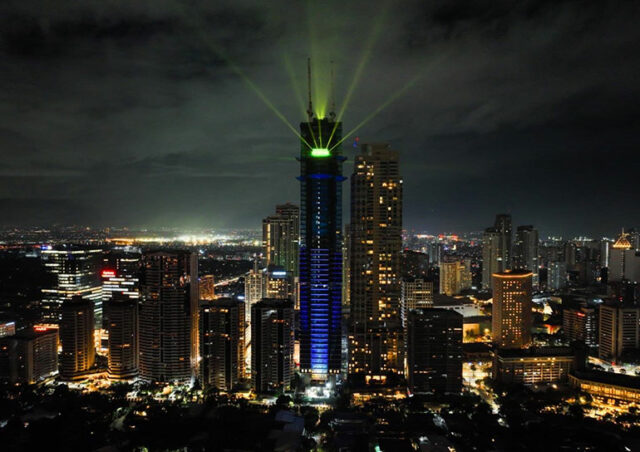
The Estate Makati lights up for a night to mark its structural completion.

The Makati skyline, an ever-evolving canvas of ambition and power, recently gained a distinguished new landmark. For one memorable evening, The Estate Makati illuminated the city, celebrating the completion of its full structural height in the heart of the central business district. Rising prominently from the storied Apartment Ridge, this 60-storey residential tower offers a compelling proposition. Its strategic location places residents within effortless reach of both the vibrant business district and a wealth of leisure pursuits, achieving a rare balance of convenience and discretion. It promises security, efficient mobility, and ultimately, the quiet exclusivity of a private residential address.

At its core, The Estate Makati redefines luxury with its commitment to a remarkably low-density design. With an intimate offering of just 188 residences and a maximum of four homes per floor, this development champions privacy and delivers a personalized living experience. This approach creates a distinct and valuable niche, setting it apart from the urban norm and prioritizing space in a bustling metropolis.

The Estate Makati board members and executives celebrate this momentous topping off milestone.

Architectural Vision Meets Engineering Precision

The architectural vision for The Estate Makati comes from Foster + Partners, the internationally acclaimed firm known for groundbreaking design. The firm’s expertise is realized in a distinctive cruciform floor plan and highlights an ingenious configuration that ensures each residence enjoys expansive views, natural airflow, and a significant degree of privacy. Column-free interiors, a hallmark of modern luxury, liberate homeowners to craft bespoke living environments, allowing personal preferences to dictate space rather than architectural limitations.

Beneath this sophisticated aesthetic lies a robust engineering foundation. The Estate Makati integrates a double-slab construction system, a rare feature in residential towers that reflects a commitment to enduring quality and future adaptability. This innovation offers residents significant flexibility for customization of layouts, integration of specialized installations, and the evolution of interiors over time, all while guaranteeing unwavering structural integrity.

Bi-level units provide homeowners with ample space for entertainment and relaxation.

The building’s exterior is a thoughtful study in contextual design, responding intelligently to Manila’s tropical climate. Precisely angled windows modulate sunlight throughout the day, optimizing natural illumination while mitigating heat. They also frame sweeping vistas of the vibrant urban landscape and lush green spaces. The result is a clean, contemporary silhouette that adds a distinctive presence to the Makati skyline.

Safety is paramount. Engineers conducted exhaustive tests and simulations, ensuring the building meets the Philippine Structural Code and exceeds international seismic standards. The tower’s resilience has been meticulously validated against global earthquake records, providing residents with confidence in its structural integrity.

An Ecosystem of Refined Living

A conceptual rendering of The Estate Makati pool

The Estate Makati’s design philosophy extends beyond the residences, embracing both its urban context and local cultural nuances. The arrival experience is an elegant journey: a driveway sculpted to evoke Palawan’s limestone formations guides residents to an Arrival Lounge where natural finishes and verdant accents create an immediate sense of calm elegance.

At the tower’s heart, the Atrium Lounge basks in natural light filtering through a skylight, creating an atmosphere of openness and tranquility. Meanwhile, elevated on the 25th floor, the Sky Garden presents a rare urban sanctuary — a verdant oasis suspended above the city. Dedicated private lift lobbies enhance this sense of privacy, ensuring a seamless transition from the vibrant exterior to the quietude of home.

The Estate Makati Sky Garden offers a panoramic view of the city skyline.

Beyond physical spaces, The Estate Makati curates a comprehensive suite of services and amenities designed to cater to the demands of a refined lifestyle. Concierge services handle day-to-day coordination, while an array of wellness facilities, including a state-of-the-art gym, a dedicated yoga studio, and a golf simulator, ensures every aspect of well-being is considered. Intellectual pursuits find their haven in the thoughtfully appointed library, while a versatile multipurpose room stands ready for private meetings or intimate gatherings.

This seamless integration of amenities and personalized services extends beyond convenience; it reflects The Estate Makati’s long-term vision and underscores its strategic approach: to create luxury residences with a comprehensive lifestyle destination that truly enhances its inhabitants’ lives.

The Estate Makati is a joint venture between SM Residences and Federal Land, Inc. This collaboration combines meticulous planning with a focused, uncompromising approach to design and construction, setting a new benchmark for excellence in the Philippine luxury real estate market.

To explore how this architectural vision translates into a legacy of refined living, discerning individuals are invited to visit theestatemakati.com and schedule a private presentation.


Spotlight is BusinessWorld’s sponsored section that allows advertisers to amplify their brand and connect with BusinessWorld’s audience by publishing their stories on the BusinessWorld Web site. For more information, send an email to online@bworldonline.com.

Join us on Viber at https://bit.ly/3hv6bLA to get more updates and subscribe to BusinessWorld’s titles and get exclusive content through www.bworld-x.com.

EDCOM 2 calls for curriculum reform, stronger foundational skills as proficiency declines

The Department of Education officials and EDCOM 2 Executive Director Karol Mark R. Yee (holding right of poster) at the launch of the Bayang Bumabasa Initiative. — ALMIRA LOUISE S. MARTINEZ

The Second Congressional Commission on Education (EDCOM 2) on Monday called for curriculum decongestion and mastery of foundational skills in early grades, following its report on declining student proficiency.

“EDCOM has long called for the decongestion of the curriculum, especially from Grades 1 to 3, to focus on foundational skills, especially literacy,” said EDCOM 2 Executive Director Karol Mark R. Yee in a news release.

The commission said that the study by the Philippine Institute for Development Studies (PIDS) on the first-year pilot implementation of the MATATAG K-to-10 Curriculum highlighted the importance of curriculum reform as it showed significant improvements among Grade 2 students across all subjects.

“The significant learning gains we are seeing in Grade 2 students validate EDCOM 2’s core advocacy: that by decongesting the curriculum and prioritizing foundational mastery, we give our learners a real fighting chance”, EDCOM 2 Co-Chairperson Rep. Roman T. Romulo added.

The lack of mastery in foundational competencies during the early years of schooling is one of the root causes of the declining proficiency level among Filipino students as they progress in school, according to a separate report by the commission last Friday.

Citing the 2024 Early Language, Literacy, and Numeracy Assessment (ELLNA) data, EDCOM 2 said only 30.52% of Grade 3 learners were considered “proficient” or “highly proficient”.

Moving towards Grade 6, the 2024 National Achievement Test (NAT) shows that the proficiency rate drops to 19.56%, and drastically declines to only 1.36% in Grade 10, and 0.4% in Grade 12.

“Only about 14 in every 1,000 students at Grade 10, and 4 in every 1,000 at Grade 12, can demonstrate skills such as problem solving, managing and communicating information, and analyzing and evaluating data to create or formulate ideas,” the commission said.

Along with curriculum decongestion, the commission noted that adequate support for teachers must be available to help them keep up with the reforms. Other studies by PIDS reported that although teachers have improved flexibility in lesson delivery, it has also increased the time spent on lesson planning and preparation.

“We cannot expect our teachers to carry the weight of reform through sheer grit alone,” Mr. Romulo said.

“For these gains to be sustainable and scalable, we must match curriculum changes with robust instructional support, timely learning materials, and genuine concern for teacher wellbeing,” he added. — Almira Louise S. Martinez

BDO sells majority stake in Dominion Holdings

BW FILE PHOTO

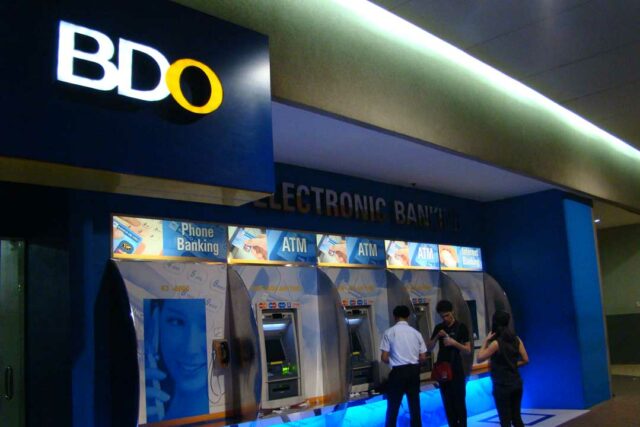
BDO UNIBANK, Inc. is selling its majority stake in its investment holding company Dominion Holdings, Inc. (DHI).

The bank on Monday (Jan. 19) signed a share purchase agreement with Monte Sur Equity Holdings, Inc. to sell 1,513,732,718 or 70% of its shares in the investment holding company at P1.68 per share or about P2.54 billion, it said in a disclosure to the stock exchange on Tuesday.

Following the sale, DHI will no longer be a subsidiary of BDO.

“The disposition of DHI is aligned with BDO Group’s continuing policy of streamlining its organizational structure following the conversion of DHI into an investment holding company,” the bank said.

The transaction is still subject to closing conditions and regulatory approvals. — A.M.C. Sy

JP Morgan cuts emerging market FX view on overcrowding worries

The logo of J.P. Morgan is seen in Zurich, Switzerland July 8, 2021. — REUTERS/ARND WIEGMANN

LONDON – JP Morgan’s strategists cut the bank’s view on emerging market currencies to ‘market weight’ from ‘overweight’ on Monday, saying short-term positioning was now “overbought” following a strong year-long rally.

The US investment bank, whose views are closely watched by traders, also cut South Africa’s rand to ‘market weight’ from ‘overweight’ having already cut risk in central and eastern Europe and adjusted its view on the Mexican peso over the last week.

“There are times to reduce risk in the short term due to overcrowding and this is one of those times in our view,” JP Morgan’s strategists said in a note to clients.

International investors rediscovered their appetite for emerging market assets last year despite the volatility of US trade tariffs, as the lure of attractive interest rates and cheaper asset prices has been given extra impetus by a near 10% drop in the dollar.

The move back in has lifted MSCI’s emerging market currency index roughly 7.5% over the last 12 months, EM local currency debt has returned almost 20%, while MSCI’s EM stocks index has surged nearly 40%.

JP Morgan’s analysts said a fresh glut of inflows into EM since the start of the year had pushed the bank’s in-house EM FX Risk Appetite Index into significantly overbought territory and well above the threshold that triggers a “sell signal”.

“We have flagged the build-up of positioning in EM currencies and this is now enough for us to take profits in the short term,” they added.

They acknowledged that emerging markets had also had to grapple with “a lot of other noise” since the start of the year, starting with Venezuela, Iran, US Federal Reserve independence, US Supreme Court rulings and now Greenland with new threats of tariffs.

While these developments were not the key driver of the change in their EM foreign exchange view, JP Morgan analysts flagged that the key areas of worry could start to feed off each other.

“We often find that once the market is already over-positioned it can become nervous about newsflow that it might otherwise downplay,” they said.

“Given the low starting levels of vols and risk premia globally, this nervousness could show in a short-term pull-back.” — Reuters

Hotel101 Global to develop 766-room Melbourne condotel

Perspective of Hotel101-Melbourne, Melbourne CBD, Australia. — DOUBLEDRAGON CORP.

HOTEL101 Global Holdings Corp., the Nasdaq-listed hospitality arm of DoubleDragon Corp., said it will develop a 766-room condotel project in Melbourne, Australia, which is expected to be completed by 2029.

In a statement on Tuesday, the company said the project is projected to generate about A$323.6 million (P12.6 billion) in total sales revenue once fully sold.

Upon completion, it is expected to be the largest hotel in Melbourne, Victoria, in terms of room count.

The condotel, to be known as Hotel101-Melbourne, will be located in the city’s central business district along Flinders Lane, near Federation Square, Flinders Street Station, the Yarra River, and the Southbank entertainment precinct.

The company said the project will offer four-star amenities positioned at affordable price points.

Hotel101 Global said it has signed definitive agreements for the development, which remains subject to the usual approvals from national, regional, and municipal regulators.–Alexandria Grace C. Magno

‘Content to die’: Afghanistan’s hunger crisis worsened by winter, aid cuts

A MAN pulls a girl to get inside Hamid Karzai International Airport in Kabul, Afghanistan, Aug. 16. — REUTERS

KABUL — In the dull glow of a single bulb lighting their tent on the outskirts of Kabul, Samiullah and his wife Bibi Rehana sit down to dry bread and tea, their only meal of the day, accompanied by their five children and three-month-old grandchild.

“We have reached a point where we are content with death,” said 55-year-old Mr. Samiullah, whose family, including two older sons aged 18 and 20 and their wives, is among the millions deported by neighboring Iran and Pakistan in the past year.

“Day by day, things are getting worse,” he added, after their return to a war-torn nation where the United Nations’ World Food Program estimates 17 million battle acute hunger after massive cuts in international aid.

“Whatever happens to us has happened, but at least our children’s lives should be better.”

He was one of the returned Afghans speaking before protests in Iran sparked a massive crackdown by the clerical establishment, killing more than 2,000 in ensuing violence.

Mr. Samiullah said his family went virtually overnight from its modest home in Iran to their makeshift tent, partially propped up by rocks and rubble, after a raid by Iranian authorities led to their arrests and then deportation.

They salvaged a few belongings but were not able to carry out all their savings, which would have carried them through the winter, Mr. Samiullah added.

Reuters was unable to reach authorities in Iran for comment.

“Migrants who are newly returning to the country receive assistance as much as possible,” said Afghan administration spokesman Zabiullah Mujahid, in areas from transport to housing, healthcare, and food.

It was impossible to eradicate poverty quickly in a country that suffered 40 years of conflict and the loss of all its revenue and resources, he added in a statement, despite an extensive rebuilding effort.

“Economic program take time and do not have an immediate impact on people’s lives.”

The WFP says Iran and Pakistan have expelled more than 2.5 million Afghans in massive repatriation programs.

Tehran ramped up deportations last year amid a flurry of accusations that they were spying for Israel. Authorities blamed the expulsions on concerns about security and resources.

Islamabad accelerated deportations amid accusations that the Taliban was harboring militants responsible for cross-border attacks on Pakistani soil, allegations Afghanistan has denied.

NO INCOME, NO AID
As winter spreads across Afghanistan’s arid landscape, work opportunities have dried up, while the wave of returning Afghans has swelled the population by a tenth, said John Aylieff, the WFP’s country director.

“Many of these Afghans were working in Iran and Pakistan and they were sending back remittances,” he told Reuters, adding that 3 million more people now face acute hunger. “Those remittances were a lifeline for Afghanistan.”

Cuts to global program since US President Donald Trump returned to the White House have sapped the resources of organizations such as the WFP, while other donor countries have also scaled back, putting millions at risk worldwide.

“Last year was the biggest malnutrition surge ever recorded in Afghanistan and sadly the prediction is that it’s going to get worse,” added Mr. Aylieff, estimating that 200,000 more children would suffer acute malnourishment in 2026.

At the WFP’s aid distribution site in Bamiyan, about 180 kilometers (111 miles) from Kabul, the capital, are stacks of rice bags and jugs of palm oil, while wheelbarrows trundle in more food, but it is still too little for the long queues of people.

“I am forced to manage the winter with these supplies; sometimes we eat, sometimes we don’t,” said Zahra Ahmadi, 50, a widowed mother of eight daughters, as she received aid for the first time.

‘LIFE NEVER REMAINS THE SAME’
At the Qasaba Clinic in the capital, mothers soothed their children during the wait for medicine and supplements.

“Compared to the time when there were no migrants, the number of our patients has now doubled,” said Dr. Rabia Rahimi Yadgari.

The clinic treats about 30 cases of malnutrition each day but the supplements are not sufficient to sustain the families, who previously relied on WFP aid and hospital support, she said.

Laila, 30, said her son, Abdul Rahman, showed signs of recovery after taking the supplements.

“But after some time, he loses the weight again,” she said.

After the Taliban takeover, she said, “My husband lost his (government) job, and gradually our economic situation collapsed. Life never remains the same.”

The United States led a hasty withdrawal of international forces from Afghanistan in July 2021, after 20 years of war against the Taliban, opening the doors for the Islamists to take control of Kabul.

As dusk gathers and the temperature falls, Samiullah brings in firewood and Bibi Rehama lights a stove for warmth.

“At night, when it gets very cold, my children say, ‘Father, I’m cold, I’m freezing.’ I hold them in my arms and say, ‘It’s OK.’ What choice do we have?” Mr. Samiullah said.

“(When) I worked in Iran, at least I could provide a full meal. Here, there is neither work nor livelihood.”— Reuters

Malaysia’s Khazanah to steer more capital to power grids, chip firms, chief says in Davos

STOCK PHOTO | Photo by Thilipen Rave Kumar: https://www.pexels.com/photo/assorted-flags-1625603/

DAVOS — Malaysia’s sovereign wealth fund Khazanah Nasional Bhd plans to channel more capital into strengthening the power system and supporting local semiconductor firms as AI drives the next investment cycle, its chief told Reuters on Monday.

Surging AI computing needs were reshaping what is “investable” in the AI boom, with energy supply and grid resilience being central to competitiveness, Khazanah Managing Director Amirul Feisal Wan Zahir said in an interview at the World Economic Forum’s annual meeting in Davos.

“What it does need is computing power and what computing power means energy. So that’s when we think about capturing some of that growth,” Mr. Amirul Feisal told the Reuters Global Markets Forum.

While global investors have been pouring money into data centers, he said Khazanah would instead focus on infrastructure.

“We’re really looking at the energy part, so again looking at grid resilience,” he said, adding that cheap and reliable power, including renewables, would be critical as AI infrastructure scales up.

SEMICONDUCTORS, NOT DATA CENTRES
The firm was also “seeing how we can help fund some of the capital requirements of our semiconductor players to move up the value chain to advanced packaging,” Mr. Amirul Feisal said.

Malaysia has been rolling out industrial policies aimed at strengthening its role in the global chip supply chain.

Prime Minister Anwar Ibrahim had said in May 2024 the government aims to attract at least 500 billion ringgit ($123.40 billion) in semiconductor investment, supported by at least $5.3 billion in fiscal incentives, and that it plans to build up local capabilities in chip design and advanced packaging.

Khazanah invests in Malaysia and internationally across markets, asset classes, sectors and geographies and counts the country’s second-largest lender CIMB Group and national carrier Malaysia Aviation Group among its portfolio.

Its net asset value rose 22% to 103.6 billion ringgit ($25.57 billion) in 2024 from 84.8 billion ringgit a year earlier.

Mr. Amirul Feisal said Khazanah expected its international portfolio share to rise gradually over time.

Asked about the ringgit, he said there was “room” for the currency to strengthen depending on the US dollar, citing uncertainty over the path of US interest rates, but didn’t specify a level.— Reuters