Home Blog Page 3979

Gov’t told to enforce cybersecurity

FREEPIK

THE PRIVATE Sector Advisory Council (PSAC) has urged the Marcos administration to implement an executive order mandating minimum security standards for critical information infrastructure.

An executive order mandating Minimum Information Security Standards for Critical Information Infrastructure should “enhance the resilience of vital systems against potential cyber intrusions,” the PSAC Digital Infrastructure sector said in a press release on Wednesday, following a Tuesday meeting with President Ferdinand R. Marcos, Jr.

It should be in line with the National Cybersecurity Plan, the group added.

The group also asked the President to certify as urgent the proposed Cybersecurity Act and Anti-Mule Act, both pending in the Senate.

“We will talk with the leadership of the Legislature and see how we can move [them] along quickly,” Mr. Marcos told the group, emphasizing the urgency of the proposed Online Site Blocking Act.

“These bills hold substantial potential to fortify cybersecurity’s legal framework and combat financial cybercrimes,” the PSAC group said.

At the meeting, the group endorsed the upcoming Data Unity Summit and asked the President to deliver a keynote address.

“Emphasizing the administration’s commitment to fostering data unity and security is crucial,” it said.

The group also expressed support for the establishment of a multi-sectoral technical working group led by the Department of Information and Communications Technology to combat fraud and financial cyber threats.

“This initiative will focus on creating a Mobile Device Database and Anti-Financial Crimes Command Center,” it said. — Kyle Aristophere T. Atienza

BARMM gets P332M for women

@BANGSAMOROGOVT

THE BANGSAMORO government, the Korean government through the Korea International Cooperation Agency (KOICA), and United Nations Children’s Fund (UNICEF), launched a P332-million program to strengthen resilience services for children, adolescents, and women in conflict-affected areas of Maguindanao del Norte, Maguindanao del Sur, and Cotabato City.

“A responsive and progressive Bangsamoro is one that puts the future of our children at the fore,” said Bangsamoro Chief Minister Ahod Ebrahim in a statement. “Promoting peace in our communities and building trust in one another will only make our region stronger.”

The program is set to reach 282,000 individuals, including 217,140 children under five years old. It aims to improve access to essential services in health, nutrition, education, and child protection systems for vulnerable populations in the Bangsamoro Autonomous Region in Muslim Mindanao (BARMM).

“Addressing the roots of conflict and fragility and promoting the meaningful engagement of children and young people are the first steps in building lasting peace,” UNICEF Philippines Representative Oyunsaikhan Dendevnorov said in a statement.

Children in Mindanao have the highest exposure to grave child rights violations with 83% of the total cases attributed to the presence of armed groups, said UNICEF in its 2022 report.

“Supporting peacebuilding efforts is a moral obligation for the well-being and future of the children,” said KOICA Philippines Country Director Kim Eunsub in a statement, highlighting that the program reflects the aim of the Korean Government to help the Philippines achieve inclusive and sustainable development. — Jomel R. Paguian

Ex-Moro rebels now health workers

FORMER combatant-medics of the Moro Islamic Liberation Front are officially enlisted as barangay health workers in a ceremony early this week. — PHILIPPINE STAR/JOHN FELIX M. UNSON

COTABATO CITY — The Bangsamoro government has initially employed 1,049 former combatant-medics of the Moro Islamic Liberation Front (MILF), among them women, as barangay health workers in provinces and cities under its jurisdiction.

A physician in the 80-seat regional parliament, Kadil M. Sinolinding, Jr., told reporters on Wednesday that the MILF medics had been provided with accreditations by the Ministry of Health-Bangsamoro Autonomous Region in Muslim Mindanao (MoH-BARMM) as prelude to their enlistment this week as barangay health workers in their respective municipalities.

“Imagine the consolation we get from seeing former enemies of state, MILF guerillas, who fought military forces in previous decades, now employed as barangay health workers. This is another remarkable dividend of the Mindanao peace process, worth nurturing,” Mr. Sinolinding said. 

The physician-ophthalmologist Mr. Sinolinding, who chairs the health committee of the BARMM parliament, said enlisting the former guerrillas trained in emergency response and handling and transport to medical dispensaries of sick patients, or gunshot and blast victims, is parallel with the normalization thrusts of the two peace compacts between the government and the MILF.

The two accords, the 2012 Framework Agreement on Bangsamoro, and, subsequently, the 2014 Comprehensive Agreement on Bangsamoro, paved the way for the creation in 2019 of BARMM, replacing then the already 27-year Autonomous Region in Muslim Mindanao that was not as politically and administratively empowered as the present Bangsamoro regional government.

The employment of MILF medics as barangay health workers is a joint program of the regional parliament, under Chief Minister Ahod B. Ebrahim, the office of Mr. Sinolinding, who is most known throughout BARMM as “doctor sa parliamento,” and the Bangsamoro region’s health ministry. Mr. Ebrahim is chairman of the MILF’s central committee.

“This is a response to a request from the MILF for its medical corps to become part of the mainstream health service community under the BARMM government. Thanks to our chief minister and our regional speaker, said Mr. Sinolinding, apparently referring to Mr. Ebrahim and their figurehead in the parliament, the lawyer Pangalian Balindong.

Mr. Sinolinding said his office and the MoH-BARMM are targeting the employment in the coming months of up to a thousand more medics from the MILF and the Moro National Liberation Front. — John Felix M. Unson

House passes archipelagic sea lanes bill on 2nd reading

PHILIPPINE STAR/ MICHAEL VARCAS

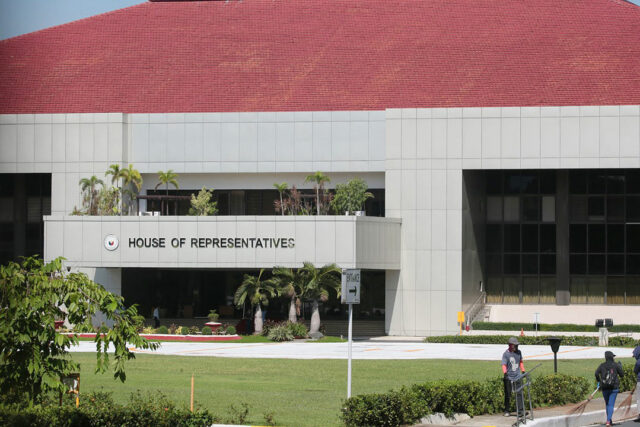
THE HOUSE of Representatives on Wednesday approved on second reading a bill seeking to establish archipelagic sea lanes in the Philippines.

House Bill No. 9034, if passed, will designate sea lanes in Philippine waters and air routes through which foreign vessels may pass through for “continuous expeditious and unobstructed transit.”

Under the measure, foreign ships exercising the right to pass through the sea lanes are barred from activities such has research and survey activities other than continuous transit.

The flag state of the vessel would bear international responsibility for any loss or damage suffered by the Philippines in these sea lanes, according to a copy of the bill.

The master of the vessel or the captain of the aircraft may be punished with imprisonment from a minimum of six months and one day to a maximum of two years and two months or fined $1.2 million (P66.43 million).

Party-List Rep. Brian Raymund S. Yamsuan, the bill’s principal author, earlier called for the measure’s swift approval amid rising tensions with China in the South China Sea.

Senators are set to deliberate on a bill that seeks to set Philippine maritime zones and territories extending to disputed areas in the South China Sea. — John Victor D. Ordoñez

Baguio’s climate initiative wins Kaohsiung award

PHILSTAR FILE PHOTO

BAGUIO CITY — The Baguio City government’s “Streets for Children Project” was chosen as one of the winners of the First Kaohsiung’s Call for Global Solutions on Green Transitions for Industrial Cities of the Industrial Climate Development Institute (ICDI).

The recognition acknowledges the best urban initiatives led by public and private partners that accelerates sustainable energy, promotes green living, strengthens urban resilience, showcases innovative climate solutions and demonstrates how to build climate movements in cities.

The initiative also provides case studies of urban climate leadership in diverse global contexts that can be learned from and replicated to create greener and more resilient cities.

Donna Rillera-Tabangin, City Planning, Development and Sustainability Office (CPDSO) chief, said the Streets for Children Project seeks to promote liveable communities through a child’s perspective by including children and the youth as co-designers of the city’s thoroughfares.

“The city’s roads are public spaces shared by everyone including children and young people, so they should be made part of the design and decision-making process,” she stressed.

Ms. Tabangin disclosed that the project is part of the Safe and Sound Cities program established to inculcate leadership qualities in the young so they can become co-decision makers regarding matters affecting their spaces.

Baguio City Mayor Benjamin Magalong pointed out that it is “crucial that we listen to the voices and ideas of the youth when it comes to making important decisions that will affect the community in the years to come.”

Winners will be formally announced and awarded at the Smart City Summit and Expo in Kaohsiung, Taiwan, in March 2024. — Artemio A. Dumlao

Bill tapping GOCCs for unfunded budget items approved by House

PHILIPPINE STAR/MICHAEL VARCAS

THE House of Representatives on Wednesday approved on third reading a bill that would allow the government to tap state-run corporations in funding unprogrammed appropriations.

With 292 affirmative votes, four negative votes, and two abstentions, legislators approved amendments to Republic Act No. 11936 or the 2023 national budget.

House Bill No. 9513 seeks to outline the conditions for financing unfunded budget items.

“In order to further assist the National Government’s requirements and fund much needed unprogrammed projects instead of burdening the National Government with more foreign loans, these government corporations can readily provide the necessary funds for the aforesaid purposes,” Albay Rep. Jose Ma. Clemente S. Salceda said in House Bill No. 9513.

Under the measure, “funds of government-owned or -controlled corporations (GOCCs) determined to be in excess of their current administrative and operational expenses, benefit obligations or reserve requirements” may be allocated to unfunded budget items.

The bill also seeks to use revenue from tax or non-tax sources in excess of the agencies’ collection targets to fund unprogrammed appropriations.

Assistant Minority Leader and Party-list Rep. Arlene D. Brosas, one of the legislators who voted against the measure, said the bill could only “expand the pork barrel system.”

“The proposal to source funds from excess GOCC revenue raises concerns about the direction of GOCCs and the potential intensification of profit-based fund sourcing at the expense of social services and the welfare of ordinary Filipinos,” she told the plenary.

The government must instead seek to increase the funding of agencies engaged in direct social services, according to Ms. Brosas.

Camarines Sur Rep. Gabriel H. Bordado, Jr. said he abstained from voting as “several pressing issues affecting the lives of people have yet to be fully addressed.”

John Paolo R. Rivera, president and chief economist at Oikonomia Advisory & Research, Inc., said the measure would allow unused or idle funds to be productive.

“However, this potential has to be matched with accountability,” Mr. Rivera said in a Viber message. “Without accountability, doing this might create more leakages than benefits.”

“That plan is okay if the funds in mind are the dividends of the GOCCs… those funds go to National Government for eventual allocation and appropriation,” Enrico P. Villanueva, a senior lecturer at the University of the Philippines Los Baños Economics department, said via X (formerly Twitter) message.

“It is a different story if they force contributions again from GOCCs the way they did with the GFIs (government financial institutions) to fund MIF (Maharlika Investment Fund),” Mr. Villanueva said citing the older provisions of the MIF law that gained backlash.

Budget Secretary Amenah F. Pangandaman said in October that the obligation and disbursement of government agencies’ maintenance and other operating expenses and capital outlays are extended until the end of 2024. The extension was done after changes were made on the guidelines on the validity of unprogrammed appropriations. — Beatriz Marie D. Cruz

More business chambers to advise regulator on ease of doing business

ILOILO CITY GOVERNMENT 

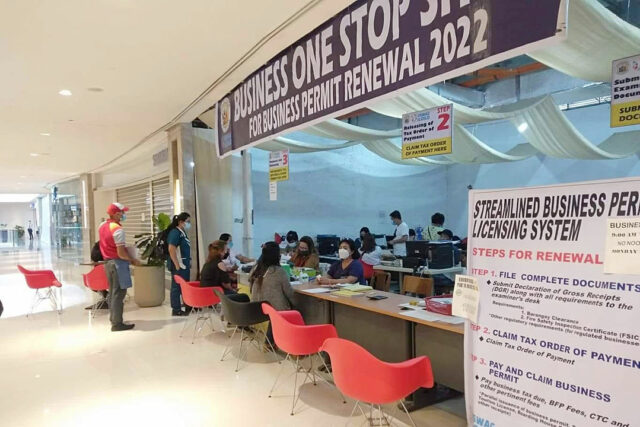
THE Anti-Red Tape Authority (ARTA) signed an agreement with three more business chambers on Wednesday, which agreed to advise the regulator on how to best implement Republic Act 11302, otherwise known as the Ease of Doing Business and Efficient Government Services Delivery act.

On the first day of the Ease of Doing Business Convention on Wednesday, ARTA signed a memorandum of understanding (MoU) with the Philippine Chamber of Commerce and Industry (PCCI), the German-Philippine Chamber of Commerce and Industry (GPCCI), and the Nordic Chamber of Commerce of the Philippines (NordCham).

GPCCI President Stefan Schmitz said the partnership with ARTA will help in simplifying business processes, reducing red tape and ultimately enhancing the overall investment climate in the Philippines.

“GPCCI is committed to bridging the business community and the government aiming to streamline processes and reduce bureaucratic challenges,” Mr. Schmitz said.

“Our involvement will extend to organizing informative events and actively participating in policy discussions, ensuring that the business sector’s voice is an integral part of this transformative tool,” he said.

He added that the signing of the MoU is a “proactive” step towards creating a more dynamic and competitive business landscape in the Philippines.

“By combining German expertise and innovation with Filipino resilience and ingenuity, we are set to make significant strides in making the Philippines a more attractive destination for investors,” he said.

German Ambassador to the Philippines Andreas Michael Pfaffernoschke, who was also present at the event, welcomed the partnership and said that it has the potential to ease business operations for German companies in the Philippines and to strengthen public-private sector collaboration.

“As you know, Germany is a very important trading partner of the Philippines … I am convinced that this MoU will help to make business easier for German companies in the Philippines that will help develop the bilateral economic relations, improve the local investment climate, and promote welfare for the Filipinos,” Mr. Pfaffernoschke said. 

PCCI President George E. Barcelon said that the partnership will allow the organization to communicate the needs of the private sector at the regional level to ARTA.

“The regional development councils include us in the chambers — that is why it is important that we are looped into this so that we can share to ARTA the places we know that have gaps that need to be addressed,” he said. 

Through the partnership, PCCI expects meetings with ARTA at the regional level to take place as often as they do at the national level.

“We want to strengthen it. Hopefully our meetings with ARTA on a regional basis will be more regular. We often discuss (matters) at the national level because of the forums, and we want to achieve the same at the regional level,” Mr. Barcelon said.

Jesper Svenningsen, executive director of NordCham, said simplifying the processes that businesses are subject to is important in attracting more foreign investment, especially from the Nordic countries.

“At least for the Nordics, we are used to things being smooth and fast. The improvements that are already done by ARTA are very significant. Thus, we see more interest in foreign investment in the Philippines from the Nordics,” Mr. Svenningsen said.

He said that the MoU will help in taking ARTA’s initiatives to the next level and guide it towards the next steps that will make doing business in the Philippines smoother.

“We were looking forward to signing this, but we are really looking forward to taking the next steps and making sure that our points of view are being heard and that all the companies that we represent are also being heard,” he said.

“I am sure ARTA will help us with whatever bumps on the road, to smoothen it out so business will be even better in the Philippines,” he added.

ARTA Secretary Ernesto V. Perez said that the three MoUs signed on Wednesday followed the MoUs the agency signed with the Korean Chamber of Commerce Philippines and the Malaysia Chamber of Commerce and Industries Philippines in the past few weeks.

“In the future, we will also be signing with the European Chamber of Commerce of the Philippines and the American Chamber of Commerce of the Philippines,” Mr. Perez said.

“By entering these MoUs, we will make them our champions so that they and their members who know and experience red tape will be able to let us know … Through the MoUs that we have signed, we will capacitate them to refer any complaints by any of their members so that ARTA can act accordingly,” he added. — Justine Irish D. Tabile

ARTA says upgrades to regional operations will require more funding

THE Anti-Red Tape Authority (ARTA) said on Wednesday that it is hoping the Senate approves the P200 million enhancement in funding that the House has agreed to, which will allow it to upgrade the agency’s regional operations. 

ARTA Secretary Ernesto V. Perez told reporters on the sidelines of the Ease of Doing Business Convention on Wednesday that the funding allocated for ARTA by the Department of Budget and Management was only P280 million, much lower than its P800 million request.

“When it went through the deliberations in the House, our budget was increased by P200 million,” Mr. Perez said.

“Right now, it is currently with the Senate and we hope the Senate will also endorse the recommendation of the House to increase our budget by P200 million,” he said.

On Tuesday, the Senate approved on final reading its version of the proposed P5.768-trillion national budget bill.

In the report issued by the Senate Finance Committee, ARTA’s budget was retained at the P490 million agreed to by the House of Representatives in the House Bill 8980 or the proposed General Appropriations Act. 

“We will use the additional budget to expand our regional operations because at the moment, we only have eight regional operations,” Mr. Perez said.

“With that increase, we will increase the number of our employees and increase our regional offices so that we will be present in all the regions,” he added.

Currently, ARTA is present in Northern Luzon, Central Luzon, Southern Luzon, the Eastern Visayas, the Western Visayas, Northern Mindanao, Eastern Mindanao, and Western Mindanao.

“You know, even if the budget of ARTA is small, we are still able to (operate) because we get the support of the chambers of commerce, US Agency for International Development (USAID), and foreign governments such as Australia, New Zealand, Malaysia, and Canada,” said Mr. Perez.

“(As such), we will be launching the Philippine Business Regulation Information System (PBRIS)… together with the Anti-Red Tape Electronic Management Information System (ARTEMIS),” he added.

PBRIS will serve as a central repository of all the regulations issued and implemented by all government agencies to ensure harmonization in regulatory procedures.

ARTEMIS will help in streamlining the submission and management of Citizen’s Charters through allowing government agencies to submit and update their charters and enabling the public to view, download, and comment on them. 

“What is good about these two systems is that they were developed at practically no financial cost to the government because these were created through the technical assistance of the USAID,” said Mr. Perez.

Meanwhile, Mr. Perez said ARTA is still waiting on the private sector’s recommendation or proposal on the proposed storage fee increases of the Philippine Ports Authority (PPA). 

The Philippine Exporters Confederation, Inc. (Philexport) recommended in a position letter addressed to the port regulator that the fee hikes undergo a regulatory impact assessment.

“Of course, with that recommendation, what we always say is that if there is a proposed increase by way of a regulation, it should undergo the regulatory impact assessment,” said Mr. Perez.

“It is the mandate of ARTA to require the PPA to subject any proposed regulation to increase fees to conduct regulatory impact assessment,” he added.

In its proposal, the PPA is planning to increase the storage charges by 32% for import, export, and transshipment containers and to add a 150% surcharge on the corresponding storage rates for refrigerated containers.

According to Philexport, the proposed increase in fees was presented in an online public consultation held on Oct. 18.

“We are yet to receive any formal request about it, but once we receive it, we will immediately act on it … We can write to the PPA to express the concern and to request them to submit to us the regulatory impact,” Mr. Perez said. — Justine Irish D. Tabile

Philippines urged to reduce dependence on China-funded projects

EIA.EMB.GOV.PH

THE PHILIPPINES must stop counting on Chinese-funded projects due to ongoing tensions between the two countries that could derail the infrastructure program, policy think tank Infrawatch PH said. 

“Our infrastructure ambitions must not be held hostage to the whims of a single foreign power. Many international funding options are available that respect our sovereignty and offer more favorable terms,” Terry L. Ridon, a public investment analyst and convenor of InfraWatch PH, said in a statement on Wednesday.

The Philippines must diversify its funding sources, Mr. Ridon said, to facilitate a shift away from China-funded infrastructure projects.

He described the country’s continued resort to China as a funding source as a “risky entanglement” amid the worsening tensions arising from the two countries’ ongoing territorial dispute.

“In the delicate game of international relations, economic dependencies can become geopolitical vulnerabilities. Our economic strategies should not leave us exposed to pressures from a nation that challenges our territorial sovereignty,” he said. 

“These financial entanglements could potentially influence our political decisions, compromising our national interests in favor of external agendas,” Mr. Ridon added.

InfraWatch said the government must also reevaluate existing China-assisted projects, noting that the 2024 expenditures and sources of financing document still lists a number of major infrastructure projects funded by China.

The Department of Transportation has said that it is seeking the approval of the National Economic and Development Authority to increase the loan amount for three major infrastructure projects after withdrawing its official development assistance request from China due to lack of progress on the application.

Several loan agreements with China cover works that are classified as flagship projects by the Department of Finance, such as the New Centennial Water Source-Kaliwa Dam Project and the Chico River Pump Irrigation Project.

“Canceling these projects is a definitive way to assert our national interests and sovereignty. It sends a strong signal to Beijing that we are serious about defending our sovereignty,” he said. — Ashley Erika O. Jose

Irrigation, processing facilities focus areas for rice program

DEPARTMENT OF AGRICULTURE HANDOUT

THE Department of Agriculture (DA) said its plan for raising rice production will focus on expanding irrigation and building more processing facilities.

In a statement on Wednesday, Agriculture Secretary Francisco T. Laurel, Jr. said: “Ultimately, our aim is to minimize rice imports to achieve food security and sufficiency.”

As of Nov. 16, rice imports hit 2.94 million metric tons (MT), according to the Bureau of Plant Industry.

He said that minimizing imports could also improve the income of farmers and fisherfolk.

“(It would) create more jobs in a sector that already provides employment to one in every four Filipinos and reverse the shrinking trend of agriculture’s contribution to economic growth,” he added.

In a speech, President Ferdinand R. Marcos, Jr., the previous Secretary of Agriculture, said the DA is stepping up efforts to mechanize farming, increase agricultural infrastructure and adopt technology to improve grain production and supply.

“I am optimistic that all concerned government agencies, partners, and stakeholders will continue to explore ways to enhance existing agricultural technologies to improve and strengthen the rice industry, in line with our goal of a food-secure nation,” Mr. Marcos said.

He added that modernization of agriculture will equally focus on livestock, poultry, fisheries and high-value crops.

“The government shall continue to give primacy to research and development to ensure a sustainable rice value chain,” he said.

He added that the administration will also support the research initiatives of the Philippine Rice Research Institute to introduce modern agricultural biotechnology to improve rice output.

The DA has estimated that production of palay, or unmilled rice, will hit 20 million MT this year. This would exceed the 19.76 million MT recorded in 2022. — Adrian H. Halili

ADB warns digitalization may cause small companies to lose market power

THE rapid acceleration of digitalization risks upending the dynamics of market power, often to the disadvantage of micro-, small- and medium-sized enterprises (MSMEs), the Asian Development Bank (ADB) said.

“The process of accelerated digitalization in recent years has also changed Asia’s competition landscape dramatically. COVID-19 hastened the widening of the scope of platforms and digital ecosystems, and the extent to which they are impacting markets today,” the ADB said in a recent working paper.

“It also accelerated the digital revolution that was already taking place, with firms upgrading their digital know-how and joining platforms to thrive in an increasingly connected and globalized world,” it added.

In the Philippines, employment in the MSME sector as a share of the total labor force was 64.7% in 2021.

“While these changes are ushering in opportunities and benefits to consumers, firms, and the economy as a whole, digital platforms also have characteristics that potentially yield them too much market power and present challenges to other stakeholders, especially MSMEs, that are an important pillar of many Asian economies,” the ADB added.

MSMEs are estimated to have accounted for about 30% of Asia’s total exports in 2013.

“In Asia, a majority of MSMEs operate in traditional wholesale and retail trade and other service industries, mostly in rural areas,” it said.

“This means that the sustained growth of MSMEs will play a critical role in achieving inclusive growth, maintaining poverty reduction, and narrowing regional disparities in developing Asia by providing employment and business opportunities for the young, unemployed or underemployed individuals, those working in the informal sector, women, and other vulnerable groups,” it added.

During the pandemic, digitalization also accelerated, but not all MSMEs benefited from this, the bank said.

“The outbreak of the COVID-19 pandemic in early 2020 fueled existing global trade tensions and economic uncertainty in Asia, leading to a sharp deterioration of MSME performance in the region. At the same time, however, Asia’s rapid shift to the digital economy in the MSME sector was facilitated by the COVID-19 lockdowns,” it said.

The bank said that competition policies should entail an “in-depth understanding of the nature of digital platforms.”

This will generate social benefits and foster further innovation and sustainable development in the region, it added. — Luisa Maria Jacinta C. Jocson

A limited period to collect stickers and taxes

One sign that Christmas is just around the corner is when coffee chains begin running their annual year-end sticker campaigns. The schemes involve earning stickers or stamps for every purchase of a beverage. Once patrons have collected a certain number of stamps or stickers, they get to choose from a selection of limited-edition merchandise. However, the redemption periods for these campaigns are normally limited, thereby encouraging customers to purchase more before the deadline.

Just as these year-end campaigns run for only limited periods, so does the National Government’s right to collect taxes. It has a limitation which can either be three years or five years from the date an assessment notice has been released, mailed or sent to the taxpayer by the Bureau of Internal Revenue (BIR). But when do we apply these periods? This was answered by the Supreme Court in G.R. No. 258947 dated March 29, 2022.

In that case, the BIR sent a Formal Assessment Notice (FAN)/Formal Letter of Demand (FLD) in 2014 to the taxpayer assessing the latter for deficiency taxes arising from the taxable year 2010. Six years later (in 2020), the BIR proceeded with collection efforts.

The Court of Tax Appeals (CTA) issued Resolutions cancelling the deficiency tax assessment on the ground of prescription, and enjoined the BIR from collecting the assessed deficiency taxes. The BIR appealed the case to the Supreme Court and alleged that the CTA erred when it dismissed the assessment on account of prescription. The BIR argued that the failure of the taxpayer to file a protest to the FAN/FLD rendered the assessment against the taxpayer already final, executory, and demandable and that the final decision on disputed assessment (FDDA) issued in 2015 effectively served as a collection letter for the satisfaction of deficiency tax liabilities. Thus, BIR’s right to collect the deficiency taxes did not prescribe.

One issue resolved by the Supreme Court was the applicable period of prescription on the BIR’s right to collect taxes (i.e., whether it is three years or five years).

The Supreme Court ruled that the three-year period would apply. Based on the decision, Section 203 of the Tax Code provides the period within which the BIR may assess and collect taxes. Citing jurisprudence, if an assessment is duly issued within the three-year period, the BIR has another three years within which to collect the tax due by distraint, levy, or court proceeding. The Supreme Court held that the five-year period for collection of taxes only applies to assessments issued within the extraordinary period of 10 years in cases of false or fraudulent return or failure to file a return.

Nonetheless, the Court notes that regardless of which period is applied, i.e., five years as determined by the CTA Division or three years as discussed above, the BIR’s collection efforts were already barred by prescription. Since the FAN/FLD was issued in 2014, the BIR effectively only had until 2017 (or 2019) to initiate efforts to collect the tax by distraint, levy, or court proceeding. However, since the BIR only initiated collection efforts in 2020, according to the Supreme Court, the CTA was correct in ruling that prescription had already set in.

Since the Supreme Court decision is deemed part of the Philippine legal system under the doctrine of stare decisis, the author hopes that Congress, by way of an amendatory law, clarifies its intent insofar as the applicable period of prescription for the collection of taxes since Section 203 does not expressly provide for such three-year period to collect. Based on my reading of Section 203, the period pertains to the time frame for the BIR: (1) to make an assessment; and (2) to file a case for collection without an assessment.

Further, while I agree that the five-year period for the collection of taxes applies to assessments issued within the extraordinary period of 10 years (i.e., in cases of false or fraudulent return or failure to file a return), this is not the only instance when the five-year period can apply. Another instance is when the three-year period to assess is extended through the execution of a waiver, as provided in Section 222 subparagraph (d) in relation to subparagraph (b).

From the foregoing, following the Supreme Court’s interpretation of Sections 203 and 222 of the Tax Code, the rules on the prescriptive period for the collection of taxes can be summarized as follows:

1. When the BIR validly issues an assessment within the three-year period under the statute of limitations, it only has another three years within which to collect the tax due by distraint, levy, or court proceeding if the assessment becomes final and executory.

2. By way of exception, when the assessment is issued within the extraordinary period of 10 years (in cases of false or fraudulent return or failure to file a return), the BIR will have a period of five years to collect the deficiency taxes.

3. The five-year period to collect would also apply in instances where the taxpayer and the BIR agree in writing to an extended period for the assessment of taxes (i.e., a waiver was executed before the original period to make an assessment has lapsed).

The period for collection of the assessed tax generally begins to run on the date the assessment notice is released, mailed or sent to the taxpayer.

Whether you are collecting stickers or taxes, the period to do so is not unlimited. As far as taxation is concerned, prescription limits the right of the government to assess and collect taxes. Thus, just as coffee shop patrons aim to complete collecting stickers before the deadline, both taxpayers and revenue authorities should be mindful of the applicable prescriptive periods provided for by law in the assessment and collection of taxes.

The views or opinions expressed in this article are solely those of the author and do not necessarily represent those of Isla Lipana & Co. The content is for general information purposes only, and should not be used as a substitute for specific advice.


Jose Luis M. Yupangco is an assistant manager of the Tax Services department of Isla Lipana & Co., the Philippine member firm of the PwC network.

jose.luis.yupangco@pwc.com