Home Blog Page 3962

Segway to affordable and electrified mobility

The Segway electric scooters available here start with a price of P109,000. — PHOTO FROM AUTOHUB GROUP

Autohub Group now distributes e-scooter brand, schedules rollout in early 2024

By Dylan Afuang

FOR THE AUTOHUB Group, electric mobility can come in two wheels and four, and at prices affordable and premium.

As the local distributor of Lotus cars, the company introduced the brand’s P10-million Eletre electric SUV at the 11th Philippine Electric Vehicle Summit (PEVS), and also showcased the electric scooters from the China-headquartered Segway brand it now handles.

The N100, E110L, and E300SE models comprise the local Segway lineup. Autohub has opened reservations for these e-scooters, which will then be delivered to customers in January 2024, when these will also be made available for purchase, Autohub President Willy Tee Ten announced at the PEVS.

“As the Philippine distributor (of Segway e-scooters), we actively seek partners who share our vision for a sustainable and connected future,” Mr. Tee Ten expressed to the media at the exhibition. He continued, “All (these models come) at highly competitive prices, making them a truly accessible option for Filipinos.”

Pegged at P109,000, the N100 is powered by a 1,500-W motor, capable of a 60kph top speed, and can travel a range of 105km. The motorcycle’s weight is estimated at 67kg, and that factors in the 14kg, 72V 24Ah battery it carries.

For P125,000, the E110L provides a more powerful 1,800-W motor that generates 150Nm and allows a top speed of 62kph. Range, on the other hand, is rated at 110km on a full charge.

Priced at P275,000, the E300SE leads the local Segway lineup with its sizable 7,800-W motor and generous 200Nm of torque. While the E300SE’s terminal velocity is limited to 105kph, the dual battery system it utilizes returns an estimated range of 130km.

EABS-equipped front and rear disc brakes, LED headlights, and signal lights are standard with these Segway e-scooters. With a 250-W battery, the N100 and E110L can be fully charged in eight to nine hours, but the E300SE requires only 5.5 hours because of its 1,008-W charger.

While the company peddles the brand’s scooters, a separate entity will handle the brand’s alternative mobility products such as kick scooters and electric go-karts, Autohub Marketing Manager for Lotus, Mini, and Rolls-Royce Mae Pacatang-Valdez shared to “Velocity.”

The Segway e-scooters will also be retailed under the roof of Autohub’s multi-brand showroom in BGC, Taguig City, alongside the aforementioned vehicle marques, Ms. Pacatang-Valdez added.

Human Nature all-grown up: A full routine review of some of its newest products

AS SOMEONE who has been using Human Nature products on and off for a few years now, I built an impression of it as a “no-fuss” Filipino brand — basic skincare products that are very cost-effective and beginner-friendly or when you just want a non-complicated routine that’s clean, sustainable, and locally made (and always has sunflower oil as one its key ingredients). Now 15 years old, Human Nature has – to my delight  — begun branching out beyond its basics and including more ingredients in its products.

It felt like as much as I have grown and my skincare has evolved over the years, Human Nature did, too.

Its newest line is described to have been developed for those who want to “enjoy a day-to-night natural glow,” according to a press release which came along with a package of products. Of the new releases, I was sent the Hyaluronic Acid Gel Day Moisturizer (P249.75/50 ml); Ceramide Skin-Renewing Night Cream (P299.75/50 ml); Sunflower Beauty Oil with Bakuchiol (P299.75/30 ml); and the Vitamin C + Hya Calamansi Radiance Serum (P495/30 ml) to try out and I will be reviewing them after using them for a solid month.

THE ROUTINE
I don’t usually alter my entire routine for skincare reviews, but I felt that since I was already using Human Nature products — Nourishing Facial Wash (P84.75/50 ml) and Nourishing Toner (P114.75/50 ml) —  it felt right to just commit to a one-brand routine for a month.

But before we commence with the review, I’d like to point out that I’m in love with the packaging as Human Nature eschewed its usual minimalism for something with more colors and it looks so pretty on my nightstand.

For my daytime routine, after using the toner (I don’t use facial wash in the morning as a personal preference), I put on the Radiance Serum and let it dry for a bit before applying the Gel Day Moisturizer. At first, I tried to not use a facial oil just to see if it would work as my skin can be quite dry, so I usually use a heavier day cream (and not gel ones) which is formulated to suit normal to combination and oily skin types. After a few minutes, I felt my skin was tightening so I figured I needed a facial oil, so I added the beloved Human Nature Sunflower Beauty Oil (P179.75/50 ml).

It’s not the most spreadable facial oil so I did have to combine it with the Gel Day moisturizer, and it worked so much better for me.

The Radiance Serum is formulated to leave the skin “visibly firmer and plumper” and has a brightening effect since Vitamin C and Calamansi Extract address hyperpigmentation. The serum spreads well, is very lightweight, and half a dropper is enough to cover my entire face. It also has a very slight citrusy fragrance which isn’t overpowering but something to take note of for people who may be sensitive to fragrances.

I like this serum because it’s not as finicky as some Vitamin C serums where you must worry about oxidation affecting its effectivity since it’s not an oil. But as with all Vitamin C serums, please use sunscreen as the final step as it may make your skin more sensitive to the sun.

The moisturizer is good, especially for those who don’t have dry skin like mine. I feel like it’s an embodiment of what a good Human Nature product is — no-fuss and effective. It did hydrate my skin but I just needed a little more oil in the formulation since my skin dries too fast.

Oh, and it smells like Jelly-Ace, or those jelly snacks I used to eat as a kid! I loved that.

At night, I use a facial wash and toner, then I use the Sunflower Beauty Oil with Bakuchiol. Bakuchiol is a plant that’s often called nature’s retinol in that it helps improve the turnover of skin cells and stimulates collagen synthesis for smoother and more radiant skin. The product description said that it helps reduce fine lines, acne scars, and dark circles but without the irritation commonly associated with retinol products. As a person on the verge of their 30s, anti-aging ingredients are a must at this point. I’ve been using retinol for a few years now but in low concentrations because I do fear skin irritation or increased sensitivity. This Sunflower Beauty Oil with Bakuchiol hasn’t irritated my skin so that’s great, and since it’s an oil rather than a serum it keeps the moisture in better which my dry skin loves. It seems to smell like grape juice and if there’s one improvement I’d suggest, I’d recommend experimenting with other packaging since my bottle often overspills or drips down (it’s something I also notice with my sunflower oils).

I can’t talk a lot about how it works on fine lines since I don’t have a lot of those yet, but I can say that it kept my skin healthy for the past month I’ve been using it.

Finally, the Ceramide Skin-Renewing Night Cream ends my night routine. It has Jojoba and Sunflower Oil which is great for dry skinned people like me and I imagine it would also work for people with combination skin as, despite having oils as ingredients, it is lightweight — though I imagine you can use a pea-sized amount if you feel that you have too much oil on your face after the Bakuchiol.

All in all, I love how my skin currently looks and feels after a solid month of using these products. My favorites would have to be the Ceramide Night Cream and Bakuchiol Oil as it is just so satisfying waking up with plump, well-moisturized skin. These products are must-haves for those looking for local, clean beauty brands that are priced very competitively.

Human Nature products are available on the Human Nature website, Shopee, Lazada, Watsons, and leading malls nationwide.


Zsarlene Chua is a former BusinessWorld reporter who is now a fledgling PR girl. She’s all about skincare, makeup, and video games. None of the products recommended are the writer’s clients. Unless mentioned, all the products are independently reviewed and acquired products. Contact the author at zsarlene.chua@gmail.com.

Where the political risks are for 2024 in Southeast Asia

FREEPIK

Global geopolitics will be noisy next year, with Ukraine-Russia and the Middle East likely to still dominate the headlines. The outcomes for the ongoing conflict in those two parts of the world are still highly uncertain, but 2024 could be the year where their respective trajectories are determined. Ukraine faces potential fatigue and distraction with its key Western supporters, and while there is little appetite among the key Middle East players in seeing significantly greater instability, the sheer complexity of the issues and the depth of grievances make the pursuit of peace challenging. Meanwhile, the US faces an election in November 2024 that could cause it to become more isolationist, further reducing its engagement with Asia (again).

In our part of the world, the perceived flashpoints are primarily Taiwan and the South China Sea, where the fear is that a miscalculation in the regular posturing between regional powers could result in an actual shooting war. However, the risk of war in East Asia — especially in the context of it happening in 2024 or even 2025 — is lower than commonly portrayed in media (or worse, social media). This does not preclude a limited skirmish maybe from Philippine and Chinese naval forces continuing their one-upmanship, or due to a collision in the air as Western and Chinese air forces shadow each other. However, both Washington and Beijing have difficult domestic issues to deal with, whether it be the upcoming US elections or the worrisome weaknesses in the Chinese economy. And while posturing on global issues makes for good domestic headlines and distractions for their respective leaders and elites, the costs of an actual war would be staggering. It could make the economic hit from the pandemic look like a mild recession and become a political ravine for the leaders of both countries.

El Niño brings the threat of more unpredictable weather in 2024. Already, Thailand is expecting drier conditions that could reduce its rice and sugar production, which will be directly transmitted to domestic Philippine prices for these commodities. Meanwhile, India, the world’s largest rice exporter, faces an election year and would like to avoid a problematic spike in food prices by assuring its domestic supplies, while Indonesia could decide to import more ahead of its own polls. Indonesia and Malaysia are preparing for the possibility of palm oil supply dropping. The first half of the year therefore promises to be an unsettled one for some of the region’s major agricultural commodities.

Aside from the problems that a serious El Niño might cause for inflation and food, the real risks are at the country level or are issue-specific, and in political short-termism. Indonesia, the largest of ASEAN’s countries in economic size and population, will have its most consequential elections on Feb. 14 since the fall of Suharto in the 1990s, with a possible runoff in June. Leading the race is the retired general, defense minister Prabowo Subianto of the Gerindra party, a known nationalist and statist who frequently rails against what he describes as the historical exploitation of Indonesia by foreigners and neo-liberals — rhetoric that is a reversal of the moderate views expounded by his predecessors over the past two decades.

His image has been tempered somewhat by his uncontroversial stint in President Joko Widodo’s cabinet, and the fragmented nature of Indonesian politics makes it likely that he will need a couple of years to consolidate political power before potentially doing real damage. But should an unreformed and unrepentant Prabowo eventually emerge, then investor and economic uncertainty could increase not only about Indonesia’s openness to foreign investment, but the possibility that inefficient and value-destroying state enterprises could take on greater roles in the economy.

Thailand had its elections only this year, but the outcome left a lot to be desired in terms of entrenching political stability. The For Thais (PT) party of Thaksin Shinawatra was able to have Srettha Thavisin elected prime minister only after the deadlock between conservatives and the now opposition Move Forward Party. But Srettha’s ability to push PT’s agenda is still unproven and if Thailand’s economy flounders into next year, then the ruling party could decide to elevate Thakin’s youngest daughter, Paetongtarn, to the PM position to avoid a further slide in its popularity. The conservative Thai senate also loses its ability to vote for a prime minister next year, and how the opaque political maneuvering could eventually manifest in politics adds to the uncertainty. However, PT’s efforts to entrench its control over Thai politics, whether in Srettha or Paetongtarn, raises expectations of populist economic policies and of Thailand being unable to achieve the political stability and policy coordination that had established it as a key investment destination in Southeast Asia.

Meanwhile, Vietnam’s Communist Party (CPV) is not ridden by factional infighting and is still two years away from an important leadership transition. However, the economy is facing the after-effects of CPV general secretary Nguyen Phu Trong’s “blazing furnace” anti-corruption campaign, which has generated substantial uncertainty for government officials and businesses wary of being investigated and prosecuted by an opaque political and judicial system. However, the CPV likely considers anti-corruption in the banking sector and state enterprises as a key to maintaining the legitimacy of single-party rule and avoiding systemic financial risk, which means that it would be willing to continue accepting slower growth as long as broader macroeconomic and social stability is maintained. Expect jostling for control of the CPV to increase later in the year, however.

And then there is Myanmar, where the junta’s ability to control large swathes of its territory is now in doubt, even though the underground political opposition and ethnic armed organizations may still be insufficiently consolidated to directly threaten Naypyidaw. However, the decline in governance capabilities and the dire economic and security conditions mean increased suffering for its people, and from which ASEAN may increasingly be less able to divert its attention. More humanitarian aid may be needed, as well as greater pressure on the obdurate generals to agree to a real political solution.

Last, and probably the least, in terms of event risks are the Philippines and Malaysia. There will be much noise about the potential falling out between the Marcoses and Dutertes, but this is unlikely to threaten the president unless the administration effectively loses control of congress. The real risk for the Philippines is of weak coordination by the executive, with foreign investors continuing to find only ad-hoc policymaking, limited reforms, uncooperative bureaucracies, and an inability to effectively implement policies in education and infrastructure development that make it a more competitive economy. In Kuala Lumpur, Prime Minister Anwar Ibrahim survived the major state elections this year and while there will be persistent coverage in how his Alliance of Hope (PH) coalition appears to be losing ground to the opposition National Alliance (PN) and the Malaysian Islamic Party, he appears to be at least secure for the next few years. Reform expectations are already low, but Anwar at least has the opportunity to be the first PM to hold office for more than two years since the end of the National Front (BN)-led government in 2018. This may be a small but notable achievement in a region where short-term politics among the larger countries and economies is likely to be the rule more than the exception in 2024.


Bob Herrera-Lim is a managing director at Teneo, a New-York based consulting firm that advises companies and investors globally. He covers all of Southeast Asia for the firm’s clients. He is also a fellow of the Foundation for Economic Freedom.

English skills give Filipino business students edge in Asia

MAPUA.EDU.PH

FILIPINO business students have an edge compared to those from other Asian countries owing to their English skills, which give them different opportunities, an industry expert said.

“One strength that Filipino students have is the command of the [English] language. That is a very important advantage if you’re moving to internationalization,” Mapúa University Enrique T. Yuchengco School of Business (ETYSB) Dean Jagdeep S. Jassel said in an online interview last week.

“There are some countries where the students want to be globally exposed, but their main hindrance or handicap is always the language… Filipino students speak very good English. They’re able to understand. They’re able to articulate, I think that… opens the door to many different opportunities,” he added.

Mr. Jassel comes from Malaysia and has taught in other countries such as India, Japan, China, and Taiwan.

Based on his experience, Filipino business students are very eager to learn as they want to prove themselves, he said.

“It’s best to give your attention to such kinds of characteristics: people who are looking for an opportunity so that they can prove themselves, rather than force feed,” Mr. Jassel said.

He said they want the market to see that Mapúa University is “beyond engineering and architecture” and has a lot to offer, especially with the ongoing collaboration between ETYSB and Arizona State University (ASU).

“This partnership, it’s not just an ordinary MOU (memorandum of understanding)… This is a very concerted effort — a very thoughtful, process-driven kind of partnership,” he said.

The collaboration, which began two years ago, is aimed towards developing students through global immersion, exposure to real work experience, and digital mastery.

“Two years ago, it was more of a planting in a particular relationship. So, to speak, we were getting to know each other, we were understanding better, we looked into structures. But the first intake of students who came in is this year,” Mr. Jassel said.

The business school has been able to develop five new programs for its about 300 students. The institution has access to ASU’s repository of curricula, academic exchange either in person or virtually, and industry exposure.

“Their (ASU) benefit is to have access to this part of the [Asian] market and also to liberalize education — to provide opportunity for any Filipino student who would want to go to the US and eventually even work there or even leave the country,” Mr. Jassel said.

As part of the partnership, ETYSB is also in contact with institutions in ASU’s network, such as Esa Unggul University in Indonesia and Sunway University in Malaysia.

“There are about 20 universities within this network of partnership now. So, we are actually leveraging the strength of network,” Mr. Jassel said.

“I would say one of the edges that Mapúa business students will have is that they will be able to hit the road running when they join any organization,” he added. — Sheldeen Joy Talavera

Farmers want NFA power to stockpile other commodities

PHILSTAR FILE PHOTO

THE PHILIPPINE CHAMBER of Agriculture and Food, Inc. (PCAFI) said the authority of the National Food Authority (NFA) to maintain a national rice reserve needs to be expanded to include other commodities.

Lahat ng mga basic commodities pati sibuyas, asukal, pakialaman nila basta ang importante (Every basic commodity including onion and sugar, they should have a hand in, as long as) at the time there is a shortage, NFA is ready to come in,” PCAFI President Danilo V. Fausto told reporters last week.

Under the Rice Tariffication Law of 2019 (Republic Act No. 11203), importing rice were removed from the NFA’s functions. Private traders were instead allowed to bring in rice shipments while paying a 35% tariff on Southeast Asian grain.

The law also funded the Rice Competitiveness Enhancement Fund, to modernize the rice industry.

Mr. Fausto said imports of basic goods must be calibrated to meet demand.

“We (should) only import what is needed and at the right time,” he added.

The government has allocated about P9 billion to the NFA for 2023 and 2024.

“(The budget) could be double, it could be triple, it could be five times (higher) because there should be 60 days minimum (buffer stock),” he added.

The NFA is authorized purchase domestically grown rice and hold it in reserve in the event of shortages or calamities.

He said that the NFA should also work with the private sector and local government units in procuring adequate stocks of rice. — Adrian H. Halili

GAC bundles 2 years of free PMS with each vehicle

PHOTO BY KAP MACEDA AGUILA

GAC MOTOR PHILIPPINES announced that it bundles each GAC vehicle purchase from Nov. 1 to Dec. 31, 2023 with two years of free periodic maintenance service (PMS). “This special program is GAC Motor’s way of ensuring that every customer’s journey with (its) vehicle is not only stylish and exhilarating but also worry-free and exceptionally rewarding,” the company said in a release. The offer is extended to all the vehicles in the portfolio.

“We believe in not just providing cutting-edge vehicles but in fostering a lasting relationship with our customers,” said GAC Motor Philippines Brand Head Franz Decloedt. “This two-year periodic maintenance service package is our way of ensuring our customers receive unparalleled care and support throughout their journey of owning a GAC Motor vehicle.”

Covered in the comprehensive periodic maintenance service package are oil change, fluid and filter replacement, brakes cleaning and inspection, and more.

GAC Motor showrooms and service facilities are located in Alabang, Batangas, Bacolod, Bacoor, Butuan, Cainta, Cebu, Davao, Iloilo, Lipa, Makati, Manila Bay, New Manila, Pampanga, Pasig, Quezon Avenue, and Tarlac. Additional establishments will open soon in Cagayan de Oro, General Santos, and Marilao.

T-bill, bond rates to track secondary mart levels

BW FILE PHOTO

RATES of Treasury bills and bonds on offer this week could track secondary market levels amid easing global crude oil prices and following comments from US Federal Reserve Chair Jerome H. Powell.

The government will auction off P10 billion in Treasury bills (T-bills) on Monday, or P3 billion each in 91- and 182-day papers and P4 billion in 364-day papers.

On Tuesday, it will offer P20 billion in reissued 10-year Treasury bonds (T-bonds) with a remaining life of nine years and eight months.

T-bill yields could rise this week, while the reissued 10-year T-bonds could decline, Rizal Commercial Banking Corp. Chief Economist Michael L. Ricafort said in a Viber message.

At the secondary market on Friday, the rates of the 91-, 182-, and 364-day T-bills went down by 37.54 basis points (bps), 30.47 bps, and 49.28 bps week on week to end at 5.3645%, 5.6329%, and 5.7766%, respectively, based on PHP Bloomberg Valuation Service Reference Rates data published on the Philippine Dealing System’s website.

Meanwhile, the yield on the 10-year bond went down by 8.12 bps to end at 6.2291% on Friday.

Secondary market rates went down amid lower global crude oil prices and comments from the Fed chair, Mr. Ricafort said.

Meanwhile, a trader expects the 10-year bond to fetch yields of 6.25-6.35%.

“The 10-year bond auction [this] week should be interesting as we suspect speculative trades remain heavy… This will reveal if investment books will be supportive,” the trader said in an e-mail.

On Friday, oil prices settled more than 2% lower for a second consecutive day, with the market unconvinced the latest round of production cuts will be enough to lift prices from a recent slump, Reuters reported.

US crude settled down by 2.49% at $74.07 per barrel and Brent ended at $78.88, down by 2.45% on the day.

Meanwhile, the risks of the Federal Reserve slowing the economy more than necessary have become “more balanced” with those of not moving interest rates high enough to control inflation, Mr. Powell said on Friday, reaffirming the US central bank’s intent to be cautious but also offering fresh optimism on its progress so far.

Noting that a key measure of inflation averaged 2.5% over the six months ending in October, near the Fed’s 2% target, Mr. Powell said it was clear that US monetary policy was slowing the economy as expected with a benchmark overnight interest rate “well into restrictive territory.”

As the Fed goes forward, “the data will tell us if we need to do more” rate hikes, Mr. Powell said as he fielded questions from Spelman College President Helene Gayle after his opening remarks at the historically black college.

The US central bank kept the fed funds rate steady at the 5.25%-5.5% range for a second straight time during its Oct. 31-Nov. 1 meeting.

It has hiked rates by a cumulative 525 basis points (bps) since it began its tightening cycle in March 2022.

The Fed will next meet on Dec. 12-13 to review policy.

Last week, the BTr raised P10 billion as planned via the T-bills it offered on Tuesday as total bids reached P72.215 billion, more than seven times the amount on the auction block.

Broken down, the Treasury made a full P3-billion award of the 91-day T-bills, with tenders for the tenor reaching P25.615 billion. Its average rate fell by 137 bps to 4.753%. Accepted rates ranged from 4.72% to 4.78%.

The government likewise borrowed the programmed P3 billion through the 182-day securities, as bids for the paper reached P22.38 billion. The average rate for the six-month T-bill went down by 133.2 bps to 5.181%, with accepted yields ranging from 5.11% to 5.27%.

Lastly, the BTr raised P4 billion as planned via the 364-day debt papers, with bids reaching P24.22 billion. The average rate of the one-year T-bill went down by 83.3 bps to 5.727%. Accepted yields were from 5.59% to 5.75%.

Meanwhile, the reissued 10-year bonds to be offered on Tuesday were last auctioned off on Nov. 14, where the government raised P30 billion as planned at an average rate of 6.781%. Accepted yields ranged from 6.748% to 6.8%.

The BTr wants to raise P60 billion from the domestic market this month, or P20 billion via T-bills and P40 billion via T-bonds.

The government borrows from local and foreign sources to help fund its budget deficit, which is capped at 6.1% of gross domestic product this year — A.M.C. Sy with Reuters

A case for enhanced alcopops regulation

COCA-COLACOMPANY.COM

Earlier this year, the Coca-Cola Company launched their beverage collaboration with American whiskey brand Jack Daniels called “Jack & Coca-Cola,” otherwise known as Jack and Coke, in the Philippines. The packaging design retains Coca-Cola’s classic black and red aesthetic and features both brands’ logos alongside each other. These beverages are readily purchased in groceries and convenience stores, often placed beside juices and other non-alcoholic beverages, increasing accessibility for young people and confusion among parents.

Jack & Coke is an example of “alcopops,” which are defined as ready-to-drink, flavored, pre-mixed beverages with alcohol content of up to 10%, created by mixing alcoholic products and non-alcoholic ingredients. They often come in attractively branded or brightly colored packaging, designed to evoke a sense of familiarity and approachability. Their fruity flavors cover the bitter taste of alcohol. This makes them appealing to young people, who may not be aware of the risks of alcohol consumption.

Jack & Coke is not the only alcopop in Coca-Cola’s portfolio. The company previously released a spiked version of its lemonade drink called Simply Lemonade in the United States. Other traditionally child-friendly brands such as Mountain Dew and Dunkin’ have followed suit.

In the Philippines, an expanding array of alcopops from Japan and Korea has entered the market, characterized by their vibrant and fruit-themed branding and eye-catching, colorful labels. Legacy brands like San Miguel have also introduced their own hard seltzer drinks, featuring vivid packaging designs and marketed as easy to drink beverages that appeal to younger consumers. These beverages join the likes of Smirnoff Mule and Tanduay Ice.

The marketing of alcopops to the Filipino youth is particularly concerning. In the Philippines, 15% of Filipinos aged 10 to 19 use alcohol, and 37% of them are underage drinkers. As early as 2013, the Global School-based Student Health Survey (GSHS) developed by the World Health Organization and other multilateral institutions showed that Filipino youth who were exposed to alcohol advertising were more likely to drink alcohol and binge drink.

The consequences of early alcohol exposure are well-documented. Alcohol threatens brain development, challenges sound decision-making, and can lead to alcohol use disorder. Underage drinking can also lead to a myriad of social problems like a decline in academic performance, violence, and deadly car crashes.

The fact that alcohol companies are targeting the youth, one of the sectors most vulnerable to the ill effects of alcohol, through easy to access and appealing drinks like alcopops, should compel our legislators to act now.

In 2019, Senator Pia Cayetano, a staunch health advocate, called the sale of alcopops “unethical.” She proposed clearer labels on alcopops which clearly state the alcoholic content of the beverage, as existing labels are often smaller and difficult to see. Furthermore, she suggested alcopops be available for sale only in designated liquor sections with age verification checks during purchases to ensure that buyers meet legal age requirements.

Last year, Rep. Joey Salceda, Chair of the House Committee on Ways and Means, filed House Bill 1810 which increases the tax on alcopops by reclassifying them as fermented liquors or beer. Alcopops are currently taxed as distilled spirits, which have a lower tax rate than beer. This creates a discrepancy, as alcopops and beer both appeal to the younger population and are substitute products, yet alcopops are taxed lower.

This strategy is rooted in the proven success of implementing taxes on harmful products such as cigarettes. In the Philippines, higher taxes on tobacco have been directly associated with a decrease in tobacco use. Tobacco use has fallen by a third from 2012 to 2021.

Regulation and especially taxes are powerful tools that can help mitigate alcohol harms. Alcopops, with their youth-friendly appeal, deceptive packaging, and their potential to be used by alcohol companies to introduce youth to alcohol, pose a unique threat that requires immediate attention.

Mr. Salceda must move House Bill 1810 forward with a sense of urgency. This bill has unfortunately been idle since it was filed, and health advocates have been awaiting its progression. By prioritizing this bill, Mr. Salceda has the perfect opportunity to champion the health and wellbeing of the youth and of all Filipinos.


Kaloi Garcia is the communications manager of Vital Strategies, Philippines.

IGCC says its route for interconnection project is ‘more economically viable’

ILOILO Grain Complex Corp.’s (IGCC) proposed route would be “more economically viable” for the 138-kilovolt (kV) Panay-Guimaras Interconnection Project proposed by the National Grid Corp. of the Philippines (NGCP), it said.

“IGCC believes that our company’s proposed route for the project is not only technically feasible but is also more economically viable (following a direct route) than the proposed NGCP route (which follows a less direct, longer route),” IGCC Spokesperson Wigberto “Toby” Tañada, Jr. said in a statement over the weekend.

“Under our proposed route, the existing 69kV line can share posts/structures and right of way since it can be ‘underbuilt’ under the proposed 138kV transmission line,” Mr. Tañada added.

Underbuilt lines are a more common practice in distribution systems in the country as well as transmission systems built by NGCP’s state owned predecessor, which is the National Transmission Corp., according to IGCC.

IGCC owns the property where two tower sites are set to be located. The NGCP said in a statement last week that this is “crucial as this 1.7-kilometer transmission line will connect the proposed Iloilo Substation to the Ingore Cable Terminal Station.”

The cable terminal station will serve as the connection point of the submarine cable to Guimaras Island.

NGCP said “any deviation in the established route may also affect adjacent towers and cause further delay to the completion of the project.”

On April 12, the Supreme Court granted IGCC’s Petition for Certiorari and Prohibition with Very Urgent Application for Temporary Restraining Order (TRO) and/or Writ of Injunction.

The grid operator said the TRO would stall the completion of the interconnection project, which is targeted to be completed by December next year.

Mr. Tañada however said the delay was on the part of the NGCP for its “failure to follow expropriation rules and secure permits from the Energy Regulatory Commission (ERC).”

“Records will show that from the start it was NGCP that caused the delay of its own project. It did not secure the required ERC permit, failed to make a genuine just compensation offer to IGCC, and refused to consider cheaper and more practical right-of-way alternatives,” he said.

The permit being referred to by Mr. Tañada is the approval of the capital expenditure application filed by the NGCP in 2017, which is part of the fourth regulatory period covering the years 2016 to 2020 that has been delayed, according to ERC Chairperson Monalisa C. Dimalanta.

“This is part of our ongoing reset process, which we are targeting to complete soon,” Ms. Dimalanta said in a Viber message.

The ERC issued last month the preliminary results of its ongoing review of the performance and operations of the NGCP for the regulatory period 2016 to 2022.

Meanwhile, Mr. Tañada said the NGCP has not reached out to the IGCC for settlement. He said the parties “have submitted all their arguments and counterarguments to the Supreme Court.”

“The highest court of the land has spoken, and all parties need to respect and abide by the Supreme Court ruling,” Mr. Tañada said.

He said IGCC’s sister company La Filipina Uy Gongco Corp. “will not object” to the proposed alternative transmission line route, which traverses its property. — S.J. Talavera

Style (12/04/23)


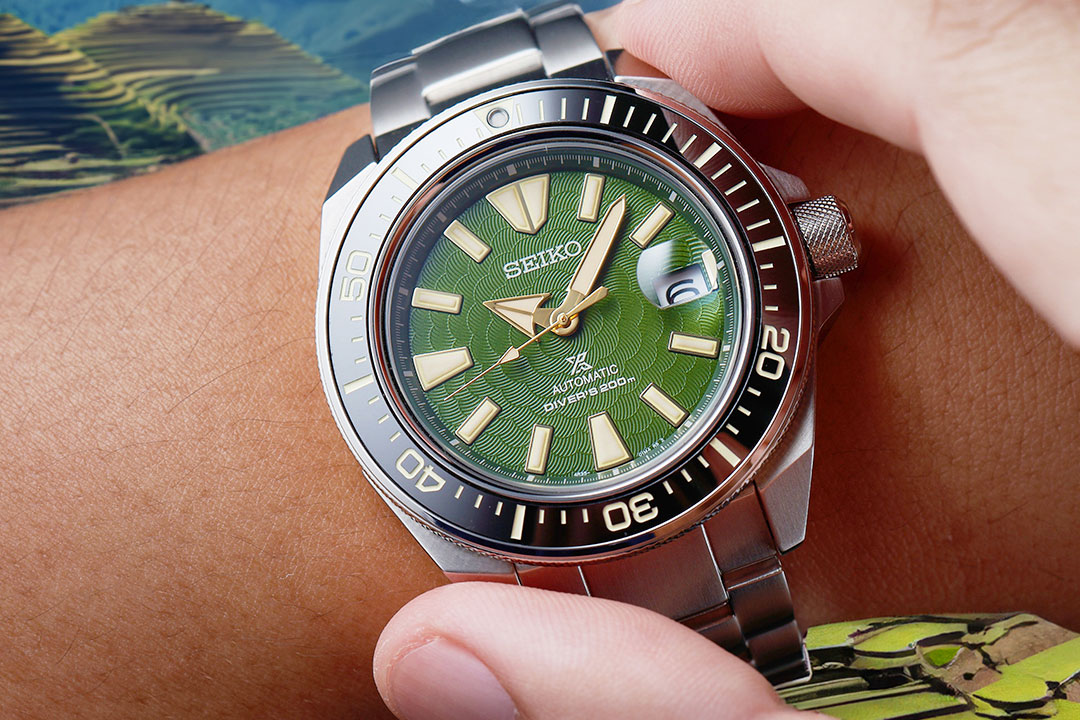
Seiko releases PHL limited edition Prospex timepiece

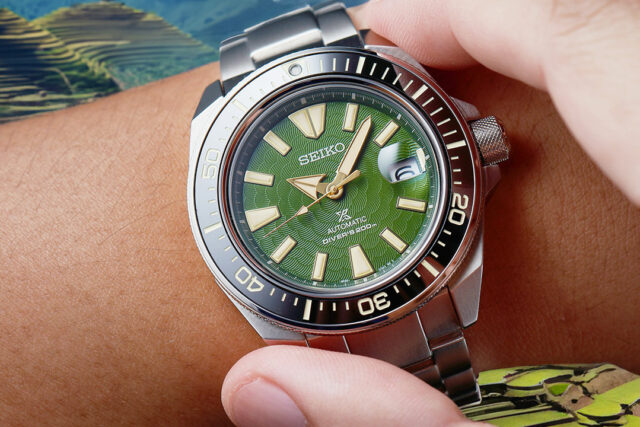
SEIKO has released a Philippine limited edition Prospex watch that was inspired by the Ifugao Rice Terraces. The Philippine collection was launched back in 2020 with a design inspired by the Tubbataha Reefs. The new Philippine limited edition Prospex watch’s movement (caliber 4R35, automatic with manual winding, a power reserve of approximately 41 hours, and 23 jewels), case (stainless steel and bezel with ceramic display, sapphire crystal with magnifier, anti-reflective coating on inner surface, and LumiBrite on hand, indexes, and bezel), as well as ridging etched on the face are reminiscent of the Ifugao Rice Terraces. There are only 1,500 pieces. For this endeavor, Seiko partnered with Save The Ifugao Terraces Movement (SITMo), the non-stock, non-profit, non-government organization formed by the Philippine Rural Reconstruction Movement. Extending its help to the preservation and conservation of the Ifugao Rice Terraces, which is in constant threat of deterioration, a portion of the proceeds from the sales of the new watch will be donated to the NGO. There are Seiko Boutiques at Power Plant Mall, SM Aura, Glorietta 1, SM Megamall Bldg. B, SM North EDSA, SM Seaside, Mitsukoshi BGC, Ayala Malls Manila Bay, SM City Cebu, and Ayala Center Cebu. To shop online and for more information, head to https://shop.seikoboutique.com.ph/ or follow @SeikoPhilippines on Instagram and @official.seikophilippines on Facebook.


Swarovski’s holiday gifts

Swarovski has a festive selection of gifts and adornments to celebrate the holiday season. There are several holiday jewelry lines. Luna is inspired by the moon, transforming its crescent shape into an array of jewelry pieces with a punk edge, glittering with complex pavé, sharp angles, and radiant spheres. The Mesmera line is opulent and elaborate, made with bold, translucent crystals. A constellation of crystals, clustered together in shades of blue and white make up the Gema line. The Matrix line’s designs are in constant flow, with strands of clear and colored crystals. Swarovski also has its holiday home décor pieces. Its Annual Edition hanging ornaments have been sought-after collectibles since 1991. The Star designs in 2023 are inspired by the harmony of nature and science. Available in classic or 3D form, and suspended by grosgrain ribbons, each is a symbol of festive warmth and light. The Holiday Cheers collection is a celebration of the season’s most heartwarming traditions. This year, they range from gingerbread decorations and striped candy, through to charming nutcrackers and a cheeky elf — all wrapped up in festive red, white, and green. The Holiday Magic Collection is made up of crystallized adornments. Matching glowing gold tones with bright clear crystals, the 2023 designs include an angel in flight, as well as three light-catching stars in assorted sizes. Meanwhile, Swarovski’s family of iconic characters welcomes new crystalized pieces in 2023, including a shining green version of Mo the cow, as well as a pair of cute Kris Bears, who celebrate their 30th year with a piece of striped candy. The full Swarovski collection is now available in-store or online at trunc.ph, Rustans.com, and Zalora.com.ph. In the Philippines, Swarovski is available in Rustan’s Alabang, Rustan’s Makati, Rustan’s Shangri-La, and Rustan’s Ayala Cebu. Swarovski is also available through boutiques at Alabang Town Center, Glorietta, Newport Mall, TriNoma Mall, Power Plant Mall, and SM Mall of Asia.


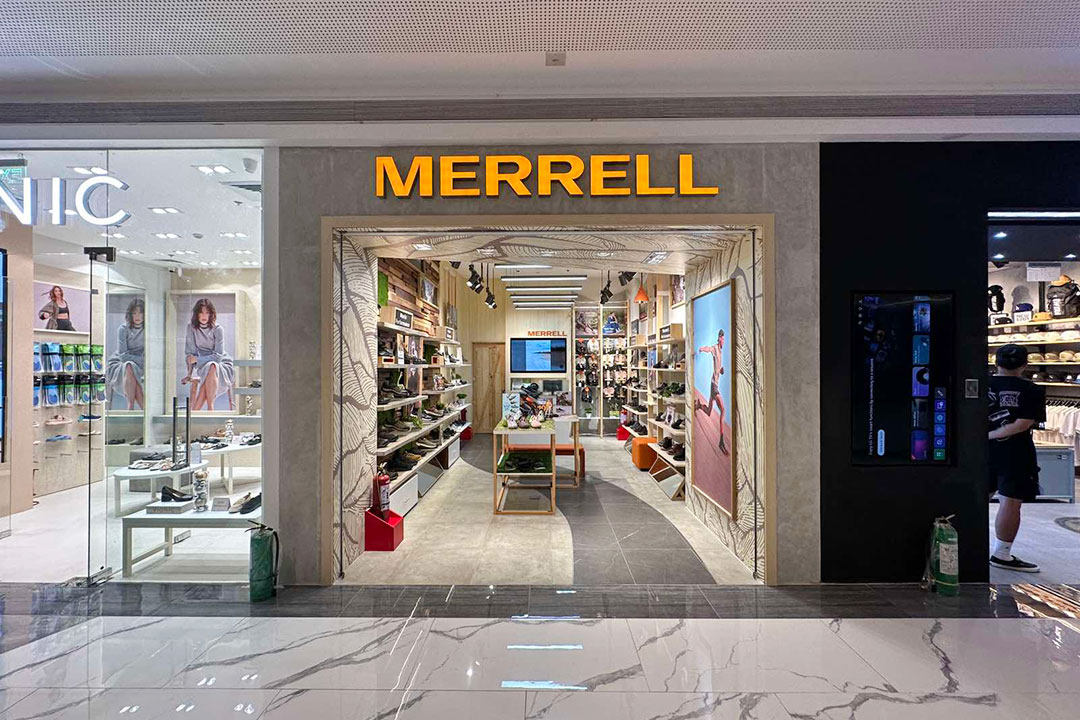
Merrell opens its doors in Greenhills Mall

Merrell’s latest concept store is located in the newly revamped Greenhills Mall in San Juan. At the 2nd floor of the Main Mall, this new store showcases Merrell’s outdoor footwear, including the popular Moab line (28 million pairs sold worldwide), along with the Hydro Moc clog. The store features a clean and organic design with nature-inspired elements and textures. The space houses an extensive collection of footwear, catering to both outdoor enthusiasts and sneaker aficionados. Available are styles ranging from performance-driven hikers like the iconic Moab to stylish, street-ready options such as the Hydro Moc, Hydro Runner, and the comfy Hut Ultra sandals collection. There are also innovative trail runners, after-sport shoes, and sandals. Merrell has ongoing holiday promos. Shoppers can receive a free Merrell Watch for every single receipt worth P10,000 across all Merrell concept stores nationwide until Dec. 31. Shoppers who purchase Hydro Moc will also receive a free pair of laces for every pair they purchase. Merrell has stores at SM Megamall, Glorietta 3, TriNoma, SM North EDSA Annex, SM Fairview, Gateway Mall, Greenhills Mall, Robinson’s Place Manila, Festival Mall Alabang, SM Southmall, Ayala Malls Manila Bay, SM City Baguio, SM City Cebu, Ayala Center Cebu, SM City Iloilo, SM City Davao, SM Lanang Premier, Ayala Centrio Mall, and selected specialty stores and department stores nationwide. For more information visit Merrell online at merrell.com.ph, on Facebook at www.facebook.com/MerrellPhilippines and follow us on Twitter and Instagram: @Merrell_PH.


Painless hair removal with Ulike Air3 & Air+

Women can have varying opinions on whether they should remove their body hair or let it grow. Those investing in body hair removal, it’s always important to find a method that’s not only effective, but also doesn’t damage the skin. Enter Ulike’s Air3 and Air+, two revolutionary IPL (intense pulsed lighting) hair removal devices that can be used at home. IPL uses gentle light therapy that is completely painless, is not damaging or causes unnecessary redness to the skin. The Air3 is equipped with Sapphire Ice Cool technology that soothes the skin. It also has an AutoGlide mode that delivers a super quick flash every 0.7 seconds. The Air+’s Diamond Blue Ice Cool also leaves a soothing sensation to the skin. Ulike Air3 and Air+ can zap body hair in a matter of seconds. Results are visible in three weeks. They are also designed for delivering long-term hair reduction. Both the Air3 and Air+ are lightweight devices that can easily be used on various areas, from underarms to the bikini area. The Air3 is only 271 gm, making it a travel-friendly device. Meanwhile, the Air+ is only 284 gm and good for women with thick hair. The Air3 has three different power modes, which allows the user to personalize their hair removal process based on different treatment locations. The Air+, on the other hand, has five power modes. The Air3 and the Air+ are available via Ulike’s online store on Lazada, Shopee, and TikTok Shop.


Rihanna’s creeper is back

Rihanna’s iconic creeper is back — bigger, bolder and “phatter” than ever. Imagined, designed, and named by Rihanna, the Creeper Phatty takes the classic Creeper to the extreme with an oversized design, stacked gum sole, and bold pops of color. This new twist on the FENTY x PUMA Creeper is available in three colors for all ages and genders. The original Creeper launched back in September of 2015, a platformed version of Puma’s iconic Suede sneaker. This silhouette was named Shoe of the Year by Footwear News in 2016 and not only transformed sneaker culture but sparked Puma’s brand impact and relevance over the past decade. The Creeper Phatty is wrapped in suede, with a padded and debossed formstrip, debossed Fenty logo on the tongue, laces with gold aglets, and a stacked gum sole. This drop offers three distinct colorways — iconic black and white, extra-bright blue and green, and lavender and cherry red. The FENTY x PUMA Creeper Phatty is now available at Puma Stores at Glorietta 3, Shangri-La Plaza, Eastwood Mall, the Venice Grand Canal Mall, McKinley Hill and Ayala Center Cebu, Cebu City. It is also available at Capital stores (SM Aura, TriNoma, Festival, Glorietta), and Footlocker (Glorietta, Filinvest Festival, Seaside Cebu, Ayala Bay Mall, Eastwood, Araneta Gateway, Ayala Capitol Bacolod and TriNoma). It is also available online on PUMA.com.


M&S introduces Flexifit Lace

Marks and Spencer (M&S) is introducing its new Flexifit Lace collection. Following the success of the existing M&S Flexifit range, which was first launched in 2018, this new range features modern, botanical-inspired lace lingerie styles, underpinned with the bestselling Flexifit Lace technology providing elevated, everyday lingerie styles to extend an existing wardrobe. Bras and panties are designed with sustainably sourced, four-way stretch lace fabric, with no Visible Panty Line (VPL) finishes, providing light control shaping to gently contour the silhouette whilst ensuring maximum comfort. Styles are crafted from foliage patterned lace for a feminine feel. The Push-Up Bra features full padded cups for a rounded silhouette and underwire for extra support. The Full Cup Bra is gently padded for a flattering shape, support and lift whilst the Minimiser Bra uses a clever smoothing design to reduce the bust by up to one cup size. M&S Philippines carries the Flexifit Lace shapewear range in black and rose quartz with options for leaf patterned designs and scallop edges around a plunge neckline. Choose between covered styles in a turtleneck or show some skin in deeper necklines and slim straps. The Flexifit Lace shapewear is found at selected M&S stores: Glorietta 4, Greenbelt 5, Shangri-La Plaza Mall, Mall of Asia and SM Aura.


First-ever JBL Car Audio Tunefest held

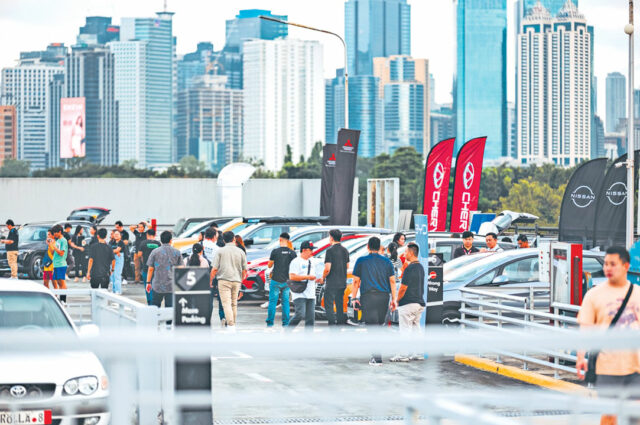
Car and audio aficionados gathered at the rooftop parking of O-Square 2 in Greenhills, San Juan City for the inaugural staging of the JBL Car Audio Tunefest. — PHOTO FROM JBL CAR AUDIO PHILIPPINES

JBL CAR AUDIO Philippines recently staged the brand’s first-ever “Tunefest,” which it considered “an avenue for car audio enthusiasts and installers to engage and showcase the best in-car JBL setups,” and to bring together the car community.

The activity was held at the rooftop parking of O-Square 2 in Greenhills Mall, San Juan City. The event was co-presented by Stance Pilipinas/Manila Fitted (SPMF), Manila Street Chronicles (MSC), and Bumper2Bumper Car Show (B2B).

The highlight of the day was the JBL Car Audio Competition. It was nearly a two-month journey for the participating JBL installers and car owners as they prepared their vehicles for the official judging on the morning of Tunefest. Fifteen entries competed across three categories: Stadium (premium), Open Stage (across all JBL model lines), and Sound and Style (Club and ClubSQ ranges, and split points between audio performance and styling). In addition to the categories, three special recognitions were given out: People’s Choice Award, Mayor’s Choice Award (chosen and presented by Rocco Zamora on behalf of San Juan City Mayor Francis Zamora), and Special Style Award (chosen from among the car clubs and attendees who joined the event).

The car audio entries were judged on-site by a panel of judges trained under the European Mobile Music Association (EMMA): Adison De Ocampo, Bong Matias, Dong Matias, Arvin Ramos, Martin De Costa, and Peter Gaw. Style awards were selected and judged by Bryan Revilla of MSC. Attendees included owner clubs, car communities, and personalities like B2B, MSC, SPMF, Grupo Toyota, Miata Club Of The Philippines, Nissan Kicks E-Power Club, FJ Cruiser Club Of The Philippines, Porsche owners, Buzzhype Motorsport, BanaweBoy, EverSince Street Club, and more.

PHOTO FROM JBL CAR AUDIO PHILIPPINES

The Stadium Category was won by Mickey’s Autosound, followed by MSO Audio and SimpleSound; Natune Car Audio bagged the championship in the Open Stage Category, followed by David’s Street Sound and Team Car Center. The Sound and Style Category was won by JC Car Audio, with Team Car Center and David’s Street Sound completing the podium lineup. The Mayor’s Choice Award went to the following: SimpleSound (Stadium), Audio Essential (Open Stage), and JC Car Audio (Sound and Style). People’s Choice awardees were SimpleSound (Stadium), and ZT Car Accessories (Open Stage), and Audio Essential (Sound and Style).

The JBL Car Audio Tunefest was also supported by auto brands including BMW, BYD, Changan, Chery, Ford, GAC, Honda, Hyundai, Jeep, Mazda, Mercedes-Benz, Mitsubishi Motors, Nissan, and Subaru. Each manufacturer highlighted its hero model of the season, from conventional to hybrid to electric, and opened up the opportunity for attendees to check out the latest features.

As an exclusive treat, attendees were given the chance to listen to the first JBL Arena setup that was installed by JC Car Audio into Franz Gaw’s Toyota GR Yaris. MSC also introduced its Porsche Cayenne off-road build, fitted with a full JBL ClubSQ system and the JBL Basspro Go portable subwoofer. On-site professional-grade car cleaning was provided by Sonax Philippines, with an exclusive event trial promotion of its new Ceramic Series product line. In addition, one set of a special full SUV wrap was sponsored by Vinyl Frog Philippines.

For refreshments, attendees were treated to options from Bahn Mi Kitchen, Coffee Nook, Crepe Talk, EDSA BDG, and Slap Stacks Burgers.

Italian home brands gathered in one store

SUPER SALONE founder Andrew Ng has an interesting promise for the items carried in his store: “Usually, the items last longer than your house.”

With the opening of Super Salone at the Shangri-La Plaza Mall on Nov. 28, Mr. Ng showcased a collection of home furnishing and decorating brands that are present in his company’s showrooms across the metropolis, now compiled into one long gallery.

Of particular interest is a wardrobe by Rimadesio, showing lit glass shelves with elegant black hangers. A representative from the brand told BusinessWorld that the closet, fully customizable (from the size, number of shelves, and any other special features: the one in the store has leather trays serving as drawers) can reach up to P2 million (and maybe even higher, depending on how many more thingamajigs you can choose to attach to it).

Rimadesio (as well as another brand in the store, Oikos) is also known for luxury entryways (in layman’s terms: doors), ensuring that every moment spent at home truly can be a luxurious experience.

A bed stood near a wall of the store, decked out in linens and beddings made by Frette, an Italian company that dates to 1860 that once made linens for the House of Savoy (the Royal House of Italy, before being deposed after World War II). Their products were also used on the ill-fated Titanic and the storied Orient Express (and thanks to Super Salone, your own home).

Other brands they carry include furniture by Viccarbe, wall coverings by Glamora, carpets by Amini, and furniture by Arflex. Mr. Ng confesses to having many of these items in his own home: he likes his sofa from Arflex for its comfortable properties, and he heaps praise on his home’s Rimadesio doors. “It’s very durable. You use it every day. Open, close; open, close — several times a day. It lasts longer than your house,” he said, repeating the maxim.

Mr. Ng has been bringing in these Italian luxury (home) brands for about 10 years now, acquiring one brand a year and opening a showroom for each one, only now deciding to put them all in one place. His usual clients are in the “if you know, you know” category, citing interior designers and architects. He’s not quite done though: he plans to open further south in the Philippines, like in cities such as Cebu.

Mr. Ng has an attachment to Italian brands — he is one of the people who brought Benetton back to the Philippines (https://www.bworldonline.com/arts-and-leisure/2023/10/02/548941/in-a-touch-of-90s-nostalgia-united-colors-of-benetton-is-back/). He told BusinessWorld: “Fashion and design is their top product. They’re known for that, besides food, wine — these are their core produce,” he said. “There are a lot of similarities (with the Philippines) when it comes to family.

“That’s why I love Italy.”

Super Salone is at the 4th level of the Shangri-La Plaza bridgeway. — Joseph L. Garcia

ADVERTISEMENT
ADVERTISEMENT