Home Blog Page 3946

Regional central banks warned of possible inflation resurgence 

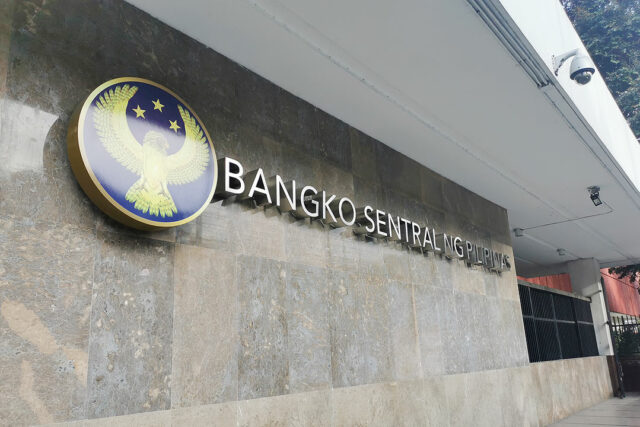
Bangko Sentral ng Pilipinas main office in Manila. — BW FILE PHOTO

CENTRAL BANKS must calibrate their policies to ensure price stability with a possible resurgence in inflation, the ASEAN+3 Macroeconomic Research Office (AMRO) said.

“It is still too early to claim victory over inflation in the region. Upside risks to inflation remain. A tight labor market and the lagged effects of high inflation could push up wages and in turn spur inflation. The recent uptick in commodity prices poses another risk that could keep inflation high for longer,” it said in its Asean+3 Financial Stability Report 2023.

Headline inflation in the Philippines eased further to 4.1% in November, against the 4.9% posted in October and 8% a year earlier.

However, this marked the 20th straight month of inflation breaching the central bank’s 2-4% target band.

“The pace of this inflation has been differentiated across economies with some countries still seeing inflation picking up recently. Some are seeing inflation still above target and some are seeing sticky core inflation,” AMRO Group Head and Lead Economist Kevin Cheng said in a webinar on Tuesday.

He said this could complicate central bank efforts to “safeguard financial stability while maintaining price stability.”

AMRO said that inflationary pressures could come from currency fluctuations, a spike in global commodity prices, geopolitical tensions, and supply constraints.

“Such a scenario might compel central banks to either intensify or maintain their restrictive monetary policies,” it added.

The Bangko Sentral ng Pilipinas  kept its benchmark interest rate steady at a 16-year high of 6.5% at its latest policy meeting. It voted for a 25-basis-point (bp) off-cycle rate hike in October.

The central bank has raised borrowing costs by a cumulative 450 bps since it began its monetary tightening cycle.

AMRO recommended that central banks “carefully calibrate” their policies and strategies based on domestic and external conditions.

“First, central banks should continue to focus on maintaining price stability. To this end, a strong commitment from central banks is a strong force to anchor inflation expectations,” Mr. Cheng added.

“Despite market expectations that the Fed’s tightening phase is near an end, the risk remains that unanticipated inflation shocks could compel the Fed to raise and maintain higher policy rates longer than expected,” AMRO added. — Luisa Maria Jacinta C. Jocson

Manila urged to execute ‘actionable’ steps against Chinese sea incursions

By John Victor D. Ordoñez, Reporter

THE GOVERNMENT of President Ferdinand R. Marcos, Jr. should go beyond filling diplomatic protests against Chinese incursions in the South China Sea, a Philippine senator said on Tuesday, as Chinese militia ships swarmed around Whitsun Reef.

“We have to execute actionable, on-the-ground steps to prevent the Chinese from any reclamation and base-building activities in Julian Felipe (Whitsun) Reef, which I believe the National Task Force for the West Philippines Sea will do,” Senator Ana Theresia N. Hontiveros-Baraquel said in a statement.

She noted that no matter how many times the Philippines and the international community condemn China’s “illegal activities,” it simply does not listen.

“Niu’e Jiao is part of China’s Nansha Qundao,” the Chinese Embassy in Manila said in a Viber message, using the Chinese name for Whitsun. “Relevant waters of the South China Sea, including Niu’e Jiao and its adjacent waters, have always been important operating areas and shelters for Chinese fishing boats.”

“It is justified and lawful for Chinese fishing boats to operate or shelter from wind in the area, and the Philippines is in no position to make irresponsible remarks,” it added.

The Philippine Coast Guard on Sunday reported about 135 Chinese militia vessels swarming around Whitsun Reef, which is 175 nautical miles west of Palawan province.

The reef is considered a low tide elevation within the territorial sea of relevant high tide features in the Kalayaan Island Group, including Chigua Reef, over which the Philippines asserts sovereignty.

Last month, the Philippines filed a diplomatic protest against China and summoned its envoy in Manila after its ships collided with Philippine vessels on a resupply mission to Second Thomas Shoal.

From July 2022 to Nov. 28, the Philippines filed 129 diplomatic protests against China, 62 of which were filed this year, Foreign Affairs spokesperson Ma. Teresita C. Daza told BusinessWorld in a Viber message.

National Security Adviser and National Task Force on the West Philippine Sea adviser Eduardo M.  Año earlier ordered the deployment of Philippine Coast Guard vessels at the area to safeguard maritime security and Philippine sovereign rights.

China’s military on Monday said a US Navy ship had illegally entered waters adjacent to Second Thomas Shoal.

“The US seriously undermined regional peace and stability,” a spokesperson for China’s Southern Theater of Operations said in a statement, accusing the US of violating Chinese sovereignty.

China is in dispute with several of its neighbors over its extensive claims of territorial waters in the South China Sea.

The US Navy said USS Gabrielle Giffords, an Independence-class littoral combat ship, was conducting routine operations in international waters in the South China Sea, consistent with international law.

The National Security Council last week said it would protect a convoy lead by Ms. Hontiveros-Baraquel’s Akbayan Party, which will go to various Philippine-occupied features in the South China Sea on Dec. 10.

The group originally planned to hold a convoy to BRP Sierra Madre, a World War II-era vessel that the Philippines deliberately grounded at Second Thomas, locally called Ayungin, in 1999 to serve as an outpost for Filipino troops.

The NSC initially opposed the idea, saying it could escalate tensions with China.

China has been blocking Philippine resupply missions to BRP Sierra Madre. Second Thomas Shoal is about 200 kilometers from the Philippine island of Palawan and more than 1,000 kilometers from China’s nearest major landmass, Hainan Island.

Tensions between the Philippines and China have worsened after the Chinese Coast Guard fired water cannons to block Manila’s attempt to deliver food and other supplies to BRP Sierra Madre.

China claims the South China Sea almost in its entirety based on a 1940s map, which a United Nations-backed tribunal said in 2016 is illegal.

“Everyday, China has a plan to take over our territory,” Ms. Hontiveros-Baraquel said in Filipino. “It is clear that they are starting trouble, not us.”

House leaders cross party lines to back peace talks with Maoist movement

BW FILE PHOTO

By Kyle Aristophere T. Atienza, Reporter

CONGRESSMEN crossed party lines on Tuesday to support peace talks between the government and Maoist leaders, a day after Vice-President Sara Duterte-Carpio likened negotiations to “an agreement with the Devil.”

“As the united voice of the House of Representatives, representing all political parties, we collectively express our unwavering support for President Ferdinand R. Marcos, Jr.’s initiative for peace and national unity,” they said in a statement.

The push for peace talks — “a pivotal moment in our nation’s journey towards lasting peace and sustainable development — transcends political boundaries,” they added.

Ms. Duterte-Carpio is now under pressure to resign from the Cabinet.

She should resign if she could not support state policies, former Senator Leila M. de Lima, one of the staunchest critics of Ms. Carpio’s father, ex-President Rodrigo R. Duterte, said in a statement.

Peace negotiations are not among the Vice-President’s “core competence” as Education secretary, she added. “She should resign as Education secretary if she keeps on publicly opposing BBM’s (Bongbong Marcos) Cabinet policy decisions that have nothing to do with DepEd,” Ms. De Lima said. “She cannot eat cake and keep it too. She can only go on criticizing BBM’s policies if she is no longer a member of the Cabinet and speaks only as VP.”

Ms. Duterte-Carpio on Monday opposed the amnesty program for rebel groups and peace talks with the Maoist movement.

In a video statement, she said the government could negotiate peace “without capitulating to the enemies.” The administration should instead boost the anti-communist task force, she added.

“We are united in the belief that through dialogue, empathy and mutual respect, we can overcome historical divides and build a more inclusive and peaceful nation,” the House of Representatives leaders said.

Among the parties that signed the statement were the Lakas-Christian Muslim Democrats, Nationalist People’s Coalition, Nacionalista Party, National Unity Party, Partylist Coalition Foundation Inc. and Partido Navoteño.

Speaker Martin G. Romualdez said the push for peace talks is not a political move but a “moral imperative.” “Why should we be afraid of negotiating when we have a strong Armed Forces and a steadfast republic?” he said in a separate statement. “What are we afraid of when we know the country trusts the government?”

‘TECTONIC SHIFT’
The House committees on justice and defense on Tuesday approved resolutions concurring with the state’s amnesty proclamations, including those covering Islamic groups.

Mr. Marcos has veered away from some of the key policies of his predecessor, standing up to China amid its aggression in Philippine waters and boosting security ties with the US. “The unity government is now fragile, and a tectonic shift will happen in the government in the next few weeks and months,” Gary Ador Dionisio, dean of De La Salle – College of Saint Benilde School of Diplomacy and Governance, said in a Facebook Messenger chat.

It is noteworthy that Ms. Carpio opposed the talks in a recorded statement and not in a confidential memo to the President, Jean Encinas-Franco, who teaches political science at the University of the Philippines, said via Messenger chat.“This is one area of governance where both of them should be on the same page,” she said. “The much-vaunted unity is dead.”

Ms. Duterte in April was named co-vice chairwoman of the National Task Force to End Local Communist Armed Conflict (NTF-ELCAC), which is headed by the President. It was formed through a 2018 executive order issued by Mr. Duterte, who had vowed to crush the longest-running communist insurgency in the world.

House Deputy Minority Leader and Party-list Rep. France C. Castro said Ms. Duterte’s statement undermines “efforts to address the roots of armed conflict in the Philippines.” “Instead of promoting war, we call on the Vice-President and those she represents to support efforts towards a peaceful resolution of the armed conflict in the country.”

Philippine Catholic and Protestant bishops have also backed the peace talks, saying it could “mitigate human rights violations and the loss of lives.”

“We hope that the joint statement, which is an offshoot of the informal discussions that started in 2022 between the government of the Republic of the Philippines and the National Democratic Front of the Philippines and facilitated by the Royal Norwegian Government, will be realized,” the Philippine Ecumenical Peace Platform said in a statement.

Several senators also supported the peace talks, including national defense committee chairman Jinggoy Estrada, who described the move as a “positive development in finding a peaceful resolution to the decades-long armed conflict.”

“I hope that this development will lead to a cessation of hostilities, one that we can sustain moving forward for the benefit of communities in the countryside,” Senator Sherwin T. Gatchalian said in a separate statement.

“Between Filipinos, we should always be open to dialogue,” Senate Minority Leader Aquilino “Koko” Pimentel said.


Buildings evacuated as quake jolts Philippine capital

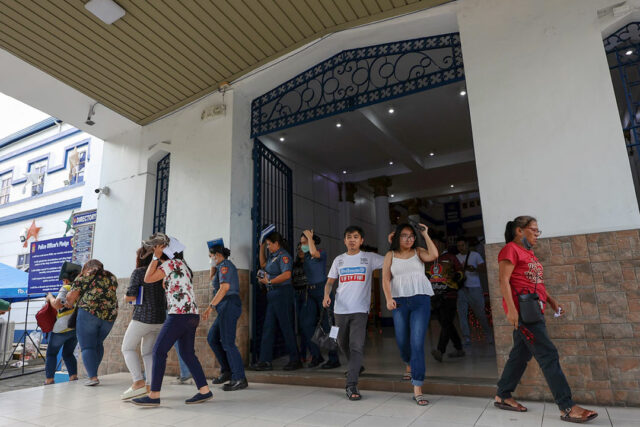
Students and Police personnel evacuate after a strong earthquake was felt in U.N. Avenue, Manila on Tuesday, December 05, 2023. — PHILIPPINE STAR/KRIZ JOHN ROSALES

WORKERS, residents, and students evacuated buildings in the Philippine capital Manila on Tuesday after a magnitude 5.7 earthquake struck off the main Luzon island, according to the United States Geological Survey and images carried by media.

There were no immediate reports of casualties and the local seismology agency said on X, formerly Twitter, that it did not expect damage, but warned of aftershocks.

It recorded the offshore earthquake at magnitude 5.9, with a depth of 79 kilometers. Its epicenter was about 130 km from the capital region.

“We felt the strong and lengthy tremor,” Michael Orayani, mayor of Lubang town in Occidental Mindoro province, told DWPM radio. “We rushed outdoors even while the building was shaking.”

Images shared by media on X showed government workers leaving the House of Representatives, Senate, presidential palace and Justice department buildings. Students also evacuated university classrooms.

The Transportation department stopped train operations in the capital. No damage was observed on the runway and taxiway pavements and terminal facilities, the state airport operator said.

The European-Mediterranean Seismological Centre earlier recorded the quake at magnitude 6.2 before downgrading it to 6.

The Philippines lies in the so-called Pacific Ring of Fire, a belt of volcanoes around the Pacific Ocean where most of the world’s earthquakes strike. It also lies along the typhoon belt in the Pacific and experiences about 20 storms each year.

Three people died from a magnitude 7.6 earthquake that struck southern Philippines on Saturday night. It was followed by more than 2,000 aftershocks that prompted thousands to stay in evacuation centers.

A separate magnitude 6.9 earthquake struck Mindanao early Monday morning. — Reuters

Marcos signs bill boosting public-private deals

PPA POOL PHOTO

By Kyle Aristophere T. Atienza, Reporter

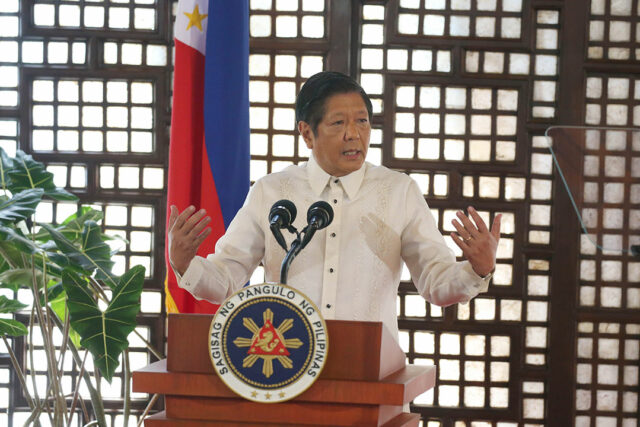
PRESIDENT Ferdinand R. Marcos Jr. on Tuesday signed a measure that seeks to streamline the framework for public-private partnerships (PPPs).

The PPP Code, signed as Republic Act No. 11966, amended the Build-Operate-Transfer (BOT) Law to create a unified legal framework for all PPPs at both national and local levels.

The law defines PPP as a contractual arrangement between the implementing agency and the private proponent for the financing, designing, constructing, operating and maintaining of infrastructure or development projects which are typically provided for by the public sector and where each party shares in the risks.

The law covers all PPP arrangements, such as BOT variants, joint ventures, and toll operations agreements. PPP projects may also be financed partly from direct government appropriations or official development assistance of foreign governments or institutions.

“The law also reduces transaction costs and improves the ease of doing business for PPPs,” the PPP Center said in a statement, noting that the landmark legislation clarifies the ambiguities in the BOT Law, which was last amended in 1994, and other existing PPP legal frameworks.

The new law allows private proponents to recover their investments and earn reasonable profit by authorizing them to charge and collect reasonable tools, fares, fees, rentals, or other charges subject to appropriate regulations.

The implementing agency, on the other hand, may instead make regular payments to the private proponent in line with the contract. It allows other non-monetary payments.

The PPP Center said the new code streamlines the implementation process and updates the approval threshold for national PPP projects.

It will also promote autonomy in implementing local PPP projects while ensuring alignment of local government unit projects to national development plans, it added.

“It enhances the framework for unsolicited proposals and establishes a predictable tariff regime that safeguards public interests,” PPP Center said.

The law establishes a PPP Governing Board, which will oversee policy related to PPPs. The board will be headed by the National Economic and Development Authority Secretary, with the Finance Secretary as vice-chair. The Commission on Audit is tasked to craft guidelines on auditing PPP projects.

The PPP Center said the law gives them “additional powers and functions to work towards a more efficient and effective performance of its mandate.”

“The PPP Governing Board, the Project Development and Monitoring Facility, and the newly created Risk Management Fund are likewise institutionalized further to enhance the sustainability of the Philippine PPP Program,” it said.

PPP Center Undersecretary and Executive Director Ma. Cynthia C. Hernandez said that through the new law, the “government will deliver more financially viable, well-structured, and high-quality PPP projects that will significantly improve the lives of Filipinos.”

“The PPP Code incorporates the best practices and lessons learned from over 33 years of experience in implementing PPPs in the country to ensure that present and future PPP projects are of high quality and can mitigate risks during implementation,” she said.

As of Sept. 1, there were 104 PPP projects in the pipeline at an estimated cost of P2.521 trillion. Some 180 projects are being implemented worth P2.639 trillion, according to the Department of Finance.

The new law should be complemented by efforts to cut red tape and curb corruption at all levels, InfraWatch PH convenor Terry L. Ridon said in a Facebook Messenger chat.

“While we welcome such partnerships, these projects should remain within the reach of people, ensuring that no one is excluded from using such goods produced under PPPs,” Leonardo A. Lanzona, who teaches economics at the Ateneo de Manila University, said.

“Agreements can be designed to favor just a few sectors and not the general interest. It is crucial that fair and equitable outcomes are achieved within specific arrangements,” he added.

At the same time, the President also signed into law the proposed Internet Transactions Act, which seeks to protect online consumers by tightening e-commerce regulations.

The law creates an online business registry and establishes an electronic commerce bureau under the Trade department to spearhead the implementation of the law as well as the Electronic Commerce Act of 2000 and the Philippine E-Commerce Roadmap.

The President was scheduled to lead the ceremonial signing of the two bills in Malacañang on Tuesday but had to cancel the events after testing positive for COVID-19 Monday night.

PHL labor groups air domestic grievances in US

PHILSTAR

By Jomel R. Paguian

LEADERS of seven Philippine labor groups met with a United States (US) official at the White House on Tuesday to seek support in addressing critical issues within the Philippine labor sector.

Union leaders were seeking measures to halt red-tagging, abductions, and killings of worker activists, in line with the objectives of the US-Philippines labor working group bilateral agreement signed by President Ferdinand R. Marcos, Jr., and US President Joseph R. Biden, Jr. in May this year.

Labor leaders submitted their set of requests to the US government through US National Security Advisor Jake Sullivan in a meeting organized by the American Federation of Labor and Congress of Industrial Organizations (AFL-CIO).

Jose “Sonny” G. Matula, Federation of Free Workers (FFW) president, said in a Viber message that the meeting is likely to bear good results. “They (Mr. Sullivan) will be guided by Biden’s new memo empowering workers not only in the US but also abroad,” citing Mr. Biden’s statement last month stating that his administration will undertake comprehensive policies on global labor rights and standards.

The unions urged the dismantling of the Philippines’ National Task Force to End Local Communist Armed Conflict (NTF-ELCAC) and called for a thorough investigation into and prosecution of those responsible for trade union killings and red-tagging.

Additionally, they proposed elevating existing guidelines against red-tagging into an Executive Order and dropping unfounded charges against trade unionists.

Speaking at Monday’s fifth anniversary of the NTF-ELCAC, Vice President Sara Z. Duterte-Carpio lauded the work being done by the task force, saying in Filipino: “What we need to do is to continue what we have started in the NTF-ELCAC and strengthen them further.”

Meanwhile, unions also recommended the establishment of a presidential commission in Manila to ensure the full implementation of recommendations from the International Labor Organization. This commission, involving representatives from both labor and employers, aims to strengthen the enforcement of labor rights in the Philippines.

Unions that participated in the meeting in Washington, D.C. were FFW, Kilusang Mayo Uno, Sentro ng mga Nagkakaisa at Progresibong Manggagawa, Trade Union Congress of the Philippines, Public Services Labor Independent Confederation, Alliance of Concerned Teachers, and BPO Industry Employee Network.

Leaders of the said organizations were set to receive on Wednesday the George Meany–Lane Kirkland Human Rights Award from AFL-CIO in Washington, D.C.

Hunt widens for bomb suspects

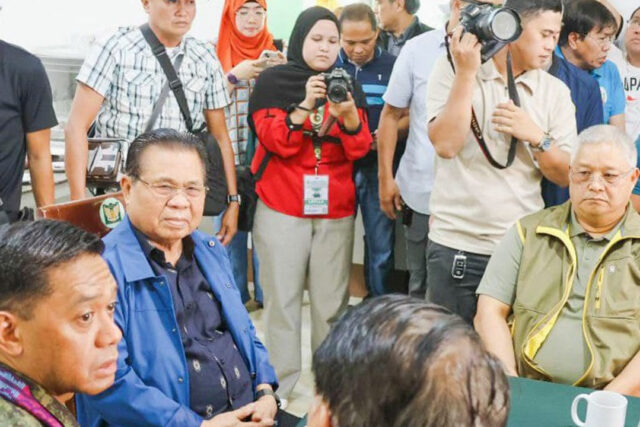
LANAO del Sur Governor Mamintal A. Adiong, Jr. holds a dialogue with national government and Bangsamoro regional officials on security issues in Marawi City on Monday, a day after the deadly bombing that killed four Catholic worshipers at the Mindanao State University gymnasium. — PHILIPPINE STAR/JOHN FELIX M. UNSON

COTABATO CITY — The hunt for two suspects in Sunday’s deadly bombing in Marawi City has widened to Maguindanao del Norte and Cotabato provinces, following intelligence reports that they have slipped out of Lanao del Sur.

On Tuesday, Brig. Gen. Allan C. Nobleza, Police Regional Office-Bangsamoro Autonomous Region director, and Lt. Gen. Roy Galido, Philippine Army commander, confirmed in separate statements to reporters that civilian tipsters, among them moderate Islamic missionaries, have volunteered information about the two Maranaos currently being hunted by security forces.

Lanao del Sur Gov. Mamintal A. Adiong, Jr. has also been assisting the joint police and military manhunt operations for Dawlah Islamiya members, Arseni Lumen Membisa and Wahab Sandigan Macabayao, said Mr. Nobleza.

“Our intelligence activities are supported by the Moro Islamic Liberation Front and the Moro National Liberation Front,” added Major Gen. Alex S. Rillera, commander of the Army’s 6th Infantry Division which has jurisdiction over Maguindanao del Norte and Cotabato provinces.

The two Dawlah Islamiya members are suspected of setting off the improvised explosive device (IED) that killed four people and injured dozens of others attending the first Sunday of Advent catholic mass at the Dimaporo gymnasium of the Mindanao State University in Marawi. — John Felix M. Unson

MPIF funds Cordova mangrove

PRESENTING the signed agreement for the Mangrove Propagation and Information Center Rehabilitation Project are (from left) Allan G. Alfon, Cebu–Cordova Link Expressway president and general manager; Melody M. del Rosario, Metro Pacific Investments Foundation president; Cordova Mayor Cesar E. Suan, and Vice Mayor Victor S. Tago, III. — HANDOUT/METRO PACIFIC INVESTMENTS FOUNDATION

RECOGNIZING the Cordova mangrove as a vital ecological hub on Mactan Island, Cebu, the Metro Pacific Investments Foundation (MPIF) and the Cordova municipal government sealed an agreement to revive the Mangrove Propagation and Information Center and transform it into a sustainable tourism destination.

The recent signing of a Memorandum of Agreement (MoA) to solidify their collaborative effort underscores their shared commitment to environmental preservation and the revitalization of the sole mangrove site in the Visayas, heavily impacted by Typhoon Odette in December, 2021.

“The Mangrove Propagation and Information Center will be a beacon of sustainable tourism in our municipality,” said Mayor Cesar “Dido” E. Suan of Cordova as he thanked the MPIF’s commitment to allocate P4.5 million for the center’s repair and rehabilitation.

“This marks the beginning of a fruitful and enduring partnership… I am excited to witness the positive impact it will have on our environment and our community,” Melody M. del Rosario, MPIF president, said in a statement on Tuesday.

To ensure the center’s daily upkeep, the foundation has also committed to a 50% share in the monthly allowance for four Mangrove Eco-Guides over three years.

In a statement, the MPIF said that the Metro Pacific Tollways Corporation has contributed funds from their Typhoon Odette disaster response, emphasizing the shared commitment to preserving coastal and marine biodiversity.

This streamlined partnership not only aims to restore the Cordova Mangrove Propagation and Information Center but also signifies a crucial step in the collective mission to conserve the country’s mangrove ecology and promote sustainable practices, the statement said. — Nate C. Barretto

COVID-19 cases rising in Manila

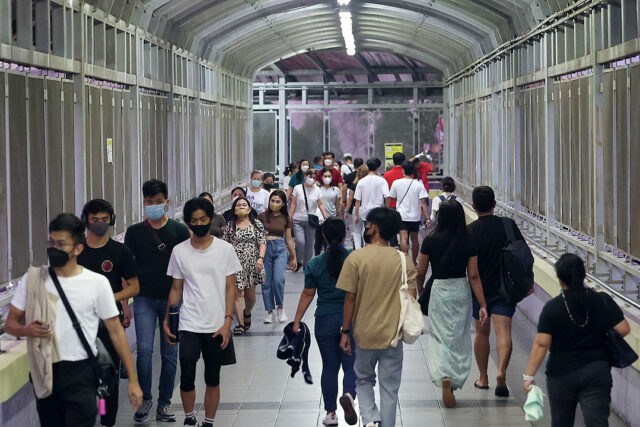
Commuters pass through an overpass connecting the LRT Lines 1 and 2 in Manila. — PHILIPPINE STAR/MIGUEL DE GUZMAN

THE WEEKLY coronavirus disease (COVID-19) positivity rate in Metro Manila ending Dec. 3 rose to 10.2% from 7% on Nov. 26, OCTA Research said on Tuesday.

In an X post, OCTA Research fellow Guido David said the rising positivity rate was accompanied by a 50% increase in daily cases over the last seven days, but that the hospital occupancy in Metro Manila remained “low” at 18%.

The Department of Health (DoH) reported 204 new COVID-19 cases across the country on Dec. 4, with 70 cases recorded in Metro Manila. Mr. David said the country may record as many as 200 new cases on Tuesday.

President Ferdinand R. Marcos, Jr. is now under a five-day isolation after testing positive for COVID-19 on Monday, according to his office.

It said the President, who is still fit to carry out his duties, would be continuing his scheduled meetings via teleconference. Updates on his health will be provided as they become available, it added.

This was the third time that Mr. Marcos tested positive for COVID-19.

He was last seen in public on Saturday when he led a family day event inside the complex of the presidential palace. He was set to visit Marawi City, where a bombing happened on Sunday, as well as Surigao del Sur, which experienced a major earthquake last week.

Meanwhile, Health Secretary Teodoro J. Herbosa said there has been no recorded outbreak of “walking pneumonia” cases in the Philippines, citing the monitoring of the Health department’s epidemiology bureau.

“In the Philippines, there is no outbreak yet, according to our epidemiology bureau, although there are many cases,” he told a Commission on Appointments hearing.

The disease causes cold-like symptoms and is caused by mycoplasma bacteria. Health Undersecretary Eric Tayag earlier said there’s been no recorded walking pneumonia cases in the country because there is no routine testing for the disease.

He said the illness had been recorded in the Philippines before but doctors would prescribe antibiotics to people who carry symptoms to ease their condition.

But Mr. Tayag said the bacteria is “90% to 95%” drug-resistant in China, which means antibiotics do not affect the illness.

Mr. Herbosa urged the public to take the same precautionary measures during the peak of the COVID-19 pandemic because it’s the “season of respiratory illness.”

“The social distancing and the wearing of face masks, having a cough etiquette, should be done to avoid catching illnesses,” he added. — Kyle Aristophere T. Atienza

Bar passing rate drops to 36.77%

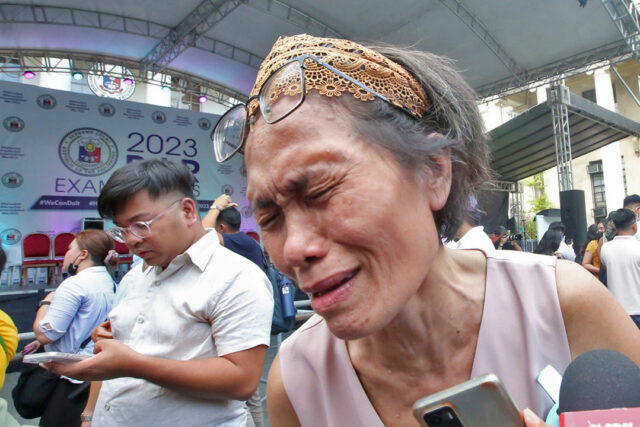
SIXTY-TWO-YEAR-OLD Rosula Calacala from North Eastern College in Isabela reacts after passing the 2023 Bar exminations at the Supreme Court on Tuesday. — PHILIPPINE STAR/ERNIE PEÑAREDONDO

A TOTAL of 3,812 out of 10,387 examinees passed the 2023 bar examinations, marking a 36.77% passing rate, the Supreme Court (SC) announced on Tuesday.

This year’s passing rate is lower than the 2022 rate of 43.47% (3,992 out of 9,183), and significantly below the 2020/2021 digital bar exams which had a passing rate of 72.28% (8,241 out of 11,402).

Ephraim Porciuncula Bie from the University of Santo Tomas (UST) is the year’s topnotcher with a mark of 89.26%, followed by Mark Josel Padua Vivit from the Ateneo de Manila University (ADMU) who scored 89.12%, and Frances Camille Altonaga Francisco from San Beda University (SBU) with 88.91%.

Top-performing law schools with more than 100 examinees were ADMU at 94.08%, followed by SBU at 92.2%, the University of San Carlos at 90.91%, the University of the Philippines at 89.45%, and UST at 85.25%. Meanwhile, Health Secretary Teodoro J. Herbosa said the country there has been no recorded outbreak of “walking pneumonia” cases in the Philippines, citing the monitoring of the Health department’s epidemiology bureau.

The 2023 Bar chair Associate Justice Ramon Paul L. Hernando announced the results after the SC’s special en banc session.

The roster of successful examinees can be accessed on the Supreme Court website and social media platforms. Oath-taking and roll signing for those who passed will take place on Dec. 22 at the SMX Convention Center Manila in Pasay City. — Jomel R. Paguian

CA confirms DA, DoH secretaries

THE COMMISSION on Appointments (CA) confirmed on Tuesday the appointments of Agriculture Secretary Francisco Pe Tiu Laurel and Health Secretary Teodoro J. Herbosa.

At a hearing on his nomination, Mr. Laurel said he would focus on consulting biologists, data scientists and academics to help the Department of Agriculture (DA) come up with ways to boost production in livestock, rice, poultry and other high-value crops.

He also vowed to tap national and international law enforcers to deal with food hoarders, price manipulators and smugglers.

On the other hand, Mr. Herbosa said the Department of Health (DoH) would look into fraudulent claims in the Philippine Health Insurance Corp. (PhilHealth).

He also targets to release within the next three years the remaining P62 billion in coronavirus 2019 (COVID-19) emergency allowances for healthcare workers. — John Victor D. Ordoñez

Release of oldest prisoner sought

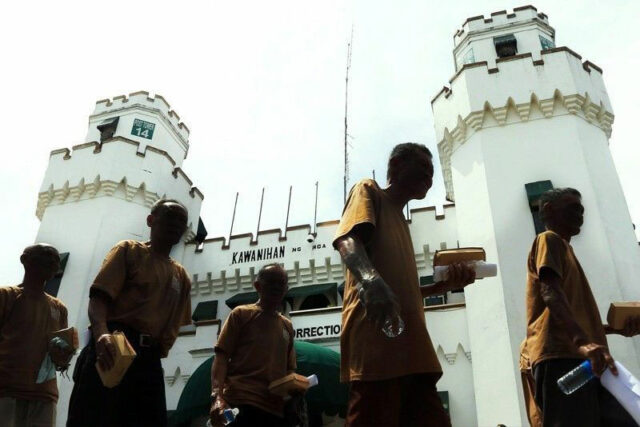
PHILIPPINE STAR/EDD GUMBAN

A SUPPORT group for political prisoners appealed to Justice Secretary Jesus Crispin C. Remulla to approve the release of the country’s oldest political detainee before Christmas Day.

Support group Kapatid requested Mr. Remulla to include 84-year-old Gerardo Dela Peña in the next round of clemency grants for elderly prisoners, citing a Board of Parole and Pardon (BPP) resolution that reduced the required minimum service of sentence to 10 years from 15 years for detainees who are at least 70 years old.

“We further appeal to please quicken action on his case since he is already very frail,” said Kapatid spokesperson Fides Lim in a statement on Tuesday.

Mr. Dela Peña has been in jail at the New Bilibid Prison for more than a decade, accused of charges that some groups say were trumped up. BPP deferred his clemency application on Sept. 6.

In a letter to Mr. Remulla dated Nov. 29, the spokesperson said Mr. Dela Peña has already served 11 years in jail with credit for good conduct time allowance, arguing that the Department of Justice (DoJ) has been able to release elderly inmates even younger than him.

“But is being a political prisoner an insurmountable barrier to his release?” Ms. Lim told the justice secretary in her letter. “I hope you can find a solution to bring him back home — hopefully before Christmas Day.”

Ms. Lim cited the case of Marcos Villareal, a political prisoner who died on Sunday at the Tinangis Jail and Penal Farm in Camarines Sur due to his kidney disease. “Don’t let what happened to his fellow Bicolano political prisoner (Mr. Villareal) happen to him,” highlighting that Mr. Dela Peña suffers from health concerns due to old age. — Jomel R. Paguian

ADVERTISEMENT
ADVERTISEMENT