Home Blog Page 394

Maynilad plans up to P30-B capex this year

MAYNILADWATER.COM.PH

By Sheldeen Joy Talavera, Reporter

WEST ZONE concessionaire Maynilad Water Services, Inc. plans to spend up to P30 billion in 2026 to fund water and wastewater projects within its service areas.

“We’re looking at anywhere between P26 [billion] to P30 billion,” Maynilad President and Chief Executive Officer Ramoncito S. Fernandez told BusinessWorld last week.

He said the planned capital spending will be allocated to projects related to water production, wastewater services, and non-revenue water reduction.

The 2026 capital expenditure (capex) forms part of the company’s P163-billion capital investment program for 2023 to 2027, which is earmarked for infrastructure projects aimed at sustaining service improvements.

Mr. Fernandez said Maynilad is ramping up the completion of major water infrastructure projects, including the CAMANA (Caloocan-Malabon-Navotas) Water Reclamation Facility.

“That’s the biggest wastewater plant in the country when it’s finished this year,” he said.

Located in Maypajo, Caloocan City, the P10.5-billion facility is designed to enhance sewerage services in South Caloocan, Malabon, and Navotas by treating up to 205 million liters of wastewater daily. Once operational, it is expected to serve about 1.2 million customers.

Maynilad currently operates 23 wastewater facilities, based on its website.

The company had earmarked more than P30 billion for capital expenditures last year as it stepped up investments in water supply, wastewater, and network improvement projects.

Maynilad made its stock market debut in November last year, raising P34.34 billion from the offering, the second-largest initial public offering in the bourse’s history.

For the first nine months of 2025, the company reported a net income of P11.41 billion, up 18% from a year earlier, supported by higher revenues.

Maynilad is the primary provider of water and wastewater services in the West Zone, which covers 11 cities in Metro Manila, three of which have partial coverage, as well as parts of Cavite province.

Metro Pacific Investments Corp., Maynilad’s majority shareholder, is one of three Philippine subsidiaries of First Pacific Co. Ltd., alongside Philex Mining Corp. and PLDT Inc.

Hastings Holdings, Inc., a unit of PLDT Beneficial Trust Fund subsidiary MediaQuest Holdings, Inc., has an interest in BusinessWorld through the Philippine Star Group, which it controls.

Billion-dollar beauty

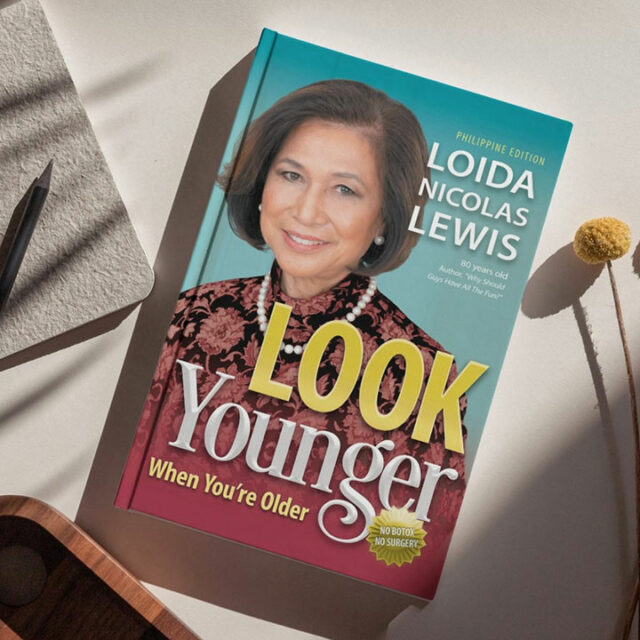
LAWYER and businesswoman Loida Lewis released a book titled Look Younger When You’re Older — No Botox, No Surgery last December. A philanthropist, she is the widow of Reginald Lewis, one of the most successful African-American businessmen in history — he reformed Beatrice Foods, behind some of the most well-loved American grocery brands like Swiss Miss, into a billion-dollar company, TLC Beatrice International Holdings Inc. After his death, his widow ran the company and then sold it off near the end of the 1990s.

A lawyer in both Manila and New York (she was the first Asian woman to pass the New York State Bar who had been educated outside the US), she is on tour to promote Why Should Guys Have All the Fun? An Asian American Story of Love, Marriage, Motherhood and Running a Billion Dollar Empire. At a press conference in Quezon City on Jan. 20, she said that during the tour, “I was met with shock and awe every time I revealed that I am 80. I have been so frequently asked about what it is that I do differently that makes me look the way I do and have the energy that I have at my age.”

With 151 pages, the first few chapters do describe Ms. Lewis’ beauty routine. There are some surprises: the wealthy Ms. Lewis namedrops products from Chanel and Guerlain, but also local brand Eskinol (she uses it as a makeup remover). Some of her beauty advice is as simple as constant hydration with drinking water and facial mists.

One does not expect such a book from a serious figure. Other books in her repertoire include the aforementioned Guys, but she also has How to Get a Green Card, and publishing her husband’s autobiography, Why Should White Guys Have All The Fun? Ms. Lewis’ arena is in business and philanthropy, so we weren’t expecting beauty tips from her, but she said, “This is not just about beauty. This is my philosophy in life.” For example, Chapter 3 begins with her spiritual life, with her favorite prayers and bible verses. She also practices Zen meditation, and she places in the book her detailed practice. She also talks about friends, family, and some of her causes. It’s a good portrait and guide to navigating life as a senior, but we will say that it’s written in a stream-of-consciousness style. The voice is that of a kindly grandmother though, so at least it’s soothing.

“In the end, we are body and soul. You cannot only work on the body, you have to work on the soul,” she said. “Do good things.”

“There is no shortcut,” she said. “What I tell here, you have to do, chapter by chapter.”

On a rather serious note, we asked her about the recent immigration policies in the US, as a Filipino-American herself. “The President of the United States is out of his mind. He is totally unhinged. He is violating the Constitution of the United States. He’s violating the laws of the state. He’s violating decency. Ay naku! Walang modo (uncouth). Bastos (rude). Lahat na (all of it).”

Look Younger When You’re Older — No Botox, No Surgery (Anvil Publishing) is available nationwide in all National Book Store branches. It is also available for purchase on Shopee and Lazada. — Joseph L. Garcia

Philex shares slide on Padcal mill disruption

PHILEXMINING.COM.PH

By Heather Caitlin P. Mañago, Researcher

PHILEX MINING CORP. (Philex) shares fell last week after a structural failure at its Padcal Mine’s mill plant disrupted operations and weighed on investor sentiment, despite strong global gold prices.

The mining company was the 19th most actively traded stock during the week, with 54.44 million shares valued at P590.47 million changing hands from Jan. 19 to 23 on the local bourse.

Philex shares closed at P11.16 apiece, down 2.8% from the previous Friday’s P11.48 close, underperforming the mining and oil sector’s 5.2% gain and the Philippine Stock Exchange index’s (PSEi) 2% decline.

On a year-to-date basis, however, the stock is up 12.7% from P9.90 at the end of 2025, trailing the sector’s 21% rise but outperforming the PSEi’s 4.6% increase.

“The decline in share price stemmed primarily from operational disruptions at the Padcal Mine, following a structural failure in the mill plant’s support system,” Peter Louise D. Garnace, equity research analyst at Unicapital Securities, Inc., said in an e-mail.

Jash Matthew M. Baylon, equity analyst at The First Resources Management and Securities, said the development prompted a sell-off as investors anticipated lower gold output and weaker short-term profitability.

Philex said on Monday last week that operations at its Padcal Mine in Benguet were disrupted after a structural support failure occurred in a section of the mill plant, affecting daily production.

The failure affected the vibrating screens of the tertiary crushers and caused misalignment in the connecting conveyors, leading to the shutdown of the entire STC system that feeds the grinding section.

The company said it implemented an alternative milling process at reduced capacity using unaffected facilities, while engineering assessments and repair works were ongoing to restore normal operations.

Despite elevated gold prices, Philex shares declined as investors priced in the risk of reduced production and earnings from the Padcal Mine in the first quarter, a concern that could extend through the rest of the year, Mr. Garnace said.

“However, [the stock] recovered in the latter part of the week, fueled by stronger move of gold prices in the global market brought by geopolitical tensions,” Mr. Baylon added.

Spot gold climbed to a record high of $4,917.65 per ounce on Thursday.

For the coming week, Mr. Garnace advised investors to “closely track the yellow metal’s price action, currently hovering near the $5,000 per ounce level, amidst heightened geopolitical risks and the upcoming US interest rate decision,” noting that Philex “remains a gold proxy.”

He identified immediate support and resistance levels at P10.70 and P11.70, respectively.

Mr. Baylon similarly said investors should monitor geopolitical developments, as gold price movements are largely driven by external factors that could affect Philex’s margins.

He added that updates on conditions at the Padcal site remain critical, as these directly influence the company’s daily operations and production levels.

He pegged support at P10 to P10.20 and resistance at P11.80 to P12.

Philex is one of three Philippine units of Hong Kong-based First Pacific Co. Ltd., alongside Metro Pacific Investments Corp. and PLDT Inc.

Hastings Holdings, Inc., a unit of PLDT Beneficial Trust Fund subsidiary MediaQuest Holdings, Inc., has an interest in BusinessWorld through the Philippine Star Group, which it controls.

Smart’s SWEEP schools level up to AI

Partner schools under the Smart Wireless Engineering Education Program (SWEEP) are leveling up to take on artificial intelligence (AI). SWEEP, the Philippines’ longest running industry-academe linkage program, itself has officially entered Phase 5, which integrates AI, automation, and intelligent systems into engineering education, aligning academic training with how modern telecom networks are now designed, operated, and optimized.

“AI is reshaping the way modern networks operate, and we need engineers who understand that development,” said Eric Santiago, Smart head of Network Strategy and Architecture. “SWEEP brings students closer to the technologies we deploy every day — automation, data-driven diagnostics, and intelligent systems. They’ll learn how these innovations support real operations, real customers, and real business decisions.”

The next chapter introduces students to practical AI skills: prompt engineering, AI-assisted coding, data analysis, generative tools, and automated decision systems that can further spur rapid innovations and revolutionize customer experience. The focus goes beyond handing students AI tools — it’s about helping them build the problem-solving skills and design perspective necessary to implement AI responsibly in real-world situations.

From virtual simulations to connected digital universes, SWEEP is also giving students a front-row seat to the future of immersive technology. Extended reality (XR) — spanning virtual, augmented, and mixed reality — unlocks interactive environments, blurring the line between the physical and digital worlds. The metaverse opens connected digital ecosystems for collaboration, learning, and innovation.

Phase 5 also explores Network Disaggregation or the process of breaking down traditional, all-in-one networking equipment into separate, modular components that can work together. This allows enterprises to mix and match open hardware, software, and network functions from different providers.

As part of the SWEEP community, students benefit from mentorships by Smart engineers, learning how advance technologies optimize systems monitoring and diagnostics, customer support workflows, preventive maintenance, and other everyday applications.

“SWEEP represents a rare industry-academe partnership that opens doors to future-ready careers,” said Stephanie V. Orlino, AVP and head of Stakeholder Engagement at Smart. “The latest module positions graduates to compete — not just locally, but globally — by giving them the technical depth and practical experience needed to thrive in a digitally powered economy.”


SparkUp is BusinessWorld’s multimedia brand created to inform, inspire, and empower the Philippine startups; micro, small and medium enterprises (MSMEs); and future business leaders. This section will be published every other Monday. For pitches and releases about startups, e-mail to bmbeltran@bworldonline.com (cc: abconoza@bworldonline.com). Materials sent become BW property.

Anko, Cotton On, and other Aussie brands Filipinos can’t get enough of

BW FILE PHOTO

The Philippines and Australia have elevated their decades-long bilateral cooperation into a strategic partnership, demonstrating the two nations’ strong diplomatic and security cooperation, economic relations, and people-to-people links. However, going over the formal agreements and high-level dialogues, the partnership is increasingly visible in everyday life, which can be observed specifically in the many Australian brands that have proliferated in the country.

Australia has a significant presence in the Philippines’ largely consumer-driven economy through various sectors. It can be in food and beverage, retail, education, wellness, and lifestyle services; but, rest assured, Australian brands have steadily established themselves in the local market.

On the clothing side, Filipinos can be seen wearing Australian global fashion retailer Cotton On’s products due to its laid-back, trendy, and affordable clothing, accessories, and lifestyle products for women, men, and kids. The company focuses on accessible fashion for everyday wear, making current trends available at lower price points, though quality can vary, often suiting seasonal wear.

For top-notch surfing products and wetsuits, Australian chain retailer RipCurl has penetrated the Philippine market, bringing its signature wetsuits, surf clothing, bikinis, and tide watches to the country’s beaches. While the enterprise may not yet have a vast physical presence in the country, e-commerce platform Zalora and some Rustan’s department stores sell select offerings from the brand.

In the beauty and cosmetics sector, Australian brand BYS Cosmetics has gained visibility in the Philippines, particularly among younger consumers. Known for its affordable makeup products, BYS offers a wide range of cosmetics that cater to everyday use, such as foundations, lip products, and eyeshadow palettes. Its presence in local malls and online platforms makes the brand accessible to Filipinos who seek trendy yet budget-friendly beauty options.

Another Australian beauty brand that has found a place among Filipino consumers is Eaoron, which is widely recognized for its skincare products infused with hyaluronic acid. Popular across social media and e-commerce platforms, Eaoron appeals to Filipinos who prioritize hydration and skin health, especially in the country’s tropical climate.

In the food sector, Australian products have also become part of Filipino households. One of the most recognizable is Vegemite, Australia’s iconic yeast spread. While its strong and salty flavor may be an acquired taste for many Filipinos, Vegemite has nonetheless gained curiosity-driven popularity, particularly among consumers exposed to Australian culture through travel, education, or family members abroad who even look for the spread in their local supermarkets.

Similarly, Arnott’s, one of Australia’s most well-known biscuit manufacturers, has established familiarity in the Philippine snack market. Products such as Tim Tams and assorted biscuits are commonly sold in supermarkets and imported goods sections. These snacks have become favorites among Filipinos who enjoy international treats.

Complementing this is MasterFoods, an Australian brand recognized for its sauces, marinades, and condiments. As Filipino households place strong importance on flavorful cooking, MasterFoods products cater well to local culinary practices. Its marinades and seasonings allow home cooks to experiment with international flavors while still adapting dishes to Filipino tastes, creating a fusion of Australian and local food cultures.

With the Philippines heavily relying on the business process outsourcing and services industry, Australian brands in these sectors have also established themselves in the country.

In telecommunications, Telstra plays a role in supporting business connectivity in the Philippines. While not a mainstream consumer telecom provider locally, Telstra operates largely in enterprise solutions, helping businesses maintain international communication networks and digital infrastructure.

In the financial and insurance sectors, Australian companies such as QBE and Macquarie have also expanded into the Philippine market. QBE provides insurance services that support businesses, infrastructure projects, and risk management, contributing to economic stability and investment confidence. Meanwhile, Macquarie is involved in infrastructure, financial services, and investment solution.

Technology is another area where Australian influence is increasingly felt. Atlassian, the Australian software company behind popular tools such as Jira, Confluence, and Trello, is widely used by Philippine-based companies, startups, and IT teams.

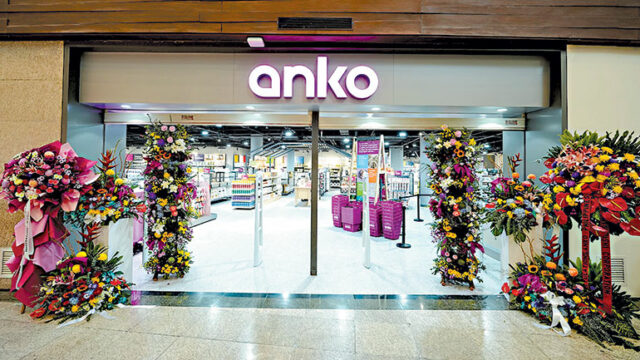
In the retail and home lifestyle sector, Anko, the home brand of Australian retailer Kmart, has exploded in popularity among Filipino shoppers. Known for its minimalist designs, affordability, and functional household items, Anko products appeal to consumers seeking stylish yet practical solutions for everyday living. Kitchenware and home décors are must-buys in the store, while stationery and organization tools also draw many Filipinos in.

Together, these Australian brands demonstrate how the Philippines-Australia partnership extends outside of the usual diplomacy and trade figures and into daily consumer experiences. Whether through clothing, beauty products, food items, technology platforms, or household essentials, Australian brands have woven themselves into the routines of Filipino life. Through these brands, Filipinos engage with Australian values of practicality, quality, innovation, and lifestyle, often without realizing that such everyday choices reflect a deeper and evolving bilateral relationship. — Jomarc Angelo M. Corpuz

Pineapple — chunks, rings, or clothes?

EDWARD SIBUNGA’S sound panel-speaker

THE PINEAPPLE PLANT has been good to us: once a symbol of luxury, it has been made into a traditional textile for use in formalwear, and is widely consumed as food. What if we tell you you can use it for lighting, casual clothing, and furnishing?

This was the point of Hiblatech, a new company specializing in fibers sourced from pineapple leaves, usually agricultural waste (most everybody else just needs the fruit). The leaves come from different species of pineapple, not the Red Spanish cultivar used for the finer piña textile. It is processed into a textile resembling felt, which could be processed further into a polyester blend resembling linen.

Hiblatech’s partner in this is Chuck Lazaro of Asia Textile Mills, a pioneer in natural fiber processing with over 40 years of experience in the industry. Mr. Lazaro also assisted in the creation of Piñatex, a pineapple-derived leather alternative by Carmen Hijosa from Spain.

Now the Philippine raw materials (pineapple leaves from Philippine farms) are going to be used by a Filipino-owned company. “That’s part of the mission,” said Hiblatech co-founder Tina Sabarre. According to her, 80% of the process behind Piñatex is done here, so, “When I heard that I said, ‘Why don’t we sell it, as a Filipino company?’”

The felt and fibers were given to designers who made various objects like toys, clothing, furniture, and lamps out of them. These were shown at an exhibit in Makati on Jan. 22. Krete Manila, for example, made a lamp with a concrete base reinforced with Hiblatech fiber and paper, resulting in concrete that was lighter and stronger. Edward Sibunga used the felt to make a sound panel-speaker, while Dee Javier made an artwork using the textile for embroidery — Ms. Javier works as a designer for the global Filipino-owned lingerie and loungewear brand Natori, and hinted at the textile making an appearance for the brand’s Spring-Summer 2026 collection. Collectively, the exhibit opens up various possibilities for the fiber to be used.

Ms. Sabarre, herself wearing a blouse made of pineapple fiber (the unwoven felt was woven in the aforementioned polyester blend, then worked on by model-designer Jo Ann Bitagcol) talked about the tests that the fabric has undergone, including for flammability, water resistance, and for continuous use (which included a friction test). While the textile passed standards for home use, there are opportunities to strengthen it further for hotel and restaurant use (which includes giving it a coating, currently being developed with a German company).

We pointed out the presence of Lakat, a brand of sneakers by Mike and Banj Claparols that uses pineapple fibers as well. Ms. Sabarre said that while the couple uses cotton in their blend (while Hiblatech uses polyester), they use the unwoven version — the same one Hiblafelt is made of — in their shoe inners. “We’re all here to promote Philippine fibers. It’s not about competition, etc.”

Due to the possible multiple uses of Hiblatech, Ms. Sabarre plans to hold workshops to teach more people in other industries about where else they can use the textile. She plans to upscale production with fundraisers to build another manufacturing facility. “We’re increasing the relevance of pineapple fibers across many other categories,” she said.

Contact Hiblatech through https://www.hiblatech.com/ for collaboration opportunities. — Joseph L. Garcia

DMCI Homes sets slightly lower capex at P16 billion

The Valeron Tower will soon rise along the C-5 Ortigas Corridor in Metro Manila. — COURTESY OF DMCI HOMES

DMCI PROJECT Developers, Inc. (DMCI Homes) has earmarked P16 billion this year for development spending and land acquisition, slightly lower than its P17.9-billion capital expenditure (capex) in 2025, as it plans to roll out four residential projects in Baguio, Laguna, Quezon City, and Taguig.

“With interest rates expected to ease, we anticipate a healthier environment for homebuyers and a gradual recovery in the housing market,” DMCI Homes President Alfredo R. Austria said during a briefing on Friday.

“We will continue offering value-for-money homes with practical financing options, while rolling out new projects at a pace that reflects both opportunity and prudence,” he added.

Most of the spending will go toward 13 ongoing developments and upcoming project launches, with the balance allotted for land acquisition and equipment.

For 2026, DMCI Homes is lining up a mix of premium, leisure, and mid-market developments, including projects in central Baguio City and Calamba, Laguna, as well as new residential condominium projects in Quezon City and Taguig.

In earlier statements, the company said One South Drive, a luxury medium-rise development in central Baguio City, will be positioned in the premium segment.

The project is located on land owned by Consunji-led private holding firm Dacon Corp.

“It’s a property right beside the golf course of the country club. So, it’s a very prime location, we think it will be a high-end market,” Mr. Austria said.

Meanwhile, the Moriyama Nature Park in Calamba, Laguna is a Japanese onsen-inspired development designed as a condotel project to tap rising domestic tourism demand.

“It’s a condotel, so the number of guests is high,” Mr. Austria said, adding that the first phase of the project will have about 300 units.

The planned developments in Quezon City and Taguig will both be residential condominium projects, he said.

Asked about projected sales, Mr. Austria said: “The expected revenue for the four projects is about P16 billion — that’s the revenue. But of course, it also depends on the pace of the project. Some of them are coming toward the end of the year. So, you won’t realize the revenue right away.”

Separately, DMCI Homes said the total property value of units under its rent-to-own program reached a record P14.5 billion in 2025, nearly double the P7.3 billion recorded in 2024. — Alexandria Grace C. Magno

United against cybercrime: PNP-ACG and JuanHand’s partnership for a secure digital lending space

The Philippine National Police Anti-Cybercrime Group (PNP-ACG), an agency responsible for combating cybercrime in the Philippines, has partnered with JuanHand, the country’s leading fintech cash lending firm.

The partnership between PNP-ACG and JuanHand aims to protect Filipinos from scammers through public awareness on responsible and safe borrowing and educate them on how to avoid traps set up by predatory lenders. Initiatives such as information sharing, training programs, and public workshops on the evolving nature of cyber threats form part of the agreement. The goal is to equip Filipinos with the knowledge and tools to identify and report suspicious activities effectively.

“Our partnership with PNP-ACG reinforces JuanHand’s commitment to protect Filipinos in the digital lending space,” said Francisco Roberto D.C Mauricio, president and CEO of JuanHand. “Through education and collaboration, we aim to help consumers avoid scams and borrow safely from legitimate platforms. Responsible borrowing is a force for good that ultimately leads to financial empowerment. JuanHand and PNP-ACG will work closely together to provide Pinoys a safe and secure lending environment that positively impacts their lives.”

This collaborative effort underscores the importance of cybersecurity in the fintech sector and the necessity for prompt, coordinated action against cybercrime. A scam-free lending space leads to a worry-free financial future.

About JuanHand

JuanHand is operated by WeFund Lending Corp., one of the Philippines’ most trusted fintech apps. To date, JuanHand has extended more than P85 billion in loans and over 20 million registrations. The platform’s mission is to empower underserved communities by providing fast, fair, and accessible credit, supported by gold standard AI technology and strong compliance standards.

About PNP-ACG

The Philippine National Police Anti-Cybercrime Group (PNP-ACG) is a pivotal and specialized unit within the Philippine National Police responsible for aggressively tackling cyber-related crimes. With a mandate to enhance the country’s capabilities in enforcing laws against cybercrime, the PNP-ACG stands guard to protect Filipinos from fraudulent financial entities.


Spotlight is BusinessWorld’s sponsored section that allows advertisers to amplify their brand and connect with BusinessWorld’s audience by publishing their stories on the BusinessWorld Web site. For more information, send an email to online@bworldonline.com.

Join us on Viber at https://bit.ly/3hv6bLA to get more updates and subscribe to BusinessWorld’s titles and get exclusive content through www.bworld-x.com.

T-bill, bond rates may be mixed before GDP data

STOCK PHOTO | Image by RJ Joquico from Unsplash

RATES of the Treasury bill (T-bills) and Treasury bonds (T-bonds) on offer this week could end mixed as players await the release of Philippine gross domestic product (GDP) growth data that could affect the central bank’s monetary easing path.

The Bureau of the Treasury (BTr) will auction off P27 billion in T-bills on Monday, or P9 billion each in 91-, 182-, and 364-day papers.

On Tuesday, the government is targeting to raise up to P50 billion from a dual-tenor T-bond offering, as it could borrow between P20 billion and P30 billion each through reissued seven-year papers that have a remaining life of two years and six months, and via reissued 20-year debt with a remaining life of 18 years and three months.

T-bill and T-bond rates could follow the mixed week-on-week movements seen at the secondary market as players await the release of fourth-quarter and full-year 2025 GDP growth data and how it will affect the Bangko Sentral ng Pilipinas’ (BSP) next policy move, Rizal Commercial Banking Corp. Chief Economist Michael L. Ricafort said in a Viber message.

Secondary market yields were range-bound on Friday as players positioned before the GDP data release, a trader likewise said in an e-mail.

At the secondary market on Friday, rates at the short end dropped while those for longer tenors rose amid lingering global and domestic uncertainty, with the market waiting for fresh leads that could dictate short-term yield direction.

Yields on the 91-, 182-, and 364-day T-bills went down by 3.11 basis points (bps), 4.52 bps, and 5.16 bps week on week to end at 4.7664%, 4.8359%, and 4.8912%, respectively, based on PHP Bloomberg Valuation Service Reference Rates data as of Jan. 23 published on the Philippine Dealing System’s website.

For its part, the yield on the seven-year bond rose by 4.45 bps week on week to close at 5.9368%, while the three-year debt, the tenor closest to the remaining life of the papers on offer on Tuesday, increased by 2.65 bps to 5.4974%.

Meanwhile, the 20-year note rose by 1.21 bps to yield 6.4996%.

The government will release fourth-quarter and full-year Philippine GDP on Thursday (Jan. 29).

The economy likely expanded by 4.2% in the fourth quarter, based on a BusinessWorld poll of 18 economists and analysts. This would be faster than the 4% growth in the third quarter, but slower than 5.3% expansion in the same period in 2024.

This would put full-year growth at 4.8%, below the government’s 5.5%-6.5% target. This would also be slower than the 5.7% expansion in 2024 and the weakest since the 9.5% contraction posted in 2020.

On Friday, BSP Governor Eli M. Remolona, Jr. said that another cut remains uncertain, adding that price stability is their primary concern.

He said that while they will consider the latest gross domestic product (GDP) data when the Monetary Board meets on Feb. 19, weaker-than-expected growth wouldn’t automatically warrant further easing.

The BSP on Dec. 11 delivered a fifth straight 25-bp reduction in benchmark interest rates, bringing the policy rate to an over three-year low of 4.5%. It has lowered borrowing costs by a total of 200 bps since its rate cut cycle began in August 2024.

Mr. Remolona earlier said they could implement one last cut to help support domestic demand as lingering governance concerns due to a corruption scandal involving state infrastructure projects have dragged both public and private investments, causing Philippine GDP growth to slump to a four-year low of 4% in the third quarter of 2025.

Analysts have said that the central bank could ease further to help prop up the economy as inflation remains under control.

Last week, the BTr raised P37.8 billion via the T-bills it auctioned off, higher than the P27-billion plan as the offer was nearly five times oversubscribed, with total tenders reaching P126.59 billion. The Auction Committee doubled its acceptance of noncompetitive bids for all tenors to P7.2 billion each.

Broken down, the government awarded P12.6 billion in 91-day T-bills, above the P9-billion plan, as demand for the tenor reached P35.65 billion. The three-month paper fetched an average rate of 4.723%, inching down by 0.8 bp from the yield seen at the previous auction. Rates accepted ranged from 4.68% to 4.743%.

The Treasury also borrowed P12.6 billion via the 182-day debt versus the P9-billion program as tenders hit P45.85 billion. The average rate of the six-month T-bill was at 4.817%, easing by 3.3 bps from the previous week. Tenders awarded carried yields from 4.8% to 4.835%.

Lastly, the BTr raised P12.6 billion from the 364-day securities, more than the P9-billion plan, as bids totaled P45.09 billion. The one-year paper’s average yield was at 4.888%, down by 2.8 bps. Accepted rates were from 4.875% to 4.893%.

Meanwhile, the reissued seven-year T-bonds to be offered on Tuesday were last auctioned off on Jan. 6, where the government raised P20 billion as planned at an average rate of 5.467%, above the 3.75% coupon rate.

For their part, the 20-year notes were last sold on Nov. 18, where the government raised P15 billion as programmed at an average rate of 6.424%, below the 6.875% coupon rate.

The Treasury wants to raise P180 billion from the domestic market this month, or P110 billion via T-bills and P70 billion through T-bonds.

The government borrows from local and foreign sources to help fund its budget deficit, which is capped at P1.647 trillion or 5.3% of gross domestic product this year. — Aaron Michael C. Sy

Paris Fashion Week: Hermès designer bows out with final menswear show; Giambattista Valli cancels at last minute; discreet elegance at LV

A STILL SHOT from Hermès Men’s winter 2026 runway show. — HERMES.COM

PARIS — Hermès menswear designer Véronique Nichanian presented her final collection on Saturday in Paris after nearly four decades in the role, as the 71-year-old prepared to pass the baton to young British designer Grace Wales Bonner. (See the show here: https://www.hermes.com/us/en/ )

R&B star Usher mingled with Hermès executive chairman Axel Dumas ahead of the Paris Fashion Week show in the Palais Brongniart, with a more star-studded crowd than usual for the luxury house known for eschewing flashy marketing and celebrity ambassadors.

Models wore silk turtlenecks with leather trousers in a navy blue, black, and taupe palette. Overcoats featured leather patches and shearling lining.

A shiny khaki crocodile-skin suit was a standout look, while Ms. Nichanian also mixed in pieces from earlier collections, like a navy leather suit with topstitched pinstripes from 2003 and a mocha calfskin jumpsuit from 1991. Jackets in orange and yellow provided flashes of color.

Walking out to close the show, Ms. Nichanian got a standing ovation from an audience including fellow designer Paul Smith, rapper Travis Scott and actors James McAvoy and Chace Crawford.

Ms. Wales Bonner named by Hermès in October, is the first Black woman to lead a major fashion house. She will present her debut menswear collection next January.

GIAMBATTISTA VALLI
Italian fashion house Giambattista Valli will not stage its planned Haute Couture show in Paris on Monday due to a review of its business, the brand said on Friday.

“The House is currently undertaking an in-depth review of the organization of its activities in order to ensure the company’s sustainability. Fully focused on this process, it has decided not to hold the show,” the brand said in an e-mailed statement.

Giambattista Valli is majority-owned by Artemis, the Pinault family’s holding that also controls Gucci-owner Kering, itself struggling financially amid a global downturn in luxury spending.

LOUIS VUITTON
Louis Vuitton (LV) men’s designer Pharrell Williams on Tuesday presented a collection of understated elegance in muted tones to kick off Paris Fashion Week.

The fall-winter show was held in a giant cube outside LVMH’s Louis Vuitton Foundation, which houses artworks behind its facade designed by the late American architect Frank Gehry. (You can watch the show here: https://www.youtube.com/watch?v=3VSghNTL_pY)

Inside, models wearing classic dresses in beiges, greys and browns walked across the artificial lawn around what looked like a countryside retreat, with its spacious minimalist design of wood and glass evoking serene seclusion.

Models wore ties, long coats, double-breasted jackets and dark brown leather caps, with deep reds and light yellows providing occasional touches of color.

A string orchestra and gospel-style dancers clapping and swaying to hip-hop beats provided the show’s soundtrack.

Mr. Williams, a Grammy-winning music producer who became Louis Vuitton’s menswear creative director in 2023, walked out at the show’s close to greet an audience that included singer John Legend, rappers Future and Skepta and France’s first lady, Brigitte Macron. — Reuters

Apeiron chair named among Top 40 Filipino Founders on LinkedIn 2025

The Top 40 Filipino Founders on LinkedIn 2025 has officially been unveiled, and among this year’s honorees is Joscel Delos Cielos, chairman and chief business officer of Apeiron. His inclusion in this historic list recognizes not only his entrepreneurial achievements but also his enduring commitment to building communities, shaping industries, and inspiring the next generation of Filipino leaders.

As Chairman and CBO of Apeiron, he has consistently demonstrated how leadership goes beyond business growth. It is about creating ecosystems of opportunity, elevating partnerships, and driving impact that resonates far beyond the boardroom. His work embodies the belief that founders are not just builders of companies but architects of change.

The Top 40 Filipino Founders on LinkedIn 2025 is not a ranking but a collective recognition of visionaries who are redefining the entrepreneurial landscape. Mr. Delos Cielos’ inclusion on this list affirms the growing influence of Filipino founders on the global stage, positioning the Philippines as a hub of creativity, resilience, and forward‑thinking leadership.

“This recognition is more than an accolade. It is a movement to spotlight Filipino founders who are shaping the future with courage and clarity. Leaders like Joscel Delos Cielos remind us that entrepreneurship is not just about building businesses but about creating communities of impact and inspiration,” said the organizing committee of the Top 40 initiative.

Apeiron is a next-generation professional services firm driving business transformation across Southeast Asia and beyond, with a growing presence in the Philippines, Singapore, Hong Kong, the British Virgin Islands (BVI), and the Cayman Islands.


SparkUp is BusinessWorld’s multimedia brand created to inform, inspire, and empower the Philippine startups; micro, small and medium enterprises (MSMEs); and future business leaders. This section will be published every other Monday. For pitches and releases about startups, e-mail to bmbeltran@bworldonline.com (cc: abconoza@bworldonline.com). Materials sent become BW property.

ADVERTISEMENT
ADVERTISEMENT