Home Blog Page 3891

Yule find a Grab more quickly

Grab Philippine Chief Operating Officer Ronald Roda (left) with Move It General Manager Wayne Jacinto — PHOTO BY KAP MACEDA AGUILA

Amid surge in demand, exec promises better ride supply

THE PROTRACTED holiday season in the Philippines typically see an uptick (make that huge uptick) in vehicle traffic as Christmas draws nearer. More people are out with greater frequency as they rush to meet their shopping and gift requirements (and requests). They are out more times, and longer.

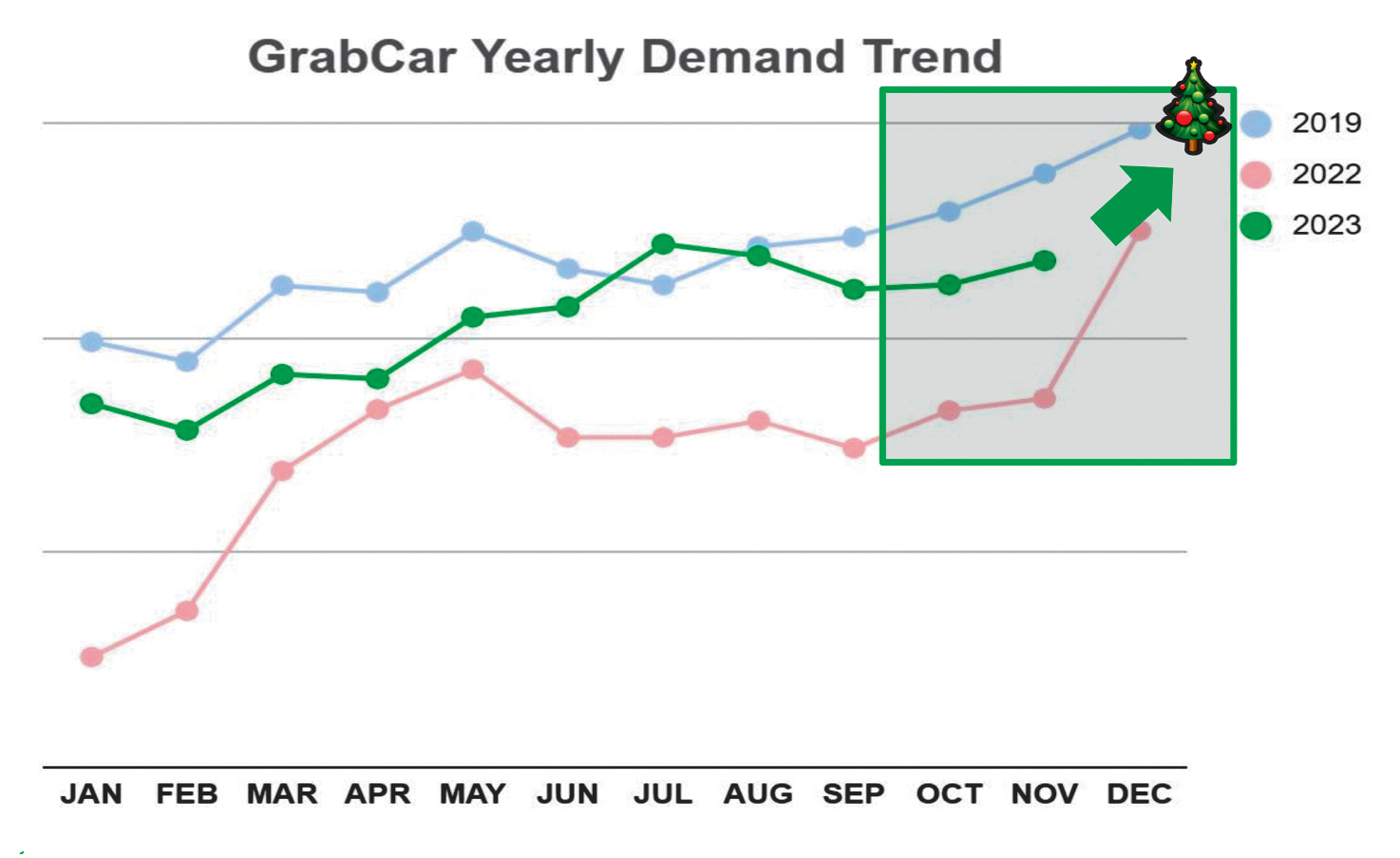
For ride-hailing customers, this time of the year also means longer wait times to book that vehicle — that is, if you get one at all. This is a cyclical phenomenon, said Grab Philippines Chief Operating Officer Ronald Roda in a recent presser, with GrabCar demand expected to shoot up by at least 20% this month, with a high of 45% to 50% on the second and third weeks. Pressed for absolute numbers by “Velocity,” Mr. Roda said the company cannot declare these as a matter of corporate policy.

He, however, admitted that, for good or for bad, Grab will be judged for the way it addresses the expected commuter surge, amid the aforementioned traffic over these crucial two weeks. Its plan, therefore, is to roll out insightful strategies to ensure a “seamless holiday experience for holiday commuters” that will optimize its fleet.

“There is absolutely, no excuse,” Mr. Roda stressed.

Compared to pre-pandemic numbers, current ridership is still lagging behind — owing to the fact that customer needs have evolved. While going to the office was previously ranked first among the reasons to book a Grab, the present situation of increased remote working has seen leisure take its place as the top reason. “We are still about at 85% the pre-pandemic demand,” revealed the executive.

On the plus side, there is more supply of ride-hailing vehicles this year, thanks to the Department of Transportation and Land Transportation Franchising and Regulatory Board opening more slots (4,000 in January, 10,300 in April, and 10,200 in August). The present Grab fleet, per Mr. Roda, is 40% more than last year’s number. The total GrabCar supply is comprised of some 30,000 vehicles.

As part of a 10,000-strong tranche, the company held a GrabCar Caravan that has already onboarded around 4,000 drivers.

The other alleviatory efforts are comprised of tech enhancements designed to improve the reliability of the service. One area is the augmentation of an airport-dedicated fleet to meet the increased number of holiday travelers to and from terminals. A separate vertical, Airport to Anywhere, sees a dedicated fleet of cars parked at the airport. Grab is “ramping up” the complement by two times to better and more quickly address the passenger surge. The service features fixed upfront fares and is surge-fee-free. Its fare matrix is similar to the already familiar yellow taxis that wait at terminals.

Another tech solution is called Multi-Type Taxi (MTT) booking, which allows the booking of a ride more quickly. Rather than switching manually through various types of services, MTT users can tick different ride types, and the app will more quickly choose what is available. Mr. Roda explained that MTT can reduce “allocation time by 20% to 30%,” as well as save the user from multiple clicks.

Grab is also employing a carrot-and-stick method to encourage its drivers to more readily accept bookings — even during peak hours. Those with a penchant for logging off or turning off the app will be penalized with a “time out,” locking them out of the app for progressively longer durations if they refuse to accept, or cherry-pick, rides. Meanwhile, those who deign to drive amid more difficult times and at more congested locations can be rewarded with incentives.

“The carrots and sticks are there to assure quality,” stressed Mr. Roda.

Finally, GrabShare has been made to “ferry more passengers per car more than ever” through more efficient matching of people in closer proximity to each other. During this period, it comes with a “match guarantee” fallback to a discounted GrabCar should the app fail to find the commuter a GrabShare match. And the “route is fixed after passengers are matched to a driver,” removing “surprise detours and stops.”“The experience of our passengers, consumers, and partners on Grab is our utmost priority,” Mr. Roda said, maintaining that Grab leverages its data, platform, and technology to understand and foresee the challenges faced by stakeholders. “Every Filipino should be able to partake in the long-lasting holiday festivities with the help and support of Grab’s mobility services.”

Finally, Grab is also bannering its recent acquisition of “homegrown two-wheel ride-hailing company” Move It to even more keenly “help address the demand of holiday commuters for safe, efficient, and honest transportation.”

Style (12/18/23)


Technogym opens store in BGC

EXERCISE equipment company Technogym has opened at 257 Mckinley Building in Bonfacio Global City (BGC). Spread across 160 sqm, the store is designed to offer a wellness lifestyle experience to consumers and allow people to discover some of the best products, technologies, and services for physical exercise at home. The store also has access to experienced personal trainers and interior designers for bespoke home-gym projects and personalized consultations. Technogym features innovative Italian design, cutting-edge technology, high quality, and easy-to-use products that are found in some of the best gyms, private members’ clubs, leading hotels and exclusive homes across the globe. It has been the Official Supplier of the Olympic Games nine times, including the upcoming Paris 2024 edition. The brand also boasts ongoing collaborations with Archistar designers like Antonio Citterio. Technogym offers Precision Training, a fully personalized training experience based on individual needs, passions, and aspirations. It features a curated selection of connected smart equipment, digital services, and on-demand training programs for every need. For those who love design, the Personal Line combines designer Citterio’s style with Technogym’s expertise on a complete range of cardio equipment, from the more traditional treadmill, bike, and elliptical to the iconic Kinesis product. For improved performance, Technogym has created Technogym Run, the only treadmill for both cardio and power offering a wide variety of on-demand workout modes and programs, and Technogym Ride, the first bike designed by cycling champions for indoor cycling training, at home and in the gym. For those with limited space, there is the MyRun, Technogym’s “smart” treadmill that is compact, minimal, and easy-to-use. It offers a wide selection of training content by connecting the device to a tablet or Technogym Bench. Technogym Manila is located at the Ground Floor, 257 Mckinley Bldg, 25th St. corner 7th Ave., BGC, Taguig. Opens Mondays to Saturdays from 10 a.m.to 6 p.m., and Sundays from 1 to 6 p.m.


Montblanc opens NEO 3.0 Boutique at GB5

MONTBLANC recently inaugurated its second NEO 3.0 concept boutique in Greenbelt 5 (GB5), Makati City. It offers a selection of modern, expertly crafted products that mirror the contemporary business lifestyle. In crafting the boutique’s design, Noé Duchaufour-Lawrance wove key collections and products into unique design themes, drawing inspiration from the fluid, cursive handwriting reminiscent of Montblanc’s iconic fountain pen. The Meisterstück counter is a focal point, drawing inspiration from the Maison’s original store counters. The façade’s transparent design becomes a canvas that spotlights the signature Montblanc snowcap emblem. The Leather Wall Feature is an artful display that goes beyond functionality. It serves as a gallery showcasing the Maison’s latest leather collections curated by Artistic Director, Marco Tomasetta. The first Montblanc NEO 3.0 concept boutique is found at the Solaire Resort. Montblanc is also available at Rustan’s Makati, Rustan’s Shangri-La, Rustan’s Cebu, Greenbelt 5, City of Dreams, and Resorts World.


Gift-giving help, promo from Newport World Resorts

THIS DECEMBER, Newport World Resorts unwraps The World of Christmas with new high-end global brands and big holiday promotions to help guests with their gift giving. At The Grove, 2F Newport Garden Wing, Charles & Tyrwhitt brings top-quality fabrics, expertly tailored for well-dressed gentlemen. Ever New, Australia’s leading retailer for event wear, offers ladies sophisticated dresses and fashionable staples. Timeless pieces await at Giordano Ladies and Esprit offers outfits for the quiet and comfortable moments this season. Newport Mall also boasts a selection of luxury shoes and accessories including Versace watches with a 10% discount at Meridian Watches, 3F Newport Garden Wing. Newport Mall’s Spend & Win Holiday Raffle Promo offers prizes including a luxe overnight stay at Hilton Manila. The winning package includes a room overlooking the Vega Pool, with breakfast for two at Kusina Sea Kitchen worth P20,000 and more. From Dec. 1 to 17, shoppers can get one digital raffle coupon for every P3,000 single receipt purchase from participating establishments in Newport Mall. They can also use their Epic Points or any China Bank credit card in shopping, dining, and pampering to get two digital raffle coupons. Six winners will be chosen through an electronic raffle draw on Dec. 21. Aside from the staycation, also up for grabs are P200,000 Travel Package consisting of PAL Mabuhay Air Miles, allocation for hotel accommodation, and pocket money; P100,000 and P50,000 worth of Newport World Resorts Epic Points; and a complimentary lunch or dinner buffet for two at Sheraton Manila Hotel worth P5,000. For more details, visit the official Facebook page @NewportCity.


Keds sets up shop in Gateway Mall 2

KEDS, the renowned footwear brand known for its women’s sneakers, recently opened its latest retail store in Gateway Mall 2, Araneta City. The new shop, which features a modern store design, showcases Keds extensive catalog of sneakers, slip-ons, sandals, and boots. These include popular models like the Champion, Chillax, Crew Kick, and Triple Up. The store also features special collaboration collections, such as Rifle Paper Co, along with new styles like Bounce and Skyler.Keds has a holiday promo in which shoppers will receive a free limited edition Keds watch for every minimum single receipt purchase of P8,000. The promo runs until Jan. 30, 2024. For more styles, check out Keds’ official webstore
https://www.keds.com.ph/.


Sperry sets sail in Gateway Mall 2

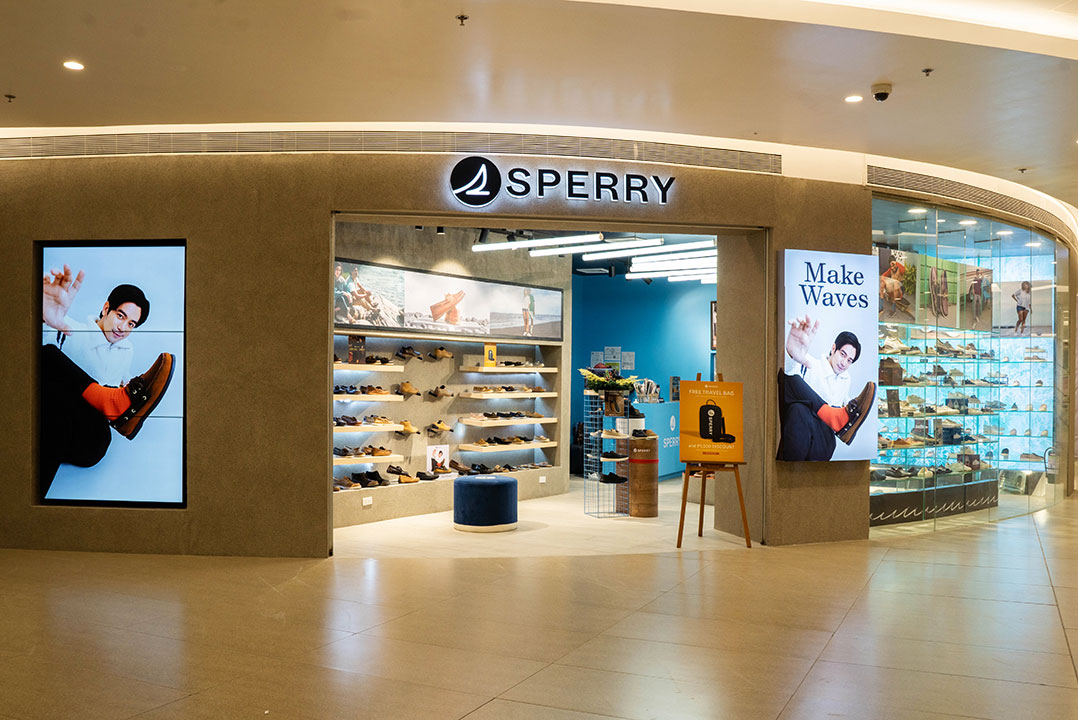
SPERRY, the iconic American footwear brand, has dropped anchor in the bustling heart of Araneta City with the opening of its latest store at Gateway Mall. Located in the mall’s new expansion Gateway 2, this nautical-themed retail space introduces a revamped design ethos, embracing a contemporary aesthetic that seamlessly fuses land and water elements. The shop carries a comprehensive selection of Sperry classics, including the Authentic Originals or Topsiders as well as a plethora of sneakers, boots, dress shoes, and sandals. Noteworthy is the inclusion of the SeaCycled Collection, a landmark initiative featuring eco-friendly materials and sustainable manufacturing processes. Shoppers will receive a free limited edition Sperry travel bag for a minimum single receipt purchase of P10,000 on regular-priced footwear, shoe care, and accessories, plus an additional P1,000 discount on top of the current purchase. This special offer runs until Dec. 30. For more styles, check out Sperry’s official webstore https://sperry.com.ph.


Tudor introduces new versions of popular watch

TUDOR introduces the newest Black Bay, the latest technical and aesthetic evolution of the emblematic diving watch with a burgundy bezel. Representing the latest in Black Bay, this model features evolved design elements, a “T-fit” clasp and is Master Chronometer-certified by METAS. The original Black Bay first launched in 2012 with a burgundy bezel and it was given the Manufacture Calibre treatment in 2016. Now it returns in a third evolution. Tested by the Federal Institute of Metrology or METAS, the Black Bay brings together cutting-edge watchmaking technology with design elements inspired by Tudor’s nearly seven-decade heritage of making robust professional diving watches. Tudor is also introducing a bold new version of its popular model, the Black Bay Fifty-Eight, in 18 carat yellow gold with an open case back. This is a first for both in a Tudor divers’ watch. The name Black Bay Fifty-Eight 18K is a reference to the precious metal of its case, but also to 1958, the year in which the first Tudor divers’ watch waterproof to 200 meters, reference 7924 or “Big Crown,” was introduced. Among other aesthetic nods to this historic watch, this model offers a case 39 mm in diameter in keeping with the characteristic proportions of the 1950s. The Black Bay Fifty-Eight 18K is ideal for slim wrists, people who like more compact watches, and vintage enthusiasts.


New Oil Control Tint from Careline

CARELINE unveiled its new Oil Control Skin Tint to help beauty aficionados achieve natural glowing and radiant skin. This lightweight skin control tint is a tone-adapt formula that gives a natural coverage that works for any skin type and tone. It provides broad spectrum SPF 50+ PA+++ protection against sun damage and is also infused with niacinamide that boosts hydration and treats dark spots, salicylic acid for gentle antimicrobial and anti-inflammatory benefits, and CICA (Centella Asiatica) which helps soothe and heal skin impurities. The Careline Oil Control Skin Tint (P285) is available at Watsons, The SM Store, Robinsons Department Store, and other leading department stores nationwide, as well as online on Shopee (bit.ly/CarelineShopeePH), Lazada (bit.ly/CarelineLazada), and TikTok shop (tiktok.com/@carelineph).


MPMG sells more than 10,000 clothes in one day

MAKE “PHILIPPINE-MADE” GREAT (MPMG), a local clothing brand, secured the top spot on the TikTok Philippines Men’s Fashion chart for October and November, following a surge in sales with over 10,000 orders in a single day. Known for its minimalist designs and diverse range of choices, MPMG offers affordable, basic wear that allows for versatile styling. The brand is committed to providing high-quality, locally made clothing, targeting the younger demographic with stylish yet cost-effective fashion solutions. A key strategy has been its effective use of social media, particularly TikTok, which is popular among younger audiences. The brand’s “Buy 1 Take 1” campaign significantly increased its visibility and contributed to its success, including achieving over 10,000 sales in one day. Looking ahead, MPMG aims to expand its market reach, with plans to target Southeast Asia and the global market.


Protecting hard-won reforms

FREEPIK

Dec. 20, 2023 marks 11 years since the signing of the Sin Tax Reform Law, which, in my opinion, is the greatest health advocacy and the greatest piece of legislation ever signed into law in our country.

In 2012, Republic Act 10351 or the Sin Tax Reform Law raised excise tax rates on tobacco and alcohol with the goal of lowering the number of Filipino smokers and raising revenue for Universal Health Care. The bill had been languishing in Congress for 16 years, but with the joint effort of the medical community, civil society, and our champion legislators, we made this landmark legislation a reality for the benefit of millions of Filipinos, smokers and non-smokers alike, for years to come.

Today, the coalition of passionate doctors and advocates known as the Sin Tax Coalition is still going strong. Despite the changes in the political landscape and through a pandemic, we have remained steadfast in our commitment to upholding public health by raising taxes on tobacco, alcohol, e-cigarettes and heated tobacco products.

I used to work in the corporate world, but some of the people closest to me — my mother, my father, and my sister — all succumbed to non-communicable diseases. I decided to retire from the corporate world and repurpose my skills, energy, and passion to health advocacy work. I became a P1 consultant to Health Secretary Enrique Ona, which was also where I met former Health Undersecretary Ted Herbosa, who is now the Secretary of Health of this administration.

The World Health Organization (WHO) estimates that seven out of 10 deaths in the Philippines are due to non-communicable diseases. That is 500,000 deaths in a year, which is equivalent to about three jumbo jets crashing every day. And yet, the clamor to address this epidemic is almost non-existent because unlike epidemics we have faced before, non-communicable diseases do not exhibit a clear and present danger.

The road towards the passage of the Sin Tax Reform Law in 2012 was strewn with many obstacles. Health advocates put in grueling hours speaking in front of Congress, talking to individual legislators, and demonstrating on the streets, all in the name of a healthier future for the Philippines. We found hard working champions in the government, from the Department of Finance, Department of Health, Department of Budget and Management, and other executive agencies, to the legislators. Everyone involved in the passage of this bill was willing to pull out all the stops because we knew that this reform would save the lives of millions of Filipinos for generations to come. Unfortunately, the person who signed the Sin Tax Reform Bill into law, former President Benigno Aquino III, passed away in 2021 from complications from diabetes, a non-communicable disease. The president himself was a smoker, but in spite, or perhaps because of this, he supported the sin tax reform.

The working paper, “A Performance Review of Sin Tax Reforms in the Philippines from 2012 to 2020,” by Kenneth Isaiah Ibasco Abante, AJ Montesa, Lyonel Tanganco, Viviane Apostol, and Patrick Acupan, published this December, assesses the promises and criticisms of the Sin Tax Reform Law. It tackles how the Sin Tax Law and the succeeding laws have affected revenues, smoking and alcohol prevalence, tobacco-growing regions, and our health system.

Despite the gains from the sin tax reforms, no piece of legislation is without room for improvement. The COVID-19 pandemic showed us that our healthcare system, despite the skyrocketing health budget, is still weak and fragile. There are large gaps in our healthcare service delivery and the implementation of the Universal Health Care Law, and it is our most vulnerable countrymen that fall through these cracks. We must make sure our gains are furthered and felt by every Filipino, just as the law intended.

Further, we must always be on our guard, knowing that tides can turn at any moment. The sin tax reforms must be protected in the face of emerging and greater challenges. We must address the proliferation of new products such as e-cigarettes and heated tobacco products, which are popular among the youth. The number of Filipinos drinking alcohol, which has not been taxed as high as tobacco, remains high, and binge drinking is still prevalent. Lastly, we need to protect the sin taxes from possible attacks.

The horizon for Filipinos at this moment is limited, given that the average lifespan of Filipinos is 72 years. I am passionate about the fight against non-communicable diseases because we should aim to live well into our 80s or 90s, or perhaps even endeavor to live until 100. Through this advocacy, we will be able to prolong the lives of Filipinos, so they have the time and health to pursue their dreams.

As we celebrate the leaps we took and the steps we are yet to take for a healthier Philippines, we may draw inspiration from the story of Diana Nyad. She was a long distance swimmer who crossed from Florida to Cuba at age 64, which set a world record. She was able to achieve this feat after failing to do so five times before. Upon finishing her amazing feat, she gave three important messages.

The first is “Never give up. Never give up. Never give up.” Although we face many obstacles, we must keep going and remember why we have believed in this advocacy since 2012.

The second is that nobody is too old to pursue or chase their dreams.

And the last, and most relevant to us advocates, is that, according to Diana Nyad, although swimming is a solitary effort, nobody can win without collaboration, without teamwork. We have made it this far through the joint efforts of passionate individuals across varied professions and backgrounds. Think of how much further we will be able to take this advocacy through further collaboration. I believe that this is the key to victory.

This article is a revised version of Dr. Anthony Leachon’s opening remarks at “Sin Tax Strategies for a Healthy Philippines: A Forum on the Past, Present, and Future of Sin Tax Reform,” a public launch held by iLEAD on Dec. 11 sharing findings from three outputs: A Performance Review of Sin Tax Reforms in the Philippines from 2012-2020, an Investment Case to Fund the National Tobacco Control Strategy (NTCS), and Local Experiences in Tobacco Control Strategies and implementation.


Dr. Anthony Leachon is an independent health reform advocate who advocated for the passage of sin tax reforms. He is a cardiologist at the Manila Doctors Hospital

CTA denies firm’s petition over P50-M tax deficiency

CTA.JUDICIARY.GOV.PH

THE Court of Tax Appeals (CTA) denied the petition of Encore Receivable Management, Inc. to void its P49.61-million deficiency taxes for the taxable year 2014, stating that the global finance company failed to abide by appeal procedures.

In a 12-page decision dated Dec. 6, the CTA Special First Division said the Philippine branch of the international firm failed to file its petition for review on time as called for under the court rules.

The tax court said the firm filed a petition only on April 8, 2019, or past the 30-day window to contest the preliminary collection letter (PCL) and final notice before seizure (FNBS) released by the Bureau of Internal Revenue (BIR) in June 2018.

“[T]he party who intends to appeal must comply with the procedures and rules governing appeals; otherwise, the right of appeal may be lost or squandered,” read part of the ruling penned by Associate Justice Marian Ivy F. Reyes-Fajardo.

Encore Receivable Management contended in its petition that some of its expenses included in its withholding tax on compensation pertain to government contributions, allowances, and other benefits that should be exempted from the said tax.

The BIR argued that aside from the company’s failure to comply with the 30-day window period to file a petition for review, the tax assessments covering 2014 are no longer subject to change. — Jomel R. Paguian

BPI Loans Marketplace: The one-stop portal for loans

BPI Head of Retail Loans Dennis Fronda explains BPI Loans Marketplace. — PHOTO FROM BPI

By Angel Rivero

THERE WAS a time when applying for a car loan required a lot more effort, mental preparedness, and nerve. Among the common challenges associated with the traditional method of loan applications were queues, the back and forth of requirements, long waiting times for the outcome, and even getting to the physical venues for these transactions to be made in the first place. Fortunately, the digital age has democratized not only the purchasing of plane tickets and booking of hotels, but also the application of loans, it appears. And BPI (the 172-year-old Bank of the Philippine Islands) is leading this digital transformation in the realm of bank loans, via the recently launched BPI Loans Marketplace.

The BPI Loans Marketplace is a one-stop shop for browsing and applying for loans for the purchase of properties and cars. It is accessible via the website: https://loansmarketplace.bpi.com.ph. And of course, being online, it is available for interested clients to visit anytime, 24 hours a day, seven days a week. That makes a huge difference in terms of convenience, and provides the added comfort of allowing clients to take all the sweet time they need when they want to compare the featured cars from partner car brands, or when they want to experiment with different loan schemes depending on different down payment options and lengths of loan periods.

BPI’s Head of Retail Loans Dennis Fronda was keen to explain at the media event: “As we launch BPI Loans Marketplace, we are not just introducing a platform; we are redefining the way our clients experience loan applications for properties and cars. Our commitment to innovation, transparency, and customer satisfaction is at the forefront of this initiative.” He also furthered that the BPI Loans Marketplace is primarily designed to empower clients, “providing them with the tools and information they need to make informed decisions about their financial future.”

The landing page of BPI Loans Marketplace highlights several areas for loan seekers. — IMAGE FROM BPI

BPI executives also explained the advantages of using the new platform. Among them is the “real-time” availability of the featured cars which customers can browse —  because a designated number of vehicles is already allotted for inclusion in the website. Therefore, clients have better chances of getting their desired cars as soon as possible. Clients can also directly compare the cost of different payment schemes, as there is a standalone calculator that can be used to compare the difference between varying down payment percentages and payment terms. There are also special features on the website, such as the Compare and Sort and Filter options, which enable side-by-side comparisons and targeted searches based on attributes such as car brand, location, and price range.

Of course, the BPI Loans Marketplace is also accessible on portable devices, so customers can browse the website anywhere they are, even while traveling. And as there is an array of payment solutions available, clients may also course any questions that they might have to the BPI Loans Marketplace’s dedicated online support team. The bank promises that their online team will be ready to revert with prompt responses.

Feed millers see supply of inputs dwindling

REUTERS

By Adrian H. Halili, Reporter

THE feed industry is seeking more government support to get through the expected decline in the domestic supply of feed inputs next year, according to the Philippine Association of Feed Millers, Inc. (PAFMI).

PAFMI President Edwin C. Mapanao said that the industry is growing but faces challenges like a lack of competitive inputs, animal disease management, and excessive imports of finished meats.

He added that feed millers are currently facing sourcing challenges.

“We expect local supply (of inputs) to go down due to El Niño, irrigation challenges, and a lack of post-harvest facilities,” Mr. Mapanao told BusinessWorld.

The government weather service said a moderate to strong El Niño is expected until the second quarter of 2024.

He added that global supply is expected to be abundant but access will be subject to disruption by geopolitics.

Livestock feed depends on inputs like corn, wheat, and soy. About 40% to 60% of animal feed consists of yellow corn.

The Philippines has a deficit of about 3 to 5 million metric tons (MT) of corn annually.

According to the US Department of Agriculture, shipments of corn to the Philippines are estimated at 1 million MT during the marketing year 2023-2024.

He said that the government should also help corn producers achieve scale and improve their capacity to conduct direct trade.

“This also reduces the heavy reliance on middlemen, which adds to the cost and diminishes profitability, by enabling farmers to trade directly,” he added.

Mr. Mapanao said that pushing for crop diversification and building more drying and storage facilities would increase yields.

“There is also a need to address challenges in scaling up production, particularly on land use and access to credit,” he added.

He said that the government should improve its crop forecasting capacity and data gathering.

“Crop status reports, planting intentions, forecasts, etc. will go a long way in aiding corn-reliant industries in planning out their purchases,” he added.

Agriculture Secretary Francisco Tiu Laurel, Jr., has said that he will support the revival of the Bureau of Agricultural Statistics to ensure accurate and complete data for the agriculture sector.

The gathering of agricultural data is currently being handled by the Philippine Statistics Authority, local government units, Department of Agriculture regional offices, and institutional stakeholders.

France to review actor Depardieu’s Legion d’Honneur medal following allegations

GERARD DEPARDIEU in a scene from 1998’s The Man in the Iron Mask. — IMDB

PARIS — French actor Gerard Depardieu’s Legion d’Honneur medal is under review following a string of allegations about sexual aggression and a TV documentary in which he was heard making lewd comments about women.

French Culture Minister Rima Abdul Malak said on France 5 television she had asked the grande chancellerie committee in charge of the Legion d’Honneur — France’s highest decoration — to start a disciplinary procedure to review whether the medal should be suspended or withdrawn.

Ms. Abdul Malak said she was “disgusted” by comments made by Mr. Depardieu, one of France’s most famous actors, during a 2018 trip to North Korea and broadcast in a Complement d’Enquete TV documentary on France 2 earlier this month.

“Shocking comments … bringing shame on France,” she said.

Mr. Depardieu has been the focus of a string of accusations of sexism and sexual violence in recent years. In March 2022, a Paris court ruled it would press ahead with an investigation into Mr. Depardieu after an actress accused him of rape. Charlotte Arnould had revealed that she was the woman behind the accusation, saying that she could not bear to remain silent any longer. Since then, more than 10 women have accused Mr. Depardieu of sexual violence.

Mr. Depardieu, through his lawyer, has previously “firmly rejected” the accusations.

In an Oct. 2 letter published in French daily Le Figaro, Mr. Depardieu denied all blame.

“Never, absolutely never, have I abused a woman,” he wrote.

Mr. Depardieu has starred in scores of French-language movies, rising to prominence in 1974 with Going Places, and gaining international recognition with a starring role in the 1990 English-language comedy Green Card. He won a Golden Globe best actor award for that role.

His performance in the French-language Cyrano de Bergerac that same year won him the award for best male performance at the Cannes film festival, and a nomination in the best leading actor category at the 1990 Academy Awards. — Reuters

Geely Philippines distributor gets new chief

New Sojitz G Auto Philippines President and CEO Naoyuki Takeda (left) is welcomed by Geely Automobile International Corp. (GAIC) Regional Sales Director Will Wan. — PHOTO FROM SOJITZ G AUTO PHILIPPINES

GEELY country distributor Sojitz G Auto Philippines (SGAP) recently announced the appointment of Naoyuki Takeda as its new president and CEO — to assume office on Jan. 1, 2024.

In a release, SGAP said, “Takeda brings with him an extensive background and experience in the Philippine automotive industry, marking a pivotal moment in SGAP’s journey in the country’s fast-evolving automotive landscape. Takeda has been an integral part of the automotive sphere at Sojitz for quite a long time.”

Prior to his new role, Mr. Takeda “played a pivotal role” at MMPC Auto Financial Services and JACCS Finance Philippines for over six years until 2022. He is seen as having a comprehensive understanding of the automotive industry, which makes him “a seasoned expert capable of navigating the challenges and opportunities in the Philippine market.”

Said Geely Automobile International Corp. (GAIC) Regional Sales Director Will Wan when he visited the Philippines to welcome the executive, “Mr. Takeda’s appointment as President and CEO of SGAP marks an exciting new era for Geely in the Philippines. His wealth of experience and strategic vision will be key in realizing our aspiration to introduce exciting models tailored to fit the evolving Filipino auto market.”

For his part, Mr. Takeda remarked, “I am honored to lead SGAP into this new era of growth and innovation. With the support of GAIC and our dedicated team, we look forward to introducing cutting-edge mobility solutions that will bring exceptional automotive experiences for the Filipinos while we will continue improving our customer service.”

He also expressed gratitude to outgoing SGAP President and CEO Yugo Kiyofuji, stating, “I am grateful for Mr. Kiyofuji’s contributions as he leaves SGAP to focus on other aspects of the auto business in (the) Sojitz headquarters in Tokyo where his distinct management capabilities are required. He has completed his mission in SGAP in a very short time, making vast improvements in the organization, particularly in various systems processes and parts availability.”

Brands are also mired in the Gaza conflict

EMAD EL-BYED-UNSPLASH

FOR MUCH of its existence, the boycott, divestment, and sanctions movement in Israel has been dismissed as inconsequential. But the tenor of boycott movements have reached a new pitch as consumers respond to the brutality of the Gaza war and Israel’s actions as an occupying force. Starbucks Corp., McDonald’s Corp., KFC Corp., and, more recently, Inditex SA’s Zara have all drawn scrutiny for how they do business in Israel or how they’ve responded to a horrific conflict.

Hamas, which sparked this most recent outbreak of violence in Gaza in October by launching a series of gruesome terrorist attacks, is sanctioned against doing any business with the United States, of course. But Israel, home to international retailers, has long-standing business relationships with the US — and consumers have put business operators on notice that they are willing to use their spending power as a form of protest. And it’s all part of a larger consumer ecosystem in which some shoppers expect companies to reflect their outlook and values. Companies, whether they are unaware, insensitive or simply unconcerned, are taking risks by not acknowledging and responding to angry consumers.

In October, shoppers threatened to boycott Starbucks over its criticism of its workers union’s since-deleted tweet that expressed solidarity with Palestinians. Just this week, Zara drew fire for one of its ads. The campaign portrayed a model carrying a mannequin wrapped in white cloth that resembled the type of Muslim burial shrouds that have covered Gazans killed in the war. The company has since apologized, calling the ad campaign a misunderstanding and explaining that it was shot months before Hamas attacked Israel. But in light of current events, they could have chosen different photos from the campaign shoot — or simply not have run it at all.

To be sure, shopper boycotts have become so commonplace we’ve basically become desensitized to them. It would be understandable (perhaps even sensible) for brands to brush off the current uproar over the Gaza conflict as another bout of rage that will eventually blow over. But violence in Gaza has resulted in nearly two million Palestinians forced from their homes and some 15,000 civilians and at least 6,000 children killed (though the US State Department has said the death toll could be higher).

The conflict has also brought the realities of the Israeli occupation onto consumers’ social media and news feeds and may not be easily dismissed or forgotten. It’s possible that these searing images will spur broad social shifts comparable to the upheaval set in motion when television networks began to regularly broadcast images from the Vietnam War in the 1960s.

And like US universities that have been accused of being insensitive to potential antisemitic violence, companies have drawn attention for being insensitive or unresponsive to the graphic and disturbing images coming from Gaza.

For months, many people have followed the daily news about the slow deterioration of medical treatment at Al-Shifa Hospital in the northern Gaza neighborhood of Ramal as hundreds of maimed people and dead bodies burst through its doors. Many people have been denied the right to bury their loved ones. It’s possible that consumer responses to that misery will amount to more than just a fleeting abstention from shopping with a particular company. After all, boycotting brands perceived to be insensitive to human suffering reflects a broader shift in attitudes among younger consumers.

For businesses, appearing unconcerned about such suffering could tarnish their already precarious standing with shoppers well aware that they have more options than ever before. US consumers reported a 14% decline in loyalty, from 79% in 2022 to 68% in 2023, according to the SAP Emarsys Customer Loyalty Index. Only about a third of Gen Z consumers are loyal to brands, and they are more demanding than other age groups about clearly understanding a company’s values.

It’s difficult to measure how much impact boycotts have had on companies so far. Starbucks’ market cap has been hammered recently, though the company has had choppy sales that aren’t solely explained by the threat of boycotts. At least one Zara store in Glasgow, Scotland, was forced to close temporarily because of demonstrations.

Starbucks and Inditex don’t report earnings results until the new year. But with the war still ongoing, it is unlikely boycotters will just abandon actions such as slapping stickers in support of Palestinians on Starbucks windows, carrying bundles covered in white sheets in demonstration against Zara or refusing to add to the bottom lines of businesses

The long-term impact on brands from the Gaza conflict is still hard to discern. But given that it has already ensnared the reputations of politicians, journalists, and celebrities, retailers and other companies shouldn’t be complacent.

BLOOMBERG OPINION

Globe’s unit launches AI-powered cloud platform 

GLOBE Telecom, Inc.’s unit has launched an artificial intelligence (AI)-powered cloud management platform to address the demand for cloud solutions in the country, the telecommunications company said.

“Cascadeo AI harnesses and combines the power of the most advanced generative AI tools to simplify and dramatically improve cloud management,” said Jared Reimer, chief technology officer and founder of Cascadeo, in a statement on Sunday.

Globe said its cloud company Cascadeo incorporated artificial intelligence technology into its management platform.

Last week, the company announced that this initiative is a collaboration between Cascadeo and Amazon Web Services (AWS).

“Cascadeo AI is a composite and comprehensive AI-powered cloud management platform that allows businesses to monitor, manage, and optimize cloud deployments in real-time,” it said.

Globe will leverage the new technology and complement its advanced generative AI-powered tools to improve cloud management, Mr. Reimer said.

Globe said the platform streamlines cloud management processing, which will allow managed service providers to handle a larger customer base.

It noted that Cascadeo will also improve security and managing measures through this platform, adding that the platform will also consolidate and accelerate cloud management tasks and operational visibility.

At the local bourse, shares in the company closed P6 or 0.35% lower to end at P1,699 apiece on Friday. — Ashley Erika O. Jose

Halal slaughterhouse relaunched in Batangas

THE Department of Trade and Industry (DTI) said it has relaunched a halal-ready slaughterhouse in Tanauan City, Batangas.

“This relaunching marks a significant leap forward in our goal of reinforcing Halal infrastructure in Calabarzon,” Trade Secretary Alfredo E. Pascual said in a statement.

“Through the Philippine Halal Export Development and Promotion Board and the Special Task Force created to grow the industry, we will ensure the development of the Halal industry and enhance the Halal economy within the country,” he added.

The Tanauan slaughterhouse received joint funding from the DTI and the Tanauan Local Government Unit through the Shared Service Facility program.

The department, quoting Tanauan Mayor Nelson P. Collantes, said that the slaughterhouse is significant “in boosting the local government’s business environment and its potential to create employment opportunities within the constituency.”

The DTI also conducted a halal awareness seminar at Tanauan Institute which aims to equip participants with tools needed to champion the halal industry.

“This seminar is a part of the Halal Training and Stakeholders Consultation which seeks to empower micro, small, medium enterprises and cooperatives through workshops, information sessions, and collaborative discussion,” the DTI said. 

The DTI aims to prepare a comprehensive roadmap for the Halal industry in Calabarzon which includes the establishment of a Regional Halal Coordinating Council.

“We are eyeing a bigger share of the $7-trillion global halal market. The scope is vast, from halal food, pharmaceuticals, halal friendly tourism, and Islamic finance to modest fashion and halal cosmetics. Halal is for everyone, as halal food is healthy and hygienic,” Mr. Pascual said.

“I am very optimistic that we can achieve our overarching objective of P230 billion in Halal trade and investment and over 120,000 job opportunities in the next five years,” he added. — Justine Irish D. Tabile

Gov’t seen to issue peso or dollar bonds in Q1

BW FILE PHOTO

THE GOVERNMENT could borrow either from the local or the foreign market in the first quarter of 2024 as both US Treasury yields and PHP Bloomberg Service Valuation Reference Rates have come down.

“They could issue more of [the] longer tenors, they could do Sukuk, tokenized, and other foreign denominations and tap the local markets too,” Reyes Tacandong & Co. Senior Adviser Jonathan L. Ravelas said in a Viber message.

He added the government could look to raise around P3-5 billion or about $500 million to $1 billion for a bond offering. “It could be more,” he added.

The possibility of the Bureau of the Treasury (BTr) issuing Sukuk or tokenized bonds next year is high given the success of the respective maiden issuances last year, China Bank Capital Corp. Managing Director Juan Paolo E. Colet said in a Viber message.

The BTr raised $1 billion from the sale of 5.5-year Sukuk bonds last month. This was twice the benchmark size of at least $500 million and matched the target mentioned by Mr. Diokno in July.

The notes were given an Ijara and Wakala structure with a Commodity Murabaha aspect and were set a profit of 5.045%.

Fitch Ratings, Moody’s Investors Service and S&P Global Ratings rated the bonds “BBB,” “Baa2,” and “BBB+,” matching their ratings for Philippine sovereign debt.

Meanwhile, the government raised P15 billion from the first-ever sale of tokenized Treasury bonds (TTBs) in mid-November, higher than the target issue size of P10 billion.

The BTr priced the one-year tokenized bonds at a coupon rate of 6.5%.

Aside from Sukuk or tokenized bonds, the government will also have different borrowing instruments to choose from such as onshore dollar bonds or Premyo bonds as it has been diversifying its foreign funding sources, he added.

He added that government issuances are expected to pick up next year due to the 2024 national budget, which was recently approved by Congress.

“Overall, the National Government is projected to borrow around P2.5 trillion from local and foreign sources. The government will prioritize domestic issuances of Treasury bonds (T-bonds) and Treasury bills (T-bills) to raise more than P1.8 trillion,” he noted.

The BTr canceled its last T-bills and T-bond auctions on Dec. 11-12 after it completed its domestic funding requirements for the year.

This year, the Philippine government’s borrowing plan was set at P2.207 trillion, consisting of P1.654 trillion from domestic sources and P553.5 billion from foreign sources. — Aaron Michael C. Sy

ADVERTISEMENT
ADVERTISEMENT