Home Blog Page 3890

Total care at the top: Dealing with head and neck cancers
Each organ of the body has a specific function to play in helping humans respond and adapt to their environment and thus in enabling a well-rounded lifestyle they can enjoy. At the top of the human body, the head, supported by the neck, houses the brain — which initiates and regulates communication with the rest of the body — as well as most of our sensory organs.

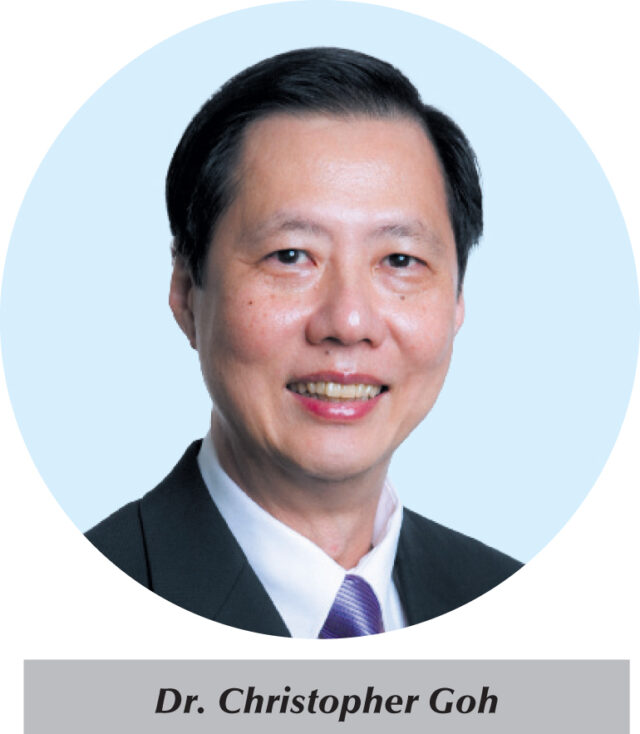
Like other organ systems, the head and neck are also prone to risk, and cancer is among them. According to head & neck surgeon and senior consultant Dr. Christopher Goh, head and neck cancer refers to a wide range of malignant tumors found in the neck and head region, which extends from the eyes to the neck base.

For this type of cancer, smoking, drinking, as well as viruses, poor oral hygiene and dental care are the most established causes of such illness. Symptoms include neck lumps, ulcers, voice changes, and ringing sounds in the ears.

With advancements in medicine constantly evolving, nonetheless, addressing head and neck cancer can be more durable and bearable. In most cases, cancer patients start with a diagnosis based on their symptoms; and if treatment is needed, patients must undergo an endoscopy, followed by treatments through surgery, radiation, chemotherapy, or a combination of these treatments.

Unlike other cancers, head and neck cancer is a bit more tricky. Dr. Goh says that it is not easily detectable since they are well-hidden in areas that are highly concealed like the rear of the nose, voice box, or the larynx.

However, there are some cancers of this type that can be detected early on, especially those with symptoms such as tongue cancers or ulcers, allowing for preventive measures to be taken.

According to Dr. Goh, head and neck cancer treatments have made a lot of progress in recent years. For instance, new types of chemotherapy and targeted therapy have been made available for patients. Also, reducing radiation damage and side effects is possible with proton beam therapy. Finally, endoscopic methods are being used to help reduce scarring and provide access to areas that are inaccessible.

Among hospitals specializing in cancer care, Mount Elizabeth Hospital is fully equipped to address head and neck cancer in a more convenient and holistic manner. One of the strongest cores of the hospital is its holistic medical care that ensures the best treatment, while also addressing the medical needs and providing an enhanced experience of privacy and comfort among patients.

“Mount Elizabeth Hospital has well-trained surgeons, radiation oncologists, and medical oncologists. In addition to the support team, which is important [for us in cancer care], Mount Elizabeth Hospital provides a good support team for patient care. In terms of technology, Mount Elizabeth Hospital is one of the few hospitals, the first hospital in Singapore [in fact], to have the proton beam ready or treatment and it will give the best results and the least side effects for patients,” Dr. Goh said in an interview with BusinessWorld.

In terms of protecting one’s self from potentially getting head or neck cancers, the key is to keeping a healthy lifestyle through a well-balanced diet, proper rest, exercise, and reduced smoking and drinking.

For inquiries, please contact Mount Elizabeth Hospital’s patient assistance center located at G/F-B Marco Polo Hotel, Meralco Avenue and Sapphire Street, Ortigas Center, Pasig City 1600; e-mail manila.ph@ihhhealthcare.com or call 0917-526-7576. Follow them at facebook.com/MountElizabethHospitalsSGPhilippinesOffice.


Spotlight is BusinessWorld’s sponsored section that allows advertisers to amplify their brand and connect with BusinessWorld’s audience by enabling them to publish their stories directly on the BusinessWorld website. For more information, send an email to online@bworldonline.com.

Join us on Viber at https://bit.ly/3hv6bLA to get more updates and subscribe to BusinessWorld’s titles and get exclusive content through www.bworld-x.com.
Under pressure from Shein, H&M reaches for upmarket shoppers

LONDON — During Paris Fashion Week, pop icon Cher, Swedish singer Robyn, and South Korean DJ Peggy Gou performed at Silencio nightclub to a crowd of actors and models including Jared Leto, Elle Fanning, and Irina Shayk.

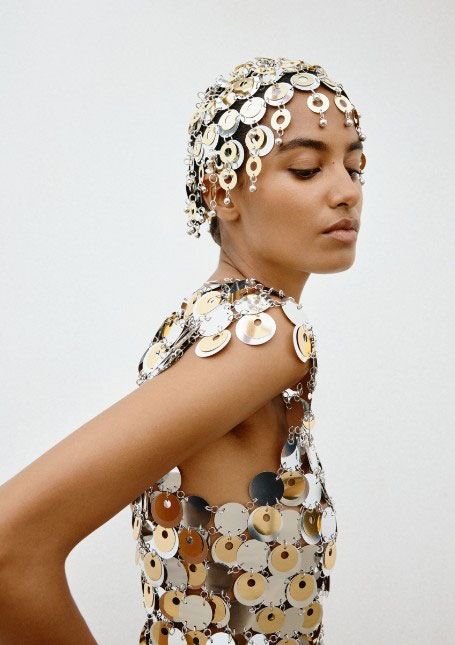
All were wearing shimmering outfits from H&M’s latest collaboration, a collection with the brand of late fashion designer Paco Rabanne, who pioneered the use of metal chainmail and sequins in fashion in the 1960s.

The star-studded event hosted by the Swedish fashion retailer is an example of its pitch to more aspirational shoppers as it tries to build back profit margins and move away from direct competition with fast-fashion giant Shein.

The rapid growth of the China-founded online retailer, which sells $8 dresses, $5 T-shirts and $2 jewelry, is upturning the industry.

According to Coresight Research, Shein, which plans an initial public offering next year, is now the world’s biggest fast-fashion retailer with an estimated 18% market share, followed by Zara owner Inditex with 17% and H&M with 5%.

What’s more, Shein is threatening those players in their core region: its app has more European than US users, according to data.ai, and has more than doubled its number of monthly active users in the region to 65.5 million since January 2022.

“There’s no doubt that Shein is a disruptor. They have come into the market and grown very fast, which I’m sure has surprised H&M,” said Adil Shah, portfolio manager at Storebrand in Oslo, which holds H&M shares.

H&M’s sales fell 4% in its fourth quarter, losing ground to Zara, whose parent company Inditex saw sales growth of 7% for its most recent quarter.

When inflation drove costs up last year, H&M was slower to raise its prices than Zara as its customer base is, on average, more price-sensitive.

But this year, price increases and reduced discounting helped it raise its operating margin to 5.9% for the first nine months of its financial year from 3.9% over the same period last year.

Alistair Wittet, portfolio manager at Comgest in Paris, said H&M, Gap, and other traditional high-street brands are all losing market share to Shein, but that Zara is less directly threatened as its customer is more white-collar.

“I would be very surprised if Zara were to lose share in the coming years,” Mr. Wittet said. “I don’t doubt that Shein will grow faster, but Zara will continue to outperform the broader apparel industry.”

In seeking to attract more aspirational shoppers, H&M is following in the footsteps of its Spanish rival, which has successfully boosted its image through store upgrades and marketing.

Investors seem optimistic that H&M can hit its target of a 10% operating margin in 2024 — its shares are up nearly 60% this year, beating Inditex. Still, Zara’s parent has a higher valuation than H&M.

Shah, at Storebrand, said H&M is also working to bring new collections to the market faster to better compete with Zara and the likes of Shein.

The Rabanne collection shows H&M is trying to differentiate by elevating its brand and increasing the fashion component of its assortment, said Barclays analyst Nicolas Champ, as it responds to Shein’s rapid growth making the budget part of the market much more competitive.

H&M says its designer collaborations “clearly show that design and sustainability are not a matter of price,” but its price points are far higher than the average for the retailer.

The collection includes a metallic mesh dress made of aluminum for $749, a sequin disc mini-dress for $399, purple sequin trousers for $299, and silver cowboy boots for $399.

Price increases could make H&M less competitive, analysts at RBC said — but they added good performance from its premium brand Cos suggests there is demand for higher-priced products. — Reuters

The heart of French allure

Biologique Recherche’s products are so beloved by celebrities that they endorse it without being asked to

FRENCH beauty brand Biologique Recherche’s client list reads like the most coveted guest list in the world: according to Vogue India, Kim Kardashian is a fan, and so is Madonna, and Jennifer Lopez. Page Six, meanwhile, lists down the Olsen twins and Brad Pitt. Biologique Recherche (BR) APAC Director Raphaëlle Faure, during a tea at the Raffles in Makati on Dec. 5, was asked for confirmation about the brand’s well-known users. “You want pictures?,” she asked, while grabbing her phone.

During an interview with BusinessWorld, Ms. Faure scrolled through her phone, showing us photos of their celebrity clients. We got a few more pleasant surprises, such as former pop star and fashion designer Victoria Beckham. “We would never share information that they will not share themselves,” she emphasized. She also corrected us by saying that they don’t just do facials for Kim Kardashian, but also for all her alliteratively named sisters, and even their mother.

Ms. Faure then showed photos of Jennifer Aniston with their products. “They’re doing that for free. Imagine how much it costs for Jennifer Aniston to do a post for you. We don’t have that kind of money,” she said about endorsements. She even discussed a celebrity (whose name we won’t mention), who launched a skincare line — only for fans to point out that BR products were all over their shelves. “It’s not something we advertise because we don’t pay them,” Ms. Faure said.

CUSTOMIZED TREATMENTS
Since 2021, Filipinos have been able to get these same treatments from the Maison de Beaute clinic at Serendra in Bonifacio Global City (BGC), Taguig. These products aren’t one-size-fits-all solutions: customers’ faces are first analyzed to know what they need.

“My skin is different than yours. What you need right now is different from what I need. We need to understand your needs in order to give it to you,” explained Ms. Faure.

There is a whole stash of products used in the treatments, which one can also use at home: there are at least 10 creams, everything from anti-wrinkle cream to sebum regulating balms, and we haven’t even gotten to the serums yet. One of the main products, however, is Lotion P50, which exfoliates and restores balance to the skin.

Futhermore, treatments from BR are supposed to be applied with special massages, invented by their co-founder, physiotherapist Josette Allouche, in order to increase the efficacy of the facial products made by her husband, Yvan Allouche, in the 1970s. Ms. Faure said that Mr. Allouche had been frustrated with the products in the market, citing active ingredients that should work in theory, but failed to do so in practice.

“What makes it efficient is that we look for multiple active ingredients, and we concentrate the formula at the highest level,” Ms. Faure said.

To this day, all the products are made in their factory in France: “Our products are highly concentrated in actives. We can’t rely on anybody else to manufacture our product. Our formula is complicated. Not only in terms of the number of active ingredients, but the way that we’re fabricating these: the pressure, the rotations, the temperature… we prefer to control (production) 100%.” While the company had been acquired by Rupert Schmid and Pierre-Louis Delapalme in the early 2000s, the Allouche couple’s son Philippe, a doctor, is still one of the company’s executives.

THE FRENCH APPROACH TO BEAUTY
Discussing the French approach to beauty, and how BR addresses these needs, Ms. Faure said, “As a Frenchwoman, it’s difficult for me to answer. You don’t really intellectualize the way that you’ve been taught. Now that I’ve worked enough internationally, I see the difference.” According to her, compared to Americans, French beauty takes a more minimalistic approach. “Health and elegance. We all talk about French makeup brands. French makeup is really light. It’s good skin, red lipstick; that’s basic,” she said. “All about elegance and lines, and with a touch of red. But these only work if you have great skin.”

However, it’s not just having great skin: at the heart of it all is a desire to cultivate confidence. “The way that you convey yourself; which at the end means confidence in yourself. We’re all about being confident enough to be yourself, but with a twist.”

Biologique Recherche products and services can be found at Maison de Beaute at the Piazza at Serendra in BGC, Taguig. Out-of-town locations such as in Shangri-la Boracay are also listed at their Instagram, @biologique_recherche_ph. — Joseph L. Garcia

Okada Manila describes Emerald Bay project as its ‘next step’ expansion

OKADA Manila’s move to invest in Dennis A. Uy’s Emerald Bay Resort and Casino project in Mactan, Cebu is part of its domestic expansion, according to an official of the integrated casino resort.

“We’ve been operating this property since 2016. It has been seven years. We’ve been looking for another opportunity to expand our business. That project could be the one fit into our next step,” Okada Manila Chief Managing Officer Kenji Sugiyama said on the sidelines of a media event last week. 

According to Mr. Sugiyama, the two groups are still going through the partnership’s due diligence process. 

“We just started to negotiate with them. It would take several months to see the result of the negotiations. We are excited for the process of the negotiation. We are going through the due diligence,” he said.

“If the negotiation will be successful, then we will be very happy,” he added. 

Recently, Japanese gaming firm Universal Entertainment Corp. agreed to develop Mr. Uy’s Emerald Bay Resort via its Philippine unit, Tiger Resort Leisure & Entertainment, Inc. (TRLEI), which operates Okada Manila. 

TRLEI executed a term sheet on Dec. 8 with PH Travel and Leisure Holdings Corp., which is a subsidiary of Mr. Uy’s listed firm PH Resorts Group Holdings, Inc. 

The term sheet allows TRLEI to acquire “significant majority ownership” in PH Travel’s subsidiaries Lapulapu Leisure, Inc. and Lapulapu Land Corp. as operators of the Emerald Bay project, allowing it to take over the development. 

Meanwhile, Mr. Sugiyama said that Okada Manila is still seeing more opportunities for growth in 2024. 

“After the pandemic, there is so much potential with the tourism [sector] and everything that has normalized. We’re looking to be better in terms of revenue,” Mr. Sugiyama said. 

Okada Manila earlier reported that it had logged a 48.5% increase in its total revenue to P38.08 billion as of September this year from P25.64 billion a year earlier. 

Its gross gaming revenue from January to September improved by 48% to P35.21 billion from P23.84 billion in the same stretch in 2022. — Revin Mikhael D. Ochave

Four ways to tell the designer fashion items worth investing in from the ones that aren’t

FREESTOCKS-UNSPLASH

WHETHER it’s aspiring to the “quiet luxury” or “old money” looks taking over TikTok, or cringing at the “ludicrously capacious bag” scene in the last season of Succession, designer clothes and accessories have been a hot topic in 2023. But with continued sales growth in designer fashion, and concerns about shopping more sustainably, it’s worth considering investing your money in products that will last longer.

Sales in luxury fashion have increased significantly since the pandemic. Louis Vuitton, for example, has increased its sales from 2019. And British luxury brand, Burberry, reported sales growth to be 86% higher in the year following the pandemic (though there has been another dip in sales more recently).

The rise of athleisure in fashion and designer collaborations such as Manolo Blahnik for Birkenstock, Gucci x Adidas, and Burberry x Supreme have made luxury more available. But prices are still high, so how can you know whether a purchase will stand the test of time and become an investment piece or a fashion flop? Here are four key factors to consider when making a designer purchase.

1. Resale value

An expensive purchase price may not guarantee that your product will hold its value. A key factor to consider is what the resale value of your purchase will be, as this will indicate the item’s investment potential.

A fashion investment piece tends to be a luxury product with a higher price ticket. Prices of luxury fashion have increased over the last decade. Chanel bags, for example, have almost doubled in price. Chanel’s iconic medium flap bag has increased from £7,550 in 2022 to £8,530 in 2023 and is considered to be one of the most covetable designs in the resale market.

Similarly, Hermès’ famous Birkin and Kelly bag designs, renowned for their quality, are undoubtedly investment pieces. Despite the high price ticket, Birkin bags are in demand. They are the most collectable and classic of designer bags, with an average retail price of $10,000 (£8,237), which can double in the resale market.

Luxury fashion resaler Vestiaire, along with online marketplaces like eBay, are useful sources for researching and calculating what the value of your purchase will be in the resale market. While designer bags can hold their value post-purchase, clothes can be less straightforward and will depend on the other following factors.

2. Quality and style

A 2023 report has stated that the overt use of logos in recent years, from brands such as Balenciaga and Louis Vuitton, has been replaced by an interest in quiet luxury.

Quiet luxury means more simplistic, classic, and timeless styling. The focus on exquisite fabrics and design gives a sense of fashion that is not disposable and durable. A cashmere sweater from Lorna Piana may cost over £1,700 but its quality and classic styling will ensure it’s an investment piece that transcends fashion trend cycle.

Consideration of fabrics, styling and design aesthetic are all key in ensuring your fashion investment has longevity.

3. Brand authenticity

Heritage and authenticity can secure the value of fashion purchases. Brands that have a strong heritage — that have been around and respected for a long time — are better investment pieces, particularly in the categories of watches, jewelry, and handbags. Rolex watches are renowned as investment pieces, with models that are most rare commanding the higher appreciation values.

In the realm of clothing, Burberry’s iconic trench coat — which has remained largely untouched in design terms for over 100 years — has been reported to be a good wardrobe investment by Vogue. The trench’s timeless design, alongside its long history, has secured its place as an investment product.

However, when it comes to making the purchase it is important to go with Burberry’s original design, rather than the fashion-led versions whose value may diminish as seasonal trends move on.

4. Product endorsement

Celebrity endorsement is a popular brand strategy for increasing the value of fashion products. While it may drive sales, it is important to consider what effect it will have on investment quality.

A recent example was when the British pop star Harry Styles wore the luxe Adidas x Gucci Gazelle trainers, during his 2023 tour, resulting in a reported 100% increase in sales of the trainer.

While sneakers have previously had a buoyant resale market, that is now declining, raising questions as to whether they will continue to be positive investment pieces. Celebrities may create hype — but their endorsement does not always ensure the longevity of a product’s value.

In 1999, Dior’s saddle bag was featured on US TV series Sex and the City, securing its place as an iconic designer bag. While this increased its value and desirability at the time, the bag eventually faded from view, until 2018, when Maria Grazia Chiuri, Dior’s current design director, relaunched it. This resulted in a frenzy of interest in the original John Galliano designs.

Endorsement creates hype and desirability, but occasionally it can also create a classic too. But this takes time, and it’s best to consider other factors including brand authenticity, quality and style when planning an investment purchase.

Also, value does not always have to have a price attributed to it. In the world of designer fashion, it is important not to overlook the significance of the emotional durability of our purchases and how that can ensure an enduring value and longevity.


Naomi Braithwaite is an associate professor in Fashion Marketing and Branding, Nottingham Trent University.

Mitsubishi eyes 22% sales growth

THE Philippine unit of Japanese car manufacturer Mitsubishi Motors Corp. is seeing a 22% sales growth for its current fiscal year set to end in March next year led by its locally assembled units, according to its official.

Jack S. Ramirez, Jr., Mitsubishi Motors Philippines Corp. (MMPC) first vice president for sales and marketing, said the company is expecting to sell 74,000 units by the end of its fiscal year, representing a 22% year-on-year growth.

“54,068 units is our sales number from April to November. We have four months to go. With an average of 6,700 units sold per month, our [projected] landing point would be around 74,000 [units],” Mr. Ramirez said on the sidelines of a media event in Makati City last week.

“For the whole of 2022, it was around 60,630 units (sold). If we will end at 74,000 units sold approximately, we have around 22% growth already,” he added.

Despite the growth, Mr. Ramirez said the sales estimate falls short of MMPC’s previously announced target to sell 75,000 units this fiscal year.

“The figure is short [of] the expected 75,000 units sales projection. Nevertheless, that is more than our internal target already,” Mr.Ramirez said. 

According to Mr. Ramirez, MMPC’s sales were carried by its completely knocked down or locally assembled units consisting of the L300 utility vehicle and the Mirage G4 sedan. 

He added that the car brand’s Xpander multi-purpose vehicle (MPV) also boosted sales. 

“Per month, our G4 sells around 2,000 units while the Xpander sells about 1,800 to 2,000 units, and the L300 goes for about 1,200 units,” he said. 

Mr. Ramirez also said that MMPC’s sales would receive a boost from the official launch of its all-new Triton pickup truck in January next year.

The price of the upcoming Triton ranges from P1.13 million to P1.92 million depending on the variant.

Meanwhile, Mr. Ramirez projected that there could be weaker sales in December due to the slower bank approval of car loans.

“For December, I think there will be a slight drop in sales as forecasted by the industry members because we expect the loan approval rate of banks to slightly go down because most of the banks have already reached their targets for the year,” Mr. Ramirez said. 

“The banks also want to control the bookings in preparation for the next calendar year as well,” he added. — Revin Mikhael D. Ochave

The gift of beauty

THE HOLIDAY season is truly upon us, and we’d really like its accompanying ups and downs to not leave a mark on our faces for the coming new year. Why don’t we all treat ourselves a little bit this Christmas, and look really good for all the holiday photos?

KIKO MILANO
Italian beauty brand Kiko Milano, rumored to be perfect dupes for more expensive European brands, is showing off their Holiday Premiere collection. These stocking-stuffers have customers covered from skincare to makeup.

We can all start with the Hydra Face Serum (P1,650) with moisturizing and brightening effects. To create a flawless canvas for the skin, we recommend the accompanying primer (P1,400), all topped off with the 24H Lasting Foundation (P1,850). Highlight all you want with the eyeshadow palettes (in Made to Shine and Dreamy; both at P1,600); the Liquid Face Highlighter (P1,050); and the Iconic Masterpiece Blush (P1,500). Finish off with the Volume & Curl mascara at P1,250. They even have a scent, called Golden Eau de Parfum (P2,400).

The Holiday Premiere collection is inspired by Italian theaters, so you know you’re about to make an entrance.

Kiko Milano is available at SM Mall of Asia, SM Megamall, SM Grand Central, SM San Lazaro, SM North EDSA, SM City Clark, SM Department Store Cebu, SM Department Store Davao, SM Department Store Megamall and online on Lazada, Shopee, and Zalora.

NEUTROGENA
Neutrogena is taking care of all the holiday stress with the Hydro Boost Serum and Water Gel. These are enriched with hyaluronic acid and other dermatologist-recommended ingredients. The Hydro Boost Water Gel claims to give the skin five times more hydration (compared to not using moisturizer at all), and the serum only adds to the fun.

Neutrogena products are available in leading stores and Shopee and Lazada. — JLG

SN Aboitiz eyes adding 1,000-MW  solar power in its portfolio by 2030

RENEWABLE ENERGY company SN Aboitiz Power Group (SNAP) is looking to integrate solar power into its portfolio by the end of the decade.

“Our goal is to add 1,000 megawatts by 2030. The sooner the better, of course, by phase,” SNAP President and Chief Executive Officer Joseph S. Yu said in a media roundtable last week.

“But everybody knows it’s not easy. You have to find a land, use something that you can convert, it has to have good irradiation and then you have to have access to transmission lines so it’s a tough challenge,” he added.

The company is currently conducting a feasibility study to confirm the viability of its 200-kilowatt floating solar project, which was placed over a portion of the Magat reservoir in Isabela.

“There were a lot of growing pains but we’ve sorted it all out so we’re confident with the technology, but we still need to make sure that we can sell the output when we build it,” Mr. Yu said.

In 2019, SNAP said it had invested around P24 million for the pilot floating solar project, which consisted of 720 solar panels. The facility is situated over a 2,500-square-meter area in the Magat reservoir.

“We would look at more solar so we would look at both floating and land-based. We’re joining the race for that one. But we’re looking at it because we want to integrate the solar output into our portfolio. We feel that the capacity of solar PV (photovoltaic) is highly complementary to the profile of hydropower plant,” he added.

SNAP is a joint venture of Scatec and Aboitiz Power Corp. It owns and operates the 112.5-MW Ambuklao and 140-MW Binga hydroelectric power plants in Benguet; the 388-MW Magat hydroelectric power plant on the border of Isabela and Ifugao; and the 8.5-MW Maris hydroelectric power plant in Isabela.

Meanwhile, the company is targeting the operations of its 24-MW Magat battery energy storage system project (BESS) before the end of the year.

“You have a single location with four different technologies. We actually see all these things working together as a hybrid and we think there’s room to optimize,” Mr. Yu said, referring to the company’s impounding and run-of-river hydropower plants, BESS, and solar power projects. — Sheldeen Joy Talavera

Color of the Year 2024: Peach Fuzz on fashion, beauty, interior, and design

THE PANTONE Color Institute — the specialist unit that highlights the seasonal runway colors, forecasts global color trends, and advises color for product and brand visual identity — has identified Peach Fuzz (PANTONE 13-1023), a tint between pink and orange, as the color of the year for 2024.

“In seeking a hue that echoes our innate yearning for closeness and connection, we chose a color radiant with warmth and modern elegance,” Pantone Color Institute Executive Director Leatrice Eiseman said. “It resonates with compassion, offers a tactile embrace, and effortlessly bridges the youthful with the timeless.”

Pantone Color Institute Vice-President Laurie Pressman elaborated that the Color of the Year is reflective of a global lifestyle trend. “It is a color we see crossing all areas of design,” she said. “It serves as an expression of a mood and an attitude on the part of consumers, a color that will resonate around the world, a color that reflects what people are looking for, a color that can hope to answer what people feel they need.”

Fashion designer and industry expert Roxoanne Bagano-Dizon explained that Peach Fuzz aligns with the 2024 fashion trends, with a shared emphasis on comfort, self-care, and mindfulness through soothing tones and relaxed styles.

It conveys a message of tactility and cocooned warmth with a visually arresting approach from apparel to accessories. Suede, velvety, quilted, and furry textures come on top of the list.

“It evokes a sense of luxurious touch, which we can embrace with sumptuous peaches, delicate marabou feathers, and lustrous vintage satins and silks,” Ms. Bagano-Dizon said.

To add a touch of serenity to the wardrobe, the De La Salle-College of Saint Benilde (DLS-CSB) School of Environment and Design (SED) educator recommended exploring the various shades of Peach Fuzz.

“Discover the one that complements your unique skin tone, allowing you to personalize and enhance your fashion choices,” she added.

Garment options range from sweaters, blouses, or dresses for a soft look. Accessories such as scarves, handbags, or shoes bring a subtle pop while statement pieces like coats, tailored suits, and jumpsuits make for an elegant do.

“Mix and match,” she advised. “Combine Peach Fuzz with other complementary options such as soft pastels or earthy tones for a harmonious look.”

Peach Fuzz likewise reigns in the hair and beauty departments. The lightness promises an ethereal and reflective finish to hair with a natural rosy glow that flatters complexions across various undertones.

The surprisingly versatile pigment enlivens the skin and adds warmth to the eyes, lips, and cheeks. It likewise allows for an assortment of lipstick, blush, skin tone, and contouring options. Pair with earthy browns for a fresher and more youthful look while deep reds and plums lean towards the dramatic.

Nail designs with a touch of Peach Fuzz likewise express innocence and sweetness.

The cozy shade also lends a welcoming ambiance to home interiors. It fosters a feeling of tranquility and provides spaces for relaxation, whether on a painted wall, in décor, or as patterns and accents.

It likewise makes its presence in graphic applications, packaging, and multimedia design both in physical and digital. It channels thoughts of delicate tastes and scents and is an inviting shade for diverse products, from food and beverage to cosmetics and accessories.

The selection process for the Pantone Color of the Year undergoes meticulous trend analysis spearheaded by the institution’s team of experts. It seeks new color influences on a global scale that encompasses what’s in and popular in the entertainment and film, art, fashion, design, and travel industries as well as new technologies, lifestyles, playstyles, and socio-economic conditions, among many others.

Wish fulfillment

PHOTO FROM PGA CARS

It’s been 75 years since the first Porsche sports car was allowed to hit the road — and enter our dreams

WHEN REVISITING automotive history, few names resonate with the same fervor and reverence as Porsche. And as many of you already know, 2023 carries with it an important milestone for the brand — it marks seven and a half decades of automotive brilliance.

Porsche Philippines was certainly savvy to join in on the celebrations, and it did this by holding a “Festival of Dreams” event at PGA Cars Greenhills last Saturday. And joining the event were lots of local Porsche fans (including the members of Porsche Club Philippines), regional Porsche executives, the founder of PGA Cars, members of the media and the German ambassador to the Philippines. Everyone was clearly enthralled by the iconic Porsche sports cars that were put on exhibit for the occasion.

And nestled in the heart of this anniversary is a legacy that transcends vehicular prowess. It is in fact, a testament to the car brand’s relentless pursuit of car perfection — almost like the creation of a symphony that is composed in the language of aesthetics, horsepower, and precision engineering. This is indeed very Porsche.

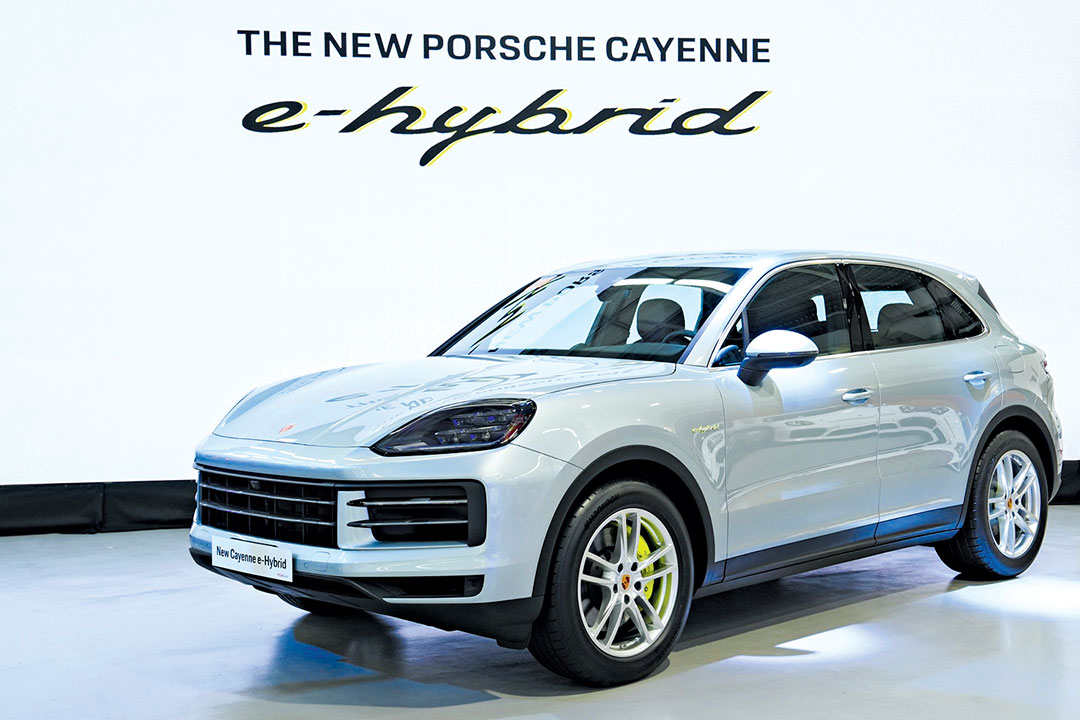
It was also the ideal occasion to locally launch the new Porsche Cayenne E-Hybrid, which expands the all-new Cayenne lineup here after it was rolled out last September. The new Cayenne E-Hybrid is equipped with a three-liter V6 turbo engine, paired with a new electric motor that is integrated into the vehicle’s eight-speed automatic transmission. This gifts the vehicle with a combined power output of 470ps and 650Nm of torque. And this enables the Cayenne hybrid to go from a standstill to 100kph in just 4.9 seconds, eventually reaching a top speed of 254kph. Its new, high-voltage battery serves up 8kWh more, enables the car to run on purely electric mode for about 90 km. Furthermore, the car’s HV battery can be fully charged in two hours and 15 minutes.

“The introduction of the new Cayenne E-Hybrid in the country represents the latest chapter in our evolving success story,” expressed Porsche Philippines President and CEO Roberto Coyiuto III. “Through models like this, we are redefining the concept of luxury by taking environmental and personal wellbeing into account along with performance. It also signifies our intention to continuously set the benchmark in the domestic luxury auto sector.”

Meanwhile, PGA Cars also took the opportunity to hold the groundbreaking ceremony on its upcoming Porsche Center in Manila — to be housed within a 15-storey building that is slated to rise beside the existing Porsche facility, and will be fully built in three years. The objective of the new facility is to integrate the showrooms, corporate offices, and service areas within one edifice. There will be underground parking levels that will go all the way down to Basement 4. This will certainly expand the brand’s car service capacity; and will enable Porsche to include a first-ever, dedicated facility for its fully electric vehicles. Moreover, it will also ensure larger areas for Porsche products, in anticipation of future Porsche retail space requirements. And obviously, the place will look ever more iconic.

“As we look back on a year of vibrant expressions of Porsche passion in Asia-Pacific, we are glad that Porsche Philippines wraps up our 75th anniversary of sports cars with another thrilling activation,” exclaimed Hannes Ruoff, CEO of Porsche Asia Pacific. He furthered that, “As we officially mark the groundbreaking of the new Porsche Center Manila, we hope to usher in a new era of success for our trusted partner — PGA Cars.”

State capture among the World Governance Indices

GREG ROSENKE-UNSPLASH

Daniel Kaufmann was the speaker at the Dec. 1 seminar at the UP School of Economics. He is the “Kaufmann” of the “Kraay and Kaufmann” tandem of the World Governance Index (WGI) of the World Bank, arguably the most cited tandem in the macro-econometric studies space. Almost every researcher on cross-country economics has cited them, perhaps a multiple number of times. For this and for their part in canonizing “good governance” as the patron saint of successful development, they deserve our heartfelt thanks.

There are currently six indices in the WGI roster, viz., 1.) Voice and Accountability; 2.) Political Stability: the process by which those who hold political power are selected and replaced; 3.) Government Effectiveness; 4.) Regulatory Quality: the capacity of government to formulate and implement policies; 5.) Rule of Law; and, 6.) Control of Corruption: the respect for institutions and laws that govern interactions among citizens and the state.

In the 2022 version, the only news about the Philippines is the steady course of raging mediocrity — invariably among the lower 10-40% percentile. These indices have been available for 200 countries starting from 1996 at www.govindicators.org. When the data are run against such performance indicators as such as GDP growth per capita, poverty reduction or the investment rate, they invariably register positive and significant correlation contributing to the global consensus on the culprits lurking behind development failures. And this observed tendency is not just over the last half century. Acemoglu and Robinson (Why Nations Fail, 2010) has tracked the careers of most economies through multiple millennia and concluded that the formula for failure invariably boils down to the non-protection of property rights and non-enforcement of contracts (the narrow definition of the rule of law).

The 2023 version of the WGI will include an innovation: the index called “state capture.” State capture includes the capture of state organs by those they are mandated to regulate (regulatory capture) and the capture by vested interests of rule-making bodies (legislature and the executive). The capture of rule-making bodies results in the promulgation of rules (laws and statutes) that, despite the ringing pro-public preambles, often serve to trample upon the public weal. Let’s elaborate.

First, there are flavors of state capture based on motive. In a weak governance environment, predation on value-creators is rife but as much by lawless state as nonstate actors. Market players often need to defend themselves against state predation; they do so by “vertically integrating” into political arena where, as the saying goes, not having a seat on the dinner table risks becoming part of the menu. Economics Science Nobel laureate, O. Williamson, calls this “private ordering.”

Second is the flavor rooted on provenance: the WGI “control of corruption index” primarily targeted implementation or administrative corruption that represent clear violations of existing laws (e.g., diverting part of tax collection to private pockets or the overpricing in the purchases by government agencies). Control of corruption programs has become increasingly focused on what may be called “retail corruption.” The Commission on Audit and the Office of the Ombudsman are the point agencies to fight such retail corruption.

The state capture index is meant to highlight and prevent what we may call “wholesale corruption”; those that are enabled by laws properly passed by the legislative or executive authorities. They are thus “over the table” rather than “under the table” variety.

There is a world of difference between “under the table” and “over the table” corruption: the latter, being legal, cannot in theory be prosecuted in the ordinary courts of law; it rather requires proving the unconstitutionality of the enabling laws — adjudicated by no less than the Supreme Court. The Supreme Court is normally reticent to declare as unconstitutional laws which passed the accepted procedural rules of the co-equal branch, Congress.

There is then the delicate issue of interpretation connected with over-the-table corruption: since the associated resource transfer in the latter are covered by the laws passed by duly constituted authority, the question is how much of it is by the consent of the governed and how much of it is from greed of the captors. Consider the Ferdinand Marcos, Sr. Presidential Decree 750 granting the monopoly to import cigarette filters to crony Herminio Disini’s Philippine Tobacco Filters Corp. or the one mandating of the Oil Price Stabilization Fund which monopolized the import of petroleum (enabling massive wholesale corruption). They can, and were, defended as part of the government development programs approved by duly constituted executive or parliament and thus, in theory, based on the consent of the governed. Outsiders may view the resulting rents as corruption, but such rents were defended as bankrollers of additional investment.

The issue thus shifts to the legitimacy of government and a priori to the legitimacy of the formal exercises that give it power. In the musky new world of “fake news,” “thought bubbles,” and “echo chambers,” the appeal to the Condorcet jury theorems (that democracy beats monarchy in judgmental competence where the voters have better-than-average judgmental competence) seems empty. Although on average, the truism “democracy is a ‘bad’ collective choice regime but for all its rivals” may still apply, does the average apply to us? Every nation, the Philippines included, considers itself exceptional and above average. Just don’t invoke the 2018 and the 2022 PISA (Program for International Student Assessment) results, as well as the 2022 and antecedent governance indices, as witness.

Is humoring vote chasing populist sentiment by politicians a form of state capture? Here one makes a distinction between “popular” and “populist”: the first is the North Star of every politician — the state of affairs that “democracy” was intended to capture; the second is a convenient excuse for unearned rents by scoundrels. Senator Ralph Recto lost his senate seat correctly championing the anti-populist upward adjustment in the value-added tax. A more recent example: the midnight insertion to the PPP (public-private partnership) bill at the bicam stage that mandated the claw back of profits in excess of what is “reasonable” to the Treasury. The already thin interest on the Philippine PPP projects by foreign investors who see in motherhood term “reasonable” a “co de word” for contract fragility in weak governance environment, can be blown away. If the reward of their economy and risk-taking becomes by law expropriated by the Philippine government, they will go to Vietnam.

Politicians couldn’t care less about the investment rate as long as reflecting populist sentiment will win the next election. Who is to say that the very low investment rate of the Philippines (<25% of GDP vs. 30-40% of GDP in East Asia) is not a faithful copy of the popular preference of the Filipino voters to “eat, drink and be merry” today? One can rage over our educational system failing to imbue a sense of hard-nosed data sensibility among our students rather than a sneaky sense of deviltry among investors; which, by the way, even the 1988 Constitution seems to suggest. And isn’t this also the shared sentiment of the bulk of our teacher-hood, itself schooled over decades on the “pedagogy of the oppressed”?

Isn’t being a consistent bottom dweller also exceptional, if only “in inverted commerce,” as the Brits would say? One can charge it to bad governance and villainous state actors. Just don’t forget: bad governance has its own phalanx of defenders who may just constitute a plurality! In a democracy, that plurality can anchor “tokhang” type tyranny.

When the University of the Philippines (UP) men’s basketball team lost all its matches but one in 2012 and 2014, the common cynical smirk (as per my colleague Prof. Emmanuel Esguerra) was: “Sayang! A perfect season blemished by one lousy win!” But some denizens responded with the more hopeful “No way but up!” and these seeded the UP Fighting Maroons’ winning the UAAP crown in 2021! Hope springs eternal and sometimes gets it right.

Merry Christmas and a Hopeful New Year.


Raul V. Fabella is a retired professor at the UP School of Economics, a member of the National Academy of Science and Technology, and an honorary professor at the Asian Institute of Management. He gets his dopamine fix from tending flowers with wife Teena, bicycling, and assiduously, if with little success, courting the guitar.

PSE suspends anew trading of SPNEC shares

REUTERS

THE Philippine Stock Exchange, Inc. (PSE) has again issued a trading suspension to SP New Energy Corp. (SPNEC) after it disclosed its full acquisition of Terra Solar Philippines, Inc.

“After a careful review of the disclosure submitted by the Company, the Exchange deems that the foregoing transaction is covered by the Rule on Disclosure for Substantial Acquisitions and Reverse Takeovers,” the PSE said on its website, referring to Section 5, Article VII of the Consolidated Listing and Disclosure Rules of the Exchange.

On Dec. 12, SPNEC said it had acquired the entire stake of Prime Infrastructure, Inc. in their 50-50 joint venture in Terra Solar for P6 billion.

The PSE said trading of SPNEC shares had been suspended from Dec. 12 pending the submission by the company of the requisite comprehensive disclosure.

The trading suspension was the second time imposed by the PSE on SPNEC shares this year.

On June 2, trading of SPNEC shares was suspended for falling below the minimum public ownership (MPO) requirement.

Under PSE listing rules, listed firms must maintain an MPO of at least 20%. Those that would fall below “shall be suspended from trading for a period of not more than six (6) months and shall be automatically delisted if it remains non-compliant with the MPO after the lapse of the suspension period.”

The bourse operator said that as a result of the SPNEC acquisition of 100% shares of Solar Philippines Power Holdings, Inc. (SPPPHI), “the Company’s public ownership level fell below the 20% prescribed minimum percentage.”

The suspension was lifted on Dec. 1 as the PSE confirmed that SPNEC had complied with the MPO requirement after its shares were donated by SPPPHI to Asia Pacific Institute for Green Development, Inc.

At the local bourse as of Sunday, the company’s free float level was at 13.82%.

The PSE said that it would inform trading participants and the investing public of further developments on the latest suspension. — Sheldeen Joy Talavera

ADVERTISEMENT
ADVERTISEMENT