Home Blog Page 3879

Globe expects completion of P96-B tower sale in 2024

GLOBE Telecom, Inc. announced on Tuesday that it expects to complete its P96-billion tower sale and leaseback deal next year, having raised P57.4 billion from the transfer of 4,464 towers, representing around 60% of the 7,506 towers sold.

In a regulatory filing, Globe said it had sold a total of 79 towers to Unity Digital Infrastructure Inc. (Unity) for P948 million, which also marks the company’s last tower closing for the year.

The transfer of towers to Unity is the third tranche of the 447 sale-and-leaseback deal, representing 56% of the sold towers.

“We have made significant progress with our tower deal today, transferring more than half of the towers and reaching 60% of our overall tower deal,” Rizza Maniego-Eala, Globe’s chief finance officer, said in a statement.

“We look forward to completing our landmark tower sale next year,” she added.

In 2023 alone, 2,057 towers were turned over, while another 2,410 were turned over in 2022.

“Working together and finding all means to supplement our tower builds through our continued partnership with the tower companies will add resiliency and stability to Globe’s expanding network,” Globe President and Chief Executive Officer  Ernest L. Cu said.

The company’s continued partnership with tower companies will help fund Globe’s planned digital portfolio and connectivity expansion, he added.

At the local bourse on Tuesday, shares in the company climbed by P27 or 1.59% to end at P1,730 apiece. — Ashley Erika O. Jose

Caution and confidence in the Philippine economy: Acknowledging the strong potential of the manufacturing industry

BW FILE PHOTO

As we near the end of 2023, it is a good time to evaluate the lessons we have learned in the past as well as look at both the long and short term in charting our nation’s course.

Caution appears to be the operative word. Things are not altogether bad, but prospects are not overly rosy, either. The Development Budget Coordination Committee (DBCC) recalibrated its growth forecast for next year to 6.5% to 7.5% (from 6.5% to 8%), even as it maintained its projections of 6% to 7% for this year.

The Philippines registered GDP growth of 5.5% in the first three quarters of the year.

Consumers appear to also be cautious. Going into the holiday season, the overall consumer confidence index for the fourth quarter of 2023 was -19%, dipping further from -9.6% in the third quarter, according to Bangko Sentral ng Pilipinas (BSP).

This weaker confidence among consumers stemmed from their concerns about the following: 1.) faster increase in the prices of goods; 2.) lower income; 3.) fewer available jobs; and, 4.) the effectiveness of government policies and programs on inflation management, public transportation, and financial assistance for low-income households.

What is significant to note, however, is that business sentiment remained upbeat.

According to the BSP, the confidence index among businesses stood at 35.9%, a slight improvement from the 35.8% realized in the third quarter. This could be attributed to the business sector’s expectations of the following: 1.) an increase in demand for goods and services during the Christmas season; 2.) sustained economic recovery to pre-pandemic levels; 3.) business expansions in the utilities, trade, financial, and hotels and restaurant sub-sectors; 4.) development and launch of new products and services; and, 5.) brisker consumer spending on the back of higher remittances and inbound holiday travelers, including overseas Filipino workers (OFWs).

There are, of course, remaining concerns: the ongoing conflicts in Gaza and Ukraine, elevated inflation, and higher interest rates. Nonetheless, the general mood is optimism — cautious optimism — especially since the DBCC maintained its 2025 to 2028 growth targets to between 6.5% and 8%.

Key to the attainment of our economic targets is reducing uncertainty and the impact of external variables. We saw how our vulnerability to external developments have hampered our growth. Problems encountered in the global supply chain due to the pandemic lockdowns and other global issues have caused prices to spike and fueled uncertainty in the market. Geopolitics influences investment climates, shaping the direction of nations in an interconnected world. Political tensions, trade disputes, and geopolitical shifts can introduce uncertainties that impact investor confidence and market dynamics.

Worse, even as our global trade volume is considerable, it is skewed toward imports, thus giving us a deficit instead of a surplus and benefiting other countries from which we import the goods. There is much room for improvement in exporting our products alongside producing them for the domestic market.

A study authored by Dr. Ser Percival K. Peña-Reyes and Angelica Nicolette B. Dejaresco and slated to be published by the Stratbase ADR Institute, argues that more foreign and domestic investments need to be enticed to come to the Philippines. One way to achieve this is to make the manufacturing sector more competitive.

This is possible if a consistent, stable, and strong regulatory environment is in place. Policies need to be recalibrated in order to encourage transparency and efficiency. Infrastructure needs to be improved as this will have multiplier effects in terms of investments, jobs, and income.

During last month’s Pilipinas Conference, representatives of the private sector also underscored the importance of a reasonable, stable regulatory environment in attracting and keeping investments. Transparency is an ideal component because businesses want to ensure there are no hidden costs when they set up shop in the Philippines.

In their paper, among the recommended measures by Peña-Reyes and Dejaresco are the need to support research and development and to adopt and optimize technology. Manufacturing companies need help in improving logistics, transport, and delivery services so that parts, components, and raw materials will be available as needed. This is crucial to supply their products to the next stage of the value chain at minimal cost. Reducing energy costs and ensuring uninterrupted power supply will also be beneficial to other production sectors.

The effects of these will not be felt instantly, but will sow the seeds for lasting investments in the manufacturing sector that has the potential to be a significant part of our economic landscape. Manufacturing can serve as a cornerstone of stability, providing a foundation for domestic production and reducing reliance on volatile global markets. By investing in manufacturing, the Philippines can create a robust job market, stimulate employment opportunities, contribute to enhanced productivity, narrow the income gap, and assure the next generation of Filipinos of a better quality of life.


Victor Andres “Dindo” C. Manhit is the president of the Stratbase ADR Institute.

Netflix takes Stranger Things to the stage in London

A SCENE from Stranger Things: The First Shadow. — UK.STRANGERTHINGSONSTAGE.COM

LONDON — The unusual world of Hawkins, Indiana, came alive in London on Thursday last week as Netflix debuted a stage play based on its hit sci-fi series Stranger Things.

Called Stranger Things: The First Shadow, the play takes place in 1959, two decades before the period explored in the TV show. It was produced by Matt and Ross Duffer, the brothers who created the series.

Jim Hopper and Joyce Maldonado — adult characters in the TV show — are seen as high school classmates with normal teen concerns about cars and classes until a new student arrives.

“It sheds a lot of light on both the back story of all our characters and also starts to give some hints on where we are heading into the final season of the show,” Matt Duffer said at the premiere of the play in London’s West End.

Stranger Things debuted on Netflix in 2016 and became the company’s most-watched English language series. The show tells the story of a group of teenagers battling supernatural events in the fictional town of Hawkins.

The fifth and final season of Stranger Things was delayed by two Hollywood strikes this year. Production will resume in January for what is expected to be a year-long shoot, Matt Duffer said.

“It’s a huge season, it’s massive,” he said. “There are a lot of expectations, but you take it a day at a time. It’s going to be challenging but super rewarding.”

Netflix is working to turn Stranger Things into a long-running franchise. In addition to the stage play, the company has greenlit an animated spinoff series. — Reuters

High-tech digital bank with human touch: A Q&A with GoTyme Bank

By Lourdes O. Pilar, Researcher

MEETING between strong minds of Gokongwei group of companies and Tyme group, digital bank GoTyme Bank was formed and conceived its “phygital” model, a combination of a well-established digital system with physical and human banking.

Tyme Bank, a multicountry digital banking group, designs, builds, and commercializes digital banks to solve the challenge of financial services access for the underserved and unbanked in emerging markets. It brought its experience and expertise to GoTyme.

As one of the six digital banks licensed by the Bangko Sentral ng Pilipinas, GoTyme leverages the trusted brands and retail ecosystem of the Gokongwei group of companies. The bank started its commercial operations in October 2022.

Its focus is to provide preferred banking to all Filipinos through the “phygital” model and this will pave the way to unlocking the Filipino financial potential.

To know more about GoTyme Bank, BusinessWorld reached out to GoTyme’s President and Chief Executive Officer Nate Clarke and Co-Chief Executive Officer Albert Raymund O. Tinio to share their insights. Below is the excerpt of the e-mail interview.

How does GoTyme stand out among other existing digital banks in the country?

Nate Clarke: GoTyme Bank is the first digital bank in the country with a phygital business model. This allows us to provide customers first-rate banking experiences previously reserved for the premium or preferred clients of traditional banks. The fact that we provide digital banking services with a personalized and humanized customer experience makes us a human digital bank — with focus on human interaction or human support so that customers feel that their needs, and even wants, are understood and addressed.   

A thriving startup, GoTyme continues to invest in technologies and humans to provide its customers the best possible products and services.

What are the products you offer in the local market that would make you different from existing banking products in the country?

Albert Raymund O. Tinio: Our vision is to unlock the financial potential of all Filipinos. To do so, we use technology to drive inclusion and accessibility.  We have simplified products, processes, and services so that these are available to all our customers.

We started with sending money — GoTyme users can use their app to send funds from their GoTyme account to any bank or e-wallet for free, three times a week. Our deposits and withdrawals are always free at any Robinsons or Gokongwei retail counter.

We followed that up with shopping — GoTyme users earn three times the points whenever they use their GoTyme Bank Visa debit card within the Gokongwei retail ecosystem and one point elsewhere.  Further, we introduced a way to redeem these rewards points either as direct merchandise or as cash. The Asian Banking & Finance Retail Banking Awards 2023 cited GoTyme as the Debit Card Initiative of the Year.

We simplified savings — GoTyme offers the highest base interest rate of 5% per annum. Every GoTyme savings account holder can enjoy this interest rate, with no mission to complete and no minimum balance to maintain.  We also introduced savings tools like Save the Change and Auto-Save to help instill the habit of saving.

Moreover, GoTyme has started to roll out small merchant loans based on customers’ transaction history with an easy and hassle-free collection method, as well as consumer loans or earned wage access that allows employees access to their already earned net wages before their payday.

What are the benefits users can enjoy when they open an account with GoTyme?

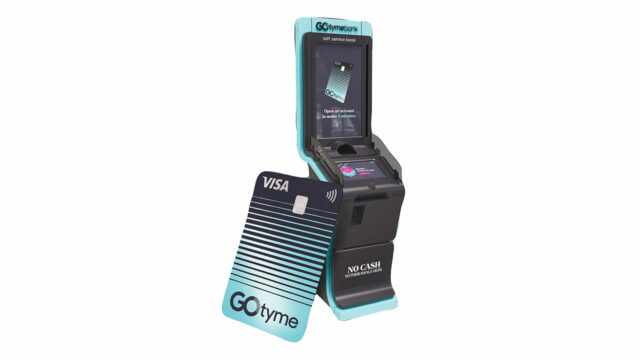
Mr. Tinio: Customers seek not just products, but solutions tailored to their specific needs. They crave proactive outreach, bespoke services, and, critically, the empathy that comes with a seamless hybrid experience. A good user interface or user experience begins at first contact: GoTyme makes sure that customers enjoy a friendly and inviting experience using the app or at the kiosk. The GoTyme app is easy to use and navigate even for the non-digital natives, while the GoTyme kiosk’s sleek design makes onboarding and card printing a smooth and pleasant experience. GoTyme was recognized by the Red Dot Design Awards 2023 and UX Design Awards 2023 for its app and kiosk that bring world-class user interface and user experience to its customers.

GoTyme has rolled out 400 kiosks supported by over 1,000 bank ambassadors (BAs). These are located in Robinsons Supermarkets and other Gokongwei retail outlets. The kiosks and the BAs account for two-thirds of GoTyme’s customer acquisition.

In terms of cybersecurity, what are the measures you implement to protect customers from issues encountered in online transactions?

Mr. Clarke: GoTyme Bank offers secure, straightforward banking. We have adopted and keep upgrading our cutting-edge technology that strengthens cybersecurity controls. We employ high levels of encryption throughout our platform. We do automated security checking of our code with a tool for analyzing software for bugs and vulnerabilities; this allows us to monitor the entirety of our systems for any problems that may arise and address these right away.

As a cloud-based bank, we take advantage of Amazon Web Services (AWS), availing ourselves of PCI DSS (a global information security standard for protecting data) and NIST (cybersecurity framework used by governments and industries worldwide). Amazon has a team of thousands of security engineers who constantly work on the platform to protect its clients from all kinds of threats. 

We use Vulnerability Assessment and Penetration Testing (VAPT), a process that helps us identify and fix security weaknesses before attackers can exploit them. We use in-app tools to prevent code being broken into or the use of the app on jailbroken phones.

We work with NICE Actimize, the leading global provider of financial crime, risk, and compliance solutions, guarding us against fraud and money laundering. This allows us to create a whole bunch of machine learning and AI-driven models for us to make choices around, to help to know if this transaction is a real one or a fake one.

Further, our teams conduct real-time monitoring of our platform’s health. This enables them to react immediately to potential incidents. Our modern design enables our systems to self-heal and scale to maintain service to customers.

Mr. Tinio: We also educate customers on the secure use of digital banking platforms and encourage them to set up features such as multifactor authentication, SMS or e-mail alerts, and fraud monitoring to prevent suspicious online banking activity. We use in-app biometrics to authenticate and additional GoTyme-implemented biometrics for validation for high-value activities like change in phone number. We design and execute the most user-friendly experience, encouraging customers to intuitively turn on valuable security features.

What are your plans to tap the unbanked population in the country, especially in the rural areas?

Mr. Clarke: GoTyme’s goal is to help all Filipinos unlock their financial potential. Our kiosks have been deployed to Robinsons retail outlets in the provinces in Luzon, the Visayas, and Mindanao. Our phygital model makes it easy for the unbanked and underbanked in the rural areas to open an account with us.

We have considered some of the peculiar banking problems plaguing Filipinos. For example, financial services are hampered by obsolete legislation that excludes potential customers from opening bank accounts, a shortage of cash points to enable account funding and transactions, and underdeveloped public infrastructure, particularly in the rural areas, resulting in poor connectivity. These have knock-on effects on banking fees on the back of security and logistical challenges, the high credit risk driven by unavailability of data and/or underdeveloped credit bureaus, and the markets being dominated by incumbents who are not motivated to offer competitive pricing. Finally, there’s the all-important emotional access stemming from a general distrust of the banking sector, and a relatively lower financial and digital literacy, which make it more difficult to drive adoption.

Our phygital business model puts a premium on access in all aspects of its operations. It has deployed a high-tech, high-touch retail-integrated distribution model powered by GoTyme’s smart mobile apps. Physical onboarding kiosks staffed by bank ambassadors enable five-minute account opening and real-time physical card issuing, while cash deposits and withdrawals are widely available through store cashiers. By ensuring that a helpful human is always at the end of the line, GoTyme Bank is committed to constantly improve on its customer service, such that quick, efficient, and helpful responses become a habit among its bank ambassadors and personal bankers.

Your website claims, “We’re high tech with a human touch — everything a next-level bank should be.” What does this mean exactly? Can you provide specific instances that illustrate this?

Mr. Tinio: Among the digital innovations we introduced is the use of onboarding kiosks that enable account opening and receiving a bank card in five minutes or less. These kiosks though, while digital and innovative, would not be sustainable, without the BAs.  BAs are there to help and guide would be GoTymers, as our customers have come to be called, through the onboarding process.  They patiently explain, answer questions, and provide the human interaction that Filipinos crave and need.  The BAs have built relationships with their supermarket-going GoTymers, so much so that they return with potential GoTymers in tow.  We actually ran an experiment in which we left newly activated kiosks without BAs for a period of time.  As expected, these kiosks had zero activations compared to those with BAs.

We utilize technology and analytical processes to better understand the services and products suited to our customers’ financial needs. With AI dominating the current conversation, data-driven AI capabilities allow us to analyze customers at a level of granularity, which puts us in a better position to predict needs and behaviors more accurately. But our interactions remain human-to-human because people prefer to talk to people to be heard and be understood by someone who generally cares.

On the surface, digital excellence and human interaction often appear as two opposing forces. But in today’s reality they are two sides of the same coin, both playing a crucial role in enhancing customer experiences. Balancing these two elements can significantly improve the service quality offered by financial institutions and drive success at a time when consumers feel less certain about their financial wellness on the heels of the pandemic.

The bank is planning to launch a new loan product which will focus on micro, small, and medium enterprises (MSMEs). How will MSMEs benefit from this loan program?

Mr. Clarke: Many banks currently impose onerous documentation and checks on MSMEs before approving the MSMEs for a credit product. These processes often take a long time, such that by the time the credit application is approved, the MSME’s business or ability to take advantage of growth opportunities is negatively impacted. Some MSMEs are intimidated or confused by the documentation requirements, and choose to opt out of the process, resulting in an opportunity loss for both banks and MSME customers. MSMEs are also often stressed by the thought of taking out loans and are worried if they will have sufficient control over their cash flow.

GoTyme Bank’s Flexible Financing product for SMEs is designed to address these difficult pain points. Often, no further documentation is required from MSMEs beyond the basic identification checks. Customers are approved in real time, after a three-step, three-minute application. The loan funds are disbursed within one business day. The more the MSME does business with us or with our partners, the bigger the credit we are able to make available to the MSME customer. The Flexible Financing repayment scheme also follows the business performance of the MSMEs, as it is pegged at a percentage of the MSME’s  business revenue. If the MSME has a slower month of business performance, we collect less in repayments from the MSME customer. Through this, MSMEs can now get credit instantly when they need it, enabling GoTyme to stand shoulder to shoulder with the MSME business, with the Flexible Financing product, as a supportive banking partner.

What other products and services should we look forward to in the future?

Mr. Clarke:  With less than 3% of the Filipino population having access to credit, investments, and insurance, we plan to offer all these. We have in fact begun to offer affordable loans. By next year, we will be expanding our portfolio by including more investment instruments such as stock and cryptocurrency trading in our platform. There is much higher penetration into crypto than in traditional investments. More people in the Philippines have crypto investments than even stocks. We are planning to have one new asset class live on our platform by the first quarter of 2024, by the middle of which we should have two more asset classes. We want to have a healthy mix of high-risk and low-risk asset product offerings. We’re working with the BSP and the Securities and Exchange Commission to meet the requirements to begin moving this new lineup of financial products. We are also considering offering microinsurance, but the plan is still under review as we need to acquire a license to advance insurance products.

To know more about GoTyme Bank, visit https://www.gotyme.com.ph/.

The Maharlika strategic investment fund: Lessons from China’s Sovereign Leveraged Funds

BERND DITTRICH-UNSPLASH

(Part 4)

“Follow the money, find the politics.” — Zongyuan Zoe Liu

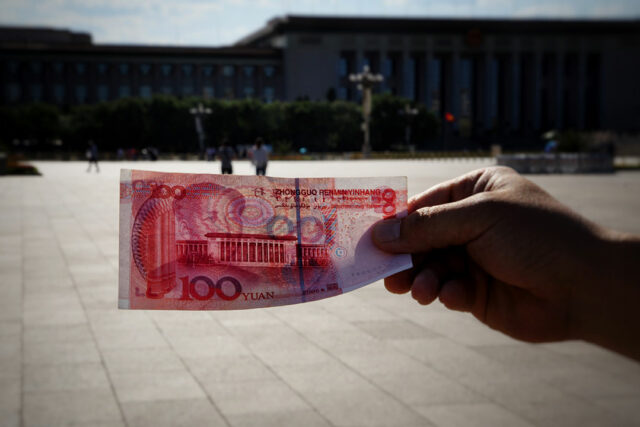
At a forum on Dec. 6 that was organized by Miriam College, FACTS Asia, the Foundation for National Interest, and Amador Research Services, I was privileged to be a reactor to the book by Dr. Zongyuan Zoe Liu, Sovereign Funds: How the Communist Party of China Finances Its Global Ambitions (Harvard University Press, 2023, 380 pages). The book is a laymanized version of her doctoral dissertation at Johns Hopkins University, and a result of research over eight years with 105 interviews with key participants.

This piece highlights the uniqueness of the Chinese model, how their goals/mandate and business models changed over decades as the Chinese economy gained a more prominent role in the world stage, and lessons for the Philippine sovereign fund.

In creating a new category, the Sovereign Leveraged Fund (SLF), China addressed several key issues.

1. Reduced international reserves = lower money supply = reduced inflationary pressure. Highly liquid financial assets were converted into longer-dated strategic assets. Strategic assets acquired by issuing new debt via domestic bond issues (converting dollar assets into renminbi) and expanding the state’s balance sheet is making use of explicit leverage. Raising the risk exposure of existing low-risk bearing capital without increasing the state’s balance sheet is called implicit leverage.

Because of reduced liquidity and higher risks, such strategic assets were no longer counted as international reserves per IMF definition, thus reducing the Net Foreign Asset (NFA) component of the domestic money supply. Because money supply is typically computed as the sum of net domestic assets and net foreign assets, lower NFA means reduced inflationary pressure.

Hence, the term Sovereign LEVERAGED Fund (SLF). This concept of leverage, where the state issues domestic bonds backed by forex reserves, partly explains the paradox that despite having international reserves of $3.1 trillion as of October 2023, China’s debt to GDP ratio is 265% as of March 2023 (Bloomberg).

2. Avoiding the “Dutch disease.” The sustained surge in foreign exchange reserves from China’s massive export machine has made it increasingly difficult for the People’s Bank of China (PBoC) — the country’s central bank — to “sterilize” its impact on money supply (p. 65) and avoid the so-called “Dutch disease” that plagued other countries with foreign currency surpluses. “Dutch disease” is a term first coined by The Economist in 1977 to describe the decline of the manufacturing sector in the Netherlands following the discovery of the large Groningen natural gas field in 1959, which lead to the strengthening of its currency that rendered its exports more expensive. The effective reduction of the forex reserves level helped the PBoC relieve this pressure.

3. Opportunity cost. Diversification = higher yields. Keeping the bulk (two-thirds) of the Chinese international reserves in low-yielding US Treasuries meant losing the chance to earn better returns. Song Hongbing, author of Currency Wars, estimated in 2008 that US dollar volatility was costing China “approximately four aircraft carriers a month” (p. 62). The turning point for the impetus toward diversification came when the reserves hit the $3 trillion mark.

4. Resources to recapitalize troubled banks. The book traces the origins of the SLF from the 1997 Asian financial crisis when the Chinese government created Central Huijin (Chapter 2, pp. 74-89) as a bailout fund. Its first mission was to recapitalize state-owned commercial banks (SOCBs) saddled with huge nonperforming loans averaging 20% and as high as 38%. The cost of fixing the banking system was estimated at up to 30% of China’s GDP in 2005 (p. 78).

As the main tool of the party state to mitigate financial risk, implement financial reforms, and improve corporate governance, Central Huijin became “shareholder in chief” (p. 142) of the Chinese financial sector including the so-called Big 4 banks — the Industrial and Commercial Bank of China (ICBC) which is currently the largest bank in the world by assets, the China Construction Bank (CCB), Bank of China (BoC), and the Agricultural Bank of China (ABC).

The banks eventually became healthy enough to be listed in the stock exchanges of Hong Kong and Shanghai (p. 84). Central Huijin also restructured major securities brokerage firms, and later the insurance sector.

LESSONS FOR THE PHILIPPINES

1. China has created a unique SLF model, which evolved into a family of SLFs. The better-known China Investment Corp. (CIC) was established in 2007 under the Ministry of Finance and focused on external investments while the Central Huijin, under the central bank PBoC, was more focused on the domestic financial sector.

The book devotes an entire chapter to other funds such as the State Authority for Foreign Exchange (SAFE), while additional internationally funds were focused on certain sectors (Buttonwood) and specific countries (the four “Golden Flowers” investment companies established in London, Hong Kong, Singapore, and New York). More recently, the SLFs were involved in financing (directly and indirectly) China’s Belt and Road Initiative (BRI) and the Silk Road Fund (SRF).

2. China’s SLFs recapitalized the state banks. In contrast, the Philippine Maharlika fund seed capital was provided by the state banks Land Bank and Development Bank of the Philippines, with a serious impact on their capital ratios (discussed in this column of Oct. 30). In hindsight, the seed capital of the Maharlika Fund could have just been provided directly by the National Government without involving the state banks and the Bangko Sentral ng Pilipinas, as was done by India and Indonesia.

3. Learning by doing. The CIC lacked a clearly defined mandate in its early years (p. 197), but eventually became more sharply focused, following the evolution in strategic thinking at the political economic leadership. It has evolved from being a passive owner entrusting the management of its funds to third parties, to becoming an active shareholder, and, later, as “capital mobilizers” (Alexander Gerschenkron). Its learning curve was facilitated by being plugged into the international network of prestigious global investors through its initial partnerships.

4. Combining market forces and state power to achieve desired results. Dr. Liu quotes Chen Jinhua (State Commission on Economic System Reform, 1982) about combining the “visible” hand of the state with the “invisible” hand of the market (p. 39). In practice, an equity stake by an SLF buys more than just a stream of dividends and seats on the board. It also acquires the strategic option to influence company direction from shareholder push versus direct administrative fiat or regulatory oversight.

5. Governance, professionalism, transparency. CIC is the most transparent of the Chinese SLFs, while Central Huijin and SAFE in particular do not disclose their portfolio holdings and gains/losses. Soon after its founding, CIC signed up to the 24 Santiago Principles with the International Forum of Sovereign Wealth Funds (IFSWF). CIC also formed an internationally recognized advisory council (p. 199), a key step in establishing credibility with the international investment community.

CIC rated well in the scorecards of sovereign funds by the Petersen Institute of International Economics, with a good score of 74 in 2021, an improvement from 64 in 2012. This compares favorably with Temasek’s 79, Mubadala of the UAE’s 75, BPIFrance’s 74, Texas Permanent School Fund’s 73, Khazanah Nasional of Malaysia’s 71, the HK Exchange Fund’s 70, the Kuwait Investment Authority’s 70, Singapore GIC’s 64, and India’s National Investment and Infrastructure Fund’s 62. Norway is the gold standard with a perfect score of 100.

6. Need for the long, patient view. You will make mistakes. And learn from them. CIC was established in 2007 and suffered major initial financial losses with its $3-billion pre-IPO investment in Blackstone right before the Lehman crisis (pp. 100-109). It took CIC 11 years to exit the investment in 2018, by which time Blackstone shares were trading at 117% higher than IPO price. Despite the initial losses, the partnership yielded mutually beneficial results in later deals.

From 2008 to 2021, CIC performed worse than S&P, failed to exceed its cost of capital, and its global portfolio fell short of breakeven rate half the time (pp. 143, 144).

On a positive node, Chinese SLFs financed notable startups like Alibaba and Didi. A sophisticated approach to investing in technology ventures gave the SLFs access to overseas markets and obtained critical proprietary information on leading edge technologies.

7. Leveling expectations, beyond the hype. Nicolai Tancen, CEO of the Norges Investment Bank which manages the Norwegian Pension Fund-Global, said it best when clarifying realistic expectations. “Your job is to beat the market. If you beat the market by 1%, you are very good. If you beat the market by 2%, you are a hero! But this means you will still fail 48% of the time.” For the Philippine case, this is a strong argument to have realistic expectations and not be carried away by the hype.

(Parts 1 to 3 of this series can be found here: “The Maharlika Strategic Investment Fund governance issues: Aligning with best practice” (https://tinyurl.com/ylhpyvu4), “The Maharlika strategic investment fund — the ‘pause,’ the fix” (https://tinyurl.com/yuetlvaq), and, The Maharlika strategic investment fund — How to prioritize projects — BusinessWorld Online (bworldonline.com).


Alexander C. Escucha is president of the Institute for Development and Econometric Analysis and chairman of the UP Visayas Foundation. He is a fellow of the Foundation for Economic Freedom and a past president of the Philippine Economic Society. He wrote the Handbook on Overview of the Banking Industry for the BAP.

alex.escucha@gmail.com

SEC expects more MSMEs to tap capital market

SEC.GOV.PH

THE Securities and Exchange Commission (SEC) said it expects more micro, small, and medium enterprises (MSMEs) to tap the capital market for funding.

“The SEC transformed the capital market into a more accessible financing oasis for small businesses, as our year-long nationwide roadshow proved successful in attracting MSMEs and startups toward innovative fundraising options,” Emilio B. Aquino, SEC chairperson, said in a statement on Tuesday.

The corporate regulator has launched a year-long roadshow aiming to advance strategic investments for MSMEs and startups.

The SEC said that the initiative has successfully promoted capital markets as an accessible funding option for small businesses by also encouraging MSMEs to participate in crowdfunding, generating millions of funds.

Approximately 1,584 companies registered as issuers with licensed crowdfunding intermediaries, where 333 companies were able to raise P1.94 billion for 1,143 projects, it said.

For this year, a total of 146 companies have raised capital of about P427 million for 1,114 projects through crowdfunding, an activity of raising funds from a large number of investors.

Separately, the Department of Finance said the SEC’s initiative will open opportunities for growth as it allows MSMEs to tap prospective funders.

“I commend the SEC for their outstanding work in taking up the challenge of expanding our capital markets, making it more broad-based through digitalization and strengthened corporate governance. The roadshows allowed MSMEs to showcase their potential to prospective funders, opening them up to more opportunities for growth,” said Finance Secretary Benjamin E. Diokno in a statement.

In addition to crowdfunding, the SEC is also working on providing other financing options through the Philippine Stock Exchange (PSE), where it targets to have at least 888 companies venture into the capital market in 2024.

“The roadshow generated a total of 10 new leads for listing on the PSE, promising a healthy pipeline of capital-raising activities next year,” the SEC added. — Ashley Erika O. Jose

UnaCash expands to 128 branches, seeks more partner merchants

FINANCIAL SOLUTIONS provider UnaCash is looking to expand its partner merchants after recently reaching 128 branches.

“At UnaCash, we are dedicated to ensuring that the value we offer our consumers resonates equally with the benefit we extend to our partner merchants. Looking ahead to 2024, we aim to further amplify our services, projecting more than a 200% increase in our existing roster of partners,” UnaCash Product Head Erwin G. Ocampo said in a statement.

Reaching 128 branches marked a 300% increase since UnaCash upgraded its services to point-of-sale (POS) loans from just buy now, pay later (BNPL) functions.

UnaCash also began expanding to areas outside of the National Capital Region (NCR) such as Bohol, Davao, Pampanga, Nueva Ecija, Calabarzon (Cavite, Laguna, Batangas, Rizal, and Quezon), and Bicol.

In the past five months, UnaCash has partnered with multiple merchants such as Save ‘N Earn Wireless, Faith Glorious Fit, Laptop Factory, Jhunpyo Appliances Trading, Joneco Tech, Alturas Group of Companies, Jackman, Moto Project.

A recent study by UnaCash saw the gross merchandise value of BNPL transactions surging by 173% by 2024 due to mobile commerce.

This would be faster than the expected 154% rise in BNPL use this year, but slightly slower than the 178% increase in 2021.

The faster rise seen next year could come on the back of an expected 84% growth in the e-commerce market in 2024, which UnaCash said would be driven by increasing mobile commerce usage.

Mobile commerce (m-commerce) refers to transactions done using devices like smartphones or tablets.

“We recognize untapped potential in the market and aim to provide seamless services and accessibility to every Filipino, particularly focusing on the promising younger generation, as their preferences and purchasing power will dictate the outcome of the POS loans in the market in the decade to come,” Mr. Ocampo said.

“This brings laser focus on enhancing our services’ accessibility across multiple areas in the country to meet future local market demands,” he added. — Aaron Michael C. Sy

P20,000 startup loan: Teen entrepreneur’s journey to launching woman-centric brand

HIRAYA PILIPINA WEBSITE

By Miguel Hanz L. Antivola, Reporter

HIRAYA PILIPINA, a woman-empowering brand founded by teenage entrepreneur Cleorine Faith C. Loque, is no stranger to reinvention and pivoting its product offerings before it finally saw what clicked.

“I’ve always wanted to be an entrepreneur,” Ms. Loque said in an interview with BusinessWorld, noting that from seven years old every summer vacation thereon, she put up a mini sari-sari store with loyalty cards for neighbors.

Fast forward to the age of 15 in 2019, Ms. Loque established Hiraya Pilipina and sold statement shirts and tote bags.

“I loaned P20,000 as my starting capital from my parents. That was when I bought 150 T-shirts that I had printed,” she said.

“For three years, I only circulated whatever money we had — around P50,000 to P100,000,” she added. “I didn’t even compensate myself.”

“I just snowballed the money until we had enough capital to order the MOQ (minimum order quantity) for other products.”

Hiraya Pilipina eventually experimented with other products like perfumes and hair removers, but it found its “happy accident” when it started venturing toward inner wear, which includes nipple pasties, bosom cakes, and breast tapes, according to Ms. Loque.

“It wasn’t intentional at the start, but when I started seeing growth with those products, and now venturing into period care as well, it became clearer to me the direction I wanted Hiraya Pilipina to take,” she said on championing inclusivity in those two categories.

Ms. Loque noted the brand’s persistence to accommodate Filipinas in all shades, shapes, and sizes through its products and marketing, even becoming the first Filipino provider of 13-centimeter nipple tapes.

“It’s really important for our customers to see themselves in our models and campaigns,” she said.

Hiraya Pilipina aims to expand its product line next year, with an emphasis on period care, alongside eyeing the establishment of a physical store, according to Ms. Loque.

BEING A YOUNG ENTREPRENEUR
When asked about challenges, Ms. Loque noted balancing her studies as a third-year college student with her business, which requires discipline, resilience, and a good support system.

“When we launched products that didn’t sell for a long time and got piled up… or I didn’t utilize TikTok from the get-go,” she said. “Just keep rising.”

“I am struggling, but I just always have this mindset where I am fortunate to do this,” she added on placing gratitude on top of her head at all times to cope with challenges.

“Pivoting is such a good mindset to have. If it doesn’t work, just pivot. Pivot and rise up.”

Additionally, Ms. Loque realized the importance of building one’s brand as an extension of the business — something she realized any social media-adept Generation Z can do.

“When you’re able to build your brand, you become a key person of influence, capable of putting a spotlight on your business,” she said.

“It’s much easier for you to promote and connect with like-minded people and influencers,” she added.

She also saw how vital it is to cultivate a community of patrons given the abundance of channels beyond social media — what she said not a lot of online business owners talk about.

“We also nurture them through other channels, such as newsletters, e-mail, and SMS blasts, where we’re able to connect one-on-one with our customers,” she said on not keeping all eggs in one basket.

“How do you keep your community intact even with fluctuating situations that happen on social media outside your control?” she added.

“Use social media to your power, to attract an audience, but also have a system in place to sustain them.”

Actor Jonathan Majors convicted of assault, dropped from Marvel films

Jonathan Majors and Paul Rudd in a scene from Ant-Man and the Wasp: Quantumania. — IMDB

NEW YORK — Actor Jonathan Majors, a rising Hollywood star who had been set to play the leading role in an upcoming Marvel superhero film, was found guilty by a New York jury on Monday on charges he attacked his ex-girlfriend in the back of a car.

Shortly after the verdict, a spokesperson for Walt Disney- owned Marvel said the studio had dropped the actor from future projects. Mr. Majors portrayed a villain known as Kang the Conqueror in this year’s Ant-Man movie and was scheduled to play the lead role in 2026 release Avengers: The Kang Dynasty.

Mr. Majors had been charged with two counts of assault and two counts of harassment, all misdemeanors.

The jury of six convicted him on one count of assault and one count of harassment, and acquitted him of the other charges.

The verdict followed a two-week trial in state court in Manhattan.

Mr. Majors, dressed in a gray suit, stood and faced the jury as the foreperson read the verdict. He pursed his lips and cast his face down when the first conviction was read but otherwise showed little reaction.

Mr. Majors is set to be sentenced on Feb. 6. He faces up to a year in prison, but prosecutors have not indicated what sentence they plan to seek.

His lawyer did not immediately respond to a request for comment.

The Manhattan District Attorney’s Office hailed the verdict in a statement, saying the evidence showed a “cycle of psychological and emotional abuse, and escalating patterns of coercion” by Mr. Majors. Prosecutors said Mr. Majors assaulted his then-girlfriend Grace Jabbari in a hired car in Manhattan in March, leaving her with a broken finger and swollen arm and ear.

Ms. Jabbari said over four days of testimony that Mr. Majors attacked her after she grabbed his phone upon seeing a text from another woman. She also described his “violent temper” and other incidents where he “exploded” in anger.

“She had shaped herself around the defendant, to cater to his personality, to avoid him being angry with her,” prosecutor Kelli Galaway said during closing arguments on Thursday.

Mr. Majors’ lawyer sought to flip the script, claiming it was Ms. Jabbari who victimized Mr. Majors by attacking him in the car and then falsely accusing him of assault after he broke up with her.

“You are here to end this nightmare for Jonathan Majors,” lawyer Priya Chaudhry said through tears during her closing argument.

Mr. Majors filed his own complaint against Ms. Jabbari, prompting her arrest on assault charges in October. But the Manhattan District Attorney’s Office later closed the case because it “lacks prosecutorial merit.”

Mr. Majors, 34, starred in the 2019 film The Last Black Man in San Francisco before landing top billing in Creed III and appearing in Ant-Man and the Wasp: Quantumania.

Mr. Majors was dropped by his management company, public relations firm and several advertisers after his arrest. — Reuters

Stubborn inflation, high borrowing cost dampened markets in Q3

By Andrea C. Abestano, Researcher

HIGH INFLATION, expensive borrowing costs continued to affect local financial markets in the third quarter, signaling volatility to persist for the rest of the year.

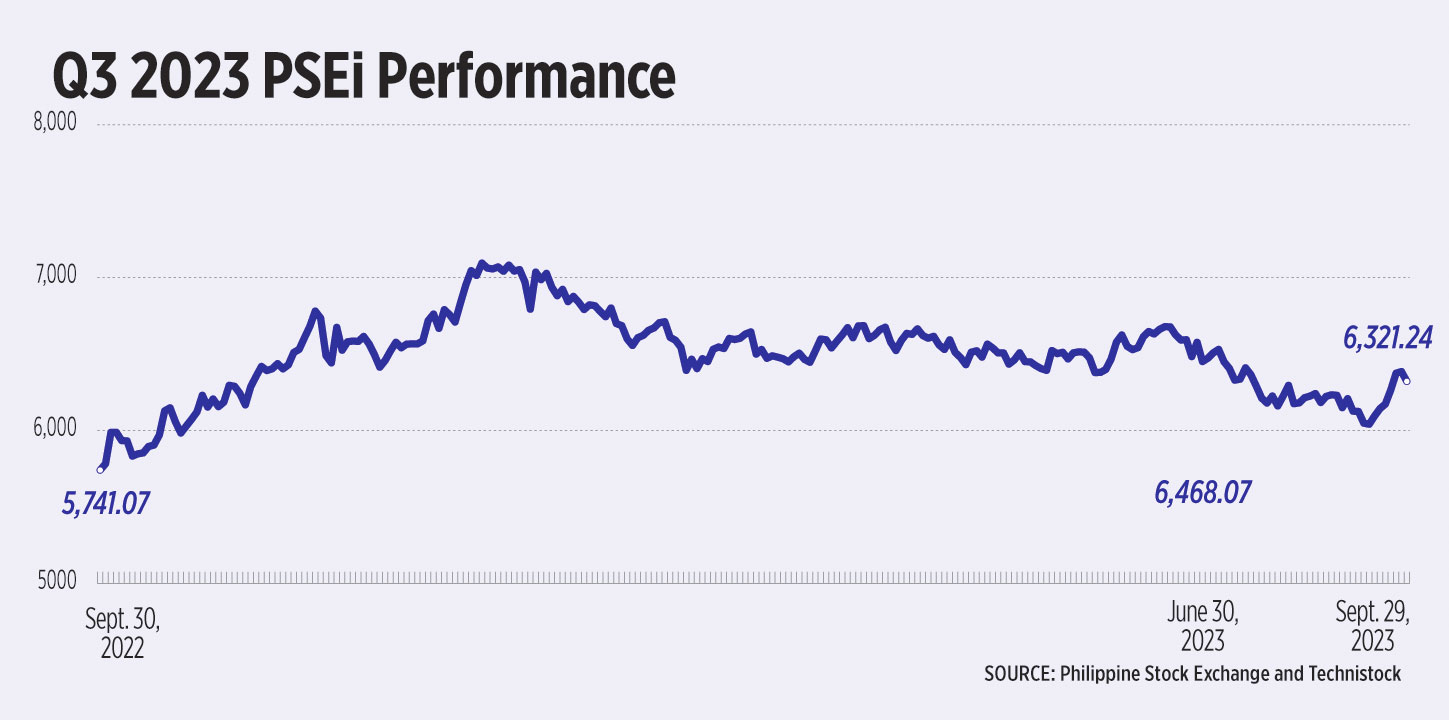
The barometer Philippine Stock Exchange index (PSEi) finished the July-to-September period at 6,321.24, dipped by 2.3% quarter on quarter from 6,468.07 at the end of the second quarter.

Annually, the index went up by 10.1% from the 5,741.07 finish in the third quarter of 2022.

On the other hand, data by Bankers Association of the Philippines showed the peso closed P56.575 against the greenback in the third quarter, weakening by 2.4% from the second quarter finish of P55.20 to a dollar.

Year on year, the local unit strengthened by 3.6% from P58.63 finish in the same quarter last year.

The demand for Treasury bills (T-bills) auction subscription totaled P654.9 billion with a cumulative P182.6 billion offered amount in the third quarter. This was higher than the P416.6 billion subscription with P157.4 billion offered amount in the previous quarter.

The amount of oversubscription at P384.8 billion was also higher than the second quarter’s P259.2 billion.

Meanwhile, the demand for Treasury bonds (T-bonds) saw a total of P642.2 billion, lower than the P687.2 billion in the April-to-June period. Despite the decline, the demand for T-bonds in the third quarter period was higher than the aggregate offered amount of P279.7 billion.

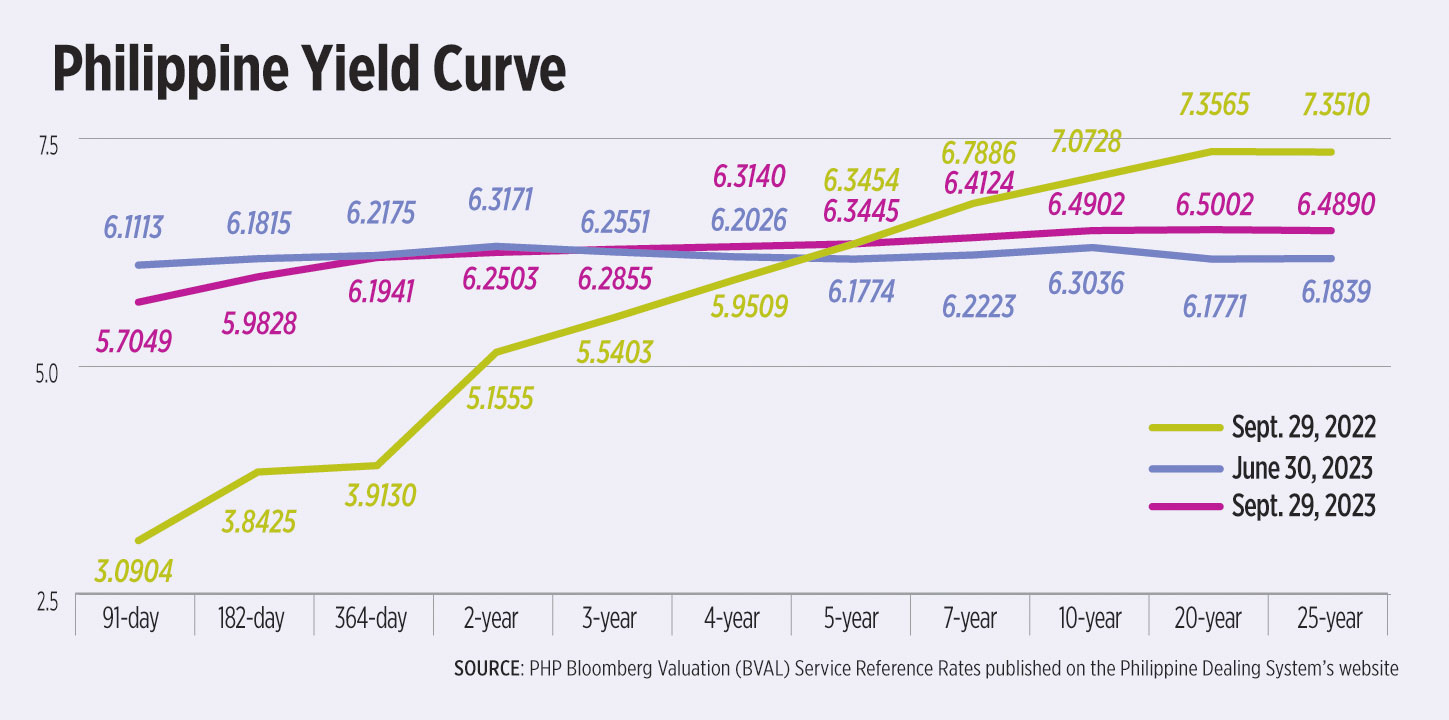
Domestic yields at the secondary bond market inched up by 0.90 basis points (bps) on average quarter on quarter, based on the PHP Bloomberg Valuation (BVAL) Service Reference Rates published on the Philippine Dealing System’s website.

On an annual basis, yields grew on average by 18.38 bps.

Analysts attributed the local financial market developments for the third quarter to global factors of rising borrowing costs, stubborn inflation, and geopolitical conflict.

The third quarter of the year saw rate pauses as the US central banks pause key monetary policies at 5.25-5.5%, the highest level in two decades.

Borrowing costs were raised by 500 bps by the US Federal Reserve since March 2022 to combat inflation.

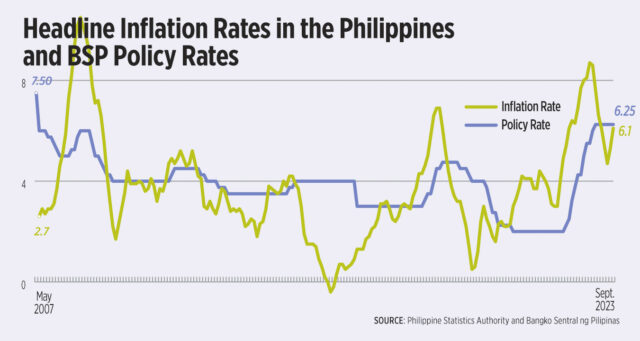
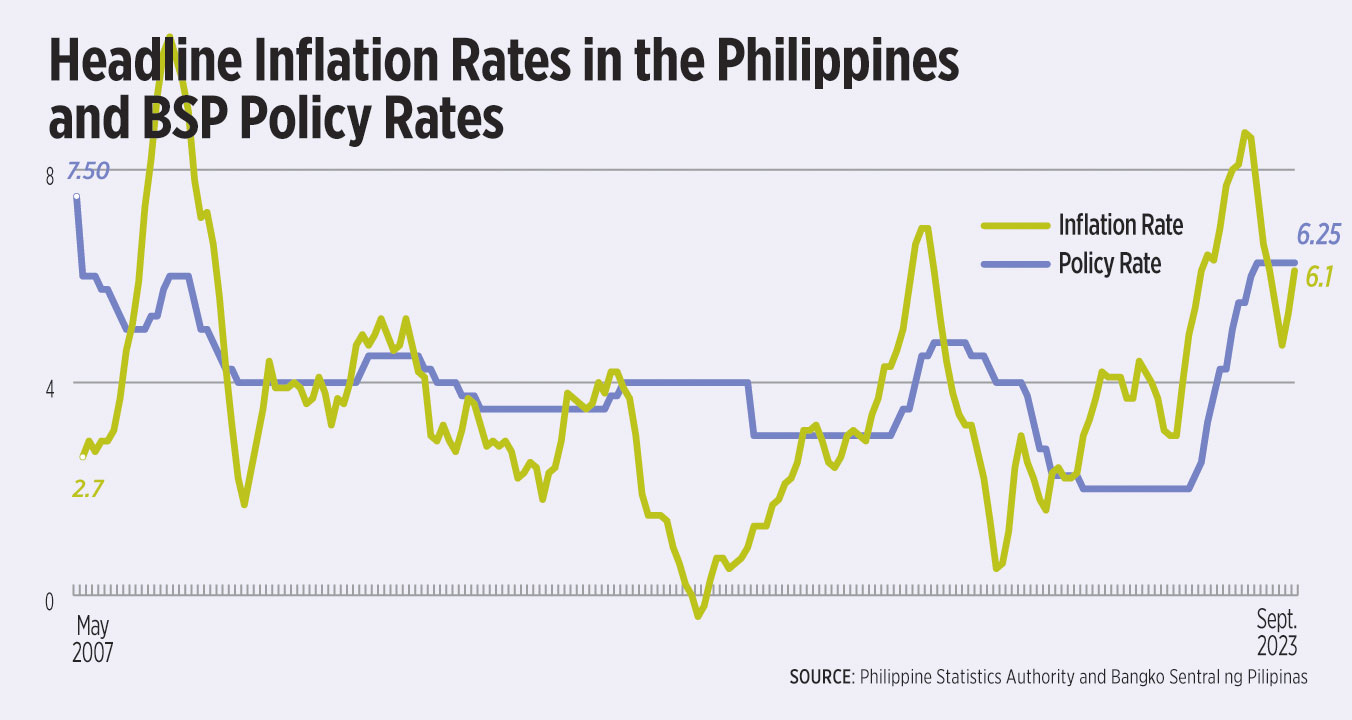
The Bangko Sentral ng Pilipinas (BSP) also kept its key rate at 6.25% between May to September this year. Since May 2022, policy rate hikes had reached a total of 450 bps to tame inflation.

But headline inflation quickened to 6.1%, the highest since the 6.6% recorded in April.

However, in an off-cycle meeting in October, the central bank lifted its policy rates by 25 bps. Target reverse repurchase (RRP) rate was raised to 6.5%. Interest rates for the overnight deposit and lending facilities were also kept at 6% and 7%, respectively.

October inflation eased to 4.9% and further cooled to 4.1% in November, a 20-month low.

Security Bank Corp. Chief Economist Robert Dan J. Roces said in an e-mail that the local financial market in the third quarter was influenced by stubborn inflation and high borrowing costs.

China Banking Corp. (China Bank) Chief Economist Domini S. Velasquez said that “these two factors led to higher government security yields, weaker peso, and outflows from the local bourse.” 

“Amid export restrictions, extreme weather conditions and fare hikes, domestic inflation remained on the upside for the first two months of the quarter,” Metrobank Research said in an e-mail. 

BSP said in an e-mail interview that by the end of the [third] quarter, widening debt spreads and rising domestic and global inflation fueled “a higher-for-longer interest rate environment.”

INDICATORS TO WATCH OUT FOR
Volatility is likely to persist in the local financial markets in the near term, said Mr. Roces.

For Ms. Velasquez, the financial market will be relatively stable for the rest of the year given that “central banks have reached their peak policy rates.”

“Looking ahead, the outlook for the local financial markets remains cautious [with] inflation [still] a key concern for policymakers while elevated interest rates are a challenge to businesses,” Mr. Roces said.

Similarly, the BSP said that it “[deems] it appropriate to keep an elevated target RRP Rate for the time being until inflation expectations are better anchored and a downtrend in inflation becomes evident.”

Mr. Roces adds that although inflation may have slowed in October, further rate hikes by the BSP are still dependent on several factors, namely: inflation data, global economic developments, domestic shock due to adverse weather, and the previous Barangay and Sangguniang Kabataan (SK) elections which should increase government spending, he said.

He also expects geopolitical conflict between Israel and Palestine to be an influencing factor to look out for.

“The ongoing conflict between Israel and Palestine has the potential to disrupt global energy supplies and contribute to rising oil prices if it turns regional. This could directly impact the local financial markets by putting upward pressure on inflation,” Mr. Roces said.

On the other hand, Metrobank Research said that the conflict should not influence the local financial market in the coming months as it is still mainly a regional conflict. 

“The risk of an escalation has recently receded, and there are talks already of a truce and an exchange of hostages,” it said.

“The effects of the Israel-Hamas conflict on the financial markets and economy remain manageable, for as long as the conflict does not escalate and spread to other countries in the Middle East,” Rizal Commercial Banking Corp. (RCBC) Chief Economist Michael L. Ricafort said in an e-mail.

“[The conflict’s] effect to financial markets is quite small. We saw this at the start of the war, where financial markets reacted with risk-off sentiment the day after but corrected immediately,” Ms. Velasquez adds.

On the upside, Mr. Ricafort sees a boost in the economy for the last quarter of the year as the gross domestic product (GDP) print picks up amidst increased government spending and easing global prices as of October.

He expects the Philippine economy to grow around 5.5%-6% in 2023.

In the July-to-September period, the country’s GDP posted a 5.9% annual growth, an improvement from the 4.3% in the second quarter. This brought the country’s year-to-date GDP growth to 5.5%, falling short of the 6-7% growth target by end-2023.

RATE HIKE PAUSES
“For the coming months, US and local inflation is moving closer to central bank targets and would justify at least a pause in Fed and local policy rates later in 2023,” RCBC’s Mr. Ricafort said.

Strong economic performance in the easing trend of inflation in October, four-month low prices of oil, and strong peso-dollar exchange rate are among the factors cited by Mr. Roces to warrant a pause in rate hikes.

“With local inflation likely staying above-target in the near term, an additional hike remains to be a risk although the baseline view is still a long pause followed by cuts,” the Metrobank Research said.

For near-term, it expects electricity rates and minimum wage adjustments outside the National Capital Region to be upside risks to inflation.

Meanwhile, Metrobank Research sees rate pauses for both local and US central banks since “another Fed rate hike would cause a sell-off in the US treasury bonds space.”

Similarly, Ms. Velasquez said that she expects the BSP to pause rate hikes, but a hawkish sentiment may remain with risks and inflation still “tilted to the upside.”

Security Bank’s Mr. Roces, on the other hand, said that “the Fed’s commitment to keeping interest rates ‘higher for longer’ and the possibility of a further rate hike by the end of the year could put renewed pressure on the local markets in the coming months.”

“Even if the Fed does not hike anymore and decides to hold its policy rate at 5.25%-5.50% for longer, expect the global markets to start pricing in rate cuts even before the Fed starts talking about it,” Metrobank Research said.

As for the BSP, it said that it is “prepared to adjust all policy levers as necessary to contain second round effects and prevent the disanchoring of inflation expectations.”

EQUITIES MARKET
Metrobank Research: Given the uncertainties in the equity markets, maintaining a cautious stance is advisable. Various threats, both local and global, including persistent higher interest rates and elevated inflation, may continue to keep investors cautious. The current market valuation appears attractive, and selective bottom-fishing, particularly for stocks that have experienced significant declines and have valuations significantly deviating from their historical averages, may be warranted.

Security Bank’s Mr. Roces: For the fourth quarter of 2023, equities is seen to rise modestly on the back of holiday spending season amid relatively light trading activity and net foreign selling.

RCBC’s Mr. Ricafort: The COVID state of public health emergency finally lifted since July 22, 2023, after no more large lockdowns since 2022, and no more lockdowns as a policy priority, going forward, thereby improving sales/revenues, earnings/net income, employment/jobs, more business/economic opportunities; all of which would help support higher/better investment valuations, though offset by still relatively higher prices/inflation and still relatively higher interest rates/borrowing costs/financing costs.

BSP: For Q4 2023, the PSEi may be supported by some optimism over strong corporate fundamentals with hopes of higher economic activity as the Christmas season nears. Nonetheless, worries about persistent inflation along with the high interest rate environment may limit gains in the PSEi. Risk sentiment may be weighed by worsening geopolitical tensions globally (Israel-Hamas, Ukraine-Russia, North-South Korea, China-Taiwan, and China-Philippines).

FIXED-INCOME MARKET
Metrobank Research: By year-end, we expect the curve to be very flat, with one-year to 10-year yields between 6.25% to 6.50%. Bonds greater than 10 years may still yield above 6.50% but no greater than 6.90% as high excess liquidity keeps yields capped. However, the three-month treasury bill yields will likely end between 5.65% to 5.90% as this is where foreign portfolio investors park much of their short-term peso investment requirements.

Mr. Roces: Fixed income markets are expected to be relatively stable in the fourth quarter, with yields likely to remain range bound. The BSP’s messaging to continue raising interest rates if warranted could put some upward pressure on yields, but this is likely offset by the global slowdown and lower inflation expectations.

Mr. Ricafort: Easing trend in local interest rate benchmarks yields which could lead to lower borrowing and financing costs locally. Improved fiscal performance in terms of narrower budget deficit and lower national government debt-to-GDP ratio, as well as the continued affirmation of the country’s credit ratings at 1-3 notches above the minimum investment grade would also support sentiment on the local fixed income markets.

China Bank’s Ms. Velasquez: For [the fourth quarter], we have already experienced a rally since the start of the quarter. Ideally, a continuation of the rally would be preferred, however at the time of writing, we expect prices and yields to stabilize until the end of the year, meaning there would not be much movement in the market for a while.

BSP: For Q4 2023, the local bond market may continue to be supported by the lower-than-expected October CPI data, and as the lagged effects of the previous rate hikes work their way into slowing economic activity. On the international front, concerns over the ongoing geopolitical tensions may also limit the expected drop in yields.

FOREIGN EXCHANGE
Metrobank Research: The view is that the USD/PHP exchange rate will end 2023 at around P55.10 as seasonal effects push the peso to appreciate, given peak OFW remittances during the Christmas period, the unloading of dollars by the Business Process Outsourcing (BPO) sector to fund employee bonuses, and a general lack of import activity in the fourth quarter.

Mr. Roces: The peso is expected to remain relatively stable against the US Dollar in the fourth quarter. However, the possibility of a further rate hike by the US Federal Reserve could put some downward pressure on the peso in the coming months.

Mr. Ricafort: Easing of the US dollar-peso exchange rate especially as the markets expect seasonal trends to be a positive factor in the foreign exchange market. By the latter part of the fourth quarter, seasonal increase in OFW remittances and conversion to pesos during the holiday season will peak causing peso exchange rate to appreciate versus the US dollar.

Ms. Velasquez: The Philippine peso would continue to benefit from a relatively weak US dollar and remittances coming from abroad. We expect the USDPHP to remain at the 55.0-56.0 range for the rest of the year.

BSP: For Q4 2023, the peso may be supported by dollar inflows from seasonal remittances toward the end of the year. Nonetheless, gains in the peso may be limited by risk aversion due to worsening geopolitical tensions globally (Israel-Hamas, Ukraine-Russia, North-South Korea, China-Taiwan, and China-Philippines)


Enforcement of arbitral awards may be refused if doing so is against public policy

TINGEY INJURY LAW FIRM-UNSPLASH

The Philippines has a pro-arbitration policy. Republic Act No. 9285 or the Alternative Dispute Resolution Act (ADR Act) and Supreme Court Administrative Matter No. 07-11-08-SC or the Special Rules of Court on Alternative Dispute Resolution (Special ADR Rules) both declare as a policy that the “State shall encourage and actively promote the use of ADRs, such as arbitration, as an important means to achieve speedy and impartial justice and declog court dockets.”

PARTY AUTONOMY
Being a purely private system of adjudication, the parties generally have autonomy over the conduct of the arbitration proceedings. The parties can choose the arbitrators, and thus, tailor-fit the tribunal’s composition to the nature of their dispute; the procedures that will control the arbitration proceedings; and the place of arbitration. Recognizing party autonomy and the policy favoring arbitration, the Special ADR Rules further mandate judicial restraint in arbitration. Courts shall intervene only in the cases allowed by law or the Special ADR Rules.

The Special ADR Rules in fact reinforce the pro-arbitration policy of the State by providing for rules on presumption in favor of enforcement of an arbitral award under Rules 11.9, 12.12, and 13.11 of the Special ADR Rules.

THE PUBLIC POLICY EXCEPTION
However, while it is presumed that an arbitral award was made and released in due course of arbitration and is subject to enforcement by the courts, the latter may refuse recognition thereof when, among others, the recognition or enforcement of the arbitral award would be “contrary to the public policy.”

In Mabuhay Holdings Corp. v. Sembcorp Logistics Limited (G.R. No. 212734, Dec. 5, 2018, 88 SCRA 364) (Mabuhay Holdings Case) the Supreme Court discussed that “pursuant to the State’s policy in favor of arbitration and enforcement of arbitral awards,” it adopts the majority and narrow approach in determining whether enforcement of an award is contrary to public policy i.e., mere errors in the interpretation of the law or factual findings would not suffice to warrant refusal of enforcement under the public policy ground; the illegality or immorality of the award must reach a certain threshold such that, enforcement of the same would be against the Philippine’s fundamental tenets of justice and morality, or would blatantly be injurious to the public, or the interests of the society.

In Lone District of Benguet Province v. Lepanto Consolidated Mining Co. and Far Southeast Gold Resources, Inc., (G.R. No. 244063, June 21, 2022) (Lone District Case) the Supreme Court further discussed that the “public policy” violation invoked as a ground must be: “clear, explicit, well-defined and dominant, i.e., ‘it is directly ascertainable by reference to a statute, implementing administrative rules and court decisions and not merely from ambiguous and murky general considerations of supposed public interests.’” In the Lone District Case the Supreme Court found that “[t]he Arbitral Tribunal refused to heed the strong and compelling public policy on the protection and promotion the rights of the Mankayan Indigenous Cultural Communities/Indigenous Peoples (ICCs/IPs), more particularly to their ancestral lands.” The Supreme Court underscored that the arbitral award explicitly violated the following:

a. The Constitutionally declared policy of the State on the protection of the “rights of indigenous cultural communities to their ancestral lands to ensure their economic, social, and cultural well-being”;

b. The State Policy under the Philippine Mining Act of 1995, safeguarding the environment and protecting the rights of affected communities, more particularly the ICCs/IPs to their ancestral domains as implement in Section 16 of thereof which mandates that “[n]o ancestral land shall be opened for mining-operations without prior consent of the indigenous cultural community concerned”; and,

c. The Free and Prior Informed and Written Consent and Certification Precondition explicitly mandated in Section 59 of the Indigenous Peoples Rights Act of 1997.

Recently, in the case of Maynilad Water Services, Inc. v. National Water and Resources Board, et al. (G.R. Nos. 181764, 187380, 207444, etc., Dec. 7, 2021) (Maynilad Case), the Supreme Court refused to enforce the arbitral award in favor of Maynilad, applying the public policy standard it laid down in the Mabuhay Holdings Case. The Supreme Court held that the arbitral award subject of the Maynilad Case adversely affected the public at large, thus:

“xxx the arbitral award, which allowed Maynilad to include its corporate income taxes in the computation of water rates, will adversely affect the public at large, specifically, the water consumers in Service Area West served by Maynilad.

“Not only will confirming the arbitral award in favor of Maynilad be injurious to the public; it will result in unequal protection of water consumers Service Area East under Manila Water and those in Service Area West under Maynilad.

“In the arbitration commenced by Manila Water against the Republic, the arbitral tribunal therein held that Manila Water cannot include its corporate income taxes in the computation of rates chargeable to water consumers in Service Area East. If the arbitral award in favor of Maynilad is confirmed, this will result in a disproportionate price difference between the water rates in Service Area West and Service Area East. Note that there is no substantial distinction between the water consumers in the respective service areas. This is contrary to the equal protection clause guaranteed by the Constitution.

“Even confirming the arbitral award in favor of Maynilad will be illegal. Under Section 3 (h) and 3 (m) of Republic Act No. 6234, the Manila Waterworks and Sewerage System is mandated to fix ‘just and equitable rates.’

“Certainly, allowing Maynilad to include its corporate income taxes in the rates chargeable to water consumers — taxes which, to repeat, do not inure to the benefit of water consumers — will result not only in unjust but also inequitable rates. A large segment of the water consuming public will be made to pay for something that has no direct benefit to them, while some will enjoy water services without the shouldering the same burden. This cannot be allowed.”

It is clear from these landmark rulings that while the Philippines has a pro-arbitration policy which respects and promotes party autonomy, the freedom to contract is not absolute, such that when private actions, even when given legal imprimatur by an arbitral award, would result in an injustice or are prejudicial to the interests of the public, the courts have the authority to intervene for the sake of the public good.

The views and opinions expressed in this article are those of the author. This article is for general informational and educational purposes only and not offered as and does not constitute legal advice or legal opinion.


John Frederick E. Derije is a senior associate of the Angara Abello Concepcion Regala & Cruz Law Offices (ACCRALAW), Davao Branch.

(6382) 224-0996

jederije@accralaw.com

SEC revokes registration of data processing company offering unregistered securities

THE Enforcement and Investor Protection Department of the Securities and Exchange Commission (SEC) issued an order on Dec. 18 revoking the certificate of incorporation of INFINITY8NETWORKS DIGITAL SERVICES OPC, which is registered to engage in the business of data processing and web hosting.

The company faces the action due to “serious misrepresentation,” according to the SEC order signed by Director Oliver O. Leonardo.

“Investigation conducted by the department revealed that INFINITY8NETWORKS DIGITAL SERVICES OPC offers unregistered securities to the public with a minimum investment of P500 up to P500,000 per account,” the SEC said in its order.

“Investors may earn 30% after five days, 500% after 40 days, 200% after 20 days,” it added.

A fine of P1 million is imposed on the company for offering securities to the public without prior registration and license, according to the commission.

“The certificate of incorporation/registration of INFINITY8NETWORKS DIGITAL SERVICES OPC is hereby revoked,” the SEC order also said.

The company and its incorporator and nominees are directed to pay the fine of P1 million within a period of 15 days from the receipt of the order. — Ashley Erika O. Jose

ADVERTISEMENT
ADVERTISEMENT