Home Blog Page 3878

Cosco plans to acquire 60% stake in Catuiran Hydropower 

RETAIL holding company Cosco Capital, Inc. has announced plans to acquire 60% of the outstanding shares in Catuiran Hydropower Corp., operator of the eight-megawatt hydroelectric plant in Naujan, Oriental Mindoro.

In a stock exchange disclosure on Tuesday, Cosco Capital said its board of directors approved the proposal at a meeting on Dec. 14.

The acquisition signals Cosco Capital’s strong interest in the renewable energy sector.

Earlier this year, the company announced that it was looking to venture into the renewable energy space, seeing the industry as a profitable portfolio in the medium and long term.

The listed company will acquire a total of 360 million shares, representing 60% of the outstanding shares of Catuiran, Cosco Capital said, without disclosing the amount of the transaction. 

The company added that the acquisition is below 10% of its total value.

For the third-quarter period, Cosco Capital reported an attributable net income of P1.82 billion, up by 1% from the P1.81-billion profit in the same period last year, driven by higher revenue for the period.

The company recorded a gross revenue of P52.89 billion for the third quarter, marking a 7.2% increase from the P49.36 billion recorded previously.

Incorporated in 1988, Cosco Capital has a portfolio of businesses in retail, real estate, wine and liquor, and oil and minerals.

At the stock exchange on Tuesday, shares in the company closed two centavos or 0.44% higher at P4.59 per share. — Ashley Erika O. Jose

Dancer and Ballet Manila founding member Osias Barroso, Jr., 58

OSIAS “SHAZ” BARROSO, JR., a danseur and choreographer best known as a founding member of Ballet Manila and prima ballerina Lisa Macuja-Elizalde’s long-time dancing partner, died on Saturday, Dec. 16. He was 58.

In honor of their former co-artistic director, Ballet Manila posted a short tribute for him on Facebook two days after his death.

“The role we in Ballet Manila will remember him for will be as the exacting yet compassionate rehearsal master, a most generous mentor, constant friend. Thank you for your life of and in dance, Shaz,” the post said.

In October, the company held the event Dance for Shaz: A Celebration of a Life in Dance, which commemorated his long-time service to Philippine ballet. It featured 22 dance groups led by Ballet Manila, of which Mr. Barroso was co-artistic director until his retirement in 2021 following a stroke.

Known by many as “Teacher Shaz,” he started dancing ballet at the relatively old age of 18, and worked hard at it until he eventually became known as the “Ballerina’s Prince” for always putting his partner first in a performance.

“I think that the number one duty of the male classical dancer is to present the ballerina well. If I can’t do that first, then my solo variations and my coda suffer because I feel I did not do the job right. I want my ballerinas to look good,” Mr. Barroso once said, according to the Ballet Manila archives.

After retiring from the stage in the mid-2000s, he channeled more of his time and energy into choreography and teaching. He created the neoclassical piece In Quest as part of Ballet Manila’s debut program in 1995 and would later also choreograph Tatlong Kuwento ni Basyang for the company. He was also widely celebrated for his work in Ecole.

To generations of students at the Lisa Macuja School of Ballet and dancers at Ballet Manila, “Teacher Shaz” was a strict and demanding mentor and coach. He was focused on drawing out the best from his students.

Ms. Macuja-Elizalde lamented the passing of her good friend in a Facebook post, with the caption: “No more suffering. No more pain. Shaz, I love you. I miss you. And I promise I will take very good care of what we built together.” — Brontë H. Lacsamana

Ban stays on transfer fee hikes

BW FILE PHOTO

THE BANGKO SENTRAL ng Pilipinas (BSP) is maintaining the moratorium on transfer fee increases to encourage Filipinos to use digital payments.

The central bank released Memorandum No. M-2023-037, which states that the moratorium on fee increases remains in effect.

“Participants who currently charge transfer fees for person-to-person fund transfers via InstaPay and PESONet are directed to maintain said fees,” it said.

The BSP first imposed the moratorium in 2021 through Memorandum No. M-2021-071. It aimed to boost digital finance.

PESONet caters to high-value transactions and is considered as an electronic alternative to paper-based checks while InstaPay is a real-time electronic fund transfer facility for low-value transactions of up to P50,000.

“Institutions planning to introduce fees for new fund transfer services shall apply for prior BSP approval. These fees must also be reported to the BSP 60 days before implementation,” the BSP said.

“Moreover, a transfer fee that is currently waived may only be restored up to the amount reported to the BSP before the waiver,” it added.

The central bank said it is also working on lowering and ultimately eliminating fees on small electronic payments.

“The reduction or removal of transfer fees for small e-payments supports our vision of digitalization and inclusivity. We are engaging the industry through dialogue to explore ways to reduce or completely eliminate fees for small-value transactions,” BSP Governor Eli M. Remolona, Jr. said in a statement.

The BSP did not give a set date for when the moratorium will be lifted.

“Accordingly, the moratorium on fee increases for InstaPay and PESONet transactions shall be lifted, subject to BSP review, once zero fees are operationalized by the payments industry for small e-payments,” it added.

The BSP is targeting to digitalize 50% of total retail transactions and onboard at least 70% of Filipino adults to the financial system by the end of this year.

“The BSP encourages Filipinos to actively use their accounts for digital payments, savings, and investments. The central bank is working with the industry to bring more of our countrymen into the fold of the formal financial system,” Mr. Remolona added. — Luisa Maria Jacinta C. Jocson

DMCI, Marubeni target to launch Pasig condo project in first quarter

DMCI Corp. and Marubeni Corp. are set to launch a joint residential condominium project in the first quarter of 2024, the two companies announced on Tuesday.

In a statement, DMCI said it had signed a memorandum of understanding with the Japanese trading company for the development of The Valeron Tower, a single dual-wing condominium that will rise along C5 E. Rodriguez, Jr. Avenue in Pasig City.

“We have fostered a strong relationship with DMCI built on mutual trust. Considering the longevity of our partnership, we anticipate that this business venture will also be long-term. This is just a kickoff,” Shigeru Shimoda, president and chief executive officer of Marubeni, said in a statement on Tuesday.

Marubeni is also keen on expanding its operations into the country’s real estate sector, Marubeni Overseas Real Estate Business Department Senior Manager Shinya Matsuo said. 

The company sees the Philippines as an attractive market for business expansion, he said, citing the country’s “favorable” demographic trends. 

“Our collaboration extends beyond project completion. By leveraging our real estate related business expertise accumulated both in Japan and internationally, we envision a long-term commitment that extends business collaboration between DMCI Homes to include asset management, property management, and building management,” said Noritake Miyaguchi, Marubeni’s general manager for overseas real estate business. 

Further, Alfredo R. Austria, president of DMCI Homes, said the tie up between DMCI and Marubeni is expected to enhance the quality of residential condominiums by combining the expertise of the two entities.

“Our collaboration signifies a joint commitment to further enhancing quality living and providing innovative home solutions for homebuyers in the Philippines,” he said. — Ashley Erika O. Jose

Why banks should reconsider their lending approach to MSMEs

By Abigail Marie P. Yraola, Researcher

THE COUNTRY’S small enterprises have been the backbone of the economy but their access to credit to grow their business has been challenging.

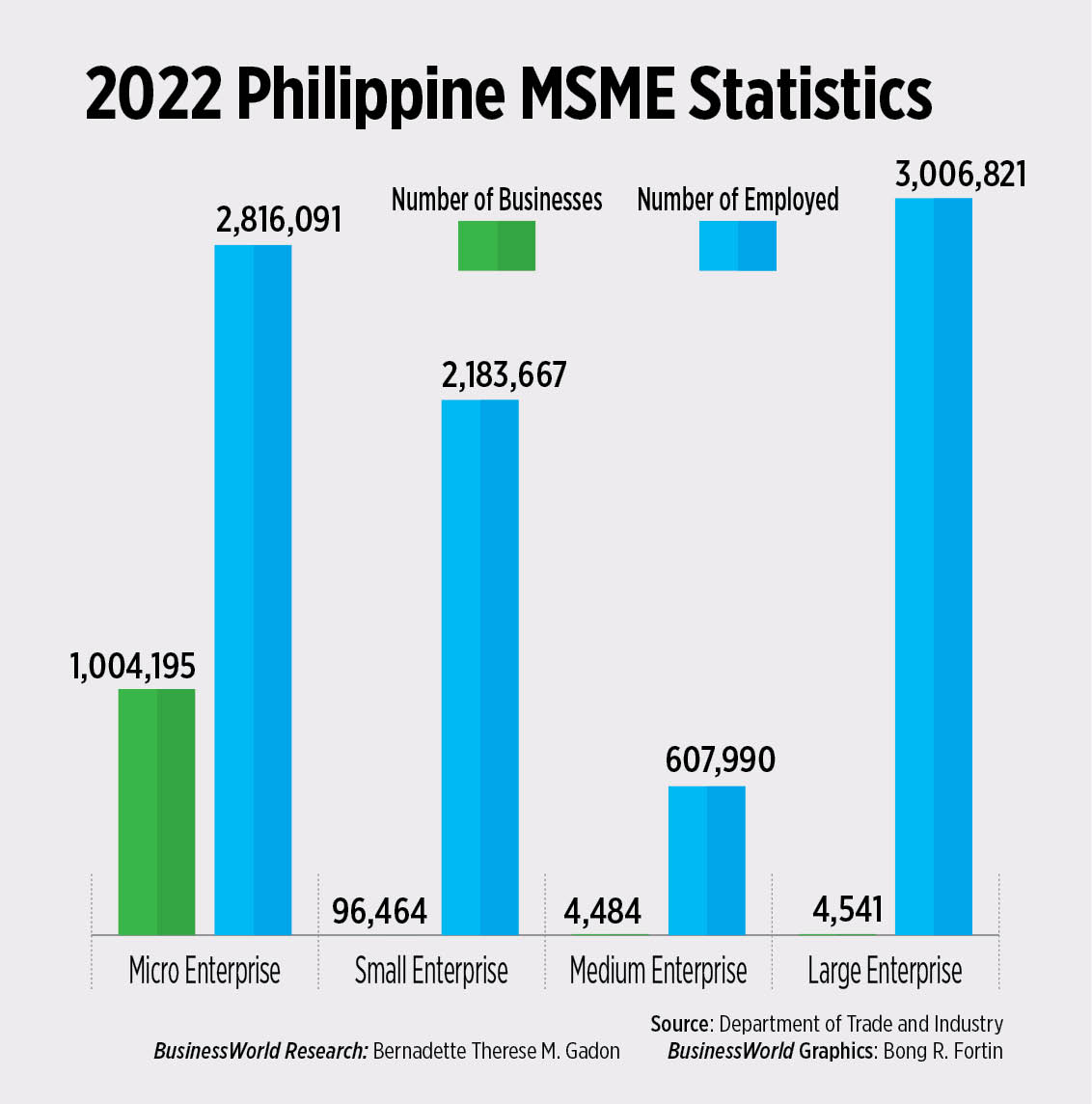
A total of 1.11 million business enterprises were operating in the Philippines in 2022, Trade department data showed.

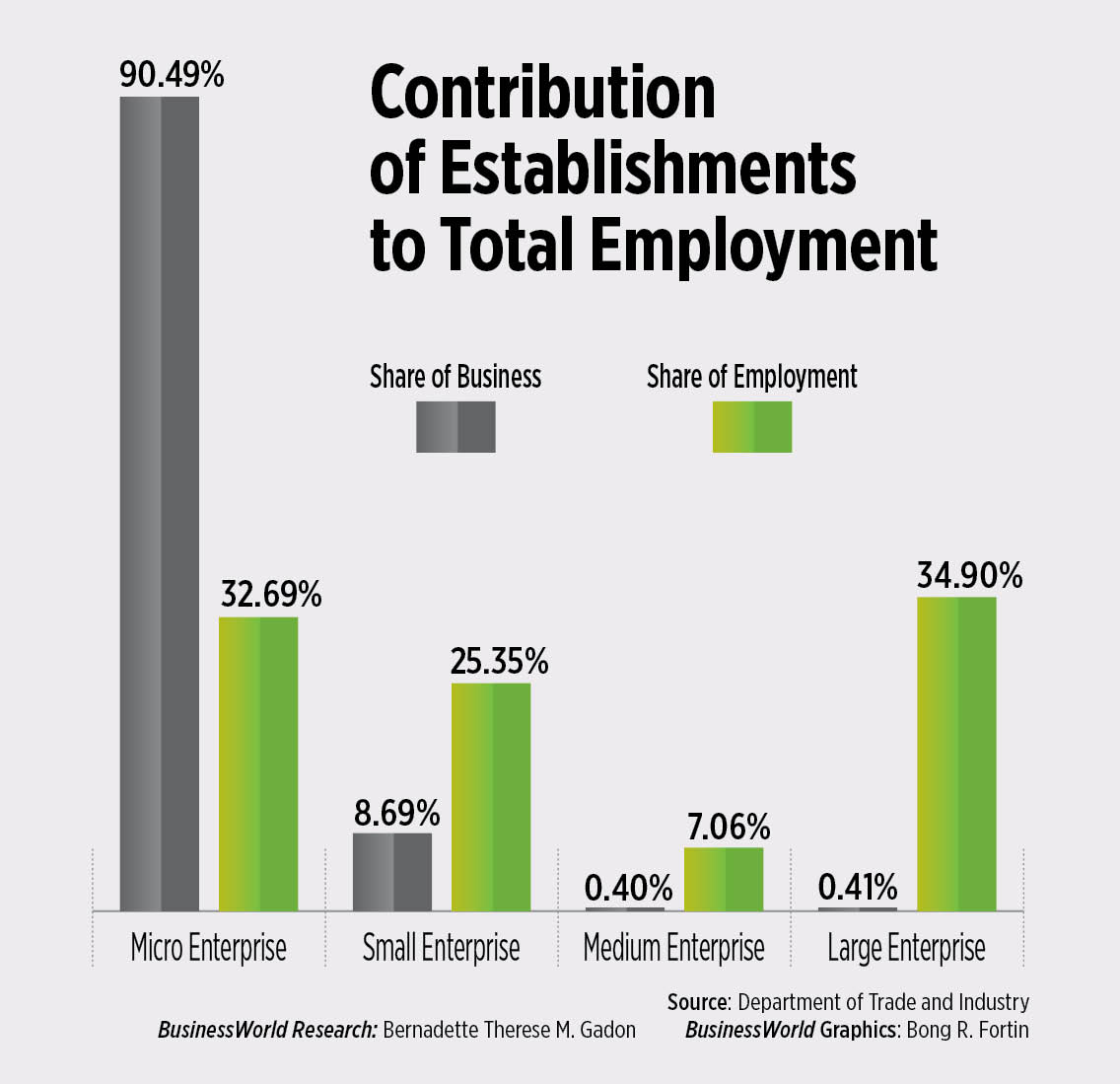
About 99.59% of these were MSMEs while 90.49% were micro enterprises. Additionally, of these establishments, 8.69% were small enterprises while 0.40% were medium enterprises.

Large enterprises, meanwhile, accounted for 0.41% of the businesses operating in the country.

Latest Bangko Sentral ng Pilipinas (BSP) data showed that as of June, banks in the country did not meet the mandatory credit allocation targets for small businesses.

As of June, the country’s banking industry’s loan portfolio reached P9.8 trillion, with loans to micro-, small-, and medium-sized enterprises (MSMEs) accounting for just 4.71% or P461.387 billion.

The compliance rate for micro and small enterprises (MSEs) is still under the mandated 8%, with only 1.93% of the required funds allocated to these businesses.

On the other hand, medium-sized enterprises (MEs) have exceeded the mandated 2% allocation with a compliance rate of 2.78%.

BSP data also showed that the rural and cooperative banks’ compliance rate with MSEs stood at 18.59% while for MEs at 9.32%.

The central bank has stated that they are aware of the importance of financial and digital infrastructure in reducing risks and costs associated with financing for MSMEs.

They also emphasized that they are continuously providing regulations that enable financial support for MSMEs and make it easier for them to access funds. The BSP is working towards bridging the information gap and addressing information asymmetry in the MSME market. 

BSP reiterated that they are committed to providing a regulatory environment that addresses financial access barriers such as cost, lack of infrastructure, and information asymmetry, among others.

Karen L. Cua, senior vice-president at BDO Network Bank, said commercial banks struggle to meet the mandatory credit allocation targets for small business principally for two reasons.

They are either undocumented or under-documented so that traditional methods for credit evaluation would be challenged and the owners of these small business have little or no assets against which banks can secure their exposure.

BDO Network Bank, the rural banking arm of BDO Unibank, Inc., has invested in serving MSMEs over the last six years.

For Japhet Louis A. Tantiangco, senior research analyst at Philstocks Financial, Inc., the high interest rates on loans for MSMEs could be due to the high risk associated with lending to this group.

This makes it difficult for many in the MSME sector to afford these loans.

“There may also be capacity constraints wherein many of the MSEs are unable to comply with the loan application requirements of the banks,” Mr. Tantiangco said in an e-mail.

The MSME sector is “highly vital” not only for economic growth, but also for the livelihoods of the majority of the population, Rachelleen A. Rodriguez, head of research at Maybank Investment Banking Group – Philippines, said in an e-mail.

“Growth of the sector would raise per capita wealth and overall standard of living, and for the banking sector, would raise yields and profits,” she added.

For his part, Mr. Tantiangco said that if the productivity of these enterprises increases, it may then provide a significant boost in economic growth.

“MSMEs, especially the micro businesses, may also help in narrowing the income inequality in the country. Microenterprises are usually the path to go of individuals in lower quintile groups if they wish to pursue business,” he added.

These businesses are growth engine for the economy, said Ms. Cua.

In rural areas, MSMEs dominate the business landscape compared with medium to large companies.

Moreover, she explained that banks help MSMEs cover short-term cash flow gaps and fuel their growth and expansion.

THE FRAMEWORK
According to the Magna Carta for MSMEs, banks are required to allocate 10% of their credit portfolio to small businesses — 8% of it should be allotted to micro and small enterprises while 2% of it to medium enterprises.

Republic Act (RA) No. 6977 or the Magna Carta for Small Enterprises promotes, supports, strengthens, and encourages the growth and development of MSMEs in all productive sectors of the economy.

Additionally, RA 6977 sets the minimum percentage of banks’ loan portfolios to be allocated for MSME lending, which makes the process for MSMEs to operate and obtain financial support for their businesses easier.

BDO’s Ms. Cua said that the Magna Carta highlights the role of the private sector in serving MSMEs by participating in government programs for MSMEs.

She also added that the RA 6977 specifies the government assistance that must be made available and the proper government agencies who will be responsible in achieving the set objectives.

In the third quarter, the economy saw the continued rise in inflation rates alongside the rise in interest rates.

In hopes to stabilize and anchor inflation expectations, the BSP resumed hiking its policy rate by 25 basis points to 6.5% in an off-cycle meeting held in late October.

However, in its November meeting, the central bank decided to maintain its interest rate unchanged following the favorable ease in inflation that was seen in October.

Ms. Cua said that given these developments, corporate demand softened while consumer demand sustained loan growth.

“MSME growth is similarly affected as inflation has limited consumption and demand for goods [and] interest rate hike has increased the cost of funding,” she added.

For Ms. Rodriguez, she said that third-quarter market performance is largely impacted by the movement and expectation of hikes on both the Fed and BSP’s policy rates.

“As rates appear to be higher for a longer period of time, banks will benefit from higher margins for a few more quarters,” she said.

She further explained that policy rates, meanwhile, does not impact the MSME sector as interest rate movements for all consumer type loans are driven more by competition, rather than policy rate movements.

HURDLES
Though simply, one could not overlook that MSMEs in the country may have challenges or struggles they may be facing as well.

Ms. Cua noted that some key challenges that MSMEs may experience are limited access to reasonable bank financing, regulatory compliance, and insufficient financial education.

Other reasons are financial difficulties which include inadequate risk management to mitigate the impact of natural disasters, fire outbreaks, personal accidents, and illnesses.

Additionally, many people lack sufficient credit, capital, and savings to cope with short-term cash flow disruptions caused by supply chain shocks, collection delays, or large personal expenses like tuition fees.

For Ms. Rodriguez, rising inflation would still be the biggest hurdle MSME may face as this largely impacts their input costs and may result to reducing their margins.

“High commodity prices would force them to stock up more inventory, raising their need for leverage while their profits are actually shrinking.”

Meanwhile, Mr. Tantiangco believes that the MSME sector currently faces challenges in accessing financing, rising production costs, market competition, and productivity.

EFFORTS IN ACTION?
The central bank should continue its efforts in enabling institutions to better serve MSMEs, BDO’s Ms. Cua said.

The BSP has been actively promoting the digital landscape, with initiatives such as the implementation of the Basic Merchant Account (BMA) allowing MSMEs to accept and make digital payments.

Other initiatives include creating digital footprints for MSMEs which enables banks to do better credit assessments.

Ms. Cua believes that strengthening the credit bureaus will enable more institutions to serve MSMEs more effectively. She further explained that the central bank, along with the government and private sector, can develop and implement more risk-shared programs to reach other underserved segments within MSMEs such as the agricultural sector.

Ms. Rodriguez said that BSP assigns a lower risk weighting for MSME loans compared with other types of loans, which means that banks are incentivized to lend to the sector.

“It’s a win-win situation as banks could improve their yields through MSME lending at a lower capital charge,” she said.

Furthermore, she explained that the risk weight was reduced to 50% during the pandemic but was increased to 75% in 2023, coinciding with the BSP’s lowering of the reserve requirement to 9.5%.

She also said that implementing programs aimed at enhancing financial education would prove to be beneficial.

For his part, Mr. Tantiangco said that the government should increase the capacity of its agencies that provide financial aid to MSMEs and raise awareness about the availability of such aid.

Additionally, he emphasized the importance of helping MSMEs adopt digital means of conducting business, which could significantly improve their efficiency. Given this, the DTI is already executing efforts.

REVAMPING LENDING PRACTICES
What should banks do to rethink their lending practices to small businesses and bring about growth opportunities?

In a 2022 McKinsey and Co. report titled “How banks can reimagine lending to small business and medium-sized enterprises,” modernizing business-lending processes can help banks capture more growth.

McKinsey highlighted that while banks face both opportunities and challenges in the market for lending to small businesses, most of them are not reaching their full potential.

This failure to meet the needs of small businesses makes them miss out on certain opportunities that could be advantageous to them.

“There is no one-size-fits-all approach to suit every bank and market, but banks that rethink their SME-lending businesses can increase their market share and promote profitable growth,” the report said.

Furthermore, the report emphasized that lending to small- and medium-sized enterprises (SMEs) will be crucial for banks’ economic growth and profitability, especially after the economic impact the pandemic has left and scarred.

Despite the opportunities and trends laid out for them, the report also pointed out that banks often struggle to provide appropriate lending solutions to their SME customers and reduce the cost of serving them.

Banks, therefore, need to re-strategize their lending practices to small businesses and create credit offerings that will cater to the specific needs of SMEs. This, in turn, will help them to better serve their customers and increase their revenue growth.

Banks are primarily responsible for developing their business strategies, on the other hand, MSMEs constitute an untapped segment that can actively contribute to the country’s economic growth.

The central bank’s role is to create an enabling environment that will encourage banks to lend to viable and productive sectors and enterprises, including MSMEs.

“BSP has adopted a three-pronged approach to improve access of MSMEs to financing,” BSP said in an e-mail.

This approach includes strengthening credit infrastructure, enabling digital and bankable MSMEs and agriculture enterprises, and promoting innovative financing approaches which are all supported by financial literacy programs.

BDO’s Ms. Cua said that establishing a complete banking relationship is crucial for sustainable and rewarding lending to MSMEs.

She said that rethinking lending for MSMEs requires challenging conventional lending methods.

Ms. Cua also said that business loans are heavily reliant on financial statements, require collateral for security, and involve extensive write-ups and committee discussions for credit approval.

For Mr. Tantiangco, he believes that banks should incorporate more technological means in their dealings with SMEs, especially in their processes.

Additionally, they should rely more on data analytics when assessing SME loan applicants.

However, he also noted that there are no necessary changes needed in banks’ credit offerings for MSMEs. Instead, banks should focus on digitizing their processes and becoming more data analytics dependent in their dealings with these enterprises.

The rise of digitalization has led to a boom in e-commerce, Ms. Rodriguez said.

And as a result, banks are aggressively expanding their digital lending offerings and simplifying the borrowing process for even the non-tech savvy Filipinos.

“Data science and AI (artificial intelligence) can help identify lending opportunities based on borrowing patterns, enabling banks to offer personalized services that cater to clients’ specific funding needs,” she said.

Additionally, there is a huge untapped market in non-urban areas that banks can tap into, she said.

Banks are constantly enhancing their data mining capabilities to identify lending opportunities more effectively.

She also said that offering lending and other financial products to existing depositors is beneficial, as they represent a large pool of potential customers.


New York’s Met Museum to return looted antiquities to Cambodia

A STANDING Female Deity from Cambodia, dating to the second quarter of the 10th century according to the Metropolitan Museum of Art which has deaccessioned the piece for return to Cambodia. — METMUSEUM.ORG

NEW YORK’S Metropolitan Museum of Art agreed with the Department of Justice (DoJ) to return more than a dozen antiquities to Cambodia, a major step in a decade-long investigation into the theft and trafficking of artifacts from the Southeast Asian country.

The pieces being returned “were tied directly to illicit trafficking,” Damian Williams, the US attorney for the Southern District of New York, said in a statement on Friday. In particular, all are connected to Douglas Latchford, a Bangkok-based British art dealer who the DoJ indicted in 2019 on fraud and conspiracy charges related to his sales of Cambodian works into Western collections.

Though Mr. Latchford died in 2020 before he could face trial, the effort by Cambodian and US investigators to track down and repatriate the works he sold continued, and gradually expanded into one of the most complex investigations of the art market ever undertaken. Thousands of stone and bronze sculptures — dating to the ancient Khmer Empire, the polity that constructed monuments such as Angkor Wat — were stolen from Cambodia during the country’s 30-year civil war, which ended in 1998 with the final defeat of the Khmer Rouge.

Ripped from their pedestals with picks, shovels, and sometimes explosives, the works were smuggled to Bangkok and sold onward to museums and private collectors in the US and Europe. In a deal announced in 2022, Netscape co-founder James Clark agreed to give up more than 30 works that he’d purchased from Mr. Latchford for about $35 million. The family of late Florida billionaire George Lindemann agreed to return a similar number of pieces in an accord earlier this year.

The Met said that this week’s agreement amounts to “effectively removing” Latchford-associated Cambodian objects from its collection. The museum also said it was returning two additional pieces to Thailand.

The Cambodian government has long taken the position that virtually all Khmer pieces abroad were illicitly obtained, regardless of their connections to Mr. Latchford, because permission was never granted for them to be exported.

Some two million Cambodians perished under the Khmer Rouge, who ruled the country from 1975 to 1979, when they were deposed by an invading Vietnamese army. The US, Soviet Union, and China all backed different factions in the violent turmoil that followed, which provided ideal conditions for looters to ransack archaeological sites — and to feed growing global demand for Asian art. Repatriating the stolen objects “is an act of healing for our nation,” Minister of Culture and Fine Arts Phoeurng Sackona said in a statement Friday.

Identifying and proving the origins of looted objects has taken considerable detective work. One of the pieces being returned by the Met, a Standing Female Deity dating to the 10th century, was identified by a former looter as having been stolen from Koh Ker, a major archaeological site in northern Cambodia, in 1997. When researchers excavated the site in line with his recollections, they discovered a severed stone foot that they concluded matched the Met statue.

Brad Gordon, a lawyer representing the Cambodian government, said he hopes the Met “will now more closely inspect, and allow us to see, the records for the remaining Cambodian collection to determine if there is any reasonable basis for the Met’s continued possession of Cambodia’s national treasures.”

For its part, the Met said it is “continuing to review its collection of Khmer art” and will exchange further information with Cambodian representatives, as well as those of Thailand. It added that it hopes to pursue “partnerships and collaborations with our colleagues” in both countries.

Mr. Williams said the DoJ will continue to investigate the trade in looted antiquities, and urged institutions in possession of them to come forward. “Come see us before we come see you,” he said. — Bloomberg

EEI gears up for infrastructure boom with equipment refleeting — CEO

CONSTRUCTION company EEI Corp. announced on Tuesday a partnership with two companies as part of its equipment refleeting project in the Philippines and abroad.

“We anticipate a surge in infrastructure projects from next year onwards, which we are committed to accomplishing not just in terms of target schedules and completion, but also with excellent service and quality that come with working with EEI,” Henry D. Antonio, president and chief executive officer (CEO) of EEI, said in a statement.

The company has signed a memorandum of understanding with ZL Machinery Philippines, Inc. and Chinese construction machinery maker Zoomlion Heavy Industry Science & Technology Co., Ltd. to buy heavy and construction machinery for its refleeting project in the Philippines and abroad.

EEI expects its infrastructure projects to grow starting next year, the listed construction company said, adding that this growth will hinge on the reliability of the company’s equipment.

“We also have to be efficient with our capital expenditure budget. Acquiring equipment for several projects is one of the prudent investments we have to make to meet the demands of infrastructure work,” Mr. Antonio said.

Established in 1931, EEI has business interests in construction services and the distribution of industrial and machinery systems. Its energy arm offers power solutions for electrical equipment and services.

At the local bourse on Tuesday, shares in the company fell by nine centavos or 1.51% to end at P5.86 apiece. — Ashley Erika O. Jose

No reason to be complacent

JCOMP-FREEPIK

(Part 1)

With a GDP growth rate of 5.9% in the third quarter of 2023, the Philippines is one of the fastest growing economies not only in the Indo-Pacific region but in the whole world. In fact, in an economic forum organized by this paper, the Philippines received kudos from multilateral lenders such as the Asian Development Bank, the World Bank, and the International Monetary Fund.

One of them, World Bank Country Director for Brunei, Malaysia, the Philippines, and Thailand Ndiame Diop was quoted as saying: “the Philippines have all the structural drivers that are very favorable and that’s why we’re quite optimistic about this. But given the state of the global economy, even 5.6% is a really decent growth rate. And I think if the global economy improves going forward, the ceiling grows even higher.” In my own observation, having traveled extensively to many regions outside the NCR over the last two weeks giving economic briefings, I forecast that the fourth quarter will see a GDP growth rate of at least 6.5% as there will be an acceleration of consumption and government spending.

There is no room for complacency, however.

The growth we are experiencing is far from being inclusive. Philippine poverty incidence continues to be the highest in the East Asian region at 13%. There is much to do to ensure that the growth trickles down to the masses, especially to the rural areas which still account for 70% of the poor. The multilateral lenders who spoke at the BusinessWorld Forum emphasized the need to boost labor productivity, infrastructure competitiveness, and climate resilience to ensure that growth remains robust. For growth to be inclusive, I would single out higher agricultural productivity and food security. If I were to identify a single bullet approach to significantly reduce mass poverty, I would choose agricultural development and would focus on food security.

We cannot just point to the Government to do the job of reducing the number of people in the Philippines living in dehumanizing poverty. All of us who have the means have to do whatever is in our hands to help reduce poverty in our country. On Nov. 19, Pope Francis issued a message on the World Day of the Poor. He quoted from the Book of Tobit of the Old Testament, exhorting each one of us: “Do not turn your face away from anyone who is poor” (Tobit 4:7). What he said applies to the Philippines to the fullest degree: “Our daily efforts to welcome the poor are still not enough. A great river of poverty is traversing our cities and swelling to the point of overflowing; it seems to overwhelm us, so great are the needs of our brothers and sisters who plead for our help, support, and solidarity…”

He then described the exemplary life of Tobit who showed by words and deeds what it means to help the poor. He told his son Tobias: “To all those who practiced righteousness give alms from your possessions, and do not let your eye begrudge the gift when you make it.” Our concern for the poor (of which there are more than 10 million in our country) should not end with lamentations and exhortations. They should be shown by concrete corporal and spiritual works of mercy such as feeding the poor, giving drink to the thirsty, clothing the naked, housing the homeless, visiting the sick and the prisoner, burying the dead, instructing the ignorant, counselling the doubtful, admonishing sinners, comforting the afflicted, etc. Tobit made it clear to his son that from his youth he had devoted his life to works of charity: “I performed many acts of charity for my kindred and my people who had gone with me in exile to Nineveh in the land of the Assyrians… I would give my food to the hungry and my clothing to the naked; and if I saw the dead body of any of my people thrown out behind the wall of Nineveh, I would bury it.”

What was even more admirable in the life of Tobit was that he did not turn away from God even if, despite all his good works, a tragedy struck him. Returning home after burying a poor man who was murdered, he fell asleep in the courtyard and some bird droppings fell on his eyes and he became blind. Pope Francis comments that the blindness of Tobit was to become his strength, enabling him to recognize even more clearly the many forms of poverty all around him. Like Tobit, we should recognize all our brothers and sisters in need of help. We are called to acknowledge every poor person and every form of poverty, abandoning the indifference and the banal excuses we make to protect our illusory wellbeing.

We may rejoice with the news that the Philippines is transitioning from a low-middle income economy to a high-middle income one in the next two or three years. That means that there will be more and more of us who will aspire for the material comfort associated with a middle-income lifestyle. The danger is that we may fit the description of Pope Francis as we become richer: “We are living in times that are not particularly sensitive to the needs of the poor. The pressure to adopt an affluent lifestyle increases, while the voices of those dwelling in poverty tend to go unheard. We are inclined to neglect anything that varies from the models set before the younger generation, those who are most vulnerable to the cultural changes now taking place. We disregard anything that is unpleasant or causes suffering, and exalt physical qualities as if they were the primary goal in life. Virtual reality is overtaking real life, and increasingly the two worlds blend into one. The poor become a film clip that can affect us for a moment, yet when we encounter them in flesh and blood on our streets, we are annoyed and look the other way. Haste, by now a daily companion of our lives, prevents us from stopping to help care for others. The parable of the Good Samaritan is not simply a story from the past; it continues to challenge each of us in the here and now of our daily lives. It is easy to delegate charity to others, yet the calling of every Christian is to become personally involved.”

To counter this trend among middle- and high-income families for their members, especially the centennials, to “look the other way” when they encounter the face of poverty, it is a very good practice for parents and the older members of a family to bring the younger children regularly to visit families in squatter areas, bringing some material gifts like food or clothing, and spending some time conversing with the poor on a person-to-person basis. It is not enough just to dump the goods. Even more important is the interaction with the poor, treating them on an equal basis as human beings, not just recipients of charity. It is also a good practice for some schools or youth clubs, organized by the parents themselves, to arrange what are known as “work camps” in some poor areas in the countryside (in which there is the highest rate of poverty) during the summer. These camps can last for a week or so, and these young people from well-to-do families can sleep in modest quarters and during the day help build or repair classrooms, toilets, socialized housing units, sources of drinking water and other public utilities that are lacking especially in remote areas. These experiences not only toughen the character of children of the rich, but also make them more sensitive to the needs of the poor so that when they become professionals they will never be tempted to “look the other way” when faced with dehumanizing poverty of others. These work camps can also be occasions to give talks on values or virtues formation to the youth.

(To be continued.)


Bernardo M. Villegas has a Ph.D. in Economics from Harvard, is professor emeritus at the University of Asia and the Pacific, and a visiting professor at the IESE Business School in Barcelona, Spain. He was a member of the 1986 Constitutional Commission.

bernardo.villegas@uap.asia

Arts & Culture (12/20/23)


MSO to celebrate 98th anniversary concert

The final concert of the Manila Symphony Orchestra’s (MSO) concert series In Pursuit Of Excellence will see the orchestra marking its 98th anniversary on Jan. 31, 2024, 7 p.m., at the Carlos P. Romulo Auditorium, RCBC Plaza, Ayala corner Buendia Aves., Makati. The orchestra, under conductor Olivier Ochanine, and violinist Diomedes Saraza, Jr. take on Angel Peña’s Trinity, Carl Nielsen’s Symphony No. 1, and Pyotr Ilyich Tchaikovsky’s Violin Concerto No. 1. The concert is co-presented by Standard Insurance. Tickets, ranging from P800 to P2,000, are available via TicketWorld.


Indigent families upcycle plastics into belens

IN celebration of Christmas time, residents from various barangays in Pasay and Manila showcased their creativity and ingenuity in crafting three-dimensional depictions of the birth of Jesus Christ using upcycled single-use plastics. The initiative was organized by the Center for Social Action (CSA) of the De La Salle-College of Saint Benilde (DLS-CSB) in partnership with the Industrial Design Program, to further foster the inclusion and innovation mission of the college within the community. To equip them with the fundamentals and elements of design, the residents underwent a masterclass facilitated by industrial designer and educator Johann Mangussad. Barangay 44 Pasay received the Gold Prize for The Lamb of God, Barangay 46 Pasay nabbed the Silver award for Ecoglory Ensymbol Belen, and the bronze distinction was presented to Barangay 743 in Manila for Nativity of Love.


NCCA holds Culture, Arts, and Values Summit 2023

ON Dec. 13, the Culture, Arts, and Values Summit 2023 kicked off at the Luxent Hotel in Quezon City, where Executive Council members of 19 National Committees of the National Commission for Culture and the Arts (NCCA) held extensive discussions. The summit was divided into two parts: “Taking Stock: National Developments that Impact on Philippine Culture, Arts, and Values,” and “Reflections: The Inter-Island and Regional Contexts and Philippine Culture, Arts, and Values.” In his closing remarks, NCCA Executive Director Oscar G. Casaysay underscored the pivotal role of culture in molding our national identity, promoting social cohesion, and propelling economic growth.


PPO serenades Bulakenyos

The Philippine Philharmonic Orchestra (PPO) serenaded Bulakenyos at the historic Barasoain Church in Malolos, Bulacan on Dec. 18. The free concert, dubbed Gabi ng Musika in Barasoain, saw the PPO, led by its conductor Herminigildo Ranera, performing classic pieces such as Wolfgang Amadeus Mozart’s Magic Flute Overture and Georges Bizet’s L’Arlésienne Suite no. 2: Farandole. The orchestra also treated Bulakenyos to Christmas music from Jose Mari Chan, among others. Singers Gian Magdangal and Lara Maigue sang a Miss Saigon medley. Mr. Magdangal also performed “Go the Distance” from Disney’s Hercules while Maigue sang the “Queen of the Night Aria” from Mozart’s opera The Magic Flute.

How MSMEs can be protected from predatory lenders

FREEPIK

By Bernadette Therese M. Gadon, Researcher

JESSICA DELA, 60, got a bank loan to start her liquefied petroleum gas (LPG) franchise.

However, she said that she wouldn’t accept the loan if her first business — a refreshment kiosk — isn’t stable.

For her, she advised new business owners, especially small business owners, to prepare beforehand, and only resort to lending when you need an additional revolving funds or you can ensure your business or other income can cover for your loan, because there are no guarantees on a startup to bring profit right away.

Latest data from the Department of Trade and Industry’s (DTI) 2022 Philippine MSME Statistics showed 99.59% of total businesses in the country are MSMEs, with 90.49% falling under microenterprises.

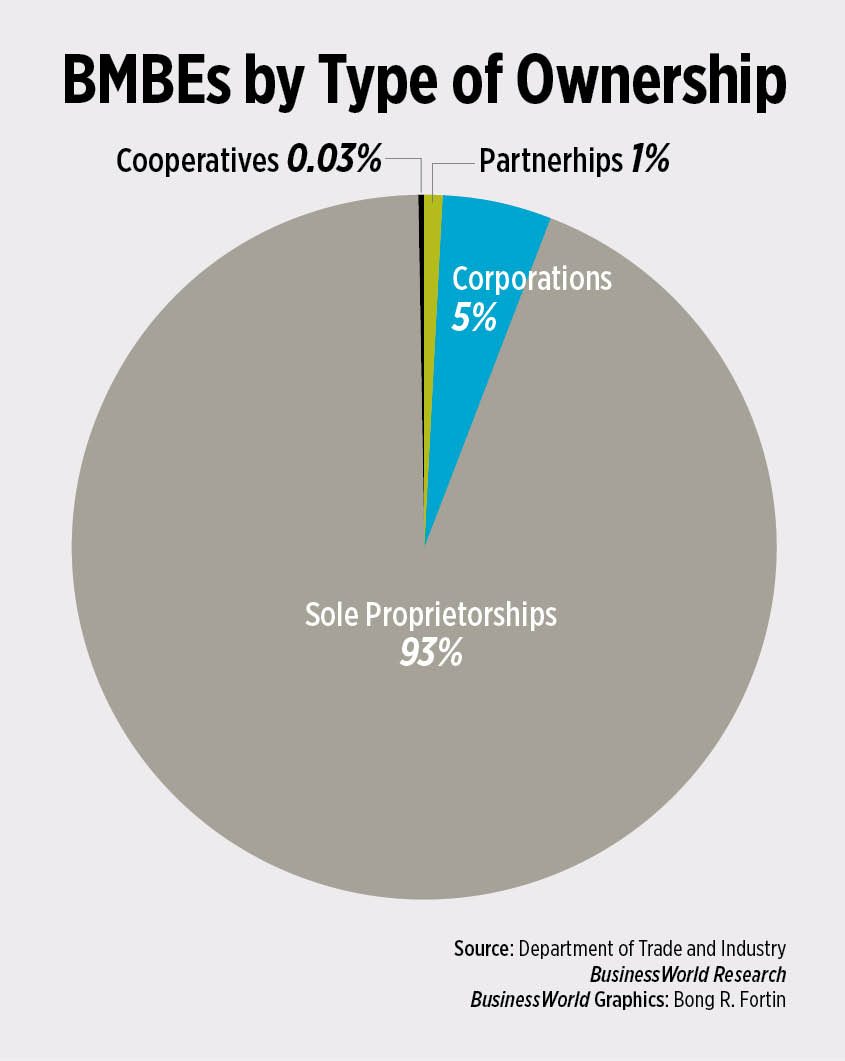
In an e-mail interview with the Department of Trade and Industry Regional Operations Group (DTI-ROG) it defined micro, small, and medium enterprises (MSMEs), per the Magna Carta for MSMEs, as any business activity or enterprise, whether single proprietorship, cooperative, partnership or corporation, whose total assets are not more than P3 million (micro business), P3 million-P15 million (small), and P15 million-P100 million (medium).

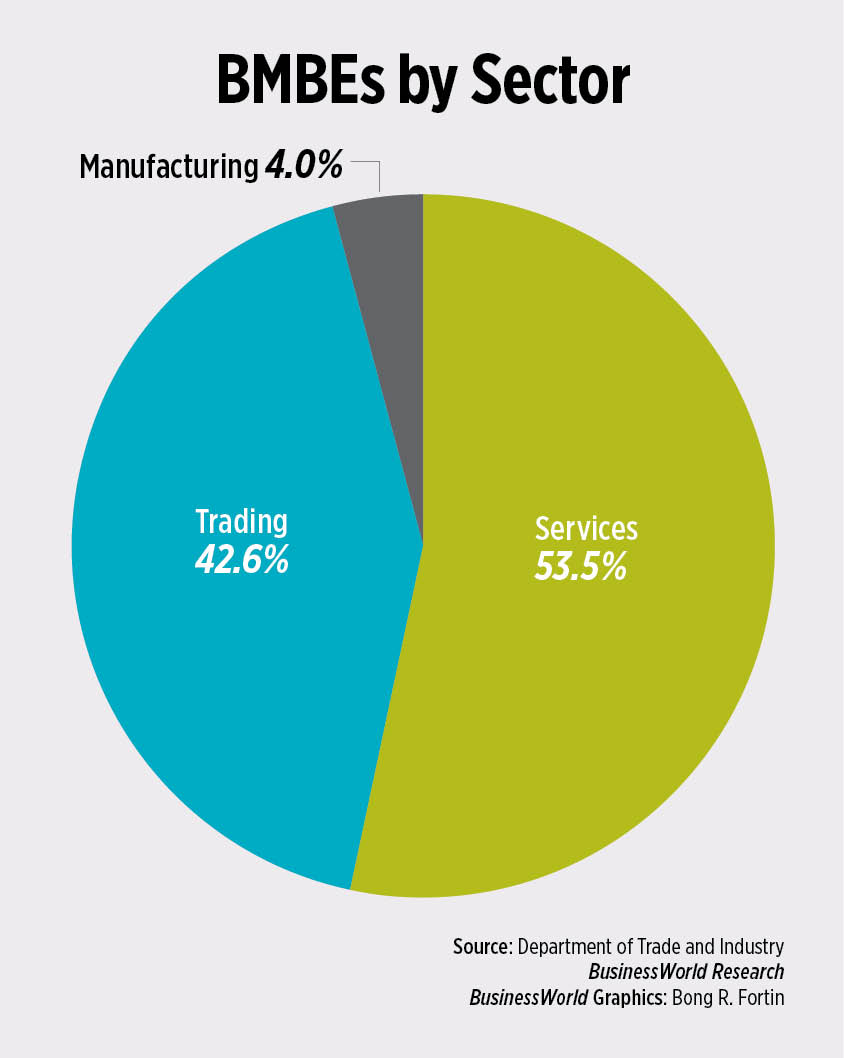
Additionally, its Barangay Micro Business Enterprise (BMBEs Act of 2002), who caters to microenterprises, also adapted its definition to any businesses whose total assets are not more than P3 million.

With a huge chunk of these businesses falling under services, such as retail stores and sari-sari stores, most Filipino business owners survive on profits accumulated from their business to either restock or expand said business.

The country’s economic landscape was heavily affected this year from base effects of inflation from the COVID-19 pandemic, and geopolitical tensions that started last year bringing prices of goods and services up, which cascaded to smaller businesses in the Philippines.

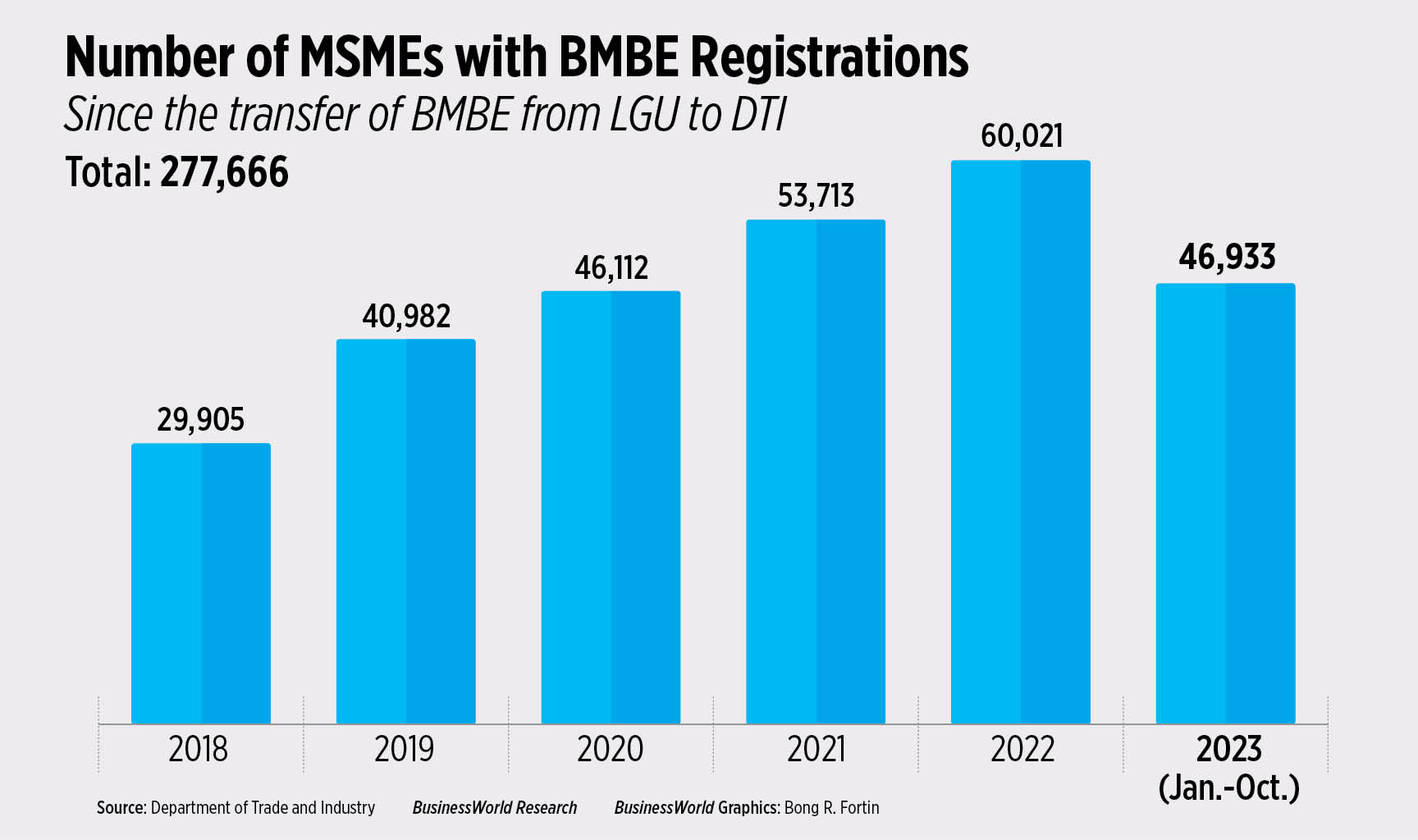
Data from the DTI-ROG showed a total of 277,666 BMBE registrations since the transfer from local government units (LGU) to Negosyo Centers.

A total of 46,933 BMBEs have been registered from January to October, down from 60,021 registrations as of end-2022.

“A 2021 survey commissioned by the Asian Development Bank (ADB) among 1,000 respondents revealed that access to credit and capital, after access to markets, continues to be the second most significant barrier to growth for MSMEs,” the Bangko Sentral ng Pilipinas (BSP) said in an e-mail exchange.

With MSMEs not needing to loan, the central bank said that these small businesses rely mostly on self-funding or funding through family and friends.

With limited resources of owners to improve their business, some have opted to lending to start or grow their business. However, how safe is it for MSMEs to lend in the Philippines?

MSME LENDING LANDSCAPE
Ms. Dela said that she was not aware of how rampant illegal lending companies are in the country. While she received offers online on lending offers, she did not see the need to avail of those offers because she already received a loan offer from her bank and is aware of different loan programs from other well-known banks.

As a government agency handling and ensuring fair competition of businesses in the country, the DTI-ROG addressed usurious or predatory lending practices by “(1) providing legitimate financial services that further disincentive small businesses to avail of illegal lending companies, and (2) enhancing information dissemination for better informed borrowers.”

“In terms of information dissemination against illegal lending, the Credit Information Corp. (CIC) publicizes the efforts of the Bangko Sentral ng Pilipinas (BSP) and Securities and Exchange Commission (SEC). In particular, [the] SEC is conducting a crackdown on unauthorized and abusive online lending activities,” the DTI-ROG said.

In an e-mail exchange, Union Bank of the Philippines (UnionBank) Business Banking Head Senior Vice-President Jaypee Soliman said that UnionBank offers different products for different MSMEs such as their Supply Chain Financing program wherein they provide a revolving credit facility to MSMEs within the system.

“We use data driven and alternative data models plus relationship data to assign credit limits and provide funding even on a per transaction basis. This allows full control and flexibility to the MSME, as they are not tied fully to a term, but they have the ability to draw and pay as needed and as funds are collected,” Mr. Soliman said.

“This is what truly sets us apart. Our ability to collect data that gives us a better understanding of the MSME and be used in credit models that no longer requires massive documentary and long assessment periods,” he added.

Once a business has been registered under BMBE, they can seek services of capacity building, technology transfer, financing support, and market access assistance through Negosyo Centers around the Philippines, the DTI-ROG said.

Furthermore, certified BMBEs are eligible for income tax exemptions from the Bureau of Internal Revenue and exemption from the coverage of minimum wage by the Department of Labor and Employment.

While many programs are available for all kinds of MSMEs in the country, Ms. Dela said that she started her first business using her own money because she did not meet the criteria of most banks.

“I was offered a loan for my second business because I already had a record in the bank from my first business, [and] saw how capable it is, and they saw that I deposit every day,” she said.

According to the DTI-ROG, prior to the Go Negosyo Act, BMBE registration was coursed through LGUs which required nine documentary requirements. With the BMBE transferred through Negosyo Centers, businesses only need to present two requirements (business certificate and registration form) to be certified.

For UnionBank, Mr. Soliman said that they accommodate small businesses by credit scoring them through alternative models, and using those data to allow businesses who does not have access to collateral to be able to borrow.

“We are able to expand the ability of a small and even a micro business to access formal lending, which is hard to do for them.”

“As a bank, we also educate small business owners or negosyantes on how they can fully manage their financial data through digitization of their accounting, collections, and so on, which later on builds a ‘digital footprint’ for them that is used in alternative credit,” Mr. Soliman said.

Moreover, for small businesses who do not meet most banks’ criteria, Mr. Soliman said that there are platforms such as SeekCap, a hub of financial institutions in the Philippines where borrowers can register to gain access for easier search on various institutions where businesses can meet its criteria.

Despite the innovation of technology to make lending easier for small businesses, predatory lenders also adapted online to scam business owners.

For businesses that have been scammed already, Mr. Soliman said that rebuilding your business can help you in applying to legal lenders. With alternative data, UnionBank will use data points of the business, its operations, collections, and financial behavior to assess whether a business can be granted a loan.

“Businesses who might not be able to meet some of the alternative criteria would have an option to provide additional security to their loan such as real estate,” Mr. Soliman added.

The DTI-ROG recommended MSMEs to apply for loans via Small Business Corp. (SB Corp.) through its RISE UP Micro Multi-purpose Loan where microenterprises can borrow up to P300,000 payable monthly up to three years.

Loans through the SB Corp. only have four requirements, namely: a government-issued ID, photos and videos of business operations and assets, corporate documents (if applicable), and barangay certificate (for P100,000 and below loans)/BMBE certificate or Mayor’s permit (for above P100,000 loans).

With inflation rising this year affecting goods and services, businesses also bear the brunt of the effects to adjust their prices that can accommodate both their business’ needs, as well as keeping it low to avoid passing the expense to their customers.

Ms. Dela said that because her business is a franchise, she has no say on price movements of LPG products. Her option is to text blast her customers on price changes prior the implementation to let them know ahead if the LPG price increases or decreases, helping her customers decide when to order.

TIPS FOR A WISER NEGOSYANTE
Mr. Soliman said to watch out for “too-good-to-be-true” programs, and as a negosyante, doing research on various lending offers or finding a fellow experienced negosyante or business communities to provide feedback and guidance, can help to make sure businesses won’t be tricked.

He also noted that UnionBank provides platforms for community building such as the UnionBank Globallinker.

“This platform allows you to connect with more than 80,000 MSMEs in the Philippines, and even access more than 500,000 MSMEs around the world. We also provide access to MSME support such as educational webinars and trainings, technology service providers, and even other financial lenders who are all part of a larger community,” he said.

The central bank advised negosyantes to ensure that they are borrowing or transacting with licensed financial service providers.

“It is also important for MSMEs to fully understand the terms and conditions of their loan contracts, their responsibilities as borrowers, and the consequences of defaulting on a loan contract. MSMEs are encouraged to ensure that they have the capacity to pay their obligations within the terms of their loan contracts,” the BSP said.

The DTI-ROG added that small businesses can also coordinate with their local Negosyo Centers or the Negosyo Center Online Portal to keep track on trainings, marketing opportunities, and other business development services available within their location.

“The DTI invests in developing MSMEs by allocating funding for programs such as the ‘One Town, One Product’ to provide product development assistance, or ‘Kapatid Mentor Me’ to provide mentorship modules. Participation of MSMEs to these programs are fully subsidized by DTI,” it said.

“We also advise small businesses to leverage digitalization to enhance their business operations (e.g., digitized bookkeeping, automated Point of Sale, etc.) or expand their consumer base (e.g., online marketing, last mile delivery services, etc.),” it added.

Bill seeks waiver of fees for small transactions in electronic wallets

STOCK PHOTO | Image by Jonas Leupe from Unsplash

A BILL seeking to waive additional fees in electronic wallet (e-wallet) transactions of up to P1,000 has been filed at the House of Representatives.

“Waiving fees for small transactions will encourage wider adoption among low-income individuals, increasing financial inclusion and economic growth,” Cagayan de Oro City Rep. Lordan G. Suan said in the bill’s explanatory note.

Under the proposed law, “all e-wallet providers and electronic fund transfer service providers operating in the Philippines shall be required to waive all fees associated with small-value transactions.”

The fee waiver will be applied when sending money to another e-wallet user, cashing in or cashing out to an e-wallet account, and transferring funds to a bank account.

The central bank has the authority to adjust the transaction amount subject to waived fees based on the daily cost of living, current exchange rate, and inflation rate.

The proposed law also mandates increasing public awareness of the benefits and use of e-wallets, as well as the fee waiver for small transactions.

Mr. Suan said the bill “promotes financial inclusion by eliminating fees for small transactions in e-wallets.” It would also ensure transparency in fee disclosure and competition among e-wallet providers, he added.

E-money accounts are the most owned bank accounts with 36% or 27.5 million users, according to the Bangko Sentral ng Pilipinas’ (BSP) 2021 financial inclusion survey.

The number is more than four times the number of e-money users in 2019, which then stood at 8% or 5.7 million.

Cashless payments through payment terminals and mobile applications increased in 2021 to 13% and 9%, respectively, from almost zero in 2019. Meanwhile, cashless transactions for online purchases jumped to 18% in 2021 from 1% two years ago.

The central bank added that individuals who did not own a bank account cited cost issues and the lack of documents. — Beatriz Marie D. Cruz

UnionBank expects improved net interest margin if interest rates dip

BW FILE PHOTO

UNION BANK of the Philippines, Inc. (UnionBank) expects its net interest margin (NIM) to improve next year as interest rates are expected to decline.

The Aboitiz-led bank said in an e-mail that a declining interest rate environment would result in it having better net interest margins “since it would have the ability to price deposits at a lower rate.”

“This assumes that inflation continues its downward path and no new upside surprises occur,” it added.

As of the third quarter, UnionBank’s NIM stood at 5.3%, higher than 4.7% in the same period last year.

For its base case forecast, the bank expects the Bangko Sentral ng Pilipinas (BSP) to begin its easing cycle in the third quarter of next year, following the US Federal Reserve.

The BSP last week kept its policy rate steady at a 16-year high of 6.5% for a second straight meeting but said it remained cautious amid lingering upside risks to inflation.

The Monetary Board has raised benchmark interest rates by 450 basis points (bps) since it began its tightening cycle in May 2022.

Meanwhile, the US central bank kept the Fed funds rate steady at the 5.25%-5.5% range for a third straight time during its last meeting for the year on Dec. 12-13, with Fed Chair Jerome H. Powell saying they are likely done hiking borrowing costs.

It raised rates by a total of 525 bps from March 2022 to July 2023.

UnionBank said the lower rates will help improve NIMs as most of its loan book is focused on consumers.

“UnionBank is mostly focused on consumer loans, which typically have fixed rates (e.g. credit card rates are capped, so are salary/personal loans),” UnionBank said.

The bank also said its loan book is expected to grow by double digits next year, as well as this year, due to lower borrowing costs.

“The Philippine economy is largely driven by consumption and the expectation is for a growing middle class. As such, demand for consumer loans (cards, mortgage, auto, etc.) will continue. This will be the segment that the Bank will focus on. We expect mid-teen growth in consumer loans,” UnionBank said.

Based on its current outlook, the bank also said it sees no need to issue bonds next year.

Earlier this month, UnionBank raised P18.168 billion from its offerings of 1.5-year Series F Bonds due 2025 and three-year Series G Bonds due 2026.

UnionBank saw its net income drop by 58.99% year on year to P1.65 billion in the third quarter as the bank set aside more loan loss provisions in the period versus the prior year.

The bank’s shares went down by 70 centavos or 1.17% to close at P59 apiece on Tuesday. — Aaron Michael C. Sy

ADVERTISEMENT
ADVERTISEMENT